B2B sourcing resources.
Fabric guides, customization technique deep-dives, factory walk-throughs and Incoterm playbooks — written by the people who actually cut, sew, embroider and inspect every apron that leaves our facility.
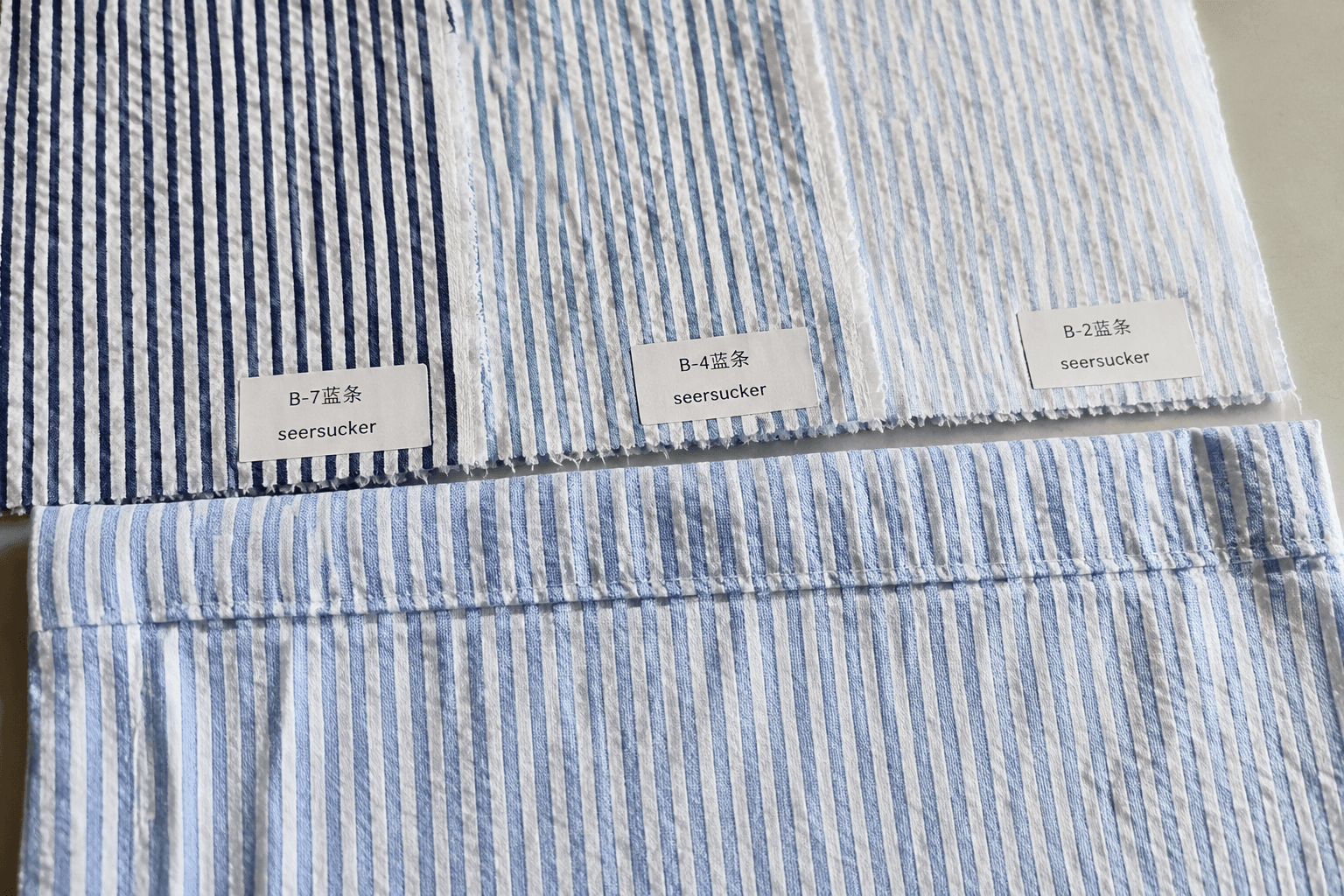
Seersucker aprons for warm service environments: airflow, texture and wash appearance
Seersucker aprons work best when buyers specify the fabric weight, blend, shrink control, and wash standard with enough detail to support warm-service use, not just a seasonal look. For B2B apron sourcing, the practical question is whether the texture improves airflow and appearance without creating opacity, durability, or replenishment problems.
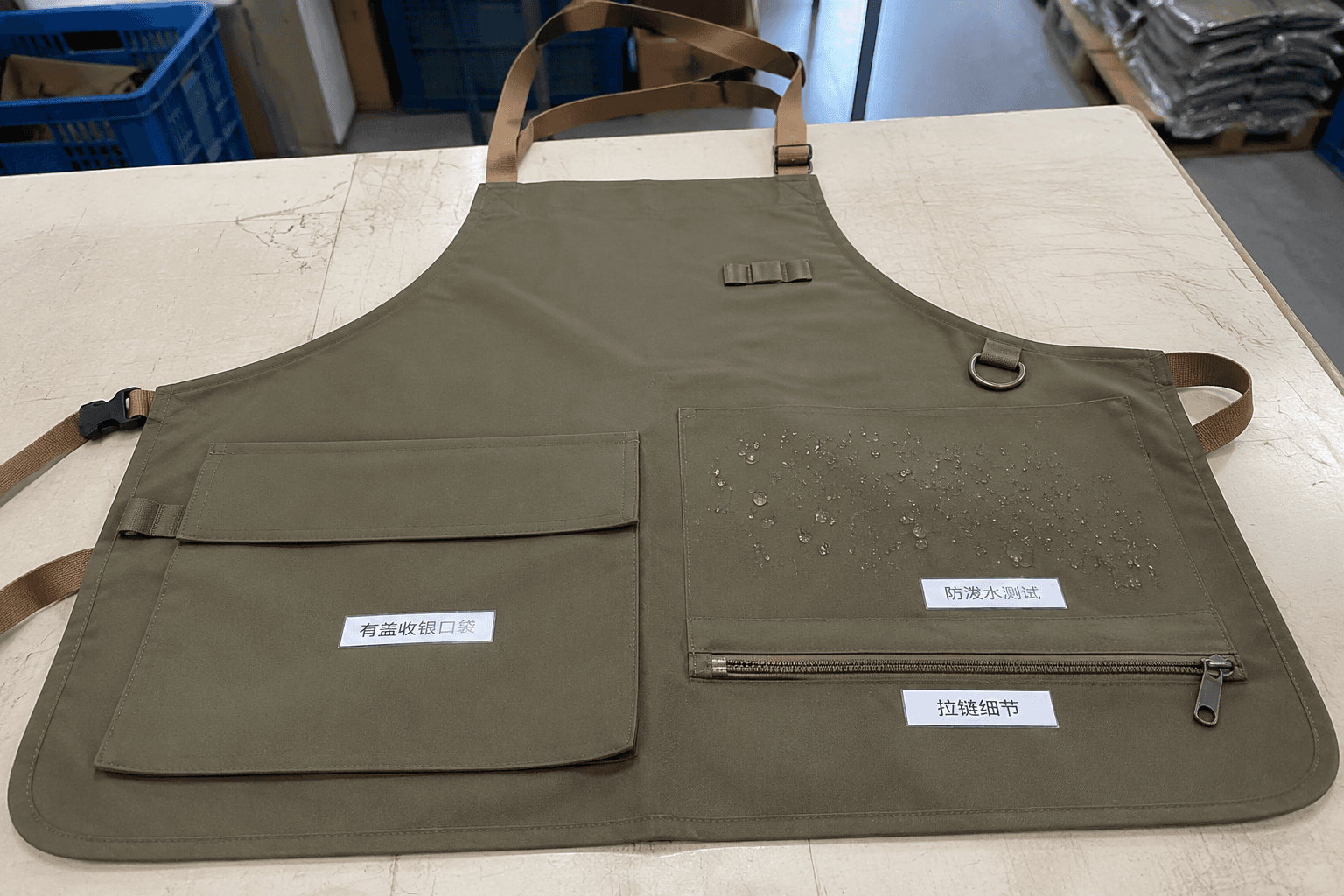
Outdoor event vendor aprons: weather exposure, cash pockets and fast restocking specs
Outdoor vendor aprons need weather resistance, secure cash pockets, and fast replenishment. For B2B buyers, the usable spec usually sits around 220-240 GSM, with 14-16 cm cash-pocket depth, 300-500 pc MOQs, and 15-25 day bulk lead times after approval.
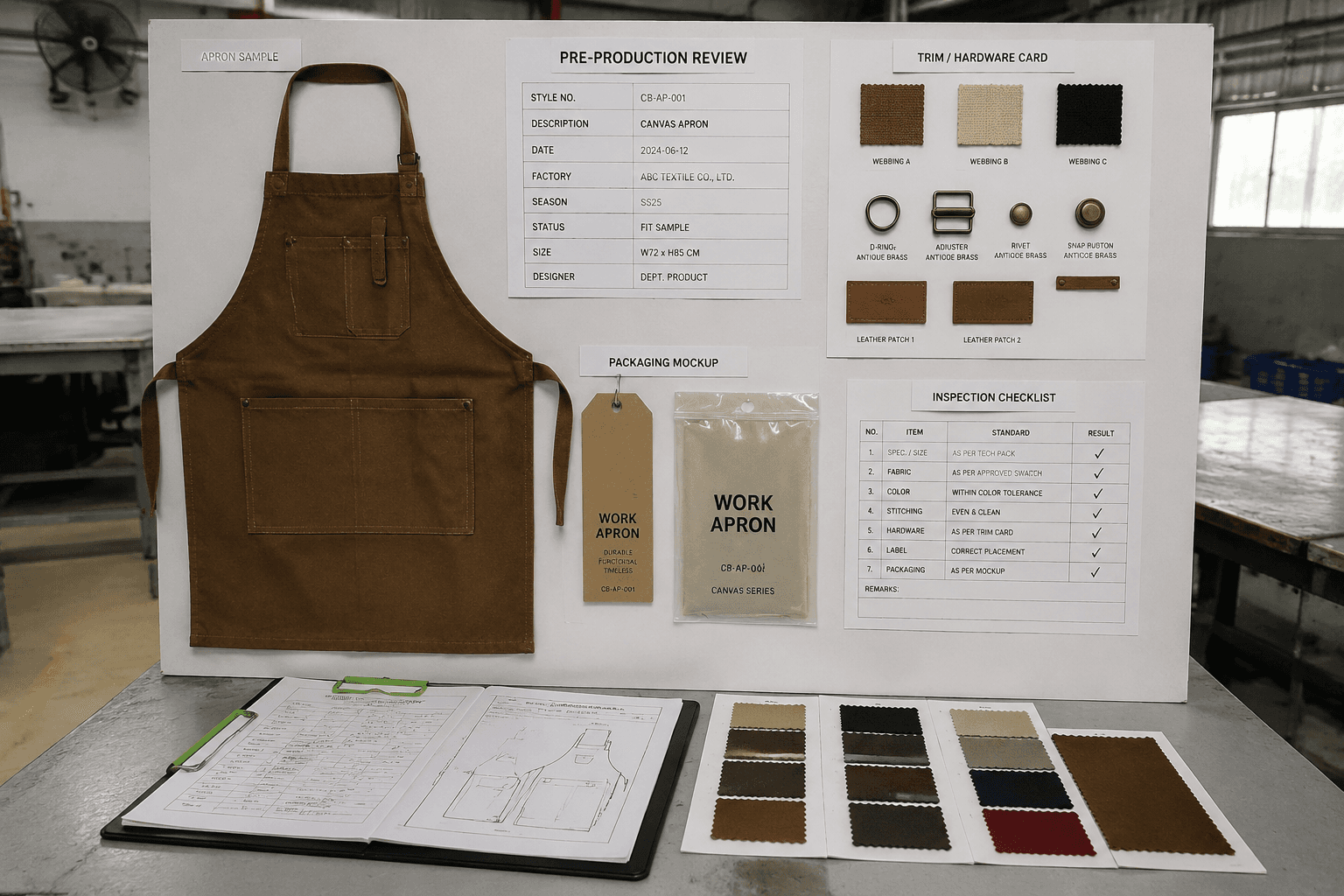
Apron pre-production risk review: finding fabric, trim and packaging problems before bulk
A disciplined apron pre production risk review catches fabric drift, trim substitution, sizing errors, label mistakes, and carton problems before bulk cutting starts, reducing rework, late freight, and margin loss on custom apron orders.
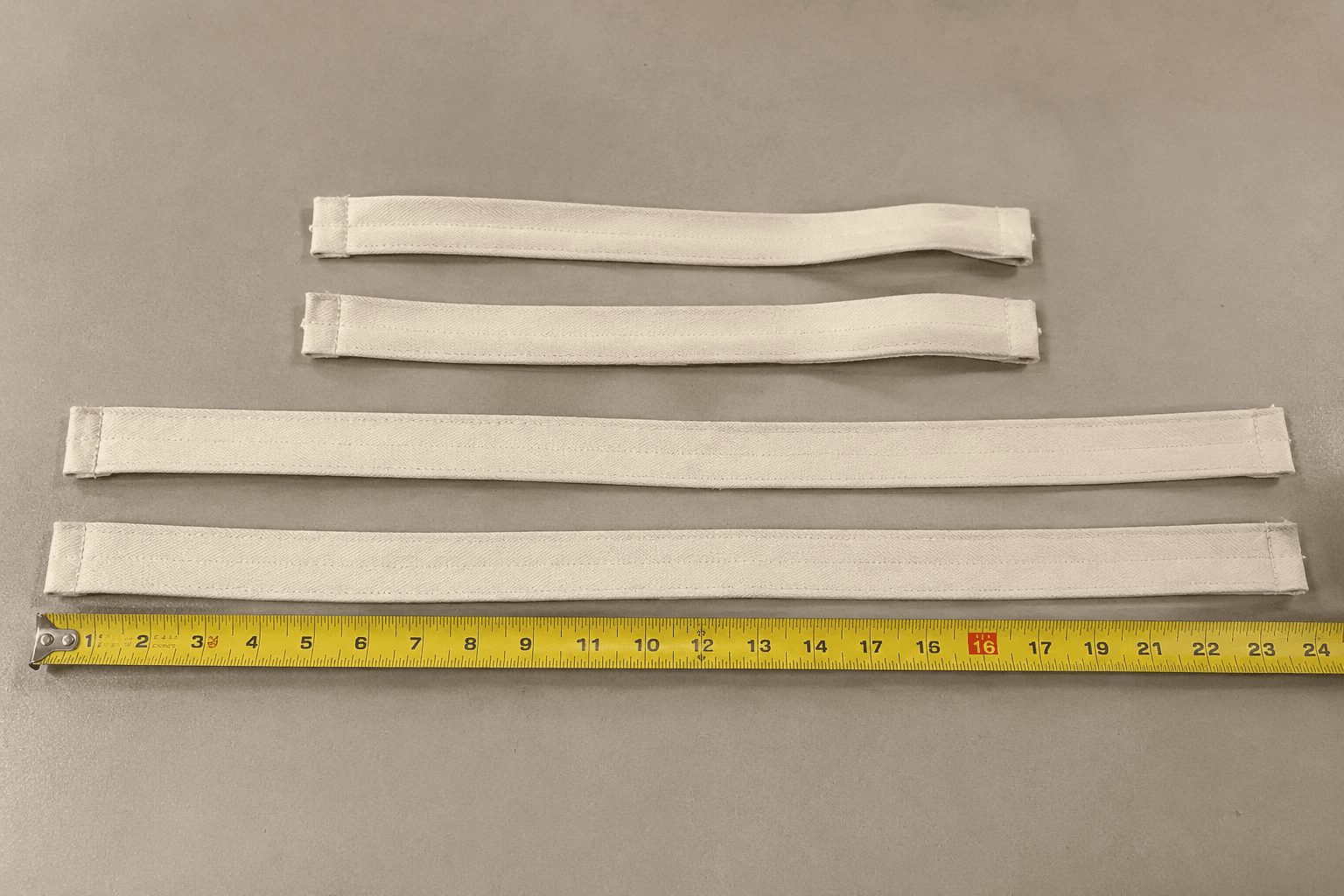
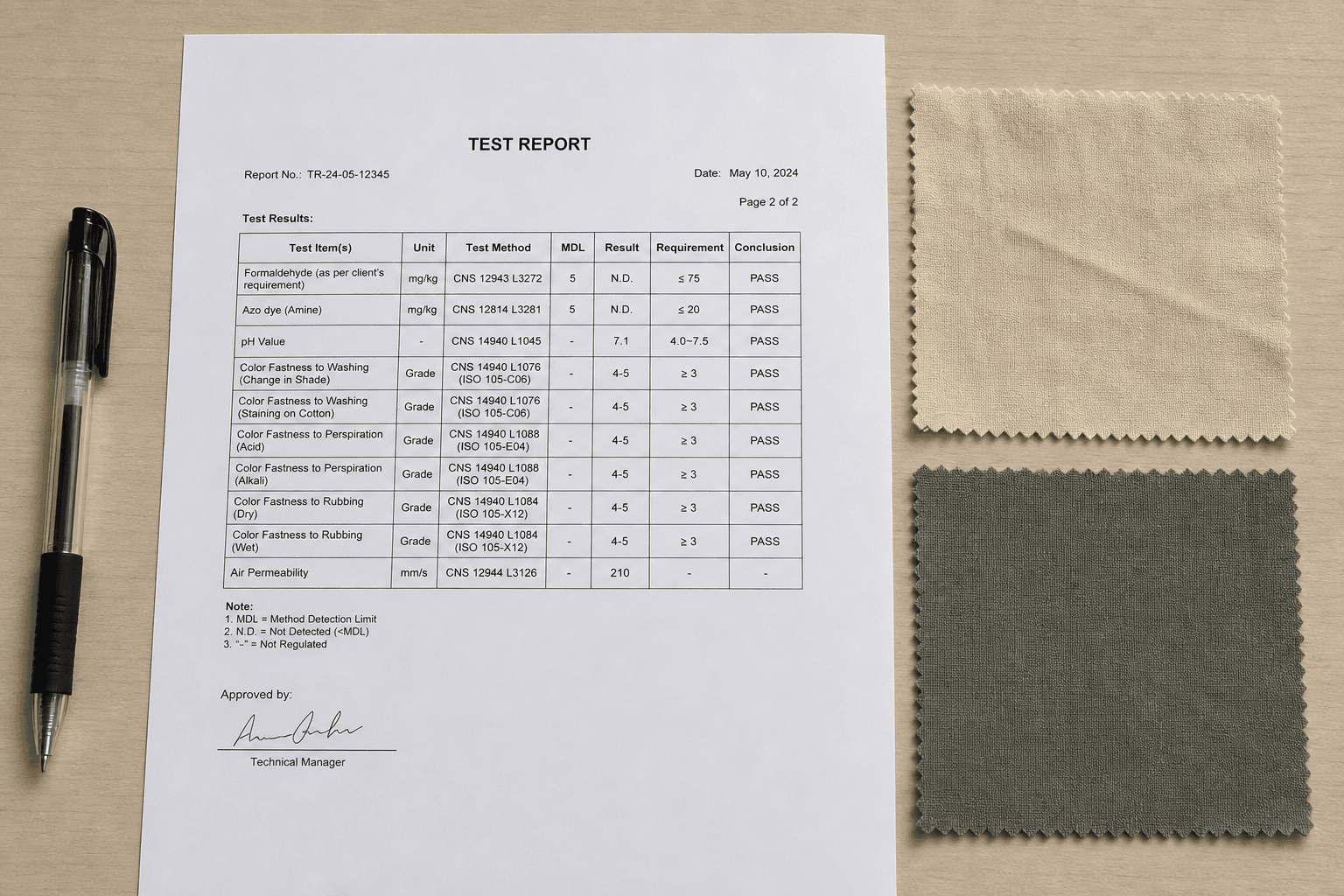
Formaldehyde-free claims on aprons: resin finishes, test limits and supplier declarations
Formaldehyde free aprons are a sourcing claim that must be tied to a test method, mg/kg limit and component scope. Before dyeing or cutting, buyers should define ISO 14184-1, AATCC 112 or equivalent testing, whether the claim covers the finished apron, and how MOQ, lead time, AQL release and supplier declarations will be handled.
Dental clinic aprons: fluid resistance, white fabric maintenance and professional branding
Dental clinic aprons need specified splash resistance, opaque 200-240 GSM white fabric, wash-stable trims and restrained branding so they still look clinical after 30-50 laundry cycles.
Acid-wash and overdyed aprons: controlling vintage effects in bulk production
For B2B buyers, <strong>acid wash aprons</strong> are difficult because the vintage effect must stay repeatable across 500, 5,000, or 30,000 pieces. The real controls are shade range, abrasion placement, shrinkage, crocking, trim staining, rework allowance, and AQL inspection cost, not whether one sample looks aged enough.
School cafeteria aprons: child-safe trims, stain resistance and institutional wash needs
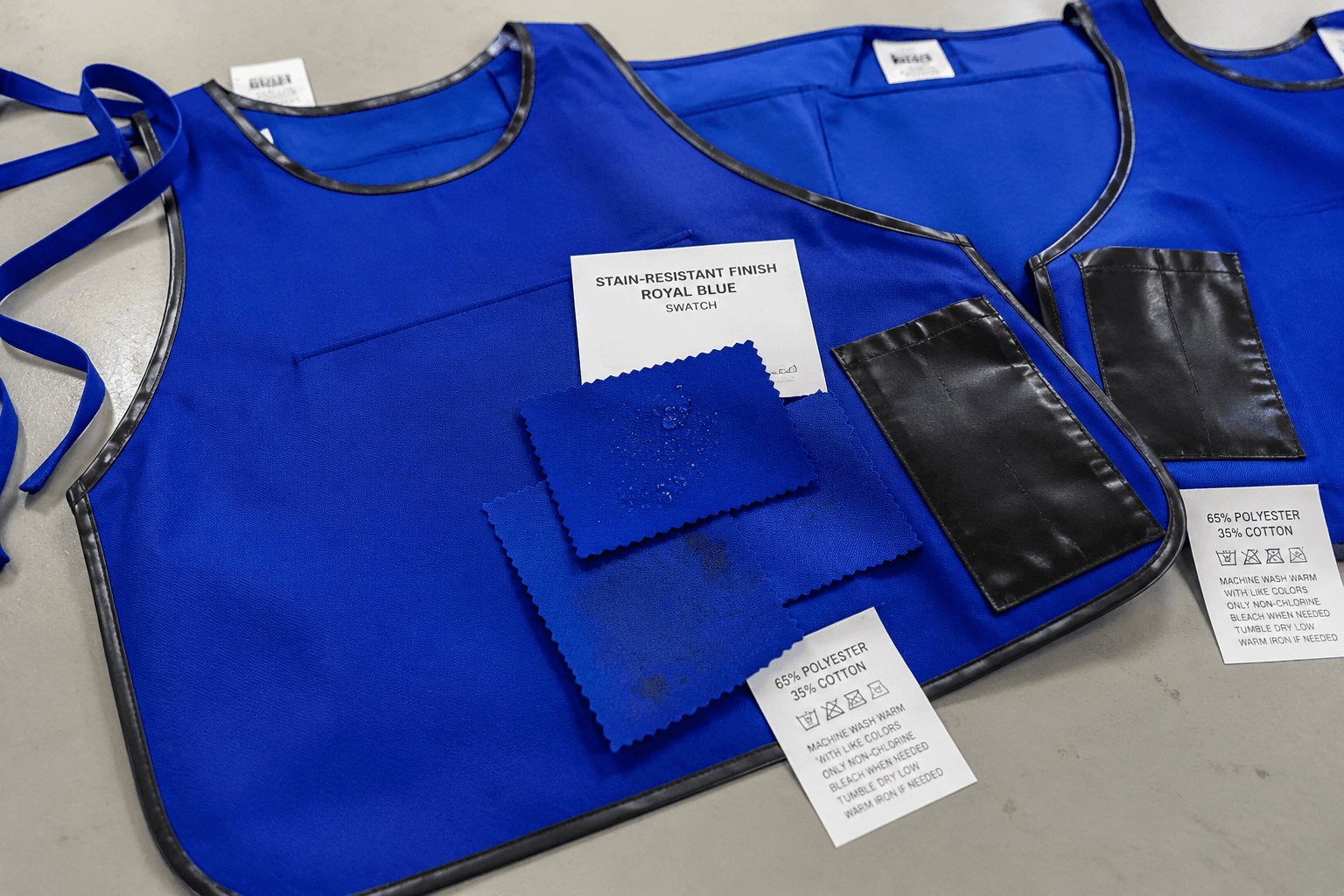
School cafeteria aprons need child-safe trims, stain-release fabric and wash-stable construction for 60-75°C institutional laundering three to five times per week. This guide gives B2B buyers concrete GSM, oz/yd2, MOQ, lead-time, AQL and unit-cost benchmarks for sourcing <em>school cafeteria aprons</em> that hold shape, color and pocket strength through a realistic school-year wash cycle.
Needle-hole leakage in waterproof aprons: where stitched seams fail and how factories seal them
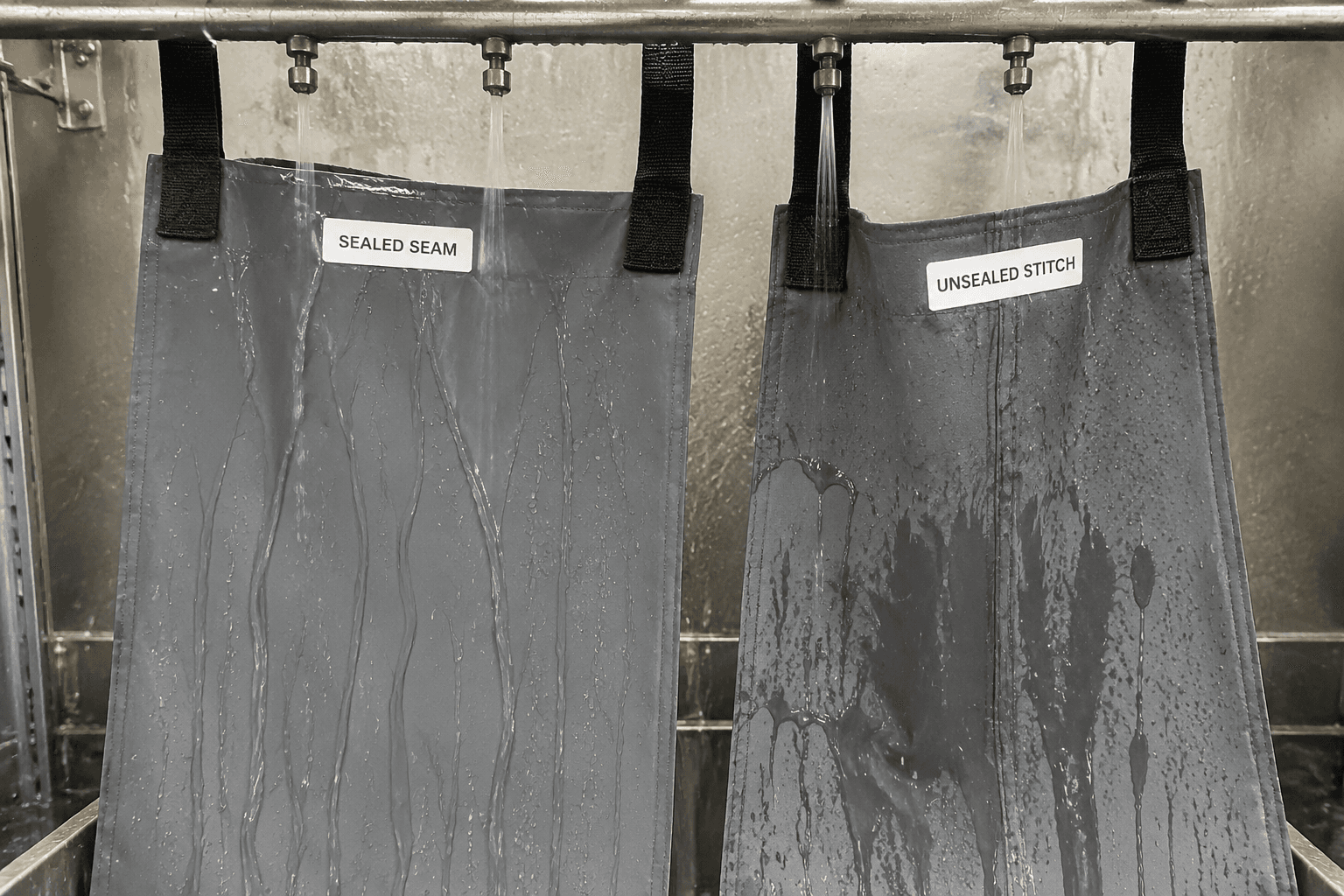
Waterproof apron seam leakage usually starts at needle holes around straps, pocket corners, hems, side seams, labels, and reinforcement stitches, not in the coated fabric panel. For B2B buyers, reliable sourcing depends on specifying fabric weight, needle size, stitch length, seam tape width, sealing temperature, finished-apron testing, MOQ, lead time, unit cost, and AQL acceptance before bulk production starts.
Migration testing for printed logos on aprons: preventing adhesive bleed and ghost marks after heat
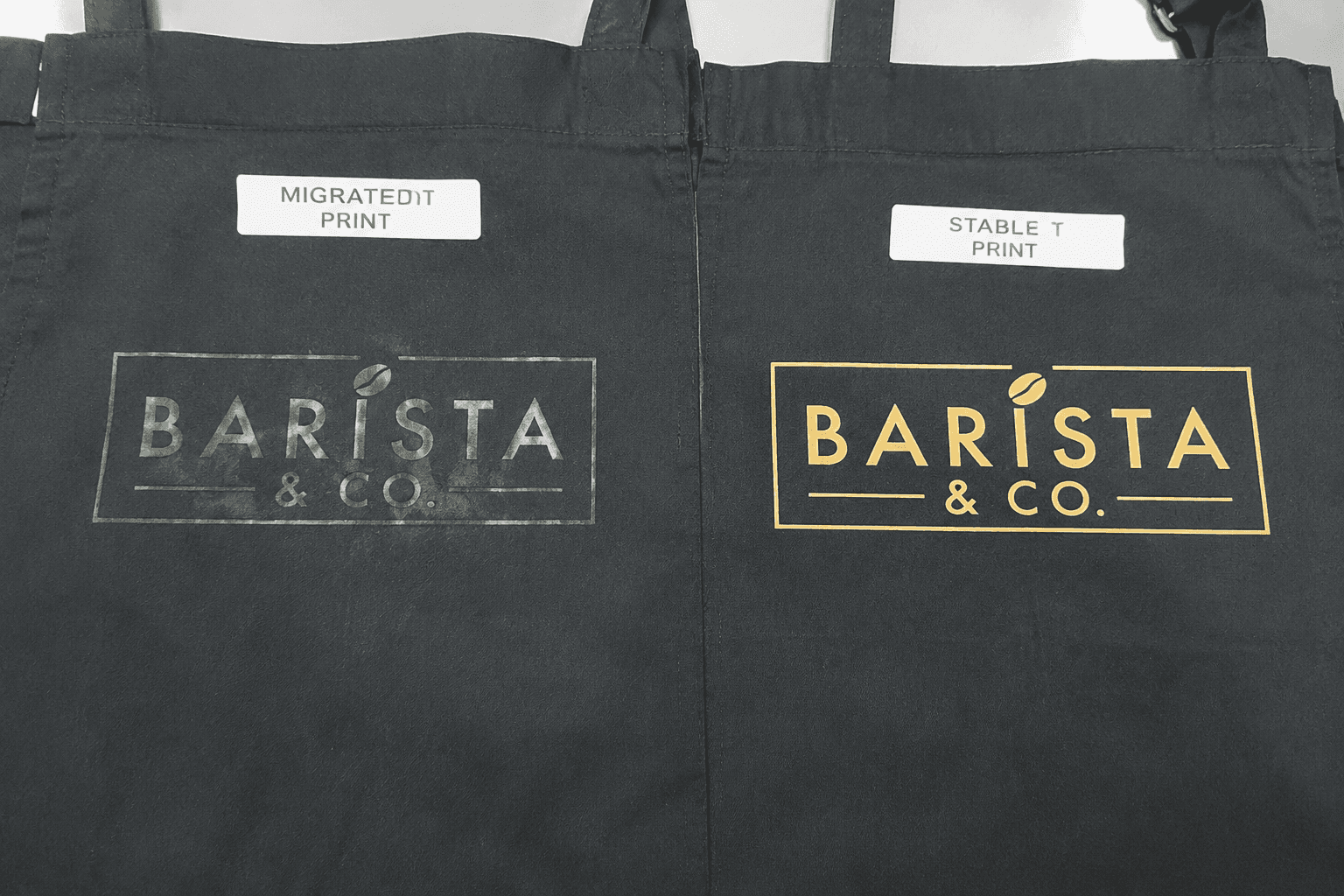
Apron logo migration testing verifies that white, cream, pale grey, metallic, reflective, and silicone logos stay clean on the approved apron fabric after pressing, cooling, 24-72 hours of rest, warm carton storage, fold pressure, rubbing, and wash checks. For B2B buyers ordering 500-10,000 custom aprons, this test prevents dye shadowing, adhesive bleed, carrier-sheet ghost marks, tacky edges, and logo lift before the factory cuts and decorates bulk fabric.
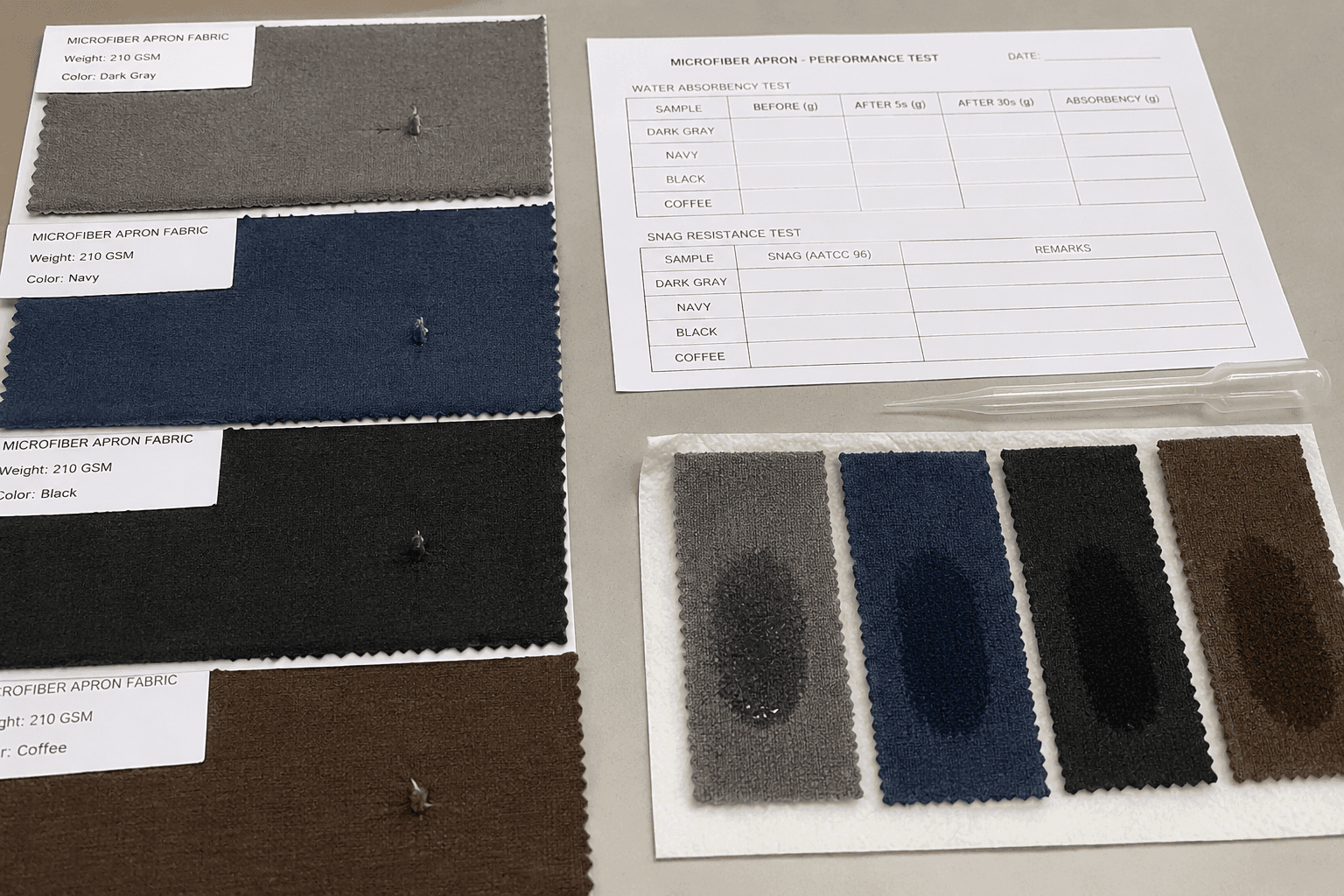
Microfiber aprons for cleaning teams: absorbency, snagging and laundering concerns
<strong>Microfiber aprons</strong> can be a practical uniform item for hotel housekeeping, janitorial, spa, clinic-support and auto-detailing teams when the buyer controls fabric weight, trim risk and laundry validation. A workable B2B specification is specific: 180 to 260 GSM finished microfiber, 100% polyester or 80/20 polyester-polyamide, snag-safe trims, 30 to 50 commercial wash cycles, MOQ of 500 to 1,000 pieces per color, 25 to 45 days bulk lead time, and final inspection to AQL 2.5 major / 4.0 minor.
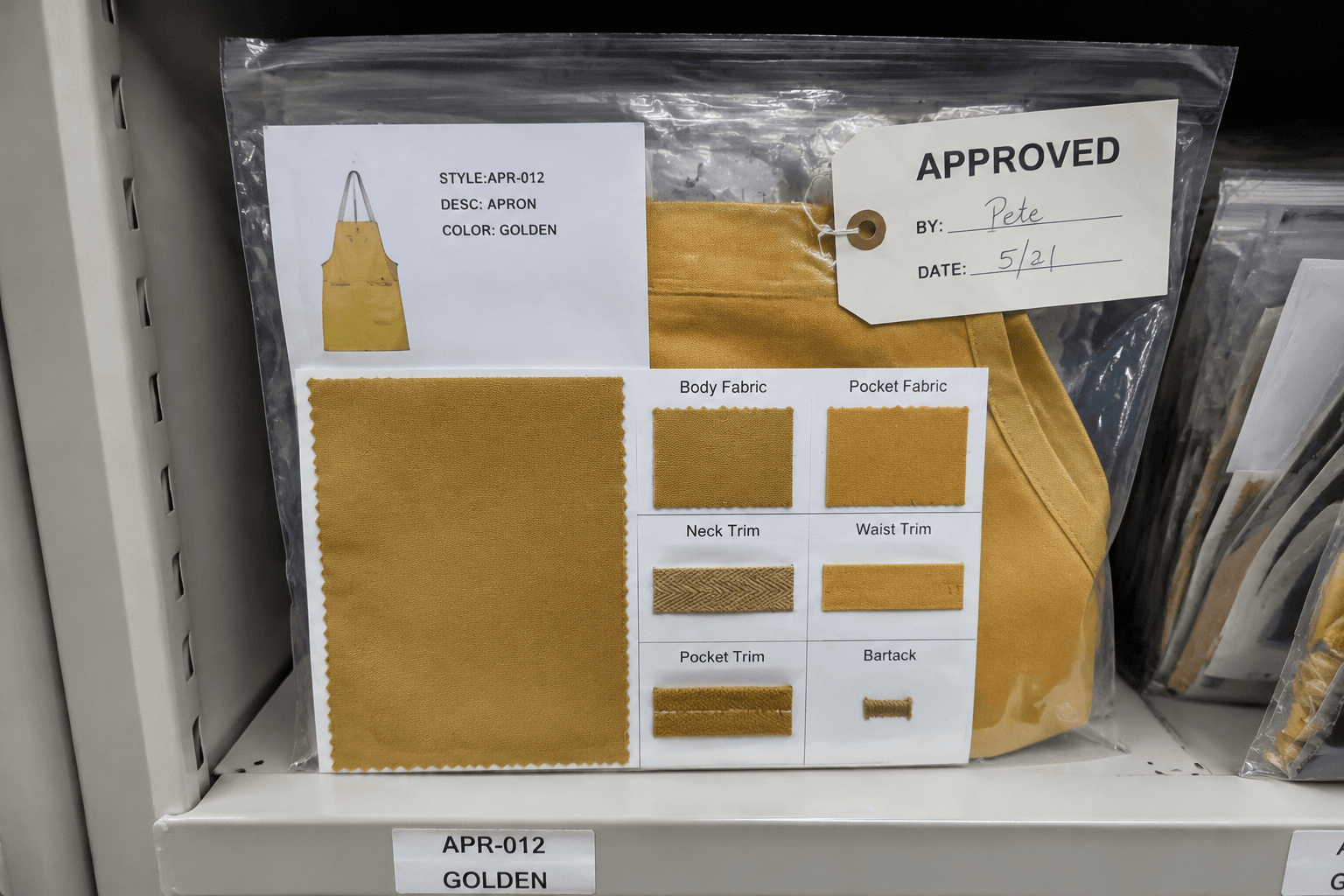
How to archive apron golden samples for repeat orders without spec drift
An <strong>apron golden sample</strong> protects repeat orders only when it is archived as a controlled production standard, not as a showroom piece. For B2B apron buyers, the archive should lock the approved BOM, fabric weight, trim sources, finished measurements, workmanship rules, packing method, AQL level and approval history so a reorder placed 90 to 365 days later stays aligned on fit, handfeel, logo placement, inspection criteria and landed cost.
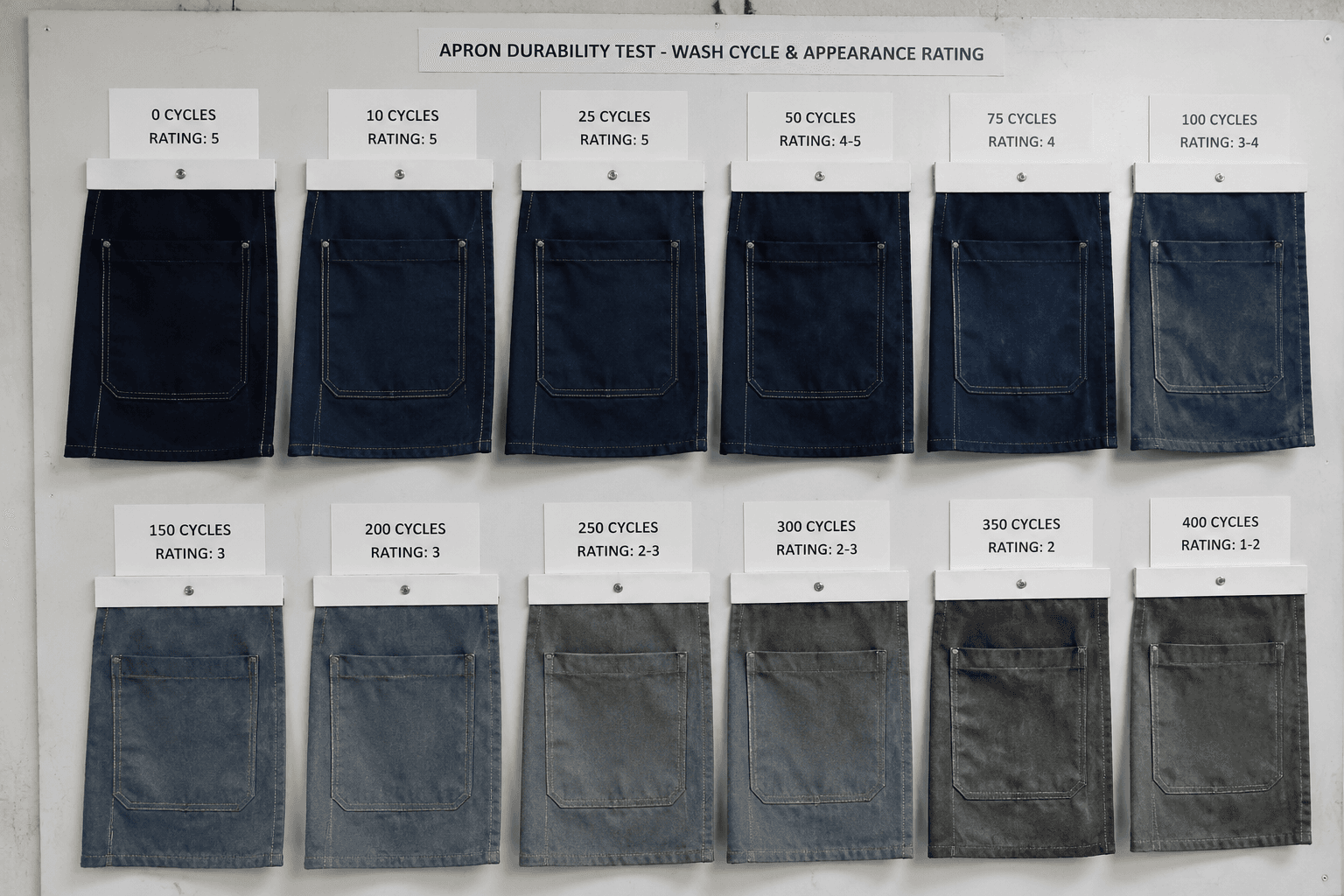
How many wash cycles should an apron spec promise: setting realistic pass-fail standards by use case
A credible <em>apron wash cycle specification</em> links the promised wash count to a defined laundry method, measurable pass-fail limits, and the apron’s real service environment. For B2B buyers sourcing custom aprons, that means specifying temperature, chemistry, drying, shrinkage, color change, seam strength, pocket integrity, and trim function before price approval, not after claims appear in the field.
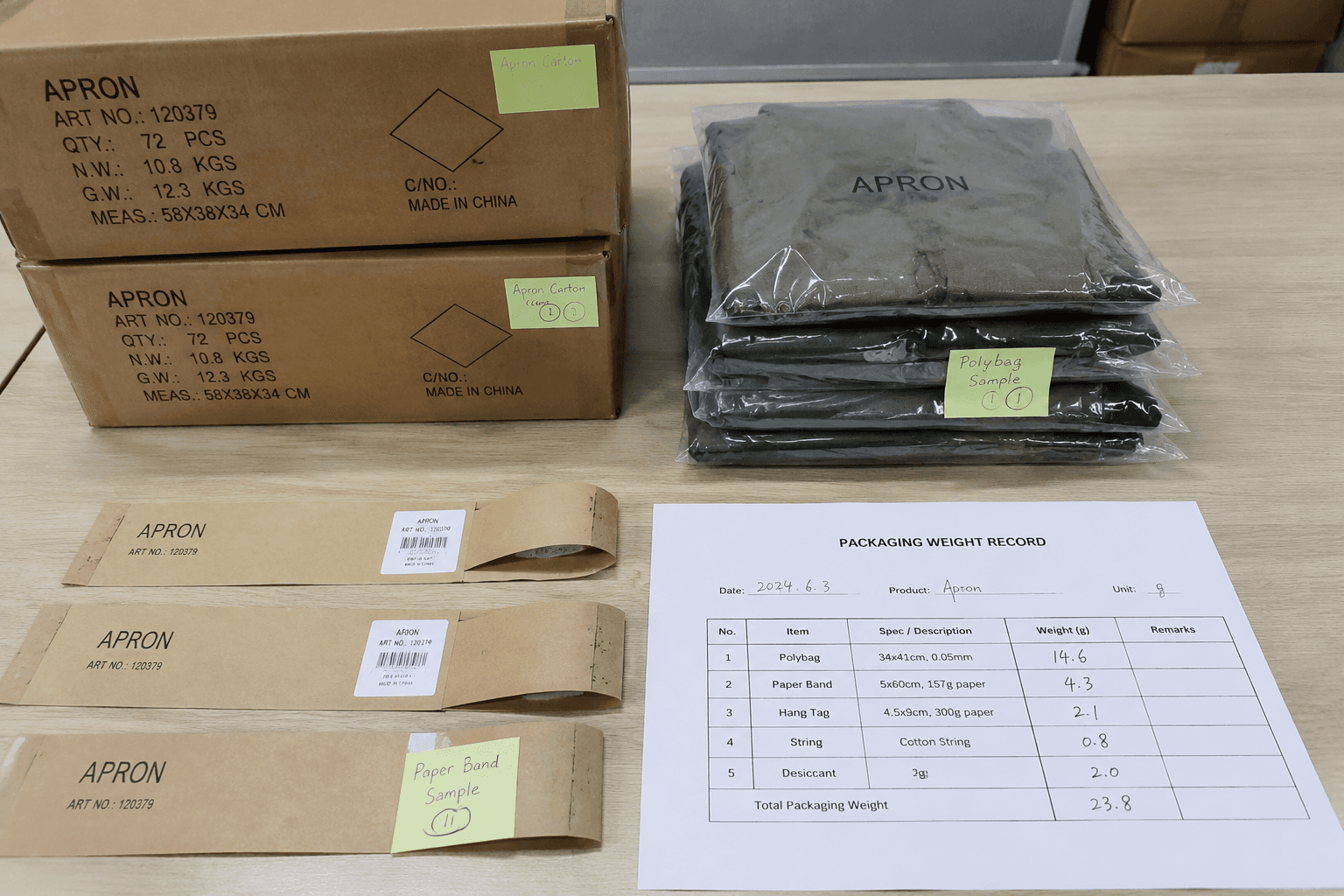
EU textile EPR and packaging rules for apron importers: what data buyers should collect
EU textile EPR and packaging rules now require apron importers to manage product and packaging data at SKU level. For <em>textile epr aprons</em>, buyers should collect verified net apron weight, fiber split, trim materials, packaging weights, carton details, data source and revision dates before vessel booking, because late estimates from suppliers are rarely accurate enough for EU reporting or internal cost control.
EU GPSR readiness for retail aprons: traceability, responsible person and product files
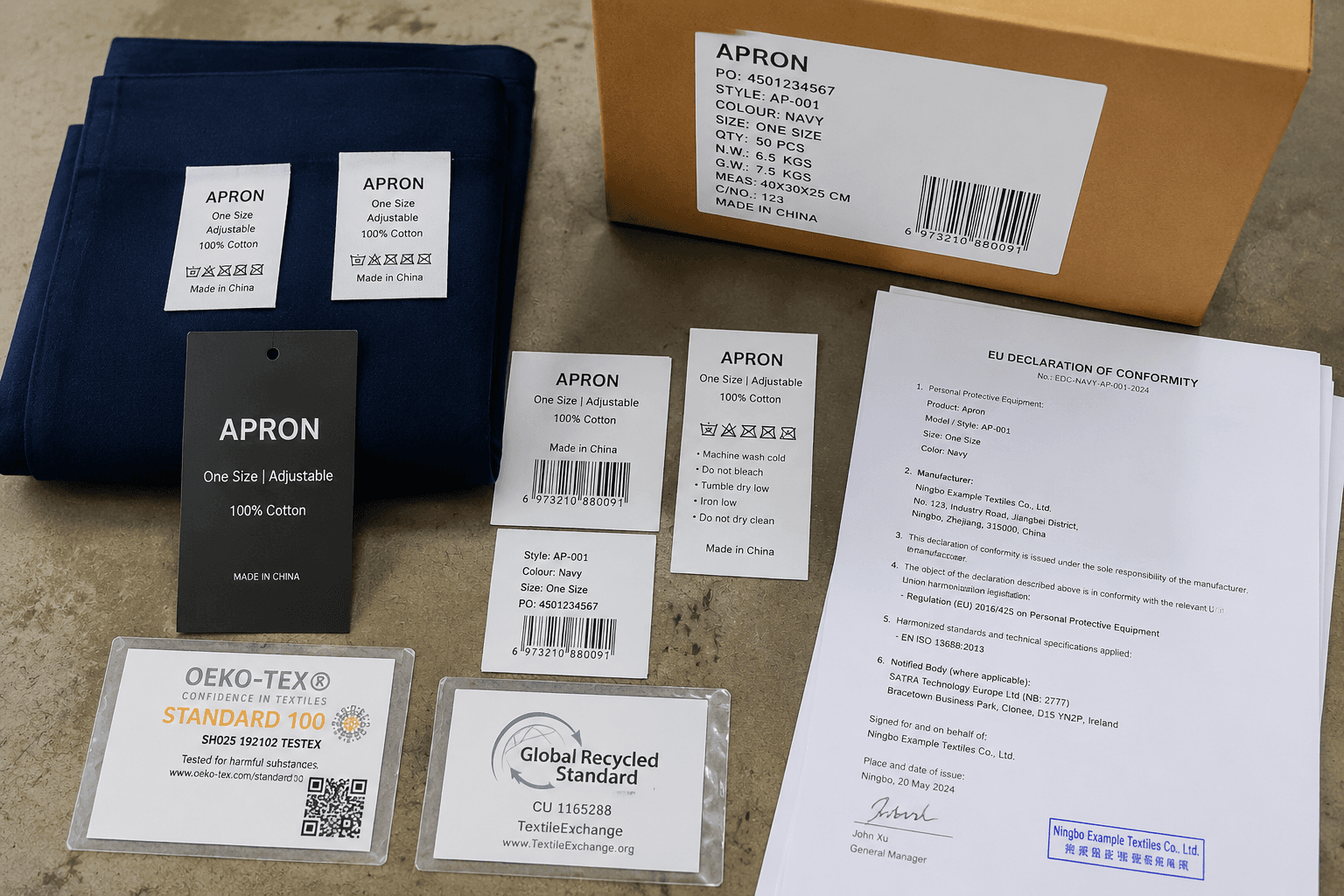
<strong>gpsr aprons</strong> for EU retail need more than a corrected care label. Before shipment, each private-label style should have a named EU responsible person, a SKU-level product safety file, and lot traceability linking fabric weight, BOM version, trims, decoration, packaging, AQL inspection, carton range, and shipment history.
CVC apron fabrics: choosing cotton-rich blends for wash durability and handfeel
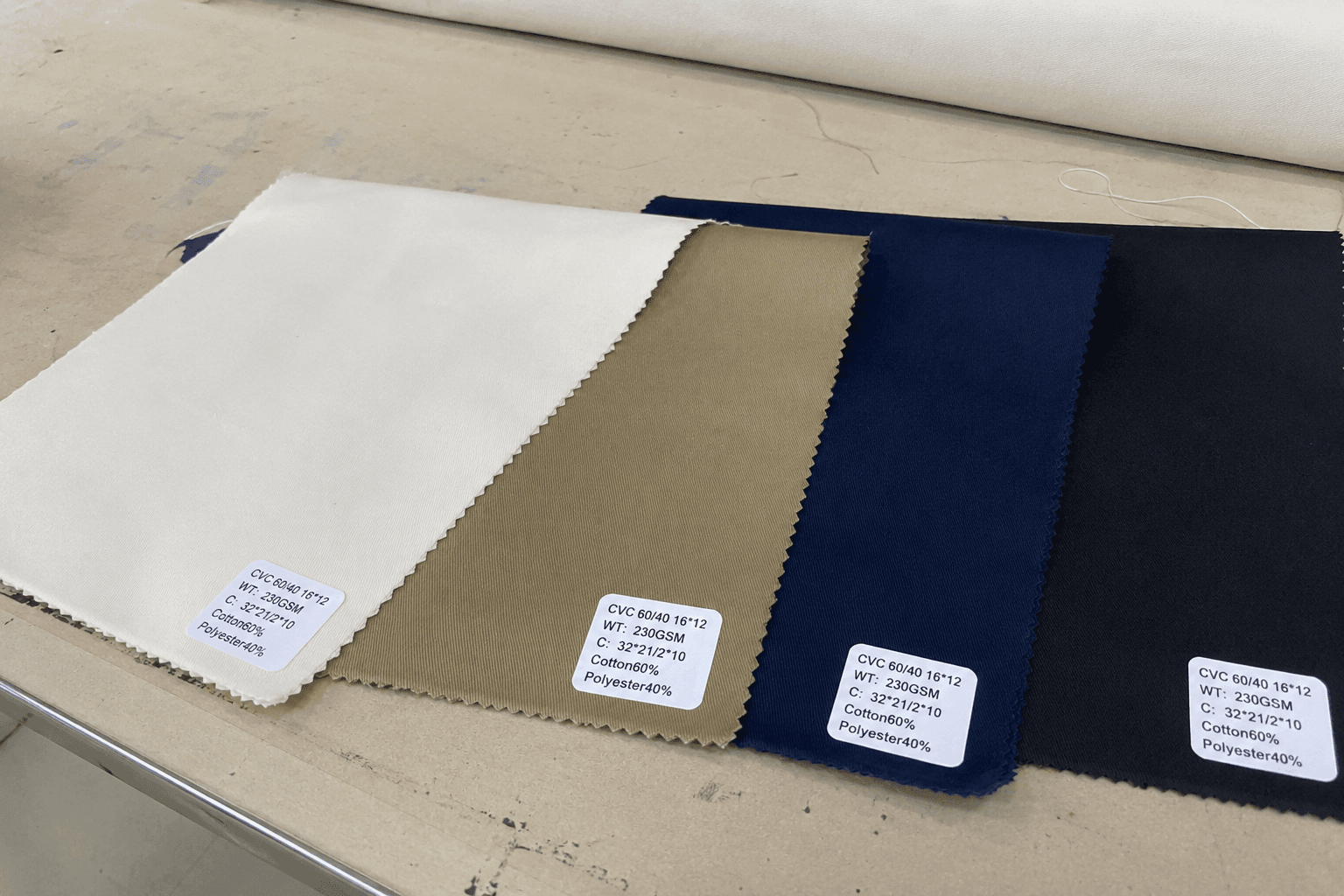
For professional apron buyers, <strong>cvc apron fabric</strong> is a cotton-majority cotton/polyester blend used when an apron needs cotton-like handfeel, faster drying, and better size control than 100% cotton. This guide explains practical ratios, 180-280 GSM weight ranges, twill options, wash-test targets, AQL levels, MOQ, lead time, and realistic FOB pricing for repeatable custom apron programs.
Casino and gaming floor aprons: security pockets, dark colors and frequent laundering
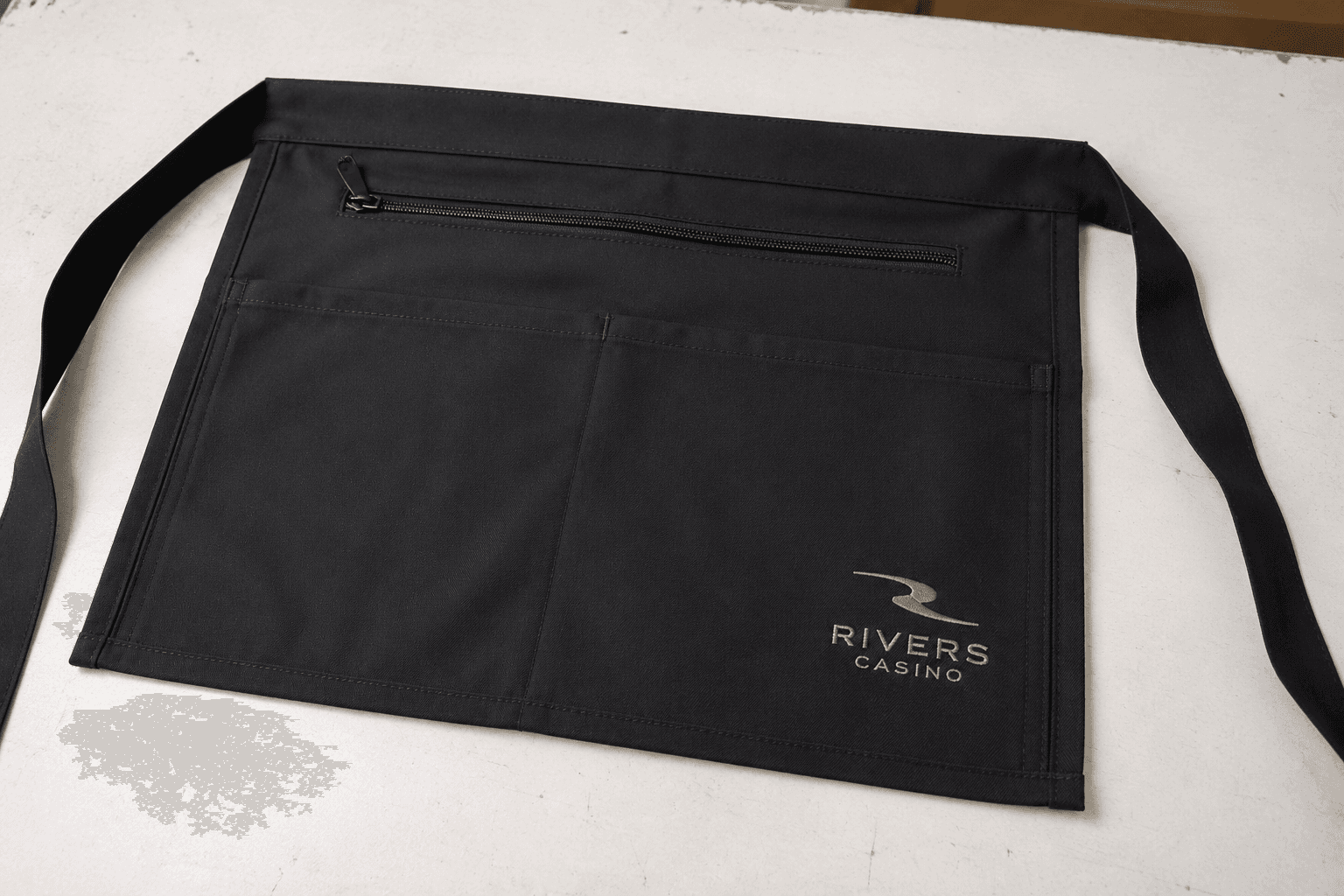
Professional <em>casino aprons</em> need a flat surveillance-friendly profile, controlled pocket capacity, dark shade stability and construction that survives 40-60°C commercial laundering. For B2B buyers, the sourcing decision should be built around 210-230 GSM fabric, 16-18 cm pocket depth, bartacked stress points, 500-3,000 pc MOQ, 25-40 day production lead time, realistic US$3.20-US$8.50/pc pricing and AQL 2.5/4.0 inspection control.
Bias-cut details on aprons: when diagonal fabric placement improves drape or wastes cloth
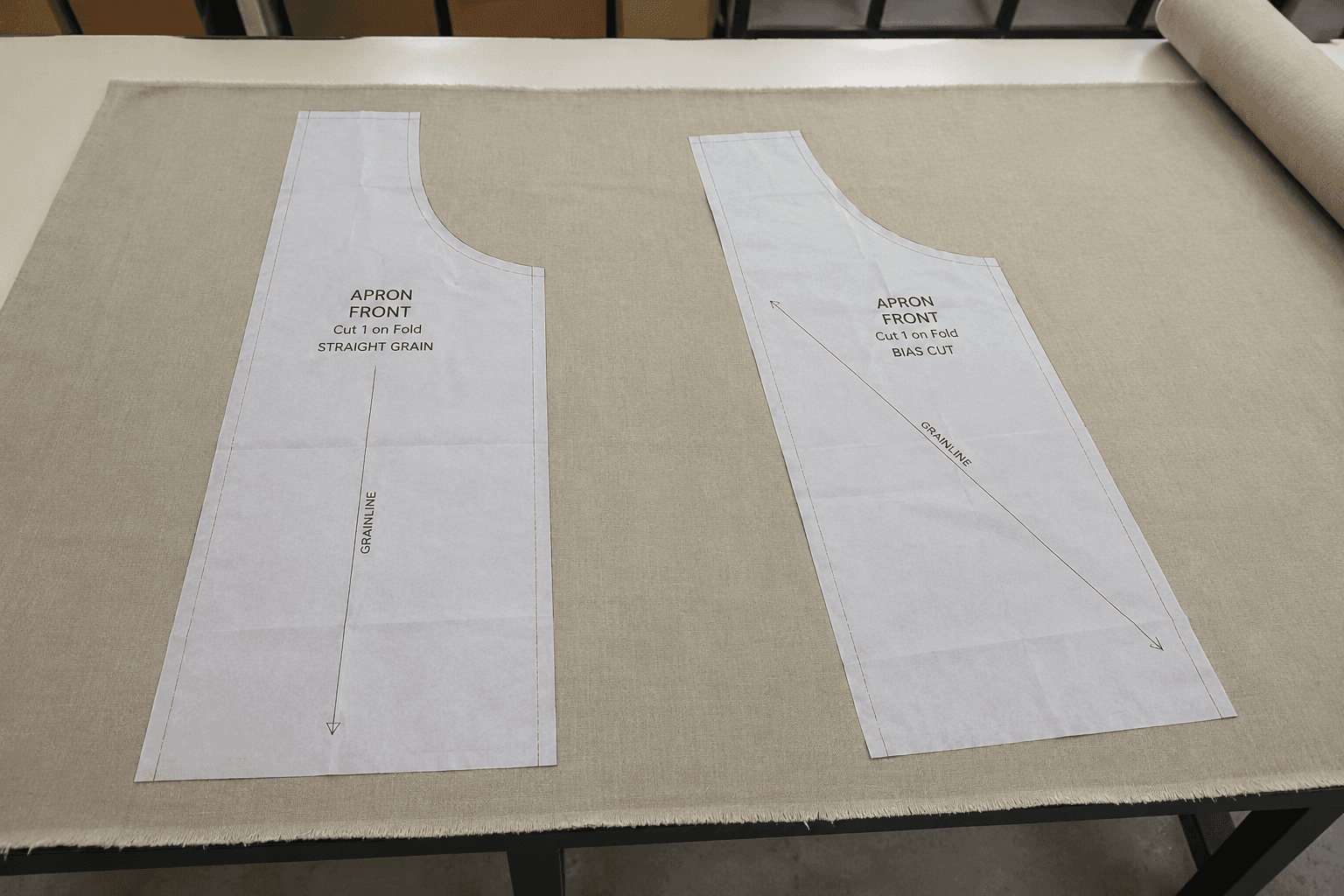
A <em>bias cut apron</em> can improve a shaped bib, soften long ties, and help a front-of-house uniform follow the body more naturally. The benefit is specific, not universal. In bulk apron sourcing, diagonal placement typically adds 8% to 18% shell fabric consumption, $0.35 to $1.20 FOB per piece, and 3 to 7 calendar days, so buyers should reserve bias cutting for components where drape, shoulder comfort, or knot quality is visible after wash and wear testing.
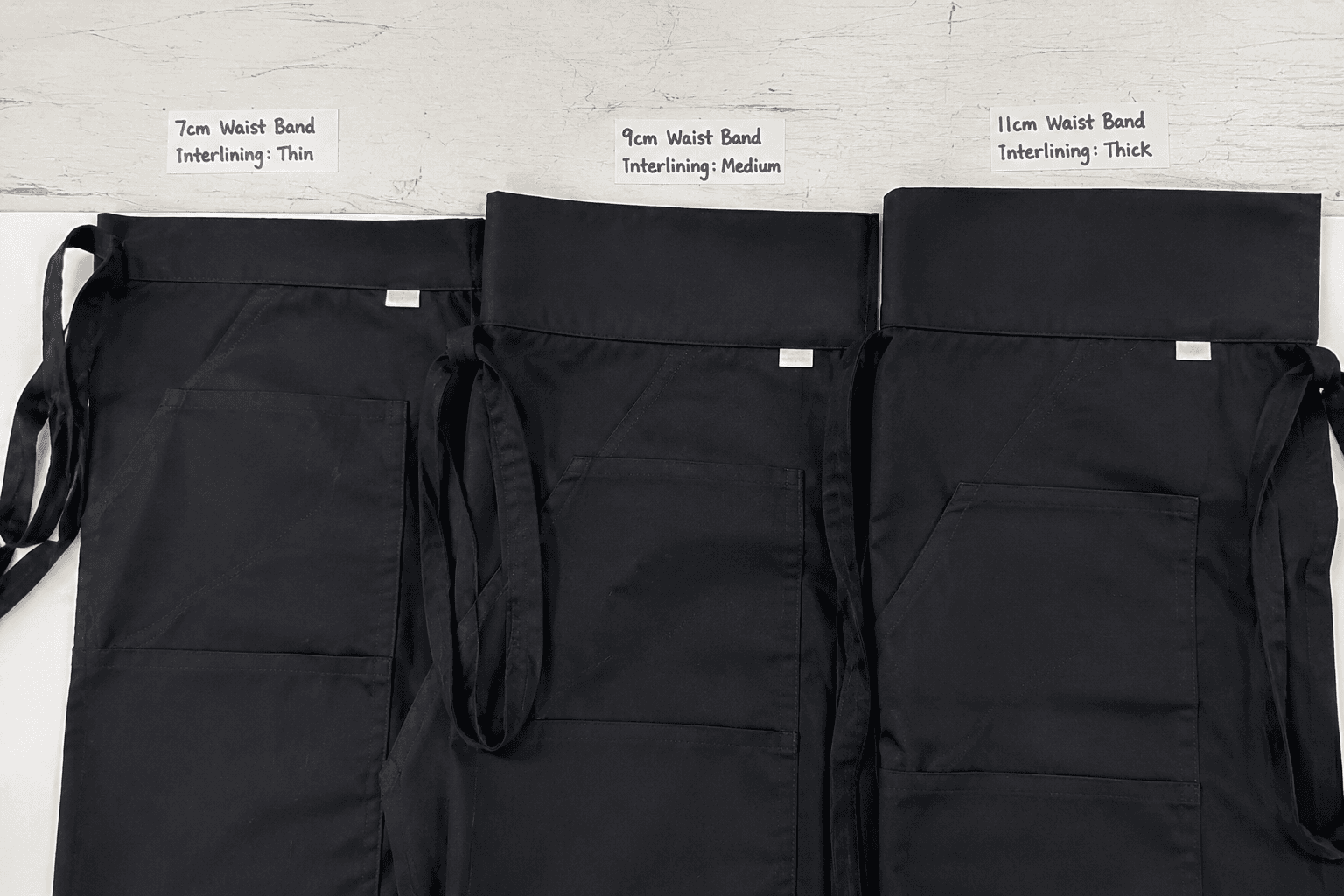
Apron waistband height and stiffness: comfort trade-offs for waist and bistro aprons
<strong>Apron waistband construction</strong> controls waist pressure, pocket stability, post-wash appearance, defect rates, and landed cost in bulk waist and bistro apron orders. For professional sourcing, buyers should lock finished waistband height, shell fabric GSM, fusible GSM, tie insertion, bartack placement, shrinkage tolerance, and AQL levels before PP approval. Leaving the waistband to sample-room judgment is a common reason that a clean-looking apron becomes uncomfortable or inconsistent at 3,000-20,000 pcs.
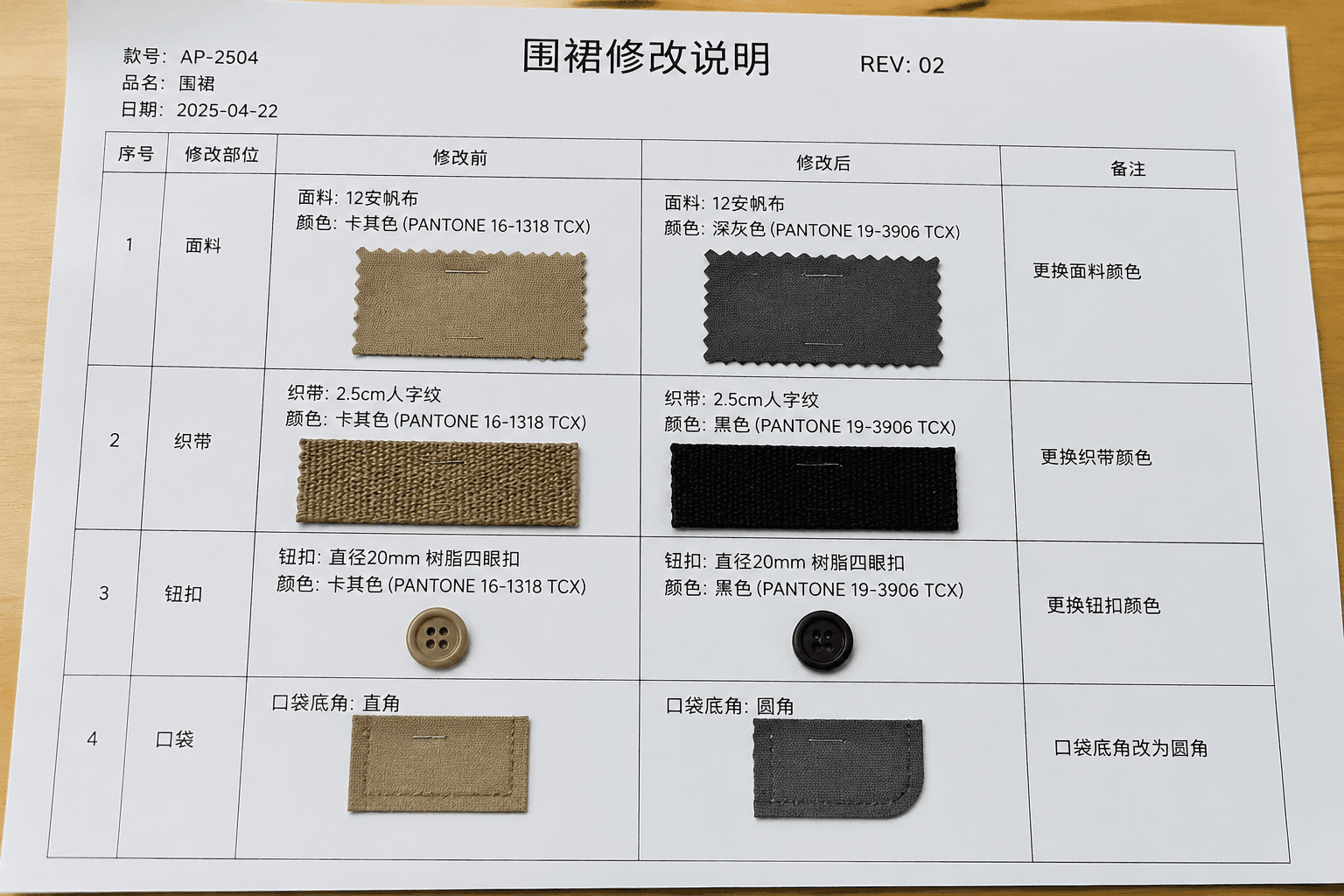
Apron specification change control: how to update fabric, trim or fit after first bulk order
Apron specification change control gives B2B buyers a practical way to revise fabric, trim, fit, labeling or packing after a first bulk apron order. It prevents mixed versions, wrong inspection references, hidden MOQ or lead-time exposure, and cost disputes over GSM, shrinkage, trim sourcing, AQL standards and unit price before the next PO is cut.
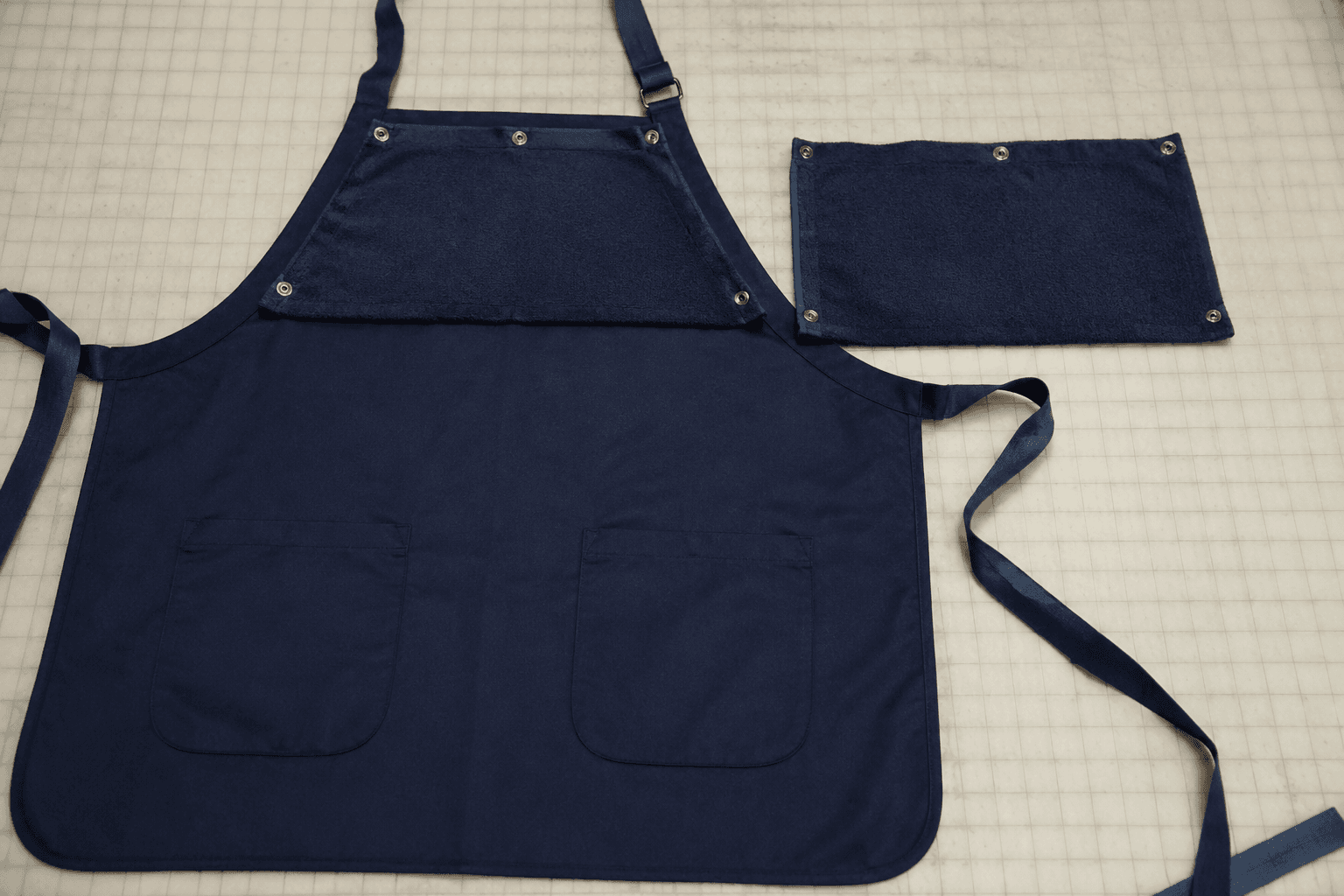
Apron snap-off towel systems: laundering, replacement and hygiene considerations
A <strong>snap off towel apron</strong> performs well in foodservice only when the apron body, removable towel, snap hardware, reinforcement, wash testing, spare towel ratio and replacement SKU are specified as one OEM system before bulk production.
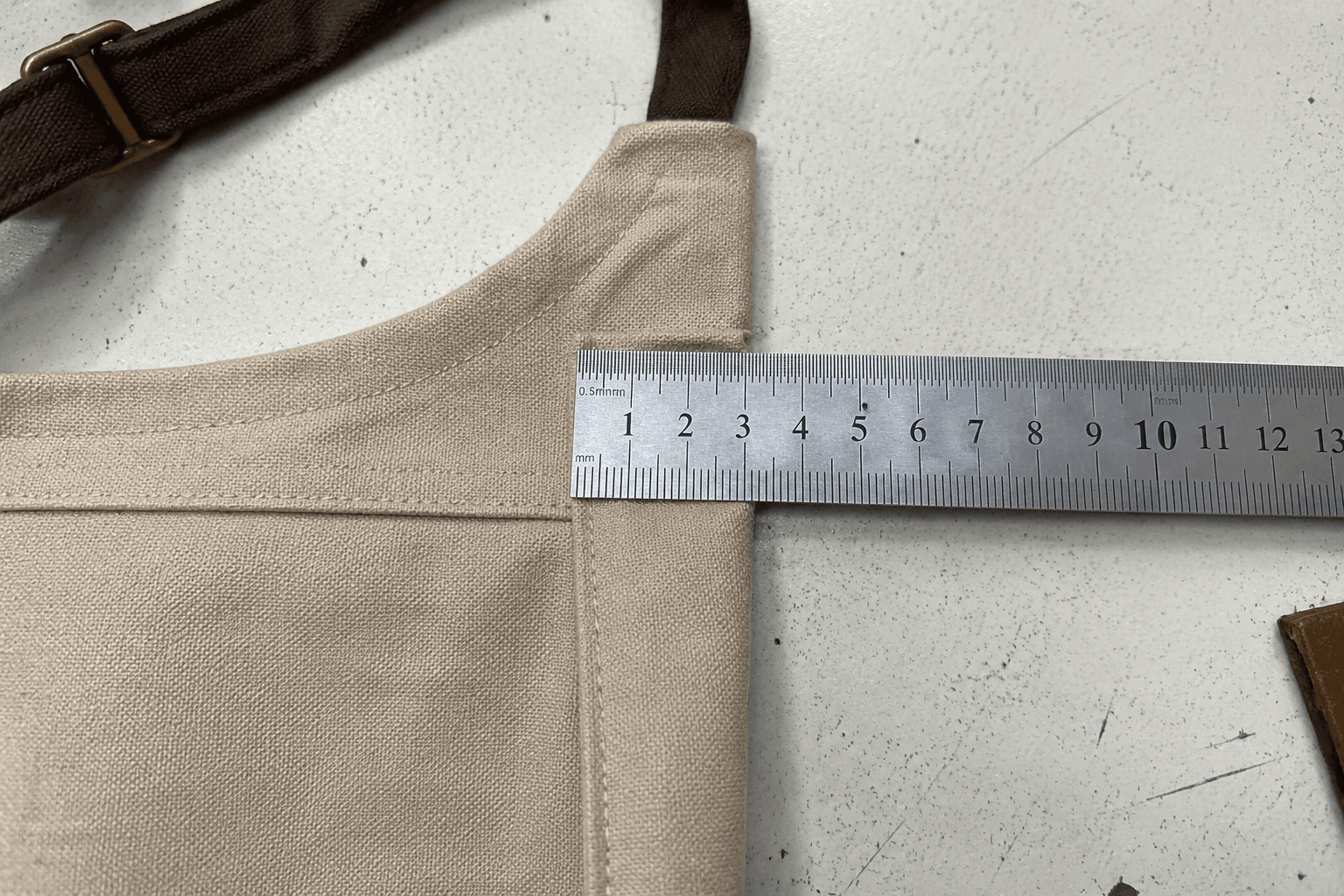
Apron seam allowance standards: why hidden construction measurements affect strength and cost
Apron seam allowance is a hidden pattern measurement that affects seam strength, fabric yield, sewing speed, wash durability, inspection results, and FOB cost. For B2B buyers sourcing 180-420 GSM aprons, moving from an 8 mm single fold to a 12 mm + 12 mm double fold can add USD 0.03-0.18 per piece, but it can also prevent pocket, strap, and hem failures after 30-60 commercial wash cycles.
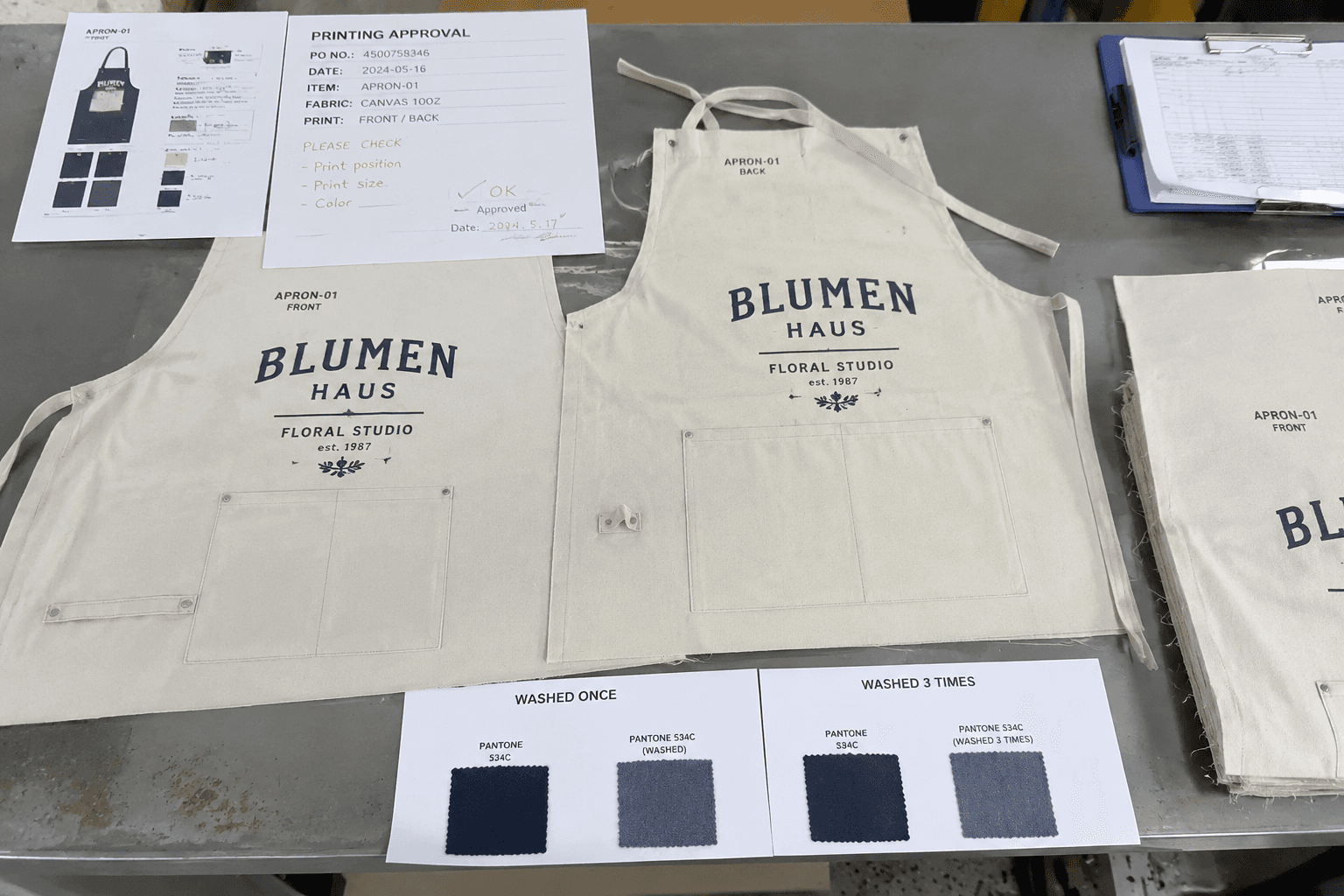
Apron print strike-off approvals: checking scale, edge sharpness and wash change before bulk
An apron print strike off is the buyer’s last low-cost checkpoint before bulk printing. It should confirm logo scale in millimeters, placement tolerance, edge sharpness, ink opacity, hand feel and wash change on the same 190-340 GSM apron fabric planned for production.
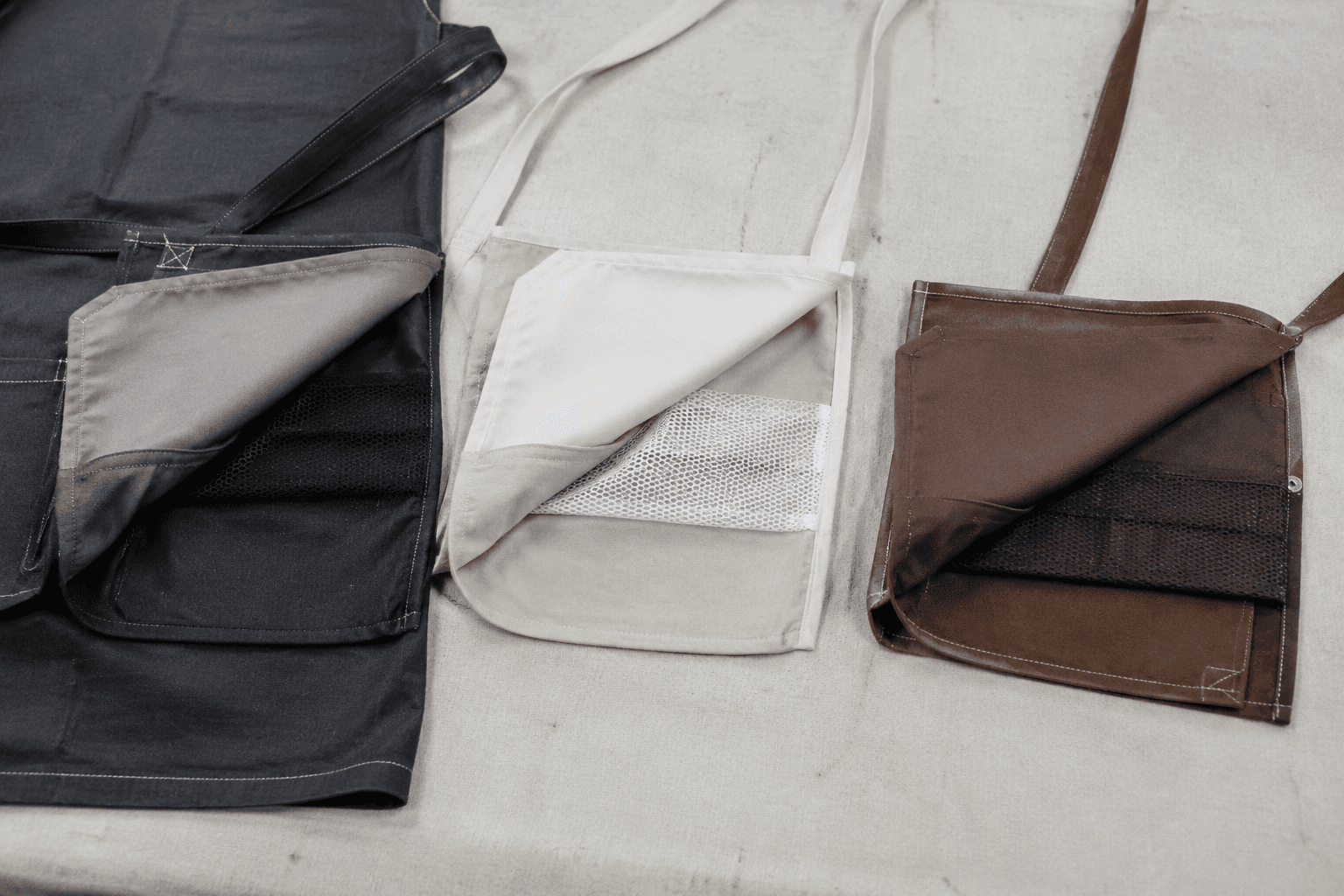
Apron pocket bag materials: self-fabric, lining cloth and mesh options compared
The right <strong>apron pocket bag material</strong> can move apron FOB by $0.08 to $0.28 per piece, change pocket sewing time by 15 to 35 seconds, and decide whether pockets stay flat after 20 washes or fail at the corners. This guide compares self-fabric, woven lining cloth, and mesh pocket options with practical B2B data on GSM, oz, MOQ, lead-time days, reinforcement, and AQL controls for custom apron sourcing.
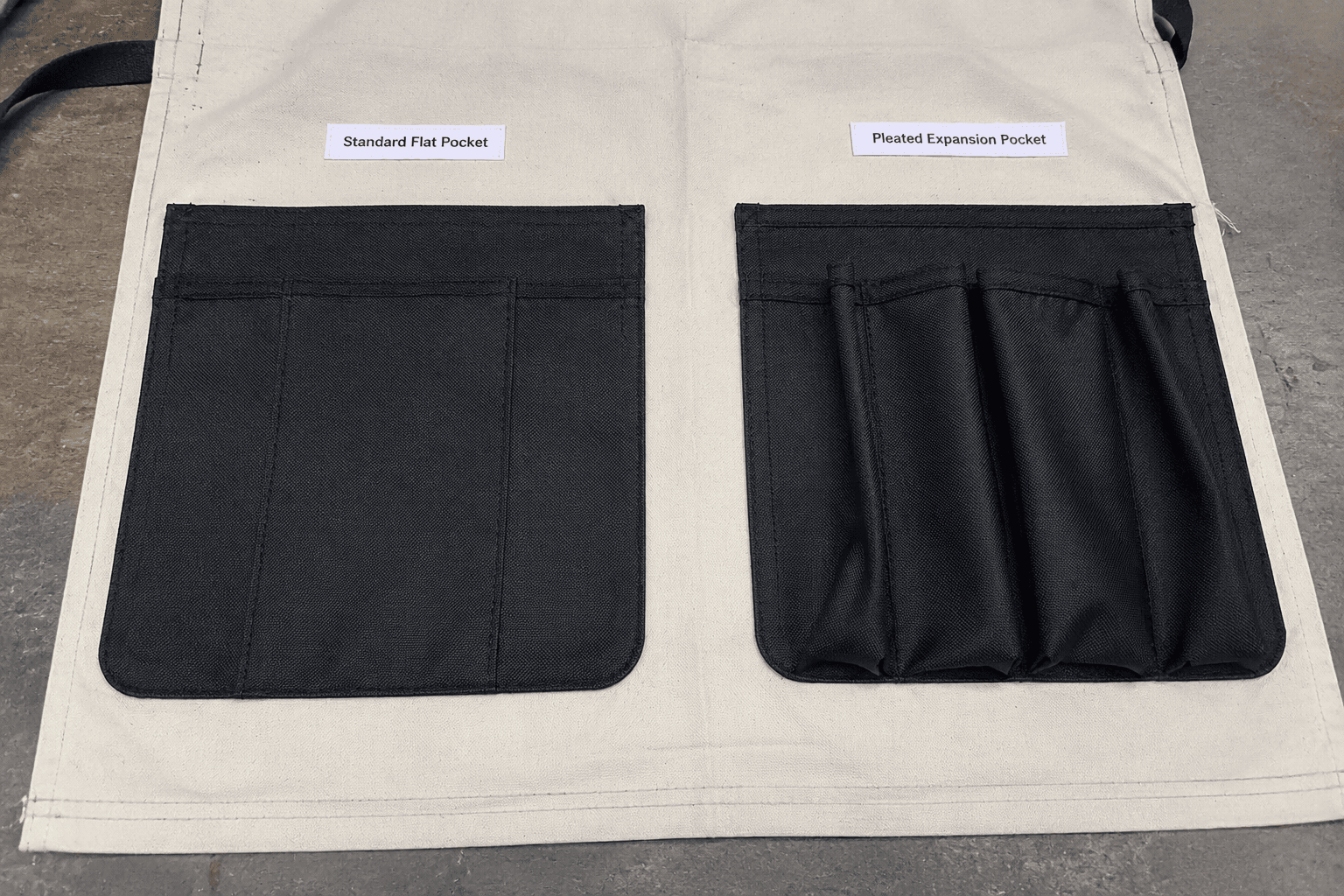
Apron pleats and expansion pockets: adding capacity without bulky silhouettes
For professional uniform programs, <strong>apron expansion pockets</strong> add measurable carrying capacity without turning the apron front into a loose pouch. The most reliable OEM result comes from sizing pockets around actual tools or devices, specifying pleat depth in millimeters, matching construction to 220-320 GSM twill or 8-10 oz canvas, and controlling sample approval, AQL, wash shrinkage and carton pressure before bulk cutting.
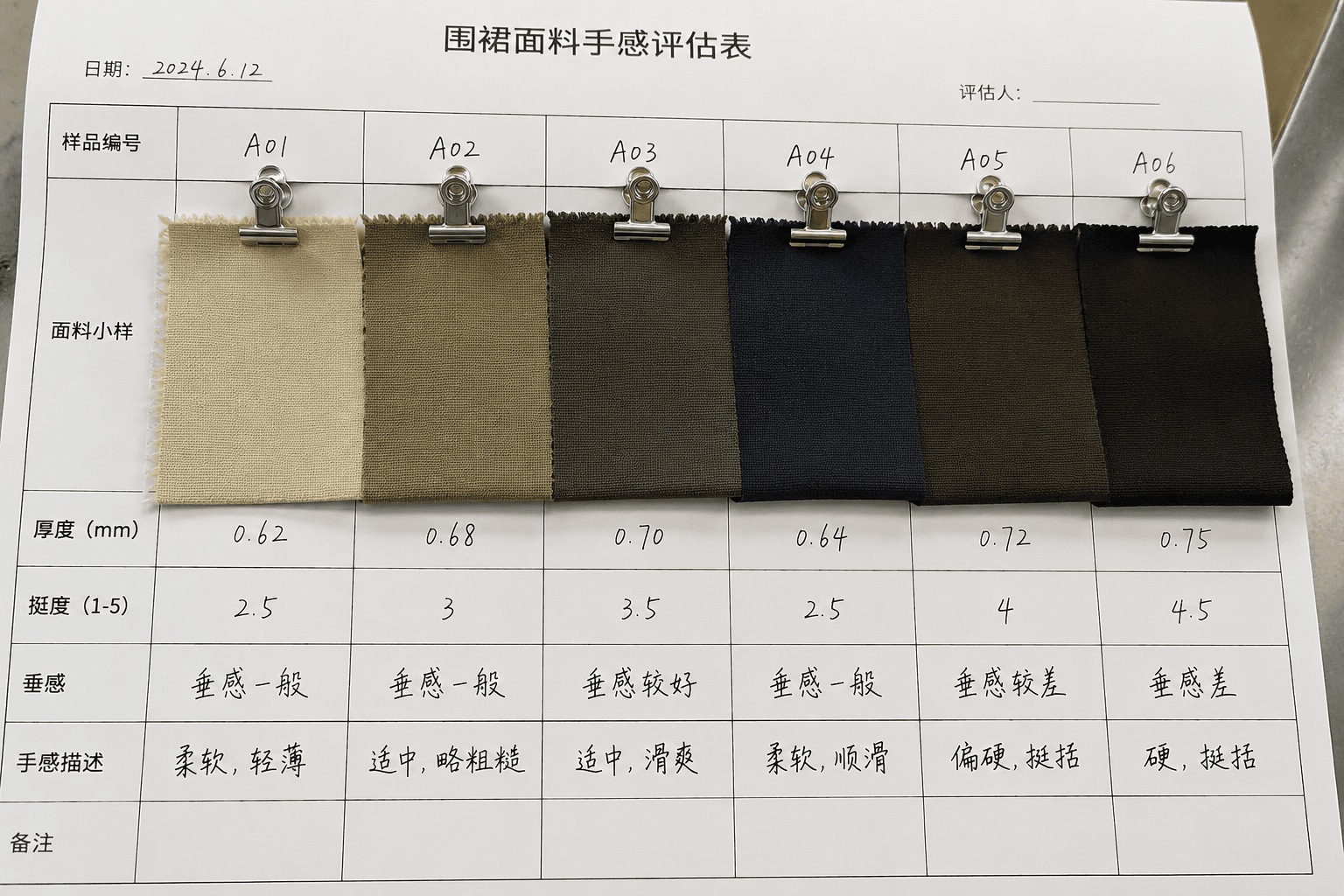
Apron fabric handfeel approval: how buyers can standardize softness, stiffness and drape
Apron fabric handfeel approval converts “soft,” “stiff” and “good drape” into signed production standards before bulk fabric is dyed, finished or cut. For OEM apron buyers, the approval file should include sealed swatches, one finished apron sample, GSM or oz tolerance, wash status, decoration test results, AQL levels and a written hold rule for any roll that feels rougher, boardier or limper than the approved control.
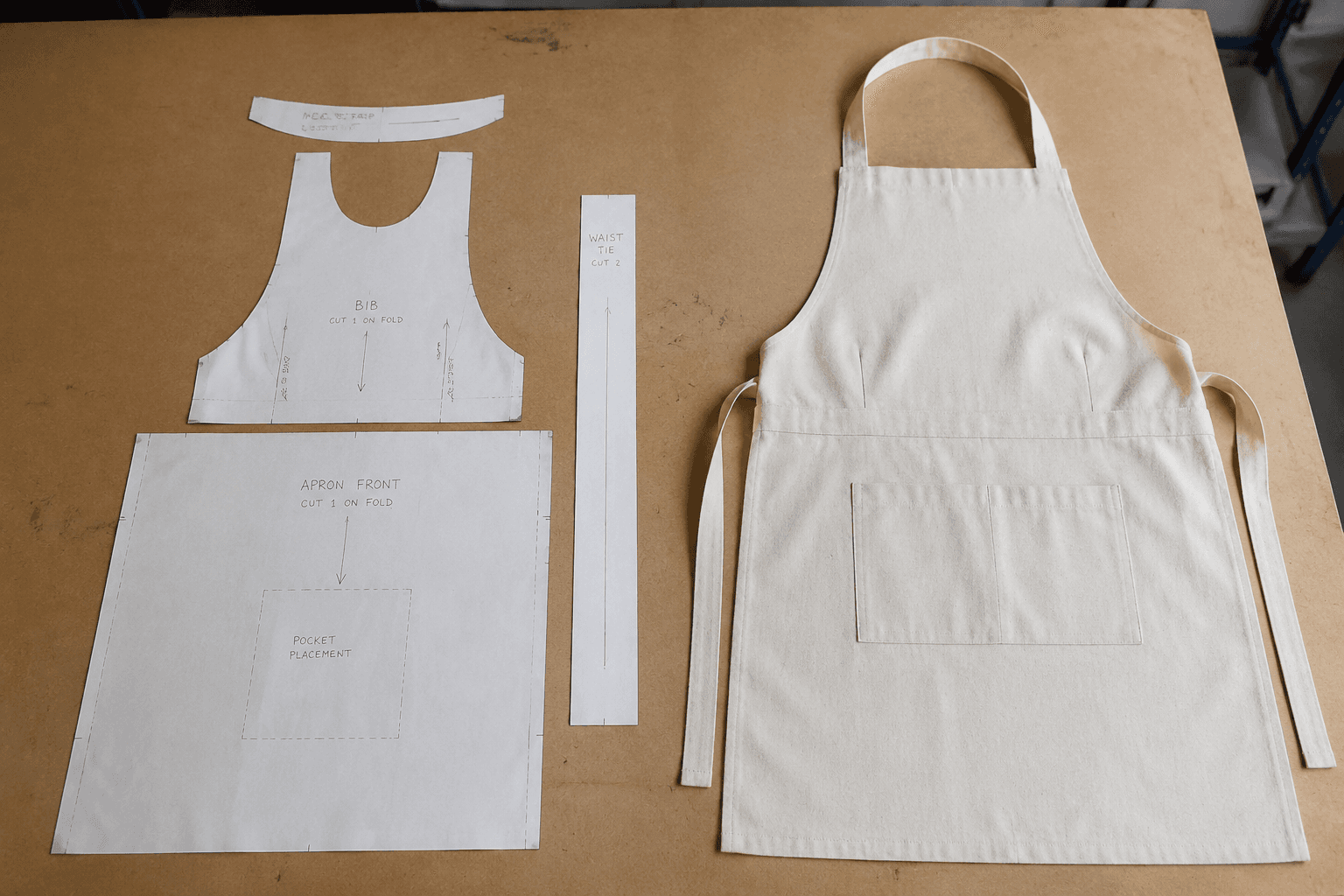
Apron dart and shaping options: improving chest fit without complicating bulk sewing
<strong>Apron dart construction</strong> improves bib stability only when the fit issue, fabric weight and production method are defined before bulk cutting. In OEM sourcing, a pair of side darts on a bib apron can add US$0.04-US$0.25/pc, 8-18 seconds of sewing and pressing time, and new QC points such as dart intake, point position and finished upper bib width, so buyers should compare it against curved bib edges, strap-angle changes and size grading before approving bulk.
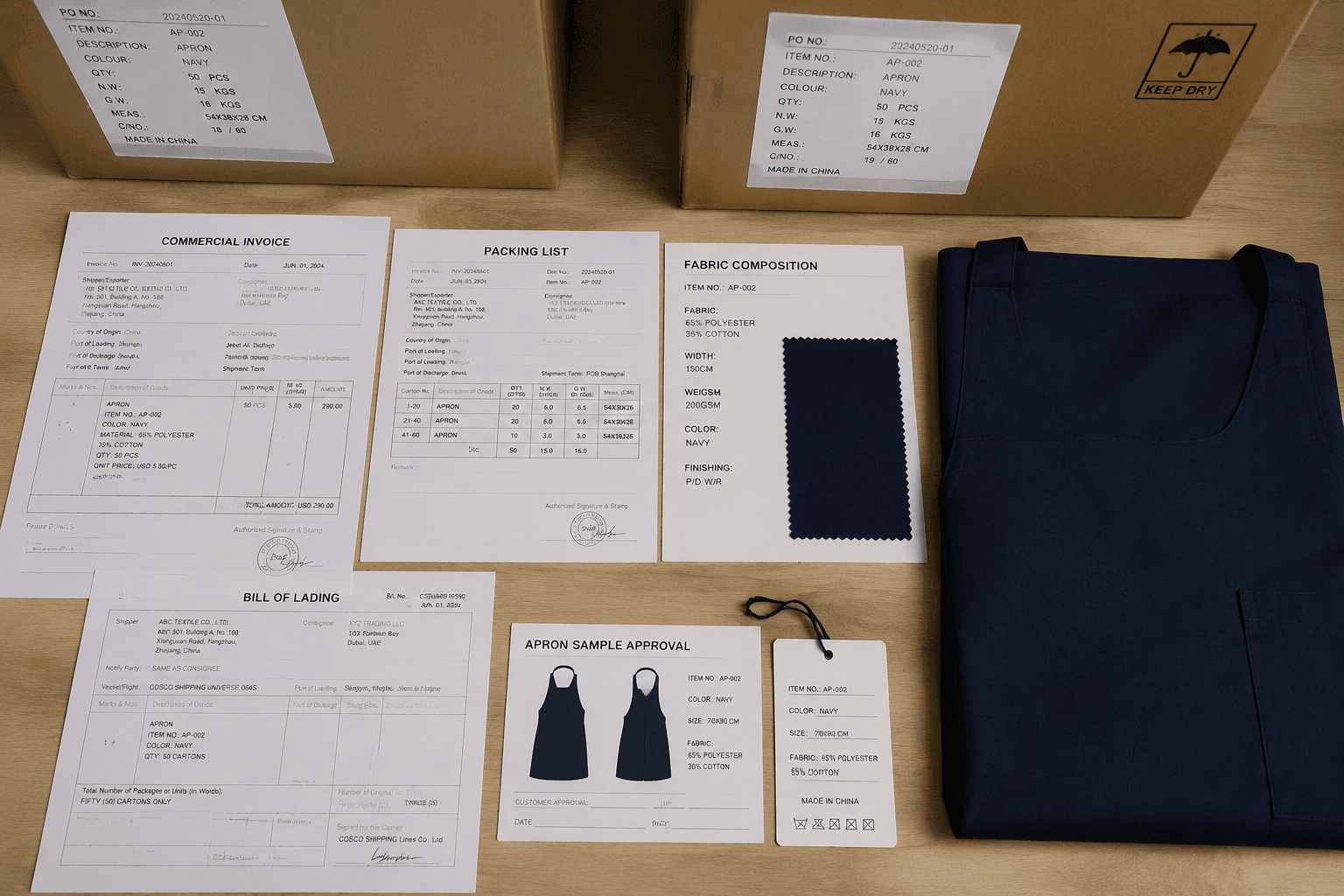
Apron customs documentation: packing lists, commercial invoices and material descriptions that avoid delays
Accurate <strong>apron customs documentation</strong> prevents avoidable customs holds, broker amendment fees, storage charges and delivery misses on bulk apron shipments. For B2B buyers sourcing 3,000 to 20,000 pieces, the commercial invoice, packing list and material description should match the packed goods by apron type, shell composition, GSM or oz weight, trim, carton count, net and gross weight, Incoterm and declared value.
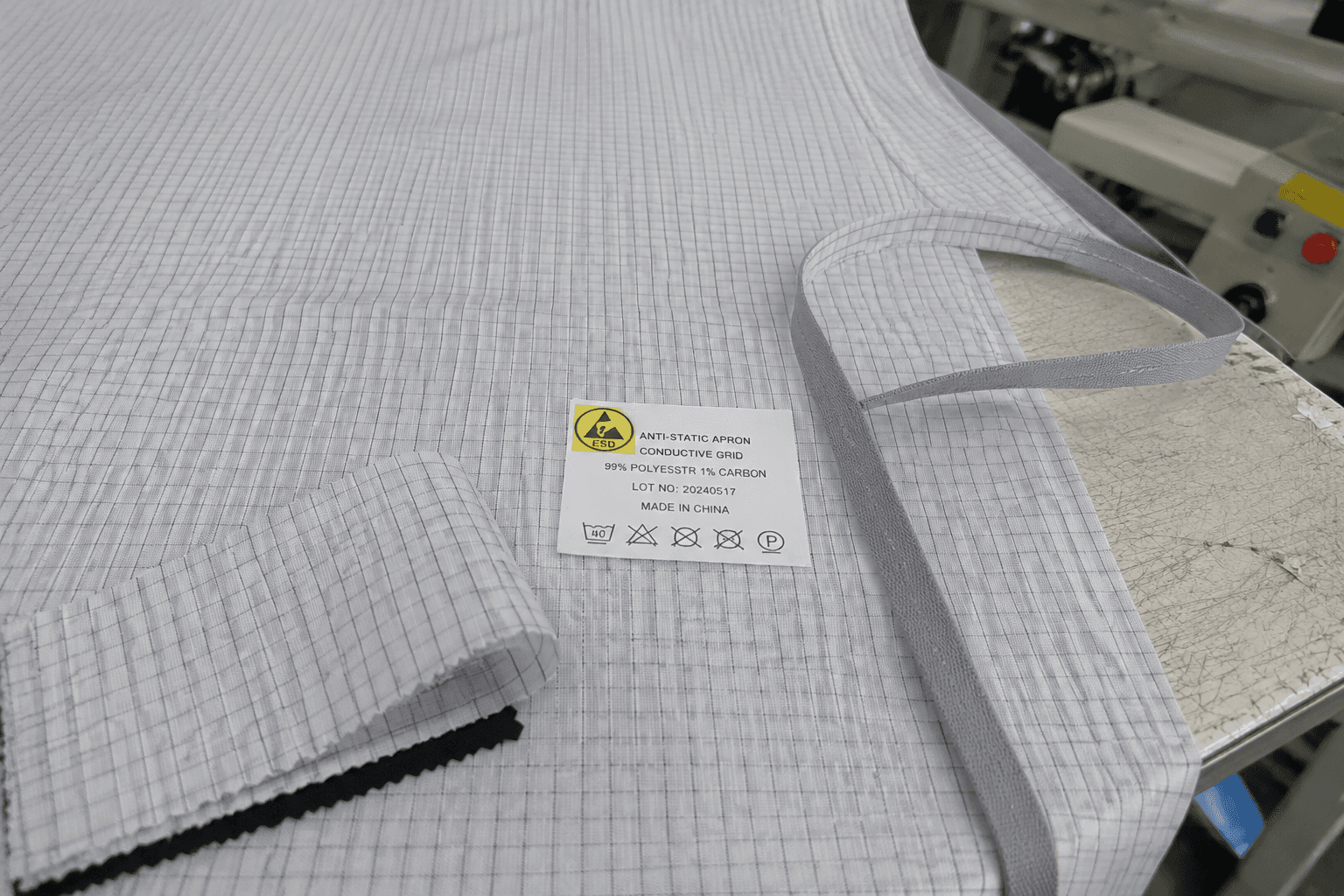
Anti-static aprons for electronics assembly: fabric, grounding details and ESD documentation
<strong>Anti static aprons</strong> for electronics assembly should be purchased as measurable ESD workwear, not as ordinary uniforms with a black grid print. A usable OEM specification needs fabric GSM, conductive yarn spacing, resistance target, wash-cycle durability, grounding hardware, AQL rules and batch-level ESD records before price comparison.
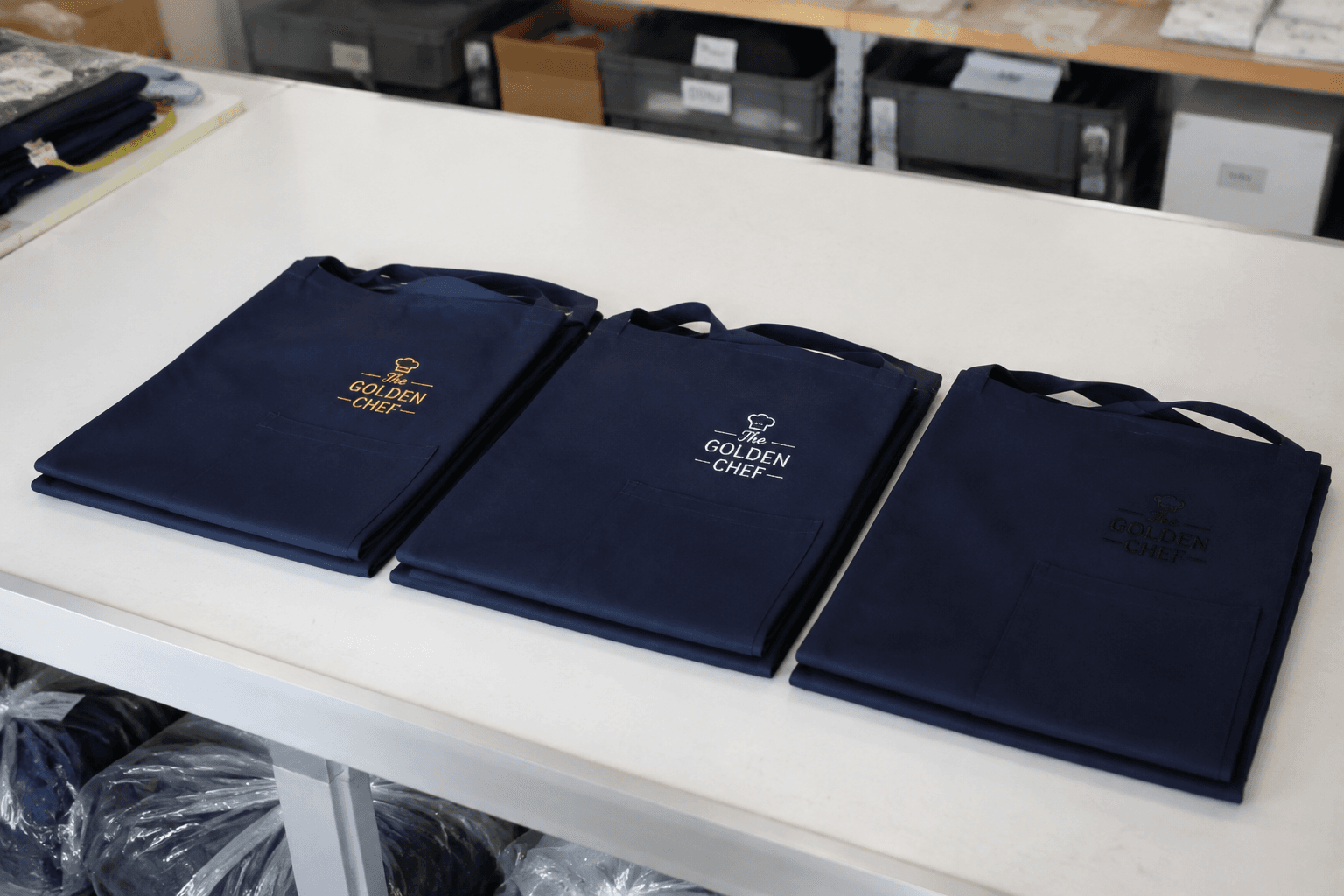
Airport lounge aprons: wrinkle recovery, discreet branding and high-turnover uniform specs
Airport lounge aprons need sourcing controls beyond standard cafe aprons: 200-235 GSM wrinkle-recovery fabrics, matte discreet branding, stable sizing, AQL 2.5/4.0 inspection and replenishment stock planned before launch. This guide gives B2B buyers practical specifications for airport lounge aprons, including fabric blends, MOQ ranges, FOB targets, sample and bulk lead times, QC checks and repeat-order rules for high-turnover lounge uniform programs.
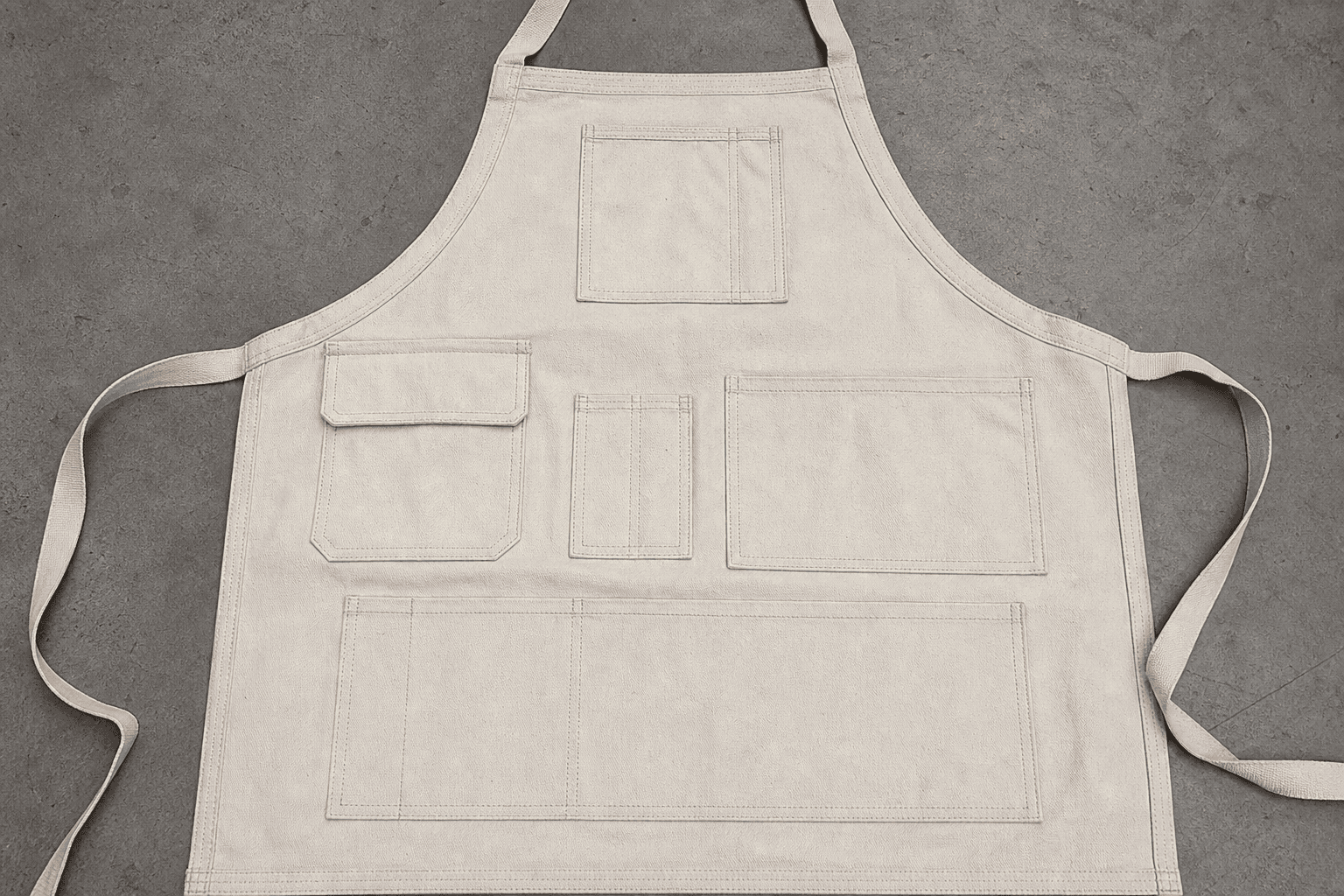
Yarn count for apron fabrics: how 10s, 16s and 21s affect handfeel, strength and cost
<strong>Apron fabric yarn count</strong> should be fixed before sampling, not after price collection. In professional apron sourcing, 10s, 16s and 21s change handfeel, seam bulk, pocket support, wash behavior, MOQ, lead time and FOB by measurable amounts. When buyers define count, weave and GSM at RFQ stage, quotations become comparable and factory substitutions become easier to prevent.
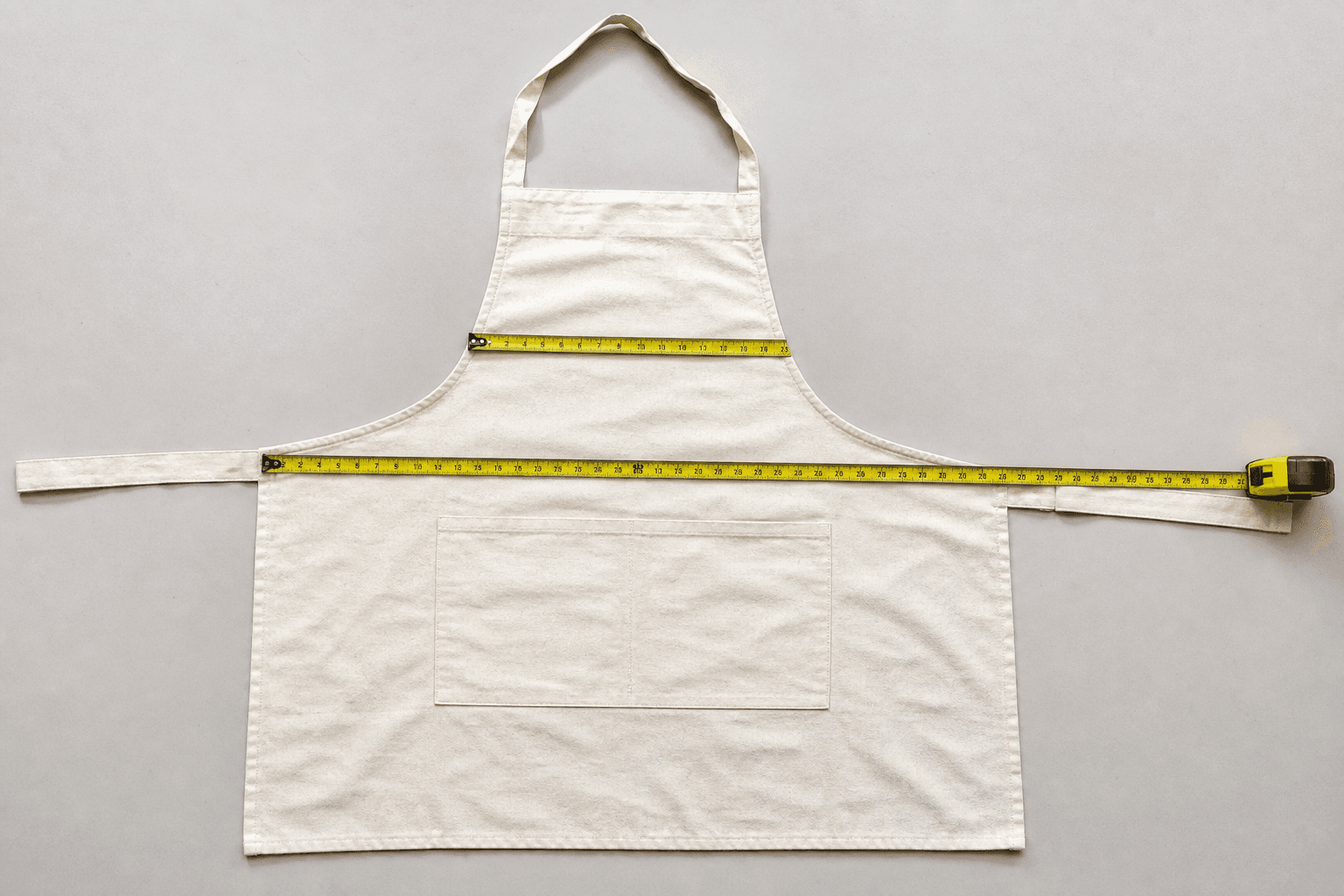
When to standardize apron hardware across styles to simplify replenishment and reduce dead trim
<strong>Standardized apron hardware</strong> gives professional apron buyers a practical way to cut dead trim, reduce per-SKU hardware MOQs, and pull repeat-order lead time down by <strong>5-10 days</strong> when multiple apron styles share the same strap widths, finishes, rivet sizes, and metal trim specifications.
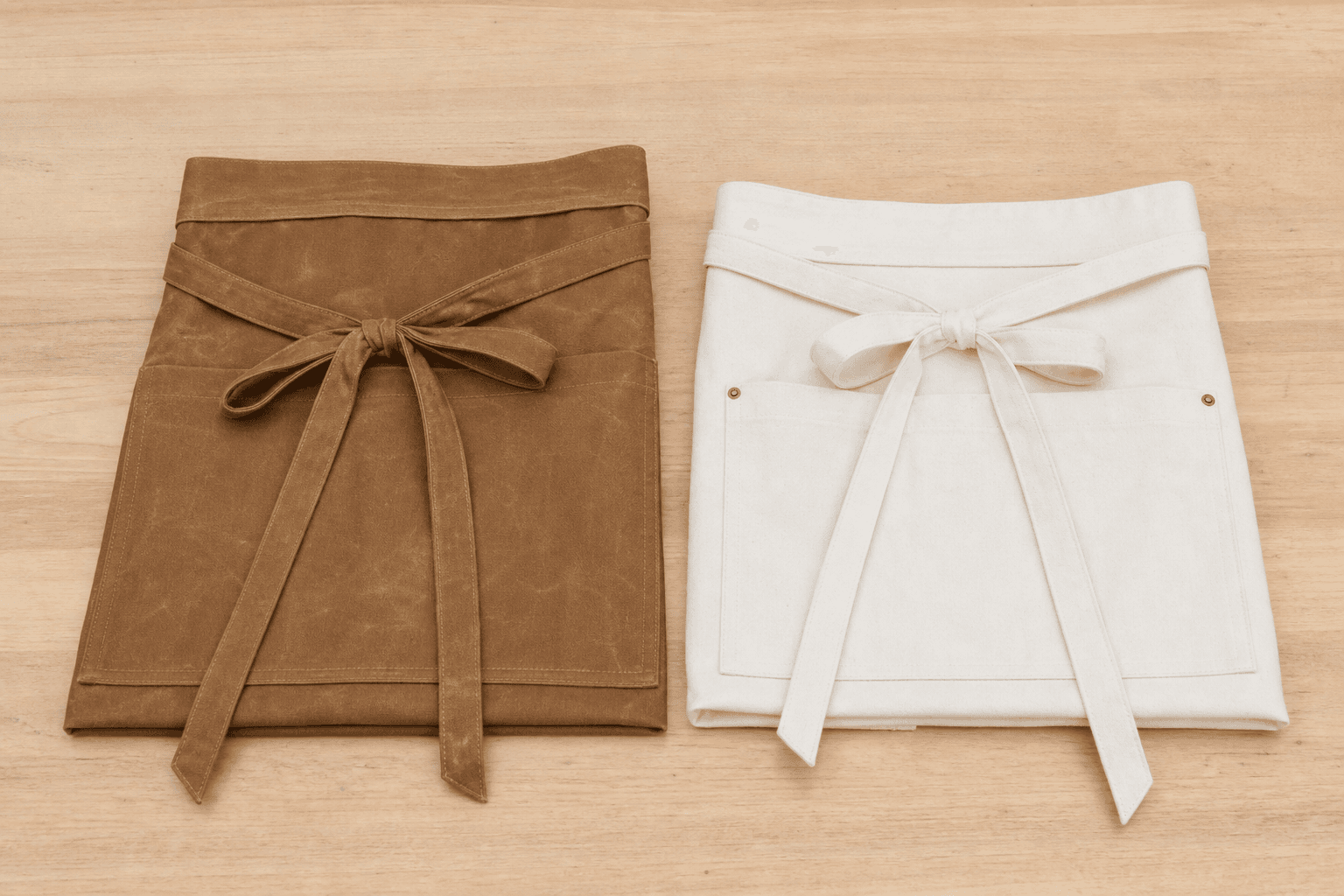
When apron buyers should nominate their own fabric mill and when factory sourcing is safer
A <em>nominated fabric mill for aprons</em> is worth the extra control only when apron buyers need repeatable shade, handfeel and certification performance across large, recurring programs. In most other apron orders, factory sourcing is safer because it reduces color-MOQ exposure, keeps total fabric lead time closer to 24 to 35 days instead of 32 to 48 days, and leaves one supplier responsible if bulk fabric causes apron defects after cutting.
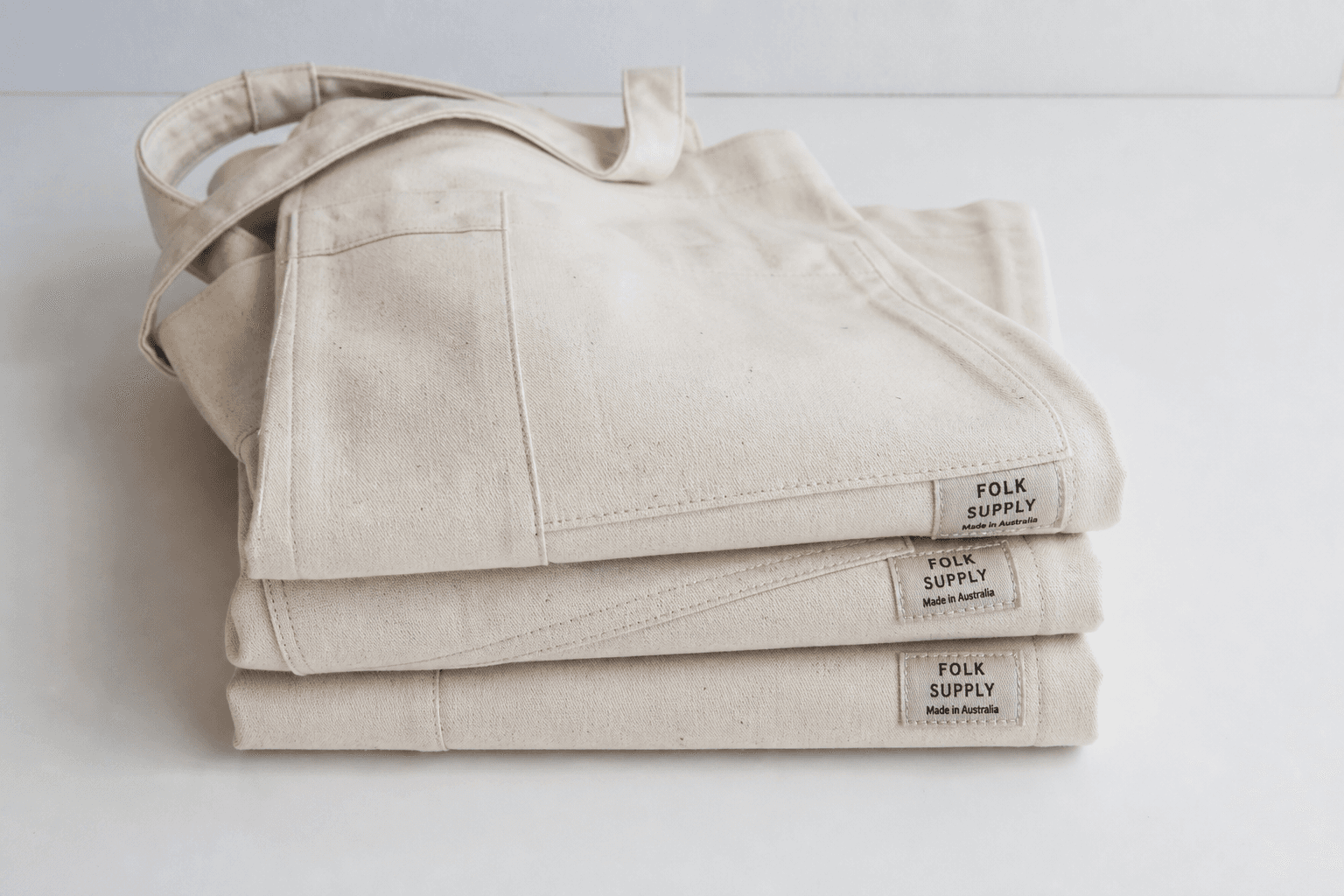
Webbing material choices for apron straps: cotton, polyester, nylon and blended tape compared
Selecting the right <strong>apron strap webbing material</strong> changes how an apron wears, washes, adjusts and reorders. This guide compares cotton, polyester, nylon and blended tape for professional apron sourcing, with practical B2B benchmarks for width, thickness, shrinkage, MOQ, lead-time days, trim cost, hardware compatibility and AQL control.
Warp and weft density in apron cloth: why pick count changes coverage, stiffness and yield
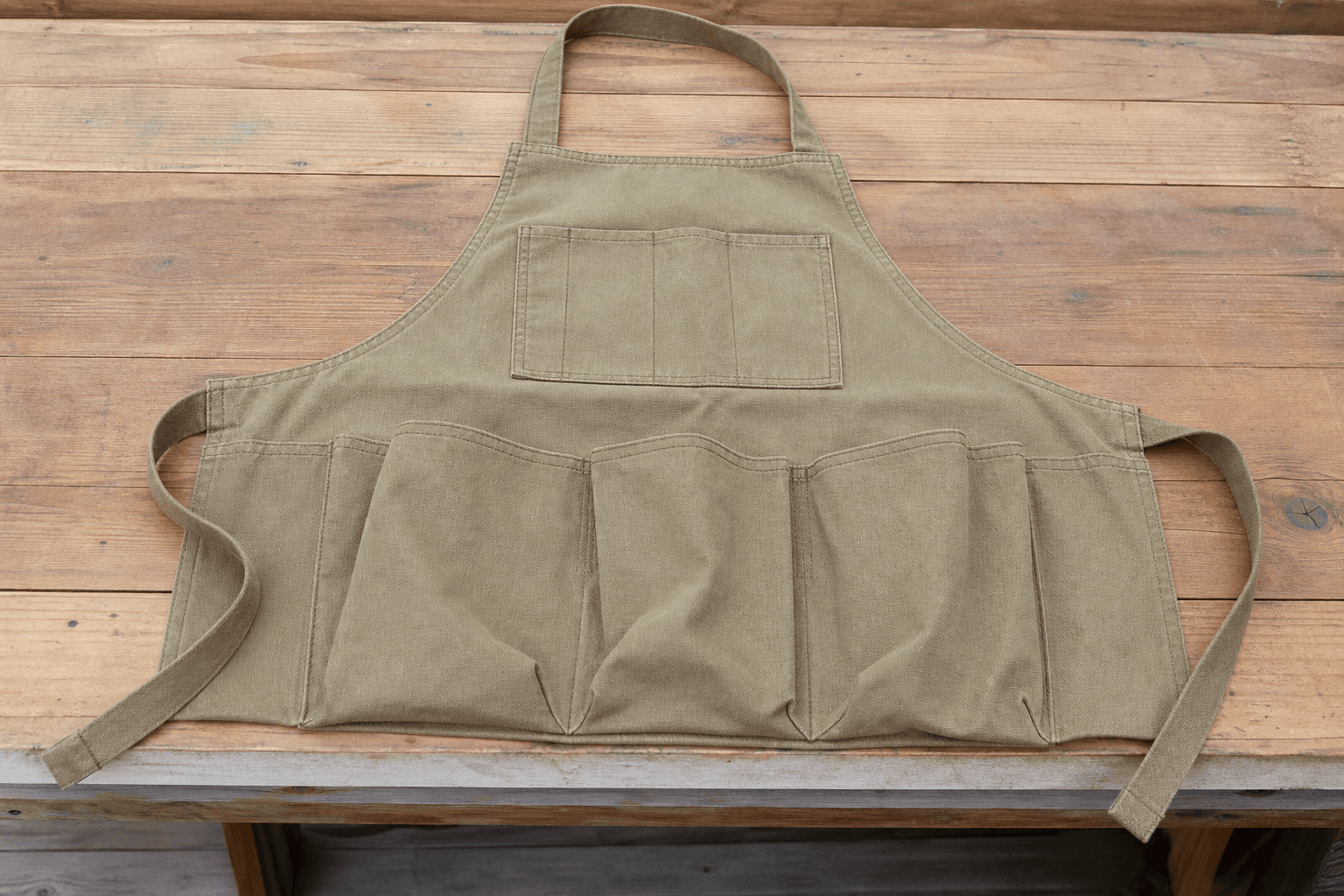
<strong>Apron fabric warp weft density</strong> is the construction detail that most often explains why two apron fabrics with the same 240-250 GSM or 8.0-8.8 oz/sq yd label perform differently in bulk. For professional apron buyers, ends and picks per inch directly influence opacity, panel stiffness, embroidery definition, usable width, cutting yield, wash stability, lead time and final $/pc, often more than fiber blend alone.
Uniform rental companies and apron sourcing: fabrics and construction that survive pooled laundering
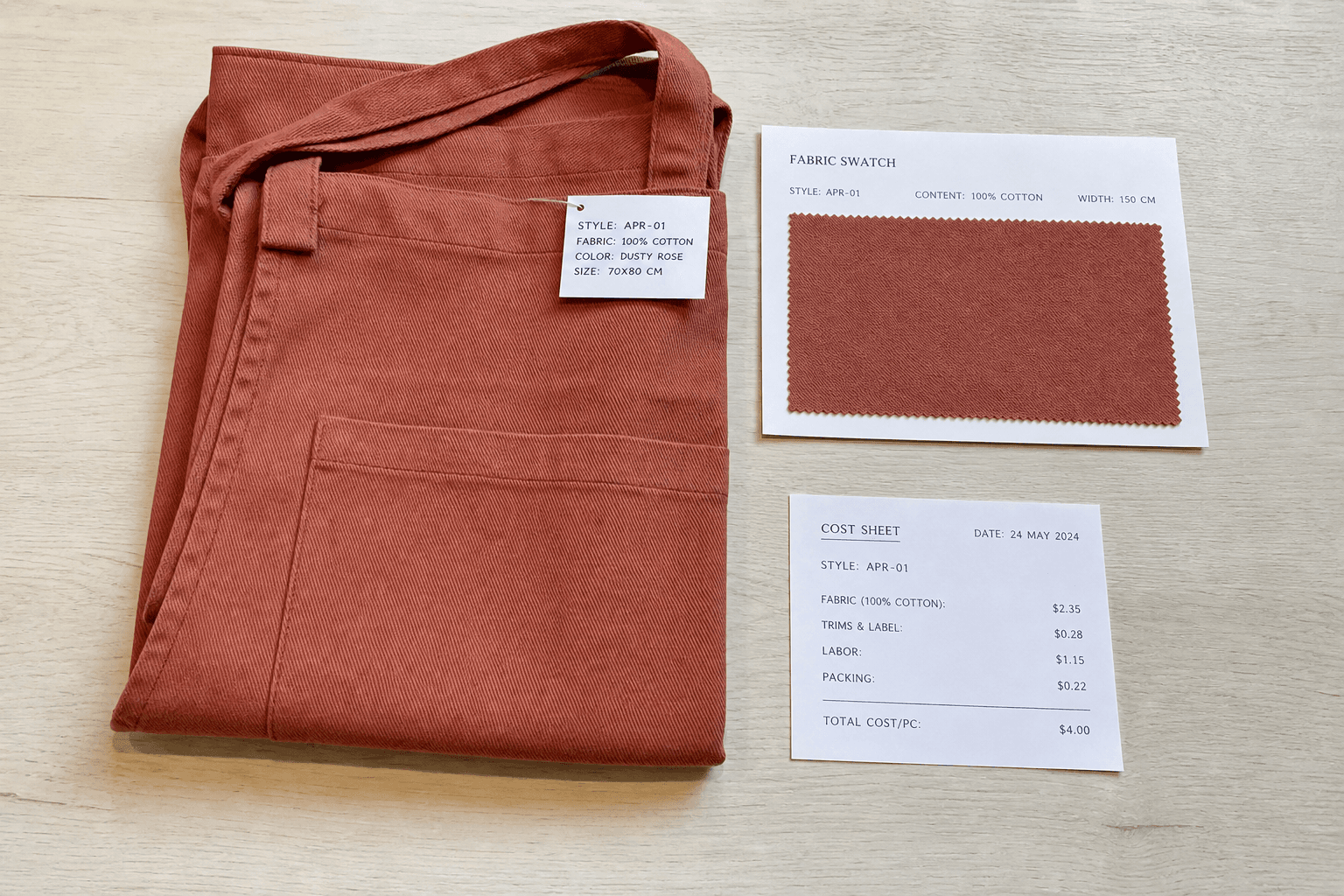
<strong>Uniform rental company aprons</strong> fail in pooled laundering for measurable reasons: fabric below 235 GSM, weak tie insertions, unstable hems, and branding that was never tested under industrial chemistry. For rental buyers, the durable starting spec is usually 235 to 270 GSM woven poly-cotton twill, reinforced stress points, shrinkage controlled within 2% to 3%, and a sourcing plan built around MOQ, AQL, route testing, 25 to 45 day production, and cost per wash cycle rather than opening FOB alone.
Undyed and natural-color apron fabrics: shade variation, seed specks and buyer approval standards
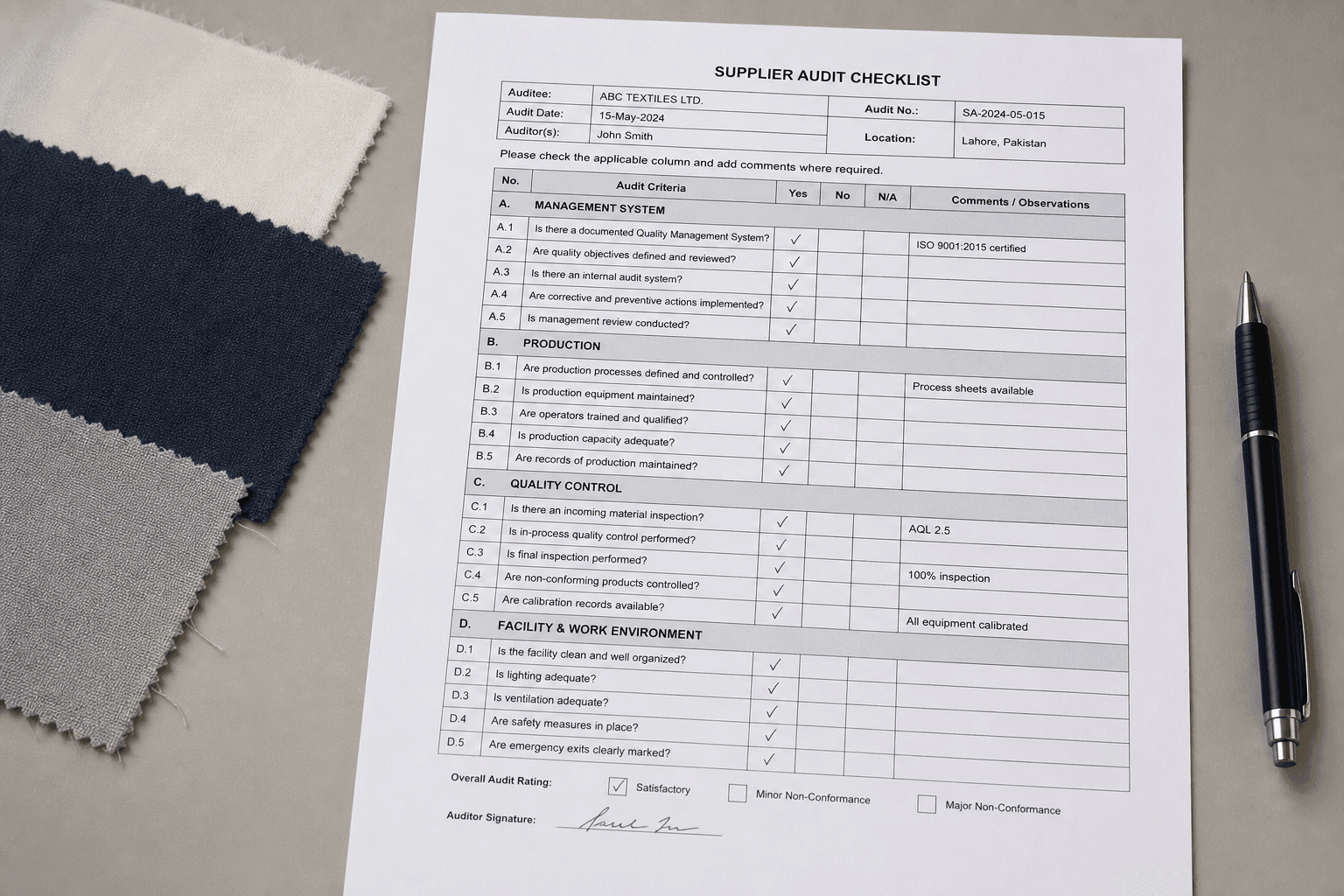
<strong>Natural color apron fabric</strong> can lower wet-processing cost and deliver a credible ecru or oatmeal look, but it is commercially stable only when apron buyers lock down measurable shade bands, seed-speck limits, panel-matching rules, AQL levels and lot-handling steps before bulk cutting.
Towel loops and side holders on aprons: placement tests for speed, snag risk and wash endurance
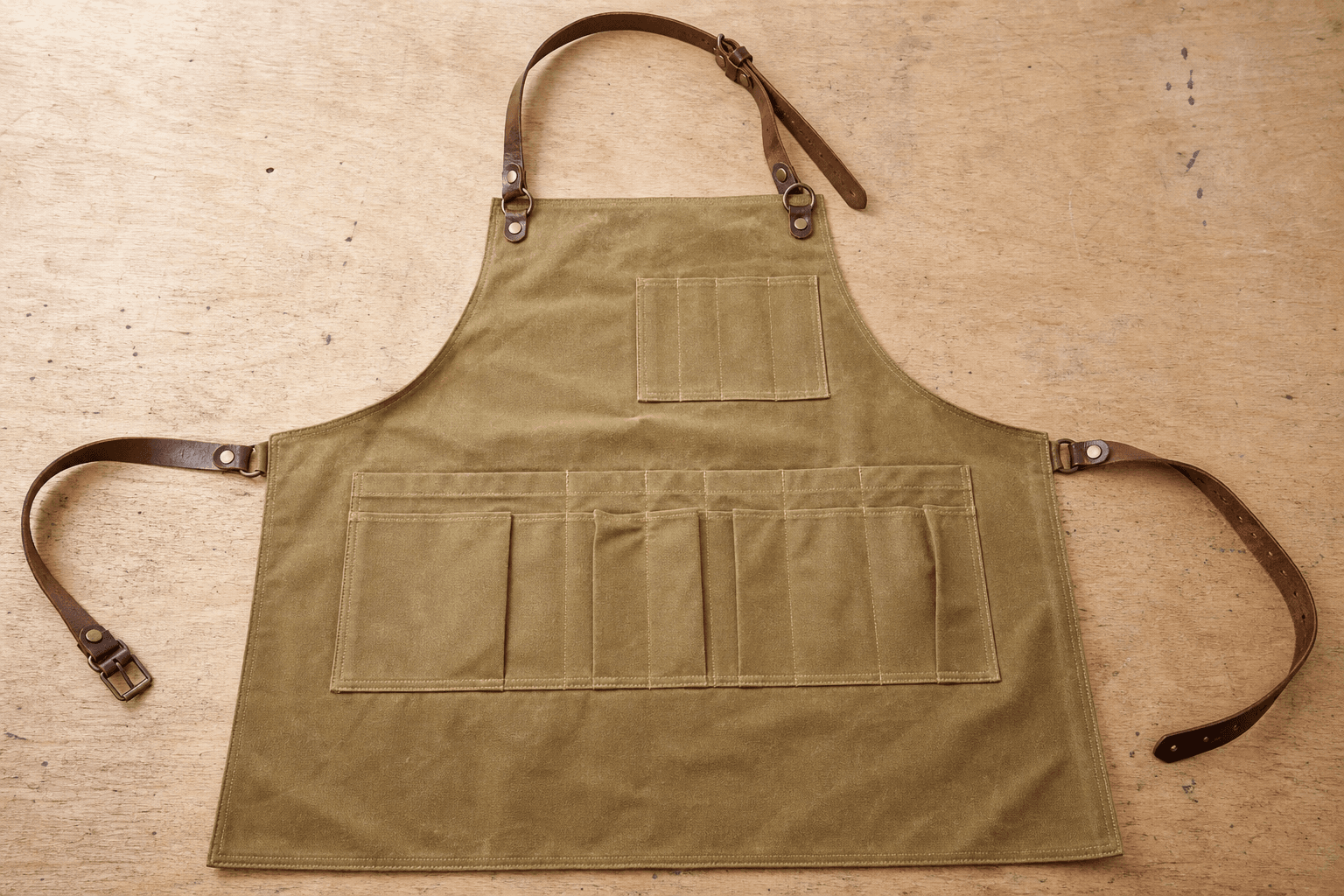
This guide explains how <strong>apron towel loop placement</strong> changes wipe-return speed, snag frequency, and wash life in commercial apron programs, with OEM-ready ranges for offset, loop opening, reinforcement, AQL, MOQ, lead time, and FOB adders that professional B2B buyers can put straight into a tech pack.
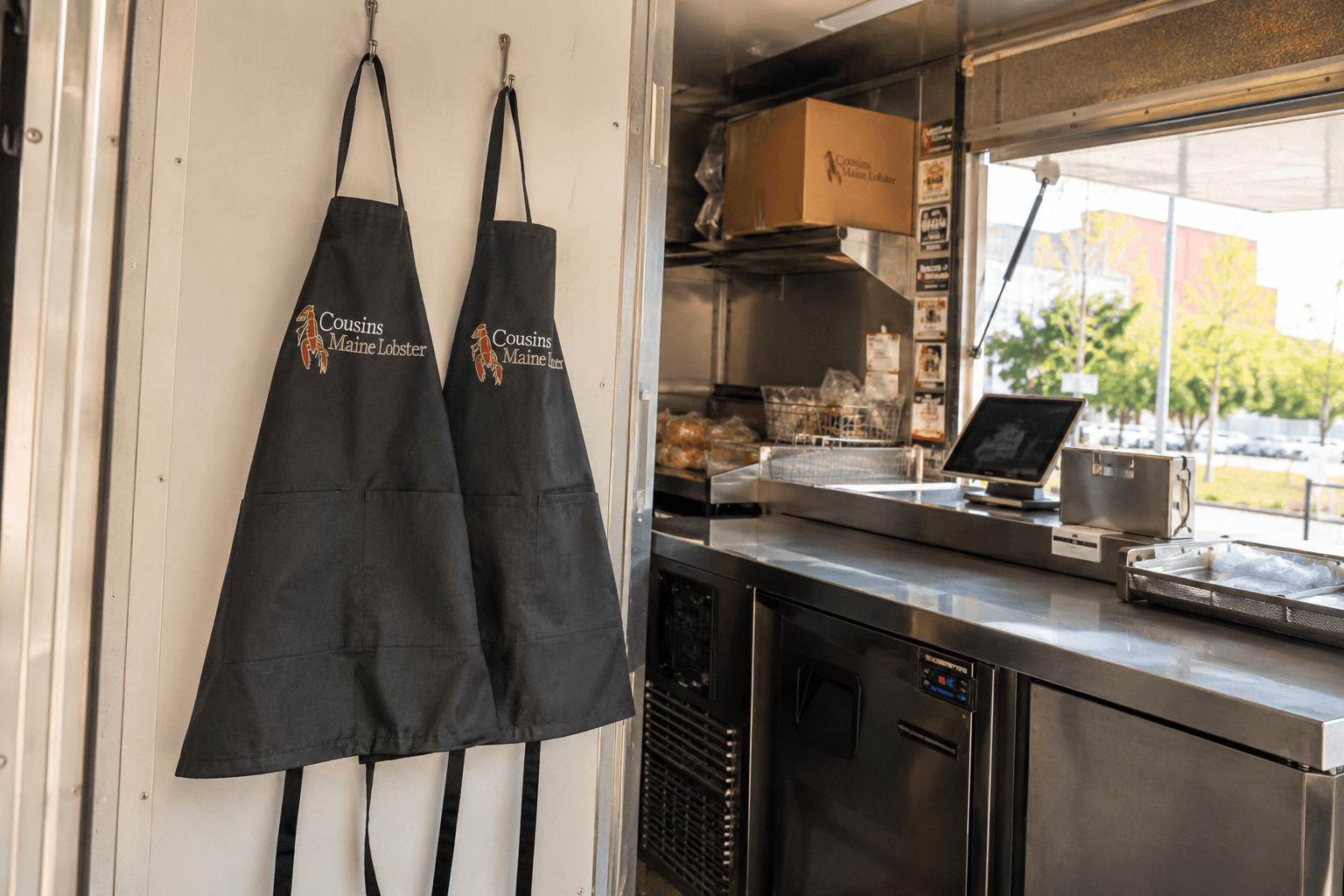
Split-leg aprons for mobility: pattern complexity, hem finishing and buyer cost impact
<strong>Split leg apron manufacturing</strong> improves stride, kneeling, and fast floor movement for service teams, but buyers should cost it as a construction and quality-control issue rather than a fashion detail. Split depth, fabric weight, hem method, reinforcement, pocket position, and inspection tolerance directly change SMV, cutting yield, rework rate, lead time, and FOB price on commercial apron orders.

Snap buttons, jeans buttons and press studs on aprons: attachment strength, replacement and plating risk
A sourcing guide to <strong>apron snap button options</strong> for bulk production, with specific benchmarks for pull force, fabric weight, trim cost, MOQ, AQL, corrosion risk and lead-time impact across press studs, heavy-duty snaps and jeans buttons.
Retail shelf-ready apron programs: planning barcode stickers, fold standards and carton assortment early
<strong>Retail ready apron packaging planning</strong> should be locked before bulk cutting, not left to finishing. In apron programs shipping to retail chains, barcode symbology, sticker size, fold dimensions, strap control, insert position, carton assortment, and master carton count directly affect labor minutes, scan pass rates, carton cube, and ship date reliability. When buyers approve these points early, they avoid relabeling costs of $0.06 to $0.38 per apron, 3 to 8 working days of repacking delay, and DC chargebacks tied to scan failure, wrong ratios, or inconsistent shelf presentation.
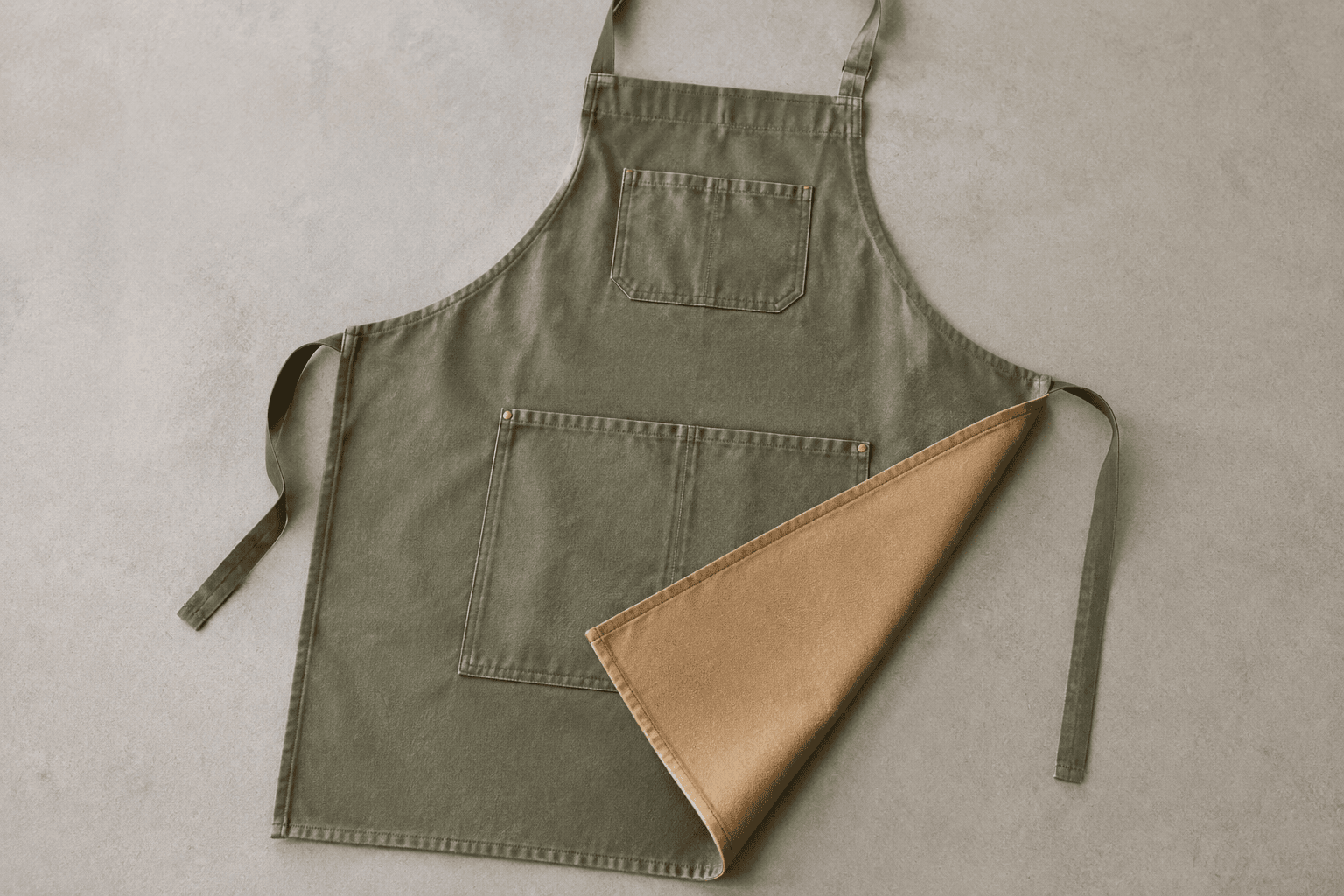
Printed neck labels vs woven brand labels on aprons: comfort, wash life and private-label presentation
Choosing the right <em>apron neck label options</em> changes wearer comfort, wash-life, compliance accuracy, trim MOQ, and FOB cost on every bulk apron order. For professional buyers sourcing bib, waist, and cross-back aprons, printed neck labels and woven brand labels perform differently once fabric weight, laundry conditions, target price, and AQL standards are fixed.
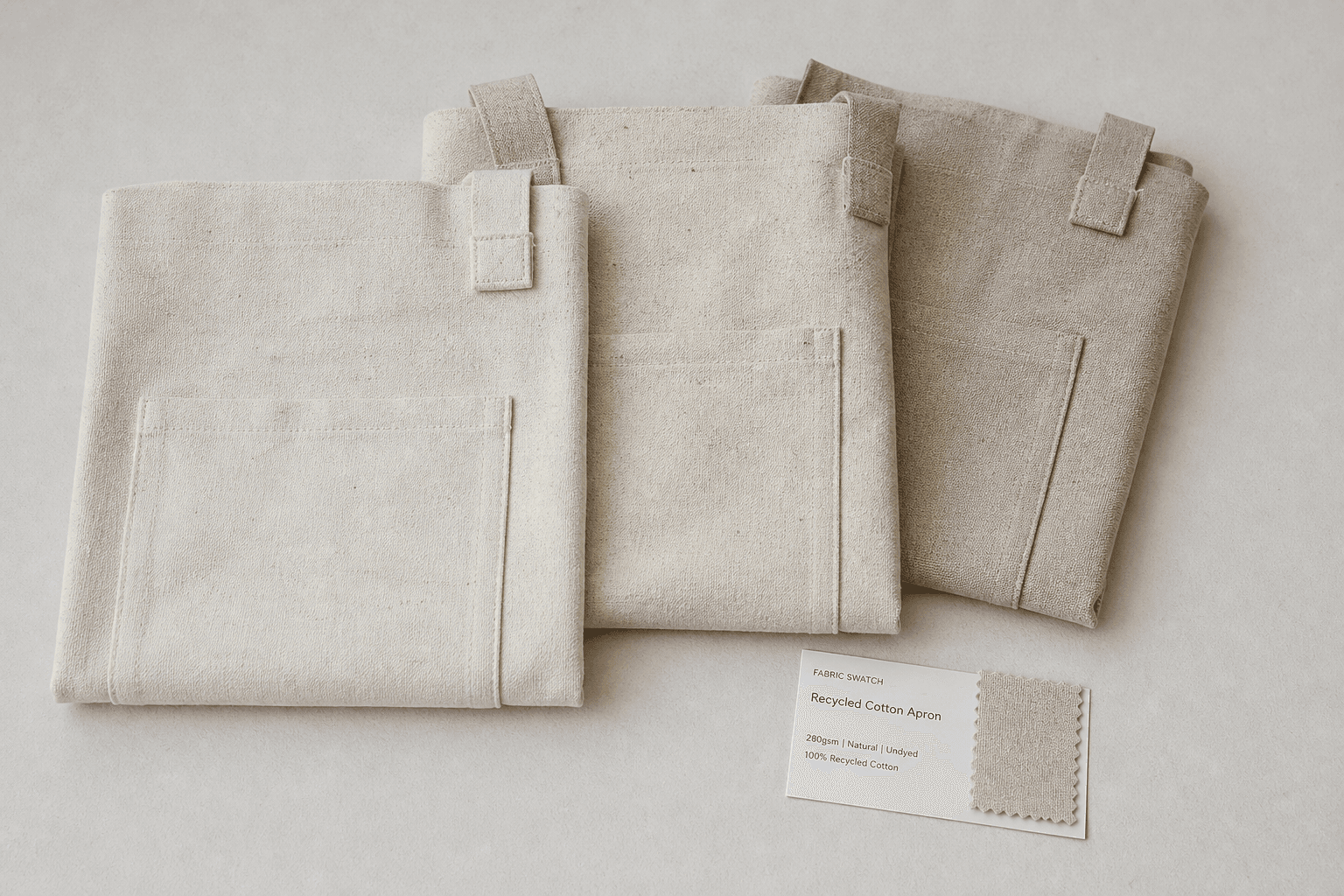
Preshrunk apron fabrics: sanforized, compacted and tenter-finished options for stable bulk production
<strong>Preshrunk apron fabric</strong> is a production control for OEM apron orders, not a soft marketing claim. This guide compares sanforized, compacted and tenter-finished apron fabrics with working benchmarks for residual shrinkage, GSM, oz, MOQ, lead time, AQL and per-piece cost so B2B buyers can lock stable bulk production before cutting starts.
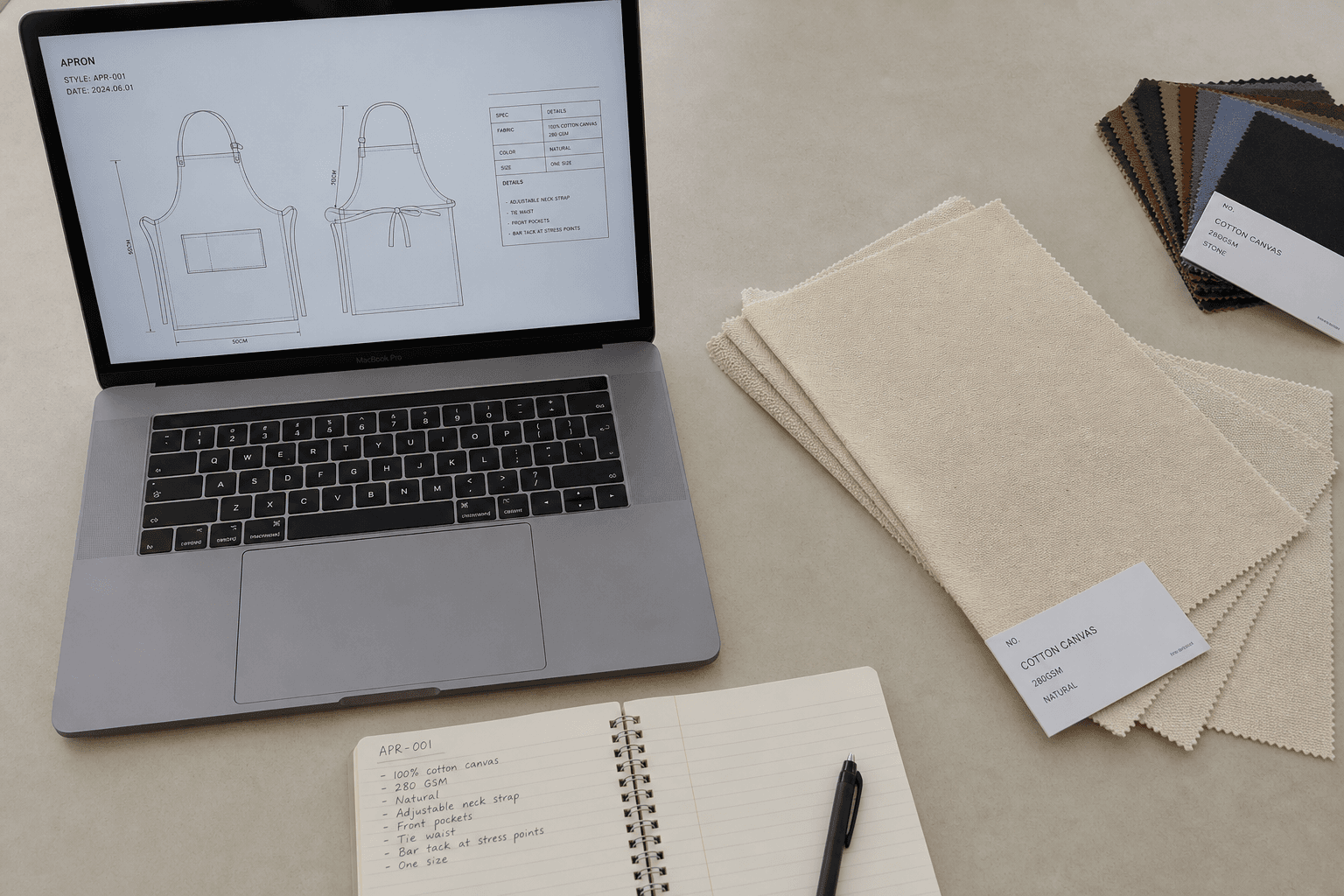
Plant shop workshop aprons: soil abrasion, wet pot handling and tool-loop placement
<strong>Plant shop workshop aprons</strong> for commercial garden centers, nursery chains and potting benches need more than a clean retail look. Buyers should spec for <strong>soil abrasion, wet pot contact, loaded pockets and repeated bending</strong> with clear numbers: <strong>245-340 GSM</strong> fabric, pocket depths sized to pruners and phones, dominant-hand tool loops placed <strong>6-10 cm</strong> from the side seam, workable MOQs of <strong>300-1,500 pcs</strong>, full custom lead times of <strong>35-55 days</strong>, FOB ranges from <strong>$3.20 to $8.80 per piece</strong>, and inspection at <strong>AQL 2.5 major / 4.0 minor</strong>.
Nickel-free hardware claims for aprons: declarations, test methods and procurement wording
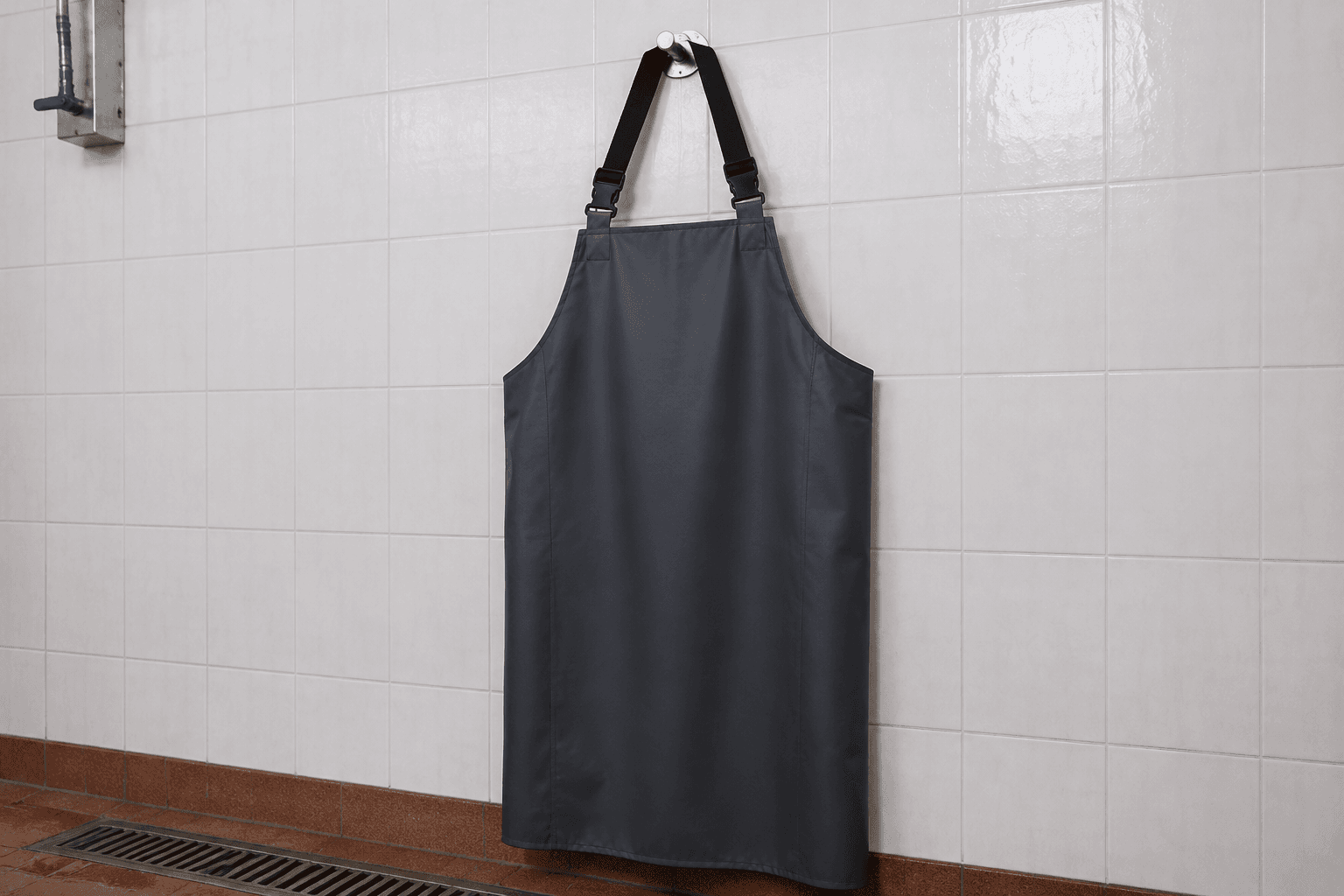
<strong>Nickel free apron hardware</strong> only means something when the apron PO, trim sheet, supplier declaration, and test report all identify the same buckle, slider, snap, hook, eyelet, or D-ring by part code, size, finish, and lot. For professional B2B buyers, the workable standard is component-level control: finish-specific declarations, nickel release testing on exposed trims where the market or customer requires it, and procurement wording that prevents unapproved hardware substitution during bulk production.
MOQ by fabric source in apron production: stock cloth, mill-dyed goods and custom weaving compared
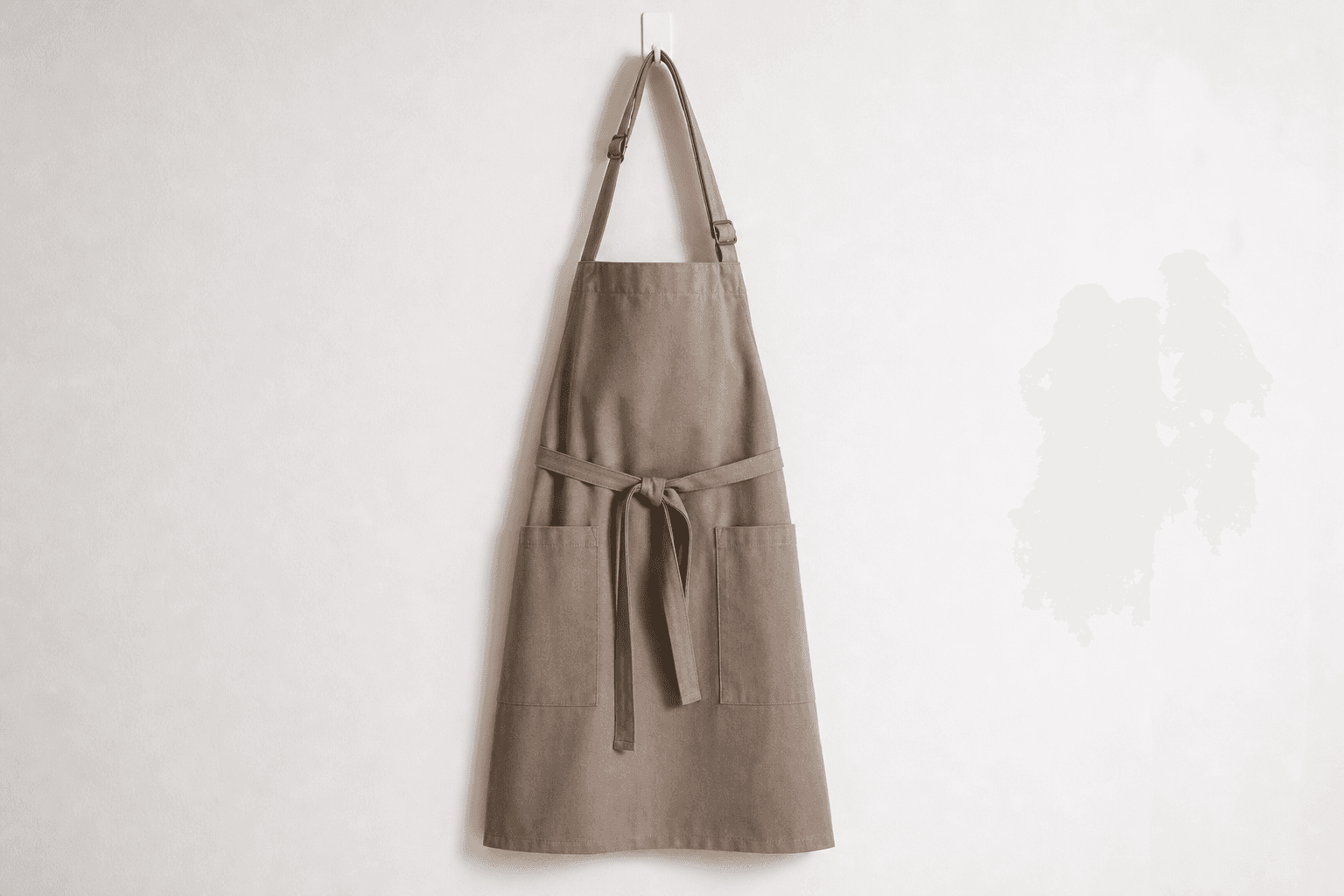
Professional buyers cannot judge an apron order by sewing MOQ alone. This guide explains <strong>apron fabric moq by source</strong> with realistic meter minimums, bib and waist apron yield, lead times, AQL checkpoints, and shell-fabric cost ranges across stock cloth, mill-dyed goods, and custom weaving.
Mobile dog wash and grooming van aprons: splash coverage, fast drying and storage constraints
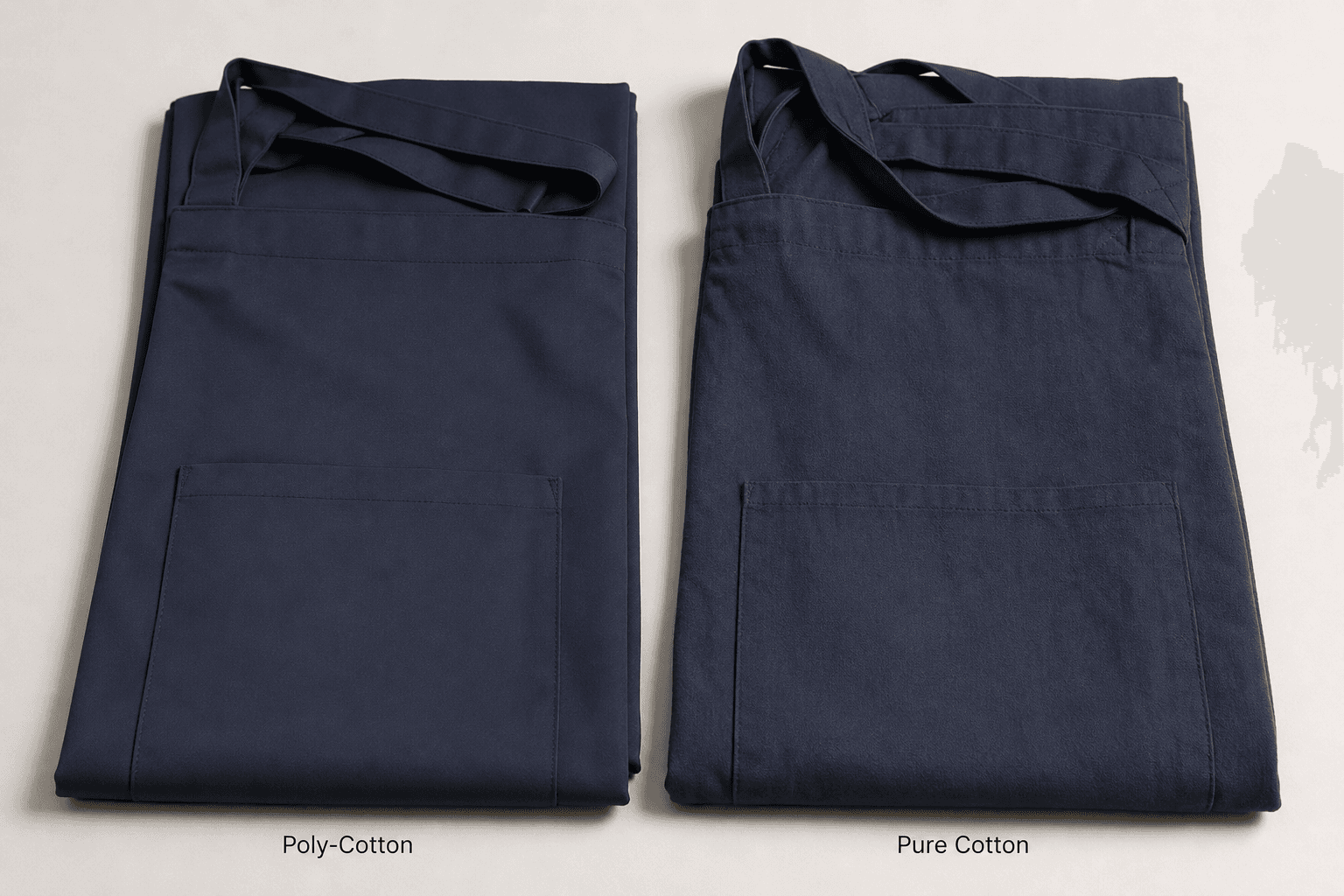
<em>Mobile dog wash aprons</em> for van-based grooming teams need a tighter sourcing spec than salon aprons: 70-75 cm front width, 85-95 cm length, PU-coated 210D-420D polyester at 150-230 GSM, realistic 30-75 minute dry-down between calls, and fold-flat storage that fits crowded vehicle shelving without trapping moisture or loose hair.
Melange and heather apron fabrics: fiber blending, shade consistency and logo readability
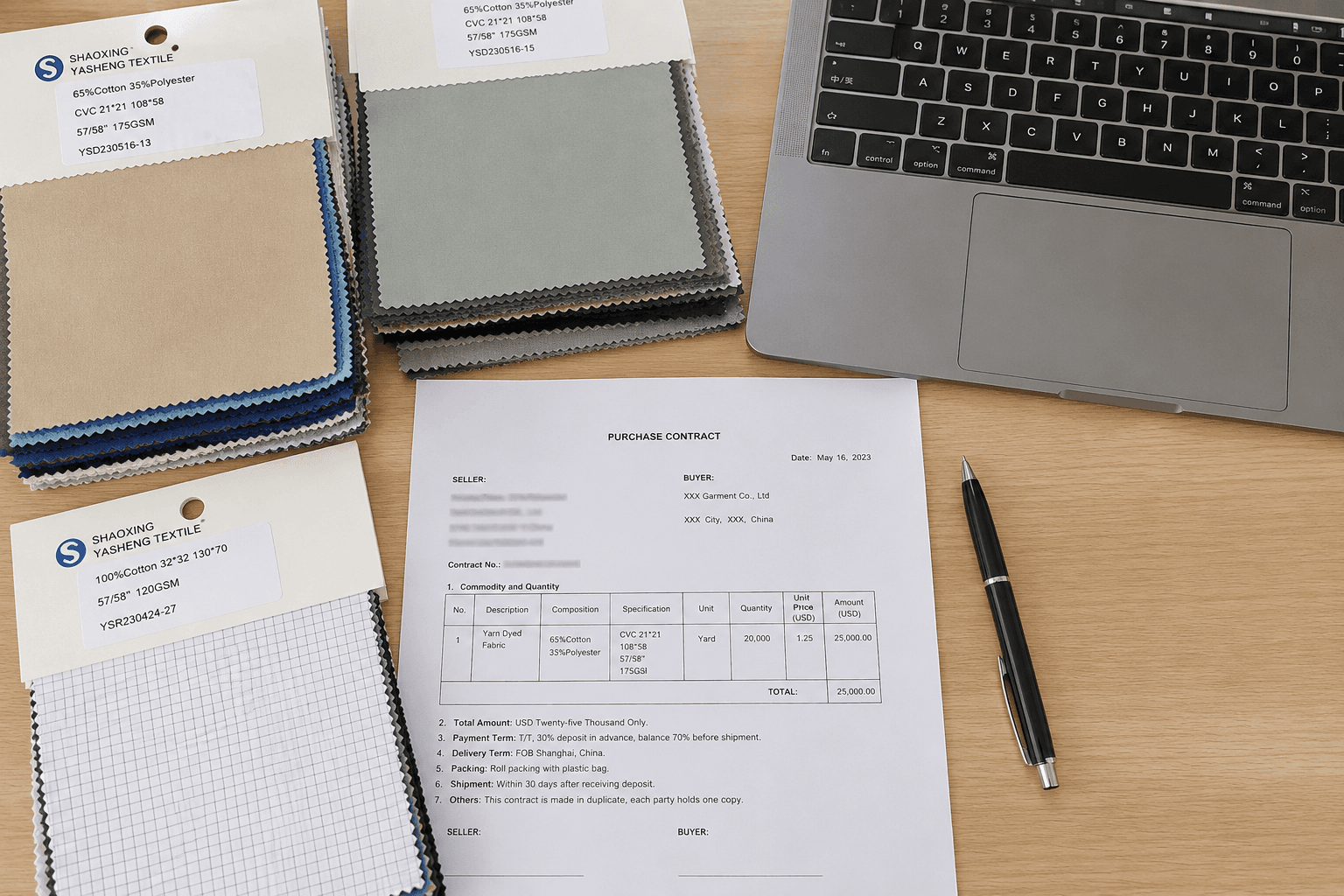
<strong>Heather apron fabric</strong> can help a private-label apron line stand out, but it also introduces measurable sourcing risk in shade continuity, logo clarity and repeat-order control. For B2B apron buyers, the decision should be based on specifics: <strong>230-300 GSM</strong> fabric weight, <strong>500-3000 pcs</strong> MOQ, <strong>30-65 days</strong> ex-factory lead time, a typical <strong>US$0.20-0.90/pc</strong> fabric premium and a defined inspection standard such as <strong>AQL 2.5 major / 4.0 minor</strong>.
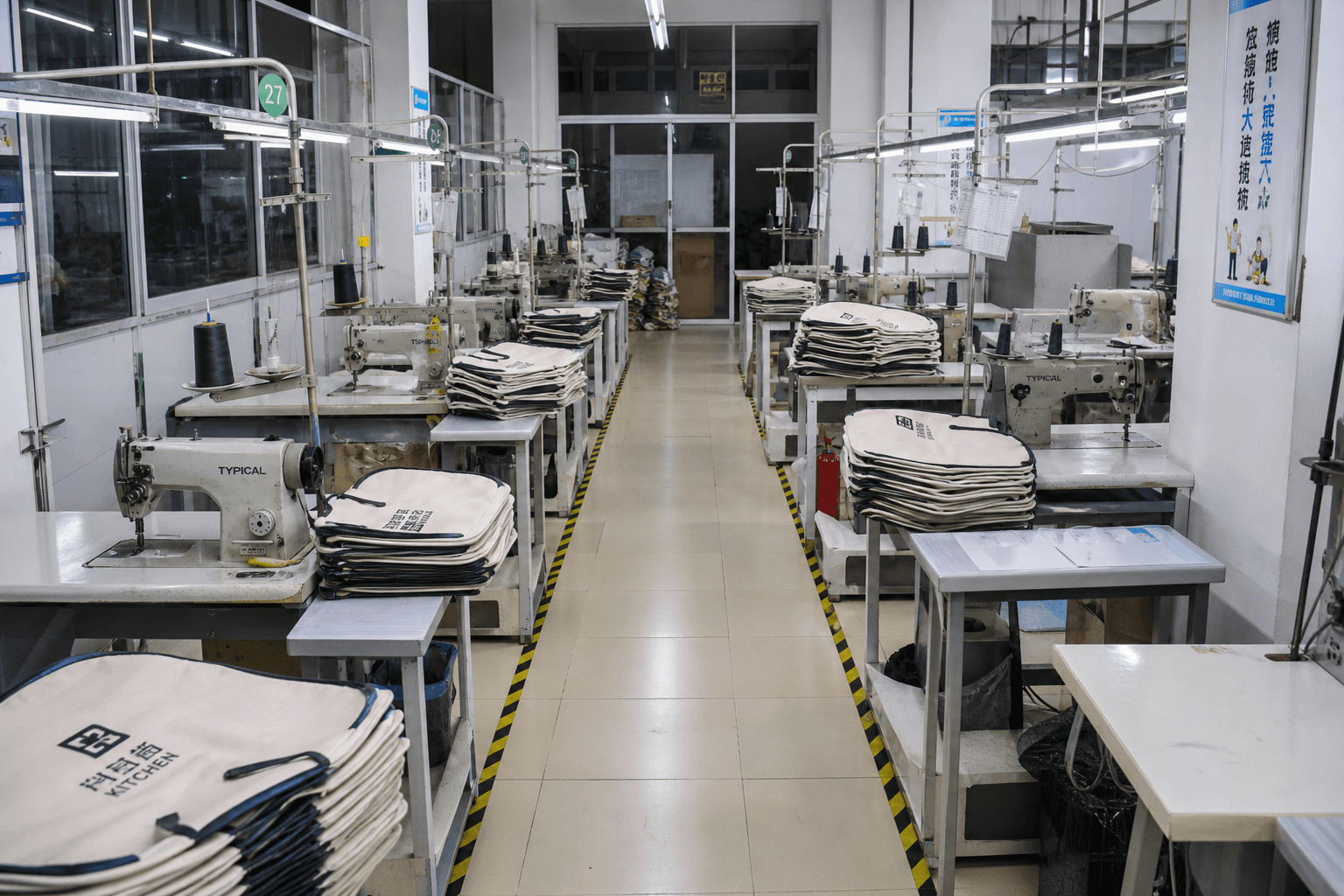
Makers market and craft retail aprons: premium handfeel, low-MOQ branding and reorder flexibility
<strong>Craft retail aprons</strong> perform when they feel substantial on first touch, carry branding cleanly at 100 to 300 pieces, and can be reordered without reopening every trim minimum. This guide gives B2B buyers concrete benchmarks for fabric weight, unit cost, MOQ, inspection limits, and production timing so a retail apron line can launch in 35 to 45 days and repeat in 25 to 35 days with fewer sourcing resets.
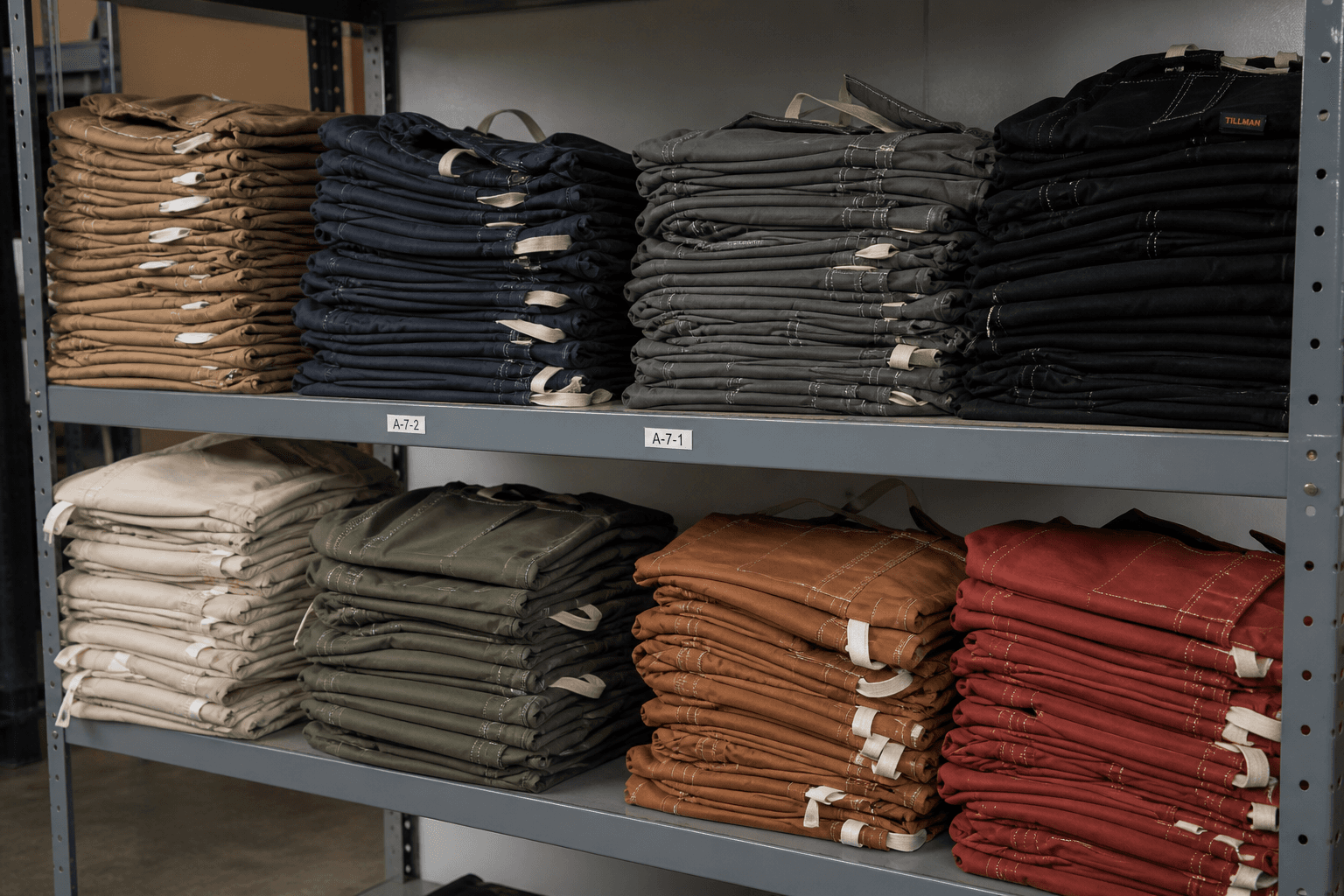
Low-MOQ custom aprons with stock greige fabric: dye later or hold raw cloth for faster replenishment
A <strong>low moq apron with greige fabric</strong> program lets apron buyers start at 300 to 600 pcs per color, reserve 2,500 to 4,000 meters of undyed twill or canvas, and replenish proven shades in 18 to 26 days once fabric, trims, labeling, and carton specs are frozen.
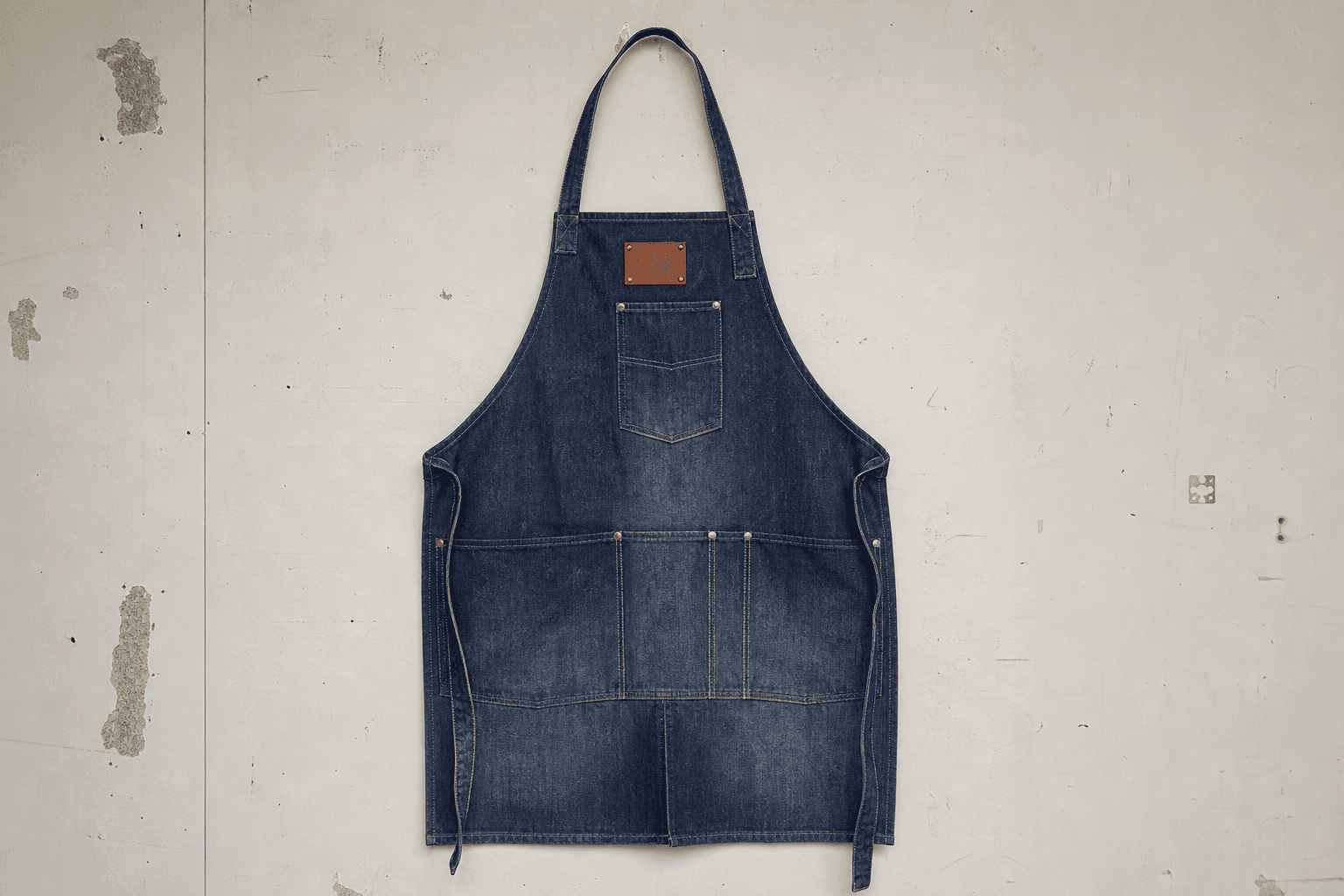
Lightweight apron fabrics under 200 GSM: where lower weight helps and where durability drops too fast
<strong>Lightweight apron fabric</strong> lowers heat buildup, neck load, carton weight, and FOB cost only when the apron pattern matches the duty cycle. For professional apron buyers, the most reliable under-200 GSM bands are usually <strong>170-190 GSM</strong> for daily hospitality wear, <strong>155-175 GSM</strong> for light retail and salon use, and <strong>135-150 GSM</strong> only for promotions or short-life programs. Below those ranges, pocket sag, seam distortion, show-through, and accelerated replacement rates often erase the initial saving within one reorder cycle.
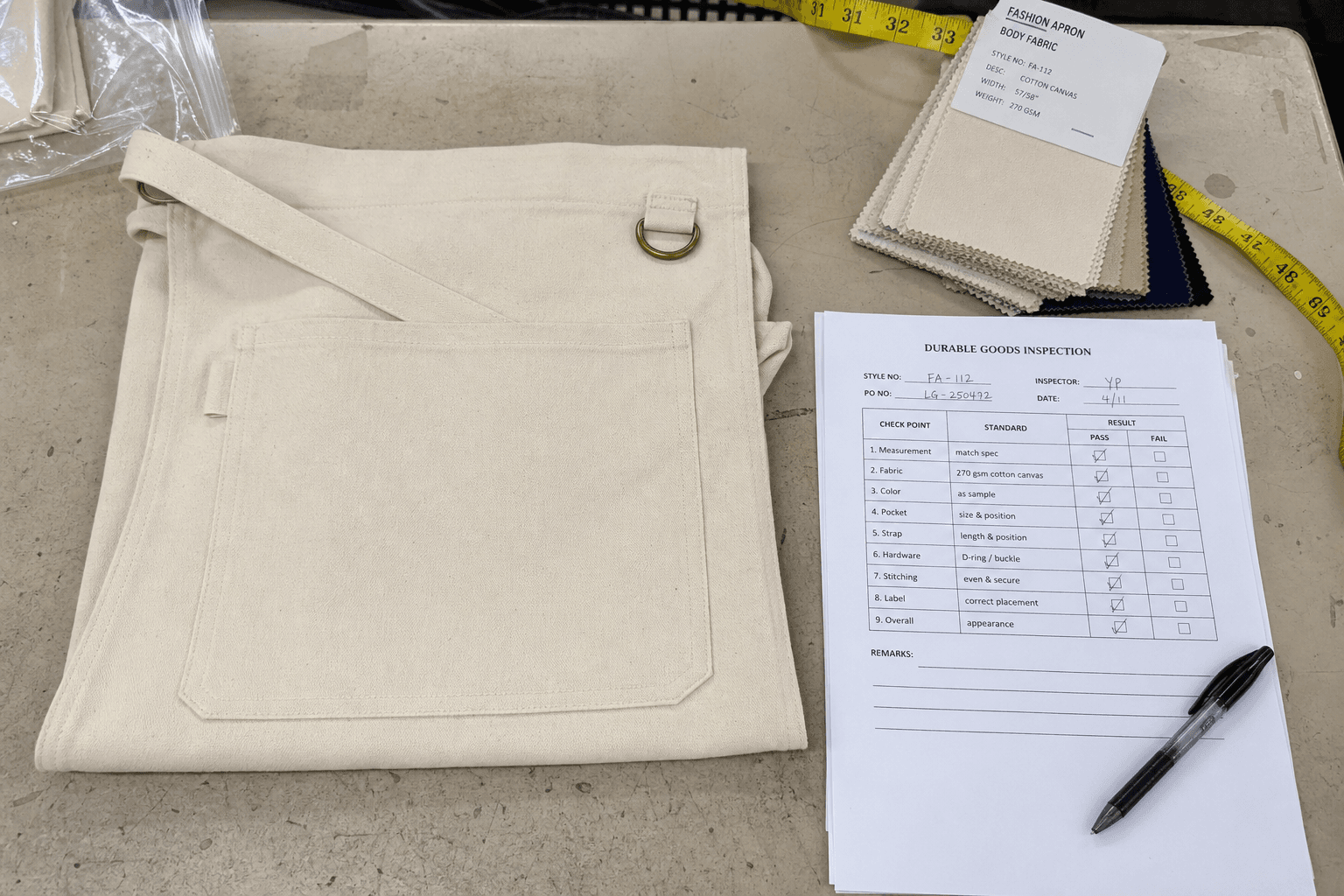
Laser-cut logo patches for aprons: edge sealing, material choices and reorder consistency
<strong>Laser cut apron patches</strong> give bib, waist and cross-back aprons a sharper branded finish than woven labels or dense embroidery, but consistent B2B results depend on controlled edge sealing, the right patch base for 180-220 GSM poly-cotton or 8.5-12 oz canvas aprons, stitch margins that survive 15-25 wash cycles, and reorder specs that lock size, gloss, backing, placement and AQL.
Jewelry workshop aprons: lint control, small-part pockets and scratch-safe surface choices
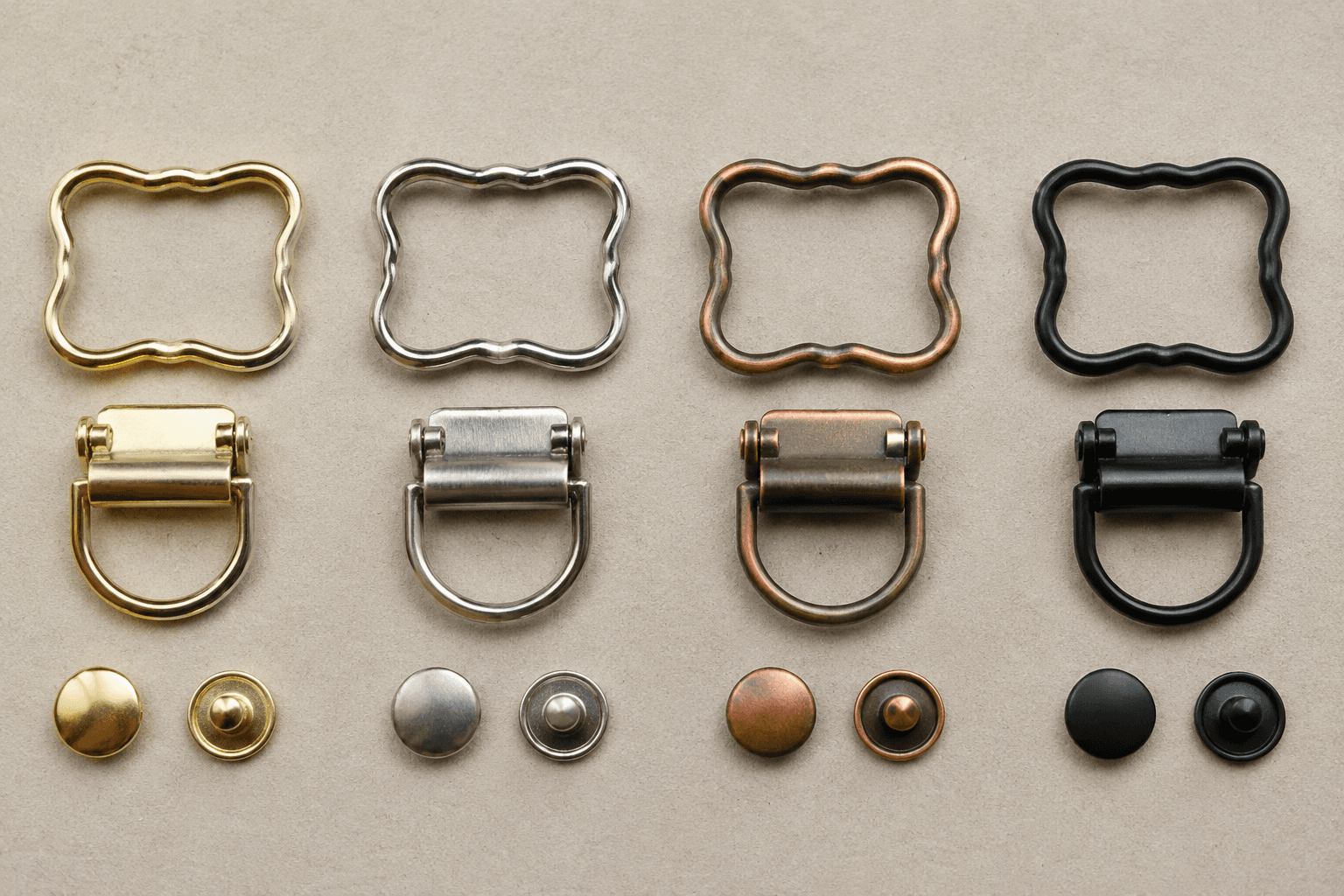
<strong>Jewelry workshop aprons</strong> need tighter specifications than general workwear because lint, exposed hardware and oversized pockets can contaminate polishing work, scratch watch cases or plated parts, and slow seated bench tasks. This guide gives B2B buyers concrete sourcing benchmarks for 210-230 GSM fabrics, scratch-safe trim rules, pocket dimensions, MOQ, ex-works pricing, AQL and lead-time control.
Ice cream shop aprons: dairy splash visibility, cold-room comfort and stain-release priorities
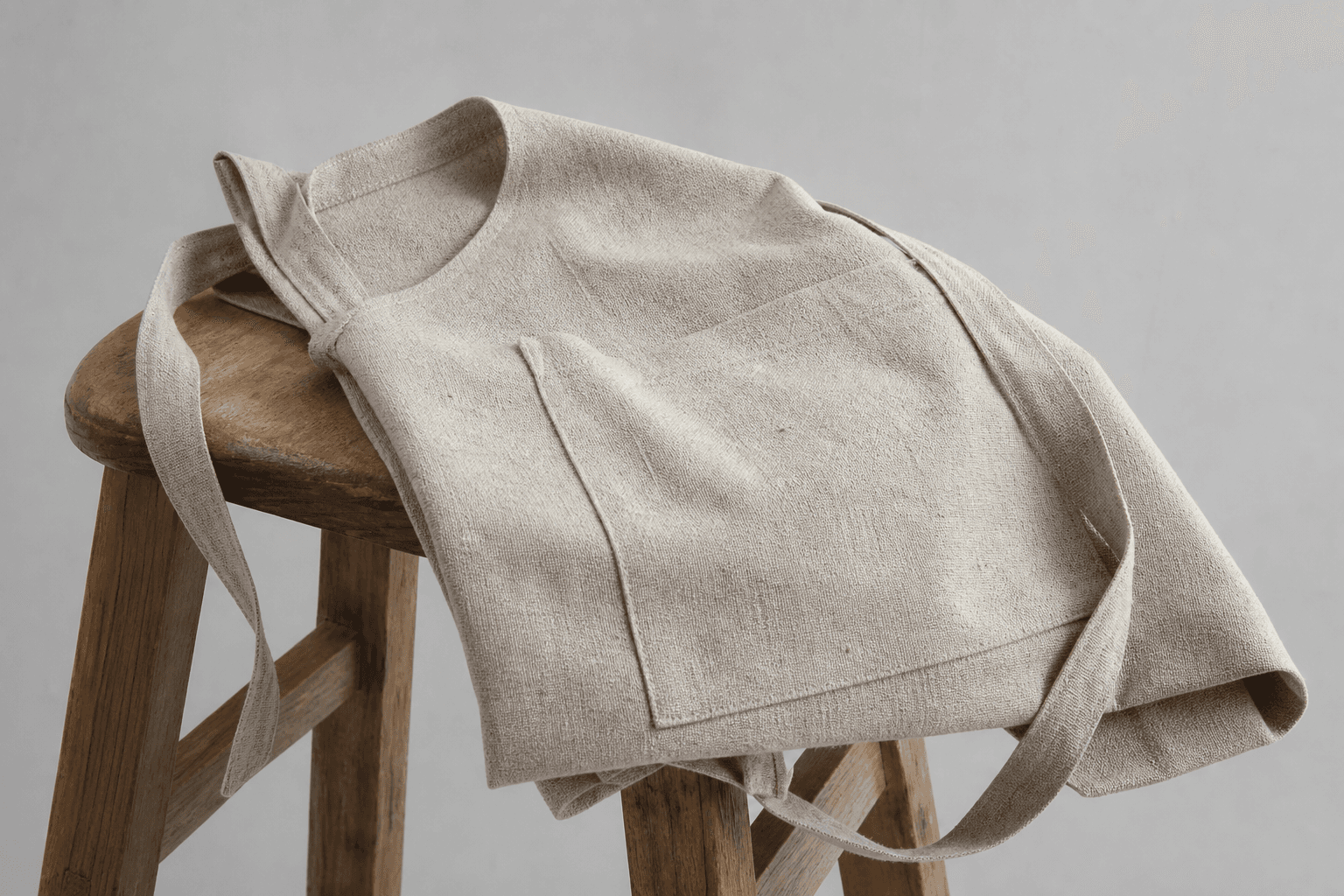
<em>Ice cream shop aprons</em> for chain and multi-store buyers should be specified around visible dairy splash control, comfort during repeated 2-8°C stock-room runs, and reliable stain release after frequent laundering. The most stable OEM brief usually lands at 210-240 GSM compact poly-cotton twill, MOQ 300-500 pcs per color per style, proto samples in 5-7 days, PP samples in 7-14 days, bulk production in 25-40 days, and final inspection at <strong>AQL 2.5</strong>.
Hydrogen peroxide, quats and sanitizers on aprons: chemical exposure planning for salons and cleaners
<strong>Chemical exposure on aprons</strong> should be specified as tightly as fabric weight, pocket layout and logo size. For salon, housekeeping and cleaning teams, repeated contact with 3% to 12% hydrogen peroxide, 0.1% to 0.3% quats, alcohol sprays and alkaline sanitizers changes color retention, coating life, trim reliability, replacement intervals and annual cost per wearer.
Hydrogen peroxide discoloration on black aprons: fabric and dye choices for salon and cleaning use
<strong>Hydrogen peroxide discoloration black aprons</strong> is a recurring sourcing problem for salon groups, janitorial distributors, and contract cleaning buyers because oxidizers attack some black dye systems much faster than standard wear or wash tests indicate. In repeat OEM programs, the lowest complaint rate usually comes from 190 to 220 GSM polyester twill or 200 to 230 GSM solution-dyed polyester, matched black trims, and pre-bulk splash testing at 3%, 6%, 9%, and 12% peroxide with visual checks after 5, 15, and 30 minutes.

How trim nominations slow apron orders: coordinating buckles, webbing, labels and packaging vendors
<strong>Apron trim nomination delays</strong> usually begin 10 to 20 days before sewing starts, not at the sewing table. When buyer-nominated buckles, webbing, labels, or packaging are approved late, arrive short, or fail incoming inspection, a bulk apron order can lose 7 to 21 calendar days, miss vessel cutoff, and add $0.09 to $0.42 per piece in airfreight, repacking, storage, or line-change cost.
How many colorways can one apron PO support before pricing and lead time break down
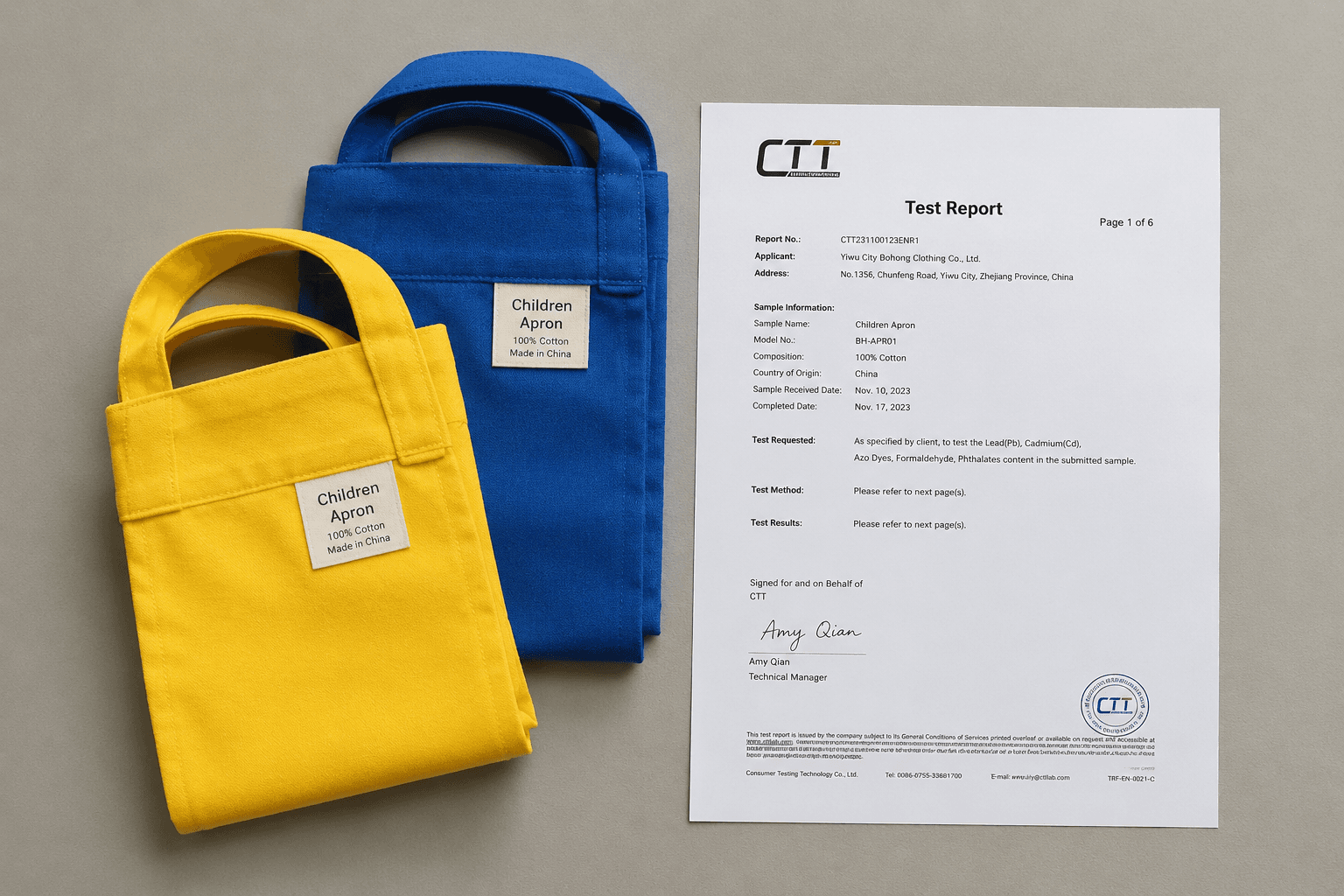
A <em>multiple colorways apron order</em> stays commercially sound only while each shade still clears workable fabric, trim, and packing thresholds. For most B2B apron programs, one PO remains efficient at <strong>3 to 5 colorways</strong>, <strong>2,400 to 6,000 pcs total</strong>, and <strong>300 to 600 pcs per color</strong>. Below that level, FOB commonly rises <strong>$0.12 to $0.48 per piece</strong>, lead time stretches <strong>5 to 18 days</strong>, and the order starts behaving like several small apron lots instead of one bulk run.

Heavyweight apron fabrics above 350 GSM: rigidity, needle requirements and freight cost implications
<em>Heavyweight apron fabric</em> above 350 GSM changes apron sourcing economics immediately, not just product appearance. For professional buyers, it affects panel rigidity, seam-stack thickness, needle size, sewing minutes, finished piece weight, carton yield, MOQ and freight cost per unit. In most custom apron programs, 360 to 420 GSM is the commercially workable range; above that, every extra 20 to 30 GSM needs a clear use case because comfort loss, defect risk and logistics cost usually rise faster than service-life gains.

Heat-transfer neck branding on aprons: low-profile labeling without woven trim minimums
A <strong>heat transfer neck label apron</strong> program gives B2B apron buyers a low-profile private-label finish without the <strong>3,000-5,000 pc</strong> woven-label commitments that often distort small and mid-volume orders. On typical apron runs of <strong>500-2,500 pcs</strong>, buyers can shift branding MOQ down to <strong>300-500 pcs</strong> per artwork, trim <strong>3-6 days</strong> from label development, and hold neck-branding cost near <strong>$0.03-$0.08/pc</strong>, provided the transfer is specified against apron fabric weight, laundering method, placement tolerance, and written QC limits.
Grease-resistant apron fabrics: comparing fluorine-free finishes, tight weaves and coated surfaces
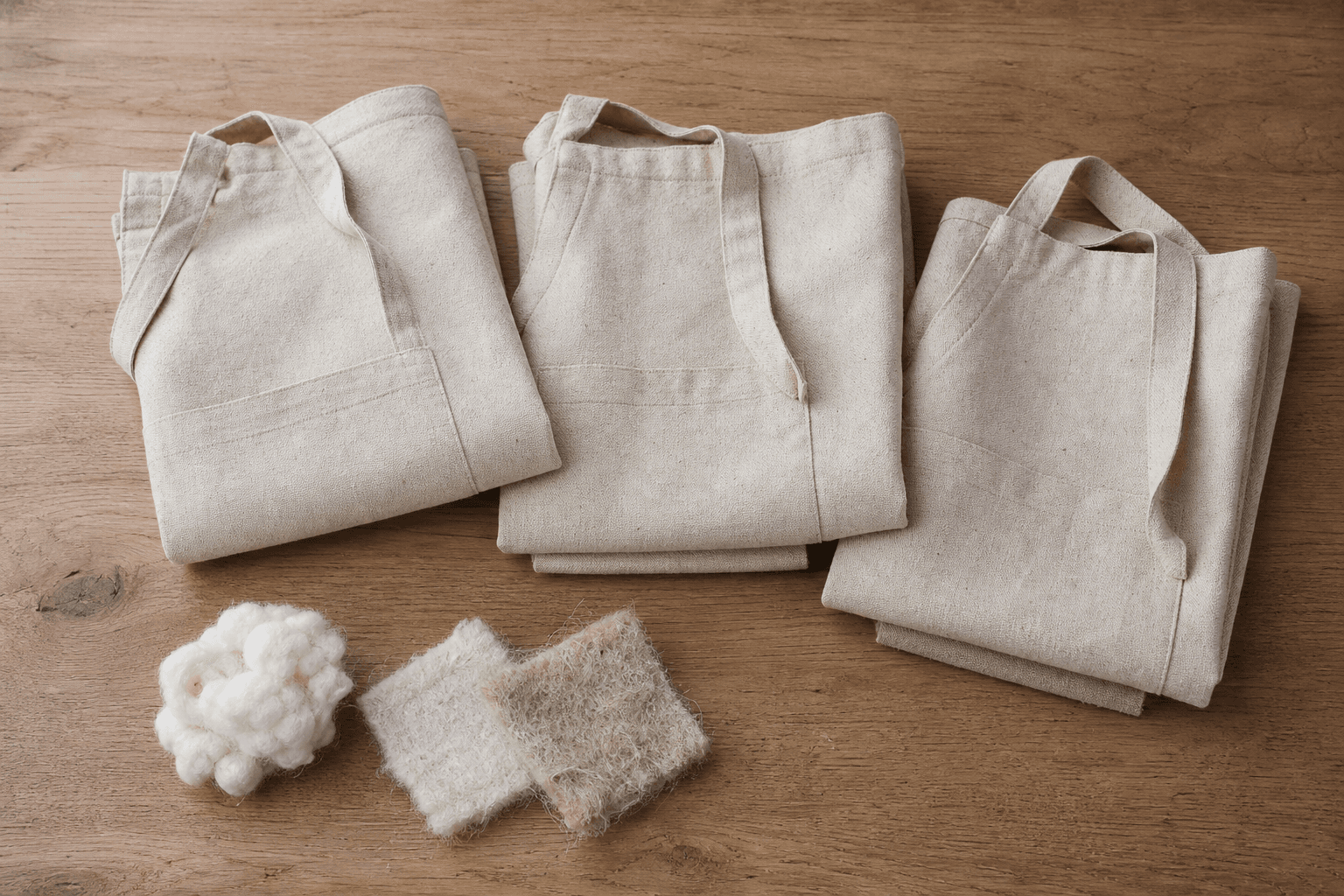
Choosing <strong>grease resistant apron fabric</strong> for a bulk apron program is a specification exercise, not a marketing exercise. For professional buyers, the real comparison is between fluorine-free finished woven fabrics, dense twills and canvases that slow oil penetration, and coated surfaces that create a stronger barrier but alter breathability, seam design, decoration options, MOQ, lead time, and FOB cost.
Eyelets and grommets for apron ties: size standards, pull-out strength and rust prevention
<em>Apron eyelets and grommets</em> look minor on the BOM, but they directly affect strap life, wash durability and claim rates in commercial apron programs. This guide gives B2B buyers concrete standards for apron tie hole size, pull-out strength, rust prevention, MOQ, lead time, AQL and installed cost when sourcing hardware for hospitality, kitchen, cafe and workwear aprons.
Detachable waist ties for commercial aprons: hook, snap and tunnel systems that simplify replacement
<strong>Detachable apron ties</strong> turn the highest-wear apron component into a controlled spare part instead of a full-garment write-off. This sourcing guide compares hook, snap and tunnel systems for professional apron buyers with realistic data on 180 to 350 GSM fabrics, 7.0 to 12.0 oz builds, $0.12 to $0.78 FOB adders, 500 to 5,000 set MOQs, 10-, 25- and 50-wash checkpoints, and AQL standards for bulk apron programs.
Custom apron hang loops: utility placement, tape materials and sewing reinforcement points
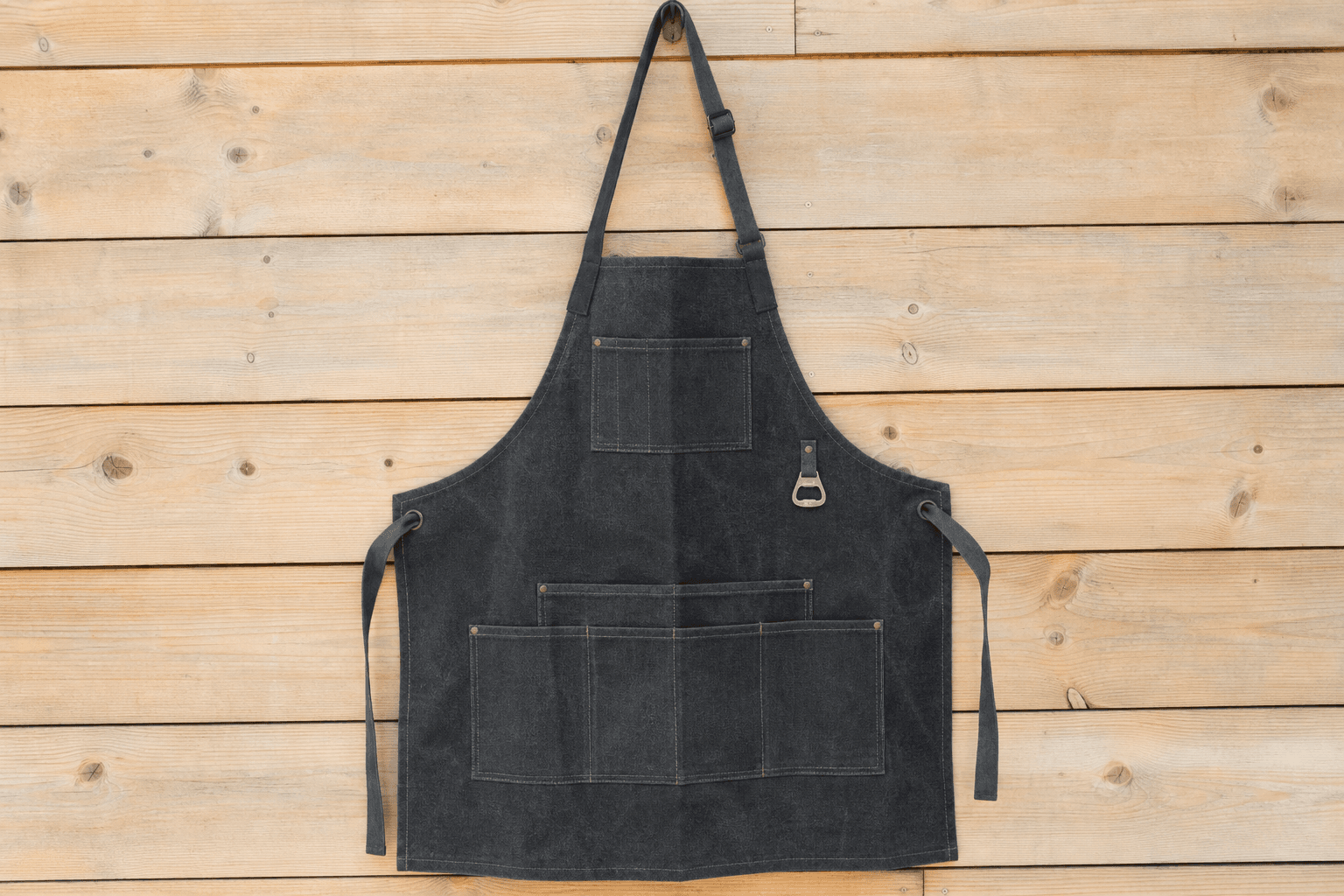
<strong>Apron hang loop design</strong> affects durability, costing, and approval speed on OEM orders. For professional apron buyers, the right loop placement, 12 mm to 20 mm tape choice, and seam-caught reinforcement can prevent failures through 50 to 75 commercial wash cycles while adding roughly $0.03 to $0.15 per piece FOB.

Custom apron costing by operation: which sewing steps actually add labor minutes
This guide explains <strong>apron sewing cost breakdown</strong> with factory-level minute ranges, labor-rate math, MOQ effects, AQL assumptions, and lead-time checkpoints so B2B buyers can see which apron operations actually add cost in bulk production.
Craft aprons for printmaking studios: ink resistance, solvent splash risk and pocket placement for tools
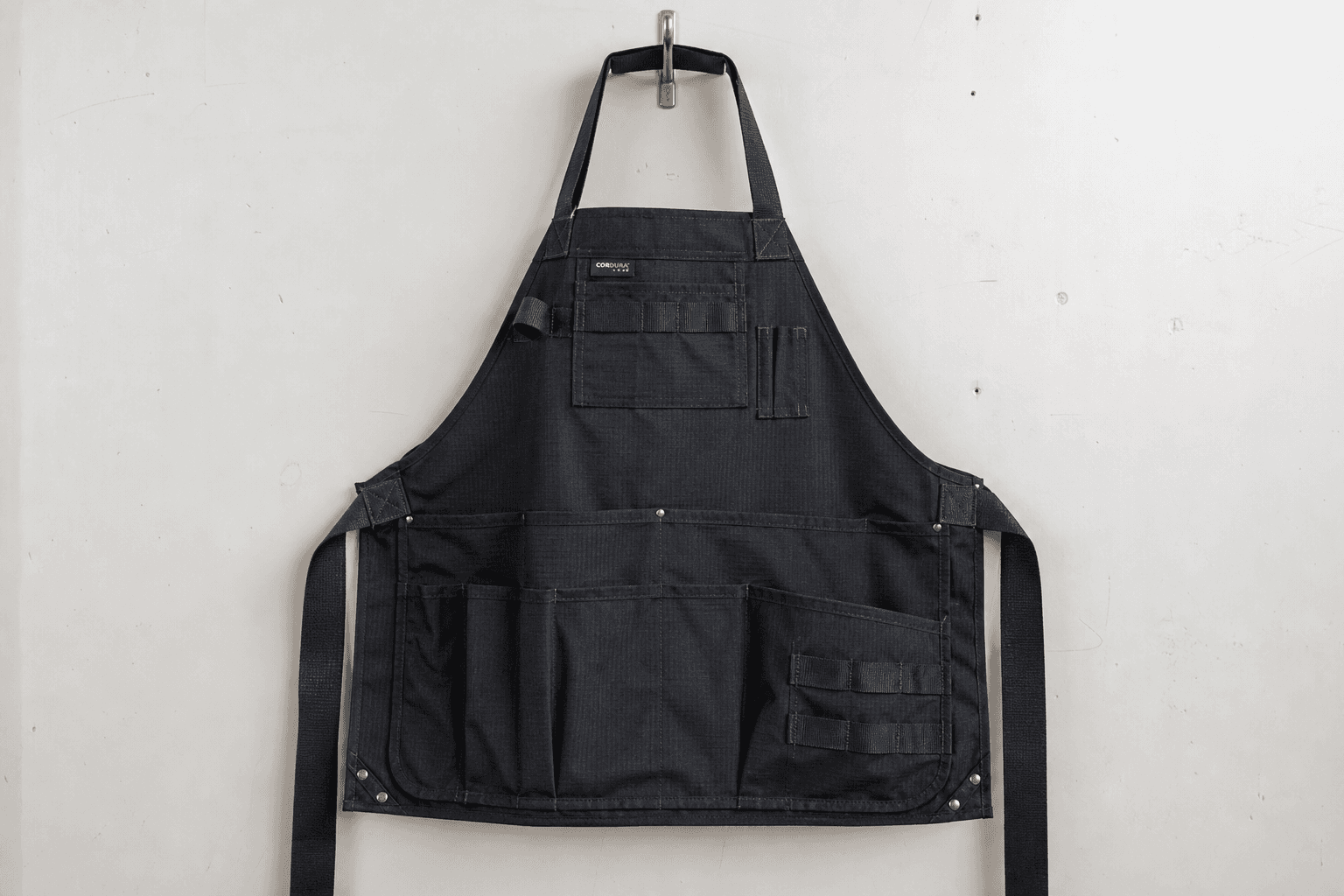
This B2B sourcing guide shows how to buy <em>printmaking studio aprons</em> with the right fabric weight, pocket map, splash-risk language, MOQ, AQL and lead time for schools, shared studios and private-label apron programs.
Commercial stain-removal testing for aprons: building a realistic soil set before approving fabric
<strong>Apron stain removal testing</strong> only predicts field performance when the soil set, dwell time, wash chemistry, drying method and grading rules match actual apron use. For B2B buyers sourcing bib, waist and butcher aprons, a realistic protocol reduces false approvals, exposes shade and seam-zone risk before bulk booking, and helps balance GSM, blend, MOQ, lead time and USD per piece with fewer post-shipment claims.
Commercial laundry wash formulas for aprons: what buyers should collect before approving fabric
A <strong>commercial laundry apron wash formula</strong> should be treated as a pre-approval document, not an afterthought. Before signing off apron fabric, B2B buyers need the actual wash chemistry, stage temperatures, extraction force, drying method, cycle target, and pass limits so the factory can test the full apron construction against real service conditions and price the right fabric route from the start.
Colorfastness to perspiration on aprons: why dark neck straps and waist ties need separate testing
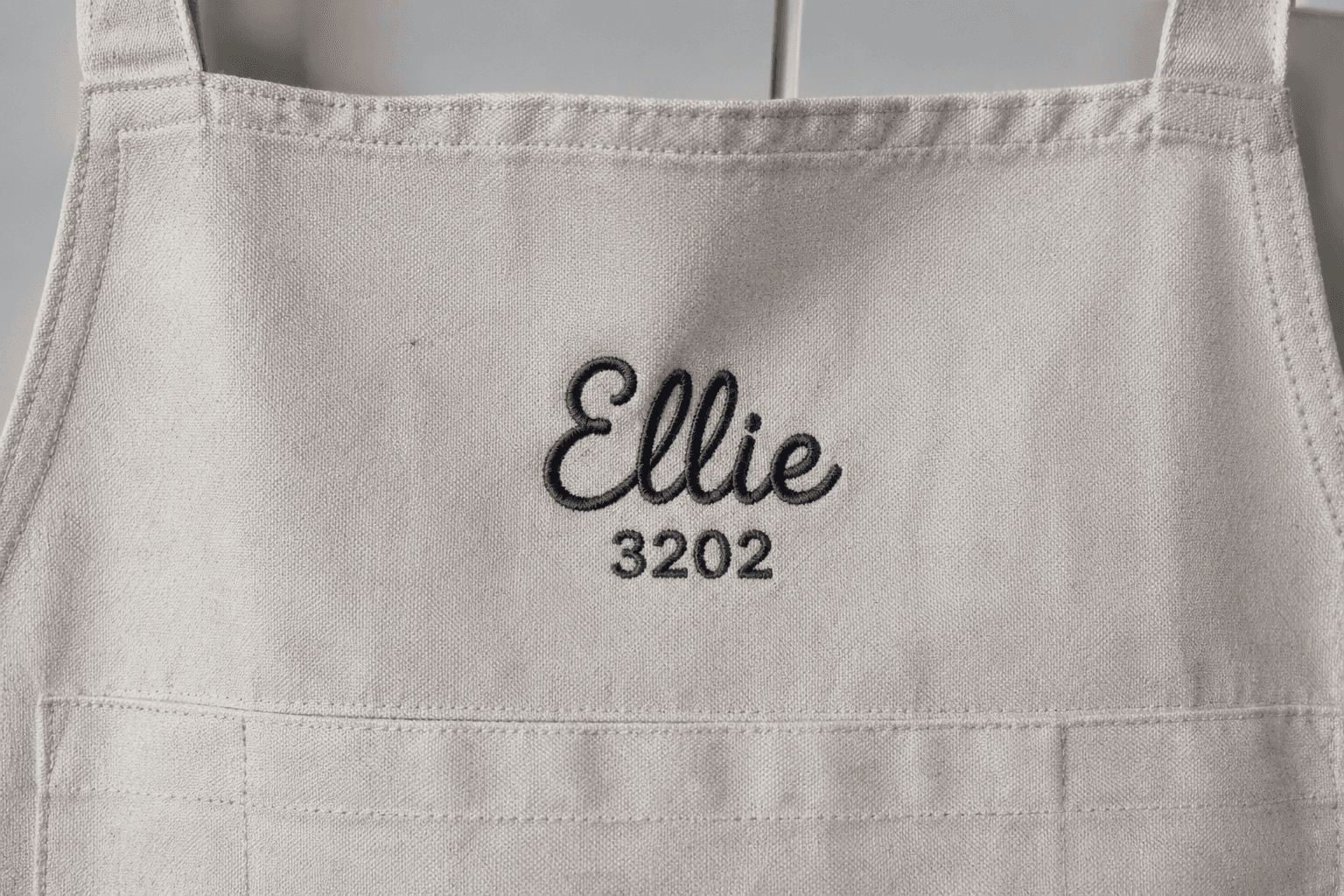
<strong>apron perspiration colorfastness</strong> failures usually show up first in black or navy neck straps and waist ties, not in the apron body. Those narrow components often come from separate trim suppliers, carry deeper dye loads, and stay in direct contact with skin for 8-12 hour shifts in kitchens, cafés, breweries, and hospitality service. For B2B apron buyers, testing those parts separately is a low-cost control that helps prevent sweat staining, failed wearer trials, and last-minute bulk holds before shipment.
Bistro and brasserie aprons: midweight fabrics and shorter lengths for fast floor service
<em>Bistro service aprons</em> perform best when buyers specify the build around actual floor-service movement, wash frequency, and replacement targets. For most B2B uniform programs, the strongest repeat order formula is <strong>190-220 GSM</strong> woven fabric, <strong>55-65 cm</strong> finished length, pocket depth of <strong>18-22 cm</strong>, MOQ of <strong>300-800 pcs per color/style</strong>, and bulk lead time of <strong>25-40 days</strong> depending on dyeing, branding, and trim count.

Bakery commissary aprons vs front-of-house bakery aprons: why one spec rarely fits both
<em>Bakery commissary aprons</em> and front-of-house bakery aprons should rarely share one factory spec. Commissary teams usually need 245 to 300 GSM fabric, reinforced seams and ties, darker shades, and reliable performance through 60 to 100 industrial wash cycles. Customer-facing teams usually wear 180 to 230 GSM aprons with cleaner drape, lower neck load, and better logo presentation. For B2B buyers, two role-based apron SKUs under one brand program usually cut claims, improve wearer acceptance, and lower annual replacement cost.
Aprons for tea rooms and patisserie counters: pastel color control, stain exposure and elegant trims
<em>Tea room aprons</em> for patisserie counters need tighter sourcing control than dark hospitality uniforms. Pale shades expose lot variation, stain pickup, trim puckering, and hardware mismatch at customer distance. This guide gives B2B buyers clear benchmarks for fabric GSM, MOQ, FOB cost, lead times, stain-risk zones, and AQL settings so light-color apron programs stay consistent from sampling through repeat orders.
Aprons for tasting rooms and cellar doors: balancing polished appearance with red-wine stain reality
<strong>Tasting room aprons</strong> must read as polished front-of-house uniform pieces from one meter away, resist repeated red-wine splash exposure, and still meet appearance standards after 30 to 50 commercial wash cycles. For B2B buyers, the buying outcome is driven by specific choices: <strong>220 to 250 GSM</strong> fabric weight, blend ratio, dark-shade strategy, pocket layout, trim restraint, <strong>MOQ 300 to 500 pcs</strong>, <strong>$3.20 to $6.20 FOB</strong> target range, <strong>7 to 20 day</strong> sampling, <strong>25 to 55 day</strong> bulk lead time, and inspection at <strong>AQL 2.5 / 4.0</strong> or tighter.
Aprons for olive oil, vinegar and deli counters: splash resistance without heavy waterproof stiffness
<strong>Deli counter aprons</strong> for olive oil, vinegar and prepared-food service need brief splash protection, fast wipe-off and a soft drape staff can wear for 8-10 hours. For most B2B programs, the strongest specification is a 200-230 GSM woven bib apron with a light repellent finish, not a 320-450 GSM waterproof barrier apron that feels stiff, hot and overbuilt at the counter.
Aprons for housekeeping supervisors and inspectors: lighter utility layouts than room attendant styles
<strong>Housekeeping supervisor aprons</strong> should carry a radio, hotel phone, master keys, pens, and inspection notes without the deep cargo pockets and front-heavy swing built for room attendants. This B2B guide gives sourcing benchmarks buyers can actually use: 180 to 240 GSM fabrics, 3 to 5 functional storage points, 40 to 60 commercial wash cycles, AQL 2.5/4.0, MOQ from 300 pieces, sample lead times of 5 to 14 days, bulk production in 25 to 40 days, and realistic FOB targets from about $1.55 to $3.20 per piece.
Apron laundering trials before launch: setting pass-fail standards for appearance and dimensions
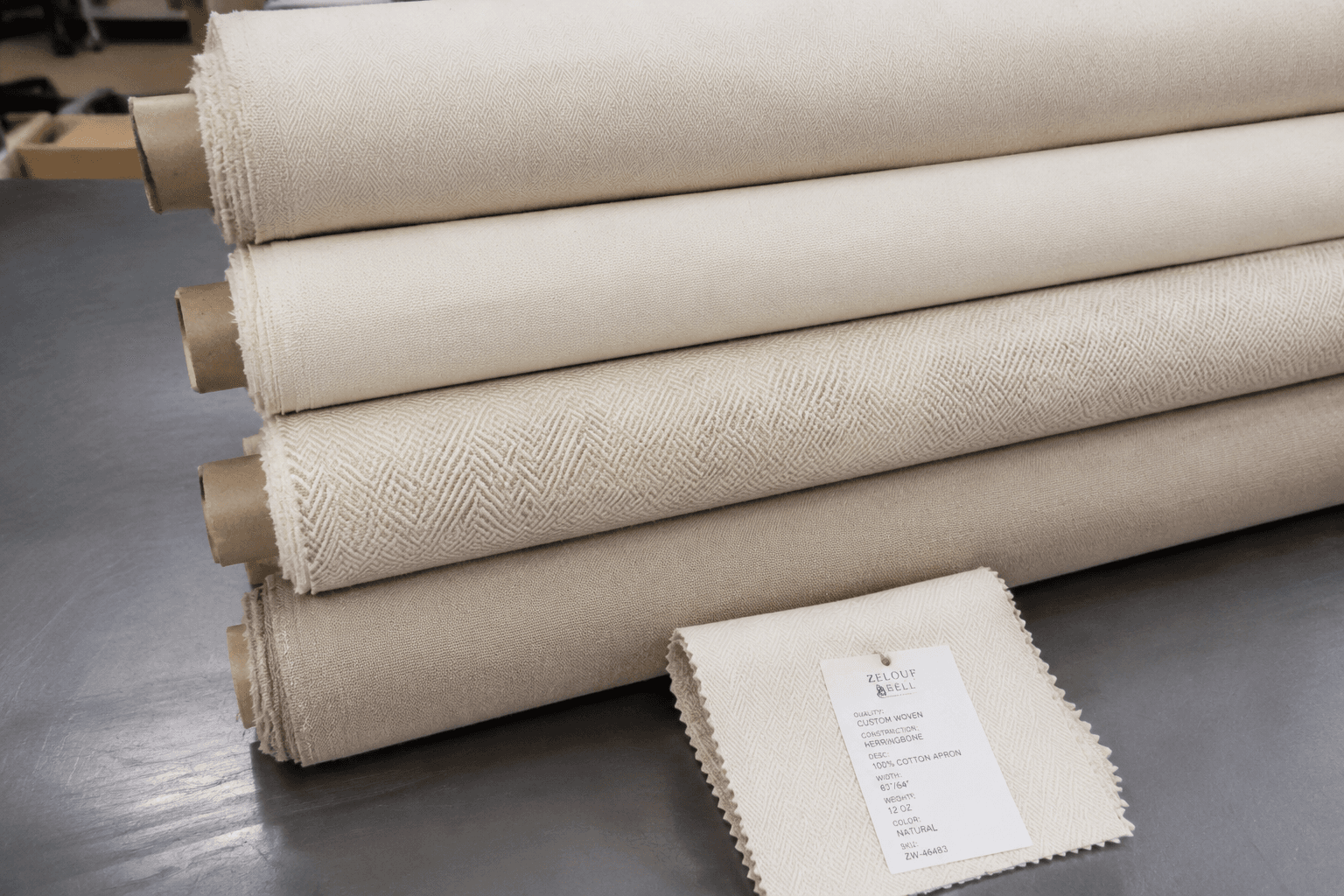
<strong>Apron laundering trials</strong> should establish signed pass-fail limits for shrinkage, skew, shade change, seam integrity, print retention and trim durability before bulk cutting starts. For professional apron buyers, the usable output is a launch standard tied to the final BOM: wash route, cycle count, sample size, measurement map, appearance grades, AQL 2.5/4.0 and re-test triggers under the same laundry conditions the aprons will face in service.
Apron fray at pocket corners: choosing reinforcement methods after wash and abrasion failures
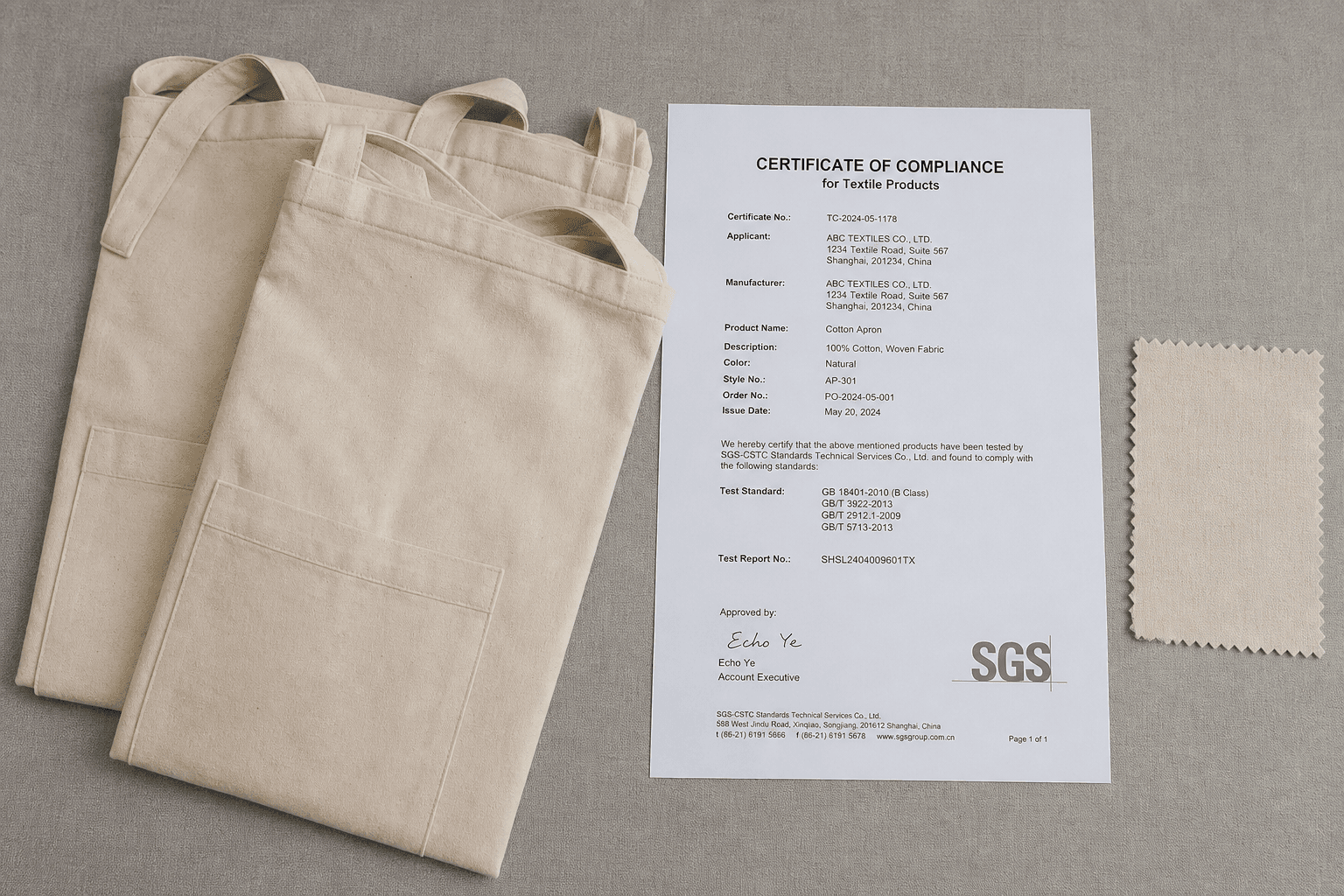
<strong>Apron pocket corner fray</strong> usually starts in the top 8 to 12 mm of the pocket opening, where abrasion, seam tension, and wash shrinkage overlap. For professional apron buyers, the right correction depends on measurable factors: shell weight from 240 to 400 GSM, pocket load, laundry method, approval wash count, and whether the program can absorb a $0.03 bartack, a $0.06 to $0.12 backing patch, or a 7 to 15 day trim lead-time extension.
Apron care symbols for retail packs vs bulk uniform programs: what changes and what cannot
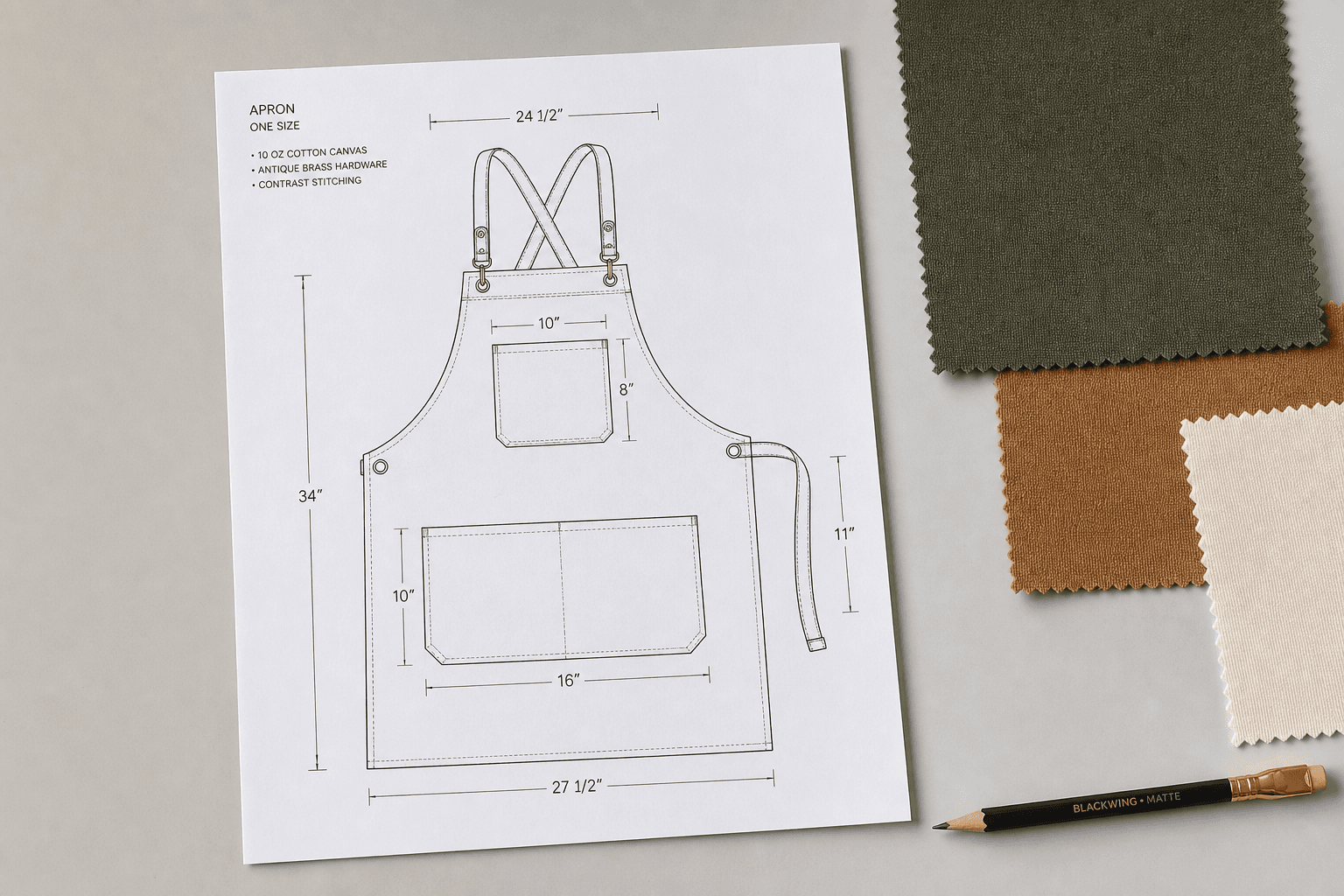
<strong>Apron care label symbols</strong> stay technically fixed when an apron moves from a retail shelf pack to a 20,000-piece uniform rollout. What changes is the label format, the wash-life expectation, and the traceability buyers need for APR, pack, and laundry control. For apron sourcing teams, the rule is simple: presentation can change by channel, but the approved symbol set must still match the tested fabric, trims, decoration, and real wash conditions.
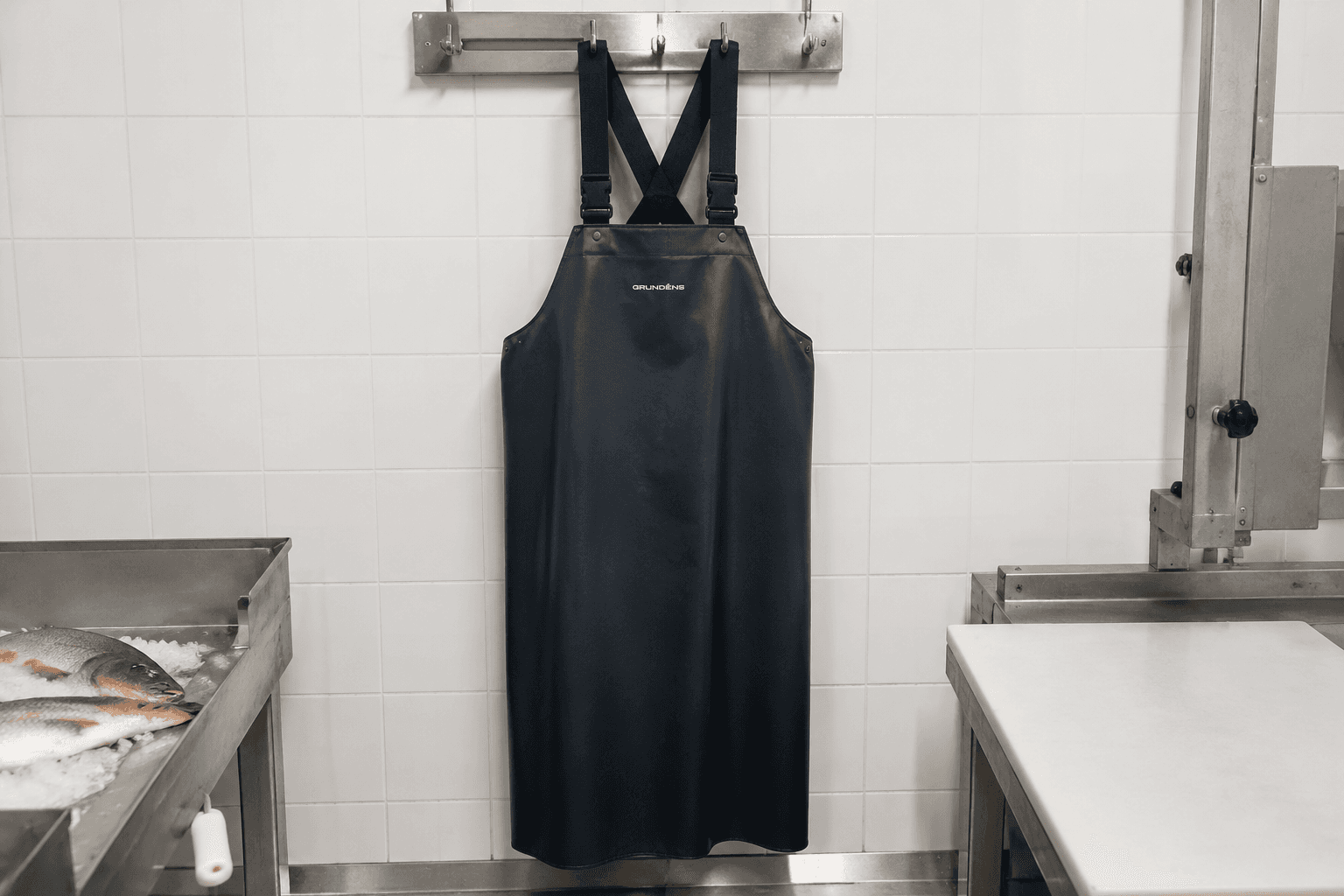
Apron CAD patterns and digital approvals: reducing sample rounds for overseas buyers
A disciplined <strong>apron cad pattern approval</strong> process helps overseas buyers cut 1 to 2 avoidable sample rounds, lock measurements and branding before fabric is cut, and move custom apron programs into bulk production with fewer delays, lower sample spend, and clearer accountability between buyer and factory.
Appron reorder shade control: keeping black, navy and natural programs consistent across seasons
<strong>Apron reorder shade consistency</strong> improves when buyers freeze the exact apron fabric base, dye route, finish, and trim set used on the first bulk order. For black, navy, and natural apron programs, the most dependable results come from retained bulk fabric standards, dyed-fabric MOQs of <strong>300 to 500 meters</strong> per color, reorder planning <strong>60 to 90 days</strong> ahead, and approval on the <strong>finished apron</strong> under defined lighting rather than on a paper color chip alone.
Zipper pockets on custom aprons: security, sewing complexity and bulk-order pricing impact
<strong>Zipper pockets on aprons</strong> can reduce loss of phones, keys and cash, but for B2B buyers they also change trim MOQ, sewing minutes, inspection points, wash-risk exposure and FOB pricing in ways that should be costed before sampling starts.
When to request pilot-run apron production before committing to a national rollout
<strong>Pilot run apron production</strong> is the lowest-risk way for B2B buyers to confirm apron fit, fabric behavior, decoration quality, and packed presentation before a national rollout. For custom aprons sourced from China, a 100- to 300-piece pilot built from the same 210-240 GSM twill or canvas, trim set, and packing standard as bulk can expose shrinkage, measurement drift, logo distortion, carton errors, and AQL failures before a 5,000- to 20,000-piece commitment.
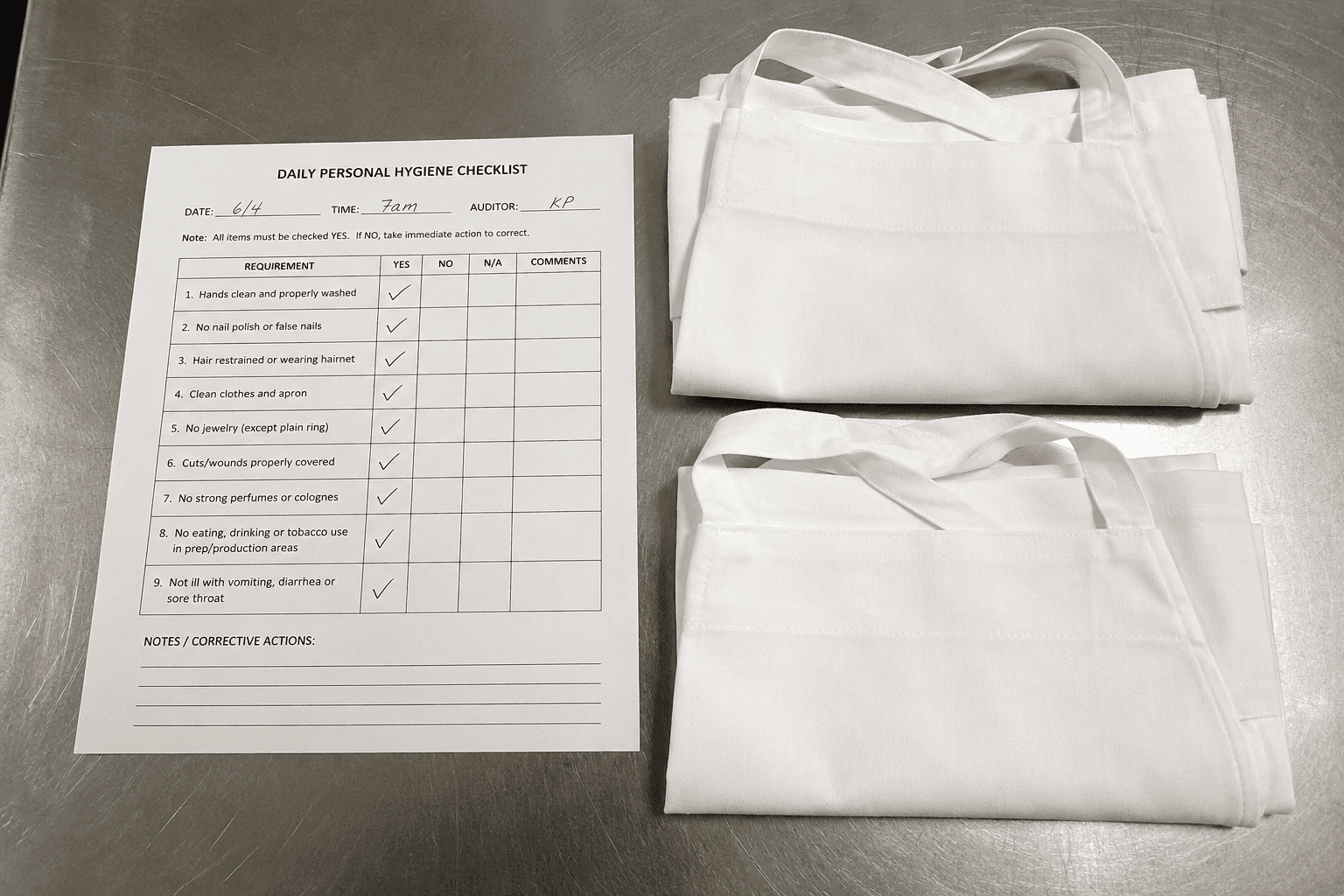
Webbing straps vs self-fabric ties on aprons: cost, wear points and replacement options
A sourcing guide to <em>webbing straps vs self fabric apron ties</em> for bulk apron programs, with apron-specific cost ranges, wear points, MOQ and lead-time benchmarks, replacement methods, and QC checkpoints for professional B2B buyers.
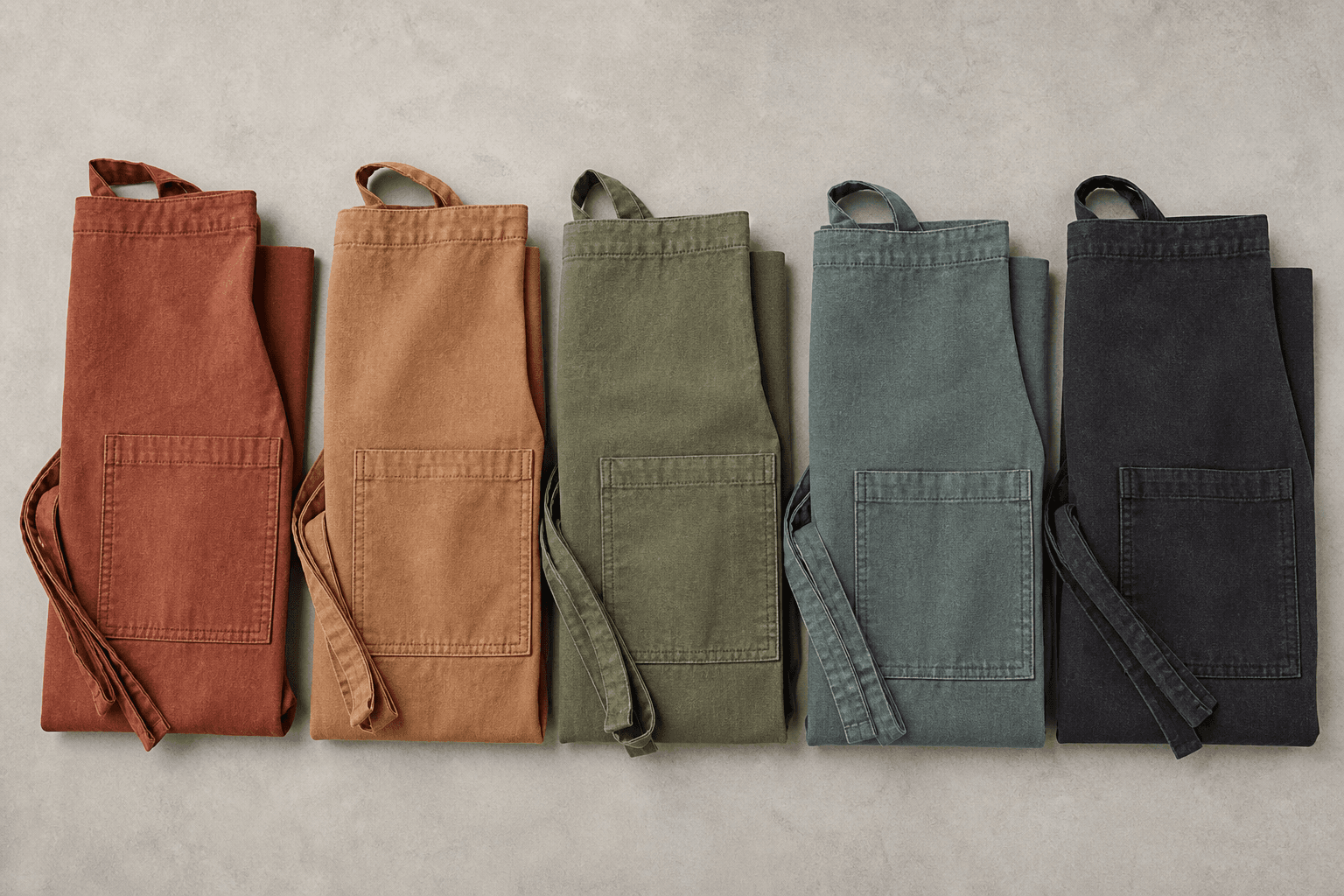
Under-pocket branding on aprons: hidden logo placement for upscale hospitality programs
<strong>Under pocket branding aprons</strong> give hospitality buyers a discreet logo position that keeps the apron front clean while preserving brand recognition at close range. This sourcing guide explains how to specify hidden logo placement on professional aprons, with practical benchmarks for pocket construction, fabric weight, branding method, MOQ, ex-factory adders, wash durability, lead times, and <strong>AQL 2.5 / 4.0</strong> control points.
Tencel-cotton apron fabrics: moisture handling, drape and seam slippage risk
<em>tencel cotton apron fabric</em> gives premium bib, waist and cross-back aprons a softer drape, quicker moisture spread and a cleaner dyed surface than standard cotton twill, but B2B buyers should only release bulk after locking fabric weight at <strong>190-230 GSM</strong>, seam-slippage controls, wash route, MOQ, inspection level and a realistic <strong>45-65 day</strong> lead time.
Should-cost analysis for custom aprons: using fabric, labor and trim breakdowns in negotiations
<strong>Should cost analysis custom aprons</strong> gives B2B buyers a line-by-line way to test apron quotes before negotiation by checking finished fabric GSM, usable width, marker yield, sewing minutes, trim consumption, MOQ, AQL level, packaging detail and confirmed lead time in days.
Serialized logo patches for apron programs: tracking wearer issue and replacement history
<strong>Serialized apron patches</strong> give every apron a unique ID that links issue date, wearer assignment, wash exposure, repair record, and replacement reason. For B2B buyers managing <strong>3,000 to 50,000 aprons</strong> across cafés, restaurant groups, bakeries, commissaries, retail counters, and factory canteens, they add a practical control layer at just <strong>$0.04-$0.35 per piece</strong>, improve packing accuracy, support <strong>AQL 2.5 major / 4.0 minor</strong> inspection, and cut blind replenishment.
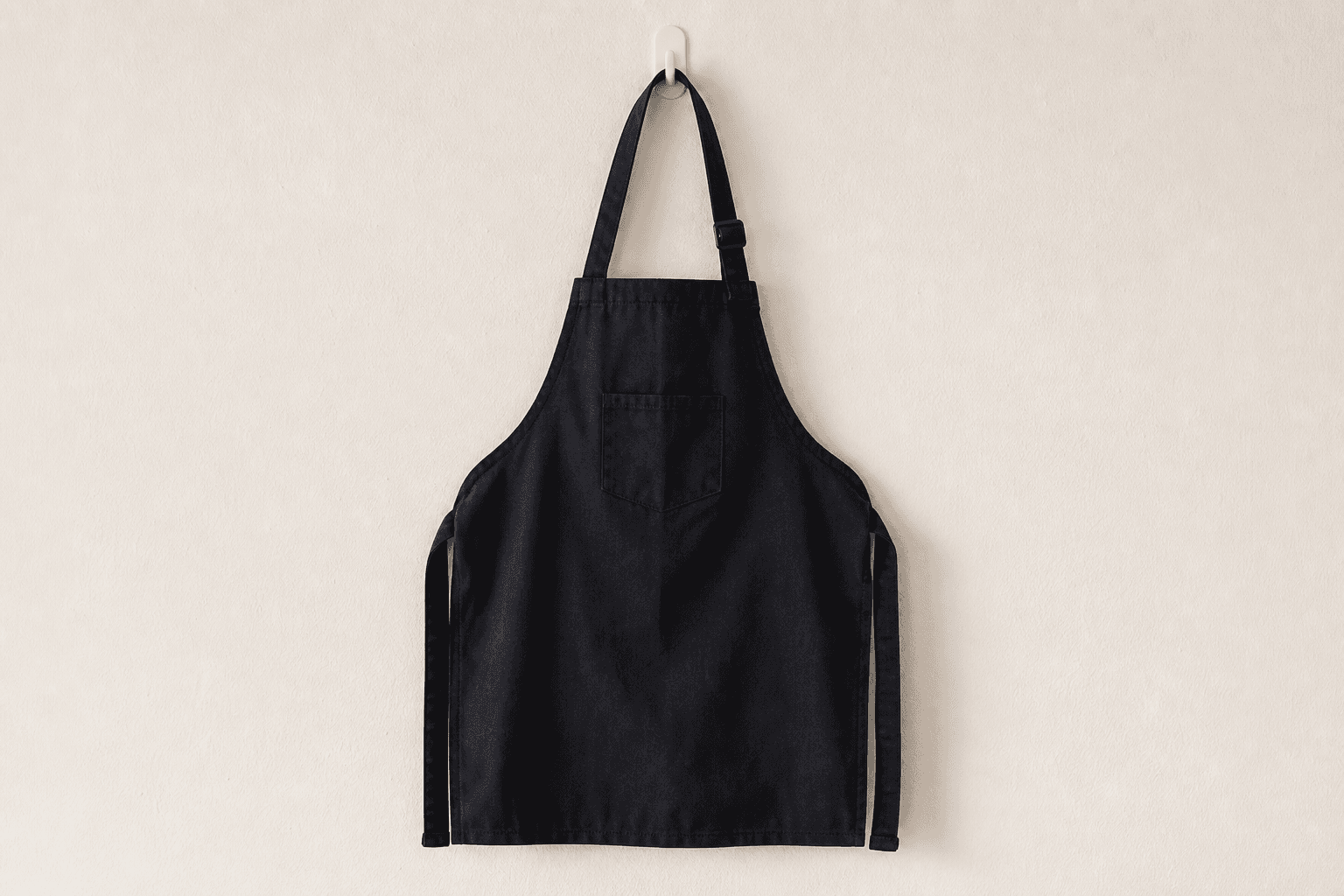
Rust migration from apron hardware: preventing stains around rivets, snaps and grommets
<em>Apron hardware rust stains</em> rarely start in laundry alone. In bulk apron programs, the problem usually begins when iron-based rivets, snaps, or grommets are approved by color and shape, then installed through 200-340 GSM twill, canvas, or 9-12 oz denim and exposed to 40-60°C washing, alkaline chemistry, 24-48 hours of damp stacking, or 18-28 days of humid transit. B2B buyers cut rejects and chargebacks when hardware is specified by base metal, finish thickness, installed wash performance, moisture limit at packing, and clear AQL rules for stain migration.
Reverse-side print on apron facings and straps: hidden branding for premium private label programs
<em>Hidden branding on apron straps</em> gives private label apron buyers a low-visibility branding channel that keeps the bib front clean while adding a measurable premium detail. The feature scales only when the apron spec fixes fabric weight, finished strap width, print-safe margins, MOQ, wash standard, AQL, added cost per piece, and bulk lead time before sampling.
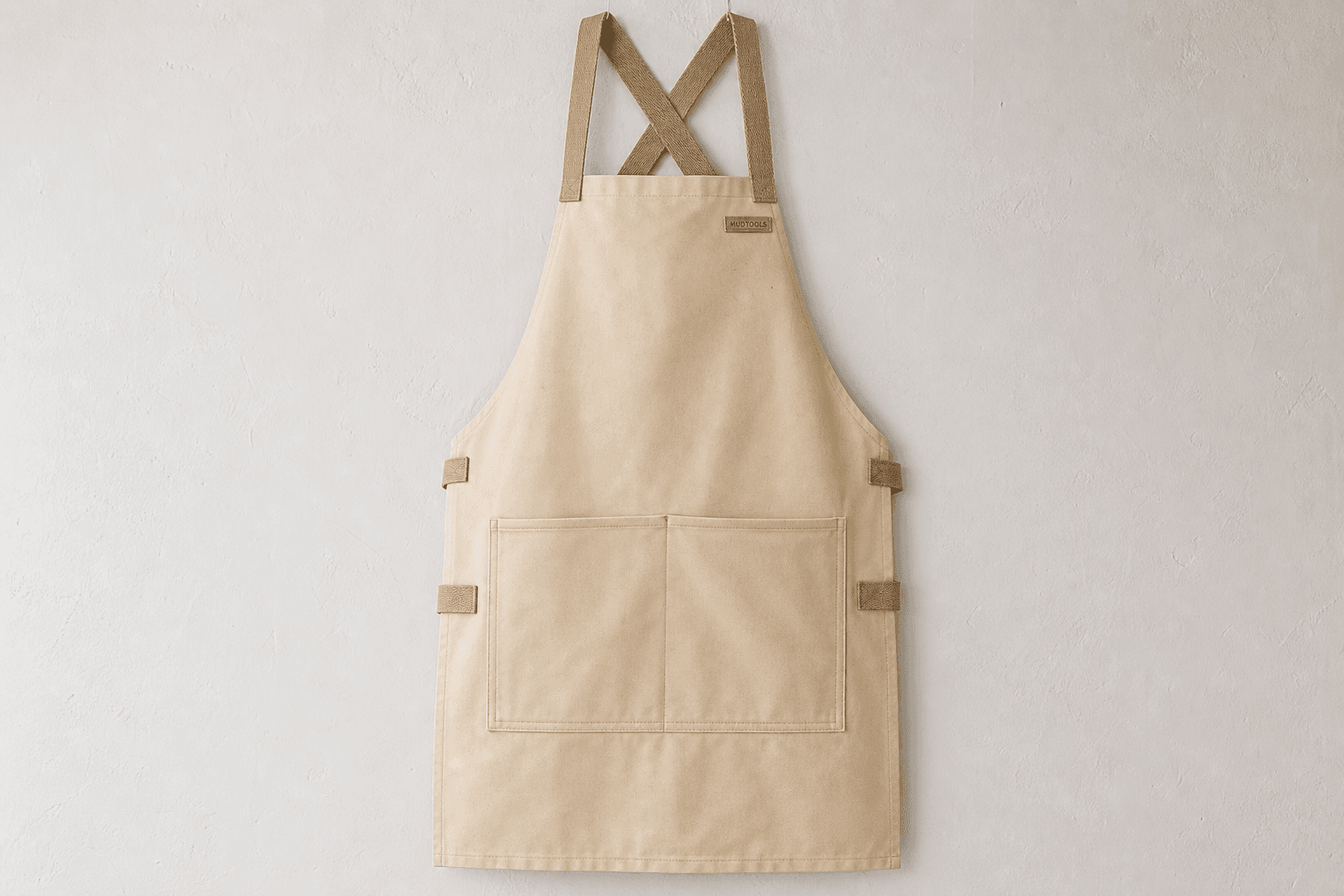
Restaurant franchise aprons: building spec consistency across regions and reorder cycles
<strong>Restaurant franchise aprons</strong> stay consistent when buyers manage them as controlled repeat SKUs instead of one-off uniform purchases. For multi-site restaurant groups, that means locking fabric weight, finished measurements, trim, decoration, wash performance, AQL, MOQ bands, and reorder approvals before bulk production so each replenishment shipment matches the sealed standard sample.
Removable apron straps: snap, button and hook systems for easier laundering and repair
<strong>Removable apron straps</strong> help professional apron buyers reduce full-garment replacement, speed commercial laundry handling, and keep standard apron bodies in service longer. For OEM apron sourcing, the right snap, button, or hook system should be selected against fabric weight, strap width, wash temperature, target cycle count, spare-part MOQ, AQL limits, and realistic FOB cost per piece.
Reflective logo transfers on aprons: wash durability and visibility for service teams
<strong>Reflective logo transfers on aprons</strong> work best when buyers treat them as a sourcing specification, not a styling add-on: use stable <strong>200-260 GSM</strong> poly-cotton twill, keep chest artwork near <strong>48-80 cm²</strong>, budget <strong>US$0.18-0.85 per piece</strong>, approve wash performance at <strong>25-40 home washes</strong> or <strong>15-25 industrial washes</strong>, and lock bulk quality at <strong>AQL 2.5 major / 4.0 minor</strong> with defined limits for lift, cracking and placement.
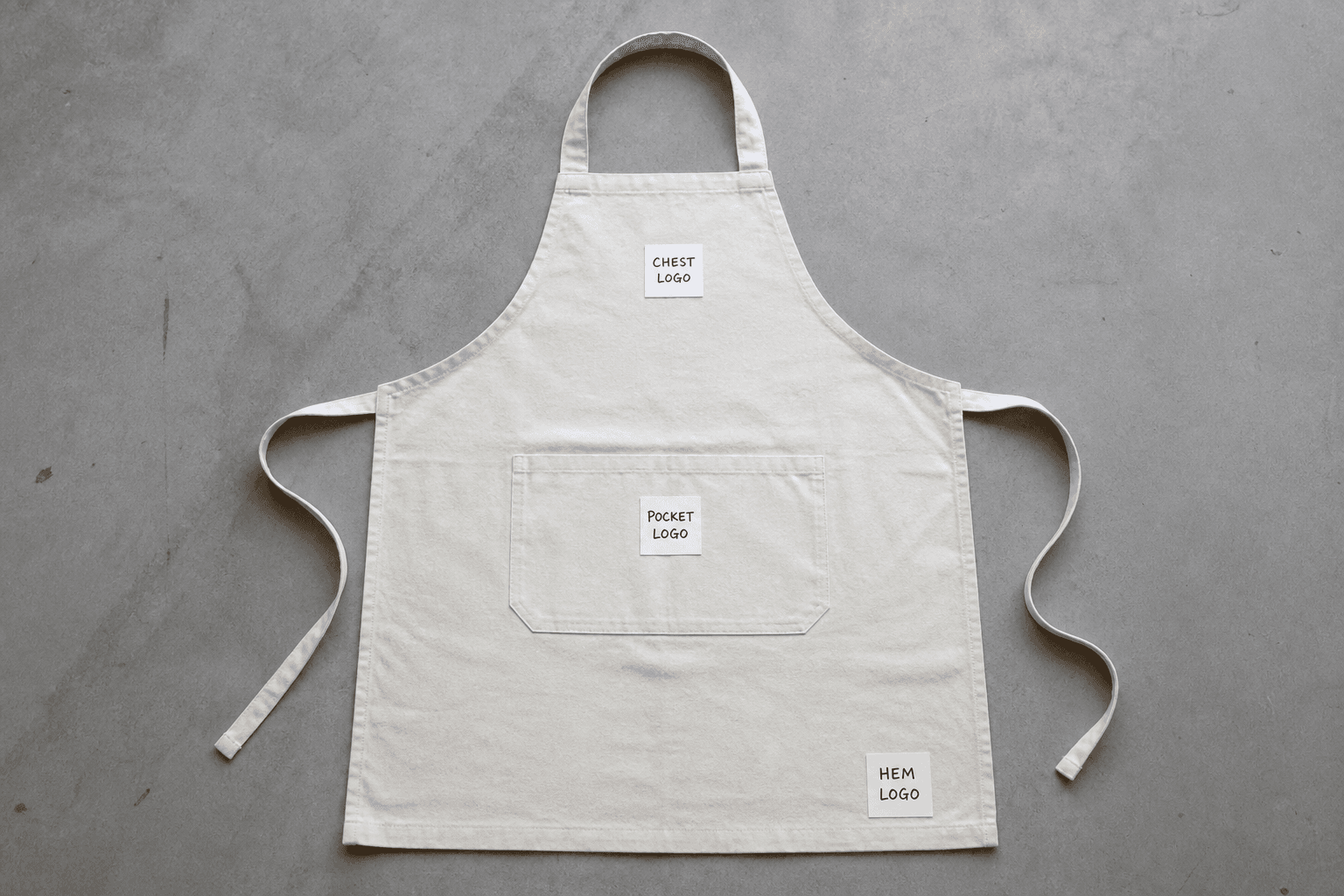
Pet bakery and specialty food shop aprons: lint visibility, pastel branding and wash frequency planning
<em>Pet bakery aprons</em> for specialty food retailers need tighter sourcing controls than standard café uniforms because cream, blush, sage and powder-blue shades show pet hair, crumb dust and pocket-edge greying within a single 8-10 hour shift. The most reliable programs usually specify 200-240 GSM (5.9-7.1 oz) smooth poly-cotton twill, darker high-contact trims, AQL 2.5 final inspection and wash-life planning around 120-180 commercial laundry cycles per year.
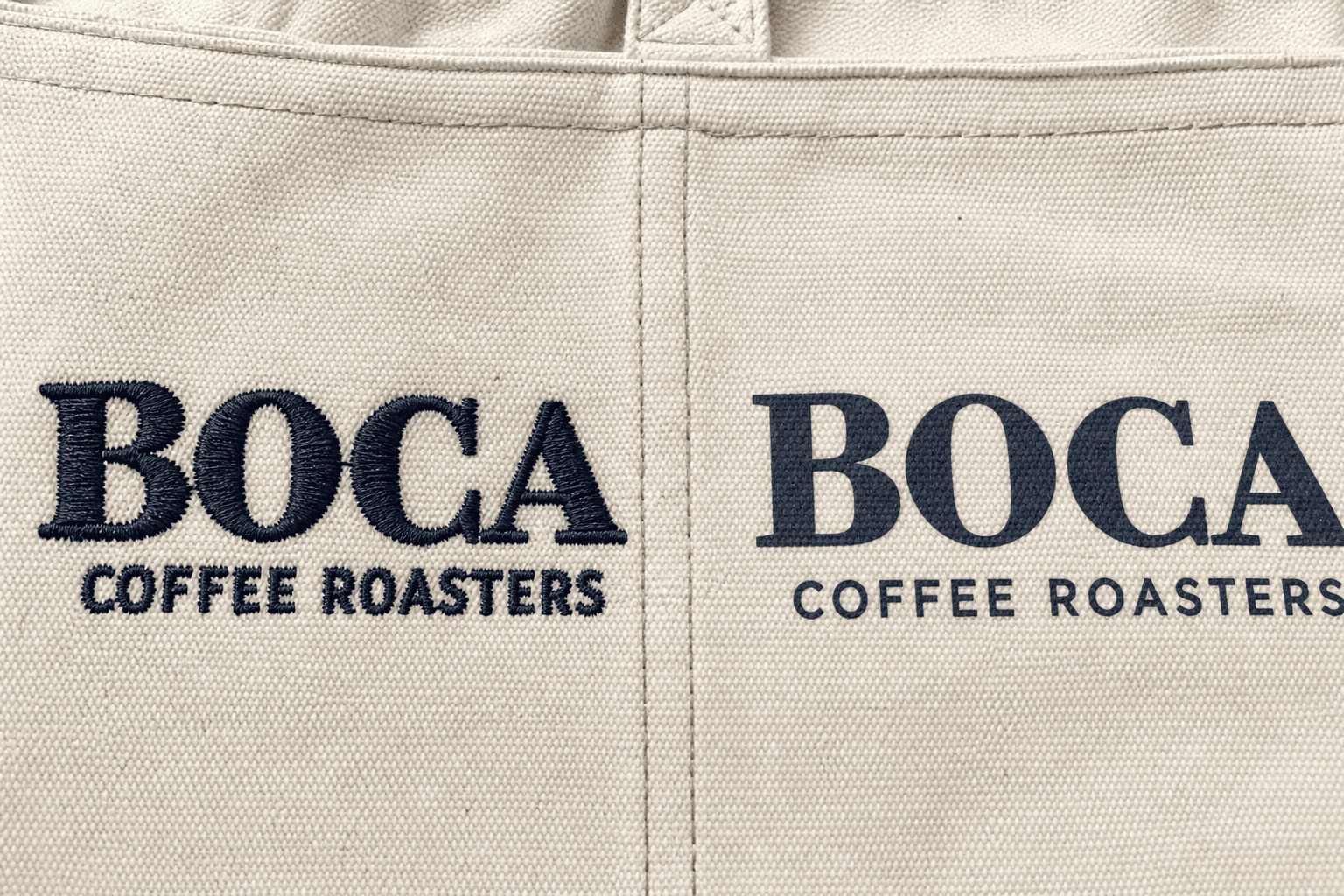
Pastry lab and chocolate kitchen aprons: protecting against cocoa butter, sugar and flour buildup
<em>Pastry lab aprons</em> for chocolate rooms, confectionery lines and bakery prep areas perform best when buyers specify fabric, construction and QC around actual soil loads. For most professional programs, that means 220 to 270 GSM bib aprons in dense 65/35 or 80/20 poly-cotton, controlled pocket layouts, 600 to 1,000 piece color MOQs, 20 to 35 day bulk lead times, and approval standards tied to shrinkage under 3%, seam security, and visible cocoa butter, sugar and flour buildup after repeated washing.
Oxford fabric aprons: basket weave appearance, water resistance options and logo limitations
<strong>Oxford fabric aprons</strong> give B2B buyers a defined basket-weave surface, quicker drying than cotton-rich aprons, and scalable splash protection when the fabric is specified correctly. For sourcing, the decision points are concrete: denier, finished GSM, coating type, logo method, MOQ, FOB range, wash expectation, and AQL standard—not the word “oxford” by itself.
Open-end vs ring-spun cotton for aprons: handfeel, strength and print surface
A practical sourcing guide to <em>open end vs ring spun cotton aprons</em>, covering how yarn choice changes apron handfeel, seam performance, print sharpness, shrinkage, MOQ, lead time and realistic FOB cost in bulk OEM production.
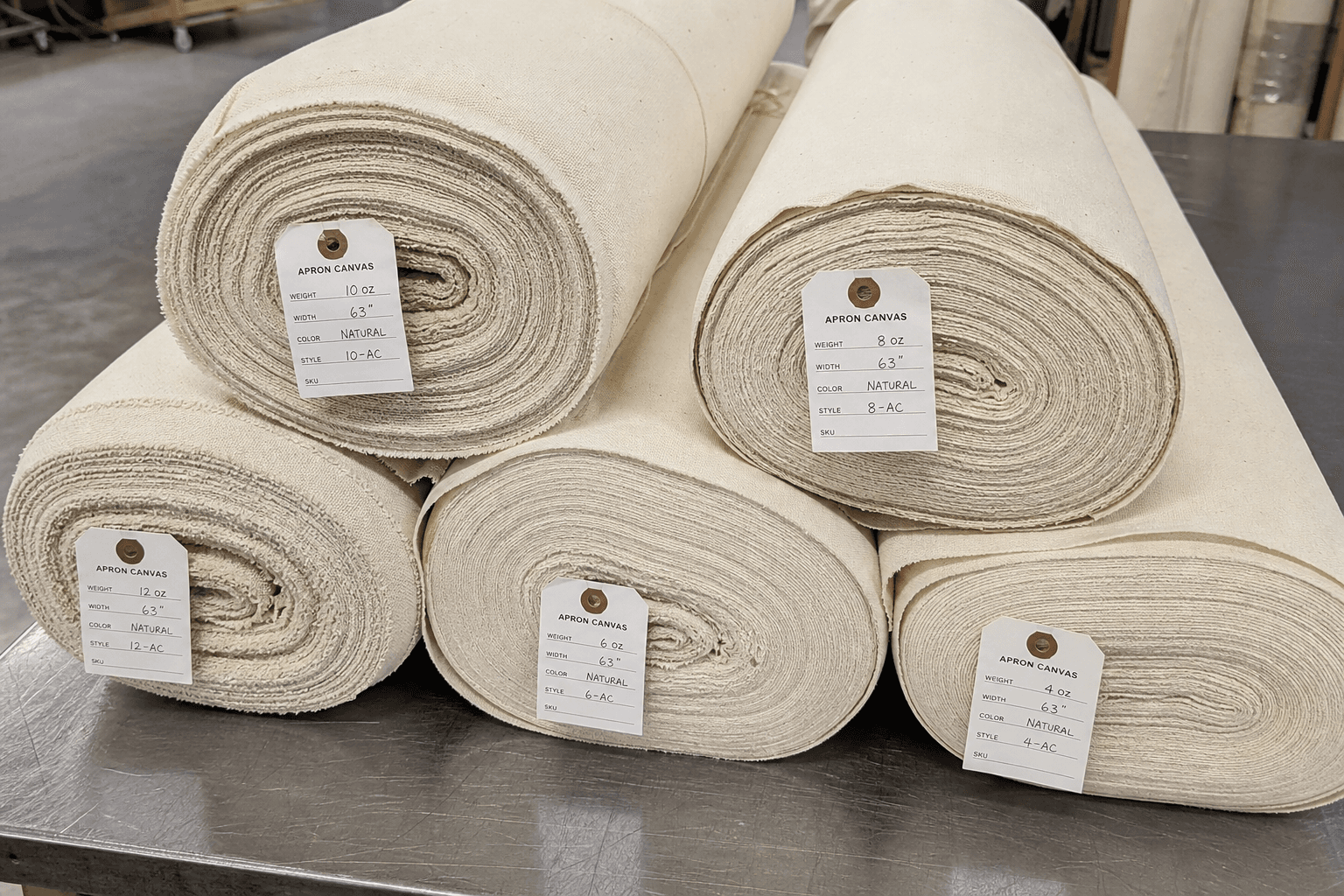
Museum and gallery shop aprons: clean presentation, anti-dust fabrics and quiet hardware
<strong>Museum shop aprons</strong> need a crisp silhouette, low-noise trims, and fabrics that resist lint, paper dust, and shade variation under retail lighting. This guide gives B2B buyers measurable sourcing targets on GSM, oz, pocket dimensions, MOQ, AQL, lead times, and unit pricing for stable OEM apron production.
Master carton drop testing for aprons: when retail and e-commerce buyers should require it
<strong>Apron carton drop testing</strong> gives B2B buyers a measurable way to prevent apron transit damage, retailer chargebacks, and fulfillment rejects by setting carton board grade, pack count, gross-weight limits, and pass criteria before bulk packing starts.
Logo cracking after commercial wash: diagnosing transfer, print and curing failures on aprons
<em>Apron logo cracking after wash</em> is usually traceable to one measurable mismatch: a 90-110 micron transfer pressed onto a 260-320 GSM bib panel, plastisol that never reached a verified 160°C through-cure, or a stain-release 65/35 twill apron approved without a 20- or 30-cycle commercial-laundry test. This guide shows B2B apron buyers how to diagnose failures by fabric weight, logo size, wash count, curing data, AQL level and per-piece cost before a 1,000-10,000 piece reorder repeats the same defect.
Laser engraving on apron hardware and leather trims: detail limits and reorder consistency
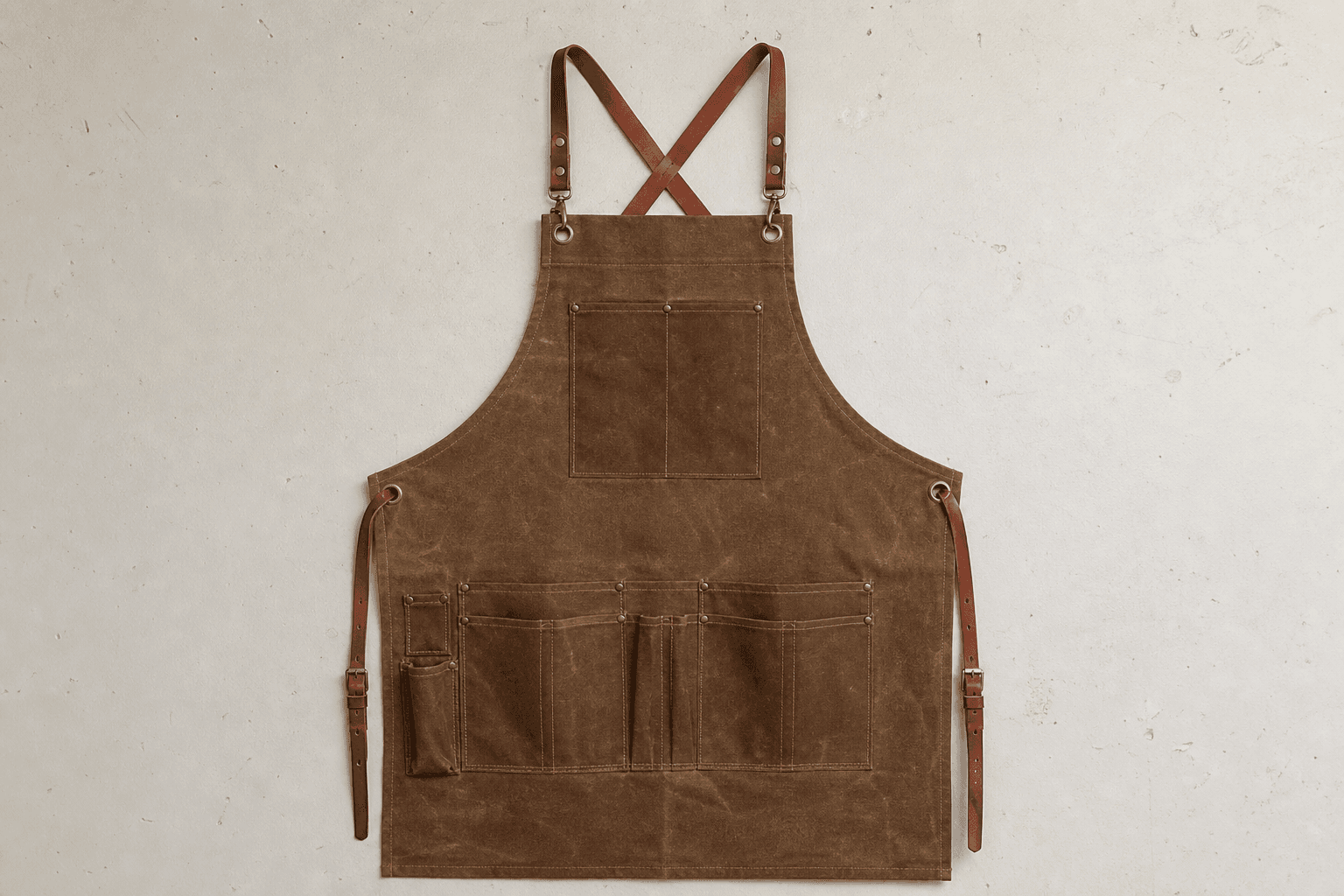
<strong>Laser engraving apron hardware</strong> stays commercially reliable only when apron buyers lock measurable trim rules before bulk approval: usable engraving area in mm, minimum stroke and gap, finish type, leather thickness, placement tolerance, contrast range, AQL level, and retained reorder standards. On professional apron programs, consistent branding on buckles, snaps, rivet caps, and leather trims comes from controlled process windows and documented trim records, not from one unusually dark sample.
Interlock knit aprons: when stretch comfort works and where structure becomes a problem
<em>Interlock knit aprons</em> work for professional uniform programs only when the specification stays tight: typically <strong>240-320 GSM</strong>, pocket loads kept below <strong>200-300 g</strong>, shrinkage held to <strong>±3% to ±5%</strong> after <strong>3 washes at 40°C</strong>, reinforced neckline and pocket stress points, and bulk planning aligned on <strong>MOQ, 35-65 day lead time, FOB cost, and AQL 2.5/4.0</strong>.
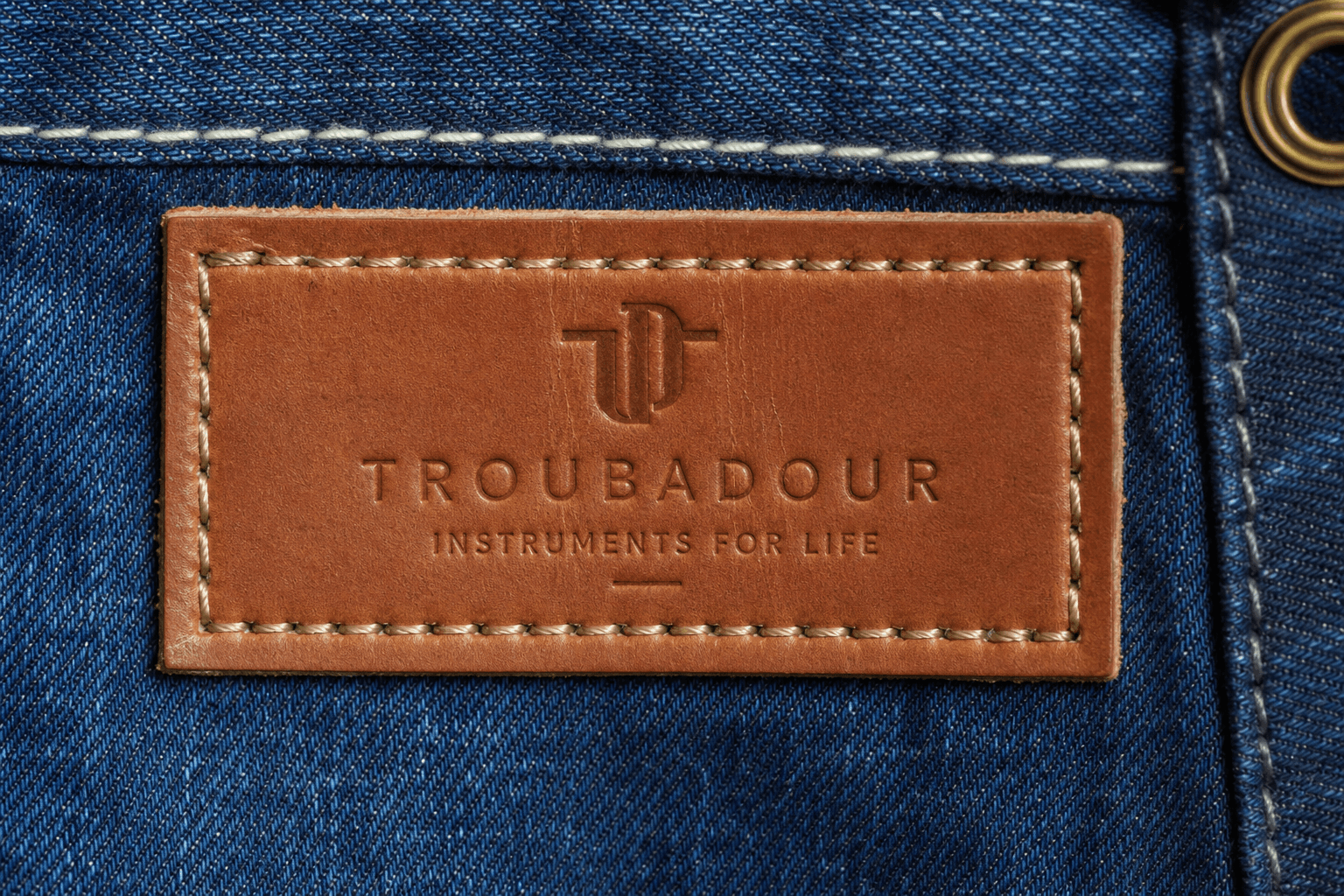
Industrial ironing and tunnel finishing for aprons: fabrics that keep shape under heat and steam
<em>Industrial ironing aprons</em> for hotels, contract laundries, central kitchens and bakery chains need a controlled fabric-and-construction package, not just a heavier cloth. The most reliable results usually come from 210-245 GSM twill, matched shrinkage across shell, ties and pockets, garment testing through 10-20 wash-and-finish cycles, and clear MOQ, AQL and 25-50 day lead-time terms before bulk booking.

How apron factories manage substitute trims when nominated components miss delivery
<strong>Apron trim substitution</strong> is a controlled sourcing response when nominated buckles, snaps, sliders, rivets, eyelets, or D-rings miss their ex-factory date. For professional B2B buyers, the objective is precise: keep a 2,000- to 20,000-piece apron order moving without changing fit, wash durability, corrosion resistance, carton breakdown, inspection criteria, or unit economics beyond an agreed $0.03 to $0.18 per piece tolerance.
Hotel housekeeping utility aprons: compartment planning for radios, keys and refill tools
<em>Hotel housekeeping utility aprons</em> perform better when each compartment is built around real shift tools, not generic pocket symmetry. For B2B buyers, that means specifying radio pocket width, key retention method, bottle capacity, fabric weight, bartack points, MOQ, inspection level and lead time before sampling. A measured brief reduces early seam failures, controls replacement cost and keeps attendants faster through 14-18 room shifts.
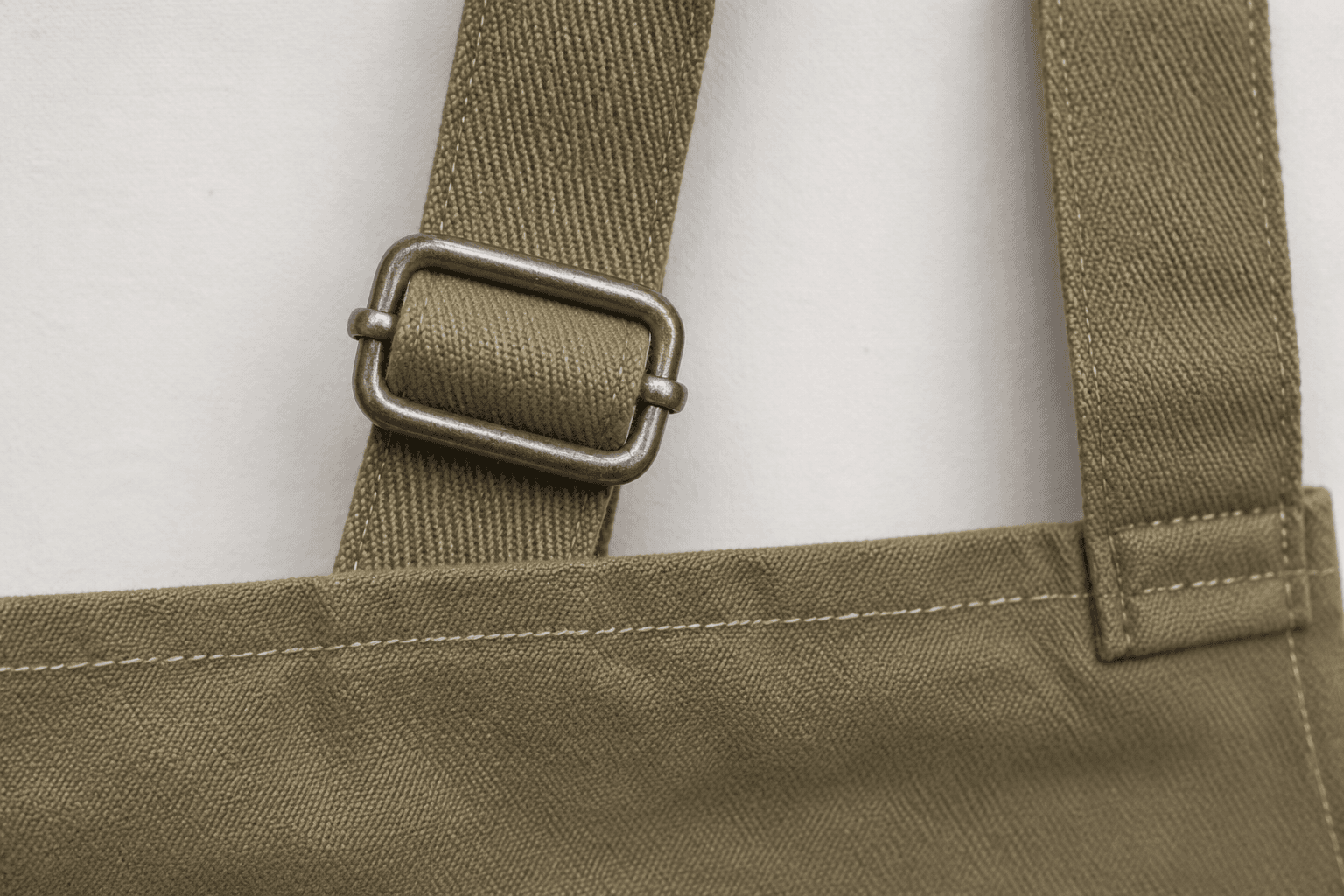
Heat-cut synthetic strap ends on aprons: fray prevention, finish quality and safety limits
<strong>Heat cut apron strap ends</strong> are a practical trim specification for polyester, nylon, and polypropylene apron webbing when buyers define end shape, melt profile, wearer-contact limits, and inspection tolerances in advance. In most apron programs, the process adds about $0.01-$0.03 per exposed end, supports 500-1,000 pcs MOQ with stock webbing, and needs stricter approval when sealed ends touch the neck, hands, or underarm during 8-10 hour shifts.
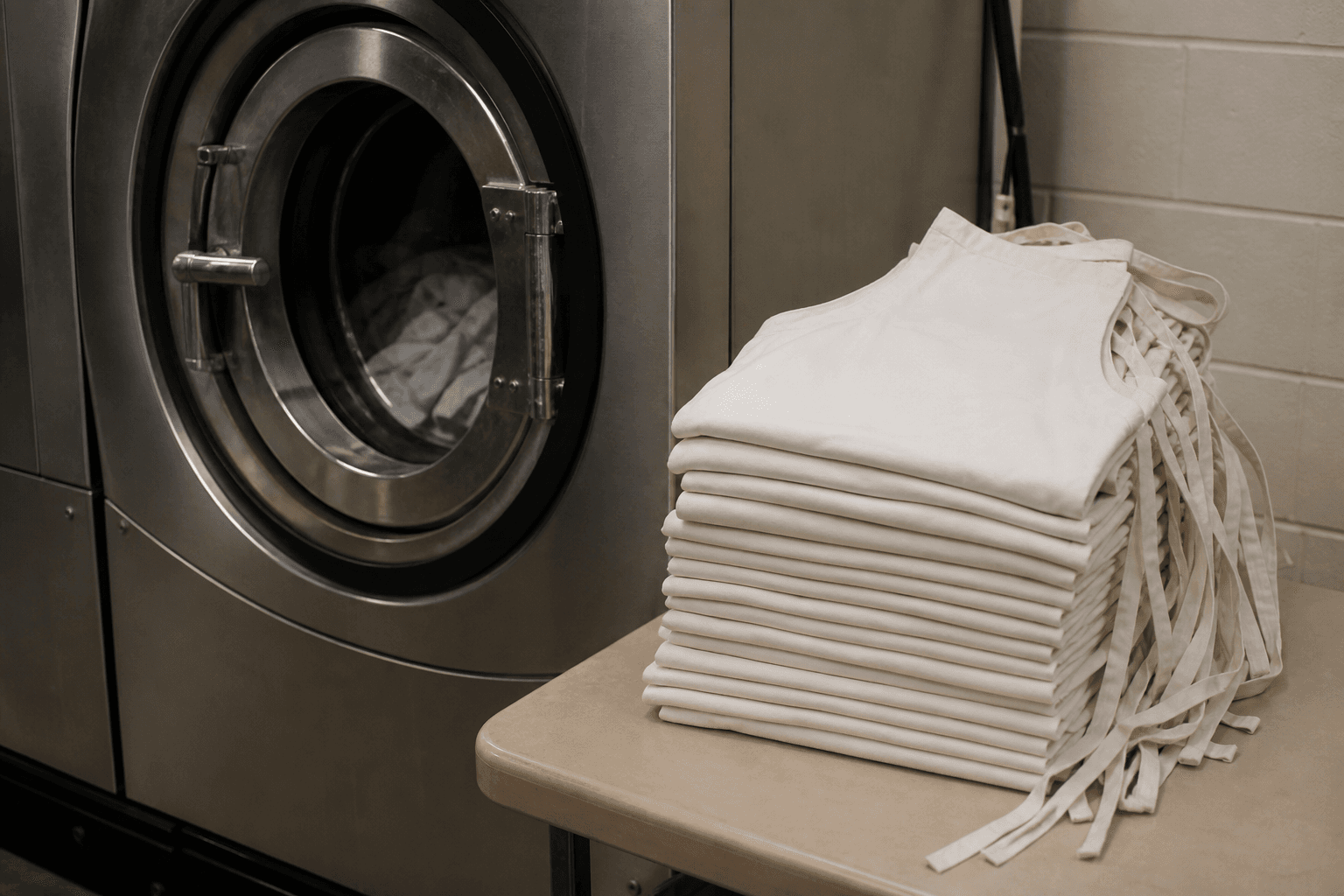
Garden center cashier aprons: soil-tolerant colors, barcode access and seasonal reorder planning
<strong>Garden center cashier aprons</strong> need tighter specifications than standard retail uniforms: <strong>240-300 GSM</strong> fabrics that hide peat dust, pocket layouts built around the actual scanner, and reorder plans that secure sewing capacity <strong>60-90 days</strong> before spring volume spikes. This guide gives B2B buyers concrete sourcing benchmarks for <strong>MOQ, FOB cost, sample timing, AQL checkpoints and repeat-order lead times</strong> so apron programs stay clean-looking, functional and reorderable across peak garden seasons.
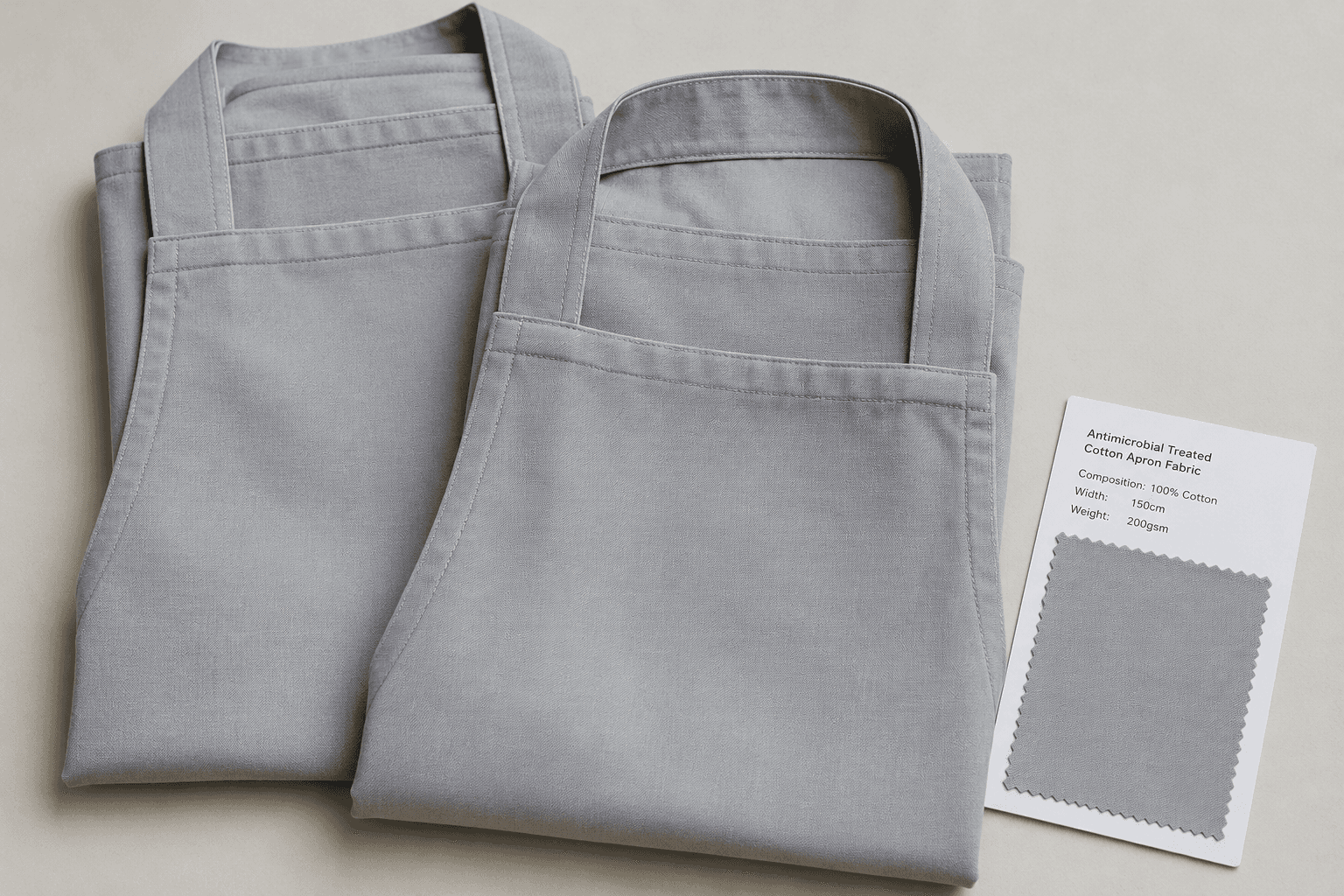
Fold-over waistband construction on waist aprons: cleaner finish, hidden seams and cost impact
<strong>Fold over waistband waist aprons</strong> give professional waist aprons a cleaner top finish by enclosing the body edge inside the band, but the sourcing effect is concrete: waistband cut width typically increases to 7.0-9.5 cm, sewing time rises by about 0.4-1.2 minutes per piece, and FOB usually moves up <strong>US$0.07-0.28</strong> depending on fabric weight, tie construction, order size, and inspection standard.
Farm-to-table restaurant aprons: balancing rustic texture with commercial wash durability
<em>Farm to table restaurant aprons</em> should deliver a natural, textured look without turning into a short-life uniform problem. For B2B buyers, the dependable spec is usually a 270 to 340 GSM woven bib or waist apron, roughly 8 to 10 oz, built to stay presentable through 50 to 75 commercial wash cycles with defined MOQ, FOB cost, AQL, and replenishment controls.
Factory line balancing for apron orders: why simple styles can still miss ship dates
<strong>Apron line balancing</strong> determines whether a straightforward apron order ships in 28 days or slips to 33 to 38 days. Even a basic bib, waist or cross-back apron can miss ex-factory when one slow pocket, strap, bartack or finishing step sets the pace for the entire order.
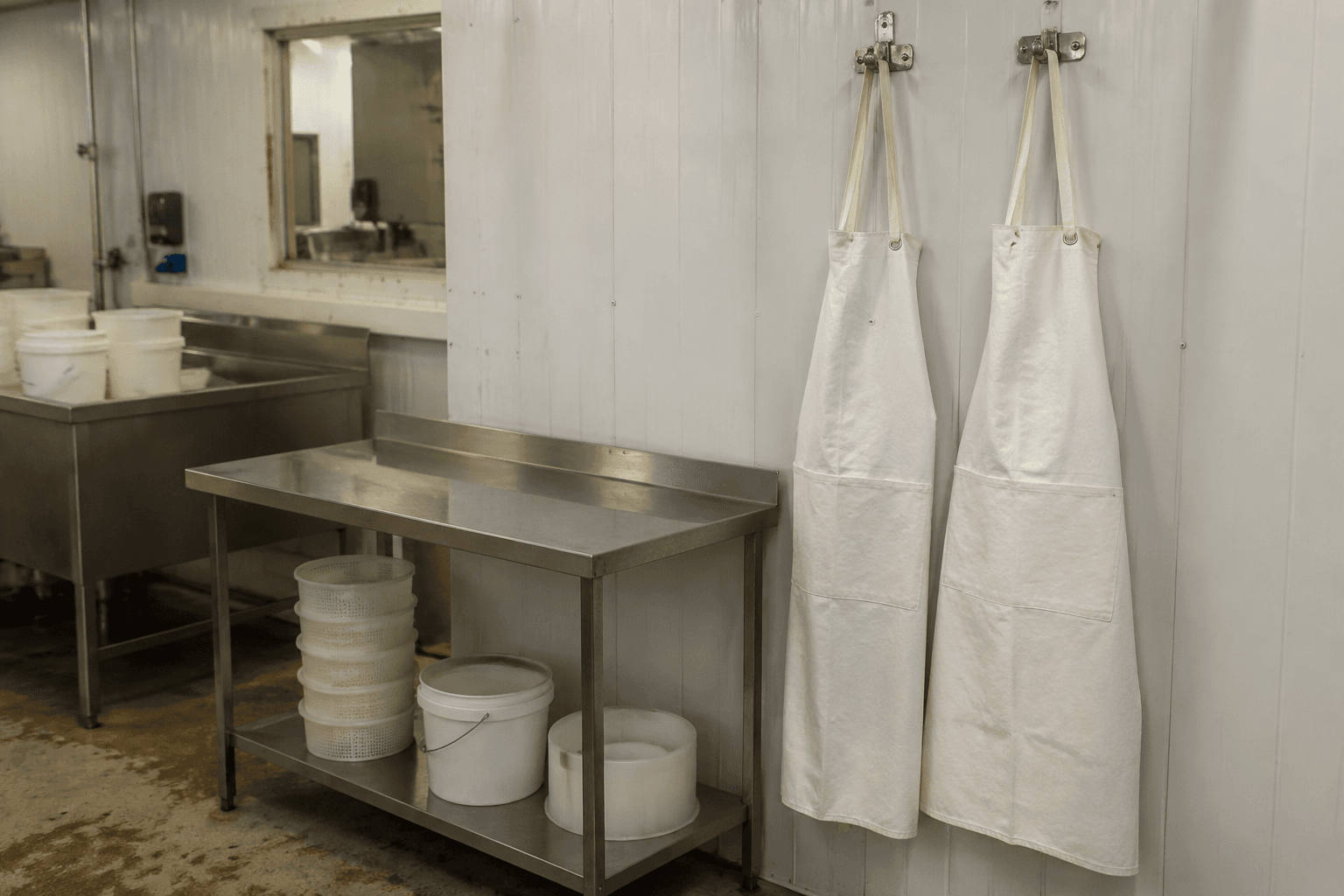
Factory inline inspection for aprons: what to catch at cutting, sewing and packing stages
<strong>Inline inspection for apron production</strong> keeps apron defects inexpensive to fix by catching them at the operation where they start: body panels cut beyond tolerance, pockets sewn off reference, adjustable straps built to the wrong usable length, and mixed-SKU cartons at pack-out. For professional B2B buyers sourcing custom bib aprons, waist aprons, and utility aprons, this stage-by-stage control protects realistic FOB prices of <strong>$2.20 to $7.40 per piece</strong>, supports production windows of about <strong>20 to 45 days</strong>, and lowers the risk of failing final <strong>AQL 2.5 major / 4.0 minor</strong> inspection.
Dual sourcing apron programs without spec drift: color, fit and trim controls that matter
<em>Dual sourcing apron programs</em> work only when both factories execute one closed apron standard with no room for interpretation. For professional B2B buyers, the controls that stop spec drift are specific and measurable: sealed 270 GSM enzyme-washed cotton canvas or 245 GSM poly-cotton twill by color, finished tolerances of ±0.5 cm on visible points and ±1.0 cm on functional points, nominated 25 mm hardware and webbing, aligned AQL 2.5 major / 4.0 minor inspection, and a secondary line proven through a 300-800 piece waist apron pilot or 1,000-1,500 piece bib apron pilot 60-90 days before peak demand.
Craft cocktail bar aprons with towel management: loop placement, absorbency and reset speed
<em>Cocktail bar aprons with towel loop</em> perform well only when loop placement, towel absorbency, apron fabric and rehang speed are specified as one production system. For hotel bars, cocktail chains and premium casual groups, the dependable sourcing range is usually <strong>220 to 320 GSM</strong> apron shell fabric, <strong>380 to 420 GSM</strong> terry towels in <strong>25 x 40 cm</strong> or <strong>30 x 30 cm</strong>, reinforced loops that survive <strong>500 to 1,000</strong> wet rehang cycles, and a bulk timeline protected by locking towel dimensions before PP approval.
Compact-spun apron fabrics: when lower hairiness improves embroidery and wash appearance
<em>Compact spun apron fabric</em> gives B2B apron buyers a cleaner surface with fewer protruding fibers, which improves embroidery edge sharpness, reduces print haloing, and keeps dark bib and waist aprons looking cleaner after repeated laundering. It delivers the best return in <strong>220 to 320 GSM</strong> apron fabrics where logo visibility, reorder consistency, and wash appearance matter more than saving <strong>$0.10 to $0.30</strong> per piece.
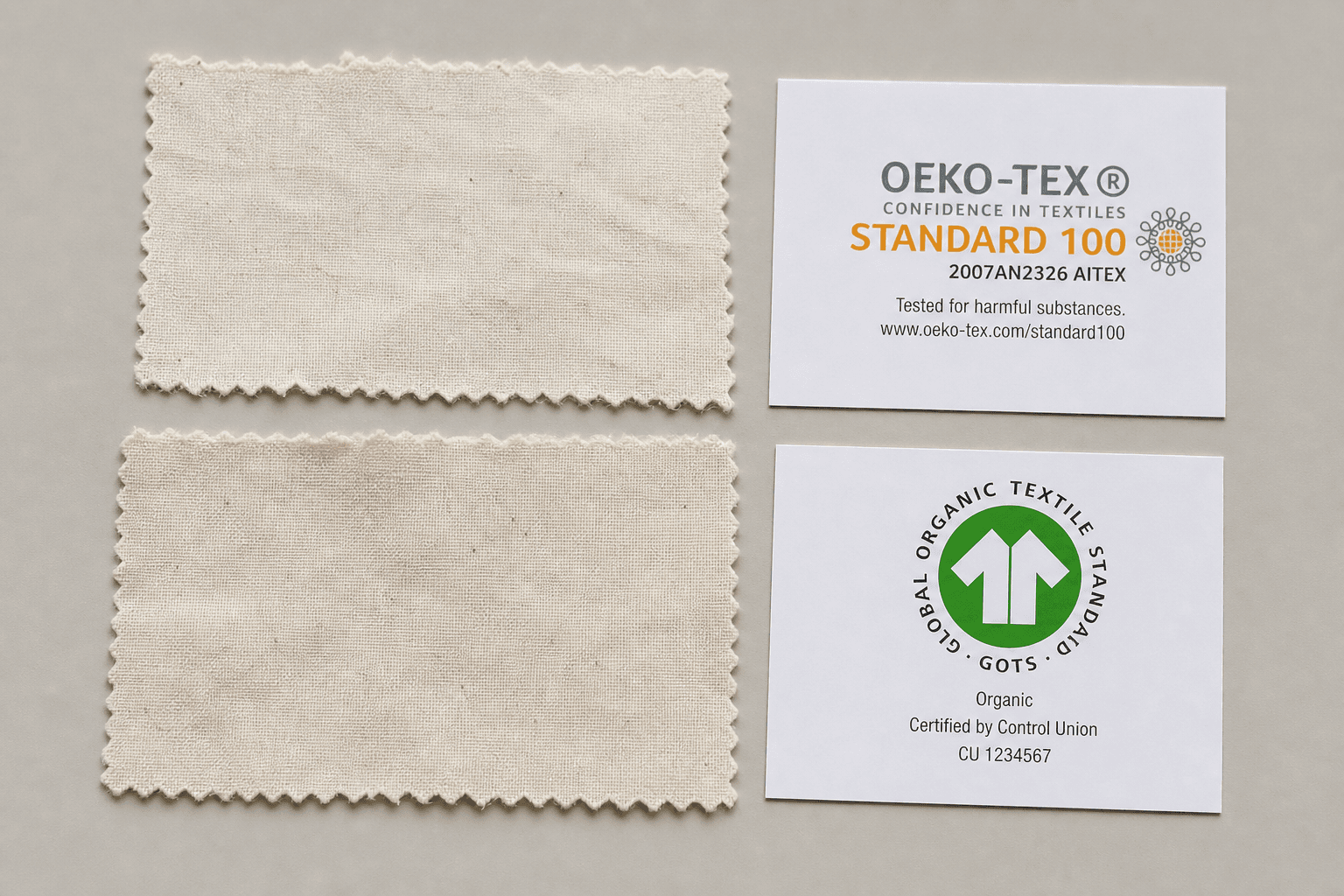
Color migration from dark apron bindings onto light base fabrics: prevention in dyeing and wash tests
<strong>Apron binding color migration</strong> is a repeatable trim failure on light-body aprons when dark binding, piping, or tape releases dye during washing, steam finishing, or humid transit. For B2B buyers, the practical control is to lock fiber content, dye route, sewn-panel wash testing, staining grade, AQL treatment, MOQ, and trim lead time before bulk booking.
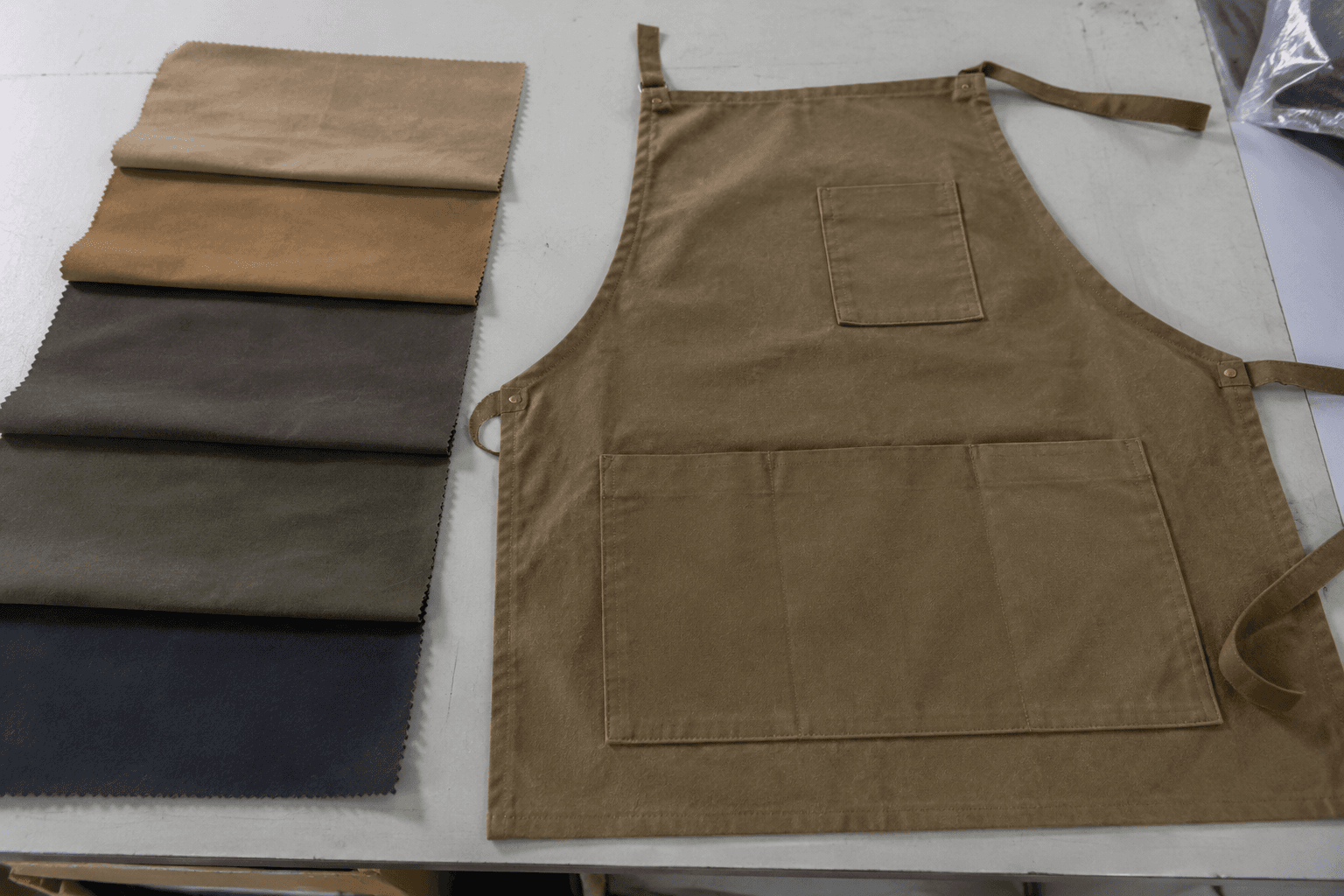
Canvas lamination for aprons: adding waterproof film without making the garment too rigid
<strong>Laminated canvas aprons</strong> add wipe-clean, splash-resistant performance for foodservice, floristry, grooming, and prep environments, but the commercial challenge is balancing 285 to 340 GSM canvas, 0.05 to 0.08 mm film, seam bulk, and QC controls so the apron stays flexible through full 8- to 10-hour shifts instead of turning rigid at the bib, pocket, and hem.
Cannabis retail aprons: odor control laundering, secure pockets and compliance-friendly branding
<em>Cannabis retail aprons</em> should be sourced as uniform-grade workwear, not promo merchandise. For dispensary buyers, the strongest OEM brief specifies <strong>240-270 GSM</strong> poly-cotton twill or <strong>8.5-10 oz</strong> cotton canvas, <strong>1 secure pocket plus 2-3 tool compartments</strong>, laundering approval through <strong>20 cycles at 40°C-60°C</strong>, restrained branding, and written China sourcing terms covering <strong>300-800 pcs MOQ, AQL 2.5/4.0, measurement tolerances, FOB pricing from $3.60-$8.40/pc, and 25-40 day bulk lead times</strong>.
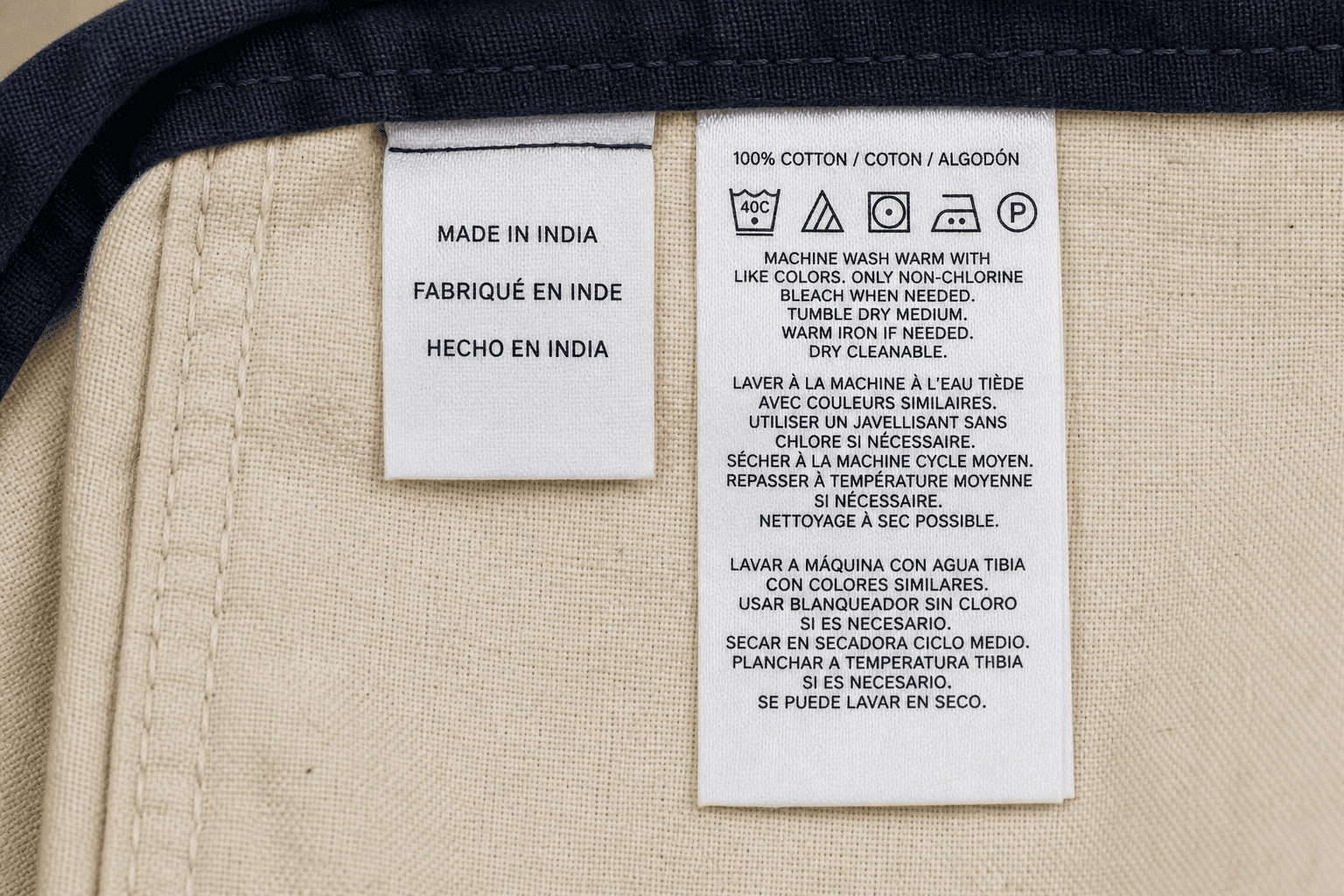
Bull denim aprons: heavier twill structure, stiffness break-in and garment-wash response
<strong>Bull denim aprons</strong> use a dense <strong>3/1 twill</strong> at roughly <strong>350-420 GSM</strong> (<strong>10.3-12.4 oz</strong>), so apron buyers need to lock fabric weight, break-in feel, wash shrinkage, MOQ, AQL and FOB cost before bulk approval.
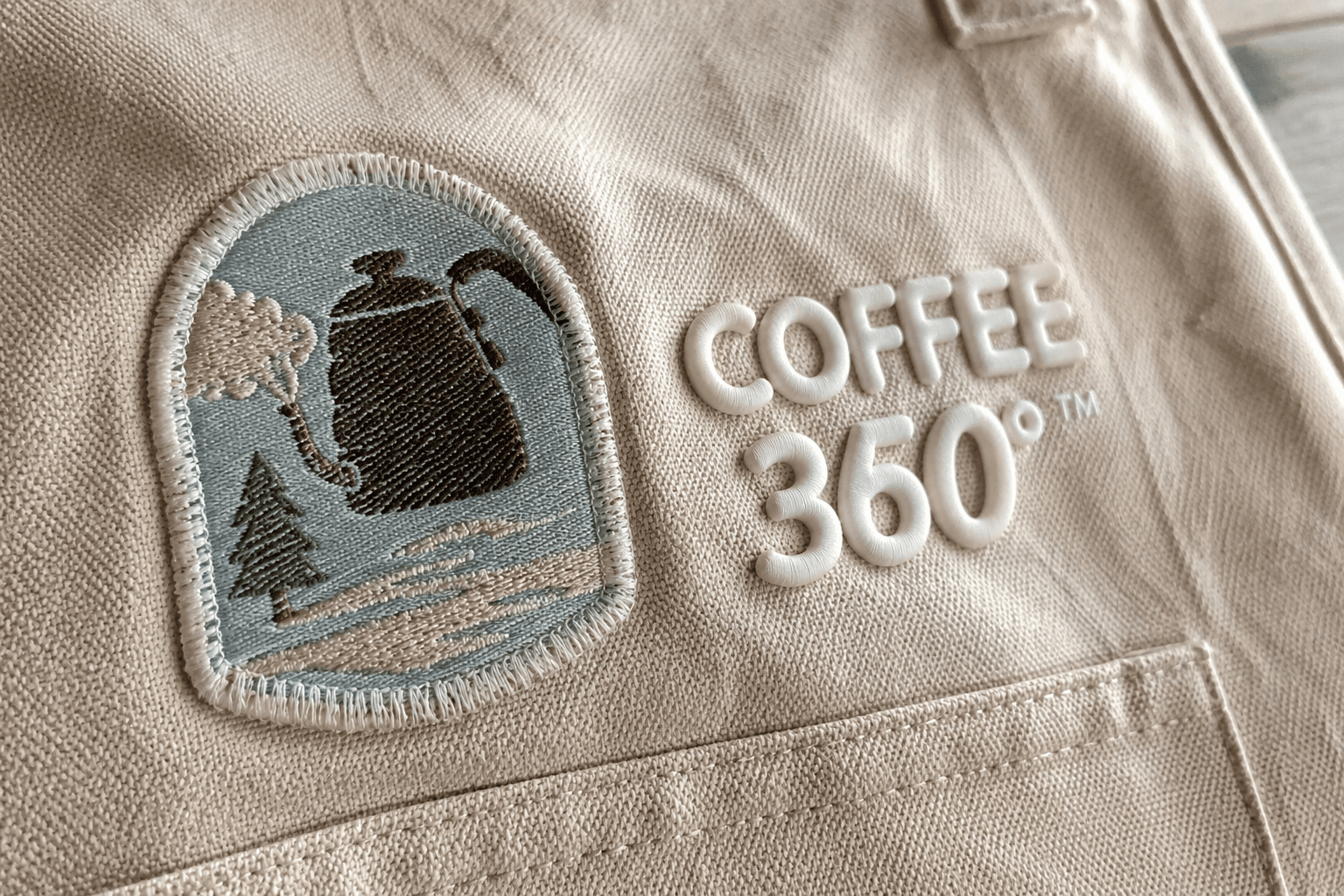
Bulk fabric booking for apron programs: when to secure mill capacity before final PO
<strong>Bulk fabric booking for aprons</strong> protects delivery dates when weaving, dyeing, washing, or finishing lead times are longer than cut-and-sew capacity. For professional B2B buyers, the decision to reserve mill capacity before the final PO should be based on measurable inputs: fabric construction, 210-300 GSM or 8-12 oz weight, color count, mill MOQ in meters, target ex-factory date, and the financial exposure if the order shifts.
Booking pre-shipment inspections for apron orders: timing windows that avoid carton reopen costs
<em>Pre shipment inspection apron timing</em> determines whether a buyer inspects the true export lot or pays to reopen cartons after sealing. For bulk apron orders, the lowest-risk window is when <strong>85% to 100%</strong> of units are export-packed, every major SKU is available for sampling, and the inspection still leaves <strong>2 to 5 working days</strong> before truck loading, CFS receiving, or vessel cut-off.
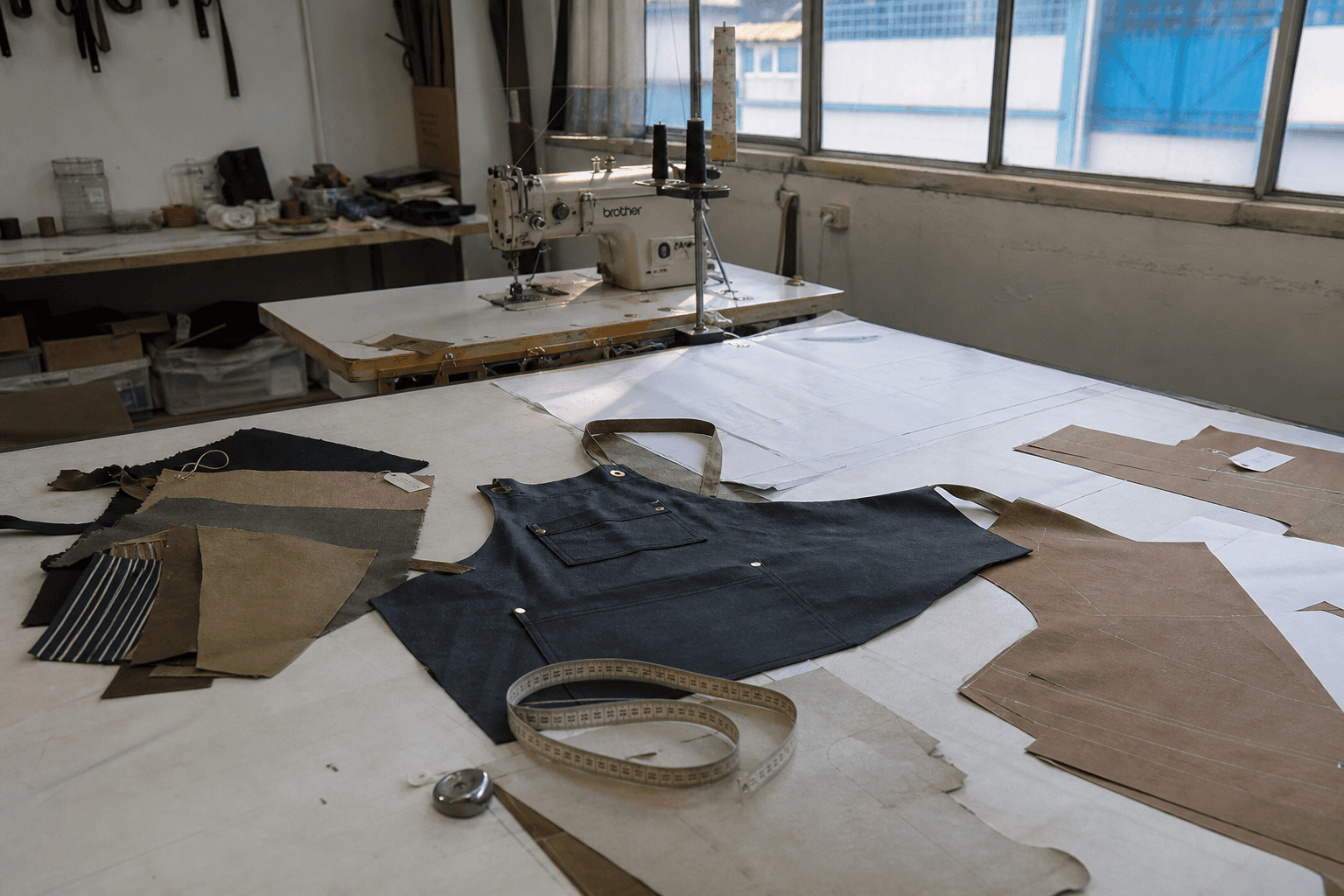
Bleach spotting on dyed aprons: realistic warning labels and buyer expectations for replacement rates
<strong>Bleach spotting on dyed aprons</strong> is a routine end-use risk in dark apron programs, not a hidden sewing defect. For B2B buyers sourcing bib, bistro, and waist aprons, the practical job is to set exact warning labels, realistic replacement rates, opening spare stock, and reorder timing before bulk production of black, navy, charcoal, burgundy, or forest styles used around chlorine cleaners, hypochlorite sanitizers, or peroxide-based salon chemicals.
Blanket POs for apron replenishment: locking price and capacity while releasing by schedule
A <strong>blanket po for apron replenishment</strong> gives B2B buyers a controlled way to hold apron pricing, reserve sewing capacity, and release quantities against a schedule without rewriting commercial terms on every repeat order. It works when the PO fixes the approved apron BOM, measurable fabric weight such as 240 GSM or 8 oz, MOQ by color, inspection at AQL 2.5 major and 4.0 minor, release notice of 21-45 days, and clear price-review triggers tied to raw-material movement.
Balancing MOQ across multiple apron lengths: standardizing fabric and trim to keep pricing workable
Managing <em>apron moq multiple lengths</em> stays commercially workable when buyers lock one fabric platform, one trim package, and one sewing route before they start debating length splits. In apron sourcing, a 10 cm body-length change often adds only $0.10 to $0.28 per piece in fabric, while the real cost pressure comes from marker loss, line changeovers, mixed packing, and low per-length volume. The practical objective is to keep each length inside one production family so the order prices like a consolidated apron program, not three separate custom styles.
Aramid-blend heat-resistant aprons: where lightweight protection justifies the premium
<em>Aramid blend heat resistant aprons</em> justify a higher FOB price when buyers need front-body heat protection in a lighter shell of <strong>240-320 GSM</strong>, a finished bib weight near <strong>520-760 g</strong>, and a field life of roughly <strong>90-150 working days</strong> instead of the <strong>25-60 days</strong> many cotton or FR-cotton aprons deliver in hot-zone use.

Apron twist after repeated wash: how strap attachment symmetry affects hang and appearance
<em>Apron twisting after wash</em> is usually a pattern-and-construction failure, not a simple fabric-weight issue. In bulk apron sourcing, a left-right strap placement error of 4 to 6 mm, off-grain cutting above 2%, or unbalanced bartacks can make a bib apron hang visibly off center after 3 industrial laundry cycles or 8 to 15 home washes.
Apron shade sorting after bulk dyeing: when buyers should accept panel variation and when not
<strong>Apron shade sorting after dyeing</strong> is a cutting, bundling, and inspection control that decides whether a bulk order looks commercially balanced or visibly mixed. For B2B apron buyers, the real decision is not whether shade drift exists after dyeing or washing, but which apron panels must match within the same piece, what tolerance is realistic by fabric and finish, and how many extra days, cents per piece, and yield loss stricter control will add.
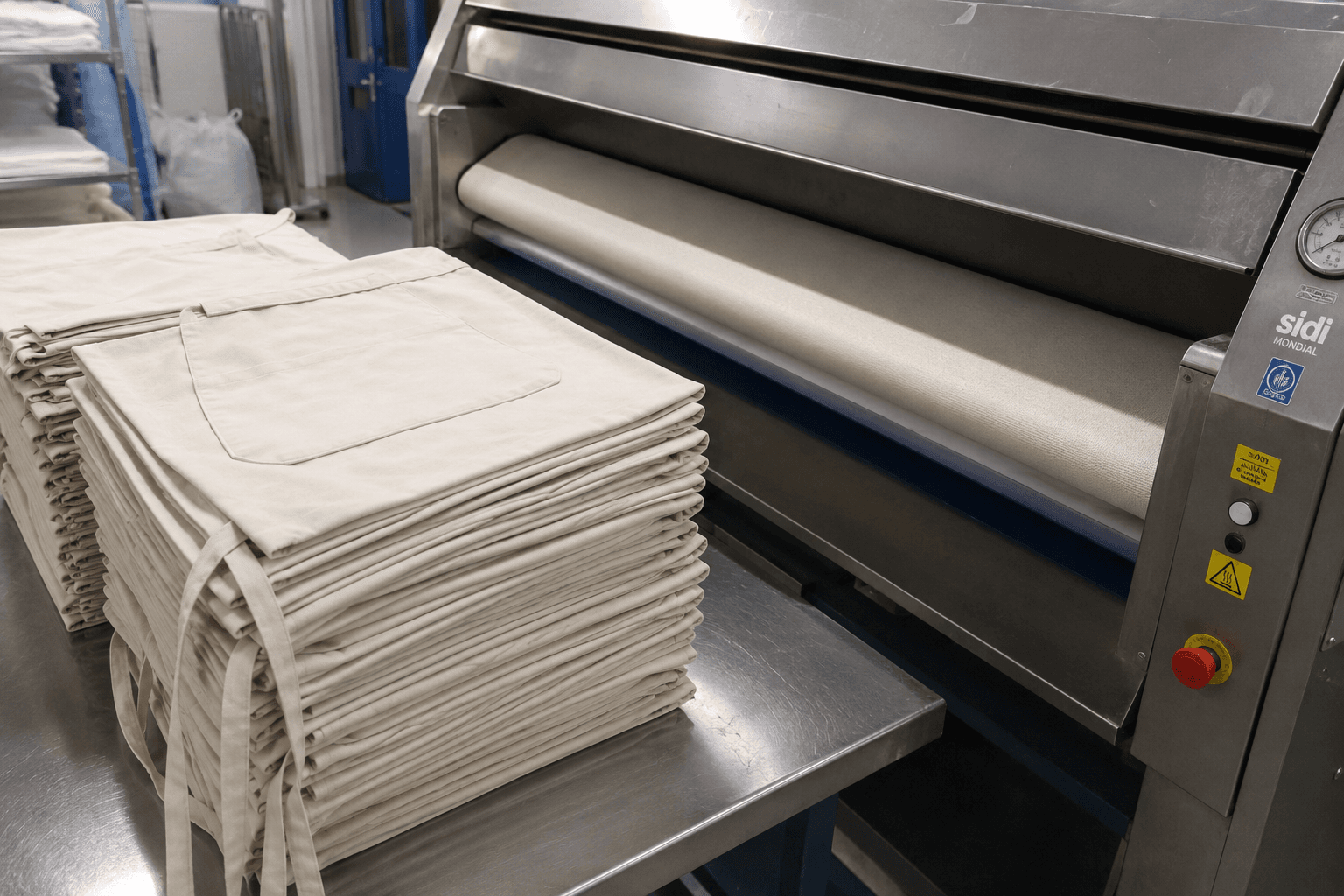
Apron odor retention in polyester blends: wash chemistry, drying and fabric choice for uniform programs
<em>Apron odor retention polyester blend</em> problems usually come from a mismatched apron specification, not a random laundry complaint. In professional uniform programs, blend ratio, weave, GSM, detergent route, rinse quality and full drying determine whether bib aprons stay neutral for 30-50 industrial turns or start holding fryer, dairy, coffee or damp odor after only 8-15 wash cycles.
Apron grommet color inserts and branded eyelets: small trim details that change minimums
<em>Branded eyelets for aprons</em> look minor on a tech pack, but they routinely create a second minimum that sits above the sewing MOQ. A custom eyelet program can require <strong>5,000-10,000 pcs</strong> per size and finish, add <strong>12-30 days</strong> to trim approval and supply, and lift cost by <strong>$0.03-$0.12 per apron</strong> before reinforcement and wastage. For B2B buyers sourcing aprons, these small metal details need to be costed at the first quotation stage, not after the sample is approved.
Apron fabric width utilization: how loom width affects marker efficiency and unit cost
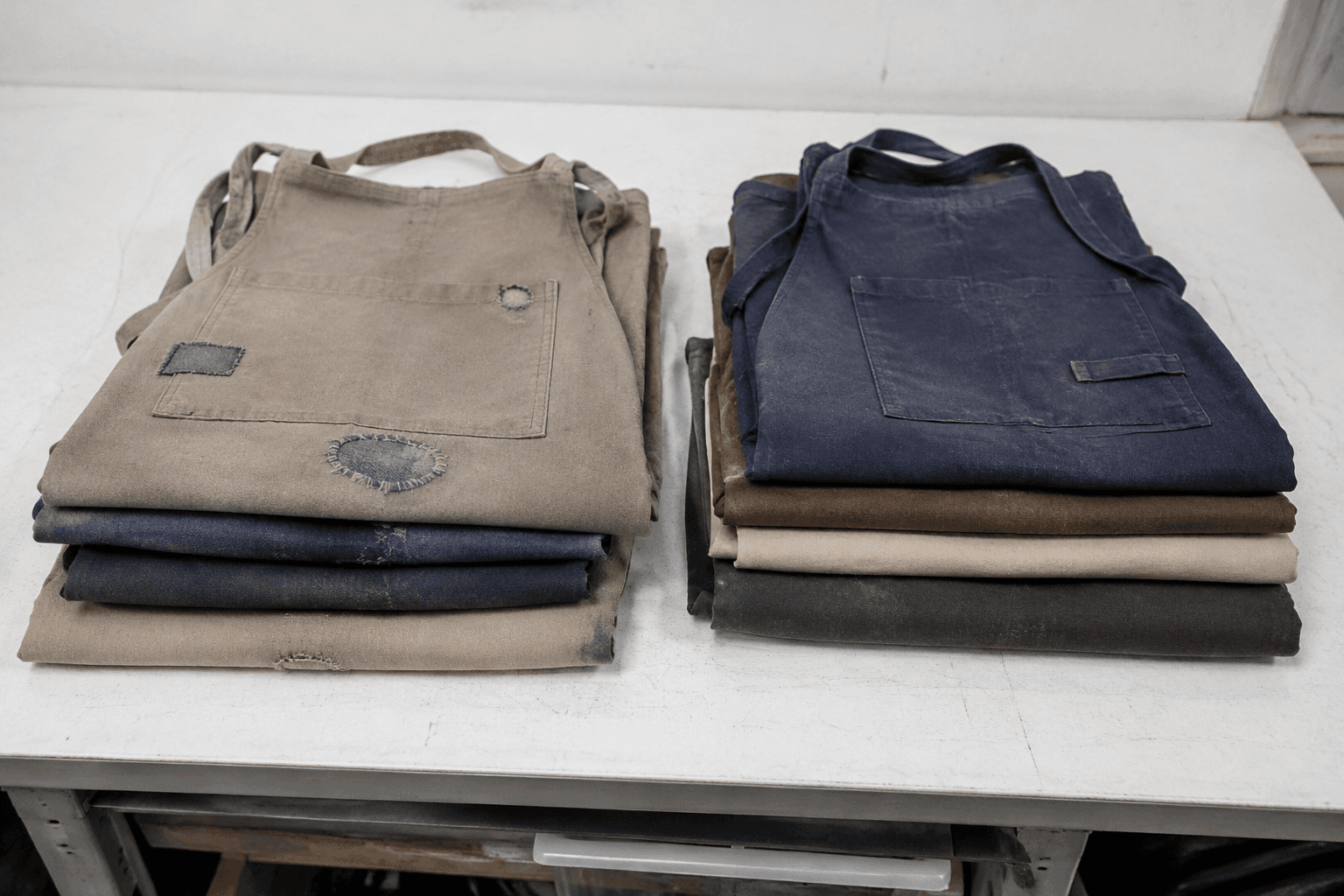
<strong>Apron fabric width utilization</strong> is one of the few levers that can lower apron FOB without changing hand feel, GSM, or sewing detail. In bulk apron sourcing, shifting from 44/45 inch nominal width to 57/58 inch usable programs can cut consumption by 0.06 to 0.24 meters per piece, reduce fabric cost by US$0.09 to US$0.88 per apron, and avoid 7 to 14 days of re-costing and re-booking when the first bulk marker exposes poor yield.
Apron consumption sheets: how factories calculate fabric, trim and wastage before quoting
An <em>apron consumption sheet</em> is the factory costing worksheet that converts an apron spec into measurable fabric, trim, packaging and wastage before a bulk quote is issued. For B2B buyers, it is the fastest way to test whether a price is built on real inputs such as 240 GSM or 10 oz canvas, 145 to 150 cm fabric width, trim MOQs, <strong>AQL 2.5 major / 4.0 minor</strong>, and 35 to 60 day lead times rather than guesswork.
Yarn-dyed stripe aprons: woven vs printed pattern, shade continuity and reorder control
<em>Yarn dyed stripe aprons</em> cost more to launch than printed-stripe options, but for professional B2B buyers they usually deliver cleaner stripe edges, tighter pocket and bib alignment, lower reorder risk, and more stable shade continuity when fabric GSM, stripe repeat, shrinkage, AQL, and replenishment timing are fixed before bulk.
Ultrasonic cleaning chemicals and aprons: choosing fabrics that resist splash and stiffening
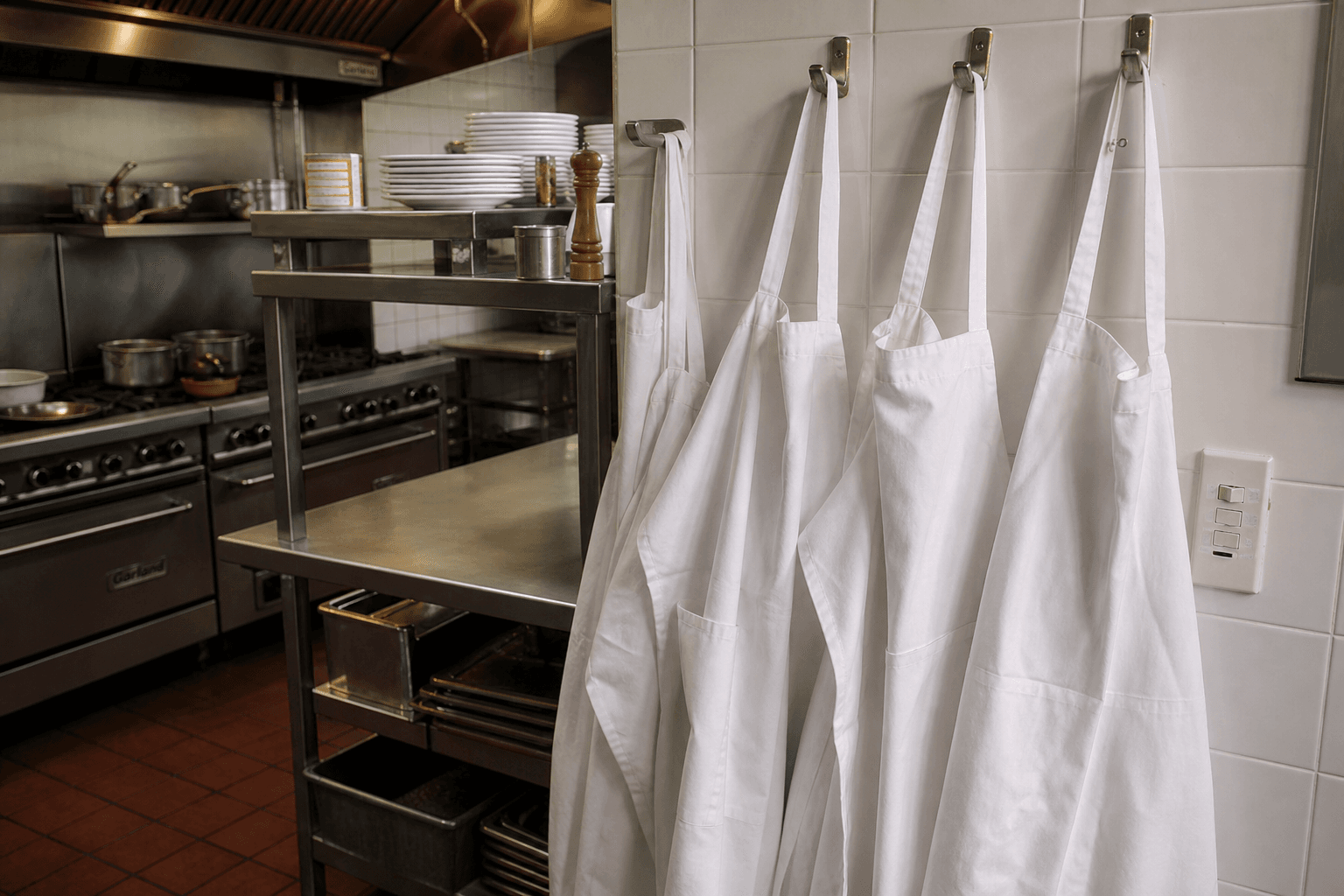
A practical sourcing guide to <em>aprons for ultrasonic cleaning work</em>, with specific benchmarks for coated fabrics, flex retention after 10-20 splash-and-dry cycles, seam design, MOQ, ex-factory price bands, AQL, and realistic 7-45 day OEM timelines.
Stone wash, enzyme wash and garment softening on aprons: handfeel gains versus shade risk
<strong>Washed apron finishing</strong> changes more than handfeel on a sewn apron. It affects shade, shrinkage, trim appearance, AQL exposure, MOQ efficiency and repeat-order control. For B2B buyers sourcing bib, waist and cross-back aprons, the right process depends on fabric weight, fiber blend, dark-color tolerance, target cost per piece and whether the program prioritizes a vintage look or stable replenishment shade.
Silicone, discharge and foil logo effects on aprons: decoration limits by fabric type
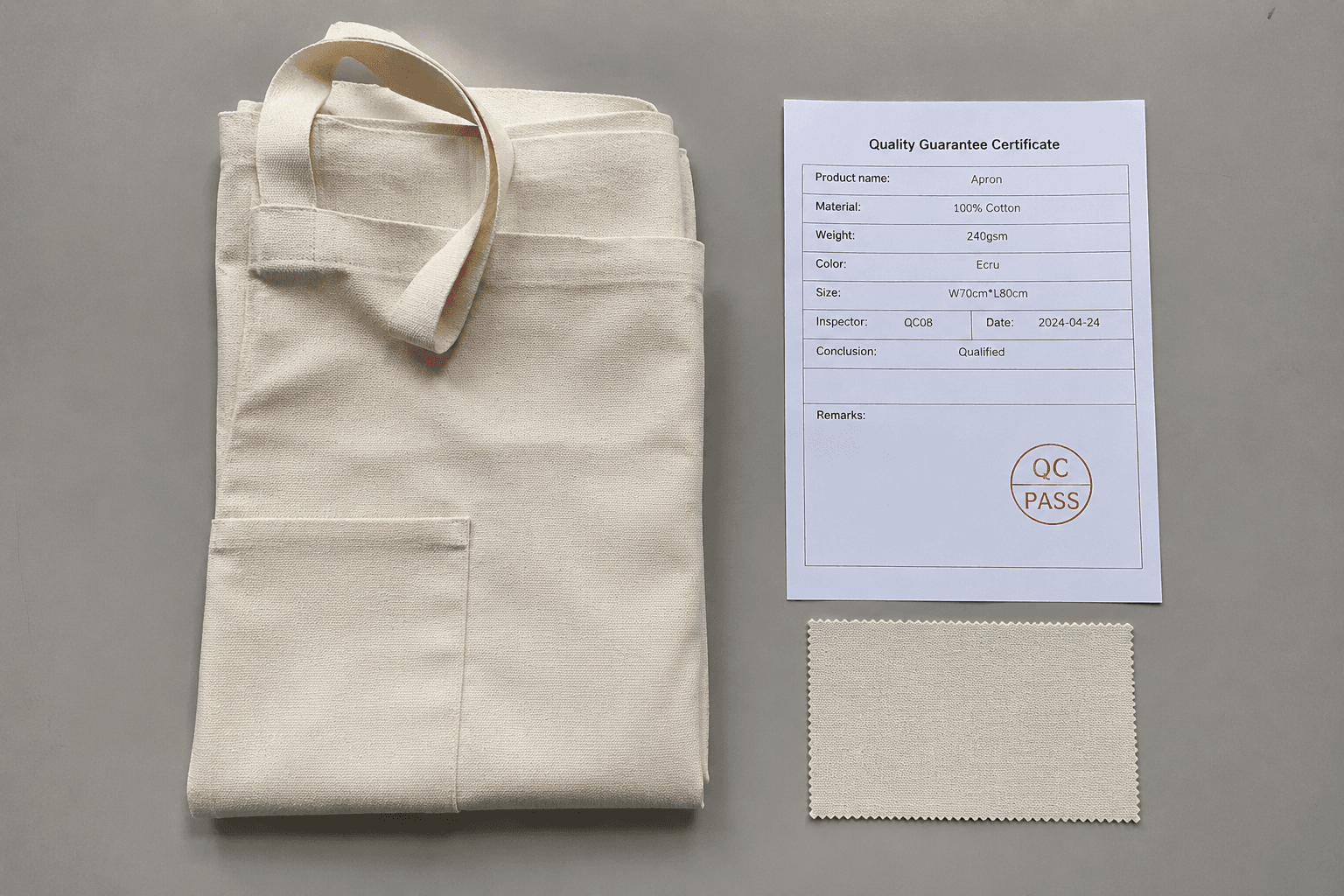
A factory-side guide to <em>special effect apron logo printing</em> for B2B buyers, showing where silicone, discharge and foil work on cotton canvas, twill, CVC and polyester aprons, with realistic limits on GSM, MOQ, lead-time days, wash durability, AQL and added cost per piece.
Reactive dyeing vs vat dyeing for black aprons: fade resistance, cost and wash performance
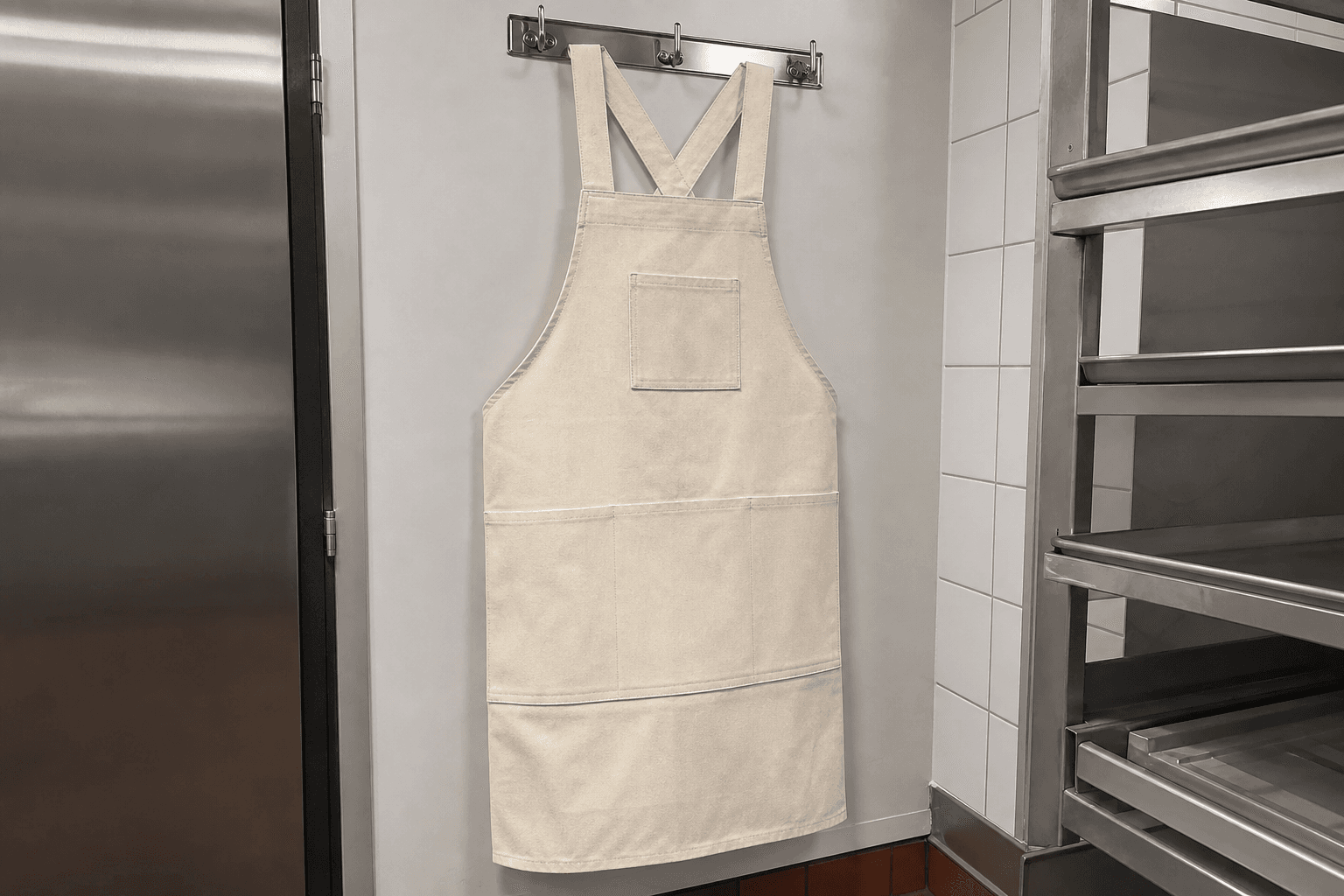
For bulk apron programs, the <strong>black apron dyeing method</strong> affects more than shade depth. It changes wash retention, wet crocking, mill MOQ, replenishment flexibility, lead time and landed cost. For <strong>100% cotton aprons in 210-320 GSM</strong> (<strong>6.2-9.4 oz/yd²</strong>), reactive black is usually the faster, lower-MOQ option, while vat black typically holds a denser appearance after <strong>30-50 wash cycles</strong> and repeated <strong>60°C</strong> laundering, usually at a premium of <strong>US$0.18-US$0.45 per apron</strong> and <strong>3-7 extra fabric days</strong>.
QR-code traceability labels on aprons: wash durability, data format and placement
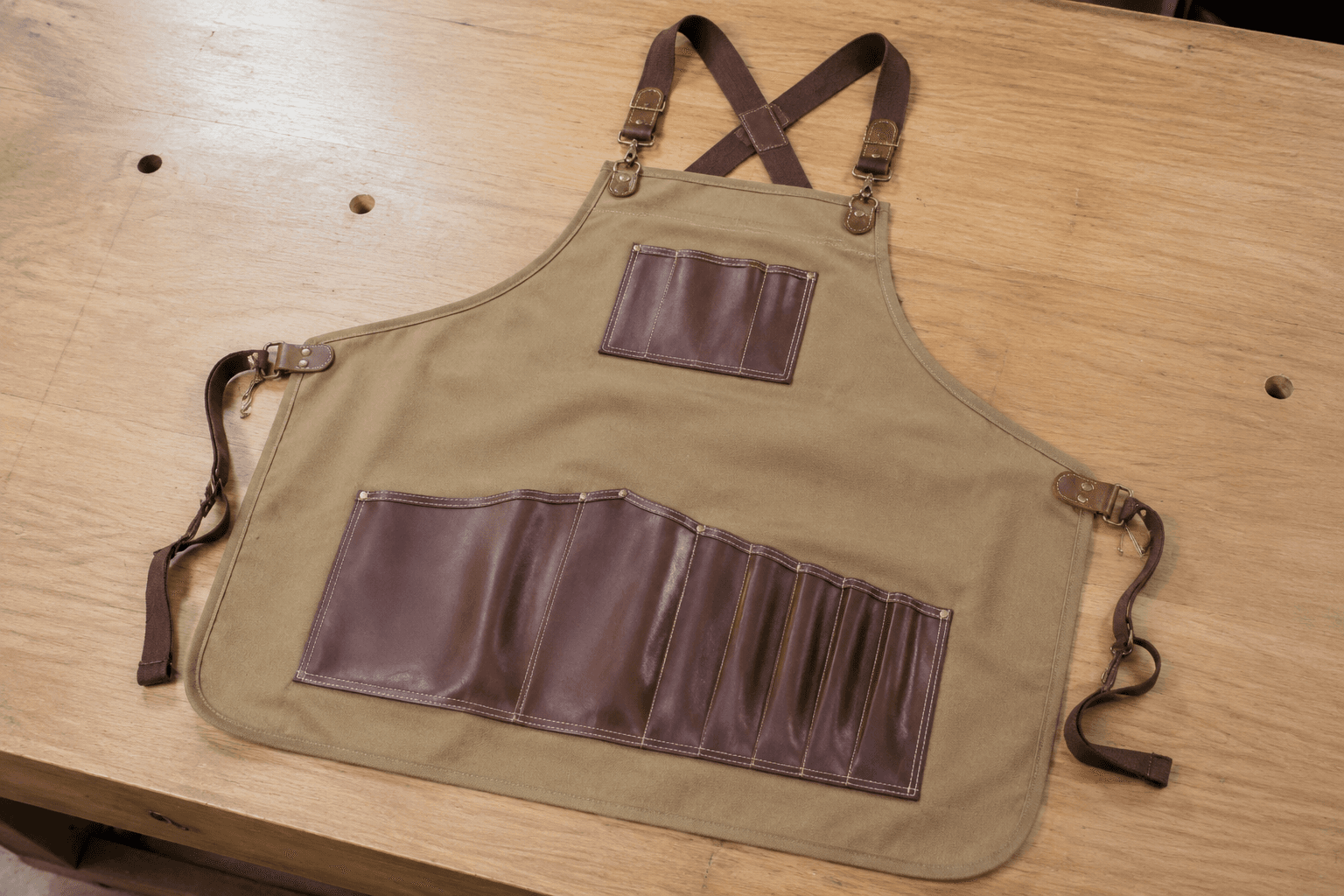
<em>qr code labels for aprons</em> help B2B buyers control laundry routing, claims isolation and reorder accuracy at garment level, but scan reliability depends on measurable sourcing choices: label substrate, print ribbon, payload length, symbol size, placement, wash-cycle target and inspection limits.
PU-coated, TPU-laminated and PVC aprons: material selection for washable waterproof programs
This <strong>waterproof apron material comparison</strong> shows how PU-coated, TPU-laminated, and PVC apron constructions perform in real OEM buying conditions, with practical benchmarks for finished GSM, oz weight, film thickness, MOQ, wash-cycle targets, AQL limits, production days, and FOB cost per piece.
PFAS-free claims for water-repellent aprons: test reports, declarations and safe wording
A sourcing guide to <strong>pfas free apron claims</strong> for water-repellent apron programs, with practical detail on test reports, supplier declarations, claim wording, MOQ impact, lead-time additions, AQL release controls and realistic cost per apron for professional B2B buyers.
Pet grooming aprons for salons: water resistance, hair control and easy clean-up
A well-specified <strong>pet grooming apron</strong> lowers uniform changes, reduces clipped-hair buildup and shortens between-appointment wipe-down in busy salons. For B2B buyers, the useful spec is concrete: <strong>170 to 210 GSM</strong> coated polyester, a smooth low-lint face, chest-zone splash protection, practical MOQs of <strong>300 to 1,000 pcs</strong>, bulk lead times of <strong>25 to 40 days</strong>, and inspection to <strong>AQL 2.5 major / 4.0 minor</strong>.
Pattern matching on striped and check aprons: cutting, seam alignment and waste
<strong>Pattern matching apron</strong> control on striped and check fabrics changes sourcing economics long before bulk sewing starts. For B2B apron buyers, the matching brief determines marker efficiency, fabric yield, sewing minutes, inspection criteria, workable MOQ, and final FOB price. When buyers specify repeat size, visible apron zones, millimeter tolerances, and acceptable waste levels, suppliers can quote matched consumption accurately, plan realistic lead times, and reduce alignment disputes at inline and final inspection.
Needle detection and broken-needle control in apron production for food-sector buyers
<strong>Needle control apron production</strong> is a measurable sourcing control for food-sector apron buyers: it defines needle issuance by machine, breakage containment by bundle or time block, detector challenge testing, quarantine handling, and carton release rules so metal-fragment risk is contained before bulk aprons ship.
Name-change friendly apron branding: modular patches and replaceable ID solutions for staff turnover
<strong>Replaceable apron name branding</strong> helps professional buyers keep apron bodies in service while changing only the staff identifier. For restaurant groups, hotel F&B teams, bakeries, cafés, and specialty retail counters with quarterly staff turnover above 15%, a standardized hook-and-loop patch, snap badge, or insert card can cut uniform waste, reduce urgent reorder spend, and keep a durable apron in use for 9 to 18 months instead of scrapping it after one employee change.
Mixed-SKU apron orders: combining colors, sizes and logo versions without MOQ surprises
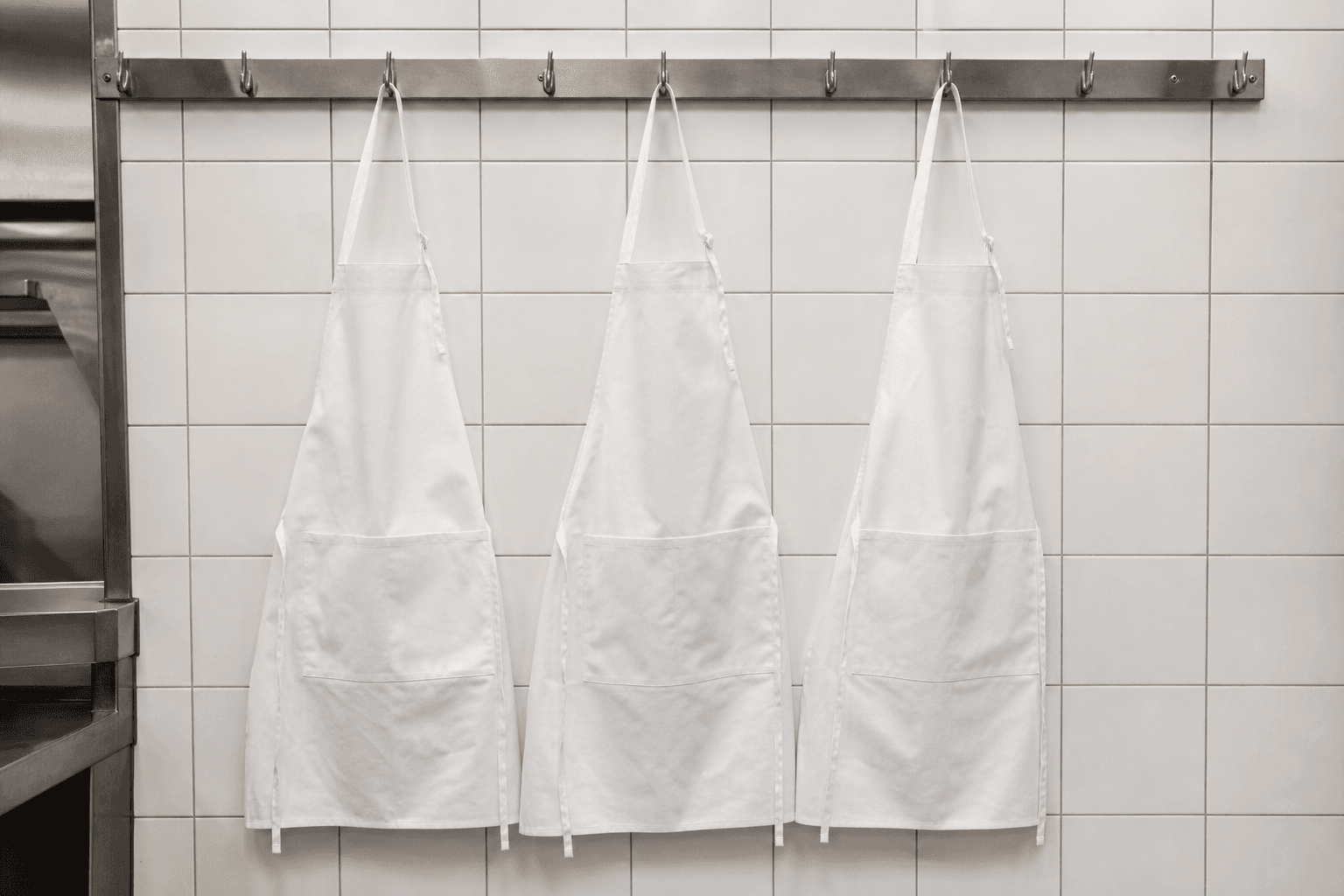
<strong>Mixed sku apron orders</strong> work only when the split by color, size and logo version matches real apron production thresholds at the mill, trim supplier, decoration station and sewing line. This guide explains how B2B buyers can combine 240-300 GSM twill, 8-10 oz canvas and denim aprons under one PO while staying inside workable per-color MOQ, decoration setup limits, <strong>AQL 2.5 major / 4.0 minor</strong> inspection standards and realistic <strong>25-45 day</strong> lead times.
Metal trim compliance for imported aprons: nickel release, lead and plating wear
A practical B2B guide to <strong>apron metal trim compliance</strong> for imported aprons, with realistic controls for nickel release, lead screening, plating wear, trim specifications, lab timing, AQL thresholds, and pre-shipment factory checks.
Mercerized cotton aprons: when smoother surface and richer dye uptake justify the premium
A <strong>mercerized cotton apron</strong> usually adds <strong>$0.18-$0.55 per piece</strong> versus comparable standard cotton aprons, and the premium is easiest to defend when buyers need <strong>deeper reactive-dyed blacks and navies, cleaner logo edges, and a smoother front panel</strong> across repeat orders of <strong>800-5,000 pcs per color</strong>.
Lyocell-blend aprons: drape, wet strength and cost versus cotton
<em>Lyocell blend aprons</em> can deliver a softer drape, smoother face and more premium front-of-house presentation than standard cotton twill or canvas, but the buying case only works when fabric ratio, finished GSM, wash method, MOQ, AQL, lead time and ex-factory piece cost are fixed before bulk booking.
Hydrocarbon, bleach and peroxide exposure: selecting apron materials for cleaning contractors
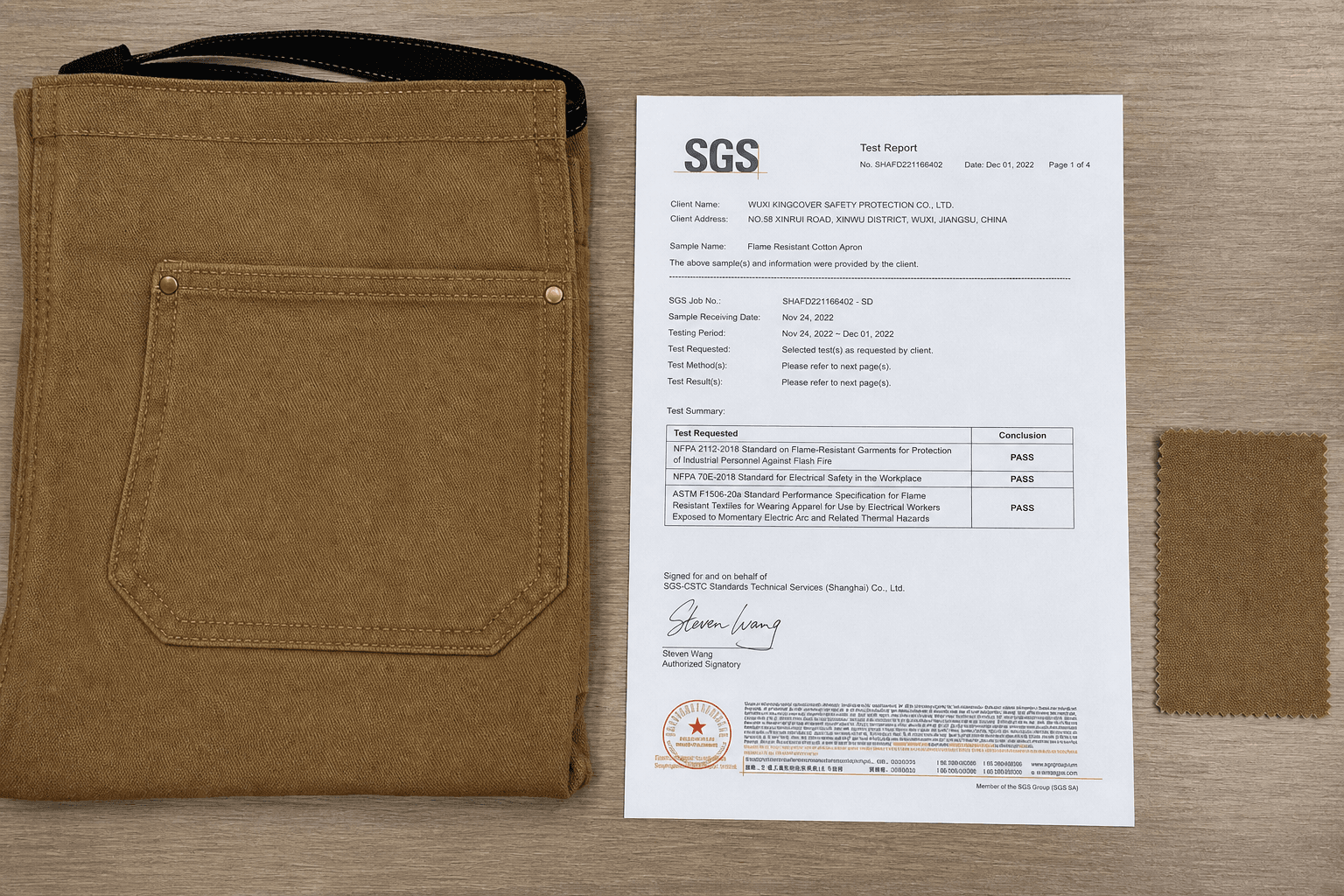
Selecting the right <strong>cleaning contractor apron material</strong> starts with the chemical actually hitting the apron front: diluted bleach and peroxide usually justify a 190-260 GSM coated construction, while solvent-assisted degreasers often require 280-380 GSM nitrile-coated options. For B2B buyers, that choice changes ex-factory cost from roughly $1.70-$2.20 to $3.90-$5.40 per piece, MOQ from 500 to 1,000 pieces per color, and realistic replacement cycles from about 90 days to 180 days or more.

How to manage split shipments for apron orders without shade and trim mismatches
<em>Split shipment apron orders</em> work when the factory reserves all fabric and trims at PO start, locks one bulk shade standard, cuts both deliveries under one plan, and inspects each shipment against the same sealed references. For B2B apron buyers, the safest method is to split the ship date only: book 100% of shell fabric, webbing, labels, hardware, and packaging up front, assign carton ranges before sewing, and hold both departures to the same AQL, storage, and re-inspection rules.
How to approve apron PPS samples: checkpoints before bulk cutting starts
<strong>Apron pps sample approval</strong> is the final control point before a factory spreads bulk fabric and cuts apron panels. For B2B buyers, this signoff must freeze measurable standards: fabric composition and weight, finished measurements, pocket layout, strap construction, branding position, labels, pack-out, tolerances, inspection criteria, and any written exceptions that still prevent cutting release.
How apron mills set fabric dyeing minimums: stock shades, custom colors and surcharges
<strong>Apron fabric dyeing minimums</strong> determine whether a professional apron order can run on stock-dyed twill or canvas, or must book a custom dye lot with meter-based MOQ, shade approval cycles, and small-run surcharges. For B2B buyers sourcing bib aprons, waist aprons, cross-back aprons, and hospitality uniform programs, the wrong color decision can add 7-18 days, trigger $120-$350 color fees, and raise FOB by $0.20-$0.80 per piece.
Housekeeping aprons for hotels: soil-release fabrics and industrial laundering
A <strong>hotel housekeeping apron</strong> for commercial use must withstand bathroom chemical splash, cart abrasion, overloaded pockets, and 80 to 120 industrial laundry cycles without exceeding 2% to 3% shrinkage, twisting at ties, or showing heavy stain shadowing. This guide gives hotel buyers concrete OEM benchmarks for fabric blend, GSM, seam construction, wash testing, AQL, MOQ, lead time, and ex-works pricing before bulk approval.
Herringbone drill aprons: texture, drape and wear resistance
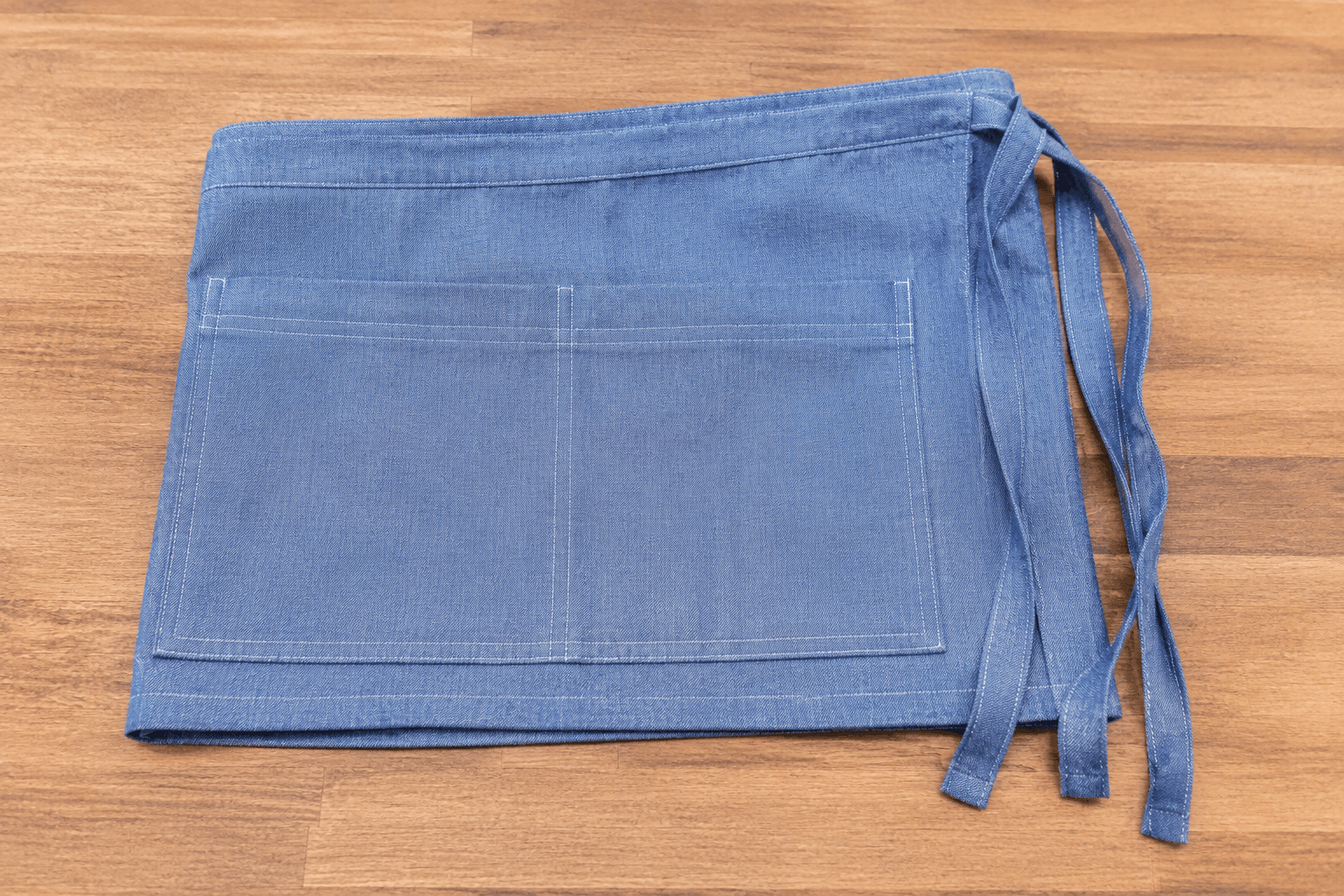
A <strong>herringbone drill apron</strong> gives professional buyers a clear middle-ground fabric option between 180-210 GSM plain twill and 340-400 GSM canvas. In apron OEM programs, the most commercially stable range is usually 250-280 GSM (about 7.4-8.3 oz), where the chevron texture remains visible, the apron drapes cleanly on-body, and pocket seams can be reinforced without making neck-hung styles feel overbuilt. For most bulk orders, buyers should lock fabric composition, GSM tolerance, shrinkage target, rubbing fastness, bartack points, and inspection to <em>AQL 2.5 major / 4.0 minor</em>, with realistic lead times of 35-45 days for stock-color programs and 50-75 days for custom dye, wash, or branded trim developments.
Greige fabric reservation for repeat apron programs: faster replenishment without dead stock
<strong>Greige fabric reservation for aprons</strong> gives repeat buyers a practical way to cut replenishment lead time by 10 to 18 days without paying to hold large finished-apron inventory. For stable bib, waist, bistro, and cross-back programs, the method works when the factory reserves unfinished base cloth against an agreed construction, usable yield, release MOQ, holding period, dead-stock settlement rule, and inspection standard such as <em>AQL 2.5 major / 4.0 minor</em>.
EN ISO 13688 and general protective garment labeling for industrial aprons
A sourcing guide to <strong>industrial apron labeling requirements</strong> under EN ISO 13688 for B2B buyers of textile and coated aprons. It explains what must appear on the apron, what belongs in user instructions, how GSM, cleaning method, MOQ, lead time, AQL, and version control affect trim approval, and how to prevent relabeling cost, customs queries, and warehouse rejection.
Edge binding and contrast tape on custom aprons: materials, widths and sewing constraints
<strong>Apron binding</strong> is a visible trim choice that directly affects edge durability, wash performance, operator efficiency, trim MOQ and finished appearance on bulk custom aprons. This guide outlines realistic tape materials, finished widths, sewing limits, QC checkpoints, lead-time impact and FOB cost ranges so professional buyers can source contrast-bound aprons with fewer PPS changes and fewer bulk defects.
Dishwashing and steward aprons: waterproof construction, hem drainage and replacement-cycle cost
<strong>Dishwashing steward aprons</strong> for commercial kitchens need more than a waterproof face. For B2B buyers, the best programs combine PVC or PU-coated fabric in the 320-450 GSM range, hem drainage that does not trap 150-300 g of water, reinforced strap anchors, and a replacement-cycle target that holds across 90-150 working days in live wet stations.
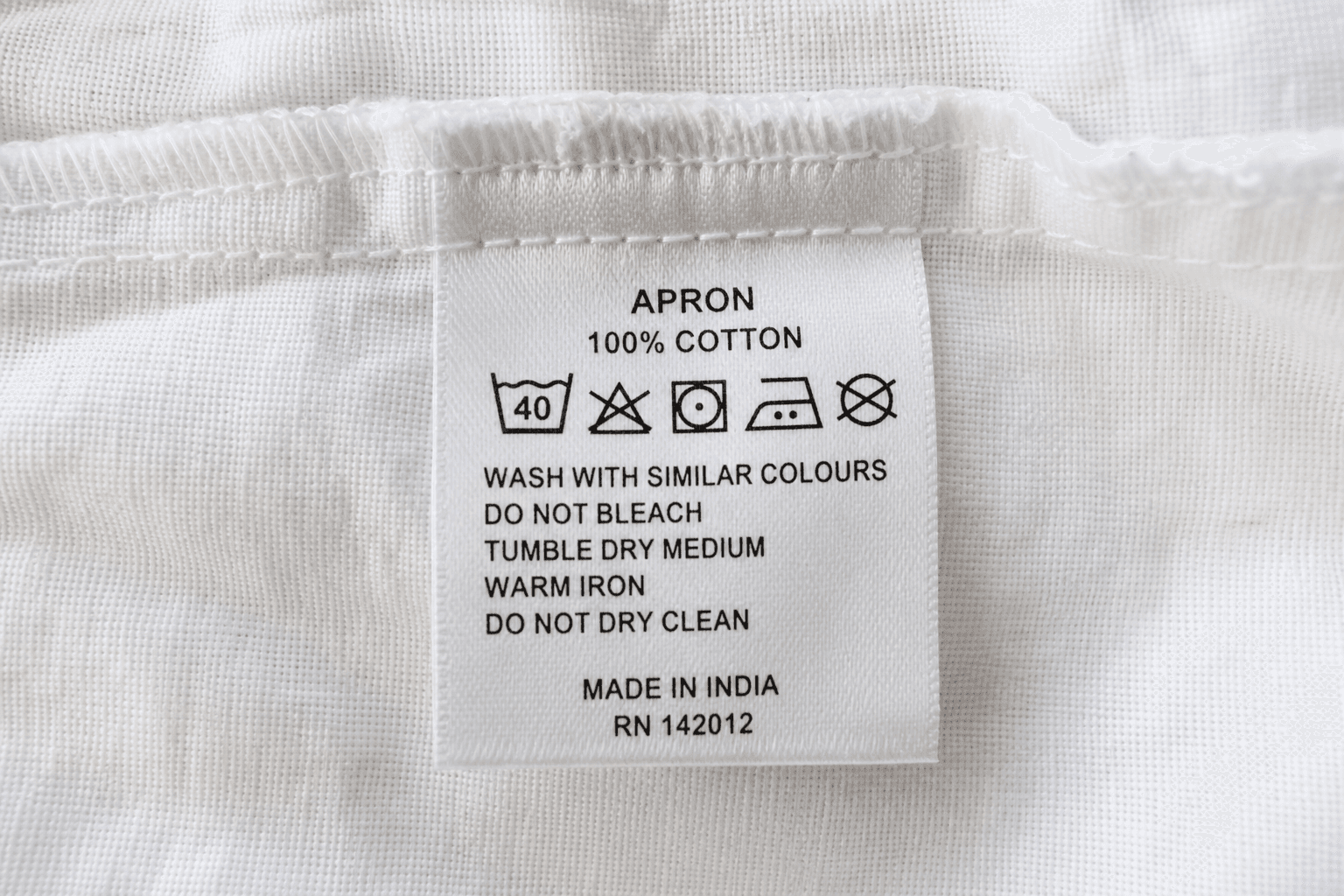
Crossback apron pattern engineering: balancing neck relief, coverage and size consistency
<strong>Crossback apron pattern engineering</strong> determines whether a bulk apron program delivers measurable neck relief without sacrificing bib coverage, side protection, wash stability or size consistency. For professional B2B buyers, the critical controls are strap exit coordinates, crossing height, underarm curve depth, grading logic, reinforcement methods, shrinkage allowance and QC checkpoints fixed before PPS approval.
Contrast topstitching on custom aprons: thread size, puckering risk and brand visibility
<strong>Contrast topstitching on aprons</strong> can raise brand visibility and perceived quality, but only when the sewing spec is engineered for the apron fabric, seam function and inspection standard. For professional B2B buyers, the decision is practical: which Tex size suits 190 GSM twill versus 12 oz canvas, where puckering is most likely after wash, how much visible stitching adds to FOB, whether MOQ changes if a custom thread shade is required, and which AQL rules keep repeat orders consistent.
Chlorine bleach compatibility in white aprons: fabric, sewing thread and logo survival
B2B buyers sourcing <strong>bleach safe white aprons</strong> need a full durability spec, not just white fabric. Chlorine resistance depends on GSM, fiber content, optical brighteners, sewing thread, bartacks, logo method, wash chemistry, AQL control and realistic cycle testing. This guide sets practical targets for fabric weight, seam package, MOQ, lead time, FOB cost and finished-apron validation before bulk orders.
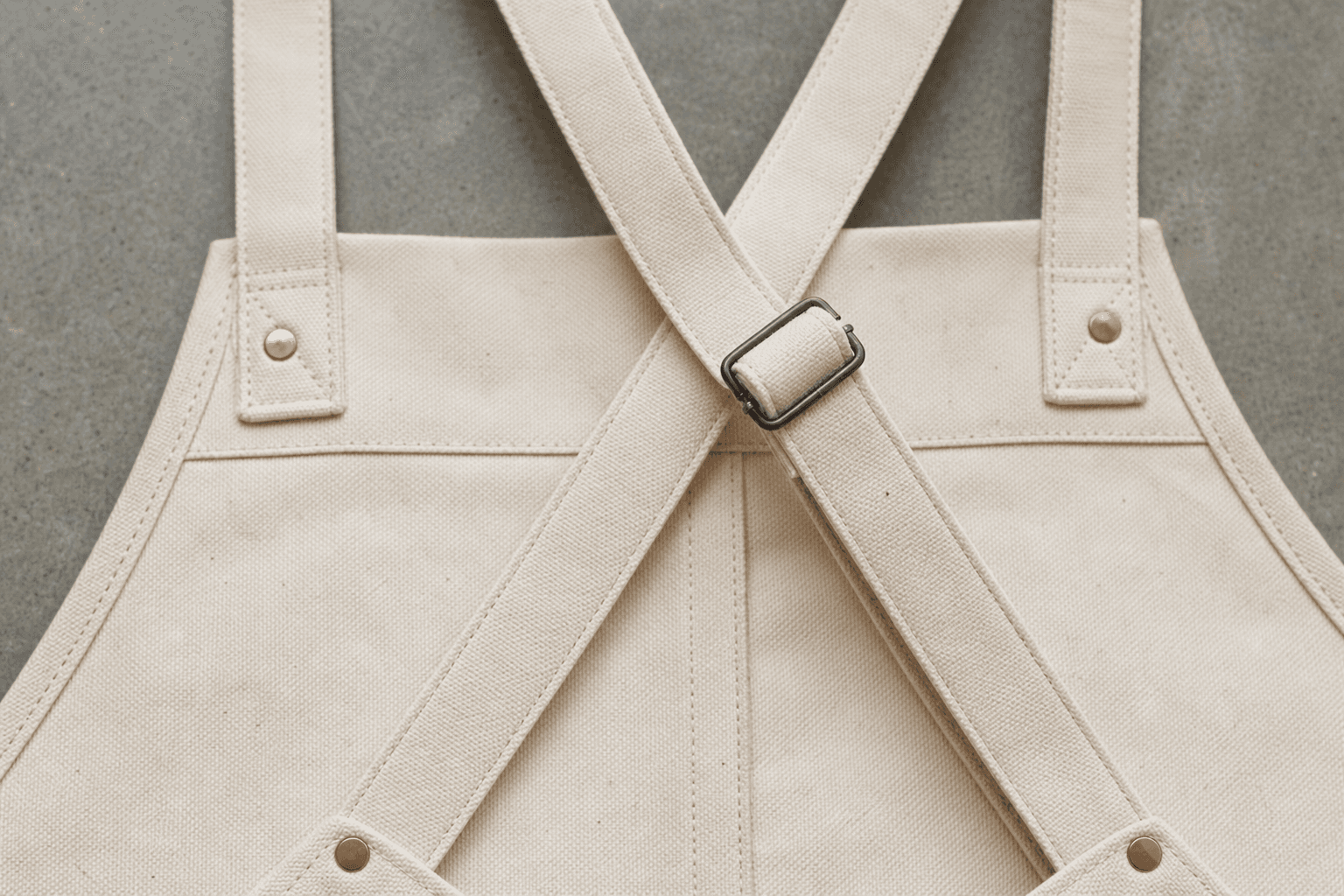
Car detailing aprons: scratch-safe hardware, chemical splash resistance and mobility specs
<strong>Car detailing aprons</strong> for professional shops must protect finished surfaces as carefully as they protect staff. This sourcing guide defines realistic B2B specs for scratch-safe trim, 210 to 240 GSM synthetic shells, short-duration chemical splash resistance, stable pocket loads, AQL inspection, MOQ, lead times, and target FOB pricing before bulk production.
Brushed canvas aprons: peached finish, softness retention and surface wear
<strong>Brushed canvas aprons</strong> give buyers a softer hand than flat-face canvas, but bulk performance depends on measurable controls: 270-310 GSM finished weight, brushing intensity, wash chemistry, trim friction, fold packing, and appearance standards after 5, 10 and 20 wash cycles.
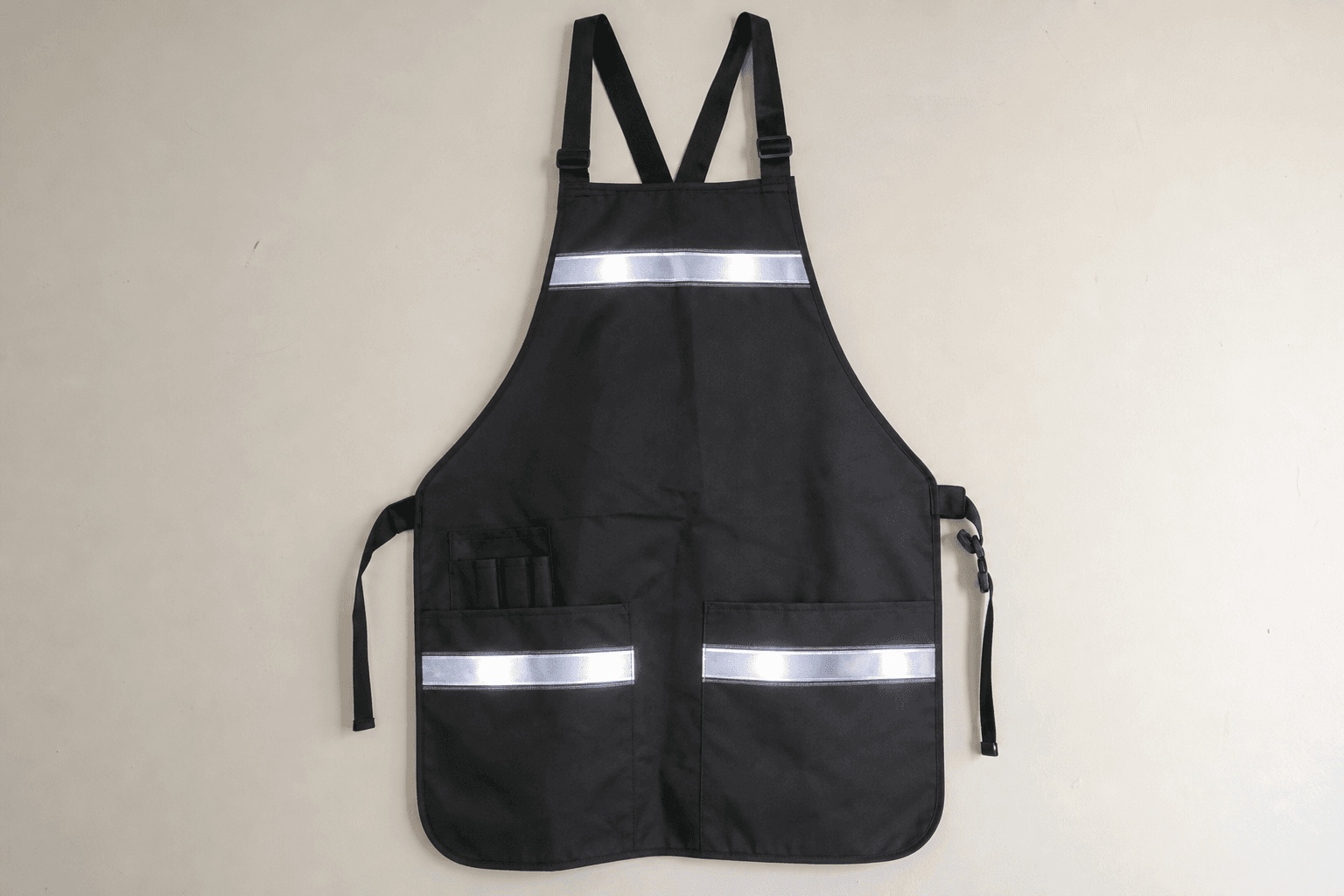
Azo dyes, formaldehyde and pH testing on aprons: what textile lab reports actually show
<strong>Apron textile lab testing</strong> only protects a B2B order when the report matches the exact apron SKU, colorway, fabric lot, print, webbing, label set, and production stage that will ship. For importers, distributors, hospitality brands, and retailers, a usable azo dyes, formaldehyde, and pH report must show the tested sample, method, customer limit, measured result, unit, and test date clearly enough to support supplier approval, bulk release, and shipment sign-off.
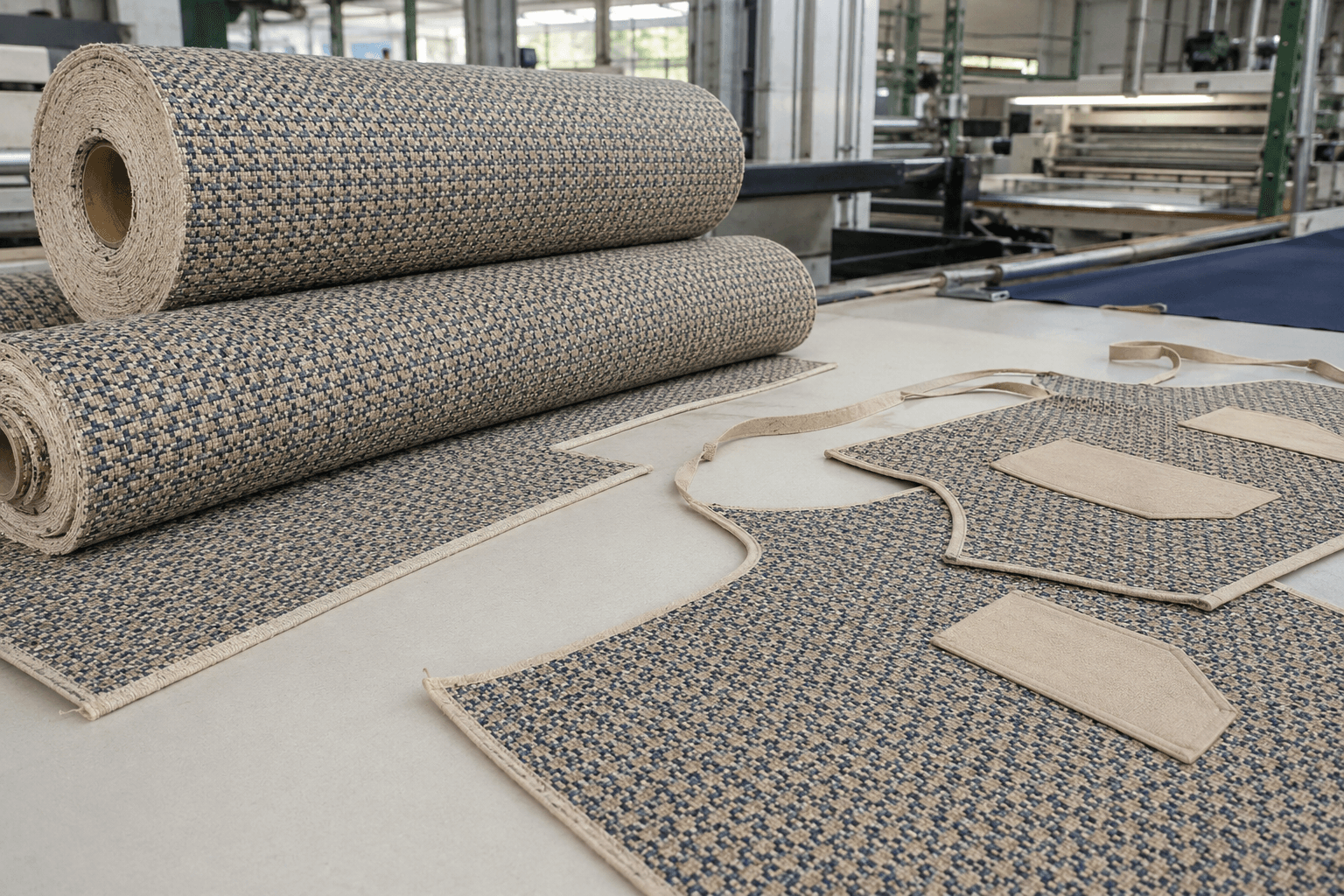
Aprons for open-kitchen fine dining: quiet hardware, elegant drape and premium branding details
A practical guide to <em>fine dining apron sourcing</em> for open-kitchen restaurants, covering fabric drape, low-noise hardware, understated branding, MOQ planning, FOB cost control, AQL inspection and reorder discipline for premium apron programs.
Aprons for mobile bartending teams: foldability, wrinkle recovery and logo visibility in transit
<strong>Mobile bartending aprons</strong> have to survive folding, carton pressure, van loading, and fast venue setup without deep creases or blurred branding. This sourcing guide gives professional B2B buyers concrete OEM benchmarks for GSM, fabric blend, pocket thickness, logo method, carton density, AQL, MOQ, and lead times so bulk apron orders arrive presentation-ready with predictable cost per usable piece.
Aprons for dark kitchens and ghost kitchens: stain camouflage, speed laundering and replenishment planning
A practical guide to <strong>dark kitchen apron sourcing</strong> for professional buyers, with working benchmarks for 245-270 GSM twill bib aprons, 50-100 commercial wash targets, $2.10-$4.20 FOB pricing, 500-3,000 pc MOQ bands, AQL 2.5/4.0 inspection and 20-50 day replenishment planning.
Apron width, overlap and side coverage: spec decisions that affect inclusivity and movement
<strong>Apron coverage specifications</strong> determine whether a production apron actually shields the waist, high hip, and upper thigh across the intended wearer range without restricting stride or creating side gaps in motion. For B2B buyers, width, hem sweep, wrap reach, tie length, fabric drape, tolerances, and inspection points should be locked as one sourcing specification before PP approval.
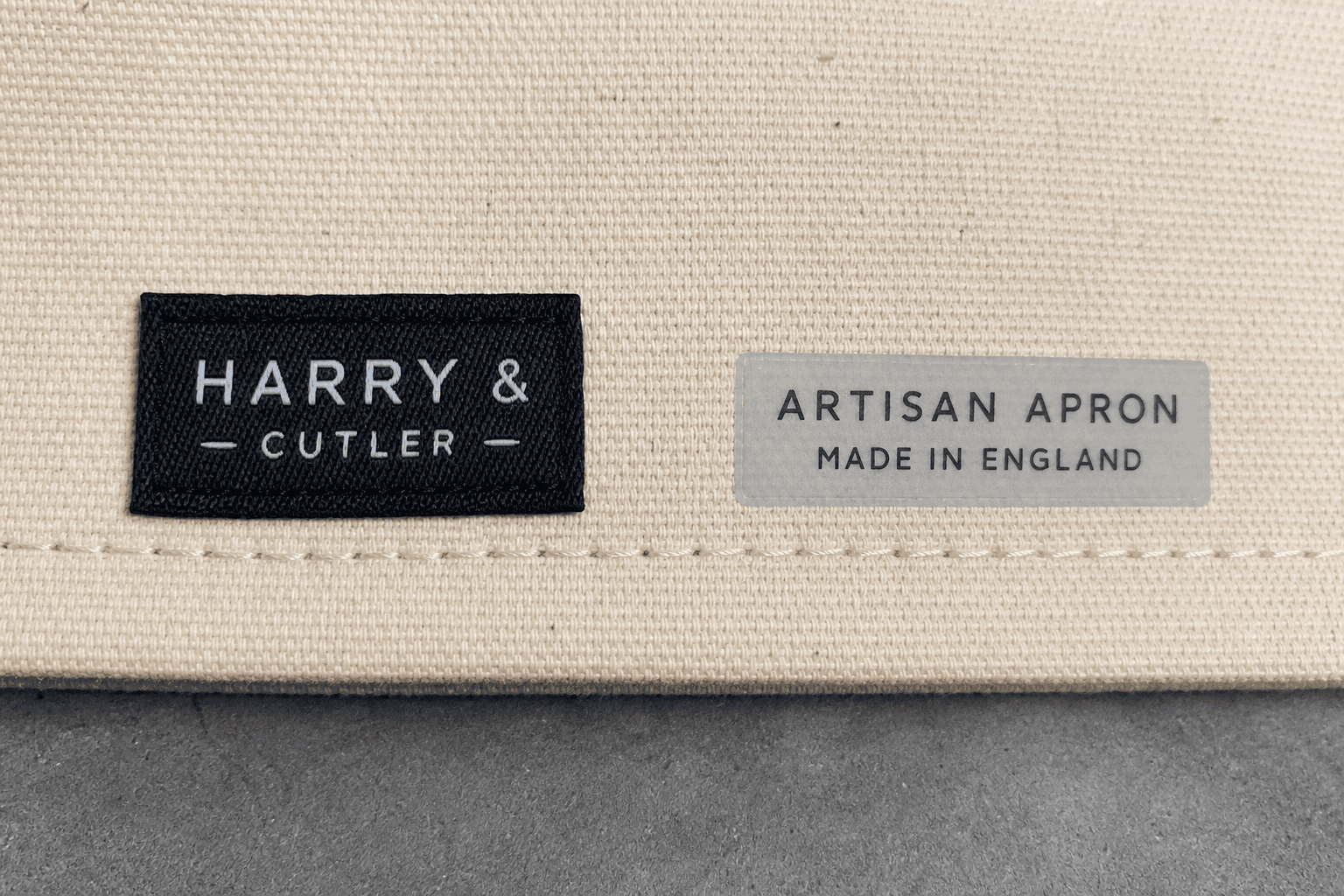
Apron top-edge stability: facing, turn-back and stay tape methods to stop neckline collapse
<em>Apron top edge construction</em> is a make-or-break sourcing decision for bib aprons because the neckline is the first area to show roll-out, corner flare or post-wash distortion. For B2B buyers, the most reliable way to stop neckline collapse is to match facing, turn-back and stay tape methods to fabric weight, bib shape, strap load, wash count, MOQ, AQL standard and ex-factory cost target.
Apron thread specification guide: cotton, polyester core-spun and ticket size selection
This <strong>apron sewing thread specification</strong> guide gives B2B buyers a practical standard for matching cotton or polyester core-spun thread to 170-350 GSM apron fabrics, selecting ticket size by seam load, and controlling wash durability, MOQ, lead time, AQL, and unit cost before bulk production.
Apron strap creep and slippage: testing sliders, webbing friction and wearer adjustability
<em>Apron strap slippage testing</em> gives professional buyers a measurable way to control fit stability before bulk production. By fixing slider geometry, webbing thickness, wash state, test load, cycle count and wearer pass limits, sourcing teams can stop neck-drop complaints, reduce debit-note risk and keep adjustable apron performance consistent across repeat orders.
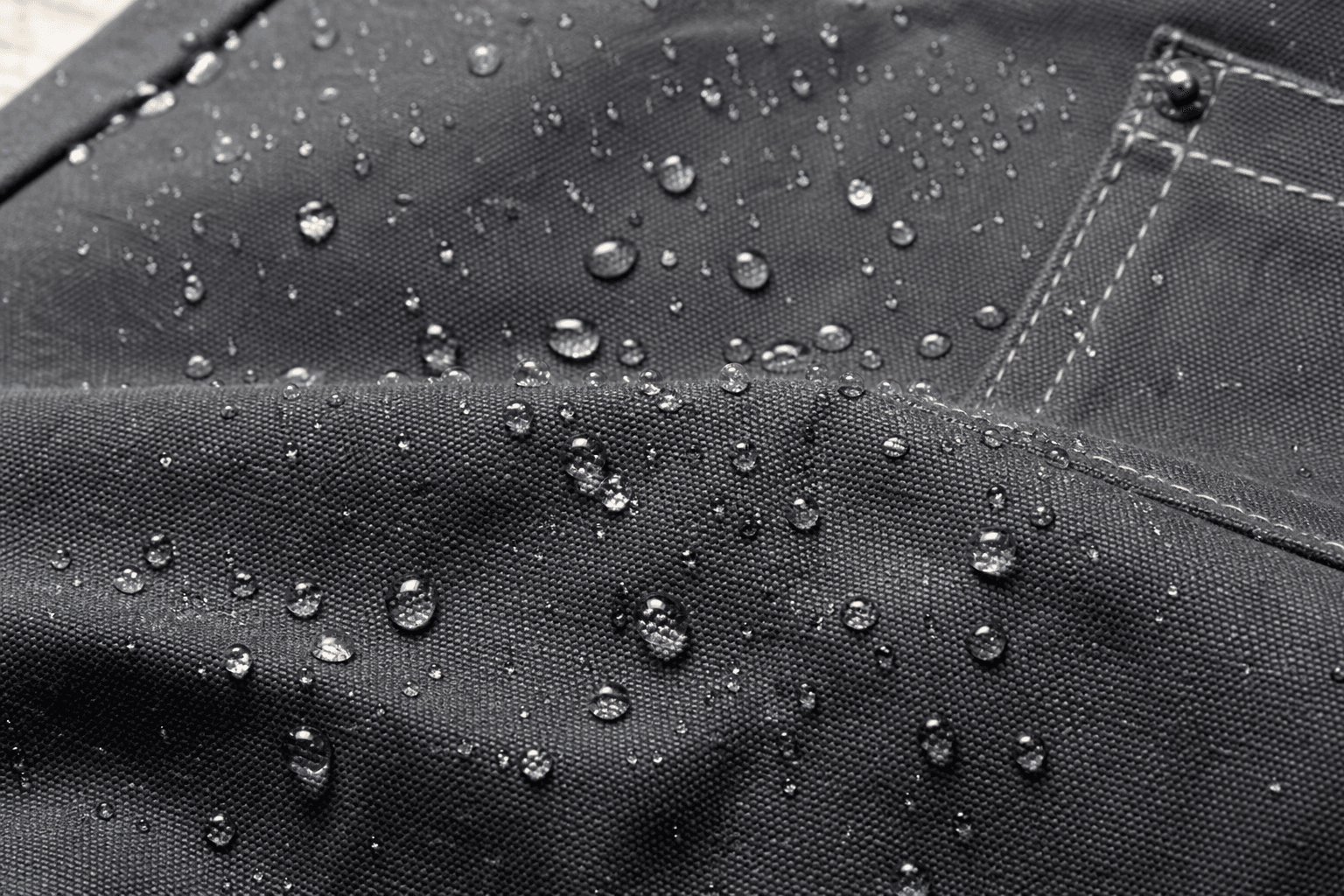
Apron side slits, center vents and movement features for service staff uniforms
<strong>Apron movement features</strong> such as side slits and center vents directly affect stride, kneeling, and turning during 8-12 hour service shifts. For B2B buyers sourcing custom aprons, the right opening height, reinforcement, fabric weight, and wash standard can reduce wearer complaints and usually adds only $0.06-$0.22 per piece at 3,000-unit volumes.
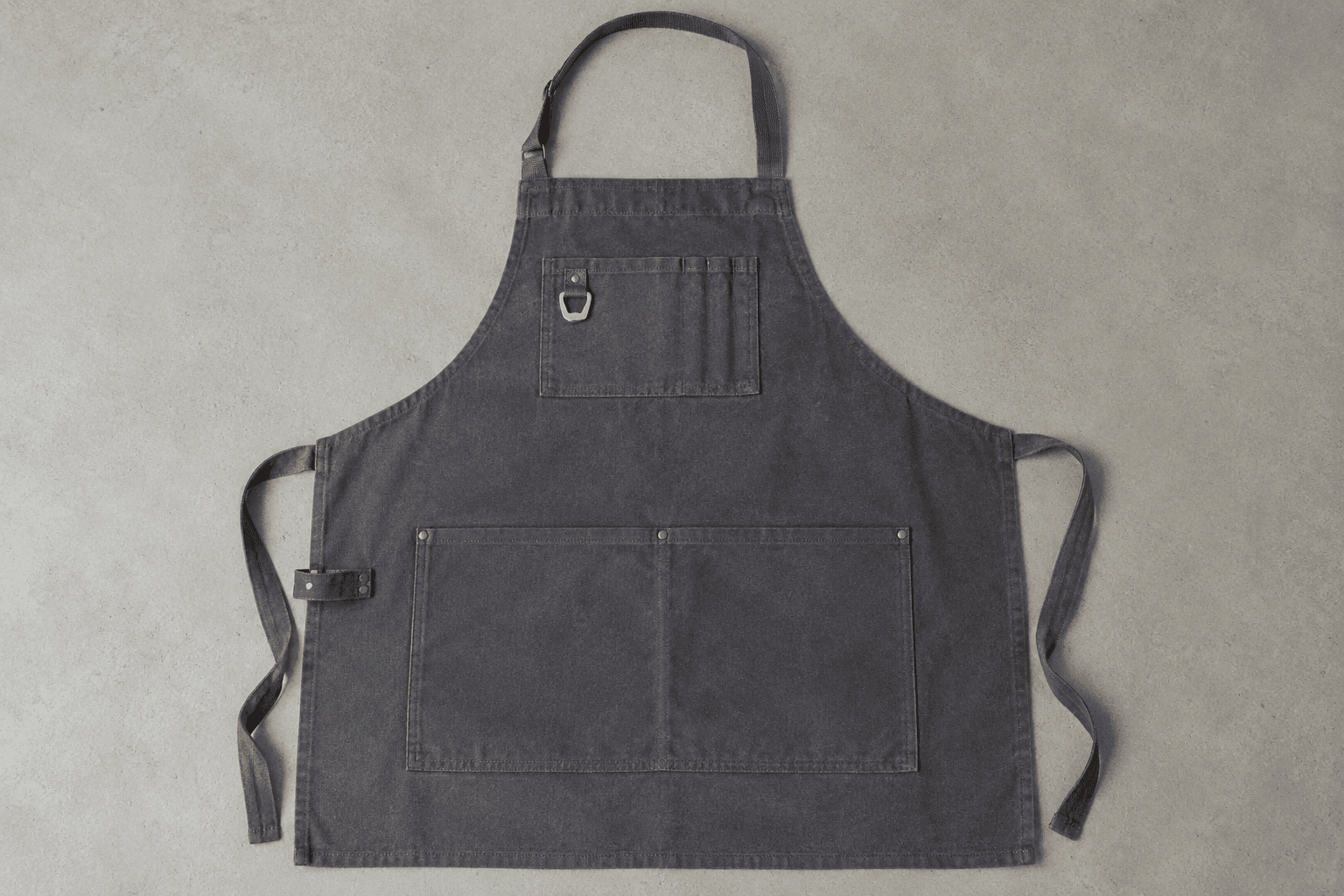
Apron seam construction guide: flat-felled, bound and overlocked seams
A practical <strong>apron seam construction</strong> guide for B2B buyers comparing flat-felled, bound and overlocked seams by durability, fabric suitability, SMV, defect risk, MOQ impact, AQL control and realistic FOB cost on bulk apron orders.
Apron neck loop construction: self-fabric, webbing and hidden adjuster options compared
For professional buyers, <strong>apron neck loop options</strong> affect fit range, laundry performance, trim MOQ, sewing minutes, AQL exposure and delivered FOB—not just styling. This guide compares self-fabric, webbing and hidden adjuster constructions with realistic B2B benchmarks for GSM, strap width, lead-time impact, pull strength, defect risks and per-piece cost on commercial bib apron programs.
Apron hem construction choices: double-turn, narrow hem and bound edge cost trade-offs
<strong>Apron hem construction</strong> has a direct effect on fabric yield, sewing minutes, defect rates, wash performance and shipment timing. For B2B apron sourcing, the commercial choice between double-turn, narrow hem and bound edge should be set before proto approval using fabric GSM, edge geometry, MOQ, trim availability, AQL targets, wash frequency and the true FOB impact per piece.
Apron fiber content verification: how labs confirm blends and recycled claims
<strong>Apron fiber content testing</strong> gives B2B buyers objective evidence that a quoted 65/35 poly-cotton twill, 10 oz cotton canvas, or recycled-blend shell matches the purchase specification before bulk cutting. For apron sourcing teams, that check reduces mislabeling risk, recycled-claim disputes, and avoidable FOB drift that often runs $0.18-$0.75 per piece when mills substitute a lower-cotton blend or lighter fabric than the approved standard.
Apron fabric roll inspection: shade bands, defects and cut allocation
<strong>Apron roll inspection</strong> decides whether bulk apron fabric can be cut without mixed shades, visible defects or avoidable yield loss. For professional sourcing teams, disciplined <strong>apron roll inspection</strong> means checking shade bands, 4-point results, usable width, actual roll length, bow and skew, then assigning each approved roll to a controlled cut allocation before spreading starts.
Apron carton packing math: units per carton, cube optimization and freight damage control
Accurate <strong>apron carton packing</strong> cuts landed cost, protects trims and decoration, and speeds warehouse receiving. This guide gives B2B apron buyers usable targets for units per carton, carton cube, board grade, gross weight, AQL, and transit-day risk so packing can be fixed before bulk shipment.
Apron bowing and skewing after wash: how fabric finishing and cutting direction affect hang
<strong>Apron bowing and skewing</strong> is usually built into the fabric before sewing and exposed after laundering. For B2B apron buyers, the workable controls are measurable: hold finished-fabric skew to 2.0% to 2.5% on most 210 to 310 GSM twills and canvases, tighten to 1.5% to 2.0% on premium cotton bib aprons with centered pockets or contrast trim, relax rolls 12 to 24 hours before spreading, keep the apron body on grain, and approve bulk only after 1-wash and 3-wash tests on sewn samples from actual lot fabric.
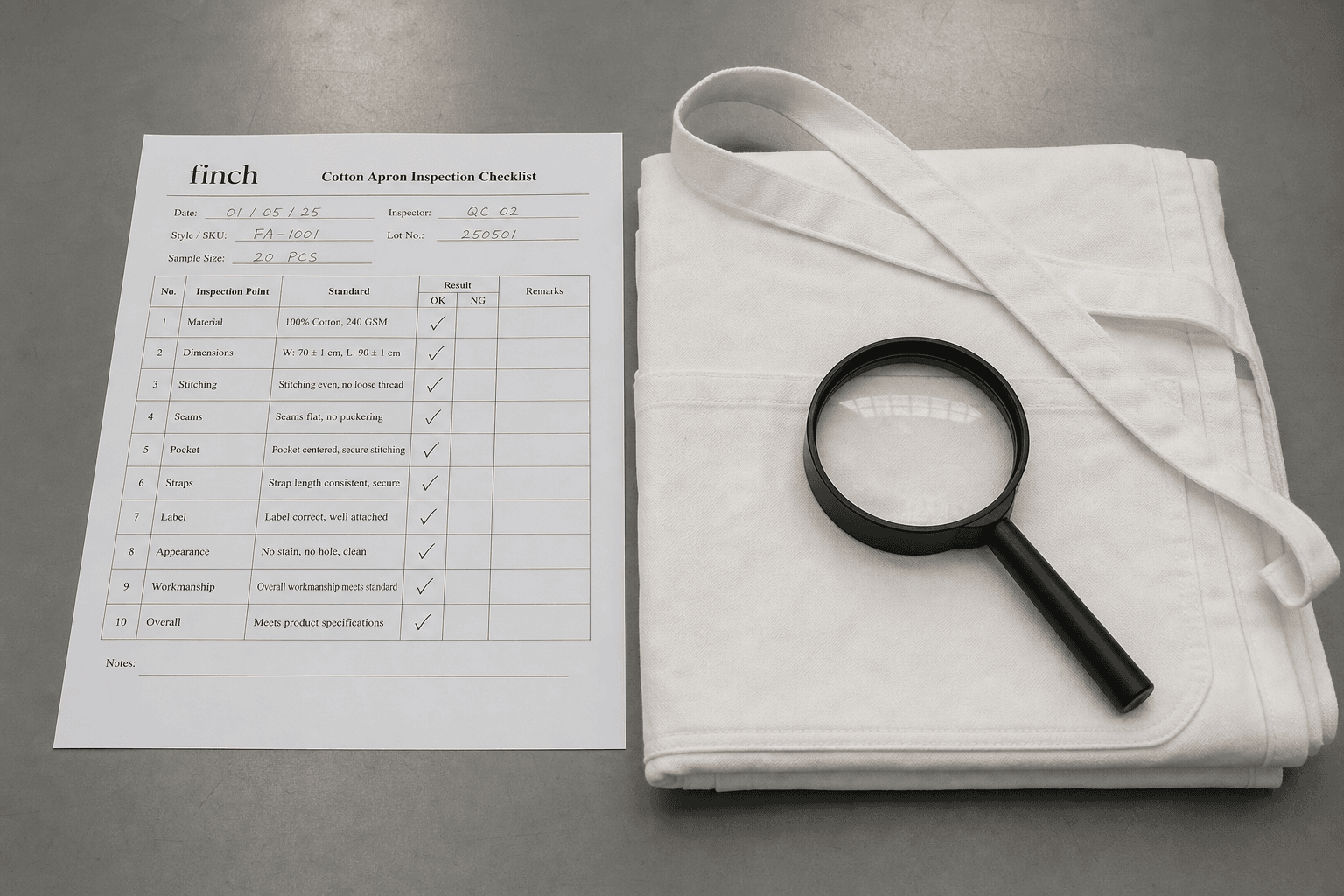
Apron bartack placement: reinforcing stress points without overbuilding the garment
<em>Apron bartack reinforcement</em> delivers value only when it is placed at proven stress points, matched to fabric weight, and controlled at PP stage. For B2B apron buyers, the commercial target is measured reinforcement rather than maximum reinforcement: in most factory programs, 4-6 bartacks are enough for a basic bib apron, while 8-12 suit a pocket-heavy utility style, provided placement tolerance, stitch length, density, AQL standard, and cost impact are fixed before bulk.
Apron barcode and SKU labeling for chain-store replenishment programs
<strong>Apron barcode labeling</strong> for chain-store replenishment succeeds only when unit labels, carton labels, SKU tables, and packing files stay synchronized from cutting to final loading. For professional apron sourcing, fixed scan placement, controlled variable-data printing, carton reconciliation, and retained traceability records reduce receiving holds, relabel labor, compliance chargebacks, and inventory variance across repeat releases.
All-over printed cotton aprons: reactive vs pigment print, strike-offs and cut-and-sew yield
A practical sourcing guide to <em>all over printed cotton aprons</em> for B2B buyers, with specific benchmarks for reactive versus pigment printing, strike-off control, cut-and-sew yield, MOQ, AQL, FOB, and realistic factory lead times before bulk booking.
Moleskin aprons for premium retail and workshop programs
A <strong>moleskin apron</strong> gives premium retail and workshop programs a softer hand than standard 10 to 12 oz canvas, while still meeting the structure, branding clarity, MOQ discipline, and repeat-order control that professional B2B apron buyers require.
Jacquard-woven aprons: when a custom weave beats print
Jacquard apron fabric gives custom aprons a woven-in identity that print cannot match, especially for premium programs, repeat orders, and brand-sensitive bulk sourcing.
Apron canvas weight guide: oz vs GSM and how to choose
A practical apron canvas weight guide for bulk buyers comparing oz, GSM, cotton duck weight, costing, durability, and production risk.
Waxed canvas vs cotton canvas aprons: durability, cost and care
A waxed canvas apron offers higher water resistance and a premium handfeel, while cotton canvas remains easier to wash, lower cost and more scalable.
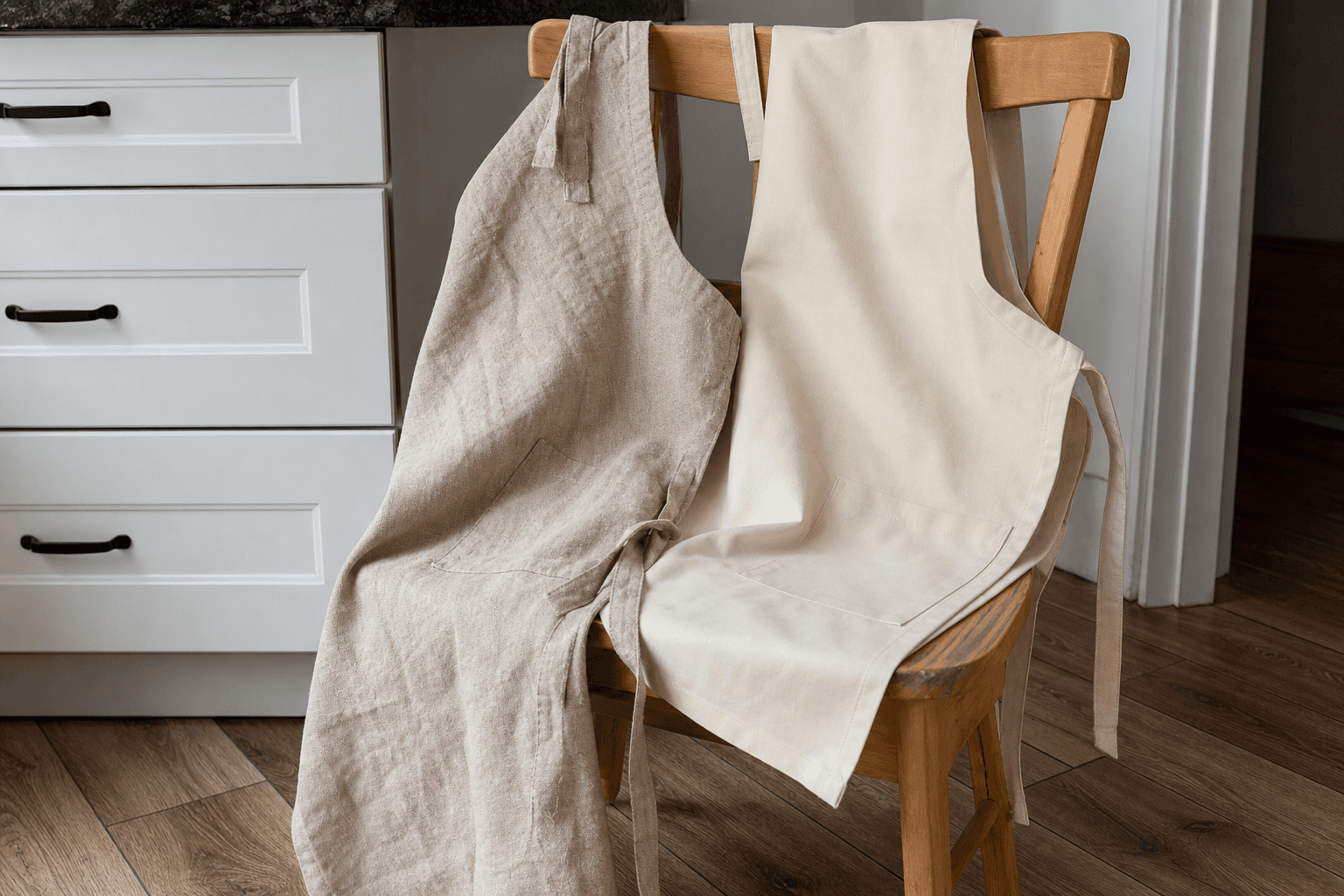
Linen vs cotton aprons for retail: drape, shrinkage and price
A practical linen vs cotton apron sourcing guide covering drape, shrinkage, wash effects, MOQ, lead time and landed price for retail apron programs.
Sourcing denim aprons: selvedge, weight and indigo fastness
A practical sourcing guide for denim apron buyers comparing selvedge, fabric weight, indigo fastness, shrinkage control and bulk production costs.
GRS recycled cotton aprons: what the certificate actually proves
A recycled cotton apron can be GRS certified only when recycled input, chain of custody, chemical controls and social criteria are verified through the supply chain.
Cotton-poly blend chef aprons: stain release and industrial wash
A cotton poly chef apron balances hand feel, stain release, color stability and industrial wash life when fabric weight and finish are specified correctly.
Embroidery vs screen print on aprons: cost, durability and MOQ
A practical apron embroidery vs screen print guide covering unit cost, durability, MOQ, placement limits and sourcing decisions for bulk custom apron branding.
Leather patch apron branding: debossing, stitching and leather grades
A leather patch apron can lift perceived value, but grade, thickness, deboss depth, stitch method and wash resistance must be specified before bulk production.
Pantone color matching for custom aprons: tolerances and lab dips
Pantone apron color matching depends on fabric type, dye route, lab dips, and agreed tolerance, not just a Pantone code on a tech pack.
Woven labels vs heat transfer for apron branding
An apron woven label gives durable, sewn-in branding, while heat transfer offers larger graphics and lower profile placement with different care and cost limits.
Apron pocket configurations: a buyer's spec guide
A practical apron pocket configuration guide for bulk buyers specifying pocket size, placement, reinforcement, costing, and sampling checks before mass production.
Apron strap and hardware guide: rivets, buckles and crossback
A practical apron strap hardware guide for bulk buyers comparing rivets, buckles, crossback layouts, cost impact, durability and production risks.
Apron MOQ explained: why factories quote 150 to 300 pieces
Apron MOQ usually sits at 150 to 300 pieces because fabric cutting, trim sourcing, printing setup, sewing line allocation, and packing labor all have fixed costs.
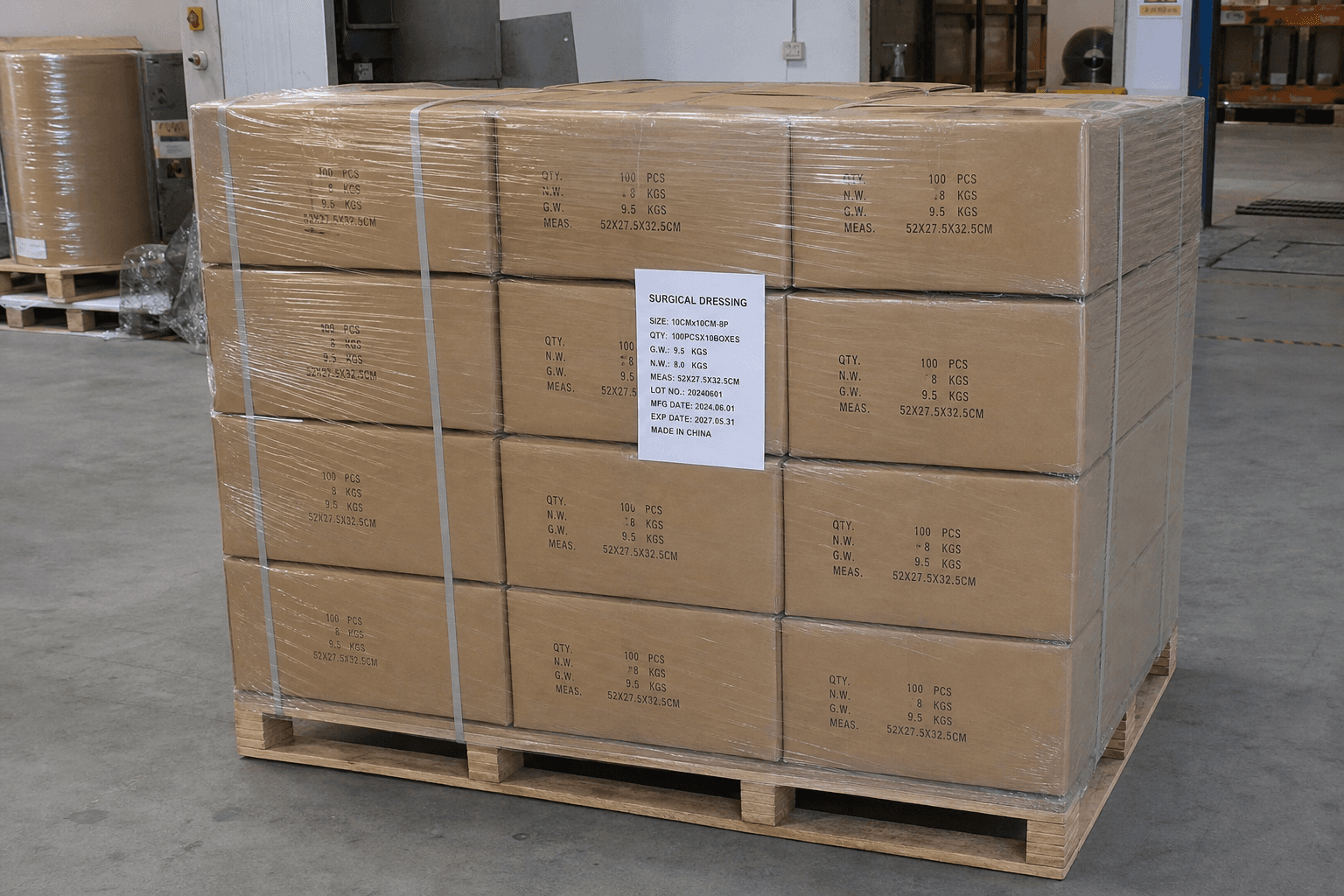
FOB, CIF or DDP for apron orders: a landed-cost comparison
A practical apron incoterms comparison showing how FOB, CIF and DDP change cost control, risk and landed pricing for bulk custom apron orders.
The apron sampling process: from tech pack to pre-production sample
A practical guide to the apron sampling process, covering tech packs, fabric trials, fit checks, costing, revisions, and pre-production sample approval.
Apron QC and AQL inspection: what to check before you pay
Apron quality control should confirm fabric, workmanship, sizing, packaging and AQL results before balance payment or shipment release.
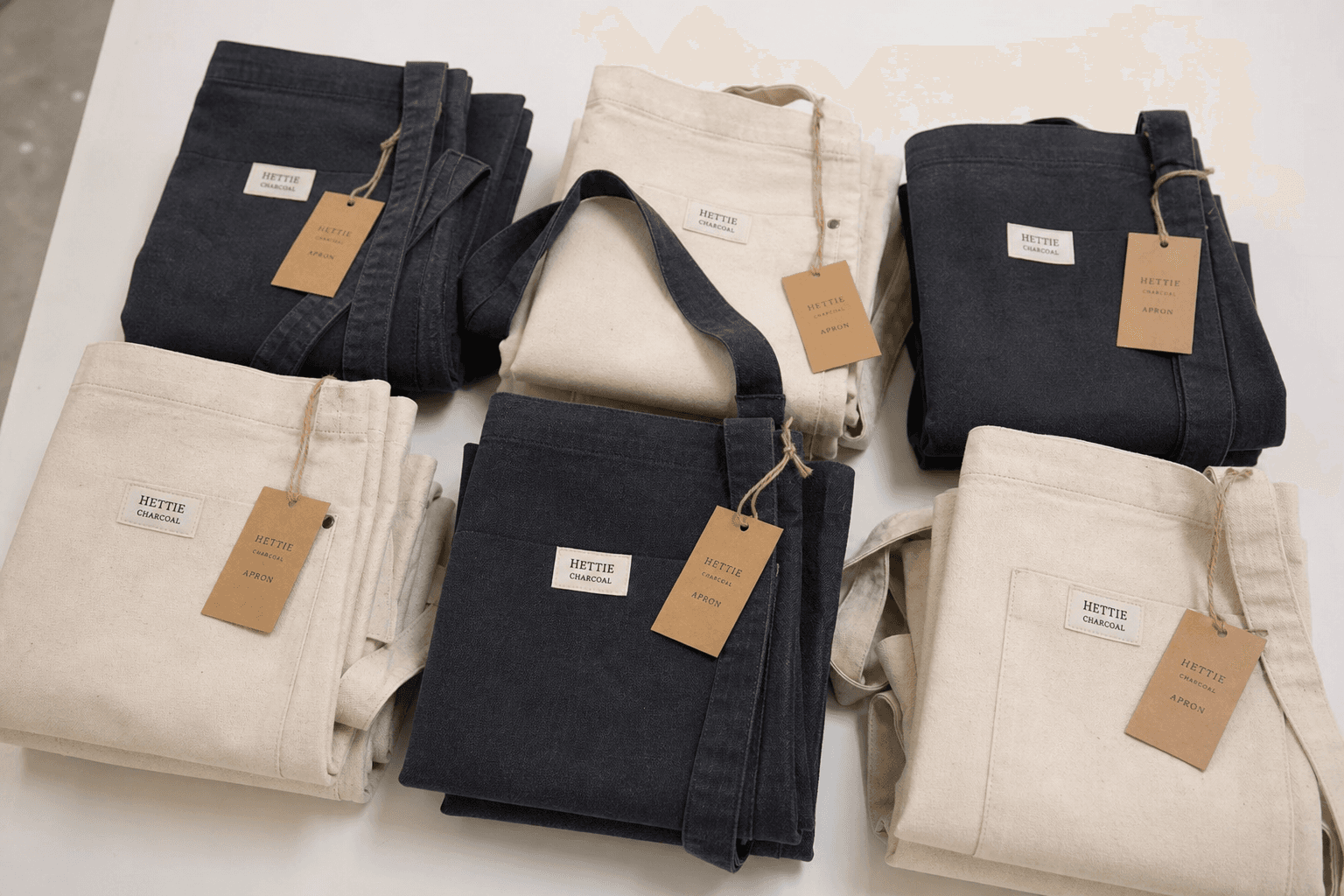
Private-label apron manufacturing: a step-by-step buyer guide
A practical sourcing guide for working with a private label apron manufacturer, covering fabrics, sampling, branding, MOQ, QC, packing, and delivery planning.
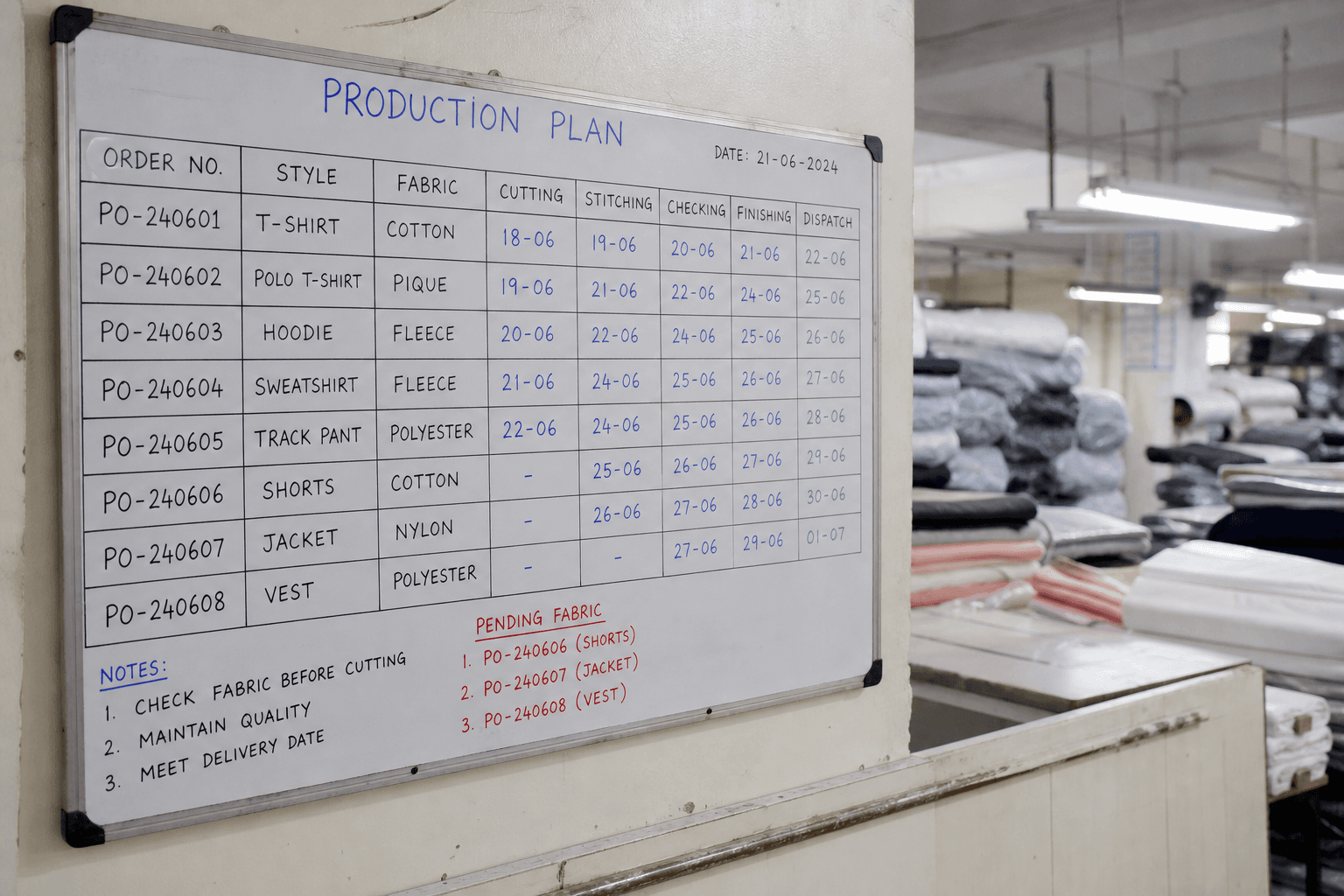
Apron lead times explained: where the 35 to 45 days actually go
Apron lead time is usually 35 to 45 days because fabric, trims, printing, sewing, inspection, and vessel booking each consume fixed calendar time.
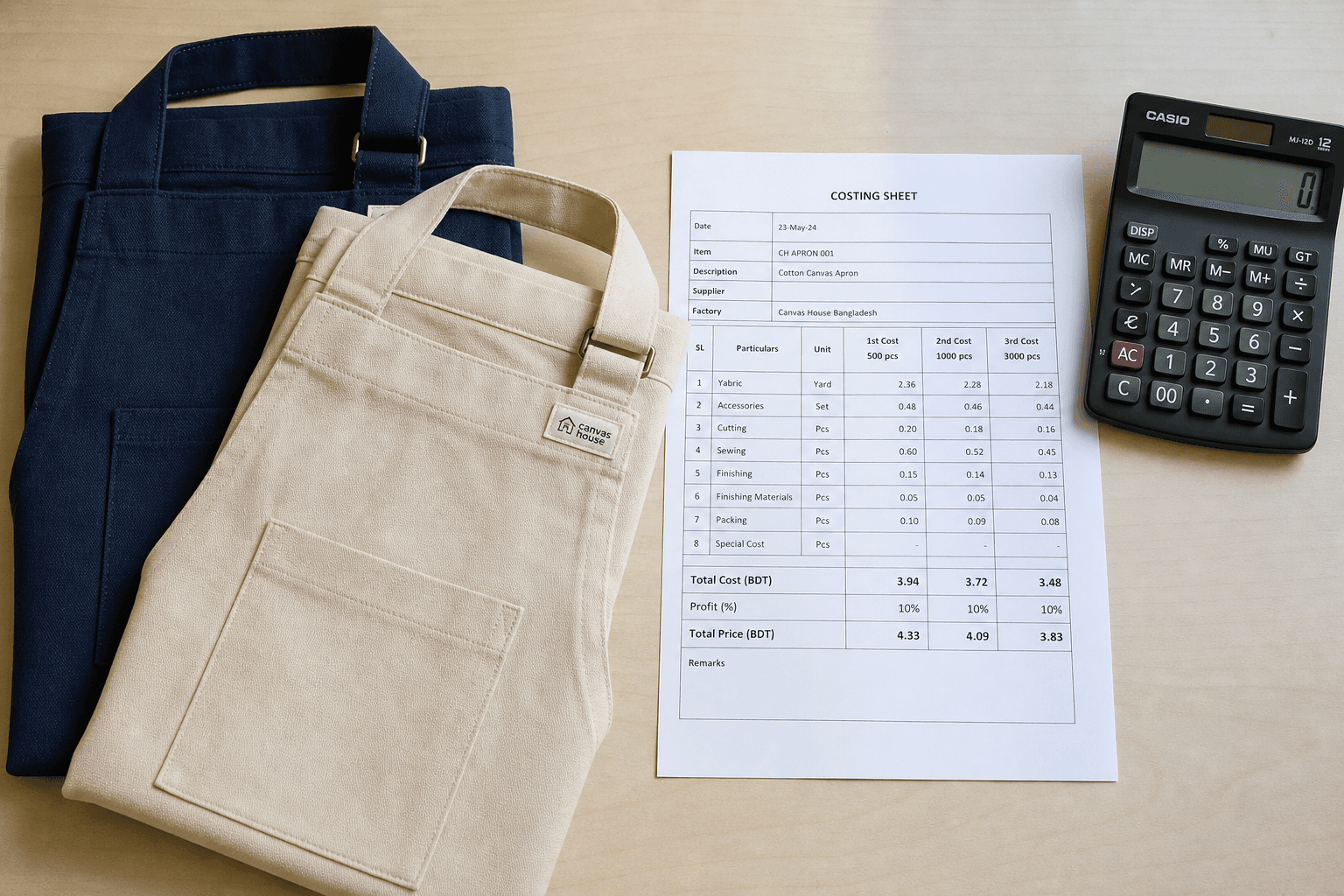
Seven ways to reduce your apron unit cost without cutting quality
Practical factory-side methods to reduce apron cost while protecting fabric performance, stitching durability, color consistency and shipment reliability.
How to build an apron tech pack that gets accurate quotes
A complete apron tech pack gives the factory enough measured, material and packing detail to quote accurately before sampling starts.
Sourcing chef aprons for hotels and restaurant groups
A practical chef apron sourcing guide for hotel groups and restaurant chains comparing fabrics, construction, pricing, compliance, and bulk order controls.
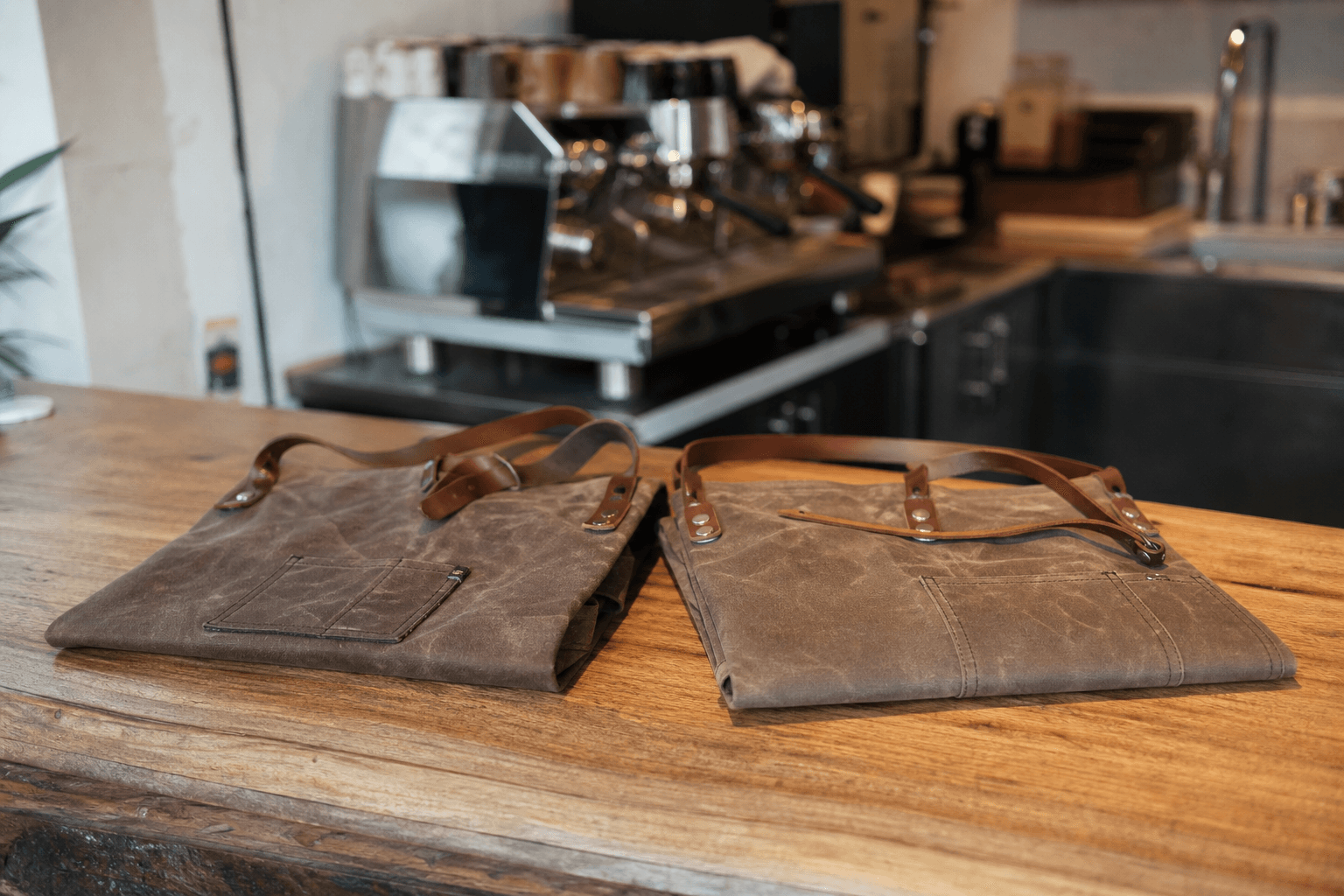
Barista aprons for cafe brands: fabric, fit and durability
A practical sourcing guide to barista apron fabric, fit, reinforcement and bulk-order decisions for cafe brands developing durable custom uniforms.

Workshop aprons for tool and hardware brands
A practical sourcing guide to workshop apron materials, pocket engineering, reinforcement, pricing, MOQ, and production checks for tool and hardware brands.
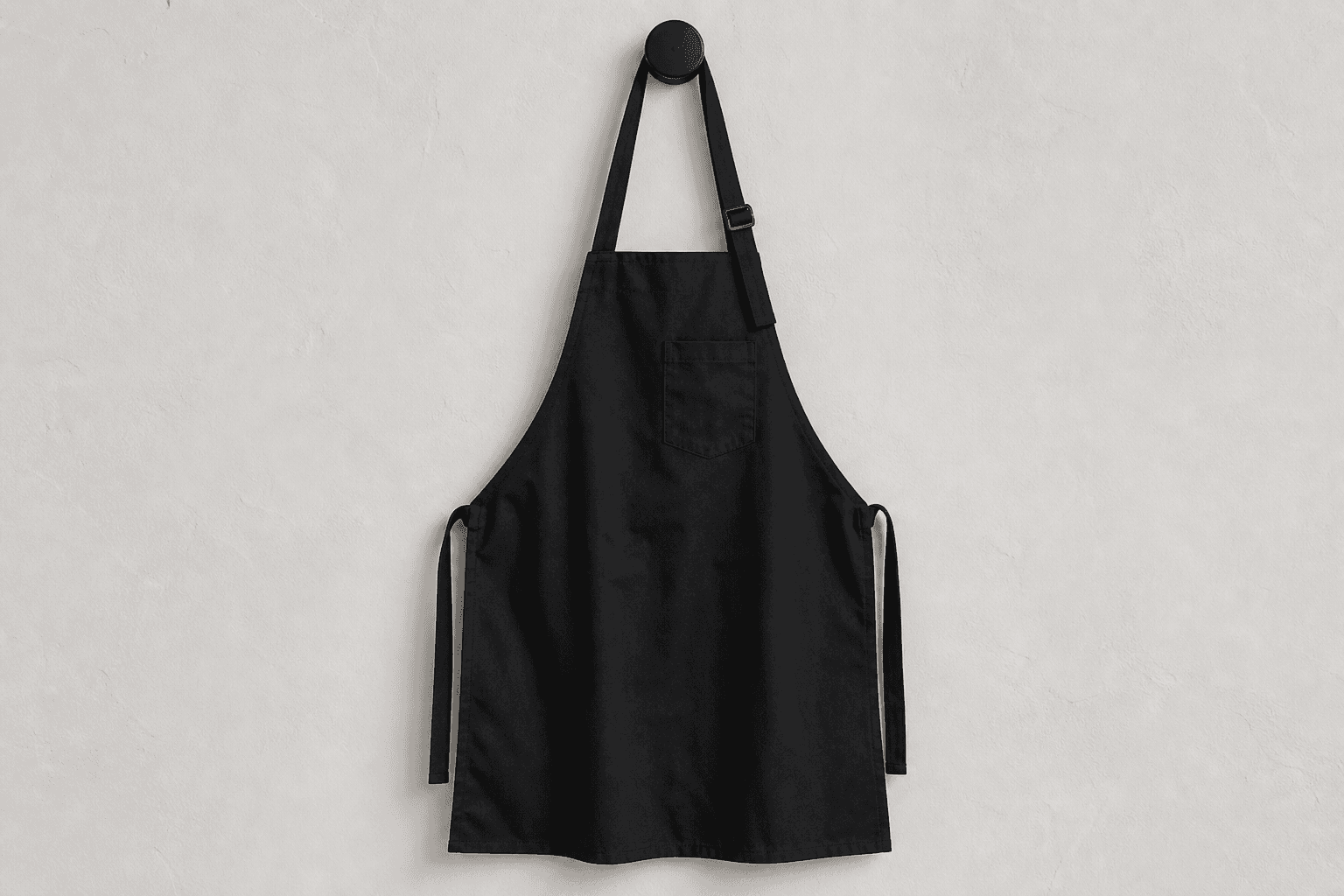
Salon and spa aprons: stain-shedding fabrics and fit
A salon apron must balance stain shedding, bleach tolerance, comfort, and brand presentation across repeated cutting, coloring, washing, and spa service use.
Home kitchen aprons for retail buyers: margin and merchandising
For home kitchen apron retail programs, margin depends on fabric choice, packing method, size grading, and decoration control before the purchase order is placed.
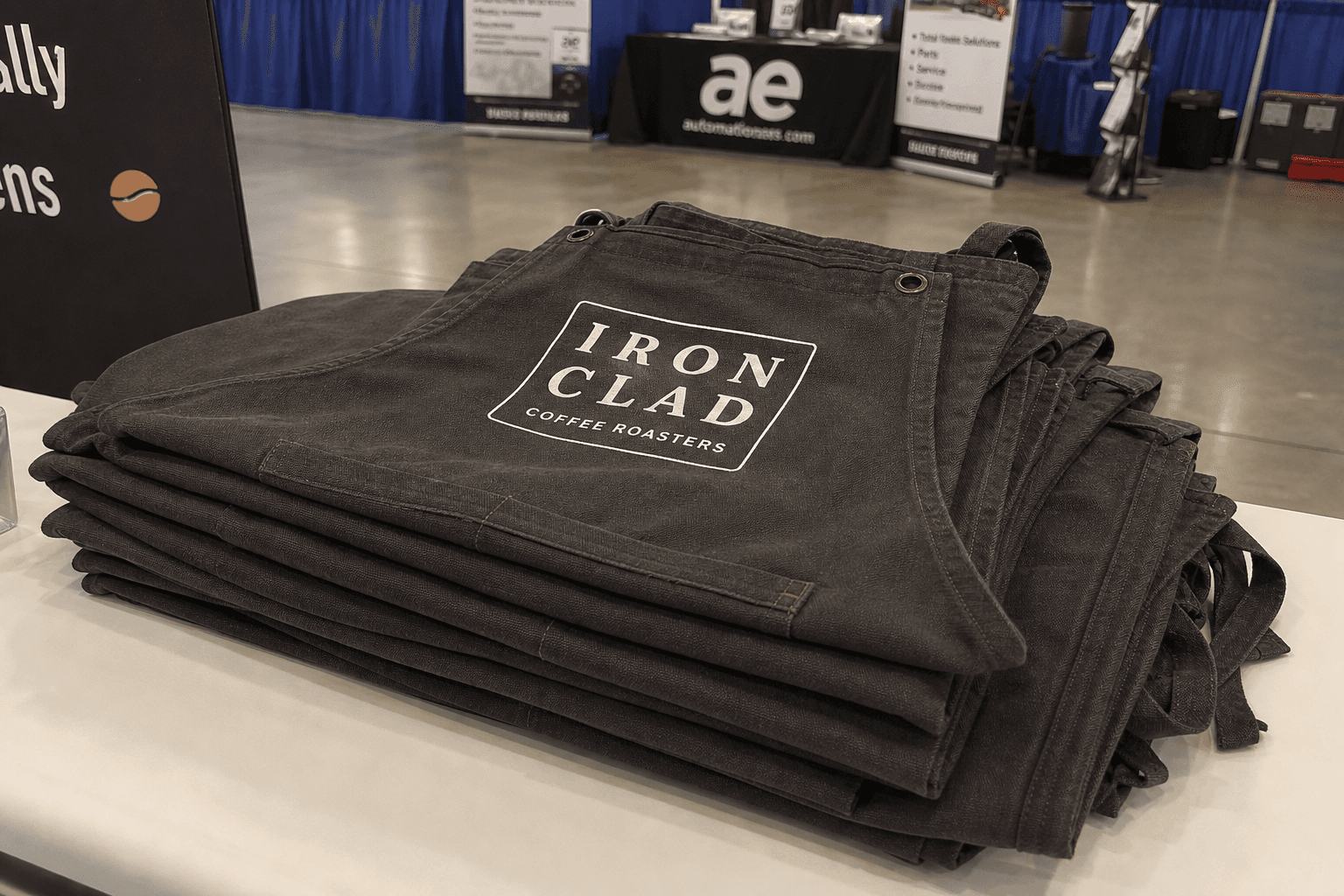
Promotional aprons for events: fast turnaround branding
A promotional apron can be sourced quickly when fabric, logo method, packing and approval steps are fixed early for the event deadline.
Sourcing BBQ and grilling aprons: heat, heft and pockets
A practical bbq apron sourcing guide covering fabric weight, heat exposure, pocket engineering, trims, MOQ, pricing, and inspection points for bulk custom programs.
OEKO-TEX certified aprons: what buyers need to know
An oeko-tex apron is not automatically premium, but it gives buyers a controlled chemical safety baseline for bulk custom apron programs.
BSCI audits and apron factories: what the report covers
A bsci apron factory report shows how labor, safety, payroll, subcontracting and management systems are controlled before bulk apron production is placed.
Apron shrinkage and pre-wash: controlling fit after laundering
Apron shrinkage must be specified, measured and priced before bulk production, especially when cotton aprons are sold by finished fit after laundering.
Apron care labeling for commercial laundry
A practical apron care label guide for bulk buyers specifying fabrics, wash temperatures, symbols, and commercial laundry limits before production.
A practical guide to sustainable apron sourcing
A practical sustainable apron sourcing guide for buyers comparing fabrics, certifications, dyeing choices, MOQs, costs, and supplier controls for bulk apron programs.
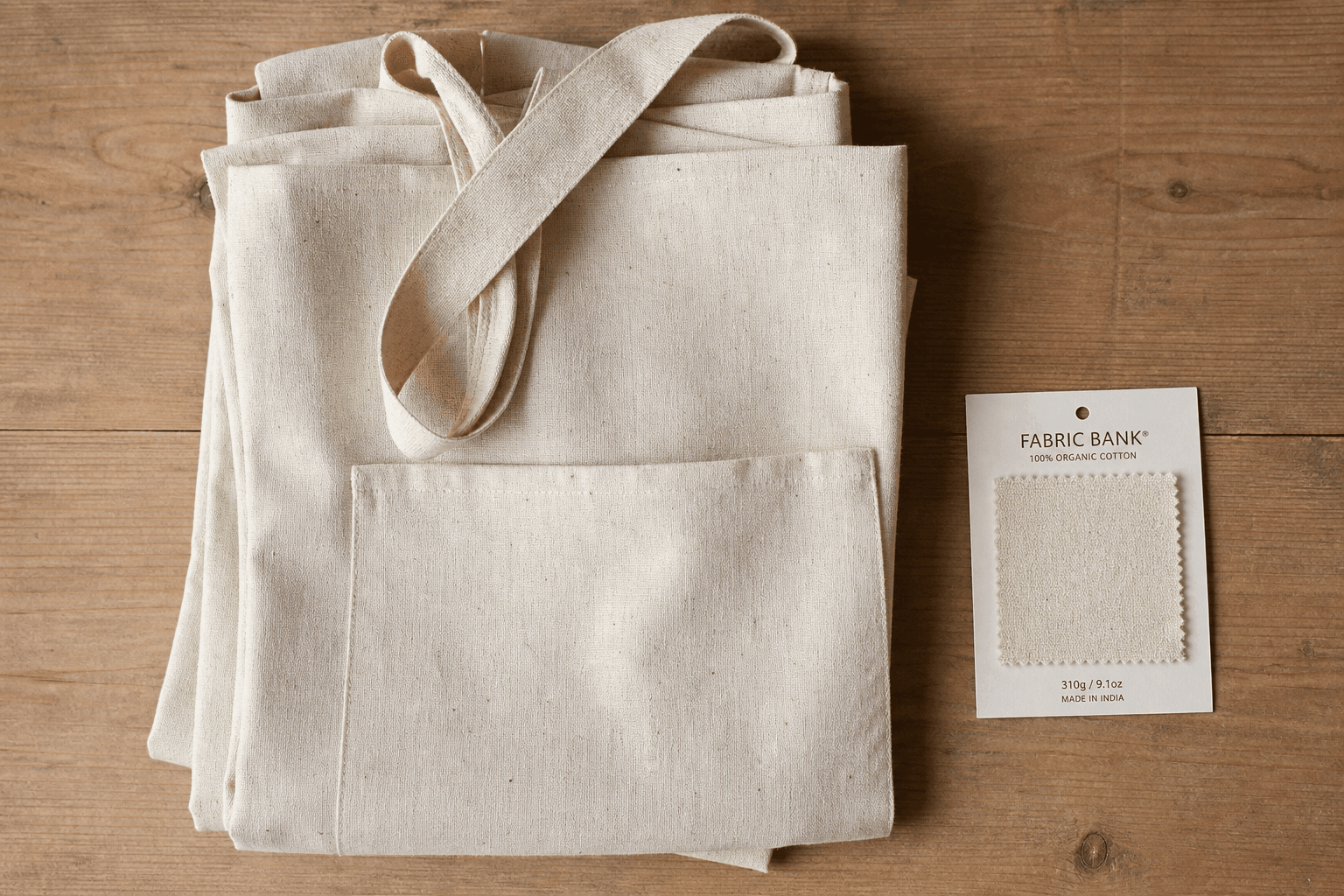
Organic cotton aprons: GOTS certification, sourcing and cost
An organic cotton apron can support premium positioning, but buyers need to verify certification scope, fabric weight, dyeing route, MOQ and cost before bulk ordering.
Hemp and hemp-blend aprons: durability and sustainability
A hemp apron can offer strong abrasion resistance and lower-impact fiber content, but buyers should specify blend ratio, GSM, dye process and shrinkage controls early.
Flame-resistant welding aprons: leather, FR cotton and standards
A practical welding apron sourcing guide comparing leather, FR cotton and common safety standards for bulk OEM buyers.
Apron fabric weight chart: matching GSM and oz to use case
This apron fabric weight chart helps buyers match GSM and oz weight to kitchen, café, workshop, denim, and promotional apron use cases.
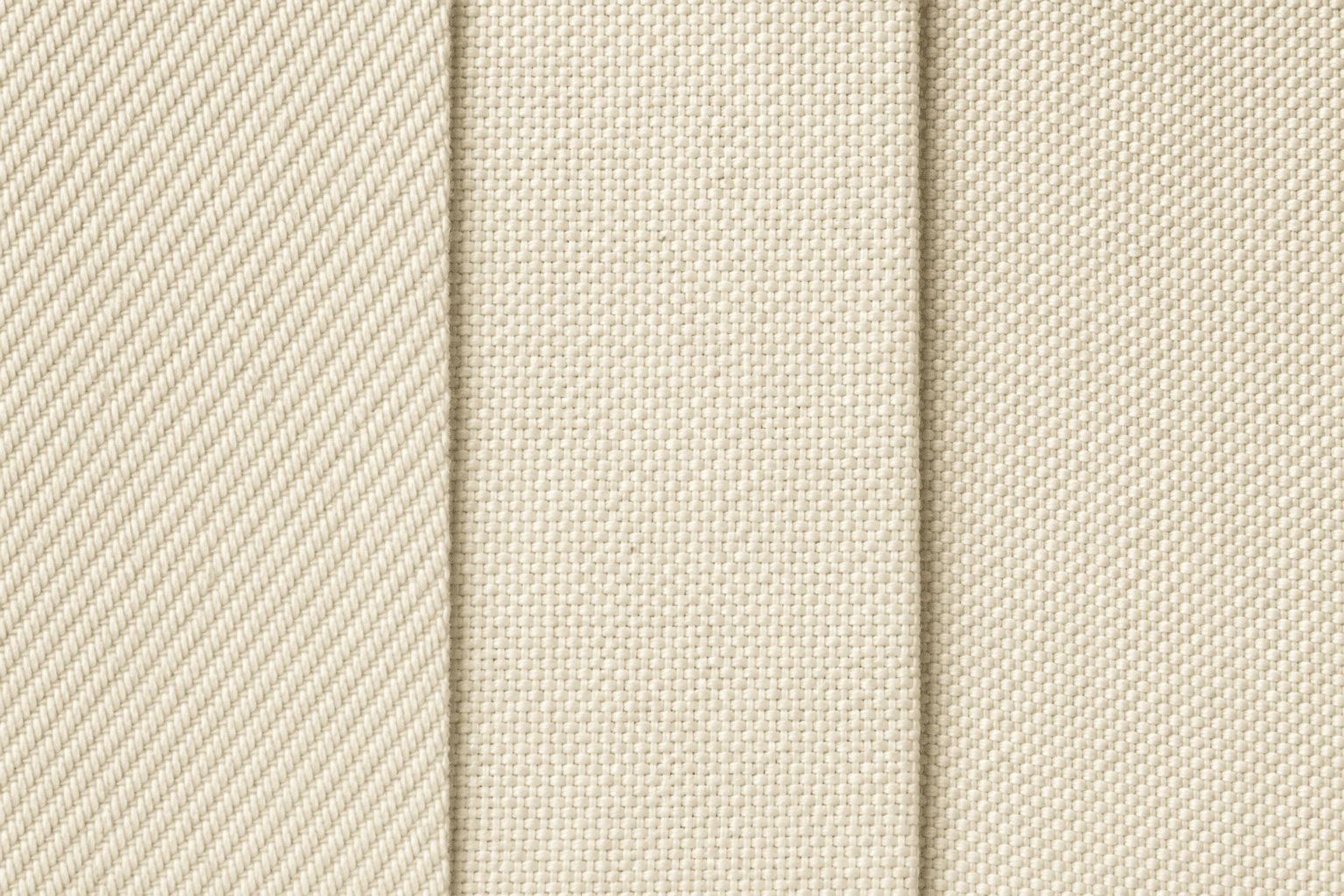
Twill vs canvas vs duck: choosing an apron weave
A practical twill vs canvas apron comparison for bulk buyers choosing between cotton twill, plain canvas and duck canvas for custom apron programs.
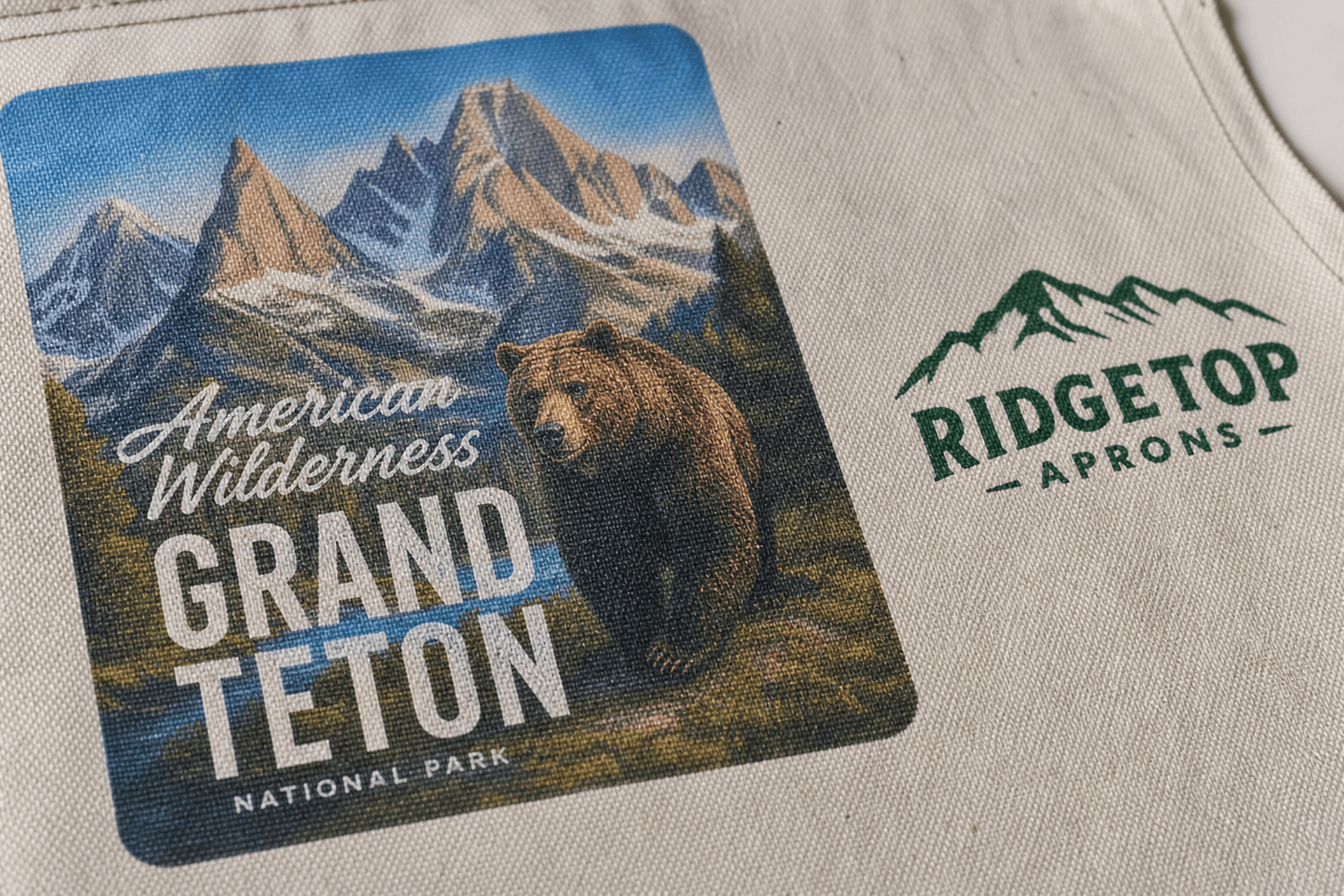
DTF vs DTG vs screen print for apron logos
dtf apron printing gives buyers a practical middle path for full-color logos, but fabric, order size, wash target, and artwork detail still decide the best method.
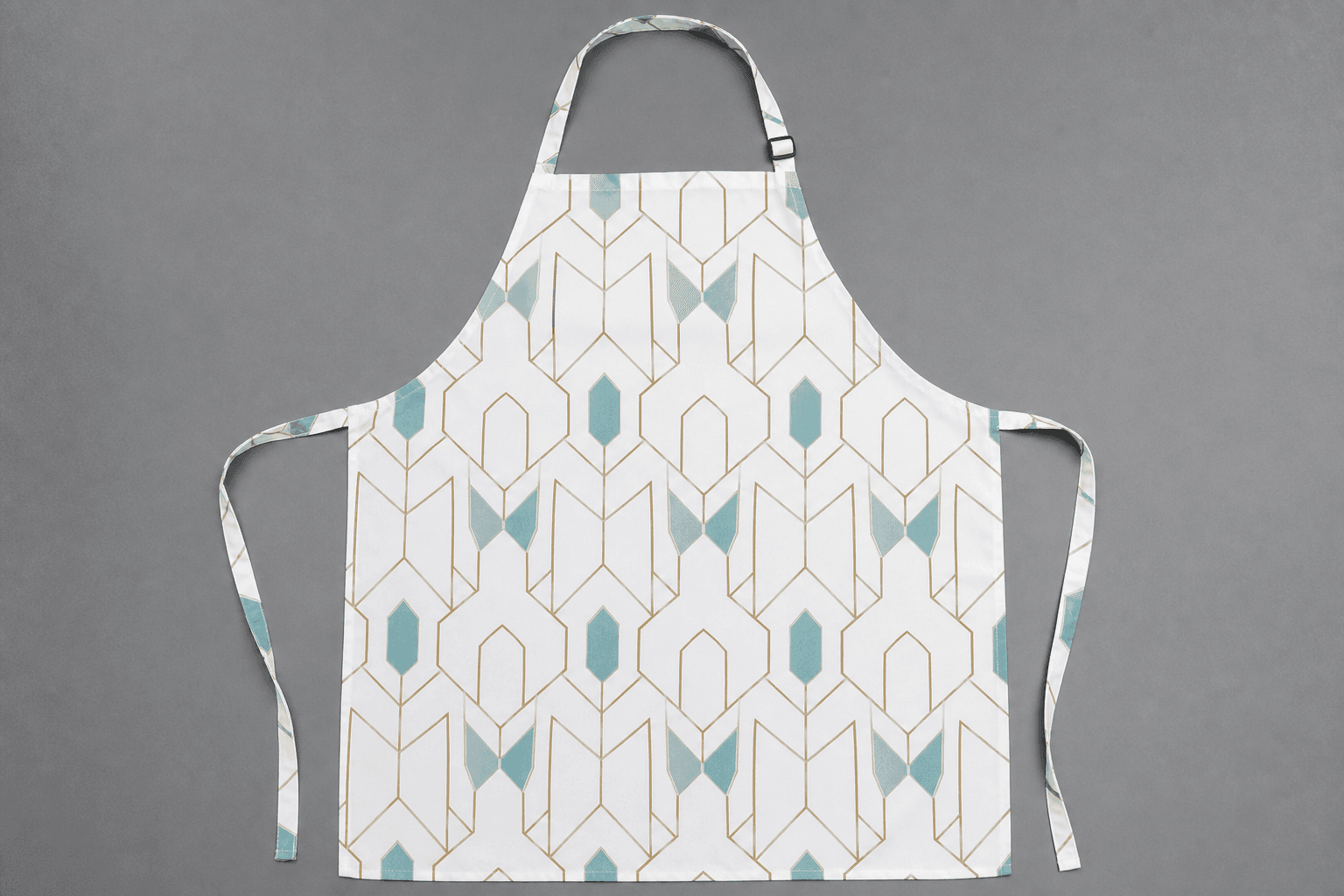
Sublimation printing on aprons: when it works and when it doesn't
A sublimation apron works best on white polyester fabrics, but buyers must control fabric weight, pattern layout, finishing method and color expectations.
Apron sizing and grading: building a size chart buyers trust
A reliable apron size chart connects wearer fit, production grading, fabric behavior, and QC tolerances before bulk cutting begins.
Bib vs waist vs crossback aprons: a style buyer's guide
A practical guide to apron styles for bulk buyers comparing bib, waist, bistro, and crossback designs by coverage, fabric, cost, MOQ, and use case.
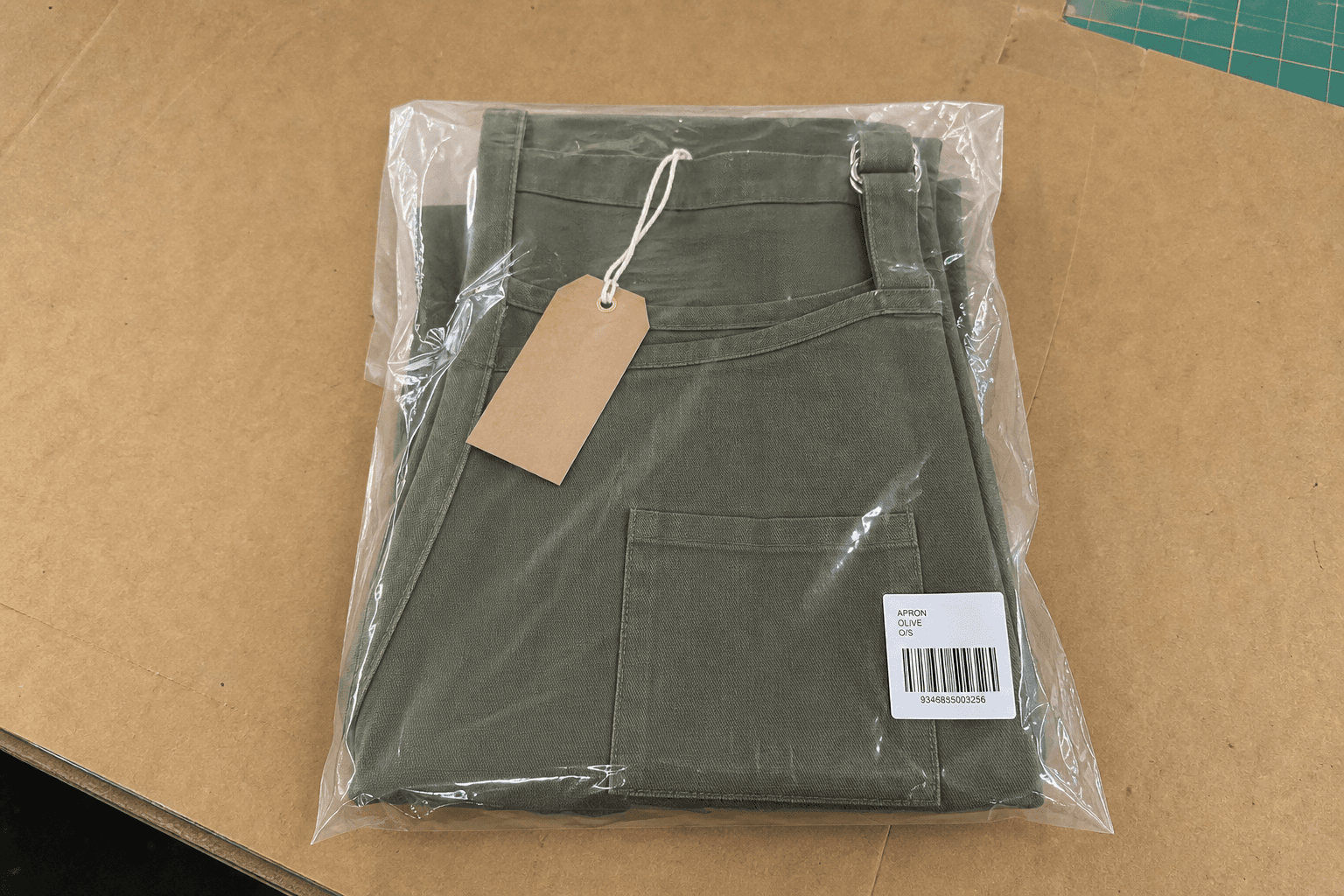
Custom apron packaging: hangtags, polybags and retail-ready options
Apron packaging affects landed cost, retail presentation, inspection speed and carton efficiency, so it should be specified before sampling rather than after production.
How to vet a custom apron supplier in China
A practical checklist for qualifying an apron supplier china buyers can trust, covering factory verification, fabric control, sampling discipline, pricing, capacity and shipment risk.
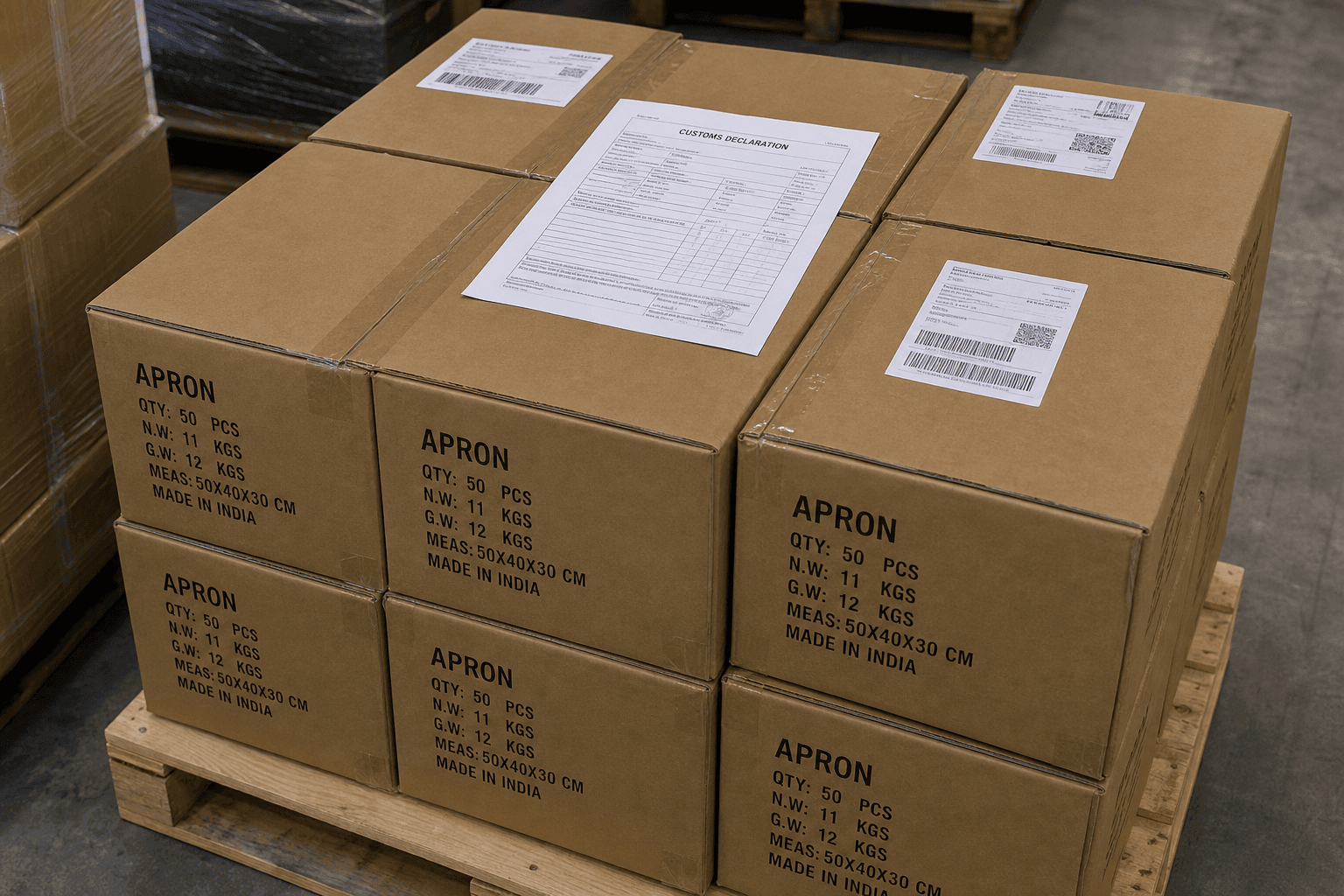
Apron HS Codes & Import Duty: US and EU Guide
Classify textile, coated and disposable aprons for US HTS and EU TARIC filings. Check fiber, coating, end use and origin before calculating import duty.
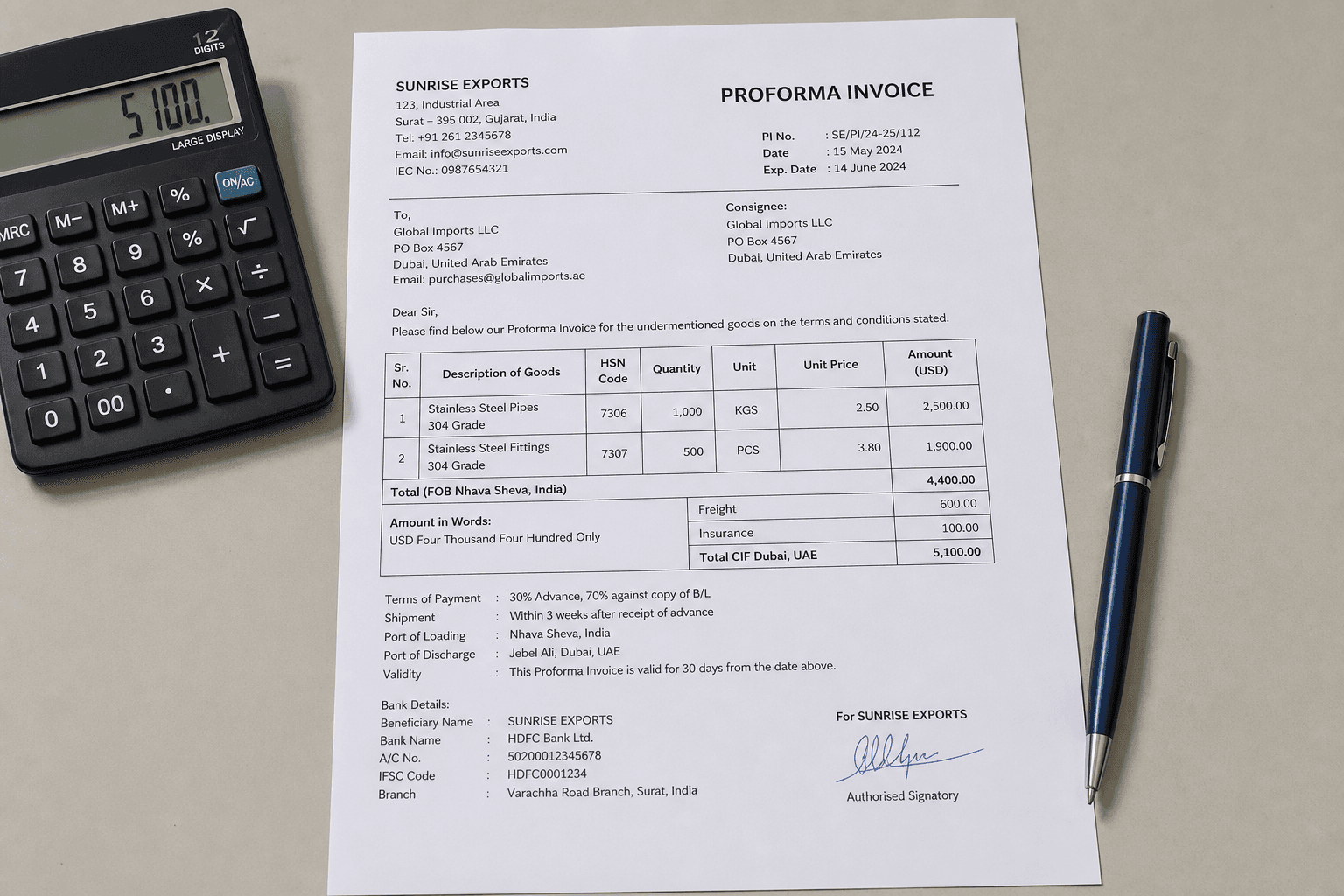
Apron order payment terms: TT, L/C and deposit structures
A practical guide to apron payment terms, covering TT, L/C, deposits, balances, risk points and cost impact for bulk custom apron orders from China.
Sea vs air freight for apron orders: cost and timing
Apron freight choices change landed cost, delivery risk, and production planning. This guide compares sea and air freight for bulk custom apron orders from China.
Country-of-origin and label compliance for imported aprons
An apron country of origin label must match the real manufacturing process, import documents, and care label content before bulk shipment leaves China.
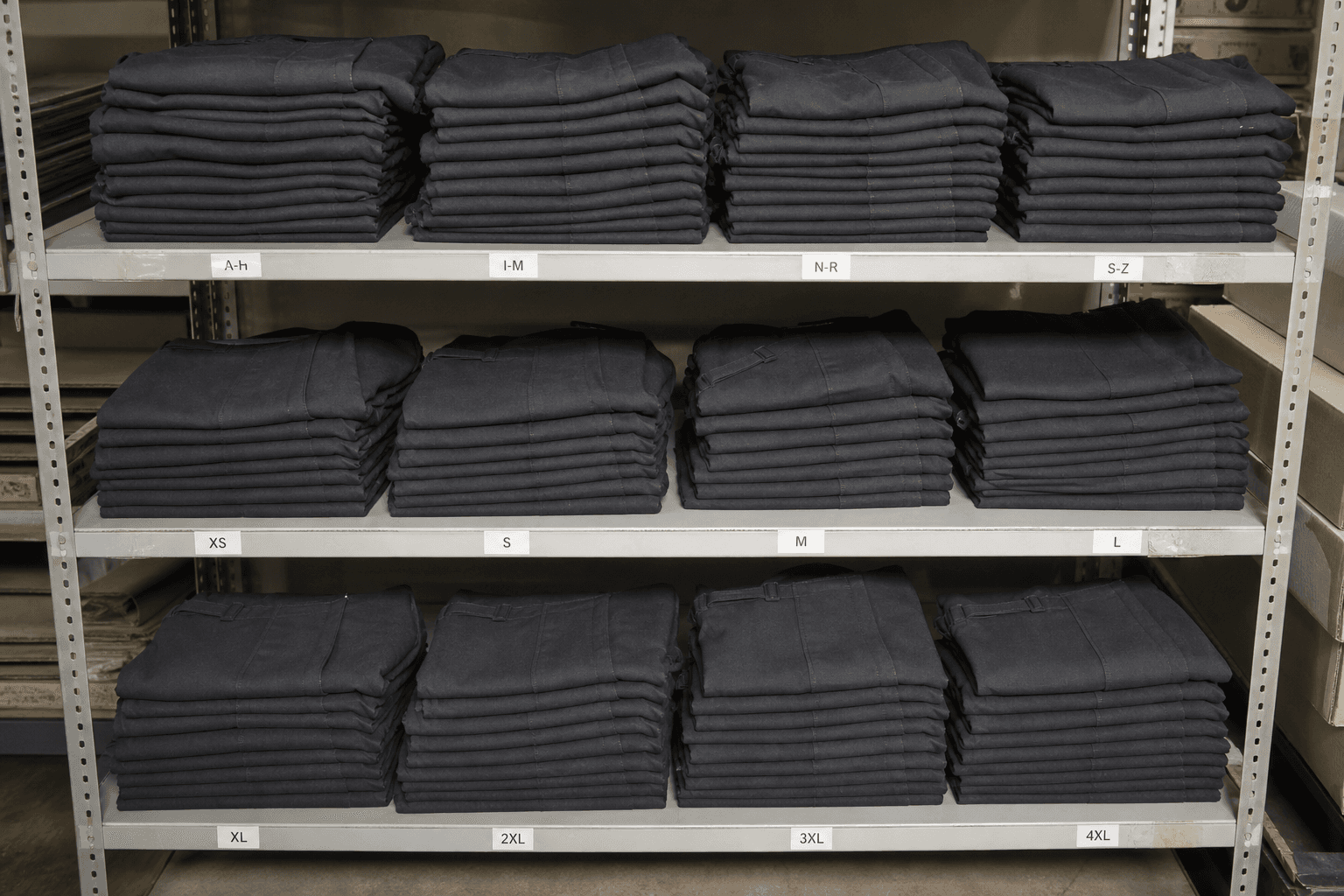
Reordering aprons: how repeat orders cut cost and lead time
An apron reorder can reduce sampling, setup, material waste and inspection time when the original specifications are controlled correctly.
Apron sample costs explained: what you pay before bulk
Apron sample cost depends on fabric, trims, logo process and revision count, usually ranging from US$35 to US$180 before bulk production.
Sourcing butcher and meat-processing aprons
A practical sourcing guide for butcher apron specifications, material choices, waterproofing, sizing, compliance, MOQ, costing and production timelines for bulk China orders.
Florist aprons: fabric, pockets and waxed-canvas options
A florist apron needs the right fabric weight, pocket layout and finishing choices to survive wet stems, tools and daily shop washing.
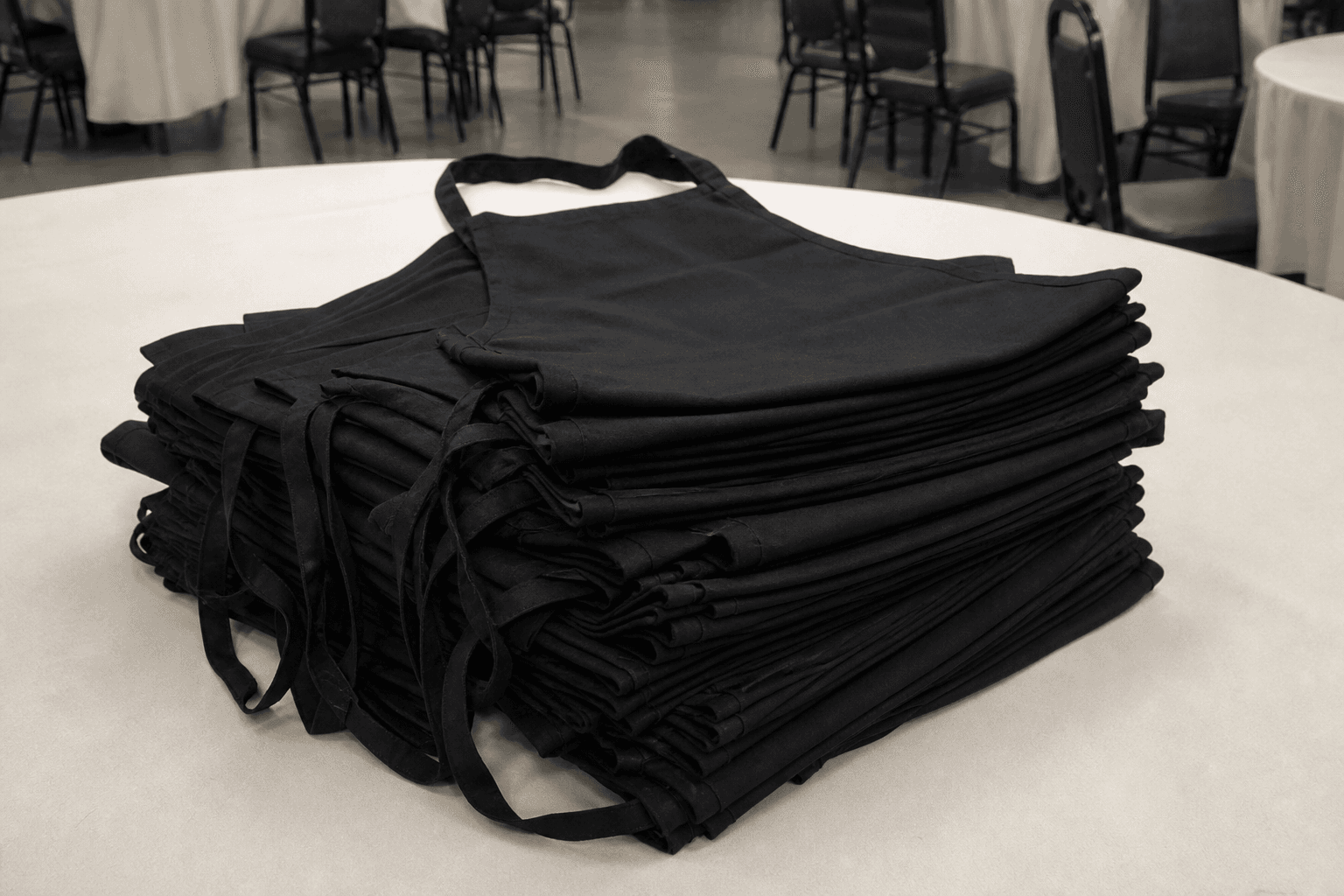
Catering aprons in bulk: durability and fast branding
A catering apron must balance wash durability, fast logo application, and predictable bulk delivery for event, hotel, and foodservice uniform programs.
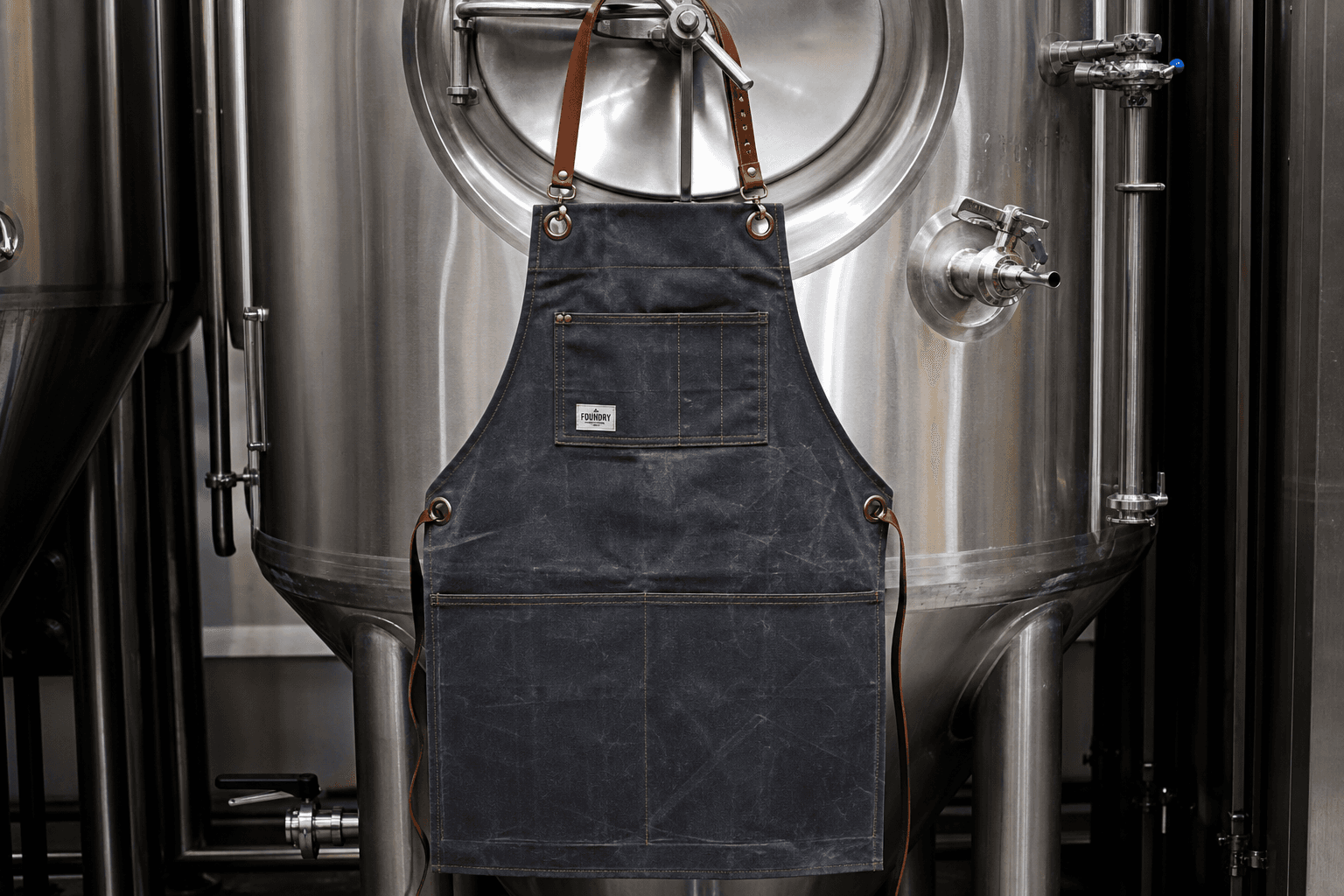
Brewery and distillery aprons: heavy-duty and water-resistant
A brewery apron must balance water resistance, weight, abrasion life, and wash behavior for wet cellar, bar, and distillery production teams.
Nail salon and esthetician aprons: stain-shedding and fit
A nail salon apron must shed polish, dust, oils and tint while staying light enough for seated technicians through long service shifts.
How to wash commercial aprons: care that extends lifespan
A practical apron care guide for buyers who need to wash commercial aprons without shrinking fabric, fading prints, or shortening garment life.
REACH and Prop 65 compliance for imported aprons
A practical apron reach prop 65 guide for importers covering fabric chemistry, trims, testing reports, supplier controls, cost, MOQ and lead-time impact.
Cordura and ripstop aprons for heavy industrial use
A cordura apron is suitable when abrasion, snagging and repeated laundering matter more than soft drape or low unit cost.
Poly-cotton vs pure cotton aprons: cost, comfort and care
A practical poly cotton vs cotton apron comparison for bulk buyers, covering fabric cost, comfort, shrinkage, wrinkling, washing and sourcing decisions.
Apron color fastness: stopping fade, crocking and bleeding
Apron color fastness depends on fabric, dye route, washing process and QC testing, especially when dark custom aprons must avoid fade, crocking and bleeding.
Water-repellent and DWR finishes for aprons
A water repellent apron depends on fabric, finish chemistry, coating choice and wash target, not just a single DWR label.
Apron embroidery stitch count and pricing explained
Apron embroidery stitch count affects logo cost, production speed and quality control. This guide explains how factories calculate embroidery pricing for bulk apron orders.
Garment dye vs piece dye for custom aprons
A garment dyed apron gives soft, washed color after sewing, while piece dye apron production gives tighter shade control before cutting.
Apron logo placement: chest, pocket, hem and strap
Apron logo placement affects visibility, production method, cost and wearer comfort; the best position depends on apron style, fabric weight, pocket layout and use case.
Hi-vis and reflective-trim aprons for safety branding
A hi vis apron can carry safety function and brand identity when fabric color, reflective trim, wash durability and compliance targets are specified clearly.
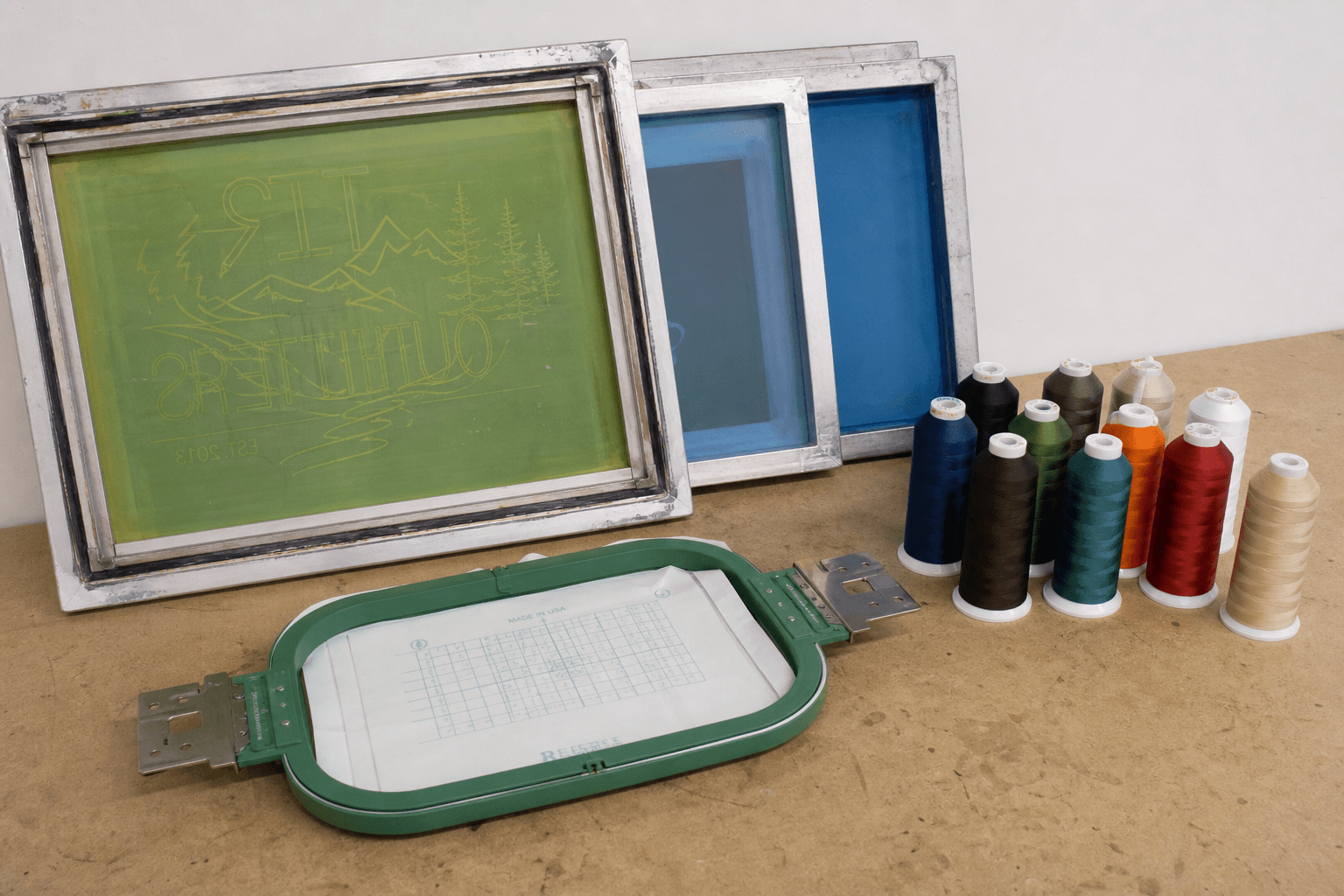
Apron setup and tooling costs: one-time vs per-unit
Apron setup cost is a mix of one-time preparation fees and per-unit charges that depend on decoration method, pattern work, fabric choice and order quantity.

Building an apron production calendar for seasonal launches
A practical apron production calendar helps buyers lock fabric, sampling, bulk sewing, inspection, and shipment dates before seasonal capacity becomes tight.
Communicating with your apron factory: avoiding costly misreads
Apron factory communication improves when buyers define fabric, sizing, construction, packing and approval rules before sampling, instead of correcting assumptions after production starts.
Common apron defects and how to write tolerances
Apron defects are manageable when buyers define measurable tolerances for fabric, stitching, sizing, trims, packing and inspection before bulk production.
Apron MOQ for startups: launching with limited capital
A practical guide to apron moq startup decisions, covering fabric, decoration, costing, sampling, and launch quantities for brands with limited first-order capital.
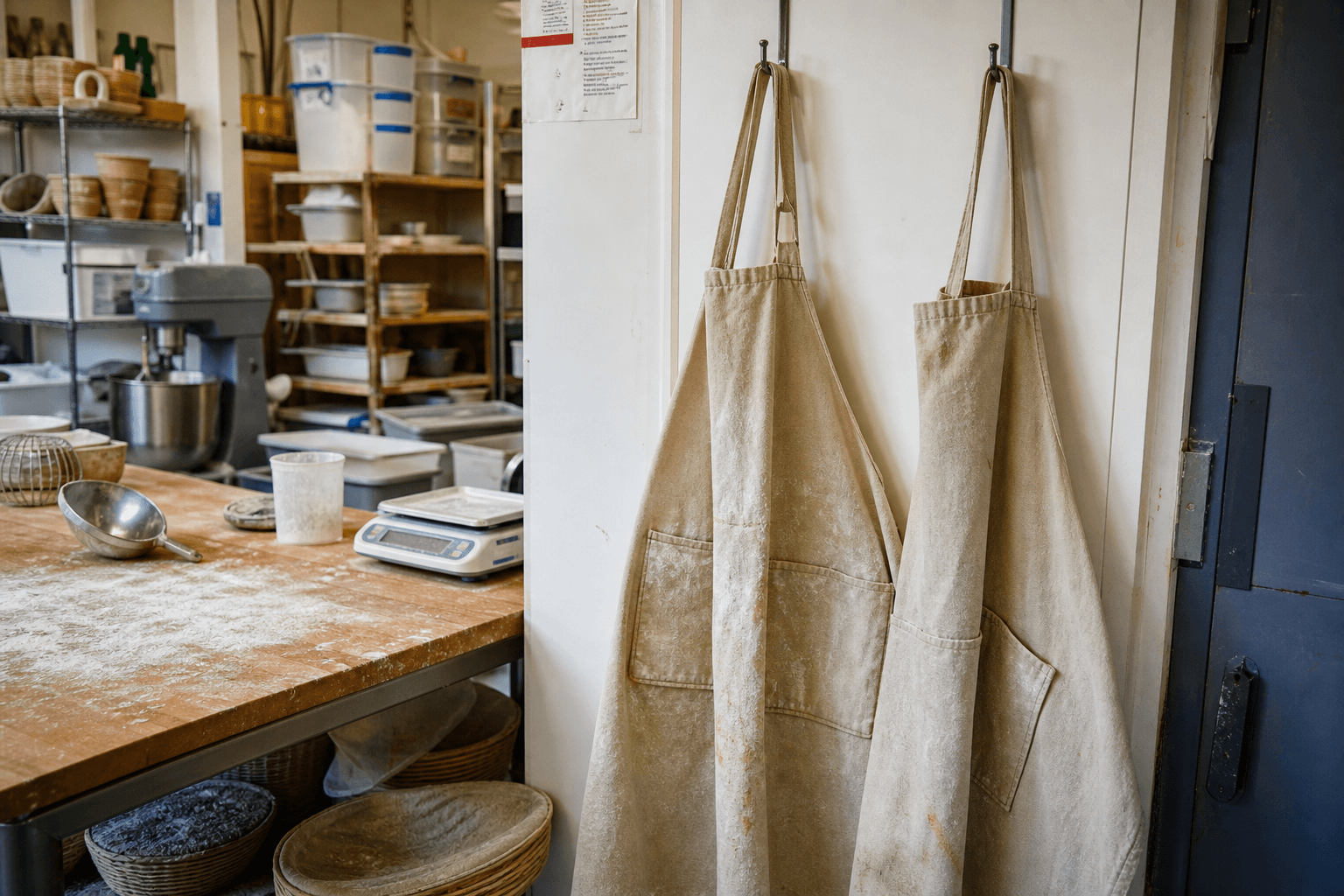
Bakery and pastry aprons: flour-resistant fabrics and fit
A bakery apron needs controlled fabric weight, smooth flour release, and stable fit so teams can work through long mixing, proofing, and finishing shifts.
Gardening and nursery aprons: pockets and durable canvas
A practical sourcing guide to the gardening apron, with canvas weights, pocket construction, reinforcement choices, MOQ ranges and production trade-offs for bulk buyers.
Woodworking aprons: leather, canvas and chip protection
A woodworking apron must balance chip protection, tool load, fabric weight and bulk pricing, especially when sourcing leather, canvas or hybrid shop designs.
Pottery Aprons: Split-Leg, Canvas & Waterproof
Choose a split-leg pottery apron in 320-420 GSM canvas for wheel work; add wax or PU for clay and glaze splash resistance. Compare pockets, straps, MOQ and QC.
Spa and massage therapist aprons: comfort and easy care
A practical sourcing guide to spa apron fabrics, fit, trims, and care standards for bulk wellness uniforms used in treatment rooms and spa reception areas.
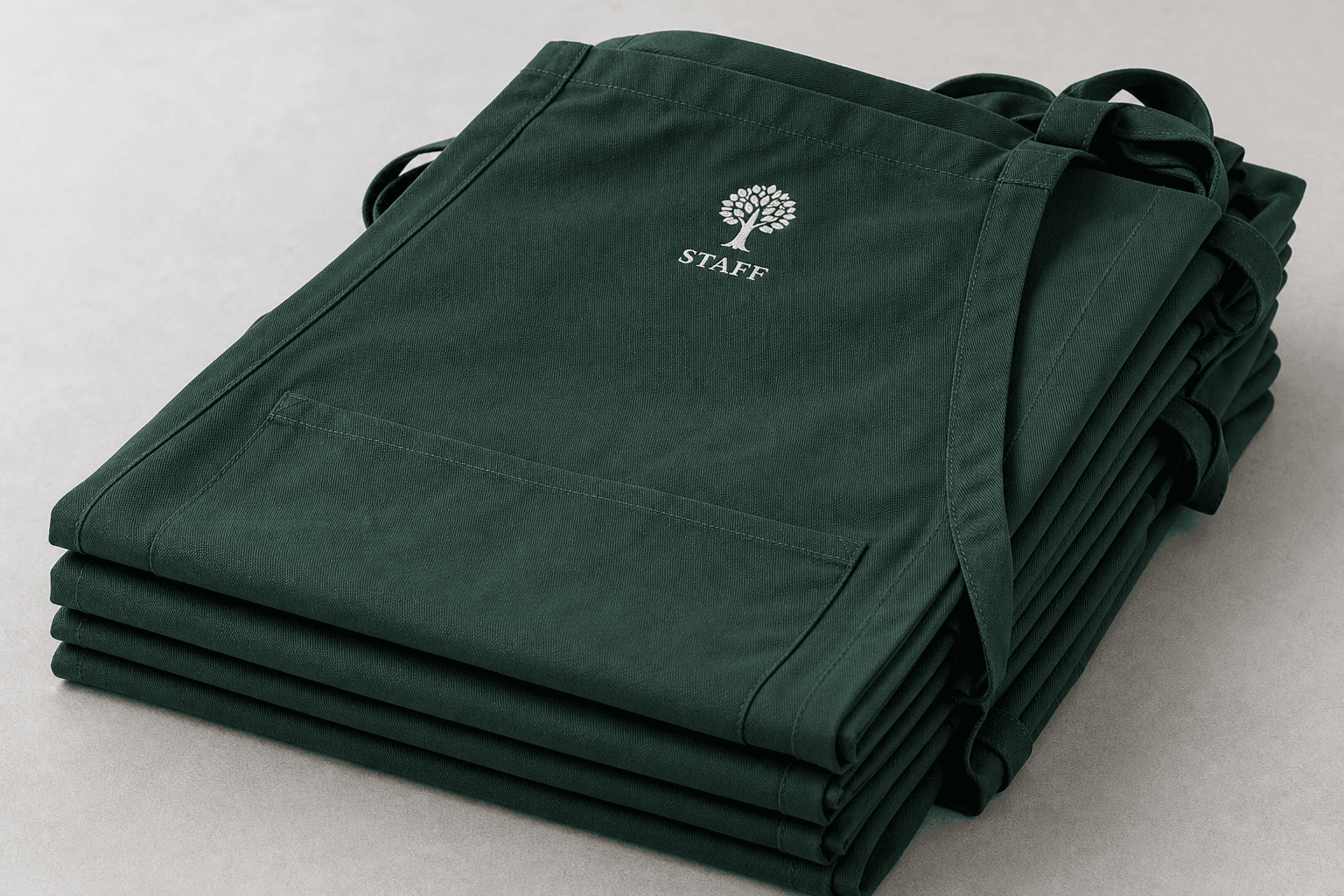
Retail and grocery staff aprons: uniform branding at scale
A retail staff apron program works best when fabric, pocket layout, branding method, and replenishment rules are fixed before bulk uniform production starts.
GOTS vs GRS: which apron certification fits your claim
A practical gots vs grs apron guide for buyers deciding whether an organic fiber claim or recycled material claim fits their apron program.
Lowering the carbon footprint of your apron program
Reducing apron carbon footprint starts with fabric choice, yield control, packaging, and shipment planning, not a single eco label.
Fire-safety standards for hospitality and industrial aprons
A fire safety apron must match the buyer’s heat exposure, washing method, and certificate target, not only a fabric label or supplier claim.
Apron durability testing: abrasion, seam strength and wash cycles
Apron durability testing connects abrasion, seam strength and wash cycle results to real sourcing decisions, fabric selection and bulk order risk control.
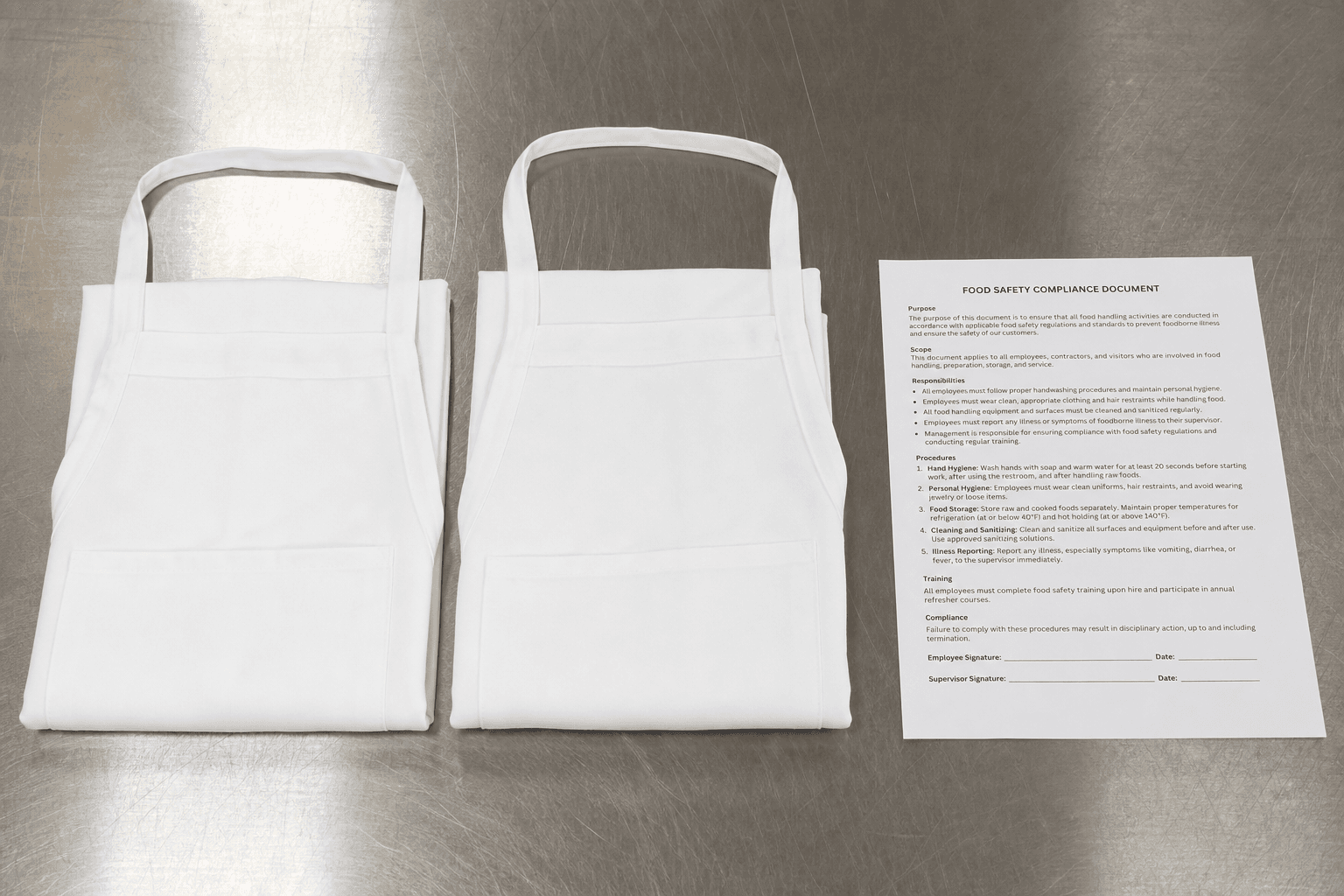
Food-contact-safe aprons: compliance for kitchens and processing
A food safe apron depends on correct material selection, migration controls, cleanable construction, and batch documentation that matches the buyer’s end-use risk.
Bamboo and modal-blend aprons: softness, drape and durability
Bamboo apron fabric delivers a softer hand and cleaner drape, but blend ratio, GSM and finishing control whether the apron survives bulk wash cycles and retail use.
Neoprene and coated aprons for wet and chemical work
Coated apron fabric is the practical choice for wet and splash-heavy work, while neoprene apron builds better comfort and flexibility for longer shifts.
Chambray apron fabric guide: lightweight denim looks without the weight
A chambray apron gives the denim look buyers want with less weight, softer handfeel, and tighter cost control for bulk programs.
Stocked vs custom-woven apron fabric: MOQ, lead time and cost
Choosing between stocked apron fabric and custom woven apron fabric changes MOQ, lead time, and unit cost more than most buyers expect.
Antimicrobial apron fabrics: finishes, claims and where they help
Antimicrobial apron fabric can reduce odor and support hygiene positioning, but buyers need to verify finish type, wash durability, claim wording and cost impact.
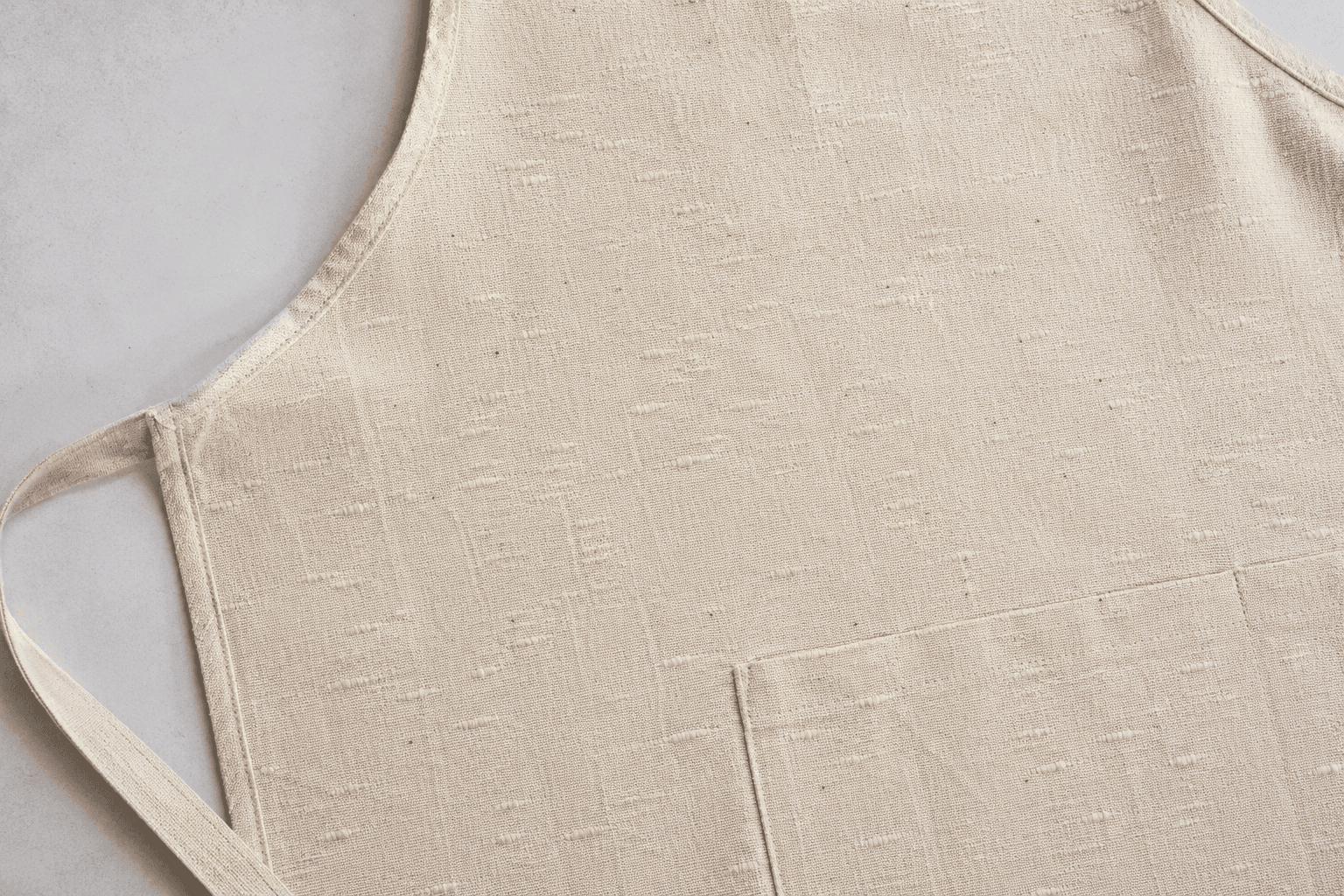
Slub and textured cotton aprons: character without sacrificing durability
A slub cotton apron can give hospitality and lifestyle programs visible texture, provided GSM, yarn quality, shrinkage control and reinforcement details are specified correctly.
Apron lining and interlining: when an extra layer is worth it
Apron lining is useful when durability, insulation, stain control or structure matters, but it adds cost, weight and production complexity.
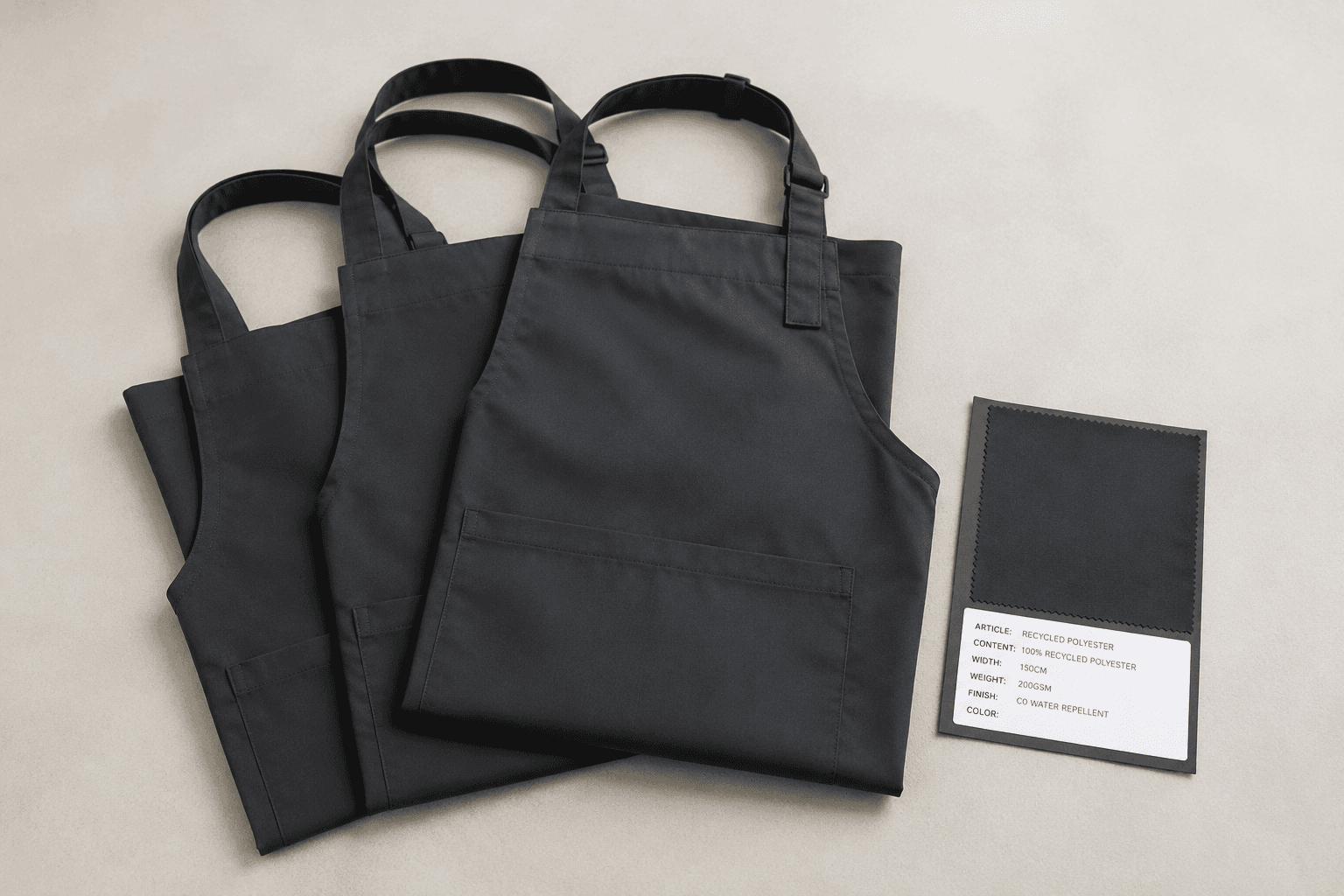
rPET recycled-polyester aprons: performance and the recycled claim
A recycled polyester apron can be a strong eco performance apron if the fabric, dyeing, and claim chain are specified correctly. The recycled label is only useful when the buyer can verify yarn content, certification, and real wash durability.
Appliqué and 3D puff branding on aprons
A practical sourcing guide to applique apron branding, 3D puff print, raised embroidery, cost drivers, fabric limits, MOQ, and production controls.
Custom apron strap lengths: sizing necks and waists for any wearer
Custom apron strap length affects fit range, fabric cost, packing size, and returns risk when aprons are produced for mixed-size workforces.
Adjustable vs fixed apron straps: buckles, sliders and tie-backs
Choosing an adjustable apron strap versus a fixed apron strap changes fit, cost, and returns. The right apron neck adjustment and hardware can save money across bulk programs.
Color blocking and contrast panels in custom aprons
A color block apron can improve brand visibility, but panel placement, fabric weight, shrinkage control, and sewing efficiency determine the real bulk-order cost.
Apron hardware finishes: brass, nickel, antique copper and matte black
Choosing the right apron hardware finish affects appearance, wash durability, corrosion risk, carton cost and final approval standards for bulk apron programs.
Embroidered names and station numbering on staff aprons
An embroidered name apron program needs early control of fabric, thread, placement, name data, and apron station number rules to avoid rework in bulk production.
Apron accessories: towel loops, bottle openers and pen slots
Apron accessories such as towel loops, bottle openers and pen slots add measurable utility when specified correctly in bulk apron orders, but they also affect cost, sewing time and failure rates.
Rubber and PVC patch branding for aprons
A rubber patch apron can give bulk apron programs durable, washable branding when mold cost, placement, stitching method and lead time are planned early.
Apron sourcing agent vs direct factory: cost, control and risk
An apron sourcing agent can simplify early-stage buying, but a direct factory apron order usually gives better cost control, clearer specs, and lower long-run risk.
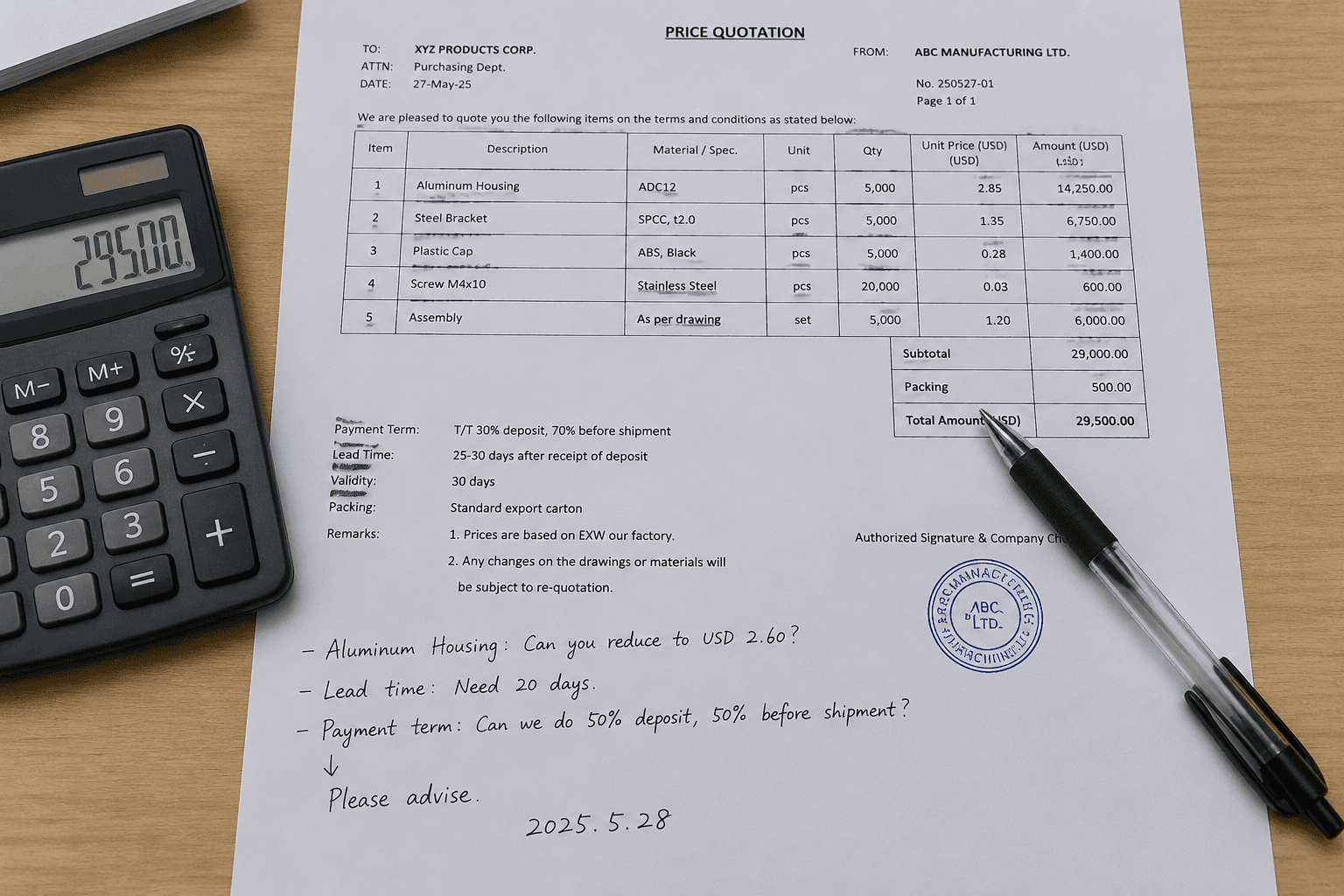
Negotiating apron prices: a buyer's leverage playbook
To negotiate apron price effectively, buyers need leverage from fabric choices, order structure, packaging discipline, and production timing rather than pressure alone.
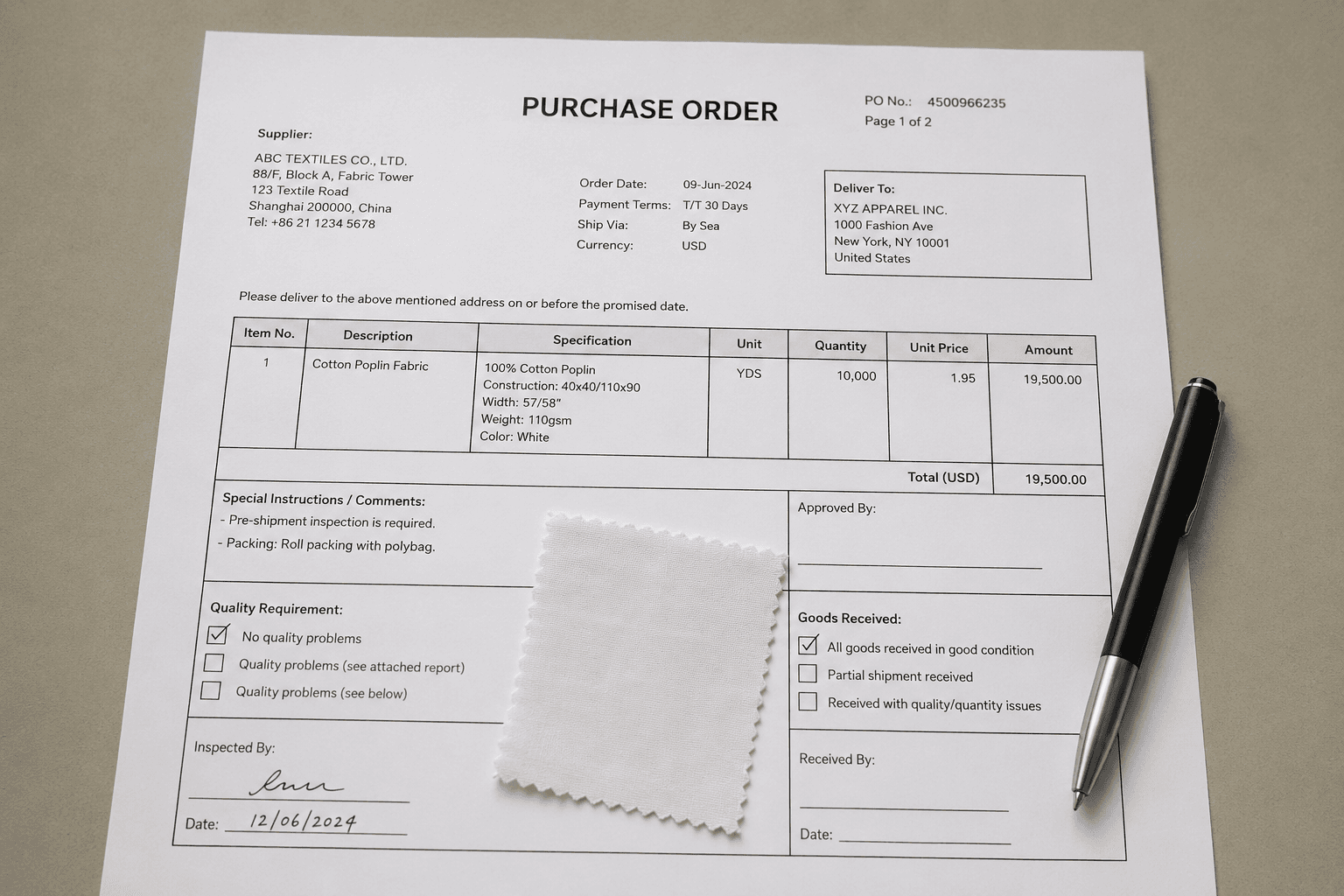
The apron purchase order checklist: terms you must lock before deposit
A practical apron purchase order checklist for locking fabric, sizing, trims, packing, payment, inspection, and shipment terms before deposit.
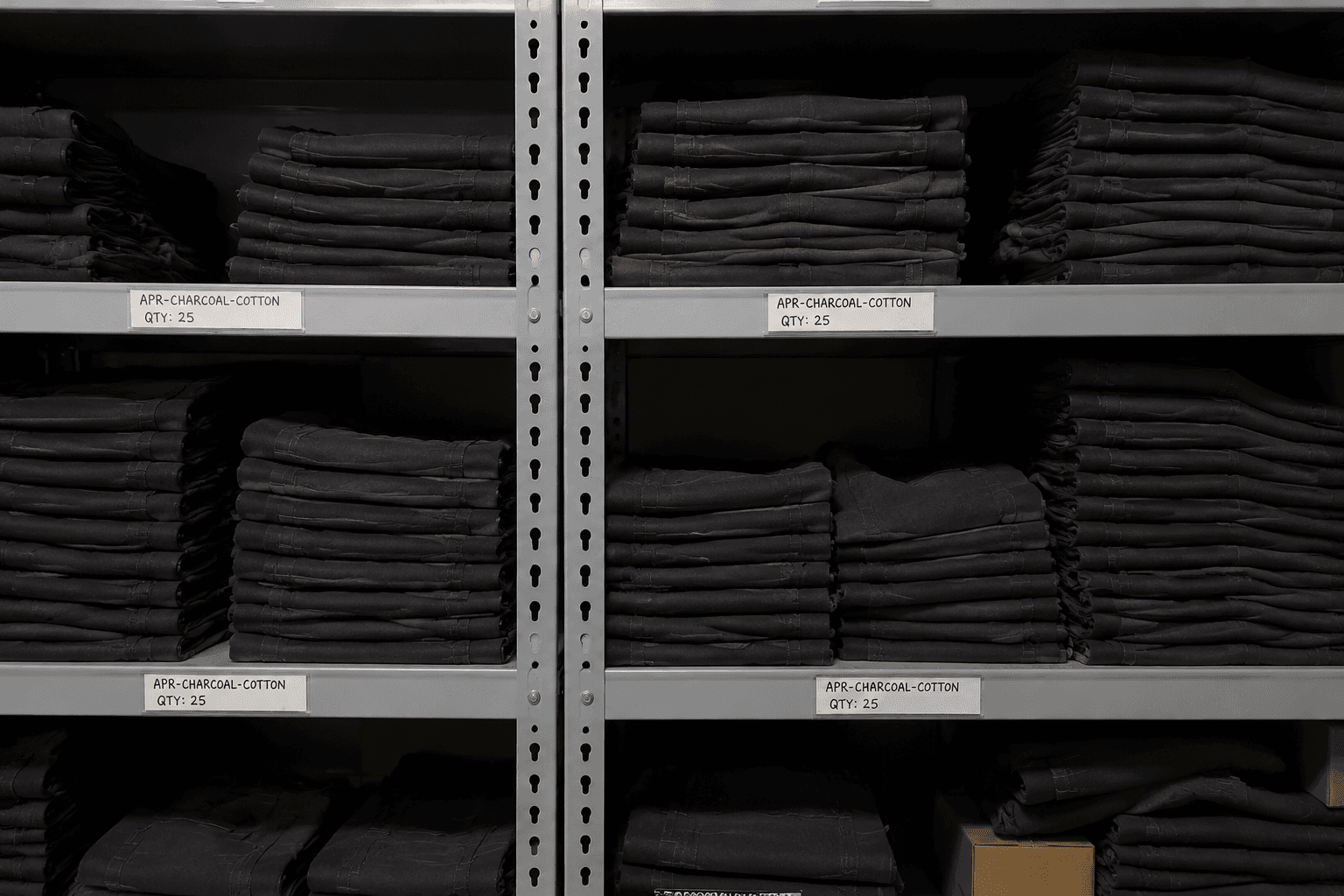
Managing apron inventory and safety stock for uniform programs
Apron inventory management works best when buyers connect usage data, factory lead times, SKU risk, and apron safety stock before shortages reach stores or sites.
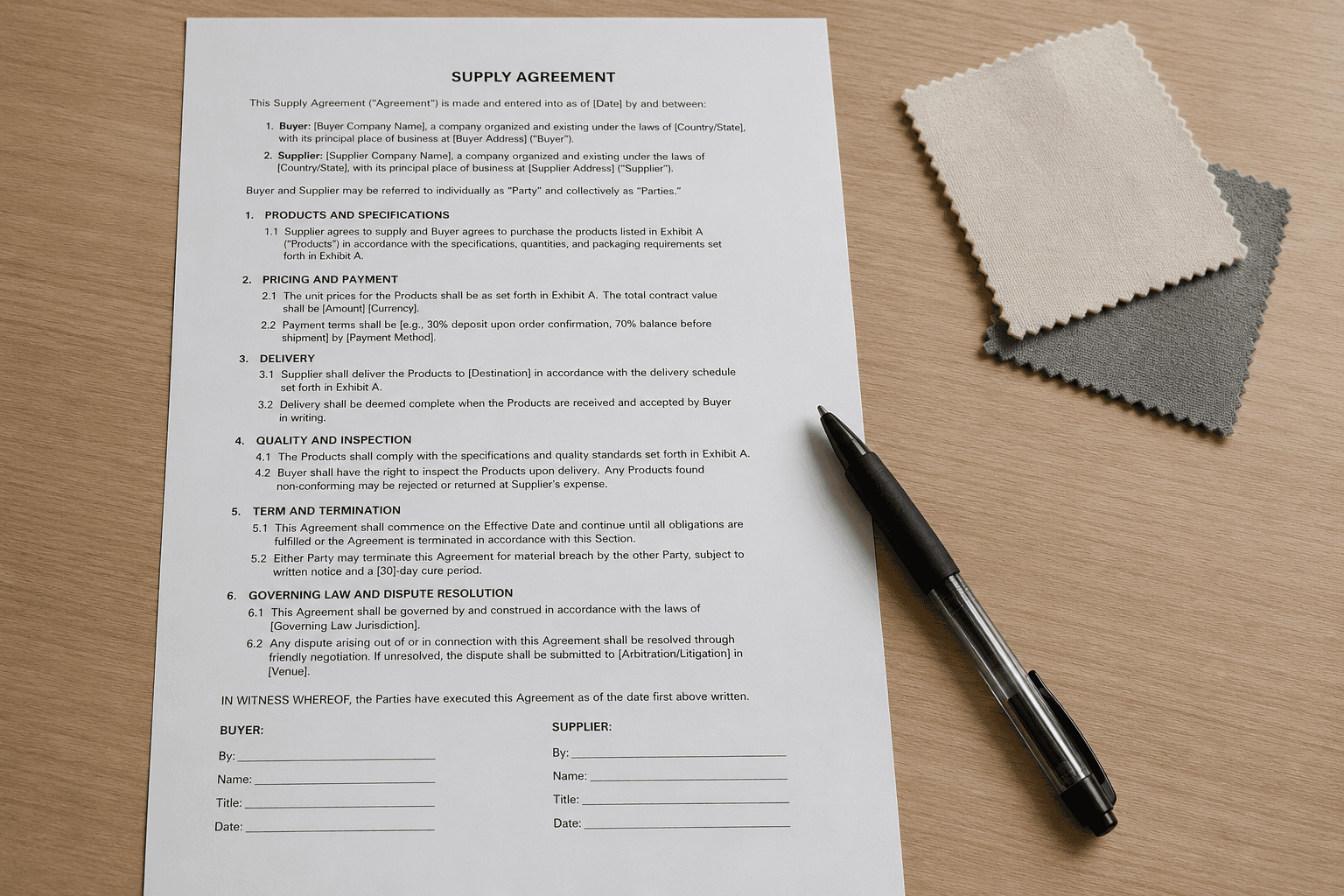
Apron supplier contracts and NDAs: protecting designs and pricing
An apron supplier contract should fix specs, pricing, sampling, and IP ownership before production starts. For bulk apron buyers, the real risk is not the first PO, but weak controls on design protection apron and factory contract terms.
Writing an apron RFQ that gets fast, comparable quotes
A precise apron RFQ helps factories quote faster, compare costs fairly, and avoid production delays caused by missing fabric, trim, packaging, and compliance details.

Dropshipping aprons from a China factory: how the model works
Dropship aprons can work for ecommerce brands when SKU discipline, print method, packing rules and factory fulfillment apron costs are defined before launch.
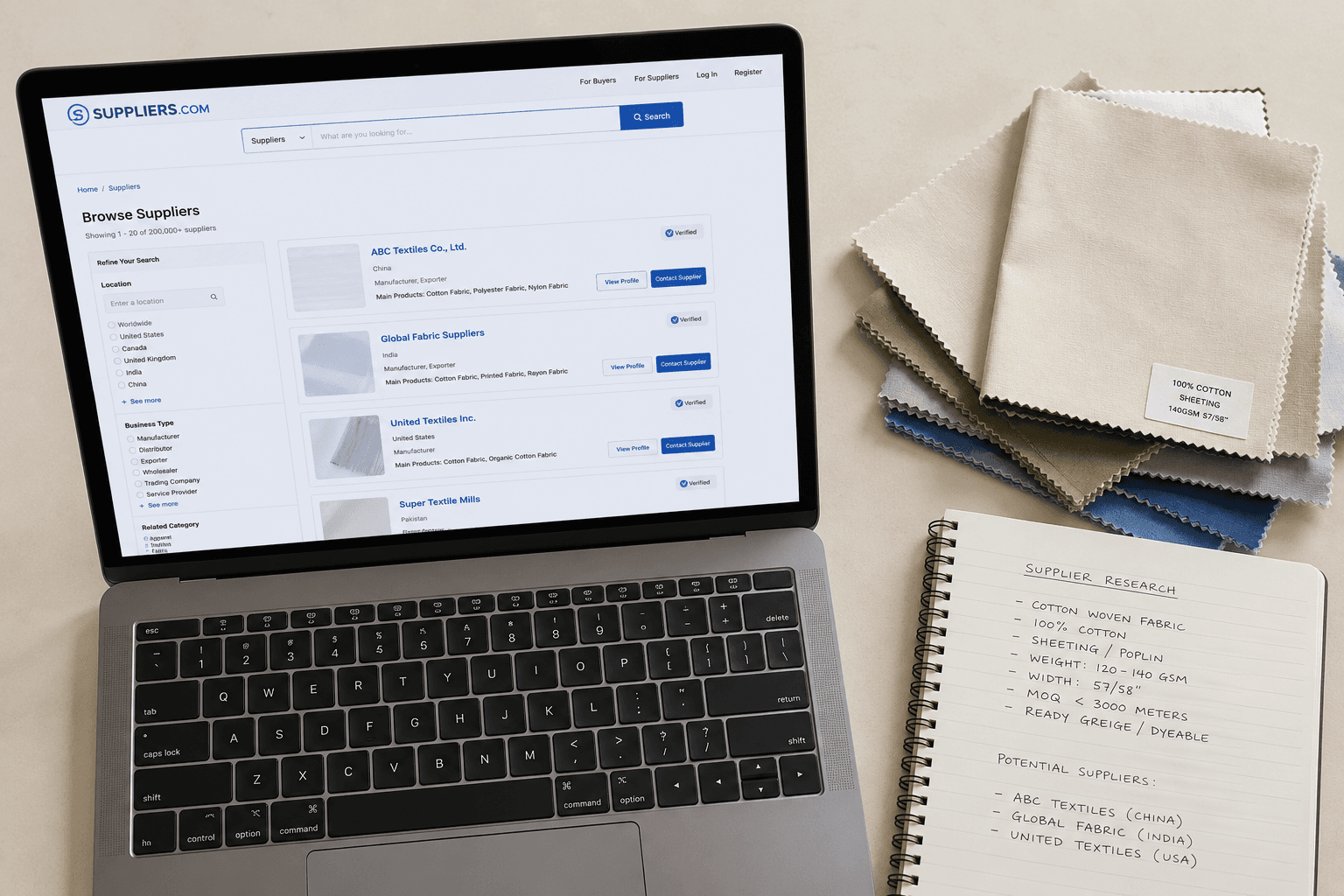
Alibaba listings vs a verified apron factory: how to tell the difference
An alibaba apron supplier can be useful for lead generation, but a verified apron factory is judged by process, capacity, and traceable production records. The difference shows up in pricing, sample control, and delivery reliability.
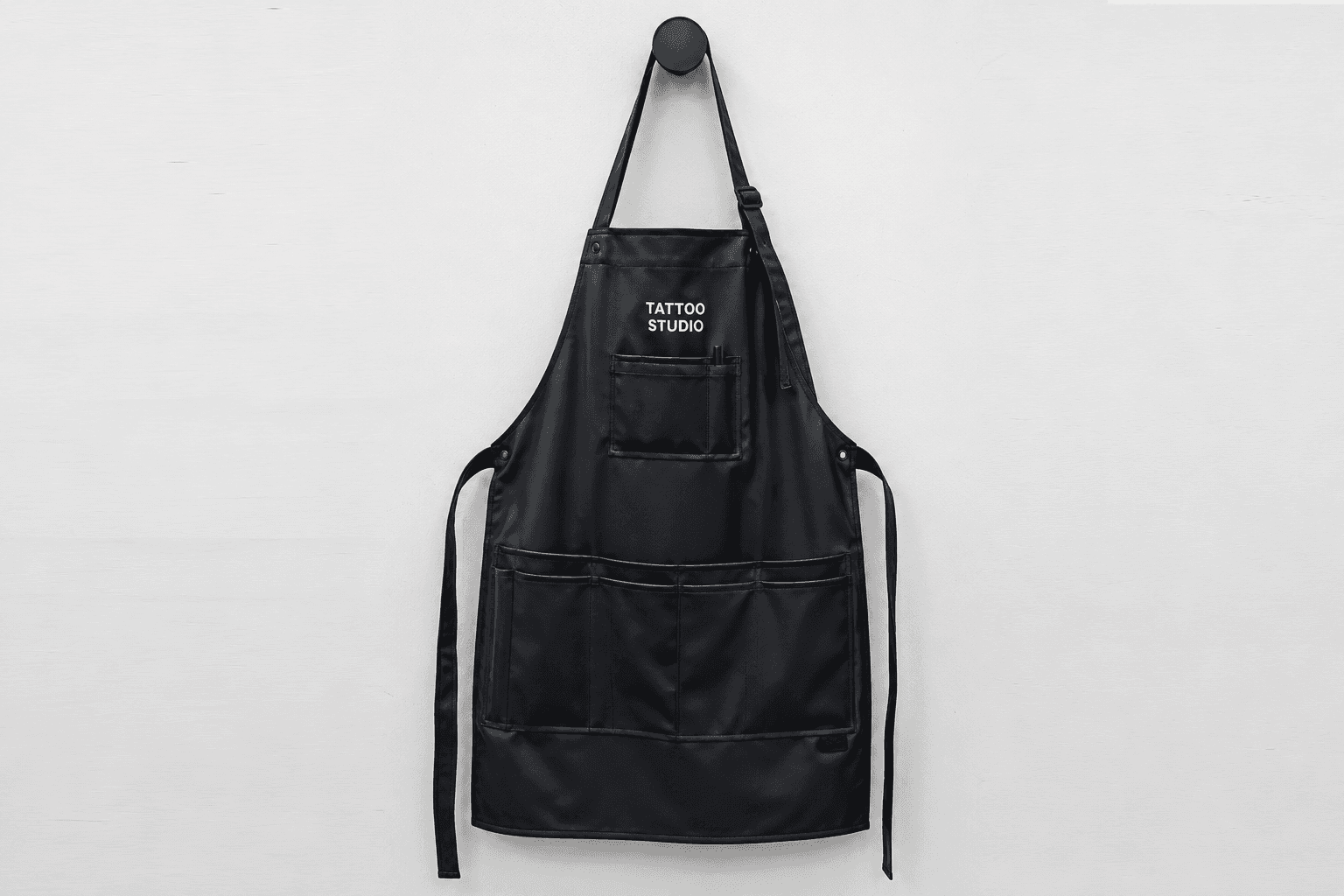
Tattoo studio aprons: wipe-clean fabrics and pocket layouts
A practical sourcing guide to tattoo apron fabrics, wipe-clean finishes, pocket layouts, and bulk production details for studio, guest-artist, and retail programs.
Cheese and creamery aprons: hygiene, heft and easy laundering
A creamery apron needs controlled hygiene, workable heft and laundering performance that fits dairy production, packing and wash-down routines.
Fishmonger and seafood aprons: water-resistant and odor-managing
A fishmonger apron must block water, blood, slime, and odor without slowing movement. This guide covers the spec choices that matter in bulk sourcing.
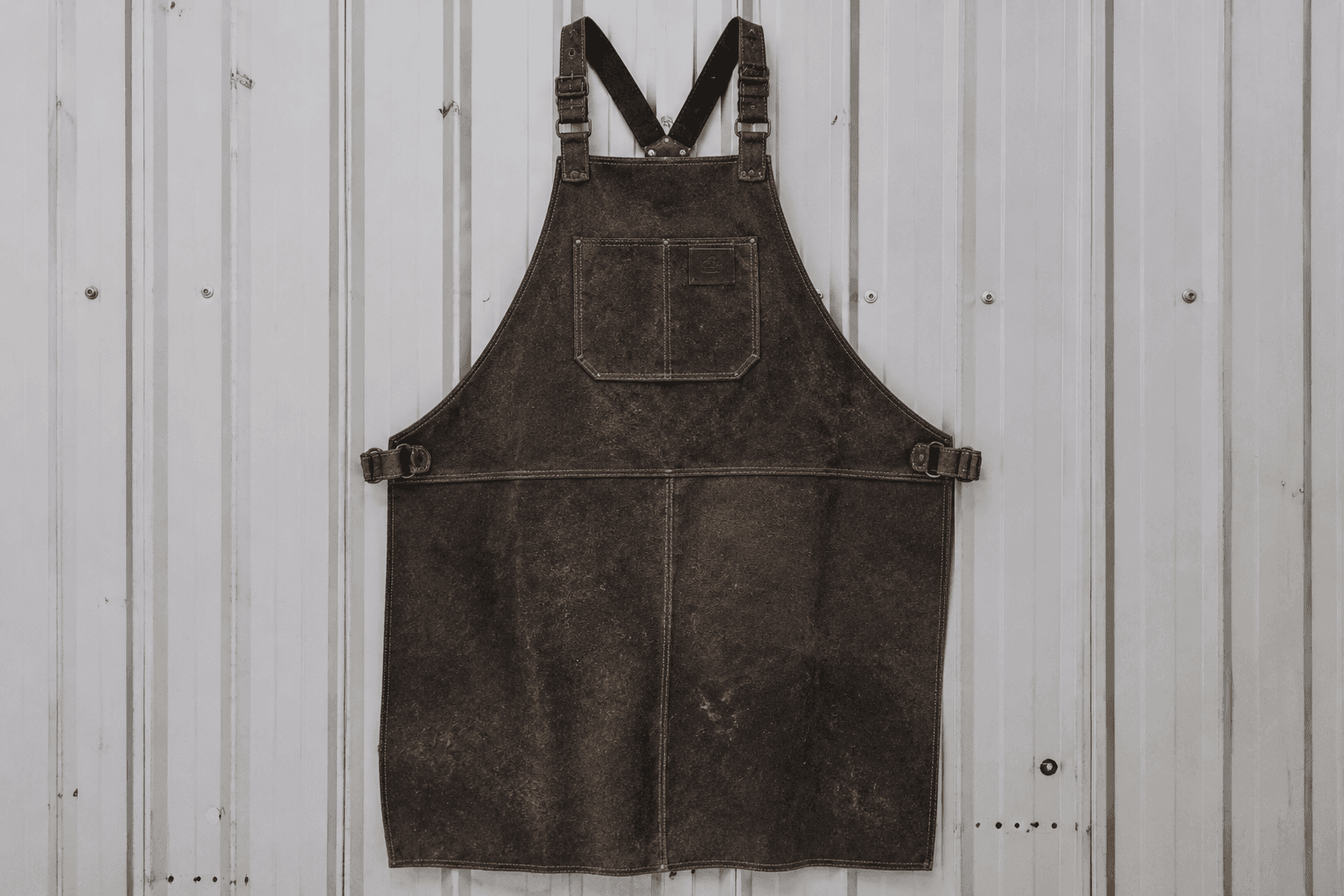
Blacksmith and metalwork aprons: leather, heft and spark resistance
A blacksmith apron must balance leather grade, panel weight, coverage and hardware so it protects against sparks without making bulk production impractical.
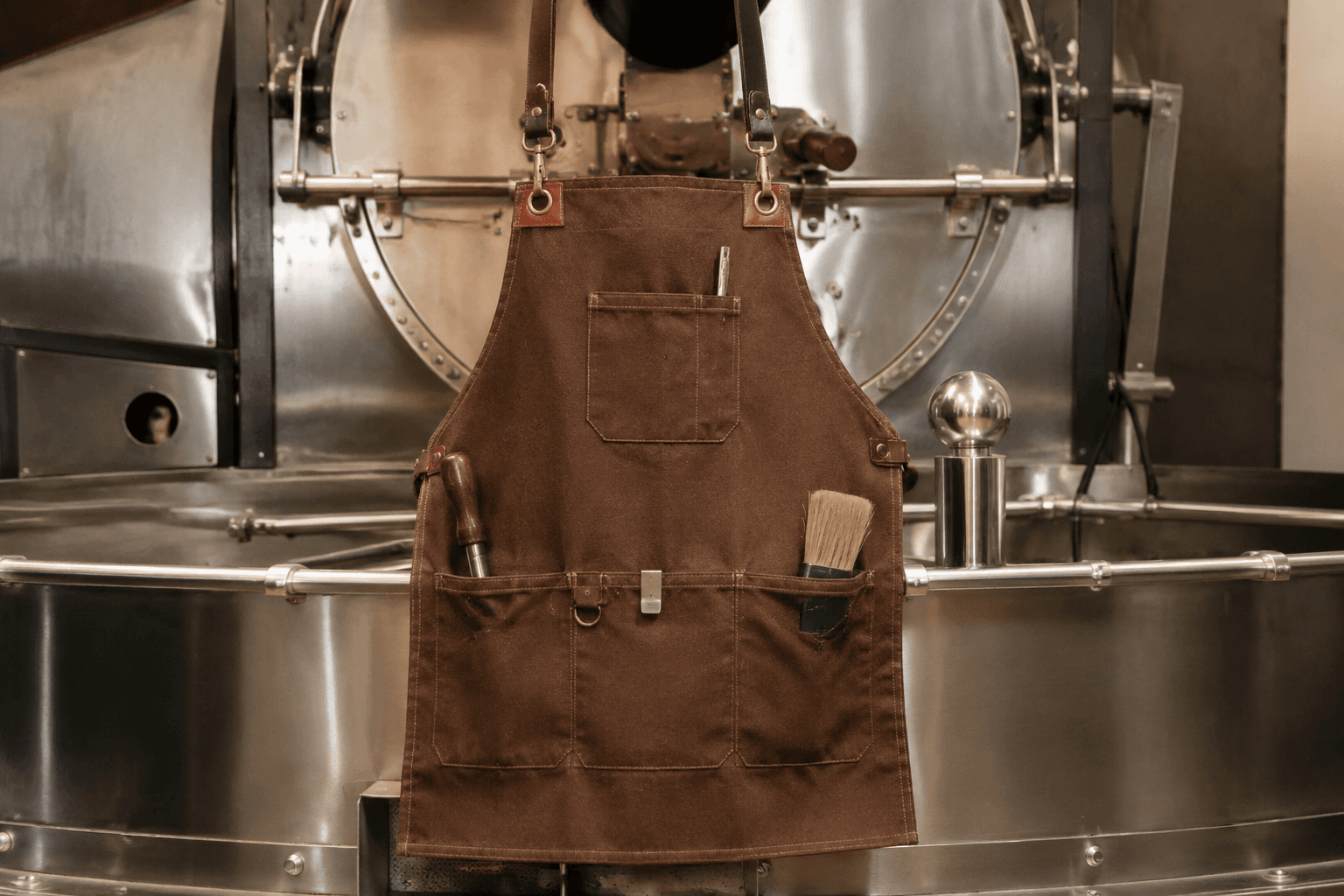
Coffee roastery aprons: heat-tolerant, heavy canvas and pockets
A coffee roastery apron must handle heat, ash, oils, and repeated washing while still fitting a working team. For bulk buyers, fabric weight, pocket layout, and trim choices decide performance and cost.
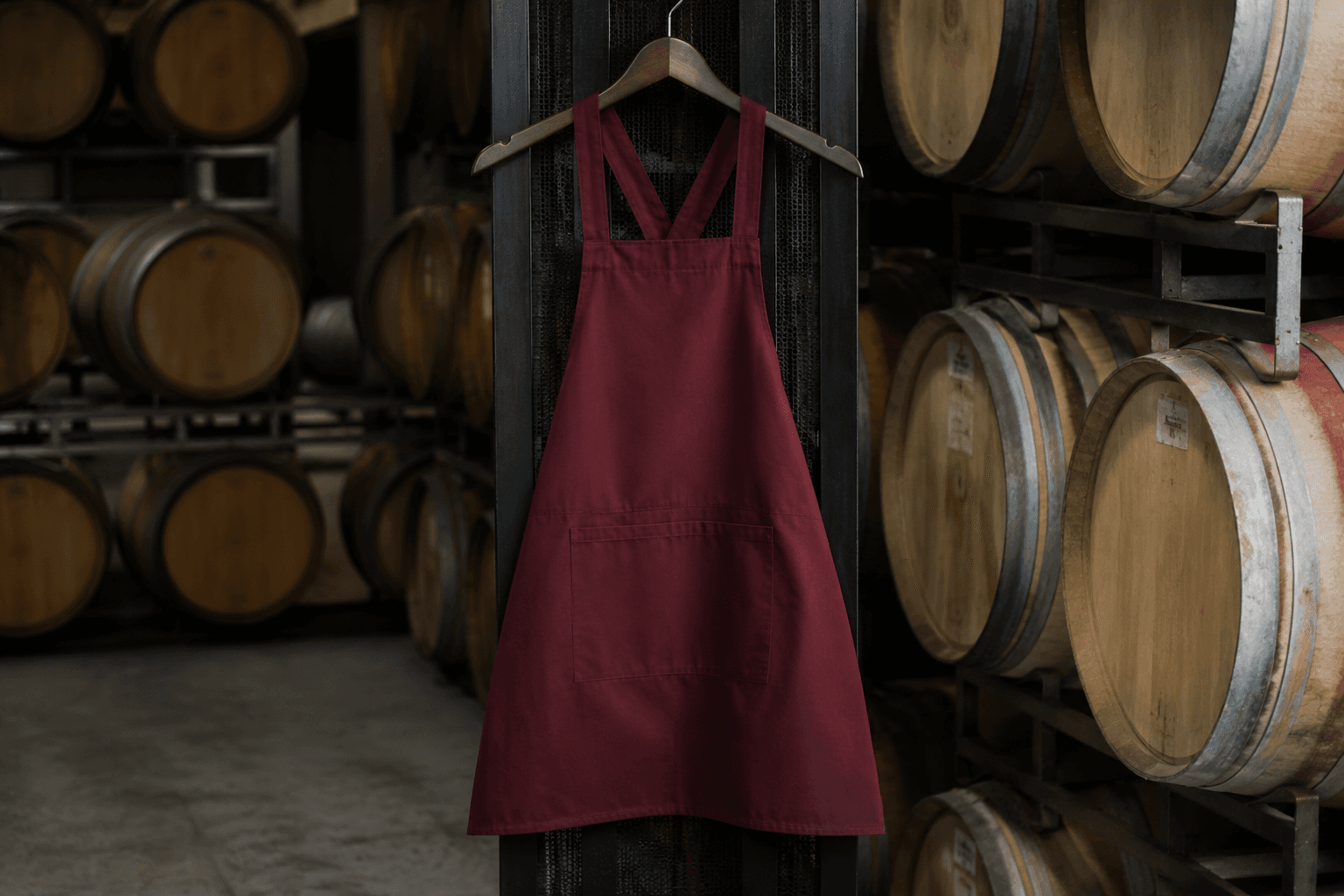
Winery and vineyard aprons: stain-tolerant fabrics and crossback fit
A winery apron must resist grape stains, wash cleanly, and fit over long shifts. The right fabric, pocket layout, and crossback pattern determine whether a winery apron is practical at scale.
Food truck and street vendor aprons: compact, durable, fast branding
A food truck apron has to move fast, hold up under service wear, and take branding cleanly. The right construction balances compact coverage, wash durability, and realistic bulk pricing.
Leatherworking and cobbler aprons: tool pockets and abrasion resistance
A leatherworking apron must balance abrasion resistance, pocket utility, and bulk-order cost control for workshops, cobblers, and leather craft brands.
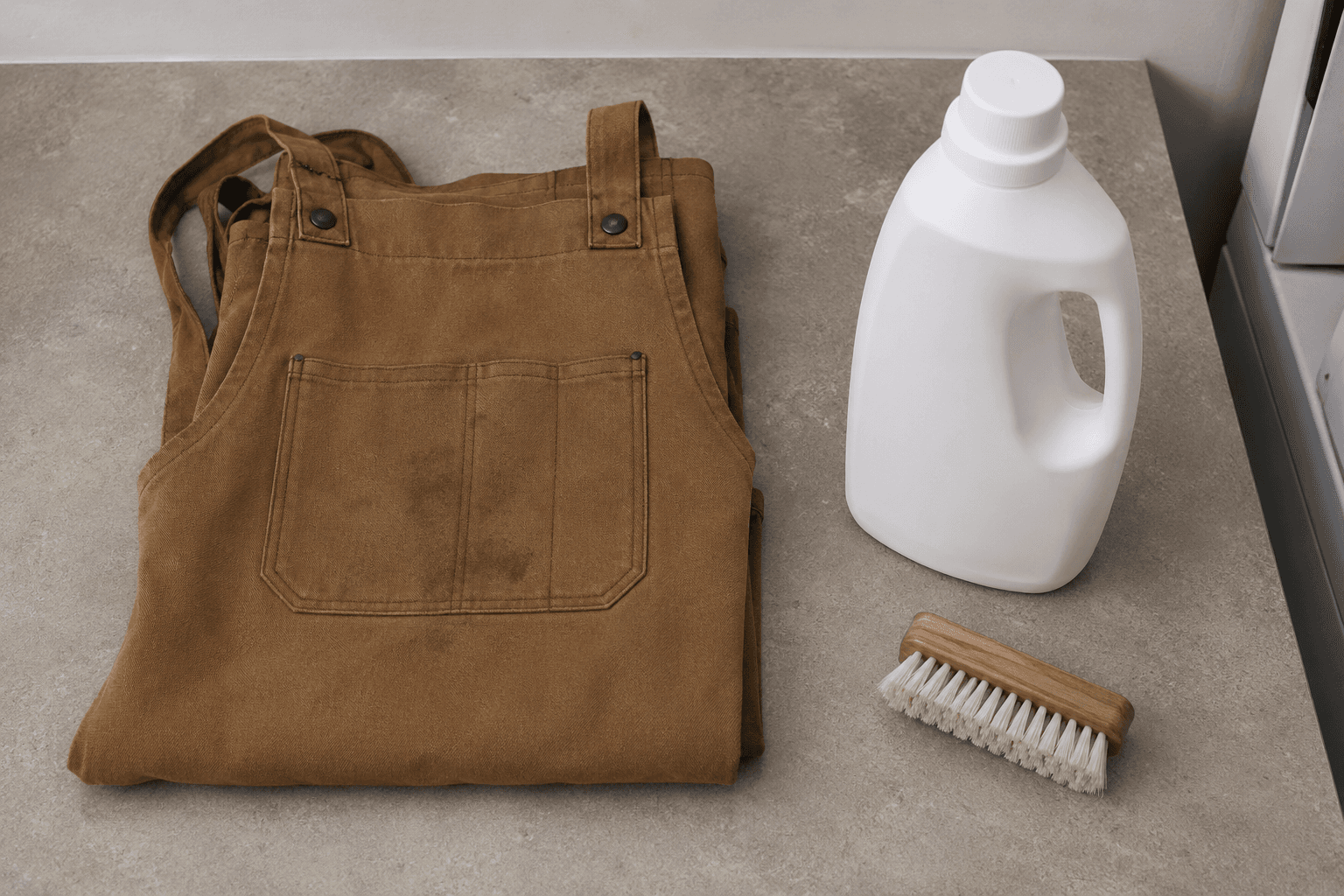
Removing grease and oil stains from work aprons
Practical guidance for buyers who need to remove grease stains apron by apron, with fabric-specific cleaning methods, finish protection, and supplier-side notes on cost, durability, and care labeling.
Apron repair and end-of-life recycling for uniform programs
Apron recycling works best when repair, collection, and fabric selection are built into the program before first bulk order. For uniform buyers, the lowest-cost path is usually extend life first, then recycle what is no longer repairable.
Apron hygiene standards for food service
Apron hygiene food service depends on material choice, wash control, and replacement rules. For bulk buyers, the real risk is not style but whether the apron supports a clean, auditable kitchen workflow.
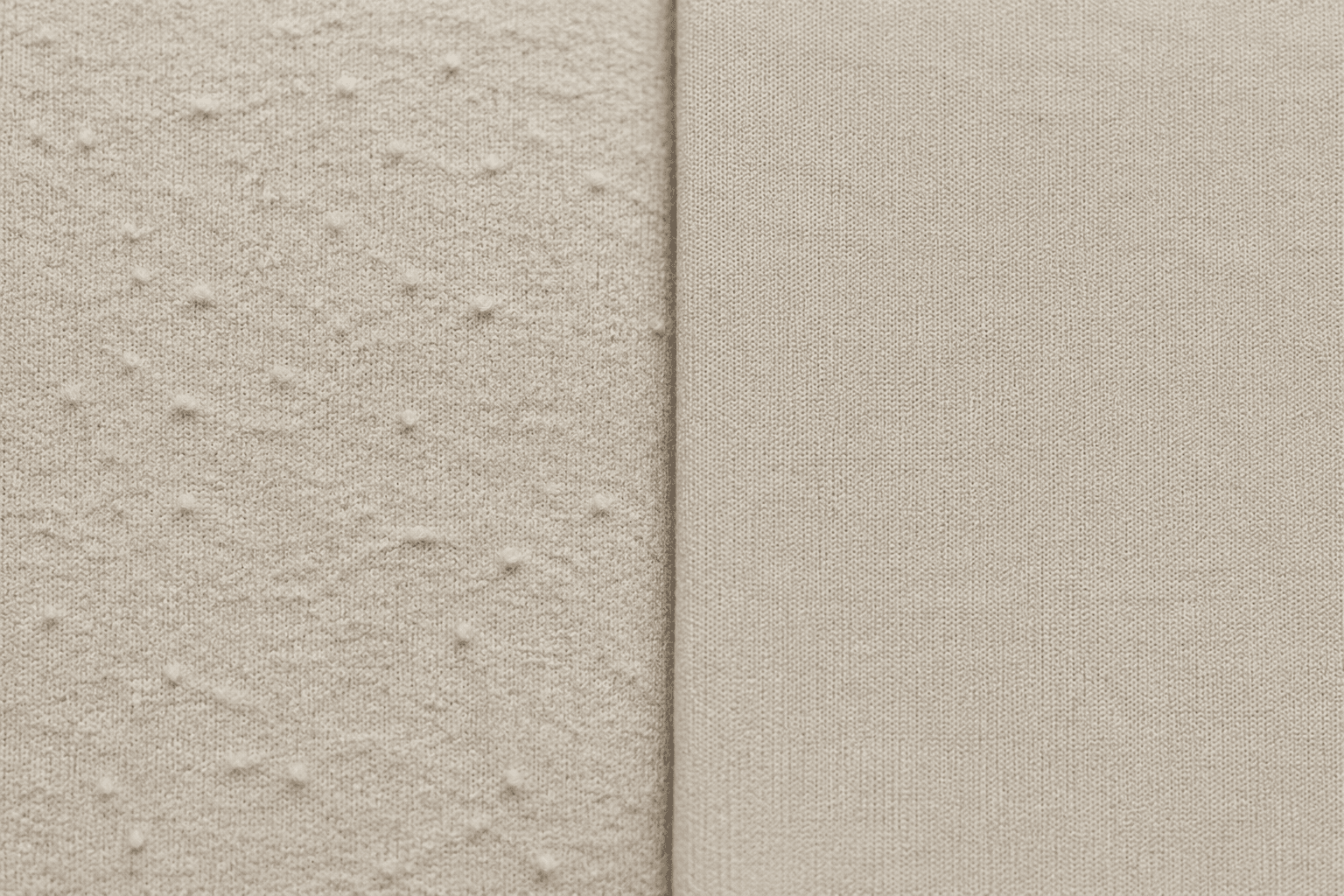
Apron pilling: why it happens and how to prevent it
Apron pilling is usually a fabric-selection problem, not a sewing problem. The right yarn, finish, and test standard can prevent fabric pilling before the first bulk order ships.
Drying and pressing commercial aprons without damaging them
Drying commercial aprons correctly protects size, color, and hand-feel. For bulk orders, drying commercial aprons and pressing aprons must match the fabric, trim, and print method.
CPSIA compliance for children's aprons
Childrens apron compliance under CPSIA depends on fabric chemistry, construction details, labeling, and documented child apron testing before bulk shipment.

OEKO-TEX vs Bluesign for apron textiles: which standard to ask for
For an oeko-tex vs bluesign apron decision, ask which chemical control level your apron textile standard really needs, then match it to end use, fabric type, and order volume.
Apron warranties and quality guarantees: what a factory can promise
A practical apron warranty should define measurable defects, inspection timing, replacement limits, and evidence rules before bulk production starts.