For importers sourcing chef, hospitality, salon, retail, barbecue, and promotional aprons, apron metal trim compliance is a small BOM line with outsized commercial risk. D-rings, sliders, snaps, rivets, eyelets, buckles, and chain details usually add only $0.09 to $0.52 per apron, yet they account for a disproportionate share of failed lab reports, booking delays, retailer chargebacks, and end-user complaints. On apron programs, most hardware failures come from three controllable variables: base alloy, plating system, and how the part performs after abrasion, sweat, laundering, and daily adjustment.
Buyers should not accept a generic declaration, an undated supplier statement, or a report from an unrelated trim lot. A 25 mm plated brass slider, a zinc-alloy buckle, and an iron snap can look identical on a salesman sample while performing very differently in nickel release, lead-content screening, and plating wear. Professional sourcing teams need to define which trim parts are in scope, which destination-market limits apply, which parts are in direct or prolonged skin contact, and whether hardware must still comply after abrasion or laundering rather than only at time zero.
For custom aprons made in China, India, Vietnam, or Bangladesh, the real question is not whether one prototype can pass once. The question is whether the approved trim can hold compliance through sample approval, pre-bulk confirmation, mass plating, sewing, washing, packing, and end use across orders from 3,000 to 50,000 pcs. That is the standard buyers should use when evaluating apron metal trim compliance on commercial orders.
- Nickel release risk is highest on skin-contact hardware such as neck sliders, bib adjusters, chest snaps, front rivets, and detachable strap hooks.
- Lead failures on imported aprons usually start in alloy composition or plating chemistry in low-cost hardware, not in the apron shell fabric.
- A trim can pass first-sample appearance approval and still fail commercially after 10 to 20 wash cycles or 2 to 6 weeks of daily friction.
- The highest variance appears when factories mix hardware sources or substitute open-market lots, especially on orders below 5,000 pcs per style.
- A usable trim specification must state base metal, finish code, size, approved supplier, unit consumption, test scope, acceptable wear standard, and re-test trigger.
- The safest control point is before sewing: verify or test hardware lots before 100% of aprons are assembled, packed, and booked for shipment.
Why <strong>apron metal trim compliance</strong> must sit on every apron PO
In apron costing, buyers usually lock the main fabric first: 180 to 320 GSM cotton twill, 8 oz to 12 oz canvas, 150D to 600D polyester support materials, 20 mm to 38 mm webbing widths, pocket layout, and logo application. Hardware is often approved late because each part looks minor: a 20 mm snap, a 25 mm slider, a 32 mm D-ring, or two pocket rivets. That is a recurring sourcing mistake. Metal trim is one of the least standardized items in an apron BOM, and visually similar parts may be made in brass, zinc alloy, iron, stainless steel, or mixed constructions with very different compliance profiles.
Aprons are also high-friction products. A cross-back bib apron may be adjusted several times per shift; a waist apron snap may be opened and closed 20 to 60 times per day; a 10 oz waxed canvas grill apron may have buckles rubbing against shell fabric, rivets, and carton walls during transport. Once plating thins on edges or moving contact points, exposed substrate can affect both appearance and compliance. For B2B buyers, trim review therefore has to cover durability, chemistry, and source consistency at the same time.
The cost pressure is real but usually short-sighted. On a basic imported apron priced at $2.90 to $4.40 FOB, an uncontrolled hardware substitution may save only $0.03 to $0.09 per piece. On a 20,000 pc order, that is $600 to $1,800, enough to tempt a trader or subcontract factory if the PO is vague. The downstream cost of a failed report, carton hold, partial rework, airfreight catch-up, or retailer claim is usually much higher, especially when 8,000 to 15,000 pcs are already sewn.
- Typical apron trims include D-rings, rectangle rings, tri-glide sliders, buckles, snaps, rivets, eyelets, grommets, hooks, and chain straps.
- Common hardware cost runs from $0.012 to $0.070 per small component and $0.09 to $0.52 total per apron, depending on alloy, finish, and order volume.
- Highest-risk contact zones are neck adjusters, bib hardware, chest snaps, side fastening points, front rivets, and detachable hooks.
<strong>Apron metal trim compliance</strong> for nickel release on skin-contact hardware
For EU-bound aprons and other nickel-sensitive programs, the practical issue is not whether nickel exists somewhere in the supply chain. The issue is whether the finished hardware releases nickel above the applicable limit under realistic contact and wear conditions. On aprons, buyers should prioritize any part that touches skin directly or sits over thin garments during long shifts, especially neck sliders, chest-level snaps, front rivets, buckle tongues, detachable strap hooks, and metal adjusters placed high on the bib.
Nickel-release performance depends on both substrate and plating quality. A silver-colored part may be stainless steel, nickel-plated brass, or plated zinc alloy, and those options behave very differently after sweat exposure, repeated strap movement, or 5 to 20 home-laundry cycles. In practice, strap-adjustment hardware is one of the highest-risk zones because sliding action gradually cuts through thin or porous plating. A development sample can look clean on day 1 and still become a compliance problem after four weeks of routine use in a kitchen, café, or salon.
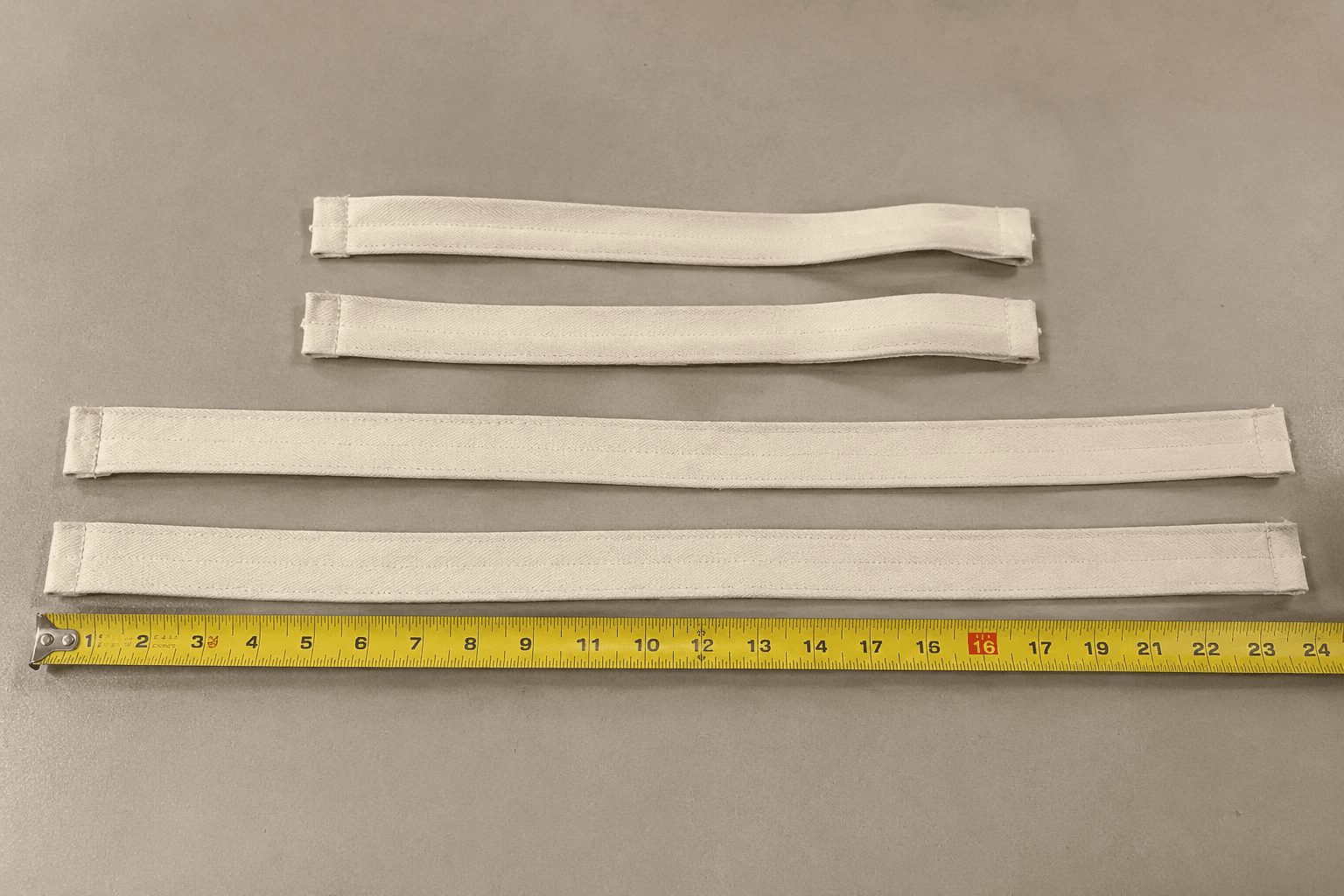
The most effective response is to remove unnecessary metal near the neck and freeze approved trim before bulk booking. If a neck closure can be converted to self-fabric ties, 25 mm cotton herringbone tape, or poly-cotton webbing, one major test item disappears. If metal adjustment is commercially required, the buyer should approve the exact supplier, part code, finish code, and lot reference before the bulk PO is released. A passing report from one trim trader does not protect the buyer if the sewing factory later buys a look-alike slider at $0.01 less from a different plating source.
- Priority nickel-release items are neck sliders, chest snaps, front rivets, detachable hooks, cross-back adjusters, and buckle tongues.
- Ask the supplier to confirm testing on the finished coated part, not only on raw alloy or unfinished substrate.
- Retain one sealed trim board per approved finish, such as bright silver, matte black, gunmetal, or antique brass, for bulk comparison and claim review.
Lead risk in apron hardware: cheap alloy and unstable plating cause most failures
When buyers request lead screening for imported aprons, the failure point is usually the metal accessory rather than the 240 GSM twill shell, sewing thread, or woven neck tape. The most common risk sources are low-cost die-cast buckles, painted studs, antique-finish rivets, snap sets from unmanaged subcontractors, and mixed open-market inventory. These parts often change chemistry with metal cost and plating-house availability, creating lot-to-lot inconsistency even when the trim looks identical on the production line.
Risk rises when the apron uses fashion finishes instead of standard polished or plain-coated hardware. Antique brass, washed gunmetal, distressed silver, and matte black usually require more process steps than a simple bright silver finish. Each added step introduces another variable: base metal consistency, undercoat chemistry, top color, sealer thickness, curing temperature, and line cleanliness. On premium chef aprons or heritage-style canvas bib aprons, these finishes may be commercially important, but they require tighter incoming control and better traceability than a standard 25 mm silver slider or plain snap set.
Buyers reduce lead-failure rates when they specify construction instead of appearance alone. A workable trim line reads like this: 25 mm slider, approved low-lead brass or verified low-lead zinc alloy, matte black finish code MB-02, supplier H-17 only, pre-bulk lab confirmation required, no substitution without written approval. That wording is far more effective than writing 'metal to pass test' on a PO, because it blocks last-minute shortage fills using mixed stock from different subcontract lots. On repeat apron programs, that detail often prevents the same style from drifting between compliant and non-compliant lots across a 60- or 90-day reorder cycle.
- Higher-risk trims include die-cast buckles, antique rivets, decorative studs, low-cost snap sets, and chain details with multiple subcontract processes.
- Approved hardware suppliers with lot coding and plating records are usually safer than open-market stock, even when unit cost is $0.005 to $0.020 higher.
- A per-style hardware map should show quantity per apron, supplier code, finish code, destination market, and which items require lab testing.
Plating wear on aprons: the complaint usually appears after delivery
A common sourcing mistake is to check chemistry once and ignore wear performance. Aprons are compressed in cartons, shipped for 18 to 40 days, adjusted daily, rubbed against counters and trays, and washed repeatedly. A trim can pass initial chemical screening and still become a claim issue if the plating wears quickly and exposes a discolored or non-compliant substrate. For apron buyers, plating durability is not only cosmetic; it is part of compliance control because wear changes what reaches the surface during use.
Matte black hardware is a frequent example. On a salesman sample, black sliders on a 10 oz canvas apron look premium and clean. In use, if the coating is thin, edge silvering may appear within 2 to 4 weeks at strap-contact points. Antique brass rivets on pocket corners may lose color after repeated contact with bar counters or worktables. Chain straps and hooks can also rub against each other inside export cartons, leaving visible marks before the shipment is opened. These are routine bulk-production problems, not edge cases.
Wear expectations should match the apron price tier and end use. On a promotional apron at $1.70 to $2.30 FOB, limited finish change may be tolerated if there is no safety issue and the item is intended for short campaign use. On hospitality, retail, or branded aprons at $4.80 to $9.80 FOB, buyers usually expect cleaner appearance retention after repeated laundering and daily wear. That expectation should be translated into an approved reference sample, a simple rub or wash review, and a defect standard used during final inspection rather than left as an unwritten assumption.
- Check abrasion sensitivity on slider bars, buckle edges, rivet heads, snap caps, hook tips, and chain links.
- Review packed-sample rub marks after carton compression or vibration, not only loose hardware before sewing.
- Align finish expectations to the selling tier: promotional, mid-market hospitality, or premium retail apron.
Testing sequence, MOQ, and lead-time planning for compliant apron trim
The cheapest time to control hardware risk is before sewing starts. Once 5,000 to 30,000 aprons are cut, stitched, pressed, and packed, replacing failed snaps, buckles, or rivets becomes expensive and slow. Rework can damage adjacent 8 oz to 12 oz shell fabric, distort topstitching, leave needle marks, or weaken the panel around snap and rivet holes. Experienced buyers therefore use a staged control method: development approval, pre-bulk confirmation, incoming bulk verification, and final AQL review.
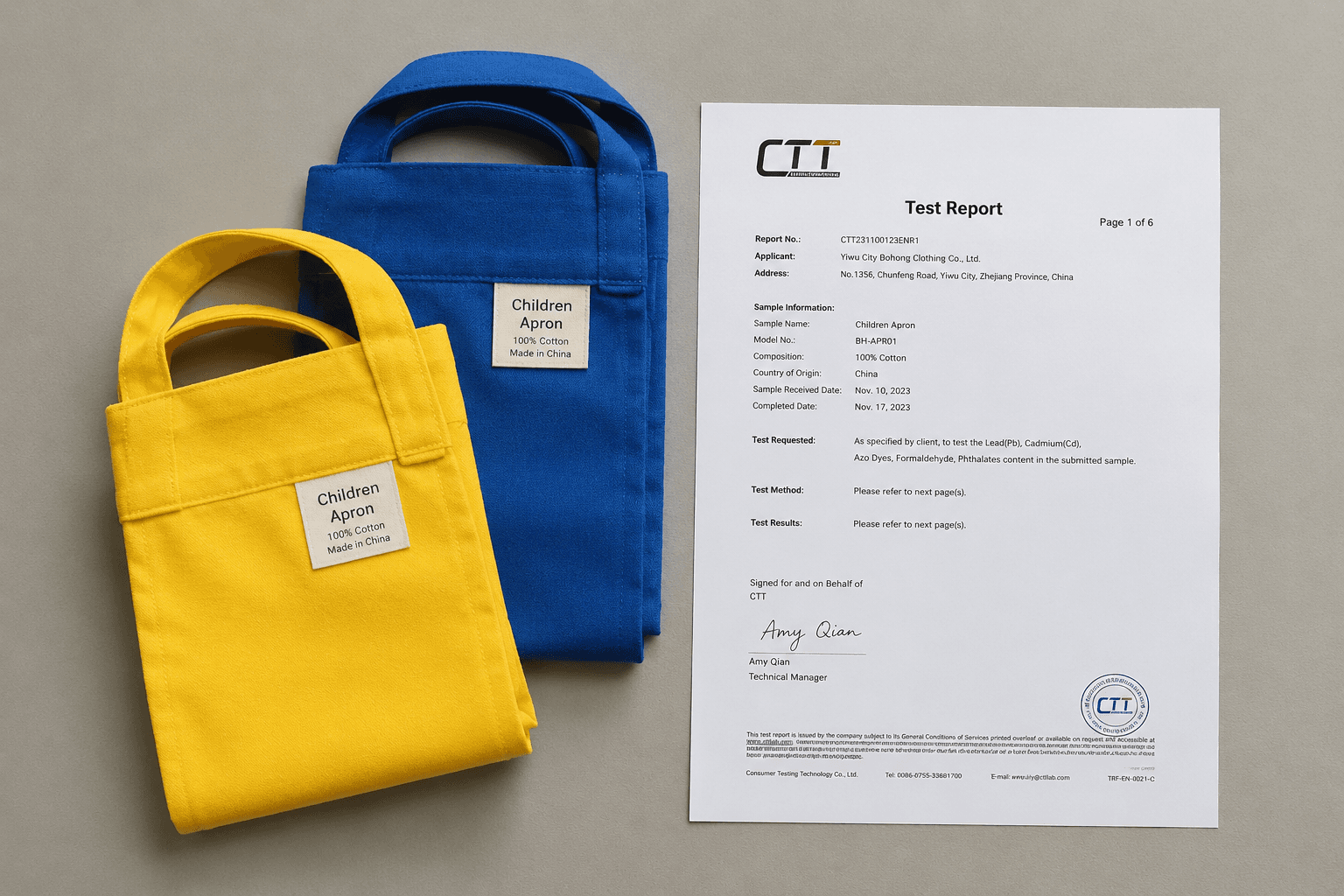
At development stage, the factory should submit a full trim card showing each metal component by size, finish, declared base material, supplier code, and usage location on the apron. At pre-bulk stage, one representative production lot should be sent for the agreed chemical scope, especially for skin-contact trim, custom plating, or detachable metal parts. At incoming bulk stage, QC should verify that supplier identity, lot code, finish tone, dimensions, and function match the approved trim card before line release. If the factory changes the hardware source, plating house, or finish code, the default action should be re-verification, not assumption.
Lead-time planning has to reflect this sequence. A standard custom apron sample using stock trim often takes 7 to 12 days. If the style needs custom color plating, non-stock buckles, or third-party testing on several hardware items, development commonly extends to 12 to 18 days. Bulk production for 3,000 to 10,000 pcs usually runs 25 to 40 days after material approval; 10,000 to 30,000 pcs often need 35 to 50 days depending on fabric dyeing and sewing capacity. Trim testing and report issue commonly add 3 to 7 working days, while re-plating, re-sourcing, or repeat testing can add another 7 to 15 days. Buyers who leave hardware review to the last week often create avoidable shipment delays.
MOQ also matters. Custom plated hardware is often quoted at 2,000 to 5,000 pcs per item, and some buckle or snap factories want 5,000 to 10,000 pcs per finish code before offering stable repeat production. An apron style with four custom parts can therefore have a trim planning burden that is much larger than the sewing MOQ alone. That is one reason small orders under 3,000 pcs per style are more exposed to open-market substitutions.
- Development stage: approve trim board, contact points, finish color, and supplier code before sample sign-off.
- Pre-bulk stage: test one real production lot before authorizing full sewing and final assembly.
- Incoming stage: verify lot code, color consistency, plating quality, dimensions, and quantity against the approved BOM.
- Typical MOQ for custom plated hardware is 2,000 to 5,000 pcs per item, so one apron style with four custom parts needs separate trim planning.
Factory controls and PO wording that keep apron hardware compliant in bulk
The simplest way to improve compliance is often to remove metal where it is not functionally necessary. If a bib apron can use self-fabric ties, heavy cotton tape, or bartack reinforcement instead of a neck buckle, chest snap, or decorative rivet, the test scope immediately becomes smaller and more stable. This approach is especially practical on promotional aprons, entry-price uniforms, and tight-margin programs where the hardware budget may be under $0.12 per piece. Every extra snap, hook, rivet, or chain link adds another source of alloy, plating, and workmanship variation.
Where metal is necessary, buyers should compare construction with the same discipline used for fabric weight or stitch density. Standard 20 mm, 25 mm, and 32 mm hardware sizes are easier to control because more qualified suppliers can make them consistently. Brass-based hardware usually costs more than basic iron parts, while zinc-alloy die-cast components can vary widely depending on plating-house control. In many apron programs, paying $0.01 to $0.03 more per component for a controlled source is far cheaper than absorbing a failed test, a 10-day shipment delay, or a retailer debit.
Factory control also needs to be practical. Incoming hardware should be checked for burrs, sharp edges, plating scratches, corrosion points, and functional movement. During sewing, hardware-heavy panels should be protected from metal-on-metal rubbing in bundles. Final inspection should classify trim issues under the order AQL, commonly AQL 2.5 for major defects and AQL 4.0 for minor defects, with rough edges, plating exposure, sharp burrs, broken coating, and malfunctioning snaps clearly defined in advance.
Most hardware problems are created by incomplete paperwork rather than by a single bad part. If the purchase order only says 'metal trim to match sample' or 'hardware to pass required test,' the factory still has too much room to substitute sources, plating houses, or finishes. A professional apron quality file should identify each trim item separately by component name, size, finish, approved supplier, unit consumption, destination market, and whether the part is skin-contact or decorative only. This is the documentation layer that makes apron metal trim compliance enforceable on repeat bulk orders rather than optional after the fact.
- Reduce direct-contact metal where fabric or webbing alternatives provide the same function.
- Prefer standardized trim sizes and approved suppliers over custom-looking open-market substitutes.
- Inspect final AQL samples for plating scratches, edge wear, burrs, snap function, and slider movement before shipment release.
- Write each trim item separately on the PO and state re-test triggers for supplier change, plating-house change, finish change, design change, or resumed production after a long gap.