For electronics assembly buyers, anti static aprons control the outer clothing layer that moves closest to PCBAs, trays, labels, shielding bags and bench tools. Their role is practical: reduce charge generation from rubbing against chairs, synthetic uniforms and packaging film, while keeping loose shirts, sleeves and personal garments away from the work surface. A standard polyester apron may protect against dust or flux marks, but it can charge quickly during seated bench work.
The sourcing risk is usually not the apron shape. It is the combination of esd apron fabric, conductive yarn spacing, GSM, pocket layout, grounding snaps, wash performance and documentation. SMT rework, cable harness assembly, battery module packing and final inspection can all use aprons, but each area may need a different balance of comfort, ESD control and durability. If an RFQ only says "anti static aprons," suppliers may quote anything from a topical anti-static finish to a true carbon-grid garment with finished-apron testing.
This guide gives B2B buyers concrete specification ranges for custom anti static aprons from China: 150-240 GSM fabric options, 5 mm and 10 mm conductive grids, common resistance targets, MOQ, lead time, price bands, AQL inspection points and ESD report requirements for audited electronics assembly programs.
- Specify anti static aprons by resistance range, grid spacing, GSM and wash-cycle durability, not by color or generic ESD wording.
- Most electronics apron programs use 150-220 GSM polyester or polyester-cotton fabric with 5 mm or 10 mm conductive grid yarn.
- Grounding snaps and conductive tape paths can improve control in stricter EPAs, but they add cost, inspection points and laundering risk.
- A realistic OEM MOQ is 500-1,000 pcs per color/style with stock ESD fabric, or 1,000-2,000 pcs for custom-dyed ESD grid fabric.
- Typical bulk lead time is 25-40 days after sample approval, plus 5-10 working days when new third-party ESD testing is required.
- Documentation should separate fabric test data from finished-apron results and state test method, humidity, voltage, wash cycles and batch traceability.
Anti Static Aprons: Define the ESD Function Before RFQ
The first sourcing decision is what the apron must control. In an electronics plant, an apron may support contamination control, operator identification, ESD control or all three. Operators at manual benches lean over PCBAs, reach across component trays, open shielding bags, scan labels and move against synthetic chairs or uniforms. Those repeated friction points can charge the outer garment even when the operator uses a wrist strap.
A correct anti static work apron gives the plant a more predictable outer layer over uncontrolled personal clothing. It does not replace wrist straps, ESD footwear, heel grounders, grounded bench mats, ionization or ESD flooring. Buyers should treat the apron as one control point inside the EPA system. If the apron is expected to function as a grounded garment, that must be stated before sampling because the pattern, snaps and conductive path have to be built into the garment.
Durability matters as much as the new-apron reading. A fabric that passes resistance testing before washing but fails after 10 industrial washes is not suitable for weekly laundering. For a single-shift plant washing aprons once per week, 50 washes represents roughly one year of service. For outsourced laundries, multiple shifts or high-turnover rental programs, 100 washes is a better validation target. This decision affects conductive yarn quality, finishing, seam construction, care label text and unit price.
A practical acceptance range for many ESD garments is surface resistance or point-to-point resistance from 10^5 to 10^9 ohms, but the buyer's internal ESD control plan should set the final value. Lower-risk packing or repair areas may accept dissipative grid fabric without a dedicated grounding snap. Higher-control areas may require a 7 mm or 10 mm grounding snap, conductive tape path and finished-apron testing after washing.
- Define the process area: SMT handling, rework bench, final assembly, cable harness, battery packing or inspection.
- State the resistance target, commonly 10^5 to 10^9 ohms unless the buyer's ESD plan requires another range.
- Specify wash durability before sampling: 30, 50 or 100 cycles.
- Confirm whether testing applies to fabric only or to the finished apron with pockets, seams and hardware.
- Avoid loose straps, hanging panels and oversized pockets near conveyors, soldering stations and rotating fixtures.
Anti Static Aprons Fabric: GSM, Grid Spacing and Fiber Choice
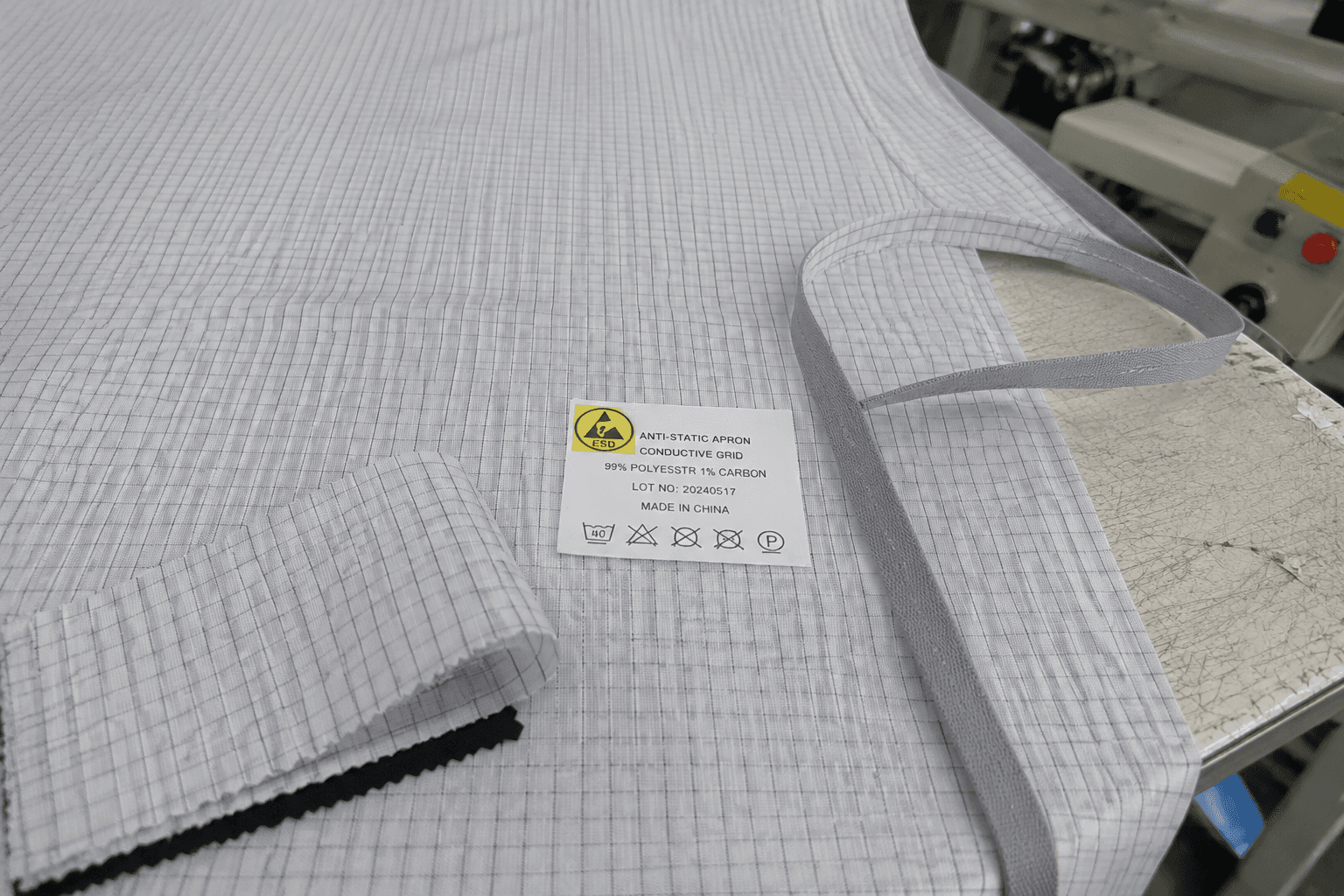
Most anti static aprons for electronics assembly use woven polyester or polyester-cotton with carbon or conductive filament inserted as a grid. A common composition is 98 percent polyester and 2 percent conductive fiber, but that percentage alone is not enough. Conductive yarn spacing, yarn quality, base fabric density and wash stability are more important than the fiber percentage shown on a datasheet.
For light bench work, 150-160 GSM polyester grid fabric keeps the apron cool and economical. For daily electronics assembly, 180-200 GSM is usually the best balance of durability, drape and cost. Heavier 210-240 GSM fabric gives more structure and abrasion resistance, but it can feel warm during long summer shifts and may reduce correct wear in non-air-conditioned workshops.
Grid fabric is usually preferred over stripe fabric because conductive yarn runs in both warp and weft directions. Standard grid spacing is 5 mm, 10 mm or 12 mm. A 5 mm grid normally gives more consistent dissipation and a clear ESD visual cue, but it often adds US$0.20-0.45 per apron compared with 10 mm grid fabric, depending on order quantity and apron size. A 10 mm grid is a practical middle specification for many repair, test and packing areas.
Polyester-cotton blends, often 65/35 or 80/20, feel more familiar and absorb some moisture, but cotton can shrink, fade and hold contamination after repeated washing. Full polyester ESD grid fabric dries quickly, holds dimensions well and is common for electronics assembly aprons. If flame resistance, cleanroom particle control or chemical splash resistance is required, treat it as a separate specification because those functions can change fabric cost, comfort and ESD behavior.
- 150-160 GSM: light-duty bench work, lower cost and better breathability.
- 180-200 GSM: common daily-use range for electronics assembly aprons.
- 210-240 GSM: better body and abrasion resistance, but warmer for long shifts.
- 5 mm grid: stronger ESD visual cue and more consistent conductivity, with higher fabric cost.
- 10 mm grid: practical cost-performance choice for many assembly and repair areas.
- Common colors: light blue, royal blue, navy, grey and white; white requires stricter sewing cleanliness control.
Grounding Details for Conductive Fiber Aprons
A conductive fiber apron is reliable only when the conductive fabric is not isolated by poor construction. Heavy logo backing, thick embroidery stabilizer, non-conductive overlays and decorative PVC patches can create areas that do not behave like the base fabric. Ordinary polyester sewing thread is acceptable for many apron seams, but large disconnected panels should be avoided when the buyer expects garment-level continuity.
Grounding snaps are optional, not automatic. A basic ESD apron may rely on dissipative grid fabric and the operator's existing wrist strap or footwear system. A stricter design may use a 7 mm or 10 mm metal snap at the waist or chest for connection to a grounding cord. Some buyers also specify hidden conductive tape from the snap to the main fabric zone. This construction should be tested after sewing, not assumed from the component list.
Hardware placement affects safety and compliance. A waist snap can press into the body when operators sit if it is positioned too low. A chest snap may conflict with ID badges, tool lanyards or repeated leaning over fixtures. For assembly lines, the grounding route must not create loose cords that catch on benches, racks or conveyors. If grounding cords are included, specify length, resistor value, connector type and packing method in the PO.
Metal quality affects life-cycle cost. Nickel-plated brass snaps are common. Stainless steel may be specified when corrosion resistance is important. Low-cost iron snaps should be avoided because rust after repeated washing can cause stains, weak pull strength and audit failures. Adjustable neck buckles are usually better in plastic unless the buckle is part of a tested grounding path.
- Waist or chest grounding snap: typically adds US$0.08-0.18 per piece.
- Conductive tape reinforcement: typically adds US$0.15-0.35 per piece.
- Conductive thread in selected seams: typically adds US$0.10-0.25 per apron and slows sewing output.
- Snap pull-strength target: commonly 50-70 N, depending on the buyer's standard.
- Grounding cord: specify 1 megohm resistor when required, plus cord length and connector style.
Pattern, Pockets and Fit for Assembly Operators
The apron pattern should match operator movement, not only a size chart. A common bib apron for Asian and European workforces is about 70 x 85 cm. Larger North American programs may use 72 x 90 cm or 75 x 95 cm. Waist aprons are often 45-55 cm long and useful for repair or inspection benches, but they do not isolate upper clothing from the work surface.
Neck construction affects full-shift wear. Fixed neck loops are cheap and fast to sew, but they fit only a narrow height range. Adjustable neck straps with snaps, sliders or hook-and-loop improve fit but add components and inspection points. In ESD areas, exposed hook-and-loop should be used carefully because it can collect dust and fibers. A fabric neck tie or snap-adjusted neck is often cleaner for repeated laundering.
Pockets are convenient but should be controlled. Large lower pockets can hold pens, scanners and small tools, but stored items may be non-ESD plastic or may fall onto product. Chest pockets can touch PCBAs when operators lean forward. If pockets are required, use flat patch pockets made from the same esd apron fabric, with limited depth and reinforced corners. Decorative layered pockets add seams, thickness and inspection variation without improving ESD control.
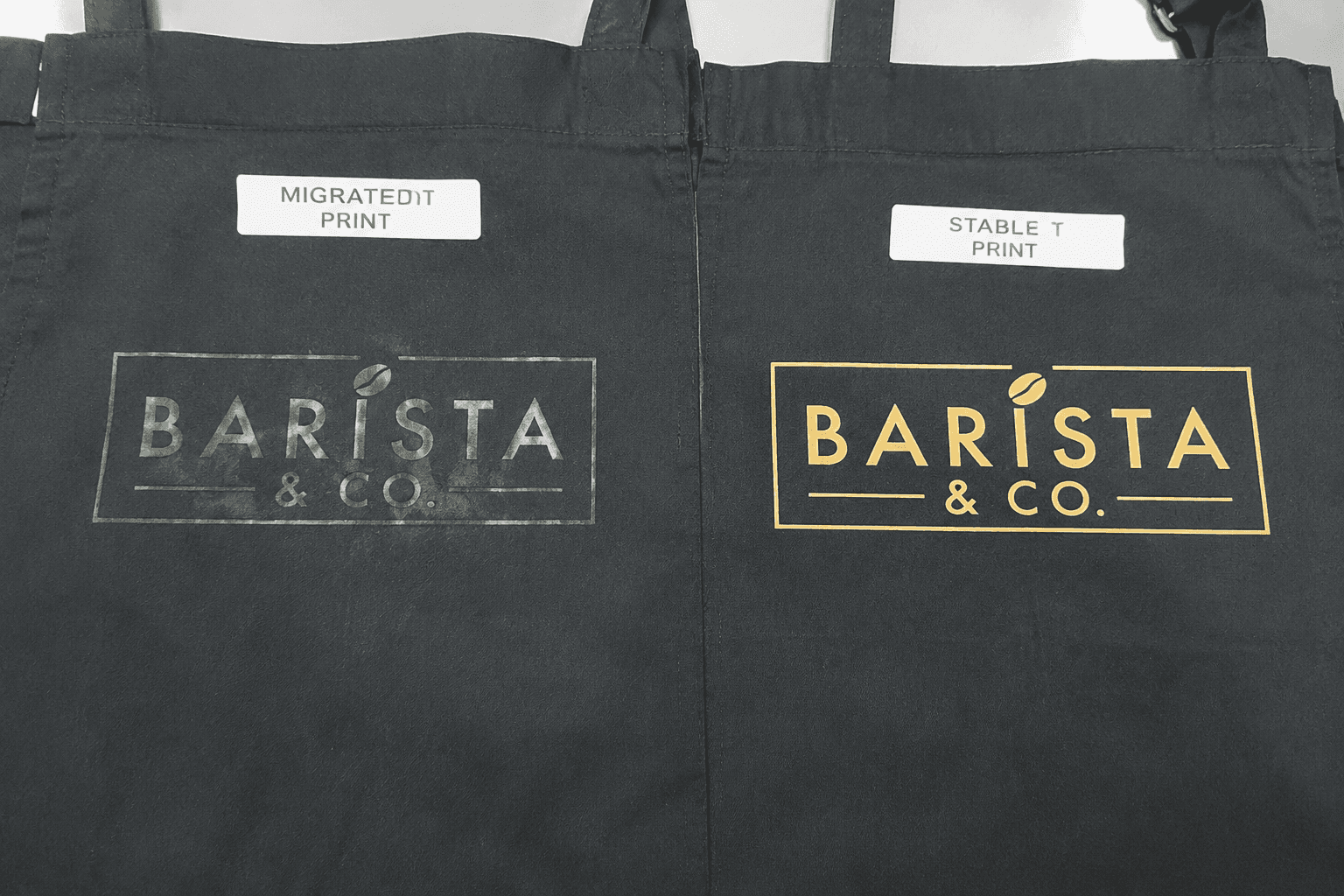
Logo placement needs the same discipline. A small woven label at the side seam or lower hem is usually safer than a large chest print. Thick silicone badges, rubber patches and wide heat-transfer logos should be reviewed for resistance behavior and heat stability before approval. If branding is required for line identification, keep it small and away from product contact zones.
- No-pocket bib apron: lowest-risk design for high-sensitivity assembly zones.
- One lower divided pocket: acceptable for many general electronics workshops with controlled contents.
- Shallow chest pocket: use only when it does not contact product during leaning or inspection.
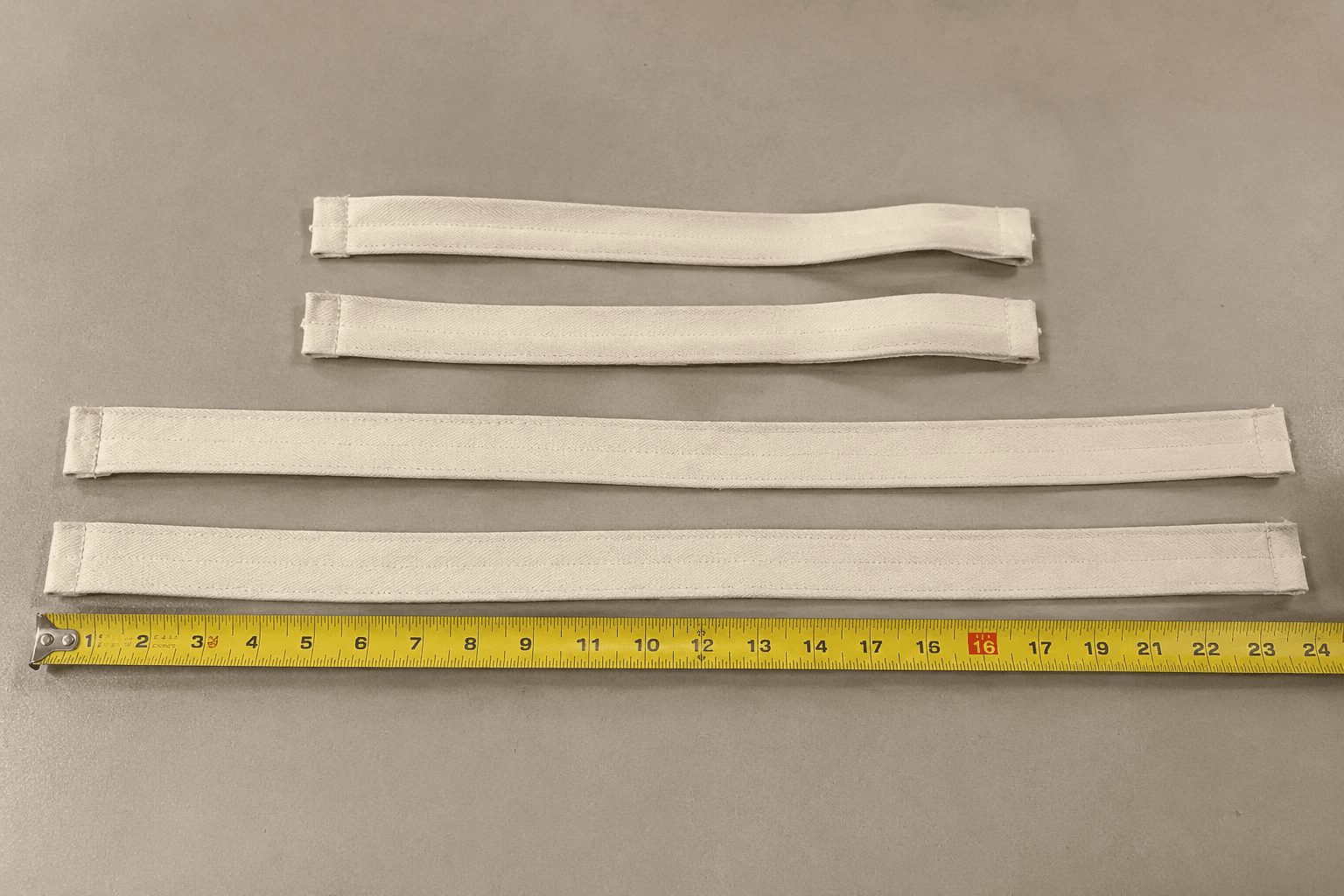
- Waist ties: commonly 85-100 cm each side; specify finished length to avoid loose ends.
- Logo area: keep small, avoid thick backing and test if decoration covers a large fabric area.
ESD Documentation and AQL Rules for Anti Static Aprons
ESD garment compliance is a common source of disputes. A supplier may show a fabric report, while the buyer expects proof for the finished apron after cutting, sewing, washing and hardware installation. For serious electronics assembly programs, the document package should separate fabric-level data from finished-apron data so failures can be traced to fabric, construction, laundering or mixed lots.
Common reference systems include ANSI/ESD S20.20 programs and IEC 61340 series requirements, depending on the buyer's region and end customer. In China, third-party testing can be arranged through SGS, Intertek, TUV or CNAS-accredited laboratories. A basic fabric surface resistance test may cost about US$80-150. A broader finished-apron test with wash cycles, point-to-point resistance and report photos may cost about US$250-600.
Test conditions must be visible in the report. Humidity strongly affects resistance readings, so reports without temperature, relative humidity, electrode type and measurement voltage are weak. Many buyers request results before and after washing at controlled conditions such as 23 degrees C and 12 percent or 50 percent RH, depending on their internal standard. Care labels should match the tested condition, such as 40 degrees C washing, no chlorine bleach and low-temperature tumble drying or line drying.
Inspection should cover normal garment defects and ESD-specific risks. Final inspection is commonly set at AQL 2.5 for major defects and AQL 4.0 for minor defects, unless the customer requires stricter control. Critical ESD defects, such as missing conductive fabric, wrong grid spacing, missing snap or mixed untested fabric lots, should be treated separately because one defect can defeat the product's purpose.
- Request fabric composition, GSM, conductive yarn spacing and color lot information.
- Require resistance results with test method, humidity, temperature, voltage and electrode details.
- State wash-cycle requirement clearly: 30, 50 or 100 washes.
- Ask for finished-apron report photos showing size, color, hardware, pockets and label placement.
- Use AQL 2.5 major / 4.0 minor as a common baseline, with critical rules for ESD failures.
- Keep retained samples from approved pre-production and each bulk lot for later audit comparison.
MOQ, Unit Price and Lead Time for Custom ESD Aprons
For OEM sourcing, apron price depends on fabric, quantity, construction and testing scope. From Zhejiang production, a simple bib-style anti static apron in 180 GSM 10 mm grid polyester, with no pocket, one-color stock fabric, standard woven label and individual polybag may fall around US$1.60-2.40 per piece at 1,000-3,000 pcs. A heavier 5 mm grid apron with adjustable neck strap, lower pocket, grounding snap, conductive reinforcement and stronger carton packing may run about US$2.40-3.80 per piece.
MOQ is usually 500 pcs per color and style when stock ESD fabric is available. For custom-dyed grid fabric, realistic MOQ is 1,000-2,000 pcs per color because mills have dyeing and finishing minimums. Standard light blue, royal blue, navy, grey and white are easier to source. Pantone matching is possible, but buyers should allow shade tolerance because polyester finishing and carbon grid yarn can affect the final color.
Sampling normally takes 5-10 days when fabric and hardware are in stock. If fabric must be dyed or specially finished, allow 12-18 days. Bulk production usually takes 25-40 days after sample approval and deposit. Third-party testing can add 5-10 working days after bulk fabric or finished samples are ready. For urgent projects, approve fabric and apron construction in two steps: lock the fabric test result first, then approve the sewing sample.
Payment and packing details also affect quotation. Export cartons for aprons are usually around 40 x 50 x 50 cm, with carton weight controlled for warehouse handling. Individual polybags are common, but bulk packing can reduce plastic and cost when the buyer repacks locally. If each apron needs a barcode, size sticker, lot label, ESD warning card or bilingual care label, include it in the RFQ so suppliers do not add it later as a surcharge.
- Prototype sample: 2-3 pcs per construction for fit, stitching and hardware review.
- Pre-production sample: use actual bulk fabric, actual snap, actual label and approved pocket layout.
- Stock-fabric MOQ: commonly 500 pcs per color/style.
- Custom-dyed fabric MOQ: commonly 1,000-2,000 pcs per color/style.
- Bulk lead time: usually 25-40 days after approval, excluding new lab testing time.
- Price comparison: align GSM, grid spacing, pockets, grounding hardware, report scope and packing before selecting a supplier.
RFQ Checklist for Bulk Anti Static Aprons
The strongest RFQ for anti static aprons is short but exact. It should state fabric GSM, grid spacing, resistance target, wash cycles, apron dimensions, pocket plan, grounding details, label text, packing, AQL level and ESD documentation requirement. With those details fixed, suppliers can quote the same product instead of competing with different assumptions.
Avoid approving a visually similar apron without confirming the conductive yarn. Some suppliers describe dark polyester as anti-static because it has a soft finish or temporary topical treatment. Such finishes may reduce static at first but can wash out quickly. For long-term electronics work, buyers should require grid or stripe conductive fiber construction and wash-cycle data.
Do not over-specify hardware while ignoring comfort. A 240 GSM apron with multiple pockets, heavy snaps and thick straps may pass a lab test, but operators may avoid wearing it correctly in warm workshops. Compliance fails when the garment is too hot, too long for seated work or difficult to adjust. In many daily assembly areas, a 180-200 GSM grid fabric apron with a clean pattern performs better than a complicated design.
Do not ask only for a certificate. A report is useful only when it matches the buyer's ESD control plan. Before PO placement, state the required resistance range, test method, wash cycles and whether testing applies to fabric or finished apron. This prevents disputes when bulk goods arrive and gives the supplier a measurable production target.
- Do not approve bulk production from a fabric swatch when the final apron includes snaps, pockets or layered panels.
- Do not assume all 5 mm or 10 mm grid fabrics have the same resistance stability after washing.
- Do not place custom-color orders without lab dip approval under the buyer's actual workshop lighting.
- Do not add large logo prints or thick badges before reviewing their ESD effect.
- Do not compare quotations unless GSM, grid spacing, hardware, testing scope and packing method are aligned.
- Do not skip carton and lot marking when the aprons will be used in audited EPA programs.