For professional sourcing teams, pfas free apron claims are not a marketing shortcut. They are a document-and-scope control issue that affects sample approval, retailer onboarding, carton marking, private-label copy and shipment release. In apron manufacturing, the usual failure is not sewing quality. It is a gap between the words used on the apron program and the evidence available for the shell fabric, finish, trims and finished garment.
Most water-repellent apron programs sit in a narrow sourcing range. Common constructions include 210 to 240 GSM poly-cotton twill for waist and short bib aprons, 240 to 280 GSM twill for hospitality bib styles, 280 to 320 GSM recycled polyester blends for service programs, and 10 oz to 12 oz cotton canvas for premium bib and cross-back aprons. Typical OEM MOQ is 600 to 1,000 pcs per color per style, though stock-fabric programs may start at 300 to 500 pcs and custom-dyed programs may require 1,200 pcs or more. Lab dips and finish confirmation usually take 4 to 7 days, bulk fabric preparation 12 to 20 days, cut-make-trim 10 to 15 days, and final inspection plus release 2 to 3 days.
A fluorine-free DWR generally adds about $0.12 to $0.35 per apron on standard twill programs and about $0.18 to $0.42 on heavier canvas styles, before any third-party testing fee. A finished-apron PFAS screen from a commercial lab commonly costs $180 to $450 per style on normal turnaround, while expedited service can reach $500 to $800. On first-time custom orders, compliance review, wording approval and testing typically add 5 to 12 calendar days. The right sourcing question is therefore not whether a factory can casually call an apron PFAS-free. It is what exact claim is being made, what parts of the apron it covers, what evidence supports it, and whether the wording is narrow enough to hold during buyer review.
- Use pfas free apron claims only when the wording matches the evidence file for the specific apron style, colorway and BOM.
- For most apron programs, safer wording is made with a fluorine-free water-repellent finish or made without intentionally added PFAS in the finish.
- Finished-apron testing is stronger than fabric-only testing because webbing, thread, labels, prints, patches and hardware can change claim risk.
- A fluorine-free DWR usually handles light water splash on aprons, but oil repellency and wash durability are often lower than older fluorocarbon systems.
- Collect lot-linked mill, chemical and factory declarations before shipment; a generic annual statement is weak support for private-label apron sourcing.
- On first-time custom apron orders, expect compliance work to add about $180 to $450 per style and 5 to 12 extra days to the launch path.
1. Where <strong>pfas free apron claims</strong> break down in bulk apron sourcing
Water-repellent aprons are bought for a defined use window, not for an abstract sustainability promise. A café bib apron may only need to shed coffee splash and light syrup contact long enough for the wearer to wipe it clean. A salon apron may need resistance to moisture, diluted color product and frequent wiping. A floral apron may need protection from stem moisture and intermittent spray. Problems start when sourcing teams use one broad phrase to cover these different constructions and evidence levels.
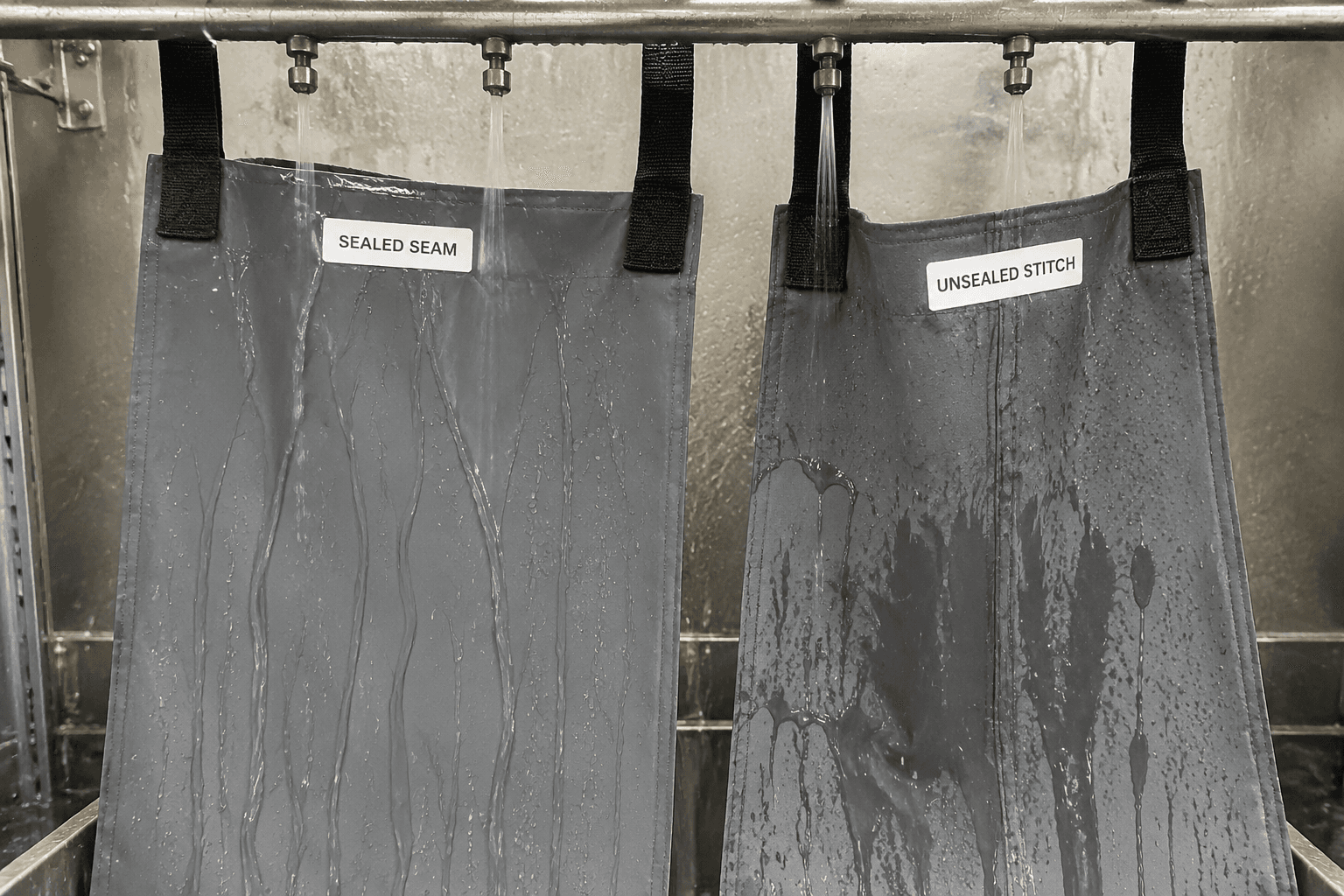
In bulk apron production, claim failure usually comes from scope mismatch. The finish supplier may state that the DWR chemistry is fluorine-free. The fabric mill may confirm that the finish was applied to fabric code TC235-BK in black and navy. The factory may then sew that fabric into a bib apron with polyester webbing, spun thread, a woven brand label, a care label, screen print and metal slider. If the external wording implies the whole apron is covered, but the documents only describe the shell finish, the claim is vulnerable.
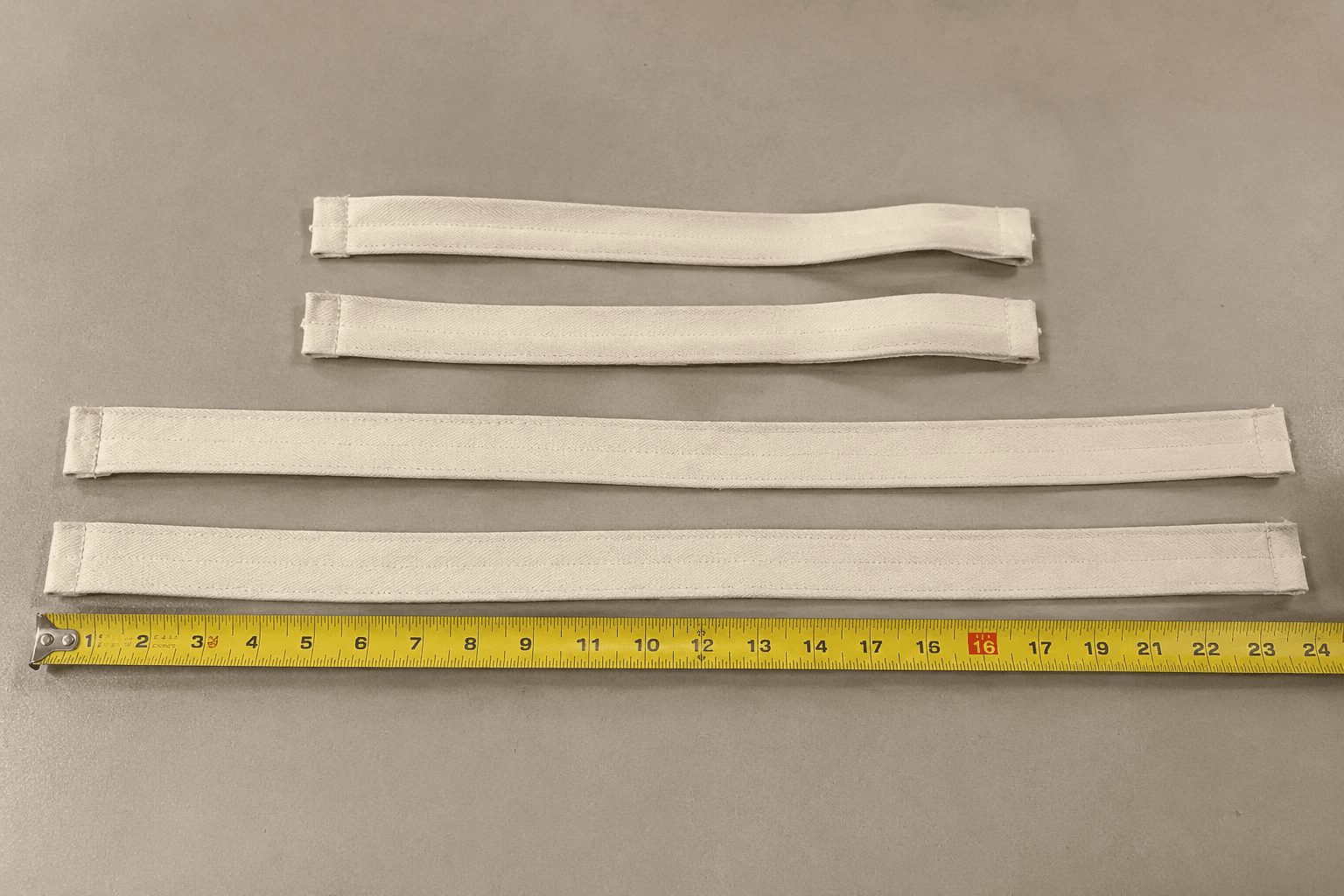
This matters because aprons are multi-component products with frequent trim substitution pressure. Even on a simple 240 GSM poly-cotton bib apron, shell fabric, pocket lining, neck strap, waist ties, thread, labels, packaging stickers and hangtags can come from different sources. A fabric test report does not automatically cover the finished apron. A chemical declaration on the DWR does not automatically cover the strap set. Buyers who want durable pfas free apron claims need the evidence chain to follow the approved apron BOM, not just the face fabric.
Commercially, the issue often surfaces late. The apron may pass workmanship inspection at AQL 2.5 major and AQL 4.0 minor, yet still be placed on hold because the retailer portal, product data sheet or carton mark uses wording the factory cannot support. That is why claim approval should be treated as a pre-production control, not a shipment-day discussion.
- Separate shell-fabric evidence from finished-apron evidence.
- Treat chemical statements, mill declarations and lab reports as different document types.
- Verify whether straps, labels, thread, prints, patches and hardware are inside claim scope.
- Freeze wording before care labels, cartons and sales copy are approved.
2. The evidence stack behind defensible <strong>pfas free apron claims</strong>
For most professional apron programs, a workable evidence stack starts with three linked documents. First, the finish supplier issues a statement that the specified DWR used on the apron shell is fluorine-free or made without intentionally added PFAS. Second, the fabric mill confirms that this exact finish was applied to the approved fabric code, color and order lot. Third, the apron factory issues a style-linked declaration confirming that the finished goods were made according to the approved BOM and supplier list. For hospitality, food-service and salon apron programs sold through standard B2B channels, this is often the minimum practical package.
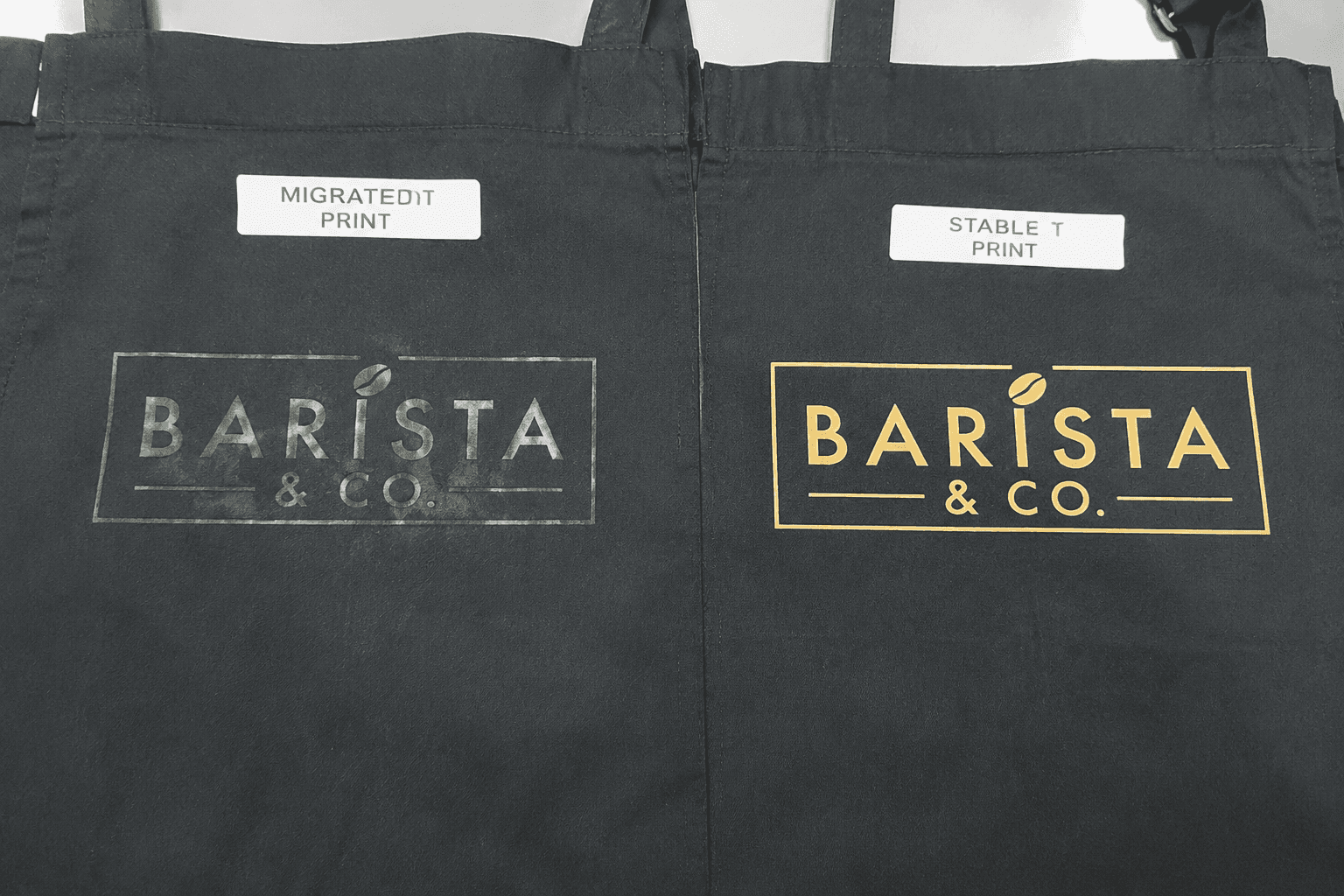
For tighter channels such as private-label retail, institutional tenders or export customers with formal compliance review, buyers should add a third-party finished-apron test report. This is materially stronger than fabric-only testing because it reduces the gap between approved inputs and shipped goods. On aprons with logo printing, contrast webbing, recycled-poly labels, bartacks, PU patches or metal adjusters, the finished-garment report is a better control document than a shell swatch report alone.
Testing scope needs careful reading. Some labs screen a targeted list of PFAS analytes. Some add total fluorine screening. Some combine PFAS screening with a broader restricted-substance panel. A non-detect result only means non-detect for the compounds tested, within the stated reporting limits, on the sample submitted. It does not justify unlimited product-wide language. Buyers should always check the sample description, style number, color reference, analyte list, test date and reporting limits before using the report to support apron copy.
Costs are manageable if planned early. A normal-turnaround finished-apron test usually costs $180 to $450 per style. If a buyer requests express turnaround in 2 to 4 working days, the fee can rise to $500 to $800 depending on scope. On a 1,500 pc order, that may add only $0.12 to $0.30 per apron. On a 300 pc pilot run, it can add $0.60 to $1.50 per apron, which is why many buyers use declarations during development and then schedule finished-apron testing on the first commercial lot.
- Ask whether the document covers chemical input, finished fabric or the sewn apron.
- Confirm sample components: shell, pockets, webbing, thread, labels, prints and hardware.
- Check style code, PO number, color, lot reference and test date.
- Review analyte scope and reporting limits before approving claim language.
3. Water-repellent performance limits on fluorine-free apron finishes
A fluorine-free DWR can be the right choice for professional aprons, but only when the use case is defined honestly. These finishes usually perform well against short-duration water-based splash. They are generally less effective against heavy oil, thick grease, repeated alkaline detergent exposure and high-frequency industrial laundering. Buyers should therefore write performance targets around actual apron use instead of asking for vague terms such as stain-proof, oil-proof or waterproof.
On 210 to 240 GSM poly-cotton twill, fluorine-free finishes are commonly suitable for café waist aprons, bakery aprons and front-of-house bib styles where the main exposure is beverage splash, diluted sauce or light surface moisture. On 240 to 280 GSM twill, they are often used for chain hospitality uniforms that need a cleaner surface appearance but not certified barrier performance. On 10 oz to 12 oz cotton canvas, they can work well for premium bib and cross-back aprons, although the curing step may firm the handfeel and slightly change drape.
Wash durability must be specified before PO issue. For light-service aprons sold into coffee chains or bakery groups, a realistic requirement may be visible water-splash resistance after 5 home-laundry cycles. For heavier-use service programs, buyers may ask for performance retention after 10 or 20 wash cycles at 40 to 60 degrees Celsius, depending on the customer laundry protocol. If the apron will be garment washed for a vintage handfeel after sewing, the mill and factory should validate process order early because wash-after-finish routes can reduce repellency sharply.
Cost must stay aligned with expectation. An entry-price 220 GSM waist apron at $2.10 to $3.20 ex works, finished with a basic fluorine-free DWR, should not be expected to perform like a coated industrial protective apron priced at several times that level. A 300 GSM canvas bib apron at $4.80 to $7.50 ex works can support a heavier hand, stronger reinforcement and somewhat better post-wash retention, but it is still a light-duty workwear apron, not chemical PPE. Precise use definitions help factories apply the right finish and help buyers avoid overclaiming.
- Match finish choice to use case: café splash, salon moisture, floral handling or light workshop wear.
- Set fabric weight early, such as 220 to 240 GSM for service aprons or 300 GSM and above for heavier bib styles.
- Request both initial repellency data and post-wash data after the agreed cycle count.
- Do not describe a DWR-treated apron as waterproof unless construction and testing support it.
4. Building an auditable declaration file before bulk cutting
A strong apron compliance file does not need to be bulky, but it does need to be exact. At minimum, it should identify the customer name, style number, colorway, PO number, shell fabric code, fiber composition, supplier name, finish name, finish supplier, trim suppliers and production date window. If the program includes multiple colorways, fabric weights or alternate strap sets, the file should show exactly which declaration applies to which combination. Generic yearly letters with no style or fabric reference are weak in a buyer audit and often fail private-label review.
The most efficient practice is to assemble this file before bulk cutting starts. In a standard custom apron OEM project, that file usually includes the BOM, approved supplier list, mill declaration, DWR chemistry statement, factory declaration, any third-party finished-apron report, approved care label text and the exact external claim wording allowed for cartons, hangtags or product data sheets. When these records are controlled in one revision file, the sourcing, QA and merchandising teams work from the same assumption.
Timing is a commercial factor. Collecting declarations from existing suppliers usually takes 3 to 7 working days. If the mill needs a refreshed confirmation from its chemical vendor, or if a new webbing, label or patch supplier has entered the BOM, add another 2 to 5 working days. If a test sample needs to be sewn and submitted after PP approval, add sample dispatch plus lab turnaround, which can extend the schedule by 5 to 10 calendar days. Buyers who wait until after bulk finishing often discover a document gap when the shipment window is already tight.
For B2B apron buyers, the rule is simple. If a claim matters enough to appear on a carton mark, retailer data sheet, tender file or line-sheet copy, it should be locked in the pre-production approval file. This reduces the risk of relabeling cost, obsolete packaging and shipment holds after packing is complete.
- Include style code, PO number, fabric code and color on declarations whenever possible.
- Store mill, chemical and factory statements in one revision-controlled file.
- Require supplier sign-off under the buyer compliance SOP before bulk cutting.
- Approve claim wording before woven labels, hangtags and cartons are printed.
5. Safe wording for apron claims: what buyers can say and what they should avoid
The safest apron wording is usually narrower than the sales team first requests. If the buyer mainly holds a fluorine-free finish statement plus linked mill and factory declarations, practical language is made with a fluorine-free water-repellent finish or made without intentionally added PFAS in the finish. These phrases are more defensible because they describe the basis of the claim and limit the scope to the finish rather than implying a limitless product-wide environmental promise.
If the buyer also holds a current finished-apron test report from a recognized third-party lab, the wording may sometimes be strengthened, but only within the tested scope and after internal compliance review. A claim approved for one 240 GSM black bib apron with polyester webbing should not automatically be copied to a 12 oz natural-canvas cross-back apron with cotton herringbone ties, even if both are produced by the same factory. In apron sourcing, style families often share patterns but not identical materials, and the evidence behind each style can differ.
Good suppliers manage wording control the same way they manage logo approval and measurement tolerance. The text is reviewed during pre-production, approved against the evidence file and then frozen. Once a phrase is printed on packaging, woven into a label or uploaded into a retailer system, changing it creates direct cost in reprint, relabeling, repacking and delayed release. On lower-margin apron orders, that administrative rework can erase the saving achieved by using a cheaper finish or untested trim source.
A practical internal test helps keep language disciplined. If the sourcing or compliance team cannot trace each phrase in the claim back to a named declaration or lab report in the apron file, the wording is too broad. Narrow wording usually ships faster and creates fewer disputes than aggressive wording.
- Safer wording: made with a fluorine-free water-repellent finish.
- Safer wording: made without intentionally added PFAS in the finish.
- Higher-risk wording: PFAS-free without a scope note or supporting evidence file.
- Avoid sweeping environmental claims on aprons unless legal and compliance teams cleared them.
6. MOQ, lead time, release control and the shipment-stage buyer checklist
Water-repellent claim management affects cost and schedule in visible ways. On a repeat style using an unchanged 235 GSM poly-cotton twill and an already-approved finish package, compliance maintenance may only add 1 to 3 working days for refreshed declarations. On a first-time style with a new fluorine-free finish, new strap source and custom packaging claim, the validation path often adds 5 to 12 calendar days. That time sits on top of the standard OEM path of 4 to 7 days for lab dips and finish confirmation, 12 to 20 days for fabric preparation and 10 to 15 days for cut-make-trim.
MOQ also matters. If a buyer orders 1,000 to 3,000 pcs per style, the cost of declarations, document control and one finished-apron test is usually commercially acceptable. If the opening order is only 300 to 500 pcs, testing and coordination costs can distort unit economics. For that reason, many buyers consolidate launch colorways, reduce trim variation and keep one shared shell fabric across multiple apron styles so a single evidence package can support a larger first order.
Shipment-stage control should rely on current records tied to the actual goods. A declaration issued 10 months earlier for another twill code or another webbing supplier is weak support if the present order changed mill, color process or strap vendor. Before shipment release, the supplier should be able to provide current declarations linked to the style, shell fabric, finish source and production lot, plus any agreed third-party report. Documentation review should be completed before goods are loaded, not after cartons are sealed.
Final inspection standards still matter, but they do not replace claim support. For most professional apron orders, final random inspection at AQL 2.5 major and AQL 4.0 minor remains standard for workmanship, measurement, shade and packing. The compliance file should be reviewed alongside those checks. An apron order that passes sewing quality but fails claim substantiation can still miss the ship date.
The most effective buyer checklist is simple: define the exact claim wording before deposit payment, specify whether evidence must cover shell fabric or the finished sewn apron, agree wash-durability targets, name the required documents in the PO or tech pack, and allow one extra approval round on first-time programs. That discipline keeps the claim commercially manageable and makes repeat ordering easier.
- Use 600 to 1,000 pcs per color per style as a realistic custom MOQ starting point.
- Budget about $0.12 to $0.42 per apron for fluorine-free DWR impact, depending on fabric and construction.
- Allow 5 to 12 extra days on first-time programs for declarations, wording review and possible testing.
- Request shipment-stage documents tied to style, color, PO and lot whenever feasible.
- Complete document review before final release together with AQL, measurement and packing checks.