For professional buyers, special effect apron logo printing should be approved against the actual apron program, not a showroom swatch. On aprons, decoration results change with fiber content, GSM, dye route, fabric face, softener level, coating, seam density and the buyer’s wash standard. A raised silicone logo can hold clean edges on a 260 GSM cotton canvas bib apron, then spread slightly on a 200 GSM brushed 65/35 poly-cotton waist apron after repeated folding and 40°C home laundering. A discharge logo can open well on reactive-dyed black cotton twill, yet fail on cationic polyester blends, pigment-dyed aprons or PU-coated utility styles.
The sourcing question is practical: which logo effect survives cutting, sewing, curing, folding, export packing and the buyer’s expected wash cycle at an acceptable defect rate? In apron OEM programs, decoration choice affects strike-off timing, MOQ by colorway, line yield, scrap allowance, AQL checkpoints and FOB cost per piece. In bulk, most claims start with the wrong effect on the wrong apron fabric, not with the artwork itself.
This guide focuses only on aprons for hospitality, retail, promotions and utility workwear. It stays within realistic China OEM ranges: 180 to 320 GSM shell fabrics, 800 to 1,500 piece MOQs for special effects, added decoration costs of about $0.28 to $0.95 per piece, and approval cycles that usually add 3 to 7 days before bulk release.
- Silicone is the most dependable premium option for working aprons when the base fabric is flat and stable, especially 180 to 320 GSM cotton twill or canvas.
- Discharge is mainly for dark 100% cotton aprons with confirmed dischargeable dyes; it is a weak sourcing choice for polyester-rich, pigment-dyed, coated or DWR-treated aprons.
- Foil gives strong retail impact on aprons but the shortest wash and abrasion life, so it fits gifting, events and short-life promotions better than daily uniform use.
- For special effect apron logo printing, buyers should lock fiber content, GSM, dye route, finish treatment, logo placement and wash standard before approving artwork.
- Most special-effect apron programs add 3 to 7 development days, put more pressure on MOQ by colorway, and should be inspected at no less than AQL 2.5 major / 4.0 minor for appearance and adhesion.
How to qualify special effect apron logo printing before apron sampling
Apron buyers should start with service conditions, not the decoration board. A café bib apron washed twice a week at 40°C, a bakery waist apron rubbed against counters and flour bins, and a gift-shop cotton apron used occasionally at home do not need the same logo method. For sourcing, the logo should be judged against expected wash count, front-body abrasion, stain-removal chemicals, ironing exposure and replacement cycle. If the target is 30 to 50 home washes or light commercial laundering, tolerance for edge breakdown, gloss loss and color shift is much tighter than for a one-season promotional apron.
Decoration choice also changes the order economics. On a 3,000-piece apron program with one chest logo around 8 x 10 cm, a standard water-based print may add only $0.18 to $0.32 per piece. Silicone typically adds $0.45 to $0.95 per piece depending on deposit height, coverage and color count. Discharge usually runs $0.28 to $0.58 per piece when the dye route is compatible. Foil often quotes at $0.30 to $0.72 per piece, but the true cost rises if yield drops or if replacements are needed after wash complaints. Buyers should compare total risk-adjusted cost, not print surcharge alone.
The safest approval path is sequential. First confirm fiber composition, GSM and dye route. Next review logo size, line weight and placement on the actual apron pattern. Then request a strike-off on the real shell fabric, not a substitute swatch from a similar mill. Before PP approval, the supplier should complete basic wash, rub and fold checks. During final inspection, print appearance and adhesion should be checked against a pre-agreed apron standard with defects such as edge breakup, foil skip, discharge inconsistency, gloss variation and silicone pinholes clearly defined.
- Confirm exact shell specs such as 100% cotton 260 GSM canvas or 65/35 poly-cotton 210 GSM twill, not broad labels like canvas or twill.
- Reserve 3 to 5 days for one special-effect strike-off and 5 to 7 days if comparing two effects on the same apron style.
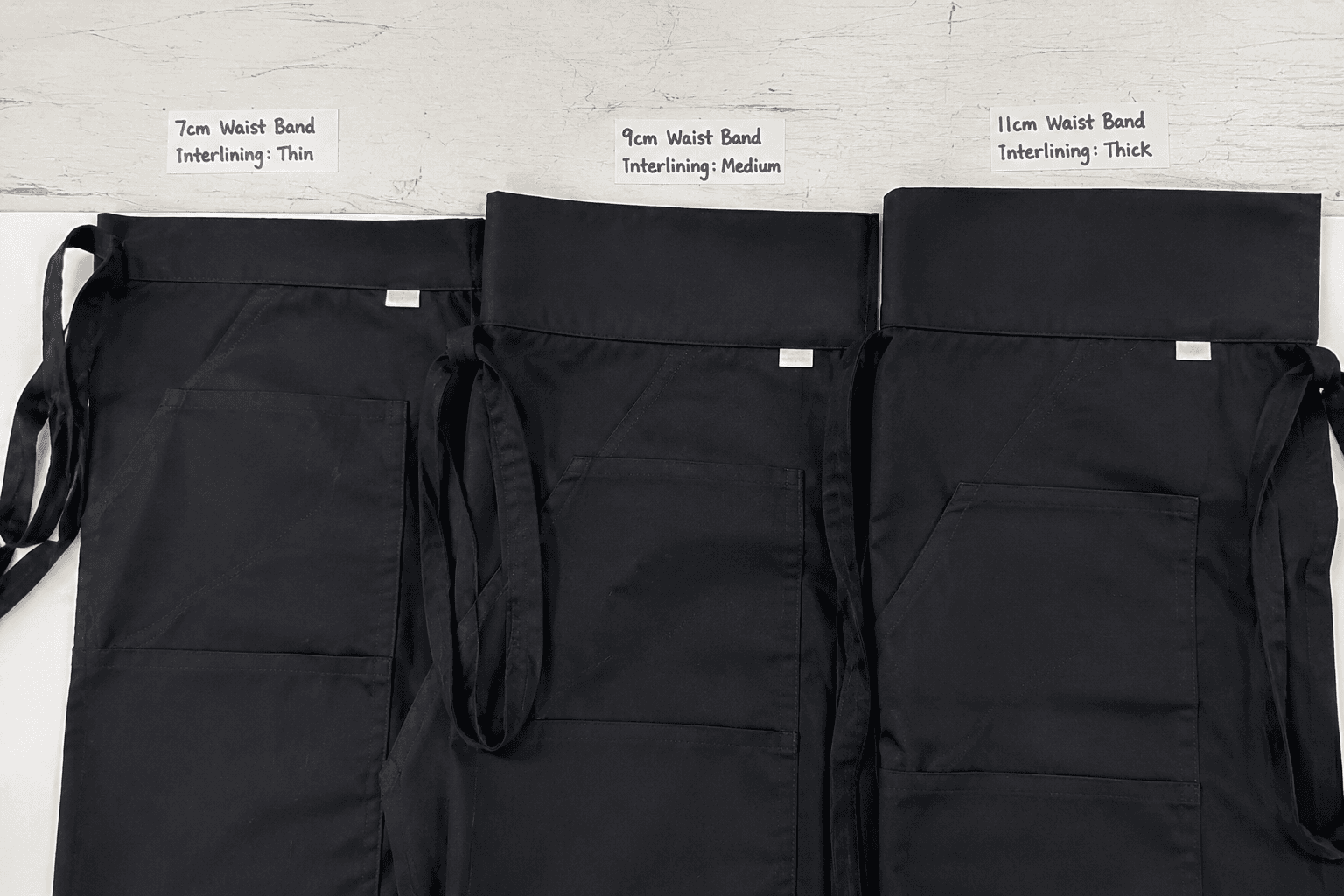
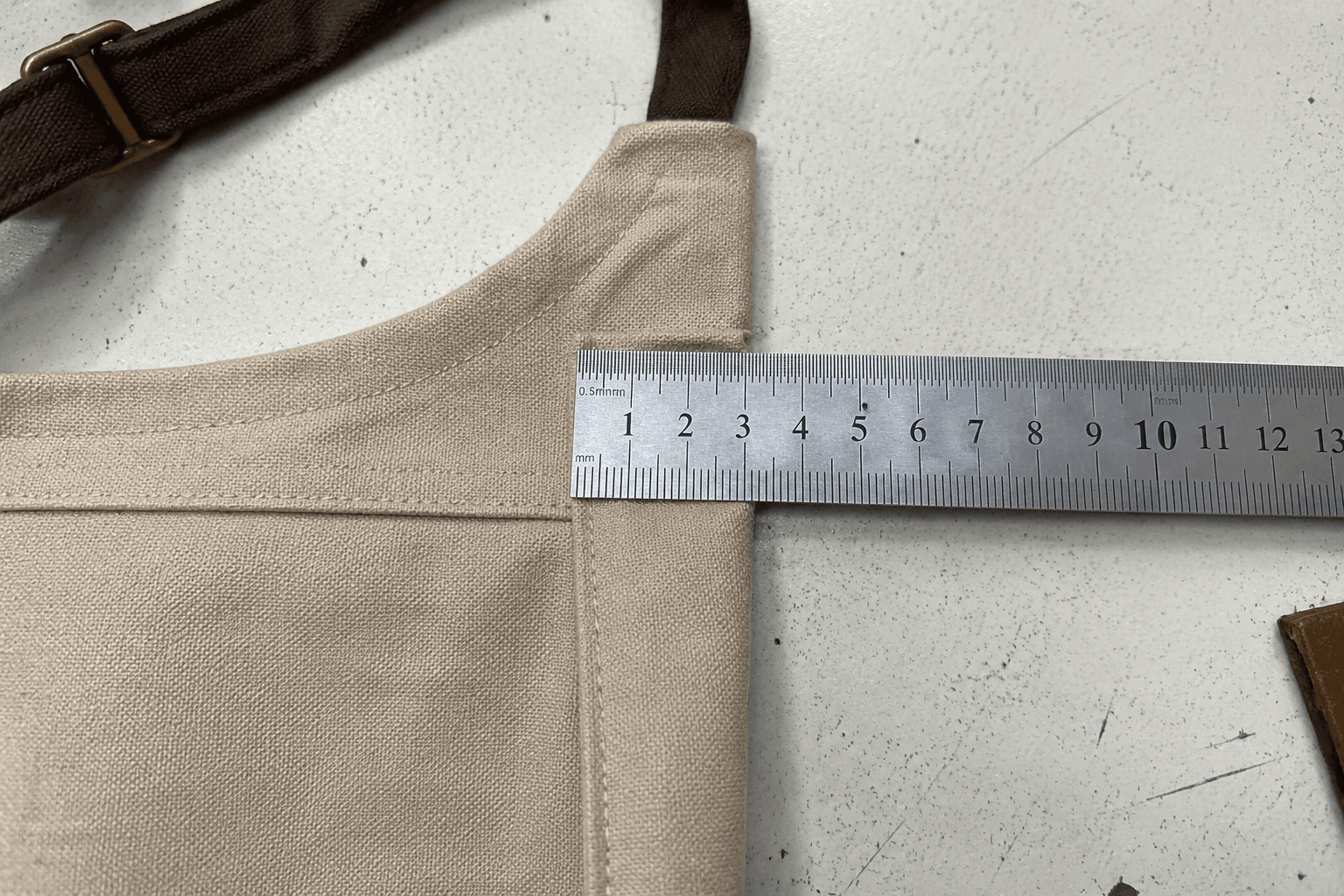
- Keep logos at least 2.5 cm from bartacks, pocket folds, waistband joins, rivets and neck hardware.
- Ask suppliers to quote decoration by logo size, color count and order band, such as 800 pcs, 1,500 pcs and 3,000 pcs.
- Approve against the actual care standard, such as 30°C home wash, 40°C normal wash or wipe-clean only for coated utility aprons.
Silicone special effect apron logo printing on canvas and twill aprons
Silicone is usually the strongest premium option when a buyer wants a raised logo on a working apron and still needs reasonable wash durability. On aprons, the best yield normally comes on flat, tightly woven bases: 100% cotton canvas at 220 to 320 GSM, 100% cotton twill at 180 to 260 GSM, and selected cotton-rich CVC constructions where the face is smooth and stable. These fabrics let the silicone sit on the surface instead of sinking into an open weave. For café, barista, retail and premium uniform bib aprons, that gives a cleaner chest logo and better perceived value than a flat print.
The limits show up when the apron surface is irregular or chemically treated. Heavy slub canvas, brushed twill, enzyme-softened faces, wax finishes, PU coatings and durable water-repellent treatments reduce edge control and adhesion consistency. In production, the silicone can spread at the boundary, cure unevenly or crack earlier after folding. For most apron logos, a practical deposit is about 0.4 to 0.8 mm. Below 0.4 mm, the effect often looks too flat to justify the cost. Above 1.0 mm, cracking risk increases, especially on bib panels folded for packing or on waist aprons that crease at the body bend. Compact logos and outlined marks usually perform better than large filled blocks.
Factory handling requirements are tighter than for a basic screen print. Lint control, panel moisture, screen mesh selection and oven temperature consistency all affect outcome. That is why many apron suppliers add 5 to 7 sampling days for silicone approval and ask for MOQs of 1,000 to 1,500 pieces per colorway. Some factories accept 500 to 800 pieces, but usually with extra screen and setup charges that raise the effective decoration cost by $0.10 to $0.18 per piece. For B2B buyers sourcing durable uniform aprons rather than gift aprons, silicone is often the safest special-effect choice when the fabric is compatible.
- Recommended bases: 180 to 320 GSM cotton twill, cotton canvas and stable cotton-rich CVC.
- Best logo coverage: keep the raised area under 100 cm² for higher yield and cleaner edges in bulk.
- Typical add-on cost at 1,000 to 3,000 pcs: $0.45 to $0.95/pc, depending on height, colors and coverage.
- Common MOQ: 1,000 to 1,500 pcs per colorway; smaller runs usually add a setup surcharge.
- High-risk bases: waxed, PU-coated, heavily brushed and deeply textured apron fabrics.
Discharge special effect apron logo printing for dark cotton aprons
Discharge is a narrow but useful option when the apron is dark, 100% cotton and the buyer wants a softer hand than silicone or plastisol. On a suitable apron base, the logo looks opened from within the fabric rather than sitting on top of it. The best candidates are black, navy, charcoal or deep olive cotton twill and canvas, usually 180 to 280 GSM, dyed with dischargeable reactive or direct dyes. For café, lifestyle retail and heritage-style apron programs, discharge can create a low-build chest logo that keeps the apron flexible and avoids the thicker hand of raised effects.
Its main limit is dye chemistry. Because discharge removes or alters the original dye, it is unreliable on polyester-rich blends, sulfur-dyed goods, cationic fabrics, pigment-dyed aprons, coated workwear and most DWR-treated surfaces. A 65/35 poly-cotton apron may discharge only the cotton portion, leaving a cloudy or heathered result. That may be acceptable on fashion-led retail goods, but it is usually rejected on corporate apron programs where repeatability matters and buyers expect one stable logo tone across reorders. Before approving artwork, the buyer should ask for written confirmation of dye route from the mill or factory.
Color consistency is the second risk. Even on the correct cotton base, discharge results shift with dye lot, finishing chemistry and wash treatment. One black reactive-dyed canvas lot may open slightly warm brown while the next opens cooler grey. If the logo must approximate a Pantone target or match a strict chain branding manual, discharge can create avoidable exposure. In most apron factories, MOQ is around 1,000 pieces per style-color and development adds 3 to 5 days for strike-off plus basic wash review. Buyers should use discharge because the apron fabric qualifies and the design goal suits it, not simply because the sample feels soft.
- Use discharge mainly on 100% cotton dark aprons with confirmed reactive or direct dye compatibility.
- Avoid discharge on polyester-rich aprons, pigment-dyed aprons, PU-coated aprons and DWR-treated aprons.
- Typical add-on cost: $0.28 to $0.58/pc on compatible cotton bases.
- Expected MOQ: around 1,000 pcs per style and colorway.
- Best fit: soft-hand logos on dark cotton bib aprons for retail, café and lifestyle uniform programs.
Foil logo effects on aprons: retail impact versus wash life
Foil is selected when the apron needs first-presentation impact more than long service life. Gold, silver, rose gold, matte metallic and gunmetal effects are common on gifting aprons, seasonal retail packs, launch-event merchandise and short-run promotional programs. The process usually uses an adhesive print layer followed by heat transfer of the foil film. On a flat cotton canvas or smooth poly-cotton twill apron front, the day-one appearance can be sharp and commercially effective, especially for retail display and packaging photography.
The weakness is durability under real apron use. Compared with silicone or a controlled standard print, foil breaks down faster under repeated washing, front-body abrasion, warm folding and direct ironing. That matters because aprons rub against counters, tills, trays and worktops exactly where the logo often sits. Once the edge begins to lift or fragment, appearance declines quickly. For B2B buyers expecting a uniform apron to hold acceptable presentation beyond roughly 20 to 30 home washes, foil should be treated as a risk item and tested carefully before bulk approval.
Foil is also sensitive to surface variation and construction. Brushed cloth, open textures, seam ridges and thick pocket edges interrupt transfer contact and reduce yield. A development sample may look cleaner than production if the sample panel was unusually flat or individually handled. Most apron factories therefore recommend foil only on flatter logo zones, usually below 80 cm², and only when the care instructions and end use support it. MOQs commonly start at 800 to 1,000 pieces, with added cost around $0.30 to $0.72 per piece depending on foil grade, color and coverage.
- Best use case: retail, gifting and promotional aprons, not high-turn daily uniform programs.
- Keep foil away from pocket mouths, center folds, waist tie crush zones and high-rub front panels.
- Typical visual decline appears sooner than silicone after about 20 to 30 home washes.
- Typical add-on cost: $0.30 to $0.72/pc; common MOQ: 800 to 1,000 pcs.
Fabric compatibility matrix for special effect apron logo printing
For sourcing teams, the fastest way to reduce decoration claims is to screen fabric compatibility before finalizing logo artwork. Aprons are often cut from heavier and more structured cloth than T-shirts, so the same effect behaves differently. A 240 GSM cotton canvas bib apron, a 190 GSM poly-cotton server apron and a 300 GSM wax-finish utility apron should not be treated as equivalent print bases. In OEM production, fabric structure, fiber blend and finish chemistry usually determine print success more than the logo drawing does.
Cotton canvas and cotton twill remain the most flexible options for special effects on aprons. They support silicone well, can accept discharge when the dye route is correct, and can take foil when the logo is small and wash demand is moderate. Cotton-rich CVC aprons sit in the middle: silicone and foil may be workable after testing, but discharge is generally weak or inconsistent because only the cotton portion reacts. Polyester-dominant aprons narrow the choices further, especially when cationic effects, stain resistance or anti-splash finishes are involved. The most restrictive category is coated or treated utility cloth, where both adhesion and transfer contact become unstable across bulk panels.
The compatibility review should include wash class and replacement cycle. A decoration method may be technically printable once, yet still be commercially unsuitable if the apron must hold presentation through weekly laundering for six months. The correct sourcing decision is therefore not what can be printed on a showroom sample, but what can be printed repeatedly at acceptable yield, packed without damage and still pass buyer inspection after wear and wash checks.
- 100% cotton canvas, 220 to 320 GSM: silicone good; discharge possible on dark reactive/direct shades; foil fair.
- 100% cotton twill, 180 to 260 GSM: silicone good; discharge good on compatible dark dyes; foil fair.
- CVC 60/40 or 65/35, 180 to 240 GSM: silicone fair to good; discharge poor; foil fair with testing.
- 100% polyester, 150 to 220 GSM: silicone limited; discharge not suitable; foil fair only if the surface is flat and smooth.
- Waxed, PU-coated or DWR-treated apron fabrics: silicone poor; discharge not suitable; foil poor to fair depending on finish stability.
Placement, construction and bulk approval limits on custom aprons
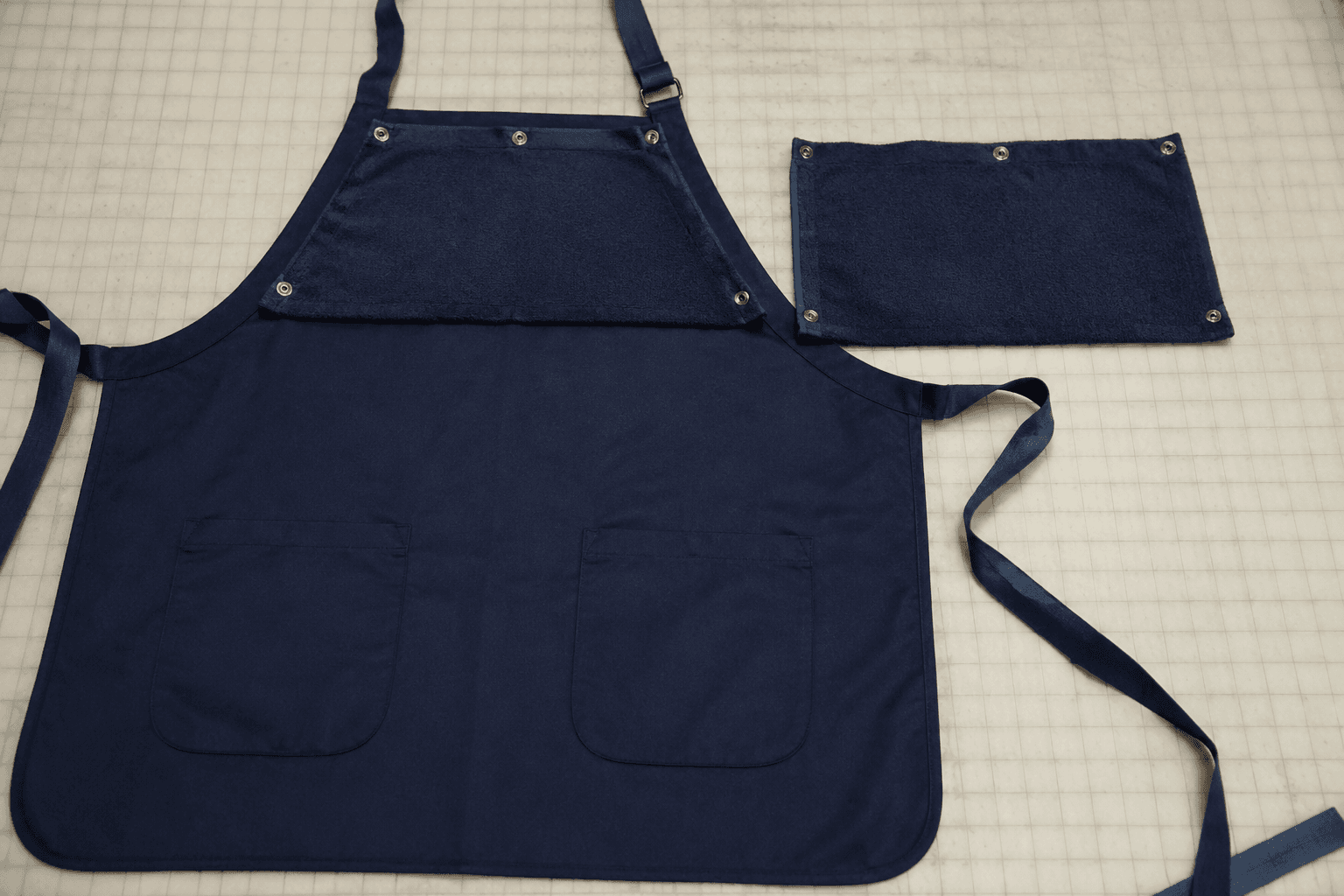
Even a compatible apron fabric can fail if the logo sits in the wrong place. Aprons contain more construction interruptions than many basic garments: patch pockets, divided utensil pockets, bartacks, waistband joins, neck adjusters, rivets and curved bib edges all create pressure variation during printing and curing. A silicone or foil logo placed too close to a pocket mouth may look acceptable on a flat panel, then distort after sewing, folding or export packing. On short waist aprons, lower-front placements often curl during wear and can crack thick deposits faster than upper-chest logos on bib styles.
For most professional apron programs, the safest print zone is the flattest upper-body panel with at least 2.5 to 3.0 cm clearance from seams and hardware. If the buyer wants a larger center-front decoration, the supplier should confirm whether the logo is printed on cut panels before sewing or on assembled fronts after sewing. Pre-sewing can improve flatness and print yield, but only when panel registration is tightly controlled. Post-sewing can improve placement accuracy on complex pocket layouts, but seam interference becomes more serious. That decision affects scrap rate, line speed and lead time, so it should be settled before PP approval.
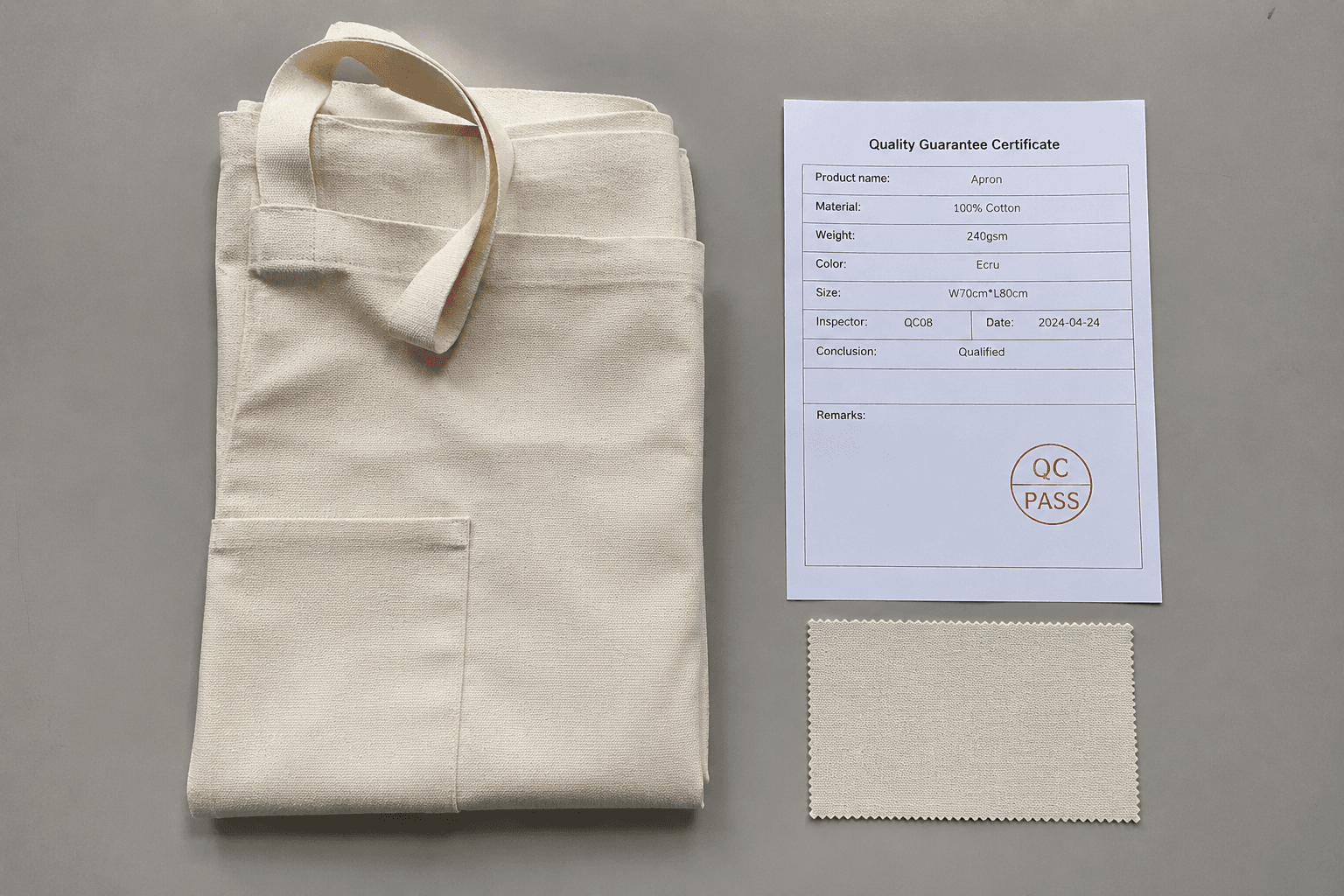
A practical approval workflow is simple. Approve artwork first, then lock fabric specification and dye route, run a strike-off on actual apron cloth, review wash, rub and fold performance, and approve a PP sample on final construction. For a standard custom apron order, bulk production is often 25 to 35 days after material readiness. Special effects usually add 3 to 7 days in development and another 2 to 5 days in production setup. For repeat orders, buyers should retain a sealed strike-off and one approved PP sample because silicone height, discharge tone and foil gloss cannot be controlled accurately from photos alone.
- Maintain 2.5 to 3.0 cm clearance from seams, pockets, rivets, eyelets and bartacks.
- Use the upper chest panel as the first-choice logo zone on bib aprons whenever the brand layout permits.
- Typical production timing: 25 to 35 days bulk after material readiness, plus special-effect setup days.
- Inspect bulk at AQL 2.5 major / 4.0 minor with defined standards for edge clarity, adhesion, gloss and color consistency.
- Retain a sealed strike-off and approved PP sample for reorders to control variation across repeat apron buys.