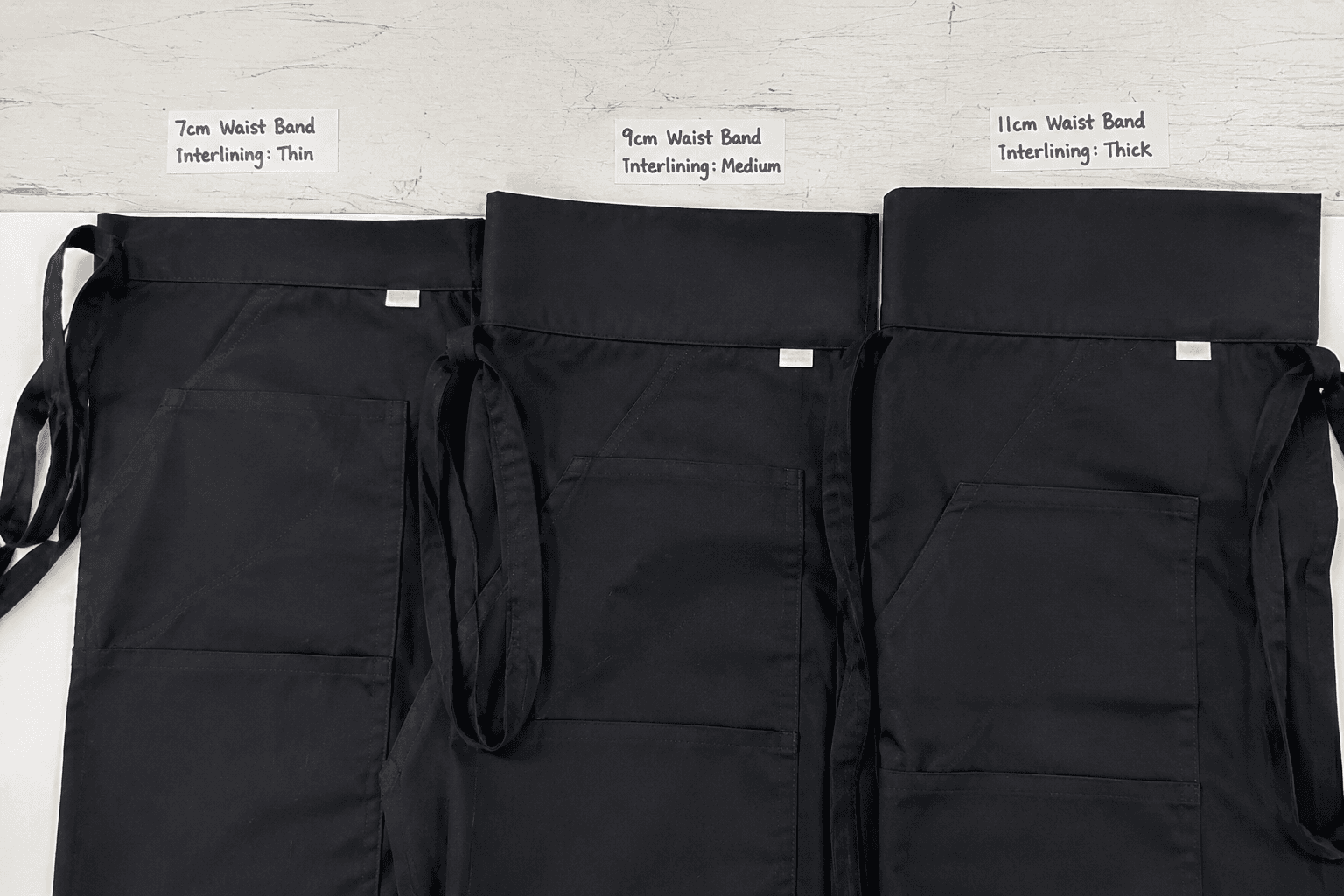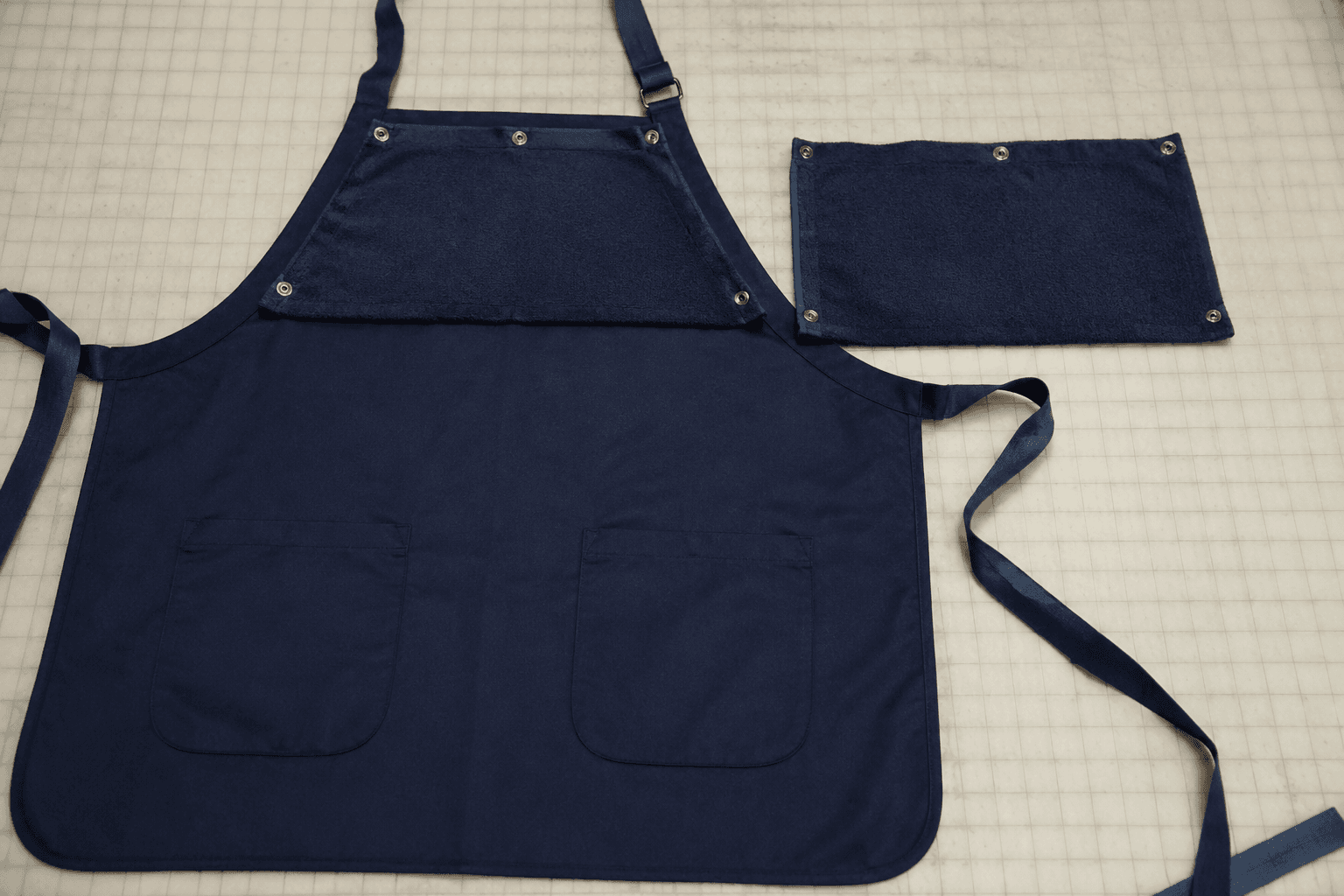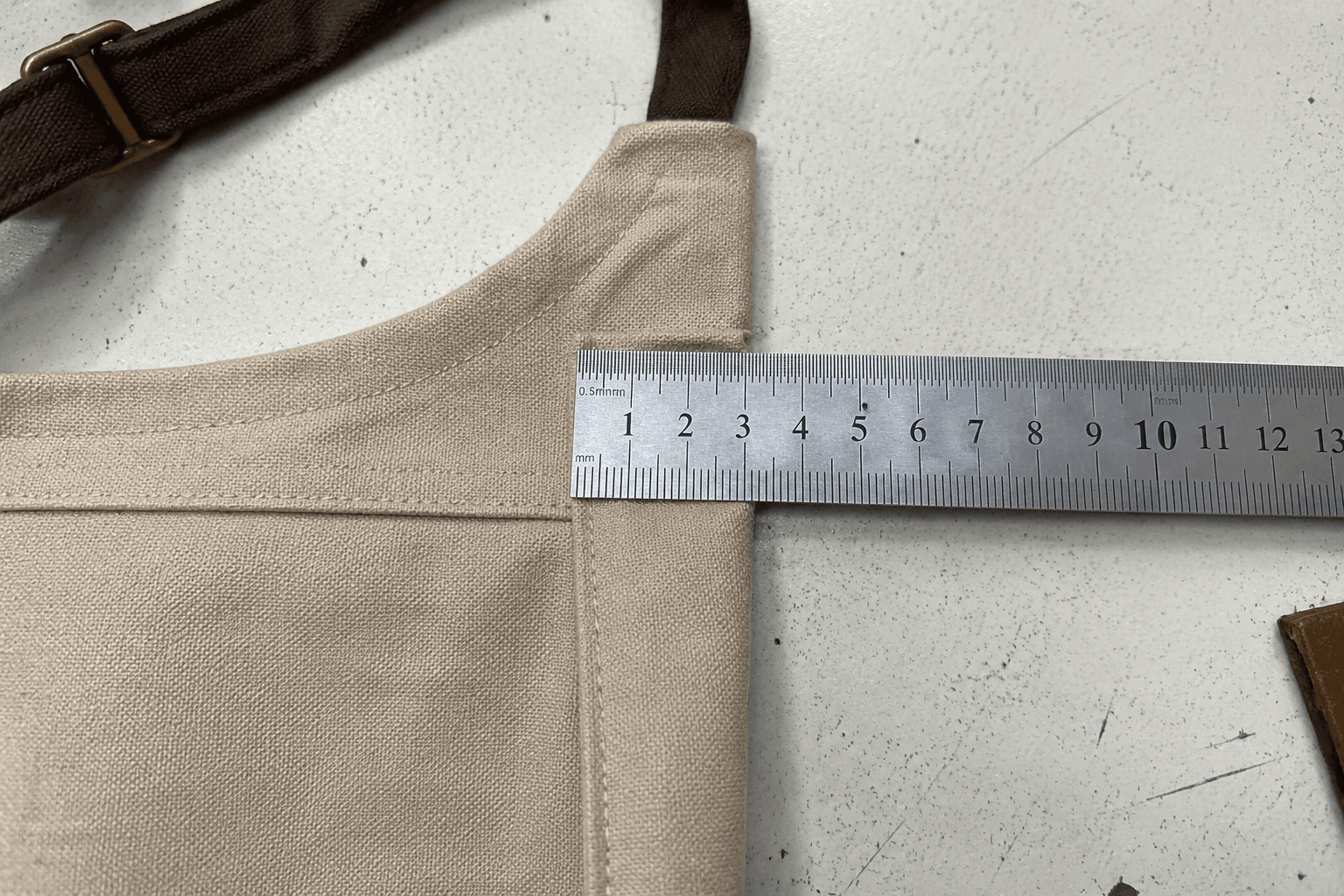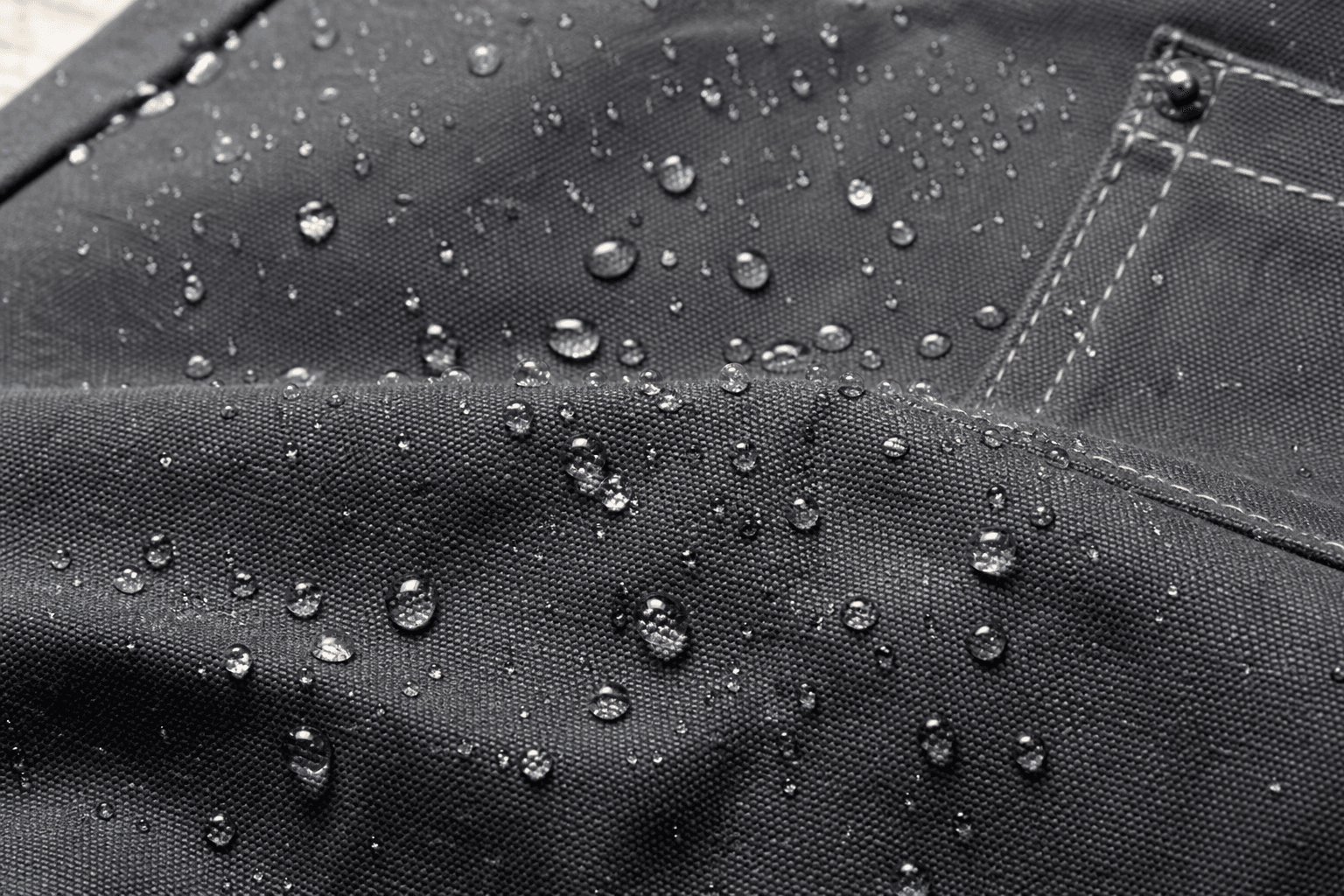
Most apron buyers start with fabric, pockets, straps, and logo placement. In field wear, however, apron movement features often decide whether staff keep an apron centered and usable through a full shift. A bib or waist apron can look correct on a fit sample but still block stride, pull at the waist ties, or bunch at the thigh when servers kneel, turn, or climb stairs.
For OEM production, side slits and center vents are not decorative details. They are measurable pattern and sewing specifications that affect seam stress, hem stability, operator minutes, post-wash appearance, and in some cases marker efficiency. For restaurant groups, hotel operators, hospitality distributors, and uniform importers, the practical sourcing question is which opening type fits the task, finished length, fabric stiffness, and FOB target.
This article focuses on apron-specific buying decisions for bulk programs: realistic slit and vent dimensions, suitable GSM and oz ranges, MOQ and lead-time impact, reinforcement choices, AQL control points, and the cost difference buyers should confirm before PP approval.
- Apron movement features become materially more important once finished length exceeds 70 cm, especially for runners, servers, hosts, and bar staff who move continuously.
- Dual side slits usually deliver the best lateral mobility and kneeling access, while a center vent maintains a cleaner front view for formal dining and hotel service uniforms.
- For 240-310 GSM twill, canvas, and denim aprons, slit and vent tops should normally use bartack, triangle lock stitch, or short box reinforcement to withstand commercial wear and repeated laundering.
- In OEM orders above 3,000 pieces, side slits or center vents usually add only $0.06-$0.22 per piece FOB, but weak reinforcement or poor placement can create far higher replacement cost.
- A workable spec should fix opening type, opening height, reinforcement method, wash basis, tolerance, and a simple wearer trial before PP sign-off.
When apron movement features are necessary by apron length, task, and fabric stiffness
Mobility problems usually begin when an apron reaches the knee zone. Waist aprons at 45-60 cm finished length rarely need an opening unless the fabric is unusually rigid, such as 330 GSM cotton canvas or 12 oz waxed cotton. At 70-80 cm finished length, the lower panel starts to resist brisk walking, especially on wider bistro or cross-back styles. At 80-95 cm, some form of release opening is usually required for staff who climb steps, kneel for stock access, pivot around tables, or carry trays through narrow aisles.
For B2B buyers, this is a functional uniform issue rather than a soft comfort claim. When aprons restrict movement, staff often shorten stride, loosen waist ties, twist the apron off-center, or lift the hem by hand. Those workarounds shift stress to side seams, tie attachment points, and hem corners. After repeated commercial laundering, the first failures are often seam grin at the slit top, broken topstitching, distorted side seams, or a front hem that no longer hangs square.
That is why apron movement features should be approved through wear simulation, not sample-table review alone. A practical PP trial should run 10-15 minutes and include a 20-meter fast walk, one flight of stairs, repeated side-steps, kneeling, and bending, first with empty pockets and then with a realistic service load such as an order pad, wine key, pen set, or handheld POS device. Flat measurements confirm size; movement testing confirms whether the apron works on the floor.
- 45-60 cm length: opening usually unnecessary unless fabric exceeds about 300 GSM or 11 oz.
- 70-80 cm length: restriction often appears during brisk walking and stair use.
- 80-95 cm length: side slits or a center vent are recommended for most front-of-house programs.
- PP trial: test one unwashed sample and one washed sample, with and without normal pocket load.
Side-slit apron movement features for fast service, side-step turns, and crouching
Side slits release the apron panel through one or both side seams and are the most practical movement solution for many service teams. Dual side slits work well for cafes, casual dining chains, bakery counters, bars, and runner positions where staff pivot repeatedly, move in tight aisles, and crouch to reach low storage. They keep the center front visually clean while allowing the apron to open naturally with leg motion.
Compared with a center vent, side slits usually provide better lateral movement. That matters when a server turns at a dish station, approaches a table from the side, or kneels to refill under-counter stock. From a factory perspective, side slits are also efficient because they are built into seam construction and normally require no extra fabric component. On 240-260 GSM 65/35 polycotton twill, a 0.8-1.2 cm bartack at the slit top is common. On 280-340 GSM cotton canvas or 10-12 oz denim, many factories shift to triangle lock stitch or a short box reinforcement because seam bulk and wash stress are higher.
Height selection is the main control point. On adult aprons with 75-90 cm finished length, side slit height commonly falls between 18 cm and 28 cm. Below 18 cm, the movement gain is often too small to justify the sewing step. Above 28 cm, the front panel may spread too far when the wearer stands still, which can be unacceptable for hotel or premium dining uniforms. In OEM orders of 3,000-5,000 pieces, dual side slits typically add about $0.06-$0.15 per piece FOB, depending on fabric weight, seam finish, and whether contrast topstitching or binding is specified.
- Typical slit height on 75-90 cm aprons: 18-28 cm.
- Best common fabric range: 230-300 GSM twill, canvas, or denim.
- Preferred reinforcement: bartack for lighter twill; triangle or short box stitch for heavier fabrics.
- Typical FOB adder at 3,000+ pcs: $0.06-$0.15 per piece.
Center-vent apron movement features for formal appearance and straight-line walking
A center vent places the opening on the front or back center line, either as a simple split or as an overlapped vent. This option is common on bistro aprons, hotel host uniforms, and premium restaurant programs where a symmetrical front view matters. When the wearer is standing, a center vent keeps the apron balanced and tailored, which is why buyers often choose it for formal service environments.
In movement, a center vent performs best during straight walking and stair use because the opening works with forward stride. It is usually less effective than dual side slits for repeated side-steps, diagonal lunges, or deep crouching. Fabric behavior matters more than many buyers expect. A 22-26 cm center vent on 210-230 GSM polycotton twill may open sufficiently, but the same vent length on 300 GSM cotton twill or 12 oz canvas can still feel restrictive unless the vent is extended to around 26-30 cm or the overlap is reduced.
Production control also has to be tighter because front-center misalignment is easy to see. If the apron includes a center pocket, yarn-dyed stripe, embroidery, or printed logo placement near the opening, the vent must remain square through sewing, pressing, and washing. Buyers should specify whether the approved vent measurement is pre-wash or post-wash. On cotton-rich fabrics, weak stabilization can cause torque after laundering, leaving the front panel twisted. In standard OEM runs, center vents usually add about $0.10-$0.22 per piece FOB because alignment, pressing, and topstitch control take more operator time than standard side slits.
- Common vent length on 80-90 cm aprons: 20-30 cm.
- Typical overlap depth: 2.5-4.0 cm depending on coverage target and fabric bulk.
- Best use case: formal front appearance with mostly forward walking.
- Typical FOB adder in bulk production: $0.10-$0.22 per piece.
Match the opening to fabric weight, handfeel, and laundry route
Opening dimensions should never be approved without reference to actual fabric behavior. A 65/35 polycotton twill at 210-230 GSM drapes very differently from a 100% cotton twill at 280-310 GSM, a 10 oz canvas, or a 12 oz denim. Two aprons can show the same 24 cm opening on a spec sheet and still perform very differently in wear. For sourcing teams, the slit or vent has to be matched to GSM, fiber content, finish, shrinkage, and laundering route.
In high-volume restaurant programs, 240-260 GSM twill remains one of the safest specifications because it balances drape, abrasion resistance, wash stability, and FOB cost. On an 80 cm apron in that range, a 20-24 cm side slit or a 22-26 cm center vent is often sufficient. For heavier 280-340 GSM canvas or denim, the opening usually needs to be 2-4 cm longer, or the body width needs to be narrowed slightly, to avoid drag across the lower panel. If the apron uses enzyme wash, garment wash, resin finish, or wax treatment, the opening should be checked after finishing because stiffness can change materially from greige to final handfeel.
Laundry method can shift the result even when sewing is correct. In commercial laundry programs, a 3%-5% length reduction can move the opening higher than intended and change how the apron hangs over the thigh. Cotton-rich fabrics can also develop torque if vent stabilization is weak. Buyers should therefore approve post-wash apron length, slit or vent height, and edge flatness before releasing bulk. For professional service uniforms, the safest choice is not the opening that looks best on the showroom sample; it is the one that still works after 10-20 wash cycles.
- 210-230 GSM twill: softer drape can allow shorter openings.
- 240-260 GSM twill: common restaurant range with balanced cost and movement.
- 280-340 GSM canvas or denim: usually needs longer openings or slightly reduced body width.
- Commercial laundry programs should approve post-wash dimensions, not pre-wash dimensions only.
PP approval, tolerances, and AQL checkpoints for apron mobility construction
Many apron complaints start with incomplete tech packs rather than sewing defects alone. A factory can reproduce the same general style while delivering inconsistent mobility if the buyer does not lock the measurable details. For bulk apron orders, especially above 2,000 pieces per color, the opening should be controlled like any other functional feature: type, position, height, overlap, finish, reinforcement, and tolerance should all be fixed before PP approval.
At minimum, the spec should state finished apron length, finished body width, opening type, opening height, overlap depth where applicable, hem turn, topstitch width, reinforcement method, and whether dimensions are measured pre-wash or post-wash. Tolerance for opening height is commonly set at ±0.5 cm on premium programs and ±1.0 cm on basic volume styles. If the pattern is graded, the reference point for the slit or vent should be defined clearly so the opening remains visually correct across size runs. This matters especially when shaped hems, patch pockets, contrast panels, or embroidered logos are involved.
For QC, movement openings should be checked in both flat inspection and simple wear simulation. Under an AQL 2.5 major / 4.0 minor plan, buyers often classify missing reinforcement, vent torque, or opening height outside tolerance as major defects because these directly affect function or appearance. PP approval should include at least one washed sample on cotton-rich fabrics or any apron intended for commercial laundry. A short wear routine of walking, sitting, kneeling, side-stepping, and stair climbing prevents many post-shipment disputes that are expensive to settle once uniforms are in use.
- Lock opening height tolerance at ±0.5 cm to ±1.0 cm depending on program level.
- State clearly whether approved dimensions are pre-wash or post-wash.
- Treat missing bartack, twisted vent alignment, and out-of-tolerance opening height as major defects.
- Use AQL 2.5 major / 4.0 minor unless the customer manual requires a stricter standard.
MOQ, lead time, and cost planning for bulk apron orders with slits or vents
From a sourcing perspective, movement openings are low-cost additions compared with heavier fabric upgrades, custom dyeing, branded metal hardware, or complex pocket assemblies. In most OEM apron programs in China, adding side slits or a center vent does not change the base fabric MOQ. MOQ is still driven mainly by fabric availability, color, and trim package. For common dyed twill, many factories quote a practical MOQ of 500-1,000 pieces per style per color. If the buyer specifies custom weaving, special coating, yarn-dyed stripes, or uncommon finishes, the effective MOQ often rises to 2,000-3,000 pieces because of mill minimums.
Lead time stays manageable if the movement feature is fixed early. For a standard custom apron in stock-supported or routinely sourced twill, development sampling usually takes 7-10 days, PP revision another 3-5 days, and bulk production around 20-30 days after final approval and deposit. Final inspection, packing, and export handover often add 3-5 days. The real delay appears when buyers change opening placement after PP sign-off. Revising a 20 cm center vent to a 26 cm dual side-slit construction can require pattern correction, marker revision, a resewn sample, and internal re-approval, adding roughly 4-7 days before bulk cutting can restart.
Complaint prevention is straightforward when the spec and trial method are disciplined. Most post-delivery issues come from incorrect opening height, weak reinforcement, or a mismatch between mobility design and pocket load. Buyers sometimes approve a vent on an empty sample, then later add large patch pockets, heavy embroidery, or thicker interlinings that change drape and reduce function. The most reliable process is to test one unwashed sample and one laundered sample in actual work footwear with normal tools in the pockets. In many cases, the right correction is small but decisive: extend slit height by 3 cm, change from rigid 310 GSM canvas to 245 GSM twill, or switch from a center vent to side slits before bulk cutting begins.
- Typical MOQ for standard custom aprons: 500-1,000 pcs per style per color on common fabrics.
- Custom or uncommon fabrics can push MOQ to 2,000-3,000 pcs because of mill minimums.
- Development sample lead time: 7-10 days; PP revision: 3-5 days; bulk production: 20-30 days.
- Late changes to slit or vent construction can add about 4-7 days before bulk can resume.