An apron warranty is useful only when it matches how aprons are actually produced, inspected, packed, shipped, distributed, and worn. For bulk custom apron programs, the question is not whether a factory can promise “good quality.” The question is what defects are covered, how they are measured, how quickly they must be reported, and what remedy is commercially realistic after cartons leave China.
From a factory perspective, an apron quality guarantee should be written around controllable production factors: fabric specification, shrinkage, color tolerance, seam strength, print or embroidery durability, metal accessory performance, carton packing, and confirmed workmanship standards. It should not cover normal wear, laundry misuse, customer sizing preference, resale slow movement, or design decisions approved before production.
For sourcing managers and brand buyers, the best warranty language is specific enough to protect the order without creating disputes later. A 10,000 pc cotton twill bib apron order, a 1,200 pc waxed canvas apron order, and a 50,000 pc non-woven promotional apron order need different warranty expectations because the materials, price points, use cycles, and defect risks are different.
- An apron warranty should separate material defects, workmanship defects, decoration defects, and packing errors.
- Most factory-side claims windows are 7-15 days after receipt for visible issues and 30-90 days for agreed performance issues.
- A realistic defect replacement apron policy usually applies only after photo evidence, quantity confirmation, and defect classification.
- Inspection standards should be agreed before bulk cutting, including AQL level, measurement tolerance, color tolerance, and wash-test method.
- Warranty cost depends on apron construction, fabric risk, decoration process, order value, and whether the buyer requires spare stock.
- The strongest apron returns policy is normally a replacement or credit policy, not physical return of low-value defective units to China.
What an apron warranty can realistically cover
A factory can promise control over its own production process. That means the apron warranty can cover defects caused by wrong fabric, wrong size, poor cutting, skipped stitches, weak bar-tacks, broken eyelets, incorrect logo placement, color deviation outside the approved tolerance, missing labels, incorrect packing ratio, or other failures against the signed specification sheet. These are direct manufacturing issues and can be checked against approved samples, pre-production samples, QC reports, and purchase order documents.
For example, if the order sheet specifies 260 GSM cotton twill, 65 cm width, 85 cm length, 2.5 cm neck tape, 90 cm waist ties, 3 cm measurement tolerance, reactive dyed black color, and one-color screen print at 28 cm x 18 cm, those points become warranty reference points. If the delivered apron is 240 GSM, the print is 20 mm off from the approved position, or the waist tie is only 72 cm, the factory should treat it as a quality claim if the variance exceeds the agreed tolerance.
However, a warranty cannot honestly cover every possible complaint after delivery. If a buyer approves a lightweight 180 GSM fabric for a cafe apron and later decides it feels too thin for a premium retail line, that is a development issue, not a defect. If a distributor washes cotton aprons at 90 C with chlorine bleach when the care label allows 40 C wash only, fading and shrinkage are not factory defects. A useful warranty protects against manufacturing non-conformance, not against changed expectations.
- Covered issues usually include wrong fabric composition, GSM deviation beyond tolerance, incorrect dimensions, open seams, broken stitches, poor bartack strength, wrong trim, missing label, wrong packaging, and decoration defects.
- Conditionally covered issues include shrinkage, colorfastness, print durability, and embroidery defects when the test method and care conditions were agreed before production.
- Not normally covered are normal wear, misuse, industrial laundering outside the care label, stains after use, buyer-approved design choices, and late claims after goods have been distributed.
Building the apron quality guarantee before bulk production
The most important time to define an apron quality guarantee is before fabric purchase and cutting. Once 8,000 meters of dyed twill are in the warehouse and cutting has started, the practical cost of changing a specification becomes high. A good supplier will push the buyer to approve a clear technical package, not because the factory wants paperwork, but because warranty responsibility depends on written standards.
For custom aprons, the basic quality file should include fabric composition, GSM or oz rating, weave, color standard, shrinkage allowance, measurement chart, stitch requirement, seam type, pocket size, reinforcement positions, neck strap construction, waist tie length, accessory material, label artwork, decoration artwork, packing method, carton mark, and inspection level. For cotton and poly-cotton aprons, fabric GSM tolerance is commonly plus or minus 5 percent. For finished measurements, many factories use plus or minus 1 cm for small parts and plus or minus 2 cm for body length or width, unless the buyer requires tighter control.
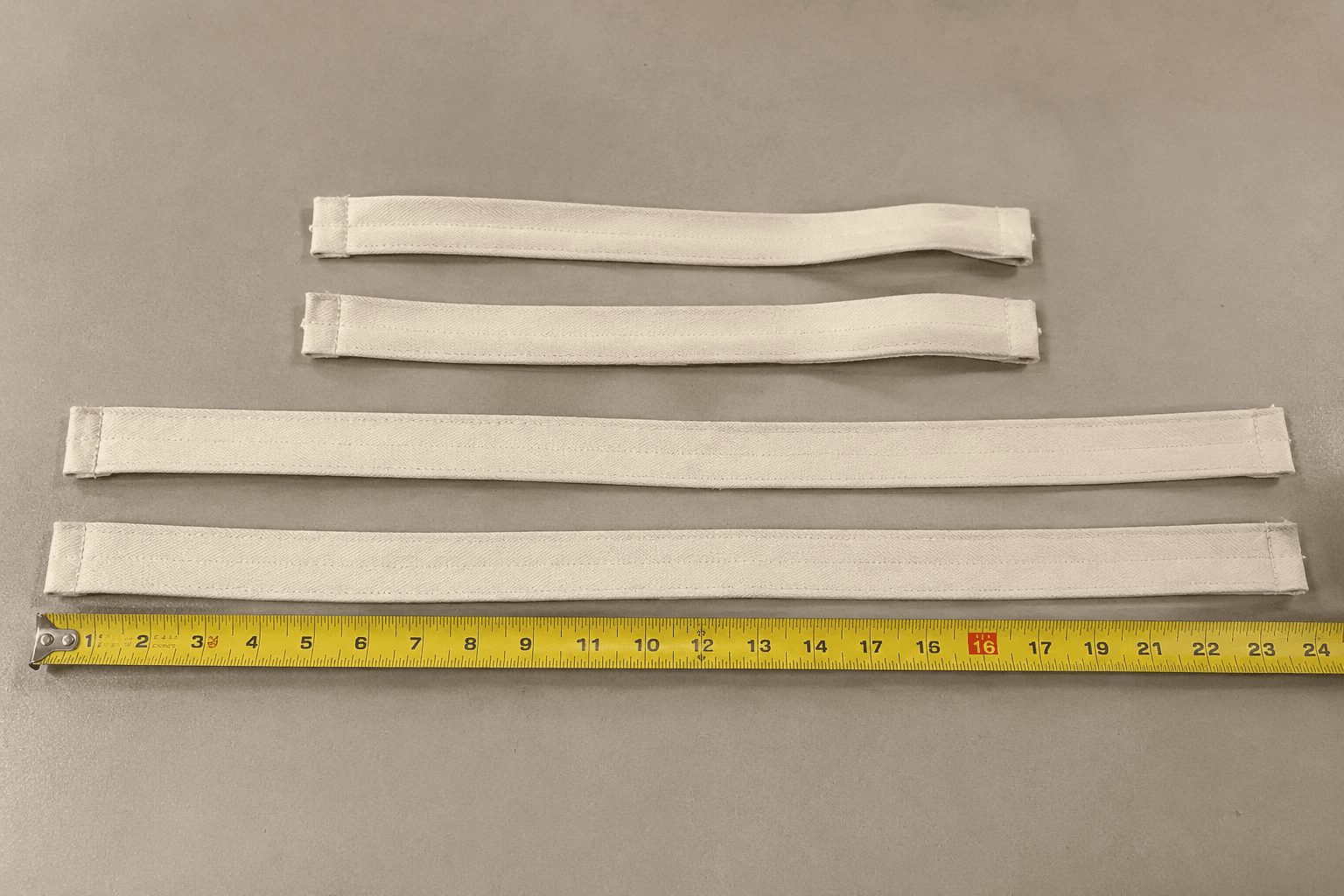
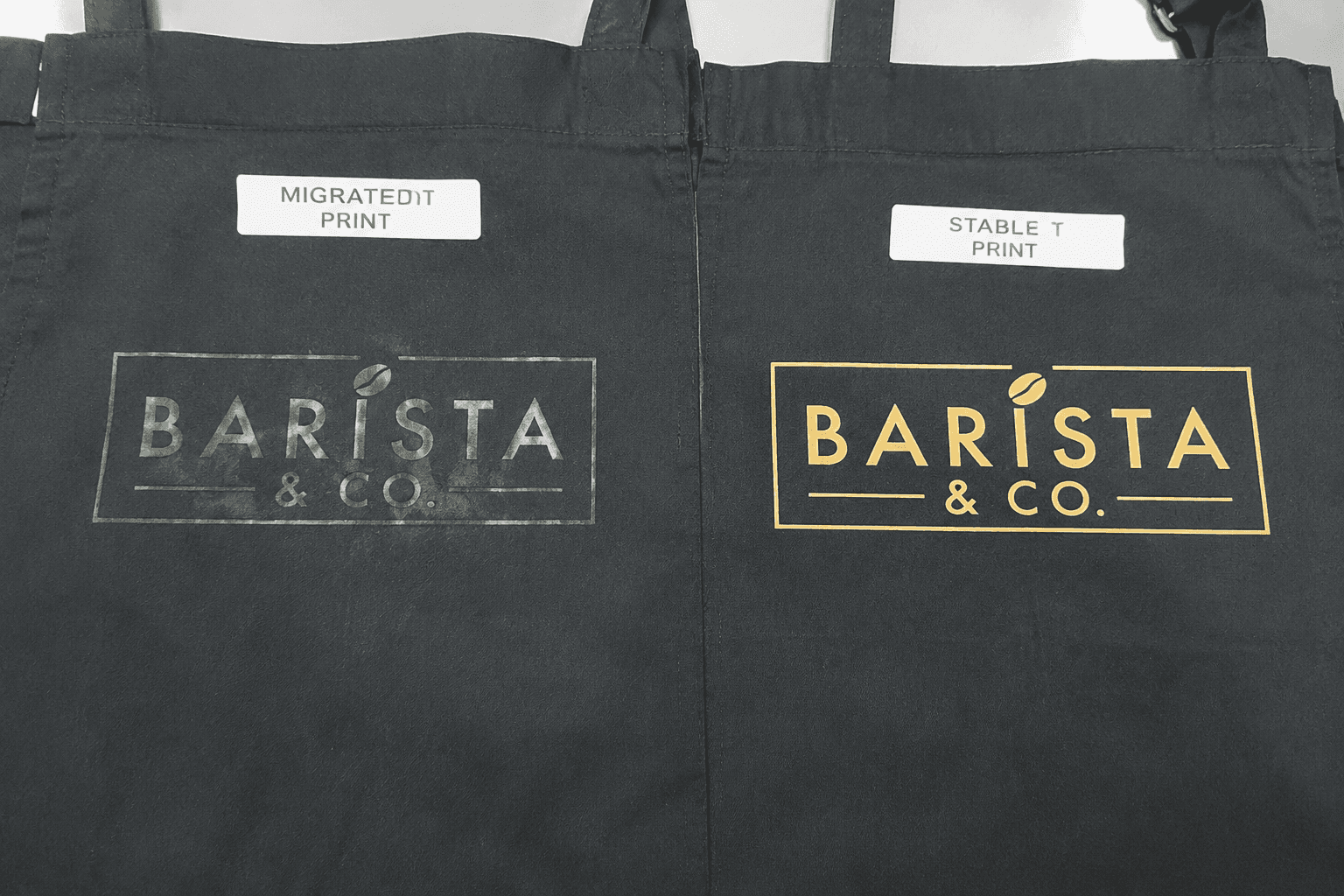
A factory can also define process-specific guarantees. Screen printing may be guaranteed against cracking under a 40 C domestic wash for 5 wash cycles if the ink system and curing temperature are suitable. Embroidery can be guaranteed for thread trimming, backing removal, and stitch density against the approved sample. Metal eyelets can be checked by pull test. Pocket corners can be reinforced with bartacks. These points are not expensive to define, but they prevent expensive arguments after delivery.
- A reliable pre-production sample should be made in actual bulk fabric, actual trims, actual label, actual decoration method, and actual packing style whenever lead time allows.
- For mid-weight commercial aprons, common fabrics include 240-280 GSM cotton twill, 195-245 GSM poly-cotton twill, 10-12 oz canvas, and 7-9 oz denim.
- For high-risk decoration, such as large solid screen prints or metallic ink, the buyer should request a wash test and rub test before approving bulk production.
- For private label retail orders, the guarantee should also cover barcode accuracy, hangtag placement, polybag warning text, carton assortment, and country-of-origin labeling.
Apron warranty limits by fabric, decoration, and use environment
Different apron programs need different warranty limits. A restaurant group ordering 20,000 black poly-cotton waist aprons at USD 1.20-1.80 per pc has a different risk profile from a retail brand ordering 2,000 heavy canvas cross-back aprons at USD 6.50-9.50 per pc. Low-cost promotional aprons are often used for short campaigns, while chef aprons and workshop aprons may face repeated laundering, oil, abrasion, and daily stress at tie points.
Cotton aprons have good hand feel and strong retail acceptance, but they can shrink and fade if dyeing, finishing, and washing instructions are not managed. A 260 GSM cotton twill apron may shrink 3-5 percent after washing, depending on fabric finishing and wash conditions. Polyester-cotton blends often offer better dimensional stability and faster drying, but they may not give the same natural handle. Denim and canvas aprons look durable, but dark shades can show crocking risk, especially in navy, black, charcoal, and indigo.
Decoration also affects warranty scope. Embroidery is durable, but very dense embroidery can pucker lighter fabric. Screen printing is cost-effective for bulk orders, but large prints on textured canvas require proper ink selection and curing. Heat transfer logos can be clean and sharp for small MOQ orders, but the warranty should define acceptable wash temperature and whether tumble drying is allowed. A factory can guarantee the chosen process only within the limits of the material and care method approved by the buyer.
- Cotton twill apron warranties should define shrinkage percentage, colorfastness standard, and maximum wash temperature.
- Denim apron warranties should define acceptable shade variation and dry or wet rubbing performance, especially for dark colors.
- Canvas apron warranties should define fabric weight tolerance, surface slub acceptance, and print adhesion expectations.
- Polyester-cotton apron warranties should define pilling, seam strength, and thermal sensitivity for heat transfer decoration.
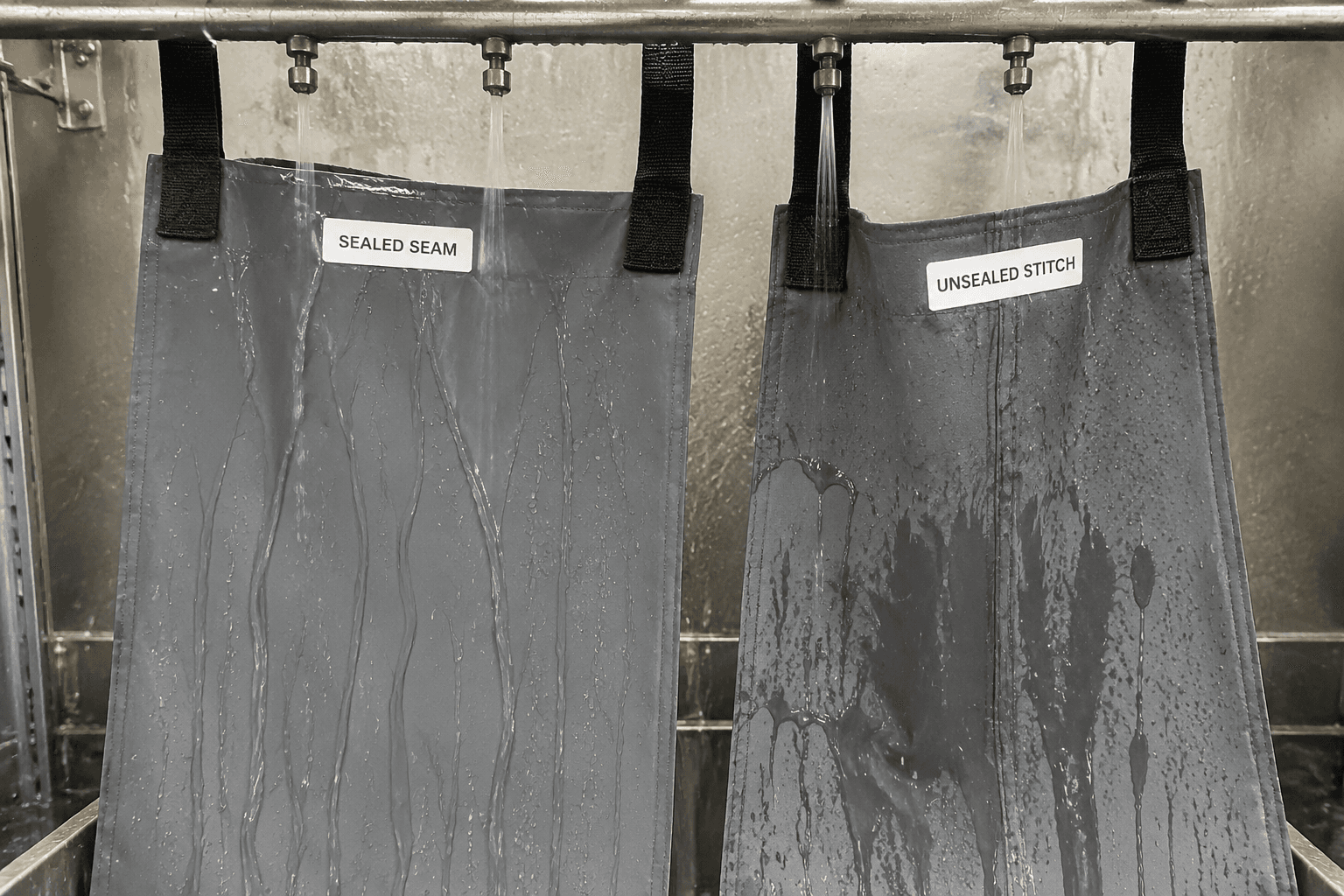
- Waxed or coated apron warranties should define coating marks, crease acceptance, cleaning limitations, and abrasion expectations.
Defect classification and defect replacement apron rules
A professional defect replacement apron policy starts with classification. Not every defect has the same commercial impact. A missing carton mark affects warehouse handling but may not affect the apron itself. A 3 mm thread end on the inside seam can be repaired or accepted depending on the inspection standard. A broken neck strap, wrong logo color, or severe shade panel difference is more serious because it affects use or sale.
Factories commonly divide defects into critical, major, and minor. Critical defects are safety or legal issues, such as sharp broken metal parts, wrong fiber content label, or banned substance failure. Major defects affect saleability or function, such as open seams, broken bartacks, wrong size, wrong logo, heavy stains, mismatched apron body panels, or missing pockets. Minor defects are small workmanship issues that do not affect function, such as short untrimmed thread ends, slight stitch waviness, or small fabric slubs within agreed fabric character.
For bulk aprons, replacement is usually calculated by confirmed defective quantity, not by the whole shipment unless the defect is systemic. If 300 pcs are defective in a 10,000 pc order and the defects are verified with photos, carton numbers, and inspection records, the factory may replace 300 pcs in the next shipment, issue a credit note, or produce spare pieces if urgent. Air shipping replacements can cost more than the apron value, so the remedy should be agreed commercially, especially for aprons under USD 2.00 per pc.
- Critical defects should normally be replaced or credited at 100 percent of confirmed defective quantity.
- Major defects should be replaced, repaired, or credited depending on quantity, use impact, and whether local rework is cheaper than remake.
- Minor defects should be handled according to AQL result, agreed allowance, or a negotiated discount if the shipment remains usable.
- Systemic defects, such as wrong fabric or wrong logo on all pieces, require a separate settlement because the problem affects the whole order.
- Claim evidence should include defect photos, close-up photos, full apron photos, carton number, quantity count, PO number, and receiving date.
How apron quality assurance reduces warranty claims
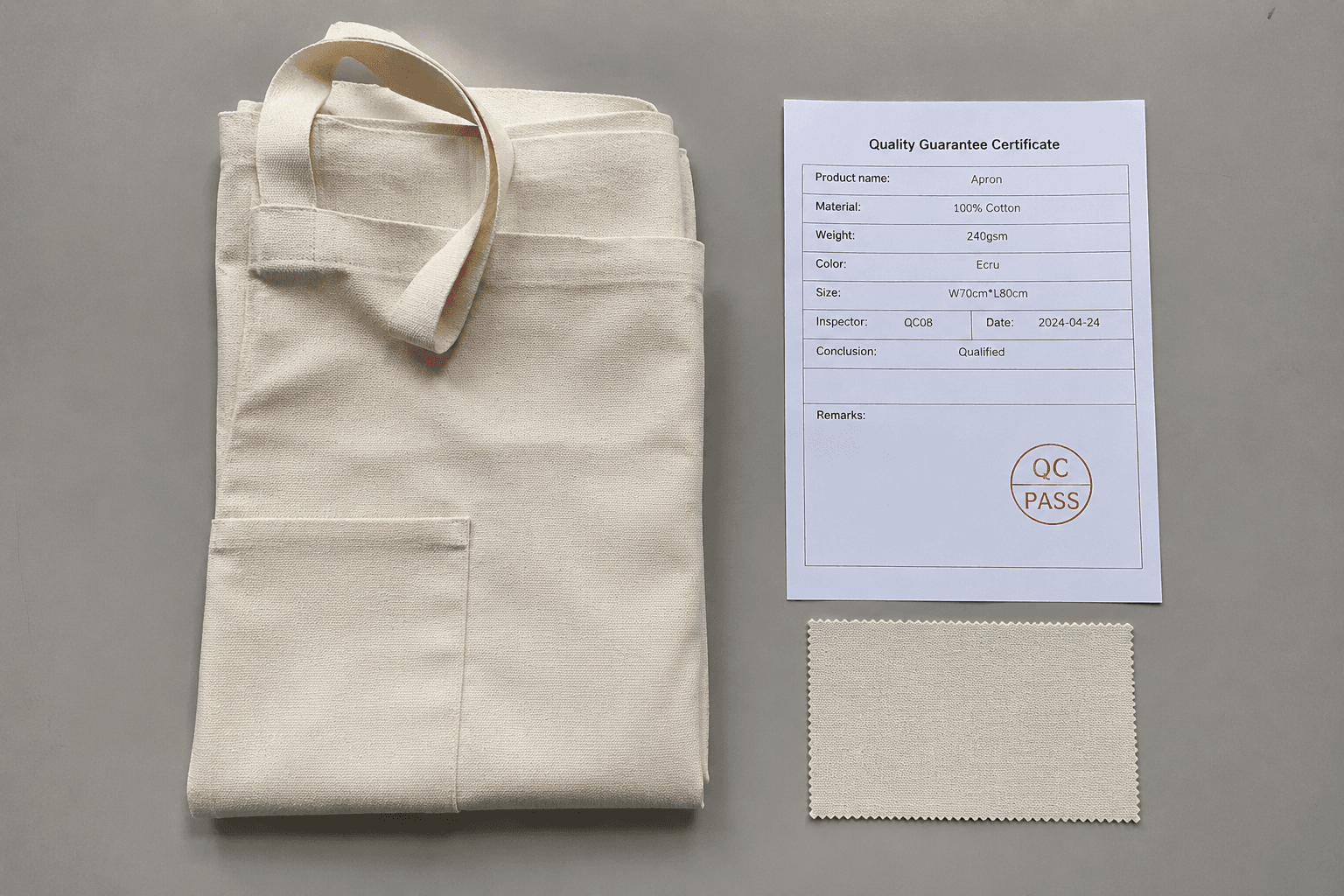
Apron quality assurance is not only final inspection. It begins with fabric booking and continues through cutting, sewing, decoration, trimming, pressing, metal detection when needed, packing, and carton audit. A factory that waits until final inspection to discover shade variation or wrong pocket placement has already lost time and money. For buyers, the strongest warranty is supported by process control records before shipment.
A typical apron order has several checkpoints. Incoming fabric inspection checks GSM, width, shade lot, defects per roll, and hand feel. Cutting inspection checks pattern alignment, panel size, pocket dimensions, and quantity by size or style. Sewing line inspection checks seam allowance, stitch density, bartack position, tie attachment, and pocket symmetry. Decoration inspection checks logo size, color, placement, curing, embroidery thread, and backing. Final inspection checks appearance, measurements, packing, carton marks, and quantity.
For orders above 3,000 pcs, a mid-production inspection is often more valuable than only a final random inspection because it catches repeated sewing or decoration errors before all units are completed. For orders above 10,000 pcs or multi-SKU retail programs, a buyer may request inline QC photos every 2-3 production days and a final third-party inspection. The cost of third-party inspection in China is often around USD 180-300 per man-day, which is small compared with the risk of a container-level claim.
- Common AQL levels for apron final inspection are general inspection level II with AQL 2.5 for major defects and AQL 4.0 for minor defects.
- Measurement checks should include body length, body width, bib width, pocket size, neck strap length, waist tie length, and label position.
- Fabric checks should include GSM, composition certificate if required, shade lot control, shrinkage test, and colorfastness where relevant.
- Decoration checks should include logo position tolerance, color match, print curing, embroidery density, thread trimming, and wash-test results for repeat programs.
Apron returns policy for international bulk orders
An apron returns policy for international B2B orders is different from an e-commerce consumer return policy. In most cases, physically returning defective aprons to China is not economical. Ocean freight, import duties, handling charges, and customs paperwork can exceed the value of the goods, especially when the unit price is USD 1.00-5.00. For this reason, factory policies usually rely on evidence review, local disposal, local rework, credit note, or replacement in the next shipment.
A practical policy should define the claim window. Visible defects such as wrong packing, wrong logo, incorrect color, stains, or broken stitching should normally be reported within 7-15 calendar days after the buyer or warehouse receives the goods. Performance defects such as abnormal shrinkage, print cracking, dye bleeding, or metal eyelet failure may need a longer window, commonly 30-90 days, but only if care instructions were followed and the test conditions are documented.
The policy should also define responsibility for freight. If the factory shipped the wrong product or a confirmed major defect affects a significant quantity, the factory may absorb replacement product cost and negotiate freight sharing. If the buyer requests urgent air replacement for a small quantity of low-value aprons, the air freight may be buyer-paid or shared. For repeat programs, the most efficient solution is often to add replacement aprons to the next scheduled shipment and issue a credit for immediate accounting.
- Visible defects should be reported with photos and quantity count before goods are distributed to stores, restaurants, or end customers.
- Performance defects should include wash method, detergent type, water temperature, drying method, number of cycles, and sample photos before and after washing.
- The factory should not require return of every defective apron when photos, videos, and random sample return are enough to confirm the issue.
- For large claims, both sides may agree to seal defective stock, arrange third-party inspection, or return 5-20 pcs as physical evidence.
Cost, MOQ, and lead time impact of stronger warranty terms
Stronger warranty terms have cost. Buyers sometimes ask for a one-year unconditional apron warranty on custom bulk orders without changing fabric, inspection level, testing budget, or spare quantity. From a factory viewpoint, that is not realistic. If the buyer needs stronger protection, the production plan must include better materials, more testing, tighter QC, and sometimes extra stock.
For example, upgrading from 200 GSM poly-cotton to 240 GSM poly-cotton may add USD 0.18-0.35 per pc depending on fabric market and apron size. Adding bartacks at pocket corners and tie points may add USD 0.03-0.08 per pc. Pre-shipment wash testing may add 2-4 days. Lab testing for composition, colorfastness, and restricted substances can add 5-10 working days and USD 80-300 per test item. Holding 2 percent spare stock for quick replacement increases material and storage planning. These costs are not excessive, but they need to be visible in the quotation.
MOQ also matters. For a 500 pc custom apron order with a special dyed fabric, the factory may not be able to hold replacement fabric after shipment because mills sell by roll or dye lot. For a 20,000 pc repeat order, keeping 1-2 percent extra fabric or finished stock is easier. Buyers who expect rapid replacement should discuss spare units before production, especially for seasonal colors, custom woven labels, special metal trims, or private label packaging.
- A basic warranty package may include standard final inspection, photo report, and replacement or credit for confirmed major defects.
- A higher-control package may include pre-production sample approval, fabric test, inline inspection, final inspection, carton audit, and retained samples.
- A retail compliance package may include lab testing, barcode verification, metal detection if required, carton drop test, and documented AQL inspection.
- Typical apron production lead time is 20-35 days after sample approval for standard fabrics and 35-55 days for custom-dyed or special-weave fabrics.
- Typical MOQ is 300-500 pcs for stock fabric with simple logo, 1,000-3,000 pcs for custom fabric color, and higher for special yarn-dyed or coated materials.
Writing apron warranty clauses into the purchase order
The purchase order should not say only “factory guarantees quality.” That sentence is too broad to enforce and too vague to manage. A better clause defines the warranty period, covered defects, excluded conditions, evidence requirements, inspection standard, remedy method, and maximum liability. This protects both sides because it connects the commercial promise to measurable production facts.
A clear clause might state that the factory warrants the aprons against manufacturing defects for 60 days after receipt at the buyer’s warehouse, provided the goods are stored and used according to the care label. It may define manufacturing defects as fabric, sewing, decoration, trims, labeling, packing, or measurement non-conformance against the approved sample and specification sheet. It may state that claims must include photos, quantity count, carton references, and representative samples if requested. Remedies may be replacement in the next shipment, credit note, or local repair reimbursement approved in advance.
The clause should also set limits. The factory’s liability should normally not exceed the value of the defective goods unless there is a separate compliance issue or written agreement. Consequential losses, retailer penalties, lost sales, and repacking charges should be discussed before order placement if the buyer expects the factory to carry those risks. A factory can price and manage known obligations, but it cannot responsibly absorb unlimited downstream costs on a low-margin apron order.
- Define the approved reference documents: quotation, purchase order, tech pack, approved sample, artwork sheet, care label, and packing instruction.
- Define the inspection method: AQL level, sample size, defect classification, measurement tolerance, and color tolerance.
- Define the claim window: for example, 15 days for visible defects and 60 days for agreed performance defects.
- Define the remedy: replacement, credit, local repair allowance, or negotiated discount for usable goods.
- Define exclusions: misuse, wrong washing, normal wear, buyer-approved specifications, late claims, and defects caused after delivery.