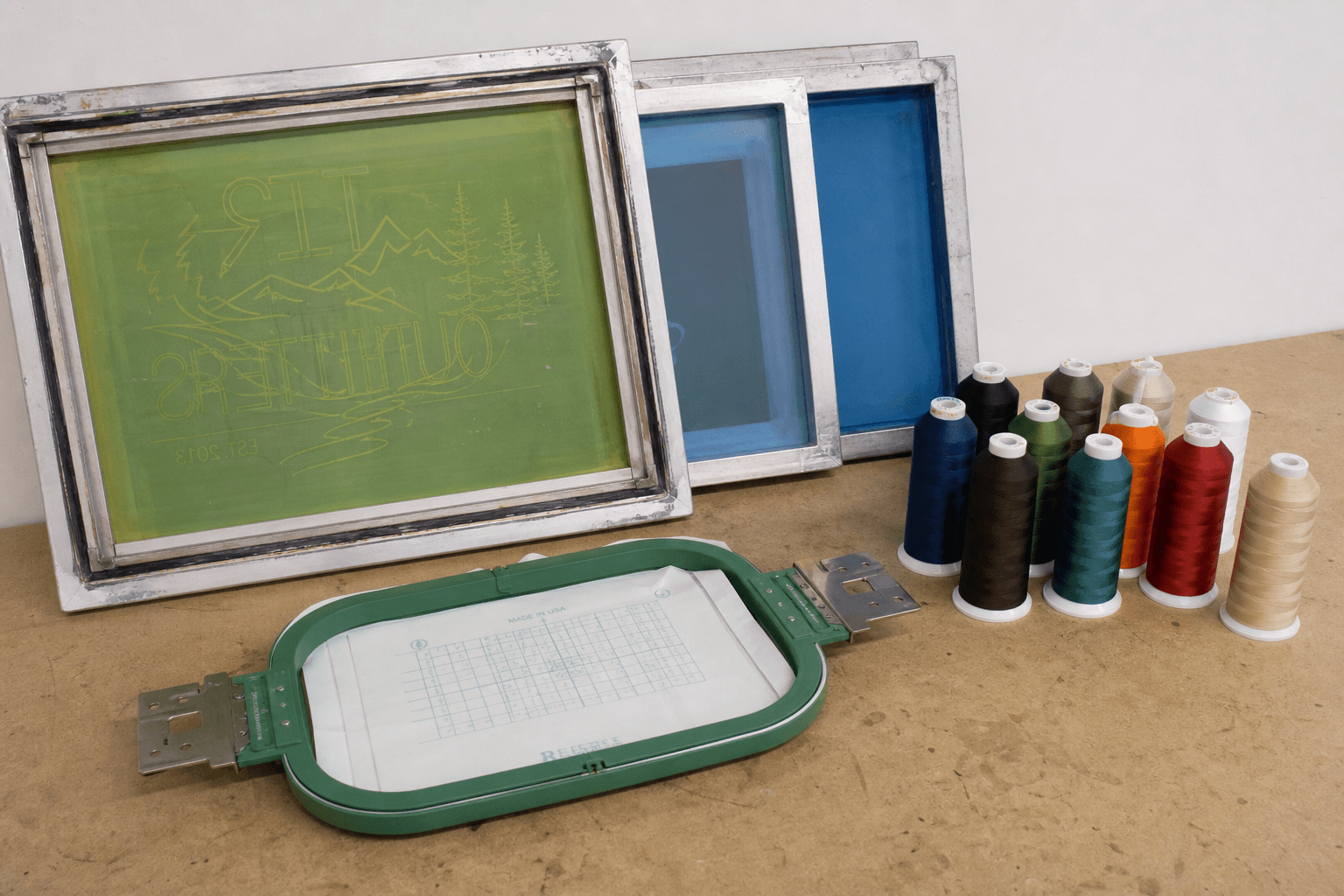
For bulk apron programs, the first quotation often looks simple: fabric, labor, trims, packing and freight. The part that causes confusion is the apron setup cost. Some items are true one-time costs, such as embroidery digitizing or a screen frame. Others are per-unit costs that repeat on every apron, such as printing labor, thread consumption, special packaging or barcode labels.
From a factory perspective, setup and tooling charges are not added to make a quotation look complicated. They reflect real preparation work before production can run at stable speed. A bib apron with one-color chest printing is very different from a cross-back denim apron with leather patches, antique brass hardware, edge binding and individual retail polybags.
For sourcing managers, the key is to separate apron one time cost from running cost. This helps compare suppliers correctly, calculate landed cost, and avoid surprises when reordering. A setup charge may look high on 300 pcs but become almost invisible at 3,000 pcs, while a per-unit decoration charge remains in the cost for every order.
- Apron setup cost should be separated from per-unit apron price before comparing supplier quotations.
- Screen setup fee is usually charged per color, per artwork size, and sometimes per print position.
- Embroidery digitizing fee is normally one-time if the logo size, stitch direction and file remain unchanged.
- Pattern development and sample charges increase when the apron has custom pocket layout, special straps, hardware or non-standard sizing.
- Tooling cost becomes less important as volume rises, but per-unit decoration, trims and packing costs remain.
- Reorders should be checked against stored artwork, screens, embroidery files and pattern records to confirm which costs can be waived.
What apron setup cost means in a factory quotation
In apron sourcing, apron setup cost means the cost required to prepare an order before bulk sewing and decoration can proceed. It is not one single category. It may include artwork preparation, screen making, embroidery digitizing, pattern adjustment, sample making, cutting layout, color approval, special trim sourcing, carton mark preparation and production line setup. Some suppliers combine these into one line called setup fee. Others split them into several items. Both formats can be acceptable if the cost logic is transparent.
For a standard cotton twill bib apron in 220-260 GSM fabric, with one-color screen print on the chest, setup is usually light. The factory already has apron patterns, sewing folders, packing methods and carton specifications. The buyer may only pay a screen setup fee, normally around US$25-60 per color per position, depending on print size and mesh requirements. If the same artwork is repeated in future orders, the supplier may waive or reduce the fee if the screen is still usable or if digital artwork is already prepared.
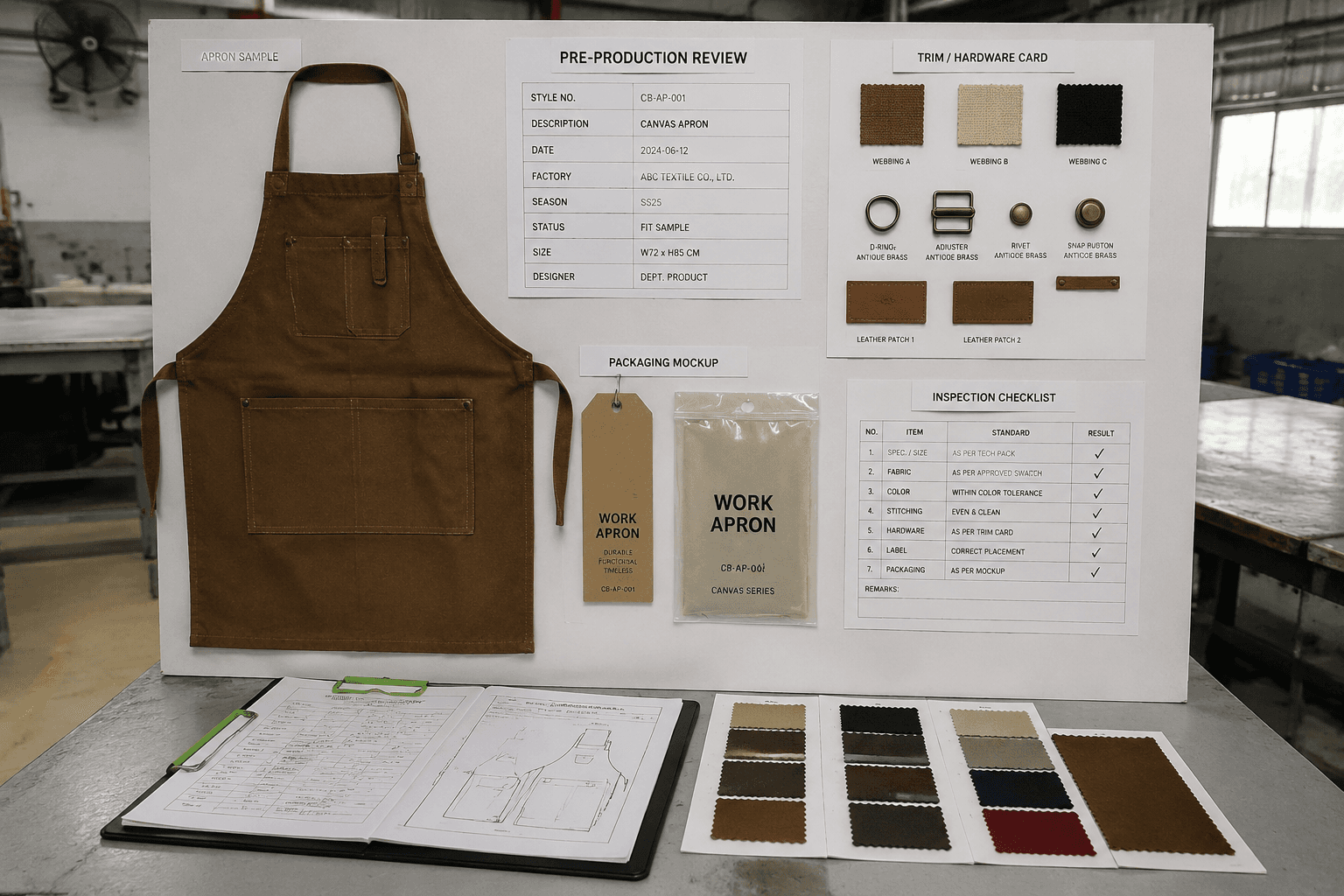
For a custom hospitality apron, setup is heavier. A buyer may request 10 oz denim, PU leather neck strap, antique brass buckle, double pen pocket, towel loop, rivets, contrast bartacks and woven label placement. In this case, the factory must confirm fabric shrinkage, pocket balance, seam strength and hardware compatibility before production. The apron tooling cost is not only a physical tool; it is also the technical work needed to make the product repeatable at scale.
- Basic screen print setup may be US$25-60 per color per position for simple apron artwork.
- Embroidery digitizing may be US$20-80 per logo, depending on stitch count and complexity.
- Custom sample making may be US$30-150 per style when special fabric, trims or pattern work are involved.
- A simple reorder may have no setup fee if artwork, pattern and decoration position remain unchanged.
One-time costs versus per-unit costs
A practical apron quotation should separate one-time costs from per-unit costs. One-time costs are paid once for preparing a style, logo, screen, sample or technical file. Per-unit costs are charged on every apron produced. The distinction matters because one-time costs are diluted by quantity, while per-unit costs scale directly with order volume.
For example, suppose a buyer orders 500 pcs of a 240 GSM cotton twill bib apron with a one-color chest screen print. The apron unit price is US$2.85/pc, the screen setup fee is US$45, and the print running charge is US$0.18/pc. The setup fee adds US$0.09/pc when spread over 500 pcs. If the order increases to 2,000 pcs, the same US$45 setup fee adds only US$0.0225/pc. The print running charge remains US$0.18/pc in both cases.
This is why comparing only the first-page unit price can be misleading. Supplier A may quote US$2.90/pc with setup included. Supplier B may quote US$2.80/pc plus US$60 setup. At 300 pcs, Supplier A may be cheaper. At 3,000 pcs, Supplier B may be cheaper. The correct comparison is the total order value divided by shipped quantity, then reviewed again for repeat order terms.
- One-time cost: screen setup fee, embroidery digitizing fee, pattern development, sample making and special cutting template preparation.
- Per-unit cost: printing labor, embroidery stitch charge, fabric consumption, trims, washing, ironing, folding, polybag, barcode label and carton cost.
- Mixed cost: custom woven labels may have a mold or artwork charge plus a per-piece label charge.
- Repeat order impact: one-time charges may disappear, but unit costs will change if fabric, logo size, packaging or order quantity changes.
Apron tooling cost by decoration method
Decoration is the most common source of apron setup questions. For aprons, the main decoration methods are screen printing, embroidery, heat transfer, woven labels, leather or PU patches, and sometimes metal plates or silicone badges. Each method has a different tooling structure and different risk profile in bulk production.
Screen printing is efficient for simple logos, large chest graphics and one to four solid colors. The screen setup fee is normally charged per color and per print position. If a logo has three colors on the chest and one color on the pocket, the supplier may need four screens. For apron fabrics such as 180 GSM polyester, 240 GSM cotton twill or 10 oz denim, ink absorption and hand feel must be tested because heavy ink on a flexible apron panel can crack after washing if the ink system is wrong.
Embroidery is suitable for premium chef aprons, barista aprons and uniform programs where durability is more important than fine gradient detail. The embroidery digitizing fee converts the logo into a stitch file. This is usually a one-time fee, but only for the approved logo size and direction. If the buyer changes from 70 mm chest embroidery to 110 mm pocket embroidery, the file often needs redigitizing or adjustment.
- Screen printing setup is typically US$25-60 per color per position, with a running charge of about US$0.10-0.45/pc depending on size and color count.
- Embroidery digitizing is often US$20-80 per logo, while embroidery running cost may be US$0.15-0.80/pc depending on stitch count.
- Heat transfer may require artwork film or plate preparation of US$20-80, with per-unit transfer cost varying by print size and material.
- Woven label setup may be US$30-120 for artwork or loom preparation, plus US$0.03-0.20/pc depending on label size and order quantity.
- Leather patch tooling may include die cost of US$40-150, plus per-patch cost and sewing or riveting labor.
How pattern and sample work affect apron setup cost
Many buyers think setup cost only relates to logo decoration. In apron manufacturing, the pattern can create equal or greater preparation cost. A standard bib apron with neck strap and waist ties uses established factory patterns. A custom cross-back apron with multiple size grades, curved pocket openings, split-leg front and reinforced stress points requires pattern engineering before sampling and bulk cutting.
Pattern work affects material usage directly. A 72 cm x 86 cm bib apron in 240 GSM cotton twill may consume around 0.55-0.70 meters of fabric depending on width and marker efficiency. A Japanese-style cross-back apron with wider body coverage may consume 0.85-1.10 meters. If the buyer requests yarn-dyed stripe matching or directional canvas, cutting efficiency can drop further. The cost is not only pattern drawing; it is the loss of fabric efficiency that continues as a per-unit cost.
Sampling also has real lead time. A basic apron sample using available fabric may take 3-5 working days after artwork confirmation. A custom-dyed fabric, custom woven label, special buckle or washed denim apron may need 10-20 working days. If the sample is approved late, bulk lead time moves accordingly. For seasonal retail programs, buyers should place sample development before final purchase order when possible.
- A standard existing apron pattern may have no pattern fee, especially above 500-1,000 pcs.
- Minor pattern adjustment, such as pocket size or strap length, may be included or charged US$20-50.
- New pattern development for a custom apron style may be US$50-200 depending on complexity.
- Size grading for S/M/L or unisex plus-size aprons may add US$30-100 per size set.
- Pre-production sample charges are often US$30-150/pc, and some suppliers refund them after bulk order confirmation.
MOQ and lead time change the real apron setup cost
MOQ is where setup cost becomes visible. A factory may accept 300 pcs for a simple printed apron, but the same factory may require 1,000 pcs for custom-dyed fabric, 2,000 pcs for yarn-dyed stripe fabric, or 3,000-5,000 pcs for custom woven labels in a specific brand color. The minimum is not only about sewing capacity. It is often driven by fabric mill MOQ, dye lot stability, trim supplier MOQ and decoration setup efficiency.
Lead time also affects cost. A normal bulk apron order from Zhejiang can often run in 25-35 days after sample approval and deposit, assuming fabric is in stock or greige fabric is available. Custom dyeing may add 10-15 days. Washed denim may add 5-10 days for washing test, bulk washing and shade control. Complex embroidery or multi-position printing may reduce daily output and add 2-5 days to decoration scheduling.
Urgent orders can increase per-unit price even when the setup fee looks unchanged. The factory may need overtime, smaller production batches, faster trim shipment or priority printing. For example, compressing a 35-day apron order into 22 days may add US$0.08-0.25/pc depending on labor pressure and process sequence. This is not a formal tooling cost, but it is a real cost caused by setup and scheduling compression.
- Stock fabric printed aprons may start at 300-500 pcs per color or style.
- Custom fabric color often requires 1,000-3,000 meters, depending on mill policy and fabric type.
- Custom woven labels may require 1,000-5,000 pcs even if the apron order is smaller.
- Normal production lead time is often 25-35 days after approval, while complex programs may need 40-55 days.
- Air shipment of urgent samples may add US$25-80 per parcel, depending on destination and weight.
How to compare apron setup cost between suppliers
When comparing quotations, buyers should ask each supplier to show setup cost and unit cost separately. A clean quotation should identify fabric specification, GSM or oz, apron size, decoration method, print size, number of colors, logo positions, trim details, packing method, MOQ, sample time and bulk lead time. Without these details, a low setup fee may simply mean that the cost is hidden inside the unit price.
For apron sourcing, the most common comparison mistake is mixing different fabric weights. A 180 GSM polyester apron and a 260 GSM cotton twill apron are not equivalent. A 7 oz denim apron and a 12 oz denim apron are also different products, even if the photos look similar. Fabric weight changes material cost, sewing difficulty, washing shrinkage and freight weight. Setup cost must be judged together with the physical apron specification.
Buyers should also check whether setup costs are refundable, reusable or order-specific. Some factories refund sample charges after bulk order above a certain value, for example above 1,000 pcs or US$3,000 order value. Screen frames may be stored for 6-12 months if reorder is likely. Embroidery files can usually be reused for years if the supplier maintains the file archive. Physical tools, such as patch dies, may belong to the buyer if paid in full, but this should be stated clearly.
- Ask whether the quoted setup fee is per style, per color, per artwork, per position or per order.
- Confirm whether the fee applies again for reorder, logo size change, fabric change or colorway extension.
- Request the estimated amortized cost per apron at 300 pcs, 500 pcs, 1,000 pcs and 3,000 pcs.
- Check whether sample charges, screen charges and digitizing charges are refunded after bulk order confirmation.
- Ask how long screens, embroidery files and apron patterns are stored after shipment.
Typical setup scenarios for custom apron orders
A simple promotional apron order may have very low setup cost. For 1,000 pcs of 180 GSM polyester bib aprons with one-color front screen print, the unit price might be around US$1.20-1.80/pc depending on fabric, size and packing. Setup may include US$35-50 for one screen and no pattern fee. The setup adds only about US$0.04-0.05/pc when spread across the order.
A mid-range restaurant uniform apron is different. For 800 pcs of 260 GSM cotton twill aprons with two pockets, adjustable neck buckle, woven brand label and 8,000-stitch chest embroidery, the apron price might be around US$3.20-5.20/pc. Setup may include US$40-70 embroidery digitizing, US$40-100 label setup and US$30-80 sample cost. If the buyer reorders the same style, these one-time costs may not repeat, but embroidery running cost and label cost remain.
A premium barista or workwear apron has a larger apron tooling cost. For 500 pcs of 10 oz denim cross-back aprons with leather patch, rivets, antique brass hardware, reinforced pockets and enzyme wash, the price might be US$7.50-13.50/pc depending on fabric origin and washing. Setup may include pattern development of US$80-200, leather patch die of US$60-150, sample cost of US$80-180 and washing test charges. MOQ pressure is also stronger because denim washing and hardware sourcing are less efficient at very low quantities.
- Promotional apron: low setup, low unit price, decoration cost mainly driven by print color count.
- Restaurant uniform apron: moderate setup, more trims, higher repeat-order stability if the style is standardized.
- Chef apron: embroidery and fabric quality matter more than graphic coverage, with careful testing after industrial washing.
- Barista apron: higher tooling due to denim, hardware, leather patch, rivets, washing and pattern balance.
- Retail packaged apron: setup may include hangtag, barcode, size sticker, insert card and carton mark preparation.
Practical ways to control apron setup cost
The best way to control apron setup cost is to make technical decisions early. Confirm the apron body size, fabric weight, logo position, decoration method, packing method and target MOQ before sampling. Changing from screen print to embroidery after sample approval may require new artwork work, new sample review and revised production timing. Changing pocket shape after fabric is booked can affect cutting markers and consumption.
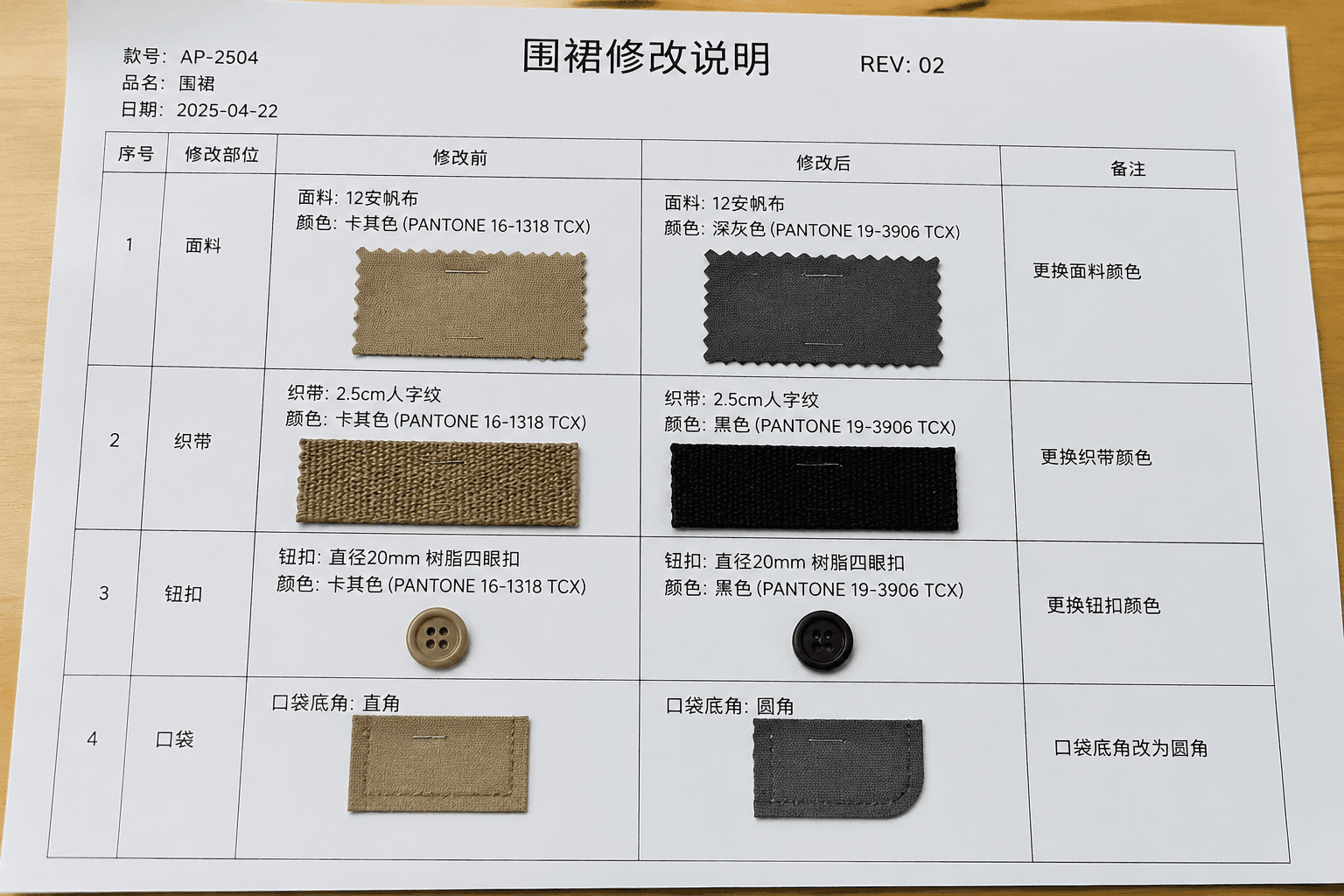
Buyers can also reduce cost by standardizing components across styles. If three apron styles use the same 240 GSM cotton twill, the same black waist tape, the same woven label and the same carton packing, the factory can consolidate purchasing and reduce trim MOQ waste. If each style uses a different fabric shade, buckle color and label size, setup and supplier coordination increase.
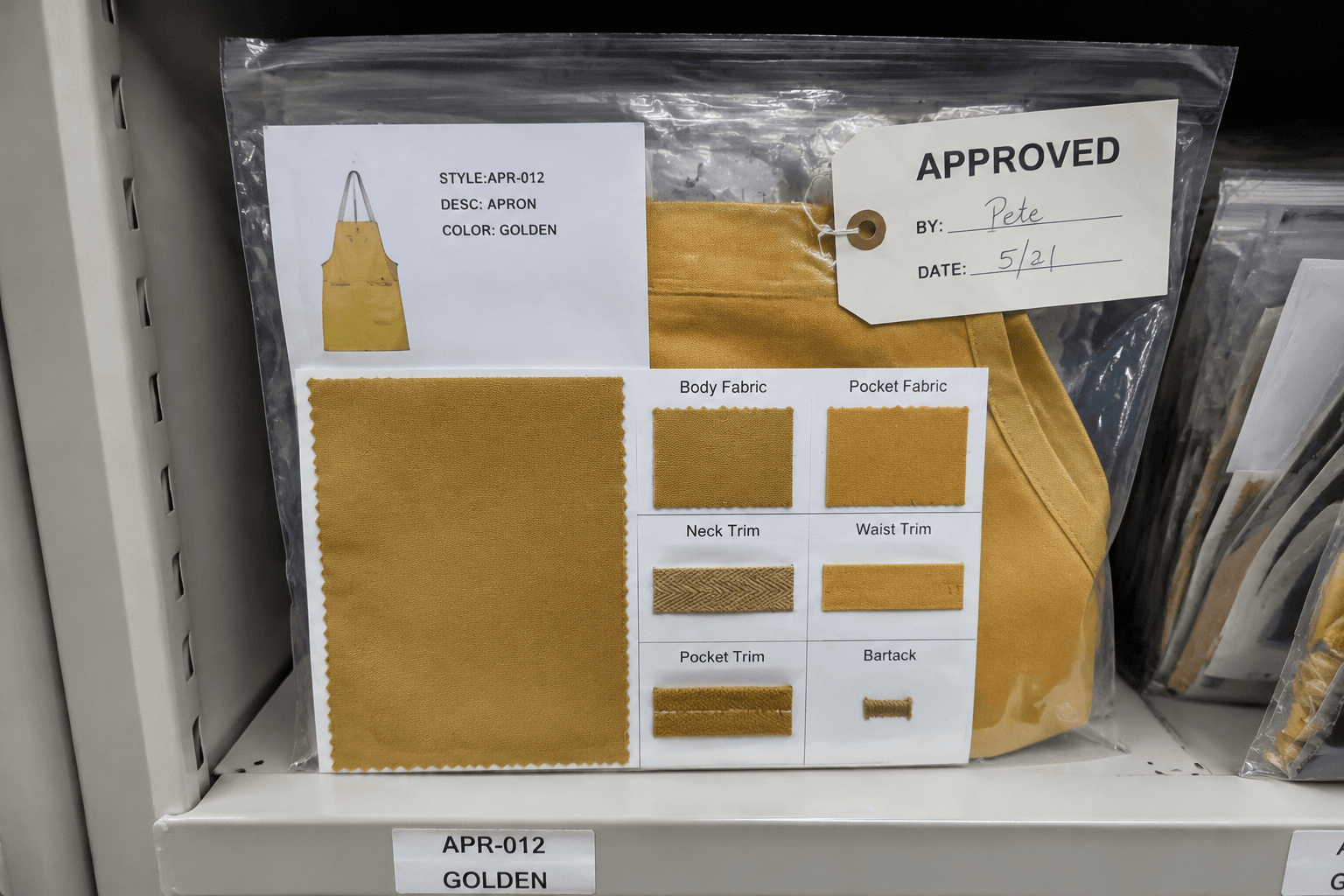
For long-term programs, the cleanest approach is to build an apron technical file with approved pattern, fabric swatch, Pantone reference, decoration file, stitch count, print size, label position, packing photo and carton marks. Once this file is stable, the first order carries most of the apron one time cost. Later orders become more predictable, faster and easier to quote.
- Keep logo size and position consistent across repeat orders to avoid new screens or embroidery files.
- Use existing factory apron patterns when the product does not need a unique silhouette.
- Choose stock fabric colors when testing a new market before committing to custom dye MOQ.
- Consolidate trim colors, buckle types and label sizes across several apron styles.
- Approve pre-production samples before bulk cutting, especially for denim, washed cotton and heavy canvas aprons.
- Keep reorder records with supplier style code, fabric GSM, artwork file name and approved sample date.