For uniform programs, apron recycling is not a single action at end of life. It is the result of a specification that can be repaired, tracked, collected, and separated by material before the apron reaches waste. If those steps are not planned in advance, most units end up as mixed textile waste, which is difficult to process and rarely economical to recycle.
From a factory perspective, the practical question is not whether recycling sounds desirable. The question is whether the apron construction supports repair at a realistic cost, whether the fabric can be sorted into a viable stream, and whether the buyer can run a collection process across stores, kitchens, or laundry partners. In bulk programs, the difference between a 300 GSM cotton apron and a 210D polyester promo apron is not only hand feel and price. It determines whether a textile recycling apron can be mechanically recycled, downcycled, or must be handled as mixed waste.
Uniform buyers often focus on initial unit price, but uniform end of life should be treated as part of total program cost. A $4.20 apron that lasts 18 months and can be repaired once may outperform a $2.80 apron that fails after six months and cannot be sorted for recycling. The right answer depends on fabric, trim, decoration, wash cycle, and the buyer's ability to collect used stock in quantity.
- Apron recycling begins with repairability: if seams, ties, neck straps, and bartacks are not standardized, the recovery rate drops sharply.
- Mono-material construction is easier to recycle: cotton-to-cotton or polyester-to-polyester streams are more realistic than blended shells with mixed trims.
- Most uniform programs should extend life first: a 10-20 percent repair rate can be cheaper than replacing the entire stock early.
- Collection logistics matter as much as fabric choice: without a clear return process, used aprons will not reach a recycler in usable condition.
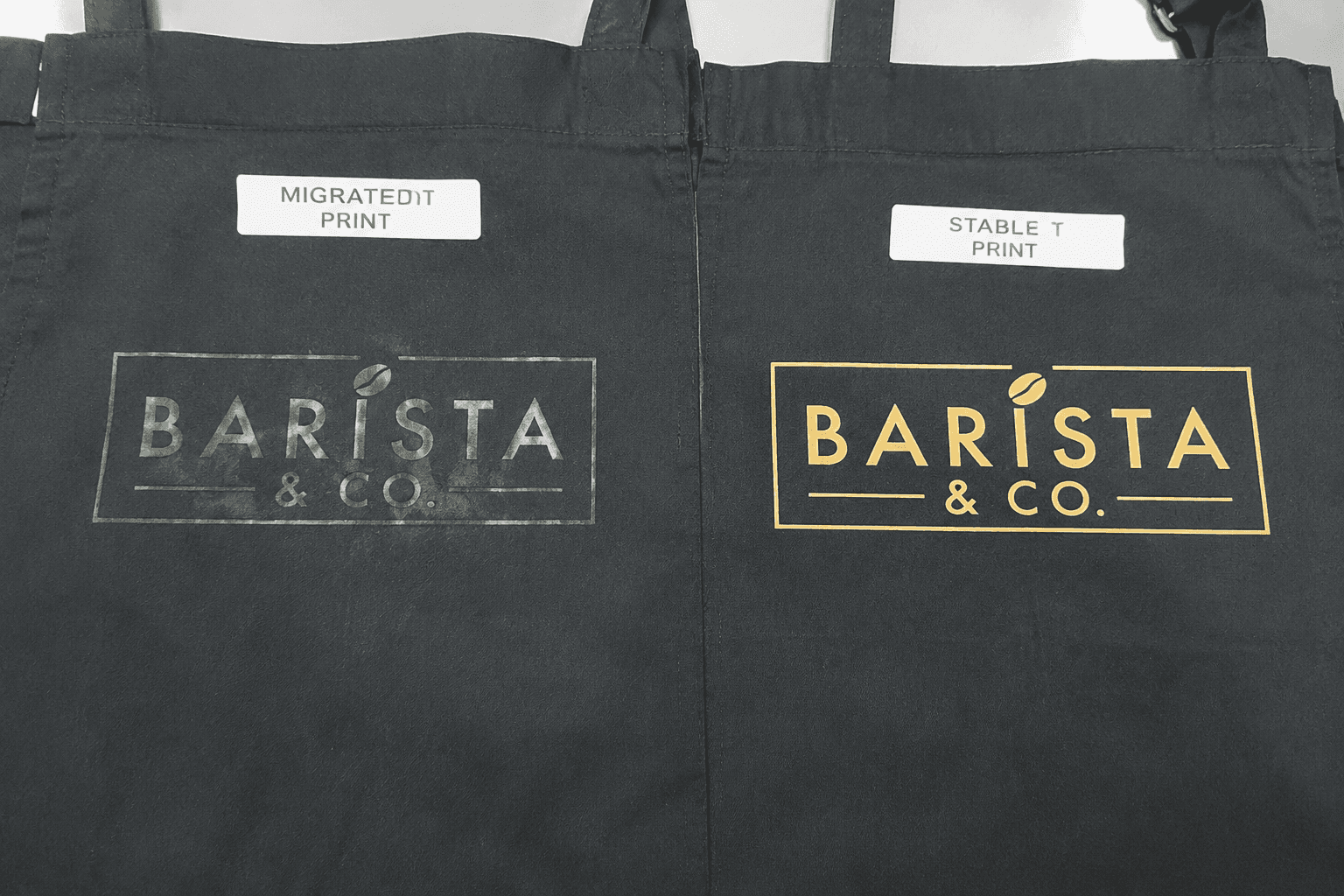
- Decoration can block recycling: heavy PVC prints, thick embroidery backing, and metal hardware complicate textile recycling apron streams.
- Buyers need a written end-of-life SOP: the PO should define repair, replacement, return, and disposal rules before production starts.
Why apron recycling starts at the spec sheet
A workable apron recycling program starts before sampling, because the spec sheet determines whether the apron can be repaired or separated later. In a uniform program, we look first at base cloth, stitch density, seam type, and trim compatibility. A 240 GSM poly-cotton apron with simple neck-loop construction is easier to maintain than a heavily styled apron with contrast piping, metal D-rings, and mixed-fiber straps. The more components you add, the harder it is to separate the garment into a usable recycling stream.
For bulk buyers, fabric weight should match the use case, not the marketing claim. A cafe server apron often works at 220-280 GSM in cotton twill or 65/35 poly-cotton. A heavy grill apron may use 300-380 GSM canvas or denim. If the cloth is too light, failure comes early at pocket corners and waist ties. If it is too heavy, the apron may be durable but uncomfortable and more expensive to wash, which can shorten service life indirectly. End-of-life planning should therefore begin with the same data you use for wear testing: wash cycles, colorfastness, shrinkage, and tear strength.
One practical factory rule is to avoid unnecessary mixed materials in the main shell. A clean shell makes uniform end of life processing simpler. If the body is cotton, use cotton where possible for straps and ties; if the program is polyester-based, keep linings and reinforcements in the same family. This does not make recycling automatic, but it reduces sorting cost and improves the odds that a collected apron can enter a defined waste stream.
- Use one shell fabric family where possible, such as 100% cotton or 100% polyester.
- Keep decoration low-risk for recycling, especially with screen prints, labels, and backing materials.
- Specify repair-friendly construction, including accessible seam allowances and replaceable ties.
- Ask the factory to quote both first-life price and repair-level rework cost.
Designing for repair before uniform end of life
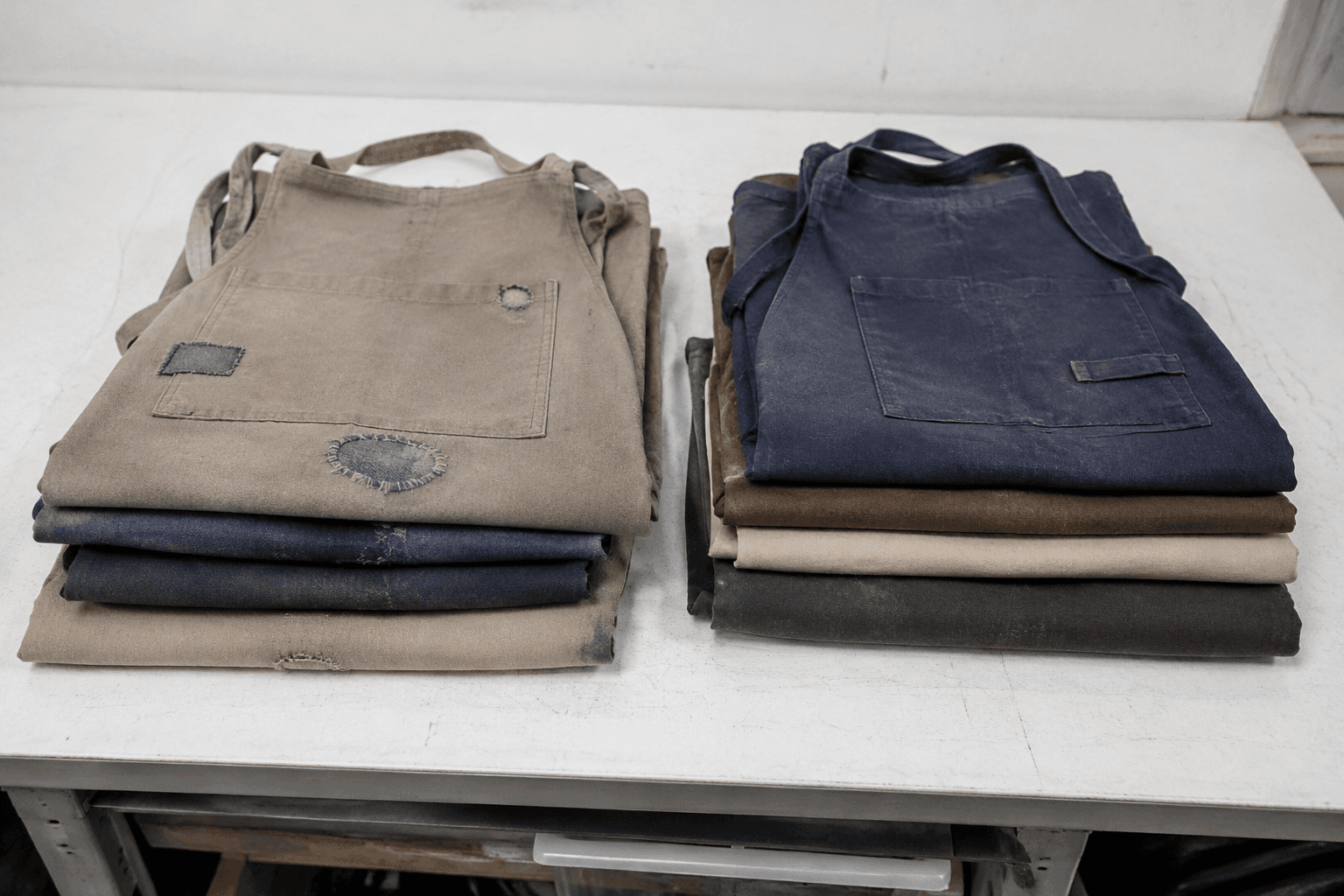
Repair is the cheapest form of sustainability in apron programs, and it is often ignored because it does not appear in the first purchase order. In practice, many aprons fail at predictable points: neck strap stress, waist tie fray, pocket top corners, and lower hem abrasion from repeated washing or rubbing against counters. If a factory builds these points with double stitching, bar-tacks, or reinforced patches, the apron can often return to service for another 3-6 months instead of being discarded immediately.
For sourcing managers, the repair decision should be tied to a minimum remaining value threshold. In a 10,000-piece program, replacing every failed unit at full price is usually inefficient. If a repair takes 2-4 minutes of labor and costs $0.35 to $0.80 per piece at factory or laundry partner rates, it is often worth repairing an apron that still has at least one more service cycle left. By comparison, a new custom apron may cost $2.50 to $7.00 depending on fabric, print, embroidery, and packing. A repair-first policy can reduce replacement volume by 15-30 percent in the first year if the product is built correctly.
Repair also affects apron recycling quality. A torn apron that is repaired and kept in use for a few more wash cycles generates fewer total units entering the waste stream. That matters because recycling systems work better at larger, cleaner, more uniform volumes. If the program can recover 1,000 worn aprons in one batch rather than 200 units scattered across five locations, the handling cost per piece drops and the material is easier to sort.
- Reinforce pocket tops with bartacks or back-tacks at the first sample stage.
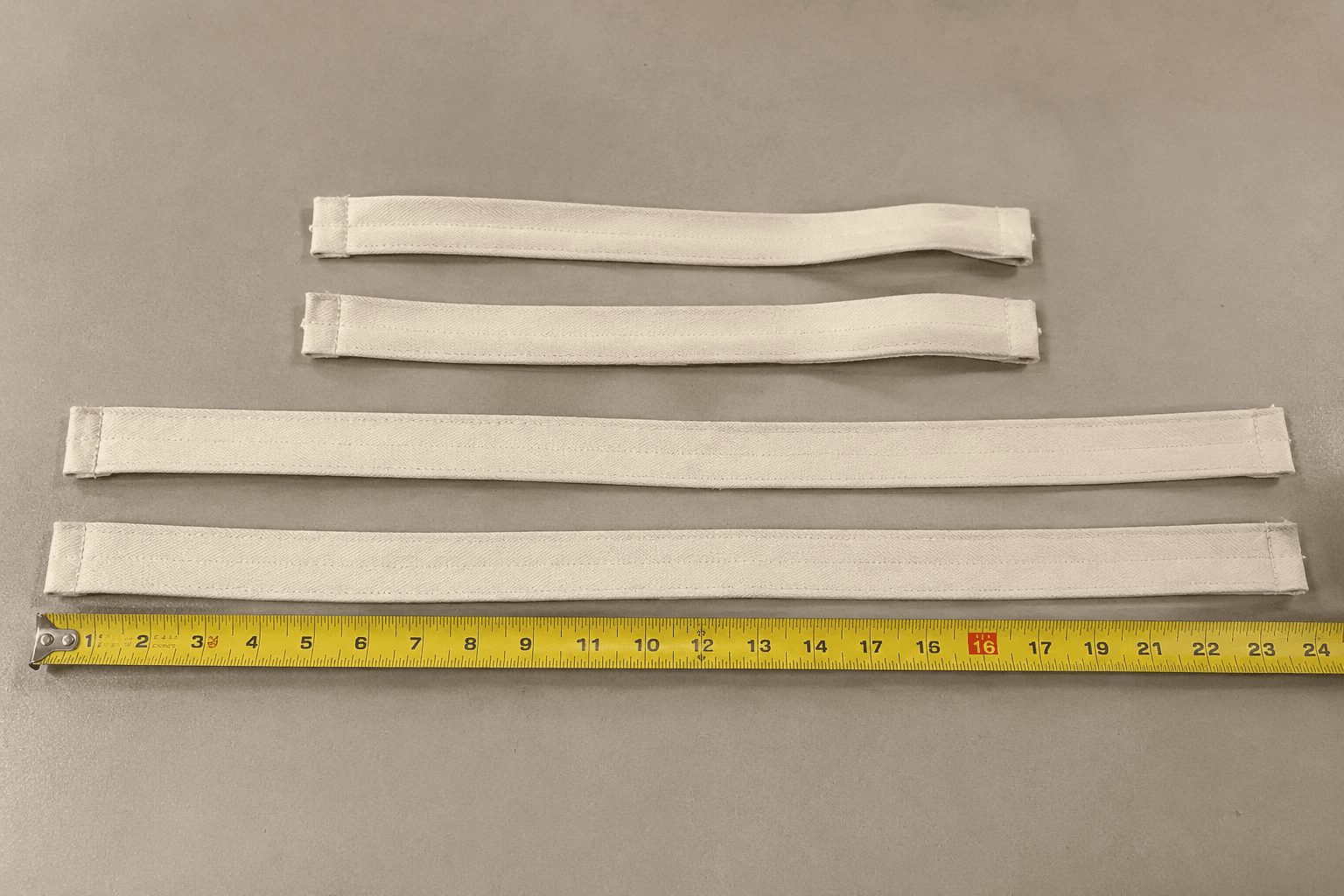
- Use replaceable neck straps on higher-wear models where the program can support it.
- Set a repair trigger, such as one broken tie, a 2 cm seam failure, or local fabric thinning.
- Separate cosmetic defects from functional defects so usable aprons are not discarded early.
Collection rules for apron recycling in multi-site programs
Most recycling failures happen after use, not at the factory. A uniform program may have good product design and still fail because no one owns collection. For multi-site accounts, the buyer should define who gathers used aprons, how they are bundled, and what condition they must be in before shipment. Aprons returned with food residue, wet towels, or mixed housekeeping waste are much harder to process and may be rejected by recyclers or laundries. The collection step must therefore sit between operations and procurement, not outside both.
A practical return standard is simple. Used aprons should be laundered, dry, sorted by article type, and packed in sealed cartons or woven bags with clear counts. For a chain with 50 locations, monthly collection is usually sufficient if turnover is moderate. For high-volume kitchens, biweekly pickup may be needed. Freight economics matter here: a 20 kg carton of uniform aprons can ship cheaply within domestic China, but cross-border return of low-value textile waste is rarely viable unless the quantity is large and the recycler is already contracted.
The buyer should also decide what happens to unusable units that cannot be repaired. Some can be cut down into wiping cloths, but only if the customer accepts that the program is reuse first, recycle second. Others must enter a textile sorting channel. In many cases, the highest-value recovery is not fiber-to-fiber recycling but controlled downcycling into industrial cleaning cloths, stuffing, or composite filler. That is still a valid part of a circular apron program if the buyer documents the path and counts the diversion properly.
- Require used aprons to be dry and free of food contamination before return.
- Sort by model and fiber content, not by branch location, to reduce downstream sorting time.
- Use standard return bags or cartons with printed count labels and SKU codes.
- Set a pickup cadence that matches consumption, such as monthly for light use and biweekly for heavy use.
Textile recycling apron options by fabric and trim
The phrase textile recycling apron sounds simple, but the actual route depends on fiber content. Cotton aprons are familiar to many recyclers because they can be mechanically shredded and blended into lower-grade yarn, wiping materials, or insulation products. However, if the cotton apron contains heavy coatings, laminated backing, or mixed elastic components, the recycling value drops. Pure cotton twill or canvas is easier to manage than coated cotton blends.
Polyester aprons can also be collected in a recycling stream, but only if the recycler accepts synthetic feedstock and the decoration does not interfere. Polyester shell fabrics around 150-210 GSM are common in lightweight service aprons, yet embroidery backing, vinyl logos, and plastic hardware can contaminate the stream. Poly-cotton blends are the most common in uniform programs, but they are also the hardest to recycle mechanically because fiber separation is expensive. In those cases, the realistic end point is often downcycling rather than true fiber recovery.
From a sourcing standpoint, you should not promise fiber-to-fiber recycling unless the supply chain has already been confirmed. A factory may be able to make the apron, but the recycler, laundry partner, and waste broker still need to accept the material. If the account is moving 5,000 to 20,000 units per year, ask for a pilot batch of 200 to 500 used aprons before expanding the program. That pilot will show whether the aprons arrive too dirty, too mixed, or too damaged for the intended stream.
- Cotton twill and canvas are usually easier to downcycle than blended fabrics.
- Polyester is viable only when trims, backing, and labels are controlled.
- Poly-cotton should be treated as a collection and reuse problem first, not a guaranteed recycling stream.
- Avoid coatings, thick laminations, and PVC-heavy decoration if recovery is part of the program.
Circular apron program economics for bulk buyers
A circular program must work on a unit economics basis, not only on environmental language. If the garment is too expensive, buyers will reduce order volume or switch suppliers. If the garment is too cheap and fails early, replacement and disposal costs rise. In a typical China sourcing scenario, a basic 65/35 poly-cotton apron may land around $2.20 to $3.20 per piece at MOQ 1,000-3,000, while a heavier cotton canvas or denim apron with embroidery can move into the $4.50 to $8.00 range depending on complexity, packaging, and test requirements. Repair and collection should be measured against those values.
The most useful way to model a circular apron program is through lifecycle cost per wearing day. If a $3.50 apron lasts 120 wearings and a $5.20 apron lasts 240 wearings, the second option may be cheaper in actual use even before repair. Add one $0.60 repair and a 10 percent return-to-service rate, and the economics become clearer. This is why buyers should ask suppliers for durability data, not only FOB pricing. A good factory can show seam failure points, wash test results, and shrinkage after 20, 30, or 50 industrial laundry cycles.
Lead time matters as well. Standard custom aprons often need 20-35 days after sample approval, while more complex programs with special hardware or woven labels may take 35-50 days. If the brand plans to run repair and recycling, it should hold a small buffer stock, usually 5-8 percent of annual demand, so worn units can be replaced without emergency reordering. That buffer reduces the pressure to overbuy, which in turn lowers end-of-life waste.
- Compare cost per wearing day, not only initial FOB price.
- Keep a 5-8 percent service buffer for repair and replacement.
- Pilot recycling economics on 200-500 units before scaling a national program.
- Treat freight, washing, sorting, and disposal as part of the apron cost base.
What buyers should put in the PO and SOP
A circular program only works if the buying documents are explicit. The purchase order should define fabric composition, trim list, repair allowances, acceptable defect rates, and end-of-life handling. The internal SOP should define who inspects used aprons, who decides repair versus retire, and where retired aprons are sent. Without that documentation, each branch will make different decisions and the recovery stream becomes inconsistent.
For OEM sourcing teams, the best practice is to request sample approval with end-of-life in mind. Ask the supplier to quote the apron in three versions if needed: standard, repair-optimized, and recycling-friendly. The differences may be small, such as using the same shell but reducing mixed trims or shifting from sewn-on labels to heat-transfer identification. These choices can materially affect recovery later. If the supplier knows the buyer expects a circular outcome, the factory can adjust from the start instead of retrofitting after the first wear cycle.
A well-run program should also define reporting. Buyers should track the number of aprons repaired, retired, returned, and downcycled each quarter. Even a simple spreadsheet is enough if the counts are consistent. Over time, this data shows whether the model is working. If 1,000 units were issued and 180 came back for repair, 70 were retired, and 40 entered recycling or downcycling, the program can calculate actual diversion and replacement rates. That is much more useful than claiming sustainability without numbers.
- Put fabric composition, trim composition, and decoration limits into the PO.
- Define repair, retirement, and recycling responsibilities in the SOP before launch.
- Track quarterly counts for issued, repaired, retired, and recovered aprons.
- Use sample approval to test not only appearance but also end-of-life handling.