Apron price negotiation is most productive when the buyer and factory are discussing the same cost drivers. For custom aprons, the unit price is shaped by fabric GSM, dyeing method, pocket construction, strap hardware, printing or embroidery area, packing standard, inspection level, and the production calendar. A buyer asking for a lower apron quote without changing any of these inputs is usually asking the supplier to reduce margin or take risk.
In a Zhejiang apron factory, the practical room for negotiation is often narrower than buyers expect on small, complicated orders and wider than they expect on repeatable bulk programs. A 5,000-piece cotton twill bib apron with one pocket and carton packing has a different cost structure from a 500-piece canvas apron with brass eyelets, cross-back straps, embroidery, individual polybags, barcode stickers, and mixed color ratios.
This playbook explains how to negotiate apron price with supplier-side logic. The goal is not to push the factory into a weak quotation that later creates quality disputes. The goal is to identify which specifications can move, which quantities create real efficiency, and which commercial terms give both sides a reason to agree.
- Real leverage comes from changing cost drivers, not simply asking for a discount.
- Fabric GSM, width utilization, pocket count, and decoration method usually decide the first 70% of apron cost.
- Bulk discounts become meaningful when the order reduces cutting, sewing, dyeing, or packing inefficiency.
- Separating must-have features from nice-to-have features gives the factory room to lower apron quote levels without quality loss.
- Repeat orders, confirmed forecasts, and clean artwork can be worth more than hard bargaining on a one-time small order.
How to negotiate apron price from the factory cost sheet
A serious apron cost negotiation starts with the cost sheet, even if the buyer never sees the full internal version. In most OEM apron factories, the quote is built from fabric consumption, fabric unit price, trims, labor minutes, decoration cost, packing materials, wastage, overhead, inland handling, and margin. For a standard adult bib apron, fabric consumption might range from 0.55 to 0.85 meters per piece depending on width, apron size, pocket size, strap design, and marker efficiency. A 16 oz canvas apron consumes more money per meter and more sewing time than a 180 GSM polyester apron, even before decoration.
Buyers gain leverage by asking which line items are driving the quote. A factory may not disclose exact margin, but it can usually explain whether the price is high because of fabric MOQ, yarn-dyed material, small color lots, embroidery stitch count, metal hardware, or packing. This turns apron price negotiation from a confrontation into a technical review. If the supplier says the fabric MOQ is 1,000 meters per color and the buyer only needs 300 pieces in one color, the unit price includes leftover risk. If the buyer can change to a stock 240 GSM twill, combine colors, or accept a closer shade, the quote can move.
For reference, a basic 180-220 GSM polyester or TC apron may quote in the range of USD 1.20-2.20 per piece at 3,000-5,000 pieces, depending on size and packing. A 260-320 GSM cotton twill apron may sit around USD 2.20-4.20. A heavy 12-16 oz canvas or denim apron with leather-look trim, eyelets, and multiple pockets can easily move from USD 5.50 to above USD 10.00. These are not universal prices, but they show why negotiation must begin with specification, not with a target discount percentage.
- Ask the supplier to identify the top three cost drivers in the current quote.
- Confirm fabric GSM, width, composition, shrinkage requirement, and whether the material is stock or custom dyed.
- Separate fabric cost, decoration cost, and packing cost when comparing two apron quotes.
- Check whether the quoted price includes testing, inspection support, export carton marks, hangtags, or retail packaging.
Use fabric options to lower apron quote without weakening the product
Fabric is usually the largest cost component in custom aprons, and it is also where buyers often have the most practical leverage. A buyer may request 280 GSM 100% cotton twill because it feels premium, but the use case may not require that weight. For cafe staff, 240 GSM cotton twill or 220 GSM TC twill may meet washing and appearance requirements at a lower price. For promotional aprons used at events, 170-190 GSM polyester can be acceptable if the print quality and color fastness are controlled.
The negotiation question should be: what performance do we need, and what fabric delivers it at the lowest total cost? For example, 100% cotton has good handfeel and a natural look, but it shrinks more and may require pre-shrinking or a larger tolerance. TC fabric, such as 65/35 polyester-cotton, is usually more stable in washing and easier for repeated staff uniforms. Heavy canvas gives structure and perceived value, but it increases sewing difficulty, needle wear, and freight weight. A 16 oz canvas apron packed 50 pieces per carton may increase carton weight enough to affect handling and shipping cost.
Color strategy also matters. Custom-dyed cotton or canvas often has fabric MOQ, commonly 500-1,000 meters per color depending on the mill. If the order is only 800 aprons split across four colors, each color lot becomes inefficient. Buyers can negotiate better by using stock black, navy, khaki, grey, or white, or by concentrating volume into two colors instead of five. The savings may be more meaningful than asking the factory to reduce margin by USD 0.10 per piece.
- For hospitality staff aprons, compare 240 GSM cotton twill against 220 GSM TC twill before confirming 280 GSM cotton.
- For promotional aprons, test whether 170-190 GSM polyester meets print coverage and handfeel expectations.
- For workwear-style aprons, verify if 12 oz canvas is sufficient before upgrading to 16 oz.
- For custom colors, ask the fabric MOQ per color and calculate leftover fabric cost per apron.
- For repeat programs, reserve a greige or dyed fabric lot only when the forecast is firm enough to use it within the agreed period.
Where apron bulk discount is real and where it is mostly margin pressure
Apron bulk discount is real when the order size improves production efficiency. Cutting 10,000 identical black bib aprons is much more efficient than cutting 800 pieces across eight colors and four pocket layouts. Sewing operators can keep the same folder, guide, thread, and operation sequence. The packing team can use one insert, one carton mark, and one packing ratio. The QC team can inspect against one standard. In that situation, a factory can often reduce the unit price because the order lowers waste and setup time.
The discount is weaker when the order quantity increases but complexity increases at the same time. A 5,000-piece order with five sizes, six colors, three logo placements, and individual store cartons may not be more efficient than a 2,000-piece clean order. Buyers sometimes see a higher total quantity and expect a lower price, while the factory sees many small production lots inside one purchase order. The useful question is not only the total quantity, but the quantity per SKU.
As a rough guide, the price difference between 500 pieces and 3,000 pieces can be significant because sampling, pattern setup, cutting, and documentation are spread across more units. The difference between 10,000 and 20,000 pieces may be smaller if the sewing line is already efficient and fabric has already reached mill-level pricing. In many apron factories, the most visible price breaks appear around 500, 1,000, 3,000, 5,000, and 10,000 pieces, but the exact thresholds depend on fabric MOQ and decoration setup.
- Request price tiers at 500, 1,000, 3,000, 5,000, and 10,000 pieces using the same specification.
- Ask for the MOQ per color and per logo version, not only the total order MOQ.
- Consolidate pocket styles, strap colors, and thread colors if a lower unit price matters more than assortment.
- Use repeat-order pricing when the factory can reuse patterns, approved samples, print screens, embroidery files, and packing artwork.
- Do not expect a major discount if every store, region, or distributor requires a different carton mix.
Negotiate apron price through construction details
Apron construction looks simple from the outside, but small details add labor minutes. A plain bib apron with neck strap, waist ties, and one patch pocket may sew quickly. Add cross-back straps, adjustable sliders, double pen pockets, towel loops, reinforced bartacks, contrast stitching, rivets, and split hems, and the labor cost rises. In China apron sourcing, sewing labor is often the part buyers underestimate because the product appears flat and uncomplicated.
The strongest apron cost negotiation often comes from value engineering. For example, changing a leather strap to PU trim may save cost and simplify compliance. Replacing metal eyelets with sewn buttonholes or webbing loops may reduce hardware and punching time. Reducing a three-compartment pocket to a single patch pocket can lower sewing time while preserving the main function. A 2 cm change in pocket height may also improve fabric utilization if it helps the marker layout.
Buyers should be clear about which details affect the brand experience and which details are historical habits. If the apron is for baristas and chefs, towel loops and reinforced stress points may be necessary. If the apron is for a beverage promotion, heavy hardware and complex pocketing may not improve performance. A factory can usually offer two or three construction versions: target price, balanced version, and premium version. That comparison is more useful than one quote with all features included.
- Compare neck strap options: fixed fabric strap, adjustable plastic buckle, metal slider, or cross-back webbing.
- Review pocket quantity, pocket lining, pen slots, and bartack count before approving the final tech pack.
- Check whether contrast stitching requires thread changes that slow the sewing line.
- Confirm if rivets, eyelets, snap hooks, or buckles are functional requirements or only visual details.
- Ask whether a small measurement change can improve fabric utilization without changing the fit.
Decoration choices can decide apron price negotiation results
Logo application can be a small cost or the reason a quote becomes uncompetitive. Screen printing on a simple polyester or cotton apron can be economical at bulk quantity, especially with one or two colors and a moderate print area. Embroidery gives a more durable and premium appearance, but pricing depends on stitch count, size, thread color changes, and fabric stability. Heat transfer can handle gradients and detailed artwork, but it requires suitable fabric and washing expectations. Woven patches, PU patches, and leather patches add material, attachment labor, and sometimes additional MOQ.
A buyer trying to lower apron quote levels should ask the supplier to price decoration separately. For example, a 10 cm wide one-color chest print may cost around USD 0.08-0.20 per piece at volume, while a dense embroidery logo with 8,000-12,000 stitches may cost USD 0.35-0.80 per piece or more. A large front print, reflective print, silicone print, or multi-position logo package can change the total price more than the apron base fabric.
Artwork discipline is also leverage. Clean vector files, confirmed Pantone numbers, realistic print size, and clear placement reduce sampling cycles. Every uncertain artwork version can add days and cost. A normal pre-production sample may take 5-7 days after artwork and fabric are confirmed. If the buyer changes logo size after the strike-off, the supplier may need to remake screens, embroidery tapes, or transfer films. Those costs either appear directly as charges or indirectly inside the unit price.
- Request a base apron price and a separate logo application price.
- Compare embroidery stitch count against screen print or heat transfer for the same logo size.
- Keep the logo within a standard placement area such as chest, pocket, or lower hem unless the design requires otherwise.
- Confirm Pantone colors, artwork file format, logo dimensions, and wash requirement before sampling.
- Use one logo method across the program when possible to reduce setup charges and approval time.
Commercial terms that create leverage beyond unit price
Unit price is only one part of apron sourcing economics. Payment terms, shipment terms, inspection requirements, sample charges, and forecast commitment all affect the supplier's risk. A factory may accept a slightly lower unit price for a repeat buyer with stable forecasts, clean approvals, and timely deposits. The same factory may protect its margin on a new buyer asking for urgent delivery, open credit, multiple revisions, and strict penalty clauses.
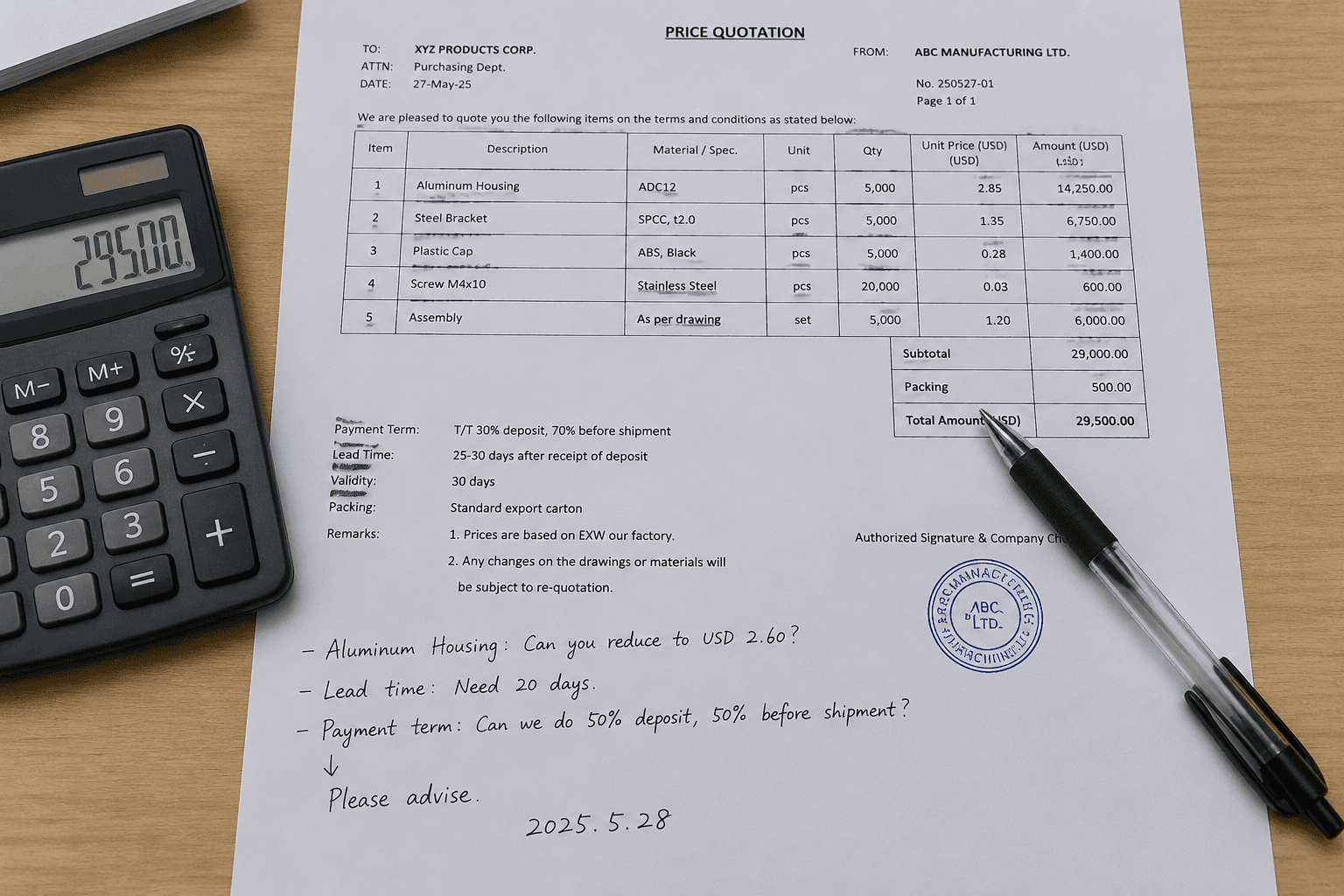
For first orders, many China apron factories quote based on 30% deposit and 70% balance before shipment, or before release of original documents depending on the relationship. For established buyers, terms may improve after several completed orders. Buyers can use a rolling forecast to negotiate better. If a brand confirms 20,000 aprons over four months with call-off shipments of 5,000 pieces, the factory can plan fabric and capacity better than for four separate urgent POs.
Lead time is another commercial lever. A standard custom apron order may need 25-40 days after deposit, sample approval, and material confirmation. Heavy canvas, custom dyeing, complicated trims, or peak season production can push this to 45-60 days. If the buyer demands 15-20 days for a product that requires dyed fabric and embroidery, the factory may need overtime, airfreight trims, or subcontract capacity. The price will rise. Ordering earlier is often a more reliable way to reduce cost than bargaining late.
- Offer a forecast by month and SKU if the program is likely to repeat.
- Ask for one price based on normal lead time and another based on urgent lead time.
- Confirm whether the quote assumes FOB Ningbo, FOB Shanghai, EXW, or delivered terms.
- Use stable payment behavior as leverage after the first successful order.
- Avoid late artwork, late labelling files, and late carton mark changes if target price is important.
How to negotiate apron price without causing quality risk
There is a point where apron price negotiation becomes dangerous. If the target price is below the real cost of fabric, trims, labor, and compliance, the supplier has only a few choices: decline the order, reduce margin to an unsustainable level, change material quietly, reduce inspection time, use cheaper trims, or subcontract to a lower-standard workshop. Professional buyers should avoid creating incentives for hidden substitutions. The better approach is to agree openly on specification changes that protect the use case.
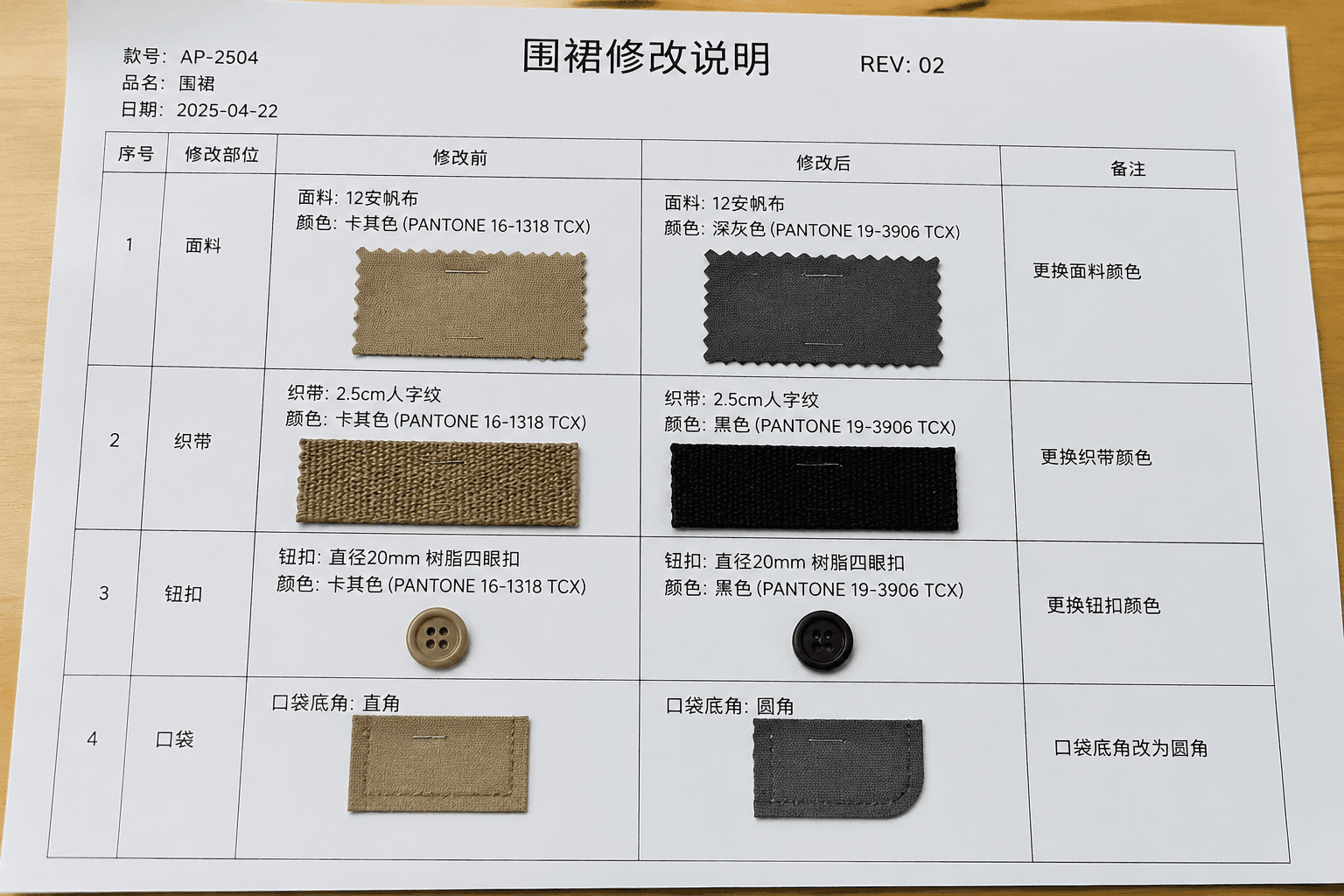
Quality risk often appears in areas that are not obvious during quotation. Fabric may drop from 240 GSM to 210 GSM. Strap webbing may become thinner. Color fastness may pass dry rubbing but fail wet rubbing. Apron size tolerance may widen from +/-1 cm to +/-2 cm. Pocket corners may lose bartacks. Cartons may become weaker. None of these changes are acceptable if the buyer still expects the original standard. A lower price must be tied to a revised and documented specification.
A practical method is to create a price ladder. Version A keeps the original premium spec. Version B adjusts fabric or decoration but keeps durability. Version C hits the promotional target price with simplified construction and packaging. This allows the buyer to choose consciously. It also protects the supplier relationship because both sides can see what changed and why.
- Document any agreed fabric change with GSM, composition, color standard, and shrinkage requirement.
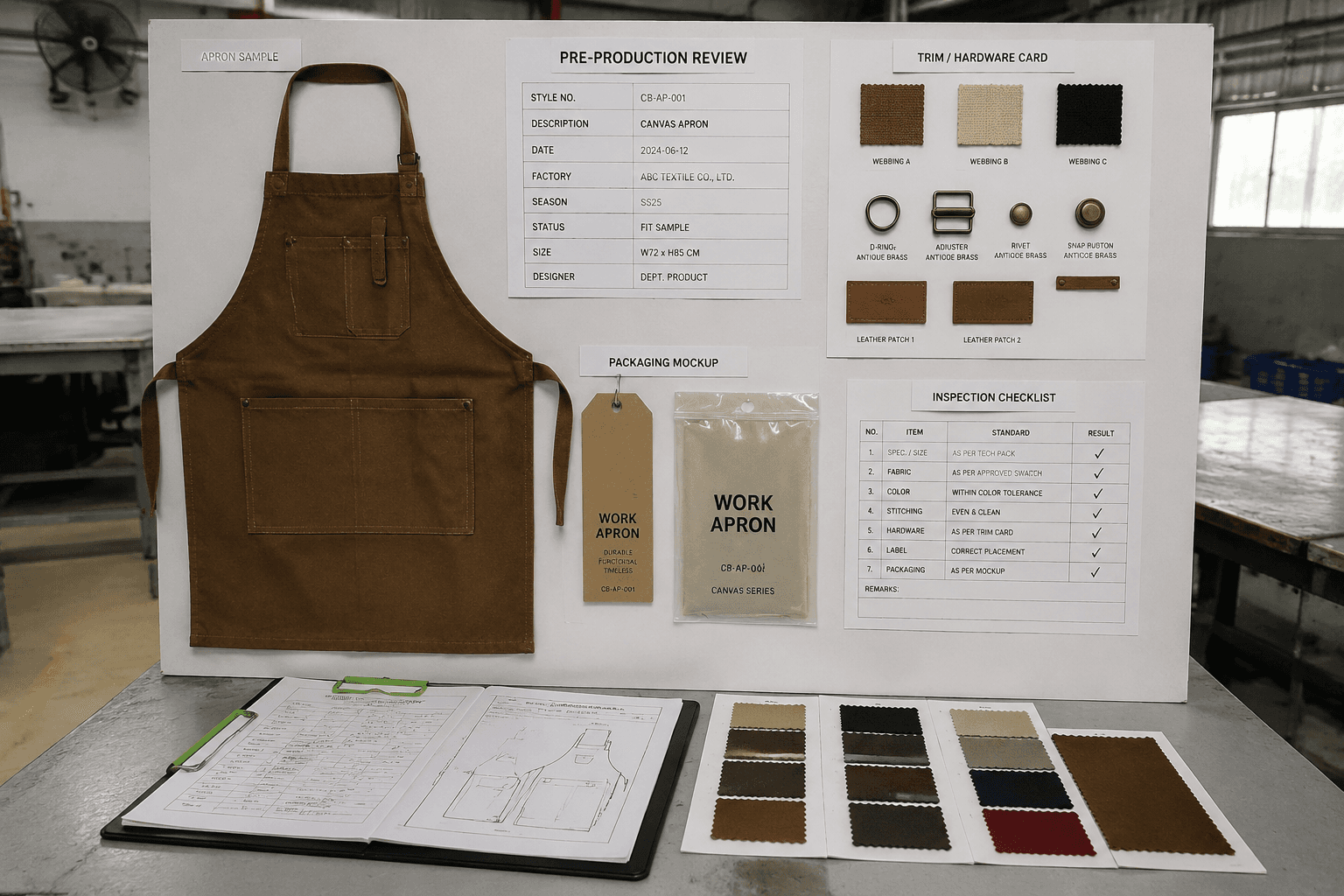
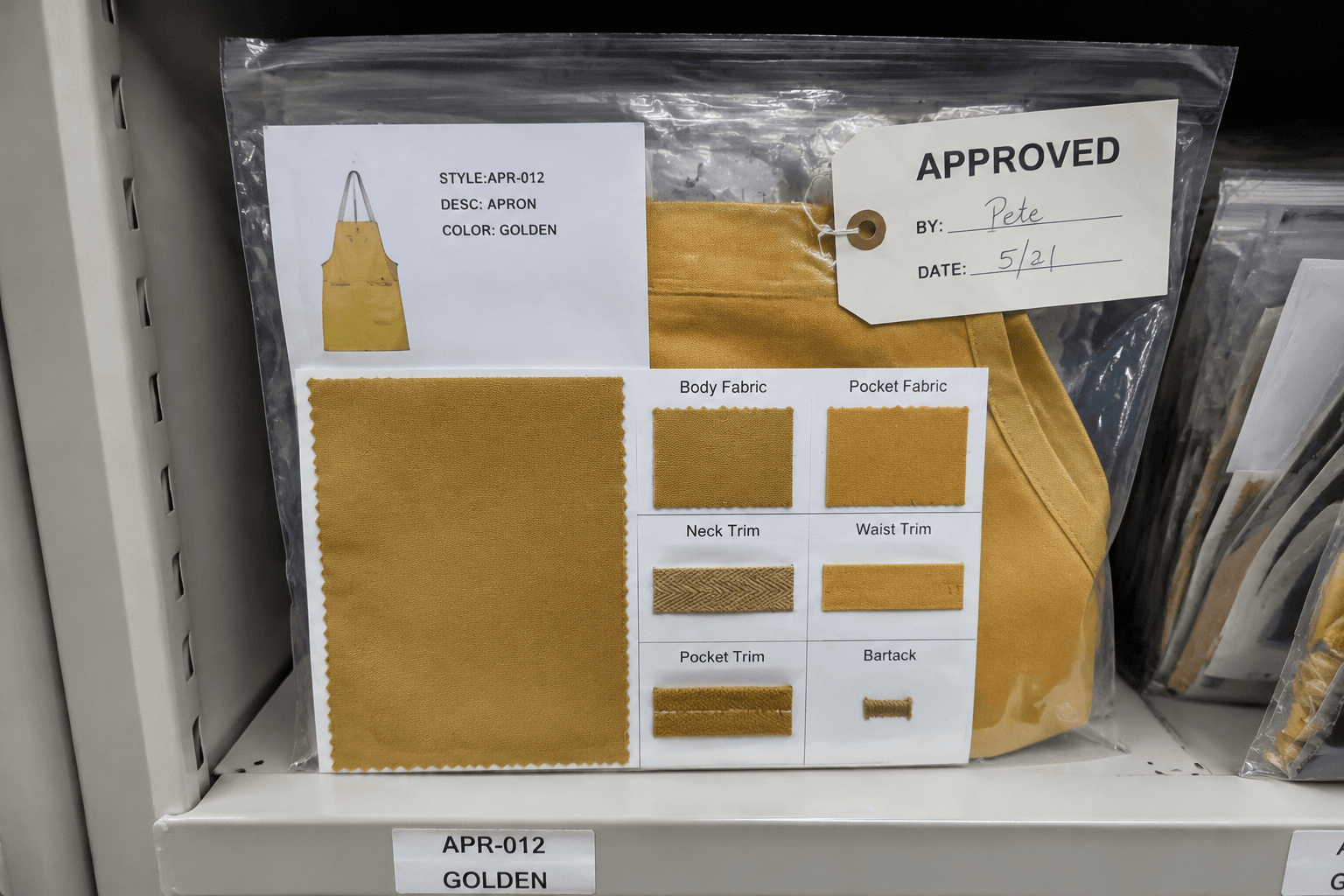
- Keep a sealed pre-production sample and approved trim card before bulk production.
- Specify critical workmanship points such as bartacks, pocket alignment, strap strength, and logo placement tolerance.
- Do not remove inspection or testing from a high-risk order just to save a small amount per piece.
- Ask the supplier to quote alternative specifications instead of matching an unrealistic target blindly.
A practical apron cost negotiation sequence for buyers
The best sequence is simple: define the use case, lock the must-have specification, request transparent price tiers, review cost drivers, value-engineer the design, then confirm the commercial terms. Many negotiations fail because the buyer asks for the final lowest price before the factory understands the real order. A complete RFQ should include apron type, size, fabric composition and GSM, color quantity, logo method and size, pocket details, strap details, packaging, testing requirements, target delivery date, and shipment term.
When comparing suppliers, buyers should avoid judging only by the first unit price. A quote that is USD 0.18 lower may exclude sample cost, barcode labelling, export cartons, or fabric testing. It may assume a larger MOQ or a longer lead time. It may also use a different fabric weight. The correct comparison is landed, compliant, approved product cost. For bulk apron programs, a reliable quote with fewer surprises is usually worth more than a very low number that changes after sampling.
A good factory will not object to negotiation when the buyer brings volume, clarity, and realistic flexibility. The supplier also benefits from efficient orders: fewer sample revisions, better material planning, smoother sewing lines, and fewer disputes. When both sides negotiate from cost logic, it is possible to lower apron quote levels while keeping the product stable. That is the difference between short-term price pressure and professional apron cost negotiation.
- Send one complete RFQ pack instead of separate messages for fabric, logo, packing, and delivery.
- Ask for price tiers and lead times in the same table so quantity and timing can be compared together.
- Identify three flexible items before negotiation, such as fabric weight, packaging, or pocket design.
- Keep one approved sample standard for bulk production and inspection.
- Review total program cost, including sample fees, testing, cartons, labels, inland transport, and freight weight.