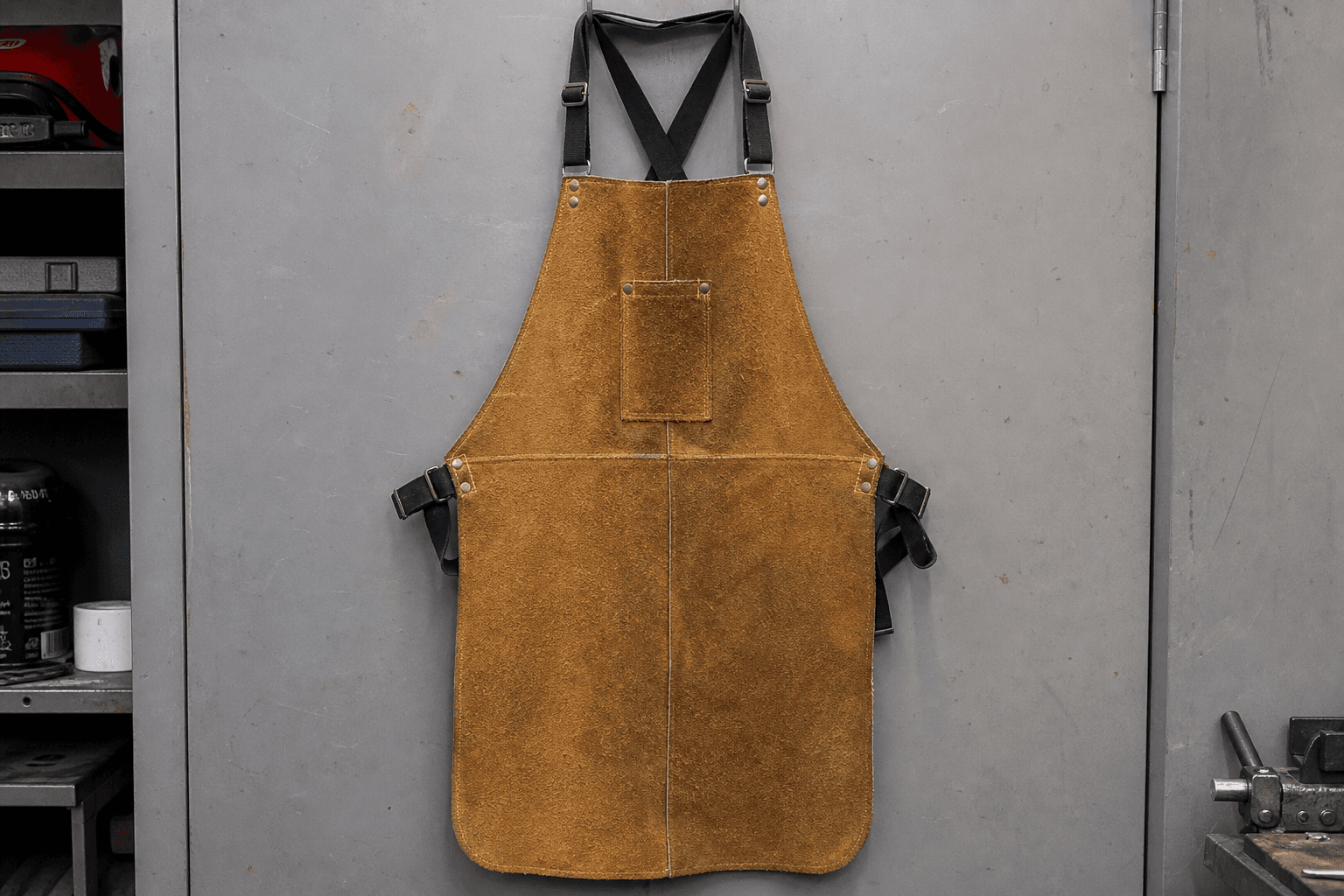
On a bib apron, the neck loop is a load-bearing component that directly affects comfort, bib position, wearer size coverage and wash durability. Buyers often lock shell fabric, pockets and logo application first, then leave the neck loop until late sample review. That sequence creates avoidable risk. In bulk apron production, the neck loop should be fixed in the tech pack before PP sample approval because it changes material consumption, reinforcement method, labor time and failure rate in use.
From a sourcing standpoint, the three most common apron neck loop options are self-fabric, webbing and hidden adjuster systems. Each can be correct when matched to the apron’s price point, wash method and reorder model. A fixed loop cut from a 240-280 GSM cotton canvas apron behaves differently from a 25 mm poly-cotton herringbone webbing loop on a 245 GSM twill uniform apron, and both differ again from a concealed slider design developed for premium chefwear or gifting.
For B2B buyers, the decision is practical: what will hold shape after repeated shifts, pass inspection with low variation and support the target FOB and lead time? The sections below compare the main constructions using realistic factory metrics, including common strap lengths, trim MOQ, sewing-minute effect, defect points, ex-factory timing and where each option fits in apron sourcing.
- Self-fabric loops look the most integrated, but they work best on stable 220-320 GSM apron shells with finished shrinkage controlled to 3% or less.
- Webbing loops are usually the safest choice for hospitality and uniform reorders because trim width is standardized, sewing variation is lower and stock colors can shorten material preparation by 5-10 days.
- Hidden adjuster systems create a cleaner front, but they typically add 0.8-1.8 sewing minutes, extra trim approvals and a higher risk of strap slippage if slider quality is inconsistent.
- Neck-loop durability depends heavily on attachment engineering such as bartack length, X-box reinforcement, seam allowance and stitch density, not only on the strap material.
- Across common adult bib aprons, neck loop construction can shift FOB by roughly $0.12-$0.65 per piece and bulk lead time by 3-15 days, depending on fabric use, hardware and trim sourcing.
- For shipment approval, buyers should review neck loop construction under AQL 2.5 major / 4.0 minor and confirm wash, pull and slippage performance before PPS sign-off.
Why apron neck loop options change fit range, line output and claim risk
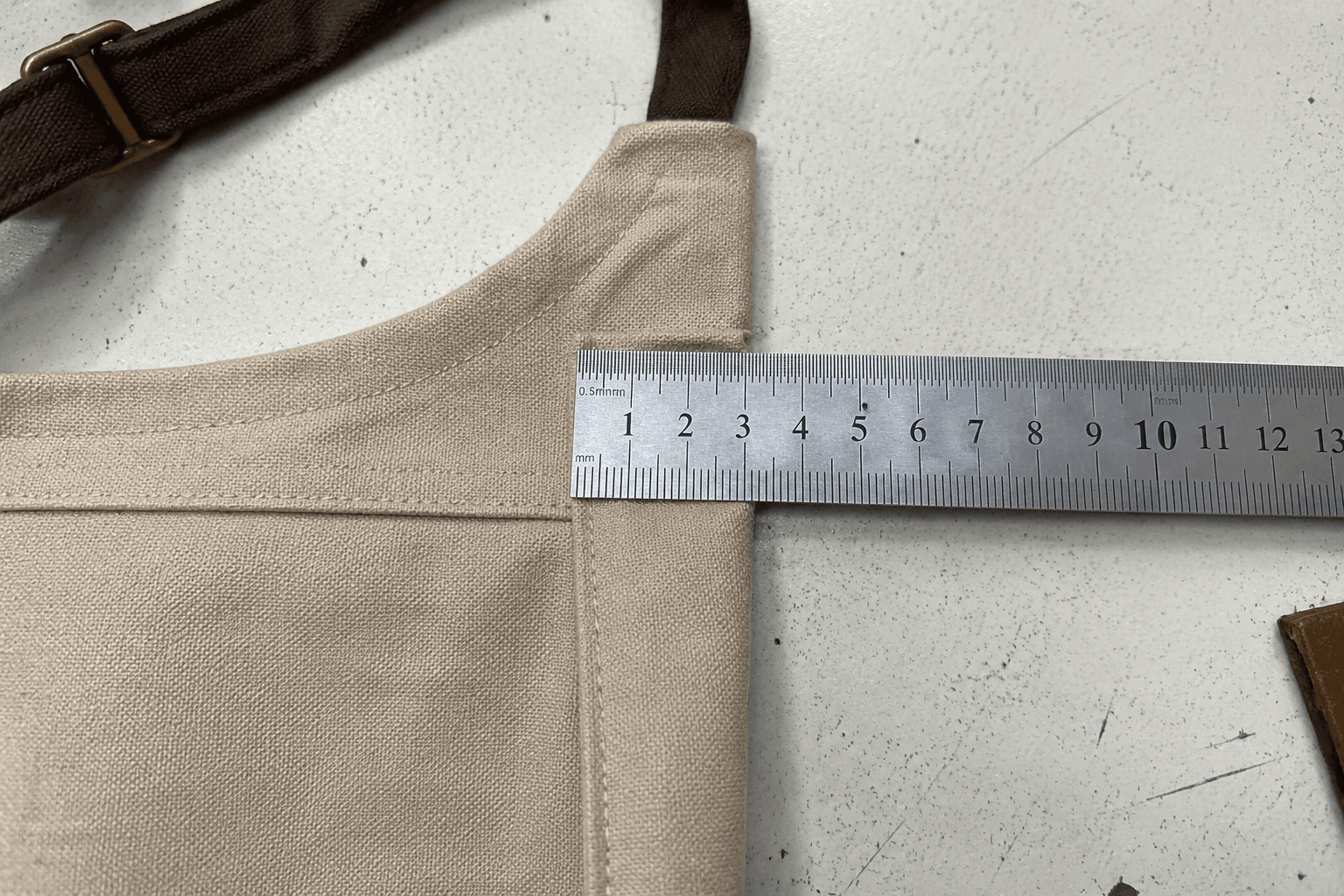
The neck loop is small compared with the apron body, but it has an outsized effect on fit consistency and bulk reliability. On adult bib aprons, fixed loops commonly use a total cut length of 62-76 cm, while adjustable systems typically need 72-92 cm to cover a broader wearer range. Finished width is most often 20 mm, 25 mm or 30 mm. Those dimensions affect neck comfort, bib height on the chest and the load concentrated at the top bib corners during a full shift.
For buyers, the real issue is channel fit. A retail artisan apron may prioritize a soft hand and fabric continuity. A restaurant group reorder program usually prioritizes repeatable dimensions, simple assembly and low defect rates after weekly laundering. A hotel uniform buyer may need one apron pattern to cover many staff heights without adding multiple size SKUs. That is why apron neck loop options should be selected against the business model, not against appearance alone.
The construction also changes factory output. A fixed loop inserted into the bib seam is faster to cut, fold, attach and inspect than an adjustable design using sliders or D-rings. On an order of 5,000 pieces, an additional 0.7 sewing minutes per unit equals nearly 58 extra line hours. That difference can move the ex-factory date by several days if the same line is also handling chest pockets, towel loops, embroidery and individual polybag packing.
- Typical adult bib standards use 25 mm strap width and 68-74 cm cut length for a fixed loop before folding and seam insertion.
- A fixed construction can reduce assembly time by roughly 0.4-1.2 minutes per apron compared with adjustable systems.
- Common neck-loop defects are strap twist, visible puckering, insecure bartack, left-right imbalance and slider slippage.
- Many factories classify neck attachment as a priority checkpoint within AQL 2.5 major / 4.0 minor inspections because failure leads to immediate wear complaints.
Self-fabric apron neck loop options on 220-320 GSM canvas and twill
Self-fabric loops are cut from the same apron shell as the bib and body. For design-led aprons, this gives the cleanest visual result because color, texture and wash effect match exactly. The construction is common on cotton canvas, cotton twill and linen-look bib aprons where the buyer wants the neck area to read as part of the garment rather than as added trim.
This option performs best when the shell is stable enough to become a strap. In practice, that usually means 220-320 GSM canvas or twill with controlled shrinkage and limited bias distortion. On these fabrics, a four-layer folded strap with 1-2 rows of topstitching and reinforced bib corners can perform well in commercial use. On lighter or less stable shells such as 150-190 GSM plain weave cotton, chambray or soft rayon blends, the strap is more likely to torque, wrinkle or stretch after washing unless internal tape or light fusing is added.
Buyers often assume self-fabric is the low-cost choice because no separate trim is purchased. In reality, shell fabric is usually the costliest apron component. If a washed cotton canvas is priced around $3.20-$4.60 per meter, using body fabric for a wide neck loop can cost more than stock webbing once fabric consumption, folding control and slower sewing are included. On a standard bib apron, self-fabric loops commonly add $0.08-$0.28 per piece versus basic stock webbing and may add 1-3 days in cutting and sewing preparation if turning and pressing are needed.
- Best use case: 220-320 GSM cotton canvas, cotton twill or poly-cotton twill with finished shrinkage at 3% or below.
- Common finished widths are 25 mm and 30 mm; wider straps usually feel softer on the neck but consume more shell fabric.
- Recommended reinforcement includes bartack or X-box stitching at each bib corner, with seam allowance stable enough to resist pull-out.
- Key QC checks are ±2 mm strap width tolerance, twist control after pressing and puckering review after at least 3 home-laundry cycles.
Webbing apron neck loop options for hospitality reorders and cost discipline
For volume uniform programs, webbing is usually the most efficient of the main apron neck loop options. The strap is sourced as a separate trim, typically cotton webbing, poly-cotton herringbone tape or polyester webbing. Because the trim arrives with a stable width and cleaner edge than a formed self-fabric strap, it reduces variation in cutting and sewing. That matters in hospitality, catering and servicewear programs where replenishment orders must match earlier shipments with minimal fit drift.
Webbing also supports cleaner costing. Consumption is easy to calculate, cut lengths are repeatable and operators do not need to fold or turn straps from apron body fabric. A 25 mm stock black, navy or natural webbing can usually be attached with fewer sewing variables than a self-fabric tube strap. On 8 oz to 10 oz poly-cotton twill bib aprons, webbing generally holds shape through repeated washing better than using the shell itself as the neck loop, especially where the body fabric has been brushed or enzyme washed for a softer hand.
The main trade-off is appearance and color coordination. Webbing often looks more utilitarian, which may be acceptable for uniforms but less ideal for premium retail presentation. Stock shades such as black, natural, grey and dark navy are usually easy to source. Custom-dyed webbing, however, often carries a trim MOQ of 3,000-5,000 meters, requires lab-dip approval and can add 5-10 days to the pre-production calendar. For that reason, buyers should approve actual trim swatches against apron shell fabric under the intended wash and light conditions rather than approving color code alone.
- Common materials are 100% cotton webbing, poly-cotton herringbone tape and polyester webbing in 20-30 mm widths.
- Stock-color webbing often supports a total lead time of about 25-35 days after PP approval on standard apron orders.
- Typical webbing loop cost is around $0.10-$0.35 per piece before adding metal hardware or branded labels.
- Polyester gives stronger dimensional stability; cotton usually gives a softer hand and a closer visual fit with cotton apron shells.
Hidden adjuster apron neck loop options for premium aprons with broader size coverage
Hidden adjuster systems allow the wearer to change neck length without a prominent buckle or visible front slider. The adjustment point may sit behind the neck, on the inside of the bib or inside a covered tunnel. This construction is usually chosen for chef aprons, premium retail capsules and gifting programs where first-touch presentation matters and the front bib needs to remain visually clean for branding or embroidery.
From a development standpoint, hidden adjusters are the most demanding option. The pattern must allow enough travel for adjustment without distorting the bib edge, creating hard seam build-up or exposing hardware after wear and washing. Heavy shells above 300 GSM can make concealed channels bulky and stiff, while lighter fabrics can abrade around the slider path if the hardware edge is rough. The result is a longer approval cycle than either a fixed self-fabric loop or a standard webbing strap.
Buyers should treat hidden systems as a higher-risk component and approve them on function, not appearance alone. The strap must slide smoothly, hold position during wear and remain discreet after laundering. In factory terms, this usually means at least 50 slide cycles, a simple pull test at the approved loop length and wash review after multiple cycles. If slider tension is too loose, the neck opening can lengthen during a shift. If the hardware plating is rough or inconsistent, the strap can snag, abrade or discolor adjacent apron fabric.
- Hidden adjuster systems usually add about $0.18-$0.65 per piece over a fixed loop, depending on hardware grade and sewing path.
- Assembly time commonly increases by 0.8-1.8 minutes per piece, which can materially reduce line output on orders above 3,000 pieces.
- A practical adjustment allowance for adult staff programs is usually 10-18 cm, enough to cover different torso lengths without creating excess strap tail.
- If hardware is not available from stock, special finishes can add 7-15 days for sourcing, plating confirmation and trim approval.
Durability checkpoints: reinforcement, wash testing and inspection standards
When neck loops fail in the market, the root cause is usually the attachment method rather than the strap material alone. A strong webbing loop can still tear out if the bib corner has only a shallow seam and no reinforcement. A self-fabric loop can perform well if the top corner is backed, bartacked and sewn at the correct stitch density. For professional apron sourcing, buyers should review the engineering at the strap entry point with the same attention given to shell fabric and pocket placement.
The most common reinforcement methods are bartack, box stitch, X-box stitch and concealed backing tape. For medium-weight bib aprons in the 220-280 GSM range, a clean seam with internal backing and an external bartack is often sufficient. Heavier workwear aprons or industrial-laundry programs may need a visible X-box structure for better load distribution. A stitch density of about 8-10 SPI is a realistic starting point, adjusted for fabric thickness and thread size. Very low stitch density can weaken the seam, while very high density may cut into softer shell fabric after repeated washing.
Testing should reflect real end use. A retail apron washed occasionally at home does not need the same standard as a kitchen apron laundered several times a week. Buyers should request at least 3-5 wash cycles under the intended care method, followed by visual review for twisting, puckering, color transfer, metal corrosion and slider stability where relevant. For shipment control, insecure neck attachment should be treated as a major concern under AQL 2.5 / 4.0, with specific checkpoints written into the inspection checklist before bulk packing starts.
- Review bib corners using bartack, box stitch, X-box or backing tape according to shell weight and expected wear load.
- Check shell and strap shrinkage together; if body shrinkage exceeds 3% but the strap remains stable, apron hang changes after wash.
- Use at least 5 washed samples for comparison of puckering, seam slippage, corrosion and hidden-adjuster stability.
- Set a simple pull standard during PPS so inspection teams know the approved reinforcement level before bulk output.
Choosing the right construction by MOQ, FOB target and reorder continuity
The best neck loop construction depends on the order profile rather than on a universal quality ranking. For small and medium production runs of around 300-800 pieces per color, self-fabric loops can make sense because they avoid separate trim MOQ and keep visual matching simple. For repeat hospitality and servicewear business, webbing is usually the safest option because it standardizes assembly, lowers variation and supports predictable replenishment. For premium chefwear, retail capsules or corporate gifting, hidden adjusters can be justified when the customer accepts higher trim cost and a longer development cycle.
MOQ and trim dependency should be reviewed at quotation stage, not after sample approval. Custom-dyed webbing often requires 3,000-5,000 meters. Special slider finishes or branded hardware can add 7-15 days if they are not available from stock. Hidden adjuster styles often need 2-3 sample rounds before fit range, concealment and slippage are stable enough for bulk confirmation. By contrast, a fixed self-fabric loop on a standard apron can often move from PP approval to shipment in roughly 30-40 days if shell fabric is already booked and no special garment wash is involved.
For buyers managing professional apron sourcing, the cleanest process is to lock the neck-loop specification before PPS: cut length, finished width, reinforcement method, hardware type, wash standard, tolerance and test requirement. That reduces interpretation gaps between merchandising, sample room, sewing line and final inspection. In most B2B apron programs, the correct choice is the simplest construction that still meets fit coverage, durability target and brand presentation at the required FOB.
- Choose self-fabric when visual integration matters and the order is too small to justify custom trim MOQ.
- Choose webbing when reorder continuity, lower sewing variation and faster planning matter most.
- Choose hidden adjuster only when cleaner front presentation supports higher FOB and stricter functional testing.
- Write neck-loop specifications into the tech pack with dimensions, reinforcement, hardware, wash expectation, pull test and tolerance before PPS approval.