For professional apron sourcing, heat cut apron strap ends should be treated as a controlled production detail, not a casual finishing note. A hot knife cuts and seals synthetic yarns in one step, reducing loose filaments during sewing, pressing, packing, container transit, and repeated wear. On bib aprons, waist aprons, cross-back aprons, and utility aprons, that small trim process affects sewing efficiency, visible finish quality, wearer comfort, and claim risk at bulk scale.
The result depends on the exact strap construction. A clean seal on 25 mm polyester webbing at roughly 1.0-1.3 mm thickness and 260-320 GSM equivalent mass behaves differently from a glossier nylon edge or a faster-melting polypropylene strap. Buyers who approve from one photo or one showroom sample often miss the real failure points: angled cuts, melt ridges above 0.5 mm, edge hardening after 20-30 wash cycles, or sealed ends that no longer pass smoothly through sliders and D-rings.
For B2B buyers, the decision should follow target FOB, wash requirement, wear position, and whether the end remains exposed. A café uniform bib apron with 25 mm stock polyester webbing has different needs from a 14 oz canvas workshop apron with 32 mm utility straps and load-bearing hardware. The best results come when buyers specify where heat cut apron strap ends are acceptable, where a folded return is safer, and what measurable pass-fail standard the factory must hold from pre-production sample to final AQL inspection.
- Heat cut apron strap ends work best on polyester, nylon, and polypropylene apron webbing; they are not a reliable anti-fray method for cotton tape, linen ties, or low-synthetic blends.
- For exposed apron straps, practical limits are cut-angle deviation within 2°, melt lip under 0.5 mm, no scorch visible at 30 cm, and no sharp edge under firm finger pressure.
- Typical added cost is $0.01-$0.03 per exposed end, or about $0.04-$0.10 per apron when four synthetic strap ends remain visible.
- Stock webbing can support 500-1,000 pcs MOQ with 18-30 day production after approval, while custom-dyed or custom-woven straps often need 3,000-5,000 meters per color and add 12-25 days.
- Many apron buyers use AQL 2.5 for major strap-end defects and AQL 4.0 for minor appearance variation, but only if the tech pack defines the defects clearly.
- If strap ends contact the neck, underarm, or hands, a 5-10 wearer trial after washing is usually cheaper than rework, returns, or replacement freight.
Where heat cut apron strap ends make sense in apron production
In apron manufacturing, strap-end finishing is a small trim item with outsized effect on efficiency and buyer complaints. The realistic options are cold cut plus stitch, folded return, bartacked turn-back, ultrasonic seal, metal tip, and hot-knife sealing. For synthetic apron straps that stay exposed or need stabilization before sewing, heat cut apron strap ends are usually the lowest-cost option that still gives a controlled finish.
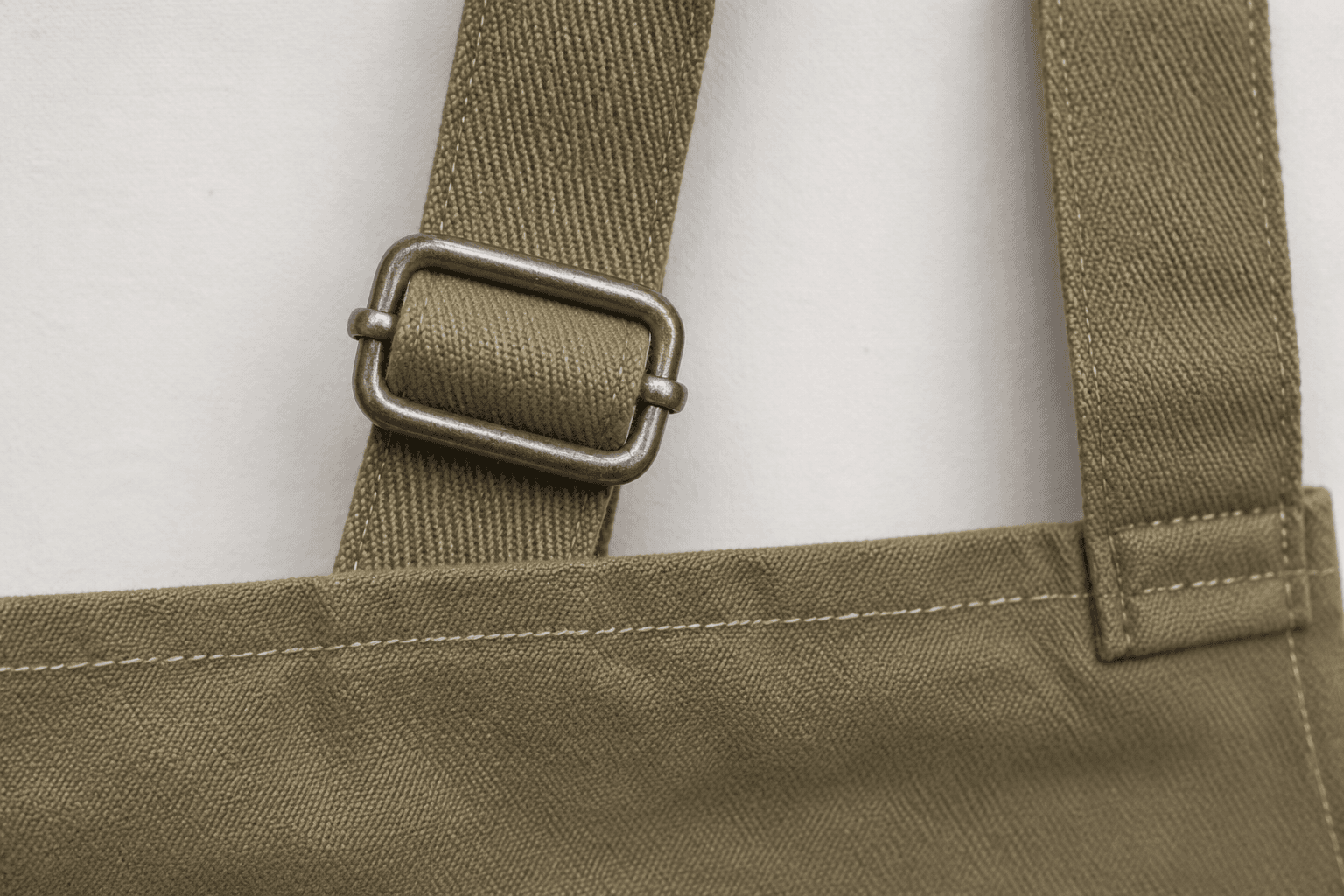
The method fits common apron strap placements: adjustable neck straps, waist ties, cross-back tails, hanging loops, towel loops, and accessory tabs. It performs best on widths already standard in apron sourcing: 10-12 mm for loops, 15-20 mm for light waist ties, 25 mm for most bib apron neck and waist straps, and 32-38 mm for heavier workshop or utility aprons. Polyester webbing around 0.9-1.5 mm thick generally seals cleanly. Once thickness moves toward 1.8-2.2 mm, especially on dense seatbelt-style straps, the risk of glossy edges, over-melt, stiffness, and poor drape rises quickly.
The business value is not only cosmetic. On orders of 2,000-10,000 aprons, sealed synthetic ends reduce loose yarn contamination on the sewing floor, improve strap length consistency, and shorten manual trimming time at packing. That matters on programs with tight FOB targets, high carton counts, and chain-account delivery dates.
- Best uses: neck straps, waist ties, cross-back ends, hanging loops, towel loops.
- Most common width: 25 mm on bib aprons; 32-38 mm on heavier utility styles.
- Best thickness range: about 0.9-1.5 mm; thicker straps need extra approval.
- Typical stock-webbing MOQ: 500-1,000 pcs per style if body fabric is also standard.
Material and webbing structure decide finish quality
Fiber content is the first control point. Polyester is usually the safest default for branded aprons because it seals predictably, keeps color stable through repeated laundering, and usually leaves a medium hand rather than a very hard edge. Nylon can look sharp at the cut face, but the sealed edge is often glossier and firmer, which matters when the apron strap touches the neck or underarm. Polypropylene is lighter and cheaper, often useful on value-driven uniforms, but it melts faster and can produce uneven beads unless blade temperature and dwell time are tightly controlled.
Construction matters almost as much as fiber. A flat woven tape, herringbone strap, twill tape, and dense seatbelt-style webbing all react differently under the same blade setting. Dense straps can produce a straighter visual line but often retain more heat and build a thicker fused ridge. Softer herringbone and twill straps usually feel better in wear, yet their cut faces can vary more from piece to piece if yarn tension is inconsistent. Buyers should never approve one 25 mm strap sample and assume the same heat setting will suit every synthetic strap in the apron range.
The cost difference between materials is small compared with the risk of claims. Moving from basic polypropylene to mid-grade polyester webbing often adds around $0.03-$0.10 per apron, depending on width, total strap length, and order size. On orders above 5,000 pcs, that is usually a rational upgrade if it reduces rejects, wearer complaints, and rework on front-visible straps.
- Polyester is usually the best balance for hospitality and retail uniform aprons.
- Nylon looks crisp but often feels harder on exposed ends.
- Polypropylene lowers trim cost but needs tighter process control.
- Dense webbing can cut cleaner; softer tapes usually wear better against skin.
Set measurable QC standards for heat cut apron strap ends before PP approval
A buyer should not approve apron strap finishing with vague wording such as 'clean cut' or 'no fray.' A working specification defines straightness, melt-lip thickness, discoloration, edge feel, and function in hardware. For visible 25 mm polyester apron ties, many capable factories can hold cut-angle deviation within 2°, fused bead thickness under 0.5 mm, and no black scorch visible from 30 cm under normal indoor light. For hidden ends locked inside seams, the requirement can be simpler: complete sealing with no loose filaments longer than 1 mm.
Inspection criteria should separate major defects from minor variation. Sharp burrs, cracked seals, open fraying, distorted ends that cannot pass through a slider, or severe scorch should be classified as major. Slight gloss variation, mild whitening after bending, or small bead variation on a hidden loop can usually be treated as minor if function is not affected. Many apron buyers work with AQL 2.5 for major defects and AQL 4.0 for minor defects on finished garments, but the numbers only help if the defect definitions are written into the trim section of the tech pack.
Sample review should reflect production spread, not one hand-picked sample. Ask for 20-30 cut samples per strap type during development, compare them with the PP sample, and then pull first-day bulk samples from line output. The practical test is simple: inspect the edge, press it firmly by hand, bend it 5-10 times, thread it through the actual slider or D-ring, and recheck after 3 home laundry cycles or 1-2 light commercial washes.
- Major defects: open fray, sharp burr, cracked seal, distorted end, severe scorch.
- Minor defects: slight gloss shift, light bend whitening, small bead variation on hidden ends.
- Control points: development sample, PP sample, first bulk day sample, final inspection lot.
- Useful test quantity: 20-30 cut samples per strap type before PP approval.
Wearer-contact safety limits on neck straps, waist ties and cross-back ends
The main safety issue with sealed apron straps is usually edge hardness, not chemical residue. Problems start when the sealed tip is too thick, too pointed, or too stiff for the wear position. On aprons, the highest-risk zones are the back neck, the free tail of an adjustable neck strap, cross-back contact under the arm, and long waist ties that brush the hands during tying and untying over a full shift. A strap end that feels acceptable on a sample table can become irritating after 8-10 hours in a café, bakery, salon, floral shop, or open kitchen.
That is why buyers should specify end profile by apron position. A free-hanging bib apron tail usually performs better with a rounded corner radius of about 2-3 mm or a clean 30-45° angle rather than a blunt square edge. If the strap must pass through a slider, rectangular ring, or D-ring, the end needs enough flexibility to thread quickly without whitening or cracking at the bend. Over-melted ends may resist fray, but they slow handling and create more wearer complaints in the field.
A short wear trial is a low-cost check with high value. Ask 5-10 users to wear the apron for two full shifts, then record scratch feel, threading ease, tying speed, and edge condition after one wash and dry cycle. On hospitality programs with 30-50 wash expectations, this small step is cheaper than bulk rework or account credits after delivery.
- Use rounded or angled profiles where straps touch the neck or underarm.
- Avoid thick melt ridges on ends that pass through sliders or rings.
- Run a 5-10 person wearer trial on exposed synthetic straps.
- Recheck handfeel after wash because sealed edges can harden over time.
MOQ, lead-time and cost impact for apron buyers
From a sourcing standpoint, heat cutting is inexpensive, but it should be quoted as part of the full strap package. The process usually adds about $0.01-$0.03 per exposed synthetic end compared with simple cold cutting. An apron with four exposed ends typically increases by $0.04-$0.10 per piece. If the style also needs bartacks, folded returns, printed logos, rivets, sliders, or snap hardware, buyers should review the combined trim-operation cost rather than isolating the hot-knife charge.
Lead time depends more on webbing supply than on the cutting step itself. Stock polyester or nylon webbing in black, navy, grey, or natural can often move directly into trim preparation, allowing production in about 18-30 days after approval on straightforward apron programs. Custom-dyed webbing usually adds 12-18 days. Jacquard logo straps, recycled polyester webbing, printed webbing, or non-standard widths such as 28 mm or 35 mm can add 15-25 days before garment sewing starts.
MOQ rises with trim complexity. A simple bib apron using stock 25 mm black polyester webbing may remain workable at 500 pcs. A private-label apron program with custom Pantone straps, branded hardware, and retail packaging may need 1,500-3,000 pcs to absorb trim setup, wastage, and color minimums. For quotation review, the useful question is not only strap cost per meter, but the MOQ and lead-time penalty created by that strap choice across the whole apron order.
- Added process cost: about $0.01-$0.03 per exposed end.
- Typical impact per apron: about $0.04-$0.10 with four exposed ends.
- Stock-webbing lead time: usually 18-30 days after approval.
- Custom strap development: often adds 12-25 days and raises practical MOQ.
When heat cut apron strap ends are the wrong finish
Heat cutting is efficient, but it is not the right answer for every apron strap. Cotton tape, linen ties, and low-synthetic blends do not seal reliably, so folded-and-stitched ends, bartacked returns, bound finishes, or sewn tabs are safer. Even on synthetic straps, some premium aprons need a softer hand and more tailored finish than a sealed edge can provide. In those cases, a sewn return adds labor but often improves wearer comfort and supports a higher retail presentation.
Ultrasonic sealing can outperform a hot knife on some synthetic webbings when volume is high and finish consistency must be very tight, but factory access is more limited and setup cost is higher. Metal tips, wrapped tabs, or molded ends can create a premium look, yet they add parts, assembly time, wash-failure risk, and more complex replacement issues if claims arise. On utility aprons carrying tools or taking repeated pull stress, a folded and bartacked return is usually safer at load-bearing points than an exposed sealed tip.
The sourcing rule is simple: choose the finish by use case. Value-driven hospitality aprons usually suit sealed polyester ends. Heavy workshop aprons may need folded returns at key stress points. Premium retail aprons can sometimes absorb an extra $0.10-$0.30 per piece for sewn ends if that reduces wearer complaints and returns.
- Use sewn or folded finishes on natural-fiber apron ties.
- Use bartacked returns where the strap end also carries load.
- Use ultrasonic sealing only when volume justifies the setup.
- Use decorative tips only if wash performance and FOB can support them.
How to write heat cut apron strap ends into the apron tech pack
The cleanest way to avoid disputes is to specify heat cut apron strap ends directly in the apron tech pack. Many buyers define strap length and width but leave end finishing open, which creates different interpretations between sample room, trim supplier, and sewing line. A complete specification should state fiber, width, thickness or construction, color, end profile, exposed or hidden position, hardware interaction, appearance limits, and touch requirement where the strap contacts the body.
It also helps to rank visibility by zone. A hidden hanging loop inside the back neck may only need secure anti-fray performance, while front-visible waist ties used in catalog photography need tighter control on squareness, gloss, and bead size. If the apron program includes a laundering target such as 20 home washes, 30 industrial-lite cycles, or a stated handfeel retention standard, that requirement should be tied to strap-end approval. Recycled polyester, dark colors, and coated straps can react differently to heat and should not be approved by assumption.
A disciplined approval flow reduces late corrections. Approve the webbing first, then approve cut strap-end samples, then approve the full PP apron with actual hardware and sewing construction. Ask the factory to retain one PP control sample and one first-day bulk control sample for inline and final QC comparison. That gives buyers a repeatable standard for reorders and keeps quality discussions factual rather than subjective.
- Specify fiber, width, thickness, weave, and color for each apron strap.
- Specify end shape clearly: straight, angled, or rounded.
- Specify limits for bead size, scorch, squareness, and handfeel.
- Specify wash expectation and hardware interaction before PP approval.
- Retain one PP control sample and one first-day bulk control sample.