For bulk apron programs, durability is not one test result. A 280 GSM cotton twill apron may pass a light abrasion check but fail after industrial laundering if the seam allowance is too narrow. A 10 oz canvas apron may look strong in a showroom sample but lose buyer confidence if pocket corners tear after three weeks in a cafe environment. Apron durability testing should therefore be specified as a group of checks: fabric abrasion, seam strength, wash cycles, colorfastness, shrinkage and construction inspection.
From a factory point of view, the most useful test plan is tied to the end use. A promotional bib apron for a 5,000 pc campaign does not need the same test level as a 1,200 pc chef apron program for restaurant uniforms. A denim barista apron with leather patches has different risks than a polyester-cotton kitchen apron washed at 60 C. When buyers define the wearing environment, wash method and expected service life, the supplier can choose realistic fabrics, stitching methods and inspection criteria before bulk cutting.
This article explains how abrasion test apron results, seam strength apron checks and wash cycle test data should be read by sourcing teams. It also shows where test numbers can mislead if they are separated from pattern design, trims, thread, embroidery and factory process control.
- Abrasion testing should match the apron fabric and use case, not only a general apparel standard.
- Seam strength depends on fabric, thread, stitch density and seam type, so it must be tested on the real bulk construction.
- Wash cycle testing should include shrinkage, color change, puckering and trim performance, not only visual appearance.
- For work aprons, pocket corners, waist ties, neck straps and bar-tacked stress points are usually the first failure areas.
- Testing costs and lead time should be included before salesman samples or PP samples, because late changes can delay production by 5 to 12 days.
- A clear apron quality testing protocol reduces disputes by defining acceptable loss of color, strength and dimension after use.
Why apron durability testing should be defined before fabric booking
Many apron quality problems begin before stitching starts. If the buyer approves fabric only by hand feel, color and price, the factory may book material that is suitable for sampling but weak under repeated use. For example, a 240 GSM cotton canvas can feel firm after finishing, but if it uses short-staple yarn and loose weave density, the surface can fuzz quickly in an abrasion test apron check. A 220 GSM poly-cotton twill may feel thinner, yet perform better in wash stability and pilling resistance because of yarn blend and weave structure.
For custom apron orders from China, fabric booking usually happens after lab dip and sample approval. If the durability test requirements are not known at that stage, the supplier may need to reorder fabric or adjust finishing later. That can add 7 to 15 days to the schedule, especially for dyed-to-order cotton canvas, denim or heavy twill. On a 3,000 pc order, the fabric may represent 45% to 60% of the FOB cost, so changing material after PP sample approval is expensive and disruptive.
The factory needs to know the target use: retail kitchen apron, chef uniform apron, welding-style utility apron, barista apron, gardening apron, server waist apron or promotional apron. Each has different stress points. A server waist apron may fail at pocket dividers because pens and POS devices pull on the stitching. A chef bib apron may show problems at neck strap adjustment hardware after repeated laundering. A workshop apron may require stronger abrasion resistance across the front panel because tools rub against the fabric.
- Define expected wash method, such as home wash at 30 C, commercial laundry at 60 C, or industrial wash with tumble drying.
- Confirm target service life, such as 20 home washes, 50 restaurant laundry cycles or one promotional event period.
- State fabric preference by weight and composition, such as 260 GSM 65/35 poly-cotton twill or 12 oz cotton canvas.
- Identify stress areas on the design, including pocket openings, tie attachments, neck straps, side seams and embroidery zones.
- Agree whether testing is internal factory testing, third-party lab testing, or both.
Apron durability testing for abrasion resistance
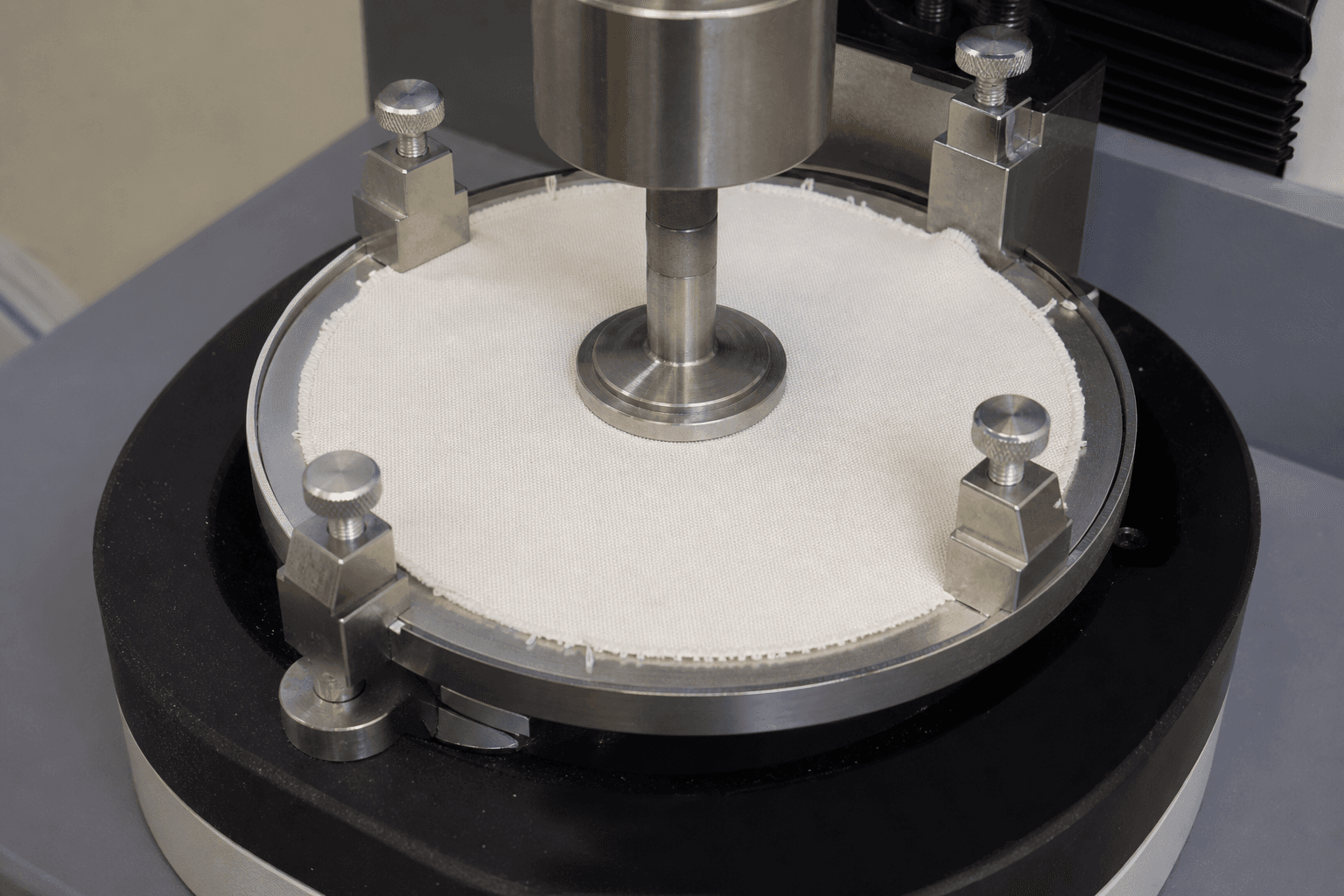
Apron durability testing for abrasion resistance measures how the fabric surface performs under rubbing. For aprons, this matters because the garment is worn over the body and constantly contacts tables, counters, tools, trays, kitchen equipment and washing machines. Surface wear can appear as fuzzing, yarn breakage, color loss, thinning at high-contact areas or holes. The test method may use Martindale, Wyzenbeek or a local equivalent depending on buyer requirements and the lab available.
For most apron sourcing programs, the practical question is not only whether the material reaches a very high cycle count. It is whether the chosen fabric remains acceptable for the price tier and use environment. A fashion cafe apron sold as retail merchandise may need the face fabric to remain clean-looking after 10,000 to 15,000 Martindale cycles. A heavy-duty utility apron may target 25,000 cycles or more, but the buyer must accept higher fabric weight, firmer hand feel and higher freight weight. A low-cost promotional apron at USD 1.20 to 1.80 FOB may be specified more modestly if it is not intended for long workwear use.
The abrasion test apron result should be interpreted with the fabric construction. Cotton canvas often develops a worn surface before it forms holes, which can be acceptable for a rugged look but not for a clean uniform program. Polyester-rich twill can resist surface wear well, but may show shine or melting risk if exposed to high heat. Denim can perform strongly, but indigo dye rub-off and color change should be reviewed together with abrasion results.
- For light promotional aprons, a buyer may accept 5,000 to 8,000 cycles if the use period is short and the price target is tight.
- For restaurant and cafe uniforms, 10,000 to 20,000 cycles is a more practical range for many cotton twill, poly-cotton twill and canvas options.
- For utility or workshop aprons, 20,000 to 30,000 cycles or higher may be requested, but fabric weight and cost will increase.
- For denim aprons, abrasion should be checked together with dry and wet rubbing colorfastness because visual fading may appear before fabric breakage.
- For coated or waxed aprons, abrasion can damage the finish even when the base fabric remains intact.
Seam strength apron checks: where bulk aprons usually fail first
A strong fabric does not guarantee a durable apron. In production, many failures come from seams and attachment points. The most common areas are waist tie ends, neck strap joins, pocket corners, pocket divider seams, side tabs, towel loops and bar-tacked reinforcements. A seam strength apron test should therefore use the actual fabric, thread, stitch type and seam allowance planned for bulk, not only a fabric strip from the mill.
Seam strength can be measured by pulling a sewn specimen until the seam slips, the thread breaks or the fabric tears. For aprons, the acceptable result depends on end use and fabric weight. A light 180 GSM promotional apron may not need the same seam strength as a 320 GSM chef apron. However, the seam should fail in a controlled way, and the result should not be below the buyer's practical requirement. If a pocket corner begins to tear at low force, the issue is usually construction, not fabric alone.
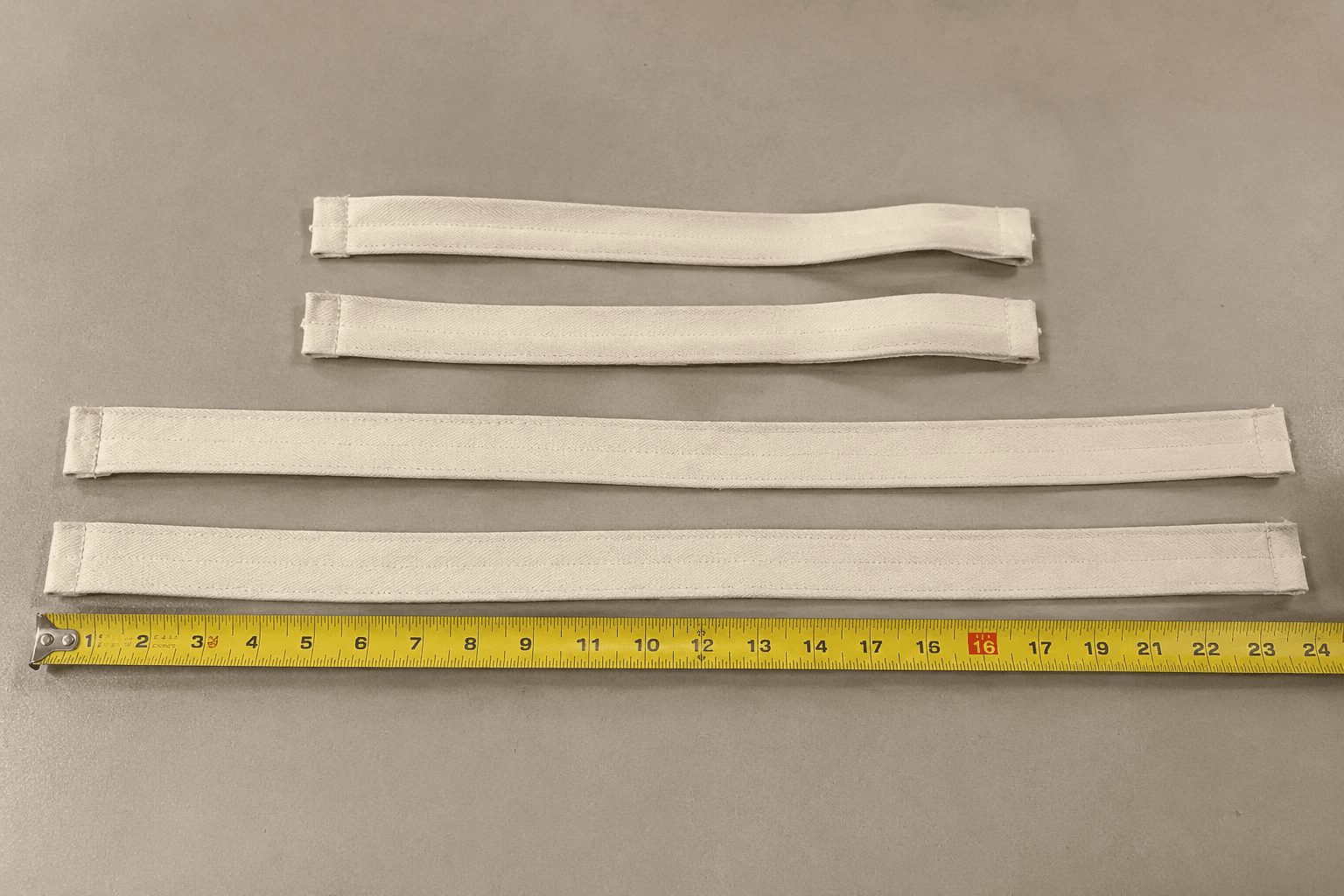
At our factory level, we review seam risk during sample making. If a buyer requests large front pockets for tablets, order pads or tools, we usually suggest reinforced pocket corners with bartacks or triangle stitching. If the design uses long waist ties, we check both attachment seam strength and tie fabric strength. For adjustable neck straps, we test slider and D-ring areas because hardware can concentrate pulling force on a small fabric section.
- Use 6 to 8 stitches per inch for many medium-weight cotton and poly-cotton aprons, adjusting for fabric thickness and seam type.
- Use stronger polyester core-spun thread for commercial laundry aprons, especially where cotton thread may weaken after repeated washing.
- Increase seam allowance from 0.6 cm to 1.0 cm on heavy canvas or high-stress pocket seams when the design allows it.
- Add bartacks at pocket corners, tie joins and towel loops when the apron will carry tools, order pads or heavy items.
- Test embroidery zones carefully because dense embroidery can stiffen fabric and create stress around the stitched logo.
Wash cycle test requirements for restaurant and retail apron programs
A wash cycle test is often more important than a single strength test because aprons are washed frequently. Restaurant uniforms may be washed after every shift. A chef apron used five days per week can easily reach 40 to 60 washes within three months. If the buyer sells aprons to retail consumers, the wash label may be gentler, but shrinkage, color change and seam puckering still affect returns and reviews.
The wash cycle test should copy the intended care method as closely as possible. For cotton aprons, a home wash test at 30 C or 40 C may show acceptable shrinkage, while a 60 C commercial wash with tumble drying may create much higher dimensional change. For poly-cotton aprons, shrinkage is usually more stable, but seam puckering can appear if fabric and thread shrink differently. For denim aprons, wash testing must also review shade change, crocking, metal hardware oxidation and label performance.
A practical apron test plan may include measurements before wash, after one wash, after five washes and after 20 washes. For workwear buyers, 50 cycles may be requested, but this will add time and cost. Third-party lab testing for 20 to 50 cycles can take 10 to 25 days depending on queue and method. Internal factory wash testing can provide earlier warning in 2 to 7 days, but formal reporting may still be needed for brand compliance.
- For cotton canvas aprons, shrinkage after wash should normally be controlled within 3% to 5%, depending on fabric finishing and garment size tolerance.
- For poly-cotton twill aprons, shrinkage within 2% to 3% is often achievable with stable fabric and correct washing conditions.
- For denim aprons, shade change after wash should be approved against a buyer-agreed washed standard, not only judged as pass or fail.
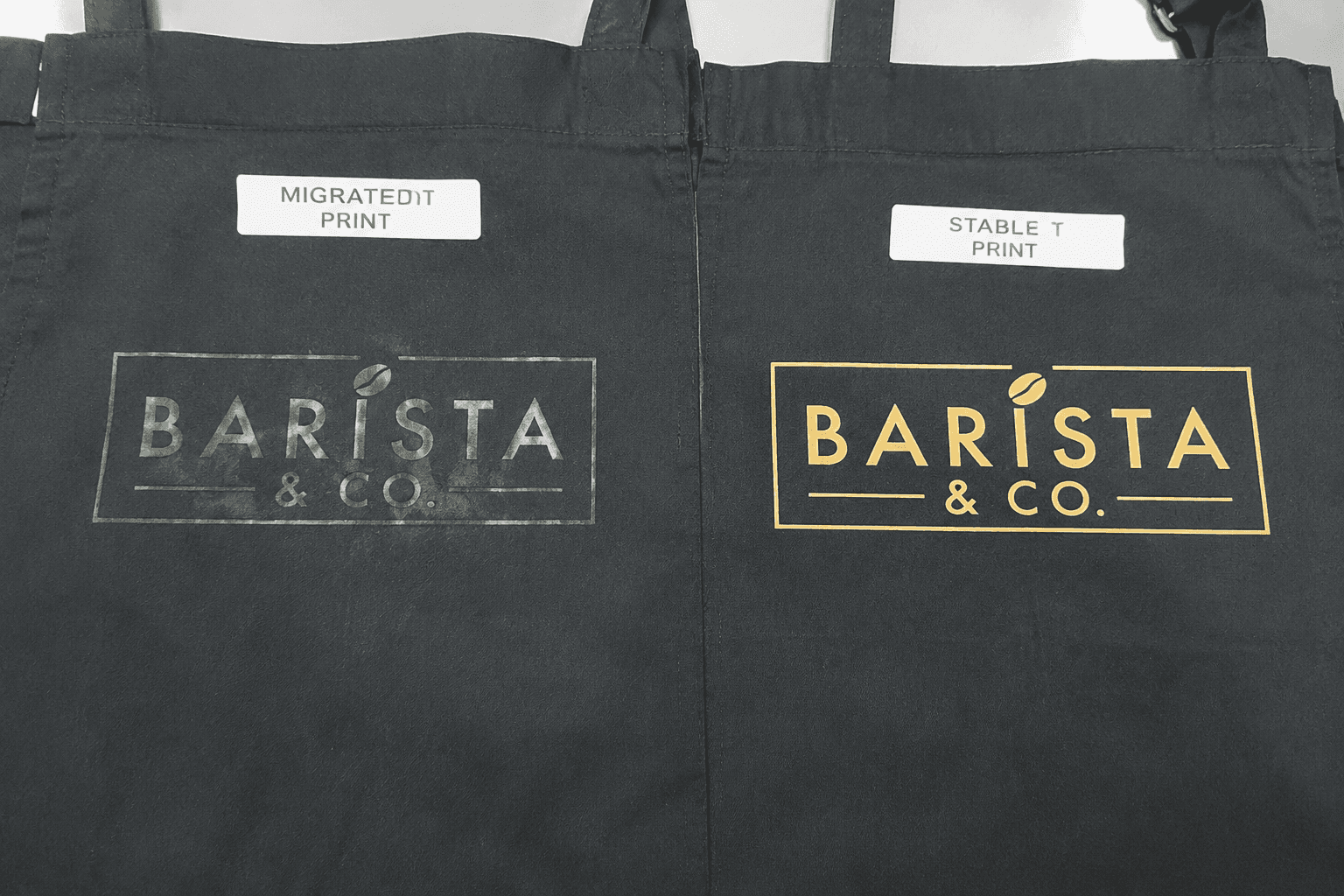
- For printed aprons, wash testing should check cracking, fading, edge lifting and ink bleeding after multiple cycles.
- For leather patches, PU straps or metal hardware, wash testing should confirm whether trims are washable or must be removed from the design.
Colorfastness, crocking and print durability in apron quality testing
Aprons are close-contact garments, but they also touch furniture, shirts, kitchen surfaces and customer-facing environments. Color transfer is a real sourcing risk, especially for black cotton canvas, dark denim, reactive dyed cotton and pigment dyed fashion aprons. In apron quality testing, colorfastness should include washing, rubbing and sometimes perspiration if the apron is worn in warm kitchens or outdoor markets.
Dry and wet rubbing tests are especially important for dark aprons. A black 320 GSM cotton canvas may look premium in a sample photo, but if wet crocking is poor, it can stain a white chef jacket or tablecloth. Indigo denim aprons are naturally more sensitive. Buyers who want a raw denim look should understand that some color transfer is part of the material behavior unless the fabric receives stronger washing or fixing treatment, which changes appearance and cost.
Print and embroidery durability should be tested with the same washing conditions as the garment. Screen print can crack if the ink is too thick or if the fabric shrinks more than the print layer. Heat transfer labels may peel at edges after tumble drying. Embroidery usually survives washing well, but dense logo areas can cause fabric puckering or stiffness. For bulk orders with custom branding, the testing sample should include the actual logo size, color count and placement.
- For dark cotton aprons, request dry and wet rubbing results before bulk cutting if the product will be worn over light garments.
- For pigment dyed aprons, confirm that the buyer accepts natural fading and shade variation between lots.
- For screen printed aprons, test the actual print ink and curing condition, not a different factory sample.
- For heat transfer logos, include tumble drying in the wash cycle test if the buyer's care label allows it.
- For embroidery, check puckering after wash and make sure backing material does not irritate the wearer or distort the bib panel.
How fabric weight, cost and durability trade off in custom apron sourcing
Durability usually has a cost, but the relationship is not linear. Increasing from 220 GSM to 280 GSM cotton twill may improve hand feel and service life, but moving from 280 GSM to 360 GSM canvas may create new issues: heavier garment weight, higher shipping cost, slower drying time and less comfort in hot kitchens. A sourcing manager should not specify the heaviest fabric automatically. The better approach is to define the required performance and choose the lightest fabric that meets it.
For reference, a simple bib apron in 220 GSM poly-cotton twill may cost around USD 2.10 to 3.20 FOB depending on size, MOQ, color and packing. A 280 GSM cotton twill version may move to USD 3.20 to 4.80. A 12 oz canvas apron with reinforced pockets, metal hardware and custom logo may reach USD 6.50 to 12.00 or more. These ranges change with cotton price, dyeing method, order quantity and labor content, but they show why test requirements must be connected to the commercial target.
MOQ also affects durability choices. Stock fabric colors may support 300 to 500 pcs per color for simple aprons. Dyed-to-order cotton canvas may require 800 to 1,500 meters per color, often equal to 1,000 to 2,500 aprons depending on fabric width and pattern consumption. If the buyer wants a special color with strict abrasion and wash performance, the factory may need lab dips, strike-offs and pre-production testing before confirming final cost.
- Use 180 to 220 GSM fabrics mainly for promotional, event and light retail aprons where low unit cost is the main driver.
- Use 240 to 280 GSM twill for balanced restaurant and cafe aprons that need comfort, wash stability and moderate durability.
- Use 300 to 360 GSM canvas or denim when the apron must feel substantial and resist heavier front-panel wear.
- Use blended fabrics such as 65/35 poly-cotton when lower shrinkage, faster drying and better laundering stability are priorities.
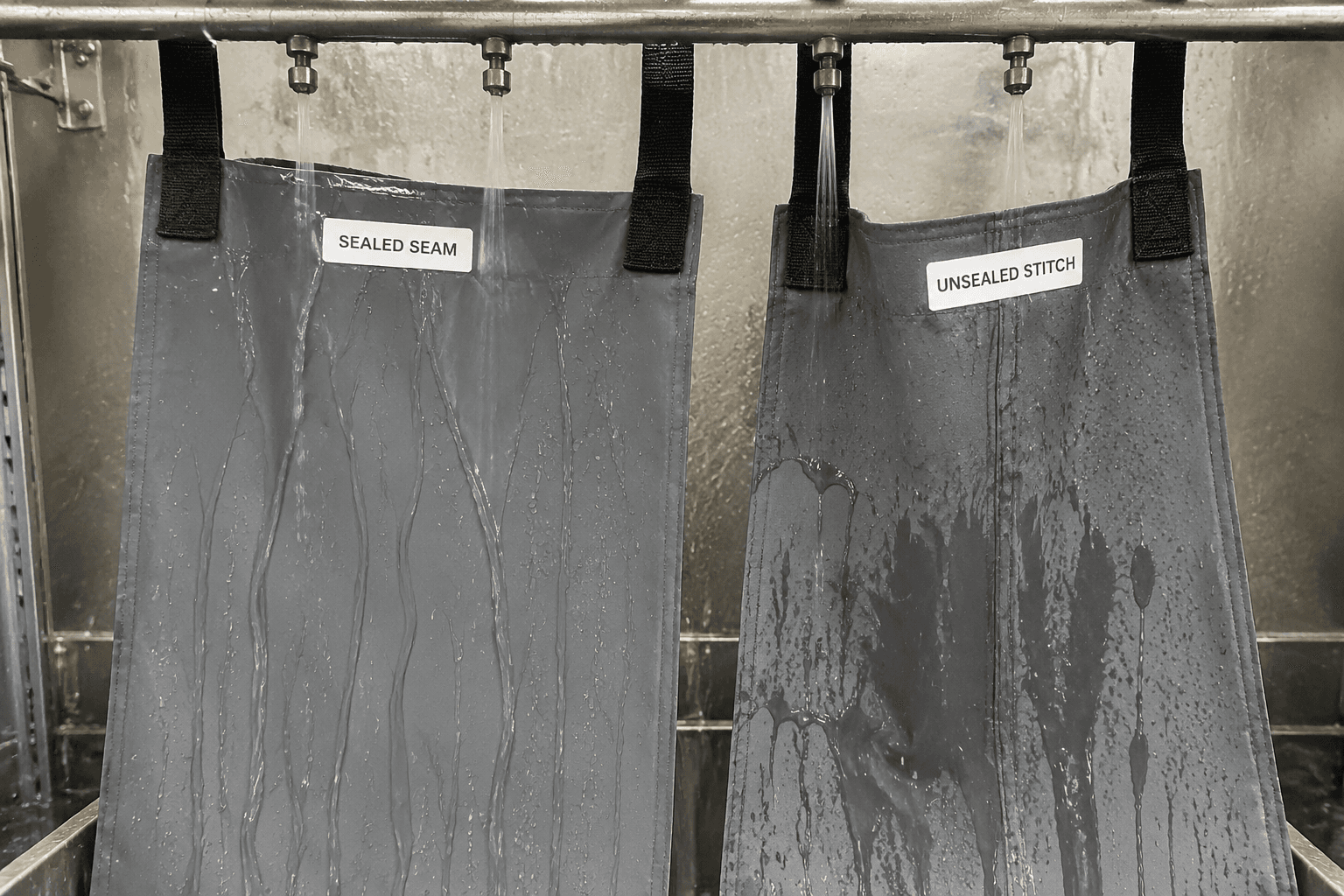
- Use special finishes carefully because water resistance, wax coating or softening can change abrasion, colorfastness and wash behavior.
Building an apron durability testing protocol for bulk orders
A good testing protocol is short enough to use and detailed enough to prevent disputes. It should state the test items, methods, pass criteria, sample stage and responsibility for cost. For many OEM apron orders, testing can be divided into three stages: fabric test before bulk cutting, PP sample test before production release, and random finished-garment inspection before shipment. This sequence catches fabric risk early and construction risk before the goods leave China.
For a 1,000 to 3,000 pc custom apron order, the buyer may choose internal factory testing for low-risk items and third-party lab testing for key claims. For example, abrasion, colorfastness and shrinkage may go to a lab, while seam appearance, pocket reinforcement and measurement checks are controlled in-line by the factory QC team. For larger uniform programs above 5,000 pcs or repeat orders, it is worth creating a standard test matrix that can be reused each season.
Timing must be planned. Fabric lab testing may take 3 to 7 working days for standard items. Wash cycle testing with 20 washes may take 10 to 14 days. A 50-cycle wash test can extend beyond three weeks. If these tests start only after the salesman sample is approved, the production calendar may become tight. The cleaner process is to test candidate fabrics while the sample is being adjusted, then confirm final bulk material after results are accepted.
- At fabric stage, test composition, GSM, colorfastness to washing, rubbing and basic dimensional stability.
- At PP sample stage, test seam strength, pocket stress points, logo durability and wash appearance on the actual construction.
- During production, inspect stitch density, seam allowance, bartack placement, thread color, pocket size and strap attachment consistency.
- Before shipment, conduct AQL inspection for measurements, visual defects, shade variation, stains, broken stitches and packing accuracy.
- For repeat orders, compare new bulk fabric against previous approved test results to control lot-to-lot variation.
How buyers should read test reports without over-specifying the apron
Test reports are useful, but they are not a substitute for product judgment. A report may show that a fabric passes abrasion, yet the finished apron can still fail if the pocket design is overloaded. Another report may show slight color change after washing, but that may be acceptable for a vintage-style canvas apron. Buyers should read test data together with target price, brand positioning, wash label, warranty policy and user environment.
Over-specification can create unnecessary cost. If a buyer requests very high abrasion cycles, 50 industrial wash cycles, premium colorfastness and heavy metal hardware on a small 300 pc order, the apron may become too expensive or too slow to develop. Under-specification creates the opposite risk: the order ships on time, but the end users complain after repeated washing. The best specification is not the strictest one. It is the one that matches the real use and is verified before bulk production.
When discussing apron durability testing with a Chinese OEM supplier, sourcing managers should ask practical questions: Which fabric is most likely to fail first? Which seam needs reinforcement? How many wash cycles reflect the customer's use? What result can be guaranteed for the target price? A capable factory should answer with material options, sample evidence and clear lead-time impact, not only a simple pass or fail statement.
- Ask for the test method name, sample description, wash condition and pass criteria before approving the report.
- Check whether the tested sample is fabric only, salesman sample, PP sample or finished bulk garment.
- Compare test results with the actual care label because a gentle wash result does not prove industrial laundry performance.
- Approve visual standards for fading, puckering and worn appearance when the apron style intentionally uses natural cotton, denim or pigment dye.
- Keep one sealed approved sample and one tested sample reference for production inspection and future repeat orders.