For bulk apron orders, sampling is the first paid stage where a design moves from a tech pack or reference photo into a physical product. The apron sample cost is not only the sewing charge for one piece. It includes fabric sourcing, pattern making, logo setup, trim preparation, cutting, sewing, finishing, QC and international courier freight if the buyer asks the factory to arrange delivery.
In our Zhejiang apron workshop, most sourcing managers ask why a single sample can cost US$45, US$80 or even US$150 when the future bulk price may be US$3.20 to US$8.50 per piece. The reason is simple: bulk production spreads setup work across 500, 2,000 or 10,000 pieces, while a custom apron sample carries the full setup cost on one or two units.
This article explains how factories calculate apron sampling fee, what is normally refundable, where costs increase, and how buyers can control sample rounds without weakening the final product specification.
- A basic apron sample is usually US$35-60, while complex denim, leatherette, waterproof or multi-logo samples can reach US$90-180.
- Logo setup is often the largest variable, especially for embroidery, screen printing, silicone patch, woven label or heat transfer artwork.
- A pre production sample cost is different from an early development sample because the PPS must use confirmed bulk fabric, bulk trims and approved workmanship standard.
- Sample lead time is normally 5-12 working days after artwork and fabric confirmation, excluding courier transit time.
- Many factories refund or deduct part of the apron sampling fee after bulk order placement, usually when MOQ and agreed order value are met.
- Clear tech packs, Pantone references, GSM targets and trim details reduce unnecessary apron prototype revisions.
What apron sample cost normally includes
A professional apron sample cost is built from several small but necessary operations. Even a simple bib apron needs a paper pattern or digital pattern adjustment, fabric cutting, neck strap and waist tie preparation, pocket setting, stitching, pressing, thread trimming and measurement checking. For a standard 65 x 85 cm bib apron in 7 oz cotton twill, one sample may take 45-80 minutes of operator time, plus pattern and material preparation.
The cost also includes internal coordination. A merchandiser checks the buyer's file, confirms fabric availability, asks the pattern room to prepare the cutting shape, sends logo artwork to the printing or embroidery room, and reviews the finished sample against the measurement sheet. This work is small in volume but high in attention. In bulk production, the same communication is spread across hundreds or thousands of aprons.
For reference, a plain apron sample with stock fabric may be US$35-45. A sample with one embroidered logo may be US$55-85. A heavyweight canvas apron with leatherette straps, rivets, metal eyelets and two logo positions may be US$95-160 before courier freight. DHL, FedEx or UPS freight for 1-3 samples is commonly US$25-55 to Europe or North America, depending on weight and destination.
- Pattern and sample room labor are usually included when the design is not an exact repeat style.
- Stock fabric sampling is cheaper than custom-dyed or custom-washed fabric sampling.
- Logo mold, screen, embroidery digitizing or heat-transfer setup may be charged separately.
- Courier cost is normally billed at actual cost unless the buyer uses their own freight account.
Typical apron sampling fee by product type
The apron sampling fee changes mainly with material, construction and decoration method. A simple waist apron made from 180-220 GSM polyester-cotton can be sampled quickly because the fabric is common, the shape is small, and the sewing operation is straightforward. A barista apron in 12 oz canvas with cross-back straps, snap buttons, antique brass rivets and double-layer pockets needs more preparation and more sewing accuracy.
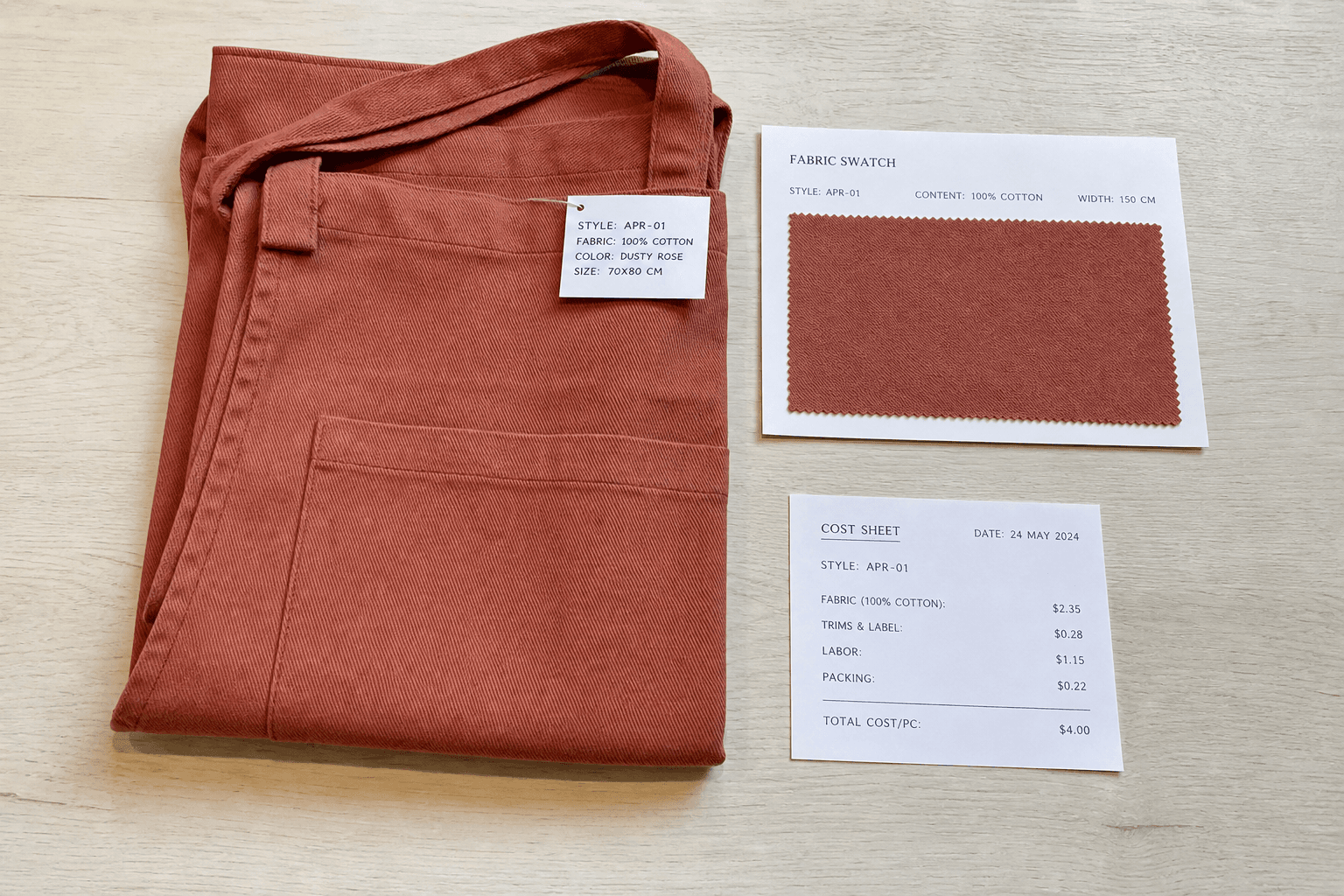
Buyers should also separate sample cost from future FOB unit price. A US$75 sample does not mean the bulk apron will cost US$75. For example, a 10 oz cotton canvas apron with one chest embroidery may cost US$4.80-6.20 per piece at 1,000 pcs, depending on fabric width, color, logo size and packing. The sample is expensive because the factory handles it as a one-off development item.
As a practical range, lightweight promotional aprons are often US$35-55 per sample. Restaurant bib aprons in cotton twill or TC fabric are usually US$45-75. Denim aprons, waxed-look canvas aprons, chef aprons with multiple pockets, and cross-back designs are often US$70-130. Styles with genuine leather, custom metal hardware, silicone labels or special washing can exceed US$150.
- Promotional polyester apron, 150-190 GSM: US$30-50 sample cost, 4-7 working days.
- Restaurant bib apron, 220-280 GSM TC or cotton twill: US$45-75 sample cost, 5-9 working days.
- Canvas or denim work apron, 280-420 GSM: US$65-130 sample cost, 7-12 working days.
- Cross-back apron with hardware and patch logo: US$85-160 sample cost, 8-14 working days.
- Custom-dyed fabric apron or enzyme-washed apron: often US$120-250 because fabric treatment is not economical for one piece.
Why a custom apron sample costs more than bulk unit price
Sampling is a setup process, while bulk production is a repeat process. In bulk production, one marker plan may cut hundreds of apron panels at once. One sewing line may attach the same pocket shape all day. One embroidery file may run across 1,000 chest logos. During sampling, every step is interrupted, checked and adjusted. This is why a custom apron sample can cost 10-20 times the future unit price.
There is also waste at the material level. A factory may need to buy one or two meters of fabric from a fabric market even when the sample needs only 0.7 meter. If a buyer requests 300 GSM cotton canvas in a specific beige shade, the closest available sampling fabric may require a minimum cut of 3-5 meters. For trims, suppliers may sell webbing, elastic, binding tape or leatherette straps by roll, not by sample length.
Logo decoration adds another cost layer. Embroidery requires digitizing and machine setup. Screen printing requires film or screen preparation for each color. Heat transfer requires artwork adjustment and sometimes a test press to confirm adhesion on cotton, polyester or coated fabric. For one sample, these fixed costs cannot be spread out. For 2,000 aprons, they become a small part of the unit price.
- A sample room operator may spend 60-120 minutes on one complex apron that a bulk line can later sew in 12-20 minutes per piece.
- Sampling fabric is often purchased in small cuts at higher effective cost than bulk fabric rolls.
- One-time logo setup may be US$15-60 depending on embroidery stitch count, print colors or patch mold type.
- Internal QC time is higher because the factory checks dimensions, seam construction, trim placement and logo position before sending the sample.
Apron sample cost drivers buyers should check first
Before paying any apron sample cost, buyers should review the real drivers behind the quotation. Fabric is usually the first driver. A 180 GSM polyester promotional apron is very different from a 360 GSM cotton canvas apron. Cotton, TC, denim, Oxford, recycled polyester, waterproof PU-coated fabric and waxed-look canvas all behave differently during cutting, sewing and washing.
The second driver is construction. Aprons look simple in photos, but small details change labor time. Adjustable neck straps, cross-back straps, detachable straps, double pockets, pen slots, towel loops, split-leg panels, reinforced bar tacks and binding on all edges increase sewing operations. For food service aprons, clean pocket alignment and durable waist ties are more important than decorative features. For tool aprons, reinforcement and hardware strength become the cost drivers.
The third driver is decoration. A 6 cm single-color screen print is inexpensive. A 10,000-stitch embroidery on 12 oz canvas is more expensive and needs backing. A silicone patch or woven patch may require a separate MOQ from the accessory supplier, often 100-500 pcs even for development. This is why the sample room may suggest using a temporary substitute patch first, then making the exact patch after bulk approval.
- Fabric specification: composition, GSM, weave, color, coating, washing and shrinkage requirement.
- Construction details: pocket count, strap system, hardware, reinforcement points and edge finishing.
- Logo method: embroidery, screen print, heat transfer, woven label, leather patch, silicone patch or metal plate.
- Color matching: stock color, lab dip, Pantone match, yarn dye or garment dye.
- Packing request: individual polybag, belly band, hangtag, barcode sticker, carton marking or retail-ready pack.
Pre production sample cost versus development sample cost
A development sample and a pre production sample serve different purposes. The development sample proves the design idea: size, shape, pocket placement, strap style and general look. It may use available fabric in a close color if the exact bulk fabric is not ready. This helps the buyer and factory move quickly in the first round. The pre production sample cost, however, is tied to the confirmed bulk standard and is more serious.
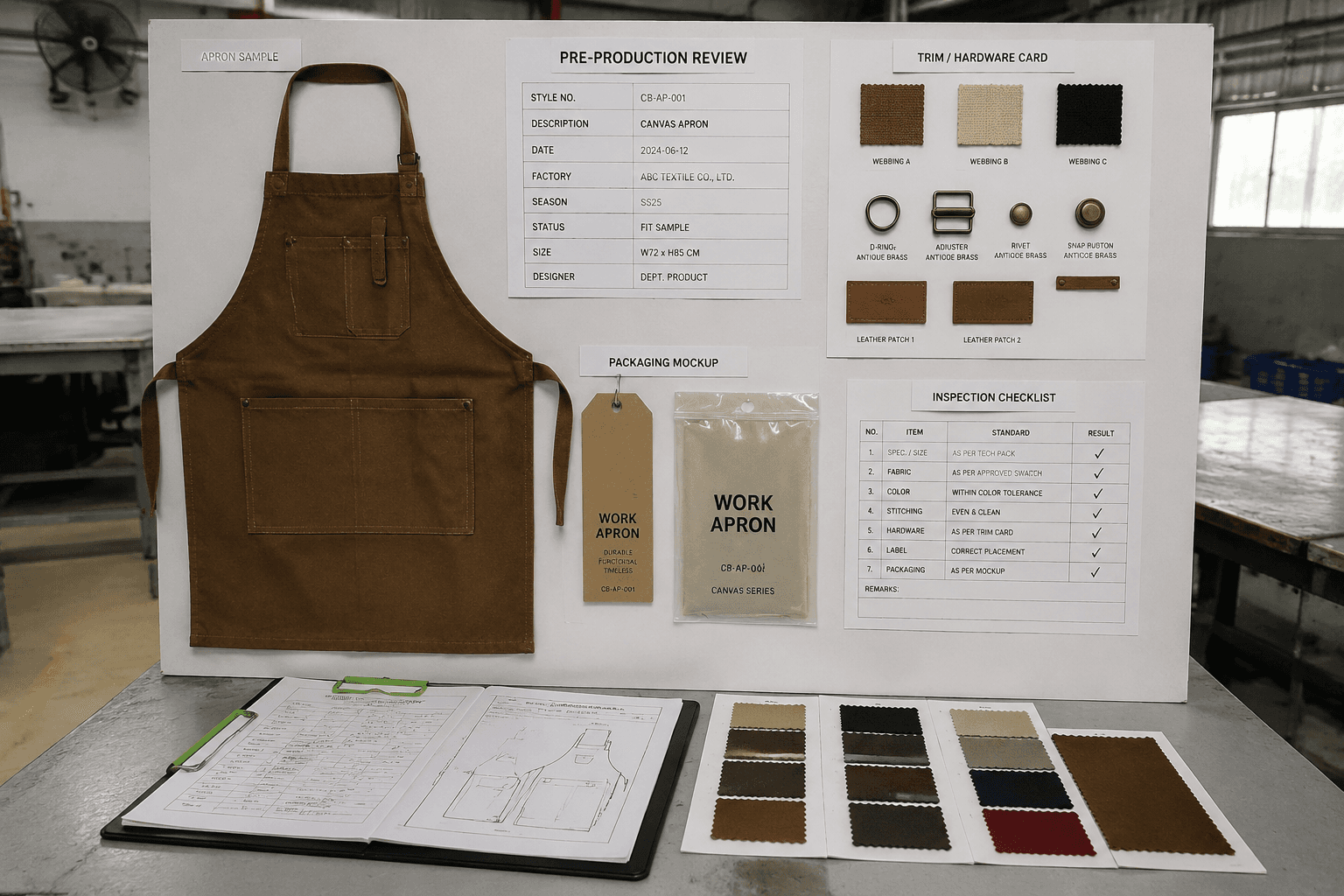
A pre production sample, often called PPS, should use the approved bulk fabric, confirmed trims, actual logo process, correct label set and final packing method if possible. It is the reference sample for mass production. For a 2,000 pcs restaurant apron order, the PPS may be produced after lab dip approval, fabric booking and trim confirmation. If the PPS is approved, the factory seals one piece in the production office and keeps it as the line standard.
Cost can be different because the PPS may require exact materials. If the buyer confirms custom-dyed 240 GSM cotton twill, the PPS may wait until the first bulk fabric is dyed and finished. If the buyer requests a custom woven neck label with brand logo, the label supplier may need 5-7 working days and a small setup fee. Some factories deduct PPS cost after bulk order confirmation, but they may still charge if the order is cancelled after material preparation.
- Development sample: used to confirm shape, function and overall design direction.
- Fit or size sample: used to verify apron dimensions, strap length and wearer coverage.
- Logo sample: used to approve embroidery, print, heat transfer, patch or label execution.
- Pre production sample: used as the final production standard before cutting bulk fabric.
- Shipment sample: pulled from finished bulk goods to represent the shipped order.
Lead time, revision rounds and refund rules
Normal apron sample lead time is 5-12 working days after all details are clear. Plain samples using stock fabric can be ready in 3-5 working days. Embroidery, patch, custom printing or special hardware normally adds 2-5 working days. Custom-dyed fabric, garment washing, waxed finish or special coating can extend sampling to 15-25 days because outside mills or finishing houses are involved.
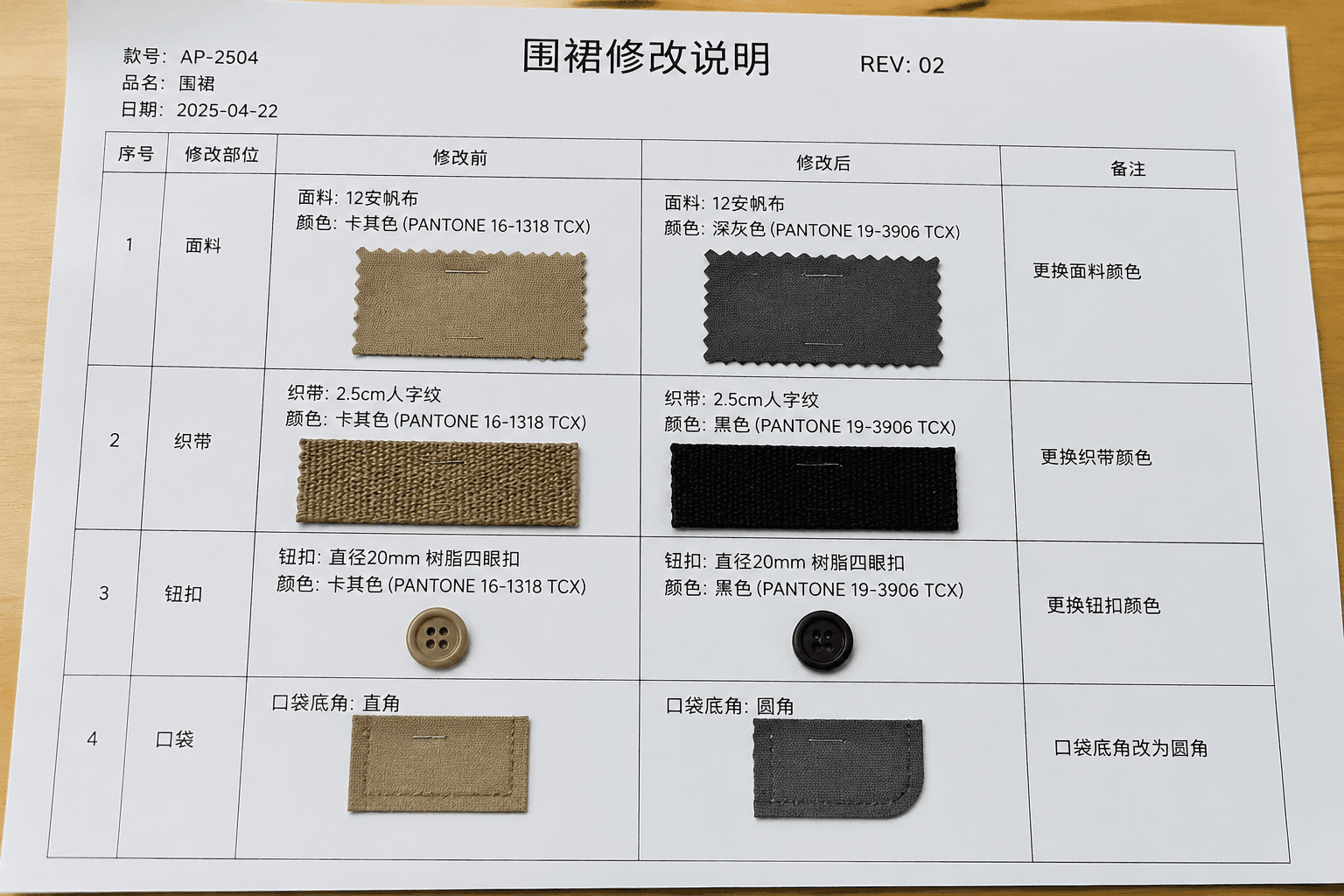
Revision rounds are a common reason sample budgets increase. If the first apron prototype has a pocket that is too low, a neck strap that is too short, or a logo that needs to move 2 cm higher, the second sample may be charged at material and labor cost only. But if the buyer changes fabric from 240 GSM cotton twill to 12 oz denim, adds cross-back straps and changes embroidery to leather patch, the factory treats it as a new sample because the construction and sourcing work have changed.
Refund rules should be confirmed before sampling. Many apron factories refund one sample fee when the buyer places a bulk order that meets MOQ, such as 500 pcs per color or US$3,000 order value. Some refund only the sewing sample fee but not courier cost, embroidery digitizing, screen setup or custom trim mold. For small trial orders below MOQ, the sample fee is usually not refundable because setup work cannot be absorbed into bulk production.
- Stock fabric sample: 3-7 working days after design confirmation.
- Logo sample with embroidery or print: 5-10 working days after artwork approval.
- Complex apron prototype with hardware or patch: 8-14 working days after trim confirmation.
- Custom-dyed or washed sample: 15-25 working days, depending on mill schedule.
- Courier transit: usually 3-6 days to North America or Europe after dispatch.
How to reduce apron prototype cost without losing control
The best way to reduce apron prototype cost is not to push the factory for the cheapest sample, but to remove uncertainty before the sample room starts work. A clear tech pack with finished measurements, tolerance, fabric target, logo size, placement and packing requirement prevents unnecessary back-and-forth. For aprons, the most important measurements are overall length, top width, bottom width, waist tie length, neck strap length, pocket size and pocket position from top edge or side seam.
Buyers can also use staged sampling. For a new restaurant chain apron, the first sample may use similar stock fabric to confirm silhouette and pocket function. After design approval, the second sample uses confirmed bulk fabric and exact logo. This can be cheaper than making exact custom-dyed fabric in the first round before the team has agreed on shape. However, for color-critical retail aprons, exact fabric and lab dip approval should happen earlier.
Another practical control is to approve artwork digitally before physical logo sampling. Embroidery stitch count, thread colors, print size and patch dimensions should be checked on an artwork sheet. If a buyer sends only a low-resolution JPEG logo, the supplier may need to redraw it, adding US$15-40 and 1-2 days. Vector artwork in AI, PDF, EPS or SVG format reduces delay and avoids poor logo edges.
- Send finished measurements in centimeters, not only a reference photo.
- Specify fabric composition and weight, such as 65/35 TC 240 GSM or 100% cotton canvas 320 GSM.
- Provide Pantone TCX, TPX or coated references for fabric and logo colors.
- Confirm whether the apron is for kitchen, cafe, salon, workshop, gardening, promotional use or retail sale.
- Approve logo size and placement before embroidery, print screen or patch development starts.
- Use your courier account when possible to avoid repeated freight markup on multiple sample rounds.
What buyers should ask before paying the apron sample cost
A transparent sample quotation should state what is included and what is excluded. Before payment, buyers should ask whether the quoted amount includes fabric, trims, logo setup, sample sewing, internal QC and courier freight. If courier is separate, the factory should provide estimated sample weight and package size. A typical set of 2-3 apron samples may weigh 0.8-1.8 kg depending on canvas weight, hardware and packing.
Buyers should also ask whether the sample will match bulk production exactly. If the factory uses substitute fabric for speed, this should be written clearly. Substitute sampling is acceptable when the buyer only needs to check size and construction, but it is not enough for final color, shrinkage, hand feel or washing approval. For food service and hospitality brands, fabric hand feel and wrinkle recovery can be just as important as appearance.
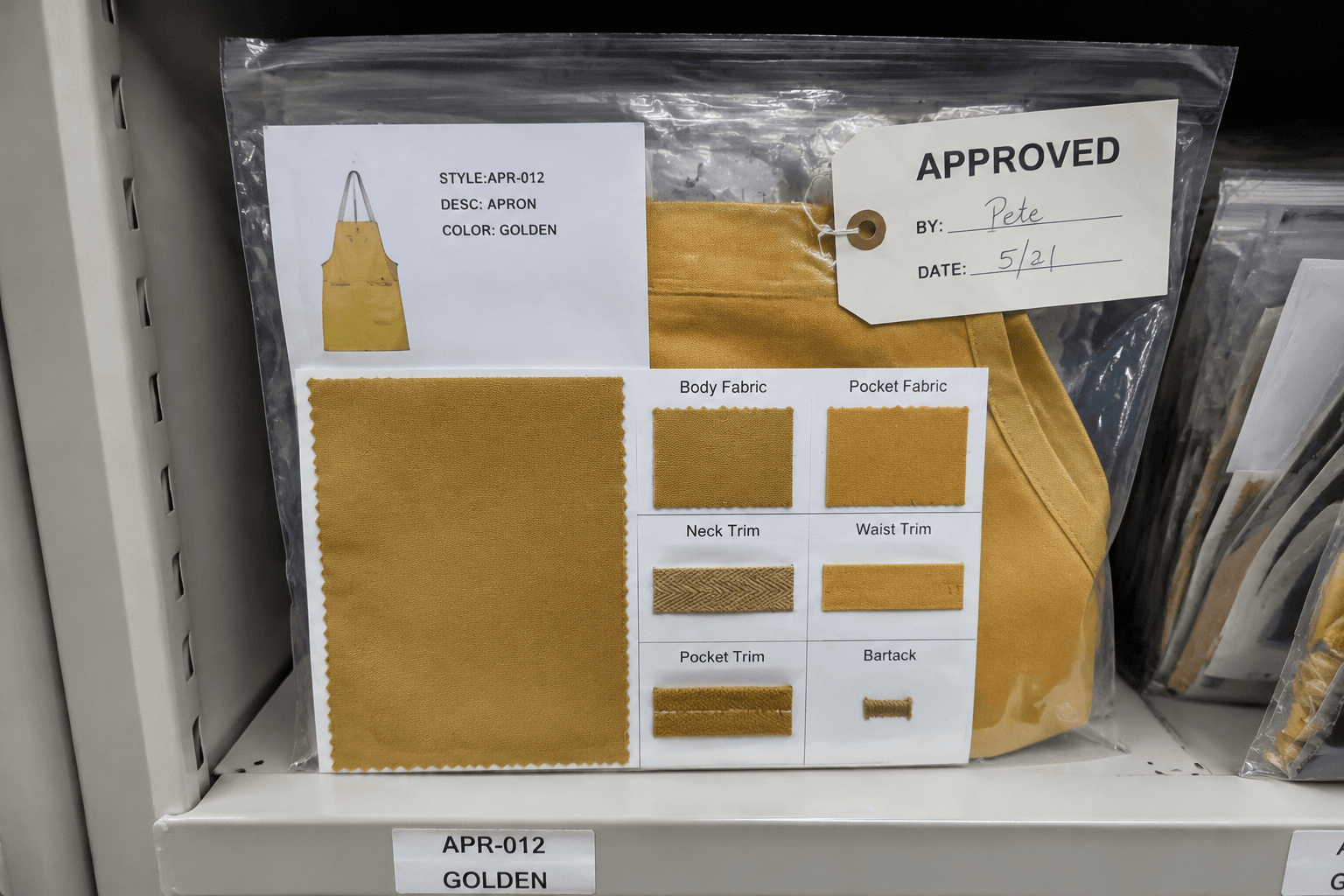
Finally, confirm how the sample approval will be recorded. A good supplier will update the measurement sheet after sample completion, photograph key details, mark any deviation and ask for written approval before moving to bulk material booking. This avoids later disputes such as pocket position, strap length, logo height or label placement. The sample is not just a piece of cloth; it is the production instruction that protects both buyer and factory.
- Ask whether the sample fee is refundable, deductible or non-refundable after bulk order placement.
- Ask whether logo setup, digitizing, screen charge, patch mold or label development is included.
- Ask whether the sample fabric is exact bulk fabric, close available fabric or substitute fabric.
- Ask for sample lead time in working days and courier transit time separately.
- Ask what MOQ applies after sample approval, including MOQ per color and per logo design.
- Ask whether revised samples are charged at full cost or partial cost when changes are minor.