For professional apron sourcing, the question is not whether an apron can survive repeated washing. The question is how many completed wash cycles it must pass before it exceeds agreed failure limits. That is the purpose of a defensible apron wash cycle specification. A number such as 30, 50, or 75 washes has no commercial value unless the buyer also defines the wash method, inspection points, sample size, and acceptance standard.
Overstating wash life creates chargebacks, emergency replenishment, and unreliable stock planning. Understating it can push buyers toward unnecessary fabric weight, higher FOB cost, and slower production. The workable standard sits between those risks: strong enough for the end use, honest about laundry severity, and clear enough for the factory, buyer, and third-party inspector to enforce.
Apron programs vary sharply by use case. A café bib apron washed at 40°C with neutral detergent should not carry the same claim as a butcher apron exposed to grease, alkaline detergent, chlorine, and 70°C to 75°C industrial processing. A realistic specification starts with who wears the apron, how often it is washed, what soils it carries, and which failures would trigger replacement.
- Set the wash promise by use case; café, bakery, restaurant, butcher, commissary, and promotional aprons face different laundry chemistry and replacement economics.
- Define pass-fail limits before sampling: shrinkage, seam opening, tie pullout, pocket tear, color change, pilling, trim corrosion, and logo damage should be written into the apron spec.
- For many managed uniform programs, a practical target is 30 to 75 washes; higher claims require tighter laundry control, stronger sewing, tested trim, and a higher cost allowance.
- GSM alone does not prove wash life; weave density, blend ratio, pre-shrink treatment, bartacks, hem construction, and pocket reinforcement often matter more than adding 20 GSM.
- Convert every cycle claim into weeks of service and cost per wear; a 40-wash apron used and washed 5 times per week lasts about 8 active weeks per unit.
- A usable apron wash cycle specification must state temperature, detergent, bleach allowance, drying method, sample size, checkpoints, and acceptance limits.
Why a vague apron wash cycle specification causes claims
Many sourcing disputes begin with a weak tech-pack line: “must withstand 50 washes.” That line is incomplete. Fifty home-laundry cycles at 40°C with neutral detergent are not equivalent to 50 industrial cycles using alkaline chemistry, chlorine, high extraction, and tunnel finishing. The same apron may pass one condition and fail the other by a wide margin.
A valid apron wash cycle specification needs two linked elements: the cycle count and the exact condition under which the finished apron must still pass inspection. For aprons, finished-garment testing is usually more useful than fabric-only testing because failures often appear in assembly points: neck loops, tie attachments, pocket corners, side openings, hems, bartacks, sliders, D-rings, rivets, patches, or printed logos.
The buyer should also decide which failures matter most for the service environment. Front-of-house café, bakery, hotel, and restaurant aprons need retained appearance because the apron is part of the brand presentation. Prep-kitchen, commissary, dish-area, and butcher aprons can tolerate more fading, but not tie failure, pocket collapse, or severe shrinkage that changes coverage. When those priorities are vague, factories may overbuild the body fabric while underbuilding the stress points that actually fail first.
- State the cycle count and laundry method together, for example 50 cycles at 40°C, neutral detergent, no chlorine, tumble dry low.
- Common pass limits include shrinkage within ±3%, no seam opening over 10 mm, no broken tie attachment, and no failed hardware before the target cycle count.
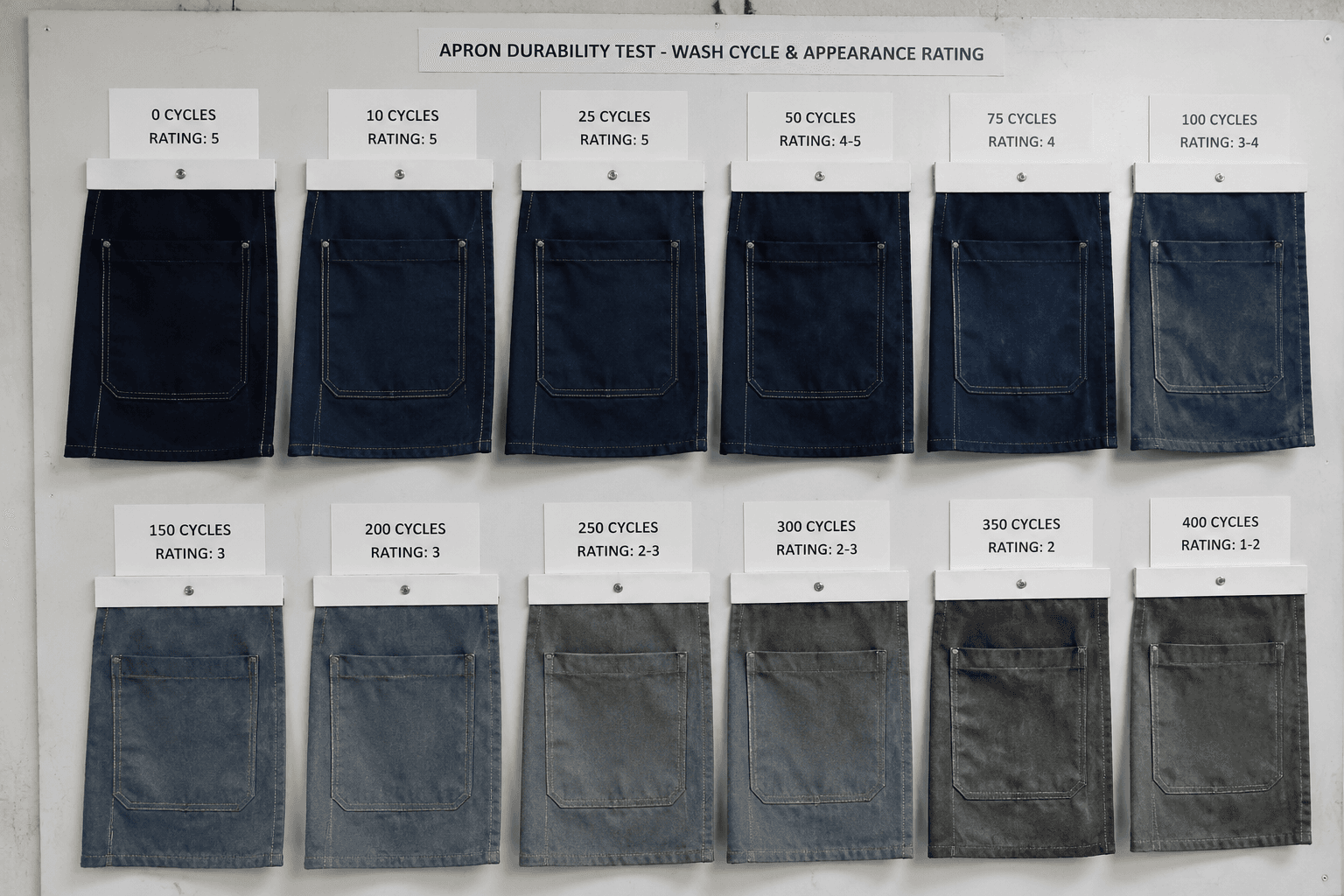
- For dark hospitality aprons, use a color threshold such as gray scale 3 to 4 or a buyer-approved retained appearance standard.
- For butcher and utility aprons, rank tie security, pocket strength, coverage, and dimensional stability above cosmetic fading unless the apron is customer-facing.
Set the apron wash cycle specification by end use and laundry severity
The fastest way to set a realistic standard is to group aprons by service environment. Promotional bib aprons, café aprons, bakery aprons, salon aprons, server waist aprons, chef-support bib aprons, butcher aprons, and retail merchandise aprons do not share the same wash risk. Even two aprons made from 235 GSM 65/35 poly-cotton twill can perform differently if one is washed gently at home and the other is processed daily by a commercial laundry.
For light-duty café, bakery, retail, or salon programs washed at 30°C to 40°C with neutral detergent and low dryer heat, 180 to 220 GSM cotton canvas or 200 to 230 GSM poly-cotton twill can often support 20 to 40 washes, assuming moderate fading and softening are acceptable. For daily restaurant service with oil, coffee, food acid, tumble drying, and frequent handling, 210 to 260 GSM poly-cotton twill is a safer base. Value programs may target 40 to 55 washes; reinforced programs may justify 60 to 75 washes.
For butcher, commissary, and central-kitchen aprons exposed to grease, chlorine, alkaline detergent, and 70°C to 75°C processing, buyers should avoid inflated lab claims. A promise of 25 to 50 industrial cycles is often more defensible than an 80-cycle claim based on mild washing. The apron may still be fit for purpose, but the test condition must match the real laundry.
- Promotional or retail merchandise aprons: usually 10 to 20 home washes, often at US$2.80 to US$5.20 FOB per pc.
- Café, bakery, salon, and light-service aprons: typically 20 to 40 washes using 200 to 230 GSM fabric and standard seam reinforcement.
- Restaurant bib or waist uniform aprons: commonly 40 to 75 washes with 210 to 260 GSM poly-cotton twill, bartacks, and stable trims.
- Butcher or heavy-soil kitchen aprons: usually 25 to 50 industrial cycles when bleach, grease, and high-heat finishing are used.
Fabric, blend, and sewing choices that improve wash performance
Higher GSM can help, but it is not a substitute for balanced construction. A 280 GSM loose cotton canvas may shrink, rope at the seams, and abrade at fold lines faster than a 235 GSM compact 65/35 twill. In apron programs, the first failures often appear at pocket tops, tie joins, bib corners, neck loops, side edges, and hems. Sewing quality can extend service life more efficiently than simply adding fabric weight.
In bulk sourcing, 180 to 210 GSM is common for price-led or light-duty aprons, 210 to 260 GSM covers mainstream hospitality programs, and 260 to 320 GSM is used for stiffer handfeel, premium styling, or heavier-duty concepts. Cotton gives a softer, more traditional look, but repeated laundering usually creates higher shrinkage and faster visible aging, especially in black, navy, charcoal, bottle green, and burgundy. A 65/35 poly-cotton blend usually improves dimensional stability, drying speed, and cost per wear. An 80/20 poly-cotton can improve wash stability further, though some buyers may find the handfeel less natural.
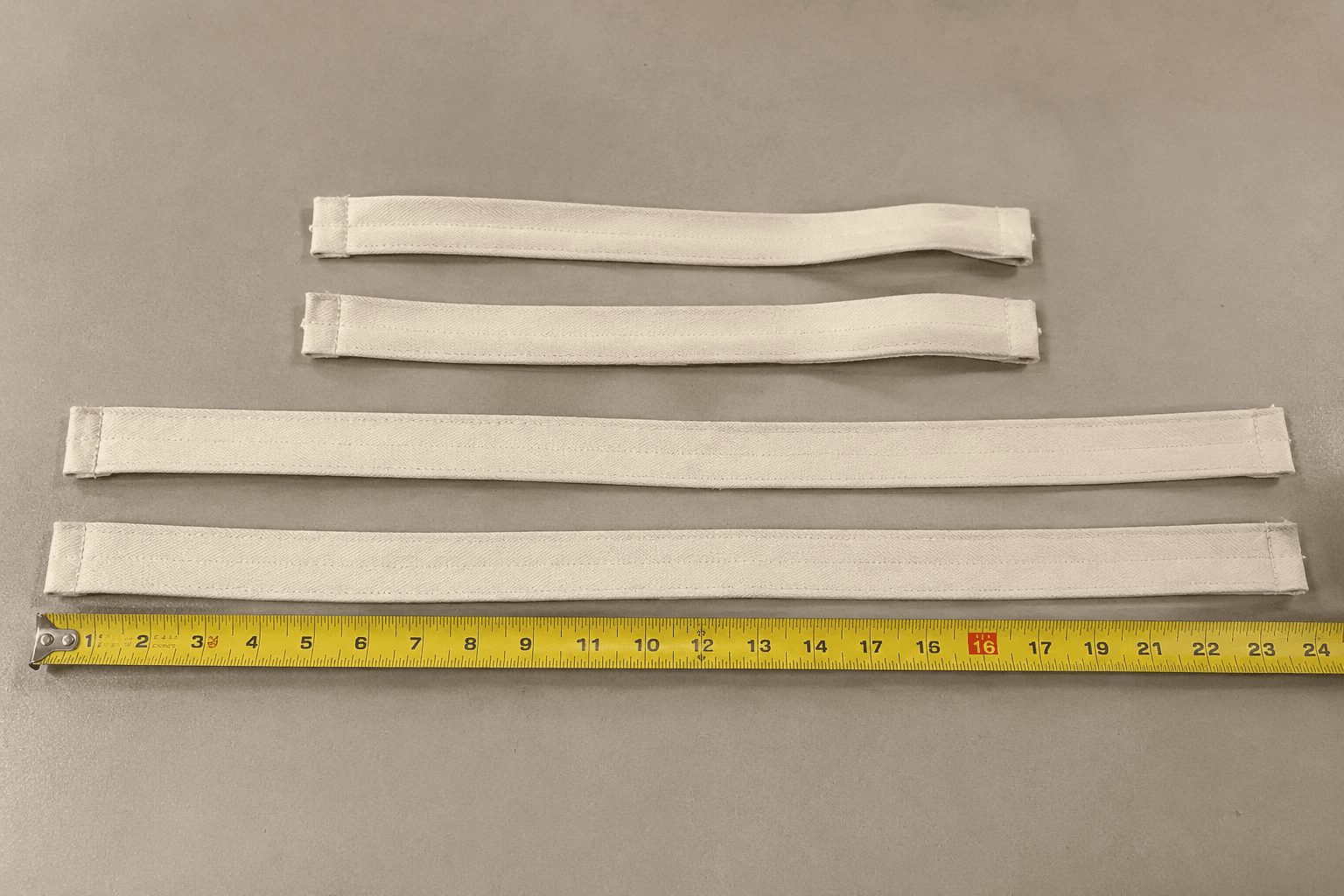
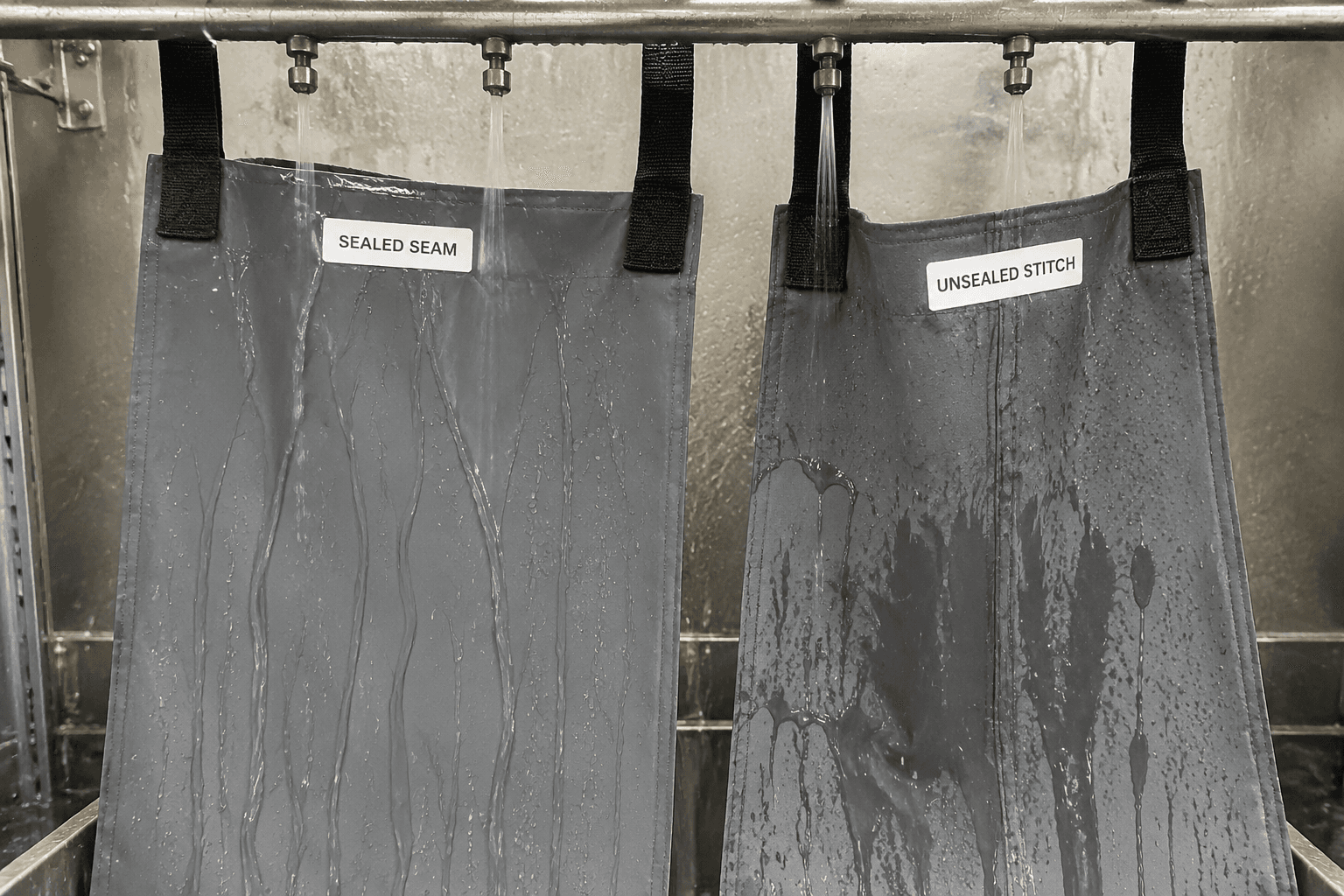
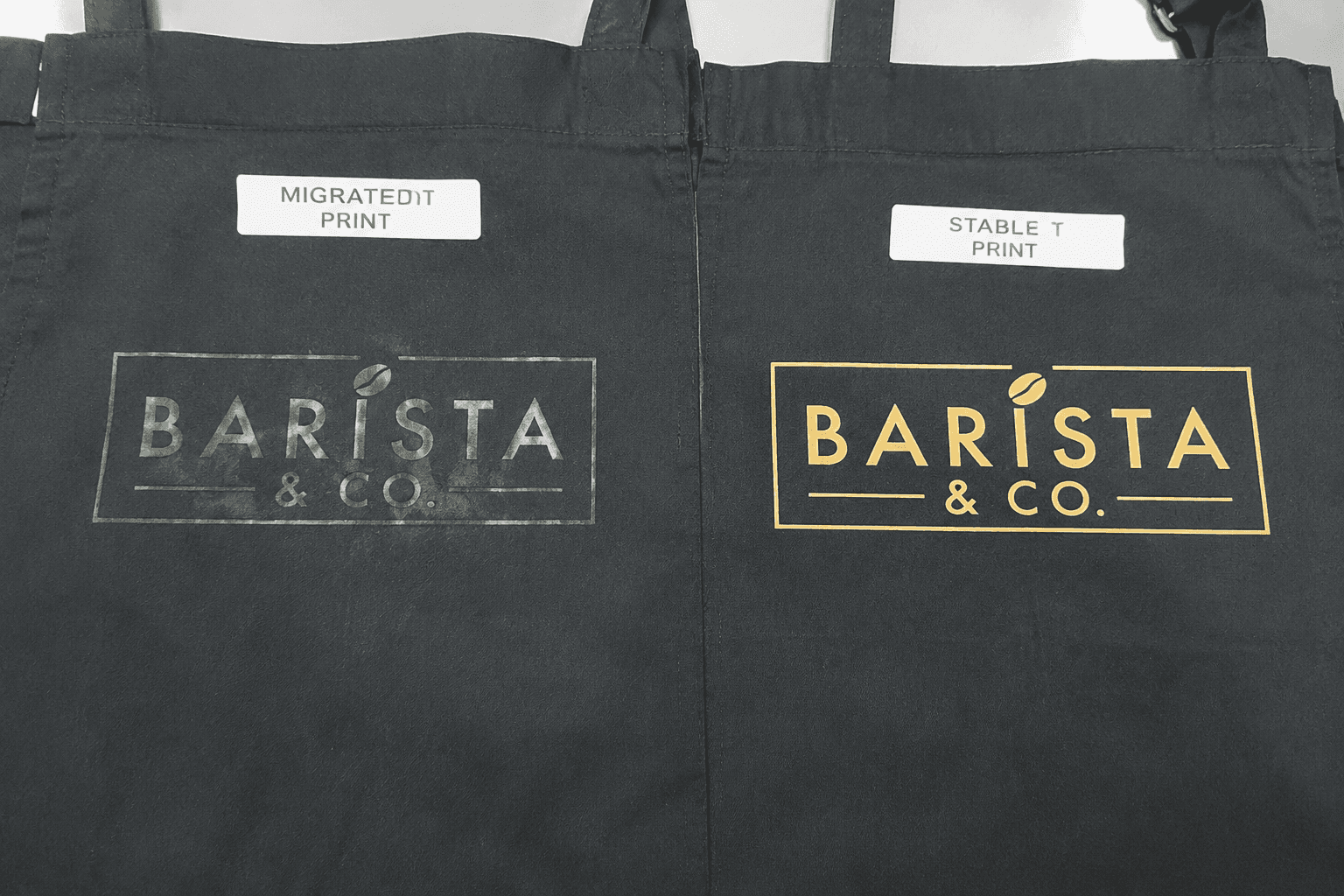
Construction details should be specified in the tech pack. Bartacks at pocket corners, upper bib points, tie joins, and side vents can add durability for about US$0.05 to US$0.12 per pc. A 15 mm double-turn hem is usually more stable after tumble drying than a narrow 10 mm single-turn hem. For frequent industrial washing, plated sliders, D-rings, rivets, and metal snaps should be corrosion-tested or replaced with self-fabric solutions. Decoration also belongs in the durability discussion: embroidery density, patch edge finishing, print cracking, and heat-transfer adhesion can all fail before the apron body fabric does.
- Most managed hospitality apron programs perform best in the 210 to 260 GSM range for balanced drape, durability, and workable pricing.
- Switching from basic cotton to stable poly-cotton may change OEM cost by about US$0.20 to US$0.55 per pc, depending on size, color, dye method, and order quantity.
- Pre-shrunk, sanforized, or garment-washed fabric can improve early wash stability, but often adds 7 to 12 days before bulk cutting.
- For orders above 1,000 pcs, reinforcement upgrades are usually cheaper than remakes, field replacements, or emergency airfreight.
Testing rules for an enforceable apron wash cycle specification
An enforceable test protocol must be strict enough to control claims and simple enough for the factory and buyer to repeat. Finished aprons should be tested, not only fabric swatches. Fabric tests do not capture stitch tension, seam puckering, neck-loop distortion, tie twisting, pocket sag, trim corrosion, or logo failure after laundering.
A practical protocol uses checkpoints at 10, 20, 30, and the target point such as 40, 50, 60, or 75 cycles. At each checkpoint, measure body length, body width, bib width, tie length, neck strap length, and pocket opening. Visual review should cover seam condition, puckering, pilling, skew, edge abrasion, print or embroidery condition, and color change against the buyer’s approved standard.
Sample size matters. One washed sample gives false confidence, especially on OEM orders where sewing variation can be meaningful. Use 5 pcs per style during development and 3 to 5 pcs from PPS or pilot bulk for confirmation. For chain rollouts, test finished aprons cut from the actual bulk fabric lot. Shipment quality can then be inspected under practical levels such as AQL 2.5 for major defects and AQL 4.0 for minor defects, with tie attachment, pocket reinforcement, bartacks, and trim function included in the defect definitions.
- Classify the test as home laundry, commercial laundry, or industrial wash; these are not interchangeable.
- Write the exact method, such as 40°C normal cycle, neutral detergent, no chlorine, tumble dry low or 75°C industrial wash, alkaline detergent, chlorine allowed, tunnel finish.
- Record body dimensions, tie dimensions, pocket dimensions, seam integrity, color change, and trim function at every checkpoint.
- For decorated aprons, add separate criteria for embroidery distortion, print cracking, patch lifting, heat-transfer peeling, and logo color loss.
- Use multiple garments; for custom apron approvals, 3 to 5 pcs minimum is more credible than a single-piece wash test.
Convert wash cycles into service weeks, reorder timing, and cost per wear
A wash claim becomes useful only when it is translated into replacement planning. Buyers often approve a 30- or 50-wash target without calculating how long that supports a restaurant, café chain, bakery group, hotel, or franchise network. If a waist apron is worn most shifts and washed after each use, a 40-wash target equals about 8 weeks of active service at 5 washes per week. If each employee receives 3 units, rotation improves laundry availability, but it does not increase the cycle life of each unit.
Replacement planning should start with weekly wash frequency, issue ratio per wearer, target service period, and expected non-quality loss. Service weeks per unit equals certified washes divided by washes per week. Then add reserve stock for loss, theft, stain rejection, delayed laundry returns, new hires, and site-to-site imbalance. In multi-site foodservice accounts, reserve stock commonly runs 8% to 15% above active wear count, while annual loss unrelated to construction may still run 5% to 12%.
This math often changes the sourcing decision. A custom bib apron at US$4.20 per pc with a practical life of 30 washes costs US$0.14 per wear. A reinforced version at US$5.10 per pc lasting 55 washes costs about US$0.09 per wear, before considering fewer emergency replenishments. The lower-price apron may still be correct for seasonal concepts, pop-ups, promotions, or brands that refresh colors quarterly. For stable chain accounts, cost per wear is usually the stronger buying metric.
- At 4 washes per week, a 32-wash target equals about 8 weeks of service per apron.
- At 5 washes per week, a 50-wash target equals about 10 weeks per apron.
- An issue ratio of 3 pcs per employee improves rotation, but reorder planning should still be based on wear-out timing plus loss rate.
- For custom apron repeats from China, common bulk lead time is 25 to 45 days after fabric, trim, and PPS approval, so reorder triggers should start before stock falls below 30 days of cover.
Sourcing mistakes that weaken apron durability
One common mistake is copying wash standards from other uniform categories. Chef coats, housekeeping tunics, and industrial jackets do not fail at the same points as aprons. Aprons are pulled by ties, folded on the same edges, overloaded at pockets, and spot-treated for visible stains. Tie attachment, upper bib corners, pocket reinforcement, and hem stability deserve apron-specific checks.
A second mistake is combining conflicting requirements: low GSM, all-cotton composition, dark fashion shades, low MOQ, aggressive FOB pricing, and a long industrial-wash guarantee. Those targets rarely fit together. If the target is below US$3.20 FOB for a full-custom bib apron at 500 pcs, buyers should not expect pre-shrunk fabric, reinforced bartacks, upgraded hardware, and a dependable 60-plus-cycle industrial claim. Better results come when the buyer ranks priorities early: appearance first, cost cap second, wash life third; or function first, replacement budget second, cosmetic retention third.
A third mistake is ignoring real field care. Headquarters may approve a 40°C wash, but stores may wash at 60°C, add chlorine, overload dryers, or line-dry dark aprons in direct sun. That gap between approved care and actual practice causes avoidable claims. Before full rollout, a field trial at 2 to 5 locations over 21 to 42 days can confirm whether the approved apron wash cycle specification matches operating reality.
- Do not approve a wash claim before checking actual wash temperature, bleach use, dryer heat, and stain-removal chemistry.
- Do not pair very low target price with high-cycle industrial performance unless fabric, sewing, and trim are upgraded to match.
- Do not rely on fabric data alone when the apron includes large pockets, long ties, metal adjusters, embroidery, patches, or heat-applied branding.
- Do not skip pilot wear testing for chain programs above 1,000 pcs; one early field trial can prevent a larger rollout claim.
Commercial benchmarks for cycle claims in apron OEM programs
Cycle ranges work best as sourcing benchmarks, not universal promises. A value promotional bib apron in 180 to 200 GSM fabric with self ties and basic pockets is usually best specified at 10 to 20 home washes, especially when MOQ is 300 to 500 pcs and price is tightly controlled. A standard café or bakery apron in 200 to 240 GSM poly-cotton twill can often support 30 to 50 washes with controlled shrinkage and acceptable seam stability. A stronger restaurant or hotel uniform apron in 230 to 260 GSM twill with bartacks and stable trim may reasonably target 50 to 75 cycles under moderate commercial laundering.
Buyers should be cautious with claims above 75 washes. They are possible, but only when fabric construction, dye consistency, sewing, trim selection, and laundry discipline all support the promise. Depending on style and order size, upgrading from a practical 30-wash level to a dependable 60-wash level may add about US$0.40 to US$1.10 per pc through stronger fabric, pre-shrink treatment, extra reinforcement, tested trim, and tighter QC control.
The most efficient buying approach is to lock one baseline standard for each use case, then approve one substitute fabric option in case cotton prices rise or lead times tighten. Typical custom apron MOQ from Chinese OEM factories is 300 to 1,000 pcs per color per style. Development samples usually take 7 to 14 days, fabric and trim approval adds 5 to 10 days, and bulk production commonly takes 25 to 45 days. Agreeing the cycle claim before bulk pricing reduces remake risk and makes supplier comparison more reliable.
- 10 to 20 washes: merchandise aprons, event aprons, low-frequency home-use programs, and price-sensitive promotions.
- 30 to 50 washes: café, bakery, retail service, salon, and light-to-moderate hospitality uniform aprons.
- 50 to 75 washes: better-engineered restaurant and hotel apron programs using stable blend fabrics and reinforced sewing.
- 75+ washes: specify only when the laundry method, budget, fabric construction, trim package, and QC plan all support a higher-life apron program.