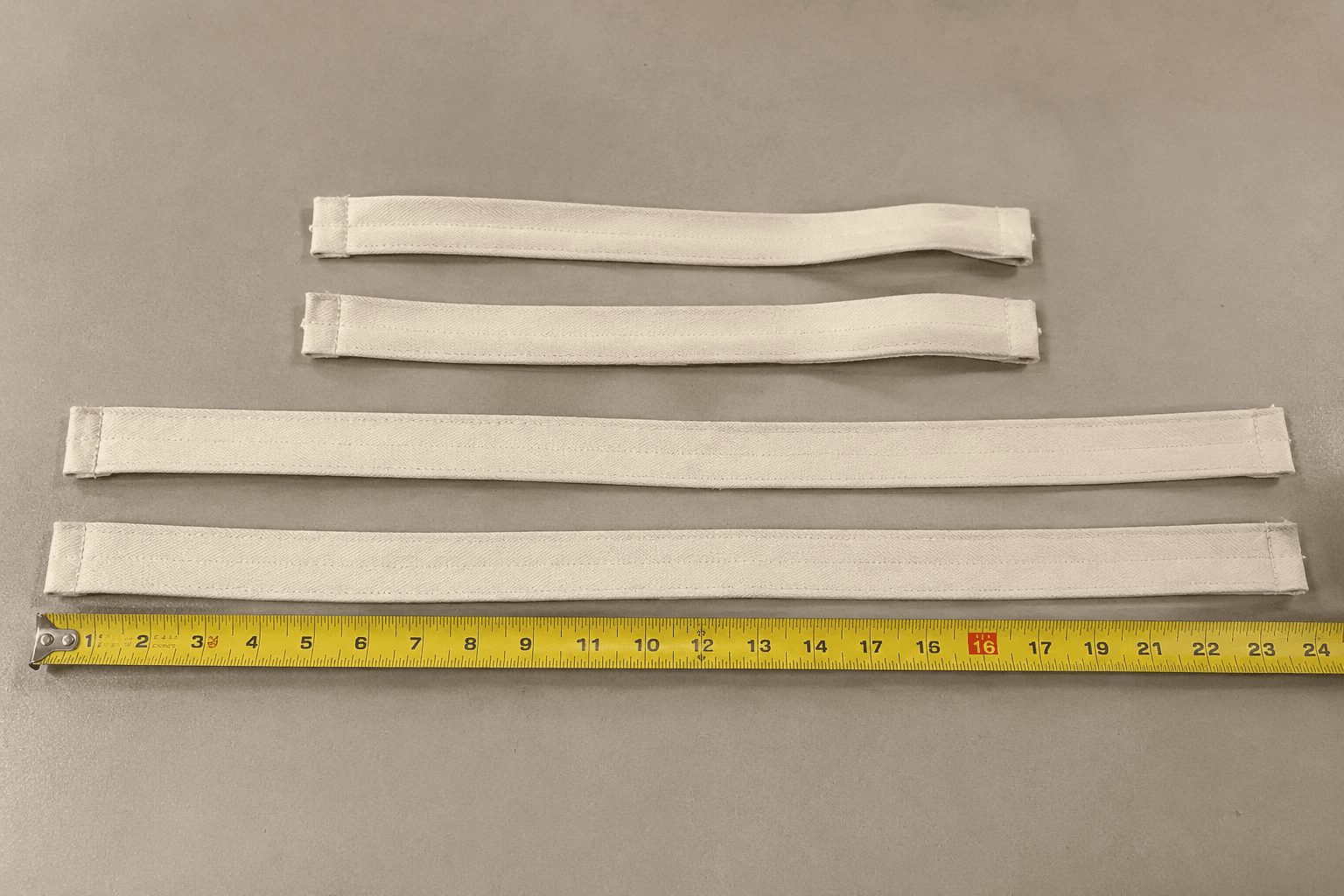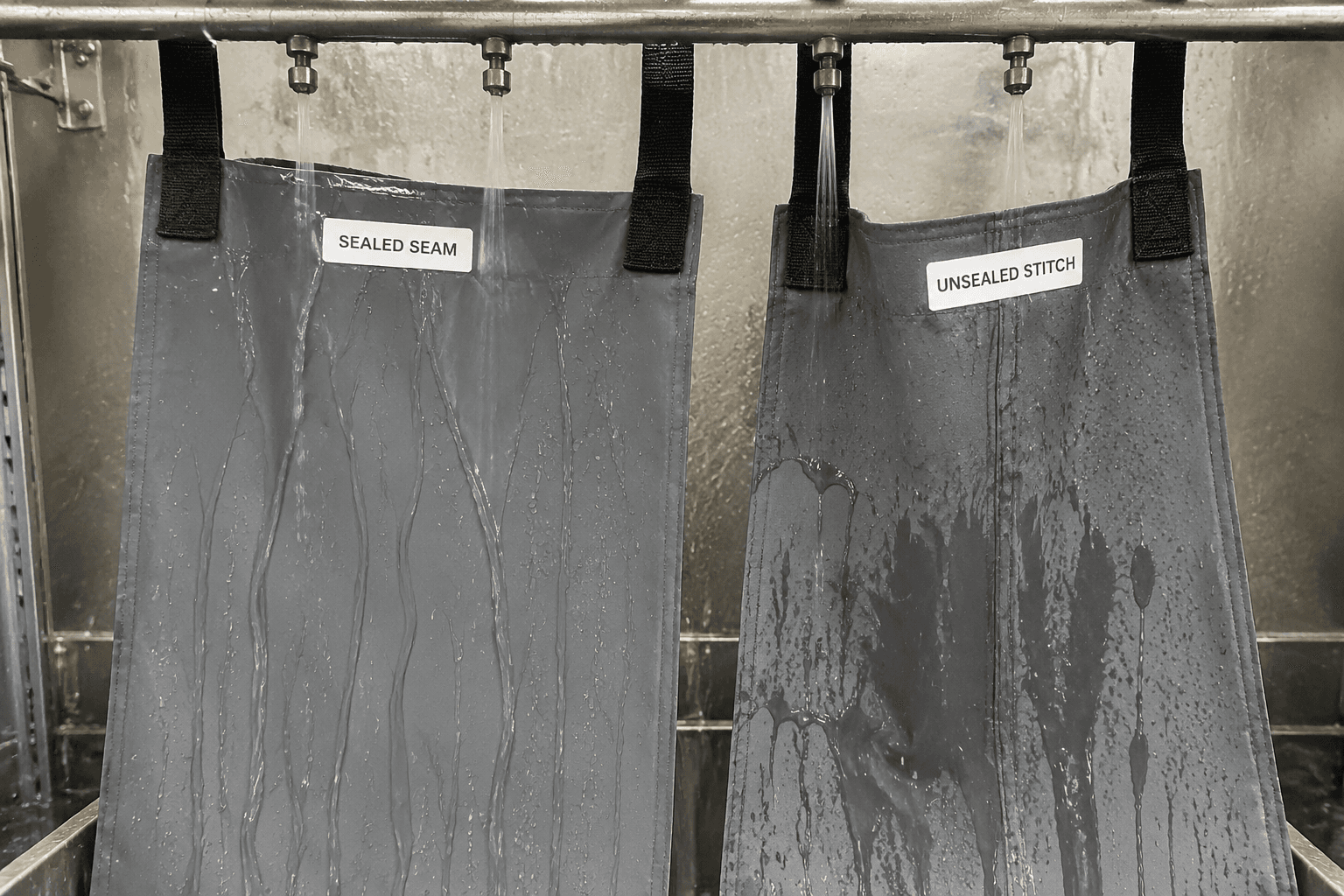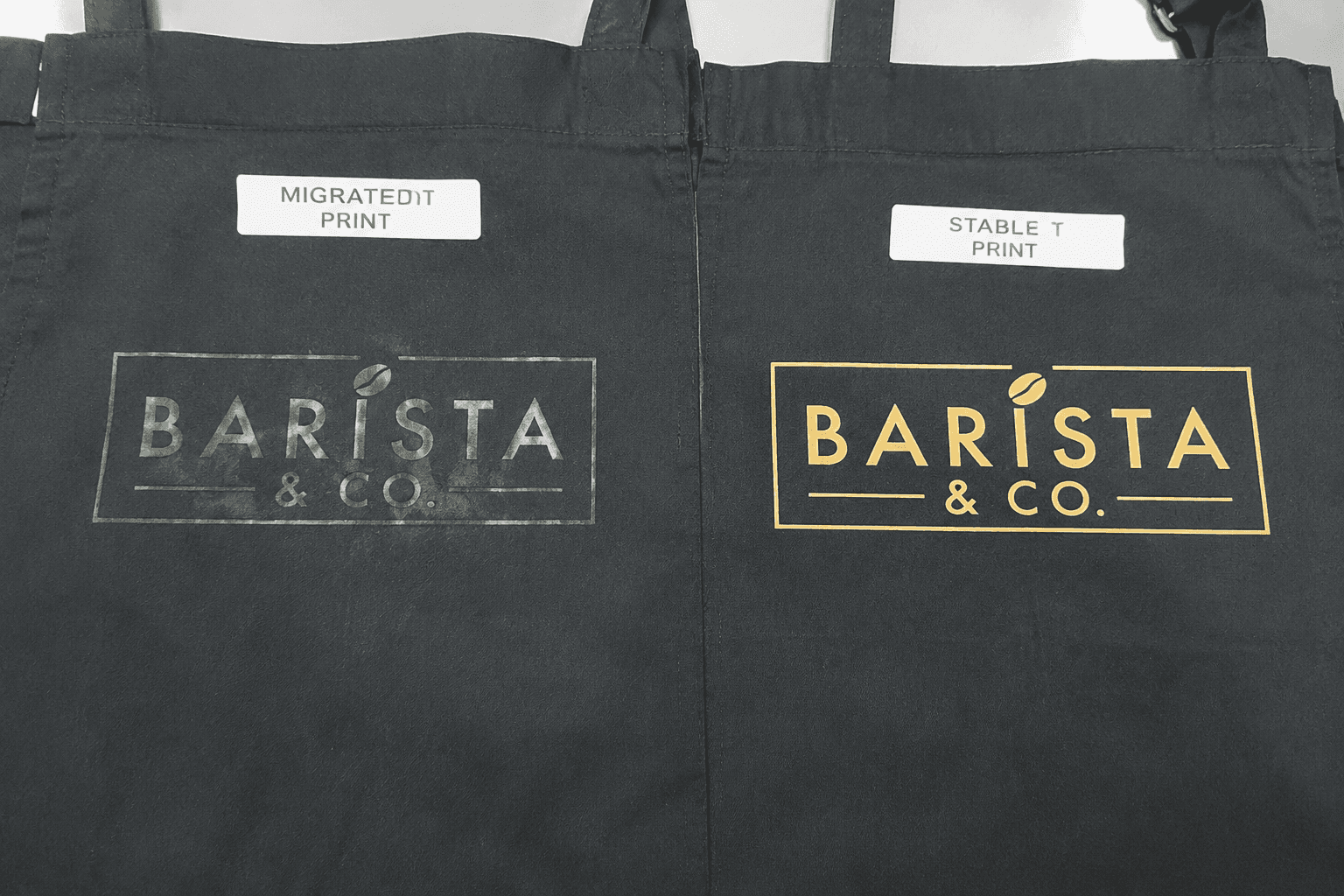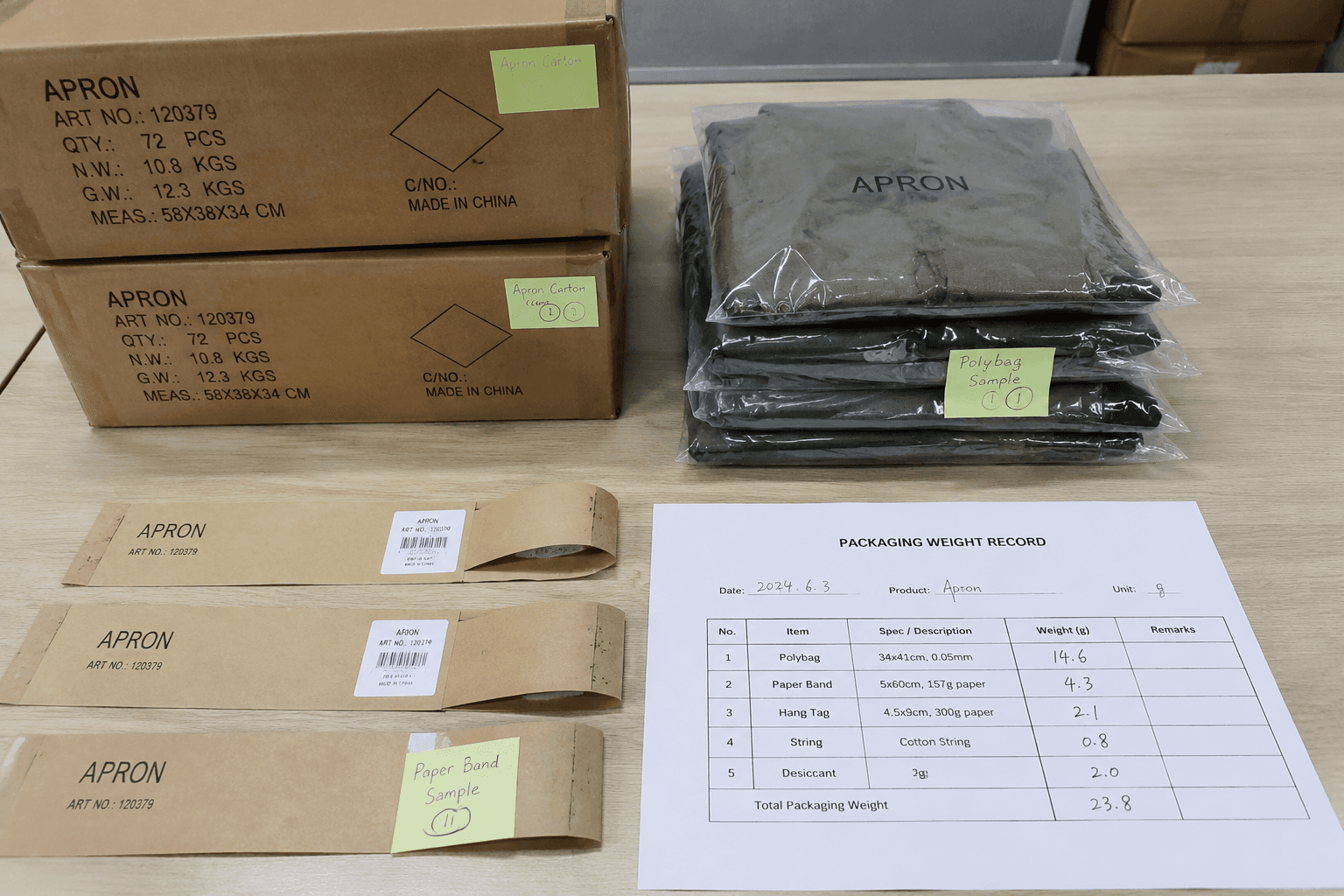
EU buyers sourcing aprons can no longer treat compliance data as a post-shipment cleanup task. Packaging registrations, eco-fee calculations, retailer questionnaires and future textile reporting all depend on a disciplined file built during development, PPS approval and bulk packing. For textile epr aprons, the practical requirement is simple: measure the finished apron, measure each packaging component, record the source, and lock the revision before goods leave the factory.
Aprons appear straightforward on a PO, but the reporting file is not. One bib apron may use 10 oz cotton canvas at 280 GSM, 32 mm cotton herringbone waist ties, a 25 mm neck strap, two iron D-rings, one zinc alloy buckle, a polyester care label, a 30 micron LDPE bag and a 5-ply export carton. Another apron on the same booking may use 7 oz cotton twill at 240 GSM, no metal parts, a kraft belly band and 100 pcs per carton. Those differences change net unit weight, packaging weight, FOB cost, carton planning and declaration accuracy.
For sourcing managers, compliance teams and import operations, the useful question is operational rather than legal: what data should the apron factory provide, when should it be verified, and how should it be structured so one file supports packaging declarations, customs queries, landed-cost review and internal traceability. The sections below set out a working data set for professional buyers handling textile epr aprons from OEM suppliers.
- Separate net apron weight from packaging weight; a single gross figure is not usable for EU-facing apron records.
- Collect data by SKU, colorway and pack format; the same apron in horeca bulk pack and printed retail box is not one reporting unit.
- Request trim details in measurable terms, such as iron D-ring 5.6 g x 2 pcs or zinc alloy buckle 12.9 g x 1 pc, instead of generic descriptions like metal hardware.
- Freeze packaging before bulk production; changing from a 30 micron bag to a 50 micron bag typically adds 3-5 g and $0.01-$0.03/pc.
- Use one buyer template with grams, material family, component count, source document, approver and revision date so the apron file can be audited later.
- Allow 3-7 calendar days for first-order data consolidation and 1-2 working days for repeat apron styles with a locked BOM and confirmed packaging.
- Verify with physical checks: weigh 10 finished aprons after pressing, then confirm final packing against the approved specification at AQL 2.5 for major packing defects.
Why EU buyers need SKU-level data for textile epr aprons
EU compliance work for aprons now depends on product-level and packaging-level data that can be traced back to the packed goods. A commercial invoice and a fabric specification are not enough. Buyers need one data block for the finished apron itself and a second one for every packaging element placed on the EU market, from the unit polybag to the export carton.
Aprons are often misreported because teams group dissimilar styles under one broad label such as cotton apron. In practice, a waist apron in 240 GSM cotton twill may weigh 150-180 g net and ship 100 pcs per carton, while a bib apron in 280 GSM cotton canvas with cross-back straps, two patch pockets and metal adjusters may weigh 300-380 g net and ship 36-50 pcs per carton. Those are different products with different reporting values, packaging costs and carton economics.
For textile epr aprons, the efficient approach is to make the data file part of the normal sourcing workflow. The supplier should provide estimated component weights at quotation, update them after PPS approval, and confirm final figures during bulk packing. Without a buyer template, first orders often require two or three correction rounds. With a controlled template and named owner on both sides, repeat programs can usually be refreshed in one working day.
- Create one file per SKU, colorway and pack configuration.
- Record net finished apron weight separately from packed sales-unit weight.
- Keep textile components separate from paper, plastic and corrugated packaging lines.
- Update the revision date whenever a trim, label, bag thickness, fold method or carton count changes.
Product data buyers should request from the apron factory
Start with the finished apron, not with fabric GSM alone. The core product file should include buyer SKU, supplier style code, apron type, country of origin, fiber composition by component, and measured net finished weight in grams. GSM or oz supports the record, but it does not replace actual unit mass. A bib apron in 260 GSM cotton canvas with one pocket and self-fabric ties may weigh 235 g, while the same shell with wider straps, extra pockets and metal buckles can exceed 320 g.
Ask the factory to break out each meaningful component instead of collapsing everything into fabric and accessories. A usable line reads shell body: 100% cotton canvas, 280 GSM, 196 g per unit. Another usable line reads waist ties: cotton herringbone tape, 34 mm, 46 g per unit. Trim lines should be equally clear: iron D-ring 5.6 g x 2 pcs, zinc alloy slide buckle 12.9 g x 1 pc, polyester satin care label 0.7 g x 1 pc.
The source of the weight matters. At quotation stage, similar-style estimates are acceptable for budget planning. For final reporting, use actual measurements from approved samples or bulk goods. A practical method is to weigh 10 finished aprons after washing if applicable, pressing, thread trimming and final QC, then use the average. Stable twill and canvas aprons often vary by 3-8 g per unit. Enzyme-washed, coated or wax-finish aprons may require a tolerance band of up to plus or minus 5%, followed by a second check during packing.
- Buyer SKU and supplier style code.
- Apron type: bib, waist, butcher, cobbler, utility or cross-back.
- Fiber composition by component, shown in percentages.
- Fabric weight in GSM or oz per square yard for each textile component.
- Measured net finished unit weight in grams.
- Trim material, piece count and grams per unit.
- Any removable straps, spare ties or accessories packed with the apron.
- Country of origin, factory code, measurement sample size and verification date.
Packaging data for textile epr aprons should be collected before bulk packing
Packaging is where apron importers lose the most accuracy. Factory comments such as standard export packing or 1 pc in polybag are not enough for EU-facing records. Buyers need a component-level packaging file covering every unit-level and transport-level item: polybag, warning print, barcode sticker, size sticker, hangtag, string, insert, belly band, retail box, master carton, tape and any divider or inner carton.
Define the reporting unit before asking for weights. Some systems require sales-unit packaging only, while others also track allocated transport packaging for internal waste accounting or retailer data requests. If 40 bib aprons are packed in one export carton, record total carton board weight, carton dimensions and units per carton, then allocate carton weight per unit if your internal template requires it. Do not merge horeca bulk pack and retail box pack under one line, because the variance can exceed 70-100 g per apron.
Packaging decisions affect margin as well as reporting. A basic folded apron in a 30 micron LDPE bag with one barcode label usually adds 7-10 g and costs around $0.03-$0.06/pc. A retail-ready apron with a 350 GSM hangtag, insert card, belly band and printed E-flute box may add 80-125 g and cost $0.22-$0.65/pc, depending on board grade, print coverage, box size and MOQ. On apron FOB prices around $1.85-$3.80/pc, that is a real sourcing variable, not an administrative detail.
- Polybag material and thickness, for example LDPE 30 micron, 8.6 g.
- Hangtag paper grade and grams, for example 350 GSM coated card, 3.8 g.
- String, plastic fastener or pin count and weight.
- Barcode, size and warning labels by substrate and grams.
- Insert card, belly band or tissue paper material and weight.
- Retail box board grade, dimensions and unit weight where applicable.
- Master carton specification, such as 5-ply corrugated, 585 x 385 x 275 mm, 620 g.
- Tape type, estimated tape consumption and any divider weight.
Build an importer-ready BOM for apron product and packaging weights
A normal sewing BOM is designed for production control and purchasing. An importer-ready BOM is designed for traceable reporting. The factory may already know fabric consumption, trim count and pack method, but the buyer needs that information translated into material lines with grams, material family and data source. This is the step that turns factory knowledge into a usable compliance record.
For a typical chef bib apron, the reporting BOM might read as follows: shell body 198.4 g, 100% cotton canvas, 280 GSM; chest pocket 22.6 g, 100% cotton canvas; neck strap 28.8 g, cotton webbing; waist ties 44.2 g, cotton herringbone tape; two iron D-rings 11.2 g total; one zinc alloy buckle 12.9 g; care label 0.7 g, polyester satin; brand label 0.5 g, cotton; hangtag 3.4 g, paper; polybag 8.9 g, LDPE; barcode sticker 0.2 g; allocated export carton board 15.5 g per unit based on 40 pcs per carton. That structure can be checked, updated and reused. A line reading fabric and accessories cannot.
Set a threshold for separate disclosure of mixed parts. A detachable strap set with cotton webbing, EVA padding and swivel hooks may be one costing item, but for reporting it is cleaner to split distinct materials when each exceeds 1 g per apron. A practical buyer rule is to separate any component above 1 g, and any component that changes by channel, colorway or packaging format. Smaller items can be grouped only if the buyer template explicitly allows it and the method stays consistent across suppliers.
- Use grams per finished unit as the base measure.
- Separate product materials from packaging materials.
- Mark each line as estimate, PPS-sample verified or bulk verified.
- Flag detachable straps, spare components and optional accessories.
- Control the file by SKU, colorway, pack format, revision number and approval date.
Verification timing: quotation, PPS and shipment for apron orders
The same data field does not carry the same reliability at every stage. At quotation, an apron supplier can usually provide a weight range based on pattern size, comparable styles and provisional trim choices. That is enough for early landed-cost planning and draft compliance setup. At PPS stage, the figures should tighten because approved fabric, labels, packaging and hardware are known. The strongest verification point is bulk packing, when actual finished aprons and actual packaging components can be weighed together.
A realistic OEM apron timeline is predictable. Quote-stage estimates usually take 24-72 hours depending on BOM complexity and whether packaging has been defined. After PPS approval, a revised file normally takes 2 working days. Once bulk packing starts, final net product weight, packaging weights and carton confirmation can usually be issued within 1-3 working days, provided retail packaging materials have already arrived at the factory. If the buyer changes the bag from 30 micron to 50 micron, adds a gift box or reduces carton count from 60 pcs to 40 pcs, the supplier should issue a new revision.
Buyers should build this into the PO calendar. A repeat waist apron in stock-dyed twill may run on a 30-35 day production lead time with MOQ 500-1000 pcs per color. A new bib apron in custom-dyed canvas with branded hardware, woven labels and printed retail box may require 45-60 days with MOQ 1000-3000 pcs. Reserve 3-7 calendar days for data verification on first orders and 1-2 working days on repeat styles. Requests made one day before vessel cut-off usually produce estimates, not final evidence.
- Quotation stage: estimated weights for costing and preliminary setup.
- PPS stage: revised data using approved fabrics, trims and pack method.
- Bulk packing stage: final verified net, packaging and carton data.
- Any approved trim, label, fold or carton change should trigger a revised file.
Common mistakes that weaken EU apron reporting
The first mistake is substituting fabric GSM for finished unit weight. Knowing that an apron uses 8 oz cotton canvas does not tell the importer whether the final article weighs 215 g, 278 g or 348 g. Pattern dimensions, tie length, pocket count, seam allowance, washing, hardware and label set all affect the result. Reporting should be built from measured finished aprons, not from fabric description alone.
The second mistake is omitting packaging supplied by a nominated third party. A sewing factory may not purchase the retail sleeve, insert leaflet or display box, but those components still belong in the final importer file. Missing a retail box line can understate packaging weight by 60-110 g per apron and hide $0.25-$0.60/pc in landed cost.
The third mistake is averaging unlike SKUs. Two aprons cut from the same base pattern may diverge materially if one uses iron hardware and the other uses acetal plastic adjusters, or if one channel uses flat bulk pack while another uses a printed carton. Grouping should be allowed only after the buyer confirms equivalent fiber composition, trim materials and pack format. The fourth mistake is weak ownership. Development holds composition data, logistics holds carton data, sustainability holds registrations, and the factory ends up answering three different requests with three different numbers. One buyer-side owner and one supplier-side owner should control the file from quotation through shipment.
- Do not report from GSM alone when finished-unit weight can be measured.
- Do not omit nominated or outsourced packaging items.
- Do not average different apron SKUs only to reduce spreadsheet rows.
- Do not accept undated files with no approver, no source and no revision history.
Buyer checklist before PO, PPS approval and shipment
Before PO placement, confirm whether the apron supplier can provide a component-level product and packaging file, what sample size will be used for weighing, and at which stage each field becomes final. This matters most for custom programs with branded hangtags, recycled-content bags, nominated retail boxes or mixed-material trim sets. If any component comes from outside the sewing factory, assign responsibility before deposit payment so the reporting file does not develop a gap later.
At pre-production stage, freeze the variables that most often change reporting: shell composition, strap material, hardware type, bag thickness, retail presentation and carton count. For simple horeca aprons in bulk export packing, a preliminary file may be enough to start buyer-side system setup. For retail-ready aprons, request a PPS-stage update before bulk cutting so missing packaging lines can still be corrected without delaying the shipment schedule.
Before shipment, request the final version tied to the actual packed goods. It should show approved substitutions, actual units per carton, final carton dimensions, measured net apron weight and packaging weight by component. On repeat apron styles with stable packing, this may take one working day. On first orders with multiple retail-pack items, 2-5 working days is more realistic. Archive the file together with pack photos, carton photos and AQL records. The internal handling cost is usually only about $0.01-$0.03/pc; the bigger cost comes from late requests, revised packing after PPS and missing third-party packaging weights.
- Before PO: request a preliminary BOM and pack list with estimated grams.
- Before PPS: confirm that fabric, trim, bag, label and carton choices are frozen.
- Before shipment: request final verified unit, packaging and carton data.
- At inspection: check packing against the approved specification at AQL 2.5 for major defects.
- After shipment: store photos, carton specs, inspection records and revision history with the final file.