Many apron buyers start with GSM because it is easy to compare across quote sheets. That is useful, but it is not enough. In apron development, apron fabric yarn count changes surface texture, drape, seam thickness, print definition, pocket stability and the first impression a sales sample gives in the hand. Two bib aprons can both be 280 GSM, yet a 10s x 10s cotton canvas will usually feel drier, thicker and more rugged than a 21s x 21s twill built to the same nominal weight.
For OEM apron programs, yarn count also affects commercial control. It influences greige availability, fabric MOQ, dyeing yield, sewing speed, needle size, carton weight and trim compatibility. In China sourcing, buyers who leave yarn count undefined often receive quotes based on different constructions, which makes piece-price comparison unreliable and can add 7 to 12 days when the factory has to re-source fabric after sample comments.
This article stays focused on cotton and cotton-blend apron fabrics in 10s, 16s and 21s for bib aprons, waist aprons and utility styles. The goal is practical: show how count affects handfeel, strength and cost, and identify the MOQ, lead-time, testing and inspection points that matter to B2B apron buyers.
- 10s yarn is usually chosen for heavier apron fabrics around 300 to 380 GSM, with a firmer hand, thicker seam buildup and a typical FOB increase of $0.30 to $0.80 per piece over a comparable 16s apron
- 16s yarn is the most common commercial balance for bib aprons, typically working well at 250 to 320 GSM with stable sewing performance, broad greige availability and lower development risk
- 21s yarn suits lighter apron programs around 210 to 270 GSM, but density must be controlled carefully so the chest panel, pocket mouth and waist ties do not feel underbuilt
- Apron durability does not come from yarn count alone; weave, ends and picks, seam construction, bartacks, hardware load, shrinkage control and finishing all affect service life
- Custom-woven apron fabric commonly needs 1,500 to 3,000 meters per color, while finished apron MOQ is often 500 to 1,000 pieces per style-color for standard OEM orders
- Many buyers inspect apron orders to AQL 2.5 major and 4.0 minor, with added checkpoints on pocket alignment, bartacks, seam puckering, shade continuity and print placement
What apron fabric yarn count means in apron production
In the English cotton count system, 10s, 16s and 21s describe yarn fineness. The lower the number, the thicker the yarn. In apron production, that difference shows up immediately in fabric texture, bend, seam bulk and finished weight. A 10s apron canvas usually has a more visible grain and stronger body. A 21s apron twill usually looks cleaner, folds more easily and creates less buildup at neck seams, pocket turns and waistband joins.
Count should never be reviewed in isolation. Professional apron buyers need the full construction: warp and weft count, weave, finished GSM, composition, width, shrinkage target and finish. A 10s x 10s plain weave at 340 GSM behaves very differently from a 21s x 21s twill at 235 GSM, even if both are offered as black bib-apron fabric. The first supports a rugged workwear position; the second suits a lighter hospitality uniform.
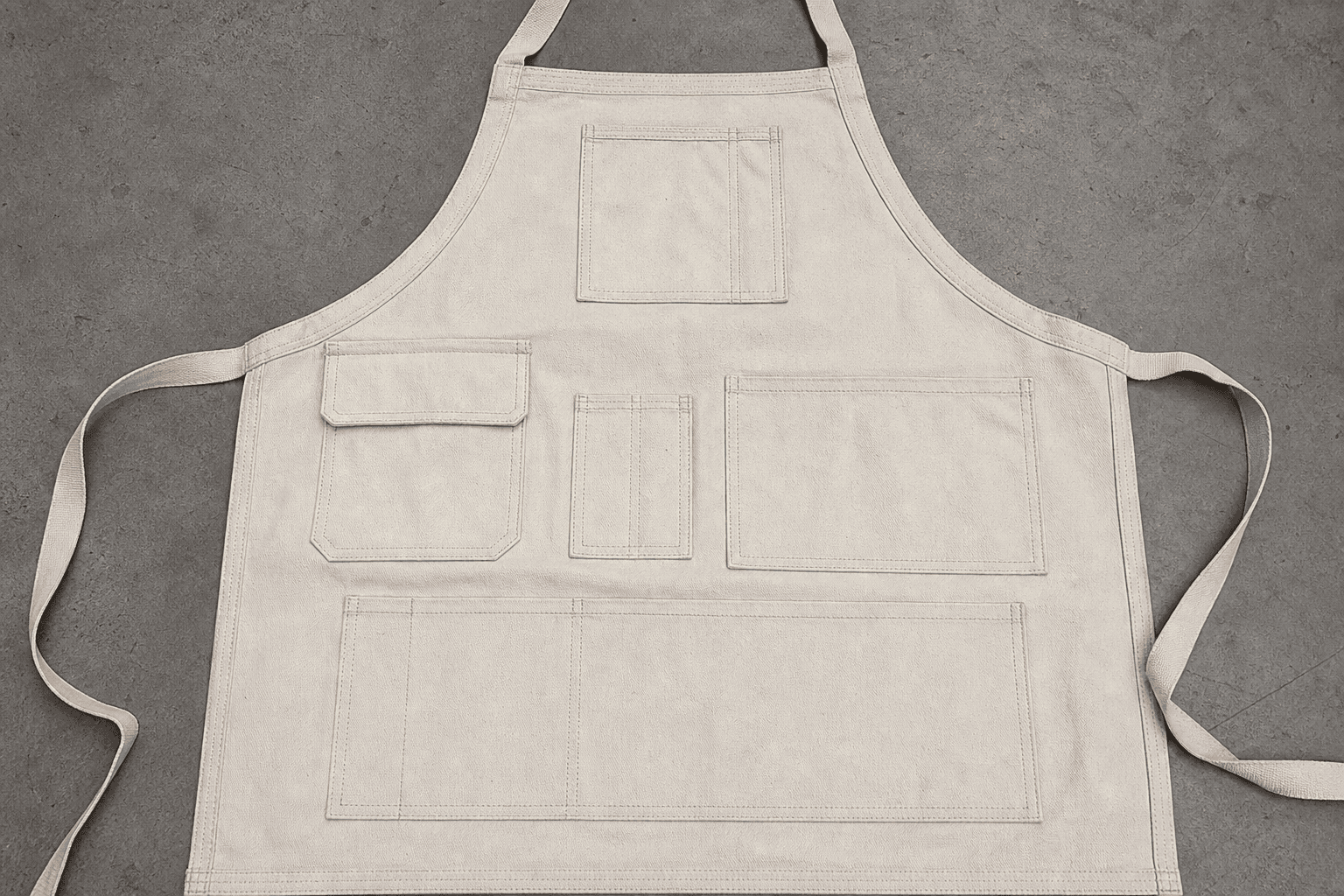
This is important because apron categories are not interchangeable. A grill apron with webbing straps, rivets and large utility pockets needs a stronger fabric foundation than a cafe waist apron with simple patch pockets. Once count is fixed early, the mill can quote against a real target and the sewing factory can plan seam allowance, presser-foot pressure, needle size and trim compatibility before sampling begins.
- 10s usually gives a coarse, visible texture and stronger body
- 16s is the mid-range count most often used for commercial apron canvas
- 21s gives a cleaner face, lower seam bulk and softer bend
- For RFQs, specify full construction such as 16s x 16s twill, 280 GSM finished, 57/58 inches usable width
- Review count together with weave, density, finish and trim load, not as a standalone variable
Apron fabric yarn count and handfeel: how 10s, 16s and 21s read in sample review
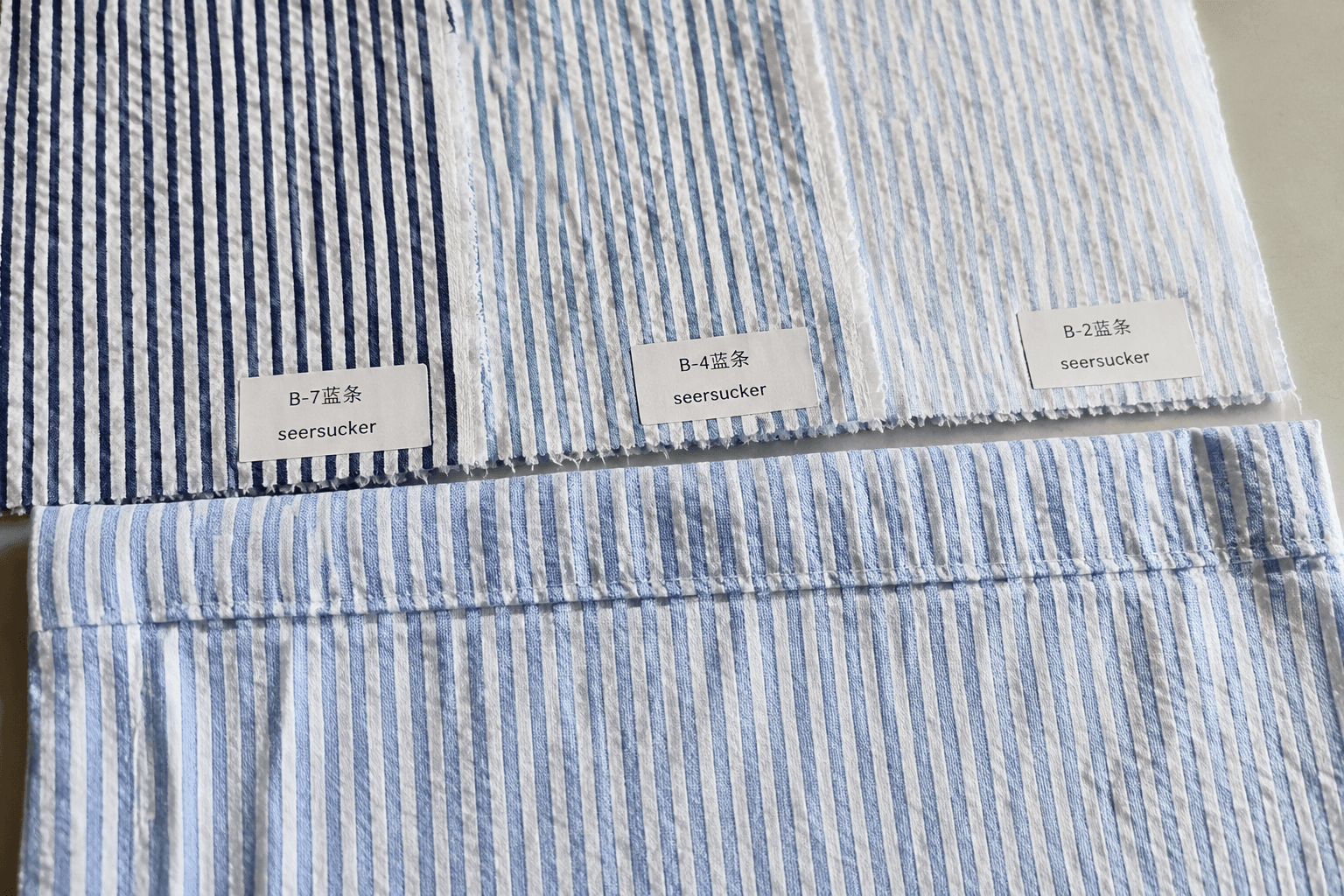
The quickest way to explain yarn count to a buying team is through touch and appearance. A 10s apron fabric usually feels firm, dry and visibly rugged. In a sales sample, it often communicates durability immediately, especially in reactive-dyed black, olive, khaki or washed brown. That makes it suitable for utility bib aprons, grilling aprons and retail merchandise programs that want a heavy workwear message without relying on added decoration.
A 16s apron fabric is usually the most balanced commercial option. It still feels substantial enough for bib aprons, but it normally avoids the boardy hand that some coarse 10s fabrics show before laundering. In fitting and wear trials, 16s commonly gives better movement at the chest panel and less resistance when wearers tie the waist straps. That is why many restaurant groups, coffee chains and private-label uniform buyers start development at 16s when they need structure without excess stiffness.
A 21s apron fabric shifts the product toward a lighter and cleaner presentation. With proper density, it works well for waist aprons, barista aprons and front-of-house bib styles where comfort and a neater face matter more than workshop abrasion. The risk is under-building the construction. If the weave is too open, the chest panel can feel weak, the pocket mouth can collapse and the apron can look low-value even when stitching is acceptable.
Finishing changes each count in different ways. Enzyme wash can soften a 10s canvas while keeping its rugged surface. On 21s, the same wash can create a notably softer drape, which helps comfort but can weaken the structured look some buyers expect. For that reason, handfeel approval should be based on finished bulk-standard fabric, not only on greige or a small lab swatch.
- Typical 10s apron fabric: 300 to 380 GSM, firm hand, strong texture, low drape
- Typical 16s apron fabric: 250 to 320 GSM, balanced structure, moderate drape, broad end-use range
- Typical 21s apron fabric: 210 to 270 GSM, cleaner face, lighter body, softer bend
- The same GSM does not create the same handfeel across different yarn counts
- Approve handfeel after the agreed wash, peaching, coating or softening process is applied
Strength, seam bulk and sewing risk in 10s, 16s and 21s apron fabrics
Many buyers assume the lowest yarn count automatically gives the strongest apron. That is only partly true. Thicker yarn can improve abrasion confidence and may support better tear performance, but finished apron durability depends on yarn quality, weave density, seam engineering, stitch count, bartack placement and hardware loading. A loose 10s fabric can perform worse than a compact 16s twill with better seam construction.
Apron stress points are predictable: neck-strap anchors, waist-tie joins, side-seam openings, towel loops, pocket corners and bartack positions. Heavy 10s fabric can handle these areas well, but it also creates seam buildup. At pocket joins or top-edge folds, the operator may sew through 6 to 8 layers. Without adjustments to needle size, thread ticket, presser-foot pressure and machine speed, skipped stitches, seam grin and needle heating become more likely. On many production lines, a heavy 10s apron runs about 8% to 15% slower than a comparable 16s style during key pocket and strap operations.
A well-developed 16s apron often gives the best balance of strength and manufacturability. It usually supports divided patch pockets, towel loops and moderate metal hardware without creating excessive seam bulk. A 21s twill can also be commercially durable if the apron design stays realistic. It is suitable for frequent-wash hospitality use, but it is less suitable for apron programs that carry tools, heavy order devices or repeated rough-surface contact.
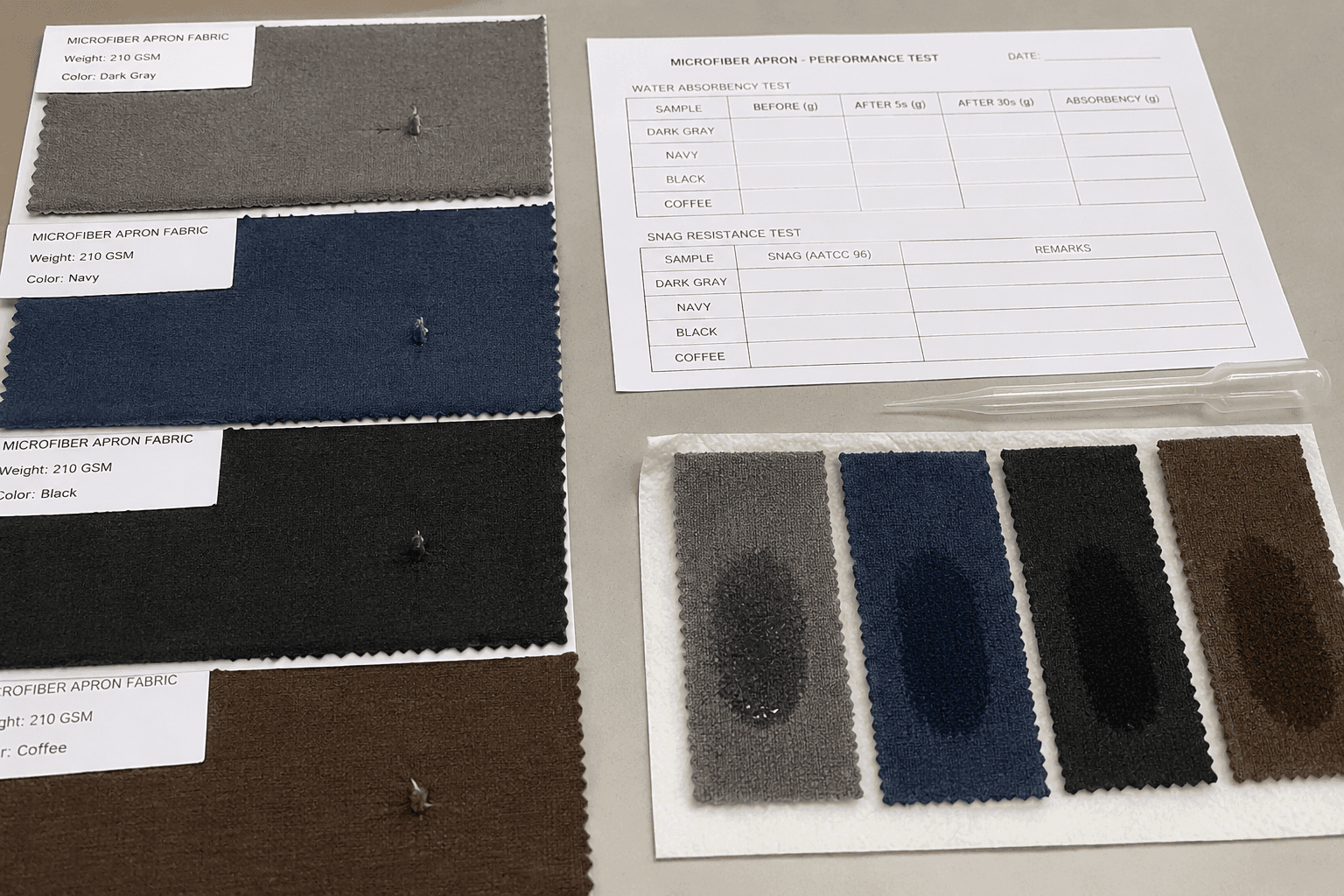
For bulk orders, buyers should ask for actual performance checkpoints instead of verbal claims such as 'heavy duty.' Useful data includes finished GSM tolerance, wash shrinkage, seam slippage, colorfastness and simple load tests on pockets and strap joins. For example, many buyers ask for shrinkage within 3% to 5% after the agreed wash test and pocket-corner reinforcement strong enough to pass internal hanging-load checks before PP approval.
- Review seam buildup where pockets, facings, bindings and straps intersect
- Confirm reinforcement method at high-load points: bartack, box stitch, rivet or double-needle stitch
- Request wash shrinkage targets, commonly within 3% to 5% after the agreed test method
- For heavy styles, require a pre-production sewing trial on actual finished bulk fabric
- Inspect to AQL 2.5 major / 4.0 minor with extra focus on seams, bartacks, puckering and shade continuity
Apron fabric yarn count and FOB cost: where 10s, 16s and 21s change the number
Yarn count changes apron cost in direct and indirect ways. Directly, coarser constructions usually consume more yarn mass to reach a commercial finished fabric. Indirectly, heavier counts can reduce loom efficiency, increase dyeing and finishing loss, slow spreading and sewing, and raise freight because each apron weighs more. For B2B buyers working to a landed-cost target, apron fabric yarn count is a pricing variable that should be fixed before the first quotation round.
In practical China OEM pricing, a standard 16s cotton bib apron with one chest pocket, two lower pockets, self-fabric ties and no metal hardware often falls around $2.40 to $3.60 FOB per piece at 1,000 to 3,000 pieces. If that same apron moves to a heavier 10s base with similar styling, the increase is often $0.30 to $0.80 per piece. On more complex styles with rivets, contrast webbing, wax coating or garment wash, the increase can exceed $1.00 per piece because labor minutes and finishing loss rise with the heavier fabric.
Moving from 16s to 21s can reduce price, but the saving is usually smaller than buyers expect. On many uniform apron programs, the reduction is about $0.12 to $0.35 per piece. If the 21s fabric needs tighter density, special softening or peaching to avoid a weak first-hand impression, much of that saving disappears. A lighter count is not automatically a low-cost count once appearance and performance standards are fixed.
Lead time and MOQ also move with the count decision. Stock-supported 16s fabrics are usually easier to source quickly. Fully custom 10s constructions may require loom booking, dye planning and extra sewing validation, adding 5 to 10 days before cutting can start. Buyers who lock count at RFQ stage usually get more stable costing, fewer fabric substitutions and fewer calendar changes after sample approval.
- Standard finished apron MOQ: 500 to 1,000 pcs per style-color for common OEM programs
- Custom fabric MOQ: 1,500 to 3,000 meters per color; waxed or coated fabrics may start at 3,000 meters
- Proto sample lead time with stock fabric: 7 to 10 days
- Sample lead time with custom weaving or special finish: 15 to 25 days
- Bulk production after PP approval: 25 to 40 days for most canvas apron orders
How to specify yarn count correctly in apron RFQs and tech packs
Weak fabric wording creates bad price comparisons. If an RFQ only says 'cotton canvas 280 GSM,' one apron supplier may quote 10s plain weave, another 16s twill and another a cotton-poly blend with a soft finish. All three may look acceptable in a spreadsheet, but they will not sew, wash or wear the same way. For apron sourcing, the fabric line must be precise enough that quotations are genuinely comparable.
A stronger RFQ line includes composition, yarn count, weave, finished GSM tolerance, width, dye method and finish. A workable example is: 100% cotton, 16s x 16s twill, 280 GSM finished, width 57/58 inches, reactive dyed black, enzyme washed, shrinkage within 5%. That level of detail gives the mill and factory a clear basis for pricing and reduces the chance of re-development after the first fit sample or salesman sample.
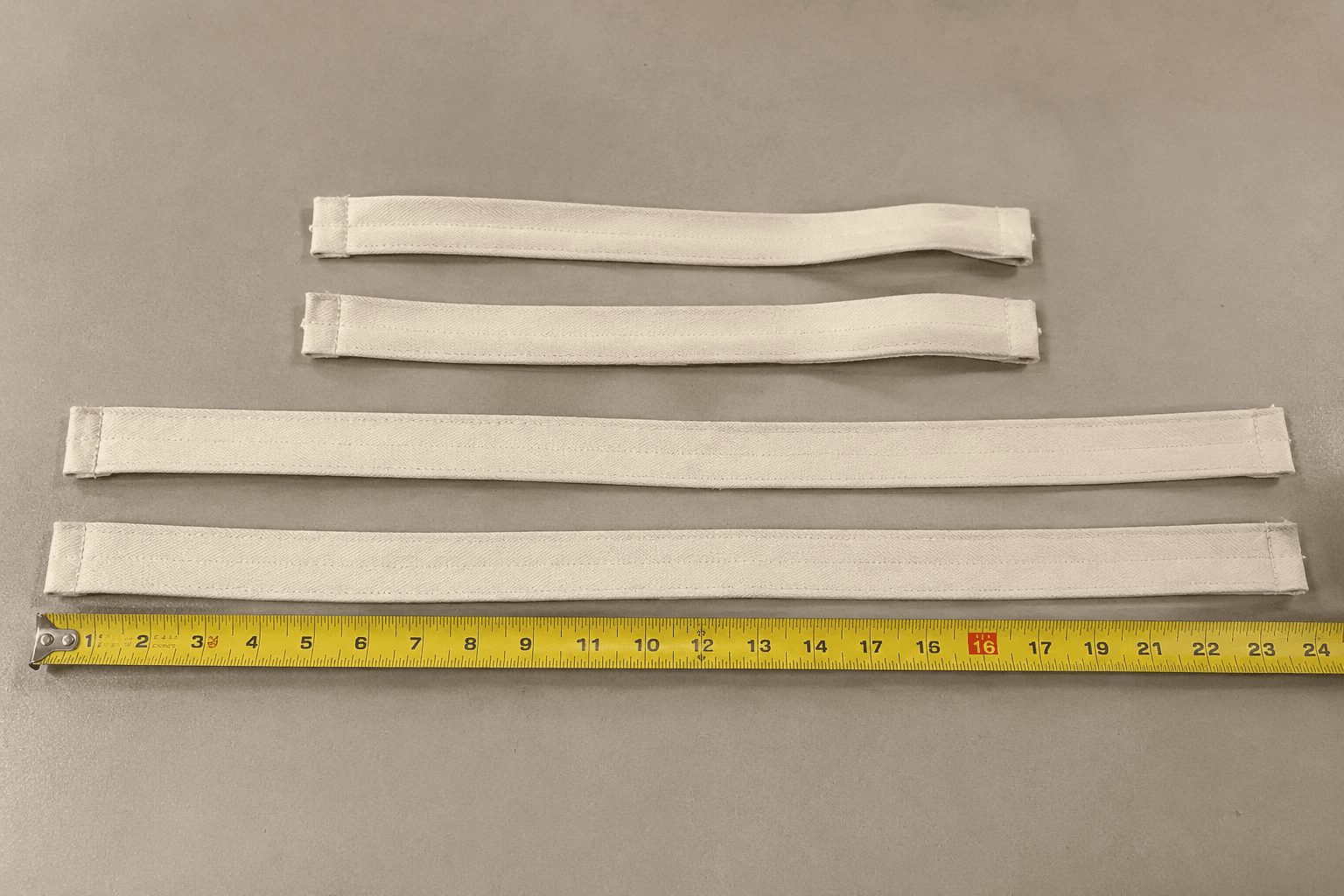
Buyers should also connect fabric count to trim and construction details. Strap width, eyelet size, rivet length, pocket turn allowance and binding thickness all change when the base fabric becomes heavier or lighter. A late switch from 21s to 10s after PPS approval is not a minor note. It can force a new sewing trial, revised marker consumption, lower carton pack-out and another approval cycle.
The same discipline applies inside tech packs. If yarn count matters to handfeel or price positioning, it should appear in the material page, testing page and PP comments, not only in informal email traffic. That keeps buying, QA and production teams aligned from sample room through bulk shipment.
- State yarn count in both directions where possible, such as 10s x 10s or 16s x 12s
- Specify weave type clearly: plain, twill or other agreed apron construction
- Set finished GSM tolerance, commonly +/- 5%
- Confirm width, finish, shrinkage target and dye method
- Ask whether the quote is based on stock greige or custom weaving
- Require lab-dip or shade-band approval before bulk dyeing starts
Best yarn count by apron category, buyer objective and sourcing risk
There is no single best count for every apron. The right choice depends on end use, target FOB, wash frequency, brand position and how much hardware or pocket load the style carries. Buyers should match count to the job the apron must do rather than assuming heavier always means better.
For heavy utility bib aprons, grill aprons, workshop aprons and wax-finish concepts, 10s often makes sense. It gives immediate substance, supports a rugged visual story and holds larger patch pockets well. The trade-offs are clear: more seam bulk, higher piece weight, slower sewing and a higher landed cost. This count is easiest to justify when the apron is sold as durable equipment or premium merchandise rather than a simple staff uniform.
For mainstream bib aprons used by kitchen staff, cafe teams and general retail service, 16s is usually the safest starting point. It offers enough body for embroidery, screen print and practical pocket construction while staying easier to sew and wear over 8- to 10-hour shifts. This is why many apron OEM factories keep 16s-based greige options ready for faster development and more stable repeat orders.
For waist aprons, lighter barista aprons and front-of-house hospitality programs where comfort and a cleaner face matter more than workshop abrasion, 21s can be the right answer. The fabric still needs proper density and finishing so the apron does not feel thin after laundering. In practice, 21s works best when the design avoids oversized patch pockets, heavy rivets and overloaded seam intersections.
The sourcing lesson is straightforward: treat apron fabric yarn count as an early commercial and technical decision. Once count is fixed, costing, trim matching, sewing engineering, inspection planning and delivery timing become much easier to control.
- Choose 10s for rugged utility bib aprons, grilling aprons and waxed concepts
- Choose 16s for general commercial bib aprons, restaurant uniforms and private-label merchandise
- Choose 21s for lighter cafe aprons, waist aprons and softer hospitality programs
- Validate the final choice with handfeel review and a sewing trial on actual finished fabric
- Recalculate cost, carton ratio and lead time before approving any late yarn-count change