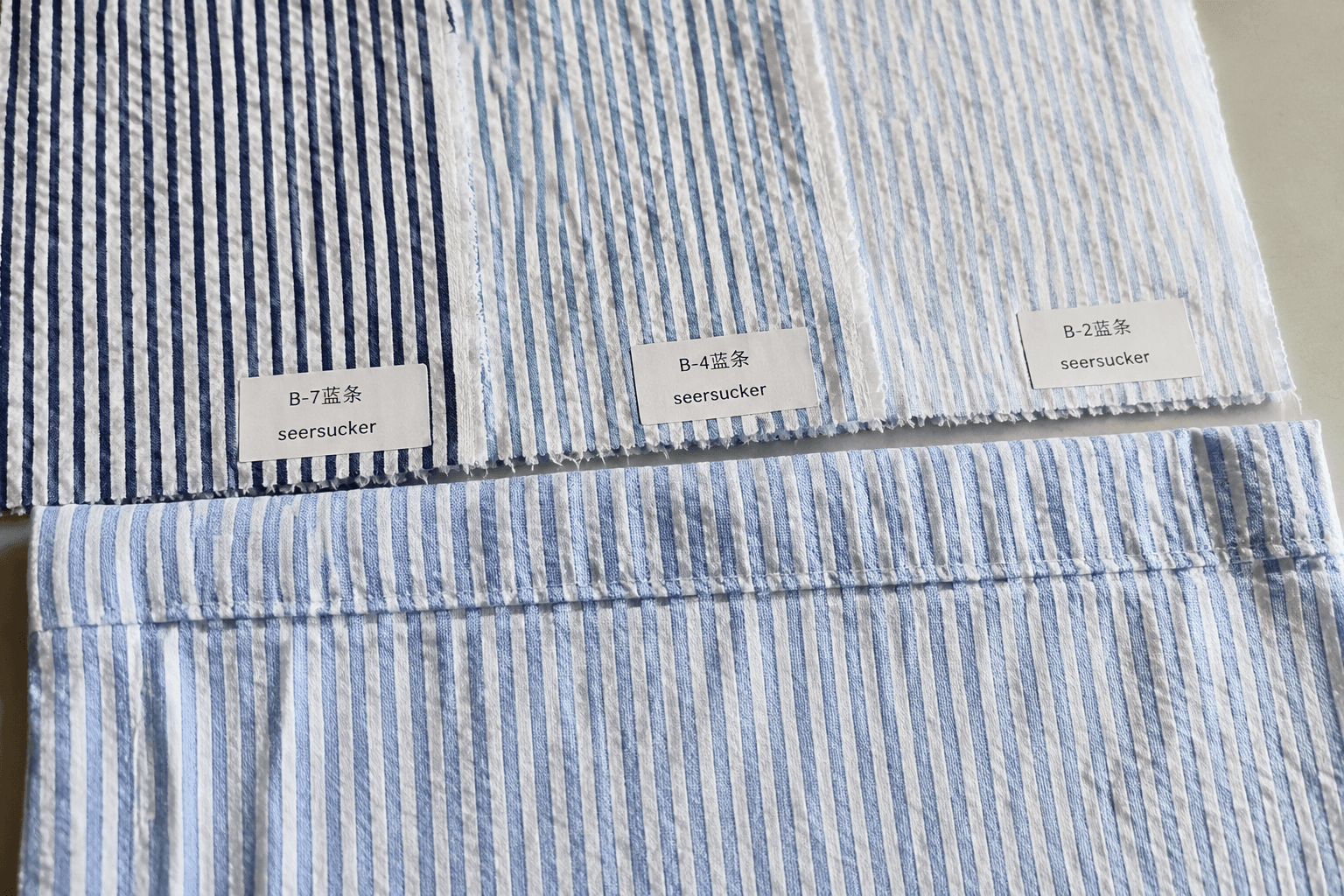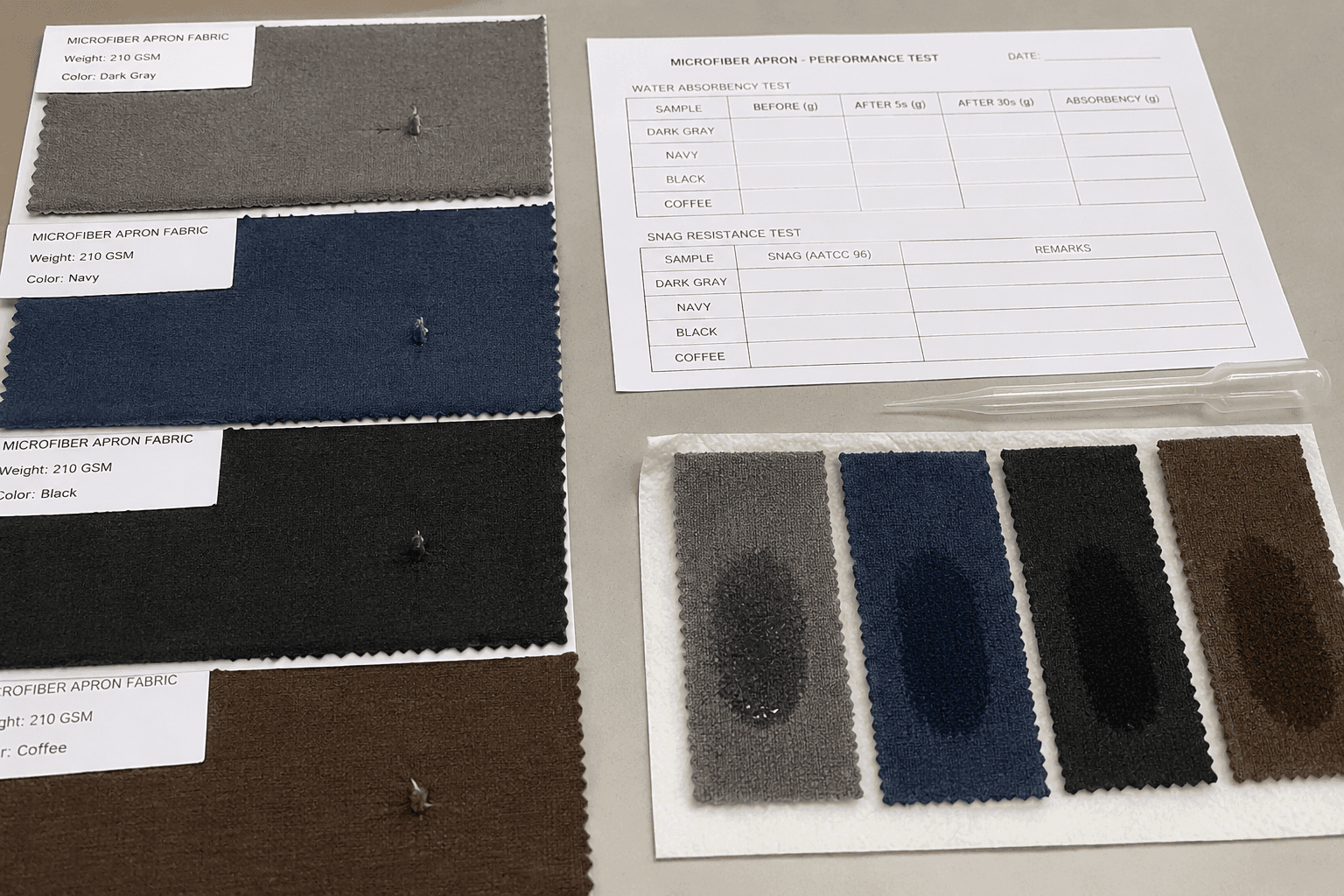
For most custom apron programs, the base fabric carries the visible brand story: canvas, twill, denim, linen-cotton, polyester-cotton or waxed cotton. The hidden layer is discussed later, often only when a sample feels too soft, a pocket sags, heat protection is requested, or the buyer asks whether a double layer apron will last longer. In factory development, apron lining is not a decoration decision. It changes weight, hand feel, stitching method, shrinkage behavior, wash performance, production time and final unit cost.
A lining or interlining can be worth it when the apron needs extra protection, better body, more comfort against clothing, or a cleaner inside finish. It can also be wasteful if the outer fabric is already heavy enough or if the target retail price cannot absorb the added labor. For bulk sourcing, the decision should be made at specification stage, before lab dips and fit samples, because the extra layer affects pattern balance, seam allowance, binding thickness and packaging weight.
This article explains how we evaluate apron lining and apron interlining for OEM orders in Zhejiang production: which layer types are used, what GSM ranges are practical, when padding makes sense, how costs move, and what buyers should confirm before approving a lined apron fabric construction.
- Apron lining is justified when it solves a defined problem, such as heat contact, pocket reinforcement, opacity, structure or cleaner reverse-side finishing.
- A full double layer apron usually adds 80-220 GSM and 15-35% more sewing time, depending on fabric and edge construction.
- Apron interlining is often more efficient than full lining when the issue is localized, such as bib shape, waistband strength or pocket support.
- Shrinkage matching is critical, because a cotton outer with a polyester lining can twist or bubble after washing if testing is skipped.
- Padded apron development should specify protection level and wash life, not only thickness, because foam, felt and quilted cotton perform differently.
- For bulk custom aprons, the best value is usually selective reinforcement rather than adding a second layer to every panel.
What apron lining actually means in factory specifications
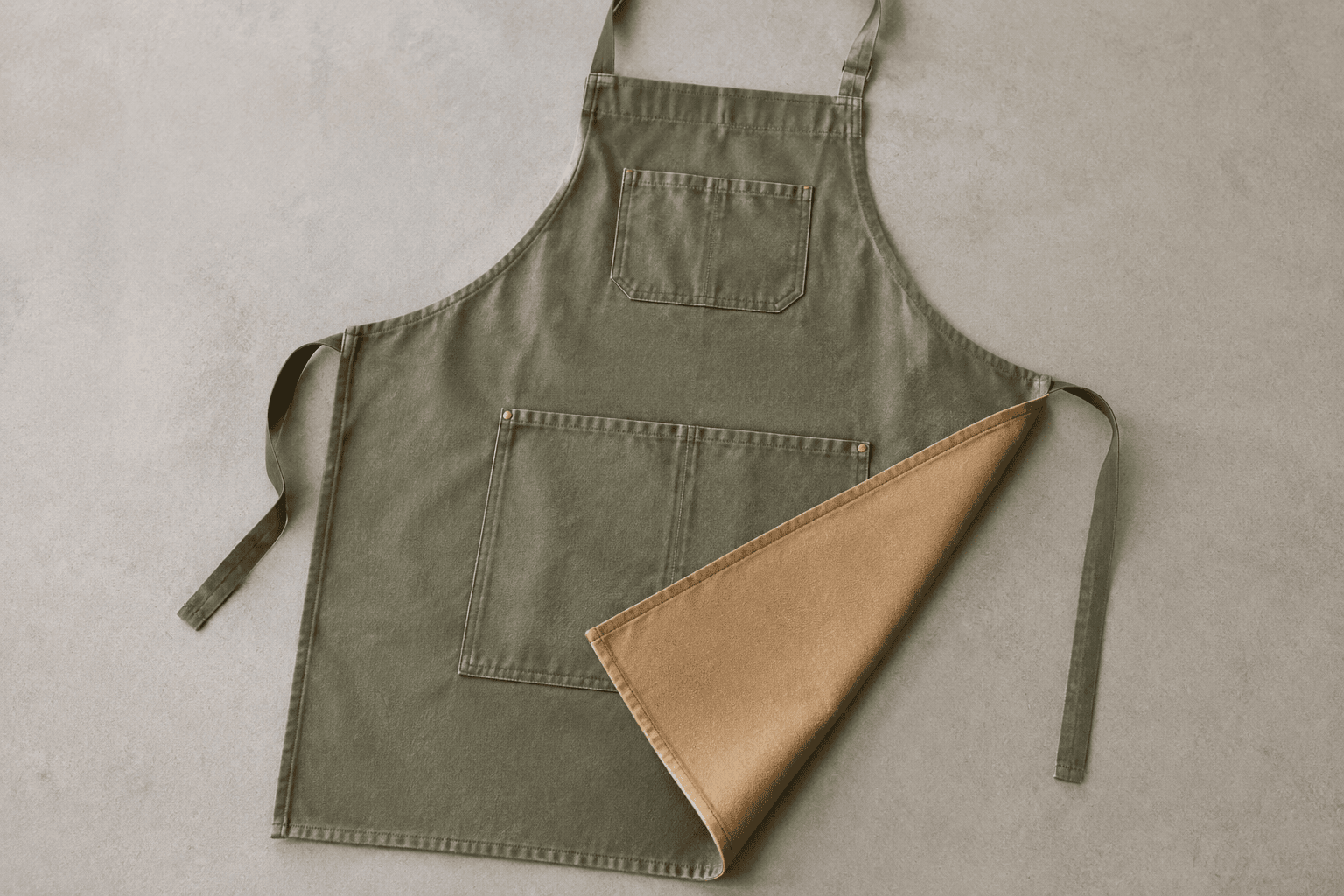
In sourcing conversations, buyers often use the same word for several different constructions. In production, we separate them because each one affects cost and sewing in a different way. Apron lining normally means a second visible or semi-visible fabric layer on the inside of the apron. It may cover the full bib and skirt, only the bib, only the waist section, or the reverse side of pockets. It is cut as a separate fabric panel and joined to the outer shell by turning, binding, topstitching or bagging.
Apron interlining is different. It is a hidden material placed between the outer fabric and another fabric layer, or fused to the back of a component. The purpose is usually structure, reinforcement or padding, not appearance. Common interlinings include non-woven fusible, woven fusible, polyester felt, cotton wadding, EVA foam, needle-punched padding and canvas reinforcement pieces. In aprons, interlining is most often used in waistbands, neck straps, bib tops, tool pocket backs and heat-contact zones.
A lined apron fabric construction should be specified as a complete stack. For example, 10 oz cotton canvas outer plus 150 GSM polyester-cotton lining is very different from 7 oz twill outer plus 90 GSM non-woven interlining plus 120 GSM cotton lining. Both may be called lined, but the hand feel, wash shrinkage, needle choice, seam thickness and carton weight will not be the same.
- Full lining covers the main apron body and gives a clean reverse side, higher weight and better opacity.
- Partial lining covers selected panels, usually bib, pocket or waist area, and controls cost better than full lining.
- Fusible apron interlining adds stiffness to straps, bib edges or waistbands without adding a second loose fabric layer.
- Padding adds thickness and impact or heat buffering, but it requires wider seam allowance and slower sewing.
- Pocket backing is a small lining application that often gives the best durability return per dollar.
When apron lining is worth the added cost
The first question is not whether a lined apron feels more premium. The correct sourcing question is what failure or performance gap the extra layer is expected to solve. A 280 GSM cotton twill apron for a coffee chain may not need lining if the use environment is light and the buyer wants low unit cost. A 360 GSM canvas apron for barbecue, metal craft, ceramics or florist tools may benefit from lining or interlining because the garment must resist abrasion, carry heavier pocket loads or prevent print-through from darker clothing underneath.
In our factory costing, lining is most justifiable in five cases. First, when the outer fabric is attractive but too light, such as 180-220 GSM printed cotton or linen-cotton. Second, when the apron must hide reverse-side seams for a boutique retail finish. Third, when the pocket area carries tools, bottles, shears, order pads or POS devices. Fourth, when the buyer needs mild thermal buffering for kitchen, grill, bakery or craft use. Fifth, when a structured bib shape is required for a uniform program and the apron should not collapse after repeated washing.
The cost impact is real. For a mid-length apron, full lining can add approximately 0.35-0.75 meters of fabric per piece depending on width and marker efficiency. At fabric prices of USD 1.20-2.80 per meter for common polyester-cotton or cotton twill lining, material cost alone may add USD 0.20-0.90 per apron. Sewing labor can add USD 0.25-0.70 per piece because operators handle more layers, more alignment and more topstitching. For a 3,000 piece order, a simple unlined apron at USD 2.20-3.20 FOB may become USD 2.70-4.20 FOB after full lining, before special packaging or trim changes.
- Use apron lining when a light outer fabric needs opacity, body or a cleaner inside finish.
- Use apron interlining when only the bib, waistband, strap anchor or pocket needs reinforcement.
- Avoid full lining when the outer fabric is already 10-12 oz canvas and the target buyer is price-sensitive.
- Avoid loose lining for high-shrink cotton programs unless shrinkage has been tested after 3-5 wash cycles.
- Consider partial lining first when the retail claim is durability rather than luxury finish.
Common lined apron fabric combinations and GSM targets
For custom apron sourcing, the most stable constructions are usually simple. A 240-280 GSM cotton twill outer with a 110-140 GSM polyester-cotton lining creates a medium-weight lined apron suitable for hospitality, retail and light kitchen work. The finished total fabric weight is often around 350-420 GSM before trims, which feels substantial without becoming too stiff. If the apron is longer than 80 cm or has cross-back straps, this weight range remains wearable for a full shift.
For heavier workwear-style aprons, a 320-380 GSM cotton canvas outer with partial 150-200 GSM lining or reinforcement is more practical than full double layering. A full double layer apron using 360 GSM outer plus 180 GSM lining can exceed 540 GSM in the body before seams. At the hem, pocket corners and waist tie insertion points, the sewing machine may pass through 4-8 layers, which affects needle breakage, stitch appearance and production speed. This is why factories may recommend binding edges instead of turned seams, or bar-tack reinforcement instead of hidden seam construction.
For retail gift aprons, printed cotton outers around 160-220 GSM are sometimes lined with 120-160 GSM plain cotton to create a fuller hand. This works, but shrinkage control becomes more important. If both fabrics are cotton but come from different mills or finishing routes, one may shrink 3% and the other 6% after home laundering. That 3% gap is enough to cause puckering around the bib and hem. For bulk orders above 2,000 pieces, we normally ask for pre-production wash testing on the exact fabric lots, not only previous season records.
- Light retail construction: 180-220 GSM printed cotton outer plus 120-140 GSM cotton lining.
- Hospitality construction: 240-280 GSM cotton twill outer plus 110-140 GSM polyester-cotton lining.
- Workwear construction: 320-380 GSM canvas outer plus 150-200 GSM partial lining or reinforcement.
- Denim construction: 8-10 oz denim outer plus pocket/back-waist reinforcement rather than full lining.
- Waxed cotton construction: 10-12 oz waxed outer with minimal lining, because thick seams and cleaning limits already add complexity.
Apron interlining for structure, pockets and strap strength
Apron interlining is often the more efficient engineering answer. Many apron problems are not spread across the whole garment. The bib top may curl, the waist band may stretch, the pocket may tear, or the neck strap may wrinkle after washing. Adding a full lining to solve these local problems increases cost across the full body. A hidden interlining patch can solve the issue with less fabric, lower weight and fewer changes to the outside appearance.
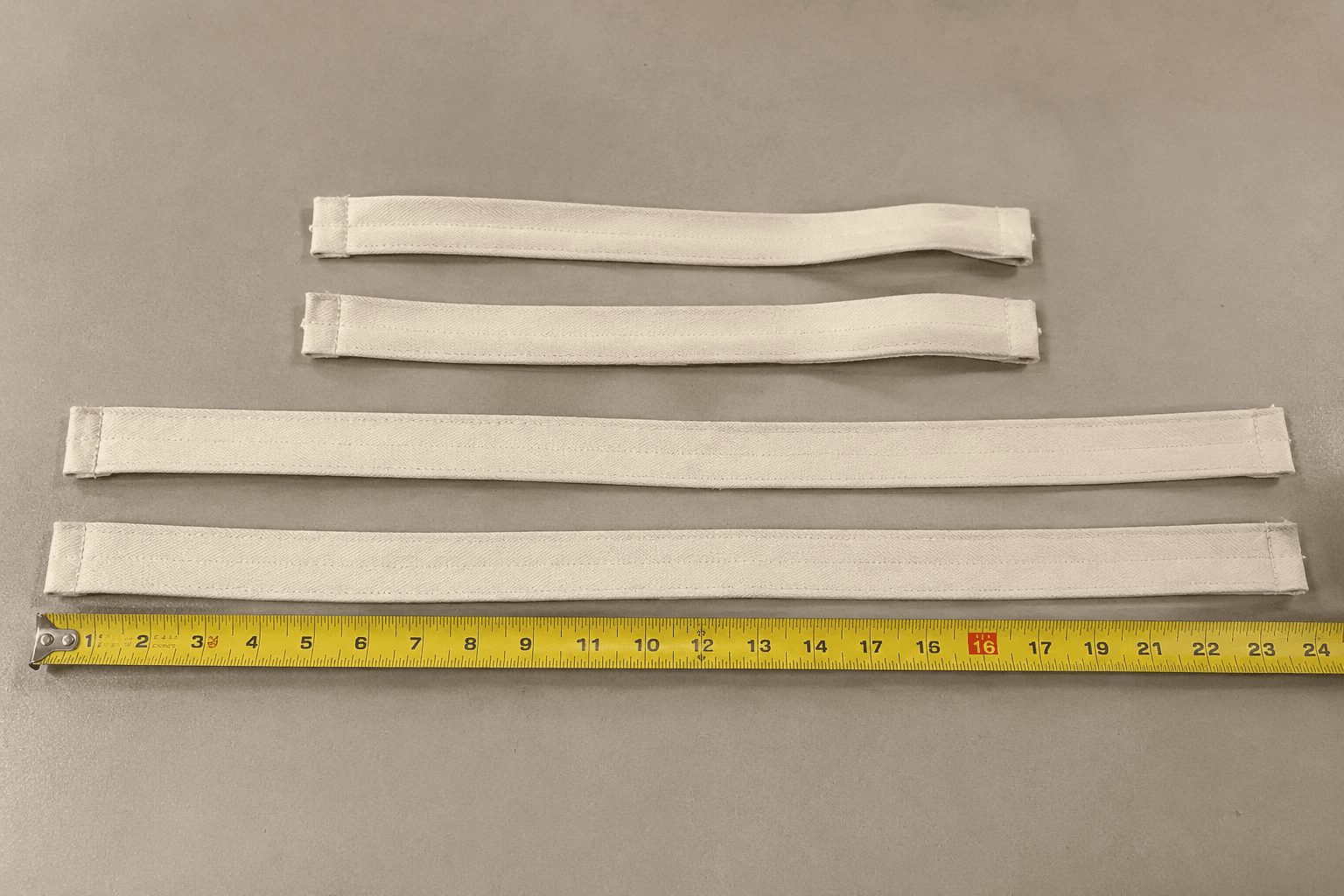
For waistbands and strap anchor points, we commonly use woven fusible interlining in the 40-80 GSM range or a narrow cotton canvas reinforcement strip. Non-woven fusible can be cheaper, often USD 0.03-0.08 per apron for small reinforcement areas, but woven fusible handles repeated bending better. For bibs that need shape, 60-100 GSM fusible can be applied to the top bib panel. For heavy tool pockets, a 180-240 GSM cotton backing or a second pocket layer is more reliable than very stiff fusible, because tools create point stress and may crack or peel bonded material over time.
Fusing quality is an important control point. Temperature, pressure and dwell time must match the interlining supplier's data sheet. If a factory changes from one fusible supplier to another to save USD 0.02 per piece without testing, bubbling or delamination may appear after wash. For branded apron programs, the risk is larger than the saving. On a 5,000 piece order, saving USD 100 in interlining cost is not useful if 400 pieces return with lifting bib corners.
- Use 40-80 GSM woven fusible for waistbands, bib tops and strap ends where flexibility is needed.
- Use 180-240 GSM fabric backing for tool pockets, especially for gardening, barista and maker aprons.
- Use bar tacks together with reinforcement patches, because fabric strength alone does not protect stitch stress points.
- Test fusing after washing and steam pressing, because good adhesion at sampling may fail after bulk finishing.
- Keep interlining away from areas that must drape naturally, such as lower skirt panels on hospitality aprons.
Padded apron and double layer apron applications
A padded apron is not the same as a lined apron, although the two constructions can overlap. Padding is used when the apron needs cushioning or thermal buffering. Typical apron applications include barbecue aprons, bakery aprons, craft aprons, glass workshop aprons, pet grooming aprons and some industrial packing aprons. The padding layer may be cotton wadding, polyester felt, foam or quilted fabric. Each option gives a different balance of softness, heat resistance, wash performance and price.
For mild kitchen or grill use, cotton wadding around 80-150 GSM between a canvas outer and cotton lining gives a natural hand and moderate insulation. Polyester felt around 100-200 GSM is cheaper and more dimensionally stable, but it can feel synthetic and may retain heat. EVA foam or sponge padding gives stronger cushioning but is less suitable for hot wash programs and may deform under high-temperature drying. If the apron is sold into professional laundry channels, padding selection must be confirmed early, because 60 degrees Celsius washing and tumble drying can change thickness and shape.
A full double layer apron is useful when the buyer wants a reversible product, a premium retail hand, or extra coverage against splashes and light abrasion. It is less suitable when the apron must be breathable for long shifts. A restaurant server wearing a 500 GSM double layer apron for 8 hours may find it too warm, especially in summer or outdoor service. For this reason, many commercial apron programs use lined bibs and reinforced pockets, while keeping the lower body single layer.
- Choose cotton wadding for a softer padded apron with a more natural hand feel.
- Choose polyester felt when cost control and stable thickness are more important than premium touch.
- Avoid thick foam if the apron will be washed at high temperature or tumble dried frequently.
- Use quilting stitches when the padding may shift during washing or long wear.
- Specify whether the padding is for heat buffering, cushioning, structure or retail hand feel, because one material does not solve all four.
Cost, MOQ and lead-time impact in bulk sourcing
From a sourcing manager's side, apron lining must be evaluated against order quantity, price target and calendar. A basic unlined apron can often run with MOQ 500-1,000 pieces per color if the fabric is stock or easily dyed. A lined apron using stock lining may keep the same MOQ, but a custom-dyed lining or special interlining can push the practical MOQ to 1,500-3,000 pieces per color. If the lining fabric is printed, quilted or washed, the MOQ can rise further because the lining becomes its own development item.
Lead time also changes. For a standard unlined cotton twill apron, sample development may take 5-7 days after artwork and fabric confirmation, and bulk production may take 25-35 days after deposit and sample approval. A lined apron usually adds 2-5 days in sampling because thickness, seam finish and shrinkage need checking. Bulk lead time may add 3-7 days, especially if the factory must coordinate two fabrics, extra cutting, fusing, quilting or padding preparation. For repeat orders, the added time is smaller once the construction is stable.
Costing should be requested by construction option, not as one vague lined quote. A buyer may ask for three prices: unlined base, partial lining with reinforced pocket and waistband, and full lining. This makes trade-offs visible. In many cases, the partial lining version lands only USD 0.15-0.40 above the unlined version, while the full lining version adds USD 0.50-1.20. For a 10,000 piece program, that difference is material. It can decide whether the apron stays inside the buyer's margin.
- Sampling: add 2-5 days for lined or padded constructions that require wash or shrinkage checks.
- Bulk production: add 3-7 days for extra cutting, fusing, quilting or lining assembly.
- MOQ: expect 500-1,000 pieces per color for stock lining and 1,500-3,000 pieces for custom lining fabric.
- FOB cost: expect full lining to add about USD 0.50-1.20 per piece on common hospitality aprons.
- Carton weight: expect higher freight cost when body weight rises above 450-500 GSM.
Quality risks with apron lining and how to control them
The main quality risks are shrinkage mismatch, seam bulk, lining show-through, color staining and distorted shape after washing. These problems are preventable, but only if they are checked before bulk cutting. A lined apron has more variables than a single-layer apron. The outer fabric, lining fabric, thread, tape, webbing and label may all react differently to washing, steaming and pressing.
Shrinkage tolerance should be written into the specification. For cotton-rich apron programs, a common target is within 3% after one standard wash, or within the buyer's own care-label requirement. More important, the difference between outer and lining should be small. If the outer shrinks 2% and the lining shrinks 6%, the apron may twist even if each fabric is technically acceptable alone. We recommend testing the complete garment sample after 1, 3 and sometimes 5 wash cycles when the apron is intended for uniforms or repeated commercial use.
Seam bulk should be reviewed on a real size sample, not only a small swatch. Pocket corners, side hems, waist tie insertions and bib top edges are where problems appear. If a buyer wants 10 oz canvas outer, 180 GSM lining, thick cotton tape and folded seam construction, the factory may need to adjust to binding, grading seam allowances or using a heavier needle. A clean drawing is helpful, but a sewing trial tells the truth.
- Confirm outer and lining shrinkage together, not as separate fabric reports only.
- Review pocket corners and waistband insertions for seam thickness before approving bulk production.
- Check whether lining color migrates onto light outer fabric, especially black, navy, red and dark green linings.
- Approve wash-tested samples when the apron is sold as machine washable.
- Specify needle size and stitch density if the apron uses heavy canvas, denim, padding or thick webbing.
- Inspect lining alignment during inline QC, because hidden twisting may not be obvious on the front view.
How to brief a supplier before approving a lined apron fabric
A clear development brief reduces sampling rounds. Instead of asking whether the supplier can make an apron with lining, the buyer should define the performance reason, fabric preference, target price and care requirement. For example: 280 GSM cotton twill outer, partial bib lining, reinforced lower pocket, machine washable at 40 degrees Celsius, target FOB under USD 3.50 at 3,000 pieces per color. This gives the factory enough information to suggest a practical construction rather than guessing.
The brief should also include the user's working environment. A cafe apron, barbecue apron, salon apron and pottery studio apron may all look similar on a line drawing, but the stress points are different. Barista aprons need pocket and strap durability. Salon aprons need stain resistance and low lint. Pottery aprons need coverage, wash durability and sometimes split-leg construction. Grill aprons need heat buffering but should not claim protective performance beyond what the material has actually been tested to provide.
Before final approval, ask for a sample that matches bulk fabric weight, not just a construction mock-up from available cloth. Lining changes drape and fit. A bib that looked correct in single-layer sampling may stand away from the body after interlining, or a lower skirt may become too stiff when fully lined. One extra pre-production sample is cheaper than correcting 2,000 finished pieces.
- State whether the purpose is appearance, durability, opacity, padding, structure or heat buffering.
- Give target GSM or fabric type for both outer and lining when available.
- Provide target FOB price, order quantity, size range and color count at the start of development.
- Confirm care label expectations before choosing cotton, polyester-cotton, felt, foam or fusible interlining.
- Ask for unlined, partial lining and full lining cost options when margin is tight.
- Approve the complete garment after wash testing, especially for repeat uniform programs.