For bulk apron sourcing, a florist apron is not just a decorative workwear item. It sits between retail uniforms, light protective gear and tool-carrying utility wear. The buyer must balance appearance, hand feel, pocket function, fabric strength, wash behavior and unit cost before confirming a production specification.
In our factory discussions with flower shop chains, garden centers, event florists and lifestyle brands, the most common problems are predictable: pockets sagging under shears, denim bleeding onto light shirts, waxed canvas feeling too stiff for indoor staff, and apron ties failing after repeated commercial laundering. These issues are normally solved at the sampling stage if the tech pack gives clear GSM, pocket dimensions, reinforcement points and care-label requirements.
This article explains practical sourcing choices for a custom florist apron, including cotton canvas, denim, poly-cotton, waxed canvas florist apron options, tool pocket apron construction, MOQ planning, sampling lead times and realistic factory cost drivers.
- Fabric weight should usually sit between 240 and 360 GSM for daily flower shop use, with heavier options reserved for tool-heavy or outdoor work.
- Pocket design is the main performance detail, because florist shears, pens, tape rolls, phones and order slips create uneven stress.
- Waxed canvas improves water resistance but changes hand feel, washability and packing method, so buyers should approve a real sample before bulk ordering.
- Reinforced bar-tacks and double-needle seams are low-cost upgrades that prevent many apron warranty complaints.
- For OEM production in China, realistic lead time is normally 25-45 days after sample approval, depending on fabric dyeing, printing and order volume.
- Unit price is driven more by fabric, pockets and finishing than by apron shape, especially when metal hardware, embroidery or waxing is added.
What makes a florist apron different from a standard shop apron
A standard cafe apron can often be designed around appearance, stain resistance and basic waist coverage. A florist apron has a different working environment. Staff handle wet stems, soil, flower food, ribbons, kraft paper, wire, floral tape, scissors and sometimes small knives. The apron must protect clothing but also keep tools available without pulling the garment out of shape.
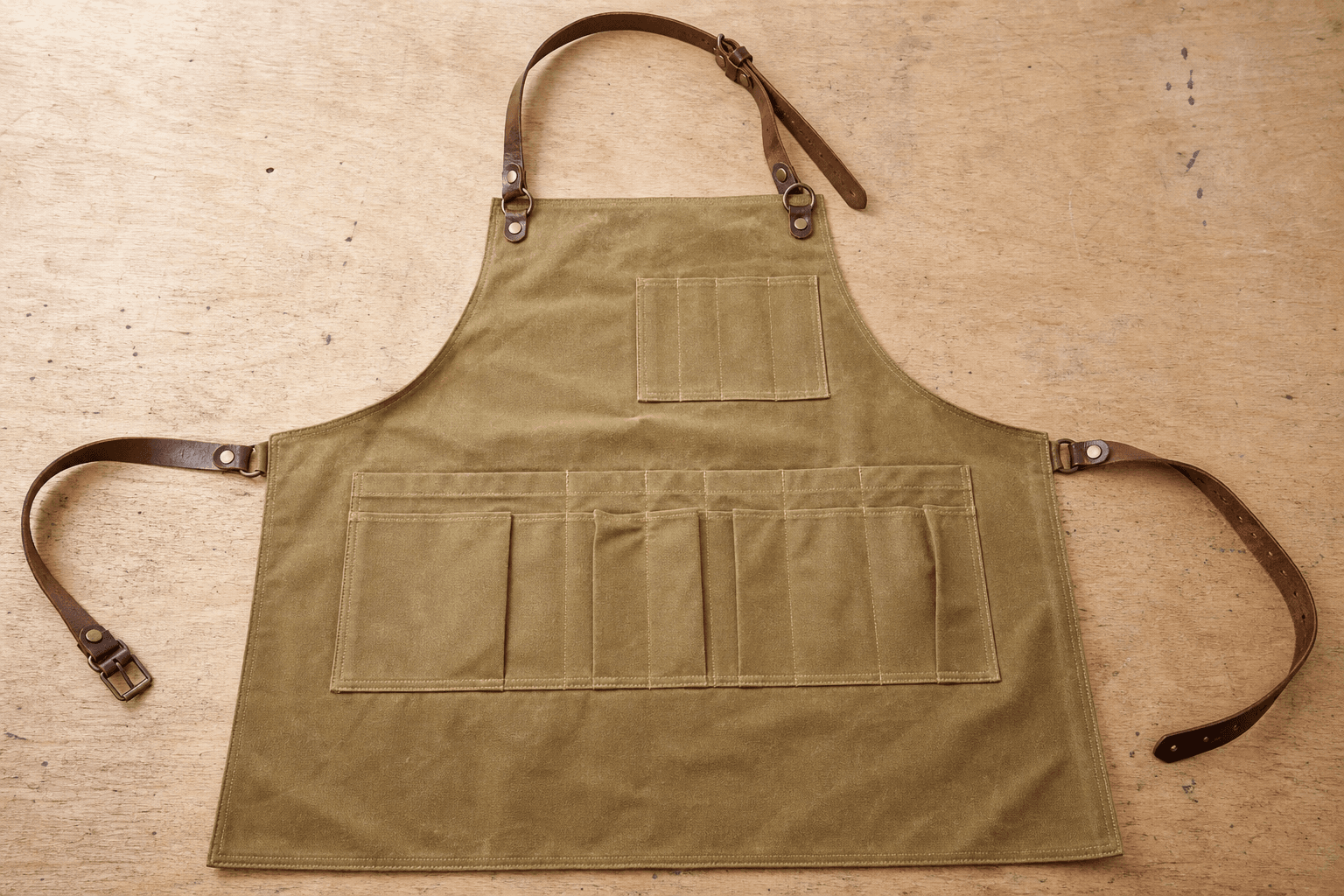
The best specification starts with the use case. A full-bib flower shop apron for retail staff may need a clean front panel, a small pen pocket and a phone pocket. A production-room florist apron used for bouquet assembly may need larger lower pockets, reinforced tool slots and a towel loop. A gardening apron sold as a lifestyle product may need heavier fabric, antique brass hardware and a more structured pocket system. Each use case changes fabric weight, pocket layout and acceptable cost.
For most B2B orders, we recommend buyers separate the apron into three decisions: fabric platform, pocket function and branding method. When these are decided together, the sample is usually closer to approval on the first or second round. When they are decided separately, problems appear late, such as embroidery puckering on thin fabric or wax coating interfering with screen print adhesion.
- A retail florist apron should look neat at the counter and remain comfortable for 8-hour shifts.
- A production florist apron should prioritize tool access, pocket strength and fast cleaning.
- A gardening apron should tolerate outdoor abrasion, heavier hand tools and more visible dirt.
- A promotional flower shop apron should control cost while keeping the logo area flat and stable.
Florist apron fabric choices: cotton canvas, denim, twill and poly-cotton
Fabric selection is the first cost and performance decision. For daily florist use, cotton canvas from 280 to 340 GSM is the most common option because it has enough body for pockets and good surface stability for embroidery or screen printing. A lighter 240-260 GSM cotton twill can work for retail uniforms where comfort is more important than tool loading. Above 360 GSM, the apron becomes stronger but also heavier, hotter and more expensive to ship.
Denim is popular for lifestyle flower shop apron programs, especially in indigo, black and washed blue. Typical weights are 8 oz to 12 oz, roughly 270-410 GSM depending on construction. Denim gives a strong visual identity, but buyers must control color fastness. For dark indigo denim, we normally recommend checking dry and wet rubbing fastness before bulk approval, especially if the apron will be worn over white shirts. Enzyme wash or garment wash can soften the apron but adds 7-12 days and usually increases cost by USD 0.25-0.60 per piece depending on quantity and wash effect.
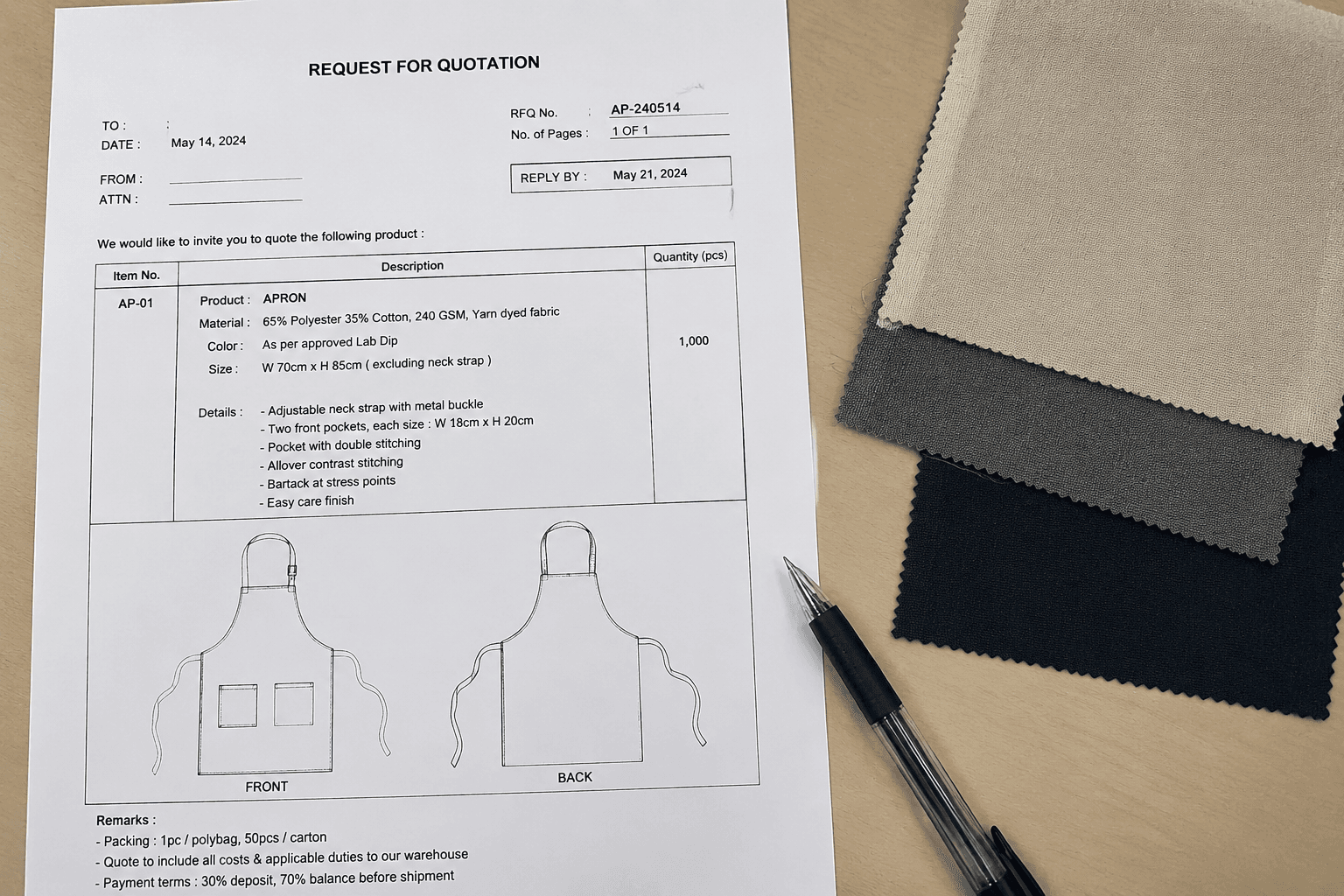
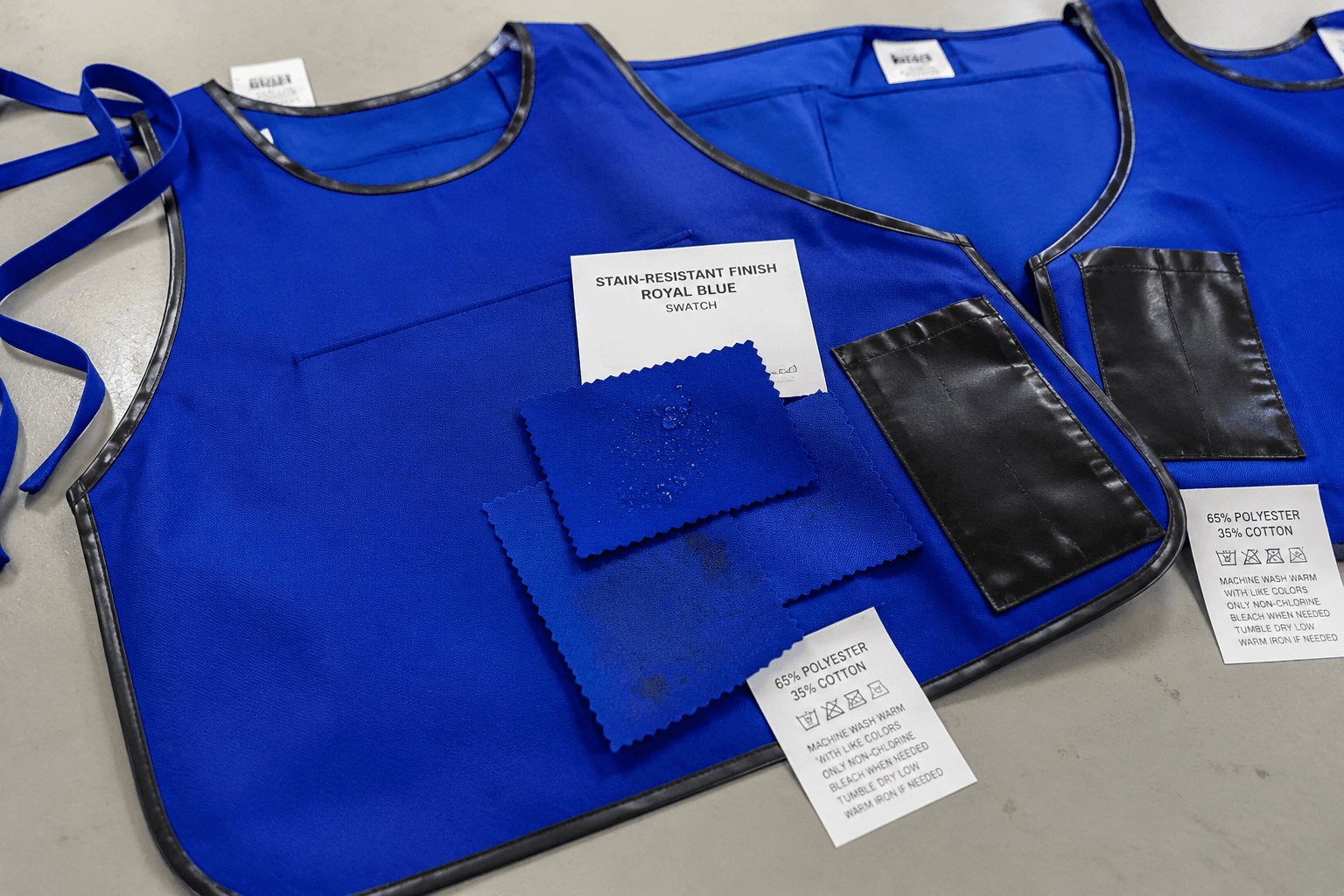
Poly-cotton twill is a practical option for chain store uniforms. A 65/35 polyester-cotton twill in 220-260 GSM dries faster and wrinkles less than pure cotton. It is usually easier to keep consistent across repeat orders. The trade-off is hand feel: it can look more uniform-related and less artisanal. For brands selling a premium florist apron at retail, cotton canvas or washed denim often supports a higher perceived value.
- 240-260 GSM cotton twill is suitable for light indoor use and lower shipping weight.
- 280-340 GSM cotton canvas is the most balanced choice for custom florist apron programs.
- 8-10 oz denim works well for fashion-led flower shop apron designs with moderate tool use.
- 360-450 GSM canvas is suitable for heavy tool pocket apron styles but may reduce comfort.
- 220-260 GSM poly-cotton twill is practical for uniform programs needing easier laundering.
Pocket layout for florist tools, phones and order slips
Pocket layout is where many apron samples fail. A florist does not carry only one tool. A typical working set may include pruning shears, small scissors, a pen, marker, floral tape, phone, order card and sometimes a small blade. If all pockets are made too wide, tools fall sideways. If all pockets are narrow, staff cannot use the apron naturally. A useful tool pocket apron needs pocket widths and depths matched to real items.
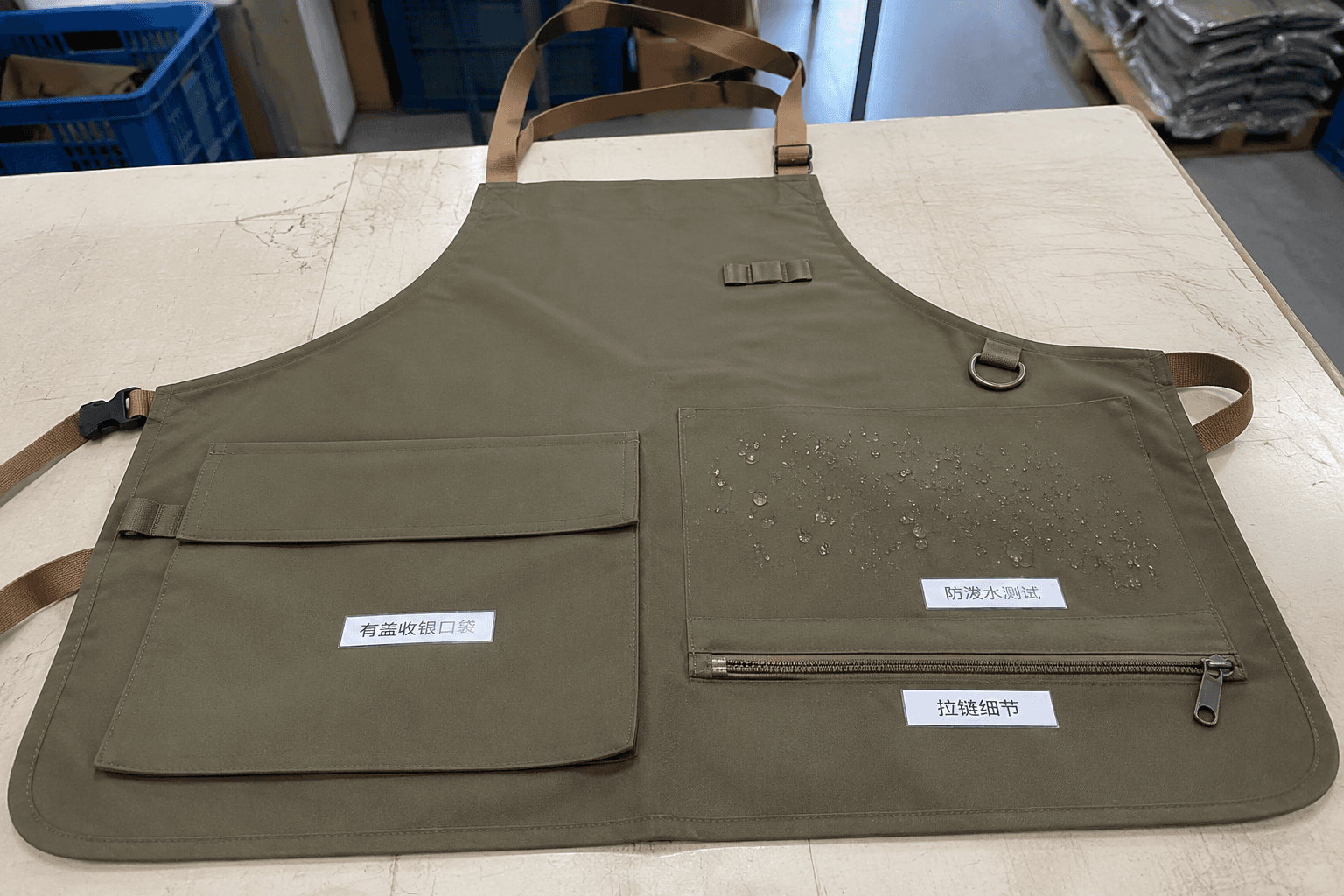
For lower front pockets, common dimensions are 16-18 cm wide and 18-22 cm deep. A phone pocket should be at least 9.5-10.5 cm wide and 15-17 cm deep for current smartphone sizes, but it should not sit where the wearer bends sharply. Scissor slots can be 4-6 cm wide with reinforced vertical stitching. Pen slots are usually 2-3 cm wide. If the buyer wants a tape loop, fabric loop width of 2.5-3.5 cm is usually enough, while a metal D-ring adds cost but improves appearance.
The factory should reinforce stress points with bar-tacks. Bar-tacks at pocket openings, tie attachment points and strap ends are small details, but they matter in commercial use. On a 5,000-piece order, adding 8-12 extra bar-tacks may increase sewing time slightly, but the cost is often less than USD 0.05-0.10 per piece. This is cheaper than replacing aprons after pockets tear.
- Lower patch pockets should be deep enough for shears but not so deep that tools disappear inside.
- Vertical tool slots should use bar-tacks at the top opening and bottom stop point.
- Phone pockets should avoid the central bending area if staff sit or lean during work.
- Order-slip pockets should have a flat opening and enough width for folded paper or tags.
- Loops for towel, tape or keys should be tested with the buyer's actual accessories.
Waxed canvas florist apron options and trade-offs
A waxed canvas florist apron is attractive because it suggests durability and water resistance. For florists, this can be useful when handling damp stems or working near buckets. However, waxed canvas is not the same as waterproof fabric. It resists light moisture and staining better than untreated cotton, but water can still enter through seams, pocket openings and prolonged contact areas.
Waxed canvas is usually made by applying wax finish to cotton canvas from 300 to 500 GSM. For apron production, 340-420 GSM is common. Below 300 GSM, the fabric can feel too light after waxing and may wrinkle unevenly. Above 450 GSM, the apron can become stiff, especially in cold conditions. Buyers should decide whether they want a dry wax hand feel, a more oily traditional finish or a light paraffin-style coating. Each finish changes color, touch and packing marks.
The main trade-off is care. A waxed canvas florist apron is normally not suitable for machine washing in the same way as cotton twill. Wiping clean is preferred. If the end customer expects regular laundering, waxed canvas may create complaints because the finish changes after washing. Waxed fabric also affects branding. Embroidery usually works well if the fabric is stable and the design is not too dense. Screen printing can work, but adhesion must be tested. Heat transfer is risky because heat can disturb the wax layer.
Waxed canvas also changes production handling. The cutting table, sewing machine feed and packing method need attention to avoid unwanted marks. Some marks are part of the waxed-canvas character, but brand buyers must define what is acceptable. For premium retail packaging, tissue wrapping or individual polybags with flat folding can reduce visible crease disputes. For wholesale workwear orders, simple bulk packing may be acceptable.
- Use 340-420 GSM waxed cotton canvas for a balanced apron body and acceptable wear comfort.
- Avoid promising full waterproof performance unless seam sealing and different materials are specified.
- Choose embroidery or woven labels before heat transfer for most waxed canvas projects.
- Use wipe-clean care instructions unless the wax finish has been tested for laundering.
- Approve color and crease tolerance from a physical pre-production sample, not only photos.
Construction details that affect durability and comfort
A florist apron is worn while reaching, bending and carrying tools. Strap design affects comfort as much as fabric. A basic neck-strap bib apron is cost-effective and familiar, but it can create neck pressure when pockets are loaded. Cross-back straps distribute weight better, especially for heavier canvas or waxed canvas florist apron styles. The trade-off is more sewing time, more hardware and a higher unit price.
For standard bib aprons, neck straps are commonly 2.5-3.0 cm wide. For cross-back designs, 2.5-3.8 cm straps are typical. Cotton webbing gives a natural look but can shrink and wrinkle. Polyester webbing is more stable and often stronger, though it may look less premium. Self-fabric straps are visually consistent, but they add cutting and sewing labor and can twist if made too narrow.
Seam construction should match the fabric weight. For 240-280 GSM twill, single-needle seams with clean topstitching can be enough for light duty. For 300-420 GSM canvas, double-needle topstitching gives better structure and a more durable appearance. Pocket edges should be folded cleanly, not left as raw overlock edges unless the design intentionally uses a rugged finish. For bartacking, thread color can match the fabric for a clean uniform look or contrast for a workwear style.
Hardware is another sourcing decision. Antique brass buckles and rivets make a gardening apron look stronger, but rivets must be placed carefully. If a rivet sits where the apron folds, it can mark other units during packing or make the apron uncomfortable. Metal hardware also increases the chance of needle breakage and quality inspection points. For large uniform orders, plastic adjusters or no hardware may be more practical.
- Cross-back straps are recommended when the finished apron weight exceeds about 450-550 g.
- Double-needle pocket stitching is preferred for canvas and denim tool pocket apron designs.
- Bar-tacks should be placed at pocket openings, strap joins, loop ends and high-stress corners.
- Metal rivets should be used only where they add strength or brand value, not as decoration only.
- Finished tie length should be confirmed on real wearer sizes, commonly 85-100 cm per side.
Branding methods for a custom flower shop apron
Branding must be selected according to fabric, order quantity and wash expectations. Embroidery is the most common choice for mid- to premium florist apron programs. It looks stable on canvas, denim and twill, and it performs well in washing if the thread and backing are suitable. For a left-chest logo, common embroidery size is 6-9 cm wide. For a front pocket logo, 5-8 cm is usually safer because pocket fabric can shift during stitching.
Screen printing is cost-effective for larger logos and simpler artwork. It works best on flat cotton or poly-cotton fabric before garment wash. On dark fabric, an underbase may be needed, which increases cost and changes hand feel. For small quantities below 300 pieces, setup cost can make screen printing less efficient unless the logo is simple. Heat transfer gives sharp detail and is useful for small batch personalization, but it should be tested for wash durability and compatibility with waxed or textured fabrics.
Woven labels and leather patches are also common. A woven label on the pocket edge or side seam can keep the apron clean and retail-friendly. PU leather patches are cheaper than genuine leather and more consistent for bulk production. Genuine leather patches can look premium but complicate wash care and may not be suitable for vegan or plant-focused brands. For waxed canvas florist apron projects, a debossed leather or PU patch often matches the product language better than a large printed logo.
- Embroidery is suitable for 300 GSM and heavier canvas when the logo is not overly dense.
- Screen printing is efficient for clean artwork and larger quantities, usually from 500 pieces upward.
- Heat transfer is useful for small runs but needs wash and adhesion testing before approval.
- Woven labels are a low-risk branding method for repeat uniform orders.
- Leather or PU patches add retail value but require clear care-label decisions.
MOQ, sampling, pricing and production lead time
For OEM apron production in Zhejiang, MOQ depends mainly on fabric availability and customization level. If the buyer uses stock fabric colors, a realistic MOQ can be 300-500 pieces per color for simple cotton or poly-cotton aprons. For custom-dyed canvas, MOQ is often 800-1,500 meters per color, which may translate to 1,000-2,500 aprons depending on apron size and cutting yield. Waxed canvas may require higher fabric MOQ if the color or wax finish is customized.
Sampling usually takes 5-10 days when stock fabric is available. If custom dyeing, washing or waxing is needed, first samples may take 12-20 days. A pre-production sample should be made after all fabric, pocket, logo and hardware details are confirmed. For bulk production, a typical lead time is 25-35 days after sample approval for standard canvas or twill aprons. Denim wash, custom waxed fabric, complex embroidery or large order volume can extend this to 40-50 days.
Price ranges vary widely, but buyers can use reference levels for planning. A simple 240 GSM poly-cotton flower shop apron with one logo may land around USD 2.20-3.20 per piece at 1,000 pieces, depending on size and packaging. A 300-340 GSM cotton canvas florist apron with multiple pockets, embroidery and bar-tacks may sit around USD 3.80-6.50 per piece. A heavy waxed canvas florist apron with cross-back straps, metal hardware and patch branding may range from USD 8.00-14.00 per piece or more. These are factory-level planning ranges, not fixed quotations, because fabric market price, exchange rate and logo complexity move the final number.
Buyers should also budget for sample charges, logo setup, lab testing and packaging. A custom sample may cost USD 30-100 per style, sometimes refundable against bulk order. Embroidery digitizing can cost USD 20-50 per logo. Basic color fastness or shrinkage testing through a third-party lab may cost more but is useful for larger retail programs. Skipping these checks can be more expensive if the apron shrinks, bleeds or fails buyer inspection.
- Stock fabric MOQ is commonly 300-500 pieces per color for simple apron styles.
- Custom-dyed canvas may require 800-1,500 meters per color before cutting.
- Sample lead time is usually 5-10 days with stock fabric and 12-20 days with custom finishing.
- Bulk lead time is commonly 25-45 days after sample approval, depending on complexity.
- A detailed tech pack reduces quotation changes after sampling and prevents late cost surprises.
Quality checks before approving a florist apron order
A buyer should not approve a florist apron only by checking appearance. The sample should be loaded with real tools and worn for movement. Put shears, phone, tape and pens into the pockets, then bend, reach and walk. If the pocket pulls forward too much, the pocket position or strap system may need adjustment. If the neck strap feels heavy after a few minutes, a cross-back design may be worth the extra cost.
Fabric testing should match the sales channel. For professional uniforms, check shrinkage after washing, color fastness to rubbing and seam strength. For retail waxed canvas products, check color consistency, acceptable crease marks and care-label wording. If the apron includes embroidery, inspect puckering, backing comfort and thread trimming. If it includes print, test adhesion and cracking after washing or flexing.
During production, inline inspection should focus on pocket placement, strap length, logo position, stain marks and measurement tolerance. For aprons, a common measurement tolerance is +/-1 cm for main body width and length, and +/-0.5 cm for pocket placement when the design is precise. For handmade or washed products, tolerance may need to be wider, but it should be agreed before production. Final inspection should include packing, carton marks and barcode or hangtag accuracy if the order is for retail delivery.
- Measure apron body, strap length, pocket width, pocket depth and logo position on each inspection sample.
- Check loaded pockets for sagging, seam strain and tool access before sample approval.
- Test dark denim and dark canvas for rubbing fastness when worn over light clothing.
- Confirm shrinkage after washing if the apron is marketed as machine washable.
- Approve packaging method for waxed canvas to control fold marks and surface complaints.