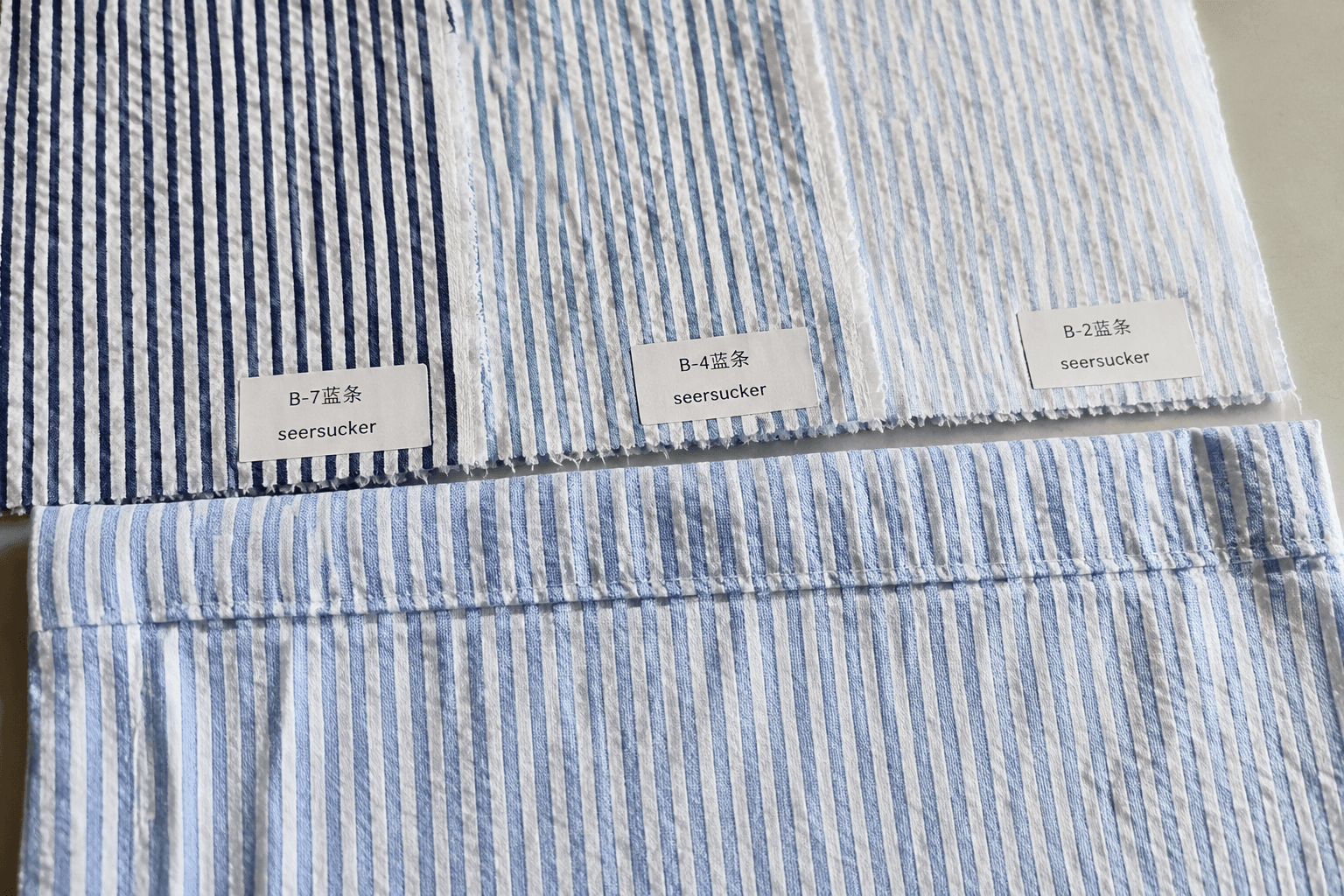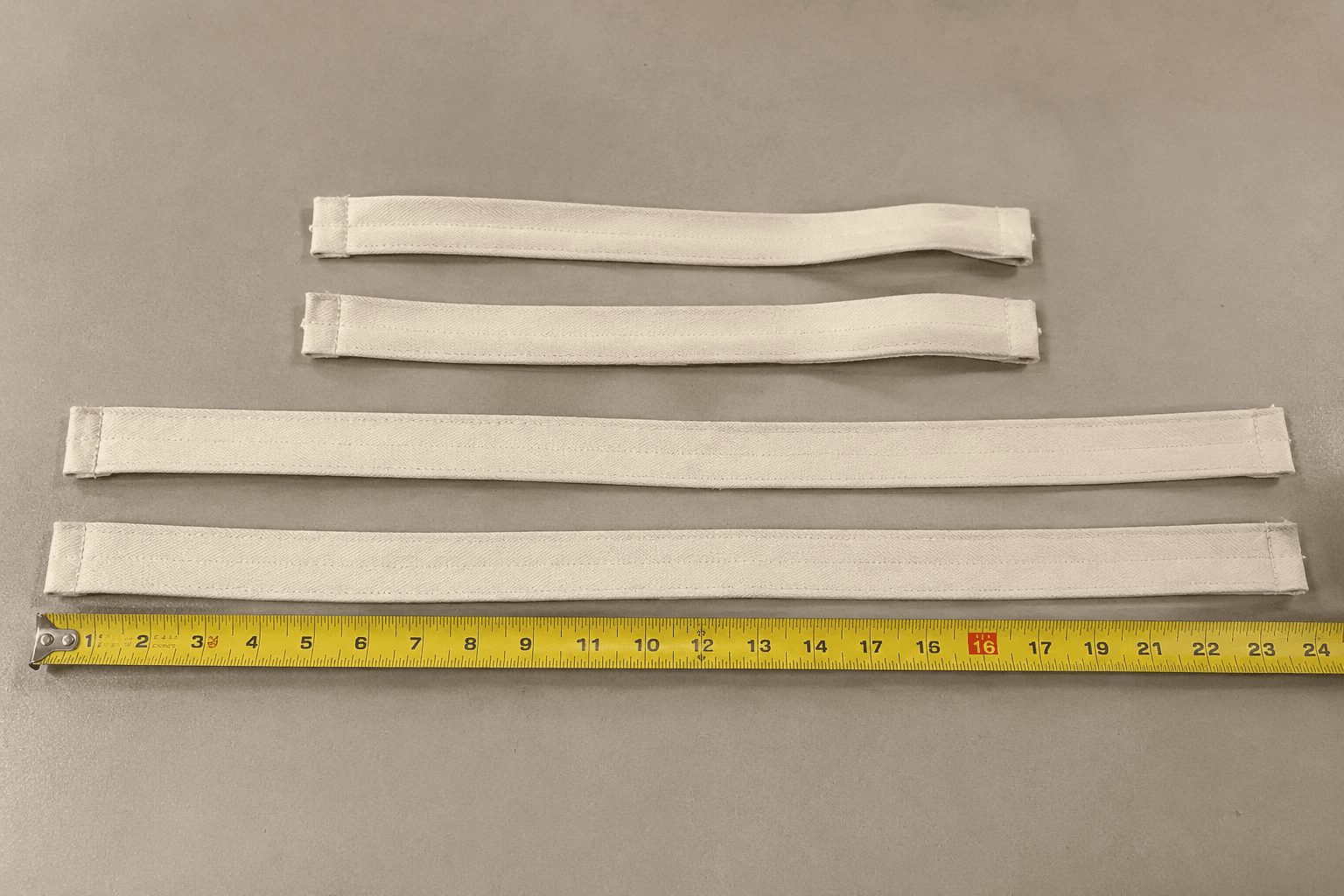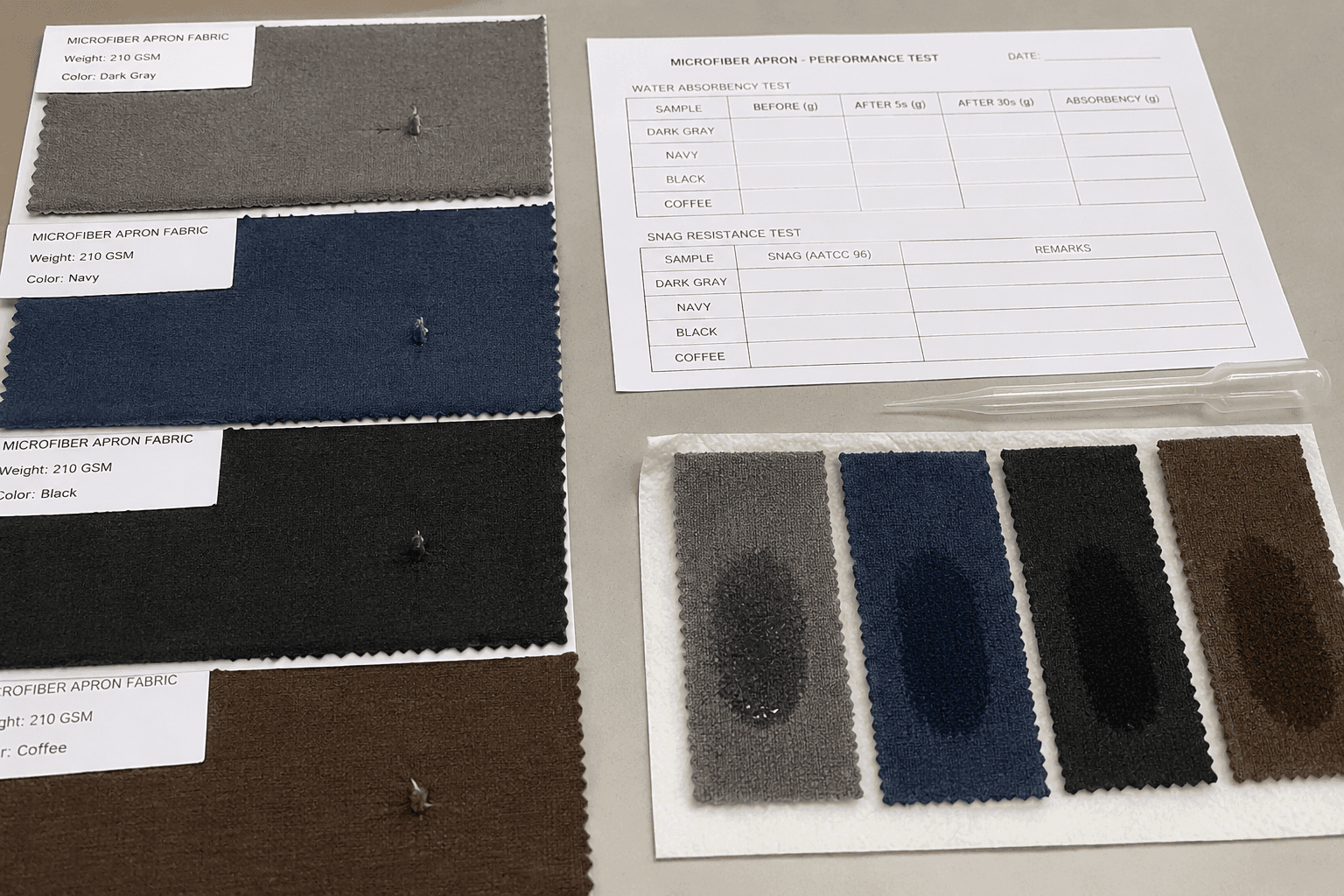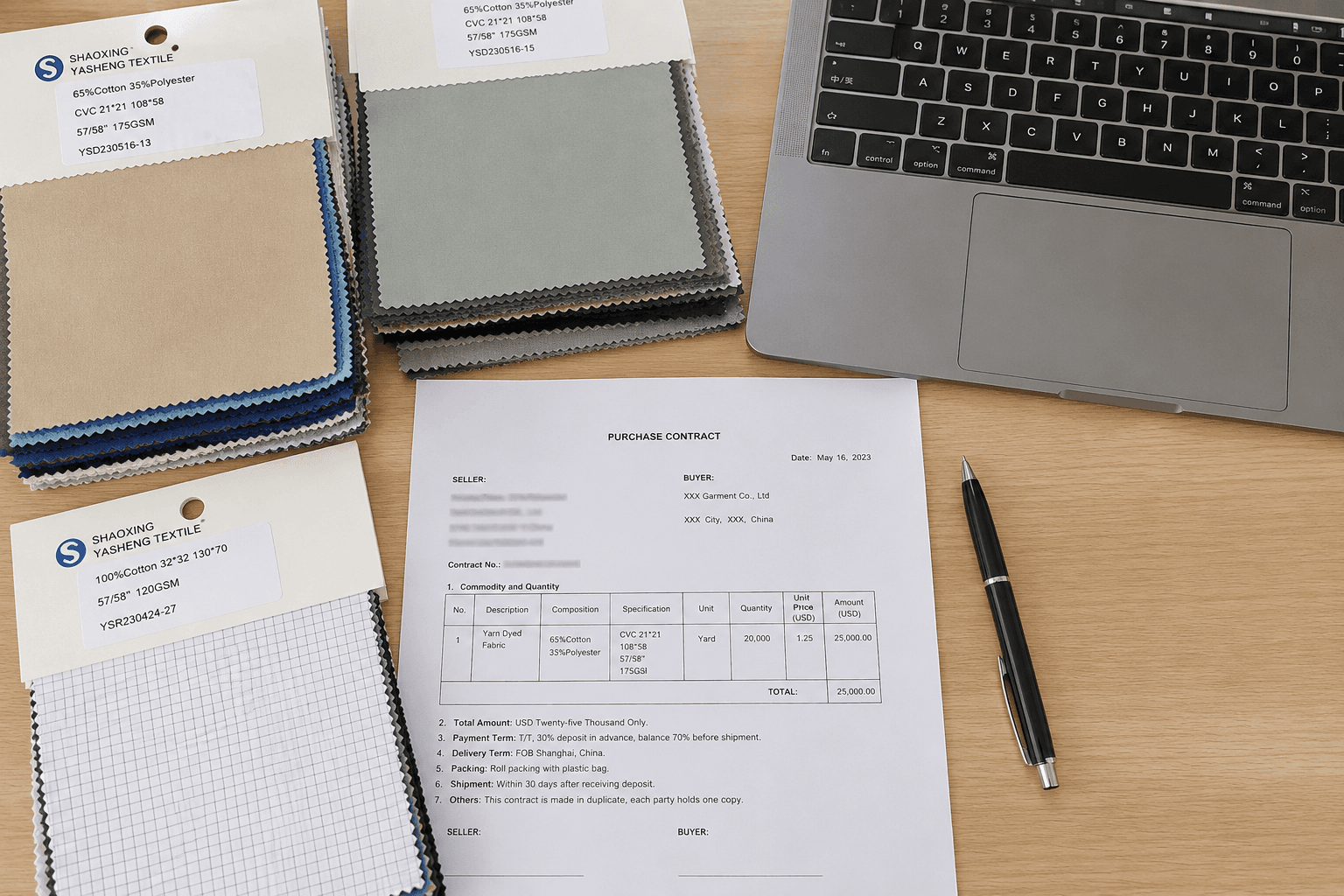
For cafe groups, restaurant chains, bakeries, florists, grocery merchandising teams and hospitality retailers, heather apron fabric is usually chosen for a more textured commercial look than flat solid twill. In practice, a 250 GSM 65/35 poly-cotton heather canvas bib apron often presents better on a rail than a plain 230 GSM solid apron, especially when the front panel is the main visual surface. That benefit is commercial, not cosmetic: it affects costing, branding, replenishment timing and quality control.
Melange and heather are not interchangeable sourcing terms. The effect may come from pre-dyed fibers blended before spinning, mixed-tone yarns woven into canvas or twill, or yarn-dyed constructions that create a broken surface. For apron programs, that technical route matters because it changes lot-to-lot shade stability, print edge definition and the minimum order needed to repeat the fabric over a 6-12 month supply cycle.
That is why buyers should treat heather apron fabric as a specification category, not a sample-room preference. Before approving bulk, the purchase order and tech pack should lock composition, yarn count, construction, GSM tolerance, finish, branding method, MOQ, ex-factory lead time and inspection standard. On OEM apron programs, those controls protect margin and repeatability more effectively than an attractive hanger sample.
- Heather and melange apron fabrics are construction-driven, so repeat orders need tighter fabric definitions than solid-dyed aprons.
- For most woven aprons, the most dependable commercial range is 230-300 GSM, with 240-280 GSM canvas usually giving the best balance of structure, wear comfort and logo support.
- The main sourcing risk is lot-to-lot shade variation; repeat orders should be matched to a retained bulk swatch reviewed under D65 light, not to a photo or a washed store sample.
- On medium-tone heather grounds, logo text below 4-5 mm cap height often loses readability, especially in screen print and dense-fill embroidery.
- Stocked melange apron bases commonly support 500-1000 pcs per style/color with 30-40 day lead times, while custom yarn programs more often require 1500-3000 pcs per color and 45-65 days.
- Compared with a similar solid apron, the usual heather fabric premium is about US$0.20-0.90/pc, depending on blend, GSM, construction and logo method.
- PP approval should include shade review on the finished apron, branding strike-off on the actual bulk fabric lot and an agreed standard such as AQL 2.5 major / 4.0 minor.
- For chain and replenishment apron programs, document measurement tolerance, logo placement tolerance, mill source and finish route before first bulk production.
What buyers must specify when ordering heather apron fabric
In apron sourcing, vague requests create avoidable delays. Terms such as premium heather grey apron or melange canvas look are too loose for costing, sampling or capacity booking. A usable apron brief should state fiber blend, yarn route, construction, finished weight, wash or softening finish, branding method, packaging requirement and inspection level. Without that detail, the mill may quote one fabric, the sewing factory may sample another and both can still argue they followed the request.
For aprons, the heather effect usually comes from either pre-dyed fibers blended before spinning or two yarn tones combined in weaving. Fiber-blend melange often gives a softer, more integrated surface. Mixed-tone woven yarns usually produce a clearer grain and slightly stronger directional texture. Both can work for bib aprons, waist aprons and cross-back styles, but they do not behave the same in repeat shade matching or chest-logo sharpness.
A strong apron specification should be concrete enough to buy without interpretation. For example: 250 GSM 65/35 poly-cotton heather canvas, 16s x 12s yarn count, enzyme-washed finish, one-color white screen print at chest, self-fabric straps, bartack reinforcement at pocket corners and strap joins, AQL 2.5 major / 4.0 minor. That level of detail can usually be costed in 1-3 working days and sampled with fewer correction rounds than a style-only request.
- Common woven apron constructions are 210-240 GSM twill, 240-280 GSM canvas and 280-320 GSM heavy canvas.
- Typical apron blends are 100% cotton, 65/35 poly-cotton, 80/20 cotton-poly and smaller-volume 55/45 linen-cotton for retail programs.
- For repeat apron business, specify a fabric tolerance of +/-5% GSM and a finished measurement tolerance of +/-1 cm on major panels.
- If continuity matters, record the mill, yarn count, finish route and approved lot reference in the tech pack and purchase order.
Fiber blending routes, MOQ and real lead times for heather apron fabric
The route behind the heather surface drives commercial terms more than many buyers expect. Stocked melange bases, especially in 65/35 poly-cotton, are the easiest entry point because mills often hold standard grey, charcoal, blue-grey and oatmeal shades in apron-friendly weights. If the fabric is already stocked, sample cutting can usually start at once, prototype delivery often falls in 7-12 days and bulk shipment is commonly achievable in 30-40 days after PP approval.
Custom yarn development is slower and less forgiving on volume. If a buyer wants an exclusive heather shade, a higher cotton ratio such as 80/20, or a controlled fleck ratio for a cleaner marl effect, the mill may need custom fiber mixing, spinning and weaving before garment production can begin. That fabric stage alone often takes 20-35 days. After cutting, sewing, branding, inspection and packing, the full order usually reaches 45-65 days ex-factory. For seasonal apron launches, that extra 15-25 days is often the difference between an on-time delivery window and a missed rollout.
The price effect is usually manageable, but buyers should quantify it early. A stocked heather apron base typically adds about US$0.20-0.45/pc over a comparable solid fabric. A custom yarn melange base more often adds US$0.50-0.90/pc. On a standard bib apron that might otherwise land at US$2.80-3.40 FOB, the premium is acceptable for many mid-market uniform programs. On a multi-pocket apron with hardware, towel loop and embroidery already at US$5.50-6.20 FOB, the same fabric change can push the style beyond margin targets if it is approved before firm costing.
- Stocked melange apron fabrics commonly support 500-1000 pcs per style/color.
- Custom heather yarn programs more often start at 1500-3000 pcs per color, depending on mill policy and yarn preparation.
- Typical FOB prices are US$2.80-4.20/pc for simpler waist or bib aprons and US$4.80-6.80/pc for heavier canvas aprons with extra pockets, hardware or embroidery.
- A realistic development calendar is 3-5 days for lab dip or swatch confirmation, 7-14 days for stocked-base sampling, 15-30 days for custom fabric development and 30-65 days for bulk production.
Shade consistency on repeat heather apron fabric orders
The most common dispute on melange apron orders is not stitching quality; it is shade continuity between lots. Buyers approve one bulk order, then reject a repeat because the body panel reads cooler, greener, darker or flatter than the first shipment. On a solid apron, color judgment is relatively direct. On a heather surface, the eye reads both the base tone and the ratio between lighter and darker fibers, so even a small shift in yarn source or blend proportion becomes visible across a large bib front.
For any apron program expected to repeat over 6-12 months, keep a signed cutting swatch from the first accepted bulk lot and use that as the master standard. A photo, showroom sample or store-washed garment is not stable enough for shade approval. Review should be done under D65 light, and the acceptance note should state that heather fabrics normally show slightly wider visual variation than solid-dyed fabrics.
Finishing can further change how the surface reads. Enzyme wash, peach finish, softener application and heavy pressing can all alter the apparent contrast of the marl effect. A fabric panel that looks balanced before finishing may appear darker after wash, or less textured after pressing and packing. For that reason, shade approval should be made on the finished apron or on a finished PP panel cut from the actual bulk lot, not only on unfinished fabric.
- Keep one approved bulk swatch for each repeat apron color and label it with mill name, lot number and shipment date.
- If repeat orders are spaced more than 90-120 days apart, reconfirm raw material availability before promising continuity to your customer.
- Review apron shade at a normal viewing distance of about 1-1.5 meters, not only close-up on a table.
- For chain uniform programs, add a written note that heather fabrics allow more visible lot variation than solid-dyed fabrics.
Best apron weights and constructions by use case
Fabric weight should follow apron use, not trend language. In most B2B programs, the most balanced range for heather apron fabric is 240-280 GSM in canvas. At that weight, a bib apron usually holds enough shape for retail display and chest-logo placement while remaining wearable through full service shifts. It also supports standard double-pocket layouts without making the front panel collapse or twist after laundering.
Below about 220 GSM, a heather effect can still look attractive, especially in twill, but the apron often feels too light for premium branded use. Pocket edges read softer, drape becomes looser and print definition is less reliable on more open constructions. Above 300 GSM, durability improves, but total garment weight climbs quickly once straps, rivets, towel loops or metal adjusters are added. For staff wearing an apron for 8-10 hours per shift, that extra weight affects comfort and repeat-order acceptance.
Different end uses justify different constructions. A 230-250 GSM poly-cotton heather twill suits front-of-house cafe, bakery and quick-service programs where laundry frequency and unit cost matter. A 250-280 GSM canvas is a dependable middle ground for branded retail aprons and hospitality merchandise. A 280-320 GSM heavy canvas works better for workshop, gardening or craft aprons, provided the strap joins and bartacks are engineered for the extra load.
- For cafe and restaurant aprons, 230-260 GSM usually balances body, drape and wear comfort.
- For retail and gift aprons, 250-300 GSM usually gives better shelf presence and a fuller handfeel.
- For utility aprons, 280-320 GSM can work well when matched with stronger straps, bartacks and metal hardware.
- If the apron includes large chest pockets or rivets, request a sealed sample in final fabric before confirming the target GSM.
Logo readability limits on melange and heather aprons
Branding should be tested earlier on heather aprons than on solid-color styles because the broken surface reduces edge sharpness. This is most visible on medium grey, charcoal, oatmeal, sage and dusty blue bases, where light and dark fibers interrupt printed outlines. A logo that looks crisp on a solid black apron can lose authority on a melange ground even when print execution itself is acceptable.
For most apron programs, screen print works best when the artwork is bold, high-contrast and not too small. White, black and deep navy inks generally hold better than mid-tone inks that sit too close to the fabric ground. Heat transfer can preserve cleaner edges, but on rustic canvas it may look too synthetic and film edges can become visible after repeated washing. Embroidery often raises perceived value and can perform better than print on textured cloth, but it does not solve every readability problem. Fine serifs, dense fills and small text still struggle because the uneven visual field remains visible around the stitching.
The practical rule is to approve branding at actual size on the exact bulk fabric lot. Digital mockups are weak decision tools for melange aprons. If the chest logo includes text, letters below about 4-5 mm cap height commonly lose clean readability at normal viewing distance. On many uniform orders, increasing text height to 6-8 mm and simplifying the artwork does more to improve brand presence than changing the print method.
- Use high-contrast logo colors and simple artwork shapes where possible.
- Treat text below 4-5 mm cap height as high risk on medium-tone heather apron fabrics.
- Request a physical print strike-off or embroidery sample on the approved fabric lot before PP confirmation.
- For premium retail aprons, embroidery usually suits symbols, initials and short brand names better than dense slogan copy.
Approval sequence and AQL controls for custom apron orders
The safest way to source melange aprons is to turn visual approval into a fixed sequence. First approve the fabric specification with composition, construction, GSM and finish. Second approve color against a retained standard. Third approve branding on that same fabric. Fourth approve the finished PP apron after washing or final finishing. When buyers skip one of these gates, the disagreement usually appears during final inspection, when correction cost is highest and the ship date is already under pressure.
Inspection terms should be locked before bulk starts. For many mid-volume apron programs, AQL 2.5 major / 4.0 minor is commercially workable, with shade reviewed against the approved bulk swatch rather than against a showroom sample. For chain uniforms, retail launches and promotional rollouts, buyers should also define carton assortment, size ratio, logo placement tolerance and measurement tolerance in advance. On heather aprons, that structure matters because color judgment is less absolute than on solid fabrics.
In practice, stable heather apron programs come from buyers who accept the real trade-offs early: slightly wider shade tolerance, more disciplined logo planning, moderate fabric premium and sometimes higher MOQ. Buyers who document those points before sampling usually get cleaner production runs, faster replenishment decisions and fewer repeat-order disputes.
- Approve in sequence: fabric standard -> branding strike-off -> PP sample -> bulk production.
- Use a retained master swatch from an accepted bulk lot for repeat-order shade review.
- Set inspection to a defined level such as AQL 2.5 major / 4.0 minor unless your customer contract requires stricter terms.
- For final approval, review shade, logo readability, pocket alignment, strap symmetry and measurement tolerance together on the finished apron.