When a buyer asks how to wash commercial aprons, the correct answer depends on fabric, color, trim, soil type, and the laundry system used after delivery. A 240 GSM cotton twill waist apron used in a bakery does not behave like a 220 GSM polyester-cotton bib apron used in a hotel kitchen, and neither should be treated like a PVC-coated dishwasher apron. For bulk apron programs, laundry performance should be considered during material selection, not only after the aprons arrive.
From the factory side, most premature apron failure comes from three avoidable causes: excessive wash temperature, aggressive chlorine bleaching, and poor stain pre-treatment. These issues can cause cotton shrinkage above 5%, polyester dye migration, cracked prints, weakened ties, and distorted pocket edges. A clear care standard reduces replacement cost and gives the brand or operator more stable presentation across multiple laundry cycles.
This article explains practical apron washing instructions for sourcing managers and product developers ordering custom aprons from China. It covers fabric-specific washing, stain removal, industrial apron laundry settings, print and logo protection, and the care details worth confirming before mass production.
- Match the wash process to the apron fabric, because cotton, poly-cotton, denim, canvas, and coated aprons tolerate heat and chemicals differently.
- Control temperature before controlling detergent, as high heat is the main driver of shrinkage, fading, print cracking, and elastic or webbing damage.
- Pre-treat food oil, wine, coffee, and pigment stains quickly, because delayed stain removal often requires harsher washing later.
- Specify care labels during sampling, since washing instructions should reflect actual fabric, dye, trim, and decoration method.
- Test bulk aprons for 5 to 10 wash cycles before approval, especially for restaurant chains, hotels, bars, and uniform rental programs.
Why apron washing instructions should be decided before production
Apron care is often treated as an after-sales detail, but for OEM manufacturing it belongs in the product development stage. The intended laundry method affects fabric selection, color choice, thread type, logo technique, pocket construction, and even apron pattern allowance. If a buyer confirms a fabric only by hand feel and unit price, then later sends the apron into industrial washing at 60°C with alkaline detergent, the result may not match the approved sample.
For example, a 100% cotton twill apron at 240 to 280 GSM may feel premium and breathable, but it can shrink 3% to 7% depending on fabric finishing and wash temperature. A polyester-cotton blend, usually 65/35 or 80/20, normally has better dimensional stability and faster drying, but may hold oil odor if the washing process is weak. Heavy canvas at 10 oz to 12 oz gives a rugged look for cafes and workshops, but it needs more water extraction time and may crease heavily if dried at high temperature.
From a sourcing point of view, the care standard should be written into the technical file before bulk order confirmation. If the apron will be washed by a hotel laundry, restaurant group, linen rental company, or central facility, the supplier should know the expected wash temperature, drying method, chemical restrictions, and target wash-life. This allows the factory to recommend fabric and decoration options that survive the real working environment.
- For home or light commercial washing, 30°C to 40°C is usually enough for cotton and poly-cotton aprons with normal food soil.
- For industrial apron laundry, 40°C to 60°C is common, but higher temperatures require colorfastness, shrinkage, and trim testing.
- For logo aprons, woven labels and embroidery normally tolerate washing better than large plastisol or rubberized prints.
- For rental programs, buyers should ask for 10-cycle or 20-cycle wash testing before approving bulk production.
How to wash commercial aprons by fabric type
The safest way to wash commercial aprons is to separate them by fiber content, color depth, and soil level. Aprons are work garments, so they collect oil, sauces, flour, coffee, wine, cleaning liquid, ink, and sometimes metal dust or wax. A single wash formula cannot handle all of these without damaging some products. The correct process is to define the apron category first, then set temperature, detergent strength, and drying method.
Cotton aprons should be washed with moderate agitation and controlled heat. For 180 to 280 GSM cotton twill, 30°C to 40°C is suitable for normal restaurant use, while 50°C may be used for heavier food soil if shrinkage has been tested. Avoid repeated tumble drying above medium heat, as this can accelerate shrinkage and make ties twist. If the brand wants a natural cotton look, advise the end user that fading and slight dimensional change are part of the material behavior.
Polyester-cotton aprons are usually the most practical choice for chain restaurants, hotel service teams, and promotional uniform programs. A 65/35 poly-cotton twill at 195 to 240 GSM offers a good balance of price, durability, wrinkle resistance, and drying speed. These aprons can usually be washed at 40°C and dried faster than cotton. However, oil stain removal may require a detergent with good emulsifying performance, because polyester fibers can retain grease if the wash cycle is too short or too cool.
- 100% cotton twill: wash at 30°C to 40°C for regular use; test before 50°C to 60°C industrial washing.
- 65/35 poly-cotton twill: wash at 40°C for routine use; suitable for many commercial uniform programs.
- Denim aprons: wash inside out at 30°C to 40°C; expect indigo fading and avoid mixing with light colors.
- Canvas aprons: use sufficient water level and avoid overloading; heavy fabric needs more rinsing and drying time.
- Waterproof coated aprons: wipe or wash gently at low temperature; avoid high heat drying, chlorine, and sharp creasing.
Industrial apron laundry settings for bulk uniform programs
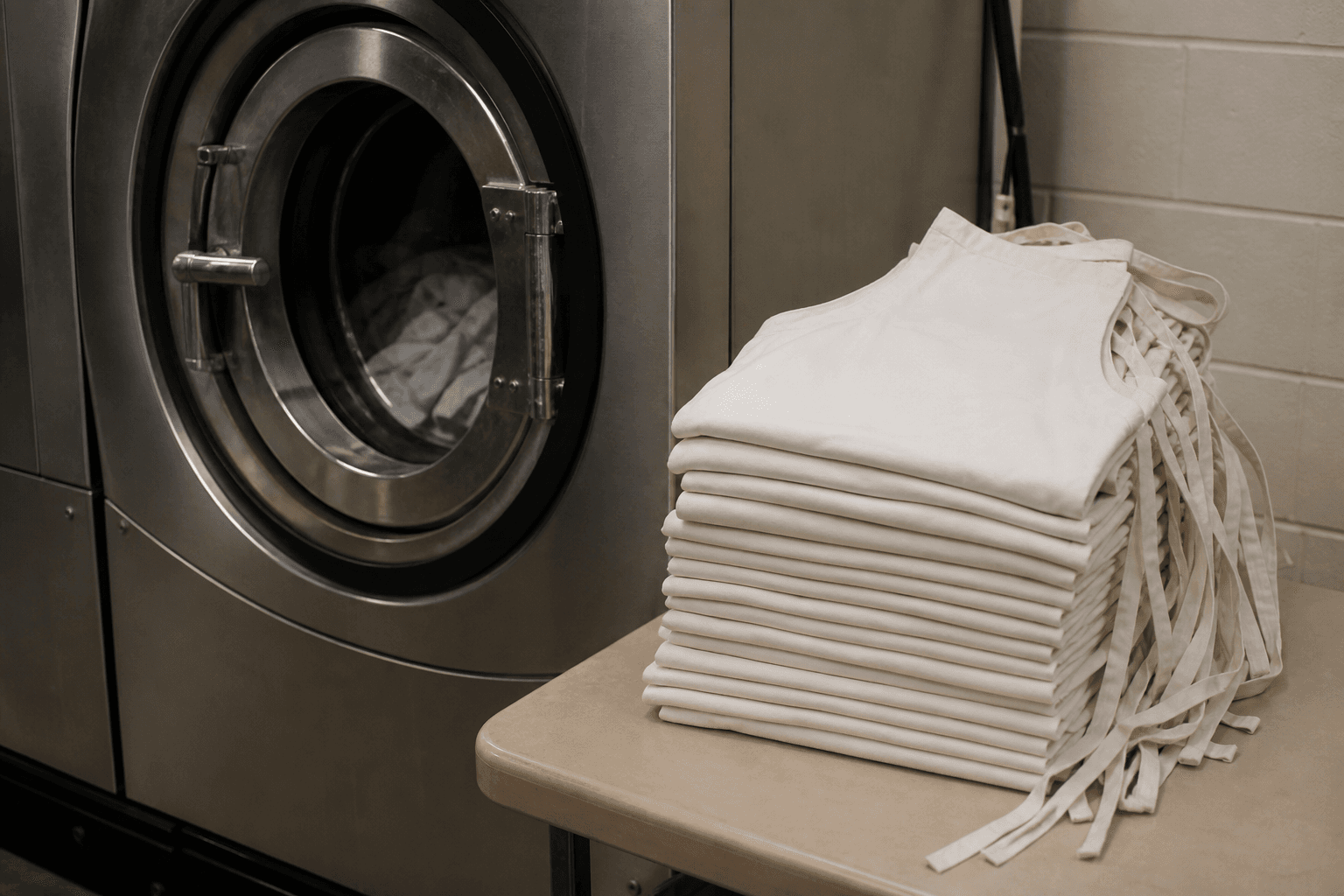
Industrial apron laundry is more aggressive than domestic washing. Machines are larger, extraction is stronger, detergents may be highly alkaline, and drying tunnels or tumble dryers can apply sustained heat. This improves productivity, but it also exposes weak seams, unstable dyes, poor interlining, low-grade webbing, and unsuitable prints. Buyers who supply aprons to restaurant groups, supermarkets, food factories, and hotel chains should treat laundry compatibility as a performance requirement.
A practical commercial wash cycle for poly-cotton aprons is often 40°C to 60°C with an 8 to 15 minute main wash, followed by two rinses and medium extraction. Cotton may tolerate similar washing if the fabric is pre-shrunk or sanforized, but the buyer should confirm expected shrinkage after 5 cycles. For color aprons, especially black, navy, burgundy, forest green, and dark brown, colorfastness to washing should be checked to ISO 105-C06 or an equivalent internal test. In factory sampling, we usually suggest testing the approved fabric and decoration together, because a logo may fail even when the base fabric passes.
Drying is where many aprons lose shape. High heat can curl pocket edges, wrinkle waist ties, crack heat transfer prints, and create shiny marks on polyester-rich fabrics. If the laundry provider must use tumble drying, medium heat is safer than high heat. For premium cotton, denim, and canvas aprons, line drying or low-temperature tumble drying gives better appearance, although it increases labor or time cost.
- Recommended test standard for chain programs: 5 wash cycles before salesman sample approval and 10 wash cycles before bulk confirmation.
- Typical commercial wash temperature: 40°C for regular soil and 60°C only when fabric, dye, trim, and logo have been tested.
- Drying recommendation: medium heat below approximately 60°C exhaust temperature where possible, with immediate removal after drying.
- Common failure points after industrial washing: tie twisting, pocket distortion, logo cracking, color fading, seam puckering, and metal hardware oxidation.
- Useful tolerance target: keep shrinkage within 3% for poly-cotton and within 5% for cotton unless the buyer accepts a washed look.
Apron stain removal for food service, bar, and workshop use
Apron stain removal should start before the wash drum. Once oil, tomato sauce, red wine, soy sauce, coffee, chocolate, or dye-based liquids dry into the fabric, the laundry process needs stronger chemistry or hotter water. That increases the risk of color loss and fabric damage. For commercial users, the best practice is to sort stained aprons at the end of each shift and pre-treat visible stains within the same day.
Oil and grease are the most common stains on kitchen aprons. For cotton and poly-cotton, apply a commercial degreasing pre-spotter or liquid detergent directly to the stain, allow 5 to 10 minutes of dwell time, then wash at the recommended temperature. Do not let concentrated chemical dry on the fabric, because it may create a pale mark on dark aprons. For black or navy aprons, test the pre-spotter on an inside area first.
Pigment and tannin stains need different handling. Coffee, tea, wine, and some sauces respond better to oxygen bleach than chlorine bleach, especially on colored aprons. Chlorine bleach can weaken cotton yarns, yellow polyester blends, corrode metal eyelets, and damage embroidery thread. For white cotton aprons used in bakeries or food preparation, controlled bleaching may be acceptable, but it should be specified as part of the care guide and tested with the actual fabric.
- Cooking oil and butter: pre-treat with liquid detergent or degreaser for 5 to 10 minutes before washing.
- Tomato sauce and curry: remove excess residue first, then use oxygen-based stain treatment on colorfast fabrics.
- Coffee, tea, and wine: avoid high dryer heat until the stain is removed, because heat can set the stain permanently.
- Flour and dry powder: shake off before washing to reduce redeposition and machine residue.
- Ink, dye, and paint: isolate from other aprons and test solvent treatment carefully, especially near printed logos.
Protecting logos, trims, pockets, and hardware during washing
Custom aprons are rarely just plain fabric. They may include embroidery, screen print, heat transfer, woven labels, leather patches, brass eyelets, adjustable buckles, contrast stitching, towel loops, or reinforced pockets. Each detail changes the apron washing instructions. A decoration method that looks clean on a showroom sample may not survive repeated industrial apron laundry unless it is chosen for the correct wash environment.
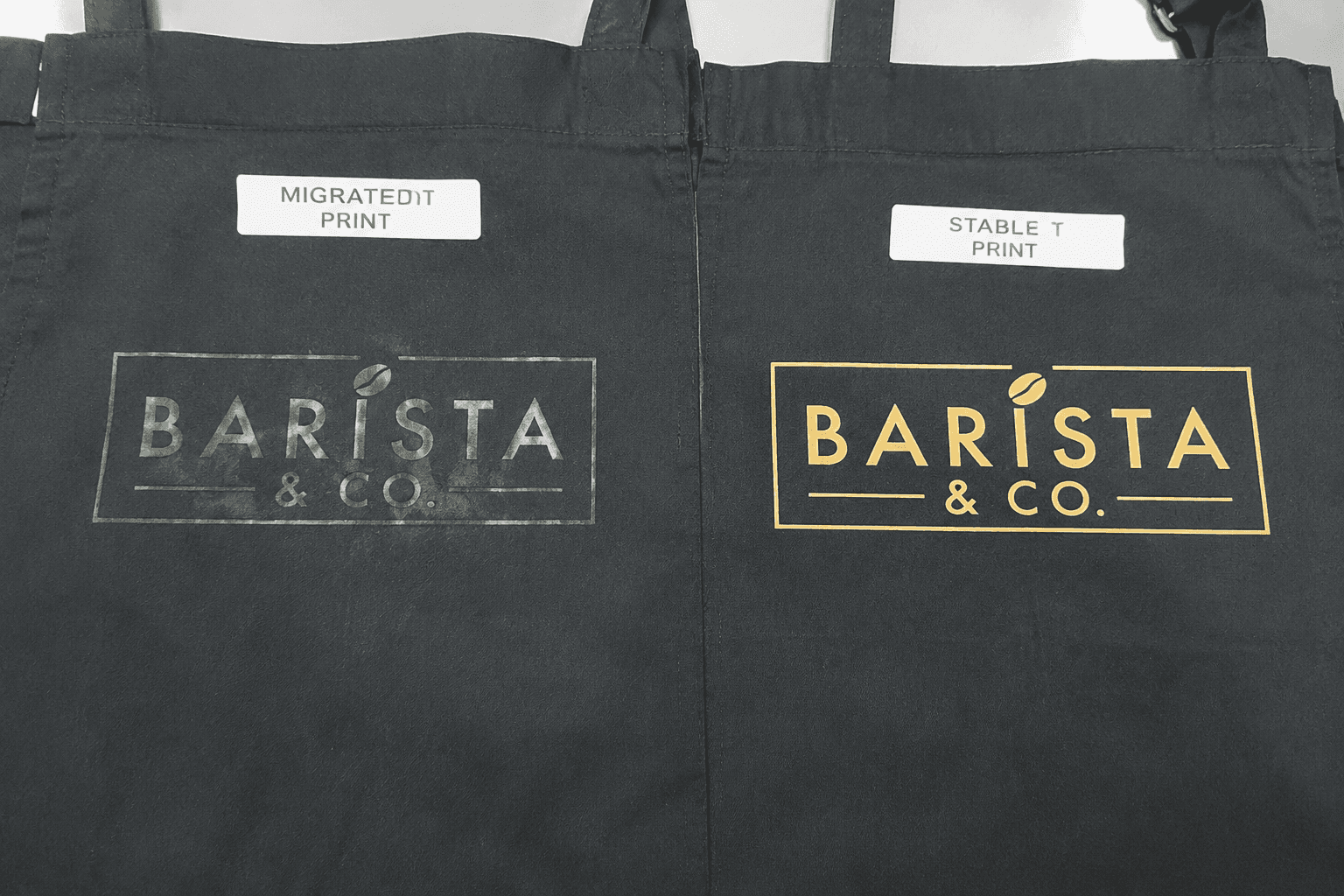
Embroidery is usually durable, but thread quality matters. Polyester embroidery thread is normally better than rayon for commercial washing because it resists bleach and abrasion more effectively. Screen printing can work well for large orders, but ink type and curing quality are important. Heat transfer logos give sharp detail and low setup cost, often useful for MOQ 100 to 300 pcs, but they are more sensitive to high dryer temperature and should not be ironed directly.
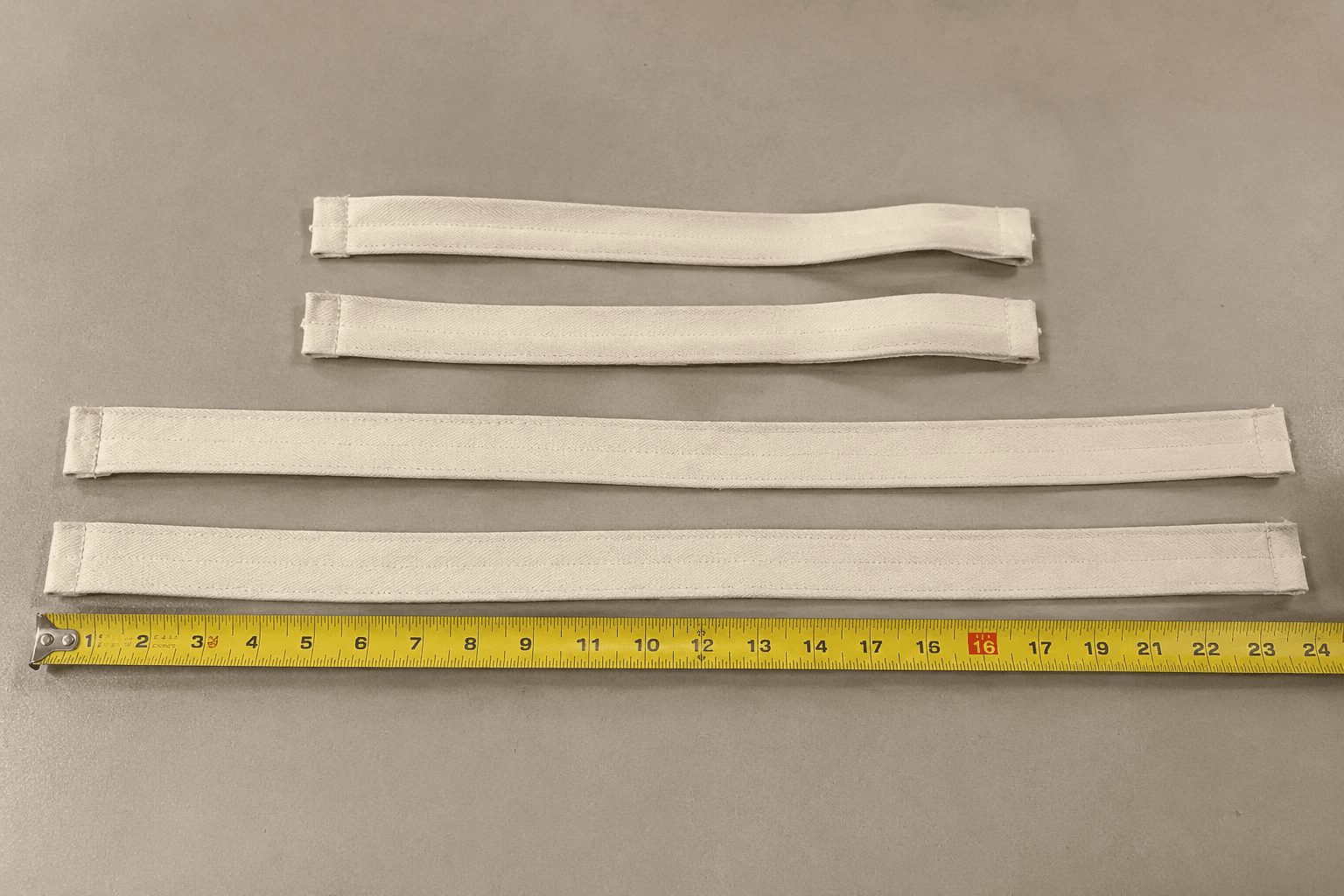
Hardware also deserves attention. Nickel-free metal hardware, brass-look eyelets, and antique finishes can oxidize or discolor if exposed to chlorine or acidic chemicals. Plastic buckles reduce corrosion risk but may deform under high heat. For long-life aprons, the factory should reinforce stress points at ties, neck straps, and pocket corners with bartacks. Washing does not only test fabric; it tests the whole construction.
- Embroidery: choose polyester thread for repeated washing and confirm backing does not curl after drying.
- Screen print: confirm ink curing and wash-test for cracking, fading, and tackiness after 5 to 10 cycles.
- Heat transfer: wash inside out where practical and avoid high-temperature tumble drying or direct ironing.
- Leather patch: use only when the buyer accepts special care, because genuine leather is not ideal for industrial washing.
- Metal hardware: avoid chlorine-heavy washing and test for rust, plating loss, or staining on light fabrics.
How to wash commercial aprons without causing shrinkage or fading
Shrinkage and fading are the two complaints that most often reach the supplier after delivery. In many cases the issue is not one single mistake, but a combination of fabric choice, color depth, wash temperature, drying heat, and expectation. If the buyer wants a dark cotton apron that keeps a sharp retail look after 50 hot washes, the technical requirement and the material choice are not aligned. A supplier should explain this before the purchase order, not after the complaint.
To reduce shrinkage, choose pre-shrunk cotton or a stable poly-cotton blend, avoid washing above the tested temperature, and use lower dryer heat. Cotton fabric can be compacted or sanforized before cutting, but there is still some residual shrinkage. If the apron has long waist ties, shrinkage can make the garment feel shorter or tighter even when the body measurement change is within tolerance. For this reason, we often add a small allowance to cotton apron patterns when the buyer confirms commercial washing.
To reduce fading, separate dark and light colors, use mild or color-safe detergent, avoid chlorine bleach, and wash dark aprons inside out where practical. Reactive dyed cotton generally gives better wash fastness than lower-cost direct dye, but the price is higher. For polyester-cotton, disperse and reactive dyeing quality must be stable across fabric lots. During bulk production, buyers should keep approved lab dips and request lot control if the order quantity is high, for example 3,000 to 20,000 pcs across multiple delivery batches.
- Use 30°C to 40°C washing for most colored cotton aprons unless sanitation rules require higher temperature.
- Avoid overloading machines, because poor water movement increases abrasion and uneven soil removal.
- Separate dark denim and black cotton aprons from white or pastel aprons for at least the first 3 to 5 washes.
- Do not use chlorine bleach on colored aprons, polyester embroidery, heat transfer logos, or metal trims.
- Remove aprons from the dryer promptly to reduce wrinkles, twisted ties, and pocket edge curling.
Care label and sourcing checklist for OEM apron orders
A good apron care guide is only useful if it is converted into production documents. For OEM orders, the care label should match the confirmed fabric and decoration, and the carton or polybag instructions should not contradict it. If the buyer supplies artwork, trim, or special logo materials, those components should be included in wash testing before bulk approval. A care label copied from another style is a small shortcut that can create expensive claims later.
For custom apron sourcing from China, the buyer should define the laundry scenario in the inquiry. A simple note such as machine washable is not enough. The supplier needs to know whether the apron is for home cooking retail, coffee shop staff, restaurant kitchen teams, butcher counters, hotel housekeeping, salon use, workshop use, or uniform rental. Each channel has different soil, wash frequency, and appearance standards.
Cost is also affected by care requirements. A basic promotional poly-cotton apron may start from around USD 1.20 to 2.20 per piece depending on GSM, size, and quantity, while a heavier custom canvas or denim apron with hardware and embroidery may run USD 4.50 to 9.00 per piece or higher. MOQ is often 300 to 500 pcs for standard fabric colors and 1,000 to 3,000 pcs for custom dyed fabric. Sampling usually takes 5 to 10 days after details are confirmed, and bulk lead time is commonly 25 to 45 days depending on order size, fabric availability, and decoration workload.
- Confirm fabric composition, GSM or oz weight, dye method, and expected shrinkage tolerance.
- Specify wash temperature, drying method, bleach restrictions, ironing temperature, and whether dry cleaning is prohibited.
- Wash-test the full apron with logo, trims, labels, ties, pockets, buckles, and hardware included.
- Approve care label wording before bulk production and keep it consistent with buyer manuals or store operations guides.
- Request pre-production samples from the actual bulk fabric when the order uses custom dyeing or special finishing.
- For high-volume programs, retain one unwashed and one washed approval sample for comparison during quality claims.