For buyers sourcing aprons for fabrication shops, tool rooms, automotive service, maintenance teams, warehousing or outdoor work, fabric failure usually starts at predictable points: the lower front panel rubbing against benches, pocket corners carrying tools, tie points under tension, and hem edges catching on metal or rough timber. A standard cotton canvas apron can be comfortable and visually familiar, but it is not always the right answer when the work surface is abrasive or when the wearer carries sharp-edged components.
A cordura apron or ripstop apron should be specified as a functional product, not as a fashion upgrade. The fabric, coating, pocket reinforcement, stitching thread and binding all need to match the actual work environment. A 500D Cordura-style nylon with PU backing behaves very differently from 10 oz cotton canvas, and a 210D ripstop polyester is not in the same class as a 1000D abrasion resistant apron.
At factory level, the main sourcing question is not whether a technical fabric apron is stronger in a general sense. The practical question is where extra strength is needed, how much stiffness the wearer can accept, what branding method will survive the surface texture, and whether the buyer's target price allows the correct trims instead of only a stronger shell fabric.
- 500D to 1000D nylon Cordura-style fabric is commonly used when abrasion resistance is more important than soft cotton handfeel.
- Ripstop apron fabric helps control tear propagation, but light ripstop alone is not automatically suitable for heavy industrial use.
- Reinforcement placement at pocket mouths, stress points and lower panels often matters more than increasing GSM across the whole apron.
- MOQ and lead time depend heavily on fabric color, coating, denier and whether the mill has greige or finished stock available.
- Branding on technical fabric should be tested early because textured nylon and coated polyester can limit print adhesion and heat tolerance.
- Unit price is driven by fabric consumption, denier, binding, bartacks, metal hardware and sewing speed, not only by the quoted fabric name.
When a cordura apron is the right industrial specification
A cordura apron is appropriate when the apron is expected to resist rubbing, dragging, tool contact and frequent handling in harsher environments. In our Zhejiang workshop, the inquiries that make the most sense for this fabric usually come from tool brands, welding accessory distributors, automotive aftermarket suppliers, woodworking brands, maintenance uniform programs and industrial safety catalogues. These buyers are not only asking for a stronger look. They are trying to reduce product complaints caused by premature wear.
Cordura is often used in the market as a shorthand for high-tenacity nylon fabric, usually in 500D, 750D or 1000D constructions. The actual performance depends on yarn, weave, coating and finishing, so a buyer should avoid approving only the word 'Cordura' on a quote sheet. For aprons, 500D can be a balanced option for mobility and cost, while 1000D is noticeably stiffer and more suitable for front reinforcement, tool pockets or knee-length lower panels. A full 1000D industrial work apron can be durable, but it may feel too rigid for users who bend, sit or wear it for a full shift.
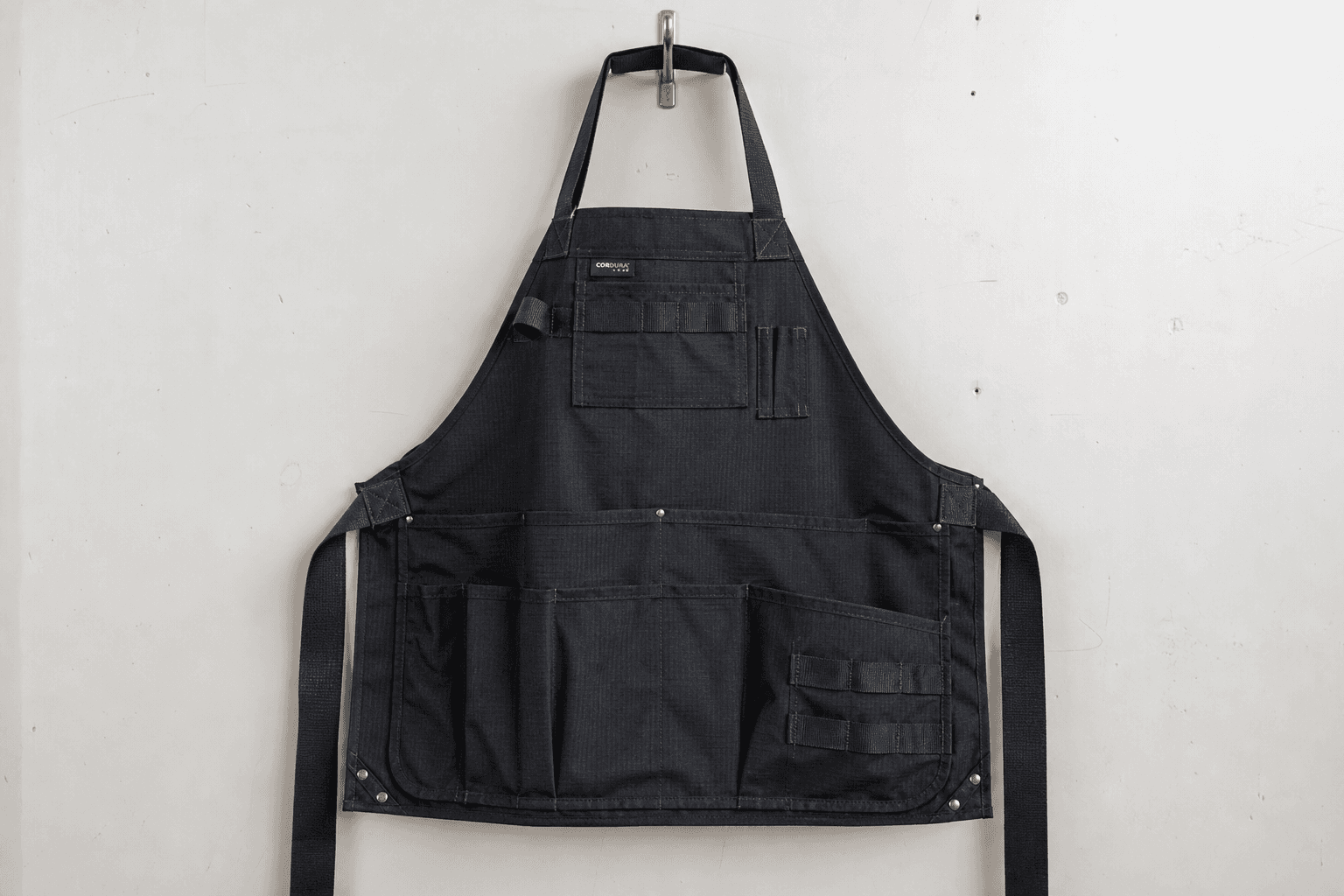
For high-wear areas, we often recommend a hybrid build: 10 oz to 12 oz cotton canvas or poly-cotton canvas as the main body, with 500D or 1000D Cordura-style reinforcement at the pockets, lower front and strap anchors. This keeps the apron wearable and controls cost, while placing the technical fabric where it gives measurable benefit.
- A 500D nylon shell is a practical starting point for service, warehouse and maintenance aprons where flexibility still matters.
- A 1000D panel is better reserved for lower-front abrasion zones, tool pockets and edge guards if the wearer needs less bulk.
- A PU backing can improve water resistance and body, but it also reduces breathability and can affect sewing behavior.
- A full technical fabric apron should be wearer-tested before bulk order because stiffness can reduce acceptance even when durability is higher.
Cordura apron fabric choices: denier, GSM and coatings
The most common sourcing confusion is comparing technical fabrics only by GSM. GSM is useful for shipping weight and rough handfeel, but denier and yarn type are more meaningful for a cordura apron. A 500D nylon fabric may fall around 230 to 320 GSM depending on coating and finish. A 1000D nylon fabric may sit around 330 to 450 GSM. A 600D polyester Oxford can sometimes have a similar GSM on paper, but it is usually not the same in abrasion resistance, tear strength or recovery after flexing.
For industrial apron production, coating needs to be specified clearly. PU coating is common for water resistance and structure. PVC coating can give a heavier, more rigid hand and may be considered for certain utility aprons, but it can increase smell, stiffness and compliance concerns depending on market. TPU lamination is possible for selected projects but usually raises cost and MOQ. For buyers selling into the EU or North America, we suggest confirming REACH, RoHS, PFAS-related requirements and any brand restricted substance list before fabric booking.
Fabric color also affects sourcing. Black, navy, charcoal and khaki are easier to source in stock or semi-stock. Custom Pantone colors in high-denier nylon may require 800 to 1500 meters per color from the fabric mill, sometimes more if the exact yarn and coating are not running. For a standard bib apron, consumption may be around 0.75 to 1.10 meters per piece depending on width, size and pocket layout. That means fabric MOQ can quickly become the real order MOQ.
- 500D nylon is often suitable for the main body of an abrasion resistant apron when the wearer needs movement.
- 1000D nylon is more suitable for reinforcement panels, pocket facings and heavy-duty versions with a higher target price.
- 600D polyester Oxford is lower cost and widely available, but should not be treated as equal to high-tenacity Cordura-style nylon.
- PU coating around 0.3 to 0.6 mm total finished thickness can improve structure, but bulk testing is needed for folding and seam quality.
- Custom color technical fabric can add 15 to 25 days before cutting if the mill has to dye and coat from greige fabric.
Ripstop apron options and where they make sense
A ripstop apron uses a reinforced grid yarn to reduce the spread of tearing after a puncture or cut starts. This is valuable in outdoor work, logistics, light maintenance, gardening, event operations and some trade uniforms. However, ripstop should not be confused with maximum abrasion resistance. A 210D ripstop polyester can resist tearing better than a plain weave of similar weight, but it will not perform like 500D or 1000D nylon against rough steel edges or concrete surfaces.
For aprons, ripstop works best when the buyer wants a lighter technical fabric apron with a clean, functional appearance. It can be used for packable utility aprons, technician aprons, waterproof garden aprons, or as pocket lining for a heavier shell. Common options include 210D polyester ripstop with PU coating, 300D polyester ripstop, and nylon ripstop in lighter premium builds. Finished weights often range from 120 to 220 GSM for light versions and 220 to 300 GSM for more structured versions.
The advantage is weight and tear control. The trade-off is that thin ripstop can feel less substantial than canvas and may show needle marks or seam puckering if sewn with a heavy industrial look. When a buyer wants a ripstop apron for heavy use, we usually suggest increasing fabric weight, adding binding at exposed edges, and reinforcing pockets with a second layer or Cordura-style overlay.
- Use light ripstop for mobility, water resistance and tear control rather than for extreme bench abrasion.
- Specify grid size and denier because two ripstop fabrics with the same GSM can behave differently in sewing and use.
- Add bartacks at pocket corners because ripstop fabric can still fail at concentrated stitch stress.
- Request laundering and colorfastness tests if the apron will be used in rental uniform or institutional programs.
Construction details that decide real apron durability
For an industrial work apron, the sewing construction is often the difference between a good fabric sample and a good bulk product. Heavy fabric alone does not solve failure at pocket corners, neck strap joins or waist ties. If the buyer specifies 1000D fabric but accepts light thread, narrow seam allowance and no reinforcement, the apron may still fail in the same places as a cheaper product.
We normally review the work scenario before confirming construction. If users carry pliers, tape measures, utility knives or fasteners, pocket mouth edges need reinforcement. If the apron hangs from the neck for long shifts, a cross-back strap system may be better than a simple neck loop. If the wearer bends over machinery or parts bins, long loose ties should be controlled through side release buckles, metal grommets or shorter adjustable straps. The safest specification is not always the thickest fabric; it is the one that avoids predictable stress concentration.
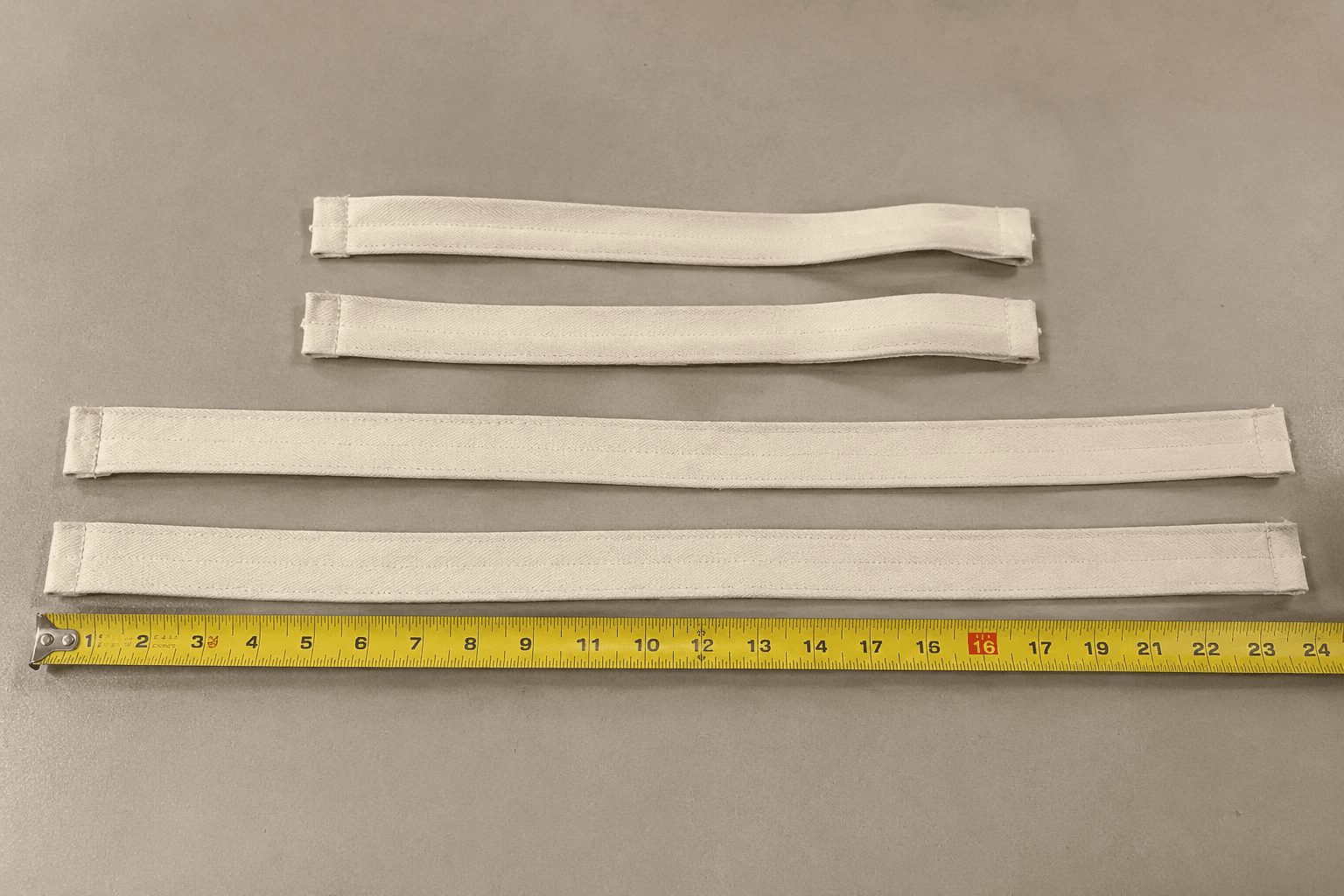
Thread and stitch selection also matter. For most Cordura-style and ripstop technical aprons, bonded polyester thread is a stable choice. Tex 40 to Tex 70 can be used depending on fabric weight and visual requirements. Bartacks should be added at all pocket stress points, strap joins and lower split points. For very heavy versions, we may use wider binding, double rows of stitching and metal hardware, but this increases sewing time and can add USD 0.20 to USD 0.80 per piece depending on complexity.
- Use bartacks at pocket corners, strap joins, tie anchors and divider seams where tools create downward load.
- Use binding or folded double hems on exposed lower edges because abrasion often begins at the hem line.
- Use reinforced pocket mouths when the wearer repeatedly clips tape measures, pens, blades or small tools.
- Use cross-back straps for heavier aprons to reduce neck fatigue and improve user acceptance.
- Use corrosion-resistant metal hardware or acetal plastic buckles according to the work environment and washing method.
Branding and compliance on technical fabric aprons
Branding on technical fabric is not as straightforward as branding on cotton canvas. A technical fabric apron may have surface texture, water-repellent finish or coating that affects ink adhesion. Heat transfer can work, but temperature and dwell time must be tested because coated nylon or polyester can shrink, glaze or leave press marks. Embroidery is durable and premium, but on coated fabric it creates needle holes and can reduce water resistance. For industrial programs, a woven label or rubber patch is often more reliable than a large front print.
For a cordura apron with a rugged brand position, buyers often ask for leather patches, PVC patches or debossed synthetic patches. These can look appropriate, but they add separate MOQ and mold cost. A custom rubber patch may require USD 80 to USD 250 mold cost depending on size and color count, with patch MOQ often 500 to 1000 pieces. Leather may not be acceptable for vegan product lines or certain corporate uniform policies, and genuine leather can bleed or harden under repeated industrial washing.
Compliance should be handled before sample approval, not after packaging artwork is completed. If the apron is sold as a general work apron, requirements are different from PPE claims. Buyers should be careful about using language such as cut-proof, flame-proof, chemical-proof or welding-safe unless the fabric and garment have been tested to the relevant standard. Cordura-style nylon is abrasion resistant, but standard nylon can melt under heat. For welding or open flame, a different fabric system is needed.
- Screen print should be adhesion-tested on coated nylon or polyester before confirming bulk artwork.
- Embroidery is strong visually but may create needle holes in water-resistant fabric.
- Rubber, woven and synthetic patches are often better for textured abrasion resistant apron surfaces.
- Avoid PPE claims unless the finished apron, not only the fabric, has been tested to the required standard.
Cost drivers, MOQ and sample lead times for industrial work apron orders
For sourcing managers, the price difference between canvas, ripstop and Cordura-style aprons can be significant. A basic 10 oz cotton canvas work apron may sit in a very different cost bracket from a 500D nylon apron with PU backing, cross-back straps, multiple reinforced pockets and custom patch branding. In China bulk production, a simple technical fabric apron may start around USD 3.20 to USD 5.80 per piece at 1000 pieces, while a heavier abrasion resistant apron with 1000D panels, premium hardware and complex pocketing can move into the USD 6.50 to USD 12.00 range or higher. These are practical factory ranges, not fixed quotations.
MOQ depends on the bottleneck material. If black 500D or 600D fabric is available, a factory may support 300 to 500 pieces for a trial order, especially with standard trims. If the buyer needs custom dyed 500D nylon, the effective MOQ may become 1000 to 3000 pieces because of fabric mill minimums. Custom buckles, patches, woven labels, printed packaging and carton marks can also raise the operational MOQ even when sewing capacity is available.
Sampling usually takes 5 to 10 days when fabric and trims are in stock. If custom fabric color, special coating or molded branding is required, development can take 15 to 30 days before a complete salesman sample is ready. Bulk lead time after sample approval is commonly 25 to 45 days depending on quantity, fabric booking and workshop load. For orders above 5000 pieces with multiple colors and custom packaging, 45 to 60 days is a more realistic planning window.
- Low-complexity ripstop apron orders can sometimes be sampled in 5 to 7 days using stock fabric.
- Cordura-style apron samples usually need 7 to 12 days when reinforcement, hardware and patch placement require pattern adjustment.
- Bulk MOQ may be 300 to 500 pieces for stock black fabric, but custom color technical fabric often requires 1000 pieces or more.
- Fabric booking can add 15 to 25 days when the mill must dye, coat and finish a specific denier and color.
- Complex pocket layouts reduce sewing speed, so labor cost can exceed the fabric upgrade on detailed tool apron designs.
How to write a clear cordura apron tech pack
A good tech pack helps the factory quote the correct product instead of guessing. For a cordura apron, the tech pack should include fabric denier, fiber, weave, coating, target GSM, color standard, finished dimensions, strap system, hardware material, pocket count, reinforcement zones, stitch color, branding position and packing method. If the buyer only writes 'heavy-duty Cordura apron, black, with logo', suppliers will quote different constructions and the prices will not be comparable.
The most useful apron drawings show stress points and intended pocket contents. For example, a pocket designed for pens does not need the same reinforcement as a pocket for hand tools. A lower front panel for bench abrasion may need 1000D overlay, while the upper bib can remain 500D or canvas for comfort. If the apron will be washed industrially, the tech pack should state washing temperature, drying method and expected cycle count. This changes thread, label, print and hardware decisions.
Before bulk approval, we suggest a small wear test with actual users. Even 10 to 20 pieces can reveal whether the apron is too stiff, too hot, too long, or whether tools fall out when the wearer bends. For industrial buyers, this is often more valuable than adding another lab test at the beginning. Lab data is useful, but apron complaints usually come from fit, pocket access, strap comfort and weak stress points.
- State fabric as fiber plus denier plus coating, for example 500D nylon Oxford with PU backing, target 280 to 320 GSM.
- Mark reinforcement zones separately instead of making the whole apron heavier without reason.
- Define pocket dimensions by intended tool or object, not only by visual layout.
- Confirm strap system, buckle material and adjustment range for the target wearer group.
- Approve branding on the actual bulk fabric surface before ordering large quantities of labels or patches.
Factory recommendation for balancing durability and wearer comfort
For most B2B apron programs, the best solution is a balanced specification rather than the strongest possible fabric. A full 1000D abrasion resistant apron may look impressive in a sample room, but if workers find it stiff, hot or heavy, the buyer may face poor adoption. A full light ripstop apron may feel easy to wear, but if it is used around metal edges and tool belts, it may not reach the expected service life. The right middle ground depends on work environment, brand position and target landed cost.
Our usual recommendation for heavy service and maintenance is a 500D Cordura-style nylon or strong canvas base with 1000D reinforcement at high-wear zones, bonded polyester thread, bartacked stress points, and cross-back webbing straps. For lighter field work or gardening programs, a 300D ripstop polyester with reinforced pockets and water-resistant backing may be enough. For tool brands selling premium retail aprons, a hybrid of canvas, Cordura-style panels and branded patch details can deliver both durability and shelf appeal without turning the apron into a rigid board.
The final specification should be confirmed through samples, user feedback and cost review. Buyers should compare not only FOB price, but also defect risk, replacement rate, comfort and whether the apron matches the real task. In industrial apron sourcing, the lowest-cost fabric rarely gives the best program cost, but the heaviest fabric is not automatically the smartest either. A clear use case and a disciplined tech pack will produce a more reliable result than choosing fabric names from a catalogue.