For brewery and distillery buyers, an apron is not only a branding item. It is a working barrier against spray, yeast slurry, mash dust, cleaning chemicals, condensation, oil, and constant tool contact. A brewery apron that looks correct in a catalog can fail quickly if the fabric weight, finish, hardware, stitching, and pocket design are not specified for wet production use.
From a factory sourcing point of view, the main decision is not simply cotton versus polyester. The buyer needs to define the working zone: brewhouse, cellar, packaging line, taproom, retail, distillery still room, or visitor experience. Each zone has different exposure to water, heat, abrasion, and washing. A waxed canvas brewery apron may be suitable for a tasting room or craft bar program, while a PU-coated polyester-cotton apron may be more practical for daily wash industrial use.
This article explains the trade-offs we normally discuss with sourcing managers ordering custom aprons in bulk from China: GSM and ounce weight, water-resistant finishes, strap systems, pocket layouts, branding methods, MOQ, sample lead times, and realistic landed cost drivers.
- Fabric weight should match the work zone, with 280-340 GSM suitable for taproom use and 360-480 GSM more appropriate for heavy cellar or distillery work.
- Water resistant apron performance depends on both coating and construction, because untreated seams, cotton straps, and pocket openings can still absorb moisture.
- Waxed canvas looks premium but needs clear care instructions, as machine washing and high-temperature drying will reduce wax performance and change the surface.
- Hardware selection affects apron life, especially where nickel-plated parts corrode or thin D-rings deform under daily industrial use.
- Bulk pricing is driven by fabric finish, pocket complexity, hardware, and branding, not only by apron size or fabric weight.
What a brewery apron must handle in daily production
A brewery apron is exposed to a different environment than a cafe apron or retail uniform apron. In a brewhouse, the worker may face hot water splash, grain dust, sticky wort, caustic cleaning solution in diluted concentration, hose spray, and repeated leaning against stainless steel tanks. In a packaging area, the apron may catch condensation from cans, cardboard abrasion, ink transfer, and contact with tools. In a taproom, the exposure is lighter, but the apron still needs to look clean after repeated shifts and resist beer, sanitizer, and food stains.
For distilleries, the risks are similar but not identical. A distillery apron may be used around grain handling, fermenters, stills, bottling lines, barrel filling, or visitor tasting counters. Buyers often request a more heritage appearance for spirits brands, but the apron still has to work around ethanol splash, wet floors, metal surfaces, and occasional oil or soot. If the apron is only designed for photography, the garment usually becomes heavy, stiff, and uncomfortable for staff after two hours of wear.
The first sourcing question should be the duty level. For light taproom and brand ambassador use, 260-320 GSM cotton twill, denim, or polyester-cotton twill is usually sufficient. For production use, 360-480 GSM canvas, duck, or coated twill performs better. For very wet washdown areas, fabric weight alone does not solve the issue; the buyer should consider PU coating, TPU lamination, PVC-free coating, or wax finish depending on care method and target appearance.
- Taproom and serving areas usually need stain resistance, comfort, and consistent brand appearance across many wearers.
- Brewhouse and cellar work usually needs higher abrasion resistance, reinforced stitching, and better water shedding.
- Packaging lines usually need lighter weight than cellar aprons, because workers bend, lift, and move continuously.
- Distillery still rooms often need heat-tolerant fabric feel and strong hardware, but not necessarily full waterproof coating.
- Visitor-facing craft programs often prioritize waxed canvas, leather trim, antique brass hardware, and visible stitching details.
Fabric choices for a heavy duty work apron
Most custom brewery and distillery apron projects start with cotton canvas, cotton duck, denim, polyester-cotton twill, or coated polyester. Each material has a different cost and care profile. Cotton canvas is breathable and has a strong natural handfeel, but it absorbs water unless treated. Polyester-cotton blends dry faster and shrink less, but they can look less traditional if the yarn, weave, or dye is not selected carefully. Coated polyester provides stronger liquid resistance, but it can feel more technical and less premium for craft beverage brands.
For a heavy duty work apron, we normally discuss weight in GSM and ounces. A 10 oz canvas is roughly 340 GSM. A 12 oz canvas is roughly 407 GSM. A 14 oz canvas is roughly 475 GSM. These conversions vary slightly by mill, finishing, and moisture content, but they are useful for buyer alignment. Below 280 GSM, the apron may be comfortable but often lacks the body expected in a brewery apron. Above 500 GSM, durability improves only to a point; user fatigue, neck pressure, and slower drying become real problems.
Shrinkage should be confirmed before bulk order. For 100 percent cotton canvas, 3-5 percent shrinkage after washing is common unless the fabric is pre-shrunk or garment washed. For polyester-cotton, shrinkage can be controlled around 1-3 percent. If the apron pattern is long, even 4 percent shrinkage can shorten a 90 cm apron by more than 3.5 cm. That can affect knee coverage and pocket placement.
- 280-320 GSM cotton twill is suitable for lighter taproom aprons and promotional brewery programs.
- 340-400 GSM canvas or duck is a balanced range for many brewery apron orders with mixed front-of-house and production use.
- 420-480 GSM canvas is appropriate for heavier cellar, distillery, and workshop-style aprons where abrasion life is important.
- 190-240 GSM coated polyester is lighter but can provide stronger splash resistance than untreated heavy cotton.
- Polyester-cotton twill around 240-300 GSM is practical for high-volume uniform programs requiring industrial laundry tolerance.
Brewery apron water resistance: wax, PU coating, and fabric finish
Water resistance needs precise wording in the tech pack. A water resistant apron is not the same as a waterproof apron. Water resistant means the fabric sheds light splash or short contact, but pressure, long exposure, seams, and washing can reduce performance. Waterproof usually requires a continuous coating or membrane and seam control, which changes handfeel, breathability, and sometimes price. For most brewery apron programs, buyers choose water resistance rather than full waterproofing because comfort and appearance still matter.
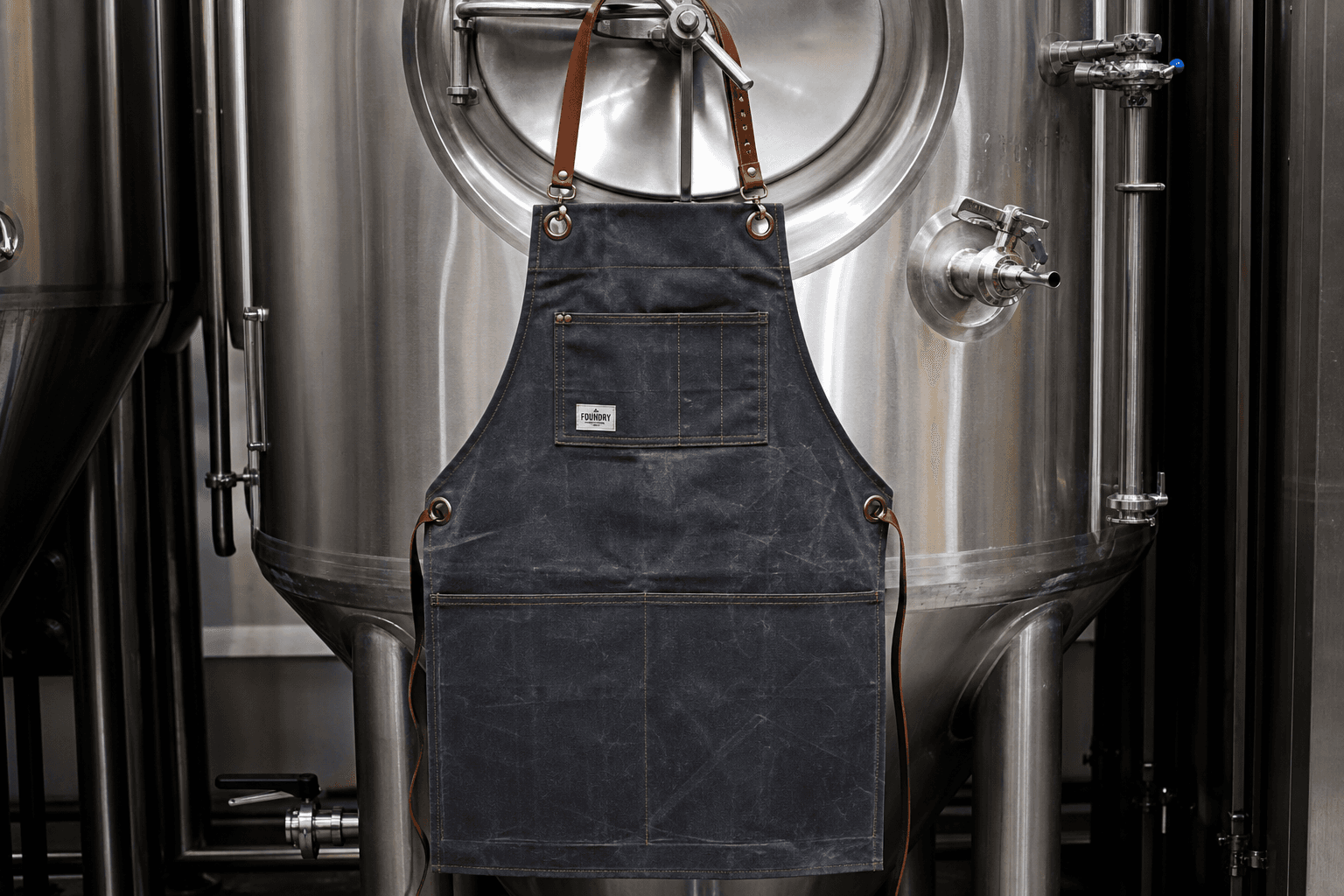
Waxed canvas is the most common premium option for craft beverage brands. A waxed canvas brewery apron has a dry-wax or oily-wax surface that repels water and develops creases and patina with use. It suits taproom, bar, visitor center, and light production environments. It is less suitable for industrial laundry because detergent and heat strip the wax. If the staff expects to machine wash the apron every shift, waxed canvas should be avoided or treated as a lifestyle uniform rather than a washdown garment.
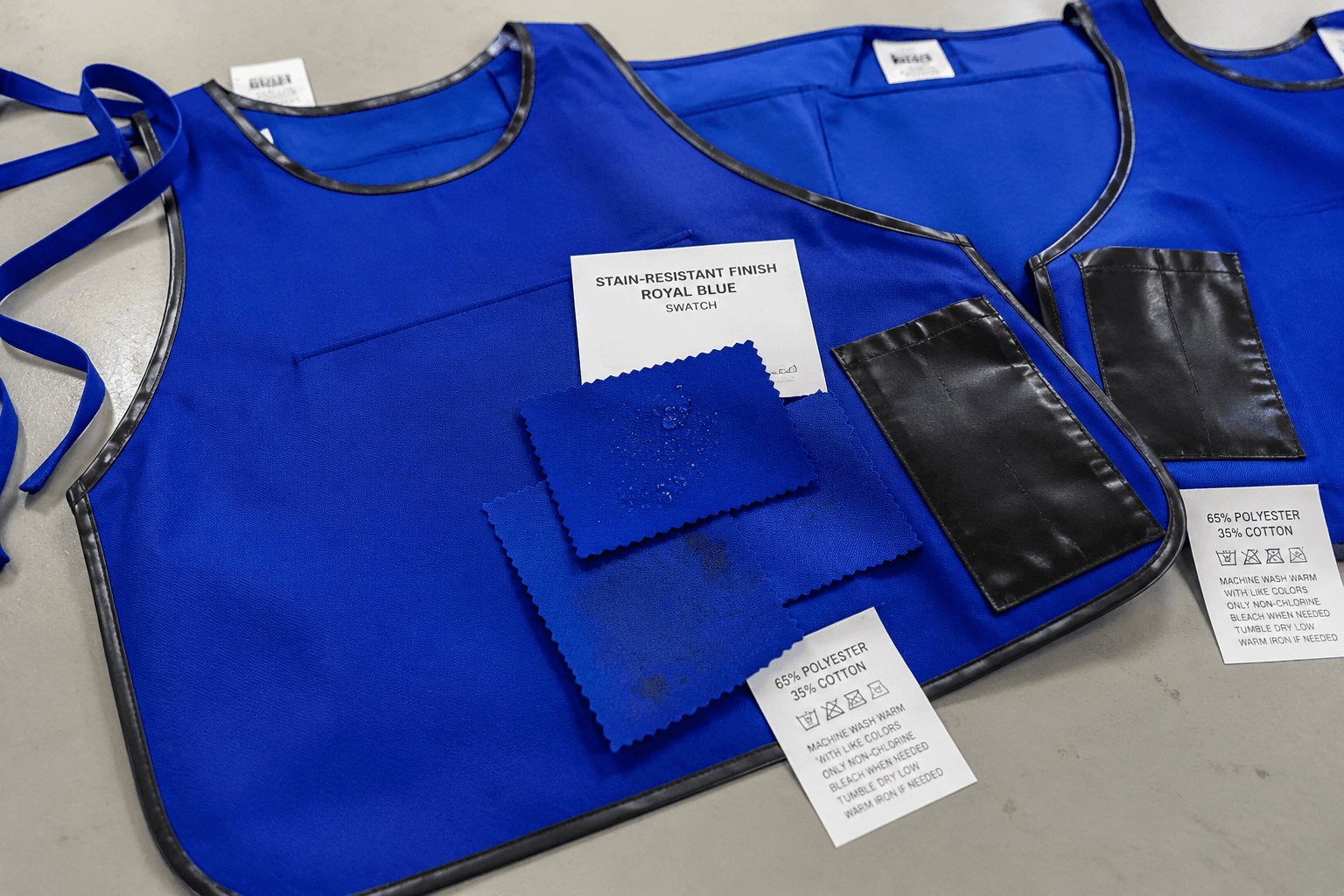
PU-coated or acrylic-coated fabrics are more consistent for wet production. A 300-450 GSM base fabric with PU coating can resist splash better and dry faster. However, coating quality matters. Low-cost coatings may crack after repeated folding, become sticky in humid storage, or delaminate after hot washing. For export orders, we recommend testing flex, wash, colorfastness, and coating adhesion before bulk cutting, especially when the order exceeds 2,000 pieces.
- Waxed canvas is best for premium visual identity, moderate splash, and low-frequency washing.
- PU coating is better for repeatable water resistance and easier wiping after cellar or packaging use.
- Acrylic finish can improve stain release but usually provides lower water resistance than a proper coating.
- DWR finishing is light and breathable, but performance reduces after washing and abrasion.
- PVC coating gives strong liquid barrier but is often rejected by brands due to handfeel, odor, and compliance concerns.
Pattern, coverage, and strap engineering
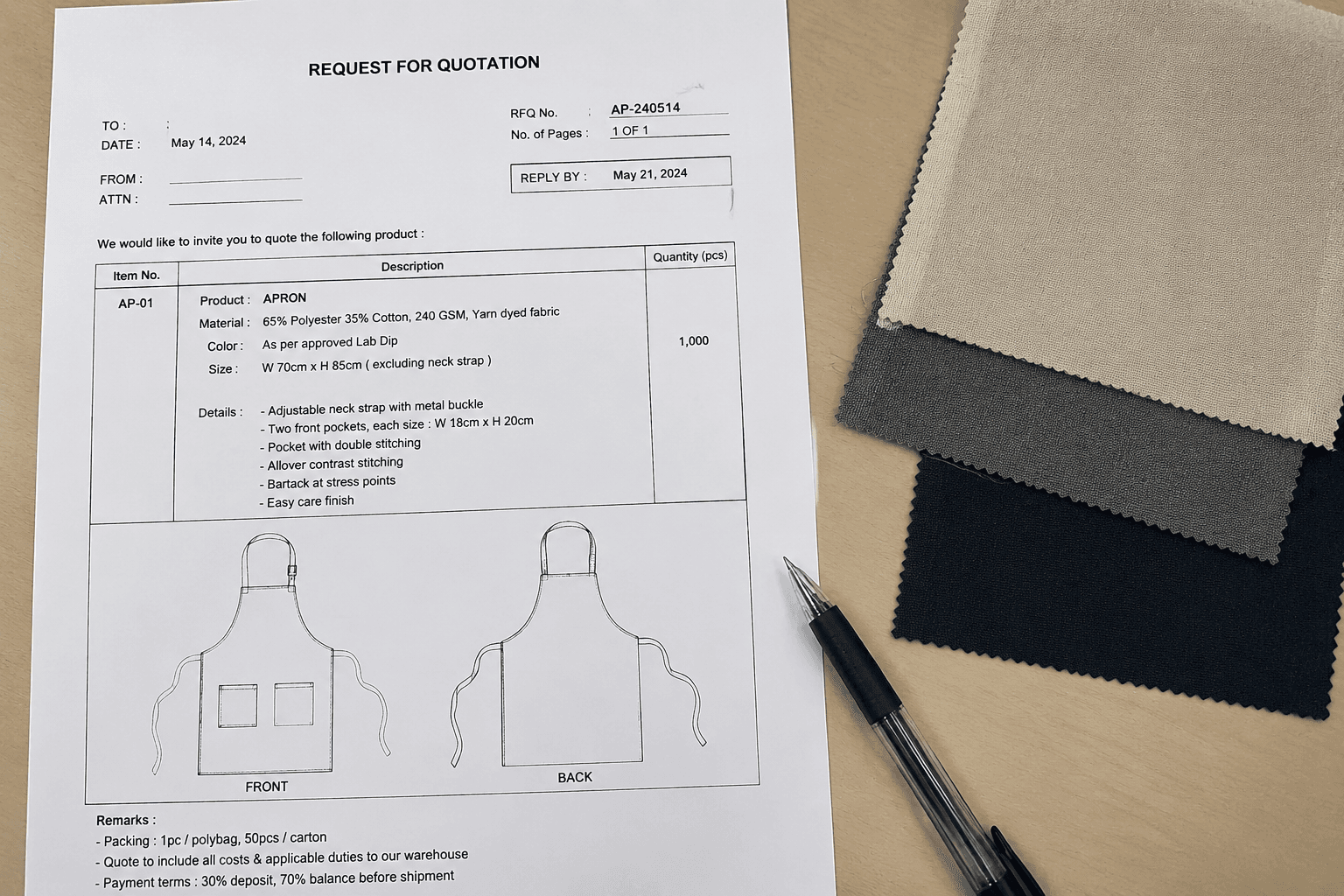
A brewery or distillery apron must protect the worker without restricting movement. The common bib apron size for adult workwear is 70-75 cm wide and 85-95 cm long. For taller production staff, 100 cm length may be requested, but longer aprons can interfere with stairs, kneeling, and forklift steps. A cross-back strap system spreads weight better than a neck strap, especially when the fabric is 400 GSM or heavier. For light taproom aprons, a neck strap with metal slider is still acceptable and cheaper.
The strap material should be specified separately from the body fabric. Cotton webbing looks natural but absorbs moisture and dries slowly. Polyester webbing has better colorfastness and lower shrinkage. Herringbone tape is comfortable but may not support very heavy aprons unless reinforced. Leather straps are attractive for a distillery apron, but they raise cost, complicate washing, and may create import documentation questions depending on leather type and destination market.
Hardware also needs practical review. We normally recommend 25-38 mm webbing depending on apron weight. For 10-12 oz canvas, 30 mm straps are a good balance. Thin 20 mm straps can cut into the shoulder when tools are placed in pockets. D-rings, rivets, grommets, snap hooks, and sliders should be rust-resistant. Stainless steel is stronger but more expensive. Antique brass-plated zinc alloy is common for appearance, but buyers should not assume it has the same corrosion resistance as stainless steel.
- Use cross-back straps for 360 GSM and above when the apron will be worn for full production shifts.
- Specify 30-38 mm strap width for heavy duty work apron programs with tools or large front pockets.
- Avoid untreated cotton neck straps for wet cellar use unless the buyer accepts slower drying and possible fading.
- Use bartacks at strap stress points instead of relying only on single lockstitch lines.
- Confirm hardware finish by salt spray or at least wet-rub observation when the apron will be used in humid production rooms.
Pocket layout for brewhouse, bar, and distillery use
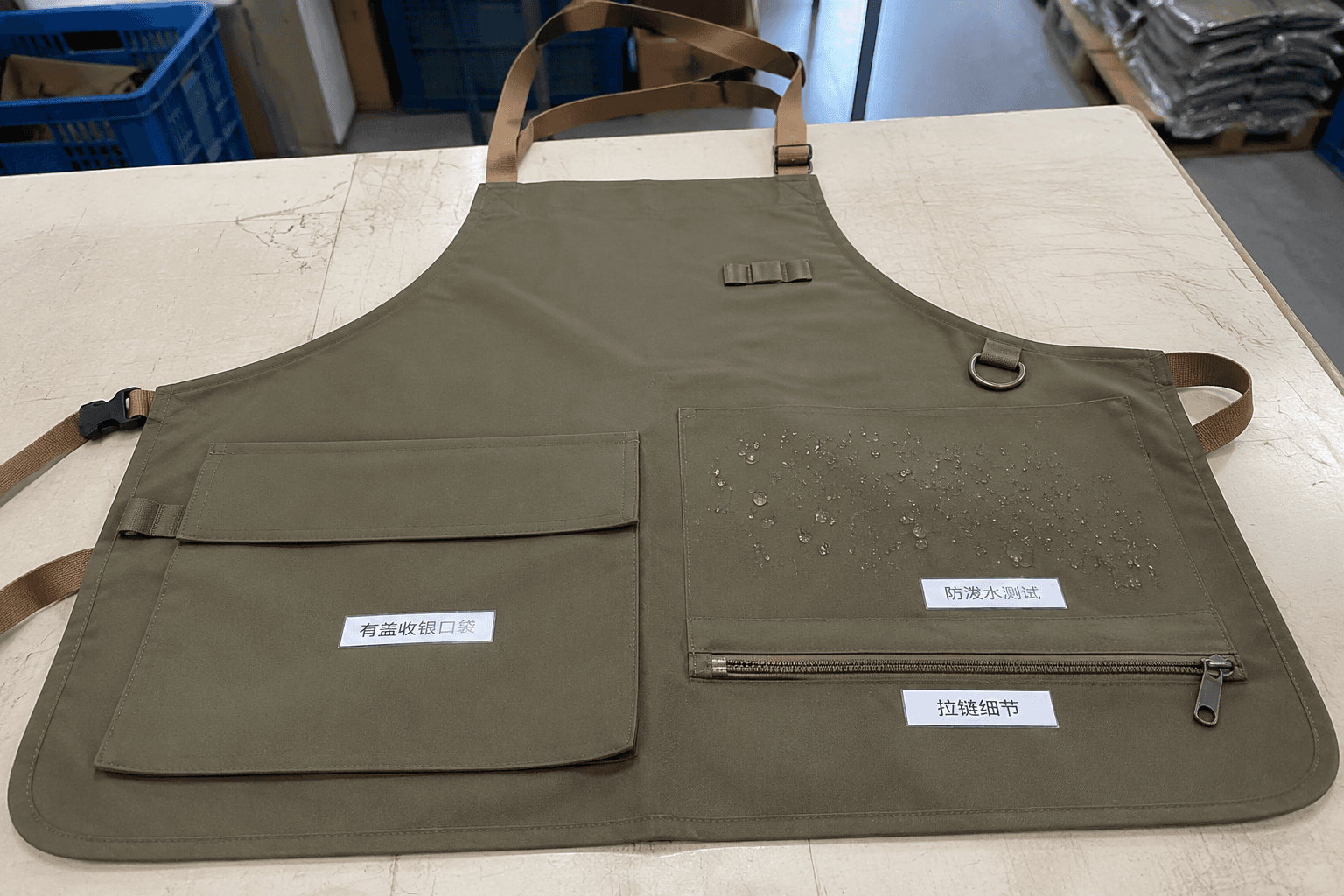
Pocket design is one of the most common sources of sample revision. Buyers often request many pockets because they look functional on a drawing. In actual production use, too many layers add weight, trap water, and create hard seams that are uncomfortable when bending over tanks or cases. A good brewery apron usually has one large divided waist pocket, one upper chest pocket, and possibly one tool loop or towel loop. For packaging and bar teams, pen slots and opener pockets are useful. For brewhouse use, deep pockets should be limited because they collect grain dust and liquid.
Pocket opening angle matters. A straight top pocket is easier to sew and cheaper, but angled pocket openings are easier to access while wearing gloves. Reinforced corners are important because pocket stress is high when workers carry markers, thermometers, box cutters, tape, or small tools. We usually use bartacks at pocket corners and double-needle stitching on pocket edges for 10 oz and heavier fabric. Rivets can add strength and appearance, but they may scratch stainless tanks or bar surfaces if placed carelessly.
For distillery aprons, buyers often request leather patches, towel rings, and pen compartments. These details are practical only if cleaning expectations are clear. If the apron must be washed frequently, synthetic leather patches, woven labels, or silicone patches may be safer than genuine leather. For high-proof spirit environments, printed branding should be checked for solvent resistance, because some inks soften or smear after repeated contact with alcohol.
Branding methods and logo durability
Branding is central to most brewery apron orders, but the method must match the fabric finish. Embroidery works well on cotton canvas, denim, and polyester-cotton twill. It is durable, premium, and suitable for 50-10,000 pieces, but dense embroidery on waxed canvas can pucker if the backing and tension are not controlled. Screen printing gives clean logo reproduction and lower cost at volume, but it needs testing on coated and waxed surfaces. Heat transfer can reproduce fine artwork, but it may peel on heavy textured canvas or crack after high-temperature washing.
For waxed canvas brewery apron programs, leather patches and woven labels are common. A debossed leather patch gives a strong craft appearance, but it is not ideal for machine washing. Faux leather or microfiber patches are more stable, usually lower cost, and easier to export. Woven labels are reliable and economical, but small serif text or detailed brewery emblems may lose definition below 1 mm line width.
Placement should be tested on a physical sample, not only a digital mockup. A chest logo may look correct when flat, but it can distort when the apron bends over the body. Large lower-front prints can be hidden by pockets or covered by work surfaces. For bulk custom aprons, we recommend a logo strike-off before pre-production sample approval. This normally adds 3-5 days but avoids expensive errors after fabric cutting.
- Embroidery is durable and premium, but stitch density must be controlled on waxed or heavy canvas.
- Screen printing is cost-effective for 500 pieces and above, but coated fabric requires ink adhesion testing.
- Woven labels are stable for washing and suitable for small MOQ programs starting around 100-300 pieces.
- Leather patches support premium branding but are not recommended for frequent machine washing.
- Silicone patches are washable and modern, but tooling cost is higher for small trial orders.
MOQ, sampling, lead time, and cost structure
For custom brewery and distillery apron sourcing in China, MOQ depends on fabric availability and customization level. If the buyer selects stock canvas colors and standard hardware, a practical MOQ can be 100-300 pieces per color. If the fabric requires custom dyeing, special wax finish, custom coating, or yarn-dyed stripe, MOQ usually increases to 500-1,000 pieces per color. For private-label programs with custom packaging, hangtags, and multiple logo positions, 300 pieces is often a realistic starting point, but the unit price will be higher than at 1,000 pieces.
Sampling usually takes 7-12 days after artwork, fabric, and trim confirmation. Waxed canvas, special dye lots, or custom hardware can extend sampling to 15-20 days. Bulk production is commonly 25-35 days after pre-production sample approval for 500-2,000 pieces. For 5,000 pieces and above, production may require 35-50 days depending on fabric greige availability, dyeing schedule, coating capacity, and inspection plan. Buyers should also allow 3-7 days for final inspection, packing, and export documentation before vessel or air shipment.
Indicative FOB China pricing varies widely, but practical ranges can help early budgeting. A simple 280 GSM cotton twill taproom apron with one-color print may fall around USD 2.20-3.80 per piece at 1,000 pieces. A 340-400 GSM canvas brewery apron with cross-back straps, metal hardware, two pockets, and embroidery may fall around USD 5.20-8.50 per piece. A waxed canvas apron with leather patch, antique hardware, reinforced pockets, and custom packaging may fall around USD 8.50-15.00 per piece depending on wax quality, fabric weight, and trim choice. These are planning ranges, not quotations; fabric market price, exchange rate, compliance testing, and packing method can move the final cost.
- Stock fabric and standard trim can support lower MOQ, often 100-300 pieces per color.
- Custom dyed canvas usually requires 500-1,000 pieces per color because of mill minimums.
- Waxed canvas lead time is longer when the buyer needs a special color, dry-wax handfeel, or heavier base cloth.
- Embroidery setup cost is usually modest, but large stitch counts increase both price and production time.
- Retail packaging, individual polybags, kraft sleeves, and barcode labels add handling cost even when material cost looks small.
Quality control points before shipping a brewery apron order
Quality control should be built into the order before cutting starts. For apron sourcing, the most important checks are fabric weight, color, shrinkage, water resistance, stitching strength, pocket placement, strap length, hardware function, and branding accuracy. A brewery apron may pass a general visual inspection but still fail in use if the cross-back strap slips, the pocket corners tear, or the coating cracks after folding.
A practical inspection standard is to approve one sealed pre-production sample with signed measurements, then check bulk against that sample. For dimensions, a tolerance of plus or minus 1 cm is common for width and length, while strap length may need plus or minus 1.5 cm depending on adjustability. For pocket placement and logo position, plus or minus 0.5-1 cm is usually achievable. For fabric weight, buyers should define an acceptable GSM tolerance, often plus or minus 5 percent.
Water resistance testing should match the intended use. A simple spray test can confirm surface repellency for waxed or DWR-treated fabric. For coated fabrics, a hydrostatic pressure test may be requested, but many apron programs do not need full rainwear standards. More useful factory-level checks include water droplet observation, wipe-clean behavior, seam leakage review, wash test after 3-5 cycles, and abrasion on pocket corners. If the buyer requires formal testing, it should be quoted before order confirmation because lab testing adds both cost and days.
- Check fabric GSM before cutting so the bulk apron does not feel lighter than the approved sample.
- Test shrinkage using the buyer's expected wash method, especially for cotton canvas and cotton straps.
- Pull-test pocket corners, strap anchors, and bartacks because these points carry most daily stress.
- Inspect coating after folding and rubbing to identify cracking, whitening, or delamination risk.
- Confirm carton packing weight for heavy canvas orders because oversized export cartons can split during handling.
- Keep one approved sample at the factory and one with the buyer to reduce disputes during final inspection.