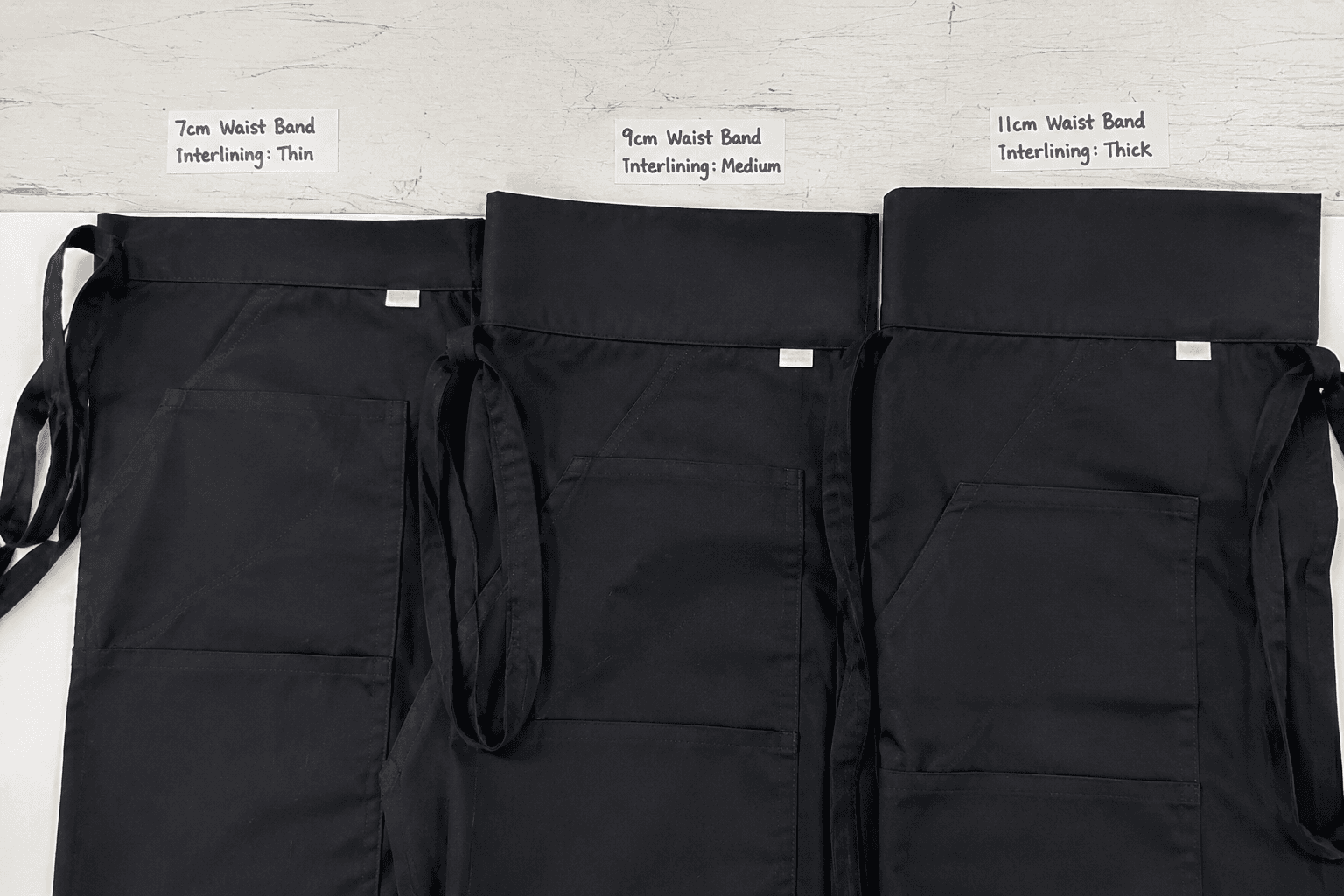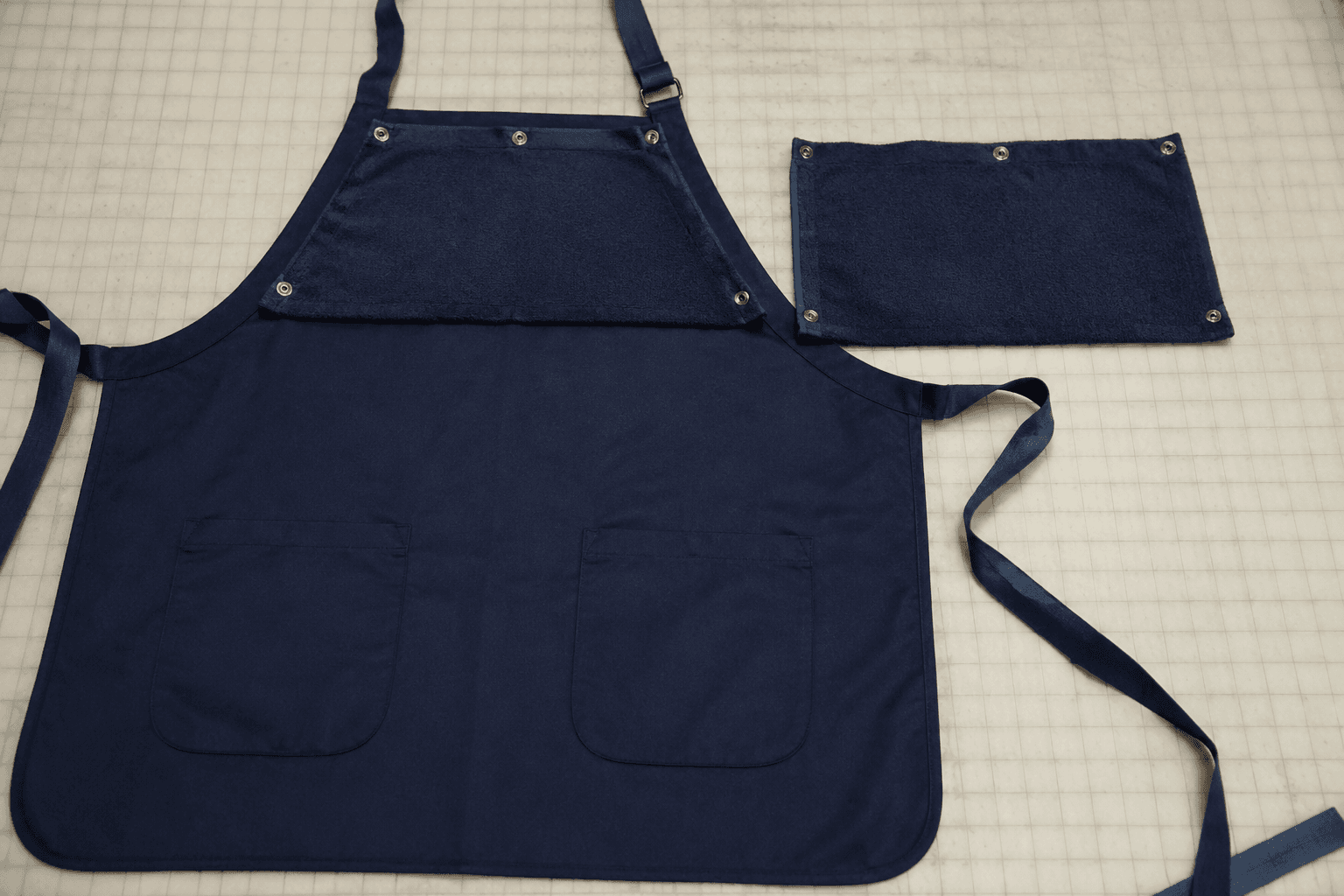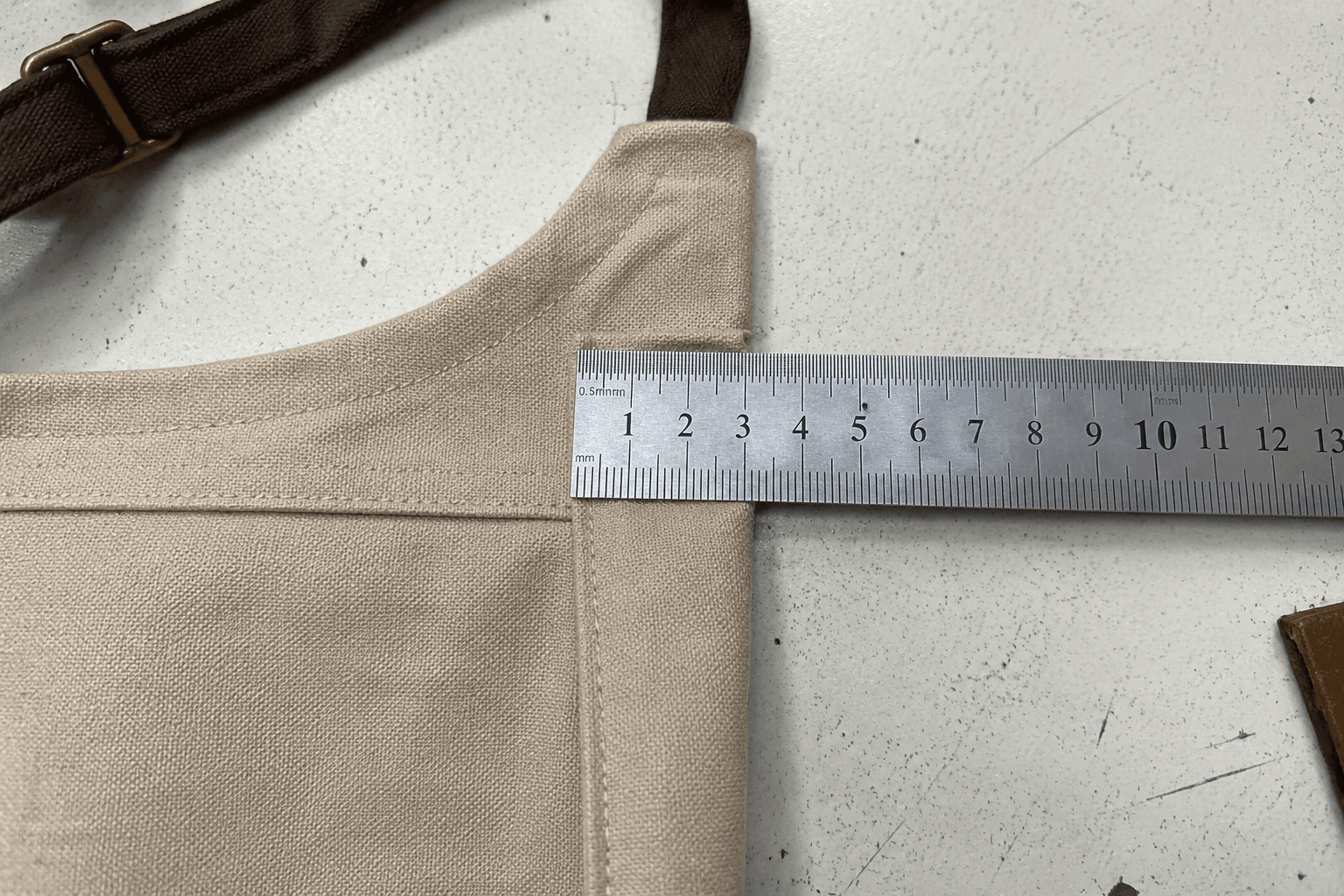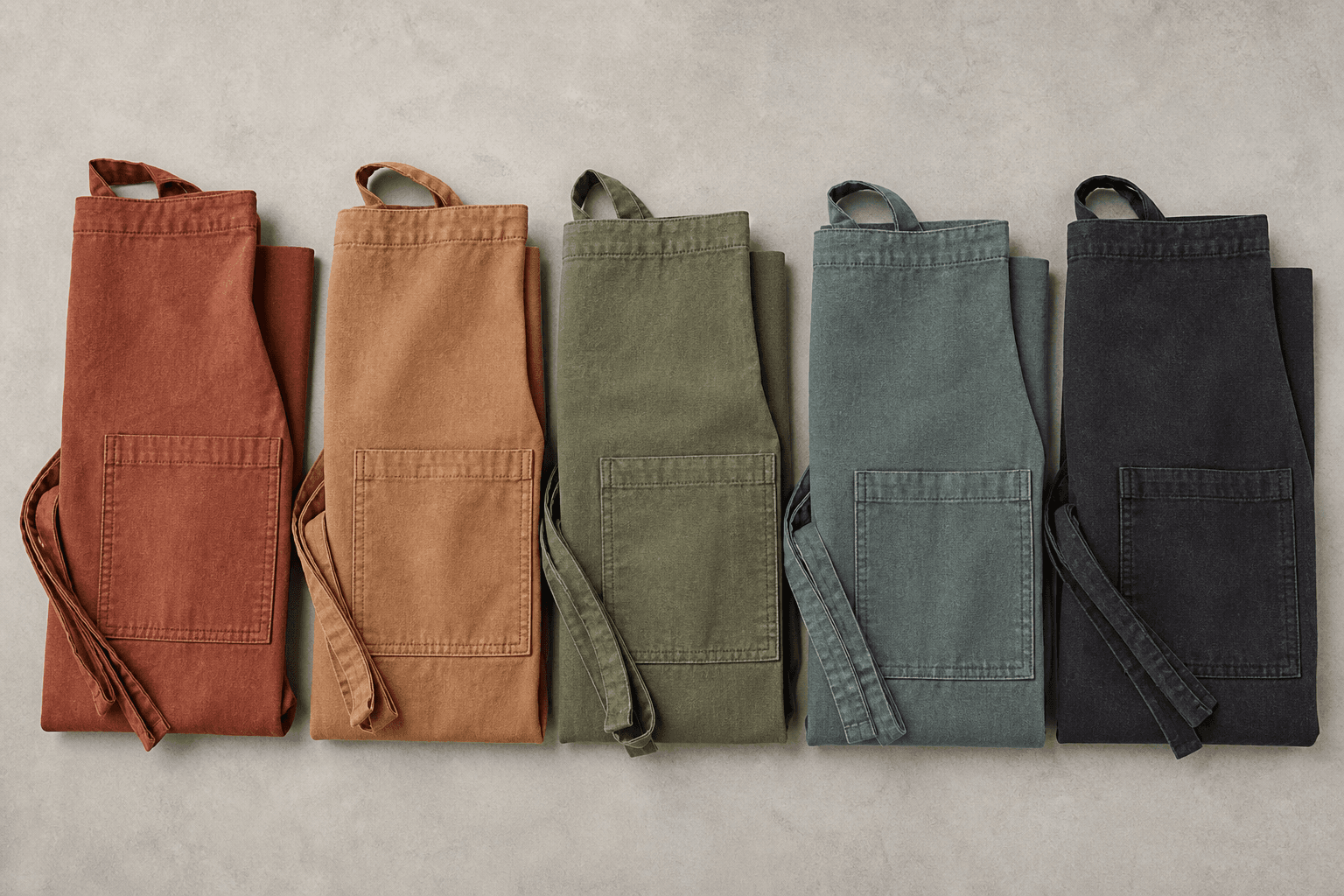
For a sourcing manager, the apron color process is not only a design choice. It affects shade tolerance, shrinkage, sewing sequence, pocket placement, label selection, packing schedule, and the number of quality checkpoints needed before shipment.
A garment dyed apron is sewn first in greige, prepared-for-dyeing, or pale base fabric, then dyed as a finished apron. A piece dye apron uses fabric dyed in rolls before cutting and sewing. Both methods are common in China apron production, but they suit different order structures, color targets, and cost controls.
At Linwa Apron Manufacturing in Zhejiang, we usually discuss dye route before quoting fabric, not after. For a custom dye apron order of 1,000 to 10,000 pieces, the wrong route can add 7 to 15 days, create avoidable shade claims, or force rework on labels, straps, and trims.
- Garment dyeing is best for washed, casual, overdyed apron aesthetics where slight shade variation is acceptable.
- Piece dyeing is better when a brand needs tighter color matching across repeat orders, sets, or multi-SKU programs.
- A garment dyed apron normally needs dye-stable thread, trims, labels, and shrinkage planning before bulk sewing starts.
- Piece dye apron production usually gives lower unit cost at larger volume because fabric dyeing and cutting are easier to standardize.
- The final decision should consider MOQ, Pantone tolerance, fabric weight, strap design, pocket construction, and delivery window.
What a garment dyed apron means in factory production
A garment dyed apron is dyed after the apron has already been stitched. The factory first cuts and sews the apron in a fabric that can accept dye evenly, usually cotton canvas, cotton twill, cotton drill, linen-cotton, or cotton-rich blends. After sewing, the finished aprons go through washing, dyeing, softening, dehydration, drying, pressing, inspection, and packing.
For apron buyers, this is different from ordering fabric in a finished color. The pocket, straps, hems, bar-tacks, thread, and sometimes labels are exposed to the same dye bath. This can create a desirable lived-in look, especially for cafes, bakeries, garden brands, lifestyle retailers, and workwear collections that want a softer handfeel than standard piece dyed fabric.
The process is less suitable when the buyer expects every unit to match a lab dip exactly. Garment dyeing creates natural shade movement between panels, seams, and thicker construction areas. On a 280 GSM cotton twill apron, the difference may be mild. On a 420 GSM canvas bib apron with double-layer pockets and cross-back straps, dye pick-up around seams can be more visible.
- Typical workable fabrics include 240-360 GSM cotton twill, 280-450 GSM cotton canvas, 180-260 GSM linen-cotton, and 220-300 GSM cotton drill.
- Common order sizes are 500-3,000 pieces per color for garment dye, depending on dye house tank size and fabric weight.
- Sampling usually needs 7-12 days after greige apron sample approval, while bulk garment dyeing usually adds 5-9 production days after sewing.
- Normal commercial shade tolerance is often wider than piece dyeing, commonly around Delta E 1.5-2.5 depending on color and buyer standard.
How piece dye apron production works before cutting
A piece dye apron is made from fabric that is dyed in roll form before garment cutting. The dye house processes the fabric by lot, the factory checks shade against the approved lab dip or color standard, and then the cutting room lays the fabric according to marker direction, shrinkage data, and panel size. The apron is sewn after the color is already fixed.
This route is the default for many uniform aprons, hospitality aprons, promotional aprons, and private-label retail programs because it gives better repeatability. If a buyer needs black bib aprons every quarter, navy waist aprons across five sizes, or a matching cap-and-apron set, piece dyeing is usually easier to control.
Piece dyeing also protects some trims from dye exposure. Polyester webbing, PU leather patches, metal eyelets, printed labels, heat-transfer logos, and contrast stitching can be added after fabric dyeing. That gives the product developer more freedom when the apron design includes branding details that must remain clean and sharp.
- Typical piece dye fabric MOQ is often 800-1,500 meters per color for cotton twill or canvas, with higher MOQ for special finishes or small dye houses.
- For a standard 70 x 85 cm bib apron, 1,000 meters of 150 cm fabric may produce roughly 900-1,200 pieces depending on pockets, strap cutting, and marker efficiency.
- Lab dip approval usually takes 4-7 days, bulk fabric dyeing 7-12 days, and apron sewing another 10-20 days depending on complexity.
- Piece dyed fabric can usually hold tighter shade control, often around Delta E 1.0-1.5 when the substrate and color are stable.
Garment dyed apron color effects and overdyed apron finishes
The strongest reason to choose a garment dyed apron is appearance. Garment dye gives a softer, washed-down color that looks less flat than roll-dyed fabric. Seams, pocket corners, belt ends, and folded hems may show subtle high-low color. For an overdyed apron, this is often the intended value: the product looks worn-in without needing heavy distressing.
This effect works well for earthy colors such as olive, clay, rust, faded black, charcoal, mushroom, sage, indigo, and washed navy. It is harder with bright corporate colors, fluorescent shades, or very clean whites. If the buyer provides Pantone 186 C red and expects a precise match on every seam and panel, garment dye is usually the wrong route. If the buyer wants a coffee shop apron in washed brick red with natural variation, garment dye can be the better route.
The factory also needs to consider thread. Polyester thread may remain lighter or brighter after dyeing, creating contrast seams. Cotton thread may dye closer to the fabric but may have lower strength or more shrinkage depending on count and construction. For bartacking at stress points, we often choose a dye-compatible core-spun thread and test it before bulk.
- Use garment dye when the design brief includes washed, faded, vintage, casual, utility, or artisan color language.
- Avoid garment dye for strict franchise uniforms where outlets in different cities must look identical across repeat purchase orders.
- Test dark colors for crocking, especially black, navy, forest green, and burgundy aprons used over white shirts.
- Confirm whether contrast stitching is intentional, because thread behavior in the dye bath can change the final look more than buyers expect.
Cost comparison for garment dyed apron and piece dye apron orders
Cost differences depend on color count, quantity per color, apron weight, dye house loading, and trimming. In general, a piece dye apron becomes more cost-efficient as volume increases because the fabric is dyed in bulk and sewing lines can operate continuously. Garment dyeing may be attractive for smaller fashion colors because the factory can sew prepared base aprons first and dye finished goods by color later, but it adds post-sewing handling and inspection.
For example, a 300 GSM cotton twill bib apron with one front pocket, neck strap, and waist ties may cost around USD 2.10-2.80 per piece FOB Ningbo or Shanghai in a 3,000-piece piece dye order, depending on fabric price, packaging, and labeling. The same apron as a garment dyed apron may add roughly USD 0.20-0.45 per piece for dyeing, washing, extra handling, shade sorting, and higher rejection allowance. These numbers move with cotton price, exchange rate, order quantity, and color depth.
However, the cheaper route on paper is not always the cheaper route in production. If a buyer needs six colors at only 500 pieces each, piece dye fabric MOQ can create leftover fabric or higher dye surcharges. Garment dyeing can sometimes reduce unused fabric exposure because the factory cuts and sews one base fabric and dyes finished aprons into multiple colors, assuming the same fabric and construction are used.
- For 500-1,000 pieces per color, garment dye may be commercially workable when the buyer accepts washed shade tolerance.
- For 3,000-10,000 pieces per color, piece dyeing usually gives a lower and more predictable unit cost.
- Dark garment dye colors normally cost more than pale colors because of dye dosage, rinsing time, and colorfastness control.
- Extra inspection allowance should be budgeted for garment dye, especially on heavy canvas aprons with multiple pockets.
MOQ, lead time, and sampling decisions for a custom dye apron
MOQ is one of the first practical questions. Many buyers ask whether a custom dye apron can be made at 300 pieces per color. Technically, it may be possible, but commercial feasibility depends on dye bath minimum, fabric availability, and whether the apron is garment dyed or piece dyed. For piece dye fabric, a 300-piece color may not consume enough fabric to justify a normal dye lot. For garment dye, 300 pieces may still be below the dye house's efficient loading but can sometimes be arranged with surcharge.
Lead time should be planned from color approval, not only from purchase order date. A realistic custom apron timeline includes fabric sourcing, lab dip or garment dye swatch, sample sewing, shrinkage test, buyer approval, bulk fabric or base garment preparation, dyeing, final sewing if needed, inspection, packing, and export booking. Rushing color approval is one of the most common causes of shade disputes.
For a normal OEM apron order, piece dye production may take 25-40 days after lab dip approval. Garment dye production may take 30-45 days after sample approval because the goods must be sewn before dyeing and then rechecked. If enzyme wash, stone wash effect, pigment dye, or special softener is added, the timeline can extend by another 3-7 days.
- A practical MOQ for piece dye apron fabric is often 1,000-2,000 pieces per color for efficient costing, depending on apron size and fabric width.
- A practical MOQ for garment dyed apron production is often 500-1,000 pieces per color, but surcharges may apply below dye house loading.
- Allow 2-3 rounds of lab dip or garment color swatch if the color is brand-critical.
- Build at least 5-10 days of buffer before shipment for shade sorting, re-pressing, carton drying checks, and final AQL inspection.
Shrinkage, measurement, and construction risks after dyeing
Garment dyeing exposes a finished apron to wet processing, heat, mechanical movement, and drying. That means shrinkage must be engineered into the pattern before bulk cutting. If the finished apron must measure 70 x 85 cm after dyeing, the cut-and-sew measurement may need to be larger by 3-8 percent depending on fabric and wash route. Cotton canvas may shrink more in length than width, and straps may twist if the grain direction is not controlled.
Piece dyeing also has shrinkage risk, but the factory can test fabric shrinkage before cutting and adjust markers more directly. In garment dye production, the completed structure behaves as a whole. A double-layer pocket may shrink differently from the main body. A neck strap folded into four layers can become firmer after dyeing. Long waist ties can rope or curl if the fabric is too light or the stitching tension is too high.
Brand buyers should also check metal and trims. Antique brass eyelets, D-rings, rivets, snap buttons, and metal sliders may react with chemicals or leave marks during garment dyeing. Leather patches can bleed, harden, or stain fabric. Printed labels may fade or transfer. For this reason, many garment dyed apron designs use simple woven labels, dye-resistant care labels, and trims added after dyeing when possible.
- Approve a washed measurement spec, not only a before-dye measurement spec.
- Keep tolerance realistic, such as +/-1 cm for width and length on many cotton aprons, and wider for heavy washed canvas if agreed.
- Pre-test straps for twisting, especially cross-back straps longer than 90 cm.
- Avoid untreated leather patches, low-grade metal trims, and heat-transfer logos before garment dyeing.
Quality control checkpoints for apron color process selection
The quality plan should match the apron color process. For piece dye apron orders, the most important checkpoints are lab dip approval, bulk fabric shade band, fabric colorfastness, shrinkage, and cutting lot separation. For garment dyed apron orders, the key checkpoints move later in production: base garment sewing quality, pre-dye stain control, dye bath consistency, post-dye shade sorting, measurement after wash, and final pressing.
A common mistake is treating garment dye inspection like normal sewing inspection. Small oil marks, chalk marks, dirty machine beds, or uneven thread tension may become more visible after dyeing. The base apron must be clean before going into the dye house. Workers also need to avoid mixed fiber components that react differently to dye. Even a pocket lining from a different cotton lot can create shade variation after garment dyeing.
For export orders, we recommend defining color standard hierarchy in the purchase order. For piece dyeing, the approved lab dip or bulk fabric swatch may be the control sample. For garment dyeing, the approved finished dyed apron should be the control sample because panel thickness, seam construction, and washing all influence color. Without a finished control sample, the buyer and supplier may judge the same shipment differently.
- Use AQL inspection for sewing defects, but add separate shade sorting for garment dyed goods.
- Check colorfastness to washing, rubbing, and perspiration when aprons will be used in restaurants or kitchens.
- Separate shade lots by carton if the order has visible but acceptable batch variation.
- Keep one approved finished sample at the factory and one with the buyer for dispute control.
How to choose between garment dyed apron and piece dye apron for your program
The best choice depends on the commercial purpose of the apron. A uniform distributor supplying hotel groups usually needs repeatable color, clear logo application, stable replenishment, and predictable cost. Piece dyeing is normally the stronger option. A lifestyle brand selling aprons in seasonal colors may value soft handfeel, washed color, and small batch flexibility. Garment dyeing may create the right product character.
For product developers, the decision should be made before finalizing pocket shape, strap system, label material, and logo technique. Embroidery before garment dyeing can look muted and tonal, but embroidery after dyeing looks cleaner. Screen print before garment dyeing may fade or distort, while printing after dyeing needs a stable, fully dried surface. A custom dye apron is therefore a full product engineering decision, not just a color request.
When buyers ask our factory for advice, we usually start with five questions: target color standard, order quantity per color, repeat order plan, acceptable shade variation, and trim/logo requirements. Those answers normally make the route clear. The apron color process should support the buyer's sell-through, inspection standard, and replenishment model, instead of creating problems that could have been solved before sampling.
- Choose garment dye for washed retail aprons, cafe aprons, garden aprons, craft aprons, and overdyed apron collections.
- Choose piece dye for corporate uniforms, restaurant chains, promotional programs, and color-matched accessory sets.
- Use garment dye cautiously when the apron has many trims, contrast logos, thick pockets, or strict measurement tolerance.
- Use piece dye when repeat orders must match previous shipments within a narrow shade range.