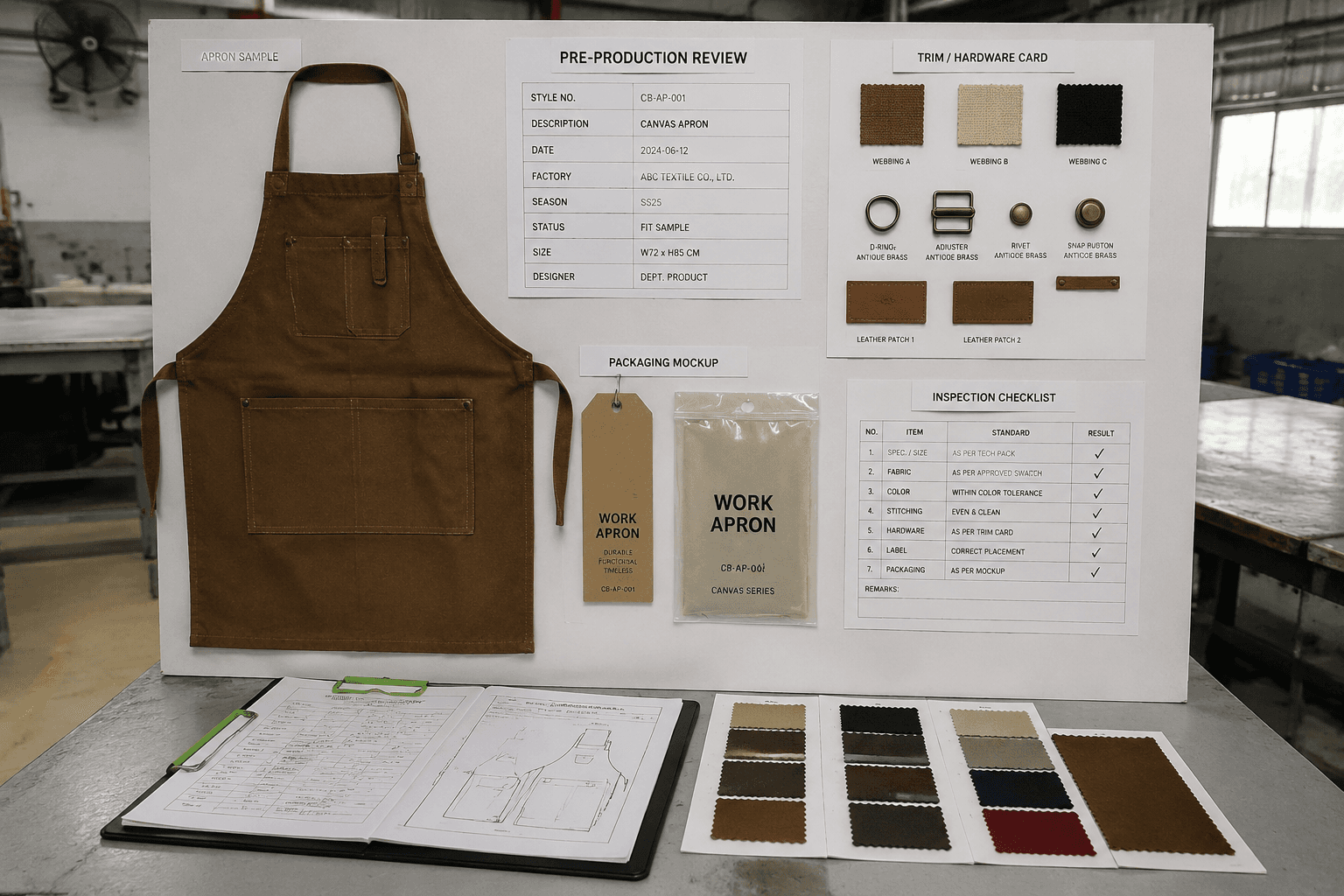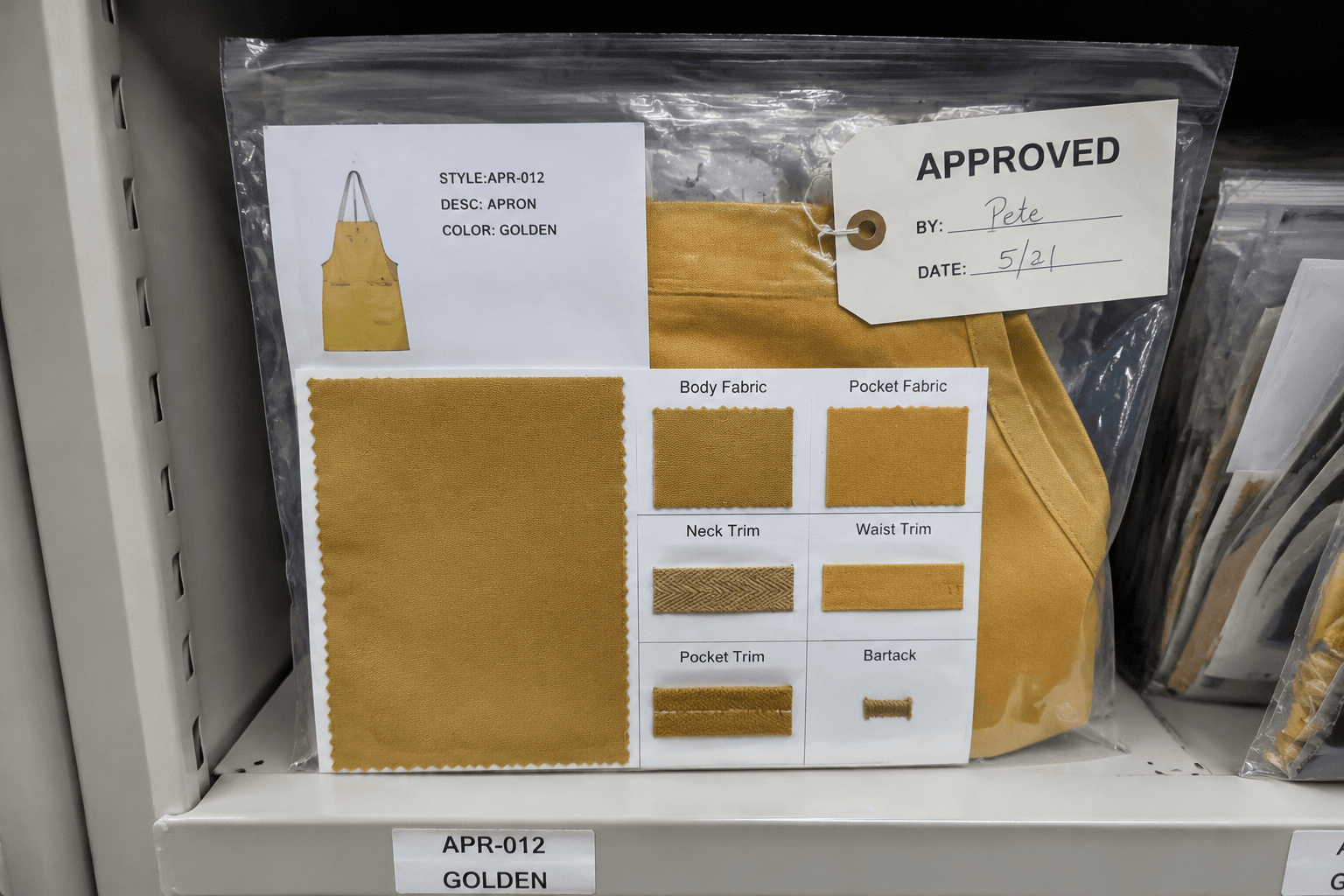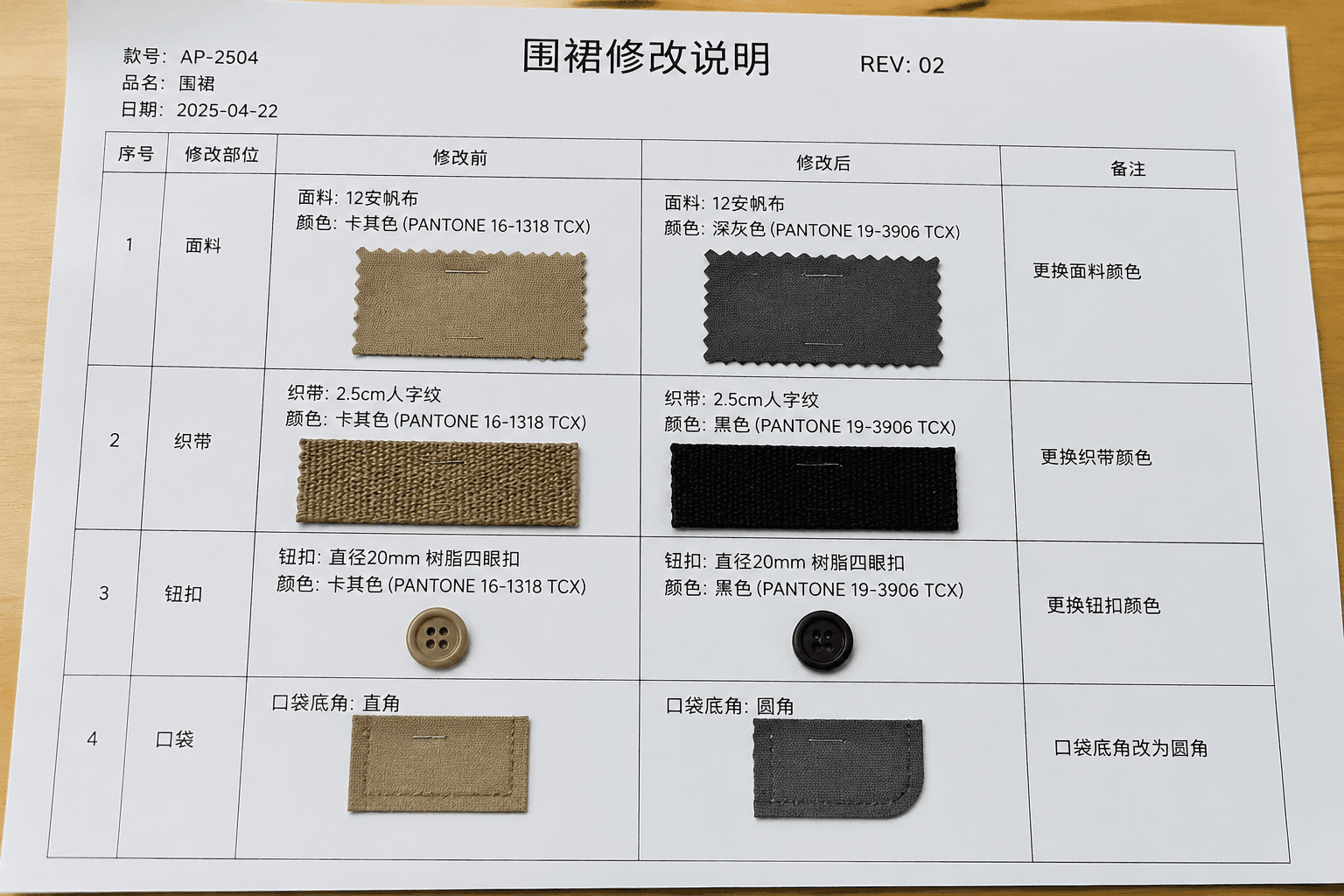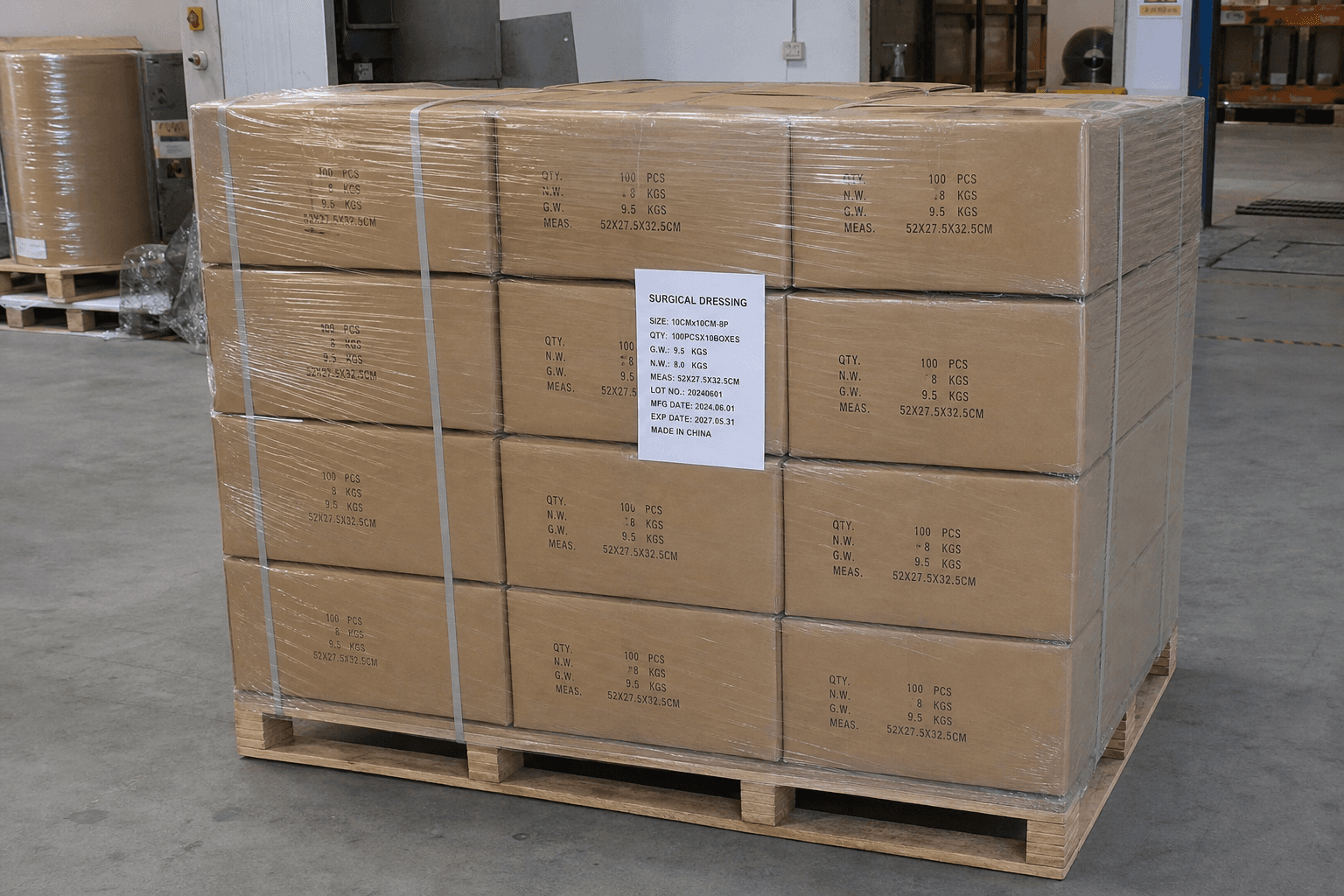
For custom apron programs, the unit price on the proforma invoice is only one part of the buying decision. A 300 GSM cotton twill bib apron that looks competitive at US$2.85/pc FOB Ningbo can become less attractive after inland trucking, ocean freight, destination handling, duty, customs clearance and final delivery are added. This is why apron incoterms must be discussed before final costing, not after production is finished.
Most bulk apron orders from China are shipped under FOB, CIF or DDP. Each term can work well, but each shifts cost responsibility and operational control in a different way. For a buyer importing 5,000 to 50,000 custom aprons per shipment, the choice affects landed cost, cargo visibility, claims handling, cash flow and the buyer's ability to compare suppliers fairly.
This article uses factory-side assumptions from typical Zhejiang apron production: cotton twill, poly-cotton, canvas, denim and coated work aprons packed for export cartons and shipped from Ningbo or Shanghai. The numbers are examples, not quotations, but they show the real trade-offs sourcing teams should check before choosing FOB CIF DDP terms.
- FOB usually gives the buyer the cleanest control over international freight, destination charges and customs process.
- CIF may look simple but can hide destination charges that are not included in the supplier's China-side quotation.
- DDP is useful for small or urgent apron orders, but it needs strict confirmation of duty, tax, delivery address and importer responsibility.
- Apron landed cost should be calculated per carton and per piece, not only against the supplier's garment unit price.
- Fabric GSM, carton volume and packing method can change freight cost as much as the selected apron shipping terms.
- Buyers should compare FOB CIF DDP using the same apron specification, carton data, port pair, lead time and duty assumptions.
Why apron incoterms matter more than the quoted unit price
In apron sourcing, it is common for a buyer to request three prices from several factories and compare only the garment unit price. This is risky. Aprons are bulky relative to their value, especially when the fabric is heavy and the design includes long ties, metal eyelets, leather patches, towel loops or reinforced pockets. A 220 GSM poly-cotton waist apron may pack 100 pcs per carton, while a 380 GSM canvas cross-back apron with hardware may pack only 30 to 40 pcs per carton. The freight allocation per apron changes immediately.
Apron incoterms define where cost and risk transfer from supplier to buyer. They do not define product quality, inspection standard, delivery date or payment term. Those must still be written separately in the purchase order. However, the selected term changes who books the vessel, who pays the forwarder, who handles export customs, who clears import customs and who is responsible when the shipment is delayed at destination.
For a sourcing manager, the main objective is not always to choose the lowest visible price. The objective is to obtain a reliable apron landed cost that can be compared against retail margin, wholesale price or contract supply budget. A US$0.12/pc difference in freight or destination handling is significant on a 40,000 pc program, especially when the apron selling price is only US$4 to US$8 per piece.
- A lightweight 180 to 220 GSM polyester apron may have a freight share below US$0.10/pc in a consolidated sea shipment.
- A 360 to 420 GSM cotton canvas apron with pockets and metal hardware may carry US$0.25 to US$0.60/pc in freight and destination charges.
- A 10,000 pc order can absorb fixed documentation and clearance fees better than a 1,000 pc trial order.
- A carton design change from 20 kg to 14 kg gross weight may improve handling but increase CBM and freight allocation.
FOB apron incoterms: best for buyers with freight control
FOB, usually quoted as FOB Ningbo or FOB Shanghai for Zhejiang apron factories, means the supplier is responsible for production, local transport to the port, export customs declaration and loading responsibility according to the agreed port practice. The buyer appoints the forwarder and pays international freight, destination charges, import duty, tax and delivery from the destination port or warehouse.
For established importers, FOB is often the most transparent option. The factory quotes the apron production cost plus China-side export cost. The buyer's logistics team or nominated forwarder controls vessel booking, sailing schedule, consolidation, insurance if required and destination clearance. This makes it easier to compare different apron suppliers because the international freight layer is removed from the factory price.
A typical example: 10,000 pcs of 280 GSM cotton twill bib aprons with one chest pocket, 70 x 85 cm finished size, packed 50 pcs per carton. The factory quotation may be US$2.65/pc FOB Ningbo, with approximately 200 cartons and 8.5 to 10.5 CBM depending on folding. If ocean freight, destination handling, customs clearance, duty and inland delivery total US$3,800, the logistics allocation is about US$0.38/pc. The estimated landed cost before VAT recovery would be US$3.03/pc plus duty and any domestic tax treatment.
- Use FOB when your company already has a freight forwarder, customs broker or import department.
- Use FOB when you need to consolidate aprons with other textile goods from China.
- Use FOB when you want freight quotations from several forwarders before shipment.
- Use FOB when your buyer of record requires control over customs valuation and import documentation.
CIF for apron orders: convenient quotation, limited destination control
CIF means the supplier arranges and pays for the main carriage and insurance to the named destination port, for example CIF Los Angeles or CIF Hamburg. The buyer still pays destination handling, import customs clearance, duty, tax and final inland delivery. Many new buyers believe CIF is close to delivered pricing, but it is not. CIF stops at the destination port, not at the buyer's warehouse.
For apron orders, CIF can be useful when the buyer does not have a strong China freight arrangement and wants the factory to include ocean freight in the quotation. It also helps during early budgeting because the buyer sees one combined production-plus-main-freight price. However, the buyer should ask exactly which charges are included. Low CIF pricing may be offset by high destination terminal handling charges, document fees, delivery order fees or broker coordination costs at arrival.
Consider a 20,000 pc order of 240 GSM poly-cotton bib aprons, packed 100 pcs per carton, total around 16 CBM. A factory may quote US$1.92/pc FOB Ningbo or US$2.08/pc CIF Long Beach. The US$0.16/pc difference equals US$3,200 for main freight and insurance. If the buyer then pays another US$1,400 in destination charges and US$850 for customs broker and local delivery, the additional destination allocation is US$0.1125/pc. The real landed cost becomes US$2.1925/pc before duty and tax, not US$2.08/pc.
- Confirm whether the CIF price is based on LCL, FCL or a forwarder's temporary promotional rate.
- Ask for the named destination port, not only the country or region.
- Confirm whether marine insurance is included and what claim value is covered.
- Request estimated destination charges from the destination agent before approving CIF.
- Do not treat CIF as warehouse-delivered pricing.
DDP apron shipping terms: simple receiving, higher embedded risk
DDP means the seller is responsible for delivering the goods to the agreed destination with duty paid. In buyer language, this often means the factory quotes one price to deliver cartons to a warehouse, fulfillment center or office address. For small apron orders, online brand launches, event aprons or urgent replenishment, DDP can reduce administrative work. The buyer receives cartons without separately arranging customs clearance.
The weakness of DDP is that the buyer sees less detail. Duty, tax, brokerage, domestic trucking and sometimes risk buffers are embedded into one unit price. If the supplier or freight agent underestimates duty classification, uses an unsuitable import method or fails to prepare correct documents, delays can occur. For regulated corporate procurement, DDP may also create accounting problems if the buyer must be the importer of record or needs import documents for audit.
DDP pricing also depends heavily on destination address. Delivering 3,000 aprons to a commercial warehouse in Los Angeles is different from delivering to multiple retail stores, Amazon FBA, a remote construction site or a residential address. Appointment delivery, liftgate service, palletization, carton relabeling and storage after failed delivery can add costs. These details should be settled before the apron order is confirmed.
- DDP can be practical for 500 to 3,000 pcs sample-market or promotional apron orders.
- DDP by air courier may cost US$1.50 to US$5.00/pc more than sea freight for heavy canvas aprons.
- DDP by sea plus truck may need 35 to 55 days to the US and 45 to 65 days to many EU destinations.
- DDP should specify whether import duty, VAT, customs bond, delivery appointment and fuel surcharge are included.
- DDP is not ideal when the buyer needs full control of import compliance or duty recovery.
FOB CIF DDP landed-cost comparison for a custom apron program
To compare FOB CIF DDP correctly, use the same apron specification, same packing data and same destination. Below is a realistic working model for 12,000 pcs of custom bib aprons made from 300 GSM cotton twill, size 72 x 86 cm, one chest pocket, two waist pockets, adjustable neck strap with metal buckle, woven label and one-color logo print. Assume export cartons of 50 pcs, 240 cartons, total 11.8 CBM and 2,760 kg gross weight.
The factory production price may be US$2.78/pc EXW equivalent. After adding China inland trucking, export declaration, port handling and documentation, the FOB Ningbo price becomes US$2.86/pc. Under FOB, the buyer receives this factory-side price and separately pays freight and destination cost. If the buyer's forwarder quotes US$2,250 ocean freight and origin/destination freight-related charges, US$650 customs and documentation, US$1,100 inland delivery and 7.5% import duty, the non-duty logistics allocation is about US$0.333/pc. Duty on the customs value may add roughly US$0.215/pc if calculated on the FOB value. Estimated landed cost is about US$3.408/pc before local tax treatment.
Under CIF, the supplier might quote US$3.05/pc CIF destination port. This includes main freight and insurance but excludes destination charges, customs clearance, duty and inland delivery. If destination charges and local delivery total US$1,950 and duty is still around US$0.229/pc depending on the customs valuation method, the landed cost may become around US$3.442/pc. Under DDP, the supplier may quote US$3.62/pc delivered to one commercial address, duty paid. This is easy to budget but includes the supplier's freight risk allowance, currency buffer and clearance cost. It may be attractive for a buyer without import setup, but not necessarily the lowest landed cost.
- FOB example: US$2.86/pc factory-side price plus about US$0.333/pc logistics plus about US$0.215/pc duty, estimated landed cost US$3.408/pc.
- CIF example: US$3.05/pc port price plus about US$0.163/pc destination and delivery plus about US$0.229/pc duty, estimated landed cost US$3.442/pc.
- DDP example: US$3.62/pc delivered duty paid to one address, with less cost visibility but simpler receiving.
- On 12,000 pcs, a US$0.18/pc difference equals US$2,160, enough to affect packaging, inspection or margin decisions.
Apron landed cost variables buyers often underestimate
The largest mistake in apron landed cost calculation is using a freight estimate before the apron design is finalized. Apron specifications change carton volume quickly. A cross-back apron with long straps may require extra folding time and larger cartons. A waxed canvas or PU-coated apron cannot always be compressed tightly without crease marks. Aprons packed in individual kraft boxes for retail may double the CBM compared with bulk polybag packing.
Fabric weight is another direct factor. A 200 GSM polyester promotional apron is light and compact. A 320 GSM cotton twill chef apron is heavier. A 450 GSM denim or canvas shop apron with rivets and reinforced pockets can push carton gross weight above comfortable manual handling limits. Many factories prefer keeping export cartons around 15 to 18 kg gross weight for textile goods. If the buyer requests 25 kg cartons to reduce CBM, warehouse handling and carton breakage risk must be considered.
The import duty classification should also be checked before shipment. Aprons may fall under different textile categories depending on fabric composition, coating, use and market. Cotton, synthetic fiber, coated protective apron and leather-trimmed styles may not share the same duty rate. The supplier can provide HS code suggestions based on export records, but the importer or customs broker should confirm the final classification in the destination country.
- Confirm final GSM, composition and coating before requesting a freight quote.
- Ask the factory for carton dimensions, gross weight, net weight and pcs per carton after a packing trial.
- Separate retail packaging cost from freight impact; both affect landed price.
- Check whether pallets are required, because palletized LCL shipments increase chargeable volume.
- Confirm HS code and duty rate with the buyer's broker, not only with the apron factory.
Lead time and cash-flow differences under apron incoterms
Apron incoterms also influence timing. Production lead time for a normal custom apron order is often 25 to 40 days after fabric approval, lab dip approval and deposit. Yarn-dyed stripes, custom metal hardware, enzyme washing, wax coating or special packaging can extend production to 45 to 60 days. Shipping time then depends on the selected route and term. FOB does not slow production, but the buyer must book space early, especially before Chinese New Year, Golden Week or peak retail seasons.
For FOB shipments, the factory usually needs the buyer's forwarder contact 7 to 10 days before cargo ready date for LCL and 10 to 14 days for FCL or peak-season bookings. For CIF, the factory's forwarder manages the booking, but the buyer still needs to prepare destination clearance documents before arrival. For DDP, the supplier or DDP agent handles more steps, but the buyer should allow extra buffer because customs questions may be routed through several parties.
Cash flow differs as well. Under FOB, the buyer pays the supplier for goods and pays logistics providers separately. Under CIF, more freight cost is included in the supplier's invoice, so the balance payment before shipment may be higher. Under DDP, the supplier may require a higher deposit or full payment before dispatch because duty, freight and delivery costs are prepaid on the buyer's behalf. For large annual apron programs, this affects working capital.
- Allow 25 to 40 days production for standard custom aprons using available fabric.
- Allow 45 to 60 days when fabric weaving, dyeing, washing, coating or custom trims are required.
- Book FOB sea freight 1 to 2 weeks before cargo ready date in normal season.
- Plan 30 to 45 days port-to-port plus clearance for many sea freight lanes, and longer during congestion.
- For DDP, confirm whether the quoted lead time is factory-to-door or port-to-door only.
How to choose apron incoterms for bulk sourcing from China
There is no single best term for every apron order. FOB is usually the strongest choice for experienced importers placing repeat orders, because it separates product cost from logistics cost and gives the buyer control over forwarder performance. CIF can be suitable for buyers that want the factory to arrange main freight but still have a broker at destination. DDP can work for smaller orders, urgent event deliveries or buyers without import infrastructure, provided the delivered scope is written clearly.
For professional sourcing teams, the correct approach is to request comparable quotations. Ask the apron factory for FOB pricing as the baseline, then request CIF and DDP as optional logistics scenarios. Provide the same destination port or delivery address, expected order quantity, required packing method, carton marks, pallet requirements and delivery deadline. Without these details, a supplier can only estimate, and small estimation gaps become real cost differences at shipment.
When buyers import aprons from China regularly, we recommend building an internal landed-cost sheet. It should include garment FOB price, mold or setup cost if any, lab testing, inspection, freight, insurance, destination handling, duty, tax, customs broker, inland delivery, warehousing and rejection allowance. This makes apron shipping terms a purchasing decision rather than a last-minute negotiation.
- Choose FOB when logistics control, transparent landed costing and repeat shipments are priorities.
- Choose CIF when you need the supplier to arrange main freight but can manage destination import work.
- Choose DDP when one delivered price is more important than cost breakdown and import control.
- Always state the named place clearly, such as FOB Ningbo, CIF Rotterdam or DDP Dallas warehouse.
- Compare quotations by final apron landed cost, not by supplier invoice price alone.