For a new apron brand, MOQ is not just a supplier rule. It is a cash-flow decision that affects fabric choice, logo method, color range, size grading, packaging, freight cost, and the speed of your first market test. A buyer may ask for 100 pieces to reduce risk, while a factory may quote 500 or 1,000 pieces because cutting, dyeing, printing, and line setup all have fixed costs that do not shrink neatly with order size.
In apron moq startup discussions, the practical question is not whether a factory can make a small batch apron order. Many factories can. The real question is what must be simplified so that the first order is manufacturable, repeatable, and priced honestly. A 150-piece launch with one fabric, two colors, and embroidery on the bib is very different from a 150-piece launch with custom-dyed canvas, six pocket layouts, individual retail boxes, and five logo placements.
This article explains how an apron OEM factory evaluates low MOQ apron projects, where the cost pressure comes from, and how a startup can structure the first purchase to protect capital without creating production problems. The numbers are typical reference ranges for China apron sourcing; exact pricing still depends on fabric market, exchange rate, construction, inspection requirements, and shipping method.
- A realistic apron moq startup order is usually 100-300 pieces when using stock fabric and simple decoration.
- Custom-dyed fabric often pushes MOQ to 500-1,000 pieces per color because dye vats and lab dips carry fixed costs.
- Embroidery is usually better than screen printing for a low moq apron when the logo has limited colors and the quantity is under 300 pieces.
- Startups should reduce colorways and pocket variations before reducing fabric quality, because construction consistency affects reviews and reorders.
- A small batch apron launch normally needs 18-35 days after sample approval, plus 5-12 days for sample development.
- The lowest unit price is rarely the best first-order target; the better target is a sellable apron with a clean reorder path.
What apron MOQ means in a startup order
MOQ means minimum order quantity, but in apron production it can apply at several levels: total order quantity, fabric color quantity, logo quantity, pocket style quantity, packaging quantity, and sometimes size or strap configuration. A supplier may accept 200 pieces total, but require 100 pieces per color because cutting and sewing become inefficient below that point. Another supplier may accept 100 pieces total only if the buyer uses stock black or natural canvas and keeps all aprons in one construction.
For a new brand, the important point is that MOQ is tied to production setup. Pattern making, sample sewing, fabric inspection, cutting marker preparation, embroidery programming, trim sourcing, carton marking, and final inspection all require time before the first bulk apron is packed. Whether the order is 100 pieces or 1,000 pieces, many of these tasks are still required. This is why a low moq apron order usually has a higher unit price.
A normal startup apron sourcing structure might be 100-300 pieces for a first paid bulk order, using 240-280 GSM cotton twill, 10-12 oz canvas, or 220-260 GSM poly-cotton. If the buyer needs custom woven labels, branded hangtags, and carton shipping marks, those can be added without pushing the apron MOQ too high. If the buyer also requires custom fabric dyeing, metal hardware in a special finish, printed retail boxes, and multiple artwork positions, the MOQ rises quickly.
- Stock fabric with one logo position can often start from 100-200 pieces per style.
- Stock fabric with two or three colors is usually more realistic at 300-500 pieces total.
- Custom-dyed fabric commonly starts from 500-1,000 pieces per color for stable shade and workable dyeing cost.
- Custom jacquard straps, special buckles, or private-mold hardware may require 1,000-3,000 pieces or a separate setup charge.
- Retail packaging such as printed boxes may have a separate MOQ of 500-1,000 units, even if the apron order is smaller.
Apron MOQ startup cost drivers: fabric, cutting, sewing, and setup
The first cost driver is fabric. Aprons are fabric-intensive compared with many small accessories. A full bib apron may consume about 0.75-1.15 meters of 150 cm width fabric depending on length, width, pocket design, shrinkage allowance, and cutting efficiency. A waist apron may consume 0.35-0.65 meters. When the quantity is low, the factory has less room to optimize cutting markers and less leftover fabric can be absorbed into another order.
Fabric weight also changes the economics. A 180-200 GSM poly-cotton apron is easier to cut and sew quickly, and it is suitable for promotional, event, and light cafe use. A 240-280 GSM cotton twill gives better handfeel and retail appearance but costs more and may shrink more after washing. A 10-12 oz cotton canvas or duck fabric improves structure and durability, but sewing speed slows down, needle wear increases, and thick seam points at pockets and straps require more handling. For a startup apron sourcing project, these details are not theory; they directly affect the quote.
Cutting and sewing setup are the second cost driver. For a 100-piece order, the cutting table, bundle tickets, sewing line explanation, inline checks, and final trimming still require management time. If the apron has cross-back straps, adjustable neck hardware, double pockets, pen slots, towel loops, rivets, or bar-tacks, the number of operations increases. A simple bib apron may have 18-25 sewing operations. A premium work apron with reinforced pockets, contrast stitching, and metal hardware can have 35-50 operations.
- Light poly-cotton apron, 180-220 GSM: often suitable for events, uniforms, and price-sensitive first launches.
- Cotton twill apron, 240-280 GSM: balanced for cafe, kitchen, and lifestyle retail brands that need better drape.
- Canvas apron, 10-12 oz: stronger and more structured, but higher cost and slower sewing speed.
- Denim apron, 8-11 oz: attractive for retail and barista styles, but wash effect, color fastness, and shade control need attention.
- Waxed canvas or coated apron fabric: premium appearance, but small orders are difficult because material MOQ and handling risk are higher.
How low MOQ apron pricing usually works
A buyer launching an apron for new brand sales often compares quotes only by unit price. That can be misleading. In low MOQ production, the factory may need to separate sample cost, pattern cost, logo setup, fabric surcharge, and packing surcharge so the unit price does not become confusing. Some buyers prefer all costs included in the unit price, while others prefer a transparent line-item quote. For a startup, line-item pricing is usually clearer because it shows which choices are increasing cost.
As a reference, a simple stock-fabric bib apron with one pocket and one-color embroidery might quote around USD 4.20-6.80 per piece at 300 pieces, depending on fabric and workmanship. At 100 pieces, the same apron may be USD 5.80-9.50 per piece because setup time is spread across fewer units. A heavier canvas apron with cross-back straps, metal adjusters, double pockets, and branded woven label may be USD 9.50-15.50 at 300 pieces, and USD 12.00-19.00 at 100 pieces. These are factory-level examples before international freight, duty, platform fees, or local fulfillment.
The startup should also budget for pre-production sampling. A first development sample may cost USD 50-150 for a standard apron and USD 120-250 for a complex apron with special fabric, hardware, or multiple logo positions. Embroidery digitizing may cost USD 20-60 per design. Screen setup may cost USD 30-80 per color per position. These setup costs are normal; they prevent the bulk order from carrying hidden assumptions.
- A 100-piece order may cost 20-45% more per piece than a 500-piece order of the same apron.
- Embroidery digitizing is usually charged once, then reused on reorders if the logo size does not change.
- Custom woven labels may cost USD 0.08-0.25 per piece, but the label supplier may require 1,000-3,000 labels.
- Individual polybags can add USD 0.04-0.12 per apron; printed belly bands or hangtags add more.
- Air freight can add more cost per unit than the apron decoration if the order is small and urgent.
Choosing decoration methods for a small batch apron
Logo decoration is one of the easiest places for a startup to lose control of MOQ. A buyer may design an apron with embroidery, woven patch, screen print, heat transfer, and custom neck label all in the first version. Each method has setup, tolerance, and approval requirements. For a first small batch apron, it is usually better to choose one primary branding method and make it clean.
Embroidery works well for cafe aprons, chef aprons, bartender aprons, and retail lifestyle aprons where the logo is not too large and has limited color count. It gives a durable, professional result and is flexible for quantities of 50-300 pieces. However, embroidery is not ideal for very small text, thin lines, large solid filled areas, or waterproof coated fabrics. Stitch count affects cost. A 6,000-stitch logo may be economical, while a 25,000-stitch chest design will slow production and increase the price.
Screen printing is better for bold artwork, large front graphics, and designs requiring a flat surface appearance. It becomes more economical when the quantity is higher because screen setup cost is spread across more pieces. For a 100-piece apron moq startup order, one-color screen printing can still work, but four-color printing on multiple fabric colors becomes less efficient. Heat transfer is useful for detailed logos and low quantities, but buyers must confirm wash durability, handfeel, and heat resistance if the apron is used in kitchen or workshop environments.
- Use embroidery for small chest logos, premium uniform appearance, and quantities under 300 pieces.
- Use screen printing for large simple artwork, especially one-color or two-color designs.
- Use heat transfer when the artwork has fine detail, but test washing and edge adhesion before bulk.
- Use woven patches when the apron needs a workwear or retail accessory look, but check patch MOQ separately.
- Avoid multiple logo methods in the first order unless the brand already has proven demand.
Apron MOQ startup planning: how many SKUs should the first launch include
The most common sourcing mistake for a new apron brand is too many SKUs too early. A founder may want three fabrics, four colors, two pocket layouts, and both neck-strap and cross-back versions. On paper this looks like a complete collection. In production, it divides the order into small fragments. A 300-piece order split across 12 SKUs gives only 25 pieces per SKU, which is inefficient for cutting, sewing, inspection, and inventory control.
A stronger first launch is usually one apron body with limited variables. For example, a buyer can launch one bib apron in black cotton twill, natural canvas, and olive canvas, with the same pocket layout and logo placement. Another buyer can launch one waist apron in two colors for hospitality accounts. This keeps the fit, pattern, and sewing method stable while still giving the market a choice.
For startup apron sourcing, the first order should answer commercial questions, not satisfy every design idea. Which fabric weight sells? Which color is accepted by the target customer? Does the pocket position work for baristas, chefs, florists, or makers? Is the retail price high enough after freight and fulfillment? These questions can be answered with 150-300 pieces if the SKU structure is disciplined.
- For 100 pieces: use one style, one fabric, one or two colors, and one logo method.
- For 200-300 pieces: use one style with two or three colors, or two styles with one color each.
- For 500 pieces: consider broader color testing, but keep pocket construction and trims consistent.
- For 1,000 pieces: custom dyeing, private labels, and more complete retail packaging become more practical.
- Do not split a low MOQ apron order into many micro-SKUs unless you accept higher unit cost and longer handling time.
Sample approval and lead time for a low moq apron order
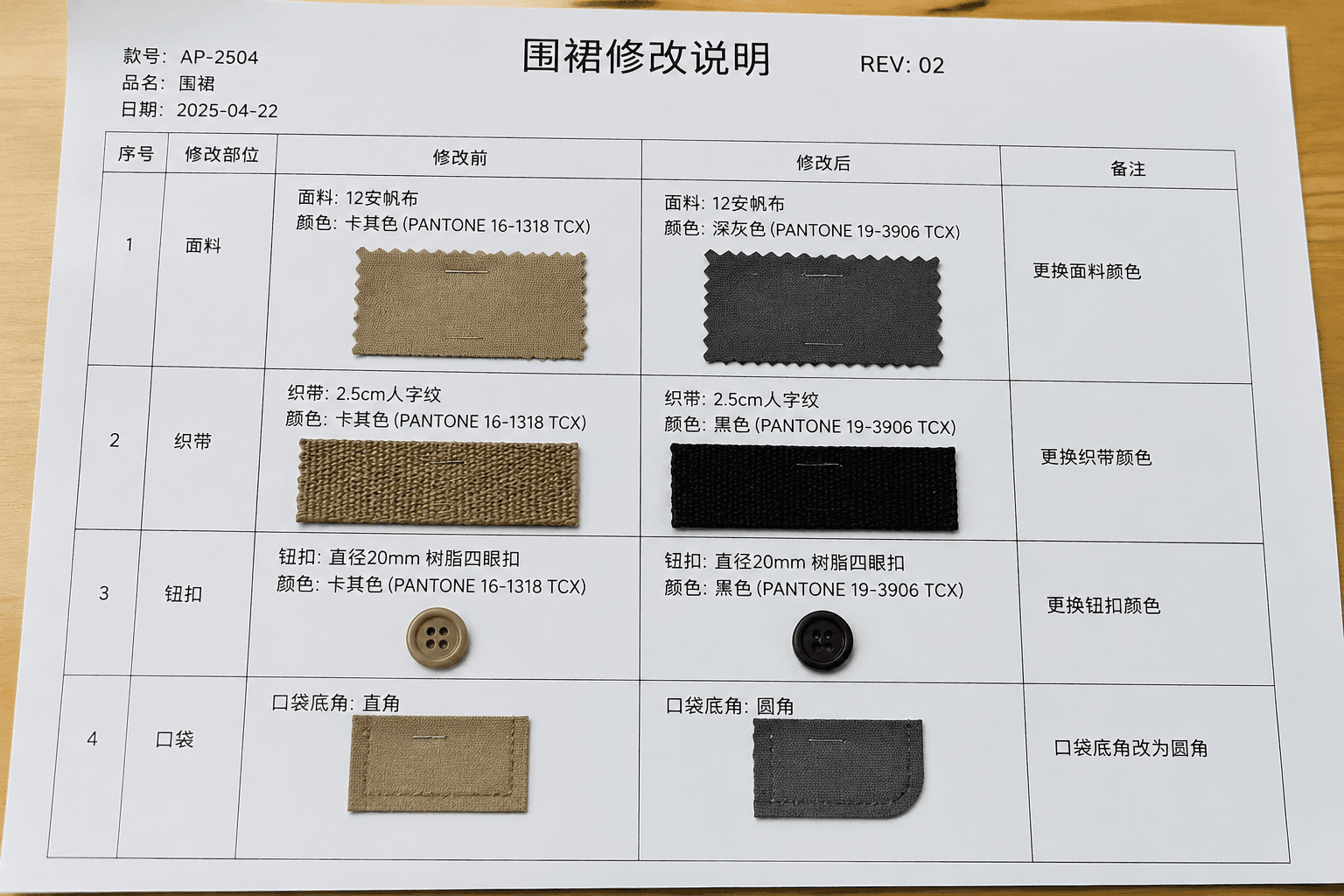
A controlled startup timeline starts with a tech pack or at least a clear specification sheet. The factory needs apron length and width, strap length, pocket size, fabric target, logo size, logo position, label position, packaging method, and color reference. Without these details, the supplier can make a sample, but the sample may not represent the intended product. Revisions then add days and cost.
For a standard apron using available fabric, first sample development usually takes 5-12 days after details are confirmed. If fabric must be purchased from a local market or dyed, sample timing may extend to 10-20 days. After sample approval, bulk production for 100-300 pieces usually takes 18-35 days, depending on factory schedule, decoration method, and material readiness. A 500-1,000 piece order may need 25-45 days. Peak seasons before major holidays can add another 7-15 days.
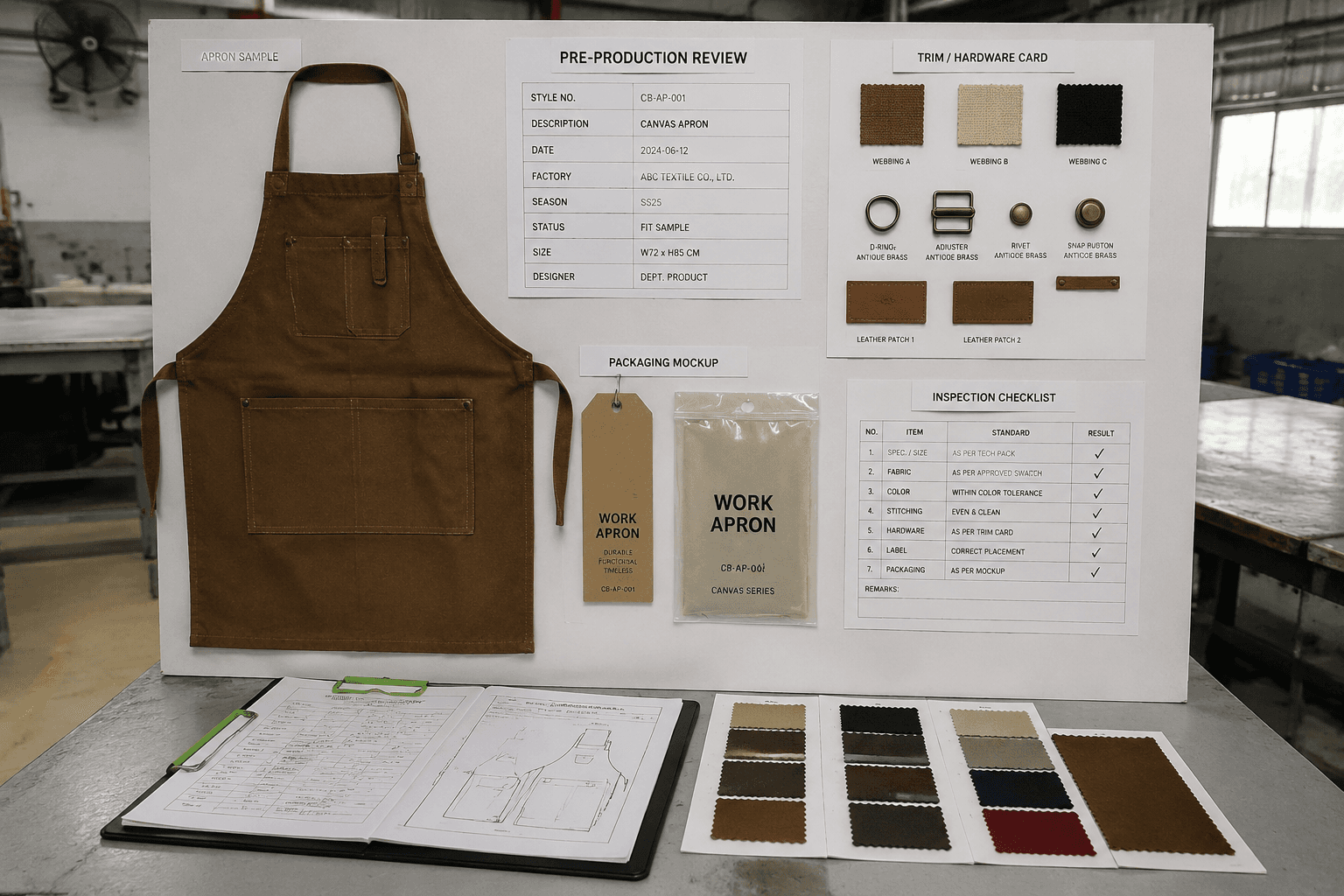
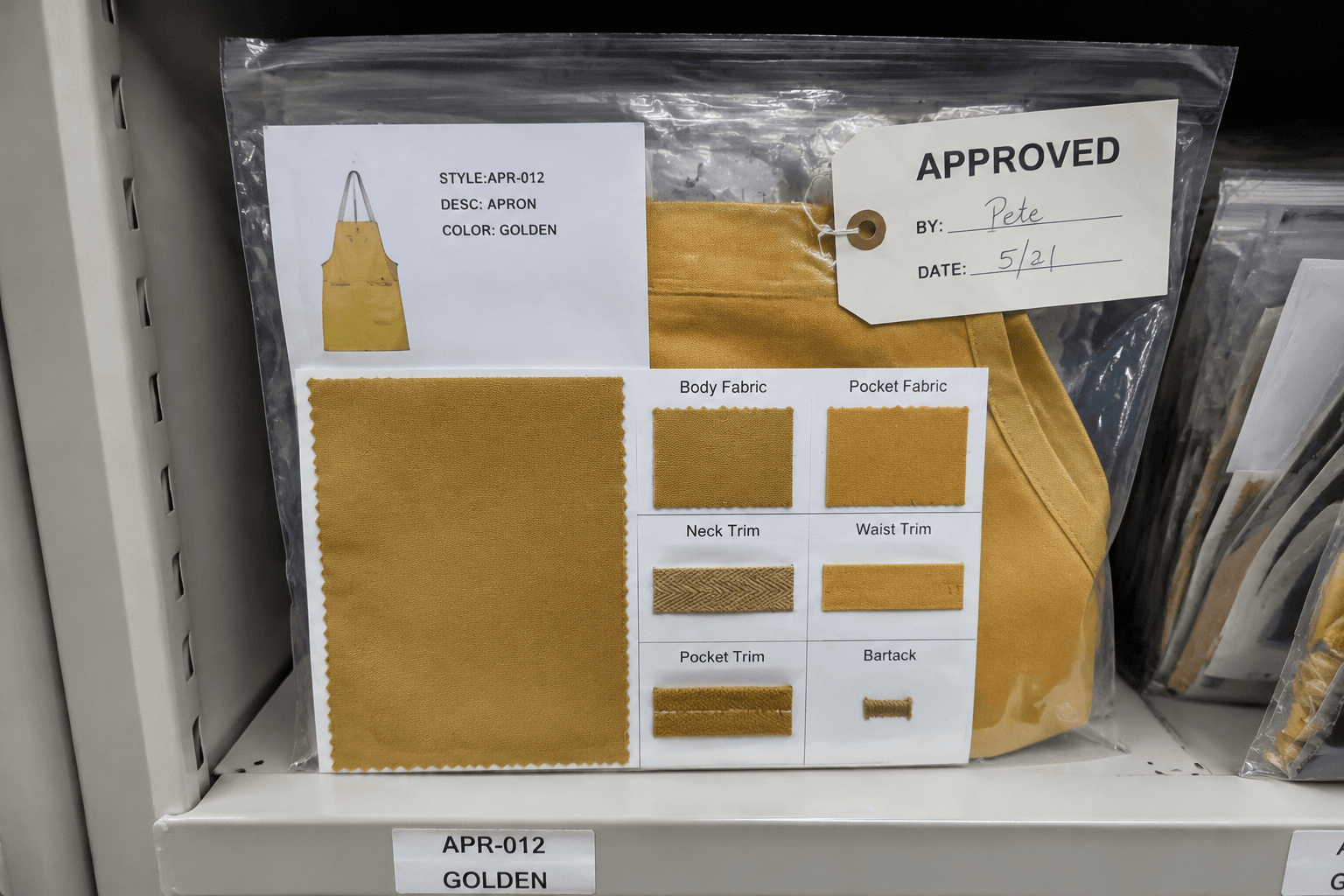
The best practice is to approve a pre-production sample before cutting bulk fabric. For a low moq apron, some buyers want to skip this to save time, but the risk is not worth it if the order is for retail sale or a brand launch. The pre-production sample confirms fabric shade, shrinkage expectation, logo placement, seam allowance, pocket reinforcement, strap hardware, and packing. If the buyer approves only a photo instead of a physical sample, color and handfeel risk remain.
- Tech pack review and quote clarification: 1-3 days when specifications are complete.
- First sample using stock fabric: 5-12 days after payment and artwork confirmation.
- Sample revision: 4-8 days for sewing changes, longer if fabric or logo method changes.
- Bulk production at 100-300 pieces: usually 18-35 days after sample approval.
- Final inspection, carton packing, and export documents: usually 2-5 days before shipment.
Reducing MOQ without damaging the product
There are good and bad ways to reduce MOQ. A good way is to use stock fabric, standard thread colors, existing hardware, and a simple pocket structure. A bad way is to reduce seam allowance, remove bar-tacks from stress points, choose fabric that is too light for the target use, or skip shrinkage and color fastness checks. A startup can recover from a higher first unit cost, but it is harder to recover from poor reviews about weak straps, uneven pockets, or fabric that twists after washing.
For aprons, quality perception comes from several visible details: straight top edge, balanced bib shape, clean pocket corners, consistent strap length, firm bar-tacks, stable logo position, and smooth pressing. These details require time in sewing and quality control. If the order is very small, the factory may produce it on a sample line or a small flexible line instead of a full production line. That can be useful, but the buyer still needs a clear quality standard.
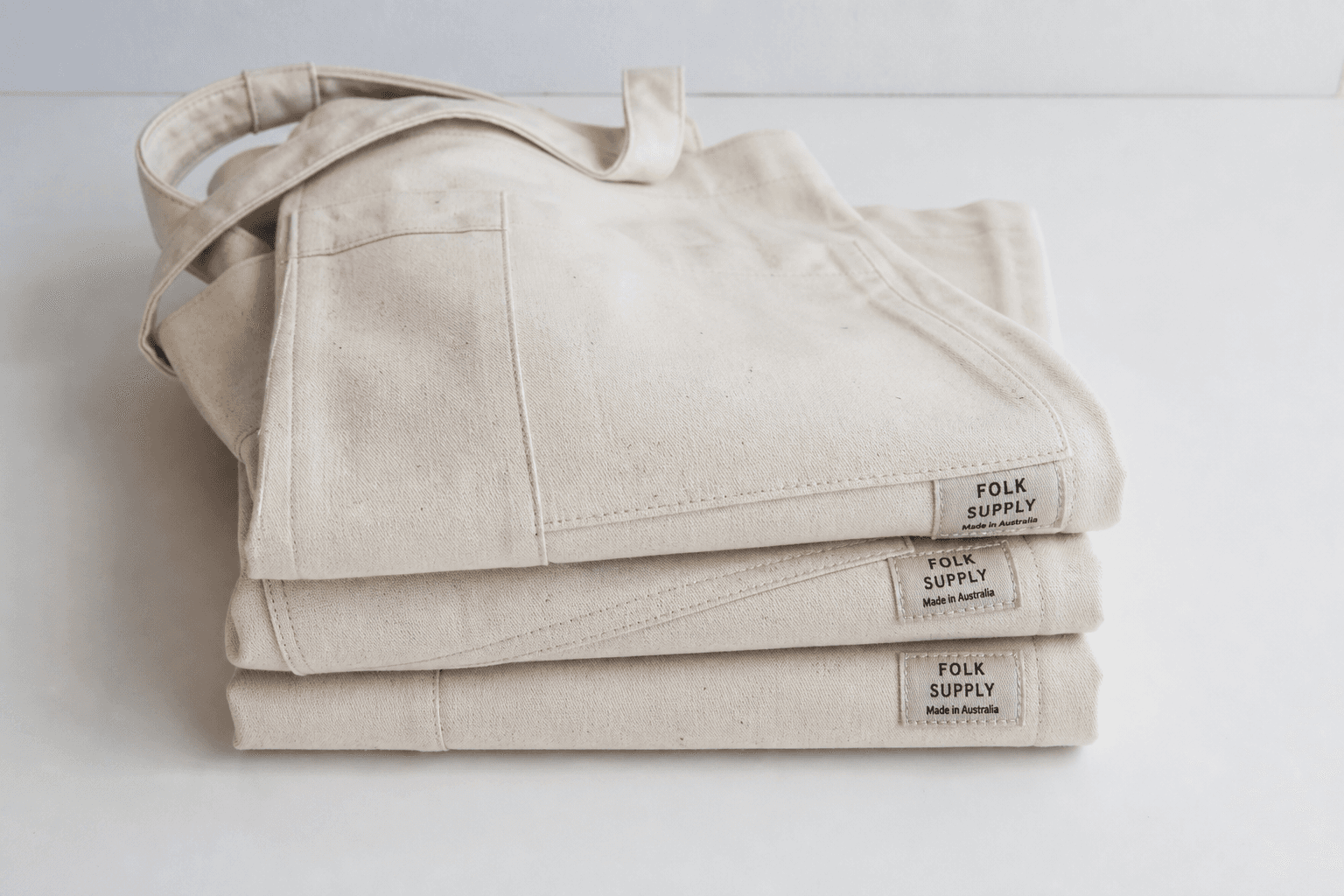
A practical compromise is to use a standard factory pattern as the base and customize only the elements that matter commercially. For example, keep the factory's proven bib apron size, use 260 GSM cotton twill from stock, add a custom woven neck label, and embroider the logo. This can create a credible apron for new brand testing without forcing a full custom development program. Once sales data is proven, the second or third order can add custom fabric color, revised pocket shape, or upgraded straps.
- Keep the apron pattern standard and customize branding first.
- Use stock black, natural, navy, grey, khaki, or olive fabrics when available.
- Limit the first order to one pocket layout to avoid cutting and sewing confusion.
- Choose standard thread close to body fabric color unless contrast stitching is part of the brand identity.
- Keep individual packaging simple: polybag plus barcode label is often enough for first launch.
- Confirm wash test expectations before bulk if the apron will be sold as reusable workwear.
A practical first-order structure for startup apron sourcing
For a startup with limited capital, the first order should be designed around learning and reorderability. A workable structure is 200 pieces of one bib apron style, split into two colors at 100 pieces each. Use 240-280 GSM cotton twill or 10 oz canvas if the positioning is retail or hospitality. Use one embroidery logo on the chest, one woven label at the neck or side seam, and simple individual polybag packing. This gives enough inventory to test sales while keeping the factory process controlled.
A lower-budget version could be 100 pieces in one color using stock fabric and one logo method. This is suitable for photography, pop-up sales, small wholesale tests, or early B2B sampling. The buyer should accept that the unit price will be higher and that freight per piece may be unattractive. A more prepared startup might order 300-500 pieces to improve unit cost, support small wholesale accounts, and reduce reorder pressure if the first sales are strong.
The key is to separate the first launch from the long-term product roadmap. The first launch does not need every future feature. It needs correct fit, acceptable margin, reliable fabric, clean branding, and a supply path that can scale. Once the apron sells, the buyer has stronger information for the next order: actual color demand, return reasons, customer feedback, best retail price, and reorder timing. That information is more valuable than forcing a large custom order before the market has spoken.
- Lean test order: 100 pieces, one color, stock fabric, one logo position, 18-30 days after approval.
- Balanced launch order: 200-300 pieces, two colors, one apron body, embroidery or screen print, 22-35 days after approval.
- Wholesale-ready order: 500 pieces, two or three colors, branded labels and hangtags, 30-45 days after approval.
- Custom color order: 500-1,000 pieces per color, lab dip approval, longer fabric lead time, better shade control.
- Scale order: 1,000 pieces and above, stronger unit cost, better packaging options, and more room for SKU expansion.