For buyers comparing workwear fabrics, a chambray apron sits in a useful middle ground: it reads like denim at first glance, but it usually carries less weight, drapes better, and feels easier for staff to wear through a full shift. In apron sourcing, that difference matters because the customer is not only buying appearance. They are buying comfort, wash performance, decoration stability, and a price that still works after packing, freight, and margin.
From a factory perspective, chambray is often the better choice when the brief calls for a lightweight denim apron look without the stiffness or heat build-up of true denim. It is common in cafes, bakeries, farm-to-table restaurants, retail gifting, and branded hospitality programs where the apron needs to photograph well, wash repeatedly, and stay presentable across many sizes and body types.
The sourcing question is not whether chambray is better than denim in every case. It is whether the fabric weight, weave, and finish match the intended use. For a chambray cafe apron, buyers usually want a soft apron fabric in the 150-220 GSM range, stable dye lots, and decoration methods that survive industrial laundering. That is where a clear spec sheet prevents expensive surprises.
- A chambray apron usually delivers the denim look at 30-45% less fabric weight than classic denim, which improves drape and day-long comfort.
- For foodservice and retail programs, 150-220 GSM is the most practical range because it balances structure, softness, and decoration performance.
- The best value comes from choosing the right finish, not just the right color, because enzyme wash, garment wash, and sand wash change handfeel and shrinkage.
- A chambray program is easier to sell when the buyer defines thread count, shrinkage target, and color fastness before sampling.
- MOQ for custom chambray apron production in China is often 500-1000 pcs per color, but true custom yarn-dyed fabric can push that higher.
- If the apron will be industrially laundered, buyers should require wash testing before bulk approval, not after first production.
Why a chambray apron fits bulk apron programs
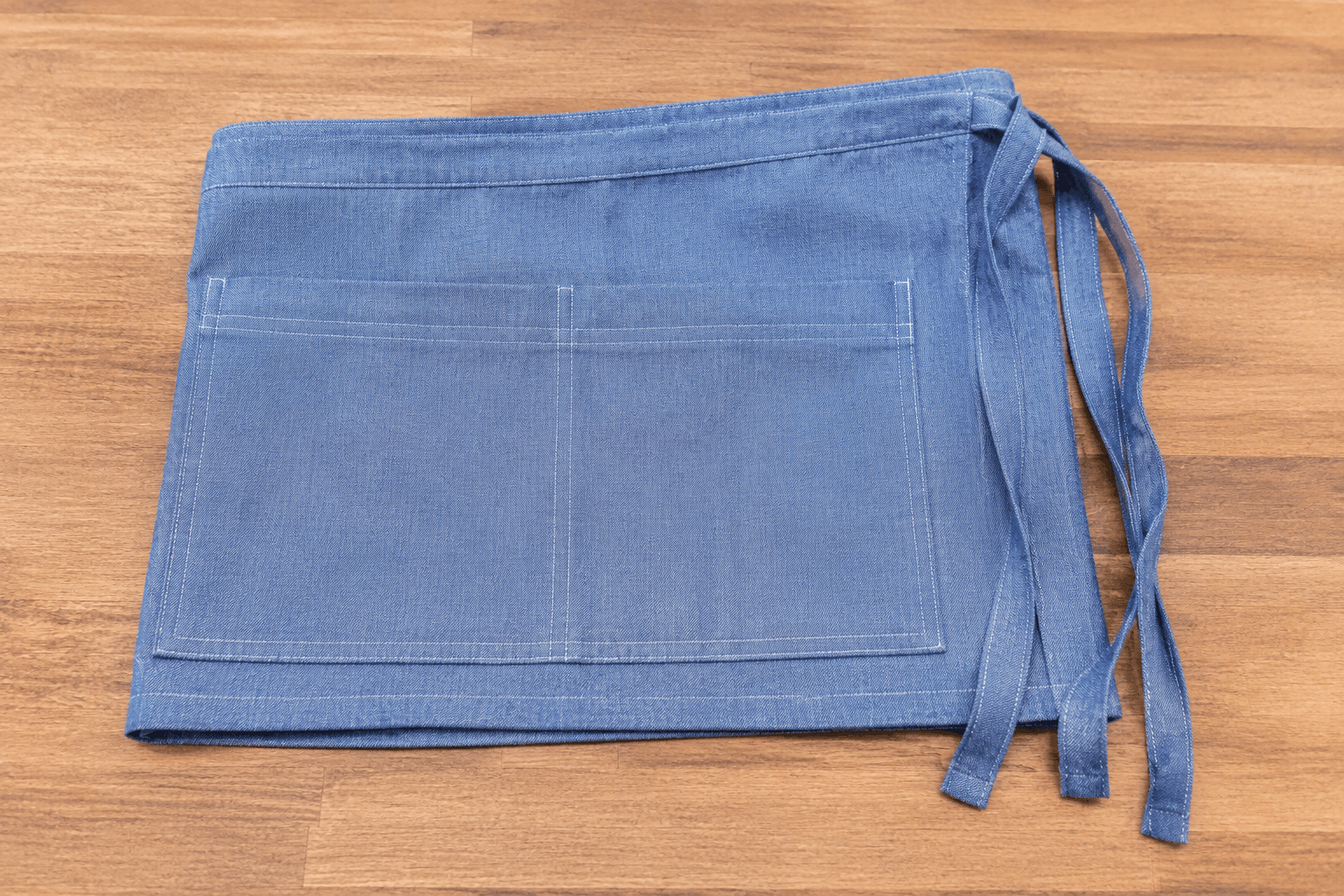
Chambray is usually a plain weave fabric with a colored warp and a white or lighter weft, which gives it the visual depth buyers associate with denim. In an apron, that effect is useful because it creates a premium workwear look without the same mass and rigidity as 10-14 oz denim. For a sourcing manager, that means the product can feel lighter on the body while still looking substantial on the sales floor or in a restaurant dining room.
This matters most in programs where employees wear the apron for 8-12 hours. A 180 GSM chambray apron typically feels less tiring than a 280-340 GSM denim apron, especially around the neck and waist. In warm kitchens, bakeries, and open-service cafes, this can reduce complaints about heat and stiffness. The customer sees a denim-inspired product; the staff experiences a softer apron fabric with better drape.
The second advantage is cost control. Because chambray often uses less yarn and less fabric mass, the cut-and-sew cost can stay lower than a heavier denim program, even after garment wash and labeling. For custom-branded programs, that creates room for embroidery, woven labels, or metal hardware without forcing the final wholesale price too high. In many factory quotes, a simple custom chambray apron in 180-200 GSM can land around $4.20-$7.80/pc at 1000-3000 pcs, depending on pocket count, print method, and packaging.
- Typical fabric weight: 150-220 GSM for light hospitality use, 220-260 GSM when the buyer wants more structure.
- Common apron positioning: cafe, bakery, coffee roaster, gift retail, home goods, and casual service uniforms.
- Main buyer benefit: lower perceived bulk than denim while keeping the same visual category.
Chambray apron fabric specs: GSM, weave, and finish
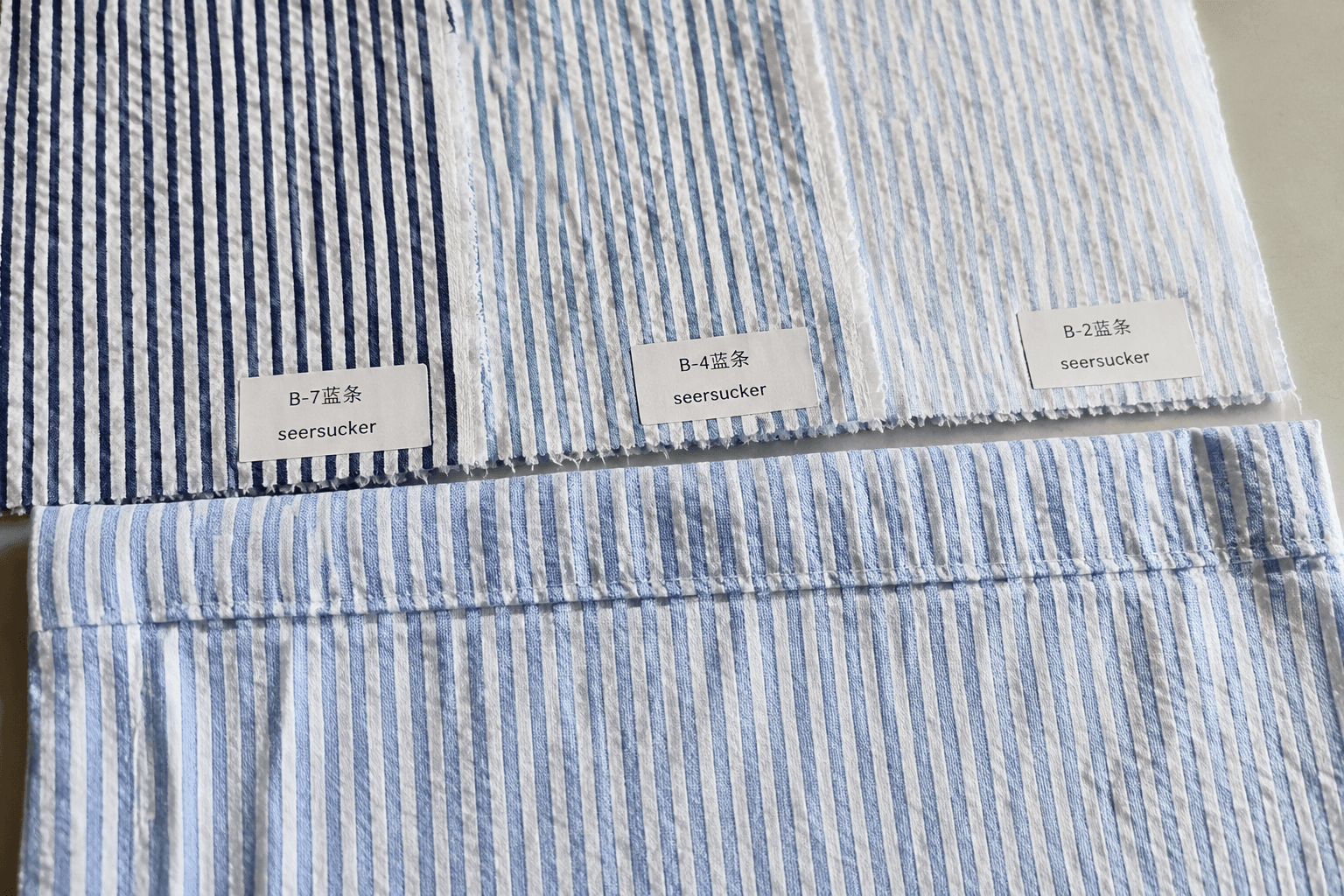
When a buyer asks for a chambray apron, the spec should not stop at fabric name. The factory needs to know the weight, yarn composition, dye method, and finishing process. Two chambrays can look similar in a photo and behave very differently in production. One may shrink too much after the first wash; another may feel too crisp and lose the soft apron fabric advantage the buyer expected.
For bulk apron programs, the most practical fabrics are cotton chambray and cotton-poly chambray. Pure cotton gives a more natural handfeel and better breathability, but it can shrink more and crease faster. Cotton-poly blends reduce wrinkling, improve dimensional stability, and usually lower cost. A 60/40 cotton-poly blend around 180-200 GSM is often the easiest option for buyers who want consistency across reorders.
Finishing also matters. A garment-washed chambray will look more relaxed and feel softer on day one, but it can create more shade variation across batches. Enzyme wash softens the surface without the same heavy worn-in effect. Reactive dye gives better color depth and usually stronger wash fastness than cheaper pigment approaches, especially if the apron is intended for repeated commercial laundering.
- Recommended GSM bands: 150-170 GSM for lightweight service, 180-220 GSM for standard cafe use, 230-260 GSM for a more durable retail or utility look.
- Recommended blend options: 100% cotton for premium handfeel, 60/40 cotton-poly for stability, 80/20 for a softer balance point.
- Finish choices: enzyme wash for softness, garment wash for vintage appearance, pre-shrunk finish for better size control.
- Color control target: ask for lab dip approval before bulk, then require a delta E tolerance that your QC team can actually inspect consistently.
Chambray vs denim apron: what buyers should expect
The easiest way to understand chambray vs denim apron sourcing is to separate visual identity from physical performance. Denim is usually a twill weave with a denser, heavier structure. Chambray is commonly a plain weave with a lighter body and more breathable feel. Both can look premium, but they do not behave the same in wear, laundering, or decoration.
If the program needs a rugged workshop or heavy utility image, denim is still the stronger visual statement. If the buyer wants a softer, more approachable look for front-of-house, chambray usually wins. A lightweight denim apron request often means the buyer wants denim styling language, not actual denim performance. That is where chambray is the smarter sourcing answer.
From a production perspective, chambray is usually easier to sew, easier to fold, and easier to pack tightly without creating the hard edge feel associated with heavier denim. That can reduce freight volume slightly and improve customer unboxing. But the trade-off is abrasion resistance. If the apron will contact rough surfaces, metal counters, or constant tool use, a heavier twill may last longer.
- Chambray: lighter, more breathable, softer drape, better for hospitality and casual retail.
- Denim: heavier, stronger visual impact, better abrasion resistance, more rigid handfeel.
- Buyer rule of thumb: choose chambray when staff comfort and presentation matter more than hard-wear durability.
- Decoration note: chambray usually accepts embroidery cleanly, while heavy denim can distort small logos if the stabilization is weak.
Best end uses for a chambray cafe apron
A chambray cafe apron works best where the apron is part of the brand presentation, not only a protective garment. Coffee shops, brunch chains, specialty bakeries, wine bars, and farm stores all use this category because the apron supports a relaxed, handcrafted image. The fabric looks familiar and approachable, but not cheap. That balance helps buyers sell a uniform program to store managers and franchise operators.
It also performs well in retail gifting and lifestyle programs. A branded apron made in chambray can be sold as a consumer product because it feels more like apparel than uniform stock. If the buyer wants a hanging loop, contrast bartacks, leather or PU patch accents, and a woven brand label, chambray holds that design language well. The fabric does not compete visually with the branding details.
For operations teams, the comfort issue is real. Staff usually notice neck strain, pocket sag, and heat retention before buyers do. That is why lighter fabric weight and clean pattern engineering matter. A 180 GSM apron with properly placed pockets can often outperform a heavier apron that looks more premium on paper but gets left in the locker room because it is uncomfortable.
- Best-fit use cases: espresso bars, bakery counters, tasting rooms, bakery retail, culinary schools, and giftable kitchen merchandise.
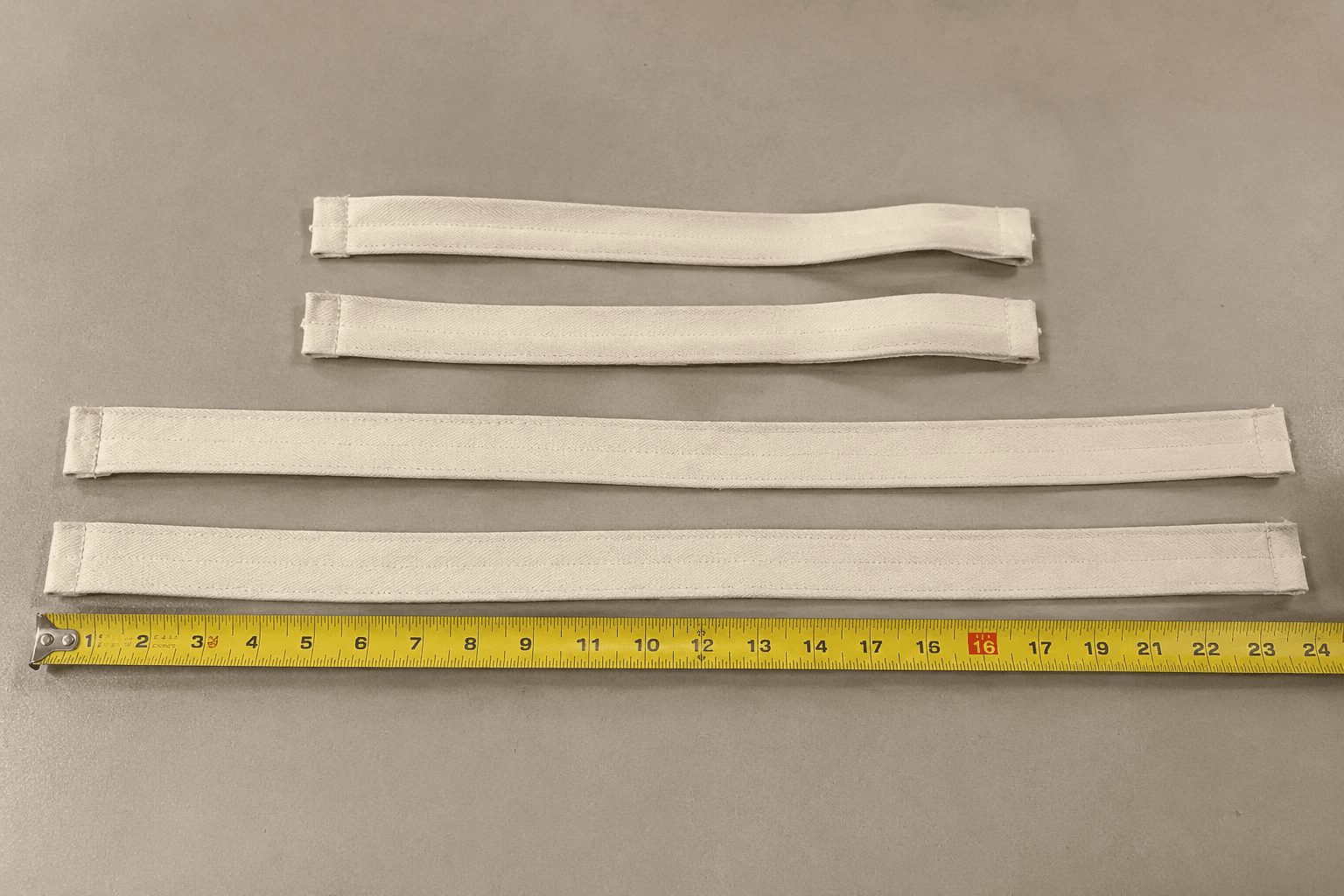
- Useful design features: cross-back straps, reinforced pocket corners, bar-tack stitching, and adjustable neck hardware.
- Not ideal for: welding, heavy workshop use, high-abrasion industrial tasks, or constant exposure to oil and sharp edges.
How to source a chambray apron from China
For a custom apron factory, the quotation starts with the fabric base and the order structure. A standard custom chambray apron program usually needs fabric confirmation, sizing, trim selection, decoration method, packaging, and target delivery date. If the fabric is stock-supported, the MOQ may start at 300-500 pcs per color. If the buyer wants a custom-woven shade, custom yarn-dyed pattern, or special wash, MOQ commonly moves to 800-1500 pcs per color and style.
Lead time depends on whether the base fabric is ready. For stocked chambray or greige fabric that only needs dyeing and sewing, production can often run in 20-35 days after sample approval and deposit. If the fabric must be woven, dyed, washed, and tested from scratch, the timeline can extend to 45-60 days, especially if the factory is also sourcing custom hardware or branded packaging. Buyers planning seasonal launches should lock the spec at least 70-90 days ahead of ship date.
On price, the practical range depends on construction. A simple waist apron in 180 GSM chambray with one pocket and basic screen print may sit around $2.80-$4.50/pc at 1000 pcs. A bib-style chambray apron with cross-back straps, multiple pockets, and embroidery may land around $5.50-$9.50/pc. If the buyer wants leather patches, metal buckles, or branded woven tape, each upgrade adds cost fast, so it is better to price the full trim stack before sample approval rather than after.
- Typical MOQ: 300-500 pcs for stock fabric programs, 800-1500 pcs for custom fabric or custom color.
- Typical sampling cycle: 5-10 days for proto sample, 7-14 days for revised pre-production sample if fabric changes are needed.
- Typical production lead time: 20-35 days for stock-supported orders, 45-60 days for fully custom fabric orders.
- Pricing drivers: fabric weight, dye method, pocket count, strap hardware, embroidery area, and packaging specification.
QC checkpoints before bulk release
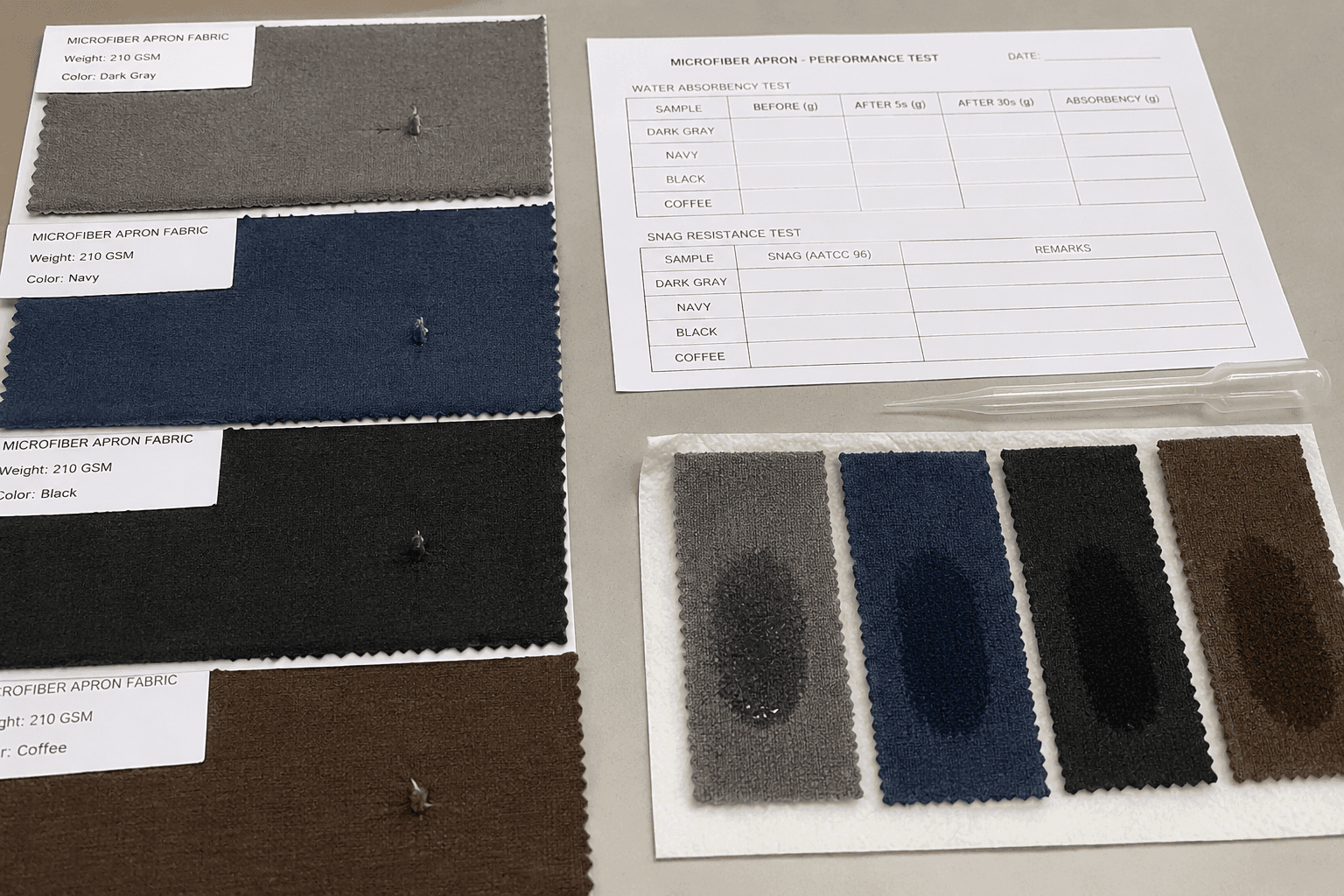
The main sourcing mistake with chambray is approving appearance without testing the fabric behavior after wash. A sample may look soft and balanced on the first inspection, then shrink, twist, or fade after laundering. For apron programs, the buyer should specify acceptable shrinkage before production starts, not after complaints arrive from the first store opening.
A sensible pre-production checklist should include shrinkage, color fastness, seam strength, and shade consistency. For most hospitality buyers, shrinkage under 3% in length and width is a reasonable target after a controlled wash test, though the exact tolerance should match the program's laundering process. Color fastness to washing at grade 3-4 or better is commonly requested, especially for darker indigo or slate chambray shades.
QC should also look at pocket placement, strap symmetry, and topstitch consistency. Because chambray has a lighter surface, stitch irregularities are more visible than on some textured fabrics. Poor bartack quality, loose thread ends, or uneven pocket top edges will show immediately in a retail or cafe environment. On a bulk order, that kind of defect is avoidable if the factory uses a clear inline inspection standard and final AQL check before packing.
- Wash test: check shrinkage, twist, and color bleed after at least 1-3 laundering cycles based on the buyer's use case.
- Stitch test: verify pocket reinforcement, strap attachment, and bartack durability at stress points.
- Measurement check: confirm body length, chest width, pocket size, and strap length against the approved tech pack.
- Packaging check: confirm fold direction, insert card position, hangtag placement, and carton count to avoid retail inconsistency.