Buyers sourcing aprons from China often start with an Alibaba search, because it is fast and the list is long. That is useful for discovery, but it is not the same as qualifying a real apron manufacturer. A listing can be polished, translated well, and still be operated by a trading company with no sewing line, no cutting table, and no control over fabric or trims.
For custom aprons, that difference matters. Aprons look simple, but the order often combines fabric weight, pocket placement, strap construction, logo method, wash performance, and carton packing. A supplier that cannot control those details will create repeated corrections, delayed approvals, and inconsistent bulk output. A verified apron factory should be able to explain how it converts one tech pack into repeatable production, with numbers that can be checked.
This article is written for sourcing managers, product developers, and brand buyers who need to separate an alibaba apron supplier from a verified apron factory before they commit MOQ, deposit, and launch schedule. The goal is not to reject Alibaba as a channel. The goal is to show what evidence actually proves factory capability, and what evidence is only sales decoration.
- Alibaba is a lead source, not proof of manufacturing. A listing can show product photos and certificates while the order is still outsourced.
- Ask for process evidence, not only product photos. Cutting layout, sewing line count, QC checkpoints, and packing flow reveal factory control.
- For custom aprons, fabric and construction drive risk. A 240 gsm cotton twill apron behaves very differently from a 300 gsm canvas or 10 oz denim style.
- Trading companies usually win on response speed, not on production visibility. A factory can be slower to answer but more reliable on bulk repeatability.
- Price gaps are useful only when specifications match. A $1.05 apron and a $1.45 apron may differ in fabric width, strap hardware, or logo method.
- Verification should include documents, samples, and a live workflow check. One item alone does not prove the supplier is a real apron manufacturer.
Why an alibaba apron supplier is not enough for bulk apron sourcing
An alibaba apron supplier may be perfectly legitimate, but the platform itself does not tell you whether the seller owns production. In apron sourcing, that distinction matters because a broker can still quote competitive prices by aggregating capacity from several workshops. The problem starts when the order needs stable shade matching, repeatable embroidery placement, or consistent pocket dimensions across 3,000 to 20,000 units.
A true factory thinks in operations. It knows how much fabric is consumed per style, how many minutes each seam takes, what stitch density is standard, and where defects usually appear. For example, a basic poly-cotton waist apron might run 0.18 to 0.25 sewing hours per piece, while a bib apron with cross-back straps, reinforced pockets, and contrast binding can double that time. If a supplier cannot discuss those details, they are probably not managing production directly.
Buyers sometimes assume that a lower price on Alibaba means the supplier has a lower cost base. In reality, the gap may simply reflect a trading company quoting from a subcontractor whose quality is not yet locked. That creates a hidden risk profile: one approved sample from a workshop may not match the next bulk run from a different line. The issue is especially visible in aprons with digital print, PU coating, or enzyme-washed cotton, because small process changes alter handfeel and shrinkage.
- A listing can show star ratings, but it does not show whether the seller controls cutting, sewing, trimming, and packing.
- A seller can source the same apron from multiple workshops, which increases supply flexibility but reduces process traceability.
- A factory should be able to name machine types, staffing levels, and daily output by style, not only promise fast delivery.
- A verified apron factory is easier to audit when you need a repeat order after 6 or 12 months.
What an Alibaba listing can tell you, and what it cannot
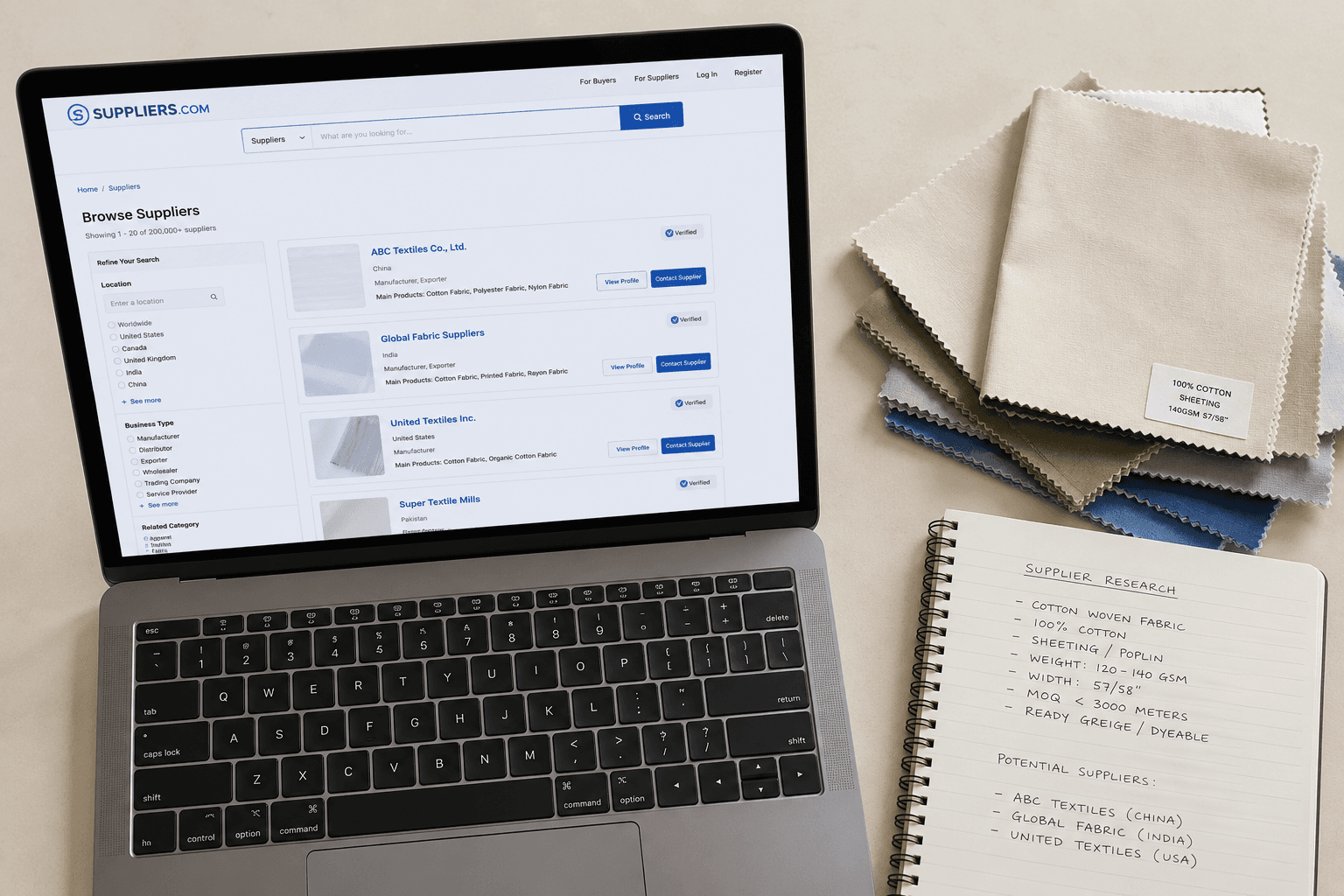
A well-built Alibaba page still has value. It can help buyers compare apron categories quickly: bib aprons, waist aprons, butcher aprons, denim aprons, canvas aprons, and hospitality aprons. It can also surface broad commercial signals such as MOQ, sample charge, claimed lead time, available logo methods, and whether the seller supports OEM color matching. These are useful starting points, especially when you are screening 20 or 30 vendors.
However, the listing is only a claim until it is tested. Product photos may be taken from prior orders or styled to look uniform even when actual production is not. MOQ may be listed as 100 pieces, but the real MOQ for a custom woven label, dyed-to-match binding, and individualized packing may be 1,000 or 3,000 pieces. Lead time may say 7 to 10 days, but that often covers stocked blanks, not custom apron manufacturing with approved trims and print files.
The highest-risk gap is usually between visual presentation and operational detail. A listing may show a neat apron with a centered logo, but the seller may not state whether the logo is screen print, heat transfer, embroidery, or patch application. Each method has a different cost and failure mode. Screen print might be $0.18 to $0.45 per location depending on colors and size, embroidery might add $0.60 to $1.20, and a woven patch may need tooling and a longer approval cycle. If the listing is vague, the actual quotation will move after sampling.
- Useful signals on a listing include MOQ, unit price bands, material options, packaging options, and response time to RFQs.
- Weak signals include generic factory photos, copied certificates, and prices that do not specify fabric weight or logo method.
- A reliable listing should at least state whether the apron is cotton, polyester, poly-cotton, denim, canvas, or coated fabric.
- If the seller cannot identify fabric width, GSM, or oz count, the quotation is usually too early to trust.
How to recognize a real apron manufacturer
A real apron manufacturer answers questions in production terms. Ask about fabric consumption per piece, and the answer should be specific: for example, a 70 x 85 cm bib apron in 240 gsm cotton twill may use about 0.85 to 0.95 meters of 150 cm wide fabric depending on pocket design and strap layout. Ask about production capacity, and you should hear something like 8,000 to 15,000 pieces per month for one main apron category, not an unlimited promise.
The most credible suppliers can also describe sewing structure. They know where bartacks are required, whether pocket corners need reinforcement, whether neck straps are adjustable with metal sliders or knot ties, and how they control thread tension on heavier fabrics. For restaurant aprons, a factory should be able to discuss stain resistance, wash shrinkage, and colorfastness after 20 to 30 wash cycles. For industrial aprons, they should know heat tolerance, oil resistance, or chemical splash limitations if relevant.
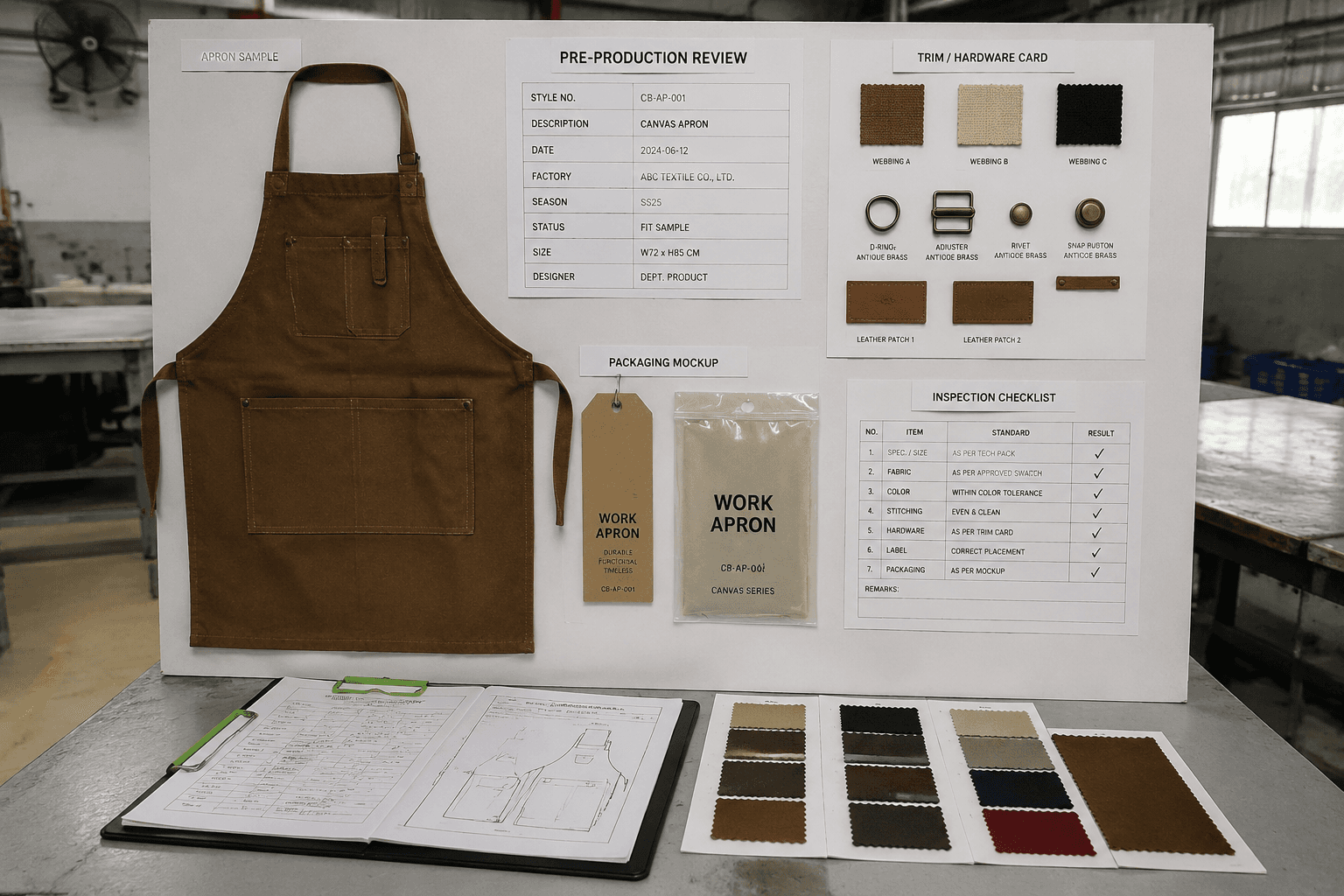
Documentation matters, but only as one part of the picture. A factory should be able to provide business registration, export records, and product-specific inspection data. Better still, it should share a production schedule, line photos, and a sample trail showing how an approved prototype turns into pre-production sample, size set, inline inspection, and final AQL check. That workflow is harder to fake than a polished product page.
- A real apron manufacturer can explain fabric consumption, sewing sequence, and defect control without sending every question to a third party.
- A factory can state which steps are in-house and which are outsourced, such as embroidery, printing, or carton making.
- A production-capable supplier can usually quote a meaningful lead time, such as 20 to 35 days for standard custom aprons after sample approval.
- A factory should be willing to share a pre-shipment inspection method, commonly AQL 2.5 for major defects and 4.0 for minor defects.
apron supplier verification: the checks that matter before you place a PO
Apron supplier verification should start with evidence that is hard to fake. First, ask for a live factory video walk-through showing raw fabric storage, cutting, sewing, trimming, ironing, and packing. A trading company can arrange a staged video, but a real factory will usually show familiar workflow interruptions: semi-finished bundles, line-side WIP, and operators handling the exact style you are buying. Second, request a sample history: the first prototype, the revised sample, and the signed gold sample. If only one perfect sample exists, that is a warning sign.
Next, verify the commercial logic. A supplier that truly owns production should be able to explain why one apron costs $0.88 and another costs $1.62. The reason may be fabric weight, strap hardware, print area, or carton allocation. For example, a simple 180 gsm polyester waist apron for promotion can land around $0.55 to $0.85 FOB at 5,000 pieces, while a 300 gsm canvas bib apron with contrast stitching and embroidery may sit closer to $1.35 to $2.40 FOB depending on logo complexity and packing. If the supplier cannot break down cost drivers, the number is not yet useful.
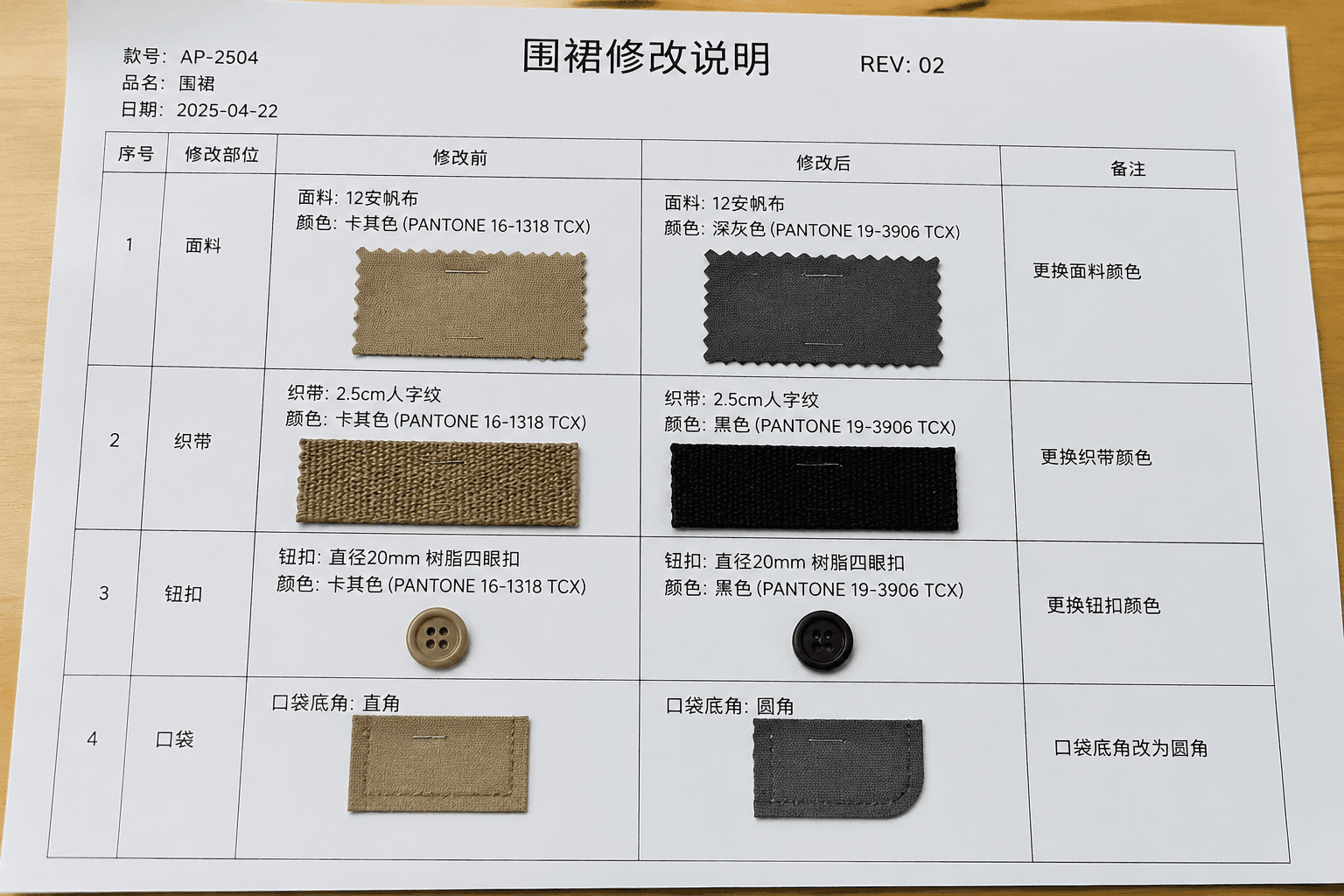
Finally, test communication under change. Send a small revision after the sample stage: move a pocket by 2 cm, change strap width from 2.0 cm to 2.5 cm, or switch from one color binding to another. A verified apron factory will respond with a revised marker, updated material consumption, and a new sample timeline. A trading company may only say yes and push the change downstream. The difference becomes visible when you need controlled adjustments before mass production.
- Request a live workshop video that shows each production step, not just a finished product shelf.
- Ask for the full sample chain: initial sample, revised sample, and approved gold sample.
- Demand a price breakdown by fabric, trim, logo method, packing, and carton if the order is above 1,000 pieces.
- Test the supplier with one change request before PO to see whether they manage revisions in-house.
Trading company vs factory: how the numbers usually differ
The trading company vs factory comparison is not only about price; it is about control and consistency. A trading company may offer a faster first response and a broader catalog because it is not limited to one workshop. That can be helpful for early sourcing, especially when you need 3 styles and 2 decoration methods in one shipment. But once the order becomes detailed, the factory usually has better visibility into cost, production timing, and failure points.
In practice, a trading company may quote a lower MOQ, sometimes 200 to 500 pieces per style, because it is pooling orders or using stock blanks. A factory may ask for 500 to 1,000 pieces for a simple apron and 1,000 to 3,000 pieces for custom fabric, custom color, or custom packaging. The factory number is often more realistic because it reflects line setup, fabric dye lot planning, and trimming consumption. If a quotation looks unusually flexible, verify whether the supplier is selling stock or truly making to order.
Lead time also behaves differently. A trading company may promise 10 to 15 days if a workshop can slot in a small order, but that schedule can slip when the workshop prioritizes larger repeat business. A factory may quote 20 to 35 days after sample approval, with 7 to 12 days for sample development and 3 to 5 days for pre-shipment inspection and packing. For promotional aprons around 5,000 pieces, a stable factory schedule is usually more reliable than an optimistic middleman promise.
The most useful comparison is to normalize specifications. If one supplier quotes a 240 gsm cotton twill apron, embroidered one location, with polybag and master carton, and another quotes a 210 gsm poly-cotton apron, printed only, bulk pack only, the numbers cannot be compared directly. Before you judge the alibaba apron supplier price, make sure fabric weight, size tolerance, strap type, logo size, and packaging are identical.
- Trading companies often win on variety and response speed, but factories usually win on process control and repeatability.
- A factory MOQ of 500 to 1,000 pieces is often a sign of real setup cost, not inflexibility.
- Lead times under 15 days should be checked carefully unless the order is stock fabric and simple decoration.
- Price comparison is meaningless unless GSM, size, decoration, and packing are fixed.
A practical buying checklist for apron sourcing managers
A sourcing manager needs a simple way to filter vendors without overcomplicating the process. Start with the product specification. Define apron type, dimensions, fabric composition, GSM or oz weight, strap structure, pocket count, logo method, packaging, and target wash performance. A clear spec turns a vague Alibaba inquiry into a testable quotation. Without that, every supplier looks competitive on paper and none is truly comparable.
Then move to evidence. Ask the supplier to quote one confirmed style in full detail and to provide a factory-capacity statement for that style only. If you need 8,000 pieces of a black bib apron for a café chain, ask what daily output is available, how many operators are assigned, and what the bottleneck is. If the supplier says 2,000 pieces per day without explaining line count or labor allocation, treat it as a sales estimate rather than a production fact.
Finally, use the sample and inspection stage as the real qualifier. A good apron sample should match the target handfeel, logo position, seam straightness, and measurement tolerance within agreed limits, often +/-0.5 cm for key dimensions on standard woven styles. If the supplier misses those tolerances on the sample, bulk risk is high. If the sample is good but the packed cartons are poorly labeled or the carton drop test fails, the issue is not finished. Bulk programs fail in the handoff between sewing and export packing as often as they fail in the sewing line itself.
- Lock the spec before asking for price: size, fabric weight, color, logo, and packing must be fixed.
- Request one style-specific capacity statement, not a generic company brochure.
- Use sample approval as the quality gate, not as a formality.
- Check carton marks, barcodes, and pack counts before bulk shipment, especially for retail programs.
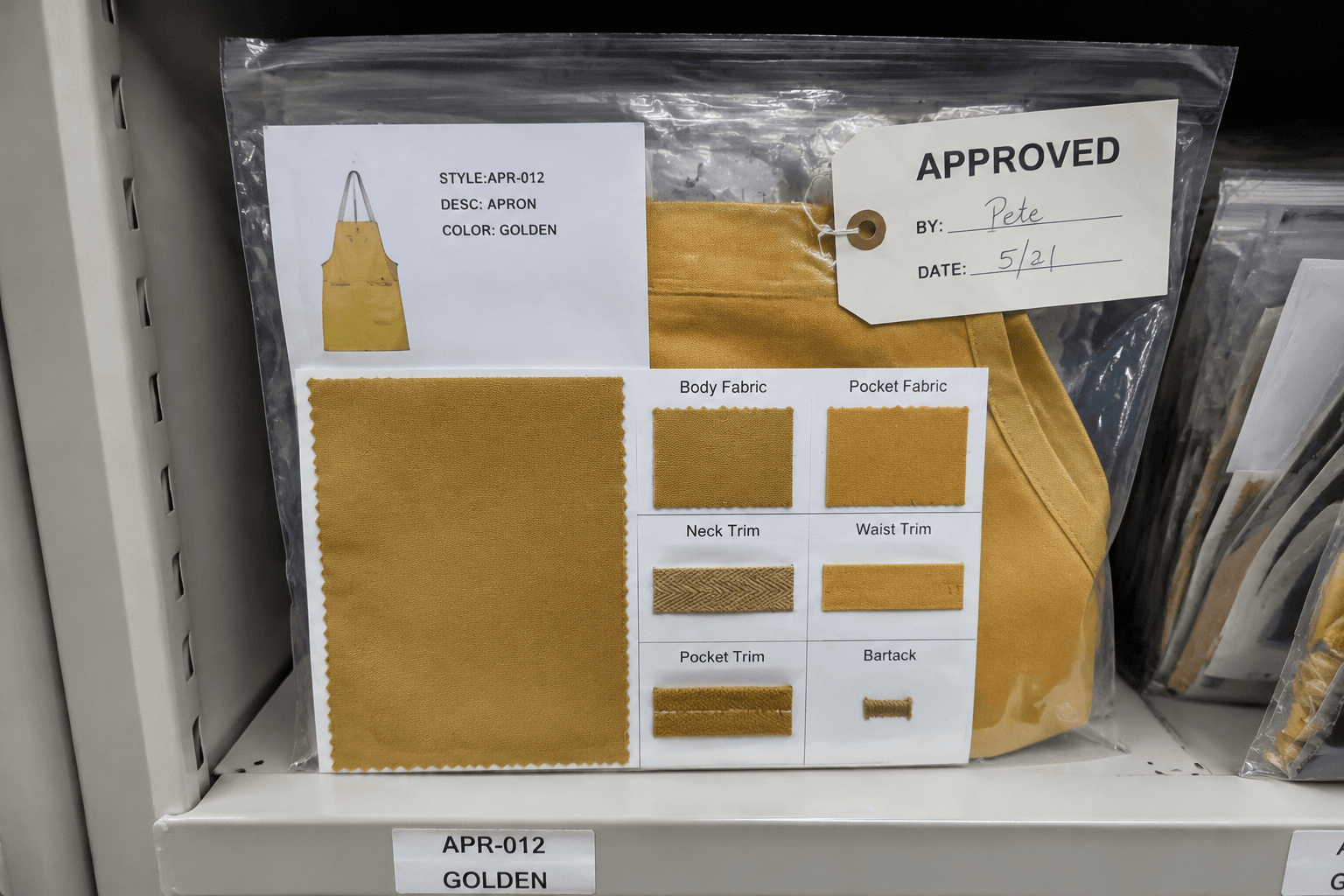
- Keep a record of approved fabric swatches and thread colors for repeat orders after 6 to 12 months.