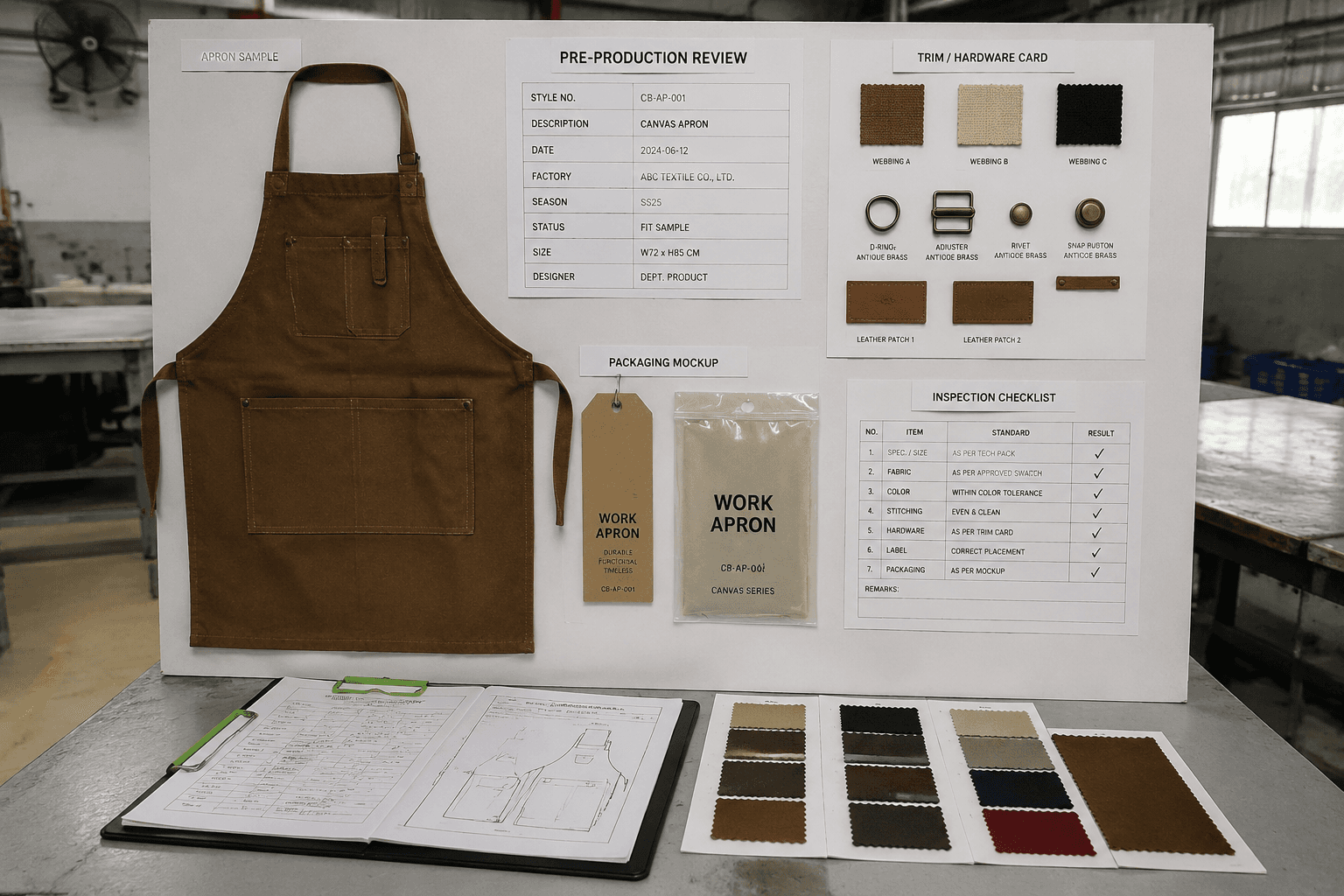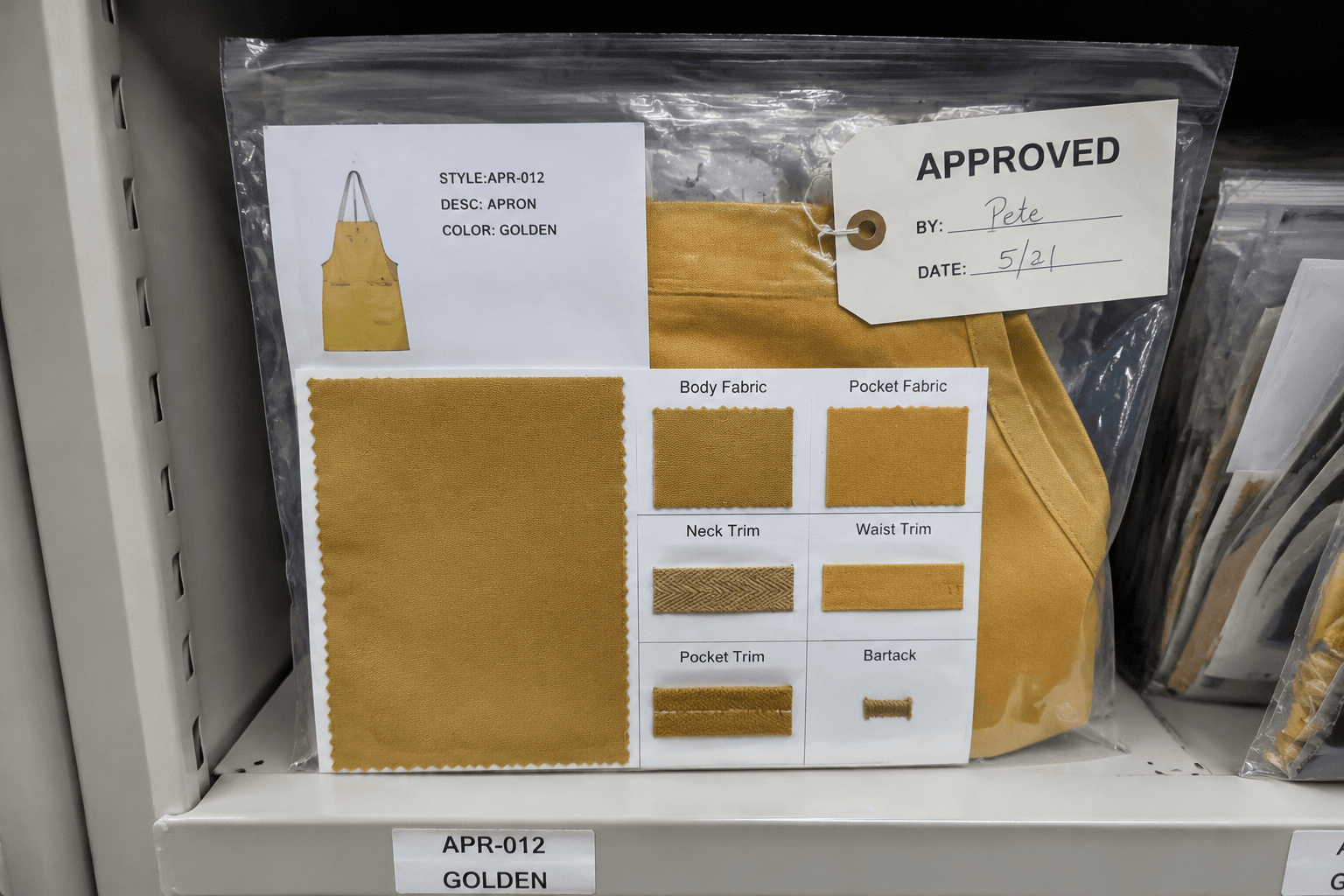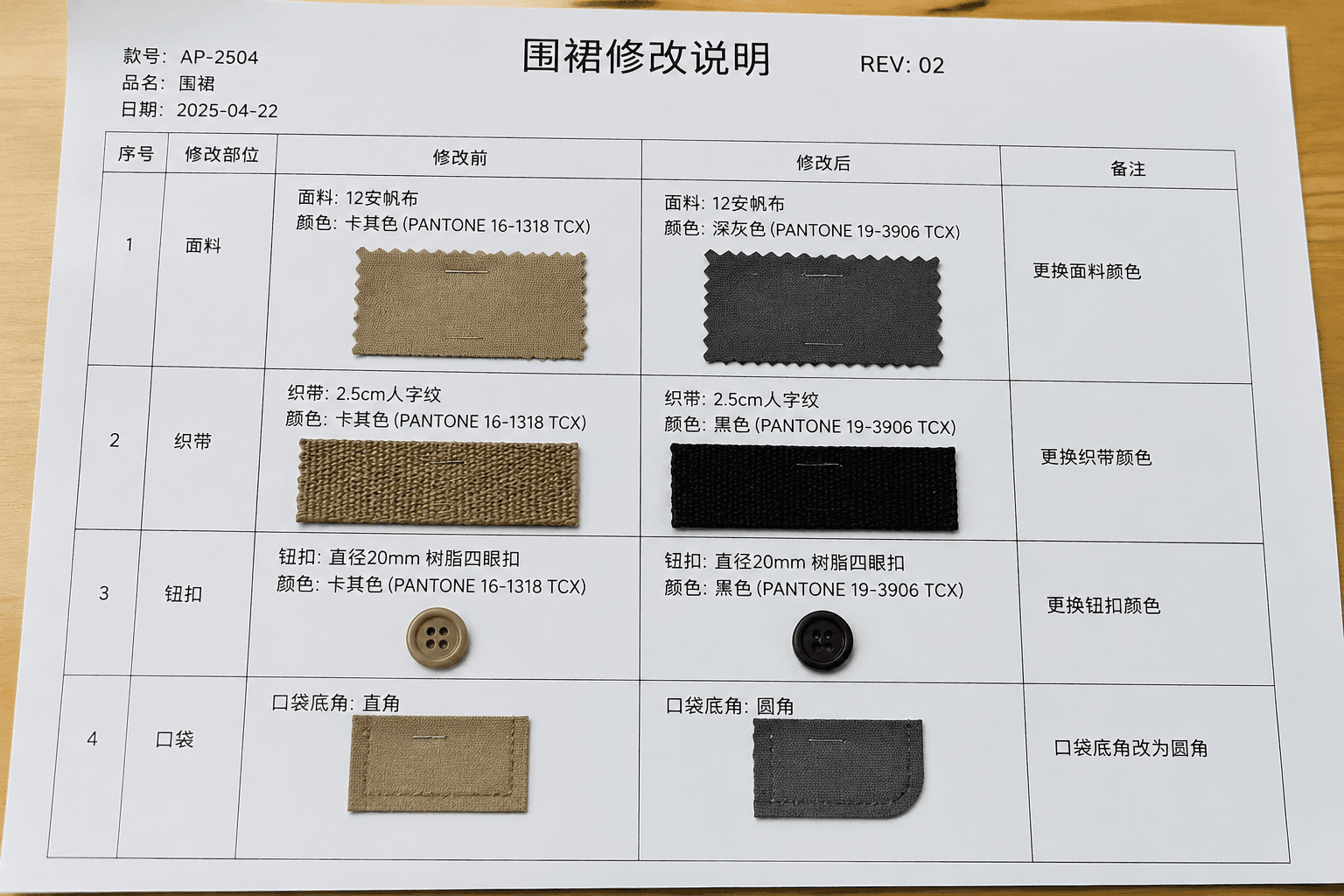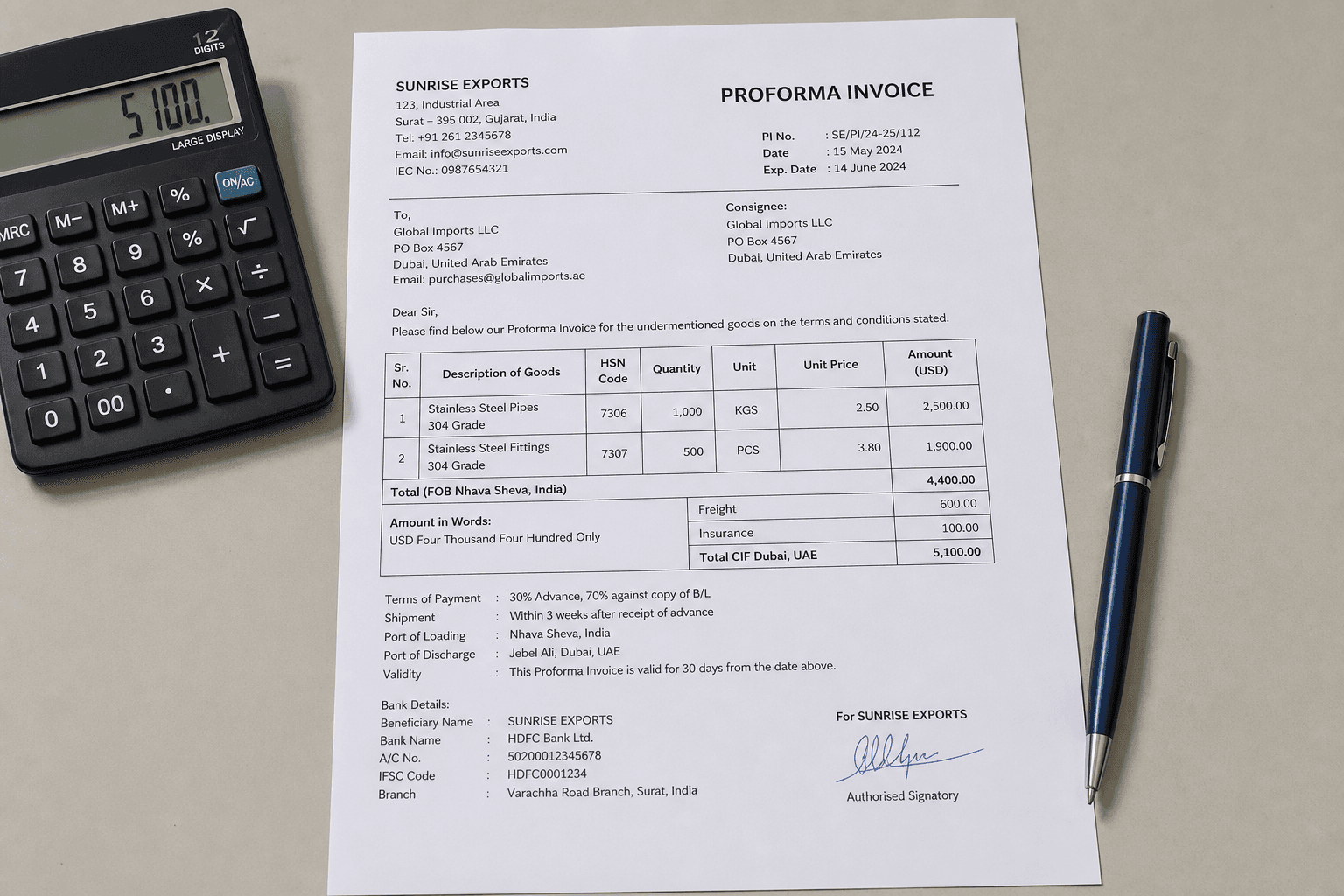
For custom apron sourcing, payment terms are not only an accounting detail. They decide when fabric is booked, when trims are purchased, when production capacity is reserved, and how much commercial risk each side carries. A factory that makes 5,000 canvas bib aprons with brass hardware and logo embroidery cannot treat payment the same way as a trader reselling 300 stock aprons from a warehouse.
Most bulk apron orders from China use TT payment, often with a deposit before production and a balance before shipment. Letter of credit can also work for larger, repeat programs, but it adds bank cost, document discipline and timing pressure. Good apron payment terms should match the order size, customization level, material exposure and inspection plan.
This article explains how Linwa Apron Manufacturing usually evaluates TT, L/C and deposit balance terms for OEM apron orders, including practical figures for MOQ, lead time, sample approval, raw material booking and shipment release.
- TT 30% deposit and 70% balance before shipment remains the most common structure for custom apron production in China.
- Highly customized aprons with dyed fabric, woven labels, printed packaging or special hardware usually require a higher deposit than repeat standard styles.
- A letter of credit apron order can reduce buyer payment risk, but only when documents, shipment dates and inspection requirements are written clearly.
- Deposit balance terms should be agreed before fabric booking, because fabric mills and trim suppliers normally require cash or short-cycle settlement from the factory.
- Payment timing directly affects lead time; delayed deposit or delayed balance can push a confirmed apron shipment by several days or longer.
Why apron payment terms matter before fabric is booked
Apron payment terms should be confirmed before the factory orders fabric, not after the proforma invoice is already issued. For custom aprons, the main cost is usually fabric, followed by labor, trims, logo application and packing. A 260 GSM poly-cotton waist apron has a very different cash exposure from a 12 oz cotton canvas bib apron with leather reinforcement, antique brass rivets, metal eyelets and individual retail cartons.
In a typical OEM apron order, fabric can represent 35-55% of the FOB unit cost. For example, a 5,000 pc order of 10 oz cotton canvas aprons at USD 4.20/pc FOB has a total value of USD 21,000. Fabric and dyeing may consume USD 8,000-10,000 before cutting starts. If the apron uses a custom Pantone dyed fabric, the factory cannot resell that cloth easily if the order is cancelled. This is why factories require a deposit before bulk material purchase.
Payment terms also affect capacity planning. Cutting, sewing, embroidery, printing, washing and final inspection are scheduled in a production calendar. If the deposit arrives five working days late, the factory may lose the planned sewing line slot. During peak months before Christmas, summer catering launches or hospitality uniform rollouts, a delayed TT deposit can move the shipment date by one or two weeks.
- Confirm apron payment terms before sample approval is converted into a bulk purchase order.
- Separate the cost exposure for fabric, logo, hardware and packaging when discussing deposits.
- Treat deposit payment date as the real starting point for bulk lead time, unless fabric has already been reserved.
- Check whether the quoted lead time is counted from deposit receipt, sample approval, artwork approval or lab dip approval.
Standard TT payment factory practice for custom apron orders
TT payment factory terms are the standard for most apron exports from China because they are simple, fast and familiar to both sides. TT means telegraphic transfer, usually international bank wire. For new buyers, the usual structure is 30% deposit before production and 70% balance before shipment. The factory starts bulk production after receiving the deposit and releases goods after receiving the balance.
For apron orders under USD 30,000, TT is usually more practical than L/C. Bank charges are lower, documents are fewer, and timing is easier to control. A typical 3,000 pc order of 240 GSM twill bib aprons with one-color screen print might be quoted at USD 2.10-2.60/pc FOB Ningbo or Shanghai. The total value is around USD 6,300-7,800, which is too small to justify complicated bank documentation. In this range, TT deposit balance terms keep administration cost low.
The most common TT structure is 30% deposit, 70% balance before shipment. For repeat buyers with stable order history, the balance may be paid after passing final inspection but before loading. Some long-term accounts may negotiate 30% deposit, 70% against copy of B/L, especially when annual volume is above USD 150,000 and payment history is clean. For first orders, balance before shipment is normal because the factory still controls the cargo until payment is complete.
- 30/70 TT is suitable for standard apron orders with normal fabric and moderate customization.
- 50/50 TT may be requested for small orders, urgent jobs, special dyed fabric or high trim exposure.
- 100% TT before production is common for samples, orders below USD 1,000 or custom materials that cannot be reused.
- Balance against copy B/L is usually reserved for repeat buyers with established credit and stable order volume.
Deposit balance terms for different apron customization levels
Deposit balance terms should reflect how reusable the materials are if the buyer changes or cancels the order. A black 240 GSM poly-cotton waist apron without logo can be reused for another client. A garment-washed 12 oz olive canvas apron with vegan leather straps, debossed brand patch, custom woven label and printed inner carton cannot. The more specific the material and branding, the higher the deposit requirement should be.
For standard colors like black, navy, white, khaki and dark grey, fabric availability is usually better. If the apron uses common 65/35 poly-cotton twill in 200-240 GSM, the mill may have greige fabric ready and dyeing can be completed in 7-10 days after lab dip approval. For custom yarn-dyed stripes, waxed canvas, flame-retardant finishing or water-repellent coating, the fabric lead time may be 18-30 days and the supplier may require payment from the factory in advance.
Logo application also changes the payment risk. Embroidery programs require digitizing and thread setup, but the cost is usually manageable. Large-area discharge printing, silicone printing, heat transfer labels and woven patches require more pre-production work. If retail packaging includes custom belly bands, UPC stickers, hangtags, polybags with warnings and carton marks, those items are produced only for one buyer. A higher deposit is reasonable because those materials have no resale value.
- For stock fabric with simple logo, 30% deposit is usually workable.
- For custom dyed fabric, 40-50% deposit may be required before mill booking.
- For branded packaging, custom hardware or leather patches, the deposit should cover non-reusable materials.
- For urgent production under 20 days, the factory may request a higher deposit to pay overtime and secure outside processes.
- For repeat reorder styles using the same fabric and trims, deposit terms can often be relaxed after several clean shipments.
When a letter of credit apron order makes sense
A letter of credit apron order can be useful when the purchase value is large, the buyer has internal banking requirements, or the order is connected to a tender, hotel chain rollout, restaurant group uniform program or retail launch. L/C can give the buyer comfort that payment is released only when the factory presents compliant shipping documents. It can also help the factory if the issuing bank is strong and the terms are clear.
However, L/C is not automatically safer or cheaper. For apron production, a letter of credit must match real manufacturing and shipping conditions. If the L/C requires shipment by April 30 but lab dip approval arrives on April 10 for custom 320 GSM canvas, the schedule is already under pressure. If the L/C demands a certificate that is not normally issued for aprons, such as an unnecessary textile inspection certificate from a specific body, the document risk increases. Banks check documents, not apron quality, so inspection terms must be handled separately.
L/C costs also need to be considered. Bank handling, amendment fees and document discrepancy fees can easily add USD 150-500 or more, depending on the bank and country. For a USD 8,000 apron order, that cost is not efficient. For a USD 80,000 annual program shipped in two or three lots, L/C may be reasonable if both sides agree the document requirements before production.
- Use L/C mainly for larger apron orders, usually above USD 50,000 per shipment or strategic annual programs.
- Keep the latest shipment date realistic, including fabric lead time, logo approval, production, inspection and vessel booking.
- Avoid document requirements that do not match normal apron export practice.
- Use clear product descriptions such as fabric composition, GSM, quantity, carton count and incoterm.
- Handle quality inspection through a separate inspection clause, not only through bank documents.
Common risks in import payment China buyers should control
For import payment China workflows, buyers should control payment risk through supplier verification, documents, inspection and payment timing. The goal is not to push all risk onto the factory. The goal is to make the order executable. Apron factories operate on material deposits, production schedules and supplier settlement cycles. Buyers operate on budget approval, compliance checks and shipment deadlines. Payment terms should connect these realities.
The first risk is paying a deposit before the supplier and order details are clear. Buyers should confirm the factory business license, export experience, bank account name, physical address, product scope and sample quality. The bank account should match the contracted company or an approved related export entity. If the supplier suddenly changes bank account details during the order, pause and verify by phone or video call with known contacts. Email compromise is a real trade risk.
The second risk is paying the balance before quality is confirmed. For apron orders, final inspection should check fabric weight, dimensions, stitching strength, color shade, logo position, pocket size, strap length, metal parts, packing and carton marks. AQL 2.5 for major defects and 4.0 for minor defects is common, though some buyers use stricter criteria for retail or hospitality uniforms. Balance payment is usually made after the inspection passes and before goods are loaded or released.
- Verify that the beneficiary name on the invoice matches the approved supplier or export company.
- Request a production schedule showing fabric arrival, cutting, sewing, logo process, packing and inspection dates.
- Use pre-shipment inspection before paying the final TT balance.
- Confirm carton marks, HS code, incoterm, port of loading and shipping documents before balance payment.
- Keep bank charge responsibility clear, usually each side pays its own bank charges unless agreed otherwise.
How payment terms affect apron pricing and lead time
Payment terms can change apron pricing because they affect financing cost and risk. A factory that receives 50% deposit has less cash pressure than one receiving 20% deposit. A buyer asking for 30% deposit and 70% after arrival at destination is asking the factory to finance fabric, labor, packing, inland transport, export handling and ocean transit. That may add cost or may simply be rejected for a first order.
For example, a 10,000 pc order of 280 GSM cotton twill bib aprons at USD 3.10/pc FOB has a value of USD 31,000. If the buyer pays 30% deposit, the factory receives USD 9,300 to start. The factory may still need to fund more than that for fabric, printing screens, sewing wages and packing before receiving the balance. If the buyer requests only 10% deposit, the factory must finance a much larger share. Depending on material exposure and credit history, the price may increase by USD 0.05-0.15/pc or the factory may require a revised deposit.
Lead time is also tied to payment timing. A normal custom apron order may need 5-7 days for final sample or pre-production sample, 7-15 days for fabric preparation, 12-25 days for sewing and logo application, 2-3 days for packing and internal QC, and 1 day for final inspection. If the deposit is late, the fabric booking is late. If the balance is late, the shipment may miss the vessel closing date. Missing a vessel from Ningbo or Shanghai can add 3-7 days even when goods are already packed.
- For simple apron orders, production lead time is often 25-35 days after deposit and approvals.
- For custom dyed canvas, washed aprons or multi-process logo work, lead time is often 40-55 days.
- For very small orders below MOQ, full payment or 50% deposit is common because setup cost is high.
- For annual programs, better terms can be negotiated after reliable payment and forecast history are established.
Practical apron payment terms by order scenario
There is no single payment structure that fits every apron order. A sourcing manager should evaluate order value, customization, buyer history and shipment urgency. The same factory may offer different terms for a plain black server apron, a heavy barber apron with metal hardware, and a private-label retail apron packed for e-commerce fulfillment.
For a first order of 1,000-3,000 standard aprons using stock fabric and one logo, 30% TT deposit and 70% TT before shipment is realistic. MOQ may be 500-1,000 pcs per color for simple twill aprons, with unit prices around USD 1.60-3.20/pc depending on fabric, size and logo. For a heavy-duty canvas apron with cross-back straps, metal rivets and custom pocket layout, MOQ may be 1,000 pcs per color and price may range from USD 4.00-8.50/pc. In that case, 40% deposit may be reasonable for first production.
For repeat buyers with annual forecasts, payment terms can become more flexible. If a buyer orders 20,000-50,000 aprons per year across several releases, the factory can plan fabric, trims and capacity more efficiently. After several shipments with clean balance payment, options such as 30% deposit and 70% against copy B/L, or monthly settlement for approved local trading partners, may be discussed. These terms are earned through order history, not assumed at the first quotation stage.
- First custom order: 30% deposit and 70% before shipment is the normal baseline.
- Small sample or prototype order: 100% payment before sample making is standard.
- High-customization order: 40-50% deposit protects fabric, trims and branding exposure.
- Repeat annual program: 30/70 against copy B/L may be possible after payment history is proven.
- Large L/C order: use only when the value and buyer banking process justify the added document cost.
How to write clear apron payment terms in the purchase order
Payment language should be specific enough that both accounting and production teams understand it. A vague line such as payment by TT is not enough. The purchase order should state deposit percentage, balance trigger, bank charges, beneficiary details, incoterm, inspection timing and what happens if approvals are delayed. This avoids arguments at the most sensitive point of the order, usually just before shipment.
A clear term might read: 30% deposit by TT within 3 working days after PI confirmation; 70% balance by TT after passed final inspection and before shipment; buyer pays buyer-side bank charges and seller pays seller-side bank charges; production lead time 35 days after deposit receipt, final artwork approval and lab dip approval. This wording connects payment, quality confirmation and lead time in one practical structure.
For L/C, the purchase order and proforma invoice should be aligned before the buyer opens the credit. Product description, quantity tolerance, latest shipment date, partial shipment, transshipment, loading port, destination port and required documents should be reviewed carefully. L/C amendments cost time and money. For apron sourcing, most disputes come from small mismatches: wrong fabric description, carton quantity differences, late vessel date, missing certificate wording or inconsistent company names.
- State the deposit percentage and exact payment deadline after PI confirmation.
- Define the balance trigger, such as after passed inspection and before shipment.
- Specify whether production lead time starts from deposit, sample approval, artwork approval or lab dip approval.
- List bank charge responsibility clearly to prevent short payment on the received amount.
- For L/C, review document wording before the credit is issued, not after production is complete.
- Keep inspection and payment timing aligned so goods can ship immediately after balance is received.