In food service, apron hygiene food service is not a soft preference. It affects cross-contamination control, staff presentation, and how easily a buyer can enforce a clean apron protocol across multiple shifts. For a sourcing manager, the practical question is whether the apron can survive repeated high-heat laundering, retain coverage, and stay compliant with the customer’s kitchen rules after 30, 60, or 100 wash cycles.
At the factory level, apron hygiene starts with the base cloth, sewing method, and finish. A 240 gsm cotton twill apron behaves very differently from a 180 gsm poly-cotton bib apron or a 12 oz waxed canvas service apron. The first is easier to wash hot and strip grease from; the second dries faster and costs less per piece; the third is stronger but usually not ideal for high-temperature sanitation. Buyers who order custom aprons in bulk from China need to match the apron to the actual food service use case, not just the logo placement.
Most food service apron standards are not written as a single global rule. They are built from customer requirements, local hygiene policies, and the buyer's internal HACCP apron controls. That means the supplier must understand both production details and operating reality: MOQ, dye lot stability, shrinkage, wash fastness, pocket layout, strap type, and how many clean pieces each location needs per day.
- Apron hygiene food service is mainly a systems issue: fabric, laundering, and replacement rules matter more than decoration.
- For hot-wash kitchens, 220-260 gsm cotton or poly-cotton twill is usually more practical than lightweight canvas or coated fabrics.
- A clean apron protocol should specify change frequency, not just general cleanliness, because one apron per employee is usually not enough.
- HACCP apron requirements are easier to audit when color coding, pocket limits, and wash logs are defined at purchase stage.
- Bulk buyers should price for lifecycle cost, not unit price alone; a $3.20 apron that lasts 80 washes can be cheaper than a $2.40 apron that fails after 30.
- Lead time and MOQ should be planned around laundry turnover, because food service sites often need 1.5 to 2.5 sets per worker.
Apron hygiene food service: what buyers actually need to control
In practical sourcing terms, apron hygiene food service means the apron must help separate clean and soiled work, not become another contamination source. That requires control over where the apron is worn, how often it is changed, and whether the construction traps soil. In a busy kitchen, a bib apron with a smooth front panel and minimal seam bulk is easier to keep in rotation than a heavily pleated or decorative style.
The failure mode is usually not dramatic. It is a sleeve rubbing against a dirty pocket, a damp waist tie contacting a prep table, or a stain that survives wash cycles and makes staff look unmanaged. Buyers often focus on grammage and logo embroidery, but the more important point is whether the apron can be cleaned to a known standard after repeated commercial laundering at 60-75 C. If the fabric pills, shrinks more than 3 percent, or loses color after 20 to 30 washes, the program becomes unstable.
From a factory perspective, food service apron standards should be translated into measurable specs before sampling begins. If the end user expects daily wash, then the sew thread, color fastness, and shrinkage tolerance need to be agreed in writing. If the apron is for front-of-house service, the visual standard may matter more than grease resistance. If it is for back-of-house prep, washability and cover are usually more important than appearance detail.
- Define the work zone first: prep, dish, grill, service, or retail counter.
- Set the wash method in the spec: industrial wash, home wash, or mixed operation.
- Confirm whether the apron must support hot wash at 60 C, 75 C, or 90 C.
- Specify acceptable shrinkage, usually within 3 percent for woven cotton blends.
- Decide whether the apron is disposable, replacement-driven, or long-cycle reusable.
Materials and construction for apron hygiene food service
Material selection determines how the apron behaves in a sanitation program. For most food service apron standards, the common options are cotton twill, poly-cotton twill, denim, canvas, and laminated or coated fabrics. Cotton twill at 240-280 gsm is breathable and handles hot washing well, but it can dry slower and may fade faster. Poly-cotton at 65/35 or 80/20, usually in the 190-240 gsm range, gives better dimensional stability and faster drying, which matters when a site needs a turnaround within 24 hours.
For back-of-house use, a 7.5 to 9 oz fabric is often enough for daily coverage, while heavier 10 to 12 oz canvas is more common in chef-facing or front-of-house brand programs. Heavier cloth feels premium, but if the apron is exposed to frequent grease and high wash temperatures, a mid-weight twill often delivers a better cost-performance balance. In our experience, many buyers over-specify weight and under-specify wash durability. A 260 gsm apron that holds shape after 50 industrial cycles is more useful than a 12 oz apron that becomes stiff, dirty-looking, or too slow to dry.
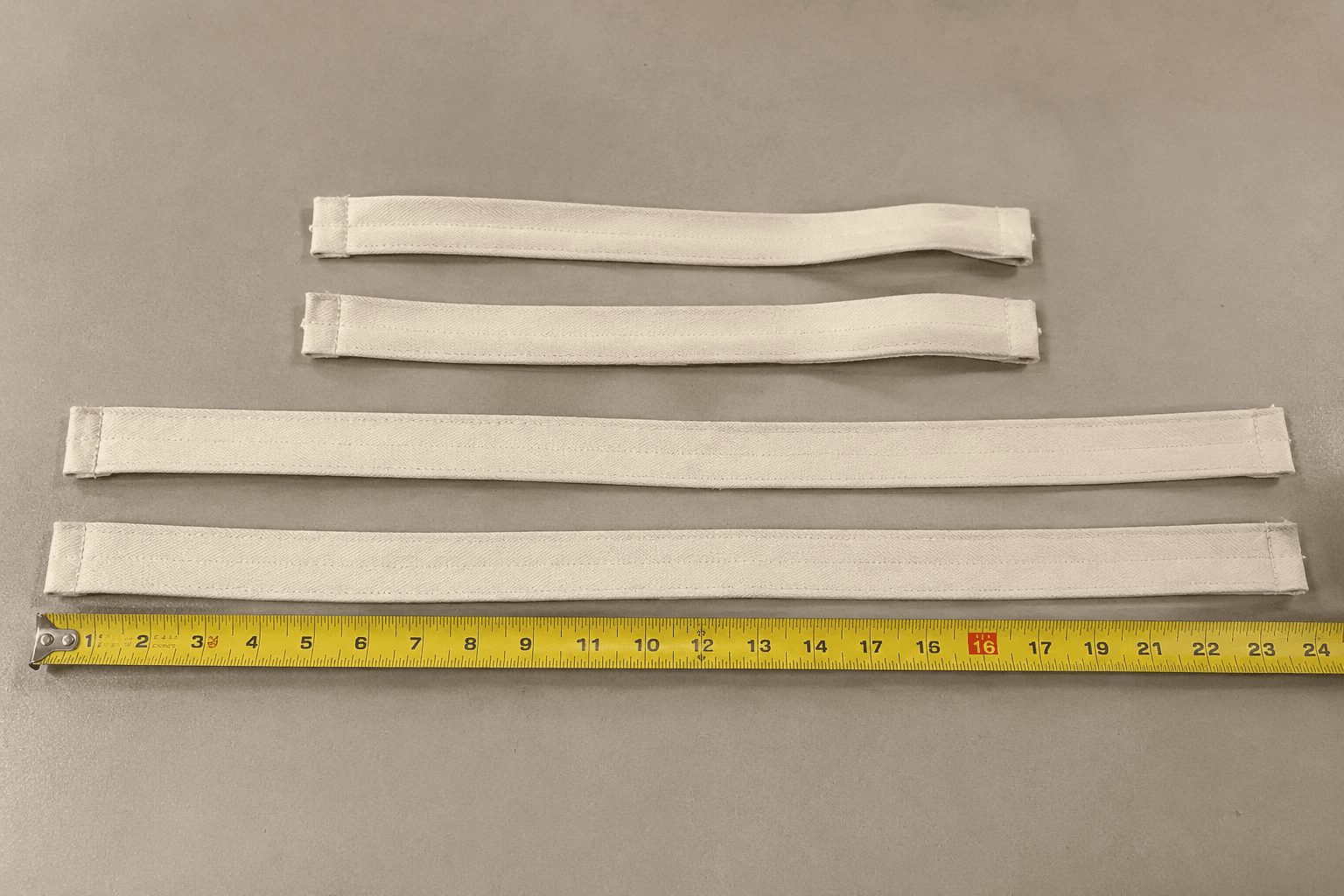
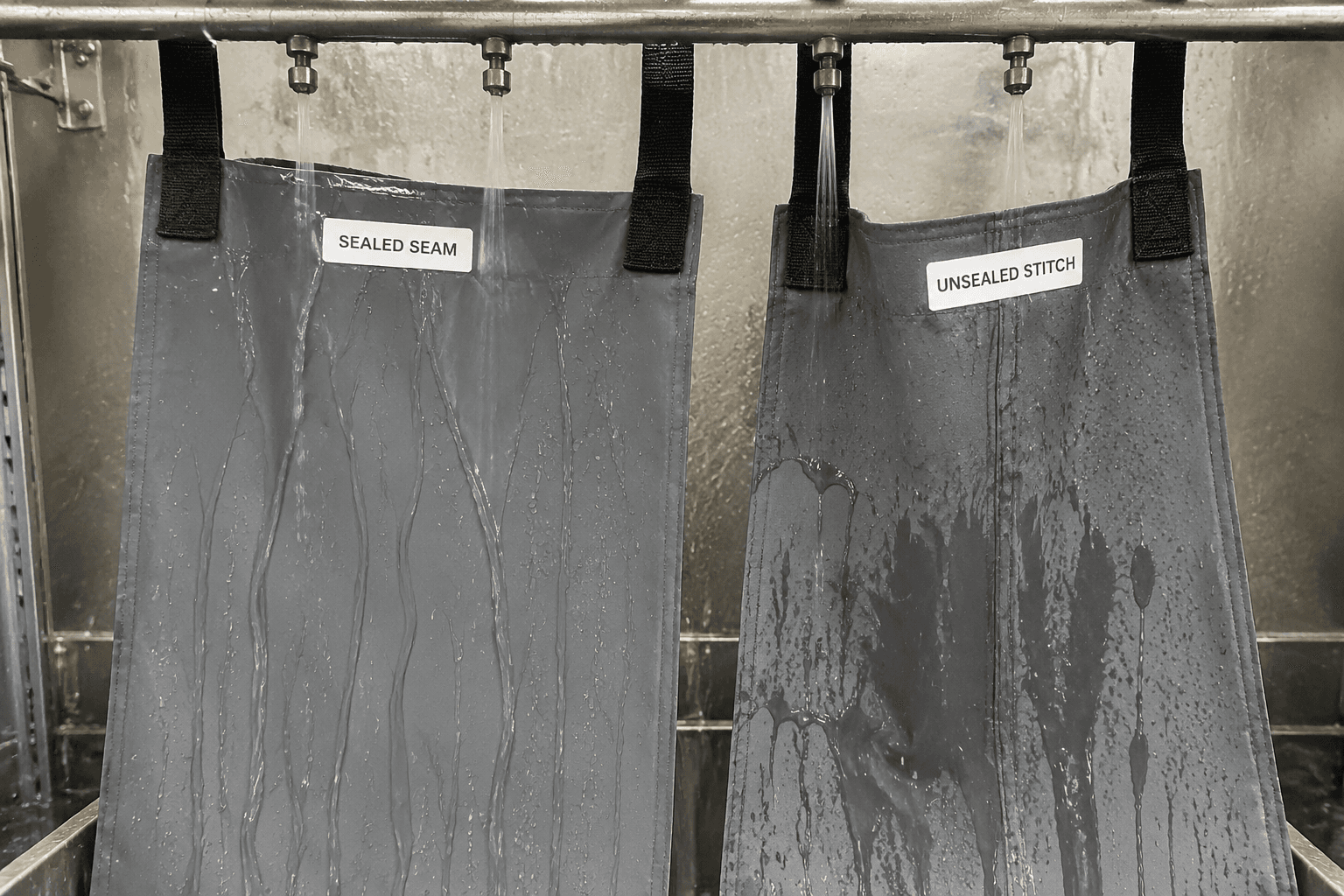
Construction matters as much as fabric. Straight stitch density, reinforced pocket corners, bar tacks at stress points, and pre-shrunk fabric reduce early failure. Long waist ties should be wide enough to tie securely but not so long that they drag. Neck straps should be adjustable and easy to replace because neck wear is often the first failure point in daily kitchen apron hygiene programs.
- Cotton twill: 220-280 gsm, good for hot wash and grease removal.
- Poly-cotton twill: 190-240 gsm, better for faster drying and lower shrinkage.
- Canvas or denim: 10-12 oz, stronger visual identity but slower to launder.
- Coated fabrics: useful for wet areas, but not always suitable for high-heat wash.
- Reinforcement details: bar tacks, doubled pocket openings, and pre-shrunk panels.
Clean apron protocol for food service teams
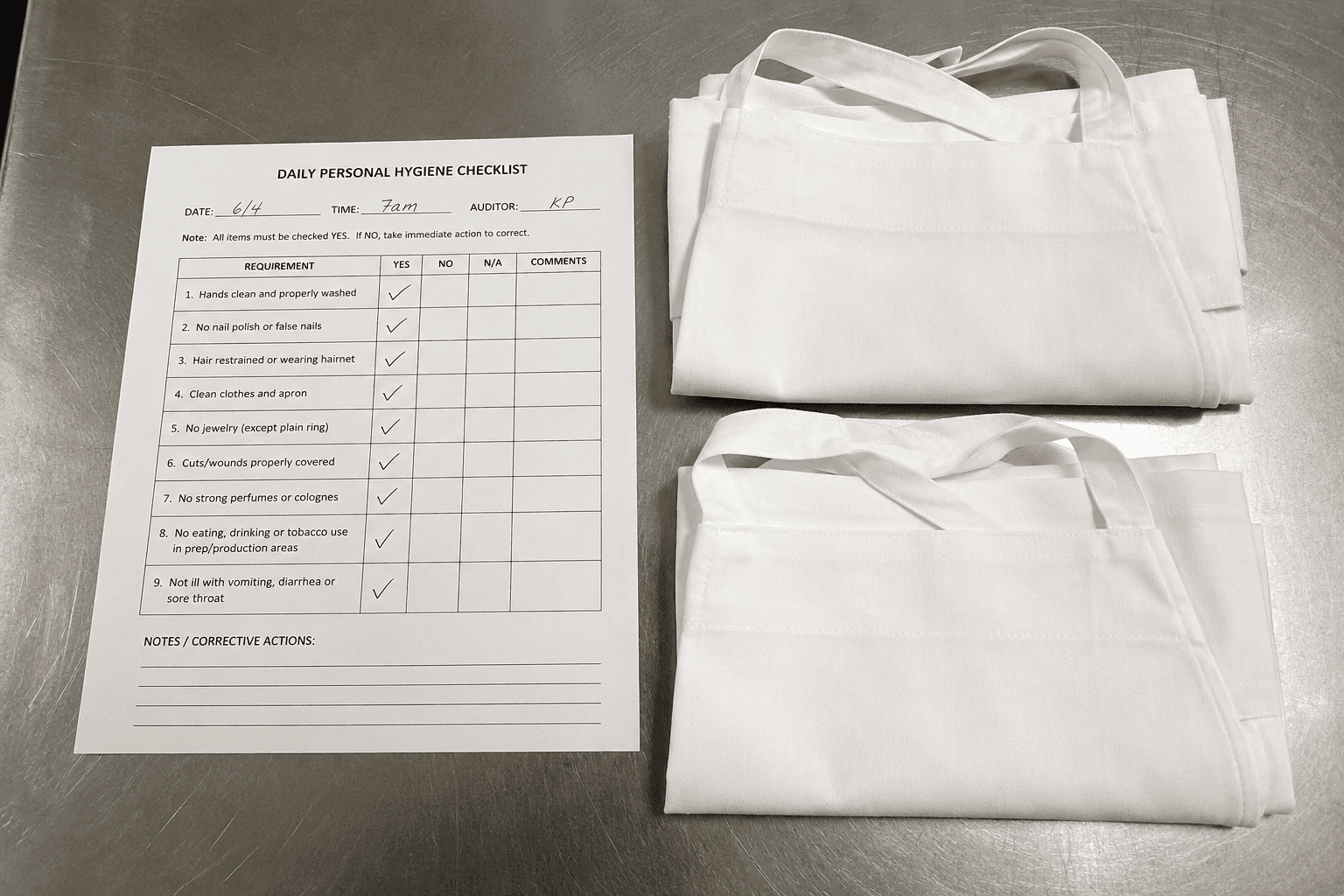
A clean apron protocol is only effective if it is simple enough for operators to follow during service. The best programs define when an apron must be changed, where clean stock is stored, and how soiled aprons are collected. Without those rules, even a well-made apron will fail in practice because staff reuse stained garments to avoid walking back to storage.
For multi-shift food service, the most realistic model is not one apron per employee. It is usually 2 to 3 aprons per staff member, with one in use, one in laundry, and one as reserve. In sites with lunch and dinner peaks, the ratio may need to move closer to 3:1 if the laundry cycle is more than 24 hours. That is why apron quantity planning matters at the sourcing stage; otherwise the unit price looks good but the program breaks operationally.
A hygiene protocol should also reflect role separation. Front counter staff, prep cooks, grill staff, and dish team should not share the same apron type if the contamination risk is different. Color coding is useful, but only if the customer can actually enforce it. A black apron may hide stains, yet a light gray apron may reveal dirt earlier and improve replacement discipline. There is no universal answer; the right choice depends on wash frequency, visibility standards, and the buyer's brand posture.
- Issue a fresh apron at shift start, not only when an employee requests one.
- Remove and replace any apron that has visible soil, oil saturation, or food residue.
- Keep clean aprons in a closed bin or sealed shelf, separated from used items.
- Train staff to remove aprons before restroom use, waste handling, or smoking breaks.
- Record apron losses and replacement rate by site so stock planning can be adjusted.
HACCP apron requirements and documentation
A HACCP apron should be treated as part of the site control plan, even if the apron itself is not a regulated device. Buyers in food service often ask for compliance language, but the real need is traceability and consistency. That means the apron spec should include fabric composition, color standard, wash tolerance, and any restrictions on pockets or trims that could trap debris.
Where hygiene audits are serious, the clean apron protocol should support documented washing at defined temperatures and detergent types. For example, a chain may require 60 C wash with chlorine-safe fabric, or 75 C wash for back-of-house garments in high-risk areas. If the apron fabric cannot survive that process, the specification is wrong. Do not assume that a heavier cloth is more hygienic; if it cannot be washed properly, it is a weaker choice.
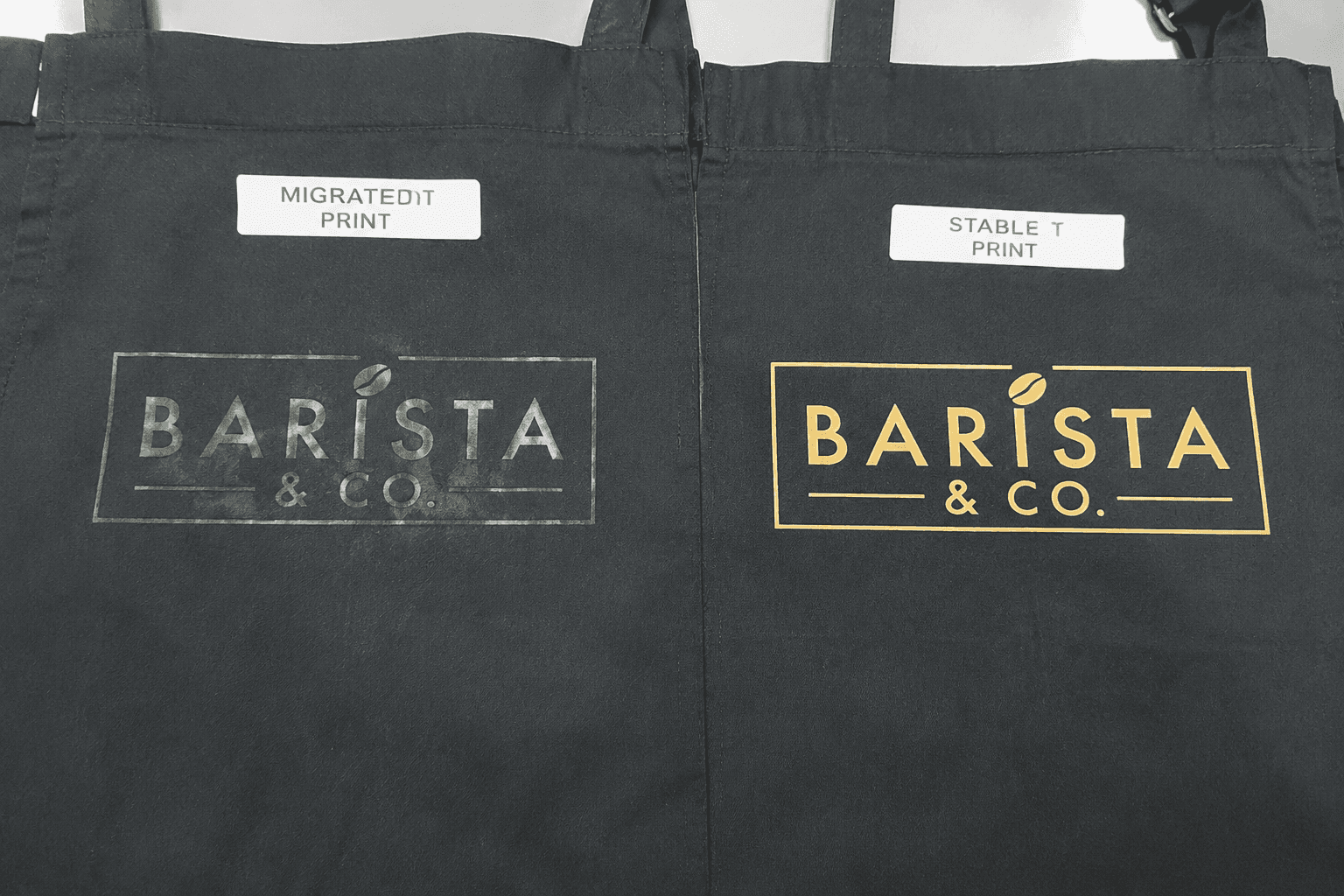
Documentation also matters for supply continuity. Buyers should ask the factory to confirm color lot control, shrinkage data, and test results for color fastness to washing and rubbing. If the program includes embroidery or printed logos, the decoration method should also be checked against wash durability. Heat transfer graphics may look sharp on day one, but embroidery usually survives laundering better for a restaurant apron program that expects repeated commercial cycles.
- Ask for fabric composition and gsm or oz data on every sample and production order.
- Set wash test expectations, typically 30, 50, or 75 cycles depending on channel.
- Require colorfastness confirmation for washing, rubbing, and perspiration.
- If logos are applied, verify whether embroidery, print, or woven label is best for the wash standard.
- Confirm the apron does not include loose trims, long fringes, or deep debris-catching folds.
Laundry cycles, replacement rules, and lifecycle cost
Most apron hygiene failures come from weak lifecycle planning, not from poor sewing alone. If a buyer plans only for purchase price, the site will usually run out of clean inventory or keep using tired aprons past their useful life. For a standard food service apron, a realistic replacement cycle may be 6 to 12 months depending on wash frequency, stain exposure, and fabric weight. In heavy-use kitchens, some aprons need replacement after 3 to 6 months if the visual standard is strict.
The best way to evaluate cost is by cost per wear, not cost per piece. An apron bought at $2.80 that lasts 35 washes may cost less in the long run than a $4.10 apron that lasts 70 washes, especially if it dries faster and needs fewer backup units. Lead time also affects cost because late delivery forces emergency local purchasing, which is usually 20 to 40 percent more expensive than planned import replenishment.
From a production standpoint, factories should understand the buyer's required delivery window. If the MOQ is 1,000 pieces and lead time is 25 to 35 days after sample approval, then order timing must account for shipping mode, customs clearance, and pre-season stock build. In many China-made custom apron programs, a FOB price around $2.20 to $5.50 per piece is normal depending on fabric weight, decoration, pocket count, and packaging. The buyer's real cost, however, depends on how many extra units are needed to cover laundry rotation and defect allowance.
- Plan 1.5 to 2.5 aprons per employee for ordinary food service operations.
- Allow more stock for sites with 48-hour laundry turnaround or split shifts.
- Track replacement by wear-out, staining, shrinkage, strap failure, and logo degradation.
- Use the same approval standard for first order and reorder to prevent color drift.
- Build a 2 to 5 percent overage allowance into the PO for size mix and damage.
Sourcing custom aprons for food service apron standards
When a buyer orders custom aprons from China, the sourcing brief should be more specific than a style reference image. To support apron hygiene food service requirements, the factory needs clear instructions on fabric type, weight, size, stitching, pocket layout, logo method, and wash target. If the brief is vague, the sample may look acceptable but fail in daily use because it was built for appearance rather than sanitation workflow.
A practical sourcing sheet should state whether the apron is for chef wear, cafe service, deli counter, or industrial kitchen use. It should define whether pockets are allowed, how many, and at what depth. Deep patch pockets are convenient for front-of-house staff but can trap crumbs and tools in a prep area. For some programs, the right answer is a plain front with no pocket at all. The cleaner the process, the fewer unintended hygiene problems appear later.
For bulk buyers, the negotiation should focus on repeatability. Ask for pre-production sample approval, shade band tolerance, needle detection if required, and packing method that keeps clean stock separated from transit dust. If the order is 2,000 pieces, the factory can usually support custom sizing, woven labels, and individual polybagging, but the buyer should confirm the added cost upfront. In a common factory model, plain stock aprons may start near $1.70 to $2.30 FOB, while fully customized, heavier-weight, embroidered versions can move toward $4.50 to $7.00 FOB depending on fabric and trim.
- State the end use: prep kitchen, service floor, coffee bar, bakery, or catering.
- Specify fabric weight, shrinkage limit, and wash temperature in the tech pack.
- Decide whether pockets are permitted, and if so, how many and how deep.
- Request sample testing for colorfastness, stitch strength, and logo durability.
- Confirm MOQ, reorder lead time, carton pack, and reserve fabric availability before approval.