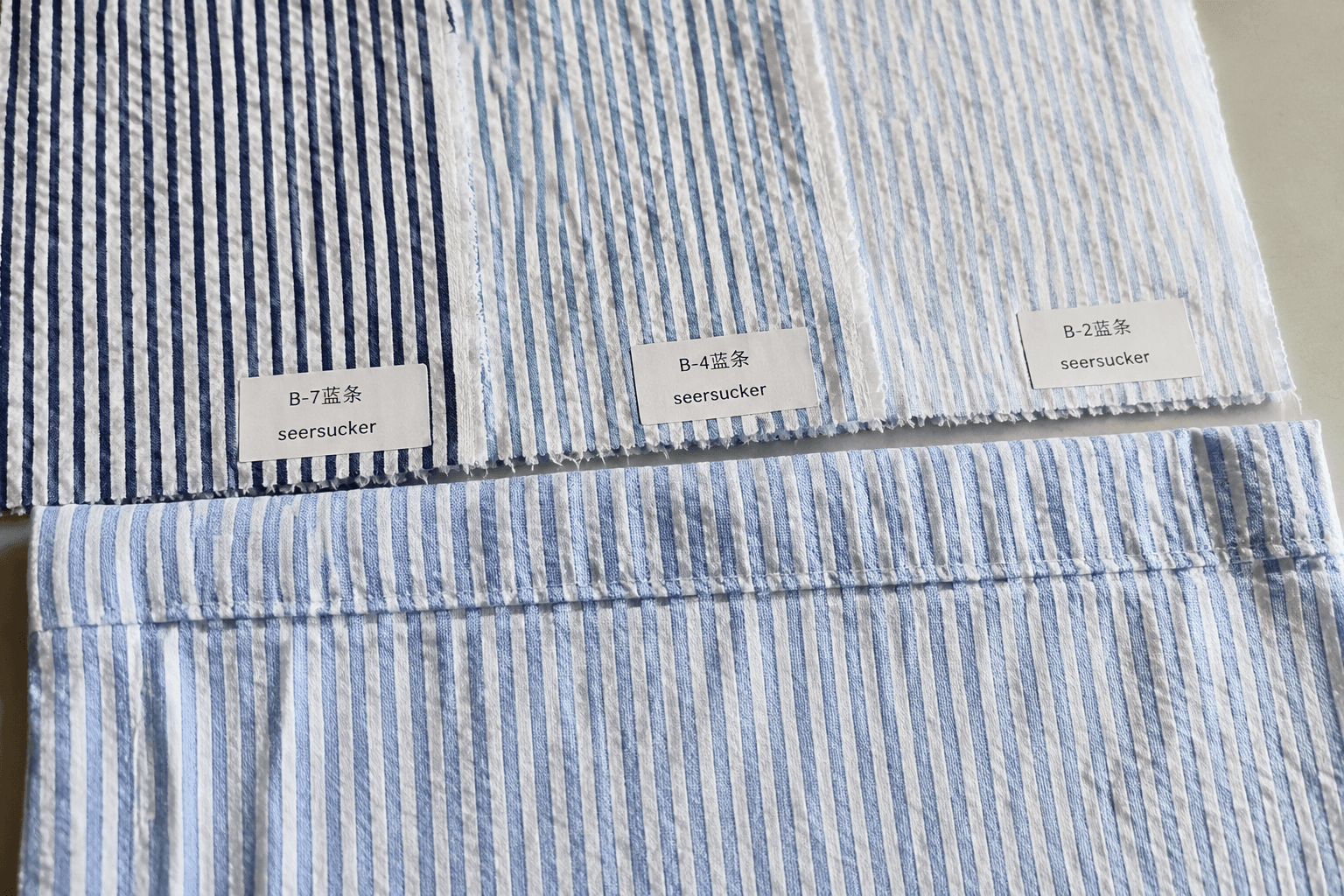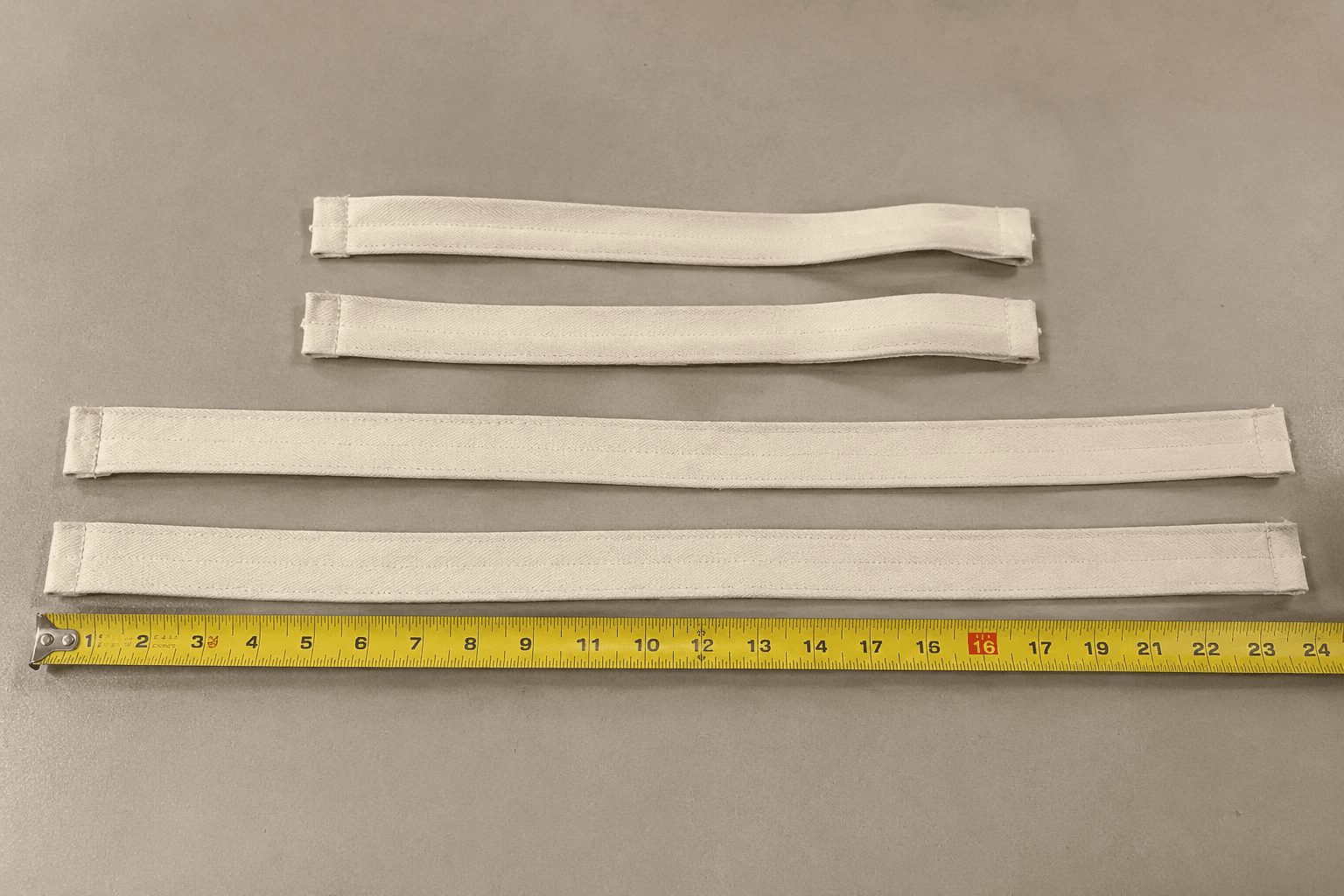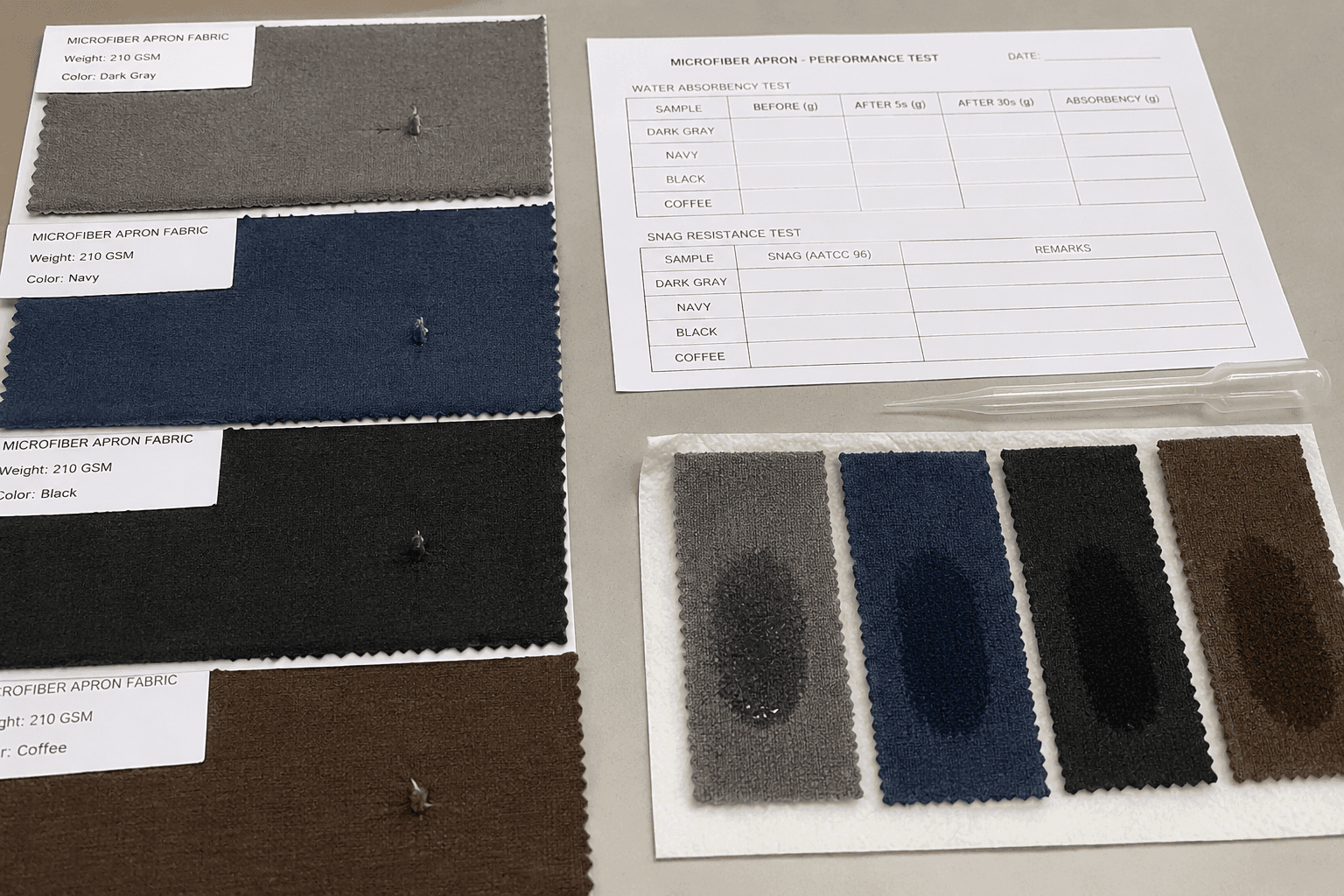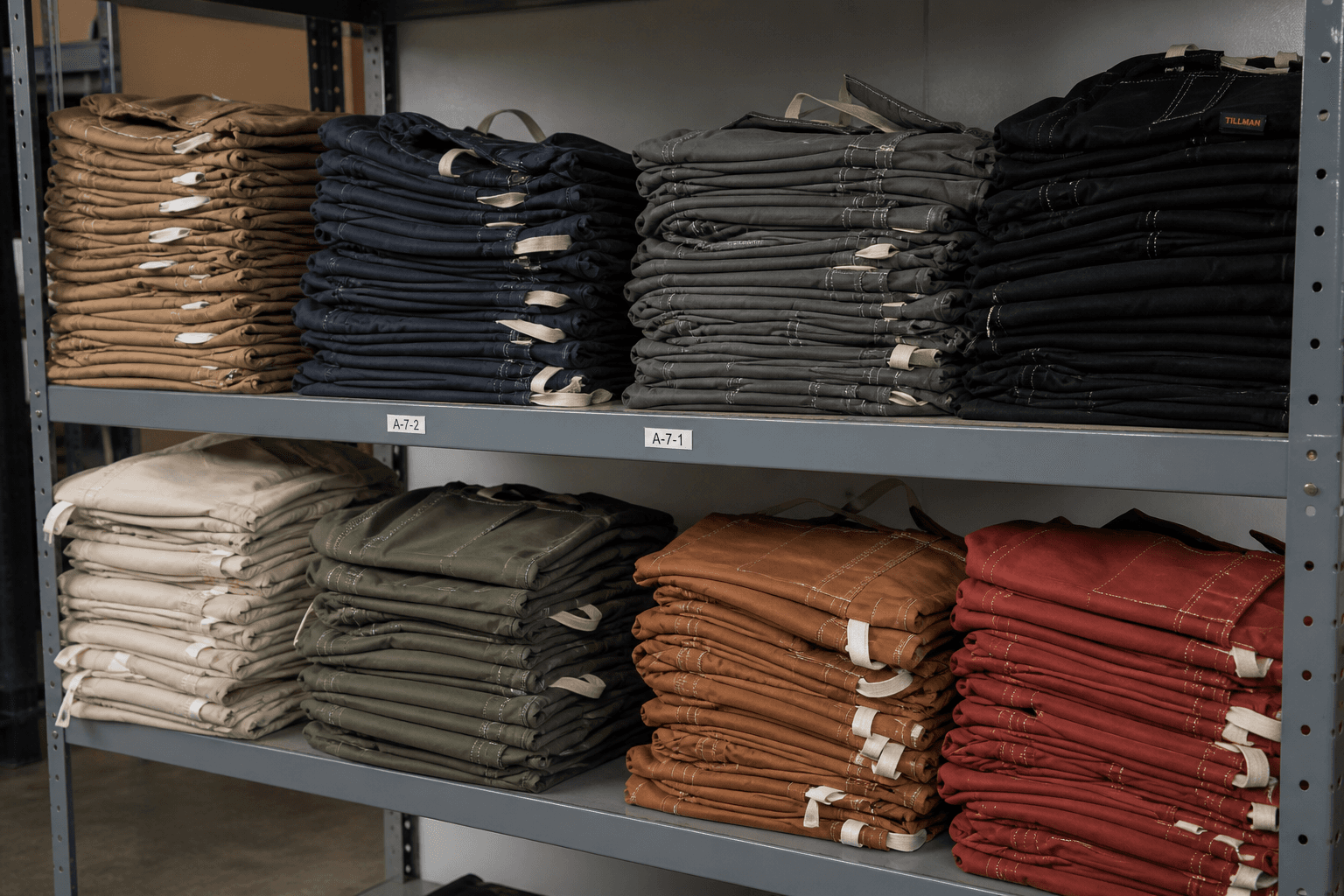
For apron buyers, stripe is a material-control issue before it is a design choice. Stripe method affects fabric MOQ, yarn booking, sampling time, marker efficiency, pocket placement, seam appearance, and whether a repeat order placed 90, 180, or 270 days later will still match the approved bulk standard. If stripe width, color sequence, or fabric construction remains open during development, the cost usually appears later as extra samples, excess fabric, delayed shipment, or claims on replenishment stock.
The core sourcing decision is simple: build the stripe into the cloth with dyed yarns or apply it later by printing on a base fabric. Both routes are used for bib aprons, waist aprons, chef aprons, and cross-back aprons, but they perform differently in mill MOQ, lead time, wash durability, seam clarity, and lot-to-lot continuity. A first quote that is $0.40 to $0.85 per piece lower can become the more expensive option if it creates redevelopment, split lots, airfreight, or rejected repeat stock.
This article stays strictly on aprons and apron procurement. It explains when yarn dyed stripe aprons justify higher opening commitment, when printed stripes are the smarter test-order choice, how to set usable alignment tolerances for pockets and bib panels, and how to control shade continuity on repeat POs. The objective is not an attractive sample only; it is an apron SKU that can be reordered with stable cost, quality, and lead time over multiple buying cycles.
- Woven stripes usually give sharper definition, cleaner hems, and stronger reorder control, but custom apron fabric commonly starts at 1,500 to 3,000 meters per colorway.
- Printed stripes are often the practical route for 300 to 1,000 piece launch orders because artwork changes are faster and fabric commitment is lower.
- Reorder stability depends on sealed bulk standards for lab dips, stripe sequence, GSM, width, shrinkage, handfeel, and wash results; photos are not a control standard.
- Alignment rules should be written for center front, bib seam, chest pocket, waist pocket, and ties before cutting starts, with stripe offset tolerance stated in millimeters.
- Total program cost matters more than first-PO price: a woven-stripe premium of $0.45 to $1.10 per apron can be cheaper than failed repeats, markdowns, or replacement claims over 12 months.
Why yarn dyed stripe aprons require a different sourcing plan
Striped aprons cannot be sourced like stock solid-color aprons. A solid 210 GSM polycotton twill bib apron may move across several styles with limited raw-material risk, but yarn dyed stripe aprons depend on a fixed stripe repeat, yarn color sequence, loom setup, and finished width. A change from a 6 mm stripe repeat to 8 mm, or a shift from two colors to three, can trigger new lab dips, a revised weave plan, and another approval cycle.
This changes how buyers should read pricing. For a standard adult bib apron with self neck strap, self waist ties, one chest pocket, and one divided waist pocket, cut-make-trim in China often falls around $1.45 to $2.55 per piece at 1,000 to 5,000 units. Add metal adjusters, contrast bartacks, woven branding, insert cards, or individual barcode labels, and CMT rises. In striped programs, however, fabric is usually the main cost driver, not sewing.
A stock printed stripe on a 180 to 200 GSM twill can support a 500-piece trial with limited material exposure. A custom woven stripe in 100% cotton 16s x 12s twill at 220 to 240 GSM or 65/35 polycotton twill at 210 to 230 GSM may require 1,500 to 2,500 meters before the mill quotes an efficient rate. That is why professional apron buyers should confirm annual volume, reorder frequency, and fabric route before discussing pocket shapes or trim details.
- Commercial striped apron fabrics commonly run from 180 to 280 GSM, with 200 to 240 GSM used often for hospitality bib aprons.
- Printed stripe sample yardage can often be prepared in 7 to 12 days; custom woven stripe sample fabric more often needs 15 to 25 days.
- Bulk sewing usually takes 30 to 45 days after deposit and PPS approval; custom weaving can add 12 to 20 days if yarn is not reserved.
- For continuity apron SKUs, ask at quote stage whether the same stripe can be repeated within 60 to 75 days with comparable shade and handfeel.
Woven vs printed pattern: which stripe method fits the apron program
Woven stripes are made by dyeing yarn first and then weaving the stripe into the cloth. For aprons, this normally gives sharper stripe edges, more depth at close view, and a cleaner appearance at turned hems, topstitched pocket openings, and bib joins. Because the pattern exists through the fabric rather than mainly on the surface, woven stripes usually hold their character better after repeated domestic washing or industrial laundry. That matters for café, bakery, butcher, kitchen, and florist apron programs that expect weekly wash cycles.
Printed stripes start with a base cloth, usually cotton or polycotton twill, and apply the stripe later by screen, rotary, or digital print. This route is commercially useful because entry MOQ is lower and artwork changes are faster. A buyer can test several stripe widths or colorways on the same 190 GSM base without paying for dedicated loom setup. For launch programs, event aprons, or seasonal retail capsules, that flexibility can outweigh the long-term benefits of weaving the stripe.
The trade-off is repeatability. Printed stripes are more sensitive to print registration, base-cloth variation, wash fade, and rubbing fastness. A navy stripe printed on a natural ground may look acceptable in the sales sample but soften after 10 to 20 washes, especially on a lighter-weight base. If the apron is reordered four to six months later on a different fabric lot, the ground shade or stripe edge may shift enough to look mismatched in a uniform issue room or on a retail wall. For planned replenishment, woven construction often earns back its higher opening cost by reducing repeat-order risk.
- Use woven stripes for apron SKUs expected to repeat across at least two or three purchase cycles.
- Use printed stripes for launch orders, event programs, or demand tests below about 1,000 pieces.
- For printed aprons, approve wash fastness, dry and wet rubbing fastness, and registration stability before bulk.
- Expect woven stripes to look cleaner at bib seams, pocket turns, side hems, and narrow self-fabric ties.
MOQ, fabric yield, and true landed cost per striped apron
Piece MOQ alone is not enough for striped apron buying. Buyers need fabric MOQ in meters, usable fabric width, and realistic apron yield. A custom woven stripe in 65/35 polycotton twill at 215 GSM may open at 1,500 to 2,000 meters per colorway if the stripe repeat is straightforward. A three-color stripe in 100% cotton canvas at 240 to 260 GSM can push minimums to 2,500 or 3,000 meters, especially if the mill must use non-stock yarn counts or wider stripe spacing.
Yield then determines the true opening commitment. A standard adult bib apron often consumes about 0.80 to 0.95 meter at 150 cm fabric width once hems, practical marker layout, and cutting loss are included. A longer chef apron, cross-back apron, or style with broad self ties can exceed 1.00 meter. On a 2,000-meter MOQ, the actual commercial order may therefore land around 2,050 to 2,350 aprons after allowing for testing, reserve fabric, and normal cutting waste. That is materially different from a nominal 500-piece sewing minimum.
Cost also needs to be read over a 12-month program, not only on the opening PO. A basic bib apron using stock printed stripe fabric may land around $3.20 to $4.80 FOB at 1,000 pieces, depending on pockets, labels, and packaging. The same silhouette in custom woven stripe may quote around $3.85 to $5.95 FOB. If the woven route avoids one additional sample round, one failed reorder, or 200 to 300 units of dead stock from a mismatched second lot, its total annual cost may be lower despite the higher first price.
- Ask for fabric MOQ in meters, apron yield per meter, cutting loss, and usable fabric width before approving development.
- Confirm whether the quote is based on a fully custom mill run or a combined run that may not be repeatable on the same lead time.
- Check whether leftover stripe fabric can be held for 90, 180, or 365 days and whether storage fees apply.
- Separate fabric lead time, sewing lead time, and final inspection booking in the quotation so delay risk is visible.
Shade continuity and reorder control for yarn dyed stripe aprons
Repeat consistency is where many striped apron programs either become stable or become expensive. Even with yarn dyed stripe aprons, shade continuity is never automatic. Cotton origin, yarn absorbency, dye-house loading, finishing chemistry, and humidity can all move the final look from lot to lot. On a solid apron, small shifts may be tolerated. On a stripe, slight variation is easier to detect because adjacent bands create direct visual comparison.
The most reliable control method is to seal several standards from the first bulk order. Buyer and factory should each retain approved lab dips for every stripe color, a signed cutting from the actual bulk fabric, wash-tested swatches, and roll records showing lot number, finished width, GSM, and shrinkage. For visible retail or uniform programs, shade should be reviewed under at least D65 and warm-store lighting, because navy-on-natural or black-on-ecru combinations can read differently under restaurant lighting than in an office sample room.
Construction stability matters as much as color. If the repeat lot is 10 GSM lighter or shrinkage moves from 3% to 5%, stripe spacing and visual density on the finished apron can read differently even when the dye shades are close. Buyers should therefore define a reorder standard that covers composition, yarn count, yarn density, finished GSM, width, shrinkage, finish handfeel, and stripe sequence. For programs with quarterly repeats, yarn or greige reservation can cut lead time and reduce shade drift.
- Seal one approved bulk fabric standard from the first shipment and reference it on every repeat PO.
- Record composition, yarn count, density, finished width, GSM, shrinkage, and finish on the fabric approval sheet.
- Use a working inspection rule such as AQL 2.5 for major defects and AQL 4.0 for minor defects, with shading and stripe distortion defined in advance.
- If annual demand is stable, discuss yarn or greige reservation to shorten repeat lead time by about 7 to 12 days.
Stripe placement, pocket matching, and inspection rules before cutting
Many stripe claims do not start at the mill; they start on the cutting floor. A correct fabric can still produce a poor apron if the marker ignores stripe direction or if the sewing line applies only general tolerance. Buyers should define where matching matters most: center front, bib seam, chest pocket top edge, waist pocket join, and the visible starting point of neck or waist ties. If these rules are missing from the tech pack, the factory will usually prioritize marker efficiency over engineered stripe placement.
Marker planning is particularly important on vertical stripes. Body panels, bibs, and pockets normally need the same grain direction unless the design intentionally uses contrast placement. Pocket matching is also a cost decision, not a default expectation. If a buyer requires chest and waist pockets to match the body stripe within ±3 mm, the factory may need more manual matching or reduced marker efficiency on visible panels. That adds labor and fabric usage. For price-sensitive promotional aprons, ±5 to 6 mm may be commercially acceptable, or the buyer may require only the pocket top edge to remain level while side alignment is allowed to float.
Inspection should happen before final packing, not only at end line. First-cut panel photos, a pre-production sample made from actual bulk fabric, and in-line checks during pocket attachment help prevent late disputes. On striped aprons, small panel-stage errors become highly visible when 24, 36, or 48 finished pieces hang together in a showroom, store set, or restaurant issue room. It is cheaper to stop misalignment before sewing than after pressing, ticketing, and export carton packing.
- Define must-match zones on the tech pack: center front, bib join, chest pocket, waist pocket, and top hem.
- State stripe offset tolerance in millimeters; common working ranges are ±3 mm for premium programs and ±5 to 6 mm for standard volume.
- Expect roughly 2% to 5% extra fabric usage when engineered pocket matching is required.
- Request PPS approval from actual bulk fabric and in-line photos of first-cut panels for high-visibility striped aprons.
When printed stripes are the better apron buying decision
Printed stripes are not a downgrade by default. In many apron programs they are the correct commercial choice. If the order is for a restaurant opening, trade event, promotional campaign, seasonal gift line, or limited retail drop with uncertain replenishment, custom weaving may create unnecessary fabric exposure. In those cases, a proven stock base fabric with printed stripes can reduce development time, lower opening spend, and keep MOQ closer to true demand.
Printed construction is also useful when the visual target is difficult to weave efficiently. Fine pinstripes, distressed bars, faded vintage effects, and irregular hand-drawn lines are often easier and less costly to achieve by print than by loom setup. If the apron is intended for moderate-duty use rather than long-cycle uniform replacement, a well-controlled printed fabric can meet the brief. The approval standard simply needs to match the method: print sharpness, registration, crocking, wash fastness, and base-cloth stability matter more than woven-stripe depth.
A practical B2B path is to launch in print and convert to woven later if demand becomes stable. A buyer may test 400 to 800 aprons in a printed version, track sell-through or reorder rate for one season, and then move to woven construction once annual demand supports a 1,500- to 3,000-meter fabric commitment. This staged model protects cash flow while preserving a route to stronger continuity once the apron SKU proves itself.
- Use printed stripes for opening orders below about 1,000 pieces when annual demand is still unproven.
- Approve wash, crocking, and registration tests before bulk; appearance on the sales sample is not enough.
- Review after the first season whether annual reorder volume supports conversion to woven stripes.
- Keep printed stripe programs on stable, proven base fabrics to reduce lot-to-lot variation on repeats.
Approval workflow that makes striped apron reorders safer
The strongest striped apron programs follow a strict approval sequence. First approve fabric construction and stripe repeat. Then approve cut-panel placement and must-match zones. Then approve the PPS made from actual bulk fabric. When one of these stages is skipped, uncertainty usually returns on the reorder, when teams disagree about whether the second lot is close enough to the first.
For yarn dyed stripe aprons, the approval file should include final color standards, stripe sequence, stripe width, finished fabric width, target GSM, shrinkage tolerance, pocket alignment rule, and inspection standard. This front-end discipline usually saves both time and money later by reducing sample resets, replacement claims, chargebacks, and urgent freight. In apron sourcing, one extra control step before bulk is usually cheaper than one disputed repeat shipment after goods are packed.
Buyers should also align material planning with the expected reorder cycle. If a program is likely to repeat every 90 to 120 days, the factory should know immediately after first shipment whether yarn booking, greige reservation, or leftover fabric retention is required. Reorder control is not achieved by artwork approval alone; it depends on locking the material standard while the first bulk lot is still current and fully documented.
- Approve stripe lab dips before making sales samples if the apron is intended to become a continuity SKU.
- Seal a bulk fabric swatch with lot reference on both buyer and factory sides.
- Approve a PPS from actual production fabric, not substitute sample yardage.
- Write shrinkage target, finished GSM, stripe spacing, and alignment tolerance directly into the PO or tech pack.
- For stable annual programs, request quotes for both standard lead time and lead time with yarn or greige reservation.