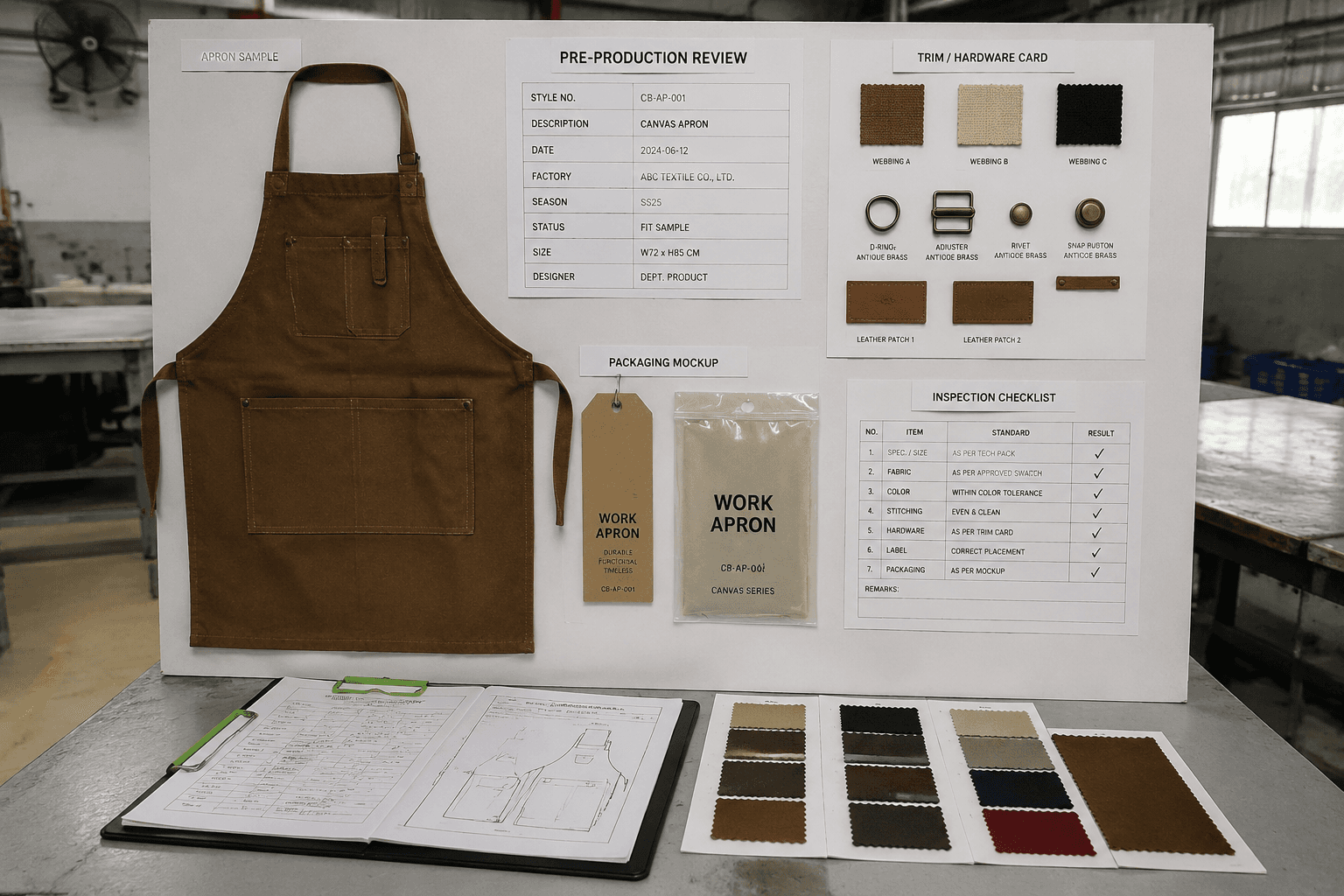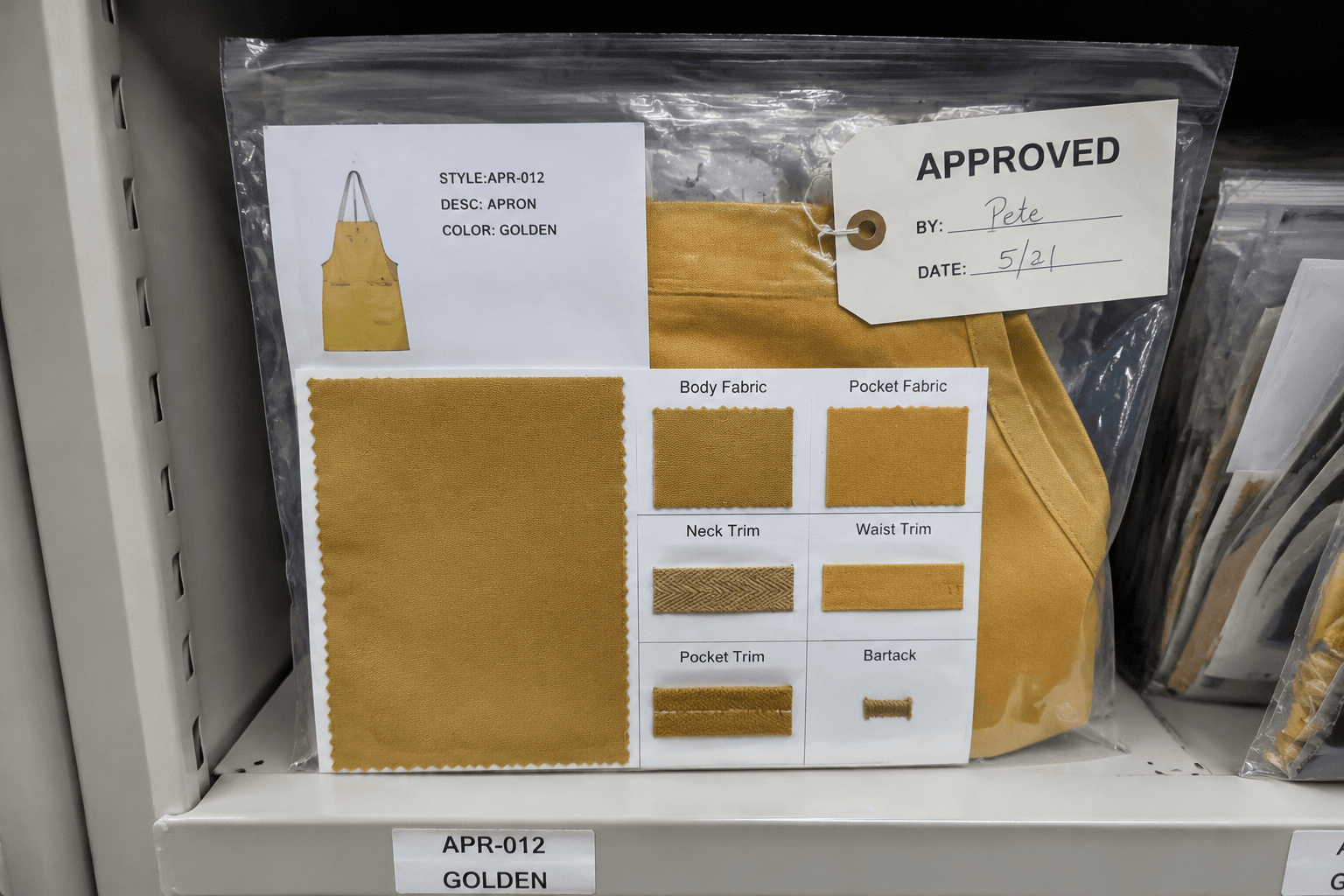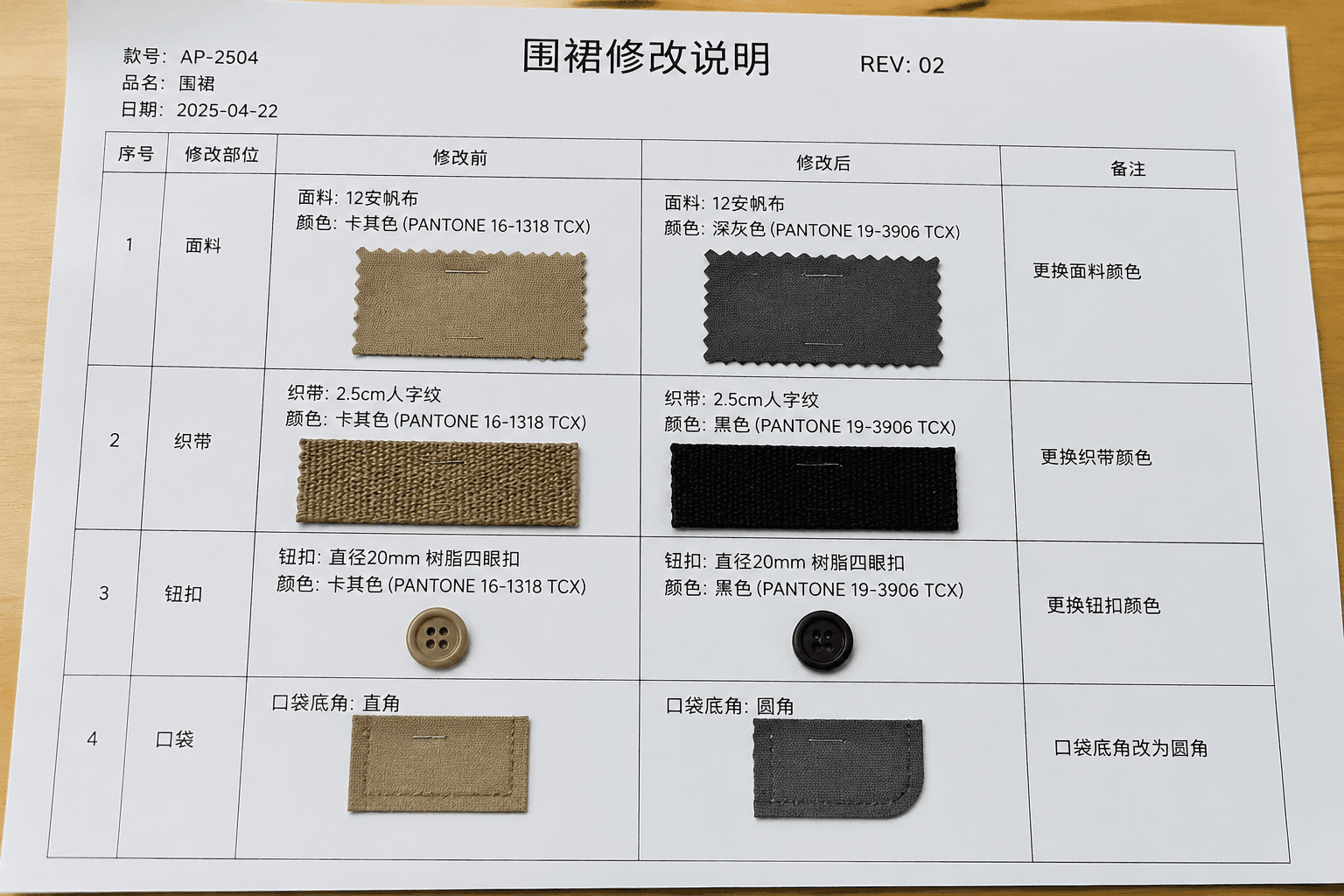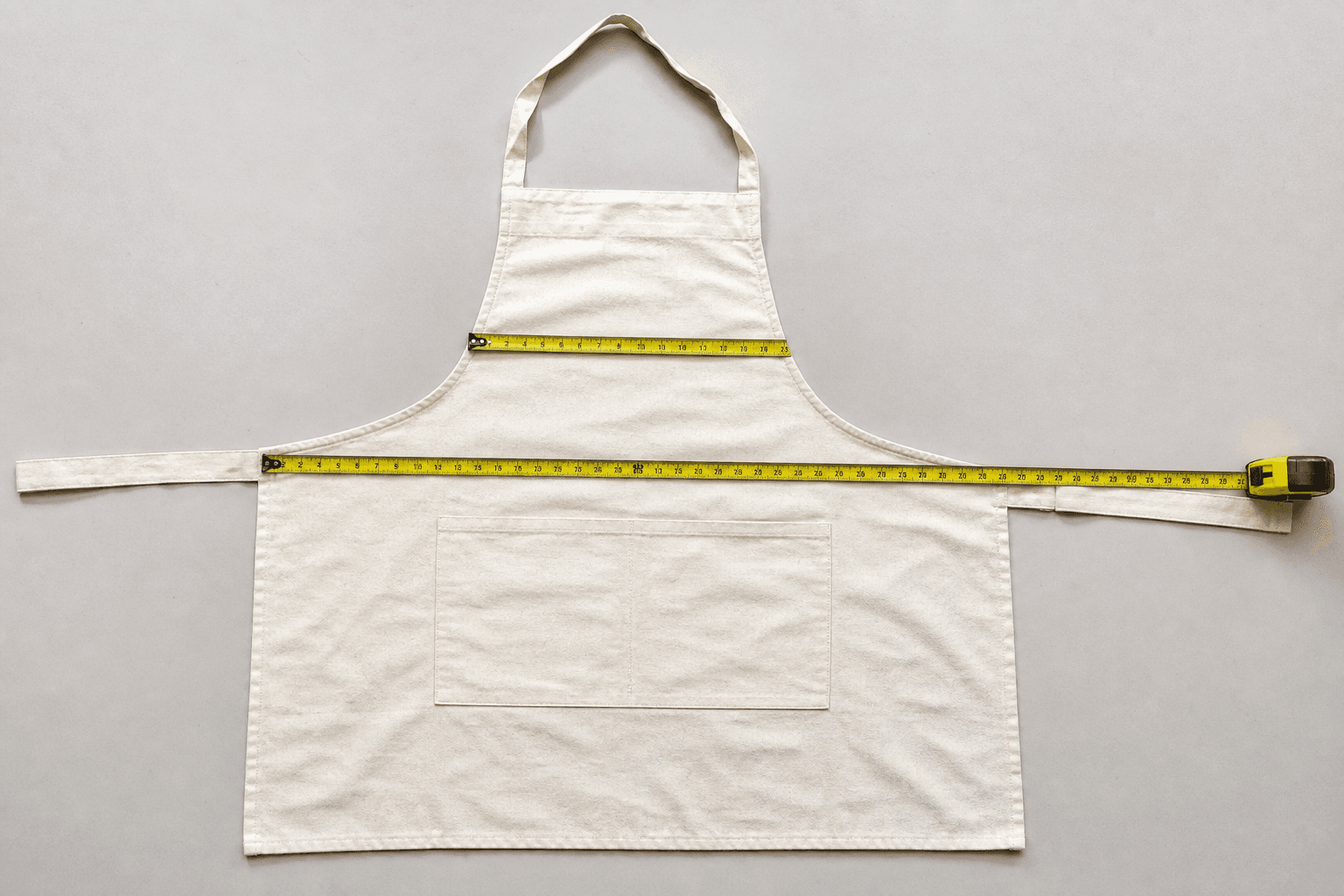
In apron sourcing, fabric is usually easier to replace than hardware. A mill can often book 240-300 GSM poly-cotton twill, 8-12 oz cotton canvas, or 280-340 GSM denim in 5-7 days. Hardware is slower and less forgiving. One custom buckle, logo snap, odd-size slider, or non-standard eyelet can add 7-14 days before cutting starts, especially when plating, assembly, or incoming inspection is required.
That is why standardized apron hardware is an operating decision, not just a costing exercise. Shared D-rings, sliders, snaps, rivets, eyelets, and hook clips let a factory convert style-specific trim into a usable stock pool across the apron range. This matters because hardware suppliers quote by part, finish, size, and plating batch, not by finished apron order. A 3,000-piece apron PO can still trigger a 5,000-10,000-piece commitment on a single custom metal component.
The question is not whether every apron should use identical trim. The real decision is when to standardize, which parts to standardize first, and how many active SKUs a buyer can carry before unique hardware starts slowing replenishment and creating dead stock. Buyers who answer that with MOQ, usage, AQL, and lead-time data usually get lower trim write-offs, faster PO release, and a more predictable repeat-order calendar.
- Standardize hidden and functional trims first, especially sliders, D-rings, snaps, rivets, and eyelets used across repeat apron styles.
- Most apron programs see a clear gain once 3 or more active styles reorder every 60-120 days and share similar strap construction.
- A custom hardware MOQ of 5,000-10,000 pcs becomes inefficient when one apron style only consumes 800-1,500 pcs per production run.
- Shared approved trims can shorten repeat-order lead time from about 28-33 days to 20-23 days when reserve stock is held at the factory.
- To make standardized apron hardware work, freeze strap width, finish, rivet size, attachment method, supplier, and inspection standard in the BOM.
- Measure results through fewer trim SKUs, lower dead-trim value, faster replenishment approval, and higher cross-style trim consumption.
1. When standardized apron hardware becomes a sourcing control issue
A single apron style can absorb custom hardware without much disruption. The economics change when a buyer is managing several live SKUs at once, such as a 240 GSM waist apron, a 10 oz canvas bib apron, a 300 GSM denim cross-back apron, and a waterproof salon apron in 210 GSM polyester. If each style uses a different strap width, metal finish, snap type, rivet size, and closure method, the factory must buy, inspect, store, and issue multiple trim codes that differ only slightly in function.
The visible cost increase often looks small. In many apron programs, moving from shared trim to style-specific trim raises hardware cost by only $0.08-$0.28 per apron. The real exposure sits in MOQ and carryover. Common in-stock sliders or D-rings may be flexible at 2,000-3,000 pcs per size and finish, but custom plating, logo tooling, or a non-standard inside width usually pushes MOQ to 5,000-10,000 pcs. Once that happens, the buyer is effectively funding future trim demand before future apron orders are confirmed.
This is where standardized apron hardware becomes commercially useful. If four apron styles share one 25 mm webbing system, one matte black slider, one matching D-ring, and one double-cap rivet size, leftover trim from one PO can be consumed by the next style. Instead of four isolated trim balances, the buyer holds one common hardware pool that supports the whole apron program.
- Typical in-stock apron hardware MOQ: 2,000-3,000 pcs per size and finish
- Typical custom apron hardware MOQ: 5,000-10,000 pcs per specification
- Typical hardware pack cost on aprons: $0.22-$0.78/pc depending on material, finish, and order size
- Typical delay caused by new trim approval on repeat orders: 3-7 days before cutting release
2. Which apron trims should be standardized first
The best place to start is with parts that are functional, repetitive, and low in sales value when made unique. On most aprons, that means sliders, D-rings, snaps, rivets, eyelets, hook clips, and end caps. These trims affect purchasing efficiency because they appear across bib aprons, waist aprons, cross-back aprons, and utility aprons, yet buyers rarely gain a pricing advantage from making them style-specific.
The next priority is finish alignment. Matte black, antique brass, brushed nickel, and gunmetal are common choices across hospitality, cafe, retail, salon, and utility aprons. When a buyer locks one finish family across core replenishment styles, the factory can hold deeper approved stock with less risk of obsolescence. This also reduces mixed-finish claims on repeat orders, especially when several production lines are sewing similar aprons at the same time.
Visible signature hardware needs a stricter test. A custom cast buckle, logo snap cap, oversized suspender clip, or decorative front closure may belong on a premium apron line with stable annual volume above 24,000 pcs. It usually does not belong on a core replenishment SKU that only ships 1,000-3,000 pcs per run. In practice, many buyers can remove 70-80% of avoidable trim complexity by standardizing the hardware system and keeping only one visible branded element unique.
- Best first candidates: sliders, D-rings, snaps, rivets, eyelets, hook clips
- Second-wave candidates: end caps, suspender clips, finish families, common buckle backs
- Poor sharing candidates: custom cast buckles, logo molds, mixed-finish sets, oversized decorative hardware
- Most common shared strap widths in apron sourcing: 20 mm, 25 mm, 32 mm
3. The break-even math for standardized apron hardware across multiple styles
The break-even point usually appears when annual volume is split across too many apron styles. One bib apron selling 24,000 pcs per year can often justify custom hardware because the trim turns fast enough to absorb MOQ exposure. The same annual volume spread across 6 styles at 4,000 pcs each creates a very different inventory profile. If every style uses its own slider, D-ring, and snap set, the first production cycle can leave excess hardware sitting for 6-12 months.
A practical rule is to compare annual hardware usage to supplier MOQ. If annual consumption for one unique trim stays below 1.5x MOQ, that item usually carries a high dead-stock risk unless the buyer accepts long carryover. If annual usage is above 3x MOQ and reorder timing is stable, unique hardware can still make sense. Between those points, shared trim is usually the safer sourcing choice for aprons, especially where forecasts shift by season or by customer account.
Consider a realistic case. A buyer runs three bib aprons and two waist aprons, each ordered in drops of 2,500-4,500 pcs, for combined annual demand of 18,000 pcs. If all five styles share one 25 mm matte black hardware set, the factory can buy 20,000 sets in one batch, inspect the lot once, and allocate it across several POs. Compared with five separate trim specifications, buyers often save $0.05-$0.16 per apron and avoid 1,500-6,000 pcs of dead trim in a year.
- Below 1.5x annual MOQ usage: unique hardware usually creates dead-trim risk
- Between 1.5x and 3x MOQ: shared hardware is often the stronger sourcing choice
- Above 3x MOQ: unique hardware may be justified when margin and forecast accuracy are strong
- Typical pooled buying saving: $0.05-$0.16/pc
- Typical excess balance from one custom trim after first run: 800-3,000 pcs
4. How standardized apron hardware shortens lead time and simplifies AQL
Repeat-order speed depends on what the factory can release as soon as the PO lands. Stock-supported apron fabrics such as 7-12 oz canvas, 240-300 GSM twill, and standard denim can often be booked in 5-7 days. Hardware is usually the slower path. If a specific buckle, plated snap, or odd-width slider must be reordered, the timeline stretches while the trim vendor confirms stock, schedules plating or assembly, ships to the factory, and waits for incoming inspection clearance. That sequence commonly adds 7-14 days before cutting starts.
With standardized apron hardware, the factory can hold a controlled reserve instead of buying only against each PO. For steady buyers, that reserve is often 500-2,000 sets of core hardware, equal to roughly 15-30 days of trim coverage. That reserve lets the factory release cutting and sewing faster on replenishment orders where fabric, labels, and packaging are already approved.
Quality control becomes simpler as well. Instead of checking several near-identical sliders or D-rings, the factory can inspect one approved specification against one standard. For apron metal trim, a workable incoming plan is AQL 2.5 for appearance and function, with verification on burrs, plating adhesion, finish consistency, inside-width tolerance, thickness, and fit with the approved webbing. Fewer trim codes mean fewer issuance errors, fewer mixed finishes on the sewing floor, and fewer avoidable claims at final inspection.
- Typical repeat-order lead time with approved shared hardware in stock: 20-23 days
- Typical repeat-order lead time with style-specific hardware reorder: 28-33 days
- Practical reserve for stable apron programs: 500-2,000 sets of common hardware
- Common incoming trim inspection level: AQL 2.5 for appearance and function
- Key trim checks: burrs, plating adhesion, color consistency, inside width, thickness, webbing fit
5. Build two or three standardized apron hardware families, not one universal pack
Standardization fails when buyers ignore real performance differences between apron categories. A workshop bib apron in 12-16 oz canvas or waxed canvas may need thicker webbing, larger rivets, and stronger hardware than a salon apron in 180-240 GSM polyester or a promotional waist apron in lightweight twill. The objective is not one universal hardware pack. The objective is to remove variation where the function is already the same.
A better structure is to create two or three approved trim families. One can cover light service aprons up to 240 GSM. A second can cover core bib and waist aprons in the 240-320 GSM range or 8-10 oz canvas. A third can cover heavy-duty utility aprons above 340 GSM, 12 oz+ canvas, or styles with leather reinforcement. Within each family, lock the strap width, rivet size, finish code, and supplier list.
This structure keeps trim usable across multiple SKUs without overbuilding low-cost styles. A zinc alloy buckle set that works on a $6.50-$7.80 heavy canvas apron is usually too expensive for a $2.40-$3.10 promotional waist apron. Good hardware standardization follows use case, performance requirement, and FOB band instead of forcing every apron into the same metal package.
- Typical family structure: light service, midweight core, heavy-duty utility
- Common strap width by family: 20 mm for light, 25 mm for core, 32 mm for heavy
- Review slow-moving hardware every 90 days
- Escalate any trim balance older than 180 days for run-down or phase-out
6. Implementation rules for buyers managing multi-style apron replenishment
A hardware standard only works if the data is frozen. Every shared trim should have one internal code, one size, one base material, one finish code, one approved supplier list, and one attachment method in the BOM. Without that discipline, teams start treating similar-looking matte black parts as interchangeable even when inside width, wire diameter, or plating quality differs enough to create production issues.
The approval gate should sit before a new apron style is finalized. If development proposes a 30 mm strap because it looks stronger on a sample, sourcing should check that request against current trim stock, open POs, MOQ exposure, and expected demand over the next 6-12 months. That review often prevents dead trim before the style even enters final costing.
Factories should also issue a regular hardware report for the apron program. Monthly or quarterly reporting should show opening balance, receipts, consumption by style, on-hand balance, stock older than 180 days, and trim tied to discontinued SKUs. Buyers who review those numbers consistently can decide whether to merge a trim into the shared pool, run down the balance on a final order, or stop reordering it entirely.
- Lock these BOM fields: trim code, size, finish, material, supplier, attachment method
- Review any new strap width, finish, snap size, or rivet size before sample approval
- Track aging by buckets: 0-90 days, 91-180 days, 181-365 days, 365+ days
- Check hardware liability before style discontinuation, fabric revision, or packaging change
7. When unique apron hardware still earns its place
Unique hardware still has a valid role in some apron programs. If the metal trim is a visible selling feature, such as a signature logo buckle, a branded snap cap, or a heritage-finish closure used across a premium line, the extra MOQ may be justified. The same applies when the performance requirement is materially different, including waterproof industrial aprons, chemical-exposure salon aprons, or heavy utility aprons that need higher strength at strap and pocket stress points.
The business case still has to hold. If one apron style is forecast at 30,000 pcs annually, carries higher margin, and consumes its custom hardware at more than 3x MOQ, that trim is no longer a slow-moving liability. It becomes a planned program component. The real problem is low-volume uniqueness that adds another trim code without adding measurable sales value, durability improvement, or margin protection.
A practical test is simple. Keep hardware unique when it improves function, supports brand position, or protects enough margin to offset MOQ and carrying cost. If it only creates a small visual difference while introducing another isolated trim code, move it into the shared system. In many repeat B2B apron programs, 60-80% shared hardware coverage is enough to reduce dead trim and speed replenishment without flattening the line.
- Keep hardware unique when it is a proven brand identifier on the apron front
- Keep hardware unique when corrosion resistance, load strength, or safety requirements differ by use case
- Accept custom trim when annual usage exceeds 3x MOQ and reorder timing is predictable
- Target 60-80% shared hardware coverage before reviewing the remaining visible trims