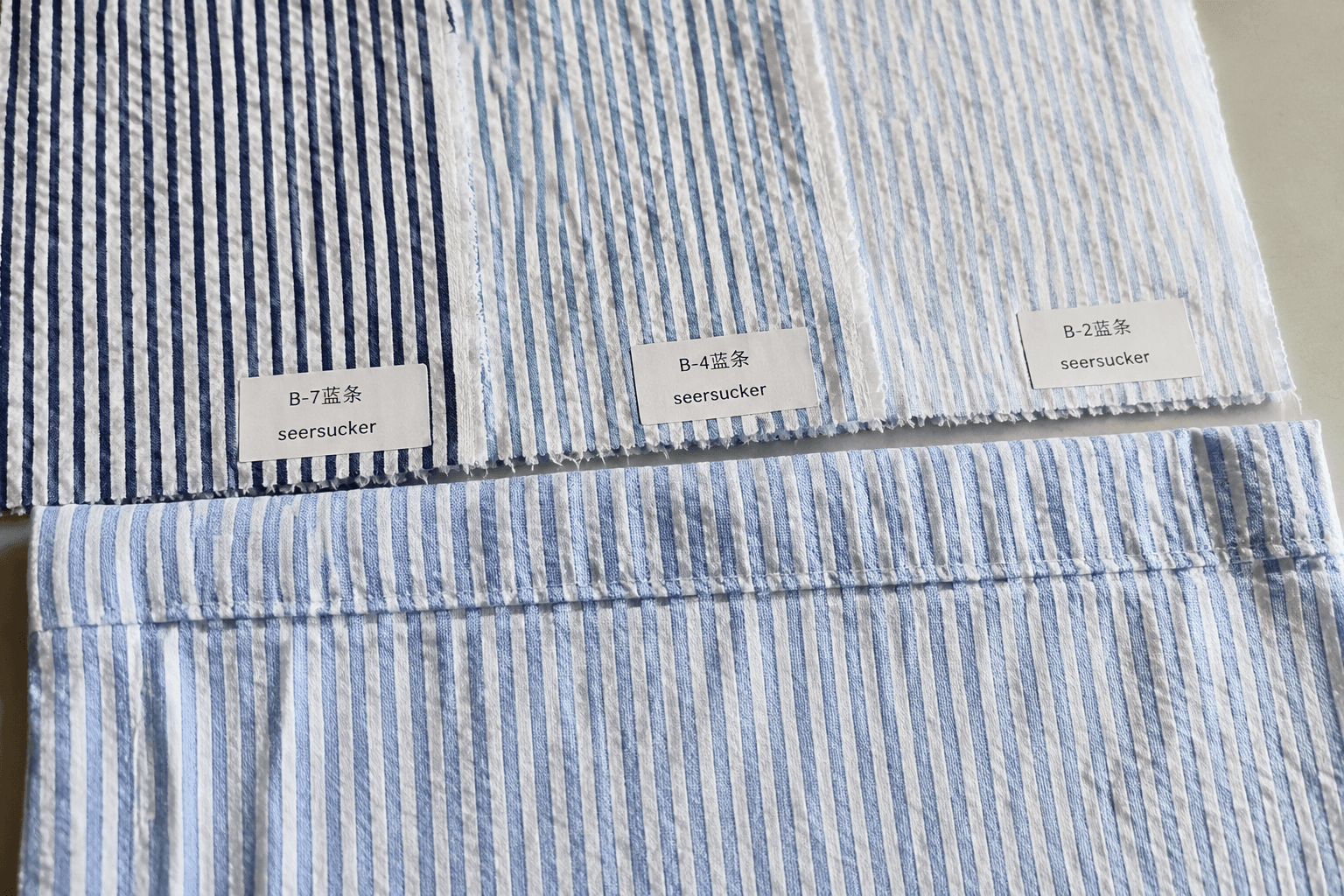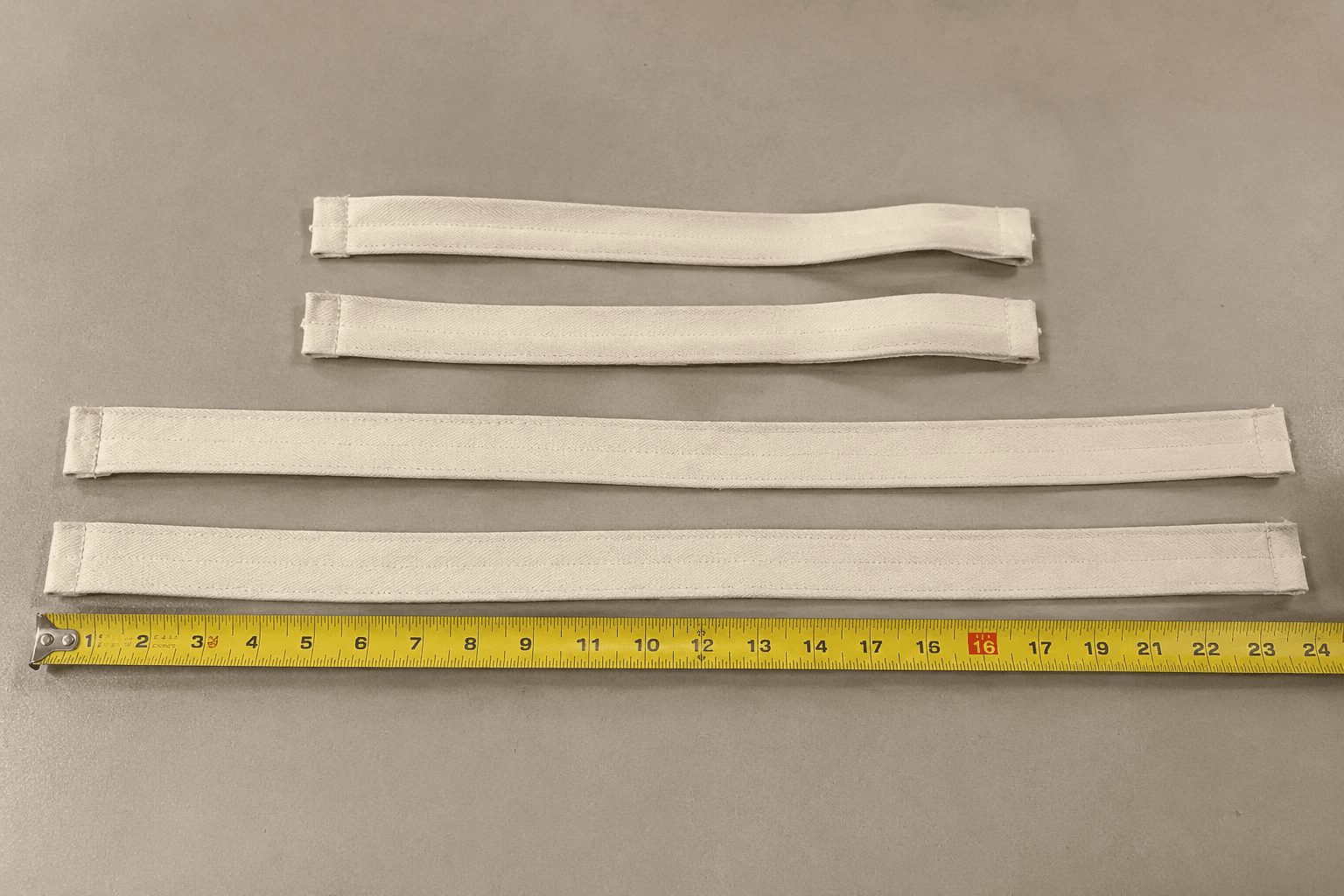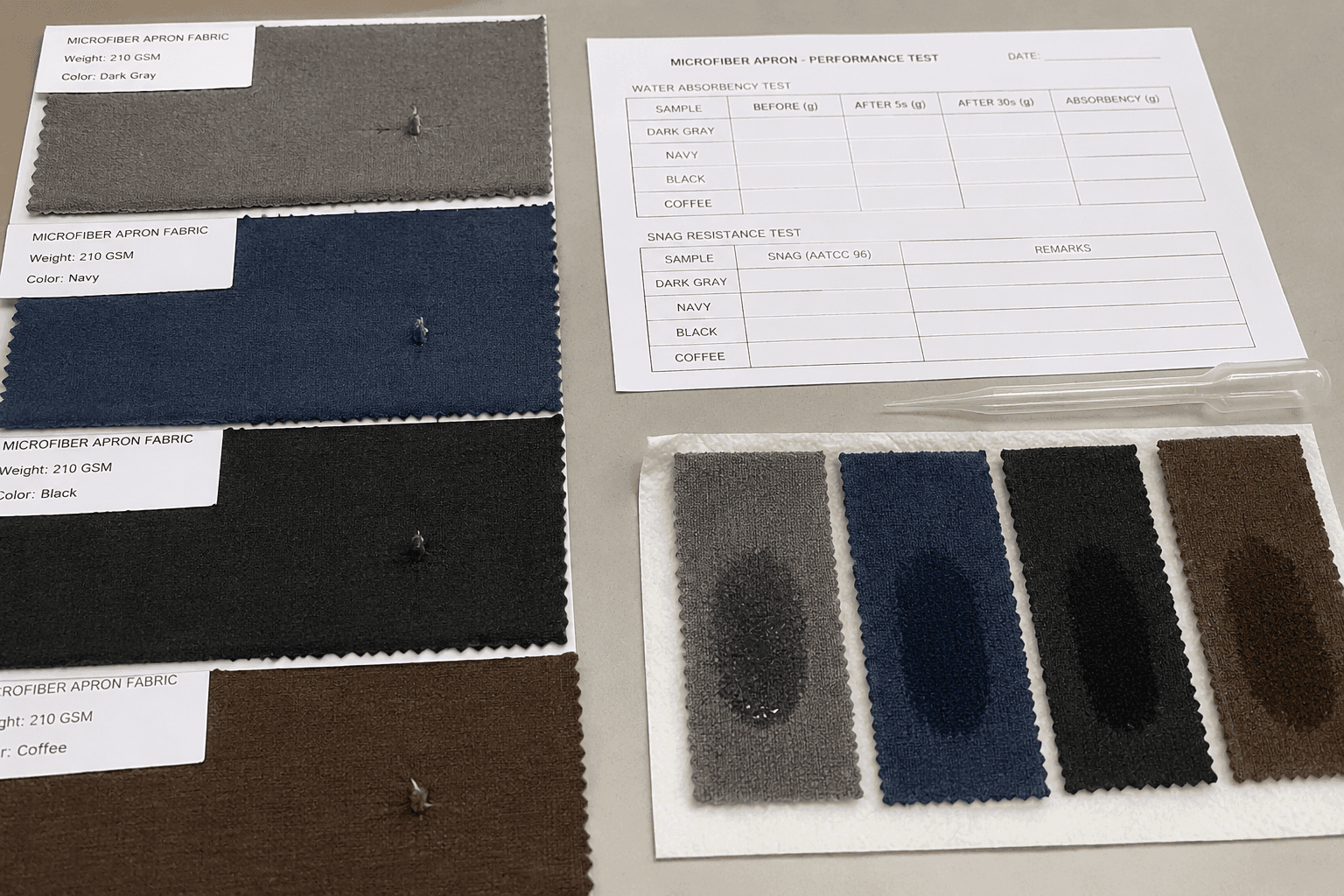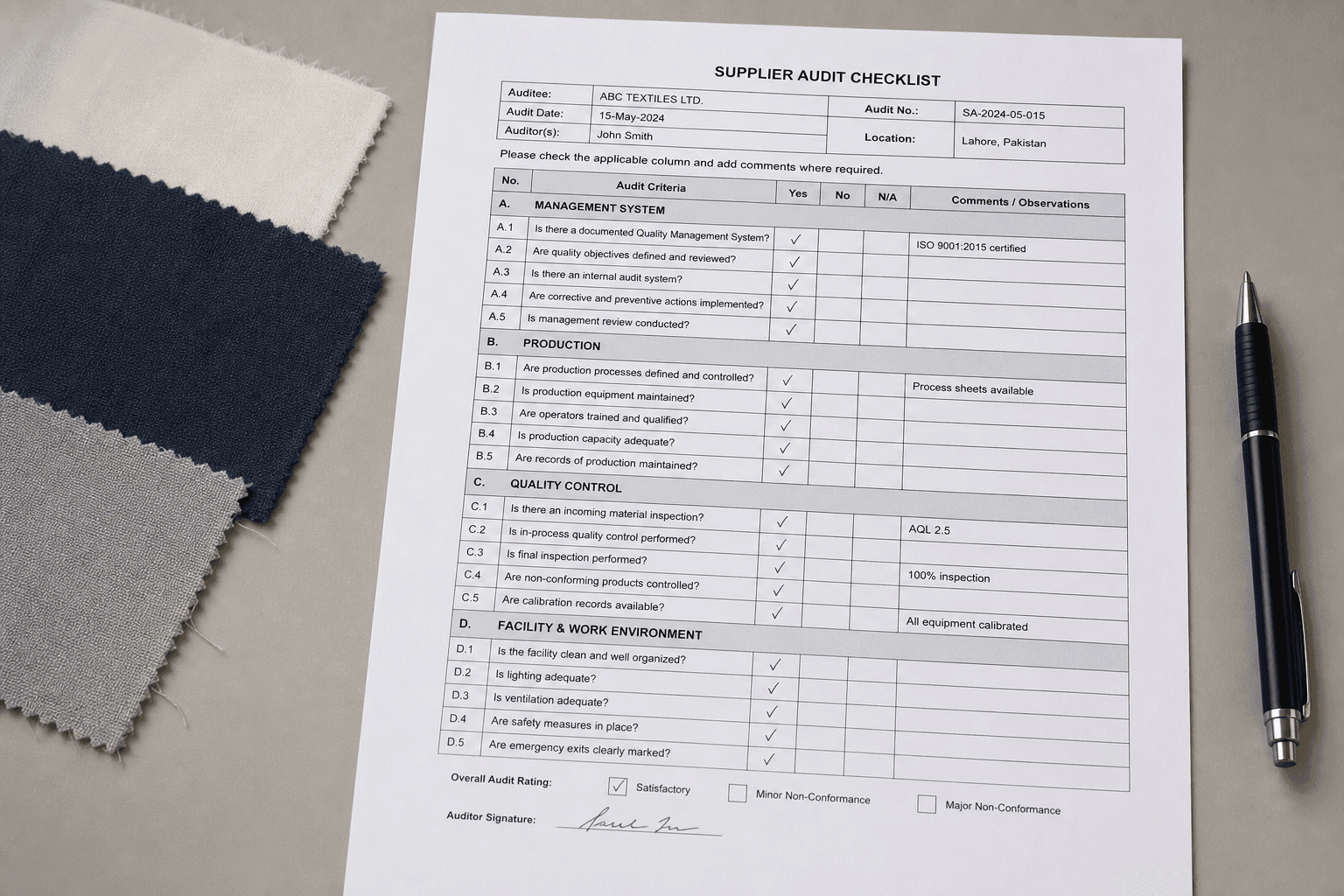
In apron sourcing, post-sewing wash should be specified as a production control, not treated as a styling extra. Buyers usually choose stone wash, enzyme wash or garment softening to reduce stiffness in 235 to 410 GSM aprons, create a broken-in workwear look, or make heavy canvas aprons easier to wear from first use. On aprons, the effect is highly visible because bib fronts, waist panels, patch pockets and long ties create broad uninterrupted surfaces where even a 0.5-grade shade shift can be obvious under store or kitchen lighting.
That is why washed apron finishing must be locked during development. A 340 GSM 100% cotton canvas bib apron, a 285 GSM cotton denim cross-back apron and a 235 GSM 65/35 poly-cotton twill waist apron will not react the same way in laundry, even in the same black or olive shade family. After wash, shell fabric can soften, bartacks can lighten, seam ridges can sharpen, webbing can drift in tone and finished measurements can move by 2% to 6%. In OEM production, the direct finishing adder is typically $0.18 to $0.95 per piece, while the full process commonly adds 3 to 8 laundry days plus 4 to 7 days for PP washed-sample approval.
For professional buyers, the decision is practical: which finish delivers the required handfeel without pushing shade, dimensions, trims and replenishment control outside tolerance? The answer depends on GSM, fiber content, trim mix, order size, target FOB, AQL standard and tolerance for visual variation between first shipment and repeat PO. When the brief is measurable before bulk cutting, the factory can control the result. When the request stays vague, disputes usually surface at PP sample review, inline inspection or final random inspection.
- Garment softening is usually the lowest-risk option for better apron handfeel, with a common bulk adder of $0.18 to $0.38 per piece and the smallest shade loss.
- Enzyme-washed apron finishing gives a clear softness gain on cotton-rich aprons, but buyers should approve realistic color opening on black, navy, charcoal, rust and olive before bulk.
- Stone wash on aprons creates the strongest vintage character and the highest abrasion risk at pocket corners, tie turns, seam ridges, bartacks and embroidery outlines.
- Bulk approval for washed apron finishing should include finished-after-wash measurements, sealed shade reference, handfeel benchmark, trim appearance and shrinkage record, not only a pre-wash fabric swatch.
- Typical post-sewing process impact is 3 to 8 days, but the full project usually extends by another 4 to 7 days for washed PP sample review and release.
- For dark-color apron programs with repeat POs, buyers should expect better continuity from softening than from aggressive enzyme or stone processes.
Why washed apron finishing needs its own apron specification
Aprons show wash variation faster than many other sewn products because they are panel-heavy, flat and trim-exposed. A shade difference that hides on a shaped jacket is obvious on a 32 x 28 inch bib panel or a 19 x 11 inch waist apron body. If the shell opens half a tone more than the patch pocket, or if self-fabric ties wash differently from cotton herringbone tape or polyester webbing, the buyer will usually treat that as a visual defect even when sewing is sound.
The outcome is driven by the full apron build, not just the shell fabric. Fiber content, yarn count, weave density, GSM, dye class, sewing thread, bartack density, strap material, pocket construction and embroidery coverage all affect the wash result. A 10 oz or 340 GSM cotton canvas bib apron normally shows a larger softness gain from enzyme or stone wash than a 235 GSM CVC twill waist apron. At the same time, the lighter CVC style often shows stronger stitch-line contrast because polyester-rich areas release less color than folded cotton edges.
For that reason, buyers should write a wash standard as carefully as a fabric standard. The brief should define target handfeel, acceptable shade family after wash, finished measurement tolerance, shrinkage ceiling, abrasion allowance and whether body, pockets and straps must remain tone-matched. Once these points are fixed before PP approval, the factory has a measurable basis for costing, process control and inspection. Without them, discussions stay subjective and often turn into reject-or-ship disputes at final inspection.
- State the base cloth exactly, such as 100% cotton canvas 340 GSM, 100% cotton denim 285 GSM or 65/35 CVC twill 235 GSM.
- Define the commercial objective clearly: softer hand, aged appearance, or a controlled balance of both.
- Set finished-after-wash tolerances, for example body width and body length within ±1.5 cm, tie length within ±2.0 cm.
- Approve the wash on a sewn apron, not only on a fabric swatch or panel test.
- Align inspection criteria in advance, commonly AQL 2.5 major and 4.0 minor for appearance and measurement defects.
Stone wash apron finishing: strongest visual effect, widest control risk
Stone wash is the most visual route and suits apron programs that want a clearly broken-in workwear appearance rather than simple softness. In production, pumice stones or stone-effect media abrade the sewn apron during laundering, reducing stiffness while creating localized fade and edge wear. On 280 to 360 GSM cotton canvas or denim aprons, the result can fit specialty coffee chains, barbecue concepts, lifestyle retail and gift programs that want a vintage workshop look.
The trade-off is a wider control window. Aprons have several early-abrasion points: top pocket corners, folded bib edges, tie turning points, seam ridges, bartacks, rivet areas and embroidery borders. These zones break color faster than flat panels, so the apron can show light edges before the center front reaches the desired softness. On fashion-led retail aprons, that may be acceptable. On hospitality, culinary school or multi-site uniform programs, it often creates more garment-to-garment variation than the buyer can accept.
Stone wash also carries the heaviest commercial burden. Direct washing cost typically runs $0.45 to $0.95 per piece, but the real impact is higher once re-pressing, shade sorting, second-quality allowance and higher QC minutes are included. For orders of 1,000 to 3,000 pieces per color, the post-sewing lead-time addition is usually 5 to 8 days. Shrinkage on heavy cotton aprons often lands at 3% to 6%, and weak development control can push some lots beyond that. Buyers who approve a highly washed sample but still expect narrow panel-to-panel matching usually create avoidable pressure at final inspection.
- Best suited to 100% cotton canvas or denim aprons from 280 to 360 GSM.
- Higher risk on aprons with PU patches, printed logos, contrast binding, metal trims, rivets or faux-leather details.
- Less suitable when repeat-order shade continuity is a strict KPI.
- Usually more cost-efficient from about 800 pieces per color because underloaded laundry runs inflate unit cost.
- Run a pre-production wash trial on at least 20 sewn aprons before releasing bulk.
Enzyme-washed apron finishing: practical softness with moderate shade opening
For many professional buyers, enzyme-washed apron finishing is the most balanced option. It removes protruding cotton fibers and reduces surface harshness without creating the strong abrasion pattern associated with stones. On aprons, the result is usually a noticeably softer hand, cleaner fold lines and a worn-in appearance that still looks controlled. This makes it a common choice for café uniforms, private-label bib aprons and retail kitchen lines where the target is relaxed rather than distressed.
The main control issue is color opening. Cotton-rich aprons treated with enzyme wash often lose some depth, especially in dark reactive shades. Black can move toward charcoal, navy toward slate, olive toward grey-green and rust toward a duller brown-red. Seam ridges, bartacks and topstitch channels may stay darker or lighter than nearby panels depending on construction density. When body, pockets and straps are cut from different lots, those differences usually become more visible after wash than they were before sewing.
From a sourcing standpoint, enzyme washing generally adds $0.28 to $0.65 per piece and 3 to 6 extra production days if the laundry queue is stable. It scales more easily than stone wash and usually preserves product life better at corners and edges. A disciplined OEM method is to wash 20 to 30 sewn aprons in pilot, then review handfeel, finished measurements, shade and trim appearance under the agreed light source. That step costs far less than reworking a 2,000-piece order that fails final random inspection for inconsistent appearance.
- Strong fit for cotton or cotton-rich canvas and twill aprons from 220 to 340 GSM.
- Usually safer than stone wash for embroidery, though outline haloing can still appear.
- Not a strong choice for waxed, PU-detailed or water-repellent aprons unless finish reduction is acceptable.
- Typical MOQ is 600 to 1,000 pieces per color for efficient laundry costing.
- Request before-and-after measurement data for body length, body width, pocket opening and tie length after pilot wash.
Garment softening on aprons: best option for repeat shade stability
If the buyer’s real target is comfort rather than visible aging, garment softening is usually the best commercial choice. This route combines softeners with controlled mechanical action to improve drape and touch without intentionally distressing the surface. On cotton canvas, drill, denim and poly-cotton twill aprons, it removes much of the rigid new-fabric feel and makes the apron easier to wear from day one while keeping the original dyed appearance relatively intact.
Compared with enzyme and stone routes, garment softening usually causes the smallest shade drop and the least mismatch between shell, pockets and straps. That matters for restaurant chains, hotels, bakeries, culinary schools and promotional programs where replenishment continuity matters more than a vintage visual story. It also protects prints, woven labels, narrow ties, snaps and contrast webbing better than stronger wash routes. Shade movement is still possible, especially on black and navy, but it normally stays within a narrower approval range.
The economics are also simpler. The direct adder is commonly $0.18 to $0.38 per piece, and post-sewing lead-time impact is often just 2 to 4 days. For OEM buyers placing 500 to 5,000 pieces per color, this is usually the finish with the cleanest ratio between comfort gain and approval risk. If the mill already supplies sanforized, pre-softened fabric, some factories can reduce the process to tumble softening plus pressing, which helps protect margin and keeps the production calendar tighter.
- Best for apron programs that need stable repeat POs and low visual variation.
- Works well on cotton canvas, drill, lighter denim and poly-cotton twill aprons.
- Lower abrasion means lower risk around bartacks, prints, pocket corners and tie ends.
- Commercially practical from roughly 500 pieces per color upward.
- Often the easiest washed finish to approve under AQL 2.5/4.0 final inspection.
Controlling dark shades, trims and repeat orders in washed apron finishing
The hardest part of washed apron finishing is usually not achieving softness; it is holding consistency. Shade variation can appear within one apron, across one laundry lot, between lots in the same order and again between the first PO and a repeat order 60 to 180 days later. Because the delivered color is created after sewing and laundering, a lab dip or pre-sew swatch cannot fully predict the final result. Buyers who approve only the base fabric often discover too late that the finished apron sits outside the intended shade family.
Risk is highest on dark and earthy colors. Black, charcoal, navy, olive, rust and chocolate usually open after wash, but not at the same rate from one dye lot to another. Self-fabric straps normally stay closest to the body shade, while cotton webbing, polyester webbing and tapes can drift more visibly. Pocket panels cut from a second lot may also separate after wash even if they looked acceptable before sewing. On aprons with several visible trims, these small differences accumulate quickly and become obvious in-store, in open kitchens or on retail fixtures.
The practical control method is to approve a washed standard instead of chasing absolute precision. Keep one sealed PP washed sample as the master reference, define an acceptable shade band and compare future lots against that benchmark. If the program demands near-identical continuity across replenishment orders, the buyer should reduce wash intensity or choose garment softening instead. On dark-color aprons, a pronounced washed look and near-perfect repeat matching rarely coexist at the same level.
- Approve body, pocket and strap together after wash under the agreed light source, commonly D65 and store lighting.
- Retain one sealed PP washed sample from the approved lot for repeat-order comparison.
- Keep matching components in the same dye lot before cutting whenever possible.
- Use tone-compatible trims because contrast materials exaggerate mismatch after laundering.
- Set shade-variation acceptance before bulk production, not after shipment.
MOQ, lead-time days and cost benchmarks for OEM washed apron finishing
Wash cost should be reviewed as a total-program issue, not only as a laundry surcharge. The direct process charge is just one part of delivered cost. Buyers also need to budget for washed-sample development, shrinkage allowance in fabric consumption, post-wash measurement checks, extra pressing, shade sorting and a higher risk of second-quality units. A finish that adds only $0.35 per piece in laundry can still raise real delivered cost further when 2% extra fabric consumption and added QC labor are included.
MOQ has a major effect because laundries charge based on load efficiency as well as piece count. Very small runs of 200 to 300 aprons per color are usually inefficient, especially with heavy canvas, dark shades or multiple trims. As a working benchmark, softening becomes commercially reasonable from around 500 pieces per color, enzyme washing from 600 to 1,000 pieces and stone wash from about 800 pieces upward if the buyer expects stable pricing. Below those levels, unit cost rises sharply unless the factory can combine the load with a similar fabric-and-color program.
Timing also needs to cover approval days, not only process days. A PP washed sample review usually adds 4 to 7 days before bulk cut release or bulk wash approval. After sewing, laundry queue, drying, finishing, pressing, dimensional check and final inspection usually add another 3 to 8 days. In practice, a custom washed apron order is often 30 to 45 days from fabric readiness for moderate styles, and 45 to 60 days for 10 to 12 oz canvas aprons, multi-color orders or programs that need repeated wash adjustment. Buyers should build this buffer into delivery planning rather than add washing at the end of the critical path.
- Typical direct adders are $0.18 to $0.38 for softening, $0.28 to $0.65 for enzyme wash and $0.45 to $0.95 for stone wash.
- Allow for 2% to 6% shrinkage depending on apron fabric, wash intensity and pretesting discipline.
- Plan MOQ by color carefully because underloaded laundry runs distort piece pricing.
- Add 4 to 7 days for PP washed-sample approval and 3 to 8 days for post-sewing laundry operations.
- Expect more QC sorting on washed aprons than on equivalent unwashed styles.
How to write an executable wash spec for apron factories
A workable apron wash specification replaces styling language with measurable controls. Terms such as soft vintage hand or casual worn-in look are too subjective for OEM execution. The factory, laundry and QC team need a brief that names fabric composition, GSM or ounce weight, process route, target shade family after wash, finished-after-wash measurement table, allowed abrasion, trim restrictions and inspection standard. Once those points are documented, the team can align costing, sampling and production control before risk becomes expensive.
Buyers should also state what cannot change. If logo clarity is critical, print cracking, embroidery haloing or edge breakup should be listed as unacceptable. If straps must stay within a narrow tonal range of the apron body, that requirement should be explicit. If waxed surfaces, PU patches or contrast binding are key selling points, the brief should define how much visual change is permitted after wash. Without those restrictions, the laundry will naturally optimize for softness first, which often creates avoidable approval disputes later.
The most reliable sequence is straightforward: confirm mill fabric, sew prototype aprons, run a PP wash trial on actual construction, approve against a sealed washed reference, then proceed to bulk with lot records and final inspection against finished-after-wash measurements. This adds modest sampling cost, but it is much cheaper than sorting, discounting or replacing a failed bulk lot. For most B2B apron programs, the correct decision is simple: choose stone wash when visible character is the selling feature, enzyme wash when softness and lived-in appearance must balance, and garment softening when comfort, shade control and repeat-order consistency matter most.
- Specify base cloth by composition and weight, such as 100% cotton canvas 10 oz or 340 GSM.
- Name the exact process route: softening, enzyme wash, stone wash or a controlled combined sequence.
- Use finished-after-wash measurements as the contractual inspection standard.
- Retain the approved washed sample and wash recipe for repeat-order reference.
- Define pass-fail points for prints, embroidery, straps, pockets, shade band and surface abrasion.