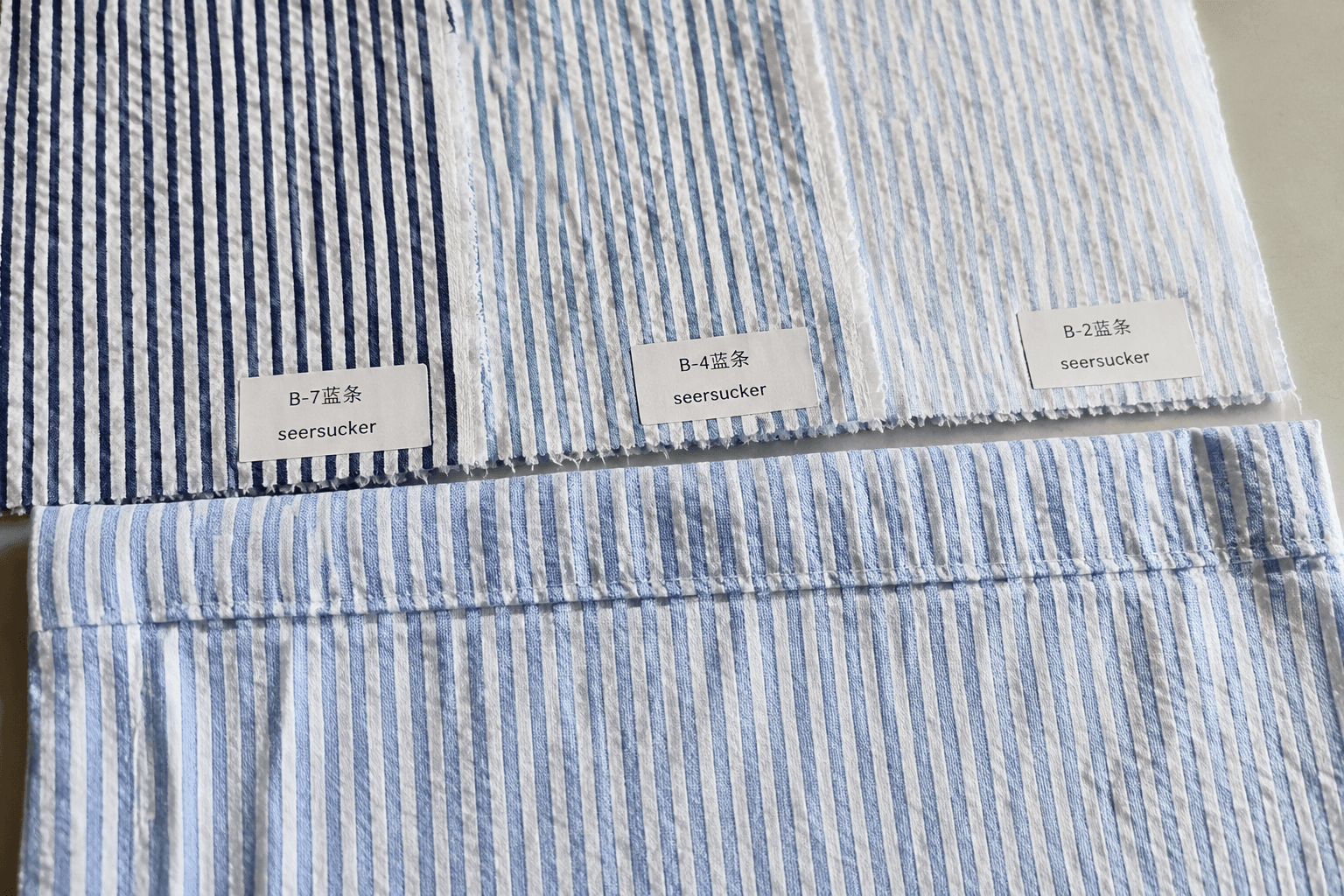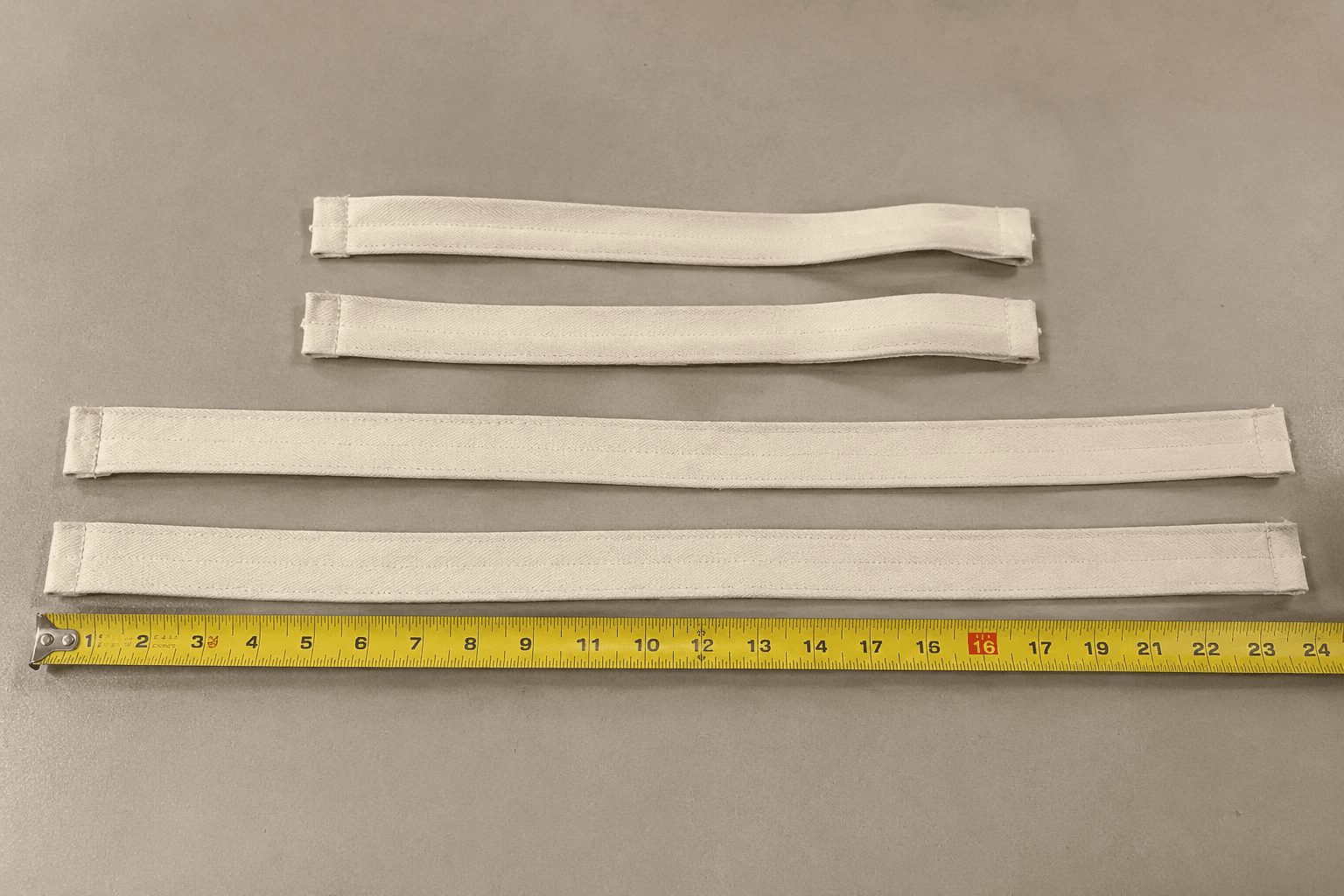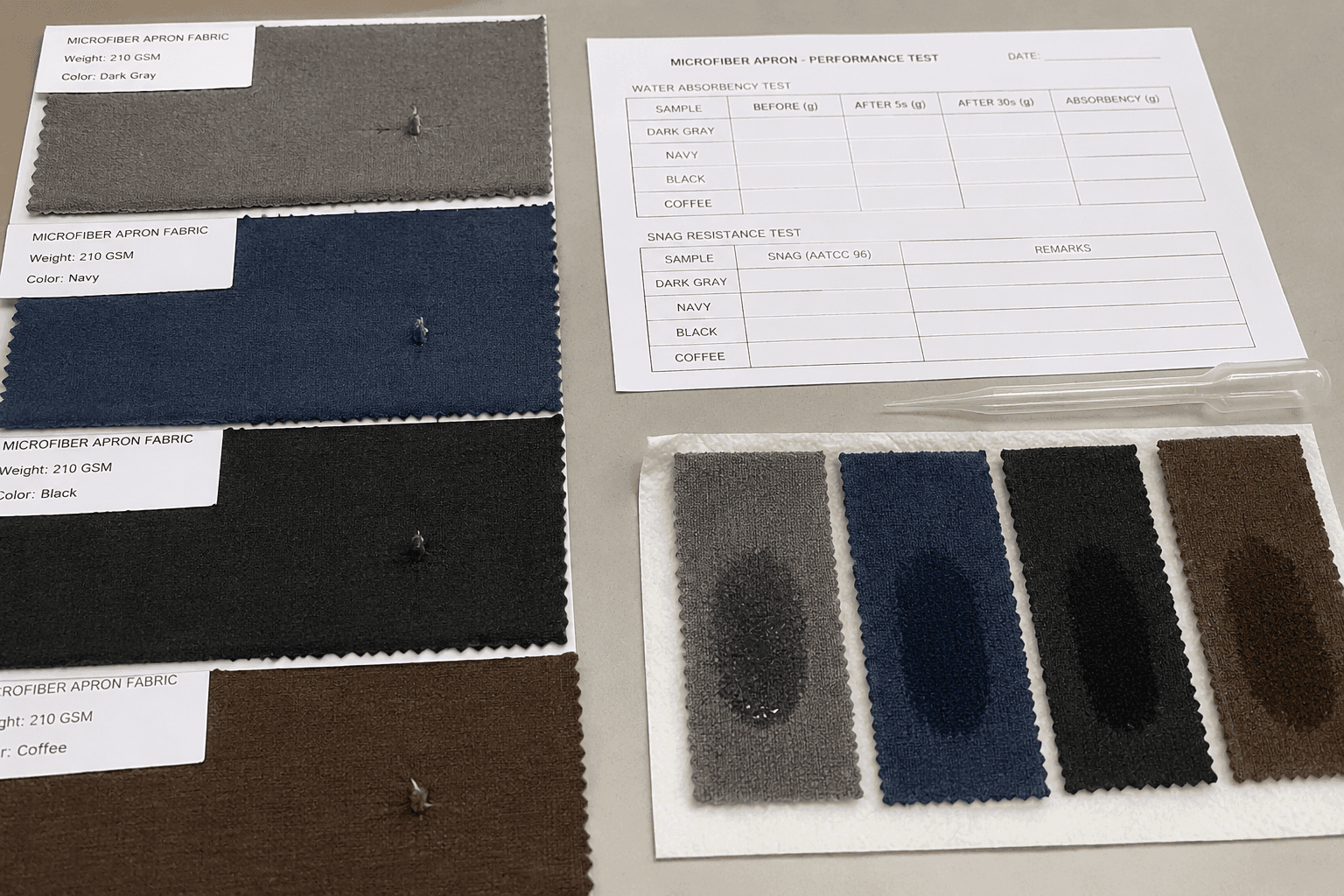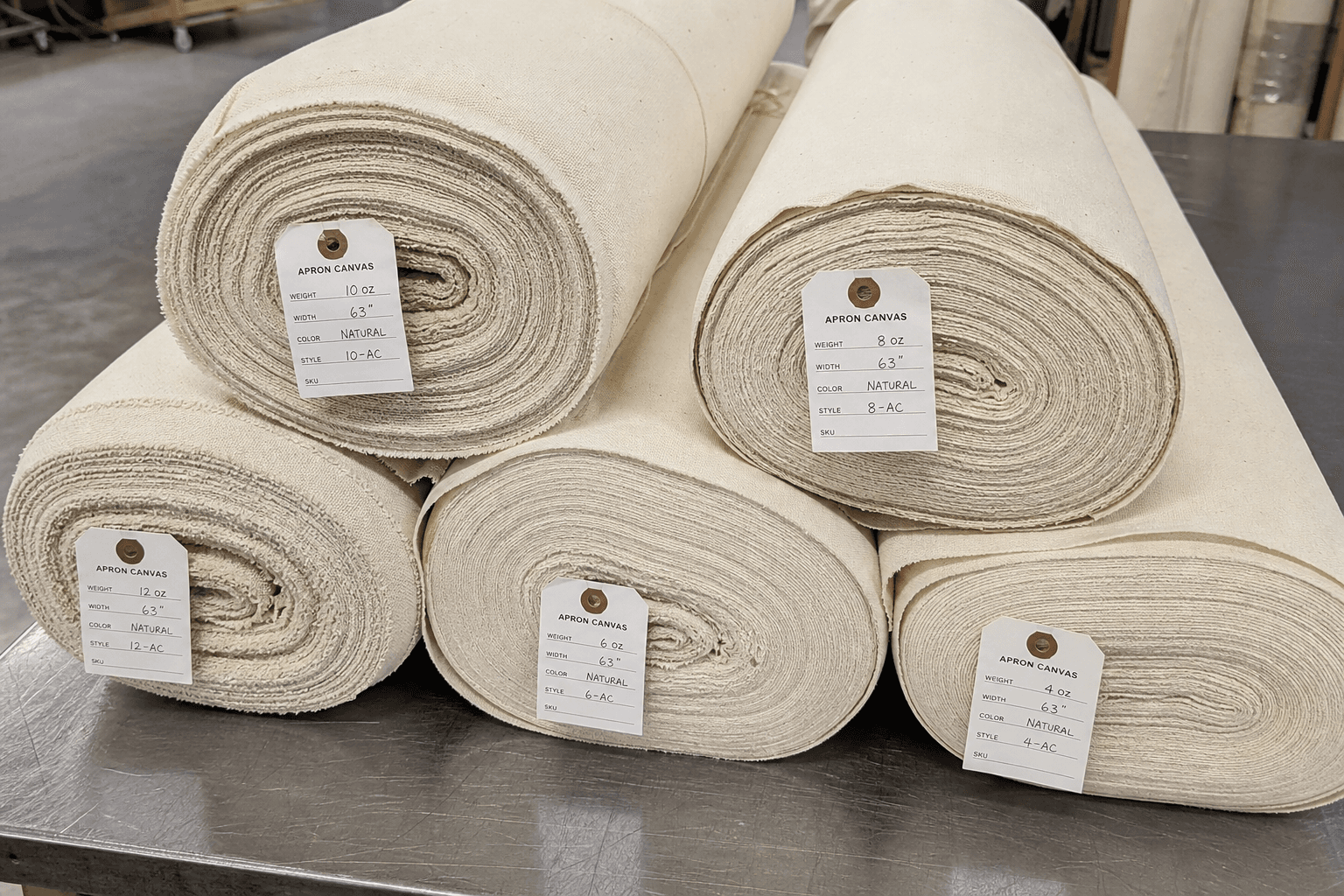
For apron sourcing, fabric weight is one of the first specifications that affects cost, wear life, comfort, washing performance, and the final hand feel. Buyers often ask for 10 oz canvas, 12 oz cotton duck, or 320 GSM fabric, but mills, dye houses, and sewing lines may interpret those figures differently unless the specification is written clearly.
This apron canvas weight guide explains how ounce and GSM systems relate, where conversions can mislead, and how to choose the right weight for coffee shops, restaurants, workshops, barbers, retail uniforms, and promotional programs. The goal is not to push the heaviest cloth. In factory production, the best apron canvas weight is the one that meets the use case, target price, decoration method, and delivery schedule with the lowest avoidable risk.
At Linwa Apron Manufacturing in Zhejiang, most custom canvas apron programs fall between 240 GSM and 450 GSM, or approximately 7 oz to 13 oz depending on fabric construction. Heavyweight apron fabric can be excellent for tool wear and premium retail, but it also changes cutting yield, needle selection, seam bulk, freight weight, and MOQ planning.
- GSM is the more reliable purchasing unit when comparing apron fabric weight across China mills.
- Oz values need context because oz per square yard and informal trade oz are often mixed in buyer briefs.
- Most cafe and restaurant apron programs work well at 260-340 GSM when comfort and washability matter.
- Heavyweight apron fabric above 380 GSM improves structure but raises sewing difficulty, freight cost, and drying time.
- Cotton duck weight should be checked together with yarn count, weave density, shrinkage, and finishing, not by weight alone.
- A pre-production sample should confirm real finished GSM after dyeing, washing, coating, or enzyme treatment.
What apron canvas weight actually means
Apron canvas weight is the mass of the fabric before it becomes an apron. In professional sourcing, the two common units are GSM and oz. GSM means grams per square meter. Oz usually means ounces per square yard, although in casual communication some suppliers use oz as a general fabric grade rather than a measured unit. This is why a simple line such as 12 oz canvas can produce confusion unless the testing basis is defined.
For apron production, weight is only one part of the fabric specification. A 320 GSM plain canvas, a 320 GSM cotton duck, and a 320 GSM twill can feel different because the yarn size, weave density, finishing, and shrinkage are different. A tighter weave can feel firmer at the same GSM. A washed finish can feel softer but may lose some crisp structure. A coated canvas can feel heavier in hand even if the base fabric is not much heavier.
In bulk sourcing, fabric weight should be treated as a control point. We normally recommend that buyers state the target finished weight, tolerance, fabric construction, fiber composition, color, and finishing route in the tech pack. For example: 100% cotton canvas, 10 oz or 340 GSM target finished weight, plus or minus 5%, reactive dyed, pre-shrunk, suitable for screen printing. This gives the factory, mill, and inspection team a shared reference.
- Use GSM for mill ordering because it is measured directly in most China textile testing workflows.
- Use oz only when the basis is clear, preferably oz per square yard.
- Confirm whether the stated weight is greige fabric, dyed fabric, washed fabric, or finished fabric.
- Accept a practical tolerance, usually plus or minus 5%, because dyeing and finishing change final weight.
Oz vs GSM fabric conversion for apron sourcing
The technical conversion for oz vs gsm fabric is straightforward: 1 oz per square yard is about 33.9 GSM. Therefore, 8 oz is about 271 GSM, 10 oz is about 339 GSM, and 12 oz is about 407 GSM. In real apron sourcing, however, conversion alone is not enough. Some mills round weights, some quote based on greige fabric, and some use commercial names that do not match test results exactly.
For example, a buyer may request 12 oz cotton duck for a waxed workshop apron. The tested base cloth may be 380-400 GSM before waxing, then feel closer to 430-460 GSM after finishing. Another buyer may request 10 oz washed canvas for a hospitality apron, but the wash process can relax the fabric and change the hand feel more than the weight number suggests. Both products may be acceptable, but the purchase order must define which stage is being measured.
When comparing supplier quotations, ask for fabric test data or at least a swatch with actual GSM. A $0.20 per piece difference can come from many places: lower fabric weight, narrower fabric width, cheaper dyeing, lower colorfastness, simplified pocket construction, or lower packing standard. If the only comparison point is 10 oz canvas, the quotation may look equal while the apron is not equal.
- 6 oz is approximately 203 GSM and is usually too light for durable canvas aprons.
- 8 oz is approximately 271 GSM and suits light hospitality or promotional apron programs.
- 10 oz is approximately 339 GSM and is a common balance for cafe, restaurant, and retail aprons.
- 12 oz is approximately 407 GSM and enters heavyweight apron fabric territory for workwear styling.
- 14 oz is approximately 475 GSM and requires careful sewing tests for seam bulk and comfort.
Apron fabric weight chart for common buyer use cases
An apron fabric weight chart should be linked to use case, not only to price level. A light bistro apron for servers has different requirements from a cross-back denim-look apron for coffee bar staff or a tool apron for a ceramic studio. The wrong weight can create returns even when the fabric is technically strong. Too light can look cheap and lose shape. Too heavy can feel hot, stiff, and slow to dry after washing.
For most commercial apron orders from China, the practical range is 240-450 GSM. Below 220 GSM, the apron may be suitable for disposable-feel promotions or very light home cooking, but it will not feel like serious canvas. Above 450 GSM, the apron becomes closer to workwear or protective utility gear, and the buyer should expect higher sewing cost, higher freight cost, and longer sampling time.
- 220-260 GSM works for budget promotional aprons, simple bib aprons, and short campaigns where unit cost is the main target.
- 260-300 GSM works for light cafe aprons, bakery aprons, and restaurant uniforms where staff wear the garment for long shifts.
- 300-360 GSM works for premium hospitality, barista aprons, retail uniforms, and branded merchandise with good body and manageable wash performance.
- 360-420 GSM works for cotton duck work aprons, barber aprons, maker aprons, and structured retail products.
- 420-500 GSM works for heavyweight apron fabric where durability and rugged appearance are more important than softness or fast drying.
How cotton duck weight differs from plain canvas
Cotton duck is often requested for aprons because it has a dense, firm structure and good resistance to abrasion. In simple terms, cotton duck is a strong canvas construction, usually made with tightly woven cotton yarns. The cotton duck weight number helps, but the buyer also needs to check yarn count and weave compactness. A dense 360 GSM cotton duck can outperform a looser 400 GSM canvas in shape retention and pocket durability.
In apron production, cotton duck is useful when the product needs structure: large front pockets, hammer loops, towel loops, metal hardware, leather patches, or waxed finishing. It is less ideal when the buyer needs a soft drape, easy laundering, or low-cost air freight. Compared with lighter plain canvas, cotton duck can create thicker folded edges at neck strap attachments, waist tie seams, and pocket corners. These points require correct needle size, thread strength, and bar tack planning.
A common bulk order specification is 100% cotton duck at 10 oz to 12 oz, equivalent to roughly 340-407 GSM. For a standard bib apron with two waist ties, adjustable neck strap, and two front pockets, this fabric range usually gives a strong retail feel. For cross-back aprons with wide straps and hardware, we often test both 320 GSM and 380 GSM before confirming because the strap comfort changes noticeably during all-day wear.
- Cotton duck is preferred when the apron needs firmness, abrasion resistance, and a utility appearance.
- Plain canvas is preferred when the apron needs softer drape, lower cost, and easier washing.
- Washed cotton duck reduces stiffness but may increase shrinkage control requirements.
- Waxed cotton duck improves water resistance but increases weight, odor control checks, and packing protection.
Choosing apron canvas weight by decoration method
Decoration should be decided before fabric weight is locked. Screen printing, embroidery, heat transfer, woven patches, leather patches, and metal rivets all behave differently on canvas. A light 240 GSM canvas may print cleanly but can pucker under dense embroidery. A 420 GSM cotton duck can hold embroidery well, but heavy seams and pocket layers may limit where the embroidery frame can sit.
For screen printing, 260-340 GSM canvas is usually efficient. The surface is stable enough for registration but not so thick that cutting and handling become slow. For fine line logos, a smooth plain canvas or fine twill may perform better than a coarse duck. For discharge or pigment printing, the dyeing process and fabric color matter as much as the weight. Dark reactive dyed cotton needs proper print testing before bulk approval.
For embroidery, 300-420 GSM is common. The fabric should be firm enough to support stitches without distortion, especially for chest logos and pocket logos. However, a dense embroidery over a thick pocket panel may become uncomfortable if placed near the upper chest. For leather patches, rivets, and metal eyelets, heavier canvas gives better support, but the factory must confirm hole punching, washer selection, and rust prevention if the apron will be washed frequently.
- Screen printing is usually efficient on 260-340 GSM canvas with a smooth enough surface.
- Embroidery is usually safer on 300-420 GSM fabric with backing tests for puckering.
- Heat transfer needs a flat surface and controlled pressing temperature to avoid shine marks.
- Leather patches and rivets suit heavier canvas but require wash testing and metal hardware checks.
- Large pocket prints should be tested after sewing if registration must align with pocket edges.
Cost impact of apron canvas weight in China production
Fabric is normally the largest cost component in a canvas apron. Increasing apron canvas weight increases raw material consumption, but not always in a straight line. Mill MOQ, fabric width, dyeing loss, cutting yield, and defect rate all affect the final piece price. A heavier cloth may also reduce cutting layers per stack, slow sewing speed, and require stronger needles or thicker thread.
As a practical example, for a 5,000 piece bib apron order with reactive dyed cotton canvas, moving from 280 GSM to 340 GSM may increase FOB cost by approximately $0.25-$0.55 per piece depending on apron size, pocket design, and fabric width. Moving from 340 GSM to 420 GSM may add another $0.35-$0.80 per piece, especially if reinforced pockets, metal hardware, or washed finishing are included. These are not fixed prices, but they are realistic budgeting ranges for sourcing discussions.
MOQ also changes with weight and color. For custom dyed cotton canvas, many mills prefer 800-1,000 meters per color for standard weights, while special heavyweight cotton duck may require 1,500-3,000 meters per color if yarn or loom setup is not in regular production. For small trial orders of 300-500 pieces, buyers may need to use available stock colors, accept a higher unit price, or choose a standard weight such as 300 GSM or 340 GSM.
- Fabric upgrade from 280 GSM to 340 GSM can add roughly $0.25-$0.55 per apron in many mid-size orders.
- Fabric upgrade from 340 GSM to 420 GSM can add roughly $0.35-$0.80 per apron depending on construction.
- Custom dyed canvas often needs 800-1,000 meters per color, while special duck weights may need higher MOQ.
- Heavier fabric can increase carton weight enough to affect sea freight planning and courier sample cost.
- Very heavy aprons may need larger cartons to reduce creasing, which can change CBM even when piece count is unchanged.
Production risks when specifying heavyweight apron fabric
Heavyweight apron fabric can make a product feel premium, but it also introduces production risks that should be managed before bulk cutting. The main risks are seam bulk, needle damage, uneven topstitching, shade variation, shrinkage, and slow drying after wash tests. These risks are manageable, but they need time in sampling and pre-production approval.
Seam bulk is the first issue. A 420 GSM canvas folded twice at a pocket edge, then attached to a 420 GSM body fabric, creates several layers under the presser foot. If the design also uses bartacks, rivets, or binding tape, the sewing operation becomes slower and the chance of skipped stitches increases. A good factory will test needle size, stitch length, thread count, seam allowance, and machine type before quoting a tight delivery date.
Shrinkage is the second issue. Cotton canvas and cotton duck can shrink during washing, especially if the buyer wants a garment-washed or enzyme-washed finish. A reasonable finished shrinkage target for pre-shrunk cotton canvas is often within 3-5%, but untreated heavy cotton duck can be higher. If apron dimensions are critical, the pattern should be adjusted after fabric shrinkage testing, not guessed from previous orders.
- Run a sewing trial before bulk approval when finished weight is above 380 GSM.
- Check pocket corners, waist tie joins, neck strap points, and rivet areas for skipped stitches.
- Confirm shrinkage after the intended wash method, not only on greige fabric.
- Use carton packing tests for washed heavyweight aprons because thick fabric can crease strongly.
- Allow 3-7 extra days in sampling when changing from medium canvas to heavy cotton duck.
How to write apron canvas weight in a tech pack
The safest way to specify apron canvas weight is to combine the numeric target with construction and tolerance. A clear line might read: 100% cotton canvas, target 340 GSM finished weight, plus or minus 5%, reactive dyed black, pre-shrunk, colorfastness to washing grade 4, suitable for embroidery. This is much stronger than writing 10 oz black canvas because it tells the factory what must be controlled.
For programs using both US and metric references, include both but make one the controlling standard. For example: 10 oz per square yard, approximately 340 GSM, finished GSM is controlling. This prevents arguments when a lab test shows 328 GSM or 352 GSM. It also helps the buyer compare quotations because all suppliers know whether they are pricing the same target.
Lead time should also be linked to the fabric decision. For stock canvas colors, sampling can often take 5-10 days and bulk production 25-35 days after approval for 1,000-5,000 pieces. For custom dyed heavyweight cotton duck, sampling may take 10-18 days and bulk production 35-50 days depending on dye house schedule, lab dips, and finishing. If the apron also includes embroidery, leather patches, rivets, and custom packing, add approval time for each component.
- State fiber content, such as 100% cotton, cotton polyester blend, or recycled cotton blend.
- State target finished GSM and tolerance, preferably plus or minus 5%.
- State the oz reference only if the measurement basis is clear.
- State finishing, such as pre-shrunk, washed, waxed, enzyme washed, or water repellent.
- State decoration method because printing and embroidery can change the best fabric choice.
- State wash and colorfastness requirements before bulk fabric is dyed.