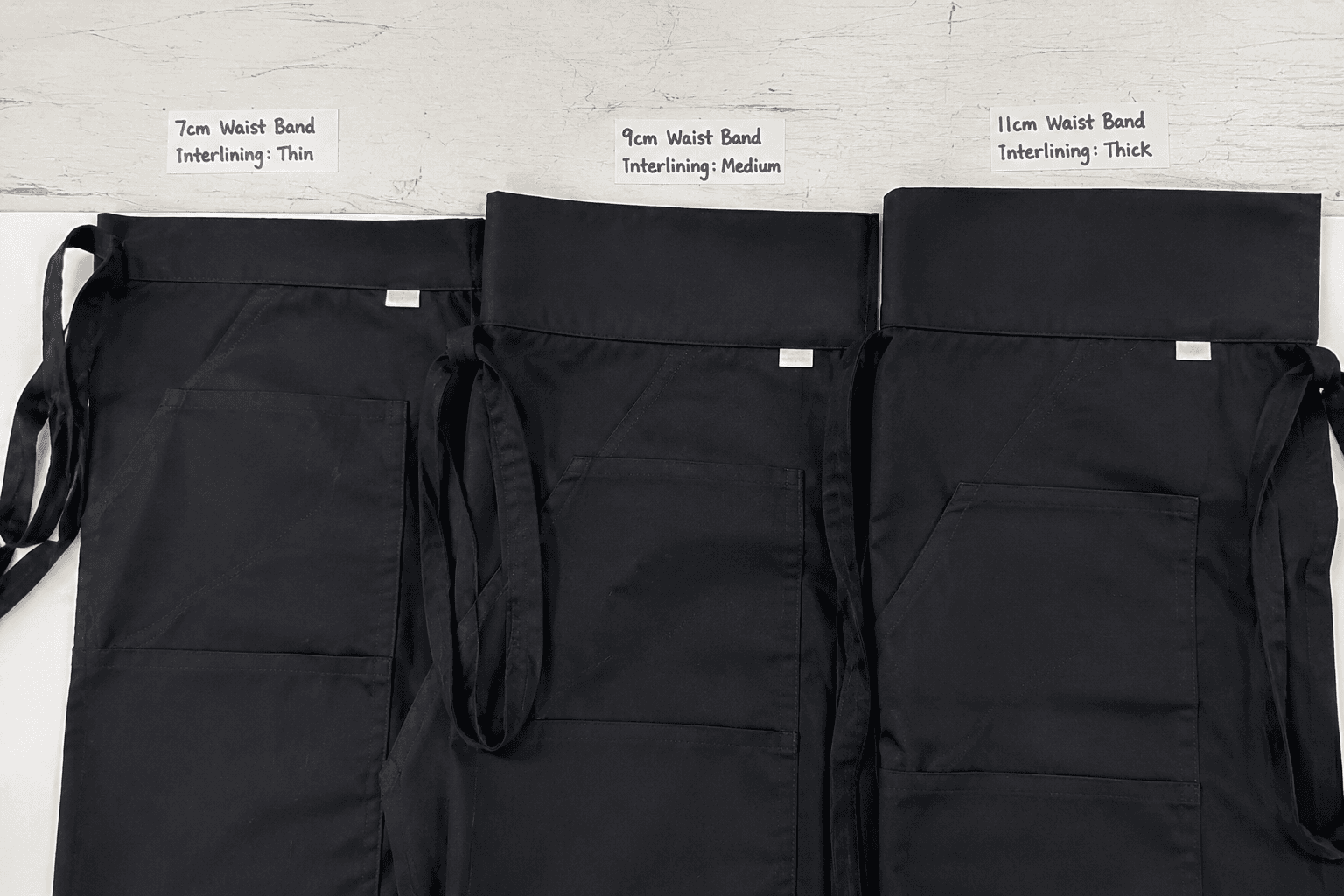
Apron waistband height and stiffness: comfort trade-offs for waist and bistro aprons
<strong>Apron waistband construction</strong> controls waist pressure, pocket stability, post-wash appearance, defect rates, and landed cost in bulk waist and bistro apron orders. For professional sourcing, buyers should lock finished waistband height, shell fabric GSM, fusible GSM, tie insertion, bartack placement, shrinkage tolerance, and AQL levels before PP approval. Leaving the waistband to sample-room judgment is a common reason that a clean-looking apron becomes uncomfortable or inconsistent at 3,000-20,000 pcs.
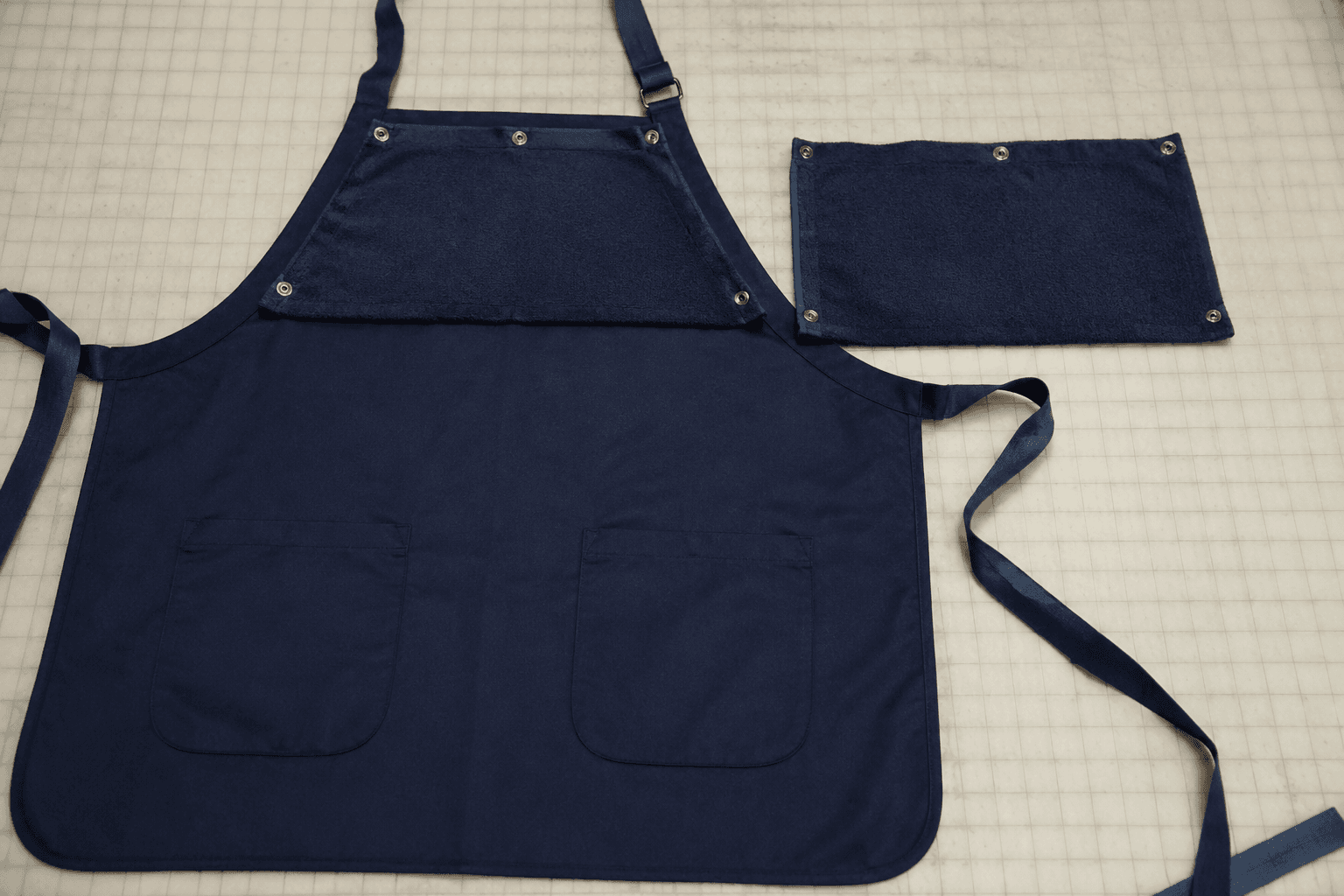
Apron snap-off towel systems: laundering, replacement and hygiene considerations
A <strong>snap off towel apron</strong> performs well in foodservice only when the apron body, removable towel, snap hardware, reinforcement, wash testing, spare towel ratio and replacement SKU are specified as one OEM system before bulk production.
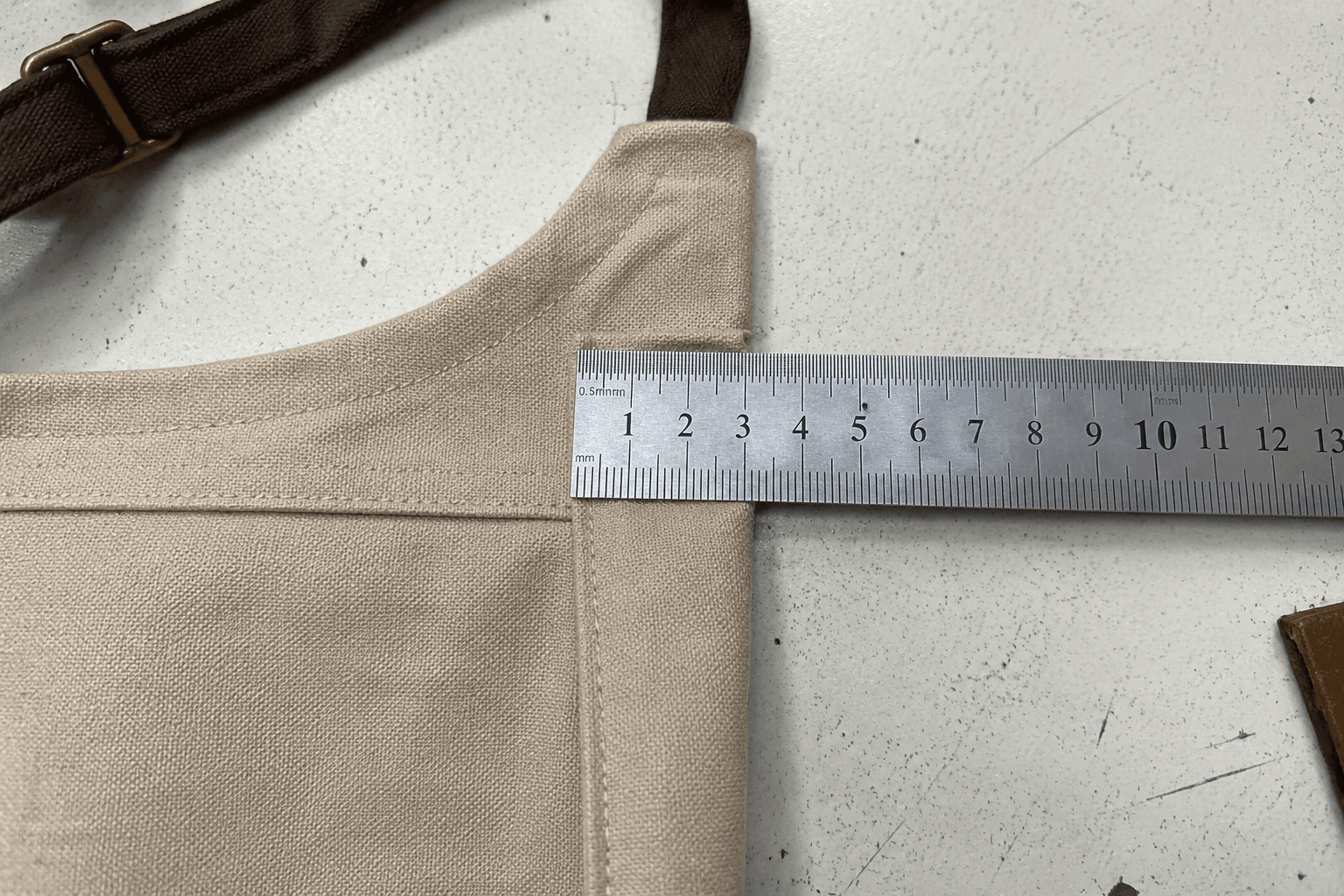
Apron seam allowance standards: why hidden construction measurements affect strength and cost
Apron seam allowance is a hidden pattern measurement that affects seam strength, fabric yield, sewing speed, wash durability, inspection results, and FOB cost. For B2B buyers sourcing 180-420 GSM aprons, moving from an 8 mm single fold to a 12 mm + 12 mm double fold can add USD 0.03-0.18 per piece, but it can also prevent pocket, strap, and hem failures after 30-60 commercial wash cycles.
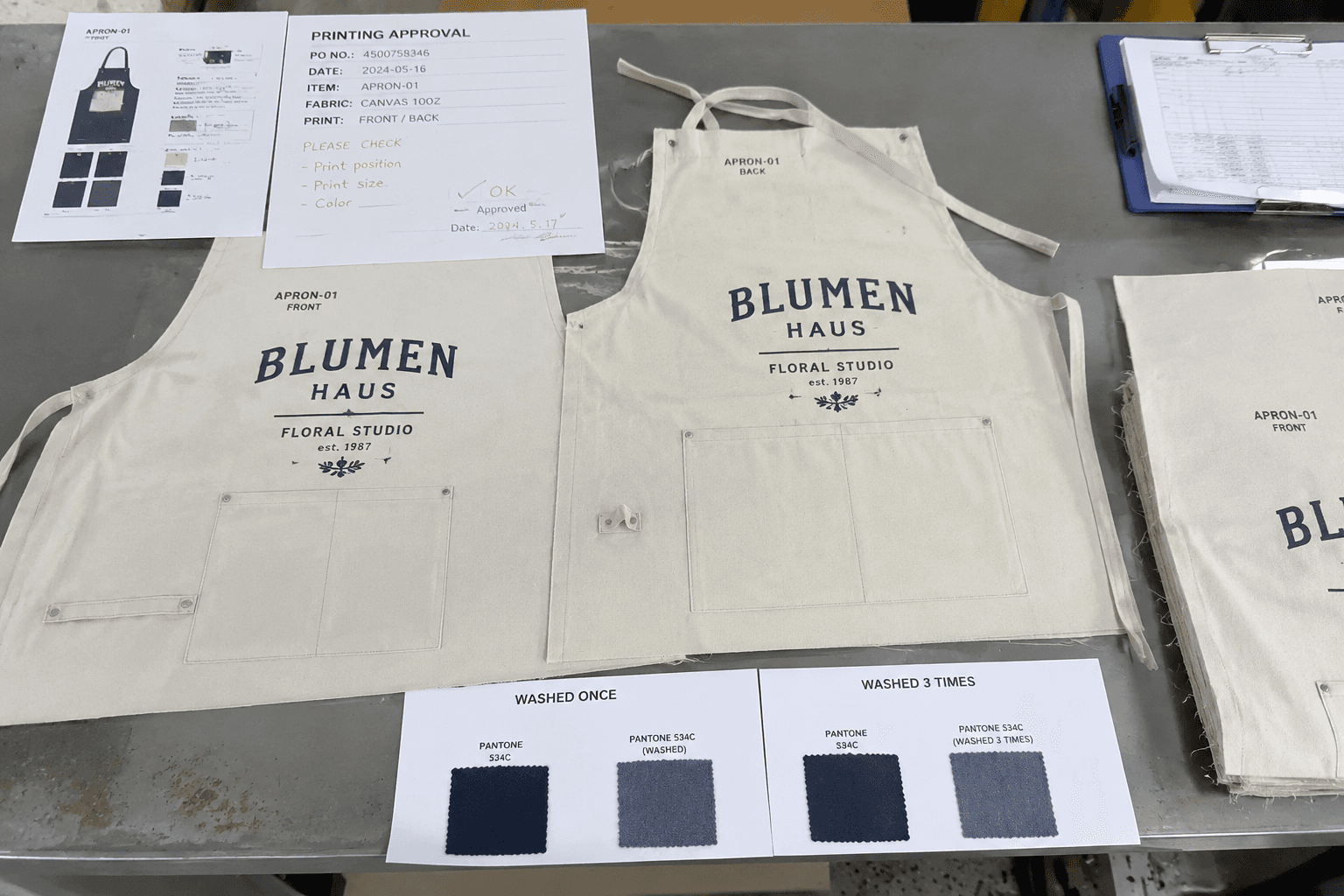
Apron print strike-off approvals: checking scale, edge sharpness and wash change before bulk
An apron print strike off is the buyer’s last low-cost checkpoint before bulk printing. It should confirm logo scale in millimeters, placement tolerance, edge sharpness, ink opacity, hand feel and wash change on the same 190-340 GSM apron fabric planned for production.
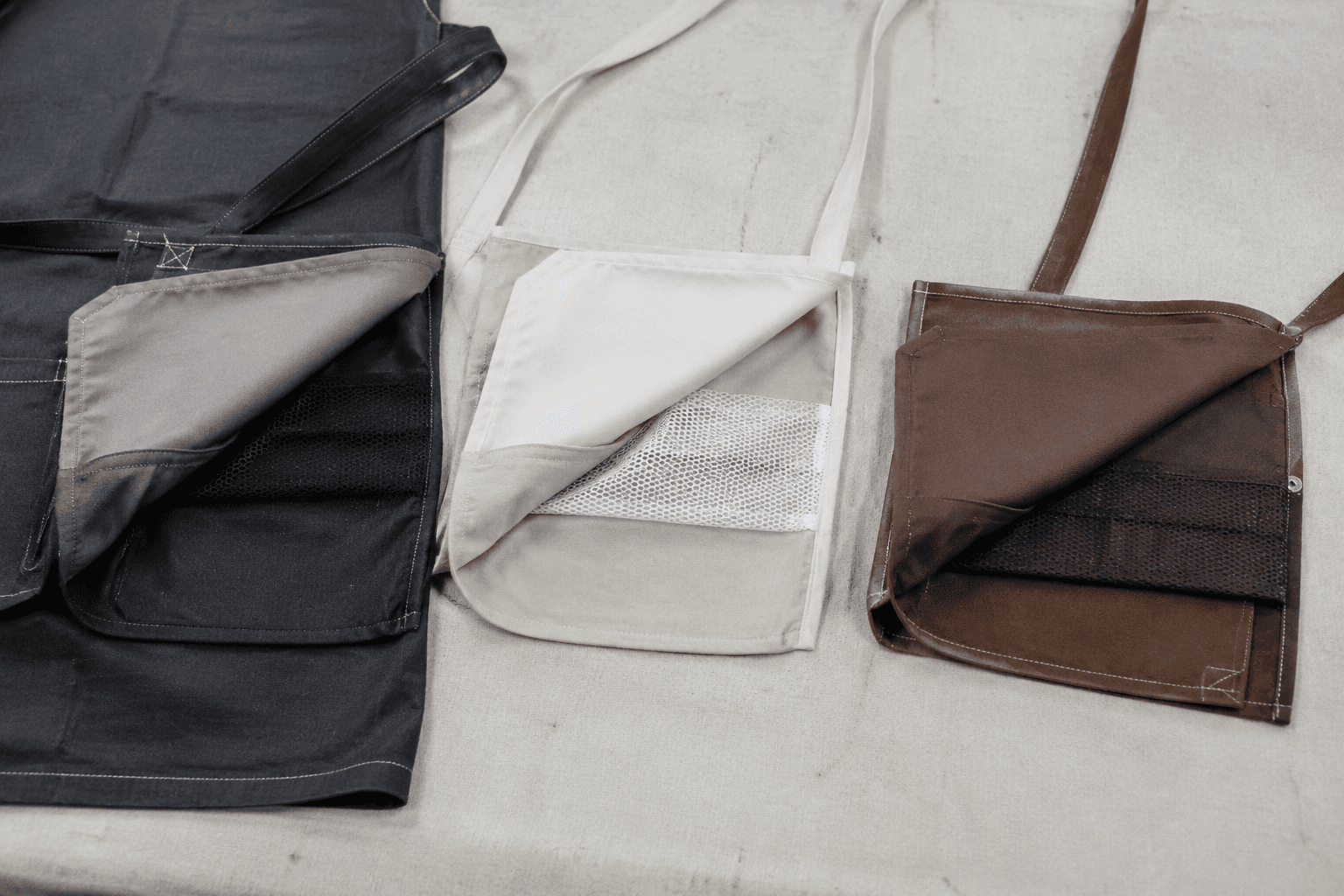
Apron pocket bag materials: self-fabric, lining cloth and mesh options compared
The right <strong>apron pocket bag material</strong> can move apron FOB by $0.08 to $0.28 per piece, change pocket sewing time by 15 to 35 seconds, and decide whether pockets stay flat after 20 washes or fail at the corners. This guide compares self-fabric, woven lining cloth, and mesh pocket options with practical B2B data on GSM, oz, MOQ, lead-time days, reinforcement, and AQL controls for custom apron sourcing.
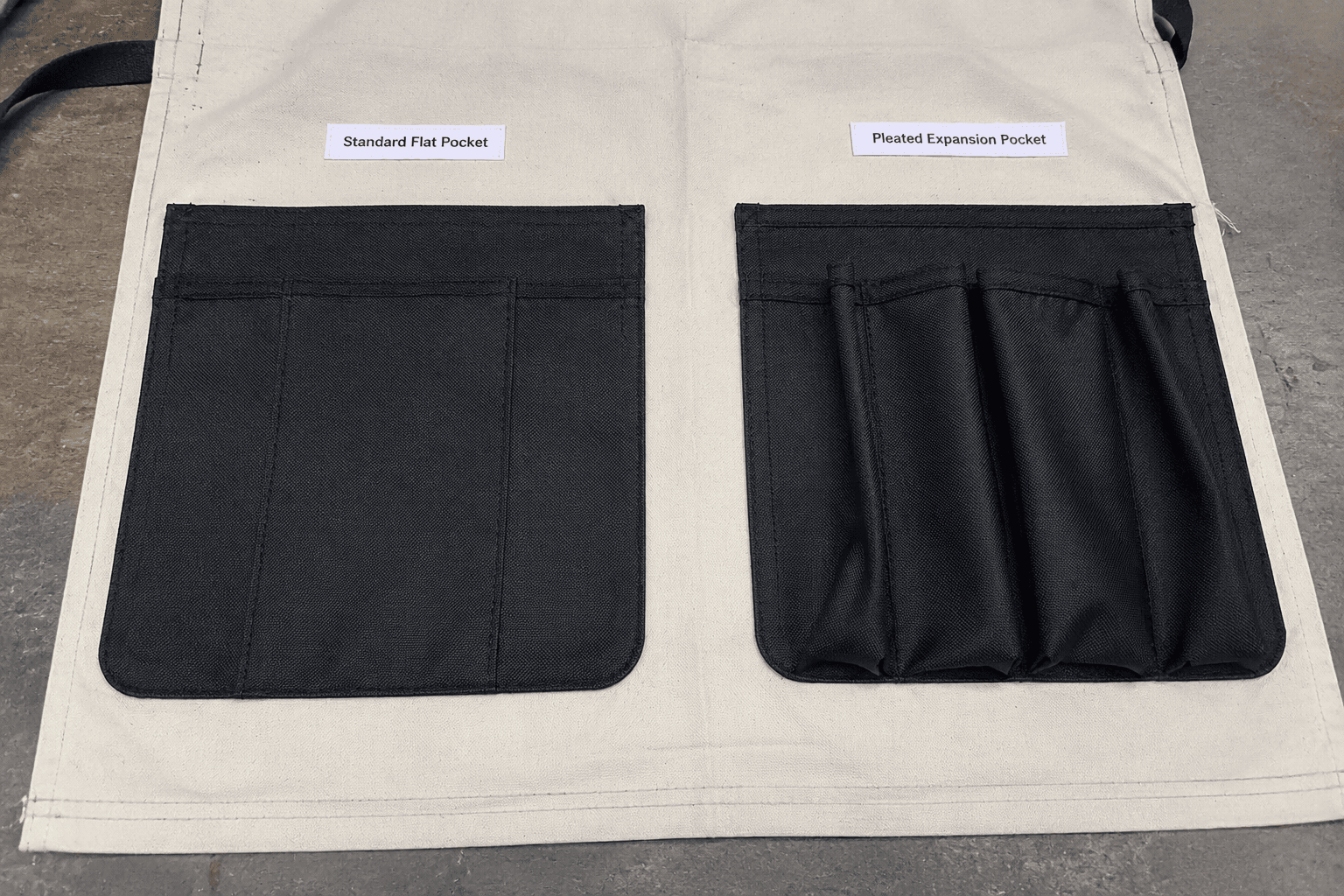
Apron pleats and expansion pockets: adding capacity without bulky silhouettes
For professional uniform programs, <strong>apron expansion pockets</strong> add measurable carrying capacity without turning the apron front into a loose pouch. The most reliable OEM result comes from sizing pockets around actual tools or devices, specifying pleat depth in millimeters, matching construction to 220-320 GSM twill or 8-10 oz canvas, and controlling sample approval, AQL, wash shrinkage and carton pressure before bulk cutting.
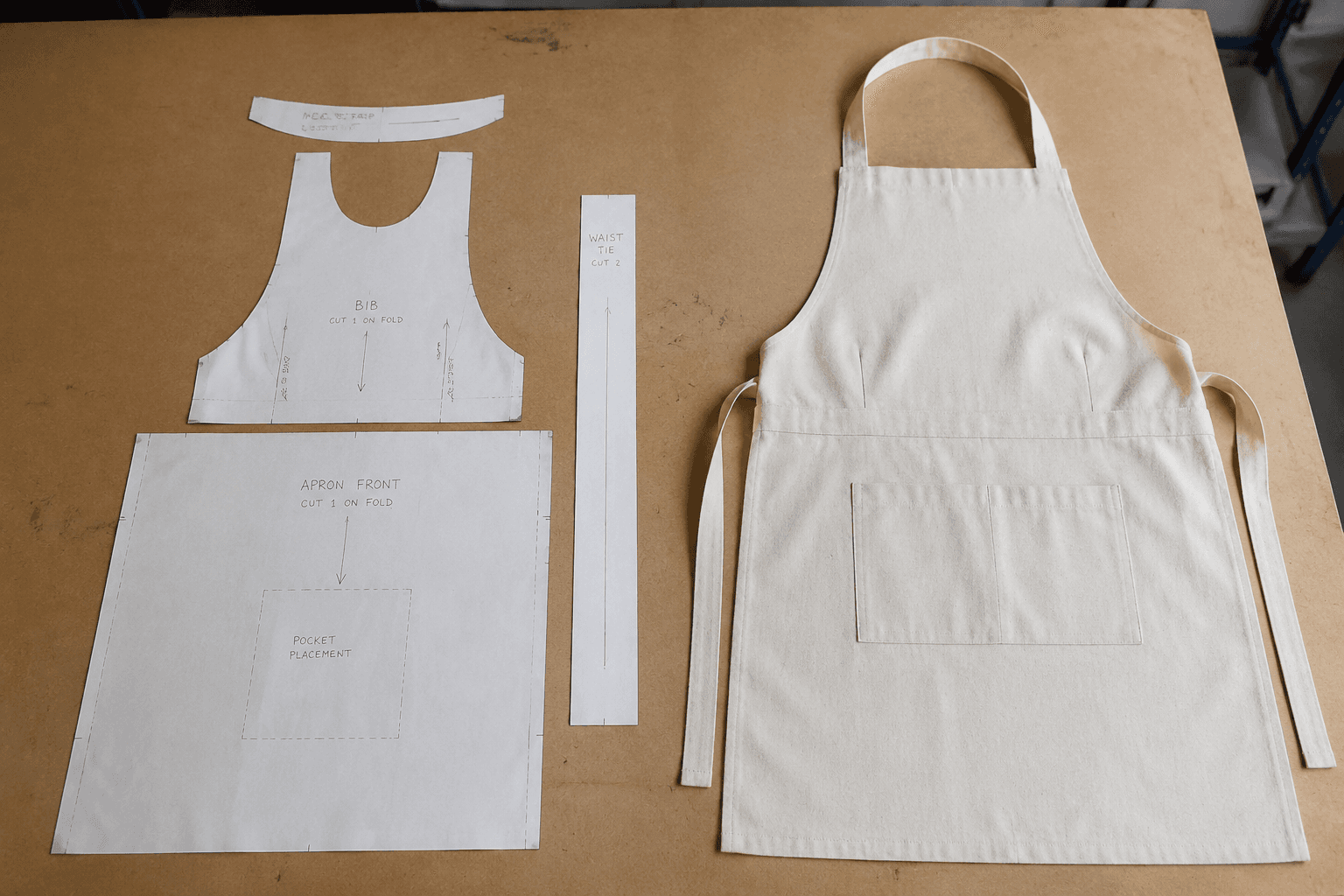
Apron dart and shaping options: improving chest fit without complicating bulk sewing
<strong>Apron dart construction</strong> improves bib stability only when the fit issue, fabric weight and production method are defined before bulk cutting. In OEM sourcing, a pair of side darts on a bib apron can add US$0.04-US$0.25/pc, 8-18 seconds of sewing and pressing time, and new QC points such as dart intake, point position and finished upper bib width, so buyers should compare it against curved bib edges, strap-angle changes and size grading before approving bulk.
Webbing material choices for apron straps: cotton, polyester, nylon and blended tape compared
Selecting the right <strong>apron strap webbing material</strong> changes how an apron wears, washes, adjusts and reorders. This guide compares cotton, polyester, nylon and blended tape for professional apron sourcing, with practical B2B benchmarks for width, thickness, shrinkage, MOQ, lead-time days, trim cost, hardware compatibility and AQL control.
Towel loops and side holders on aprons: placement tests for speed, snag risk and wash endurance
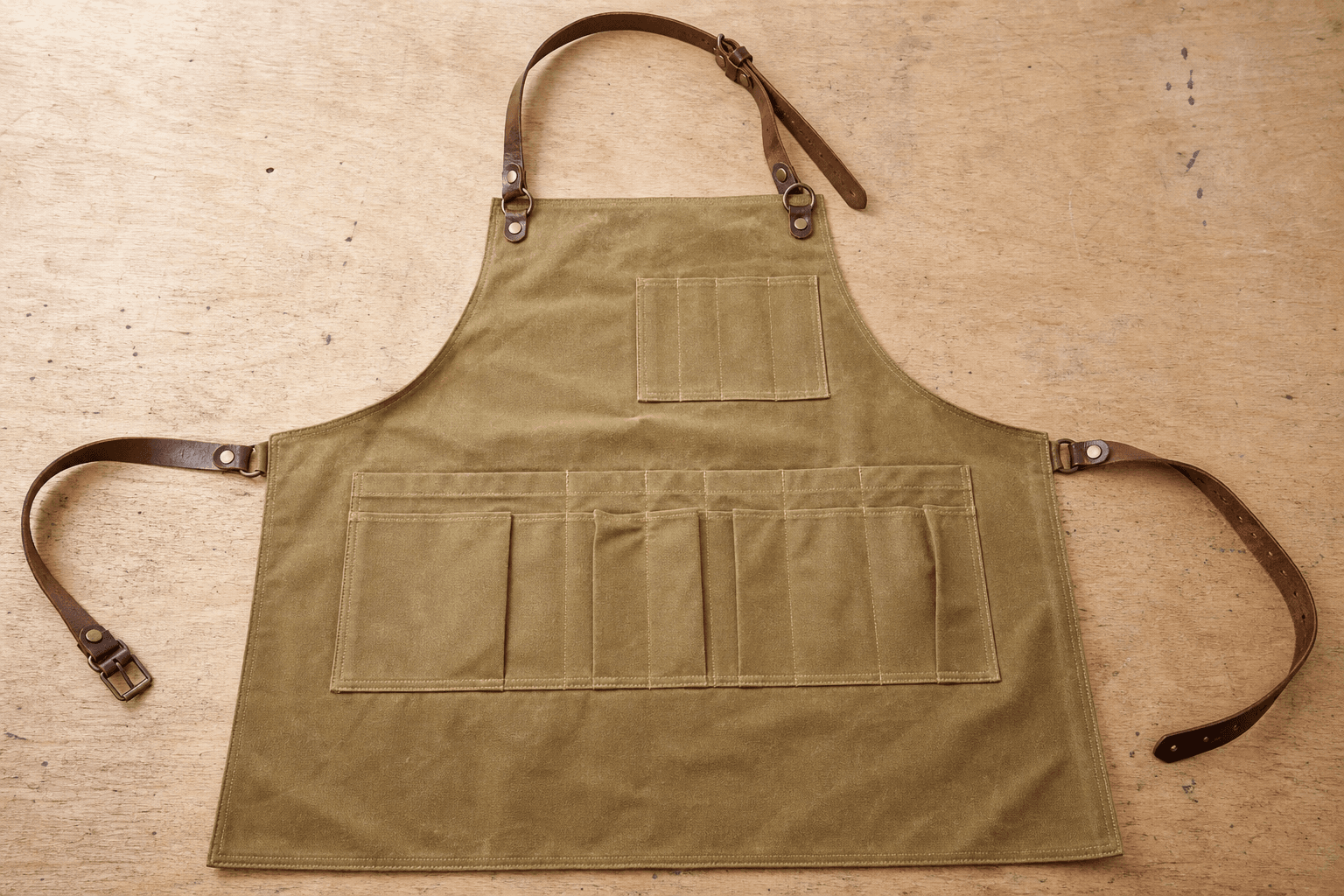
This guide explains how <strong>apron towel loop placement</strong> changes wipe-return speed, snag frequency, and wash life in commercial apron programs, with OEM-ready ranges for offset, loop opening, reinforcement, AQL, MOQ, lead time, and FOB adders that professional B2B buyers can put straight into a tech pack.
Split-leg aprons for mobility: pattern complexity, hem finishing and buyer cost impact
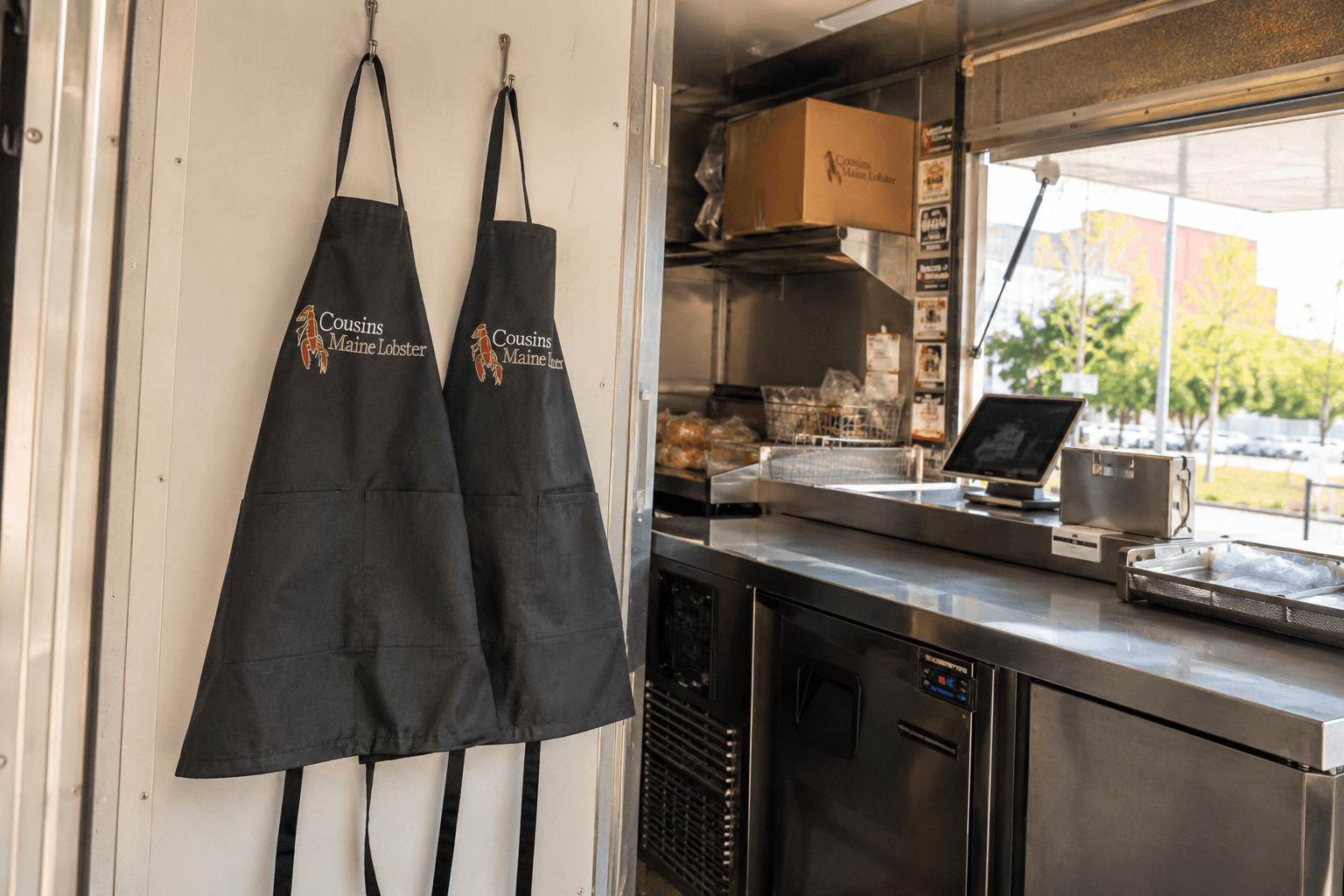
<strong>Split leg apron manufacturing</strong> improves stride, kneeling, and fast floor movement for service teams, but buyers should cost it as a construction and quality-control issue rather than a fashion detail. Split depth, fabric weight, hem method, reinforcement, pocket position, and inspection tolerance directly change SMV, cutting yield, rework rate, lead time, and FOB price on commercial apron orders.

Snap buttons, jeans buttons and press studs on aprons: attachment strength, replacement and plating risk
A sourcing guide to <strong>apron snap button options</strong> for bulk production, with specific benchmarks for pull force, fabric weight, trim cost, MOQ, AQL, corrosion risk and lead-time impact across press studs, heavy-duty snaps and jeans buttons.
Printed neck labels vs woven brand labels on aprons: comfort, wash life and private-label presentation
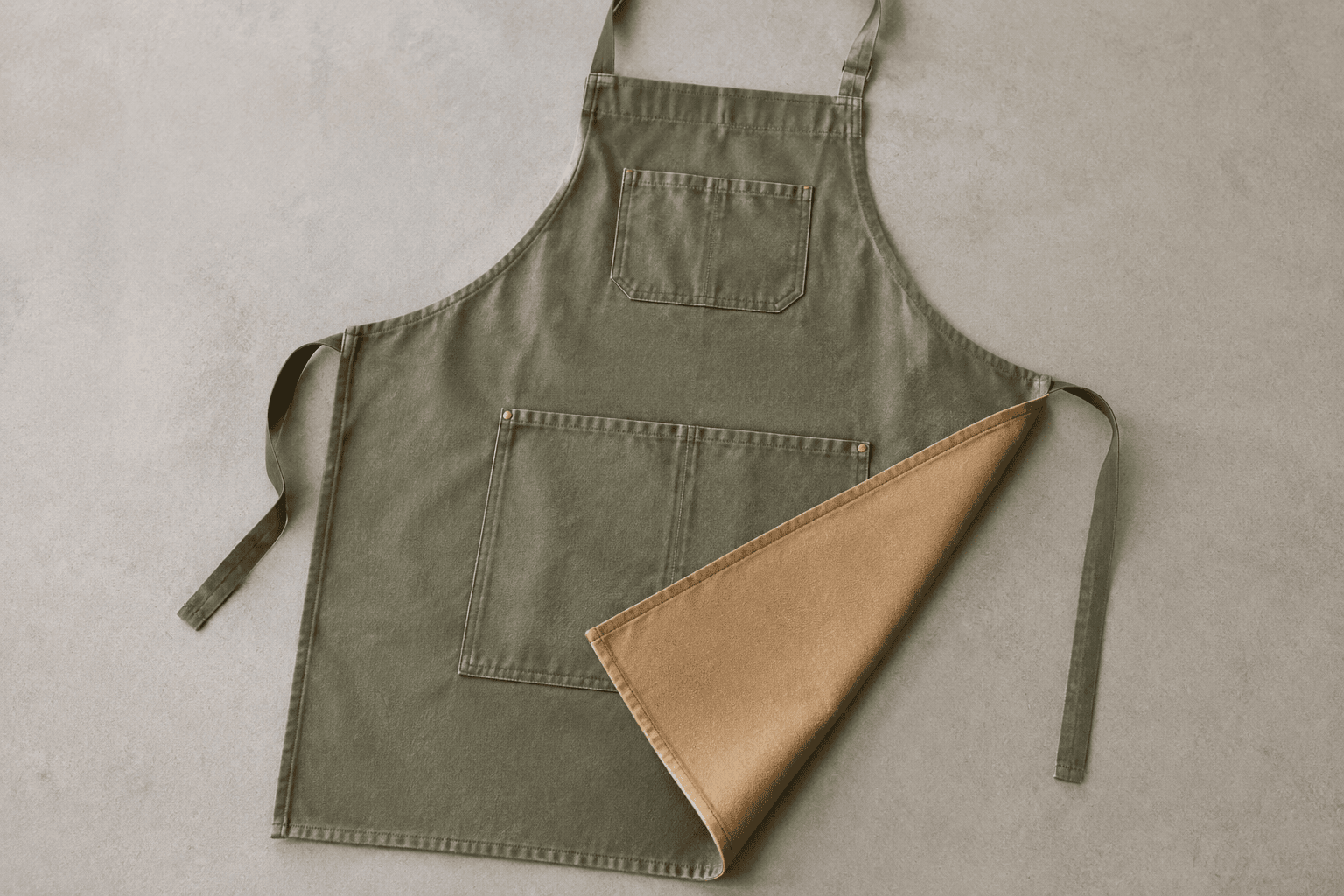
Choosing the right <em>apron neck label options</em> changes wearer comfort, wash-life, compliance accuracy, trim MOQ, and FOB cost on every bulk apron order. For professional buyers sourcing bib, waist, and cross-back aprons, printed neck labels and woven brand labels perform differently once fabric weight, laundry conditions, target price, and AQL standards are fixed.
Laser-cut logo patches for aprons: edge sealing, material choices and reorder consistency
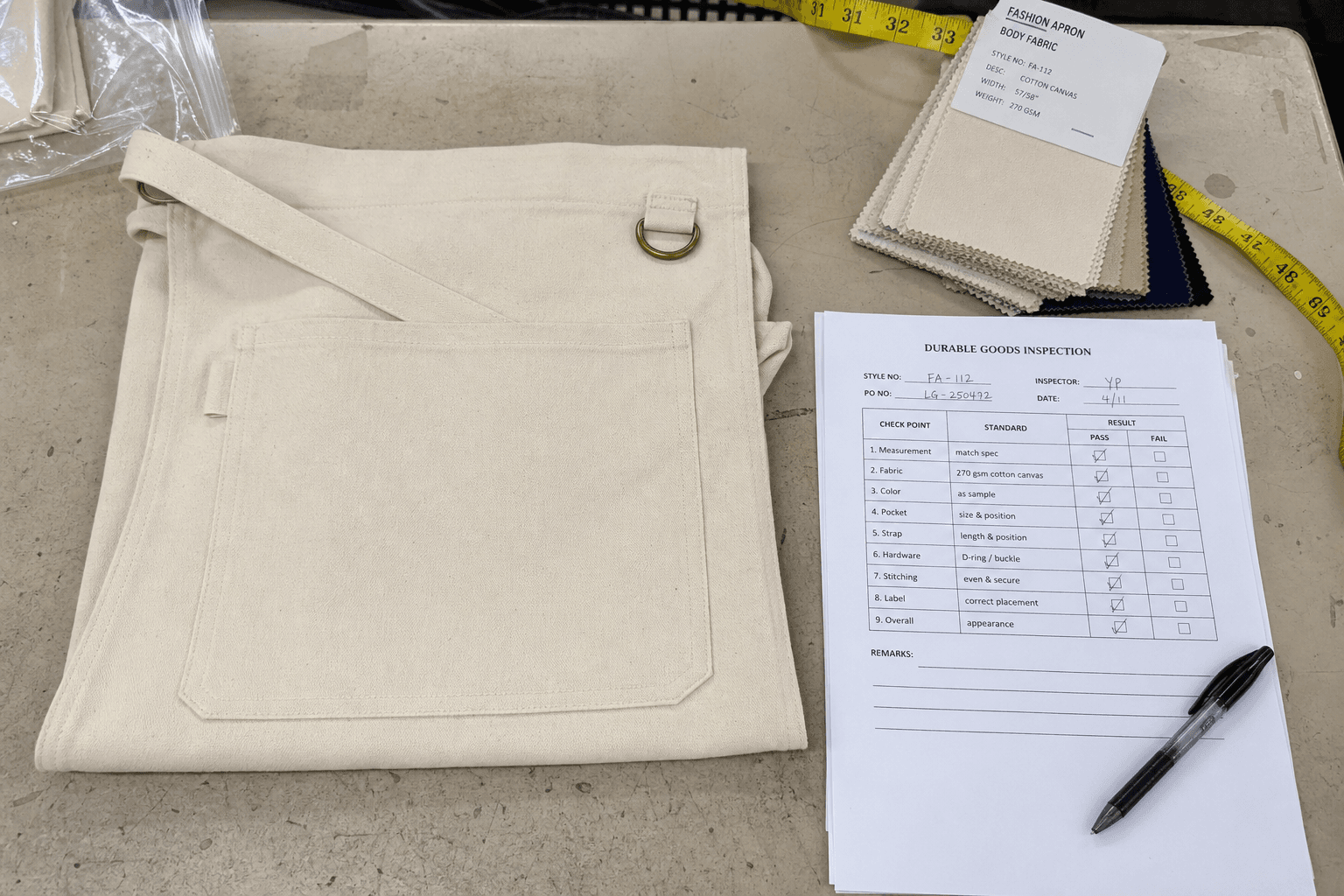
<strong>Laser cut apron patches</strong> give bib, waist and cross-back aprons a sharper branded finish than woven labels or dense embroidery, but consistent B2B results depend on controlled edge sealing, the right patch base for 180-220 GSM poly-cotton or 8.5-12 oz canvas aprons, stitch margins that survive 15-25 wash cycles, and reorder specs that lock size, gloss, backing, placement and AQL.

Heat-transfer neck branding on aprons: low-profile labeling without woven trim minimums
A <strong>heat transfer neck label apron</strong> program gives B2B apron buyers a low-profile private-label finish without the <strong>3,000-5,000 pc</strong> woven-label commitments that often distort small and mid-volume orders. On typical apron runs of <strong>500-2,500 pcs</strong>, buyers can shift branding MOQ down to <strong>300-500 pcs</strong> per artwork, trim <strong>3-6 days</strong> from label development, and hold neck-branding cost near <strong>$0.03-$0.08/pc</strong>, provided the transfer is specified against apron fabric weight, laundering method, placement tolerance, and written QC limits.
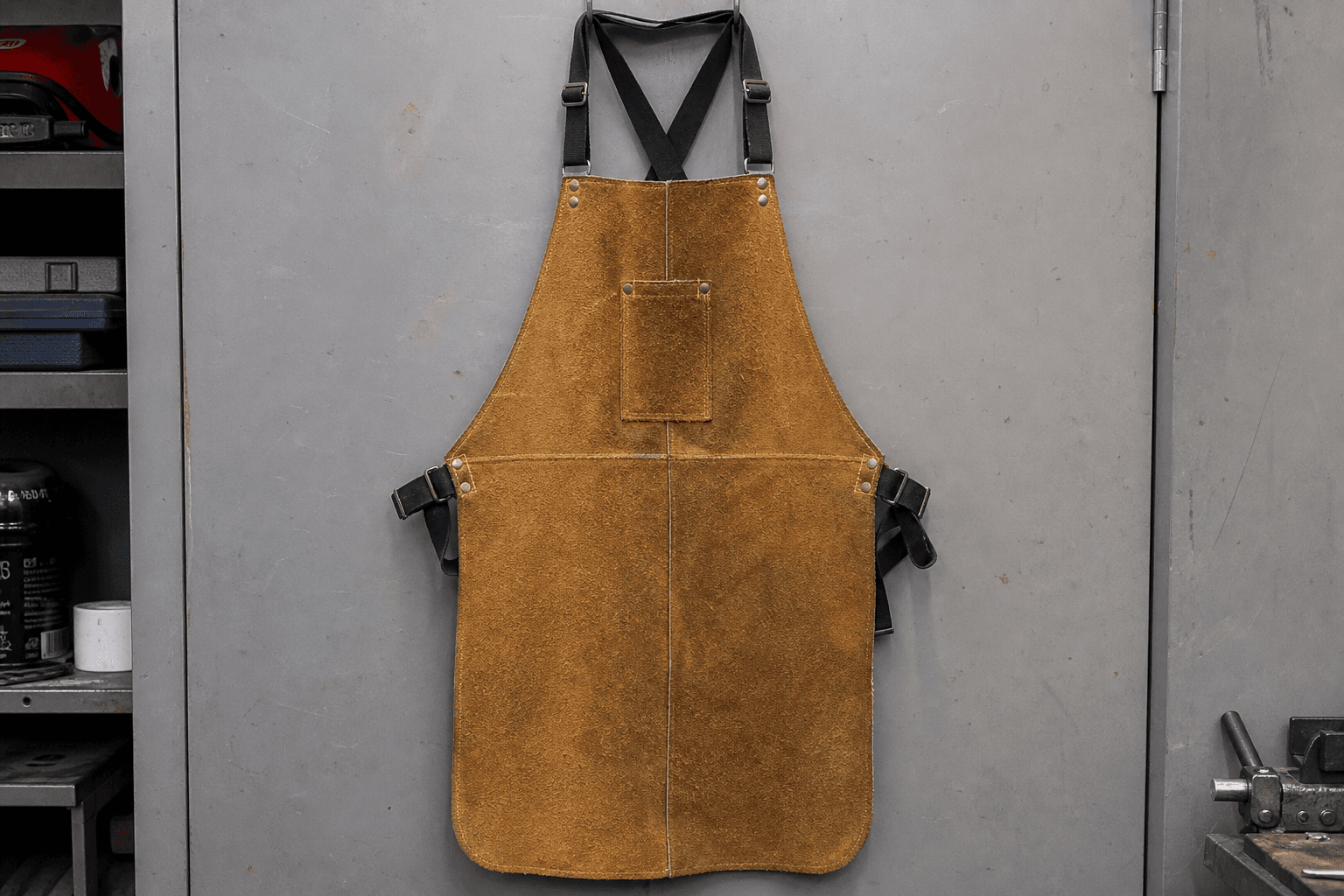
Eyelets and grommets for apron ties: size standards, pull-out strength and rust prevention
<em>Apron eyelets and grommets</em> look minor on the BOM, but they directly affect strap life, wash durability and claim rates in commercial apron programs. This guide gives B2B buyers concrete standards for apron tie hole size, pull-out strength, rust prevention, MOQ, lead time, AQL and installed cost when sourcing hardware for hospitality, kitchen, cafe and workwear aprons.
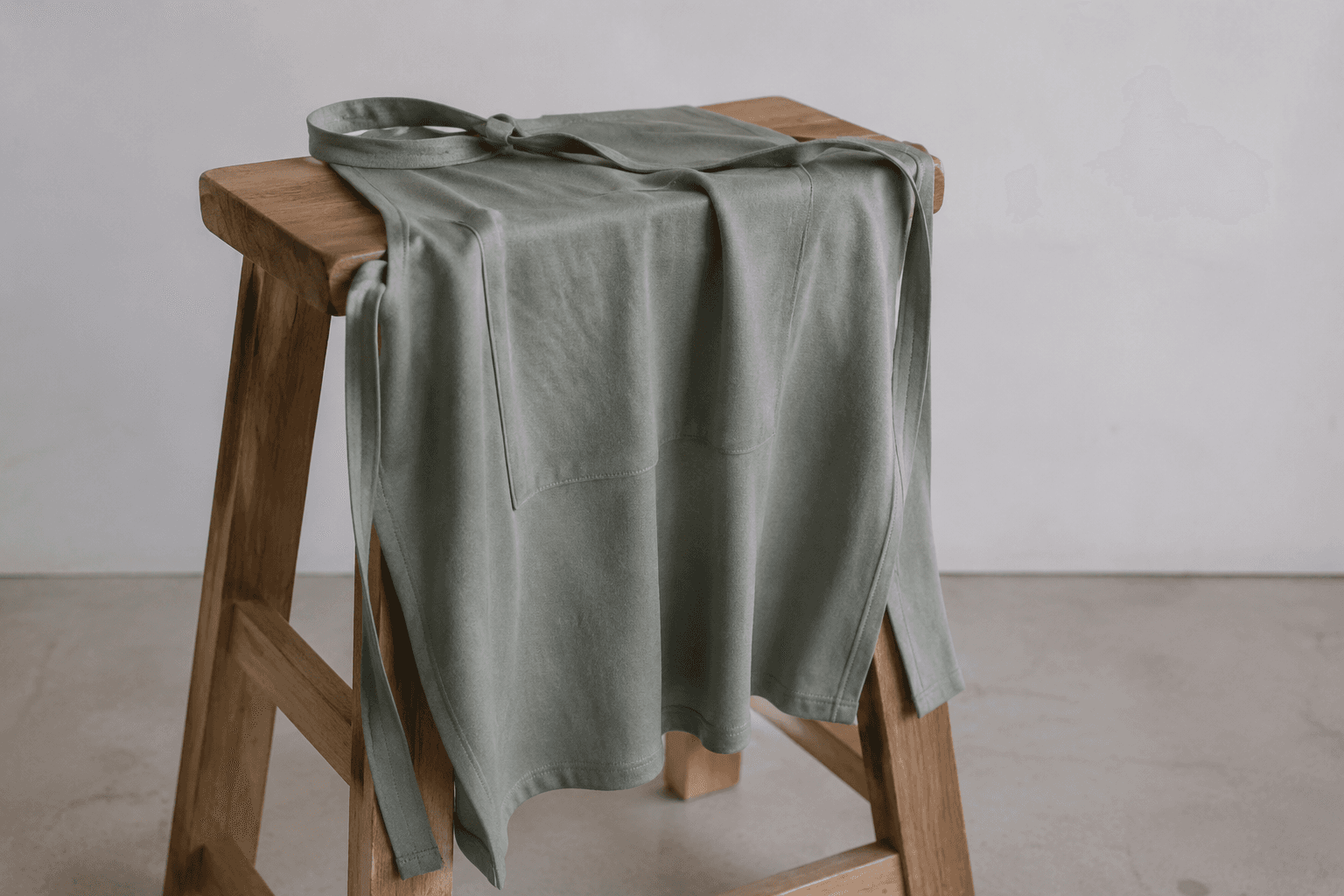
Detachable waist ties for commercial aprons: hook, snap and tunnel systems that simplify replacement
<strong>Detachable apron ties</strong> turn the highest-wear apron component into a controlled spare part instead of a full-garment write-off. This sourcing guide compares hook, snap and tunnel systems for professional apron buyers with realistic data on 180 to 350 GSM fabrics, 7.0 to 12.0 oz builds, $0.12 to $0.78 FOB adders, 500 to 5,000 set MOQs, 10-, 25- and 50-wash checkpoints, and AQL standards for bulk apron programs.
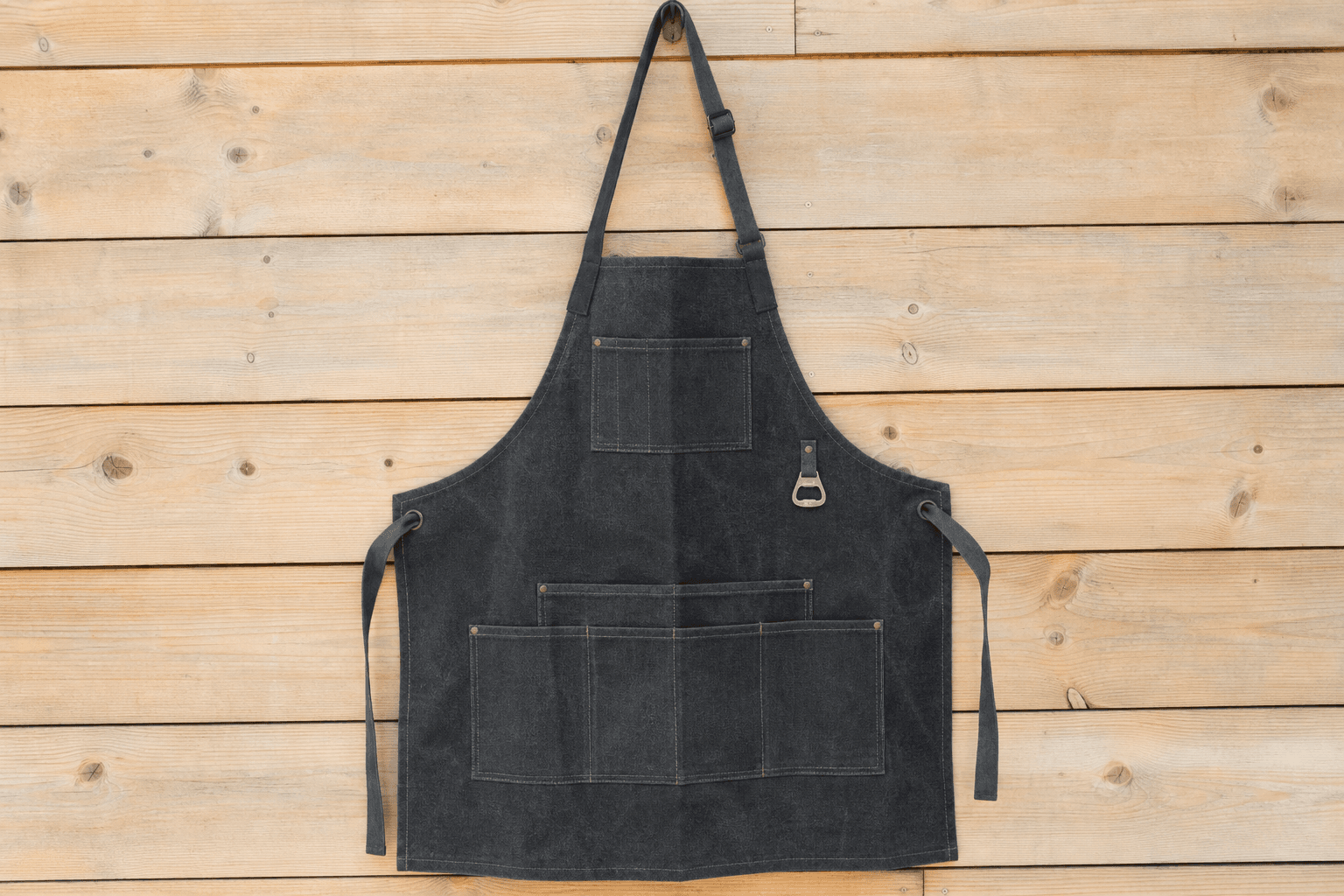
Custom apron hang loops: utility placement, tape materials and sewing reinforcement points
<strong>Apron hang loop design</strong> affects durability, costing, and approval speed on OEM orders. For professional apron buyers, the right loop placement, 12 mm to 20 mm tape choice, and seam-caught reinforcement can prevent failures through 50 to 75 commercial wash cycles while adding roughly $0.03 to $0.15 per piece FOB.
Zipper pockets on custom aprons: security, sewing complexity and bulk-order pricing impact
<strong>Zipper pockets on aprons</strong> can reduce loss of phones, keys and cash, but for B2B buyers they also change trim MOQ, sewing minutes, inspection points, wash-risk exposure and FOB pricing in ways that should be costed before sampling starts.
Webbing straps vs self-fabric ties on aprons: cost, wear points and replacement options
A sourcing guide to <em>webbing straps vs self fabric apron ties</em> for bulk apron programs, with apron-specific cost ranges, wear points, MOQ and lead-time benchmarks, replacement methods, and QC checkpoints for professional B2B buyers.
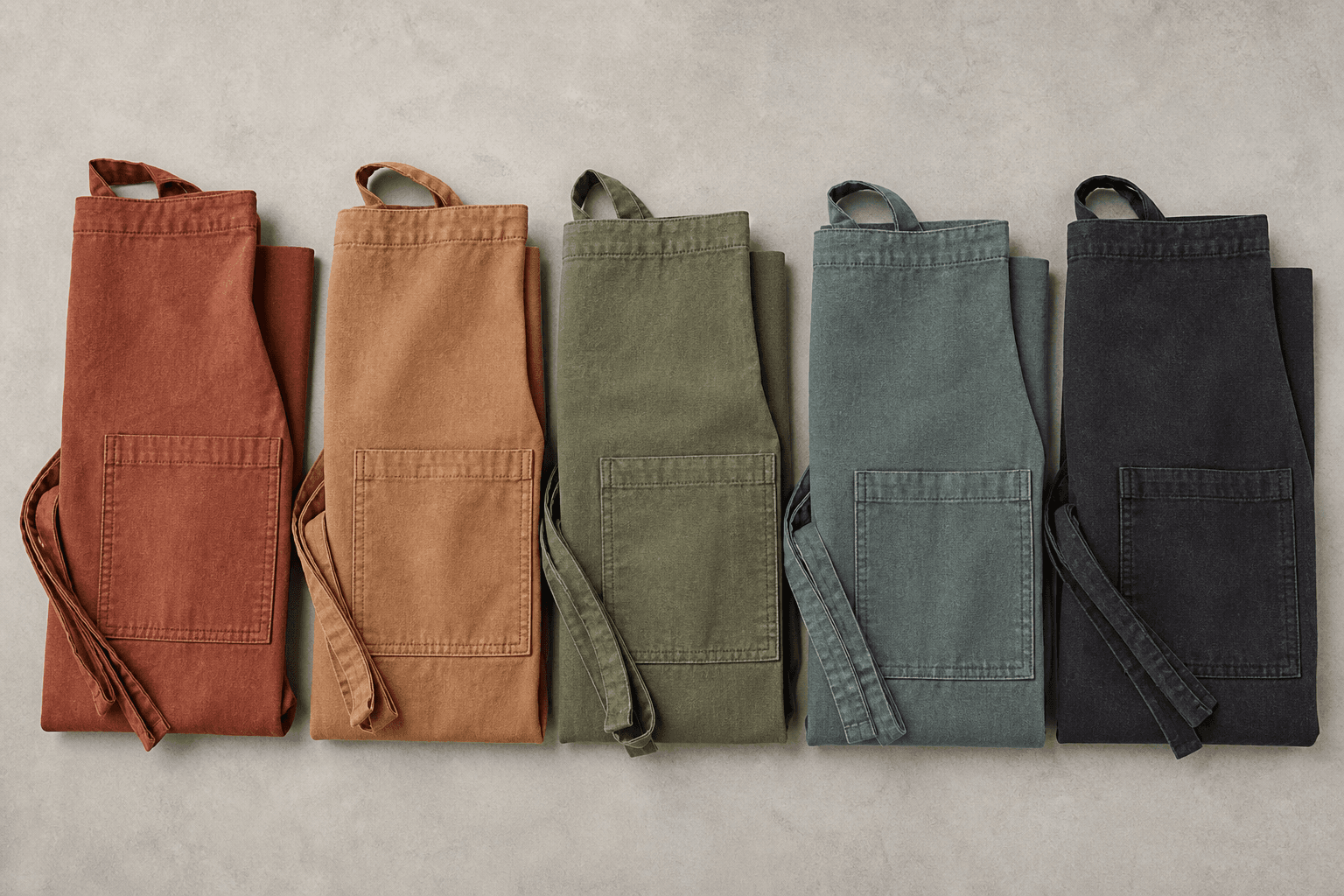
Under-pocket branding on aprons: hidden logo placement for upscale hospitality programs
<strong>Under pocket branding aprons</strong> give hospitality buyers a discreet logo position that keeps the apron front clean while preserving brand recognition at close range. This sourcing guide explains how to specify hidden logo placement on professional aprons, with practical benchmarks for pocket construction, fabric weight, branding method, MOQ, ex-factory adders, wash durability, lead times, and <strong>AQL 2.5 / 4.0</strong> control points.
Serialized logo patches for apron programs: tracking wearer issue and replacement history
<strong>Serialized apron patches</strong> give every apron a unique ID that links issue date, wearer assignment, wash exposure, repair record, and replacement reason. For B2B buyers managing <strong>3,000 to 50,000 aprons</strong> across cafés, restaurant groups, bakeries, commissaries, retail counters, and factory canteens, they add a practical control layer at just <strong>$0.04-$0.35 per piece</strong>, improve packing accuracy, support <strong>AQL 2.5 major / 4.0 minor</strong> inspection, and cut blind replenishment.
Reverse-side print on apron facings and straps: hidden branding for premium private label programs
<em>Hidden branding on apron straps</em> gives private label apron buyers a low-visibility branding channel that keeps the bib front clean while adding a measurable premium detail. The feature scales only when the apron spec fixes fabric weight, finished strap width, print-safe margins, MOQ, wash standard, AQL, added cost per piece, and bulk lead time before sampling.
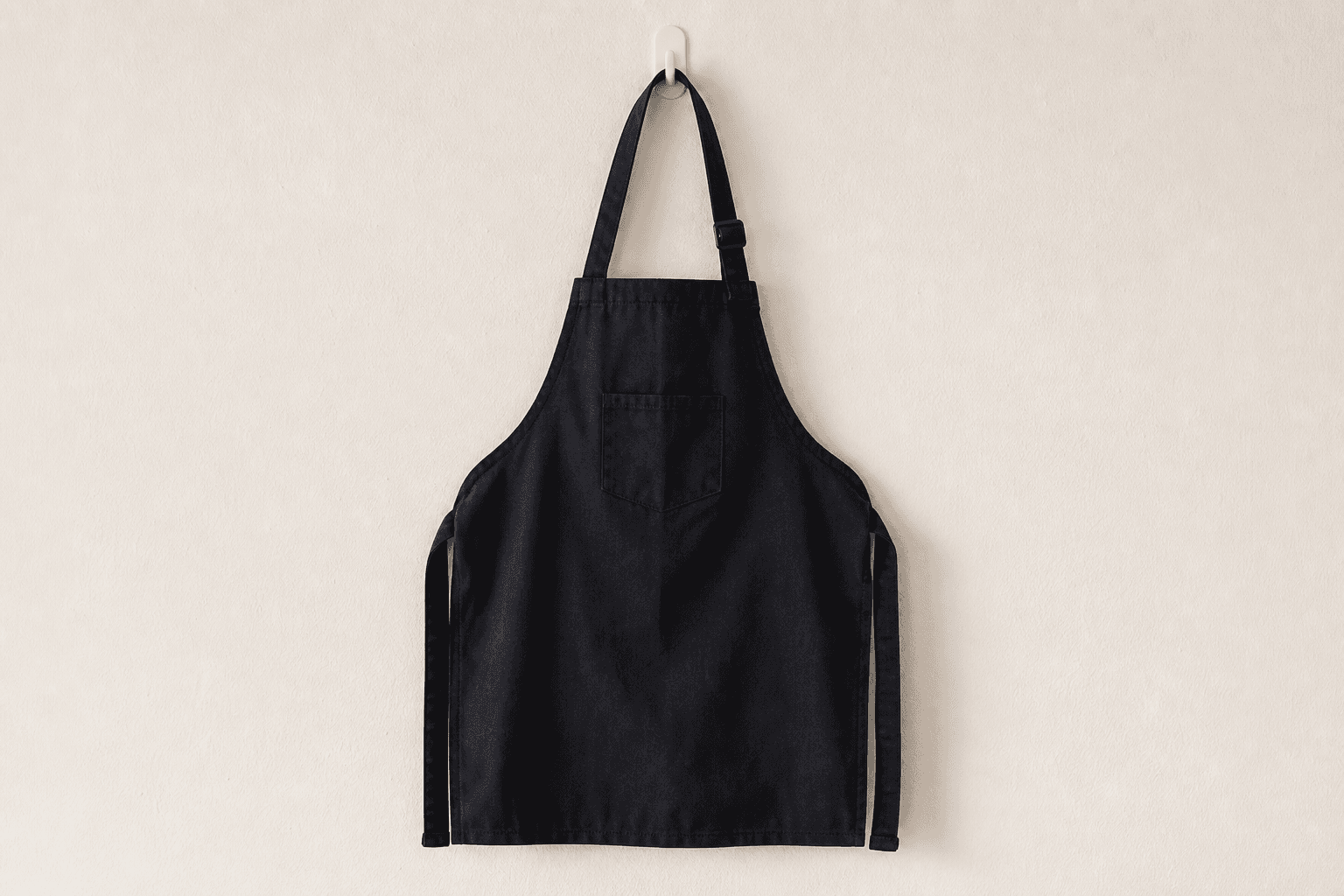
Removable apron straps: snap, button and hook systems for easier laundering and repair
<strong>Removable apron straps</strong> help professional apron buyers reduce full-garment replacement, speed commercial laundry handling, and keep standard apron bodies in service longer. For OEM apron sourcing, the right snap, button, or hook system should be selected against fabric weight, strap width, wash temperature, target cycle count, spare-part MOQ, AQL limits, and realistic FOB cost per piece.
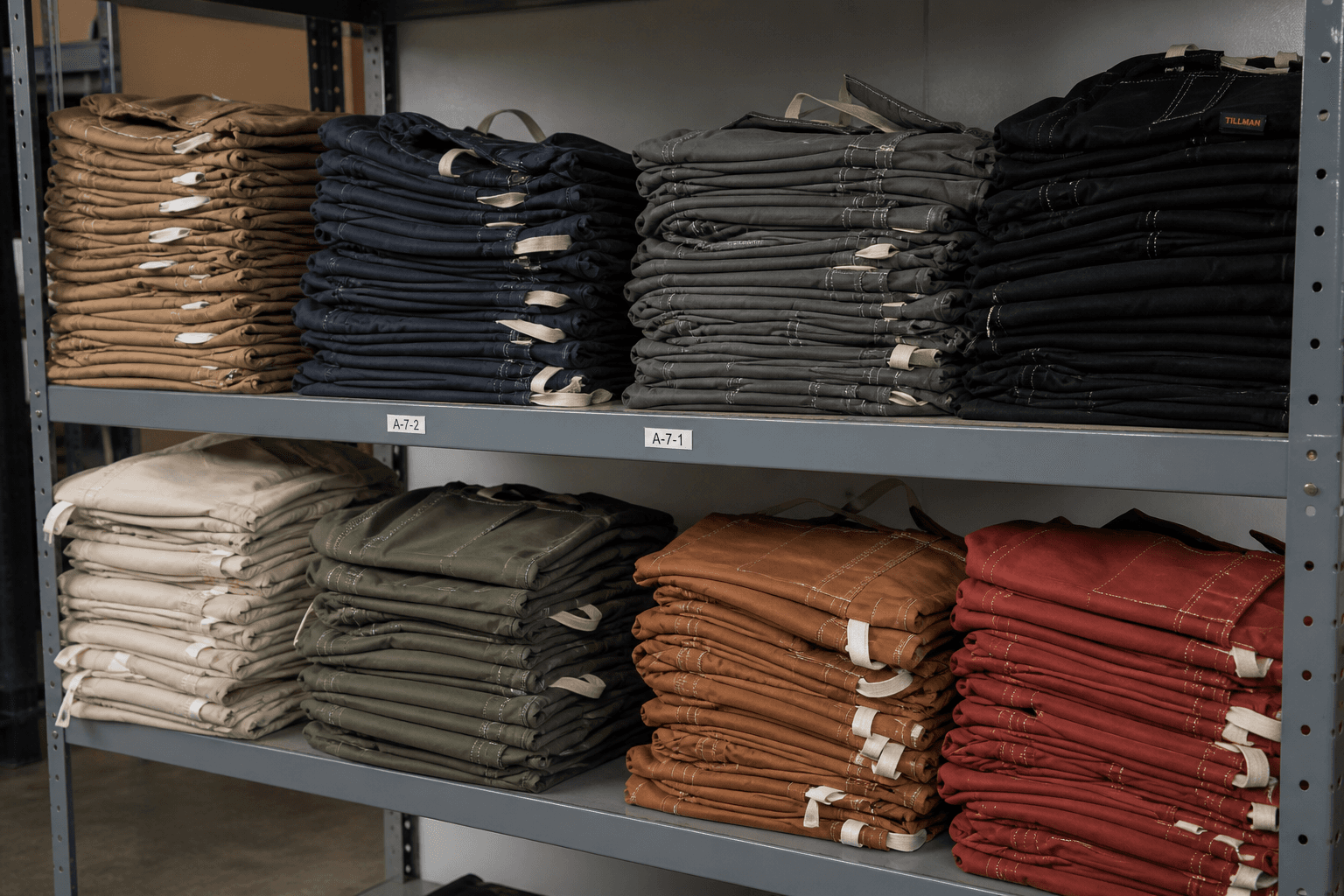
Reflective logo transfers on aprons: wash durability and visibility for service teams
<strong>Reflective logo transfers on aprons</strong> work best when buyers treat them as a sourcing specification, not a styling add-on: use stable <strong>200-260 GSM</strong> poly-cotton twill, keep chest artwork near <strong>48-80 cm²</strong>, budget <strong>US$0.18-0.85 per piece</strong>, approve wash performance at <strong>25-40 home washes</strong> or <strong>15-25 industrial washes</strong>, and lock bulk quality at <strong>AQL 2.5 major / 4.0 minor</strong> with defined limits for lift, cracking and placement.
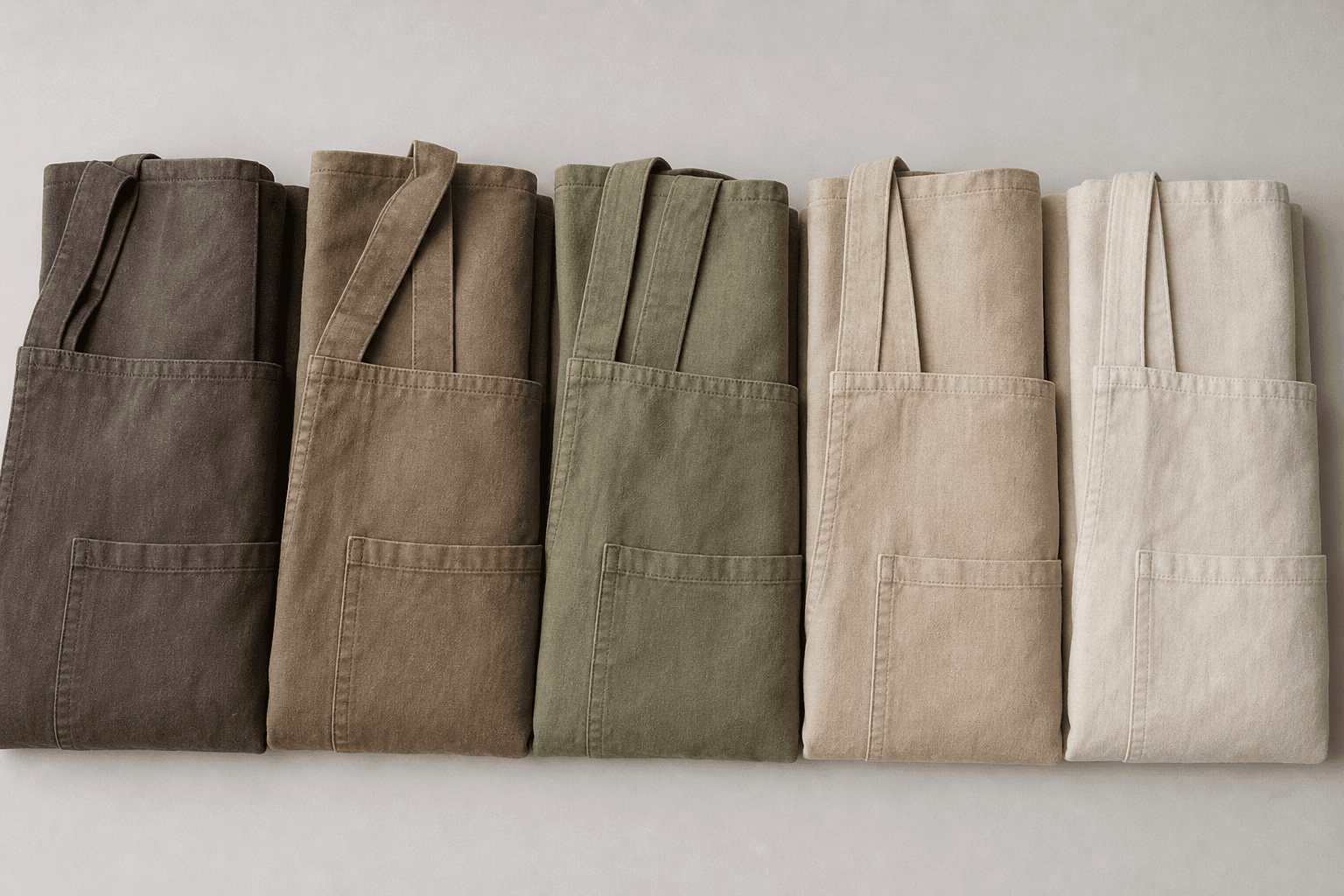
Laser engraving on apron hardware and leather trims: detail limits and reorder consistency
<strong>Laser engraving apron hardware</strong> stays commercially reliable only when apron buyers lock measurable trim rules before bulk approval: usable engraving area in mm, minimum stroke and gap, finish type, leather thickness, placement tolerance, contrast range, AQL level, and retained reorder standards. On professional apron programs, consistent branding on buckles, snaps, rivet caps, and leather trims comes from controlled process windows and documented trim records, not from one unusually dark sample.
Heat-cut synthetic strap ends on aprons: fray prevention, finish quality and safety limits
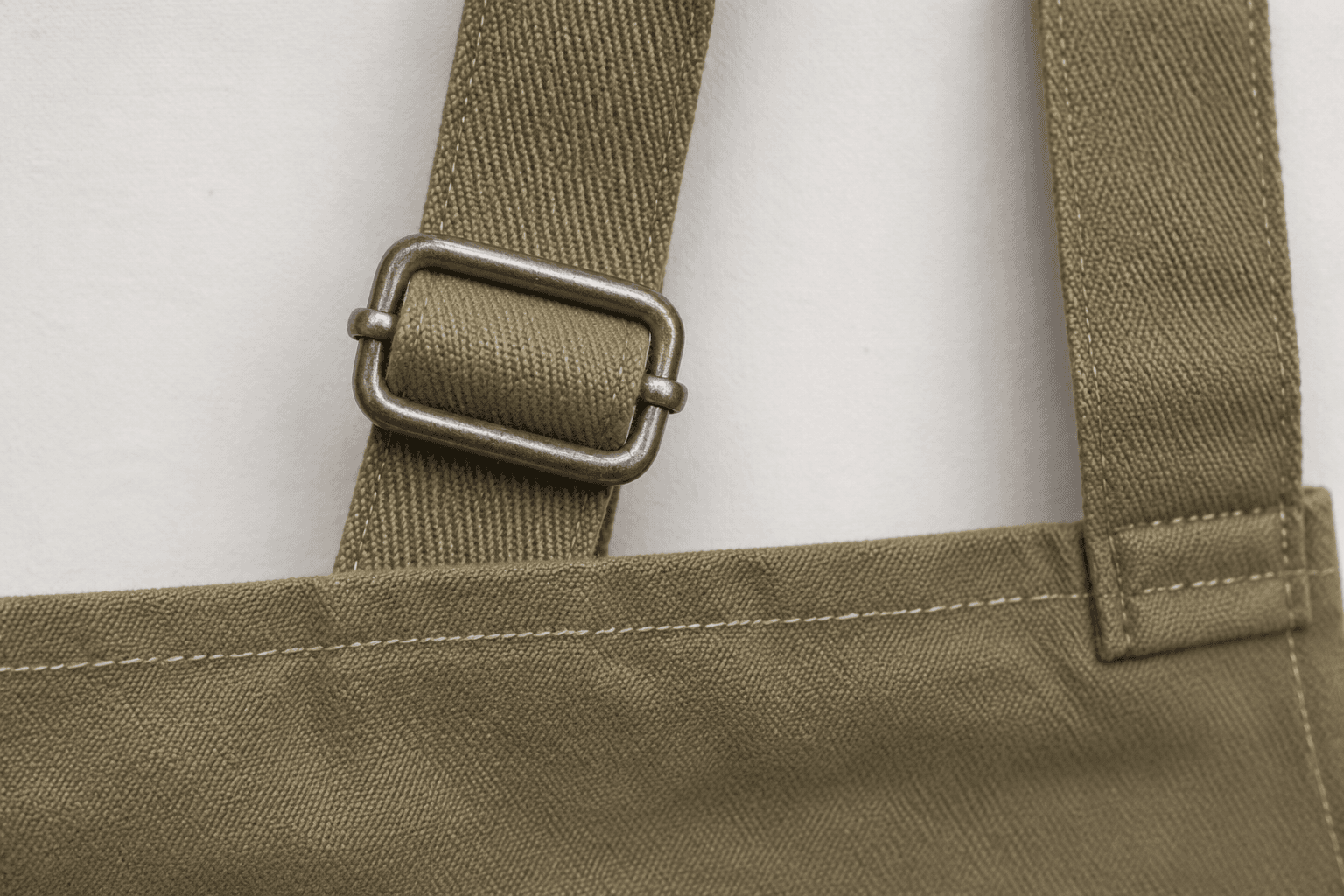
<strong>Heat cut apron strap ends</strong> are a practical trim specification for polyester, nylon, and polypropylene apron webbing when buyers define end shape, melt profile, wearer-contact limits, and inspection tolerances in advance. In most apron programs, the process adds about $0.01-$0.03 per exposed end, supports 500-1,000 pcs MOQ with stock webbing, and needs stricter approval when sealed ends touch the neck, hands, or underarm during 8-10 hour shifts.
Fold-over waistband construction on waist aprons: cleaner finish, hidden seams and cost impact
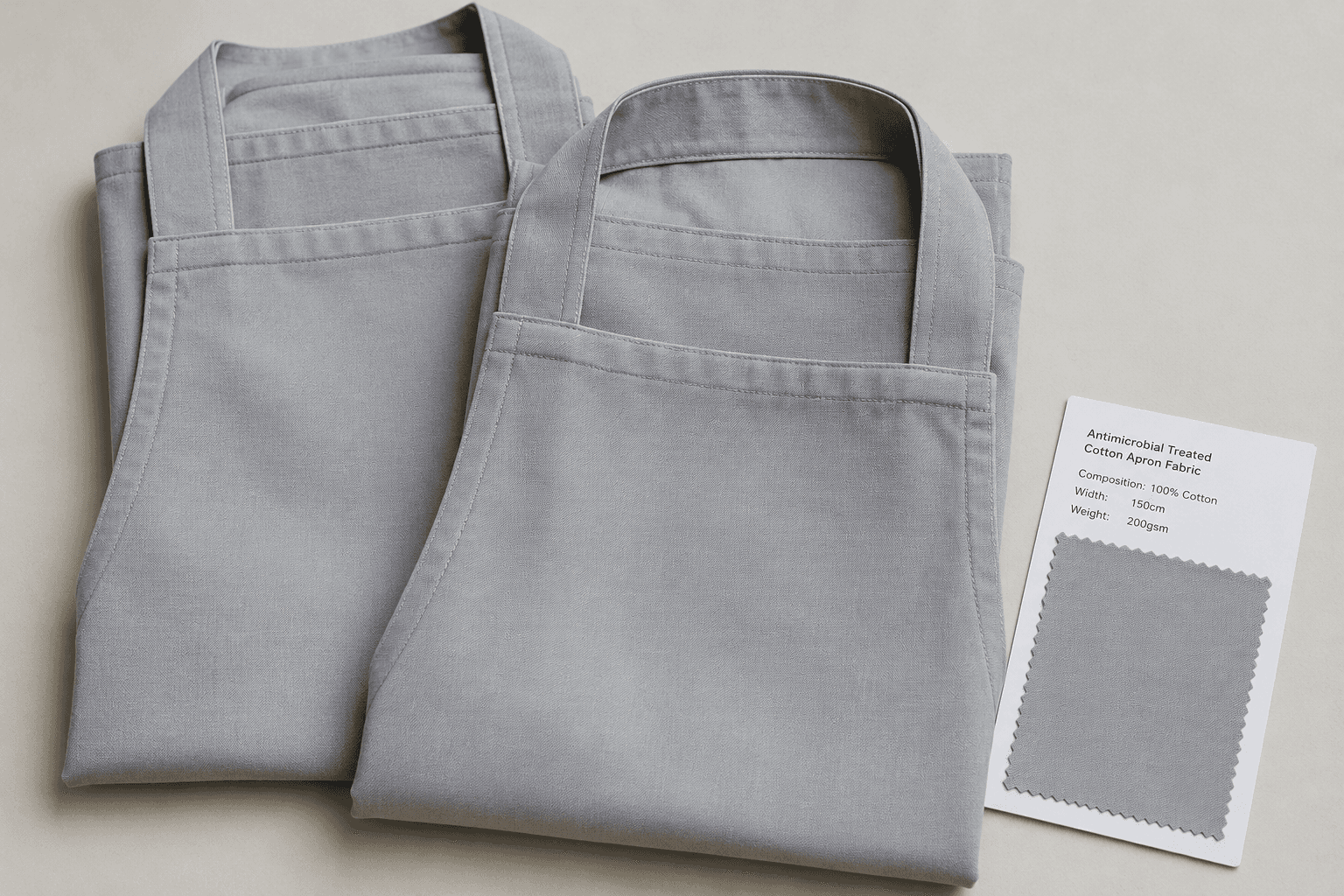
<strong>Fold over waistband waist aprons</strong> give professional waist aprons a cleaner top finish by enclosing the body edge inside the band, but the sourcing effect is concrete: waistband cut width typically increases to 7.0-9.5 cm, sewing time rises by about 0.4-1.2 minutes per piece, and FOB usually moves up <strong>US$0.07-0.28</strong> depending on fabric weight, tie construction, order size, and inspection standard.
Apron grommet color inserts and branded eyelets: small trim details that change minimums
<em>Branded eyelets for aprons</em> look minor on a tech pack, but they routinely create a second minimum that sits above the sewing MOQ. A custom eyelet program can require <strong>5,000-10,000 pcs</strong> per size and finish, add <strong>12-30 days</strong> to trim approval and supply, and lift cost by <strong>$0.03-$0.12 per apron</strong> before reinforcement and wastage. For B2B buyers sourcing aprons, these small metal details need to be costed at the first quotation stage, not after the sample is approved.
Silicone, discharge and foil logo effects on aprons: decoration limits by fabric type
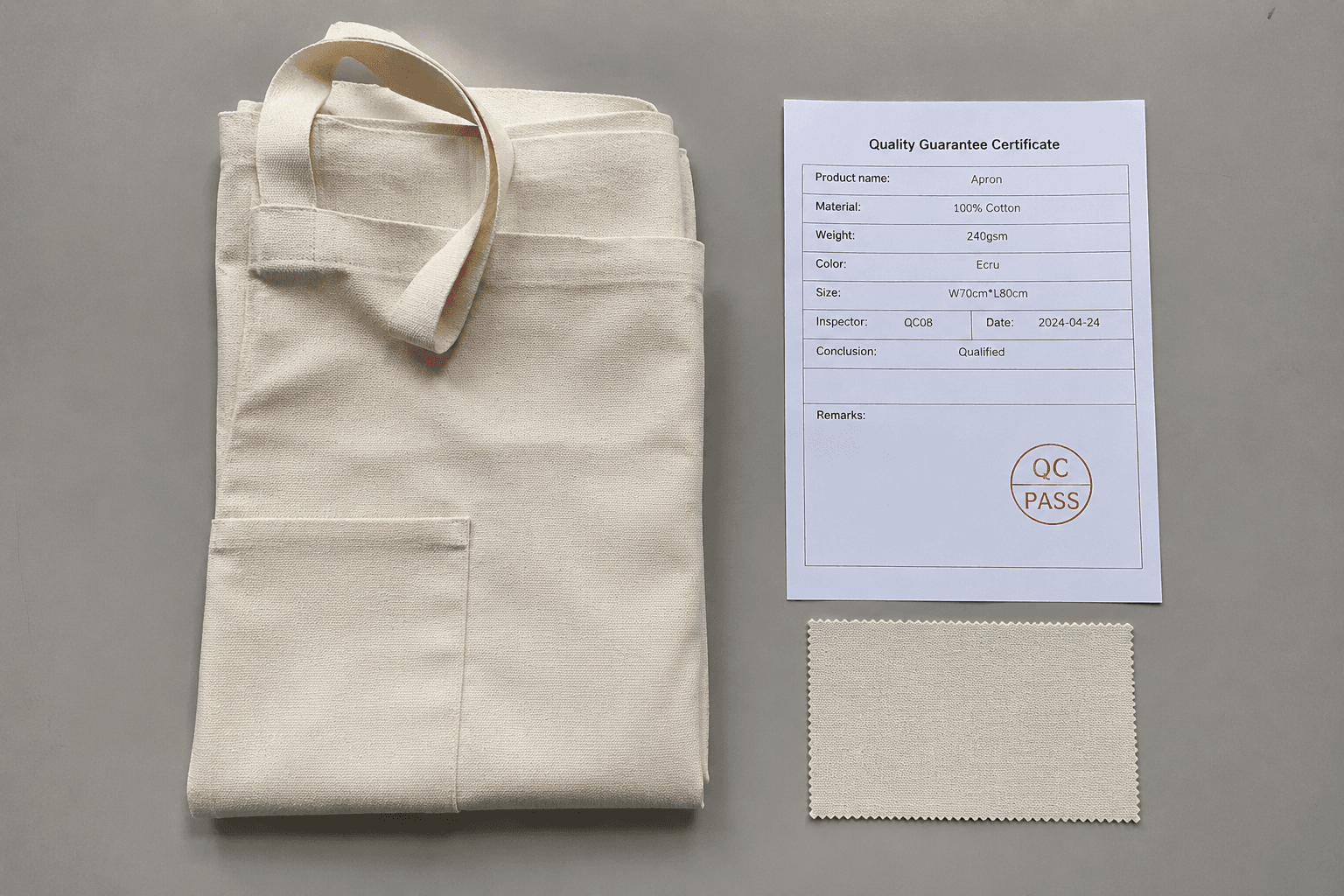
A factory-side guide to <em>special effect apron logo printing</em> for B2B buyers, showing where silicone, discharge and foil work on cotton canvas, twill, CVC and polyester aprons, with realistic limits on GSM, MOQ, lead-time days, wash durability, AQL and added cost per piece.
QR-code traceability labels on aprons: wash durability, data format and placement
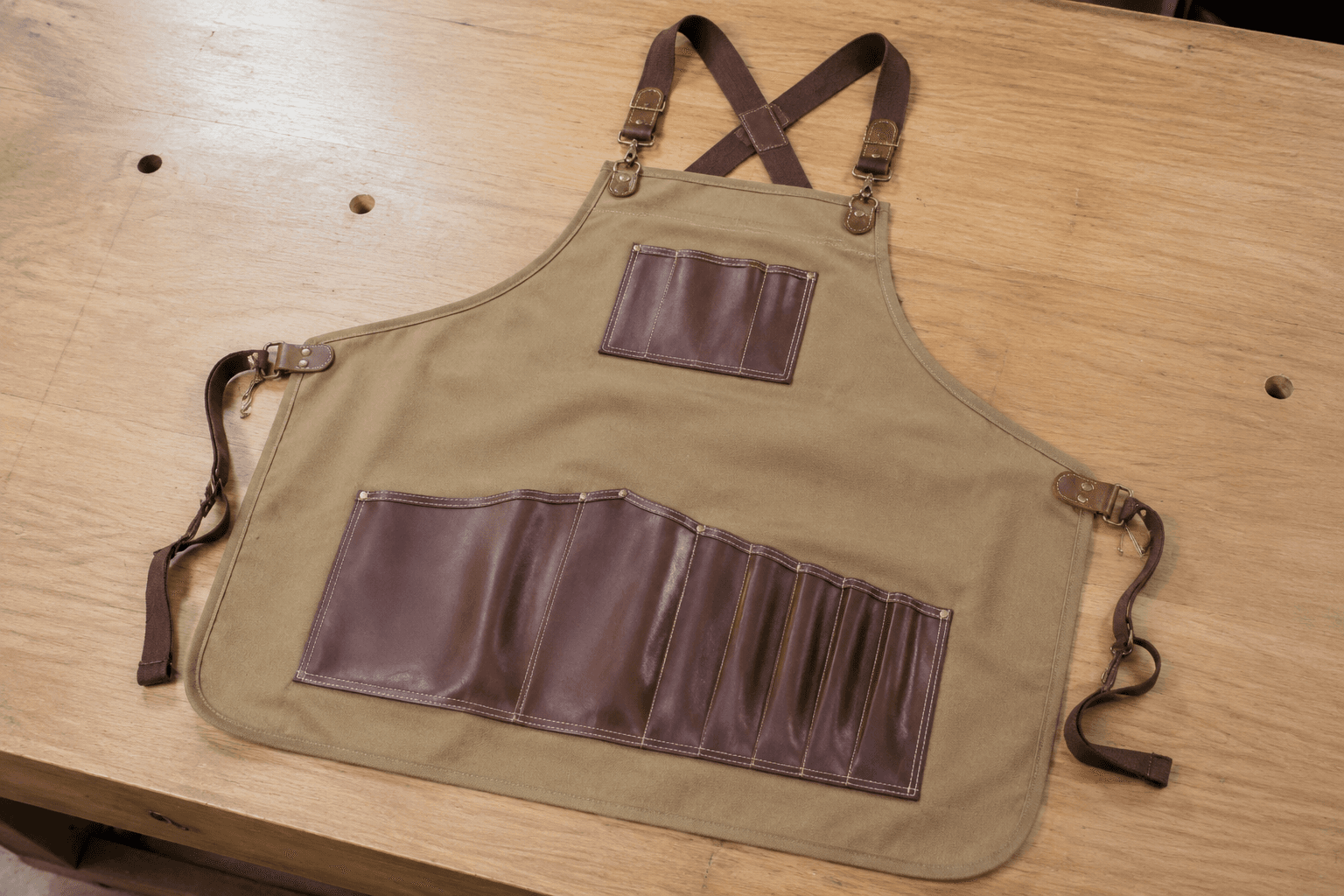
<em>qr code labels for aprons</em> help B2B buyers control laundry routing, claims isolation and reorder accuracy at garment level, but scan reliability depends on measurable sourcing choices: label substrate, print ribbon, payload length, symbol size, placement, wash-cycle target and inspection limits.
Pattern matching on striped and check aprons: cutting, seam alignment and waste
<strong>Pattern matching apron</strong> control on striped and check fabrics changes sourcing economics long before bulk sewing starts. For B2B apron buyers, the matching brief determines marker efficiency, fabric yield, sewing minutes, inspection criteria, workable MOQ, and final FOB price. When buyers specify repeat size, visible apron zones, millimeter tolerances, and acceptable waste levels, suppliers can quote matched consumption accurately, plan realistic lead times, and reduce alignment disputes at inline and final inspection.
Name-change friendly apron branding: modular patches and replaceable ID solutions for staff turnover
<strong>Replaceable apron name branding</strong> helps professional buyers keep apron bodies in service while changing only the staff identifier. For restaurant groups, hotel F&B teams, bakeries, cafés, and specialty retail counters with quarterly staff turnover above 15%, a standardized hook-and-loop patch, snap badge, or insert card can cut uniform waste, reduce urgent reorder spend, and keep a durable apron in use for 9 to 18 months instead of scrapping it after one employee change.
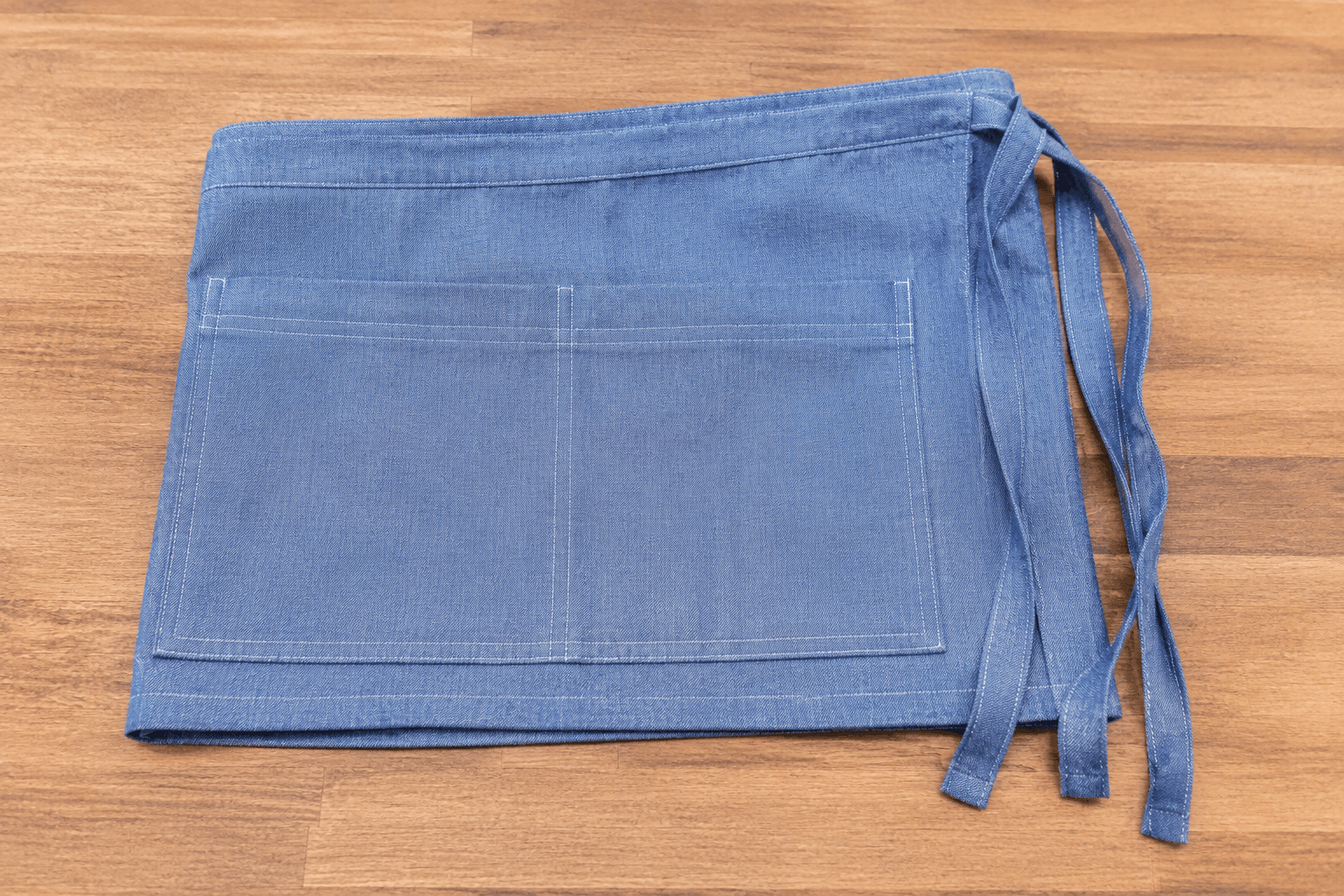
Edge binding and contrast tape on custom aprons: materials, widths and sewing constraints
<strong>Apron binding</strong> is a visible trim choice that directly affects edge durability, wash performance, operator efficiency, trim MOQ and finished appearance on bulk custom aprons. This guide outlines realistic tape materials, finished widths, sewing limits, QC checkpoints, lead-time impact and FOB cost ranges so professional buyers can source contrast-bound aprons with fewer PPS changes and fewer bulk defects.
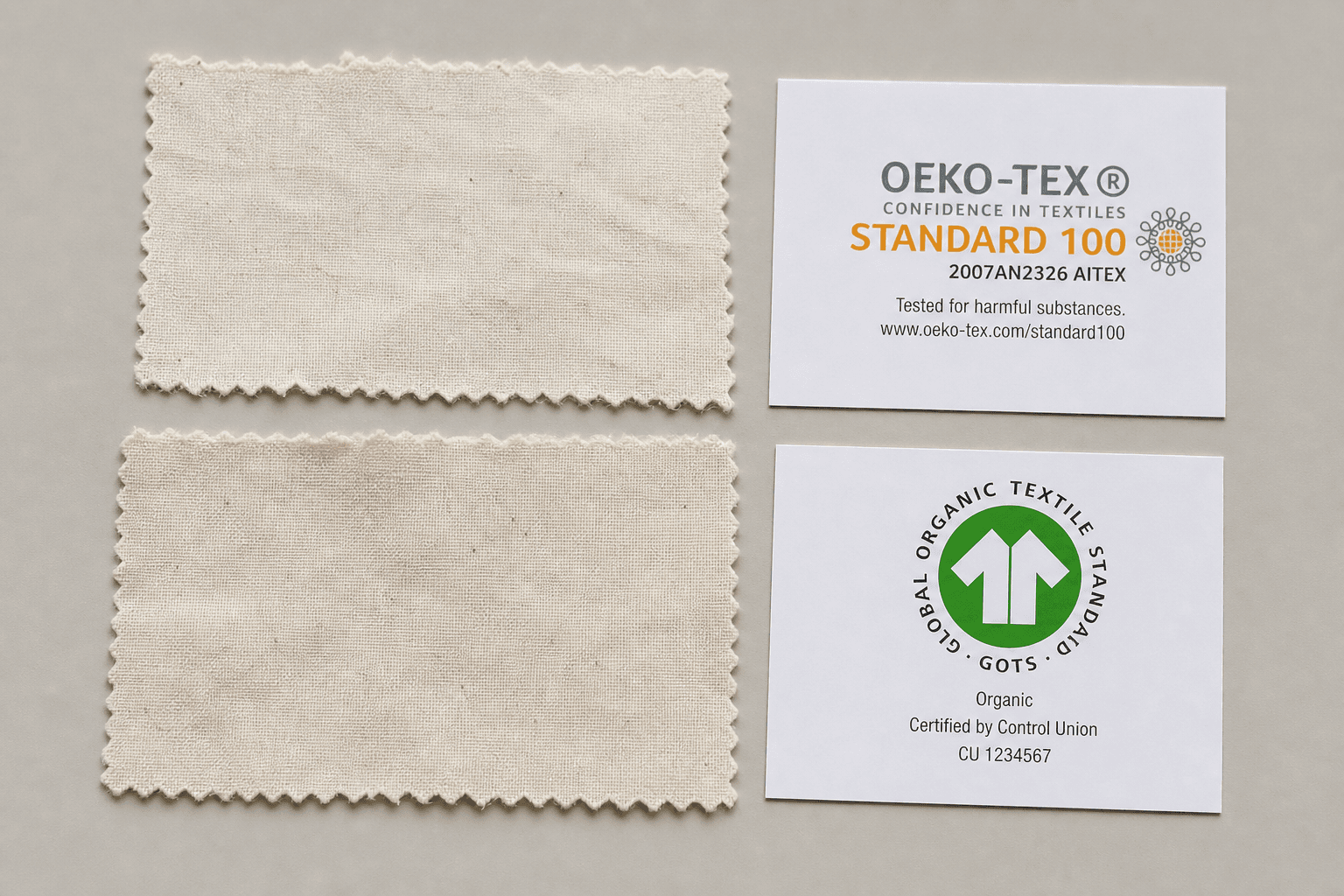
Contrast topstitching on custom aprons: thread size, puckering risk and brand visibility
<strong>Contrast topstitching on aprons</strong> can raise brand visibility and perceived quality, but only when the sewing spec is engineered for the apron fabric, seam function and inspection standard. For professional B2B buyers, the decision is practical: which Tex size suits 190 GSM twill versus 12 oz canvas, where puckering is most likely after wash, how much visible stitching adds to FOB, whether MOQ changes if a custom thread shade is required, and which AQL rules keep repeat orders consistent.
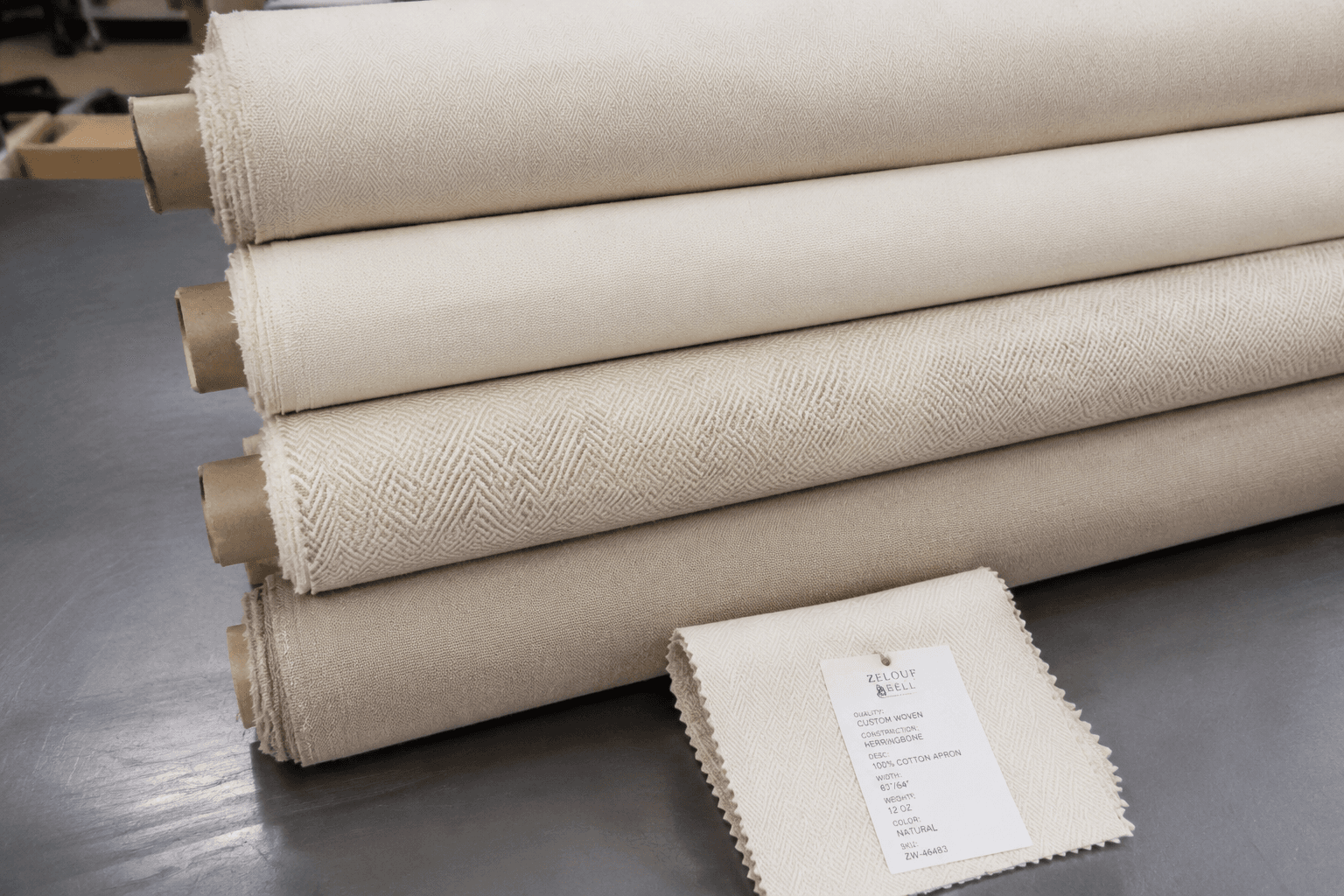
Apron strap creep and slippage: testing sliders, webbing friction and wearer adjustability
<em>Apron strap slippage testing</em> gives professional buyers a measurable way to control fit stability before bulk production. By fixing slider geometry, webbing thickness, wash state, test load, cycle count and wearer pass limits, sourcing teams can stop neck-drop complaints, reduce debit-note risk and keep adjustable apron performance consistent across repeat orders.
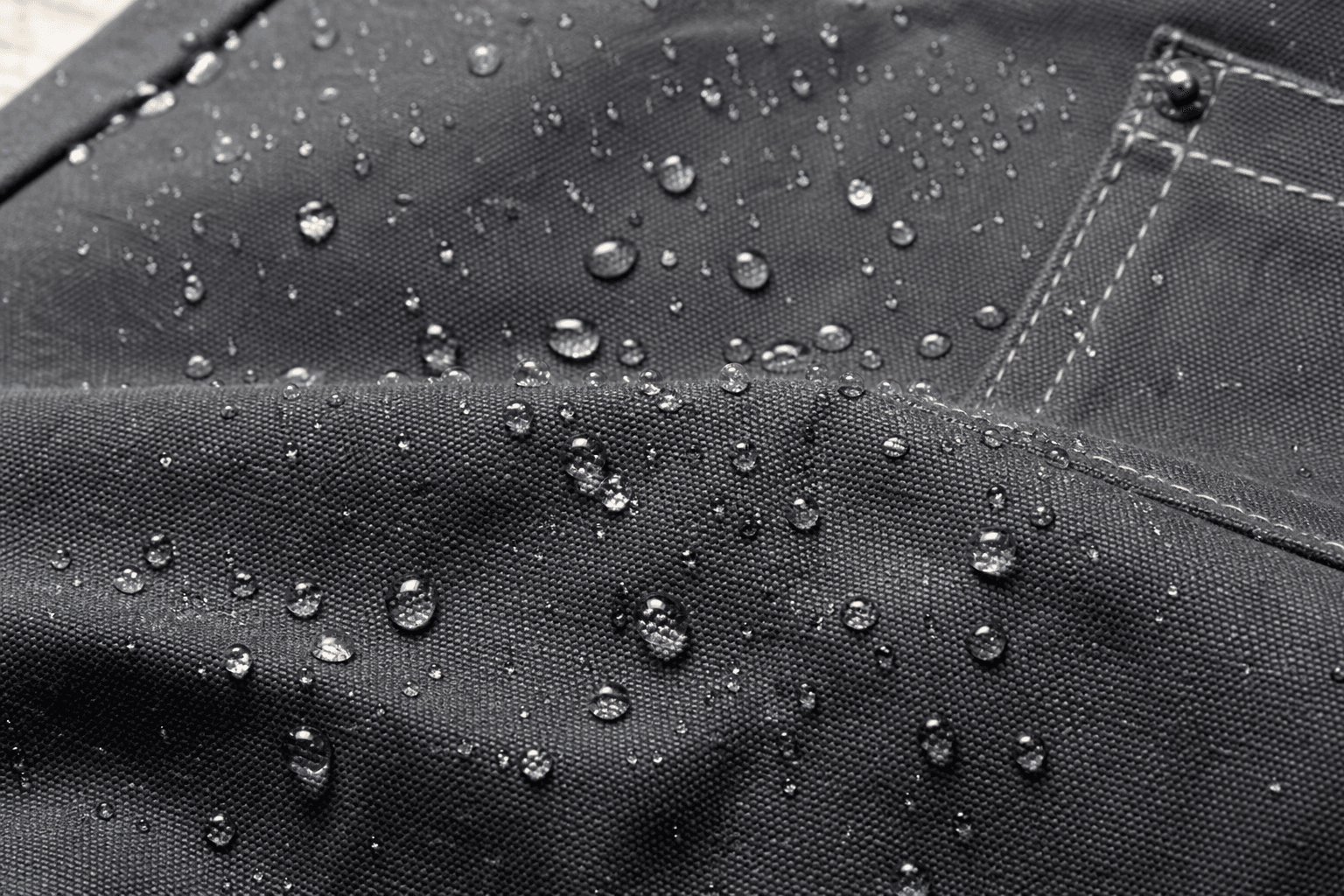
Apron side slits, center vents and movement features for service staff uniforms
<strong>Apron movement features</strong> such as side slits and center vents directly affect stride, kneeling, and turning during 8-12 hour service shifts. For B2B buyers sourcing custom aprons, the right opening height, reinforcement, fabric weight, and wash standard can reduce wearer complaints and usually adds only $0.06-$0.22 per piece at 3,000-unit volumes.
Apron neck loop construction: self-fabric, webbing and hidden adjuster options compared
For professional buyers, <strong>apron neck loop options</strong> affect fit range, laundry performance, trim MOQ, sewing minutes, AQL exposure and delivered FOB—not just styling. This guide compares self-fabric, webbing and hidden adjuster constructions with realistic B2B benchmarks for GSM, strap width, lead-time impact, pull strength, defect risks and per-piece cost on commercial bib apron programs.
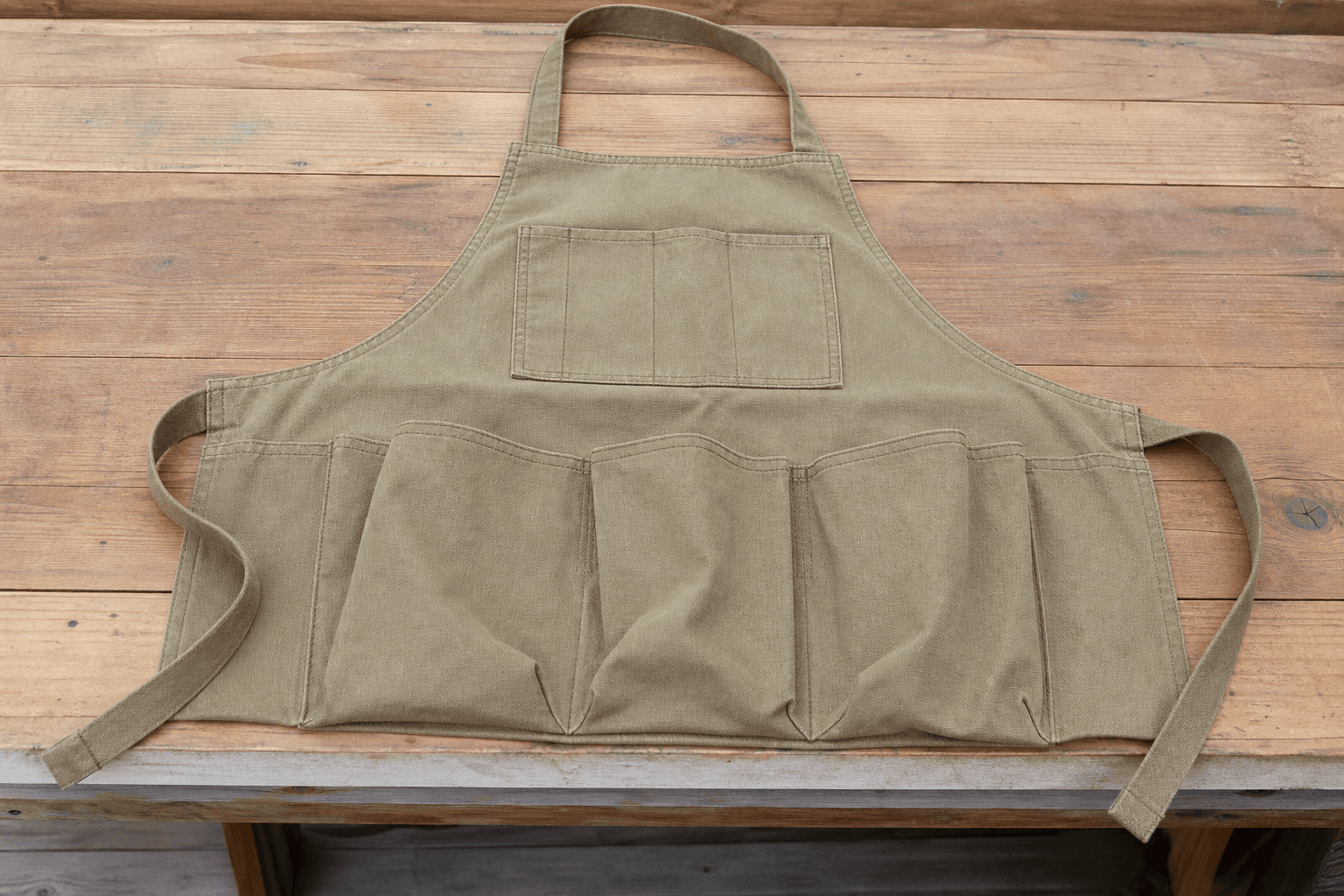
Apron hem construction choices: double-turn, narrow hem and bound edge cost trade-offs
<strong>Apron hem construction</strong> has a direct effect on fabric yield, sewing minutes, defect rates, wash performance and shipment timing. For B2B apron sourcing, the commercial choice between double-turn, narrow hem and bound edge should be set before proto approval using fabric GSM, edge geometry, MOQ, trim availability, AQL targets, wash frequency and the true FOB impact per piece.
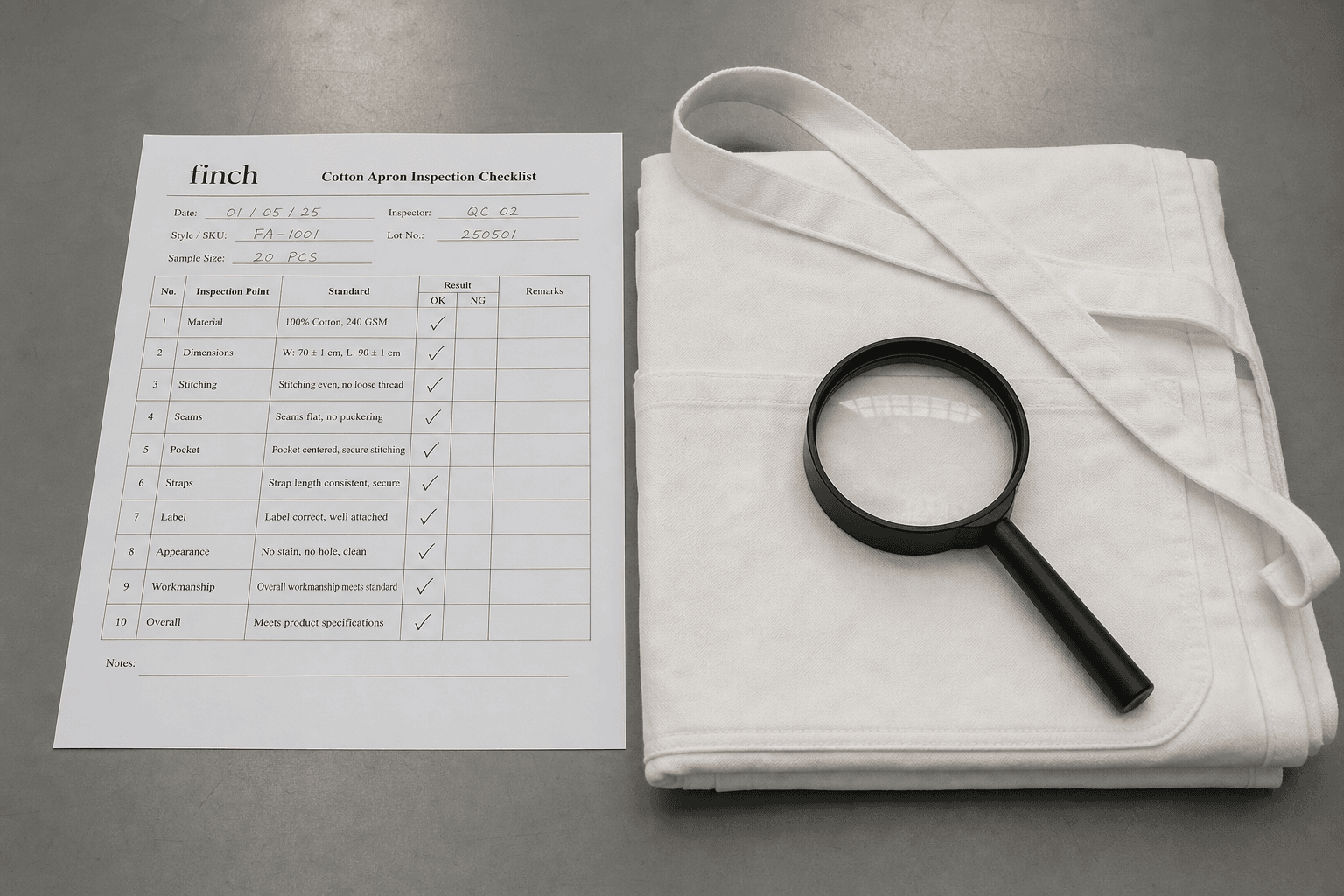
Apron bartack placement: reinforcing stress points without overbuilding the garment
<em>Apron bartack reinforcement</em> delivers value only when it is placed at proven stress points, matched to fabric weight, and controlled at PP stage. For B2B apron buyers, the commercial target is measured reinforcement rather than maximum reinforcement: in most factory programs, 4-6 bartacks are enough for a basic bib apron, while 8-12 suit a pocket-heavy utility style, provided placement tolerance, stitch length, density, AQL standard, and cost impact are fixed before bulk.

Apron barcode and SKU labeling for chain-store replenishment programs
<strong>Apron barcode labeling</strong> for chain-store replenishment succeeds only when unit labels, carton labels, SKU tables, and packing files stay synchronized from cutting to final loading. For professional apron sourcing, fixed scan placement, controlled variable-data printing, carton reconciliation, and retained traceability records reduce receiving holds, relabel labor, compliance chargebacks, and inventory variance across repeat releases.
All-over printed cotton aprons: reactive vs pigment print, strike-offs and cut-and-sew yield
A practical sourcing guide to <em>all over printed cotton aprons</em> for B2B buyers, with specific benchmarks for reactive versus pigment printing, strike-off control, cut-and-sew yield, MOQ, AQL, FOB, and realistic factory lead times before bulk booking.
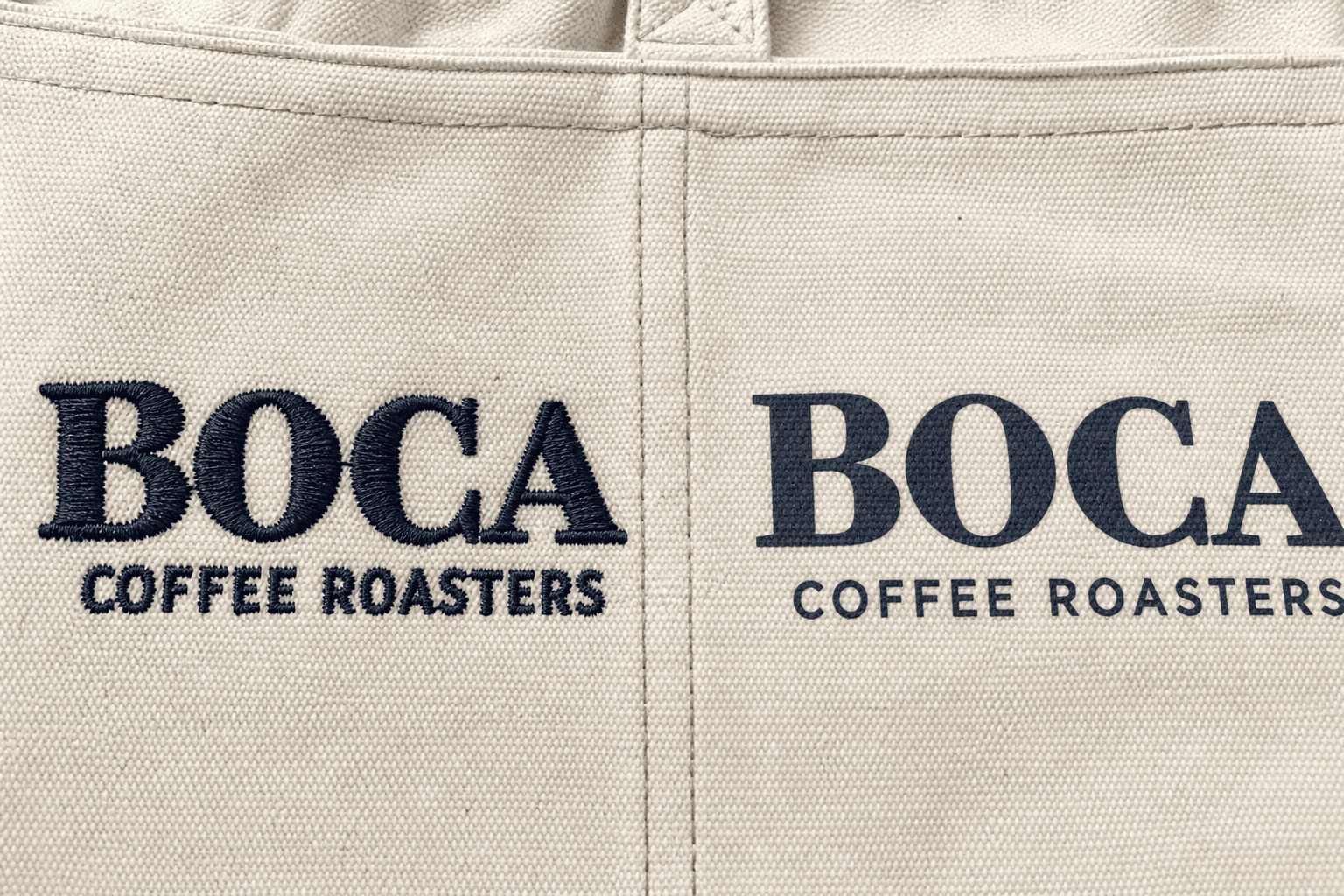
Embroidery vs screen print on aprons: cost, durability and MOQ
A practical apron embroidery vs screen print guide covering unit cost, durability, MOQ, placement limits and sourcing decisions for bulk custom apron branding.

Leather patch apron branding: debossing, stitching and leather grades
A leather patch apron can lift perceived value, but grade, thickness, deboss depth, stitch method and wash resistance must be specified before bulk production.
Pantone color matching for custom aprons: tolerances and lab dips
Pantone apron color matching depends on fabric type, dye route, lab dips, and agreed tolerance, not just a Pantone code on a tech pack.
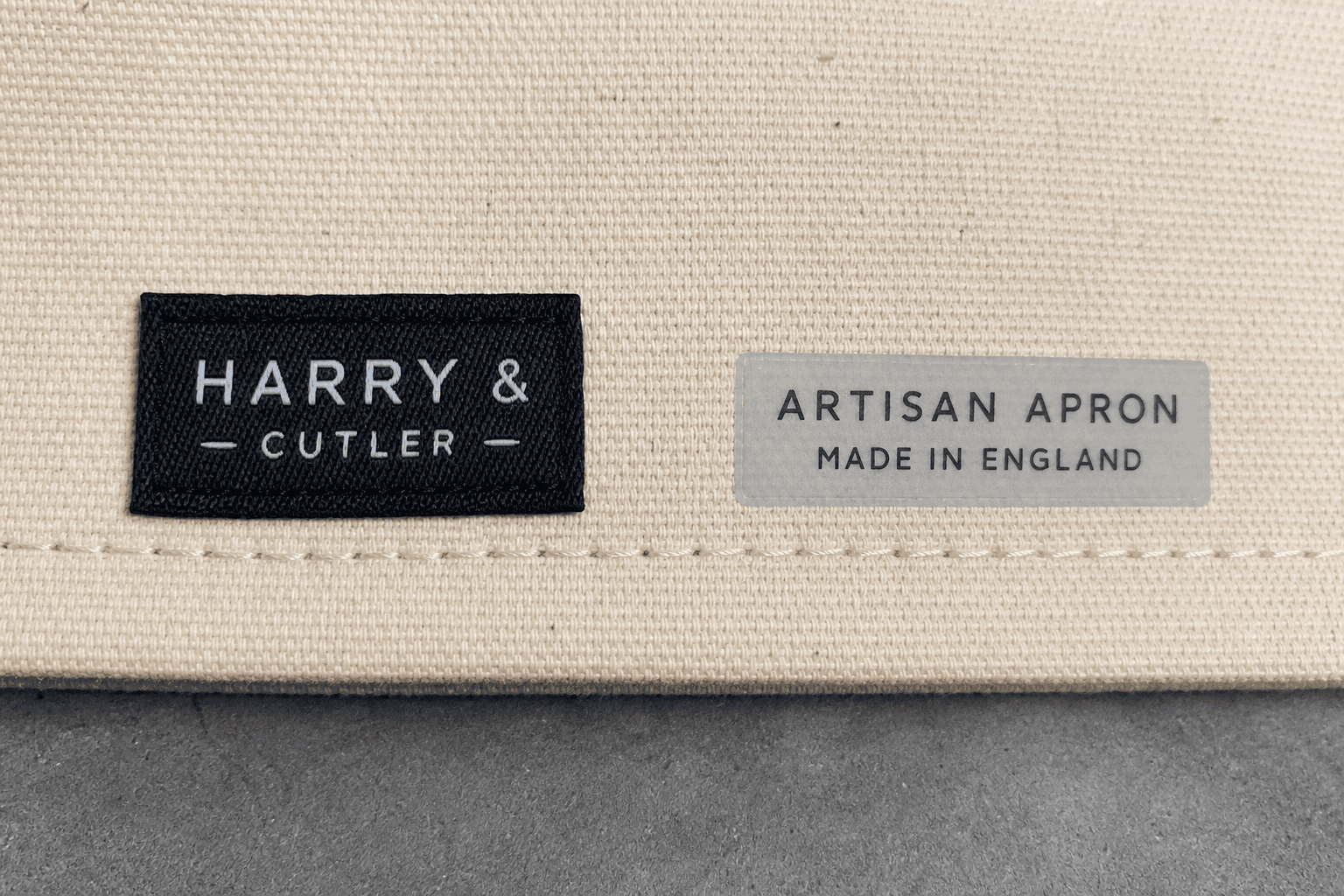
Woven labels vs heat transfer for apron branding
An apron woven label gives durable, sewn-in branding, while heat transfer offers larger graphics and lower profile placement with different care and cost limits.
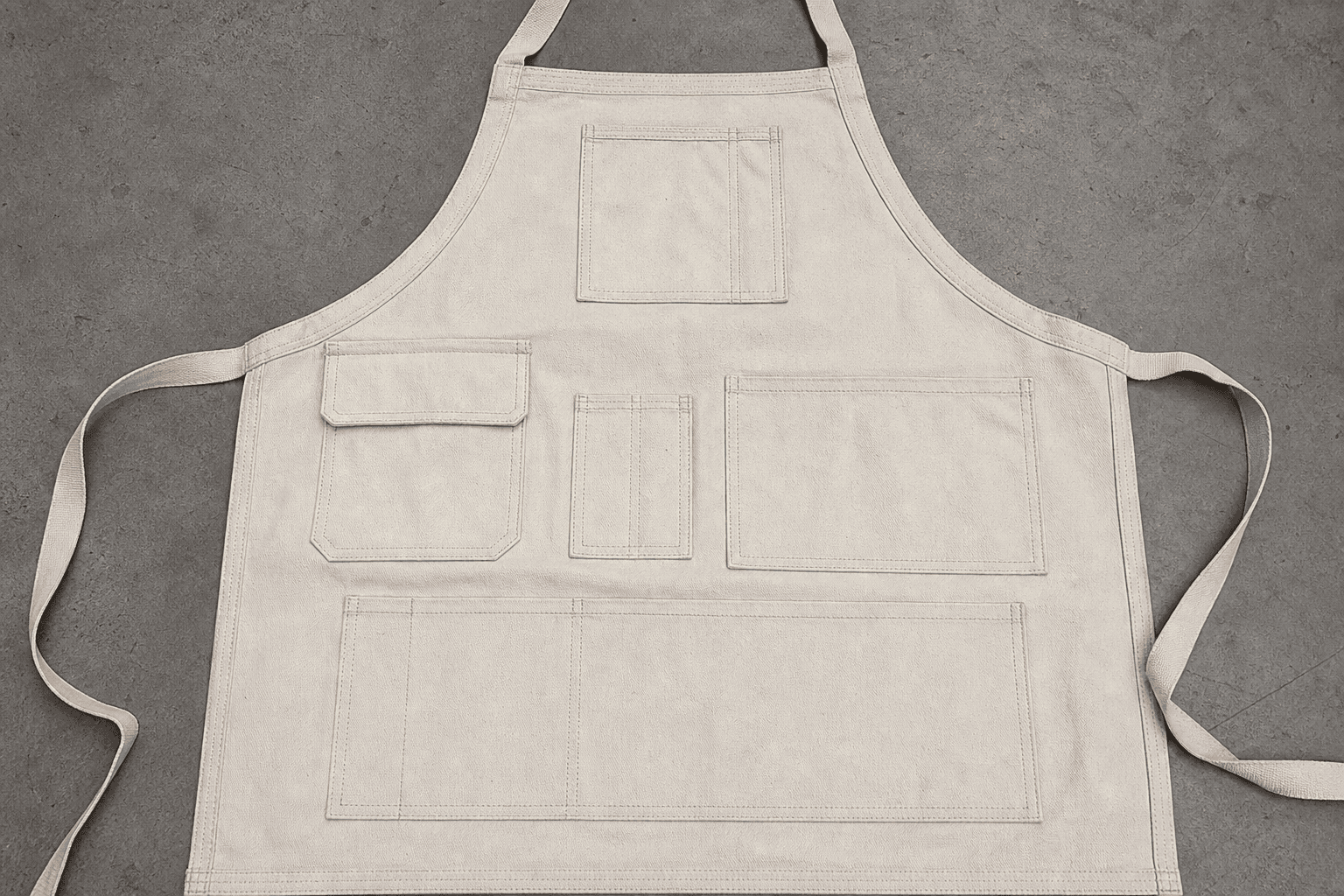
Apron pocket configurations: a buyer's spec guide
A practical apron pocket configuration guide for bulk buyers specifying pocket size, placement, reinforcement, costing, and sampling checks before mass production.
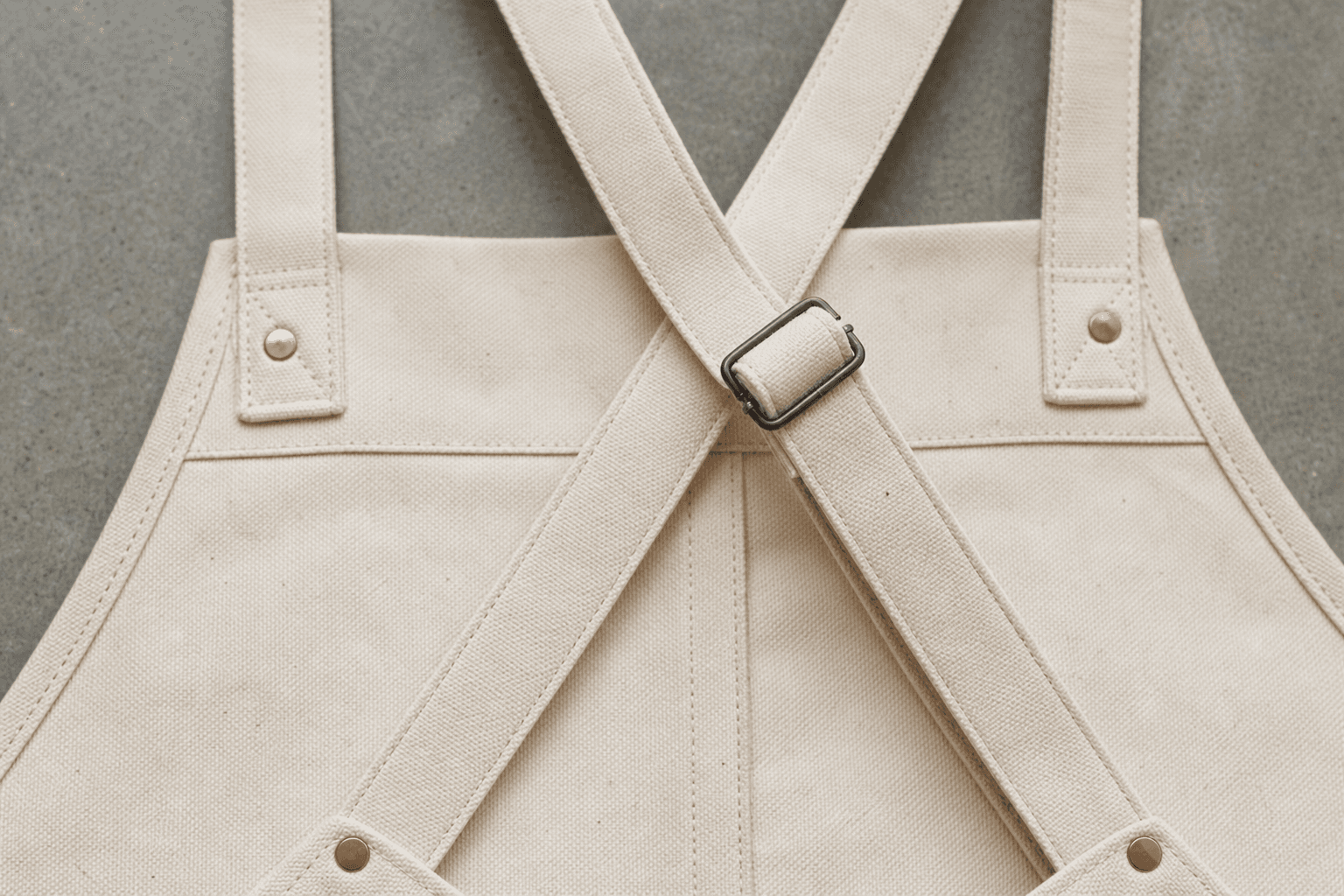
Apron strap and hardware guide: rivets, buckles and crossback
A practical apron strap hardware guide for bulk buyers comparing rivets, buckles, crossback layouts, cost impact, durability and production risks.
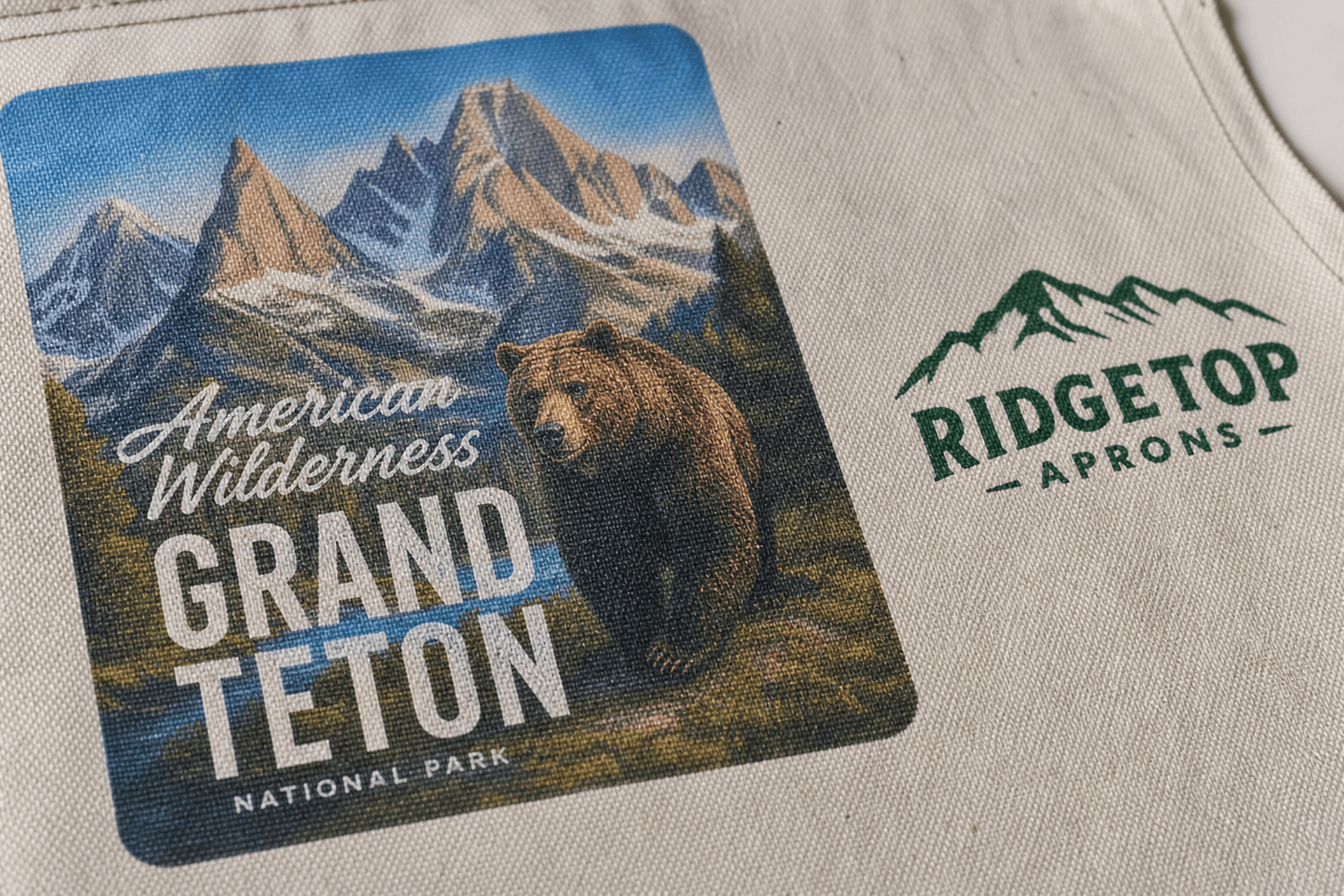
DTF vs DTG vs screen print for apron logos
dtf apron printing gives buyers a practical middle path for full-color logos, but fabric, order size, wash target, and artwork detail still decide the best method.
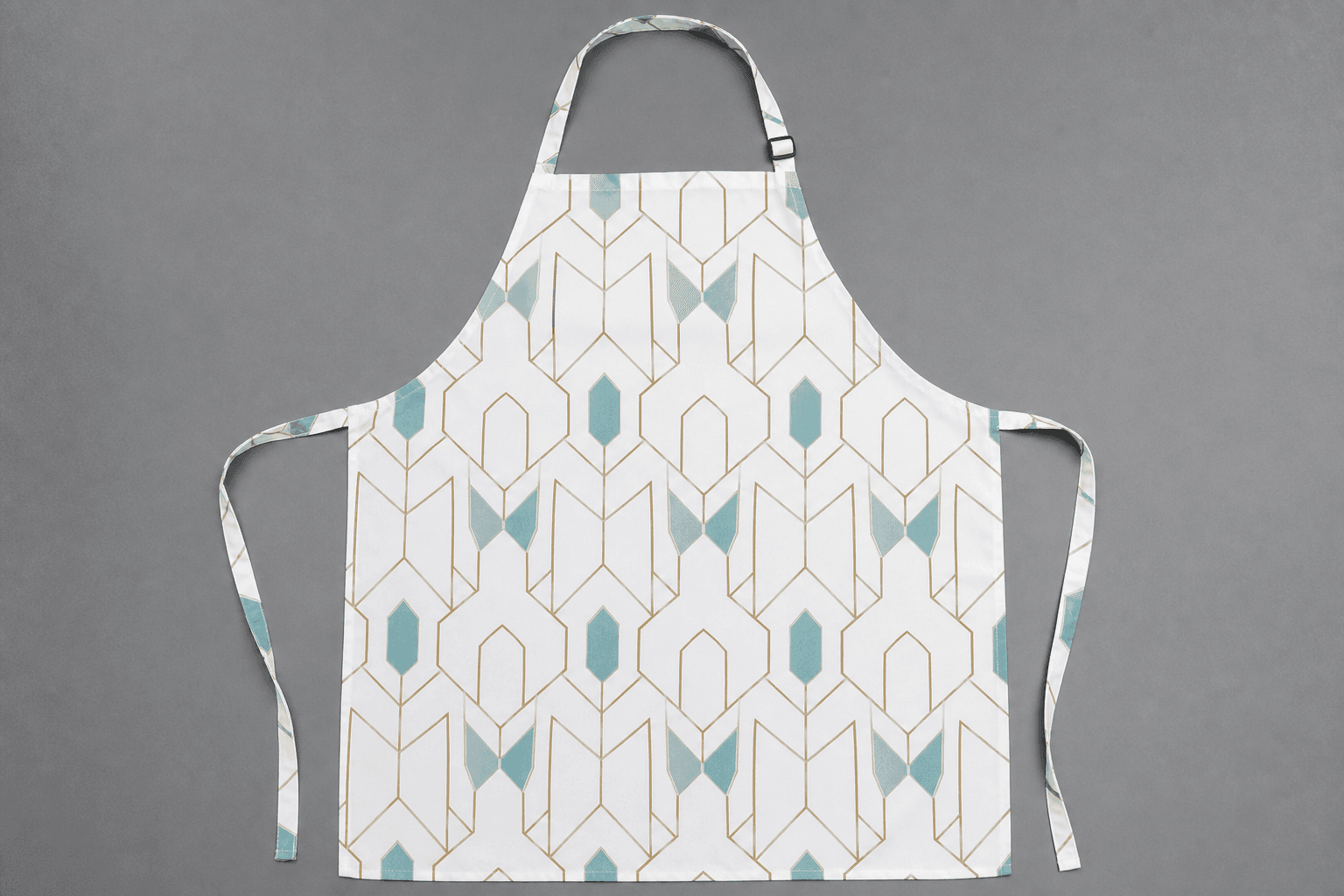
Sublimation printing on aprons: when it works and when it doesn't
A sublimation apron works best on white polyester fabrics, but buyers must control fabric weight, pattern layout, finishing method and color expectations.
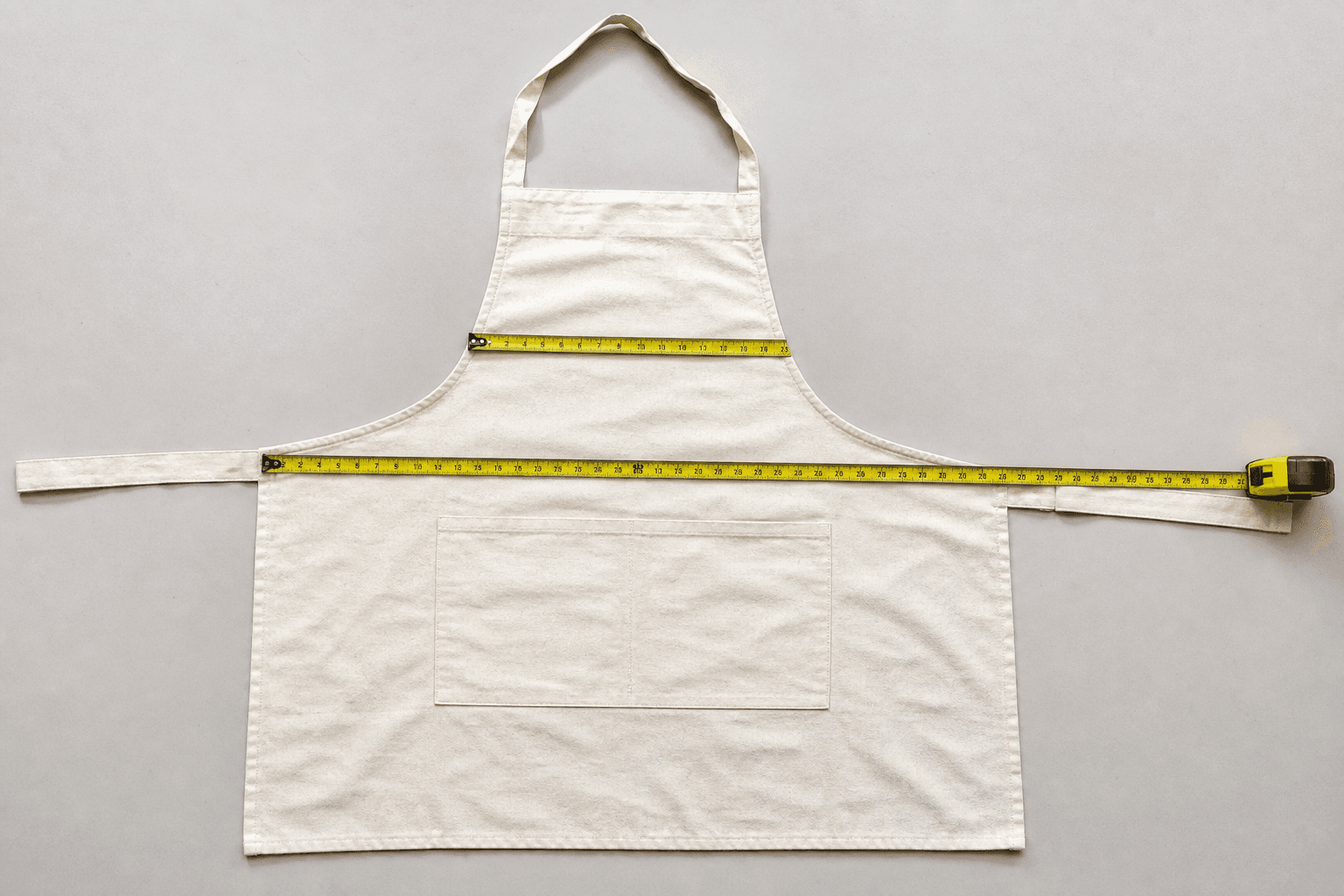
Apron sizing and grading: building a size chart buyers trust
A reliable apron size chart connects wearer fit, production grading, fabric behavior, and QC tolerances before bulk cutting begins.

Bib vs waist vs crossback aprons: a style buyer's guide
A practical guide to apron styles for bulk buyers comparing bib, waist, bistro, and crossback designs by coverage, fabric, cost, MOQ, and use case.
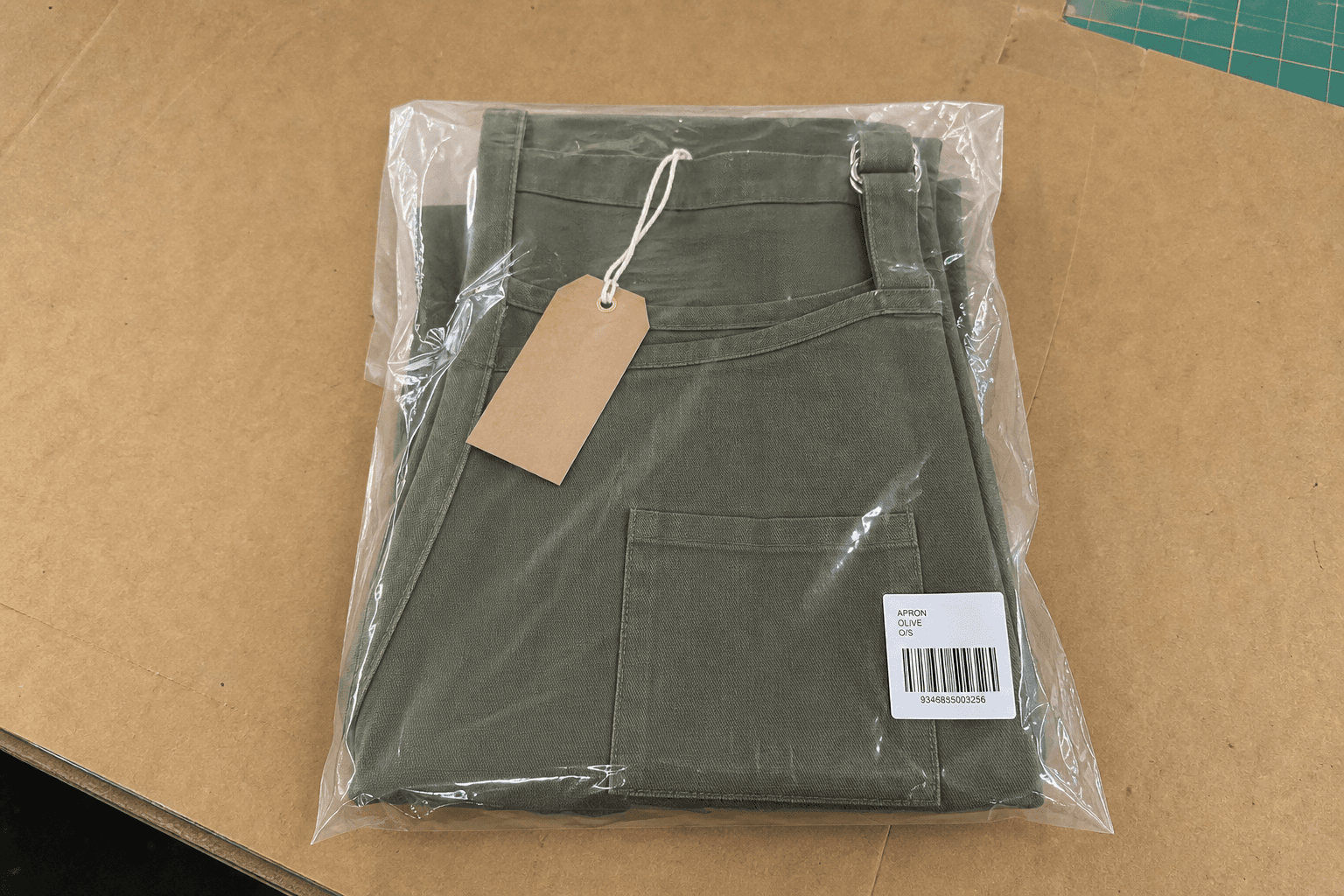
Custom apron packaging: hangtags, polybags and retail-ready options
Apron packaging affects landed cost, retail presentation, inspection speed and carton efficiency, so it should be specified before sampling rather than after production.

Apron embroidery stitch count and pricing explained
Apron embroidery stitch count affects logo cost, production speed and quality control. This guide explains how factories calculate embroidery pricing for bulk apron orders.
Garment dye vs piece dye for custom aprons
A garment dyed apron gives soft, washed color after sewing, while piece dye apron production gives tighter shade control before cutting.
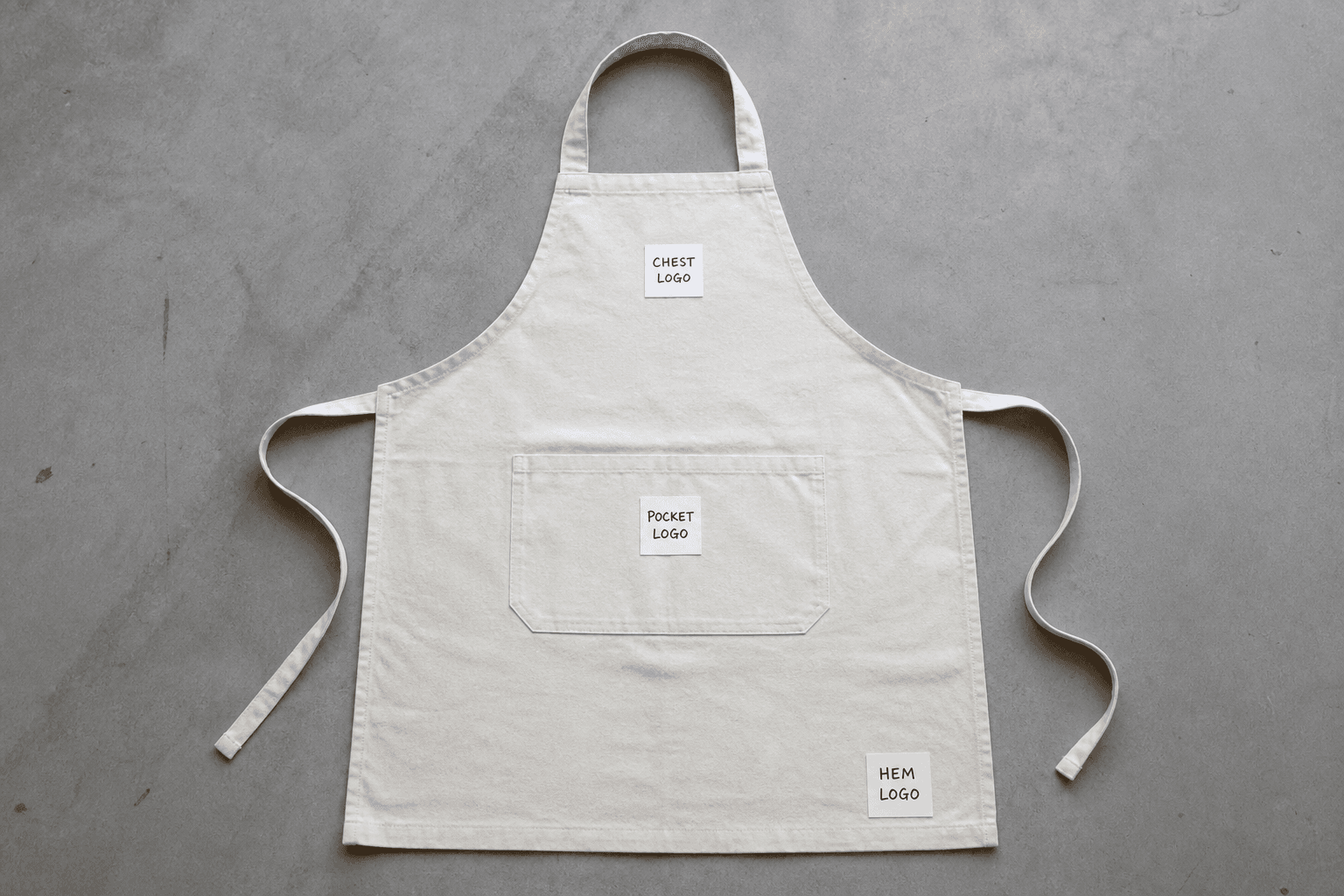
Apron logo placement: chest, pocket, hem and strap
Apron logo placement affects visibility, production method, cost and wearer comfort; the best position depends on apron style, fabric weight, pocket layout and use case.
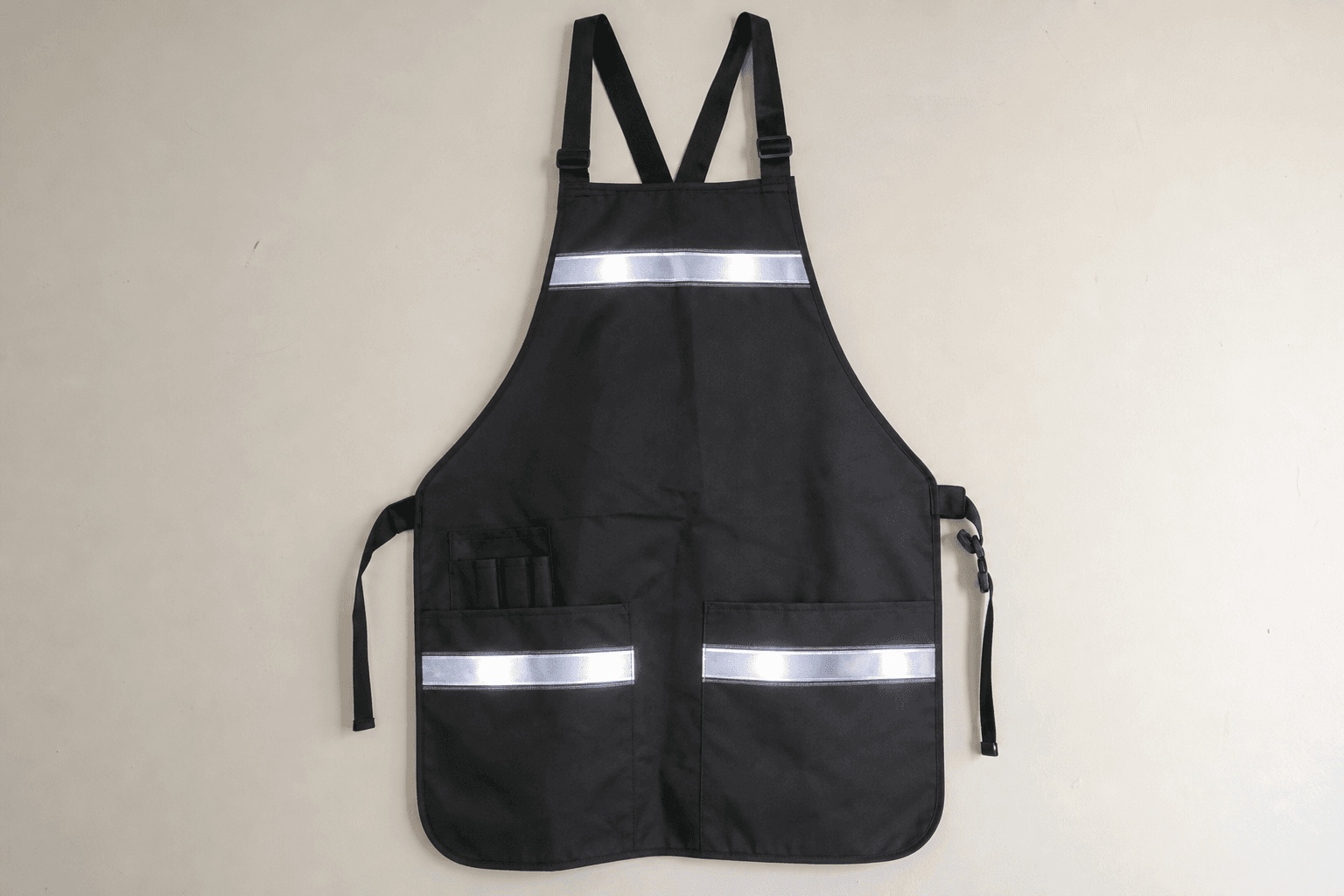
Hi-vis and reflective-trim aprons for safety branding
A hi vis apron can carry safety function and brand identity when fabric color, reflective trim, wash durability and compliance targets are specified clearly.
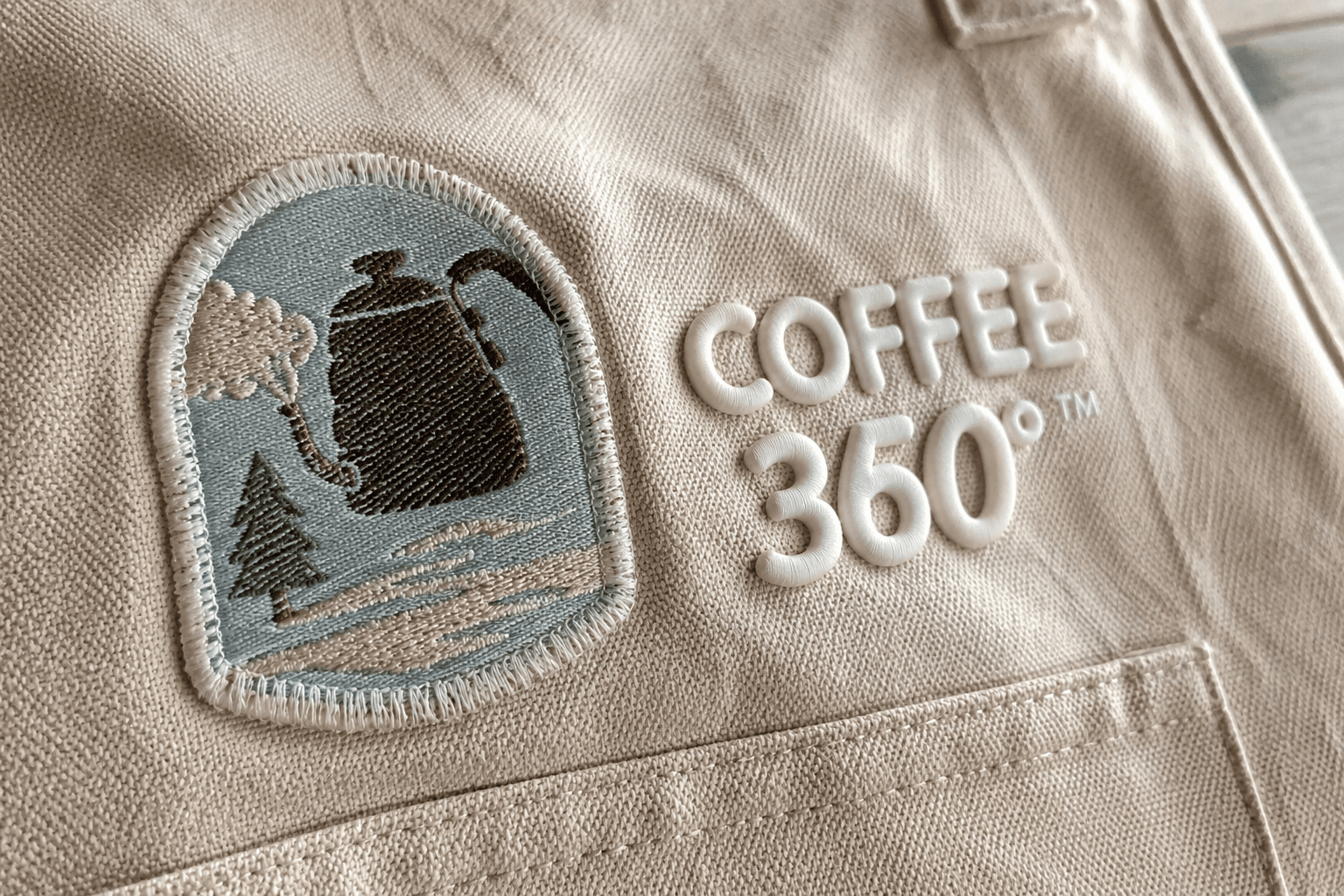
Appliqué and 3D puff branding on aprons
A practical sourcing guide to applique apron branding, 3D puff print, raised embroidery, cost drivers, fabric limits, MOQ, and production controls.
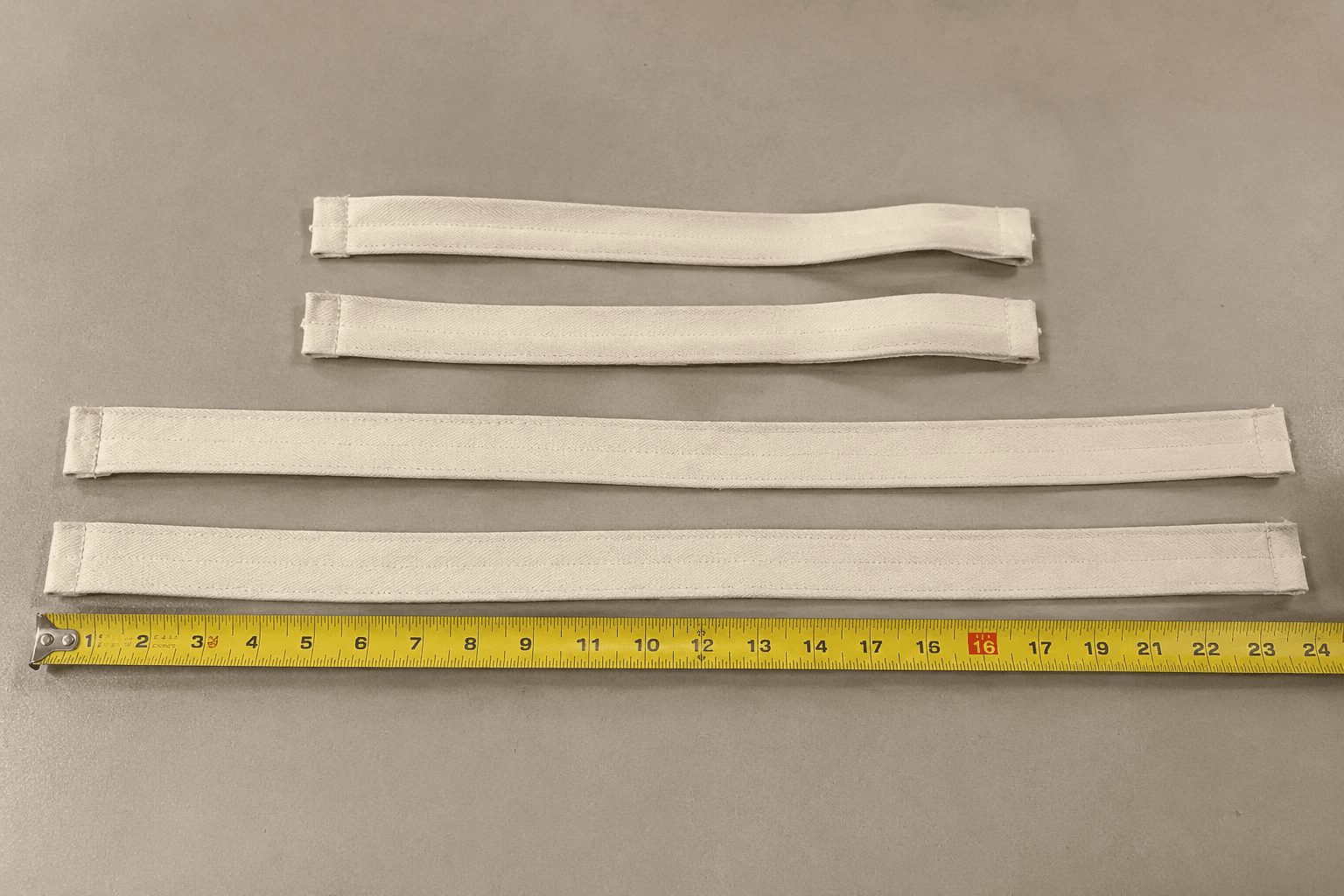
Custom apron strap lengths: sizing necks and waists for any wearer
Custom apron strap length affects fit range, fabric cost, packing size, and returns risk when aprons are produced for mixed-size workforces.
Adjustable vs fixed apron straps: buckles, sliders and tie-backs
Choosing an adjustable apron strap versus a fixed apron strap changes fit, cost, and returns. The right apron neck adjustment and hardware can save money across bulk programs.

Color blocking and contrast panels in custom aprons
A color block apron can improve brand visibility, but panel placement, fabric weight, shrinkage control, and sewing efficiency determine the real bulk-order cost.
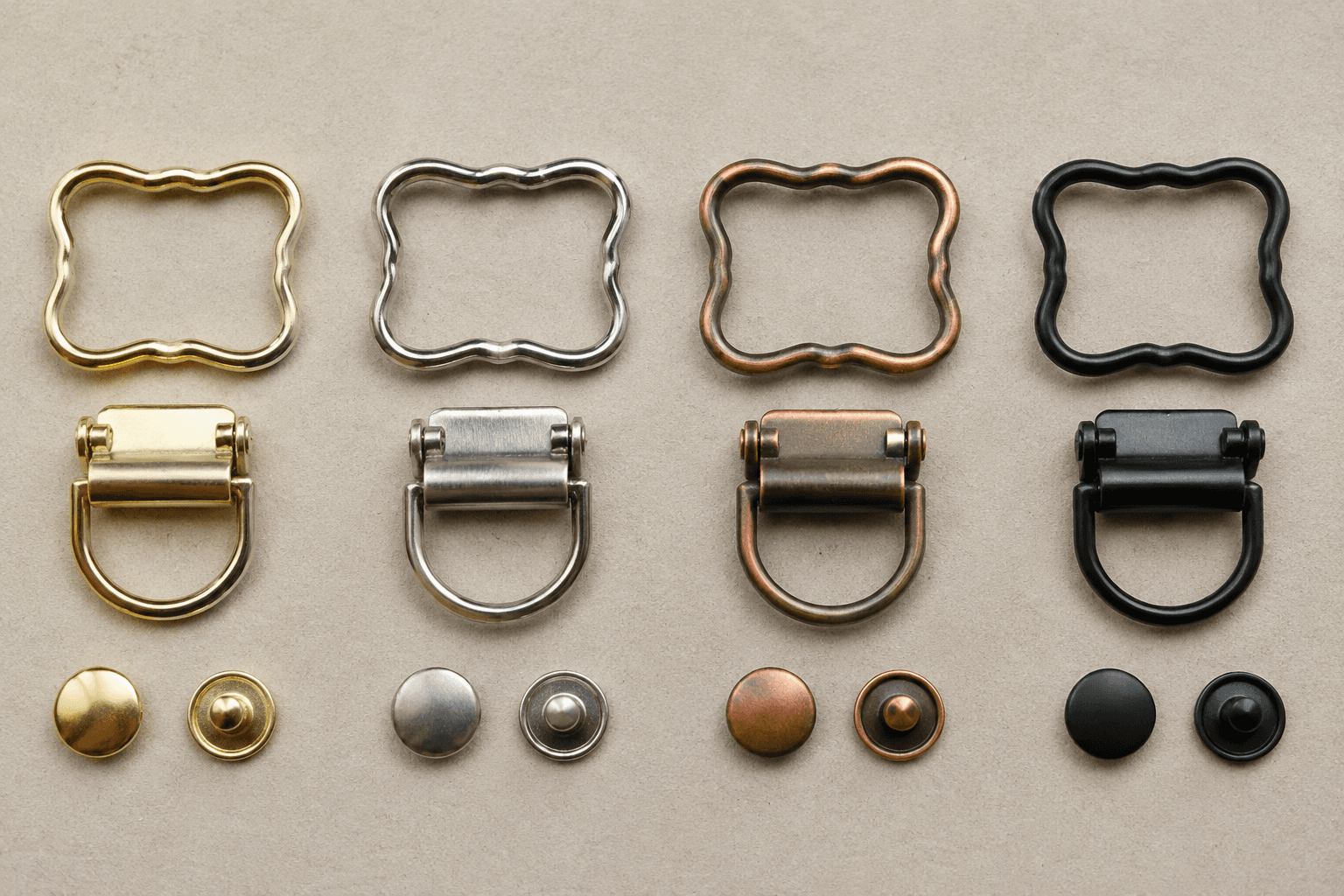
Apron hardware finishes: brass, nickel, antique copper and matte black
Choosing the right apron hardware finish affects appearance, wash durability, corrosion risk, carton cost and final approval standards for bulk apron programs.
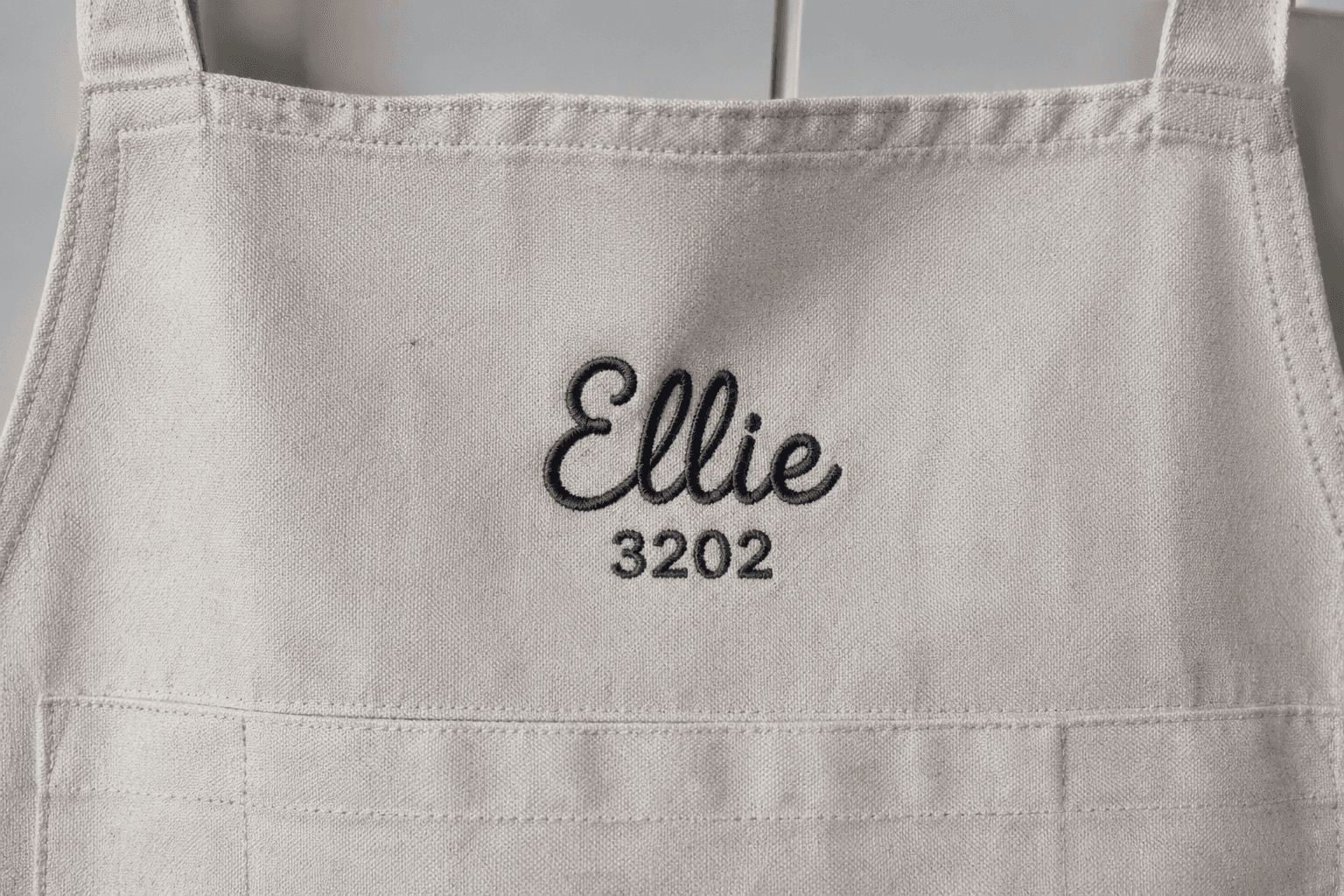
Embroidered names and station numbering on staff aprons
An embroidered name apron program needs early control of fabric, thread, placement, name data, and apron station number rules to avoid rework in bulk production.
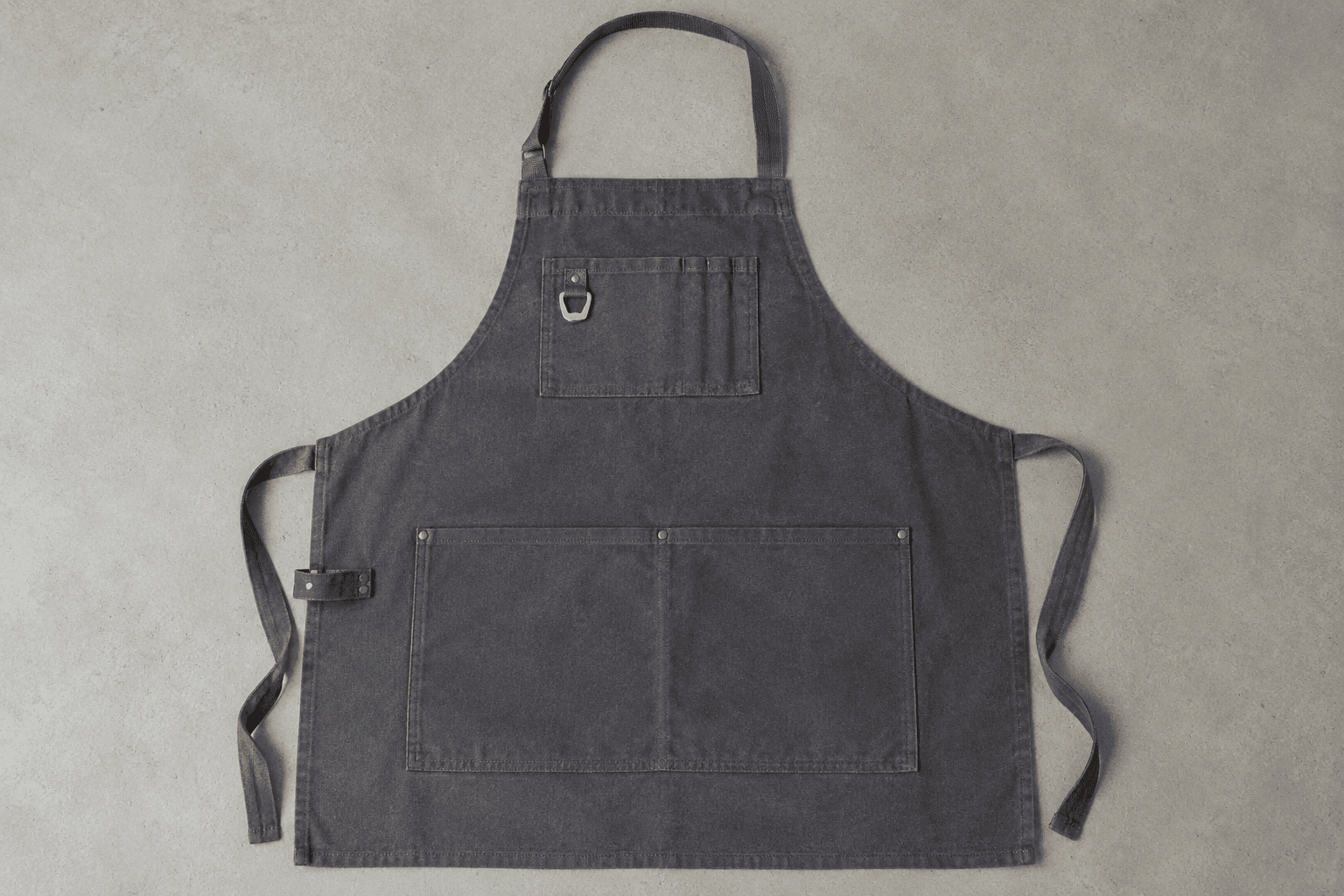
Apron accessories: towel loops, bottle openers and pen slots
Apron accessories such as towel loops, bottle openers and pen slots add measurable utility when specified correctly in bulk apron orders, but they also affect cost, sewing time and failure rates.
Rubber and PVC patch branding for aprons
A rubber patch apron can give bulk apron programs durable, washable branding when mold cost, placement, stitching method and lead time are planned early.