Buyers sourcing black aprons for salons, color bars, housekeeping teams, and cleaning contractors often compare unit cost, fabric hand, and logo placement first. In field use, the earlier failure point is frequently hydrogen peroxide discoloration black aprons, especially where staff handle 3%, 6%, 9%, or 12% peroxide developers, bleach powders, whitening agents, and peroxide-based cleaners. A showroom sample can look dense black and uniform, then show orange-brown, copper, or gray spotting within 30 to 60 working days if the shell fabric, trims, and decoration were not specified for oxidizer exposure.
This is rarely one sewing defect or one defective dye lot. Visible failure usually comes from the combined effect of fiber content, dye class, shade depth, trim composition, logo method, splash frequency, and laundry chemistry. A 280 GSM cotton canvas bib apron may feel more substantial at sample review, yet in a bleach-heavy salon it often reaches complaint level sooner than a 200 GSM polyester twill or a 210 GSM solution-dyed polyester apron. For professional B2B buyers, the realistic target is not a peroxide-proof apron. The practical target is a predictable service life at an acceptable replacement cost per wearer per month.
That means the RFQ has to describe the use environment before fabric approval. Daily splash count, peroxide strength, average contact time before rinse-off, wash frequency per week, in-house versus industrial laundry, logo method, and target replacement cycle should be written into the brief. When those inputs are clear, the factory can recommend an apron construction that fits the account instead of quoting a generic black bib style that performs well only in the sample room.
- Reactive-dyed cotton black aprons usually show complaint-level discoloration faster than polyester-dominant or solution-dyed options when exposed to peroxide splashes.
- For heavy salon and cleaning use, 190 to 220 GSM 100% polyester twill is usually the best balance of peroxide resistance, sewability, and FOB cost.
- A workable apron RFQ should state peroxide strength, estimated daily splash frequency, wash method, target service life in months, acceptable shade shift, and inspection standard.
- Apron-specific splash testing should cover shell fabric, pocketing, thread, webbing, binding, bartacks, and logo areas rather than relying only on standard fabric fastness reports.
- AQL and lead-time planning matter: a stable shell fabric can still generate claims if black straps, embroidery, or sewing thread oxidize to a different shade.
Why hydrogen peroxide discoloration black aprons appears early in salon and cleaning accounts
Hydrogen peroxide breaks down many dark dye molecules through oxidation, and black aprons make even slight color loss easy to see. In salon work, 3% and 6% developers are routine, while bleach and lightening services may expose the chest and lap area to 9% or 12% peroxide several times a day. In cleaning accounts, concentration is often lower at 0.5% to 3% ready-to-use formulas, but contact is broader because staff repeatedly spray, wipe, and carry damp cloths against the front panel. The sourcing issue is usually repeated spot exposure on the same zones rather than full garment immersion.
The first complaint is rarely a white mark. Buyers usually see rusty streaks, warm brown spots, dull charcoal patches, or uneven fade lines around the upper chest, pocket mouth, lower abdomen, and dominant-hand thigh. These areas collect drips from bowls, brushes, trigger bottles, towels, gloves, and cleaning cloths. End users read that change as poor apron quality even when seam strength, bartacks, and strap attachments remain fully serviceable.
Complaint timing is shorter than many first-time buyers expect. In high-volume color bars, a cotton-rich black apron can show visible spotting after 20 to 40 working days. In contract cleaning, the same style may remain acceptable for 45 to 75 days if peroxide concentration is lower but laundry frequency is higher. That gap directly affects reorder timing, annual spend, and branch-level presentation consistency.
- Typical peroxide exposure: salons 3% to 12%; cleaning accounts 0.5% to 3% ready-to-use peroxide cleaners
- Highest-risk apron zones: upper chest, pocket opening, lower front panel, dominant-hand thigh
- Typical complaint trigger: visible shade change before any seam failure or fabric hole
- Buyer implication: write discoloration resistance into the apron specification, not as a post-claim discussion
Fabric and dye choices that reduce hydrogen peroxide discoloration black aprons claims
For apron sourcing, fiber content and dye system have to be evaluated together. Cotton canvas and denim can look premium, but black shades on cellulosic fibers often show oxidizer attack faster than polyester shades built on disperse-dye systems. In repeat OEM use, 100% polyester twill at 190 to 220 GSM usually outperforms 260 to 300 GSM cotton canvas in peroxide-heavy environments even though the cotton sample feels heavier in hand.
Poly-cotton is the usual middle tier when buyers want a softer hand, less synthetic surface, or easier acceptance from salon staff. A 65/35 poly-cotton twill at 205 to 225 GSM can reduce complaint rates versus 100% cotton while keeping FOB price close to standard uniform programs. It should still be positioned correctly. Poly-cotton is a compromise option; it does not match full polyester when black color retention is the main performance requirement.
Solution-dyed polyester is usually the strongest commercial option for black shade stability. Because pigment is introduced at fiber stage, repeated peroxide splash exposure tends to create less obvious tone loss than conventional piece-dyed fabric. The trade-off is commercial rather than technical. Many mills set 800 to 1,500 meter fabric MOQs per color, and custom constructions often push material lead time to 25 to 35 days before cutting starts. For most OEM orders, total production lead time lands at 55 to 75 days. That makes solution-dyed programs more suitable for chain rollouts and scheduled replenishment than for a 500-piece pilot order.
- Best value tier: 100% polyester twill, 190 to 220 GSM, disperse dyed
- Middle tier: 65/35 poly-cotton twill, 205 to 225 GSM, better comfort with moderate peroxide resistance
- Higher-risk tier: 100% cotton canvas or denim, 240 to 320 GSM, strong hand feel but faster visible oxidation
- Premium stability tier: solution-dyed polyester, usually 200 to 230 GSM, higher MOQ and longer fabric lead time
FOB cost, MOQ, and lead-time math for black apron sourcing
Unit price alone gives a distorted picture in peroxide-exposed apron programs. At 1,000 pieces, a basic 270 GSM black cotton canvas bib apron with one front pocket, self-fabric neck strap, and standard export packing may quote at $2.60 to $3.30 FOB China. A 210 GSM 65/35 poly-cotton twill version is commonly $2.85 to $3.55. A 200 to 220 GSM polyester twill apron usually runs $3.05 to $3.85. A solution-dyed polyester style is often $4.10 to $5.40, depending on fabric source, trim matching, and logo method.
The replacement-cycle math usually changes the buying decision. If a cotton apron in a bleach station lasts about 2 to 2.5 months before visible discoloration triggers replacement, while a polyester twill apron lasts 4.5 to 6 months in the same workflow, the annual issue cost per employee generally falls even when first cost is $0.50 to $1.00 higher per piece. Once embroidery, internal distribution labor, and store appearance are included, the lower first-cost apron often becomes the more expensive program over 12 months.
MOQ and lead time also have to match the buyer's reorder pattern. Stocked polyester twill programs often work at 500-piece MOQs with 25 to 35 day cut-to-ship lead times. If the buyer requests custom webbing, exact trim matching, woven labels, branded polybags, or solution-dyed shell fabric, MOQ often shifts to 1,000 to 1,500 pieces and lead time extends to 45 to 75 days. Buyers opening new branches or running quarterly replenishment should align safety stock with those production windows rather than with standard uniform timelines.
- Indicative FOB at 1,000 pcs: cotton canvas $2.60 to $3.30; poly-cotton $2.85 to $3.55; polyester twill $3.05 to $3.85; solution-dyed polyester $4.10 to $5.40
- Typical MOQ: 500 pcs with stocked fabric; 1,000 pcs with custom trims or decoration; 1,500 pcs and above for technical fabric development
- Typical lead time: 25 to 35 days with stocked shell fabric; 45 to 75 days with custom fabric or trim development
- Best internal metric: replacement cost per wearer per month, not only FOB per piece
How to test peroxide resistance before PP approval and bulk cutting
Standard wash-fastness, crocking, and colorfastness reports are useful baseline documents, but they do not replicate apron use closely enough for peroxide-risk accounts. Buyers should request a controlled splash test on the actual bill of materials: shell fabric, pocket fabric, thread, webbing, binding, bartack yarn, and logo area. The aim is to confirm whether the apron body stays visually acceptable and whether supporting components remain close enough in shade after exposure.
A practical approval method is straightforward. Apply measured drops of 3%, 6%, 9%, and, where relevant, 12% peroxide solution to marked zones on the assembled apron. Hold contact for 5, 15, and 30 minutes, rinse with clean water, air dry flat for 12 to 24 hours, and compare against an unexposed control under D65 light. Repeat the same test after 5 wash cycles and again after 10 wash cycles. This sequence usually exposes whether a finish or surface treatment is masking long-term weakness in the black shade.
Bulk approval should include a written pass standard. Without that, buyer and factory often judge the same sample differently after testing. Many OEM programs inspect workmanship at AQL 2.5 and major defects at AQL 2.5, but for high-visibility black aprons some buyers tighten front-panel appearance to an internal visual standard closer to AQL 1.5 on finished presentation samples. Whether the buyer uses AQL 2.5 or a stricter appearance check, acceptable gray shift, trim mismatch tolerance, and logo appearance should be agreed before bulk cutting starts.
- Minimum test set: shell, pocketing, sewing thread, neck strap, waist ties, binding, embroidery or print area
- Exposure schedule: 3%, 6%, 9%, and if relevant 12% peroxide at 5, 15, and 30 minutes
- Wash checkpoints: test unwashed, after 5 washes, and after 10 washes
- Inspection control: AQL 2.5 is common for workmanship; visible front-panel shade mismatch should have a separate written limit
Trim, logo, and construction details that often decide claim rates
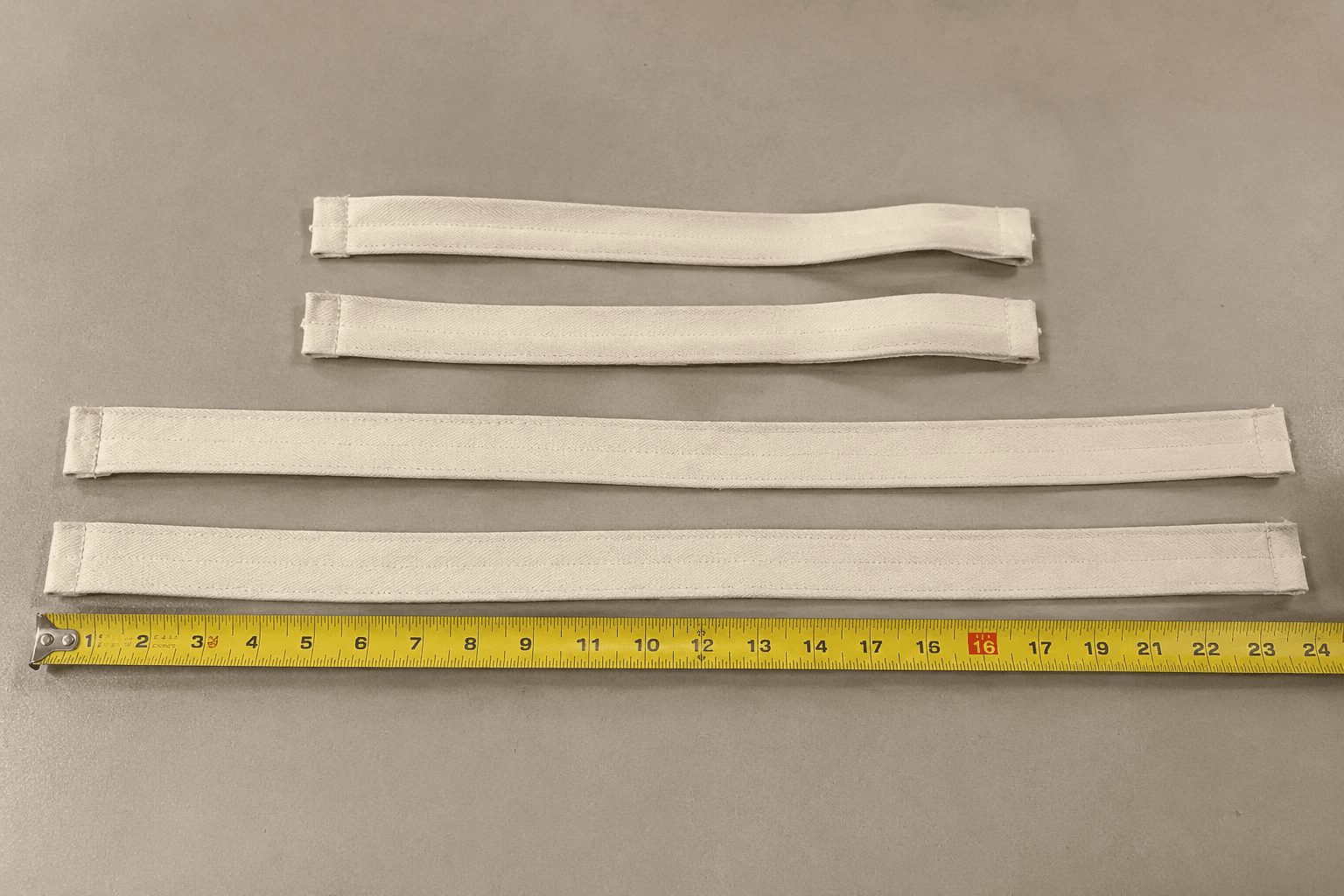
Many apron claims start with a correct shell fabric but the wrong supporting components. Neck webbing, herringbone tape, pocket binding, sewing thread, buckle tabs, and bartack yarn may come from different suppliers and use different black dye systems. A polyester shell can still look unacceptable after 60 to 90 service days if the tape turns brown first or if the sewing thread fades to charcoal after repeated splash and laundry exposure. For uniform programs, post-use visual match matters more than lab match on day one.
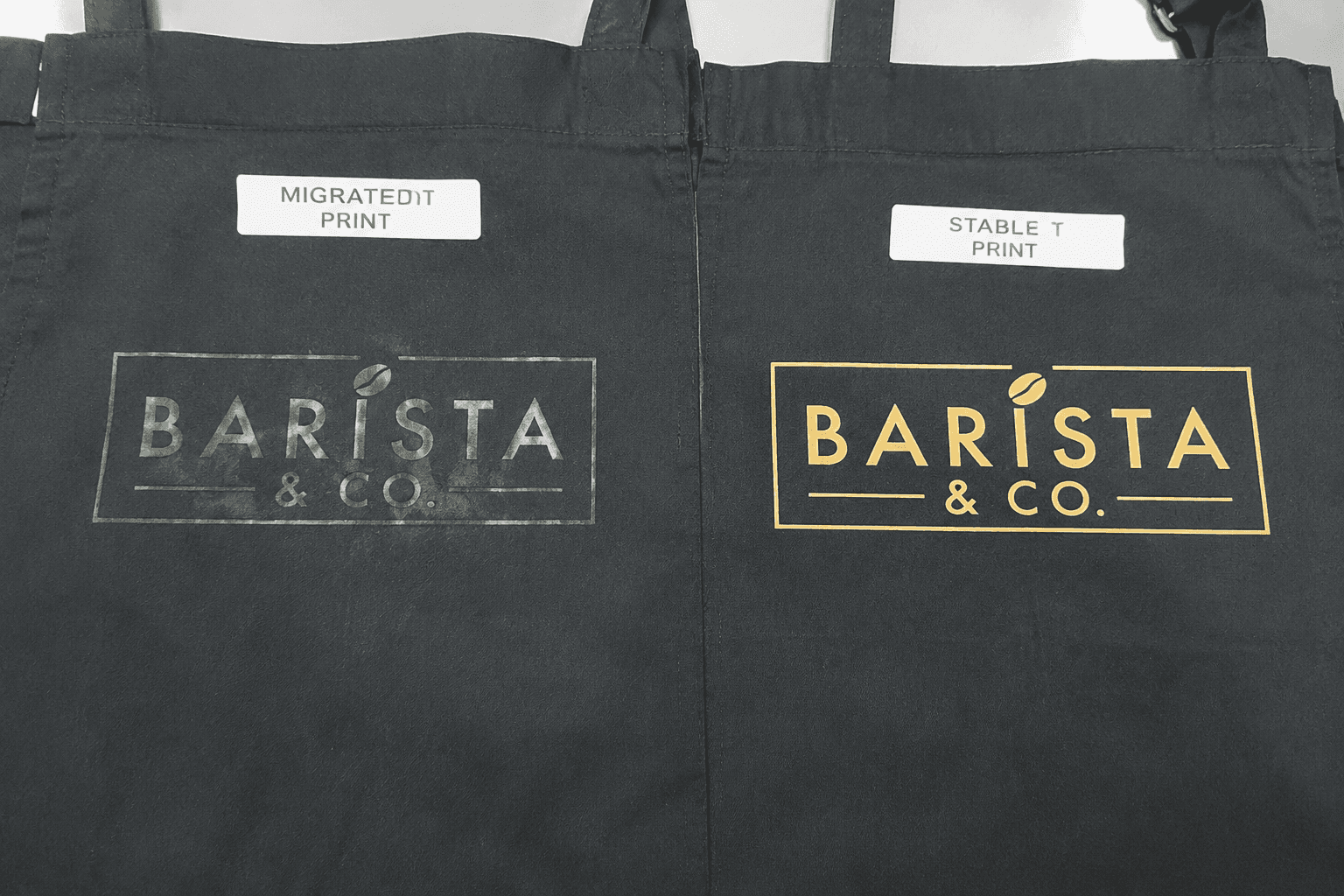
Logo method also affects how a black apron ages. Polyester embroidery thread usually performs more consistently than rayon thread in peroxide-prone settings, although each lot should still be tested. Large heat-transfer logos can create a film edge where liquid collects and dries, making chest stains more obvious. In many salon programs, a small logo above the pocket or on the lower chest gives a cleaner appearance over time than a large centered chest decoration placed directly in the main splash zone.
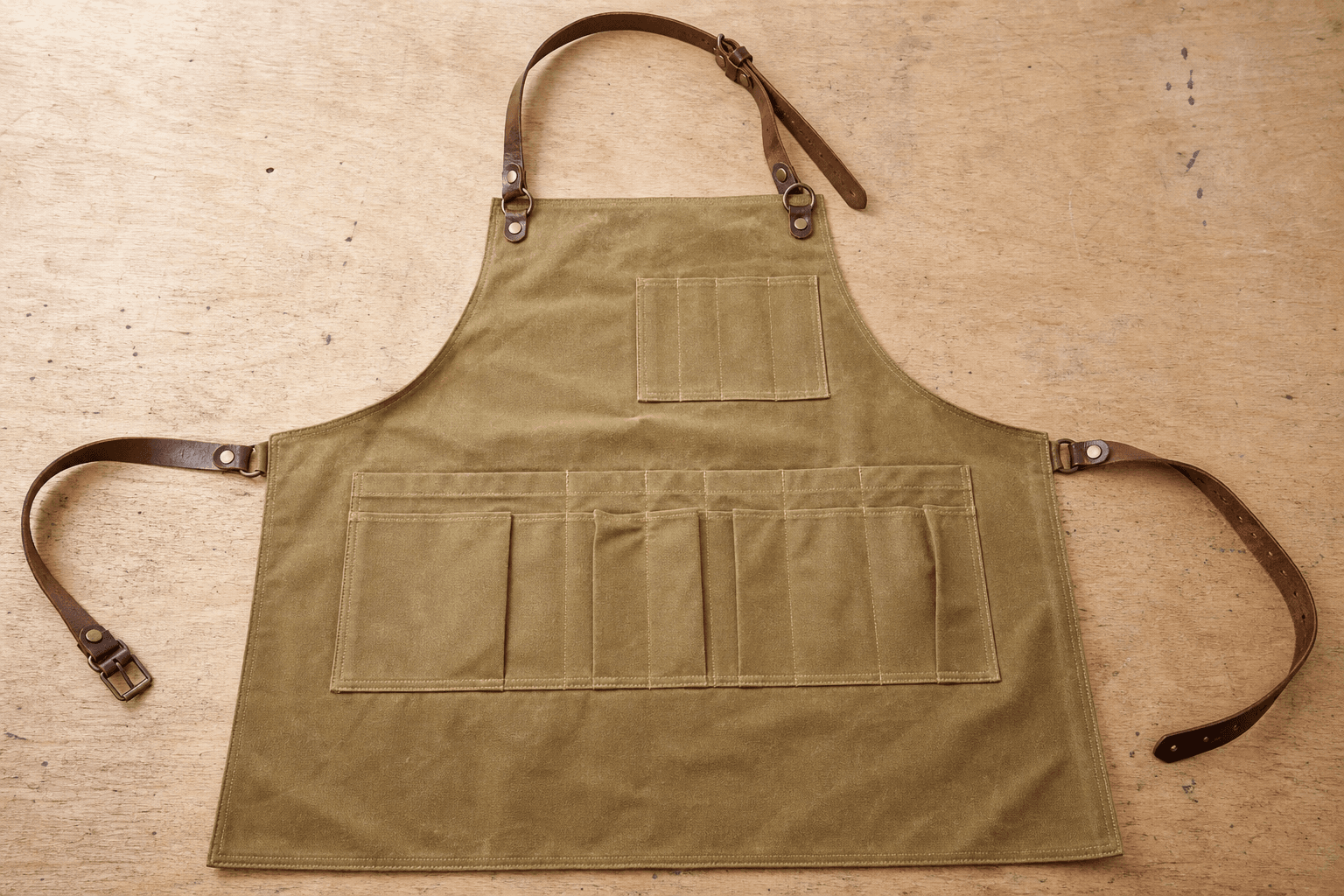
Construction simplicity usually improves field life. Deep pleated pockets, layered facings, and decorative front panels trap damp towels, brushes, or cleaning cloths carrying residual peroxide. A flatter front with one or two practical compartments often keeps an acceptable appearance longer, especially for cleaners and stylists who repeatedly wipe wet hands or tools on the same area.
- Specify trim by material: confirm fiber content and dye method for tapes, bindings, threads, and labels
- Prefer polyester embroidery thread: it usually tracks better with polyester-dominant apron bodies
- Avoid oversized chest transfers: they can highlight edge staining and uneven fade
- Keep construction simple: fewer layered zones means fewer places for peroxide residue to remain
RFQ details, care instructions, and realistic service-life targets
A strong RFQ closes the gap between sample-room appearance and field performance. Buyers should specify target fabric weight, fiber ratio, peroxide range, estimated daily splash count, average contact time before rinse-off, wash frequency per week, logo method, target FOB, and expected service life in months. A useful brief might state: 200 GSM polyester twill, black bib apron, salon use, 6% developer routine with occasional 9%, 8 to 15 front-panel splashes per day, washed 3 times per week, target service life 5 months, and acceptable shade shift no worse than the approved control after 10-cycle peroxide testing. That level of detail gives the factory something commercial and testable to build against.
Care instructions should be developed as part of the apron program rather than added at the end. For salon and cleaning use, the label or issue guide should tell staff to blot or rinse peroxide splashes quickly, avoid folding contaminated surfaces inward, and separate heavily exposed aprons before washing. In active accounts, those handling steps can extend acceptable visual life by several weeks and reduce transfer marks inside laundry bags.
Laundry chemistry also needs review before approval, especially for outsourced washing. Chlorine bleach, high-alkali detergents, and excessive drying temperature can accelerate visible mismatch between shell and trims. For most polyester and poly-cotton black aprons, wash temperatures around 40 to 60 degrees C and controlled tumble settings support better color retention than aggressive industrial formulas. As a planning benchmark, buyers should expect about 4 to 6 months from polyester twill in heavy salon use, 6 to 9 months in lighter cleaning exposure, 3 to 5 months from poly-cotton in mixed chemical environments, and materially shorter cycles from cotton-rich black aprons where peroxide contact is frequent.
- RFQ essentials: GSM, fiber content, peroxide strength, daily splash estimate, wash count per week, logo method, target service months, target FOB
- Immediate care instruction: rinse or blot peroxide contact as soon as practical
- Laundry caution: avoid chlorine bleach unless the apron was specifically developed and tested for it
- Planning benchmark: set reorder timing from expected service life, not from original PO date alone