For restaurant groups, hotel operators, uniform distributors, culinary schools, and promotional importers, apron demand usually repeats in the same core styles: bib aprons, waist aprons, cross-back aprons, and utility aprons. Volumes may shift by month and by color, but the base specification often stays stable for long periods. In that environment, a blanket po for apron replenishment is usually more efficient than raising a new purchase order every time stock falls below minimum level.
From the factory side, a blanket arrangement is not only an administrative shortcut. It supports greige booking, dye-lot planning, trim purchasing, print or embroidery scheduling, cutting allocation, and sewing-line loading. For the buyer, the practical benefits are steadier FOB pricing on a fixed apron BOM, shorter repeat lead times, and lower risk that a proven apron style loses production space to newer, higher-margin orders.
The model only works when the order reflects actual apron manufacturing limits. Fabric composition, GSM or oz weight, color tolerance, MOQ by color, release window, packaging method, inspection standard, and cancellation rules must be written before the first release. If those controls stay vague, the blanket PO becomes a forecast note instead of a usable sourcing tool.
- Freeze the apron BOM before asking for price protection: keep composition, 240 GSM or 8 oz weight, pocket construction, logo method, hardware, labels, and carton pack unchanged.
- Reserve capacity by month: many apron factories can credibly hold 3,000-8,000 pcs per month for one stable style, but not an undefined annual total with no release calendar.
- Use release timing the factory can execute: a 6-12 month term with release notices issued 21-45 days before ex-factory is workable for most repeat apron programs.
- Keep MOQ discipline inside the blanket order: 300-500 pcs per color is common for basic poly-cotton aprons, while 800-1,000 pcs per color is more realistic for washed or specialty canvas.
- Write measurable controls into the PO: include AQL 2.5 major and 4.0 minor, forecast tolerance, raw-material review trigger, cancellation charges, and the point at which booked fabric or trims become non-cancellable.
How a blanket po for apron replenishment works in a real OEM apron program
In apron sourcing, a blanket PO is a master commitment for one approved apron style or one tightly controlled style family over a fixed term, usually 6 or 12 months. The buyer does not ask the factory to cut the full quantity at once. Instead, the buyer commits a total volume and releases production in scheduled drops. A realistic example is 36,000 bib aprons over 12 months, released as 3,000 pcs per month with a color split such as 2,000 black, 700 navy, and 300 khaki.
This structure differs from a normal repeat order because the technical and commercial terms are settled before each release. The factory already knows the style code, finished measurements, shell fabric, pocket layout, neck strap construction, logo placement, barcode format, carton ratio, and inspection level. With that information fixed, the merchandiser can book fabric and trims early, reserve embroidery or printing slots, and load cutting and sewing plans before the release is officially called off.
For the buyer, the value is predictable execution. If the replenishment item is a 65/35 poly-cotton twill bib apron at 240 GSM, about 7.1 oz per square yard, with one divided front pocket, one woven brand label, and a 1-color chest print, there is little benefit in reopening price and lead-time negotiations every month. A blanket po for apron replenishment gives both sides a repeatable operating framework, which typically removes 5-8 administrative days from each reorder cycle.
- Common blanket term for aprons: 180 days or 365 days
- Common release notice: 21-45 days before ex-factory
- Typical annual volume per core apron SKU: 12,000-80,000 pcs
- Best-fit styles: bib aprons, waist aprons, chef aprons, cross-back aprons, utility aprons
What to lock before price protection: apron BOM, FOB window, and monthly capacity
Price protection only works when the apron BOM is frozen. In apron manufacturing, the main cost drivers are fabric composition, GSM or oz weight, fabric width, dye route, logo method, hardware, sewing minutes, inspection level, and packing detail. If a style moves from 8 oz poly-cotton twill to 12 oz cotton canvas, or from a 1-color screen print to an 8,000-stitch embroidery, the original price no longer reflects actual cost.
A workable blanket agreement usually fixes FOB pricing for a stated period against a fixed BOM. For example, a factory may lock price for 180 days on a 240 GSM 65/35 poly-cotton bib apron with one pocket, one woven label, and one 1-color print, provided the buyer maintains the agreed volume and release rhythm. In current OEM sourcing, a basic apron of that type commonly falls around $2.30-$3.50 FOB per piece at 3,000-5,000 piece releases, depending on origin, print size, and packing. A heavier 10-12 oz cotton canvas apron with metal eyelets, adjustable straps, rivet reinforcement, and embroidery is more often $5.40-$8.90 FOB per piece at similar release sizes.
Capacity reservation must be negotiated with the same discipline. A factory can realistically hold 4,000-6,000 aprons per month for a known style with a known release calendar. It cannot credibly hold 50,000 pieces somewhere within a year with no month-by-month allocation. Buyers should therefore negotiate price lock and capacity reservation together: the more stable the monthly schedule, the stronger the supplier's ability to protect lead time and unit cost.
- Freeze fabric by composition, width, GSM or oz weight, and finish
- Freeze branding by print colors, embroidery stitch count, patch type, and placement
- Freeze packing by fold method, polybag requirement, barcode label, and carton ratio
- Tie price validity to a time period plus minimum committed volume
- Tie capacity reservation to monthly release windows, not only annual forecast
When scheduled apron releases outperform ad hoc repeat buying
Ad hoc repeat ordering still makes sense when an apron style is new, sales history is thin, or branding is still changing. Once demand becomes stable, however, ad hoc buying creates unnecessary friction. Every new PO forces the factory to reconfirm fabric availability, recost changed inputs, reopen trim planning, and fit the order into whatever cutting and sewing slots remain open. That is when otherwise simple repeat aprons begin missing ex-factory targets.
Scheduled releases work better for buyers with predictable usage. Restaurant chains replacing front-of-house aprons every quarter, hotel groups maintaining reserve uniform stock, culinary schools issuing standard student bib aprons, and workwear distributors replenishing core SKUs all benefit from planned releases. Even when monthly demand swings by 10-15%, the factory can still plan dye lots, cutting markers, print loading, QC staffing, and carton booking far more efficiently than it can with sporadic rush reorders.
The best candidates for a blanket po for apron replenishment are approved apron styles with at least three repeat releases per year and a stable color base such as black, navy, natural, or dark green. If every release introduces a different wash, new pocket geometry, or a new logo application, the order is no longer replenishment. It becomes redevelopment, and the supplier will treat it as a new style for costing and scheduling.
- Use scheduled releases for approved, stable apron SKUs
- Use ad hoc repeats while fit, branding, or fabric specification is still changing
- Expect stronger factory efficiency when monthly demand stays within about 10-15% of forecast
- Avoid blanket structures for washed, fashion-led, or heavily customized apron programs
Lead-time and MOQ math behind blanket po for apron replenishment
The sourcing advantage becomes clearer when the numbers are practical. Assume a buyer needs 24,000 standard bib aprons per year for a foodservice chain. If that demand is placed as six separate rush POs of 4,000 pcs, the factory may need to buy smaller fabric lots, run more frequent color and logo changeovers, and push printing or embroidery through shorter production windows. The nominal unit price may not change much, but the buyer takes on more delay risk, more split-shipment risk, and a higher chance of using air freight to protect stock levels.
Under a blanket model, the factory can book fabric for the full term or at least a rolling 60-90 day horizon. On a 240 GSM poly-cotton twill apron consuming about 0.90-1.05 meters per piece, that often means better marker efficiency, fewer dye lots, and less trim waste. On stable programs, buyers commonly save around $0.12-$0.30 per piece compared with fragmented repeat ordering, especially when packaging, barcode labels, and carton markings are standardized across all releases.
Lead time improves as well. A repeat apron ordered from zero, with no reserved material, commonly needs 35-50 days from order confirmation to ex-factory. If the same style runs under a blanket PO with booked greige or stocked dyed fabric, repeat releases often move in 20-30 days. For black or natural aprons using standard trims and a simple 1-color print, some factories can ship in 15-20 days, but only when the style is fully standardized and release paperwork is complete on time.
MOQ still matters inside the blanket structure. A buyer may commit 18,000 units for the term, but if each release is split into five colors of 120 pcs, factory efficiency breaks down. As a practical benchmark, many apron suppliers can support 300-500 pcs per color for basic poly-cotton styles, around 500 pcs per logo version if the shell fabric is shared, and 800-1,000 pcs per color for washed canvas or enzyme-finished utility aprons.
- Fresh repeat order without reservation: 35-50 days to ex-factory
- Release against reserved materials: 20-30 days to ex-factory
- Highly standardized black or natural apron release: 15-20 days is possible
- Typical savings on stable programs: about $0.12-$0.30 per piece
- Typical MOQ: 300-500 pcs per color for basic aprons
How to reserve apron capacity without creating dead stock or open-ended liability
Buyers usually want two things at the same time: protected production space and flexibility if demand shifts. The practical solution is a staged commitment model rather than unlimited cancellation rights. The blanket PO sets the total volume for 6 or 12 months, while the release rules define what is firm, what is adjustable, and what becomes non-cancellable once fabric, trims, labels, or packaging have been booked.
A common structure is a firm first 30-45 days, a controlled forecast for the next 45-60 days, and an indicative plan beyond that. For example, a buyer may commit 30,000 aprons for 12 months, issue firm releases 30 days before ex-factory, and keep quantities in the 60-day forward window adjustable within +/-10%. Beyond that window, the forecast guides yarn, greige, or trim planning but does not yet create a binding sewing obligation. This gives the apron factory enough confidence to reserve line time without forcing the buyer into excessive inventory exposure.
It is also important to separate material reservation from sewing-capacity reservation. Holding 240 GSM black poly-cotton twill, 20 mm herringbone tape, woven neck labels, and stock polybags is not the same as holding sewing hours in week 32. Fabric can often roll into a later release. Sewing capacity is time-sensitive and may be reassigned if the buyer misses the release deadline. The agreement should state that distinction clearly, together with cancellation charges for custom labels, printed bags, or branded cartons already purchased against the blanket order.
- Set a firm production window for the first 30-45 days
- Allow limited forecast adjustment only outside the binding window
- Define release swing tolerance, commonly +/-10% by month
- Separate booking rules for fabric, trims, packaging, and line capacity
- State cancellation charges for custom labels, printed bags, and branded cartons
Quality controls and document rules that keep repeat apron releases on track
Most blanket programs fail because execution controls are weak, not because the commercial model is wrong. Buyers and factories may agree annual volume and target price, then lose a week on changed color names, outdated logo files, incorrect carton marks, or last-minute destination splits. Aprons are especially exposed because one base style often carries multiple strap colors, logo versions, and customer-specific barcode labels. Process discipline matters as much as sewing quality.
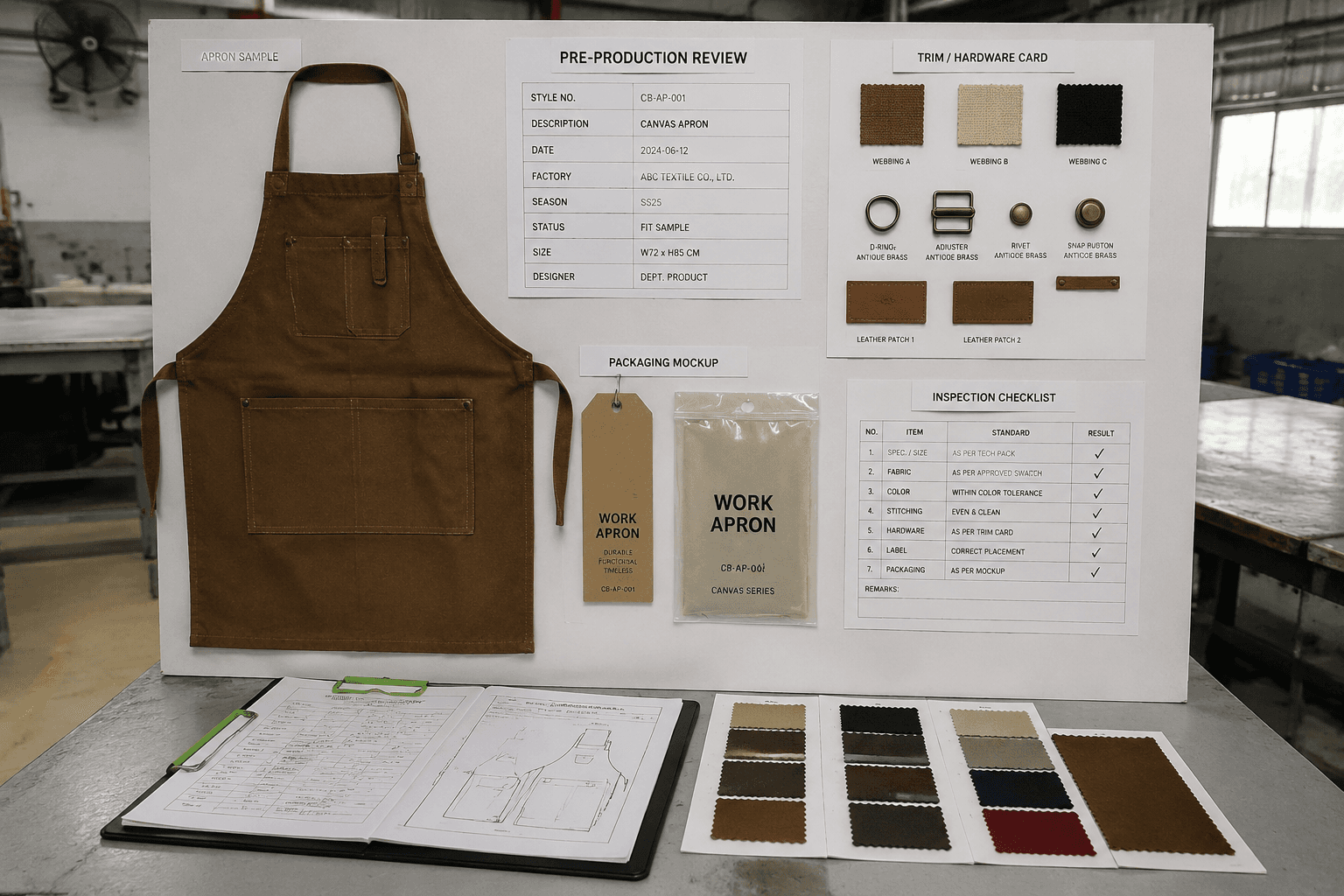
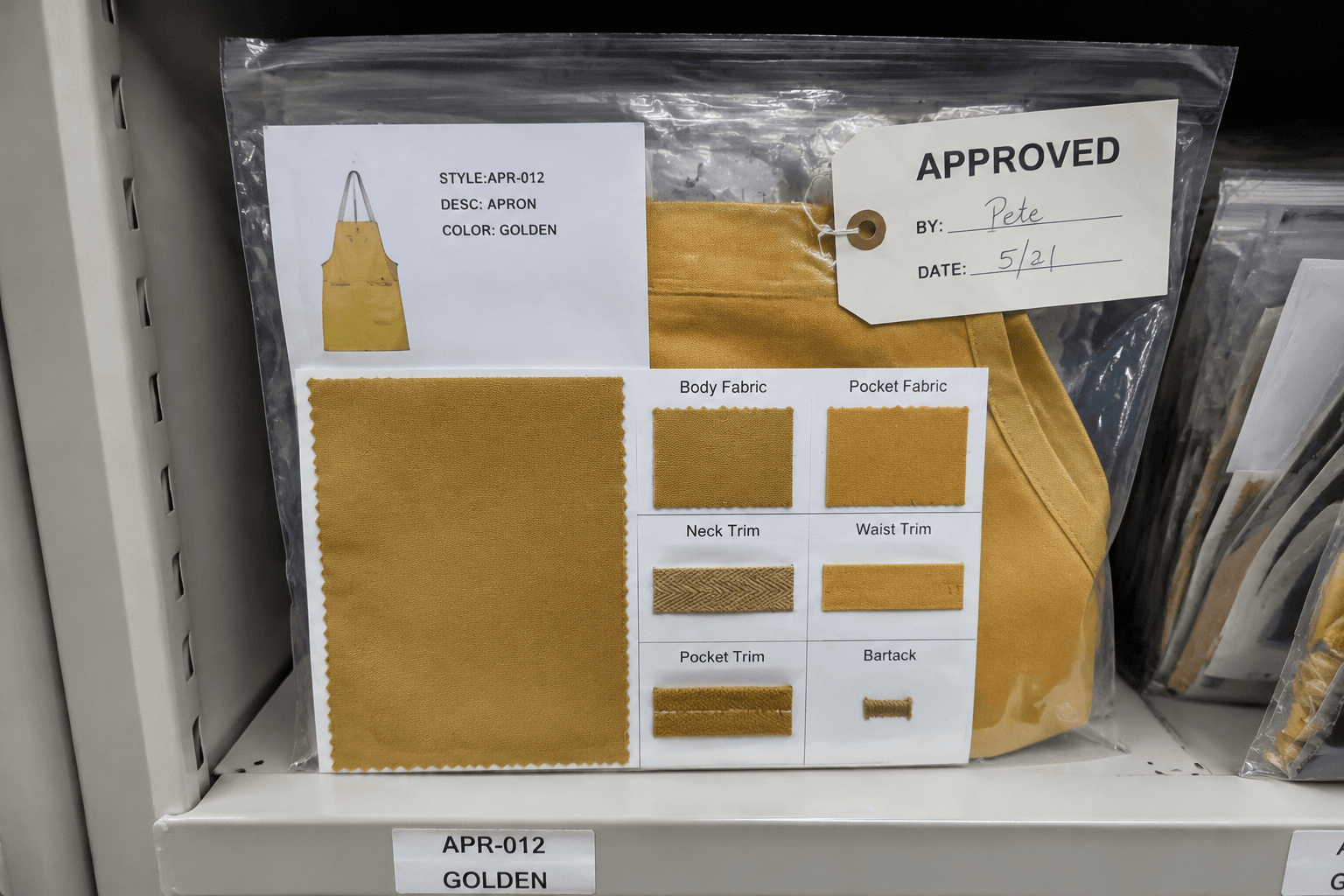
A dependable system starts with one approved master specification for the apron style. That document should state fabric composition, GSM tolerance, finished measurements, seam construction, stitches per inch, logo placement, strap and hardware details, packing method, carton count, and inspection standard. For many B2B apron programs, final random inspection at AQL 2.5 for major defects and AQL 4.0 for minor defects is standard unless the end customer requires stricter control. Each release should then change only quantity, color mix, destination, and ship window.
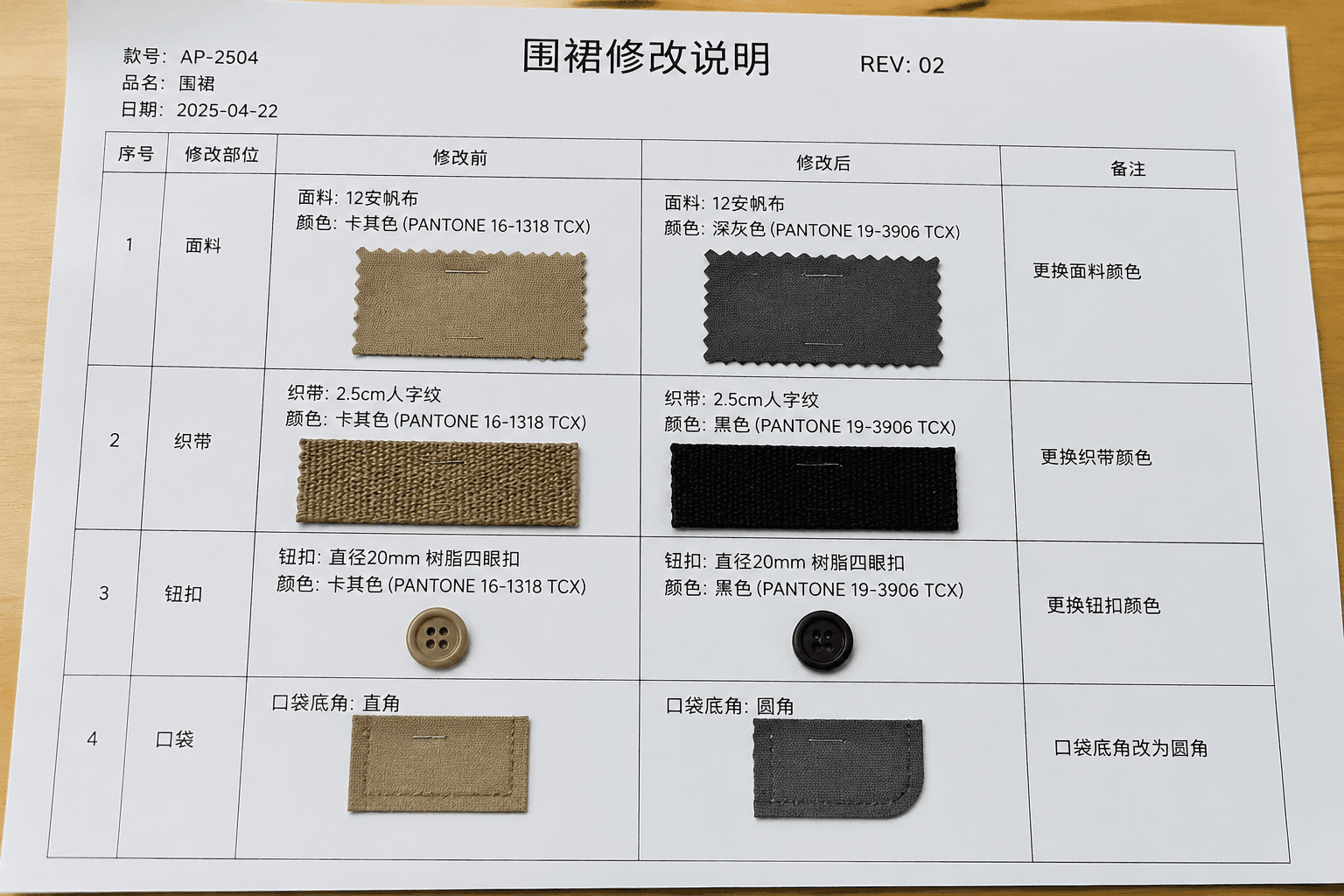
Any mid-program change to pocket depth, neck-strap construction, buckle finish, embroidery size, print method, or carton pack should trigger a formal BOM revision and possible repricing. On the supplier side, reserved stock must also be tracked by customer code and style code. If the factory has already booked 20 mm cotton tape, antique brass buckles, woven labels, and custom master cartons for one blanket order, those materials should not be consumed by another customer order. Without that control, the blanket PO stops functioning as a production-management tool.
- Use one master apron specification for all releases
- Set inspection standard clearly, such as AQL 2.5 major and 4.0 minor
- Treat construction, logo, or packaging changes as formal revisions
- Control color codes, logo files, carton marks, and barcode data centrally
- Track reserved trims, labels, and cartons by customer, style, and release status
What the agreement should say before a factory locks apron price and capacity
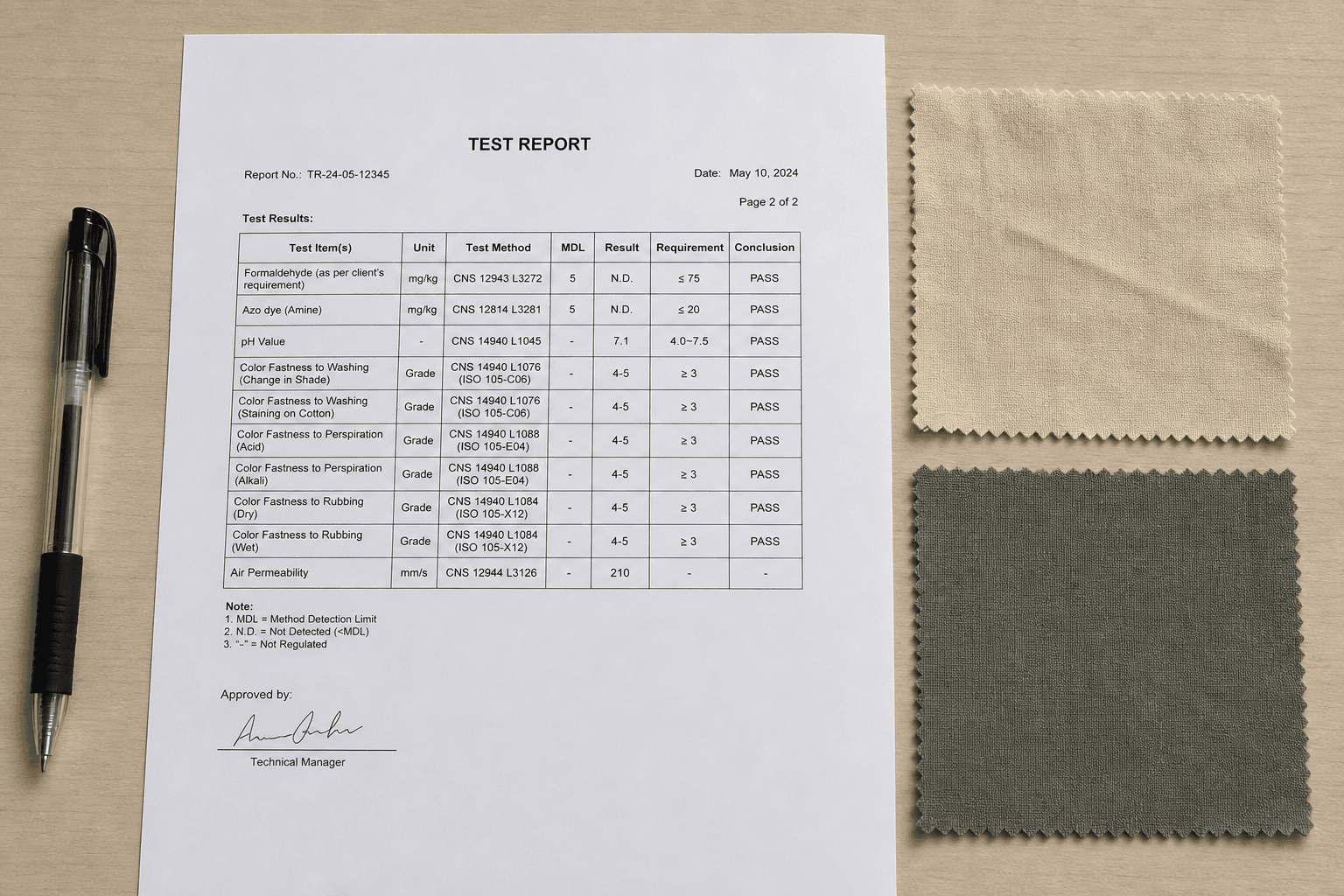
Before asking a supplier to confirm a blanket arrangement, buyers should present information in a format the factory can execute. At minimum, the agreement should include style code, approved BOM, term length, total committed volume, monthly forecast, release notice window, MOQ by color and logo version, destination split, Incoterm, payment term, testing requirement, and inspection standard. If those points are missing, the factory cannot reserve materials or line time with confidence, and any quoted price lock will be fragile.
For most professional apron programs, the strongest structure is simple and measurable: one costed BOM, one validity period, one MOQ rule set, one release protocol, and one price-review trigger. A practical clause might state that FOB price is fixed for 180 days on a 240 GSM 65/35 poly-cotton bib apron, subject to annual volume of 24,000 pcs, minimum 2,000 pcs per release, no change to print, packaging, or hardware, and release notice of 30 days before ex-factory. If cotton or polyester input moves beyond an agreed threshold such as 8-10%, the parties review pricing for future releases only, not for production already confirmed.
The same agreement should also state when payment becomes due. Some apron factories ask for deposit only when each release is cut, while others require partial payment when buyer-specific trims, woven labels, embroidery patches, or branded cartons are booked. Both approaches are common in OEM apron work, but they need to be defined before the first release. A blanket PO works only when both parties treat it as a production-control document rather than a loose purchasing promise.
- State blanket term, total volume, and release frequency clearly
- Record MOQ by color, logo version, and fabric lot where relevant
- Define price validity and raw-material review trigger
- Confirm payment trigger for reserved stock versus released production
- List testing, inspection, packaging, labeling, and shipment rules for every release