For most wheel-throwing studios, choose a split-leg pottery apron in 320-420 GSM canvas. The split keeps each thigh covered while seated; waxed canvas or a light PU finish improves clay and glaze splash release without the heat and stiffness of heavy PVC. Specify 85-110 cm body length, reinforced pocket corners, adjustable cross-back straps, and post-wash shrinkage before sampling.
From a factory perspective, the best ceramics apron is usually a balanced construction: durable base fabric, targeted splash-proof finishing, reinforced stress points, and a pattern built for seated work. Buyers should specify GSM, coating type, pocket construction, strap layout, and test expectations before sampling. Small differences, such as 10 cm extra lap coverage or a 2 cm wider neck strap, can change comfort and return rates in professional studios.
This article outlines practical sourcing choices for a pottery apron or clay apron ordered in bulk from China, including fabric options, splash-proof treatments, costing drivers, MOQ ranges, and production lead times.
- Canvas at 320-420 GSM is the most common base for studio aprons that need strength, comfort, and acceptable wash performance.
- Waxed or PU-coated cotton offers better splash resistance than plain canvas, but buyers must confirm hand-feel and wash method before bulk approval.
- Split-leg patterns are important for wheel work because they protect the lap while allowing the wearer to sit naturally.
- Apron cost usually moves by fabric, coating, hardware, and pocket complexity, with heavy custom studio aprons commonly landing at USD 4.20-9.80 per piece FOB China.
- Production lead time is normally 25-45 days after sample approval and deposit, depending on dyed fabric, coating, print, and packing requirements.
What makes a pottery apron different from a kitchen apron
A pottery apron is exposed to a different mix of pressure, liquid, and abrasion than a food-service apron. In a restaurant, the apron mainly handles oil, sauce, heat around equipment, and daily laundering. In a ceramics studio, the user may press wet clay against the lap for several hours, wipe hands on the front panel repeatedly, and bend forward over a wheel where slurry collects on the thighs. The fabric must resist both splash and mechanical rubbing.
The pattern also changes. Standard bib aprons often finish above the knee and hang as one flat panel. A ceramics apron often needs a longer body, from 85 to 110 cm depending on size, and many professional users prefer a split-leg front. The split allows the apron to cover each thigh when seated at a wheel. Without that feature, a single panel can bunch at the lap, pull at the neck, or leave the side of the legs uncovered.
Buyers should also consider how clay behaves after drying. Clay residue can harden inside seams, pocket corners, and strap folds. If the apron has too many decorative seams or deep boxed pockets, it may look attractive in photos but be harder to clean in a production studio. For OEM orders, we normally recommend functional construction first, then branding details after the core pattern is confirmed.
- A pottery apron usually needs longer lap coverage than a cafe or kitchen apron.
- A ceramics apron should avoid unnecessary seam traps where dry clay can collect.
- A split-leg studio apron is better for seated wheel throwing than a single-panel bib apron.
- Pocket openings should be reachable while seated and wide enough for ribs, trimming tools, pencils, and sponges.
Fabric weights for a heavy pottery apron
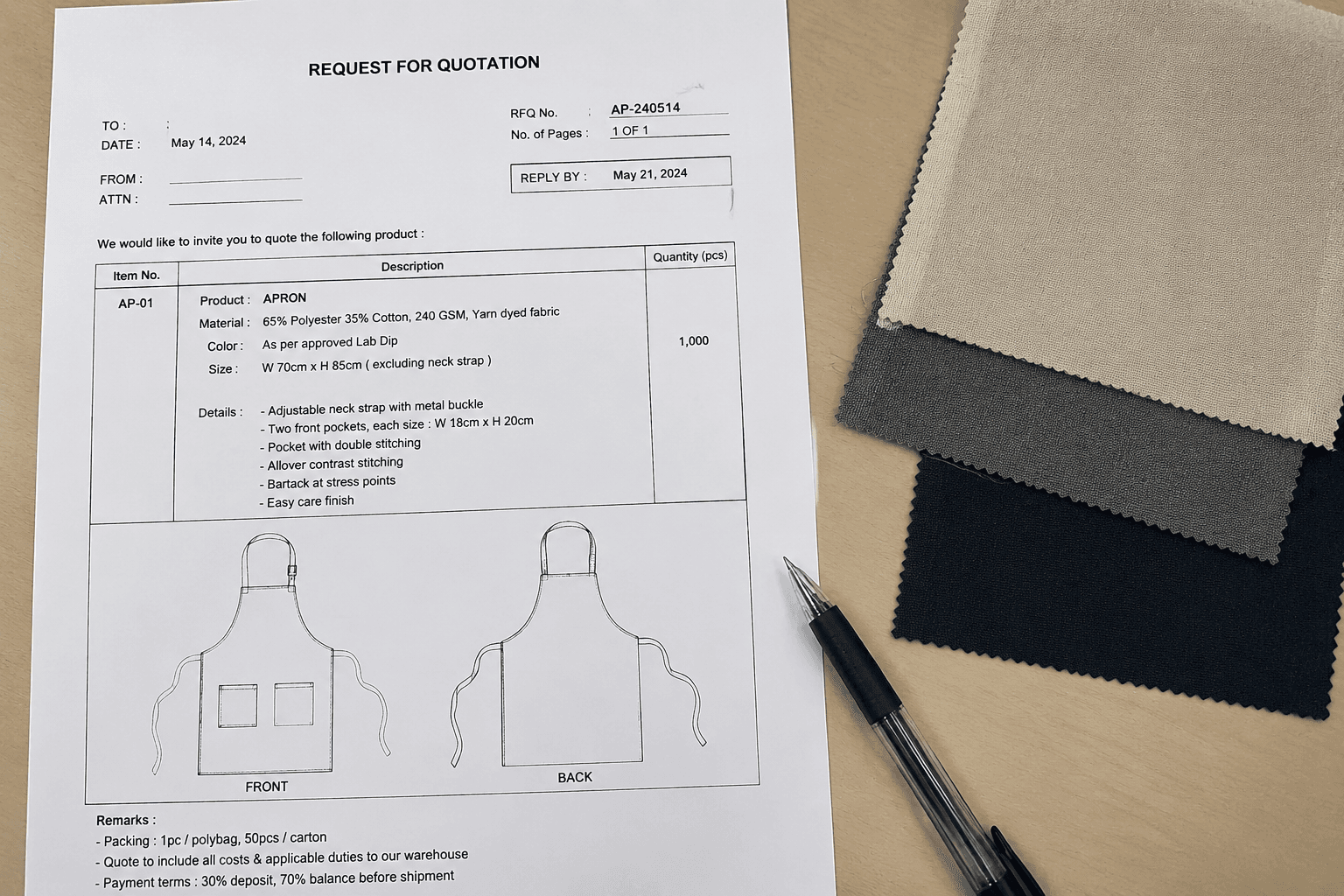
Fabric weight is one of the first technical points to lock in. For a pottery apron, very light fabric below 240 GSM is usually not enough unless the product is designed as a low-cost workshop giveaway. It may drape well at first, but it absorbs water quickly and wears through faster at the lap and pocket edges. For commercial studio use, 320-420 GSM cotton canvas or cotton-poly canvas is a more practical starting range.
At 320 GSM, the apron remains flexible and is suitable for hobby studios, ceramic education programs, and retail kits. At 380-420 GSM, the apron feels more substantial and can handle frequent kneeling, leaning, and wiping. Above 450 GSM, the garment becomes more protective but also heavier, especially after absorbing moisture. For export orders, buyers should test whether the added weight improves perceived value or simply increases fatigue during long sessions.
Cotton canvas is popular because it feels natural, accepts pigment dyeing, and supports embroidery or screen printing. Cotton-poly blends can reduce shrinkage and improve dimensional stability, but they may not have the same artisan look. Polyester Oxford with coating can be used for a lower-cost splash proof apron, but it may feel less premium and less breathable. The right choice depends on brand positioning and user environment.
- 240-280 GSM canvas is suitable for promotional or light-duty clay apron programs, but not ideal for daily professional use.
- 320-360 GSM canvas is a balanced range for retail studio apron orders where comfort and cost both matter.
- 380-420 GSM canvas is preferred for heavier pottery apron lines with better abrasion resistance.
- 450 GSM and above should be sampled carefully because wet weight and stiffness can reduce comfort.
Splash-proof options: wax, PU coating, PVC, and laminated fabrics
The phrase splash proof apron can mean several different constructions. It does not always mean fully waterproof, and buyers should define the target performance before sampling. In ceramic use, the apron needs to shed slip, glaze splashes, and wash water, but many customers still want a fabric hand-feel rather than a plastic rainwear feel. This is where coating selection matters.
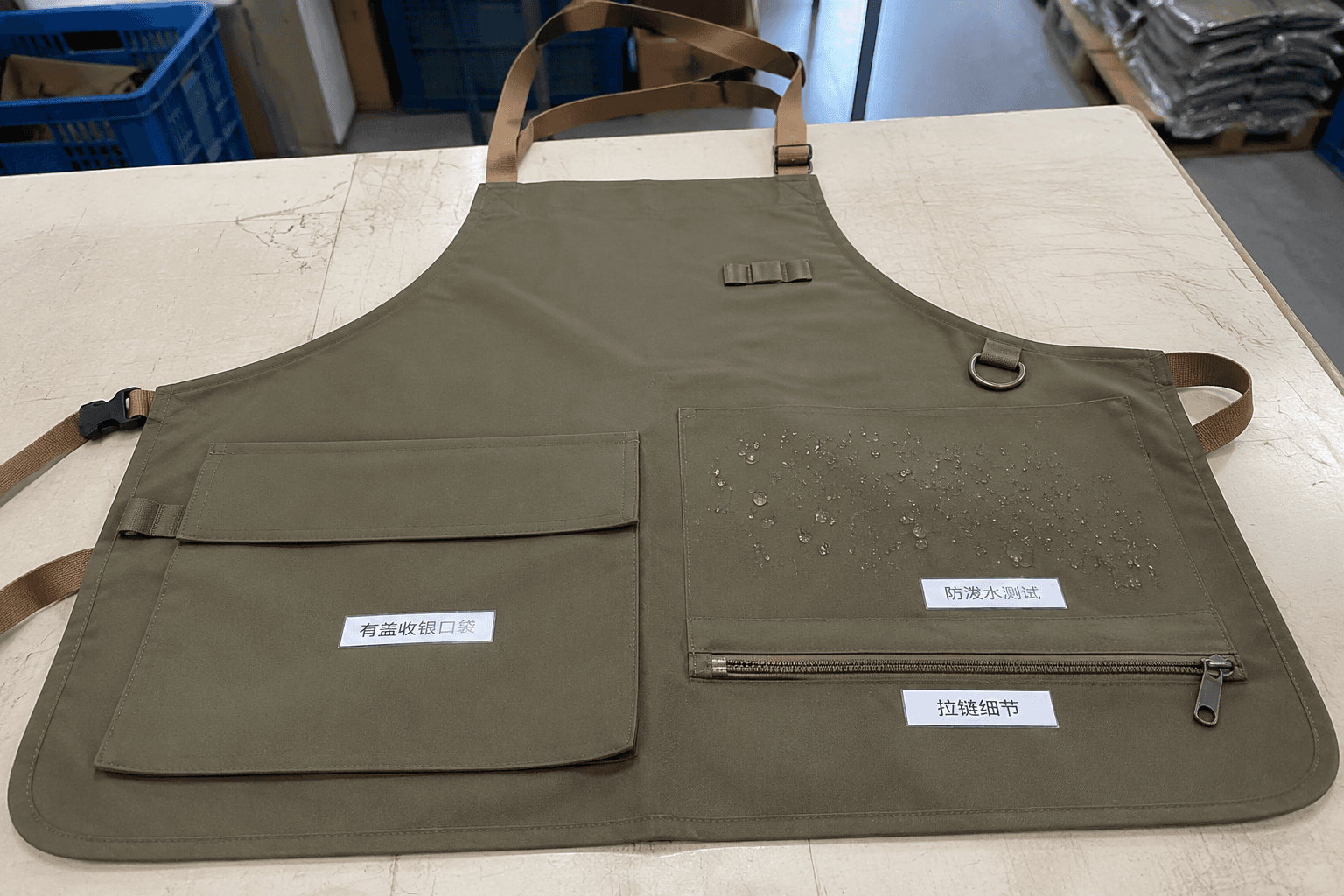
Waxed cotton canvas gives a traditional studio appearance and good initial water repellency. It is suitable for premium clay apron ranges, especially when the buyer wants a rugged, craft-focused look. The limitation is care. Wax finishes can mark, crease, and change appearance over time. They may require spot cleaning instead of machine washing. If the target user expects to wash the apron at 40 degrees Celsius after every class, waxed canvas may create complaints unless care labeling is clear.
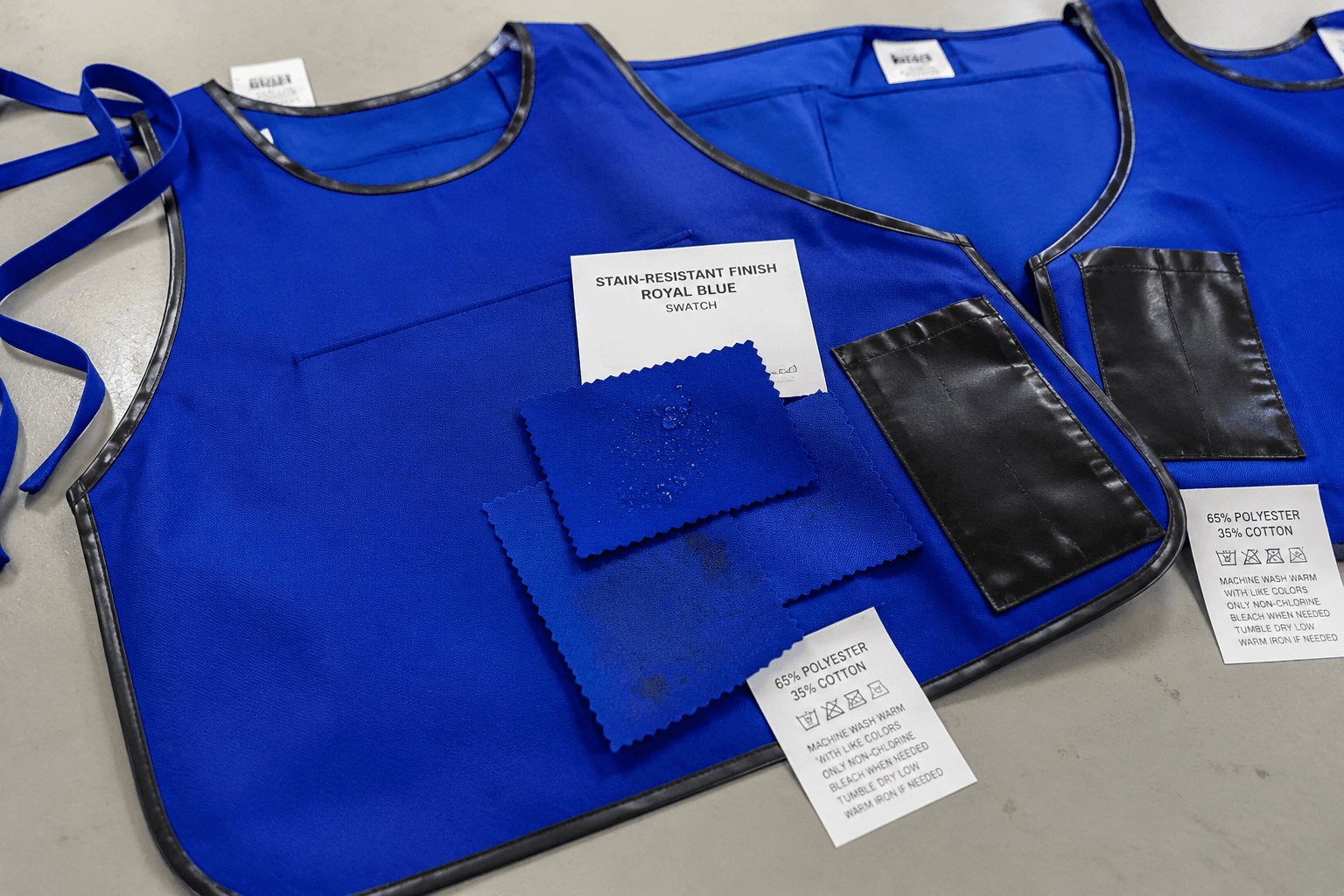
PU-coated fabric offers more consistent splash resistance and can be made with a smoother back coating or surface coating. A light PU coating on 300-360 GSM canvas can maintain reasonable flexibility, while heavier coating improves water blocking but increases stiffness. PVC-coated polyester is the most water-resistant and easiest to wipe clean, but it is less breathable and can feel industrial. It is useful for glaze rooms, school clean-up stations, or wet process areas, but not always for long creative sessions at a wheel.
- Waxed canvas works well for premium studio apron lines where patina and spot cleaning are acceptable.
- PU-coated canvas is a practical middle option for buyers needing repeatable splash resistance and a textile feel.
- PVC-coated polyester is best for high-splash areas where wipe-clean performance is more important than breathability.
- C0 water-repellent finishing can reduce surface wetting, but it should not be sold as waterproof without testing.
- Laminated fabric can improve barrier performance, but seam construction must be reviewed because needle holes may leak.
Pattern details that matter for ceramics apron sourcing
Pattern engineering affects the real use of a ceramics apron as much as fabric does. A studio worker is not standing upright all day. They sit, lean, rotate, reach for tools, and often keep both hands wet. If the apron pulls at the neck or shifts on the lap, the user will blame the product even if the fabric is technically correct.
For wheel throwing, split-leg construction is one of the most useful features. A center split from around mid-thigh allows each panel to cover the legs separately. On adult sizes, we often see total apron lengths of 95-105 cm, with a split starting 50-65 cm from the top edge depending on bib height. Wider lower panels give better lap coverage, but if they are too wide they can interfere with stool movement. Sampling on an actual seated model is more reliable than judging by flat measurements alone.
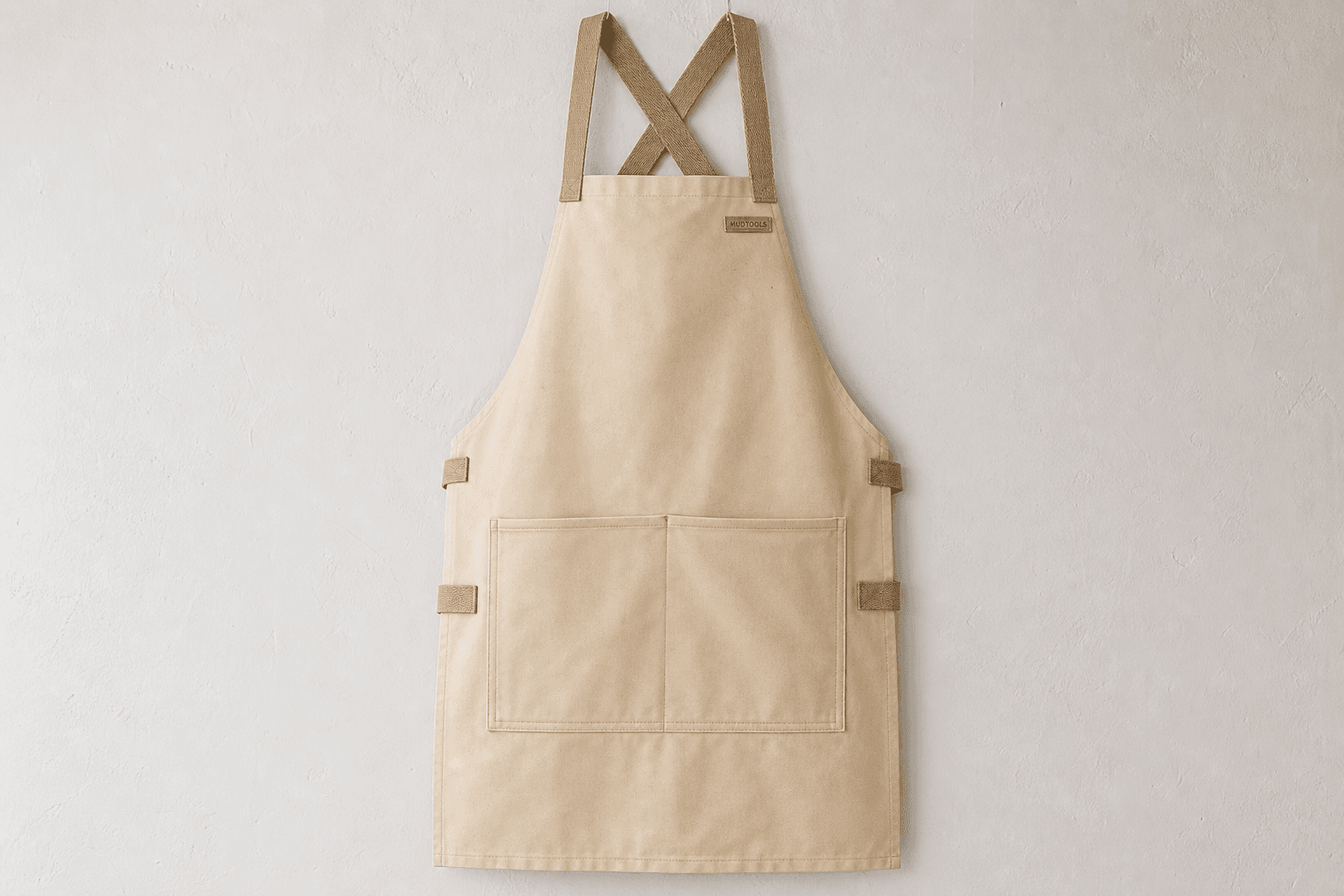
Strap design is another sourcing decision. A simple neck loop is cheap, but a heavy wet apron can strain the neck. Cross-back straps distribute weight better and are preferred for 380 GSM and heavier fabric. Adjustable cotton webbing at 2.5-3.8 cm width works for most studio aprons. Metal buckles look durable but may scratch ceramic surfaces or rust if the finish is poor. Plastic adjusters reduce cost and corrosion risk, while antique brass hardware can support a premium line if tested for plating quality.
- Use cross-back straps for heavier pottery apron styles above roughly 350 GSM.
- Specify strap width, usually 2.5 cm for standard aprons and 3.2-3.8 cm for heavy-duty styles.
- Confirm split depth on a seated fitting, not only on a flat technical drawing.
- Reinforce pocket corners and strap attachment points with bartacks or box stitching.
- Avoid oversized chest pockets if the wearer will lean over wet clay or glaze containers.
Pocket planning for tools, clay dust, and washability
Pockets are often where a studio apron succeeds or fails. Product developers sometimes request many pockets because they look useful on an e-commerce page. In real ceramic work, too many pockets can trap clay dust, collect water, or become uncomfortable when the wearer sits. The best pocket layout is usually simple: one chest pocket for a pencil or small rib, and one or two lower pockets with reinforced corners.
For a pottery apron, lower pockets should sit high enough to remain reachable while seated but not so high that tools press into the abdomen. A common lower pocket size is 18-22 cm wide by 18-24 cm high. Divided tool pockets can be useful, but narrow slots should be tested with the actual tools expected by the brand. If the pocket is intended for trimming tools, a 3-4 cm slot may work. If it is for a sponge, the opening needs to be wider and easier to clean.
Pocket fabric should match the main body or use a slightly lighter but stable fabric to reduce bulk. On coated aprons, buyers must decide whether pockets are also coated. Coated pocket interiors can be easier to wipe, but sewing through multiple coated layers increases stiffness and may leave needle perforations. For retail products, a clean bar-tacked canvas pocket often gives the best balance of durability and cost.
Testing standards and approval points before bulk production
A splash proof apron for ceramic use should be tested against the buyer's actual expectations, not only against a generic fabric claim. Before bulk production, we recommend approving both fabric performance and garment performance. Fabric can pass a water repellency test, but a finished apron may still fail because seams wick moisture, pocket corners hold liquid, or the fabric shrinks after washing.
For cotton canvas and cotton-poly canvas, shrinkage should be checked after washing. A practical target is under 3-5 percent after one wash at the care-label condition, depending on fabric and finish. Color fastness to washing and rubbing matters because studios often use light clay, white slip, or pale clothing underneath. Dark indigo, black, and pigment-dyed colors should be tested for dry and wet rubbing, especially if the apron will be sold as a premium studio apron.
Water repellency can be evaluated through spray testing or a simple buyer-approved bench test using controlled water volume and timing. For PU or PVC-coated fabric, hydrostatic pressure may be relevant, but many studio brands do not need full rainwear-level data. More useful is a cleaning test: apply wet clay slip, let part of it dry, wipe or wash according to the care label, and check staining, stiffness, odor, and coating change.
- Check garment shrinkage after washing under the intended care label, especially for cotton canvas.
- Test wet and dry rubbing on dark colors before approving bulk fabric.
- Run a clay slip wipe-off test because studio residue behaves differently from plain water.
- Inspect seam leakage or wicking if the apron is positioned as splash proof.
- Approve a pre-production sample with final fabric, coating, trims, print, labels, and packing.
MOQ, pricing, and lead time for custom pottery apron orders
MOQ depends mainly on fabric availability and customization level. If the buyer selects stock canvas colors and standard webbing, a factory may support 300-500 pieces per color for a pottery apron style. If the order needs custom dyed 380 GSM canvas, wax finishing, special PU coating, or yarn-dyed straps, the practical MOQ often moves to 800-1,500 pieces per color because the fabric mill has its own dyeing and finishing minimums.
Price varies widely, but professional buyers can use a working range for early costing. A basic 320 GSM cotton canvas studio apron with simple pockets may be around USD 3.20-5.20 per piece FOB China at 1,000 pieces, depending on size and packing. A heavier 380-420 GSM cross-back ceramics apron with split legs, reinforced pockets, and logo printing may fall around USD 4.80-8.50. Waxed canvas or coated premium styles with metal hardware, branded labels, and individual retail packaging can reach USD 7.50-12.50 or more.
Lead time should be planned in stages. Sample development normally takes 5-10 days if fabric is available, or 12-20 days if new fabric finishing is needed. Lab dips or strike-offs can add 5-7 days. Bulk production after sample approval and deposit is commonly 25-45 days. For holiday retail deliveries, buyers should add buffer for packaging approval, inline inspection, final inspection, and vessel or air freight booking. Rushing a coated clay apron order often creates quality risk because coating cure time, fabric relaxation, and packing dryness should not be compressed too far.
- Stock fabric MOQ can start around 300-500 pieces per color for simpler studio apron programs.
- Custom dyed or custom coated fabric usually requires 800-1,500 pieces per color.
- Basic canvas apron costing may start around USD 3.20-5.20 per piece FOB China at commercial quantities.
- Heavy split-leg coated or waxed styles often land around USD 6.50-12.50 per piece FOB China.
- Plan 25-45 days for bulk production after final approval, with longer timing for custom fabric finishing.
Packaging, labeling, and compliance for studio apron programs
Packaging should match the selling channel. For wholesale supply to studios, folded bulk packing in polybags or paper bands can keep cost low and reduce waste. For retail pottery kits or branded e-commerce products, individual bags, hangtags, belly bands, and size stickers may be required. Heavy canvas aprons create thicker cartons than kitchen aprons, so carton size and gross weight should be checked early. A carton that exceeds 18-20 kg may be inconvenient for warehouse handling and can increase damage risk.
Care labeling is important because splash-proof finishes have limits. A plain cotton canvas clay apron may allow machine washing, while waxed canvas usually needs spot cleaning. PU-coated fabric may tolerate gentle wiping but not high-temperature tumble drying. If the care label is too aggressive, the apron may fail after consumer washing; if it is too restrictive, the product may feel inconvenient. The correct label should be based on actual test results, not only on fabric supplier claims.
For European and North American buyers, compliance requirements may include fiber content labeling, country of origin, restricted substance testing, and packaging warnings if applicable. If the apron uses metal trims, check nickel release requirements for relevant markets. If the fabric has water-repellent or coated finishing, buyers should ask about PFAS position, phthalates for PVC materials, and any brand-specific chemical standards. These points are easier to manage before fabric booking than after finished garments are packed.
- Use care labels that match the approved fabric finish and verified wash test.
- Check carton weight early because heavy canvas aprons can exceed comfortable handling limits.
- Confirm fiber content, country of origin, and importer label layout before bulk packing.
- Review chemical compliance for coatings, water-repellent finishes, inks, and metal trims.
- Keep one approved sealed sample at the factory and one with the buyer for final inspection comparison.