For sourcing managers buying aprons for restaurant groups, cafés, bakeries, hotel F&B teams and central-kitchen operators, odor complaints often appear before the garment reaches seam-life or color-life limits. An apron can still pass checks for shade, stitch density and shrinkage, yet staff report a recurring fryer, milk, espresso or damp smell after laundering. In most cases, apron odor retention polyester blend results from the interaction of hydrophobic polyester, skin oils, food grease, detergent residue and incomplete drying rather than from one isolated factory defect.
This matters because many B2B apron programs are still awarded on FOB target, wrinkle resistance, color continuity and lead time alone. Common bulk buys use 65/35 poly-cotton twill, 80/20 polyester-rich twill and 100% polyester plain weave in the 180-240 GSM range because those fabrics fit MOQs of 800-3,000 pieces per color and can ship in roughly 25-45 days after approval. A basic custom bib apron from China typically runs $1.90-$4.40 FOB depending on GSM, pockets, trims, logo application and strap construction. Saving $0.18-$0.35 per piece with a polyester-heavier fabric can look efficient at booking stage, then become costly when odor claims trigger rewashes, early replacement and urgent top-up orders.
The practical approach is to assess fabric, finish, wash chemistry, drying method and trim build as one operating system before bulk approval. Buyers who define soil type, weekly wear count, washer loading, detergent route, dryer minutes and acceptable odor performance during development usually avoid preventable claims later. The goal is not to remove polyester from all aprons; it is to specify the right apron construction for the real wear-and-laundry cycle.
- Polyester-rich aprons usually retain oily odor more than balanced poly-cotton aprons in fryer, grill, dairy and coffee environments.
- Complete drying is a critical control point; even 2-3% residual moisture can create a sour odor by the next shift.
- For many daily-wear hospitality programs, 65/35 poly-cotton twill at 200-220 GSM is the safest benchmark for balancing odor release, durability and unit cost.
- Under-dosed detergent, softener carryover, overloaded washers and short dryer cycles cause more odor claims than sewing defects.
- Odor validation should be checked after 10, 20 and 30 wash cycles with buyer-defined pass or fail notes, not only on new sample yardage.
- For annual volumes above 10,000 pieces, paying $0.20 more per apron can still lower total program cost if rewashes and early replacements drop.
Why <em>apron odor retention polyester blend</em> complaints show up before apron seam failure
Aprons sit in the highest contamination zone of the uniform set, so odor breakdown often appears well before bartacks fail or hems abrade. The front body panel collects fryer aerosol, smoke, milk fat, espresso oil, sugar syrup mist and repeated hand-wipe transfer. Neck loops and waist ties hold sweat, skin oil and residual detergent. In polyester-rich apron constructions, these oily soils stay closer to the fiber surface and are harder to release if the wash formula was designed for light-duty garments rather than foodservice aprons.
That is why two black bib aprons that look similar at incoming inspection can perform very differently after 20-30 wear-and-wash turns. A 100% polyester plain-weave apron at 180 GSM may look sharper on day one and show lower wrinkling, yet it often keeps fryer odor longer than a 65/35 poly-cotton twill apron at 210 GSM in a hot kitchen. In a low-grease coffee counter with same-day laundering and a strong rinse stage, that same polyester apron may remain acceptable. Odor performance is usage-specific, and it cannot be predicted from appearance alone.
Buyers also need to separate field-use odor from temporary production smell. New aprons can arrive with a light finishing, dyehouse or packing odor if goods were polybagged too soon after pressing in humid weather. That temporary smell usually drops after 1-2 washes or 7-10 days of airing. Odor that returns after repeated shifts is different. It is an apron sourcing and care-performance issue that should be checked during wear testing, PPS review and pre-bulk approval rather than treated only as a post-rollout laundry complaint.
- Highest-risk apron odor zones are the front panel, upper chest, neck loop, waist tie ends and pocket openings.
- Early odor claims often start after 8-15 wash turns, while structural apron wear may not appear until 35-60 turns.
- Temporary production smell usually fades within 1-2 washes; retained use odor returns after each work cycle.
- Standard final inspection at AQL 2.5 major and 4.0 minor does not measure apron odor performance, so buyers need a separate wear-test standard.
Fabric and weight benchmarks that reduce <em>apron odor retention polyester blend</em> risk
Fiber ratio is the first sourcing lever because it affects oil release, moisture handling, drying speed and hand feel across the apron wash life. Commercial apron programs commonly compare 100% polyester, 80/20 poly-cotton, 65/35 poly-cotton and 50/50 blends. Polyester improves dimensional stability, abrasion resistance and crease recovery, while cotton generally improves moisture absorption and helps release odor after repeated laundering. For professional apron buyers, the correct selection should be tied to real soil load and laundry route, not to generic easy-care positioning.
In day-to-day apron sourcing, 65/35 poly-cotton twill at 200-220 GSM remains the most dependable middle ground for restaurant, bakery and café programs. It usually gives better odor release than 80/20 while staying stable enough for weekly wear and large bulk production. At 1,000-3,000 pieces per color, a standard custom bib apron in this range commonly lands around $2.20-$4.10 FOB China depending on pocket count, bartacks, logo embroidery, metal hardware and strap style. A polyester-heavier option may price at $1.95-$3.80 FOB, but the savings can disappear quickly if greasy sites need extra rewashes or replacement 10-15 cycles earlier.
Construction matters nearly as much as ratio. Twill apron structures such as 2/1 or 3/1 usually perform more predictably than tight lightweight plain weaves in odor-heavy use because they balance strength and soil release better. Brushed or peach-finished faces can improve first-touch softness but often trap more residue over time. Going heavier is not an automatic fix. A 240 GSM apron can score well in abrasion tests yet still underperform if store laundry or industrial drying cannot fully remove moisture from layered pockets, hems and ties. For most foodservice apron programs, 190-215 GSM is the most workable zone unless the brand specifically needs heavier drape or utility styling.
- 100% polyester, 170-190 GSM: lowest shrink risk and fast line drying, but highest odor-retention risk in greasy kitchen apron use.
- 80/20 poly-cotton, 190-210 GSM: cost-efficient and stable, but less forgiving under fryer, grill and smoke exposure.
- 65/35 poly-cotton, 200-220 GSM: strongest all-round benchmark for daily restaurant, bakery and café apron programs.
- 50/50 blends, 200-215 GSM: workable only when buyer wash testing confirms odor release and acceptable drying speed.
- Above 230 GSM: suitable only when dryer capacity, airflow and cycle time are already validated for the apron design.
Wash chemistry specs buyers should set for polyester-blend apron programs
When odor complaints appear, wash chemistry is usually the next variable after fabric specification. Polyester-rich aprons do not release grease efficiently if the detergent program was built for dust, light service or office uniforms. Aprons exposed to butter, cooking oil, sauce, milk protein and coffee residue need enough surfactancy, controlled alkalinity and effective rinsing. One common failure in store-level laundry is under-dosing detergent to save chemical cost. Another is using home-laundry products at household concentration for loads carrying commercial food soils.
For buyers managing outsourced laundry or decentralized store washing, the most useful controls are measurable rather than theoretical: washer loading percentage, water temperature, detergent type, rinse count, softener use and dryer duration. A bib apron rarely cleans well in a washer loaded to 90-100% of drum capacity because mechanical action falls too low to dislodge oily buildup. Softener is another frequent problem. It leaves a hydrophobic film that can trap odor compounds and make polyester-heavy aprons smell stale even when visible staining looks limited.
The answer is not simply stronger chemistry. Over-alkaline formulas, unmanaged chlorine and poor neutralization can fade dark apron shades, harden hand feel and shorten seam life over 30-50 cycles. For black, navy and dark olive apron programs, many buyers get more stable results with oxygen bleach systems, detergent dosing matched to real soil load and a final pH of roughly 6.0-7.5. During development, buyers should request wash trials after 10, 20 and 30 cycles under their actual laundry formula. One showroom rinse or a hand wash in the sample room does not predict apron service odor performance.
- Load washers at about 70-80% of rated capacity to preserve mechanical action on greasy aprons.
- Record whether wash temperature runs at 40°C, 60°C or 71°C because odor-release results change materially.
- Avoid softener on apron programs with polyester content above 65%, especially in fryer or dairy locations.
- Require at least one documented rinse-adequacy check because detergent residue often causes sour folded-storage odor.
- Set odor pass or fail notes by cycle count, not by new-fabric hand feel alone.
Drying time, airflow and trim design: the hidden source of sour-smelling aprons
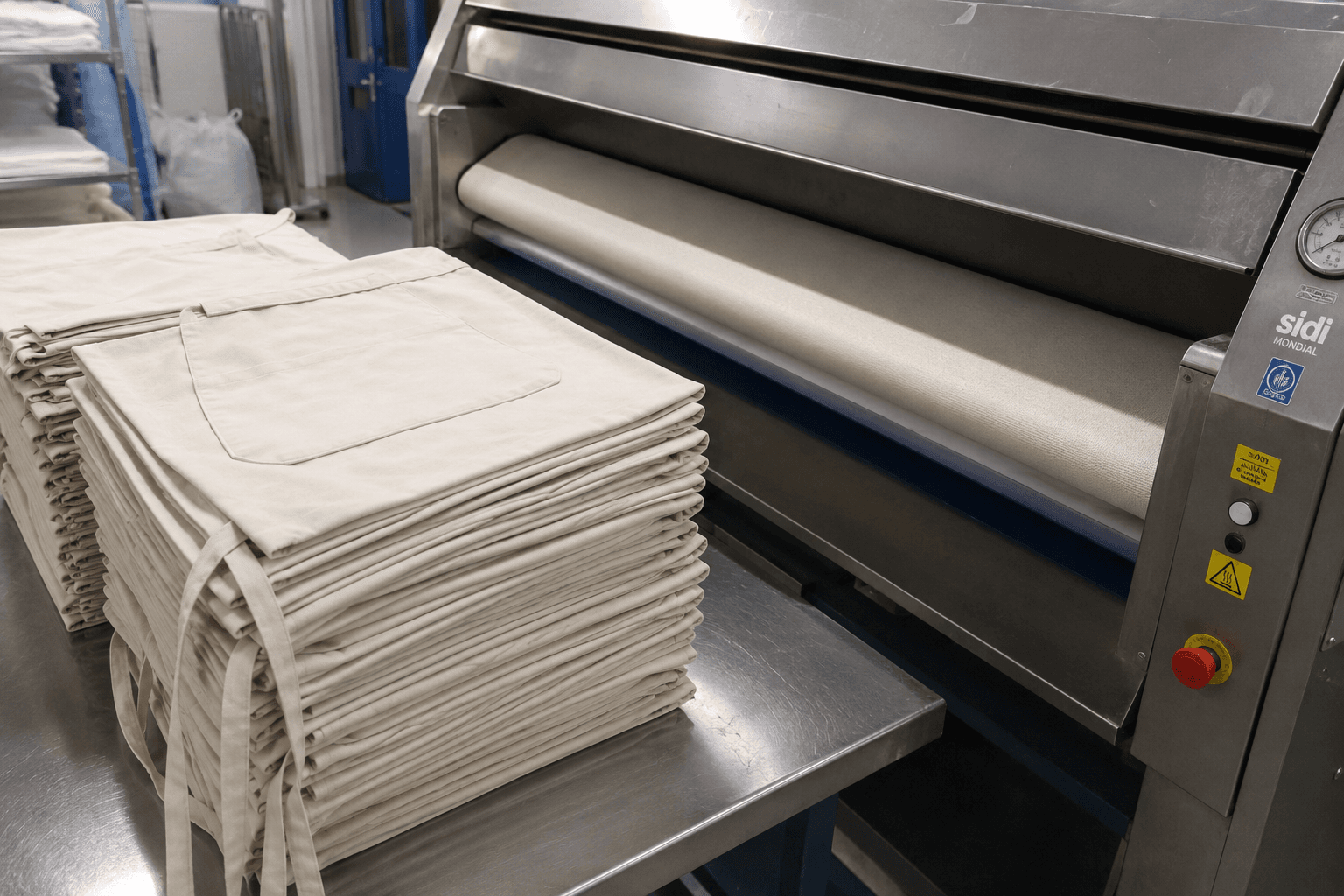
Drying is one of the most underestimated causes of odor complaints in apron programs. Many teams focus on stain removal but overlook what happens after washing: aprons come out slightly damp, are stacked while warm, or are hung too close together in a back room with weak airflow. That is enough to create musty or sour odor around seams, bartacks, pocket corners and folded tie joins. In practice, an apron that is 97-98% dry can still smell stale by the next shift even when it looks visually clean.
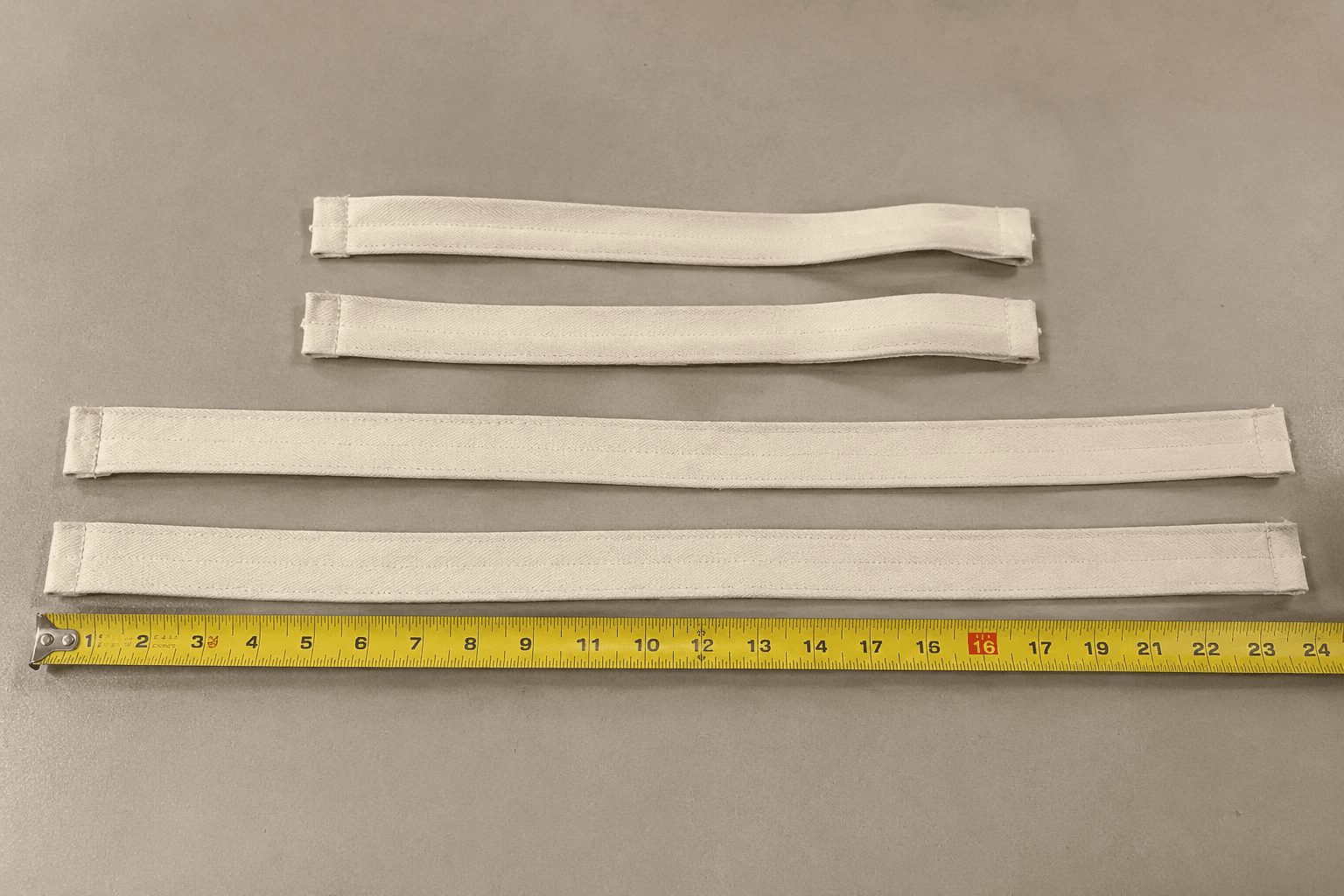
Aprons do not dry according to fiber ratio alone. Fabric weight, seam density, reinforcement patches, pocket layering and tie width all affect moisture release. A 210 GSM 65/35 twill apron with a double chest pocket, self-fabric neck strap and 3.5 cm wide waist ties may dry more slowly than a simpler 220 GSM style with fewer layers. In a commercial laundry, an extra 8-12 dryer minutes across 2,000 aprons per week changes both energy cost and machine availability. In store-level laundry, short cycles are even more common because staff need quick turnaround between lunch and dinner shifts.
From a sourcing perspective, odor control should shape apron design details. Deep folded hems, dense utility pockets, heavy decorative patches and non-breathable synthetic labels can trap moisture after washing. If the buyer needs low-heat tumble drying to protect embroidery or printed logos, the apron should be simplified so moisture can leave the garment more easily. In humid climates, line drying can work, but only if aprons are spaced properly and not compressed side by side on a rail.
- Record actual dryer minutes during apron trials; visual dryness alone is not enough.
- Let aprons vent for 10-20 minutes before folding if they leave the dryer warm.
- Review whether thick labels, PU patches or padded cross-back straps slow moisture release.
- Prefer simpler pocket construction for high-turn apron programs with daily laundering.
- If air drying is standard, specify a minimum hanging gap of 3-5 cm between aprons.
Match apron specification to kitchen, café, bakery and light-duty service use
The right apron fabric depends on contamination profile, wear frequency and laundry discipline. In quick-service kitchens, open grills, fryer lines and smoke-heavy stations, polyester-rich aprons often look acceptable at launch but become odor-sensitive faster. In those settings, a 65/35 twill around 205-215 GSM usually gives the best balance of odor release, appearance retention and manageable cost. For cafés and bakeries, the main soils are often milk fat, espresso oil, yeast and syrup residue. These create strong odor even when staining looks light, so visual cleanliness should never be the only apron approval criterion.
For light-duty hospitality roles such as reception, concierge, host stand, banquet service or retail food counters with limited direct grease exposure, 80/20 blends or even 100% polyester aprons can remain viable because odor load is lower and wrinkle resistance may rank higher. The sourcing mistake is forcing one apron fabric across all channels simply to simplify procurement. Role-specific specification usually costs less than using one low-price apron for fryer line, coffee bar and front desk alike, then managing complaints in the harshest locations.
Wear testing should compare at least two apron constructions under real use. One option can prioritize wrinkle resistance and lower FOB, while the other prioritizes odor release. Evaluate each after shift wear, after laundering and again after 24 hours of folded storage. In many sourcing programs, the extra validation cost is only $150-$300 for trial meterage, proto sewing and wash handling. That is minor compared with the cost of replacing a failed 3,000-piece apron rollout or reshipping emergency replenishment to multiple stores.
- Quick-service kitchen aprons need stronger odor-release specs than reception or event-service aprons.
- Bakery and café apron programs should test against milk, coffee oil, yeast and sugar exposure specifically.
- Dark apron shades hide stains but also hide detergent film and grease residue during visual checks.
- Coated, waxed or fashion-finish aprons are poor choices for daily high-turn foodservice use.
- Use separate apron specifications if one buyer manages both BOH and FOH channels.
What to lock with a China apron factory before bulk production
Factories can help reduce odor-retention risk only when the apron brief is specific. If the RFQ says only 'easy-care black apron,' the supplier will usually optimize for cost, shade consistency, sewing speed and basic shrinkage targets, not for odor control in fryer-heavy use. Buyers should define end use, weekly wear count, laundry route, target wash life, acceptable shrinkage, GSM tolerance, blend ratio tolerance and drying method before lab dips or bulk fabric booking. Practical written targets often include shrinkage within 3% after five washes, GSM tolerance within plus or minus 5%, and blend tolerance within plus or minus 3 percentage points depending on fabric class.
MOQ and lead time need equally realistic planning. For custom bib aprons in China, MOQ often starts at 500-1,000 pieces per color for stock-supported fabrics, then rises to 1,500-3,000 pieces for custom dyeing, branded hardware or special packaging. Development samples usually take 7-12 days. Fabric preparation often needs 18-28 days for stock shades and 25-35 days for custom-dyed fabric. Bulk sewing typically takes another 20-35 days after PP approval. If odor performance matters, buyers should reserve an extra 10-14 days for accelerated wash-and-dry testing before final bulk sign-off instead of pushing immediate cutting.
Quality control should include odor-related checkpoints beyond standard visual inspection. AQL is useful for sewing and appearance, but it does not confirm apron service performance. Buyers should ask for a wash-trial record, drying-condition note, finish description and confirmation that no heavy softener finish was added simply to improve first-touch hand feel. A slightly crisper apron on day one is often the better tradeoff if it stays neutral through 30 or more wash cycles.
- State whether the apron is home-laundered, store-laundered or sent to industrial laundry.
- Define expected weekly usage, such as 3, 5 or 7 wear days between apron washes.
- Match sample and bulk controls on GSM, blend ratio, shade and fabric handle.
- Reserve 10-14 extra days for odor-focused apron wash validation before bulk approval.
- Request final inspection at AQL 2.5 major and 4.0 minor plus buyer-specific wash-trial notes.
Cost per wear is the right commercial test for apron odor decisions
The most effective fix is rarely a premium miracle fabric. Apron odor claims usually decline when buyers align four variables: the correct blend ratio, realistic GSM, wash chemistry that matches soil load and complete drying. If a current 80/20 apron smells after laundering in fryer locations, moving to 65/35 at similar weight may work better than increasing from 200 GSM to 240 GSM. If the current blend is already balanced, the bigger gain may come from removing softener, reducing washer overloading or extending dryer time by 10 minutes.
Complaint analysis should be symptom-based. A sour smell after folded storage usually points to residual moisture or detergent carryover. A greasy smell immediately after washing points more toward weak oil-release chemistry on polyester-heavy apron fabric. A chemical smell on new goods often points to finishing residue, packing too soon after pressing or limited airing before shipment. This kind of classification helps buyers, laundries and factories correct the root cause instead of changing apron fabric unnecessarily or blaming sewing quality for a care-process problem.
For chains ordering 10,000-50,000 aprons per year, total program cost matters more than first FOB. A $0.20-$0.30 higher unit price can be justified if it reduces rewashes, lowers complaint handling, extends service life by 10-15 wash cycles and cuts emergency replenishment. That is the right procurement lens for apron odor retention polyester blend: not the cheapest invoice at booking, but the lowest cost per serviceable wear across the full apron program.
- If apron odor appears after storage, inspect residual moisture, folding timing and package compression first.
- If odor appears right after apron washing, review detergent dose, rinse count and washer loading first.
- If complaints cluster only in kitchens, reassess apron blend ratio before redesigning the whole program.
- If the apron looks clean but smells oily, suspect polyester surface retention rather than visible stain failure.
- Compare apron options by cost per wear, rewash rate and replacement timing, not FOB alone.