For sourcing managers buying acid wash aprons, the approval risk is rarely the first counter sample. A capable laundry can make one apron look faded, rugged, and commercial. The harder question is whether the same effect can be repeated in bulk while keeping bib height, strap length, pocket abrasion, handfeel, shade range, and carton presentation inside agreed limits.
Washed apron production combines fabric selection, cut-and-sew control, garment laundry, wastewater handling, drying, shade sorting, pressing, and final inspection. A 260 GSM cotton twill cafe apron, a 340 GSM denim bar apron, and a 380 GSM pigment-overdyed canvas apron may all be sold as vintage wash aprons, but they need different wash recipes, tolerances, MOQ, lead times, and price assumptions.
This guide explains how Linwa evaluates acid wash aprons and overdyed apron fabric for OEM production. It focuses on buyer decisions: fabric weight, acceptable visual range, sampling sequence, AQL use, MOQ bands, lead-time planning, and the trade-off between strong vintage contrast and stable commercial bulk quality.
- Acid wash aprons need range approval, not one perfect golden sample, because washer loading, fabric lot, oxidation, abrasion, and garment position create controlled variation.
- Most washed apron fabrics sit between 240 and 390 GSM; lighter twills reduce cost and drying time, while heavier canvas or denim gives a stronger workwear look but increases seam abrasion risk.
- Garment overdye gives softer vintage depth than high-contrast acid wash, but it raises crocking, shade sorting, and trim-staining risk.
- Commercial MOQ is usually 300 to 1,000 pieces per color, depending on wash complexity, fabric availability, shade sorting, and laundry setup cost.
- Washed apron lead time usually adds 5 to 12 production days versus unwashed aprons because of laundry processing, drying, re-pressing, QC sorting, and rework.
- AQL should cover construction defects, while approved range samples should control wash appearance; buyers should not use one standard for both.
What acid wash aprons must control in bulk production
In buyer language, acid wash aprons usually means aprons with irregular fading, highlighted seams, and a worn-in vintage surface. In factory language, the route may involve enzyme wash, stone wash, bleach discharge, potassium permanganate spray, pigment wash, garment overdye, or a two-step recipe. The commercial term "acid wash" does not always describe the chemistry, so the tech pack should define the target appearance, reject areas, and approved shade range, not only the finish name.
Aprons behave differently from jeans or jackets in a laundry machine. The large flat bib and front panel expose patchy fading more clearly. Pocket openings, bartacks, hems, tie attachments, and folded seams receive more abrasion than the main panel. A bright worn mark on a denim leg may be acceptable; the same mark across the center of a cafe apron bib may look like a stain, oil mark, or cutting defect.
A practical bulk standard should define shade range, contrast level, shrinkage allowance, handfeel, and unacceptable mark placement. For example, a medium vintage wash may allow visible fading from 1 meter, stronger highlights on pocket edges, and moderate panel variation, while rejecting harsh white blotches larger than 3 cm on the center bib, logo zone, or main front panel. This gives the buyer, factory, laundry, and inspector the same decision language.
- Low-contrast wash: base color remains dominant, with about 10-25% visible fading on seams, hems, and raised areas.
- Medium vintage wash: fading is visible from 1 meter, with controlled irregularity across the bib and pocket zones.
- High-contrast acid wash: strong light-dark patterning is intentional, but the buyer should accept wider shade range, more sorting, and a higher downgrade allowance.
- Overdyed wash: the apron is faded or washed first, then dyed again to create a softer layered tone with less sharp contrast.
- Reject area: large pale marks, chemical spots, or abrasion breaks on the central bib, logo zone, or main front panel unless specifically approved.
Fabric choices for acid wash aprons by GSM and use case
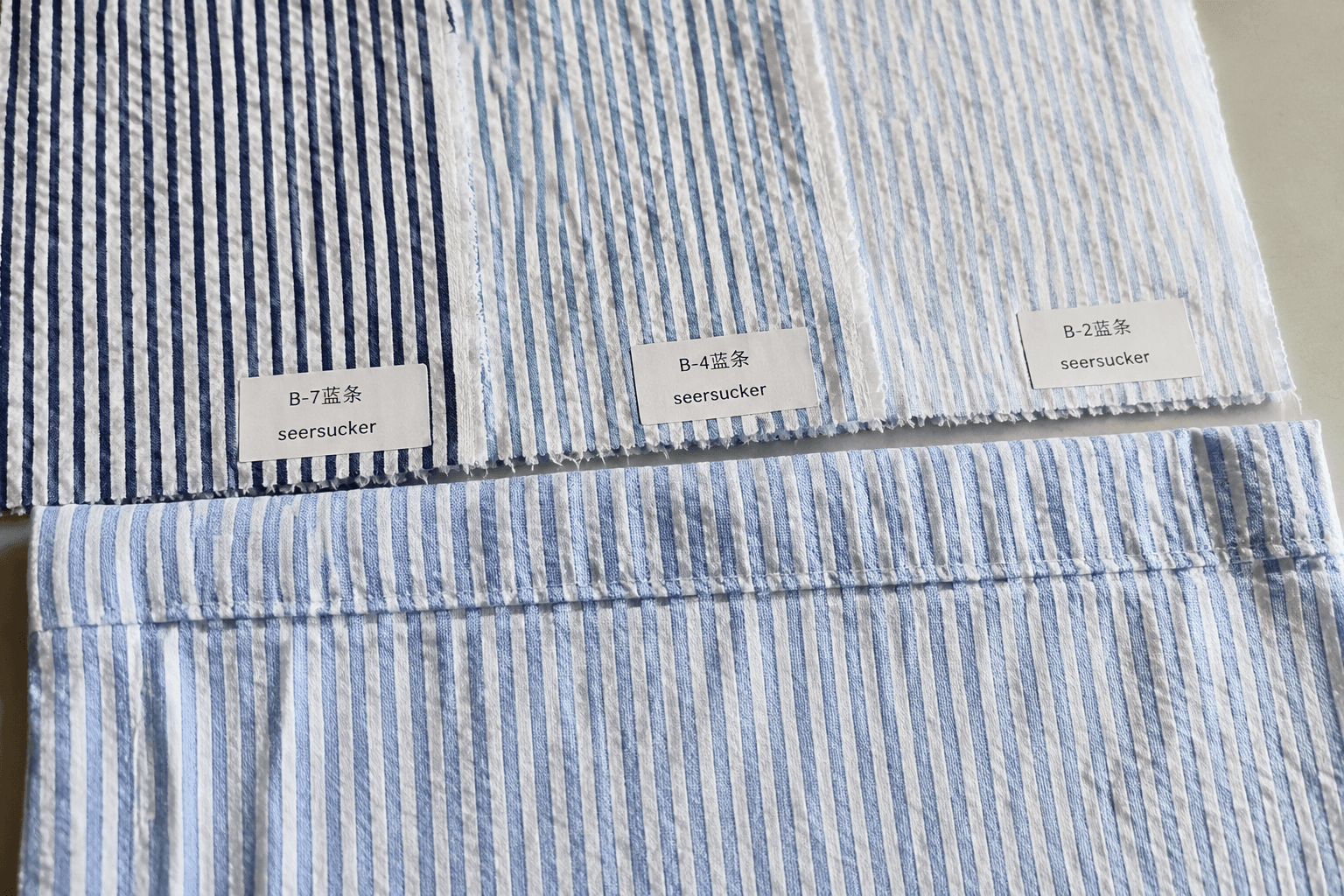
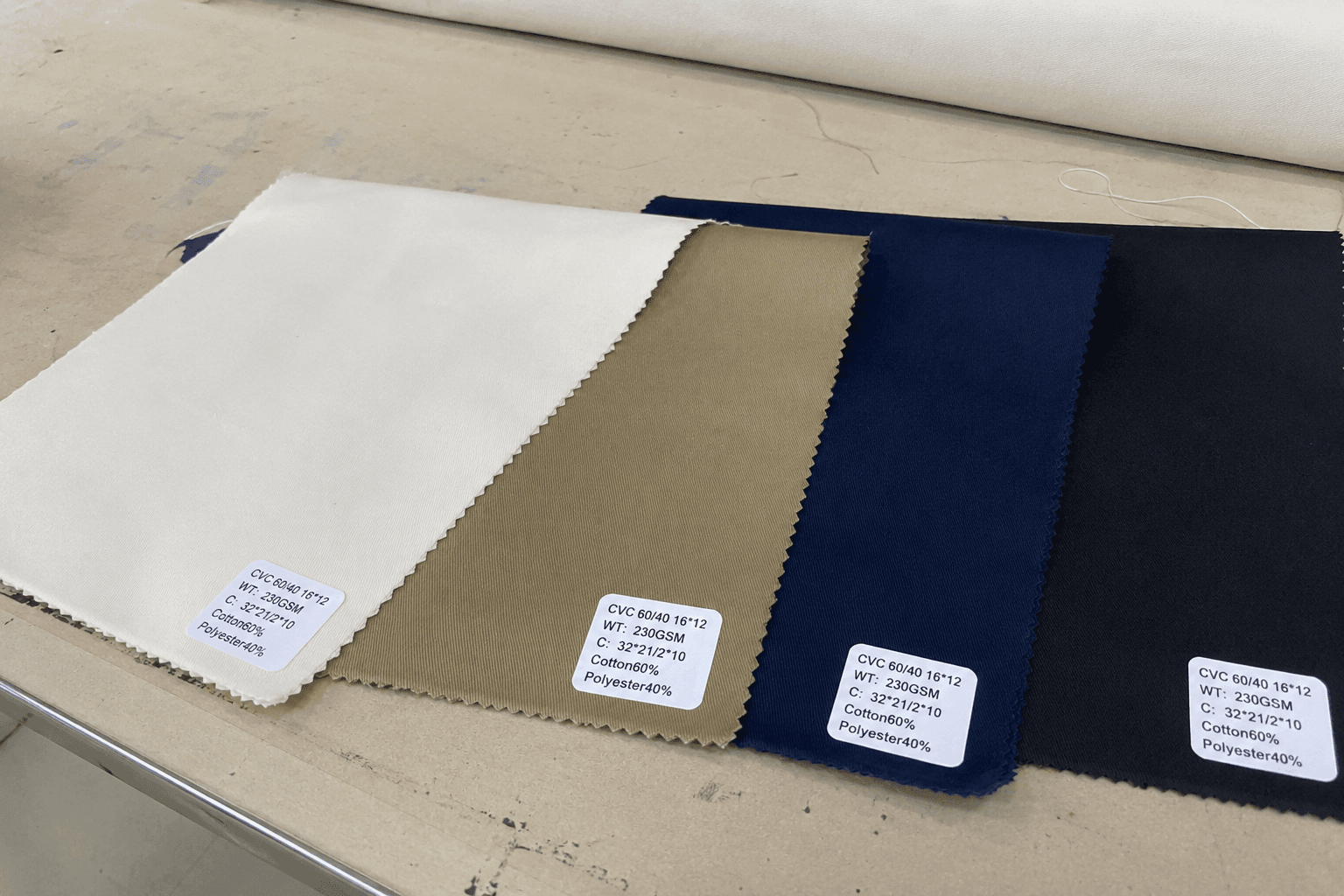
Fabric choice decides whether the finish looks intentional, weak, or damaged. Cotton-rich fabrics are the safest base for most acid wash aprons because cotton reacts predictably to enzyme, bleach, pigment, and overdye processes. Common OEM ranges are 240-320 GSM cotton twill, 280-390 GSM cotton canvas, and 260-360 GSM denim. Poly-cotton can be used for lower shrinkage and faster drying, but polyester does not discharge like cotton, so the surface often looks flatter and less naturally aged.
For coffee shops, bakeries, and casual dining uniforms, 260-300 GSM cotton twill is often the balanced option. It holds shape after washing, remains comfortable for long shifts, and keeps carton and freight weight reasonable. For bars, barbers, BBQ restaurants, workshops, and retail workwear aprons, 320-390 GSM canvas or denim gives stronger structure and a more rugged surface, but it also adds drying time, needle stress, seam-edge abrasion risk, and packed weight.
Overdyed apron fabric requires an early decision: piece dye before sewing or garment overdye after sewing. Piece-dyed fabric gives better shade consistency and a simpler production flow. Garment overdye gives richer seam depth because thread, folds, pocket layers, and straps absorb color differently. That look is often more premium for boutique uniforms, but it can tint cotton labels, natural tapes, leather patches, and contrast stitching unless trims are tested before bulk.
- 240-260 GSM cotton twill: suitable for light cafe aprons, promotional washed aprons, and lower freight-weight targets.
- 280-320 GSM twill or canvas: common range for hospitality aprons that need structure without excessive stiffness.
- 330-390 GSM canvas or denim: suitable for rugged workwear aprons, with extra control needed at folded seams and strap anchors.
- Below 65% cotton content: usually poor for high-contrast acid wash because the polyester portion resists color removal.
- Dark reactive-dyed bases such as black, charcoal, navy, olive, and brown normally create stronger vintage contrast than pale bases.
Acid wash aprons versus overdyed aprons: buyer trade-offs
Buyers often use several finish terms in one brief: acid wash, stone wash, pigment wash, enzyme wash, dirty wash, snow wash, garment dye, and overdye. Before sampling, the sourcing team should choose the commercial route based on the desired look, acceptable variation, colorfastness requirement, and target price. This is a buyer decision before it becomes a laundry recipe.
Choose acid wash aprons when the brand wants visible vintage contrast and accepts that no two pieces will be identical. Choose overdyed apron fabric or garment overdye when the brand wants muted depth, aged seams, and softer tonal variation without aggressive white marks. Choose enzyme wash when the main purpose is softer handfeel and mild edge fading. Choose pigment wash when the buyer wants a dusty casual surface, while accepting higher dry-rubbing risk unless the finish is fixed carefully.
Cost bands should be discussed before sample approval. On 1,000-3,000 pieces, a simple enzyme wash may add about US$0.25-0.45 per apron. A medium acid wash may add US$0.45-0.90. Garment overdye may add US$0.60-1.20 because it includes dyeing, washing-off, fixing, softening, drying, and shade sorting. These are planning ranges, not fixed offers. Actual price depends on apron weight, fabric dye class, color depth, water treatment requirements, rework rate, and agreed inspection level.
- Strongest retail vintage effect: acid wash, with wider shade tolerance and a typical 2-5% downgrade allowance for medium effects.
- Most muted premium uniform effect: garment overdye, with stronger control on rubbing fastness and trim staining.
- Lowest visual-risk softening route: enzyme wash, with mild fading, lower variation, and shorter development time.
- Dusty casual surface color: pigment wash, with buyer approval of dry and wet crocking levels before bulk.
- Best shade consistency: piece-dyed overdyed fabric, with less authentic garment-level variation than garment overdye.
Construction details that change the apron wash result
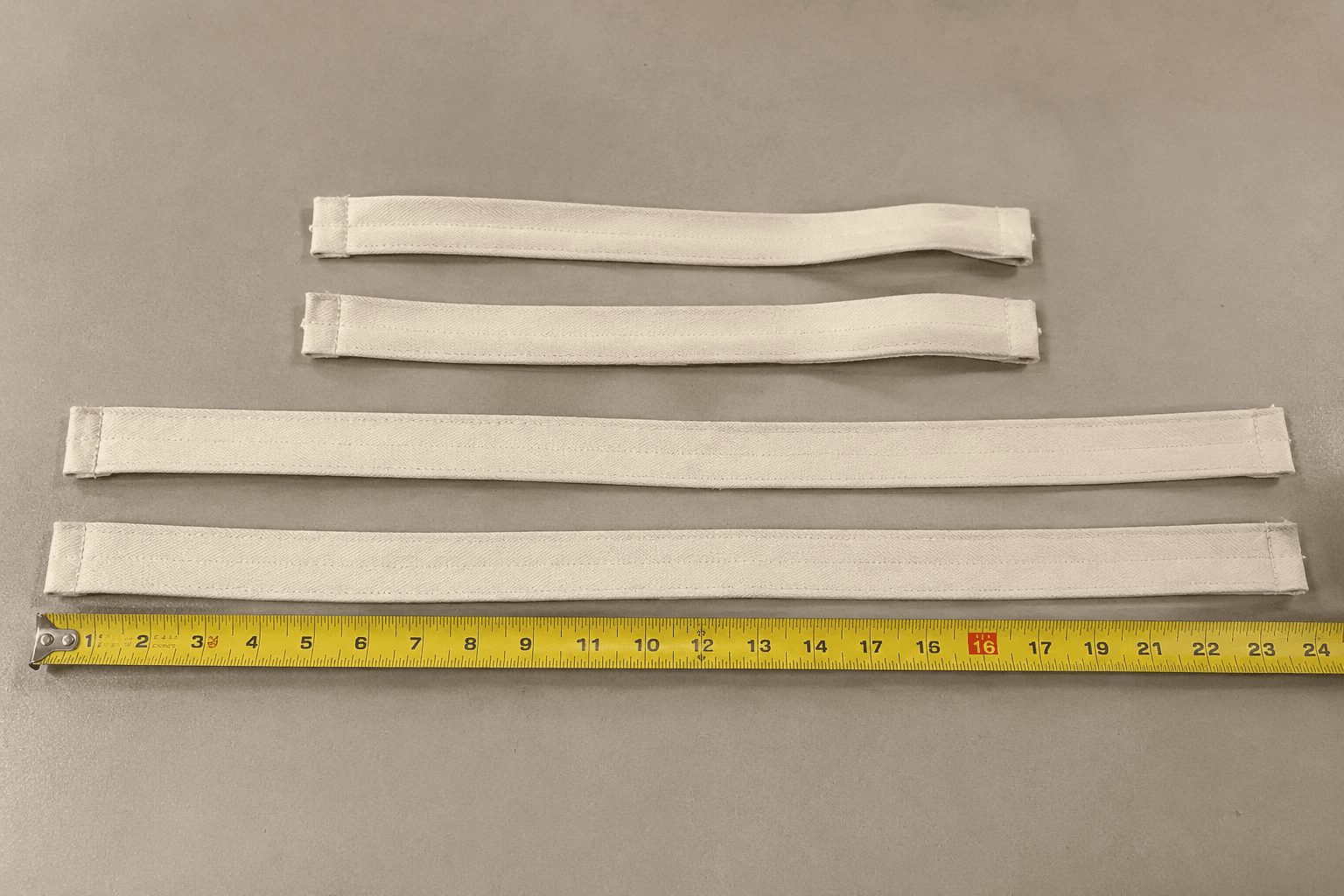
Apron construction affects garment wash variation as much as fabric does. Large panels, narrow waist ties, detachable neck straps, layered pockets, reinforced corners, and metal hardware all move differently in the washer. Pocket openings and folded hems usually fade faster because they receive more mechanical action. Tie straps can twist, rope, or shorten if the fabric is loose, narrow, or cut without enough allowance.
Thread must be specified early. Polyester core-spun thread keeps strength and normally retains more original color through discharge, creating visible contrast stitching. Cotton thread fades more like the body fabric and can give a softer vintage look, but it may lose strength under aggressive bleach conditions. For most OEM apron orders, polyester core-spun thread is the safer construction choice; the visual effect can be adjusted by thread color.
Trims and labels are frequent sources of bulk failure. Cotton labels may shrink or overdye. Polyester labels may remain too bright against a faded apron body. Leather patches can bleed, harden, or stain surrounding fabric if washed after attachment. Metal eyelets, rivets, D-rings, and buckles can mark the fabric during tumbling if plating is weak or the load is too aggressive. For custom washed aprons, trim testing should happen during wash-panel development, not after salesman sample approval.
- Specify whether neck straps and waist ties should match the body wash or stay darker for contrast.
- Confirm whether pocket edges may show stronger fading than the main front panel.
- Test leather, PU, rubber, cork, and paper patches before garment wash; do not assume standard trims are laundry-safe.
- Use rust-resistant metal trims and check for staining after wash, tumble dry, steam pressing, and packed storage.
- Reinforce pocket corners and tie attachments when using heavy canvas, high-contrast wash, or abrasive stone wash.
Sampling sequence for acid wash aprons before bulk approval
A reliable development path separates fabric approval, construction approval, and wash approval. A finished sample made from substitute fabric may show direction, but it should not become the final bulk standard. Yarn count, fabric density, dye class, resin finish, and moisture content all change how the wash develops. The pre-production sample should use actual bulk fabric, bulk trims, confirmed thread, and the confirmed laundry route.
For new acid wash aprons, Linwa normally recommends wash panels first, then a prototype apron, then a salesman sample, then a pre-production sample if the order is placed. Wash panels are faster and cheaper than fully sewn apron trials, and they help the buyer compare low, medium, and high effect levels before construction details complicate the result. For repeat orders using the same mill, dye standard, pattern, and recipe, the process can be shortened, but range samples should still be kept on file.
MOQ depends on process complexity. A simple enzyme wash may be workable at 300-500 pieces per color. Pigment wash or garment overdye is usually more practical at 500-800 pieces per color. Complex acid wash with shade sorting, machine trials, and rework planning is usually more efficient from 800-1,000 pieces per color. Smaller orders can be produced, but unit cost rises because machine setup, chemical preparation, laundry handling, and QC sorting are spread over fewer aprons.
- Day 1-3: confirm reference photos, apron pattern, fabric GSM, base color, trim list, and wash direction.
- Day 4-8: make wash panels on available fabric to compare low, medium, and high effect levels.
- Day 9-15: sew prototype or salesman sample and apply the selected wash route.
- Day 16-22: adjust pattern for shrinkage, confirm trims, and prepare pre-production sample using bulk materials.
- Day 23-30: lock bulk fabric, cutting plan, laundry recipe, shade range, and inspection standard before mass sewing.
- Bulk lead time: usually 35-55 days after deposit and approvals for 1,000-10,000 pieces, depending on fabric status and wash complexity.
Bulk QC, AQL, cost, and lead time for washed aprons
Washed apron QC should separate construction defects from visual wash variation. AQL 2.5 for major defects and AQL 4.0 for minor defects is a common inspection framework for sewing, measurement, stains, broken stitches, missing bartacks, defective hardware, and packing errors. Wash appearance should be judged against approved range samples because an AQL checklist alone cannot decide whether a vintage effect is commercially acceptable.
Key tests include dimensional stability, dry and wet rubbing, seam abrasion, odor, trim staining, and shade sorting. Cotton twill and canvas can shrink 3-8% after aggressive garment wash if the pattern is not adjusted. A bib height of 84 cm before wash may finish at 80-82 cm. Finished tolerance is often set at +/-1 cm for small panels and +/-2 cm for full body length or width, but heavy washed canvas may require a wider tolerance if the buyer prioritizes a strong vintage finish.
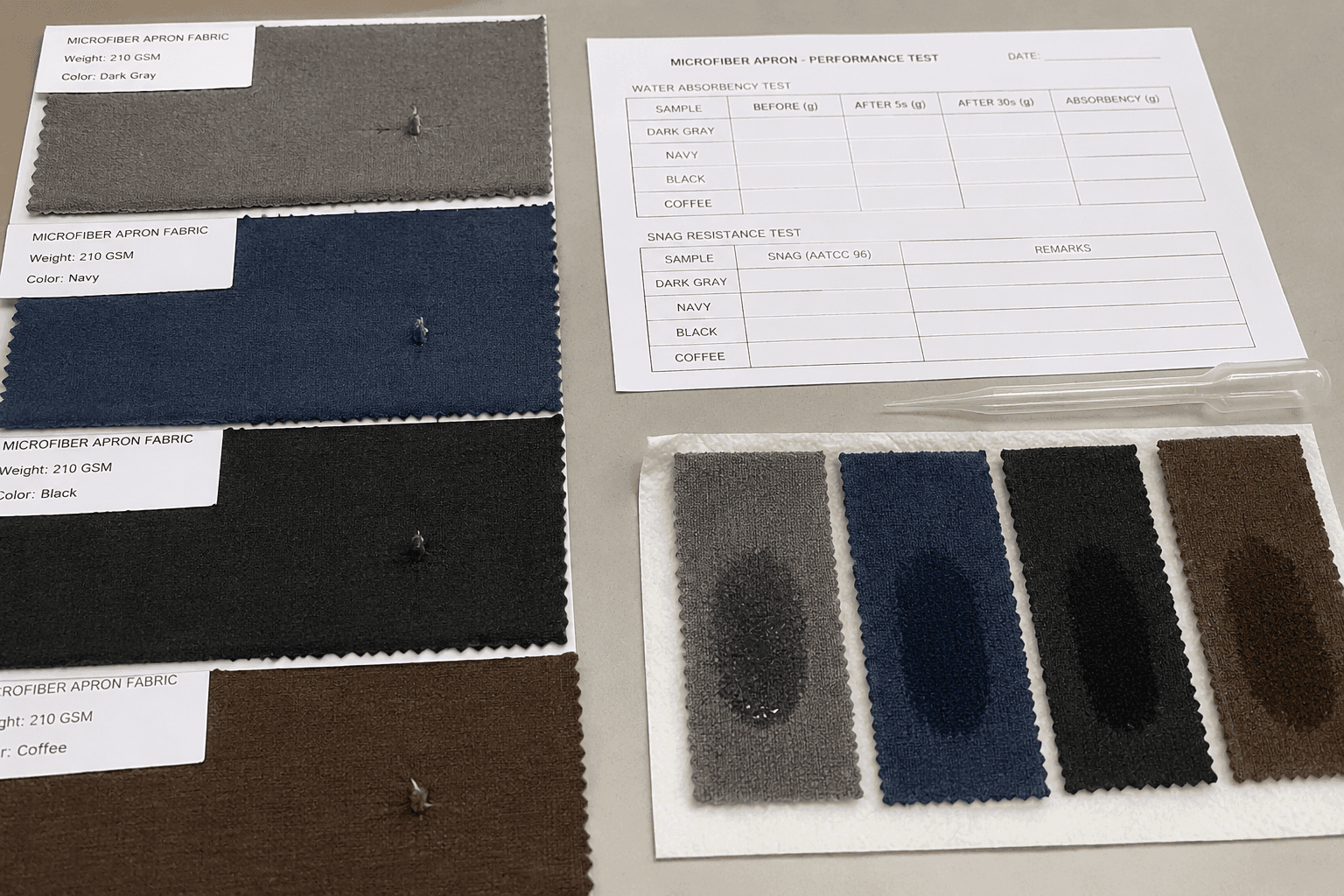
Crocking risk is highest with pigment wash, black overdye, navy overdye, charcoal, olive, and brown garment dye effects. A sample may look correct but still transfer color to a white shirt during wear. If the buyer requires stronger rubbing performance, the factory may need a less dusty pigment layer, stronger fixing agent, longer washing-off, or a softer contrast target. These choices can change appearance and handfeel, so colorfastness requirements should be fixed before sampling.
Cost planning should include base apron cost, wash process, loss allowance, rework, shade sorting, pressing, and final inspection after wash. As a working reference, a basic unwashed 280 GSM cotton apron may quote around US$2.20-3.20 per piece in mid-volume OEM production. A medium washed version may move to US$2.80-4.20. A heavier 320-360 GSM canvas apron with metal hardware, multiple pockets, and controlled acid wash may reach US$4.50-7.50 or more. For 5,000 pieces, a realistic production plan is often 45-60 days after deposit and approved pre-production sample.
- Use AQL 2.5 major and AQL 4.0 minor for construction and packing defects unless the buyer requires a stricter plan.
- Use approved light, standard, and dark range samples for visual wash judgment.
- Inspect after washing and before final packing; pressing can temporarily hide shade or handfeel problems.
- Plan 5-12 extra production days versus unwashed aprons for washing, drying, sorting, re-pressing, and re-inspection.
- Allow a realistic downgrade or rework reserve, commonly 2-5% for medium vintage wash and higher for strong acid wash.
- Confirm packed moisture control because washed cotton aprons packed too early can develop odor, mildew, or carton staining during ocean freight.