A winery apron is not a generic service apron with a logo on it. In vineyard work, cellar handling, tasting room service, and bottling support, the garment has to manage juice, tartrate dust, soil, cork residue, label adhesive, and repeated wash cycles without looking tired after a few weeks. Buyers often start with style, but the real sourcing decision is fabric performance, trim durability, and fit under real working conditions.
For bulk programs, the same apron may need to serve different roles across the wine operation. A vineyard apron used during pruning or harvest needs abrasion resistance and movement. A cellar apron has to tolerate damp conditions, splashes, and frequent laundering. A wine tasting apron needs a cleaner drape and a better front presentation, but it still must hold pens, openers, towels, and order pads. The best programs separate these use cases instead of forcing one spec to do everything poorly.
From a factory point of view, the winning specification is usually a stain tolerant apron in 10 oz to 14 oz canvas or heavy twill, with reinforced stress points, a crossback or adjustable neck that reduces fatigue, and a controlled finishing process that keeps shrinkage within 3% to 5% after wash. That is the level of detail sourcing managers need when comparing samples and negotiating MOQs.
- Fabric choice drives total cost: a 10 oz canvas saves budget, while 12 oz to 14 oz options improve durability and appearance retention.
- Crossback fit reduces neck strain and is usually the better default for cellar and vineyard roles with 8 to 12 hour wear time.
- Stain tolerance is a system, not a finish: fiber blend, weave density, dye method, and wash behavior all matter together.
- Pocket layout should match the job; tasting room aprons need cleaner fronts, while production aprons need deeper utility pockets and tool loops.
- Reinforcement at stress points pays back quickly because pocket tearing and strap failure are the main warranty issues in bulk programs.
- Lead time depends on customization depth; simple stock-fabric runs can ship in 20 to 30 days, while dyed-to-match programs often need 35 to 50 days.
What a winery apron has to do in real use
The first sourcing mistake is treating all wine industry aprons as if they face the same environment. In practice, a winery apron in the cellar sees a different set of problems than a vineyard apron in the field or a wine tasting apron on the hospitality side. Vine juice and red wine are obvious stain risks, but the less visible issues are wet rope stains, dust from barrels, chalk, label glue, and the repeated abrasion caused by leaning against counters and pallets.
For this reason, the garment must be defined by use case before fabric selection. A cellar apron often needs a larger coverage zone from chest to knee, because splashes are frequent during racking, cleaning, and sample handling. A vineyard apron may prioritize shorter length, easier movement, and more resistance to dirt at the lower hem. A tasting apron needs better front presentation, smoother surface texture, and lower bulk so staff can work all day without looking overloaded.
Buyers should also think beyond first wash. If the apron is for a premium wine brand or hospitality chain, the fabric has to hold color after 30 to 50 industrial wash cycles. If it is for harvest season and high turnover labor, the acceptable target may be lower, but the cost must reflect that. The right supplier will ask about role, wash frequency, and expected replacement cycle before quoting.
- Vineyard work: dust, abrasion, movement, and outdoor soil exposure.
- Cellar work: splash resistance, damp handling, and tool access.
- Tasting room use: presentation, comfort, and clean front appearance.
- Packaging support: label, ink, and adhesive transfer resistance.
Winery apron fabric choices: canvas, twill, denim, and blends
Fabric is the main performance decision. In the winery apron category, the most common options are cotton canvas, cotton twill, denim, and poly-cotton blends. Each has a different balance of hand feel, wash behavior, and stain visibility. For bulk sourcing, the practical range is usually 10 oz to 14 oz for canvas and denim-style constructions, or 240 to 320 gsm for twill-based builds. Below that, the apron often feels too light for commercial wine work; above that, it can become stiff and warm, especially in summer harvest conditions.
A 10 oz canvas apron is a common entry point for cost-sensitive programs. It usually works well for tasting room use and lighter cellar tasks. A 12 oz canvas or heavy twill gives a better premium feel and tends to hang better on the body, which matters when the apron carries embroidered logos or leather trims. A 14 oz denim or canvas can be durable, but it is not always the best choice if staff need to bend, lift, and move constantly. Buyers should test drape and mobility, not just abrasion resistance.
For stain tolerance, dark earth tones, charcoal, navy, wine brown, and black remain the most practical colors. They hide incidental marks better than light khaki or natural beige. That said, a dark fabric does not automatically mean stain tolerant apron performance. Red wine can still leave visible halo marks on poorly dyed fabric, especially when the dye has low fastness or the surface weave is too open. If the apron is for a branded winery store or tasting room, insist on a wash fastness target of grade 3 or above for color retention, and check whether the supplier uses reactive dye for cotton or piece dye for blended fabrics.
- 10 oz canvas: suitable for lower-cost tasting room programs and short daily wear.
- 12 oz canvas or twill: the best all-around balance for durability and appearance.
- 14 oz denim or heavy canvas: stronger, but heavier and less forgiving in warm weather.
- Poly-cotton blends: better wrinkle control, often easier on laundering, but less natural hand feel.
Stain tolerant apron construction for wine operations
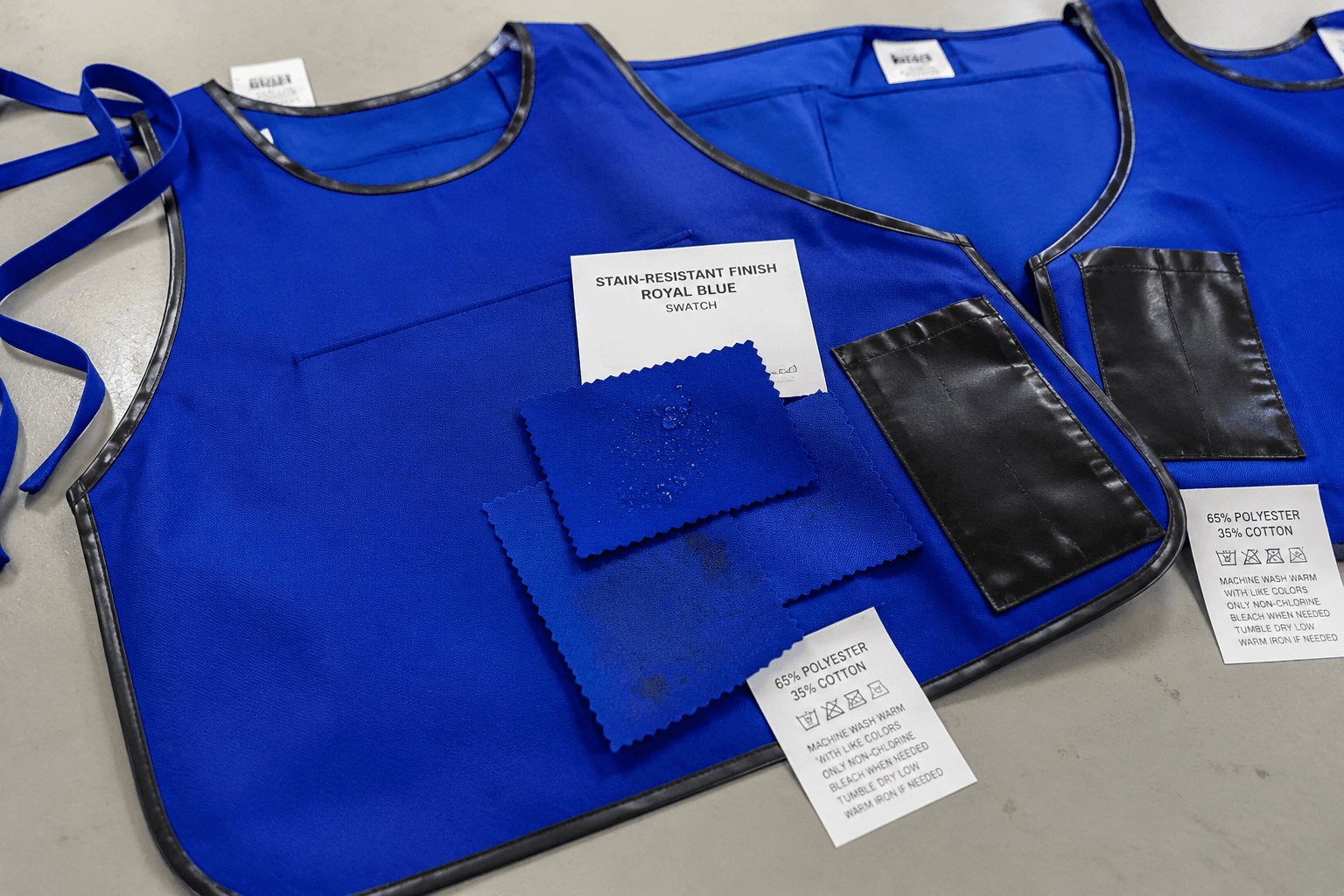
A stain tolerant apron is built by combining fabric selection, yarn density, dye quality, and finishing. In wine use, there is no magic coating that solves everything. Fluorine-based repellents can help with splash resistance, but they are not always suitable for all buyer compliance requirements, and they can change hand feel. In many OEM programs, the better answer is a tight weave, deeper color, tighter stitch construction, and a wash process that minimizes surface fuzz and bleeding.
For stain management, surface structure matters. Loose weave fabrics absorb liquid quickly and can make wine marks set deeper into the cloth. A tighter weave in canvas or twill slows absorption and gives staff more time to wipe down spills. This is especially important in a cellar apron where splashes are frequent and cleaning happens on the move. If the apron needs to survive repeated industrial laundering, ask the factory for pre-shrunk fabric, enzyme wash if appropriate, and a clear shrinkage target. Most commercial buyers should demand less than 5% shrinkage after the first wash, and ideally closer to 3%.
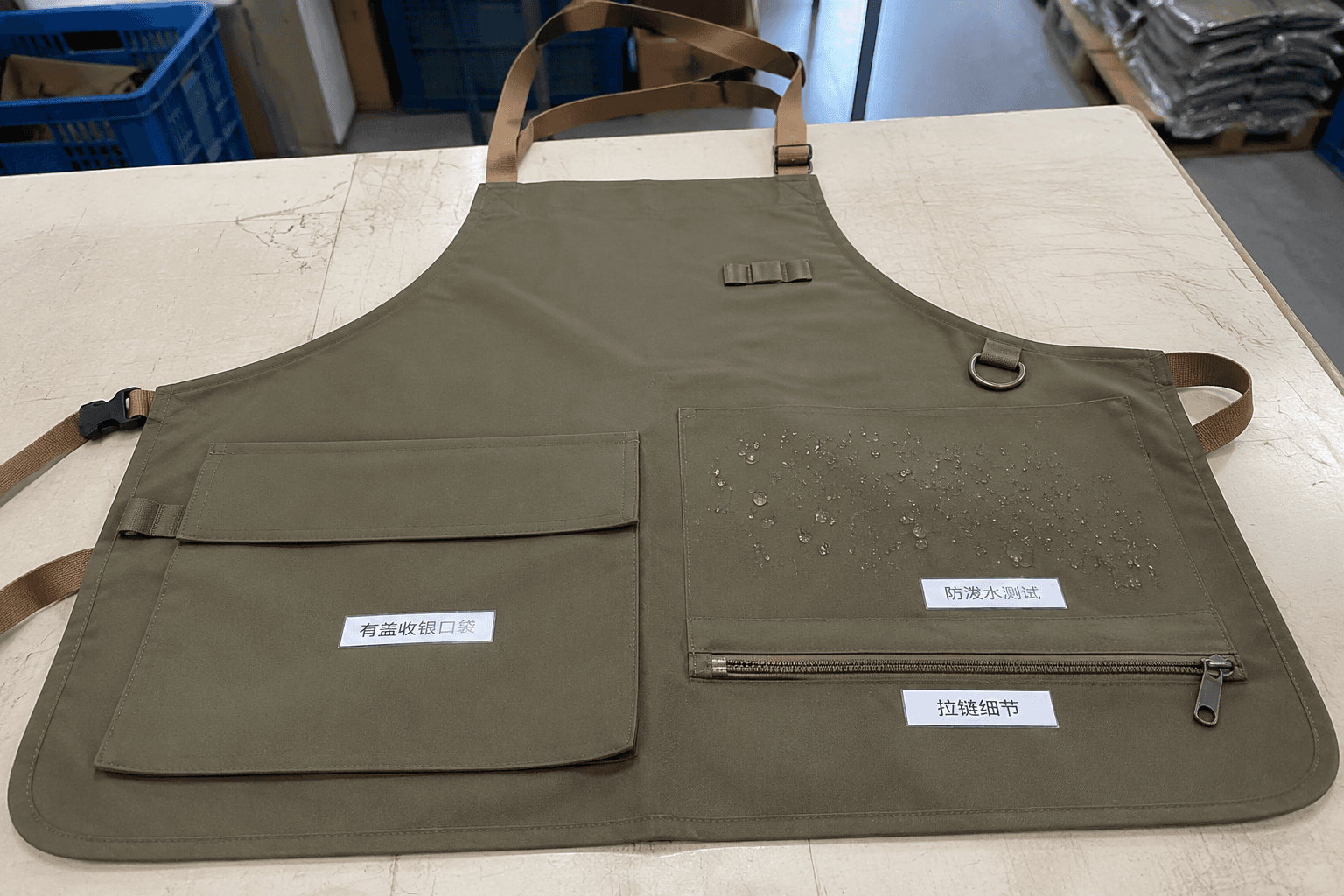
Construction details also influence how long the apron looks acceptable. Contrast stitching can create a premium look, but it should be placed where stains are less visible and thread degradation is less likely. Bar tacks at pocket corners, bartacks at strap anchors, and edge binding on the bottom hem reduce failure. If the apron includes leather or PU accents, make sure the trim can tolerate detergent and high-heat drying. Leather can look attractive in a wine tasting apron, but if the cleaning protocol is aggressive, it can become the first failure point.
- Prioritize tighter weave density over overly aggressive surface coatings.
- Specify pre-shrunk fabric and verify wash shrinkage after 3 and 5 cycles.
- Use bar tacks or rivets at pocket stress points where tools are loaded.
- Avoid fragile trims if the apron will go through industrial tunnel washers.
Winery apron fit: crossback, neck loop, and day-long comfort
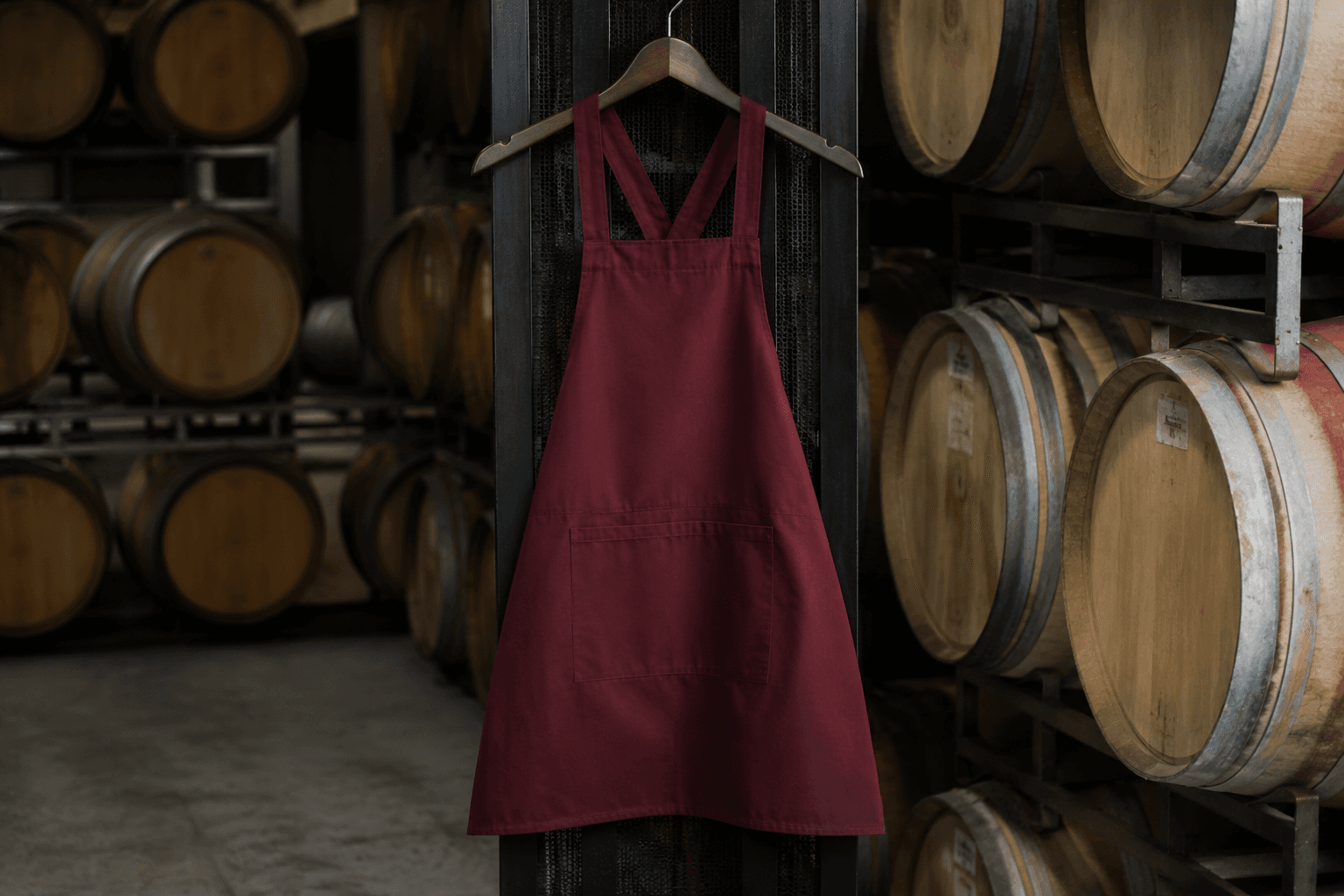
Fit is where many custom apron programs fail. A neck loop apron may look traditional, but for winery staff who wear the garment for 8 to 12 hours, pressure on the neck becomes a real issue. Crossback construction is usually the better default because it spreads load across the shoulders and upper back. For cellar teams who bend and lift repeatedly, the difference is not cosmetic. It affects fatigue, posture, and whether the staff actually wears the apron correctly throughout the shift.
A crossback winery apron works especially well when paired with adjustable straps. Fixed-size crossback patterns are cheaper, but they create sizing risk in mixed teams. If your buyer model includes both men and women, or a range of body types, adjustability is worth the added cost. In bulk production, the incremental cost is often small relative to the reduction in returns and complaints. If the apron includes a waist tie, the tie length should be long enough for layering over sweaters or jackets, especially in cold storage or barrel rooms.
The cut also affects the final user experience. A straight rectangular apron is efficient, but a slight taper at the waist improves movement and keeps the fabric from bunching. For tasting room use, a more tailored silhouette often looks cleaner. For vineyard apron use, a broader hem can help cover clothing while allowing stride movement. A supplier should be able to prototype both body shapes before final approval, because the same fabric can behave very differently in a fitted versus relaxed pattern.
- Crossback: best for reduced neck strain and longer wear comfort.
- Adjustable shoulder system: recommended when the team size range is wide.
- Long waist ties: important for layered cold-weather uniforms.
- Tapered body shape: useful when the apron must look neat in customer-facing roles.
Pocket design, branding, and functional details
Pocket layout should be decided by workflow, not by decoration. In a cellar apron, staff may need space for a marker, thermometer, tasting notebook, gloves, bottle opener, or microfiber cloth. In a tasting room, the front pockets should be flatter and cleaner so the apron does not look bulky when paired with a branded shirt. For vineyard work, deep lower pockets can become traps for dirt and clippings, so some buyers choose simpler utility placement or even reduced pocket depth to keep the front easier to clean.
Branding also needs practical judgment. Embroidery is usually more durable than heat transfer for a winery apron that gets washed often, especially when the logo is small to medium size. Large embroidery can stiffen the fabric and reduce comfort, so it should be placed where the apron hangs naturally, not where it folds repeatedly. If the brand wants a premium retail appearance, a woven label, leather patch, or subtle top-stitch accent can create value without making the apron harder to launder.
Color blocking is another useful tool. A darker body with slightly lighter straps can hide dirt on high-contact zones while keeping the overall look professional. For wine tasting apron programs, buyers often prefer muted colors rather than bright contrast panels. The goal is not fashion drama. It is a garment that still looks acceptable after 20 service shifts and a normal wash cycle.
- Cellar apron pockets: deeper and more utility-driven.
- Tasting room pockets: flatter and cleaner in appearance.
- Embroidery: preferred for wash durability on frequent-use programs.
- Leather or PU patches: acceptable when laundering conditions are controlled.
MOQ, pricing, and lead times for custom winery apron programs
For sourcing teams, the commercial structure matters as much as the product spec. A basic custom winery apron in stock fabric, with one-color embroidery or print, often starts around 300 to 500 pcs per color/style at the factory level. More complex programs with custom dyeing, heavy hardware, crossback hardware adjustment, or special packaging may require 1,000 pcs or more to keep pricing efficient. If the buyer needs several sizes or multiple roles, it is usually better to standardize one core pattern and vary only the accessories or branding.
Indicative factory pricing for a standard 10 oz to 12 oz canvas apron can range from about $3.20 to $6.80 per pc EXW depending on fabric, strap system, pocket count, and branding method. A premium 12 oz to 14 oz crossback version with reinforced hardware, contrast stitching, and embroidery may move into the $6.50 to $11.00 range. Retail-grade presentation packaging, woven labels, and specialty wash effects can push cost higher. Buyers should compare not just piece price but landed cost after freight, inspection, and expected replacement rate.
Lead time depends mainly on fabric availability and customization depth. If the fabric is in stock and the artwork is final, a typical production window is 20 to 30 days after sample approval. If the program uses custom-dyed fabric, special trims, or multiple revisions, 35 to 50 days is more realistic. Sampling usually takes 5 to 10 days for a first proto and another 3 to 7 days for comments and corrections. For seasonal winery programs tied to harvest or tourism peaks, suppliers should be booked early because one delayed approval can compress the entire schedule.
- Simple stock-fabric program: 300 to 500 pcs MOQ, 20 to 30 days production.
- Custom-dyed or hardware-heavy program: 1,000 pcs or more, 35 to 50 days production.
- Typical factory pricing: about $3.20 to $6.80 per pc for basic builds.
- Premium crossback builds: often $6.50 to $11.00 per pc depending on trim and branding.
How to specify and inspect a winery apron order
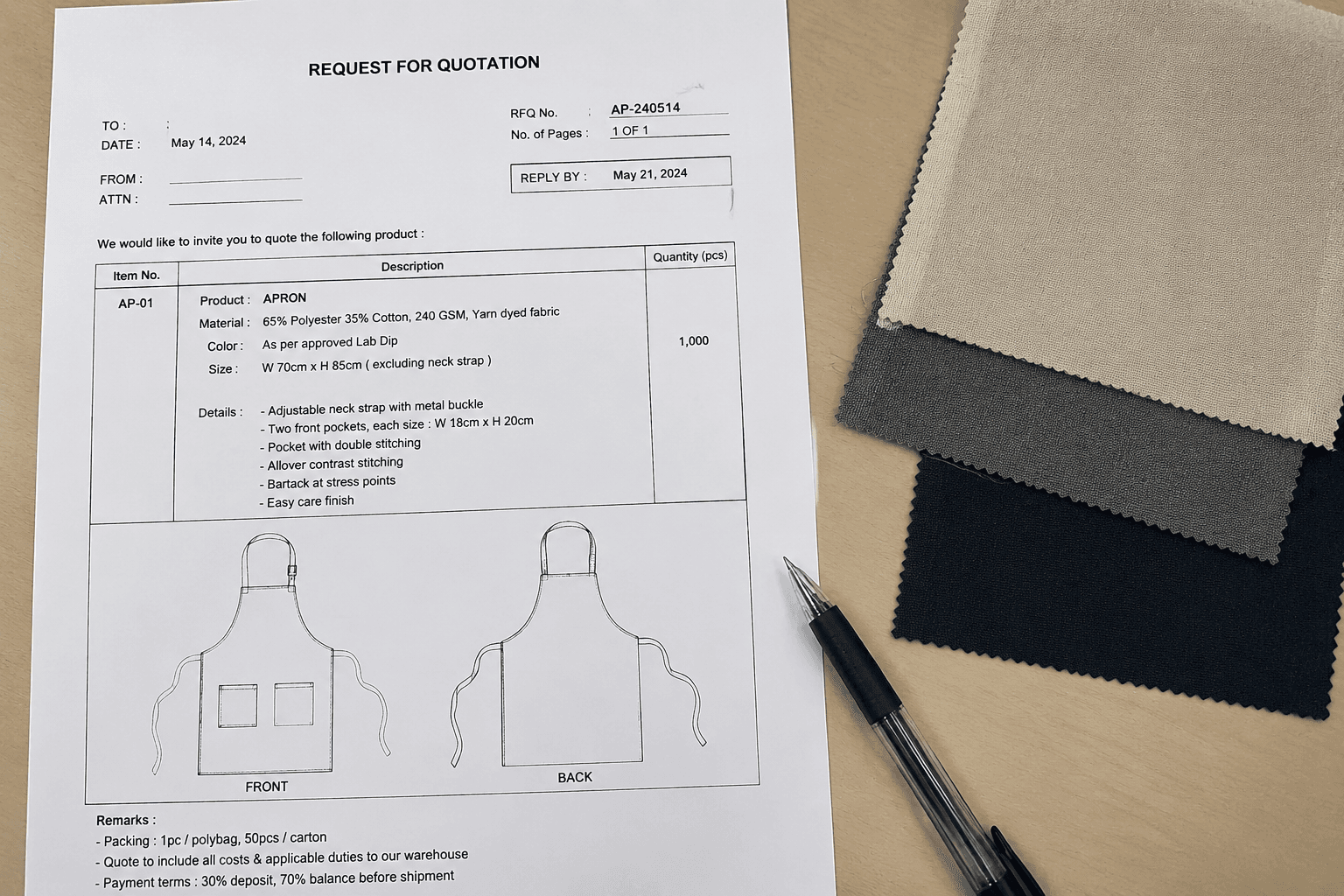
A clean tech pack prevents most quality disputes. The buyer should define exact body dimensions, strap length, pocket size, seam allowance, stitching density, logo placement, and wash performance targets. If the apron is intended for both cellar and tasting use, it is worth ordering a size run or at least validating fit on different staff profiles before mass production. Photos alone are not enough. A test fit reveals whether the crossback sits correctly, whether the waist tie is long enough, and whether the apron covers the intended area when the user bends forward.
Inspection should include color consistency, stitching quality, pocket symmetry, strap attachment strength, and wash performance. For a stain tolerant apron, test with actual wine, diluted juice, and common cellar cleaning agents if possible. The garment should be evaluated after washing, not just when it is new. Many defects only appear after a few wash cycles, especially puckering at seams, dye transfer, or premature softening of trim. If the apron includes hardware, check for rust risk and surface finish stability. Metal parts can look premium, but they must survive the laundering method used by the customer.
The most reliable programs usually start with one approved sample and one wash-tested production reference. That gives both sides a stable benchmark. If the order will be repeated every season, archive the approved spec with fabric codes, trim codes, and measured dimensions after wash. That reduces drift across reorder cycles and makes supplier comparison much easier.
- Define body size, strap geometry, and pocket dimensions in the tech pack.
- Test fit on staff with different heights and body types before mass approval.
- Wash-test samples with real stain sources and the intended detergent method.
- Lock the approved fabric and trim codes for repeat orders.