For U.S. orders, childrens apron compliance is not a decorative packaging issue. A kids apron is usually treated as a children's product when it is designed, marketed, sized, or labeled for children 12 years and under. That means the buyer, importer, and factory must manage CPSIA requirements before cutting bulk fabric, not after finished cartons are ready for inspection.
In our apron factory work, the risk areas are practical and repeatable: lead in surface coatings, phthalates in plastic prints or trims, drawstring and neck-strap safety, small parts on toddler sizes, tracking labels, and the documentation needed for a Children's Product Certificate. A cpsia apron program should be built into fabric booking, print approval, trim selection, and final inspection.
This article explains how we usually structure childrens apron compliance for bulk custom orders from China, including realistic test scope, cost ranges, lead-time impact, MOQ considerations, and the trade-offs buyers should decide early.
- A kids apron sold for ages 12 and under normally requires CPSIA control, even when it is a simple fabric garment.
- Testing should be planned before bulk production, because print inks, coatings, PVC trims, and metal snaps can change the compliance result.
- Lead, phthalates, small parts, tracking labels, and mechanical safety are the main apron-specific checkpoints.
- A practical child apron testing window is 5-7 working days for common CPSIA packages, excluding sample transit and retesting.
- Low-risk construction choices reduce cost and schedule pressure, especially for school, cooking, art, and promotional apron programs.
- The importer remains responsible for the Children's Product Certificate, but the factory should supply test reports, BOM details, and production traceability.
Why childrens apron compliance starts at product classification
The first question is whether the apron is a children's product under U.S. rules. If the apron is sized for children, described as kids, toddler, preschool, youth, or student size, packed with child-oriented artwork, or sold through a children's product channel, it should be managed as a product for children 12 and under. In sourcing terms, this decision affects the bill of materials, test plan, labels, carton records, and shipment release process.
A plain waist apron for adult restaurant use may not need the same testing route. A 45 x 55 cm printed cooking apron with cartoon artwork and a neck loop for ages 3-6 should be treated differently. A 60 x 70 cm youth apron for school art classes may still fall under youth apron regulation if it is marketed for children. We advise buyers not to rely only on dimensions. Age grading, product copy, packaging, online category, and end use all matter.
From a factory side, classification must be confirmed before sampling. If the sample is developed with normal plastisol print, coated polyester binding, nickel-plated snaps, or novelty buttons and later becomes a CPSIA order, the buyer may face retesting, material substitution, and delayed approval. The clean route is to define the apron as children's, youth, or adult at the tech-pack stage.
- A toddler cooking apron of 40-45 cm body length should be treated as a children's product.
- A youth art apron of 60-70 cm body length may still require CPSIA controls if sold for school-age children.
- A promotional apron using cartoon artwork can be pulled into children's product expectations even when the buyer calls it one size.
- An adult kitchen apron used by restaurant staff is normally managed under different compliance assumptions.
Core CPSIA apron requirements buyers should plan for
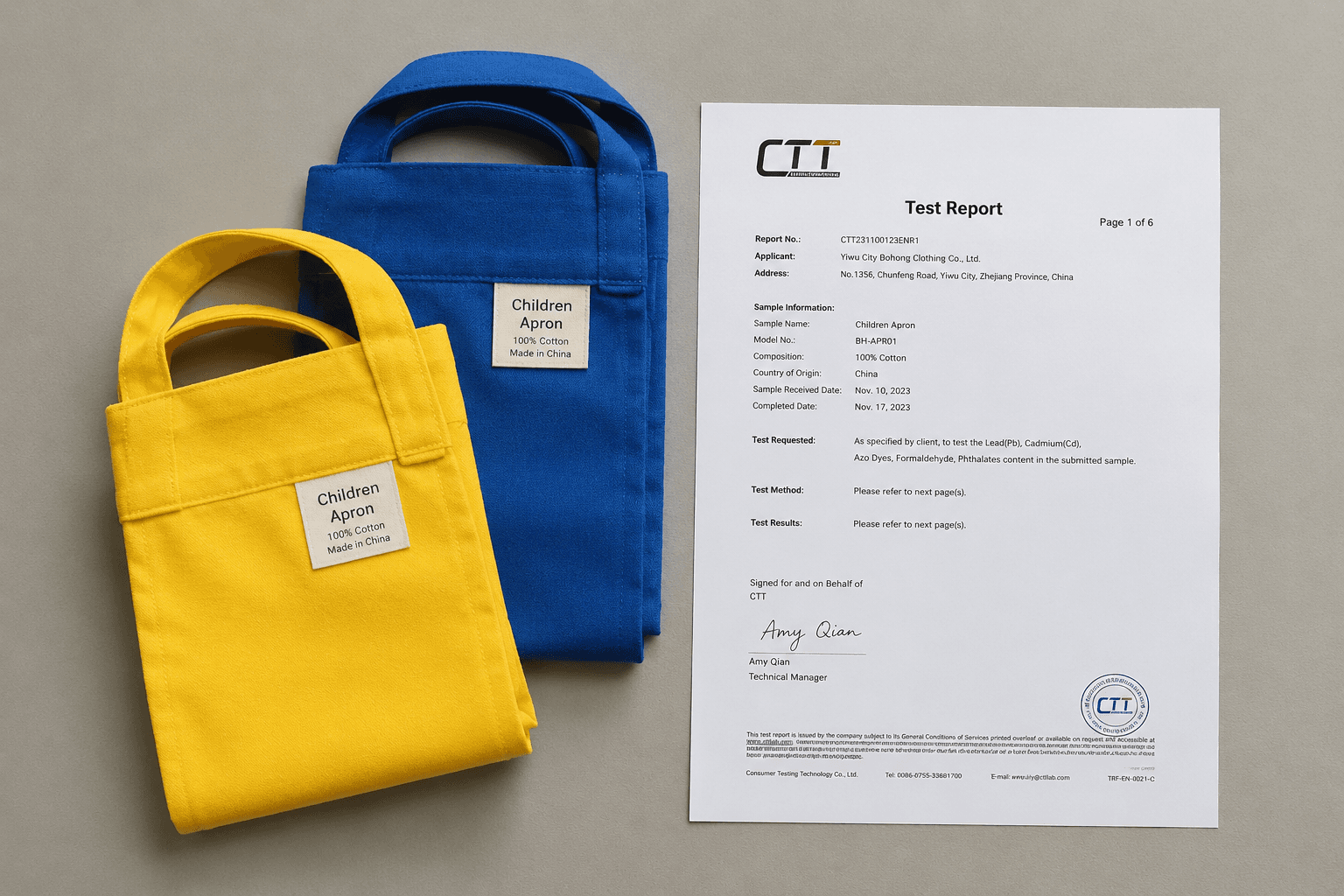
A cpsia apron is not certified by visual inspection. The compliance basis is usually third-party laboratory testing from a CPSC-accepted lab, supported by material traceability and a Children's Product Certificate issued by the importer or domestic manufacturer. For a cut-and-sew apron, the most common laboratory scope includes total lead in substrate materials, lead in surface coatings, phthalates where plasticized components may be present, small parts where applicable, and flammability review depending on product type and material.
Lead in paint and surface coatings has a strict limit of 90 ppm. Substrate lead is generally limited to 100 ppm for accessible component parts. Phthalates are relevant when the apron uses plasticized vinyl, PVC labels, soft rubber patches, plastisol prints, coated straps, or certain novelty trims. For fabric-only aprons using yarn-dyed cotton twill and water-based pigment print, the phthalate risk is lower, but buyers should still confirm the exact print chemistry before deciding the test package.
In normal sourcing, a CPSIA package for a children's apron may cost about USD 180-450 per style and colorway when the BOM is simple. Costs can rise if there are multiple prints, different trim colors, silicone badges, metal hardware, or PVC-coated pockets. Lab timing is commonly 5-7 working days after sample receipt for standard tests. Rush service may reduce this to 3-4 working days, but rush fees can add 30-50 percent and are not always available during peak season.
- Total lead in accessible substrates should be controlled for fabric, thread, labels, and trims.
- Lead in surface coating applies to printed artwork, coated logos, painted snaps, and decorative coatings.
- Phthalate testing should be considered for PVC, soft plastic, rubberized patches, plastisol ink, and coated components.
- Small parts assessment is important for toddler aprons using buttons, snaps, charms, cord locks, or detachable decorations.
- Tracking label information must connect the apron to production date, factory, batch, and style.
Fabric selection and its impact on kids apron safety
Fabric is the easiest place to reduce compliance risk. For children's cooking and craft aprons, common options include 180-220 GSM cotton twill, 160-200 GSM cotton canvas, 150-190 GSM poly-cotton twill, and 120-160 GSM polyester pongee for lightweight promotional programs. Heavier canvas at 240-280 GSM can feel durable but may be stiff for small children, especially around the neck and waist. A child apron should protect clothing without pulling on the neck or limiting movement.
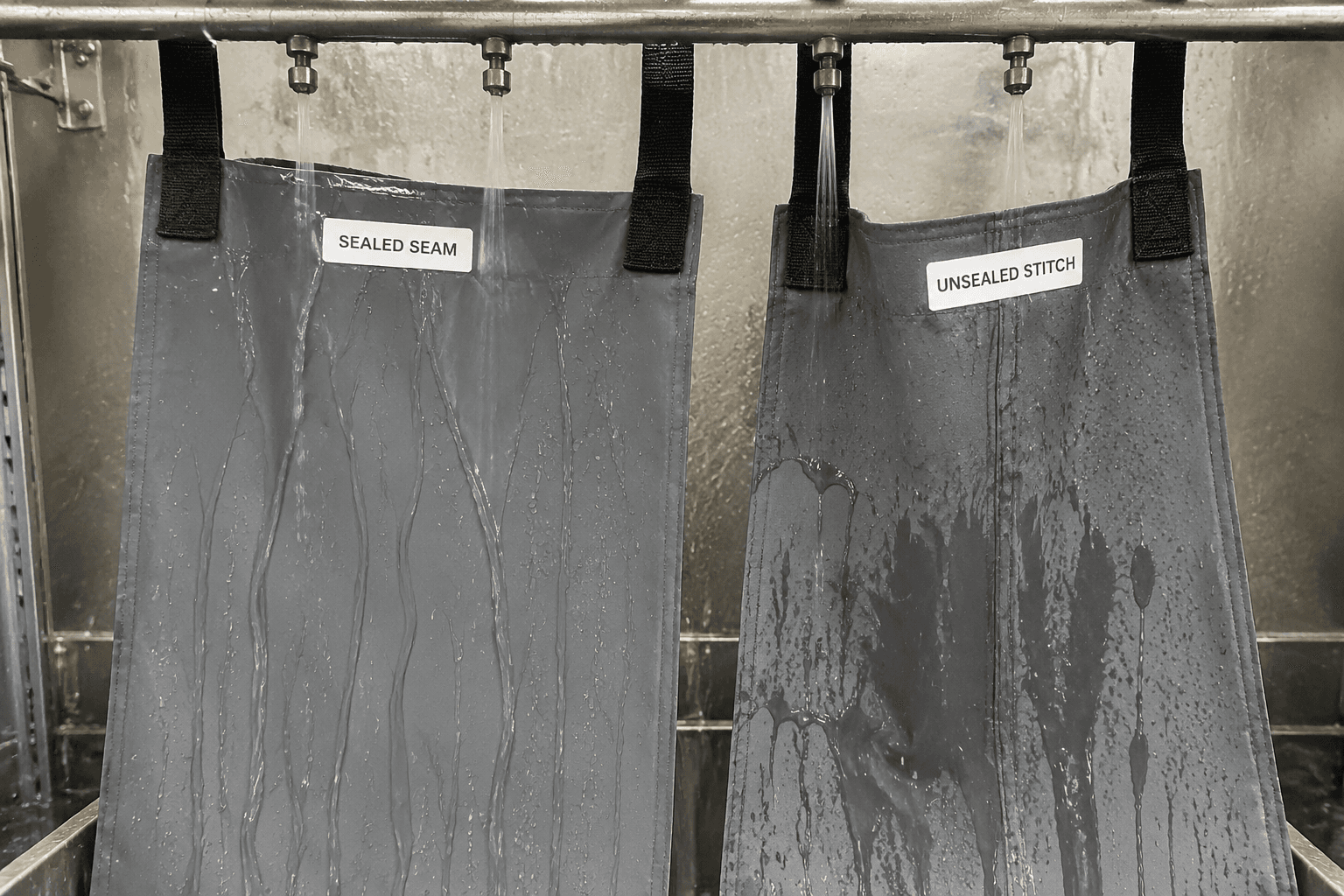
For CPSIA planning, undyed or yarn-dyed cotton is generally simpler than coated polyester or laminated fabric. Water-repellent finishes, PU coatings, PVC coatings, and stain-resistant treatments can be useful, but they add chemical variables. If the buyer needs a wipe-clean apron for paint or food activities, we normally recommend testing the exact coated fabric and all printed layers before bulk cutting. A supplier's old fabric report is useful reference, but it cannot automatically cover a new coating lot or a different print.
Fabric weight also affects construction choices. A 200 GSM cotton twill apron with self-fabric neck strap and waist ties is usually stable and comfortable. A 120 GSM promotional polyester apron may need reinforced bartacks, but reinforcement should not add hard plastic parts for young children. For school programs, buyers often choose 180 GSM poly-cotton twill because it balances price, shrinkage control, and repeated washing. Typical FOB China pricing for simple children's aprons can range from USD 1.20-2.80 per piece depending on size, fabric, print coverage, packing, and test requirements.
- 180-220 GSM cotton twill is a common low-risk choice for cooking and classroom aprons.
- 150-190 GSM poly-cotton twill is practical when buyers need lower shrinkage and sharper price control.
- 240-280 GSM canvas can be durable but may be too stiff for preschool sizing.
- Coated or laminated fabric should be tested by exact material lot and finish, not by a generic fabric family.
- Dark dyed fabric, foil print, puff print, and rubber patches should be reviewed before final artwork approval.
Print, dye, and trim choices that affect childrens apron compliance
Most compliance failures in apron programs do not come from the base cotton fabric. They more often come from a print, coating, badge, zipper pull, snap, novelty trim, or plastic packaging component that was added late. For children's aprons, print artwork is often large, colorful, and placed on the chest area. That makes print chemistry central to childrens apron compliance.
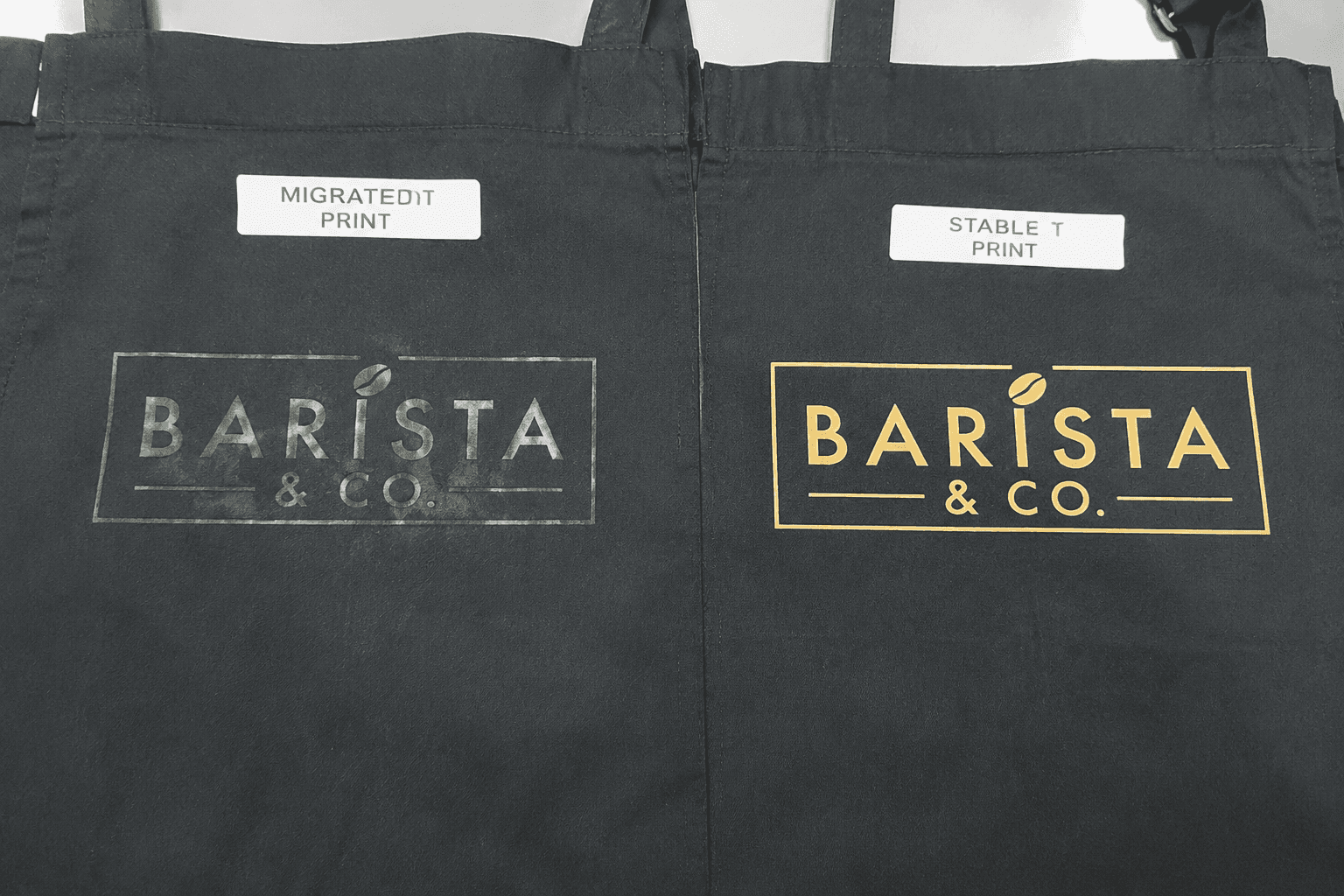
Water-based screen print is often preferred for kids aprons because it can meet CPSIA requirements when the ink system is properly controlled. Heat transfer prints can also be compliant, but the transfer film, adhesive, and ink layer should be tested as the final applied component. Plastisol prints require closer review because traditional plastisol systems may include phthalates unless the supplier uses certified phthalate-free ink. Sublimation on polyester can be efficient for full-color artwork, but buyers should confirm disperse dye migration, hand feel, and wash durability.
Trim control should be strict on children's sizes. Metal snaps, eyelets, and buckles may be acceptable if securely attached and tested, but many buyers avoid them on toddler aprons to reduce small part and corrosion questions. PVC patches, rubber labels, glitter films, and soft plastic cord ends can look attractive in retail, yet they increase test cost and material risk. If the retail price target is tight, simplifying trims often protects both compliance and margin.
- Water-based pigment print is usually the first option for low-risk custom artwork.
- Heat transfer artwork should be tested after application to the selected fabric.
- Phthalate-free plastisol must be documented and tested if used for raised or opaque prints.
- PVC labels, glitter films, rubber patches, and soft cord ends should be avoided unless they are needed for the design.
- Metal hardware should be pull-tested and reviewed for accessible lead and nickel concerns where relevant.
Construction details under youth apron regulation
Youth apron regulation is not only chemistry. Construction affects kids apron safety because aprons sit around the neck and waist, often during cooking, painting, gardening, or classroom activity. Long ties, fixed neck loops, detachable parts, and poor bartacking can create practical hazards. The risk is higher for preschool and early primary sizes because children may run, climb, or pull on straps while wearing the apron.
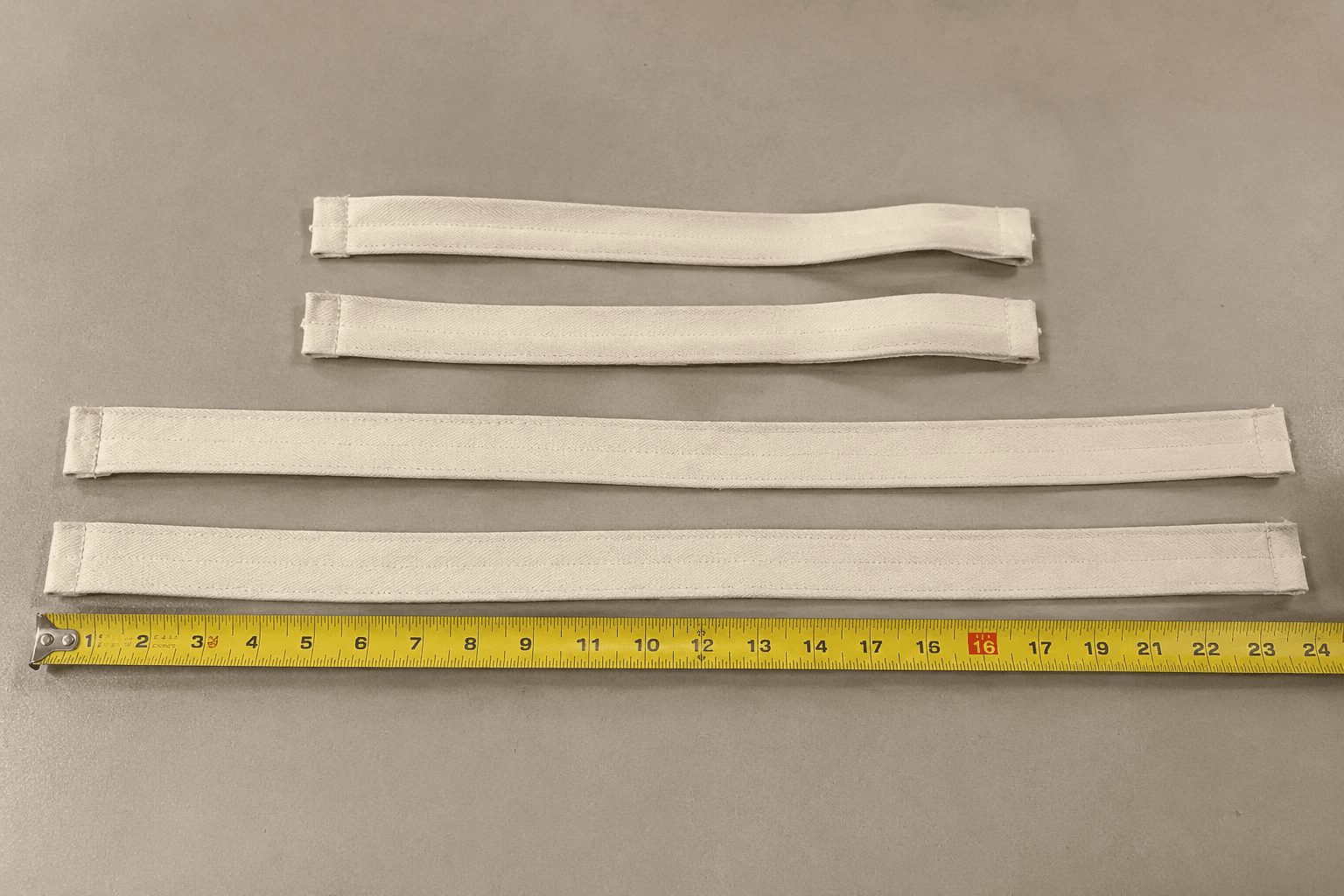
For toddler and preschool aprons, many buyers choose a hook-and-loop neck closure or adjustable snap-free fabric tab instead of a long fixed loop. For older children, a sliding adjuster can work, but the adjuster material should be part of the BOM and tested if plastic. Waist ties should be long enough for fit but not excessive. For a body width around 45 cm, waist ties of 45-55 cm each are usually workable. For youth sizes around 60 cm wide, 60-70 cm ties are common. Very long ties may look flexible in a size chart but can drag or wrap during use.
Stitch strength is also part of a practical compliance mindset. Bartacks at neck strap and waist tie points are recommended, especially on 160-220 GSM twill. We normally set a seam allowance of 1 cm and use 8-10 stitches per inch for cotton or poly-cotton twill, adjusted after wash testing. For classroom aprons, buyers should request wash testing, because shrinkage above 5 percent can change fit and strap position. A compliant chemical report does not help if the apron becomes uncomfortable or unsafe after laundering.
- Avoid fixed long neck loops on toddler sizes when an adjustable breakaway-style solution is possible.
- Keep waist ties proportionate to body width and age grading instead of using adult-length ties on all sizes.
- Use bartacks at neck and waist stress points to reduce strap detachment risk.
- Confirm small parts risk for snaps, toggles, cord locks, decorative buttons, and detachable accessories.
- Check shrinkage after washing because strap fit and body coverage can change after 3-5 wash cycles.
Child apron testing workflow before bulk production
A practical child apron testing workflow starts with the confirmed BOM. The BOM should list fabric composition, GSM, dye method, print method, thread, binding, label, closure, packing bag, and any accessories. Each item should have supplier name, color, and material code. Without this information, a test report may pass one sample but fail to represent the actual bulk order.
For custom apron orders, we recommend testing the pre-production sample after artwork, print method, trim, and label are frozen. Testing a salesman sample too early can waste time if the buyer later changes from embroidery to heat transfer, adds a PVC logo, or switches fabric from cotton to coated polyester. For repeat orders, previous reports can support the file, but the buyer should confirm whether the same material lots, print chemistry, and factory process are being used.
Typical scheduling for a CPSIA apron order is straightforward if planned early. Sample making may take 3-7 days after artwork and fabric availability. Lab sample dispatch takes 1-3 days by courier. Testing takes 5-7 working days for standard service. If the report passes, bulk production can proceed or continue if the buyer approved testing of exact pre-production components. If the report fails, retesting after material replacement can add 7-14 days. This is why we prefer to approve ink and trim sources before the sales sample is sent to the buyer.
- Day 1-3: confirm BOM, artwork, age grade, size set, and applicable test scope.
- Day 4-10: make pre-production samples using intended bulk fabric, print, and trims.
- Day 11-13: send samples to a CPSC-accepted laboratory or buyer-nominated lab.
- Day 18-22: receive standard test results, assuming no retest or lab backlog.
- Day 23 onward: release bulk cutting only after the report and production file match.
MOQ, lead time, and cost planning for a cpsia apron program
Compliance planning affects commercial terms. For a simple children's apron in stock fabric, a factory may accept 500-1,000 pieces per color, but custom dyed fabric often needs 1,500-3,000 meters depending on the mill. At 180 GSM cotton twill with a child apron consumption of about 0.35-0.55 meter per piece, fabric MOQ can become the real order MOQ. For fully custom printed polyester, MOQ may be lower for digital sublimation but unit cost can be higher at small quantities.
Lead time also changes with compliance requirements. A normal custom children's apron order may take 25-35 days after sample approval and deposit when fabric is available. Add 5-10 days if fabric must be dyed, and add 5-7 working days for testing if the buyer requires reports before cutting. For complex retail packaging, hangtags, printed polybags, or multi-language warning labels, artwork approval may add another 3-5 days. During March-May and September-November, lab and production schedules can stretch, so buyers should not leave child apron testing for the final week before shipment.
Cost should be budgeted line by line. A basic 180 GSM poly-cotton youth apron with one-color water-based print may be around USD 1.30-1.90 FOB at 3,000 pieces, depending on size and packing. A 220 GSM cotton twill apron with full chest print, adjustable neck, woven label, and individual retail bag may land around USD 2.10-3.40. CPSIA testing may add only USD 0.05-0.15 per piece at 3,000-5,000 pieces, but at 300-500 pieces it can add USD 0.40-1.00 per piece if the buyer allocates all testing cost to one small run.
- Stock fabric programs can often start from 500-1,000 pieces per color if trims are simple.
- Custom dyed fabric may require 1,500-3,000 meters at the mill, which can drive the actual MOQ.
- Standard production lead time is commonly 25-35 days after approval when fabric is available.
- CPSIA testing usually adds 5-7 working days before bulk release unless testing is done in parallel on approved components.
- Small orders carry a higher per-piece compliance cost because lab fees are fixed by style and component scope.
Documentation needed for childrens apron compliance
Documentation is where many otherwise good apron orders become weak. The U.S. importer normally issues the Children's Product Certificate, but the factory should support it with a clear production file. That file should show which materials were used, which lab reports apply, when the goods were produced, and how the finished cartons can be traced back to the batch. A report alone is not enough if the report sample cannot be connected to the shipped goods.
Tracking labels are required for children's products. For aprons, the tracking information can be placed on a sewn-in label, printed neck label, or durable care label, depending on buyer preference and product design. It should allow identification of manufacturer or private labeler, production location, date, and batch information. The label must remain legible through normal use. A removable sticker on an individual polybag may help warehouse handling, but it should not be the only tracking method for a children's apron.
A strong sourcing file includes the purchase order, approved sample record, BOM, fabric and trim supplier details, lab reports, production date, inspection report, packing list, and carton marks. For repeat programs, keep version control. If the buyer changes only the print color or adds a new trim, the compliance review should be reopened for that component. This discipline is not paperwork for its own sake; it is how the buyer avoids shipment holds, retailer rejection, and expensive rework.
- Keep a final BOM that matches the tested sample and the shipped production.
- Use tracking labels that remain attached to the apron, not only to the outer packaging.
- Connect lab reports to style number, color, artwork, fabric lot, and trim version.
- Record production date, factory location, line or batch number, and carton range.
- Review compliance again when changing print method, coating, trim, label, or age grading.