In commercial apron programs, the waist tie usually fails before the apron body. Repeated knotting, front-to-back twisting, chlorine chemistry, hot tumble drying and rough laundry sorting put concentrated stress on an attachment area that is often only 12 to 18 mm deep. On 180 to 210 GSM polycotton twill aprons, seam cracking or tie distortion often appears after 30 to 50 industrial wash cycles, while the body panel, pocket and hem can remain serviceable for another 20 to 40 cycles. If the tie is fixed, buyers replace the whole apron. If the tie is removable, they replace a lower-cost part and keep the apron in circulation.
For B2B buyers, detachable apron ties are a serviceability decision with direct cost impact. The attachment method changes FOB price, trim MOQ, sample timing, wash durability, spare inventory and site-level repair time. A 7.0 oz quick-service bib apron, an 8.5 oz housekeeping apron and an 11.0 oz bar apron should not share the same tie construction by default, even when they sit in one uniform range.
This article compares the three systems most used in bulk apron production: hook, snap and tunnel. The focus stays on apron sourcing for professional buyers, with practical figures for pricing, lead time, replacement-tie cost, likely failure points and approval standards that can be written into a tech pack before bulk production.
- Hook detachable apron ties give the fastest on-site replacement, usually in 15 to 30 seconds, but they bring the highest hardware risk and the highest FOB uplift.
- Snap detachable apron ties are the most balanced choice for many restaurant, hotel and bakery apron programs because they combine cleaner appearance, moderate cost and dependable bulk production.
- Tunnel detachable apron ties avoid separate hardware, work well in industrial laundry and usually add the least FOB cost, but replacement is slower and better handled in a laundry room or repair station.
- Across most 1,000- to 10,000-piece apron orders, detachable systems add about $0.12 to $0.78 per apron FOB China, while replacement tie sets usually land between $0.28 and $1.10 per set.
- AQL 2.5 for major defects and AQL 4.0 for minor defects is a practical baseline for detachable tie orders, with added pull tests and wash checks focused on the waist attachment area.
- Buyers should approve measurable build details before bulk production: fabric weight, tie width, bartack length, reinforcement layer, post-wash shrinkage, replacement-force target and spare-tie compatibility across repeat orders.
Why detachable apron ties reduce total replacement cost
In most uniform programs, the waist tie is the first apron component to wear out. A typical commercial tie is 30 to 35 mm wide and 800 to 950 mm long, but the load transfers through a narrow seam allowance, one bartack or a small hardware base at each side. In restaurant, cafe and bakery use, staff often tie the apron at the front, rotate it to the back and tighten it again several times per shift. That repeated torsion creates seam splitting, tie fraying and distortion long before the apron body is finished.
The cost difference is clear when compared against full-apron replacement. A standard 190 GSM polycotton bib apron with one chest pocket often lands at $3.20 to $4.30 FOB China at 3,000 pieces. A 240 GSM housekeeping apron usually lands at $4.40 to $5.80. A 300 to 320 GSM canvas bar apron with embroidery and reinforced pockets can reach $5.40 to $7.20. By comparison, a replacement tie set usually costs $0.28 to $0.55 for tunnel systems, $0.38 to $0.82 for snap systems and $0.60 to $1.10 for hook systems, depending on fabric, reinforcement and hardware grade.
For a 10,000-piece foodservice program, replacing 20 percent of worn ties with spares instead of replacing full aprons can cut annual replenishment spend by several thousand US dollars. It also keeps color continuity, logo position and fit more stable across locations because buyers do not need frequent small emergency reorders. For professional buyers, the business case is simple: extend the usable life of the apron body and convert a common failure into a controlled spare-part purchase.
- Tie failure commonly appears after 30 to 50 industrial washes on 180 to 210 GSM aprons.
- On 240 to 320 GSM aprons, the body often remains usable for 20 to 40 more washes after the first tie set shows failure.
- A detachable construction usually makes financial sense when the replacement tie set stays below 25 percent of apron FOB value.
- The strongest return usually appears on apron programs above 1,000 pieces per style with repeat ordering or centralized laundry.
Hook detachable apron ties: fastest replacement, highest trim exposure
Hook systems use a detachable connector on the tie end and an anchored loop, tab or webbing point on the apron body. Common options in apron production include zinc-alloy spring hooks, plated steel swivel hooks, stainless G-hooks and engineering-plastic hooks paired with reinforced fabric tabs. For sites that need immediate apron repair without sewing tools, hooks are the fastest option. A damaged tie can usually be replaced in 15 to 30 seconds, which suits quick-service counters, front-of-house restaurant teams and catering operations that keep spare ties on site.
The main risk is hardware performance under washing and rough handling. Low-cost plated hooks can chip, oxidize or stain nearby fabric after 20 to 40 industrial laundry cycles, especially where chlorine chemistry, high extraction and metal contact are common. Plastic hooks remove corrosion risk but can crack if the resin grade is not rated for repeated tumble drying at 80 to 90 degrees C. On apron bodies below 220 GSM, the anchor zone also needs reinforcement; otherwise the hook survives while the surrounding apron fabric tears out.
Hook systems are also the most demanding to source. On a 2,000- to 5,000-piece apron order, the typical FOB adder is $0.42 to $0.78 per piece with stock hardware and standard reinforcement. Stainless hardware or custom-finish metal can push that adder to $0.85 to $1.05. Stock hook MOQs may start at 1,000 sets, but custom color, molded branding or special plating usually raises the practical trim MOQ to 3,000 to 5,000 sets. Production samples also slow down: where a standard apron proto may take 5 to 7 days, a hook-based PP sample often needs 10 to 15 days because the factory must confirm hardware supply, finish quality and anchor construction.
- Use hook systems mainly on aprons above 7.5 oz, or reinforce lighter bodies with a backing patch plus dense bartacks.
- Ask for actual hook material, plating specification and wash-cycle results instead of approving only by appearance.
- Specify anchor construction in the tech pack, such as folded tab depth, box-stitch size or minimum bartack length.
- Check that the hook placement does not catch on apron pockets, utensils, counters or POS fixtures during wear.
Snap detachable apron ties: the most practical system for many branded apron orders
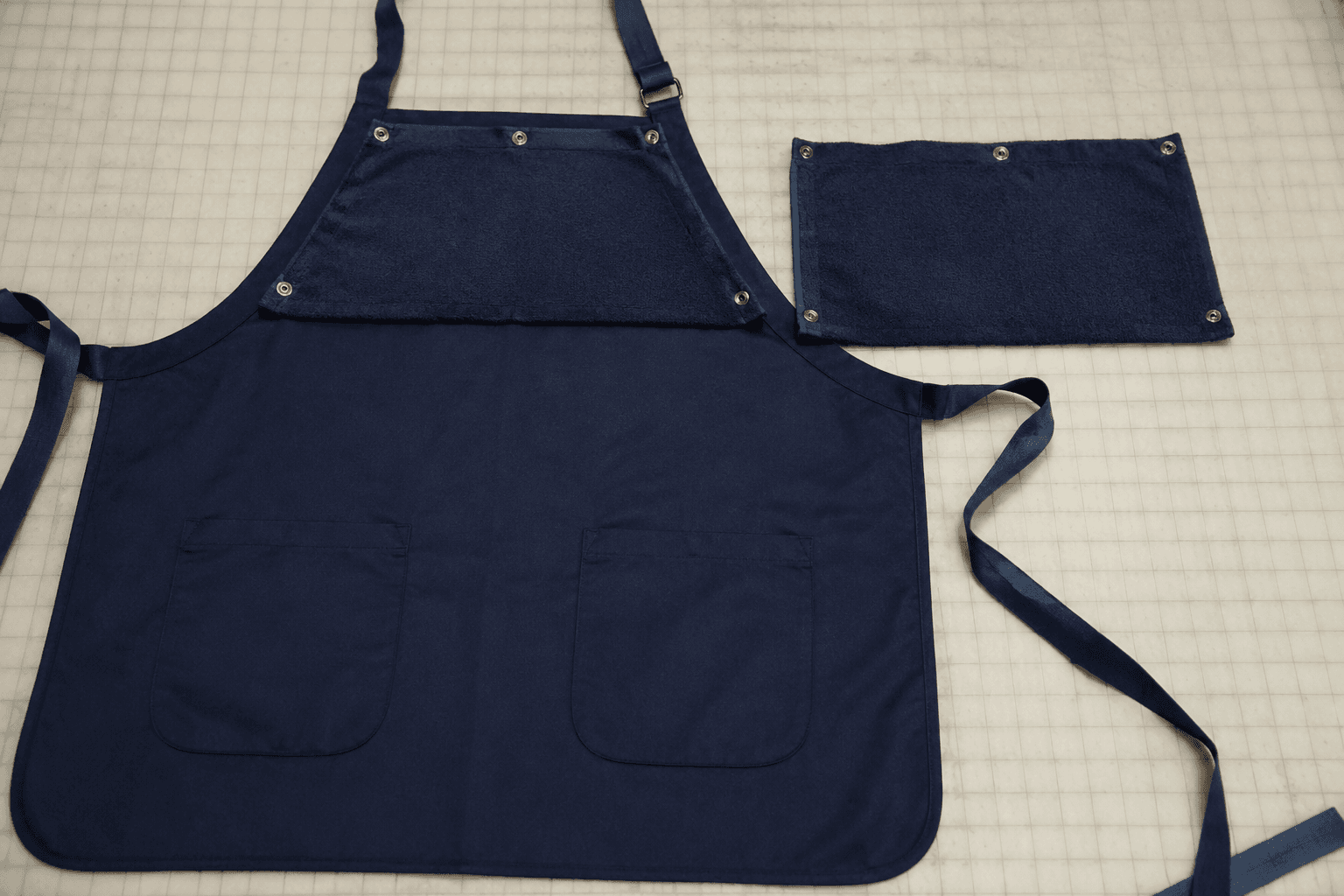
Snap systems are often the most practical choice for branded commercial aprons because they balance clean appearance, reasonable cost and stable factory execution. The tie end usually carries one or two press studs, while the apron body includes a reinforced underlay for the mating parts. The most common apron options are brass ring snaps, stainless spring snaps and heavy-duty resin snaps. When the set is specified correctly, the snap area sits flatter than a hook construction and looks closer to a conventional fixed-tie apron in daily use and in brand imagery.
The technical issue is load distribution. A single snap per side can be acceptable on low-use retail or promotional aprons below 180 GSM, but it is often underbuilt for restaurant, hotel, bakery and housekeeping use. For commercial apron programs, two snaps per side or one guided insertion tab plus one snap usually gives better rotational control and keeps the waist alignment more stable through repeated laundering. On 200 to 280 GSM twill, that layout spreads force better and reduces stress concentration at the tie base. Snap cap diameter, post length and reinforcement thickness also need to match the real material stack after washing, not only the nominal GSM on paper.
From a sourcing perspective, snaps are efficient. The added FOB cost usually falls between $0.18 and $0.45 per apron for stock hardware, and around $0.50 to $0.62 where buyers request hidden reinforcement, stainless components or premium finish matching. MOQ remains flexible in many factories, often 500 to 1,000 aprons per color when stock snaps are used. Sample timing is also manageable, usually adding only 2 to 4 days versus a fixed-tie apron. That mix of appearance, cost and production stability makes snap-based detachable apron ties the default choice for many hospitality and foodservice buyers.
- Choose two-point snap attachment for aprons going into industrial laundry or high-turnover daily use.
- Use resin snaps where corrosion risk is high; use brass or stainless where mechanical stability is more important.
- Confirm snap cap diameter, post length and reinforcement thickness against the final washed material stack.
- Inspect the snap zone after 25 and 50 washes for loosening, rotation, puckering and body-fabric distortion.
Tunnel detachable apron ties: lowest FOB adder and best fit for laundry-heavy apron programs
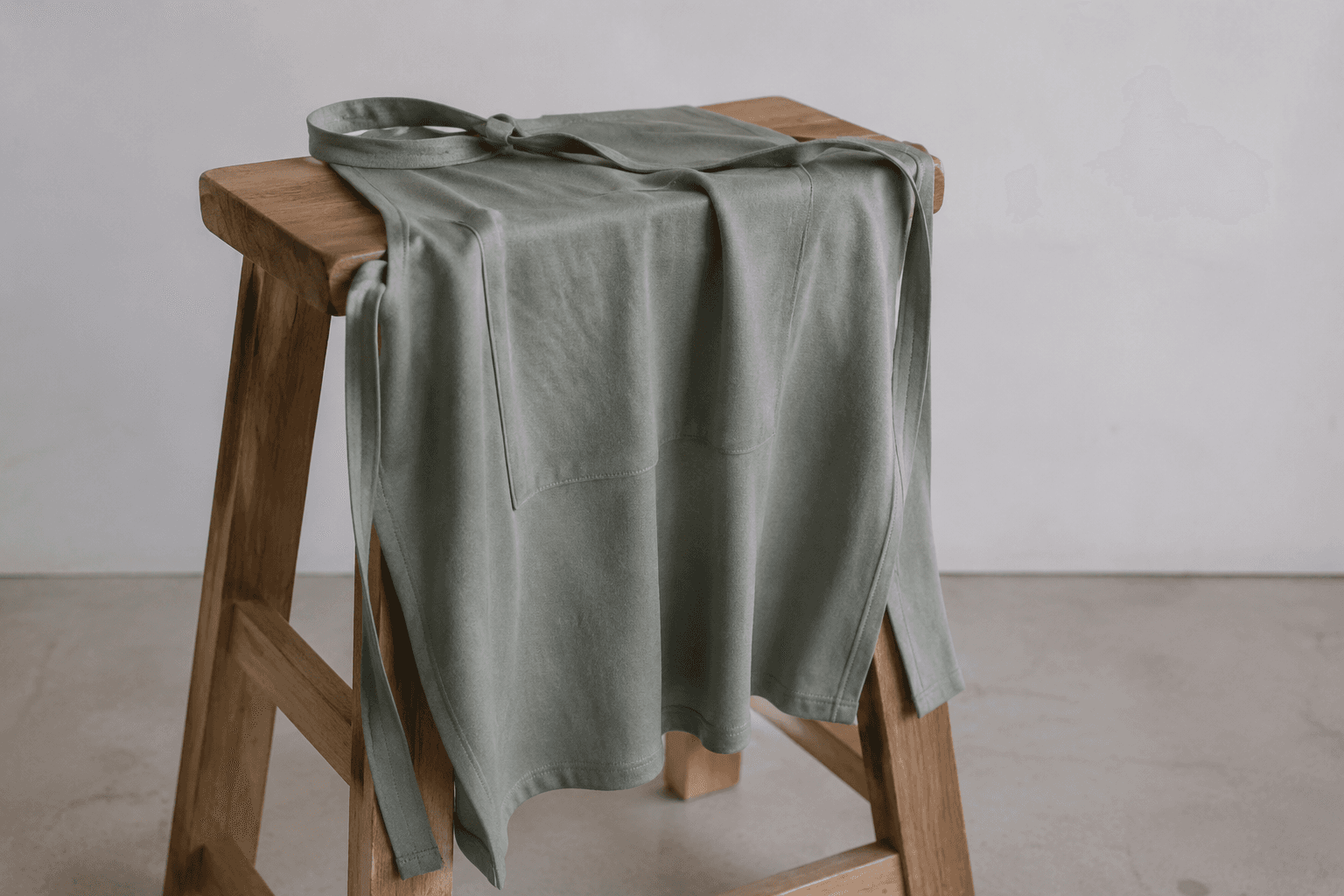
Tunnel systems remove separate hardware from the waist attachment area. The apron body is sewn with a reinforced side casing or channel, and the tie is threaded through the opening. Some apron patterns use one continuous waist tie, while others use separate left and right ties for easier replacement and packing. For institutional catering, healthcare foodservice, bakery production and other laundry-managed apron programs, the appeal is straightforward: there is no snap to loosen and no hook finish to corrode or chip.
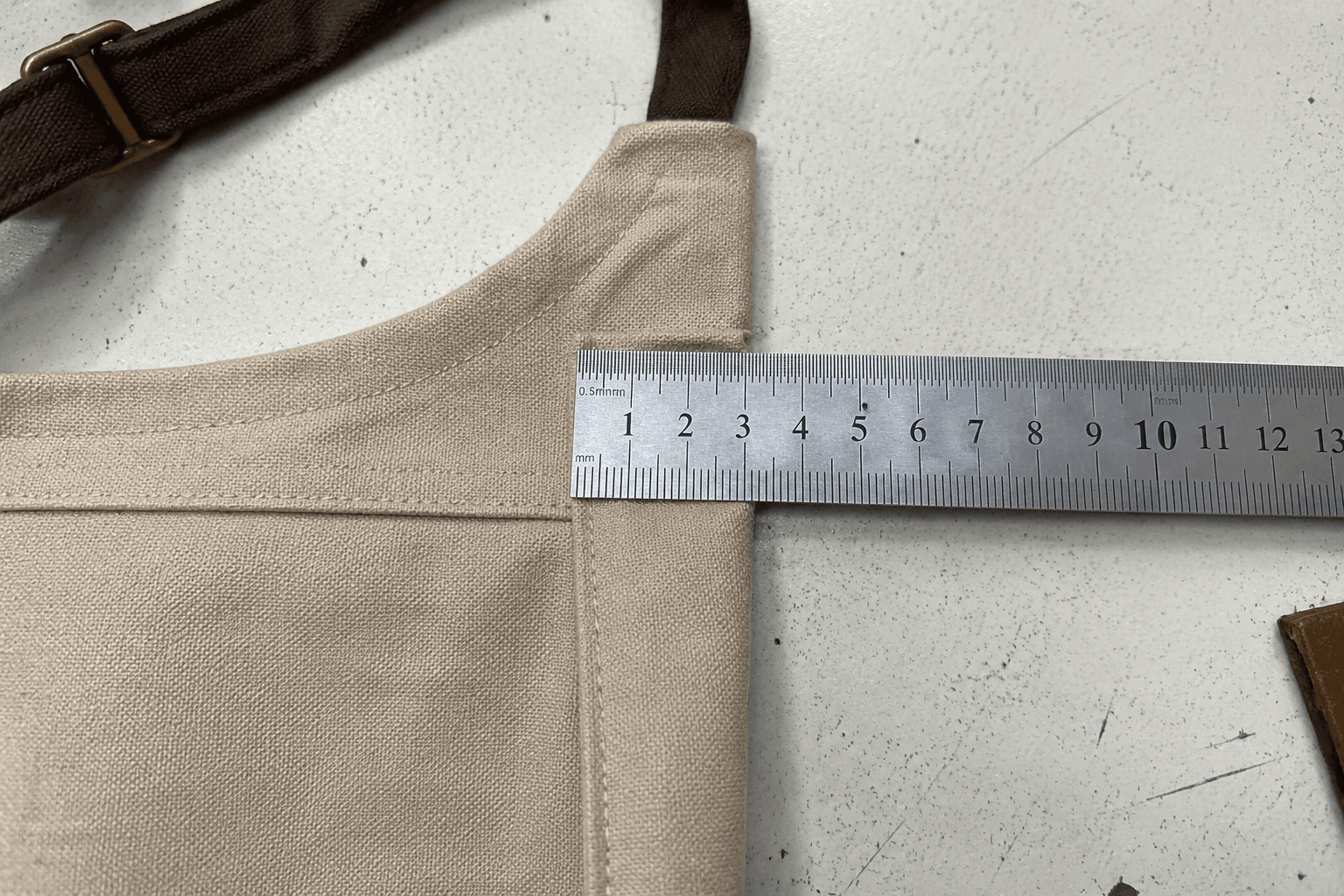
The engineering point is tunnel sizing after wash. If the channel is too narrow, a 30 mm pre-shrunk tie becomes difficult to insert after repeated laundering, especially on cotton-rich apron fabrics with 3 to 5 percent residual shrinkage. If the tunnel is too wide, the tie can migrate, twist or pull unevenly during knotting. In most commercial apron builds, the internal tunnel width performs best when it is about 8 to 12 mm wider than the compressed tie stack measured after the agreed wash test. Heavier fabrics from 220 to 350 GSM usually perform especially well because they hold the casing shape and distribute load over a larger apron area.
Tunnel systems usually add the least cost in bulk production. On a 3,000-piece order, the FOB uplift is commonly $0.12 to $0.30 per apron because the extra expense is mainly sewing time, reinforcement cloth and quality control rather than purchased hardware. MOQ usually stays aligned with the base apron MOQ, often 500 to 1,000 pieces per color. Lead-time impact is also light when the pattern is approved early, often adding 0 to 3 days. The trade-off is slower replacement: threading a new tie through a 40 to 60 mm channel takes longer than clipping a hook or closing a snap, so tunnel systems are best where replacement happens off the floor rather than during service.
- Tunnel systems suit apron programs already seeing hardware corrosion or broken-snap complaints.
- Use internal bartacks, end keepers or stop seams so the tie cannot pull completely through the channel.
- Pre-shrink both the apron body fabric and the replacement ties before final approval on cotton-rich styles.
- On 7.8 to 12.0 oz aprons, tunnel systems often deliver the lowest lifetime repair cost.
How fabric weight, laundry process and wear pattern should determine the tie system
Fabric weight should be the first filter. Below 180 GSM, any detachable construction needs careful reinforcement because the base apron cloth rarely has enough tear resistance at the waist edge on its own. In the 180 to 220 GSM range, snaps usually perform more consistently than hooks unless the hook anchor includes a backing patch or webbing insert. Above 220 GSM, hook, snap and tunnel systems can all work, and the choice shifts toward replacement speed, trim exposure and appearance. On 280 to 350 GSM canvas or heavy twill aprons, tunnels often gain an advantage because the casing stays stable after repeated laundering.
Laundry conditions should be the second filter. Home washing at 40 degrees C with line drying is mild compared with commercial laundry at 60 to 75 degrees C with alkali chemistry, extraction and tumble finishing. A tie system that looks acceptable on a showroom sample may fail quickly in an apron rental or centralized laundry program. Buyers should test the full attachment assembly, including apron body fabric, reinforcement, stitching and hardware where used. Practical checkpoints are after 10, 25 and 50 washes, followed by a pull check at each stage. For ongoing orders, AQL 2.5 major and AQL 4.0 minor is a sensible baseline, with added inspection focused on snap setting, hook finish and tunnel measurement.
Wear pattern is the third filter. Quick-service restaurant staff often untie and retie aprons several times per day, which favors hooks or snaps. In bakeries, prep rooms and housekeeping use, aprons are often tied once and worn for longer periods, making tunnels easier to justify. Buyers sourcing aprons for several departments should avoid forcing one attachment method across every SKU unless the duty cycle is genuinely similar. Standardization only helps when the use pattern, laundry route and repair method are aligned.
- Below 180 GSM, specify reinforcement layer weight and stitch density before approving detachable ties.
- At 180 to 220 GSM, snaps are usually the safest default for commercial apron use.
- At 220 to 350 GSM, all three systems are viable if wash testing confirms the final construction.
- Use 10-, 25- and 50-wash checkpoints with post-wash pull tests for aprons entering industrial laundry.
MOQ, lead time and spare-tie planning for detachable apron ties
Many preventable sourcing problems start when the tie is treated as a minor trim instead of a service part. In a professional apron program, the replacement tie needs its own SKU logic covering finished length, width, fabric, color standard, attachment type and cross-style compatibility. This matters when the range includes bib aprons, waist aprons and cross-back aprons. If the interface changes between seasons or factories, spare inventory fragments quickly and field replacement becomes expensive.
The more reliable approach is to lock the tie system during development and define the spare program before the first production PO is issued. For tunnel and stock-snap systems, apron MOQ can often stay at 500 to 1,000 pieces per color. Hook programs with custom hardware usually raise the effective trim MOQ because the vendor wants larger plating or molding runs, often 3,000 to 5,000 sets per finish. Standard bulk lead time for apron production in China is commonly 25 to 35 days after PP approval. Detachable constructions usually add 2 to 5 days for snaps, 0 to 3 days for tunnels and 5 to 10 days for hooks when custom hardware is involved.
Spare ratio should reflect actual turnover. For a 5,000-piece restaurant apron program, 5 to 8 percent spare ties is a practical year-one starting point. Lower-turnover hotel housekeeping or retail apron programs may only need 3 to 5 percent. Spare sets should be packed by style, color and finished length, and tunnel systems should include a simple replacement instruction insert for site teams or laundries. At final inspection, the factory should test fit using production spare ties, not only the main apron bodies, because mismatched replacement parts are a common source of claims on repeat orders.
- Stock snap and tunnel programs often keep apron MOQ at 500 to 1,000 pieces per color.
- Custom hook hardware commonly raises trim MOQ to 3,000 to 5,000 sets per finish.
- Typical apron production lead time is 25 to 35 days after PP approval, plus system-specific trim time.
- A 5 to 8 percent spare-tie ratio is a practical starting point for high-turnover foodservice apron programs.
Approval standards buyers should lock before bulk apron production
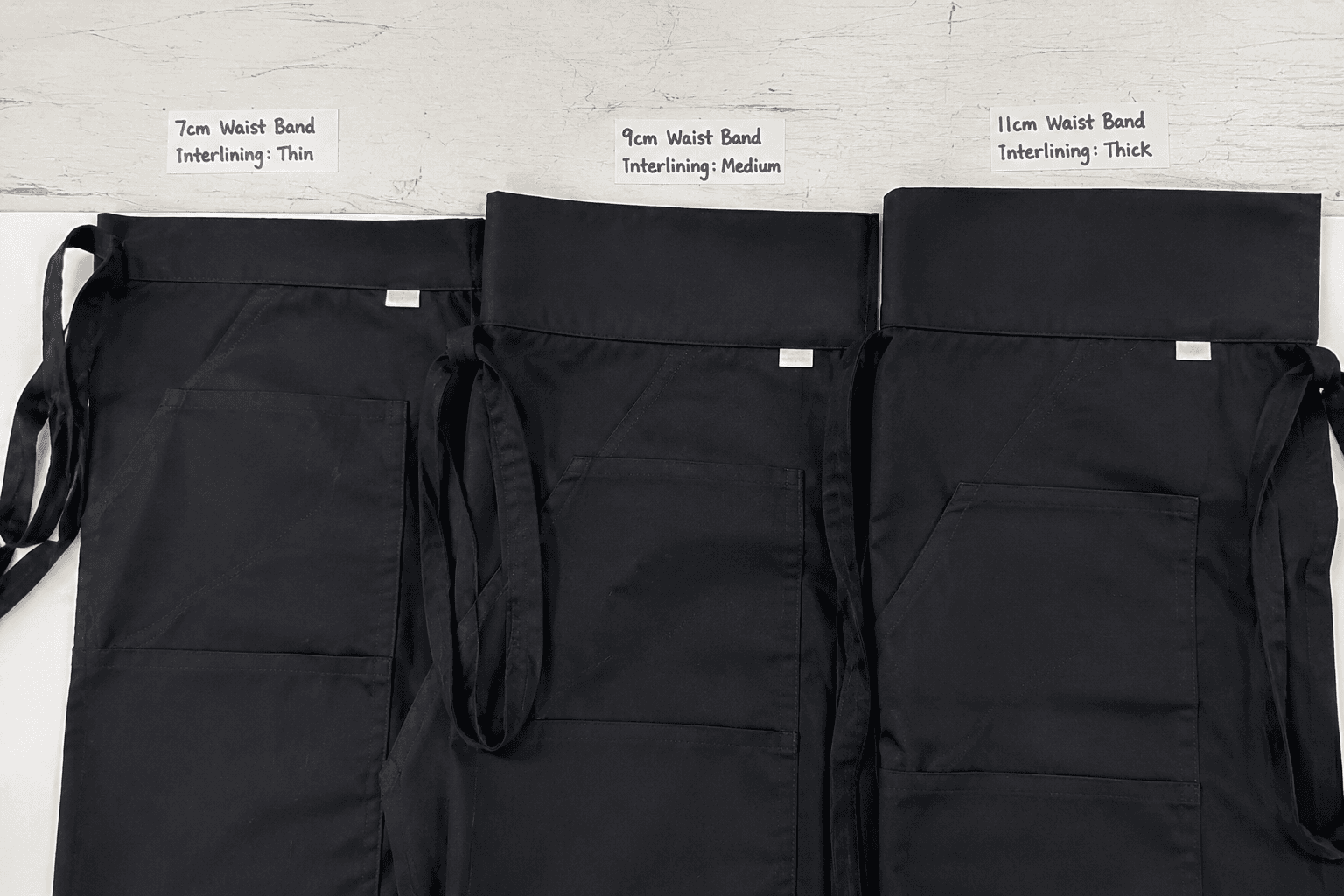
Before approving bulk production, buyers should define the waist attachment zone in measurable terms rather than signing off on appearance alone. The tech pack should state apron body fabric GSM, tie fabric construction, finished tie width, reinforcement material, hardware specification where relevant, stitch count, bartack length, post-wash tie length tolerance and the target replacement-force level. Without those details, a factory can match the sample visually while reducing reinforcement weight, changing hardware source or lowering stitch density to recover margin.
A complete approval pack should also state wash assumptions, allowable shrinkage, compatibility rules across reorder lots and spare packing standards. For multi-season apron programs, it is sensible to keep sealed golden samples of both the apron body and the spare tie set. Independent testing is not required on every order, but it is worth the cost on larger contracts, harsh-laundry programs or first-time detachable apron ties developments. Simple checks such as snap alignment after wash, hook abrasion against the apron body and tunnel opening measurement can prevent repeat bulk failures.
For most hospitality and foodservice apron buyers, the final selection path is straightforward. Use hooks when replacement speed is the top priority and the laundry environment is controlled. Use snaps when balanced durability, clean appearance and moderate MOQ matter most. Use tunnels when hardware-free construction, low trim cost and strong wash compatibility matter more than swap speed. The right system is the one that fits the apron duty cycle, laundry route and spare-part process, not the one that looks most distinctive on a sample board.
- Specify finished tie length tolerance within plus or minus 10 mm after wash.
- Set inspection at AQL 2.5 major and AQL 4.0 minor, with extra checks on the waist attachment assembly.
- Keep golden samples for both the apron body and the replacement tie set on repeat programs.
- Require reorder-lot compatibility approval before shipping spare ties or second-run apron orders.