For apron buyers, a leather patch is usually a small component, but it can create a large sourcing problem if the specification is vague. A 45 x 25 mm patch on a denim bib apron may cost only US$0.08-0.35 per piece depending on leather grade and process, yet it affects branding appearance, wash durability, needle selection, carton packing and even customs documentation for some markets.
In our Zhejiang apron factory, we see leather patch apron projects across cafe uniforms, barista aprons, barbecue aprons, hairdresser aprons, florist aprons and retail workwear. The buyers who get stable results normally decide four points early: leather type, patch thickness, logo method and attachment method. These details should be confirmed before fabric cutting, because patch placement, reinforcement and sewing sequence can influence production efficiency and rejection rate.
This article explains debossing, stitching and leather grades from a supplier-side perspective, with practical numbers for bulk custom apron orders. The goal is not to choose the most expensive option, but to choose a custom leather label that matches the apron fabric, target price, washing instruction and brand position.
- Patch thickness should normally stay between 0.8 mm and 1.5 mm for regular cotton, canvas and denim aprons to avoid stiff corners and sewing distortion.
- Debossed leather patch branding needs tooling time, usually 3-5 days for a new brass or magnesium mold before sampling.
- PU leather can reduce cost, but genuine leather or veg tan leather patch options usually give better edge aging and a more premium handfeel.
- Stitching color, stitch density and backing reinforcement matter as much as the leather grade for bulk wash performance.
- MOQ is often controlled by patch material purchasing, not apron sewing; small patch orders may require 300-500 pcs per color even when apron MOQ is lower.
- A leather patch apron should have washing and colorfastness risks confirmed in pre-production, especially for enzyme wash, stone wash or garment-dyed styles.
Why leather patch apron branding behaves differently from woven labels
A woven label is flexible, thin and easy to sew into a side seam, pocket edge or neck binding. A leather patch is thicker, less elastic and normally placed on visible areas such as the chest, lower pocket, waist strap, cross-back strap or towel loop zone. This changes how the apron moves during sewing and wearing. On a 260 GSM twill apron, a 1.2 mm leather patch adds a localized stiff point. On a 12 oz canvas apron, the same patch feels balanced. On a 180 GSM poplin promotional apron, it may feel too heavy and pull the fabric downward after washing.
For bulk sourcing, the first question is not only whether the branding looks premium. The practical question is whether the patch suits the apron construction. A leather patch apron with a large chest patch may look strong on product photos, but if the apron is intended for daily industrial laundry at 60 degrees Celsius, a washable woven label or silicone badge may be safer. For cafes, retail uniforms and gift aprons, leather branding is often appropriate because the washing cycle is lighter and appearance matters more.
A patch also affects needle marks and rework. If a woven label is misaligned, we can often remove and resew it with minimal visible damage. If a leather patch is stitched in the wrong place, needle holes remain. This is why factory marking, approved placement tolerance and a sealed pre-production sample are more important for leather patch apron orders than for ordinary label sewing.
- For light promotional aprons below 220 GSM, use a small patch around 35 x 20 mm or choose a thinner imitation leather label.
- For 260-320 GSM cotton twill aprons, common patch sizes are 40 x 25 mm, 50 x 30 mm and 60 x 35 mm.
- For 10-14 oz canvas or denim aprons, larger patches up to 80 x 45 mm can work if corners are rounded and stitching is reinforced.
- For waxed canvas or coated aprons, test needle penetration because stitching holes can affect water resistance around the patch.
Leather grades for apron leather branding
Leather grade is one of the most misunderstood parts of apron leather branding. Buyers often ask for genuine leather, but that term is broad. For apron patches, we commonly discuss full grain leather, top grain leather, split leather, bonded leather, vegetable-tanned leather and PU synthetic leather. Each option has a different cost, surface consistency, color tolerance and MOQ impact.
Full grain and top grain leather offer the best natural appearance, but they also show natural scars, pore variation and shade difference. This can be acceptable for premium chef aprons and craft aprons, but it must be agreed in advance. If the buyer expects every patch to be identical like a printed plastic badge, top grain leather may create inspection disputes. Split leather is more economical and more consistent after coating, but it has less natural character. PU leather is lowest cost and usually offers good color consistency, but it does not age like real leather and may crack sooner under repeated washing or high heat drying.
A veg tan leather patch is popular for heritage-style denim and canvas aprons. It takes debossing well because the fibers compress clearly under heat and pressure. Natural veg tan can darken with oil, sunlight and hand contact, which is part of the look for some brands. For food-service uniforms where clean appearance must remain stable, a finished top grain or PU patch may be more predictable.
- PU leather patch: usually US$0.04-0.12 per piece for common sizes, good for promotional orders and color consistency.
- Split leather patch: usually US$0.08-0.18 per piece, suitable for mid-range cafe and retail aprons.
- Top grain leather patch: usually US$0.15-0.35 per piece, suitable for premium uniforms with visible natural texture.
- Veg tan leather patch: usually US$0.18-0.45 per piece, strong debossing result but more shade variation.
- Bonded leather patch: low cost but weaker aging; we usually avoid it for aprons that require repeated washing.
Debossed leather patch details buyers should specify
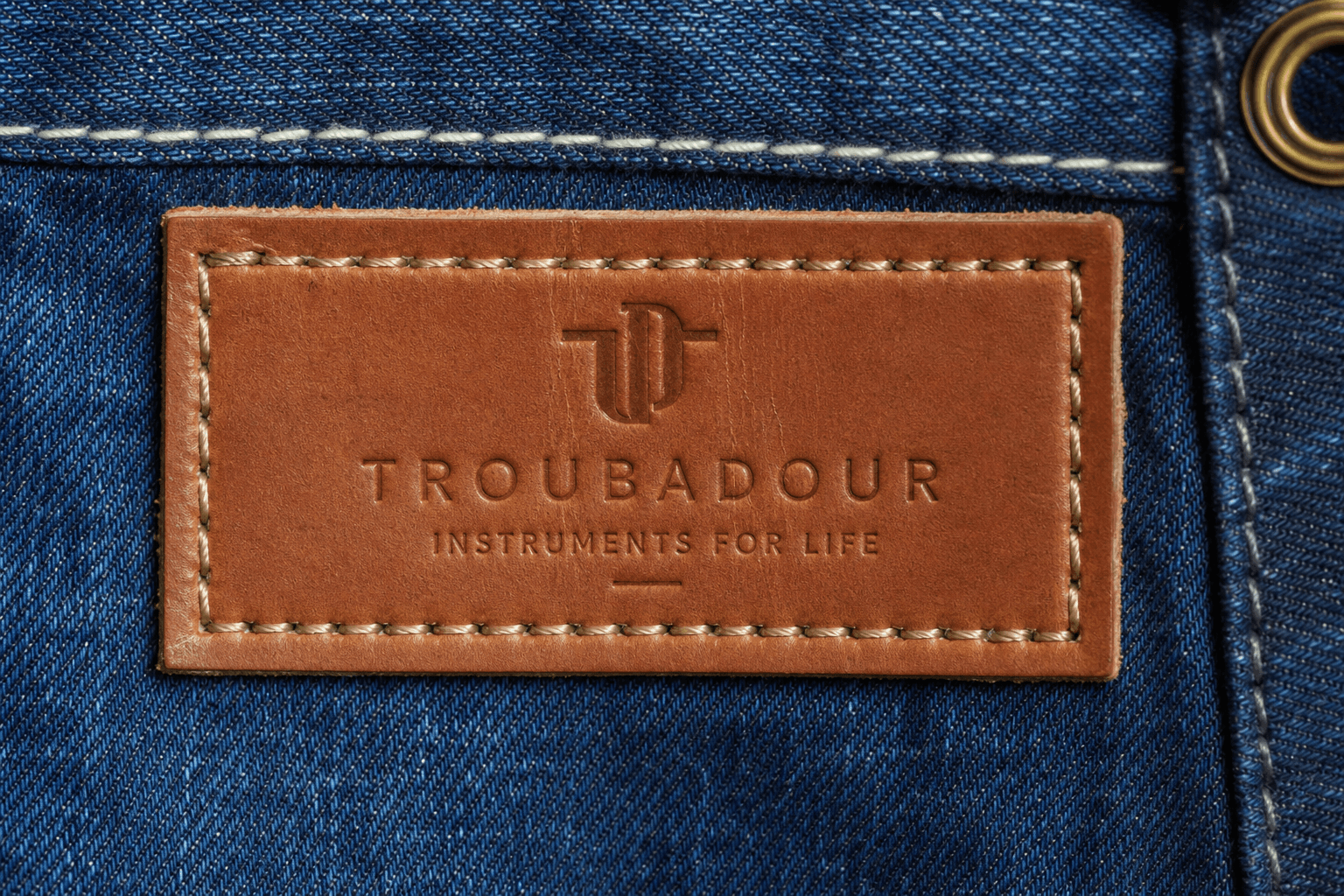
A debossed leather patch is made by pressing a logo mold into the leather surface, usually with heat and pressure. It is different from printing because the branding is created by depth and shadow rather than ink. On aprons, debossing is widely used because it keeps a clean, durable look and does not add a glossy printed surface that can peel.
The main variables are mold material, deboss depth, temperature, pressure time and leather moisture. For most custom apron orders, a brass mold is the most stable option for repeated production. Magnesium or zinc molds can be cheaper for small runs, but they may wear faster. Tooling cost is commonly US$30-80 for a simple logo patch mold, depending on size and detail. Lead time is usually 3-5 working days after vector artwork approval. For complex logos with very thin lines below 0.3 mm, debossing may lose detail, especially on textured or pebbled leather.
Deboss depth should be tested on the actual leather grade. A deep press looks strong on veg tan leather but may cause a hard edge on thin PU. A shallow press can disappear after garment washing or after the leather absorbs oil from use. For most apron leather branding, we target a visible but controlled impression of about 0.3-0.6 mm. If the logo includes small text, we recommend increasing the patch size or simplifying the artwork before mold making.
- Minimum recommended line width for debossing is 0.3 mm, and 0.5 mm is safer for textured leather.
- Minimum text height should normally be 3 mm for capital letters and 4 mm or more for mixed-case letters.
- Patch corner radius of 2-4 mm reduces curling and improves sewing smoothness.
- A pre-production deboss sample should be checked under normal room light, not only under studio lighting.
- For repeat orders, keep the same mold and leather batch reference to reduce shade and depth variation.
Stitching methods for a leather patch apron
The stitching method decides whether the patch stays flat after washing and whether the branding looks refined or rough. Most leather patch apron projects use perimeter stitching, usually 2-3 mm from the patch edge. A single needle lockstitch is common for clean branding. For heavier canvas aprons, a slightly thicker thread can match the workwear character. For fashion-led aprons, tone-on-tone thread is often preferred so the debossed logo remains the main visual point.
Needle choice matters. Leather requires a sharper penetration than normal woven labels. However, a true leather needle can cut the base apron fabric if the fabric is light. In production, we often test a 16 or 18 needle for canvas and denim apron patches, with adjustments based on patch thickness and base fabric. Thread is commonly polyester because it has better wash and abrasion resistance than cotton thread. Stitch density usually sits around 7-9 stitches per inch; too dense can perforate the leather edge, while too loose may look unfinished.
Some buyers request rivets together with stitching. Rivets can strengthen the visual workwear style, but they add metal detection, plating, rust and comfort considerations. If the patch sits on the chest, rivets may press against the body when the wearer bends. If the patch sits on a pocket, rivets can scratch phones or card readers. For food-service and beauty-salon aprons, stitching alone is usually cleaner and easier to wash.
- Use tone-on-tone thread when the leather patch should look understated and premium.
- Use contrast thread when the apron already has contrast bartacks, straps or topstitching.
- Avoid very dense stitches near patch corners because they can create tear points after repeated washing.
- Add backing reinforcement behind the fabric when the patch is large or placed on a pocket opening.
- Keep placement tolerance realistic, usually +/-2 mm for patch position on bulk apron production.
Placement on bib, waist and cross-back aprons
Placement should follow how the apron is worn, not only how it looks flat on a table. On a bib apron, a chest patch is visible, but it may bend across the body. A patch placed too high can sit under the neck strap and create stiffness. A patch placed too low may disappear behind folded towels, tools or pocket contents. For adult bib aprons, a common chest patch position is 80-120 mm below the top edge, centered or offset depending on pocket layout.
For waist aprons, leather patches are often placed on the upper corner, pocket edge or waistband end. The waistband area receives tension, so the patch must not interfere with tie stitching. If the patch is placed on a pocket, the pocket fabric should be stable enough to hold the extra weight. On a 200 GSM waist apron, a 60 x 35 mm leather label can make the pocket sag after washing. On a 300 GSM twill waist apron, the same patch is usually acceptable.
Cross-back aprons need extra attention because straps move across the shoulder and back. A leather patch on the strap can look attractive, but strap patches require strong stitching and careful thickness control. If the strap is only 25 mm wide, a patch wider than the strap will curl or rub. If the patch is placed at the back waist, it may be hidden by the wearer’s shirt or jacket. For brand visibility, chest or pocket placement is usually more reliable.
- Bib apron chest patches normally work best at 40 x 25 mm to 70 x 40 mm depending on apron size.
- Waist apron patches should avoid the tie junction and heavy stress points.
- Pocket patches should be tested with actual pocket contents if the apron is used for service staff.
- Strap patches should be thin, usually 0.8-1.0 mm, to avoid rubbing and stiffness.
- For asymmetric pocket designs, approve placement with a worn-fit photo, not only a flat drawing.
Wash performance, color transfer and compliance risks
Leather and washing are always a trade-off. Many aprons are washed more often than bags, caps or outerwear, so a leather patch that performs well on accessories may not be suitable for uniforms. Before confirming a leather patch apron for bulk production, buyers should define the expected washing method: home wash at 30 degrees Celsius, commercial laundry at 40-60 degrees Celsius, tumble drying, garment wash, enzyme wash or dry clean only.
Real leather can shrink, darken or harden after washing. Veg tan leather may bleed slightly or develop water marks if not finished properly. Dark brown or black leather may transfer color onto light cotton aprons, especially during the first wash. PU leather may pass a few home-wash cycles but fail under high heat drying. For white, cream, light grey and pastel aprons, we recommend a color migration test before confirming leather patch branding. The test cost is small compared with the risk of 3,000 pcs arriving with stained patch edges.
Compliance also depends on market and customer type. For hospitality uniforms sold into Europe or North America, buyers may ask for REACH, azo-free dyes, lead content or nickel-free metal parts if rivets are used. Leather may require additional declarations if it is animal origin. Many uniform buyers avoid exotic leather completely because documentation is complicated. For most apron programs, cowhide, split leather or PU are the practical choices.
- Run a 30 degrees Celsius home-wash test for retail aprons and a 40-60 degrees Celsius test for service uniforms.
- Check color migration from dark leather to light apron fabric after wet rubbing and washing.
- Avoid natural unfinished leather on white aprons unless the buyer accepts patina and shade change.
- Confirm tumble-dry resistance if the end user uses commercial laundry.
- Use PU or washable synthetic labels when strict wash stability is more important than natural leather character.
Cost, MOQ and lead time for leather patch apron orders
The leather patch is a small trim, but it can control the schedule. For a new custom leather label, the buyer should allow artwork confirmation, mold making, leather sourcing, patch cutting, debossing, sewing trial and sample approval. A realistic sample lead time is 7-12 days if the apron fabric is in stock and the logo file is ready. Bulk production is commonly 25-40 days after sample approval and deposit, depending on fabric dyeing, patch quantity and factory line capacity.
MOQ varies by material. PU leather can often be purchased in small rolls, so 300-500 pcs per color is workable. Genuine leather may require hide selection, and color consistency is harder for very small runs. For custom-dyed leather, MOQ can rise to 1,000-3,000 patches. If the apron order is only 200 pcs with a new deboss mold and special leather color, the unit cost will be high because tooling and setup are spread across a small quantity.
For costing, buyers should separate the apron base cost and patch cost. A basic 280 GSM cotton twill bib apron may cost US$2.20-3.80 depending on size, pockets and straps. Adding a PU debossed patch may add US$0.08-0.18. Adding a top grain debossed leather patch with careful stitching may add US$0.22-0.55. Rivets, backing, contrast stitching, special packing and wash testing can add more. This is why a clear tech pack saves time: it prevents the supplier from quoting a low patch assumption that later changes during sampling.
- New deboss mold: usually US$30-80 for common apron patch sizes.
- Sample lead time: usually 7-12 days after artwork and material confirmation.
- Bulk lead time: usually 25-40 days after pre-production sample approval.
- Practical MOQ for PU patches: often 300-500 pcs per color.
- Practical MOQ for genuine leather patches: often 500-1,000 pcs, higher for custom color.
- Typical added cost: US$0.08-0.55 per apron depending on leather grade, size and process.
What to include in a leather patch apron tech pack
A good tech pack reduces interpretation. For leather patch apron development, the patch page should include material type, color reference, thickness, size, corner radius, deboss artwork, deboss position, stitch color, stitch distance from edge, placement on apron and wash requirement. If the buyer only writes “leather logo patch on chest,” the factory must make assumptions. Those assumptions may be reasonable, but they may not match the buyer’s retail standard.
Artwork should be supplied as vector files. Small distressed logos should be simplified because leather debossing cannot reproduce every texture like screen printing. If the brand wants black artwork on brown leather, that is not pure debossing; it may require foil stamping, screen printing or deboss plus color fill. Each added process increases setup time and rejection risk. For aprons that will be washed often, plain debossing is usually the most stable choice.
Inspection standards should also be realistic. Natural leather has shade and grain variation. If the buyer wants a very uniform surface, synthetic leather or heavily finished split leather may be more appropriate. For genuine leather, we normally define acceptable variation with approved samples and photos, not only Pantone numbers. During bulk inspection, key points include patch alignment, stitch skipping, loose thread, edge cracking, color migration, logo clarity and carton protection to prevent patch scuffing.
- Specify patch material as PU, split leather, top grain leather, full grain leather or vegetable-tanned leather.
- Specify thickness in millimeters, with 0.8-1.5 mm covering most apron applications.
- Specify patch dimensions and corner radius instead of relying on artwork proportions.
- Specify deboss depth target, logo file, mold approval and whether color fill or foil is required.
- Specify sewing thread color, stitch density and distance from patch edge.
- Specify washing method, packing method and acceptable natural leather variation.