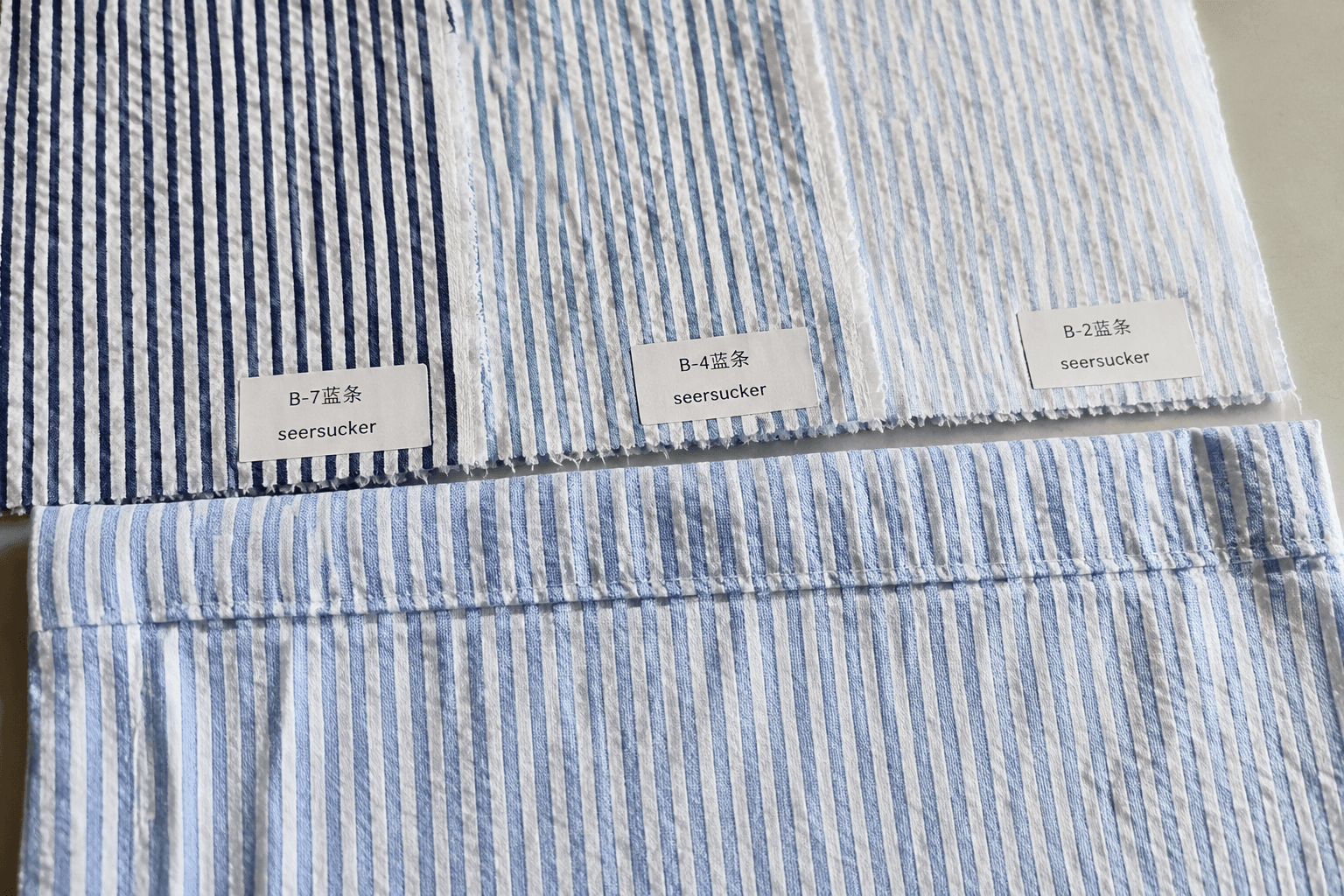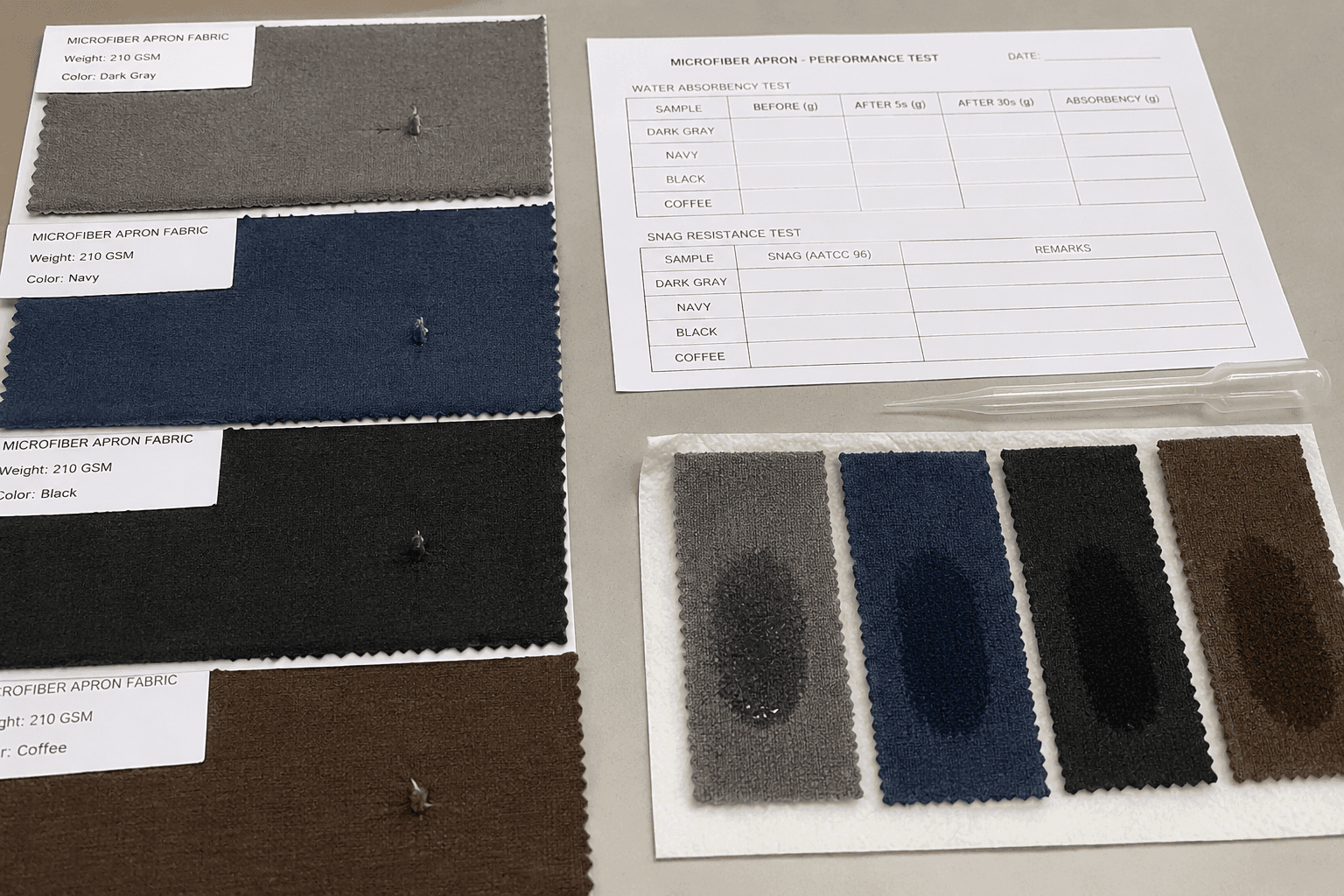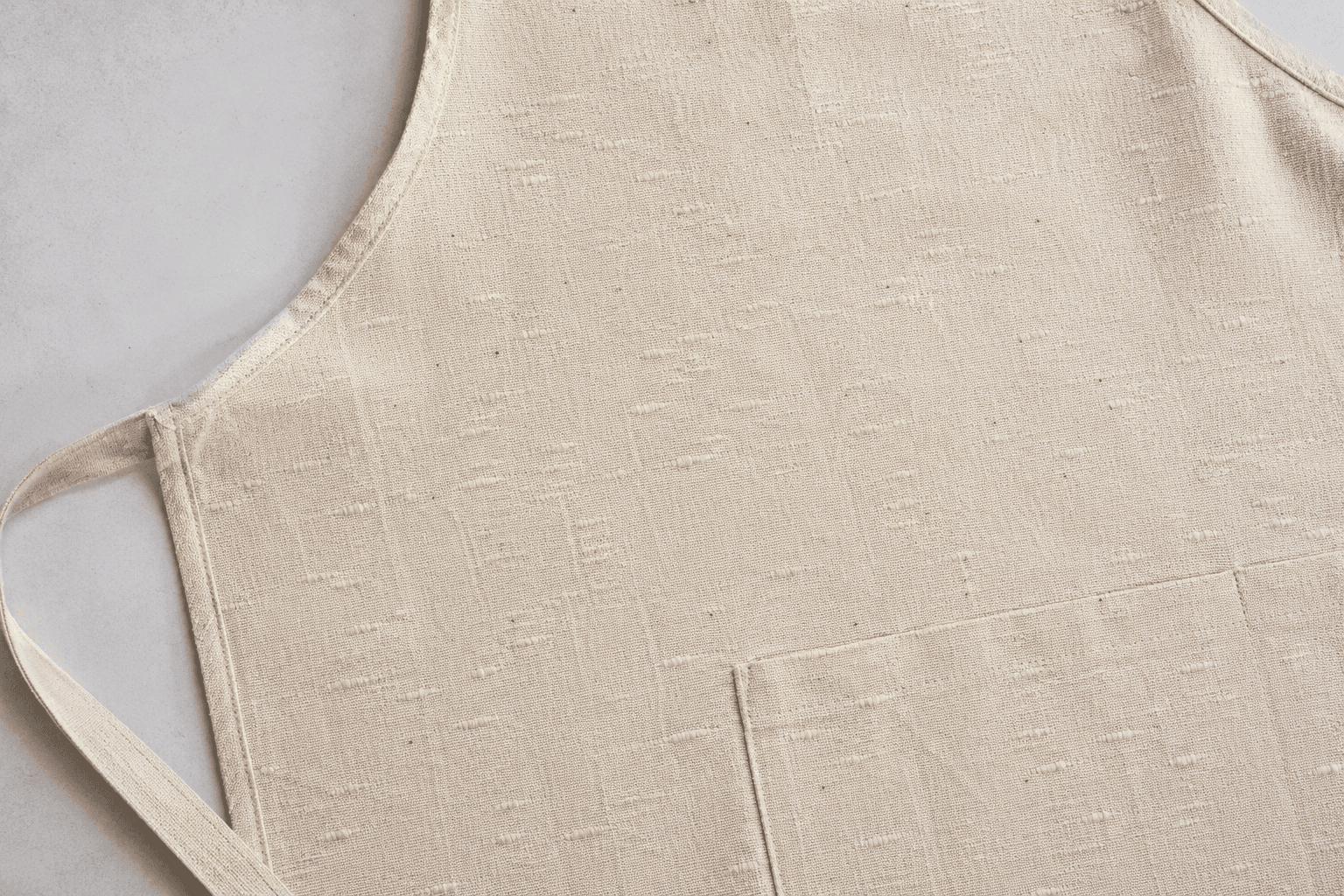
For many apron programs, buyers want a fabric that does not look too flat or uniform. A plain dyed twill can feel dependable but ordinary, especially for coffee shops, bakeries, garden brands, ceramic studios and lifestyle retailers that want a warmer handfeel. A slub cotton apron solves part of that problem by adding irregular yarn character, small thick-and-thin marks and a more natural surface without moving into fragile novelty fabric.
From a factory point of view, the main question is not whether slub fabric looks good. It usually does. The sourcing question is whether the textured yarn, weave density, dyeing method, seam construction and washing process can support daily use, repeated laundering and consistent bulk delivery. A fabric can be rustic and still meet commercial durability requirements, but only if the specification is built around the apron’s real working conditions.
This article explains how we evaluate textured cotton for custom aprons in bulk production: GSM range, weave options, expected shrinkage, color behavior, reinforcement points, costing impact and inspection standards. The goal is to help sourcing managers choose a rustic apron material with character while avoiding fabric distortion, weak seams, excessive shade variation or unpleasant surprises during replenishment orders.
- Slub yarn adds surface character but does not automatically reduce durability if yarn count, weave density and finishing are controlled.
- Apron-ready slub cotton usually sits between 220 and 360 GSM, depending on the end use and washing method.
- Textured apron fabric needs realistic shade and slub tolerance because every meter will not look identical.
- Pre-shrinking or garment washing should be agreed before bulk when the apron will be machine washed by commercial users.
- Reinforcement at neck straps, waist ties and pocket corners matters more when the fabric has a loose or nubby surface.
- Sampling should include fabric handfeel, wash test, shrinkage test and pocket load test, not only appearance approval.
What makes a slub cotton apron different from plain cotton
A slub cotton apron is made from yarn that contains deliberate thick and thin sections. These sections create a surface with small irregular ridges, knots and uneven visual depth. Compared with plain 10 oz cotton duck or standard twill, slub cotton looks less industrial and more lived-in. Buyers often describe it as handmade, rustic, soft, nubby or artisan, although in bulk production it still needs to be engineered like any other workwear item.
The texture can come from the yarn itself, the weave structure, or a combination of both. A light slub yarn in a balanced plain weave gives a subtle linen-like effect. A heavier slub yarn in twill gives more body and shadow. A nubby cotton apron may use thicker yarns with more visible irregularity, but that also increases the need to control linting, snagging and seam bulk. The best choice depends on whether the apron is mainly a uniform, a retail product, a kitchen work apron or a branded merchandise item.
For sourcing, the important point is that slub is a controlled irregularity. It should not be confused with fabric defects such as broken yarn, oil stain, heavy neps, missing yarn, reed marks or weaving bars. During bulk inspection, a factory and buyer should agree what is acceptable texture and what is rejectable defect. Without that agreement, QC teams may reject normal slub character or, worse, accept real fabric problems as natural variation.
- Plain cotton twill gives a cleaner and more uniform surface for corporate uniform programs.
- Slub cotton gives more visual depth for cafes, bakeries, florist shops, studios and lifestyle retail.
- Nubby cotton apron fabric needs tighter defect standards because normal texture can hide weaving issues.
- Artisan apron fabric should still be tested for tear strength, seam slippage and shrinkage before bulk.
Choosing GSM and weave for a durable slub cotton apron
For aprons, GSM is one of the first practical decisions. In our experience, slub cotton below 200 GSM usually feels too light for a full bib apron unless it is lined or intended for decorative retail use. It may be acceptable for half aprons, promotional aprons or warm-weather service uniforms, but pocket corners and tie attachment points need careful reinforcement. For most commercial bib aprons, 220 to 280 GSM is a balanced range: enough body for daily use, but still comfortable for staff wearing the apron for 6 to 10 hours.
A heavier slub cotton apron, around 300 to 360 GSM, gives stronger shape retention and a more premium handfeel. This range suits barista aprons, maker aprons, workshop aprons and home-goods retail products where the customer expects weight and texture. However, heavier fabric increases sewing difficulty, especially where straps, facing, pockets and hems overlap. It also raises freight cost and may require stronger needles, slower sewing speed and more careful pressing. For a 300 GSM bib apron with large front pocket and cross-back straps, the finished weight can easily reach 280 to 380 grams per piece depending on size and hardware.
Weave matters as much as weight. Plain weave slub cotton has a straightforward rustic look and can be cost-effective, but if the yarns are not dense enough it may distort after washing. Twill slub cotton has better drape and diagonal structure, often making it more suitable for work aprons. Canvas or duck-style slub fabric can be robust, but it may feel stiff before washing. For programs that need both texture and durability, we normally suggest testing 250 GSM slub twill and 300 GSM slub canvas side by side before confirming bulk fabric.
- 180-210 GSM works mainly for light half aprons, promotional aprons and low-duty retail products.
- 220-280 GSM is the common working range for hospitality bib aprons with a softer handfeel.
- 300-360 GSM suits heavier barista, studio, garden and workshop aprons where structure is expected.
- Above 380 GSM, sewing bulk, drying time and wearer comfort should be reviewed carefully before order placement.
Textured apron fabric options: slub, nubby and rustic constructions
The term textured apron fabric covers several constructions, and buyers should not treat them as interchangeable. A fine slub cotton may only show gentle yarn variation after dyeing. A heavier nubby cotton apron fabric has a more obvious tactile surface, with raised irregular points that can be felt by hand. A rustic apron material may use cotton-linen blends, coarse yarn counts, enzyme wash or pigment dye to create a more aged effect. Each option has a different cost, lead time and risk profile.
For pure cotton slub, the factory can usually source greige fabric more easily than specialty blends. In Zhejiang and nearby textile markets, common slub cotton qualities can often be arranged with fabric MOQ from 800 to 1500 meters per color for custom dyeing, depending on the mill. If using stock-dyed fabric, the MOQ may be lower, sometimes 300 to 500 meters, but available colors and repeat consistency are limited. Cotton-linen slub, recycled cotton slub or organic cotton slub may require longer yarn booking and higher MOQ, often 1500 to 3000 meters per color.
A key trade-off is repeatability. A clean uniform twill can be repeated with relatively tight shade and surface standards. Textured fabrics require a wider but still documented tolerance. If a brand places a first order of 1000 aprons and later repeats 600 pieces after three months, the second lot may have slightly different slub distribution or dye depth unless the same fabric batch was reserved. For retail brands that sell replenishment products, this must be planned from the first purchase order.
- Fine slub cotton is suitable when the brand wants texture but still needs a clean uniform appearance.
- Coarse nubby cotton is better for lifestyle retail, studios and artisan-positioned apron ranges.
- Cotton-linen slub gives a drier handfeel but may crease more and cost 20-45 percent more than standard cotton slub.
- Pigment-dyed rustic fabric gives strong character but requires wash testing for crocking and shade loss.
- Stock textured fabric can reduce lead time, while custom woven or custom dyed fabric improves brand control.
Color, dyeing and washing behavior on slub cotton apron programs
Slub yarn affects color because the thick and thin parts of the yarn absorb dye slightly differently. This is part of the appeal: navy, olive, charcoal, clay, ecru and washed black can look deeper and more natural on slub cotton than on flat fabric. However, the same feature can also create visible shade difference if dyeing is poorly controlled. For bulk apron production, we recommend approving a physical lab dip on the actual slub base fabric, not on standard cotton swatch cards.
Reactive dye is commonly used when the buyer needs better washing fastness and cleaner shade. For hospitality uniforms that will be washed repeatedly, reactive dye is usually safer than pigment dye. Pigment dye, garment dye and enzyme wash can create a softer aged surface, but they also introduce more variation between pieces. If the buyer wants a washed artisan apron fabric with faded seams and natural highs and lows, the inspection standard must accept that no two garments will be exactly the same.
Shrinkage is another major point. Cotton slub can shrink 3 to 8 percent after home laundering if not pre-shrunk, and more if the structure is loose. For apron production, we normally aim for fabric shrinkage within 3 percent after pre-shrinking or sanforizing, but this depends on the fabric mill and finishing route. If the final garment will be washed after sewing, pattern dimensions should include the expected shrinkage. For example, a bib apron target length of 85 cm after wash may need to be cut at 87 to 89 cm before wash depending on test results.
- Reactive dye is preferred for repeated washing and more stable hospitality uniform colors.
- Pigment dye gives a softer vintage look but usually has more shade variation and higher crocking risk.
- Garment wash improves handfeel but adds 3-7 days to production and can increase unit cost by USD 0.20-0.60 per piece.
- Dark colors on slub cotton should be tested for dry and wet rubbing before approval.
- Ecru and undyed cotton reduce dye cost but may show cotton seed specks, yarn variation and batch differences.
Construction details that protect textured apron fabric in use
The durability of a textured apron is not decided by fabric alone. Aprons fail most often at stress points: neck strap attachment, waist tie insertion, pocket corners, side seams and hardware areas. Slub cotton with an open or nubby surface can be more vulnerable to yarn movement if the seam allowance is too narrow or the stitch density is too low. For a commercial apron, we normally use 1 cm or wider seam allowance where construction allows, bartacks at stress points and reinforced pocket corners.
Pocket design deserves special attention. A large center pocket loaded with order pads, pens, pruning shears or mobile devices puts stress on the top corners. On 240 GSM slub twill, a single folded pocket edge may be enough for light hospitality use, but a double-turned top edge with bartacks is better. On heavy 320 GSM nubby cotton, too many folded layers can create bulky corners, so the pattern may need adjusted seam allowances or a facing method. Good sampling should test the actual pocket shape, not only a flat fabric swatch.
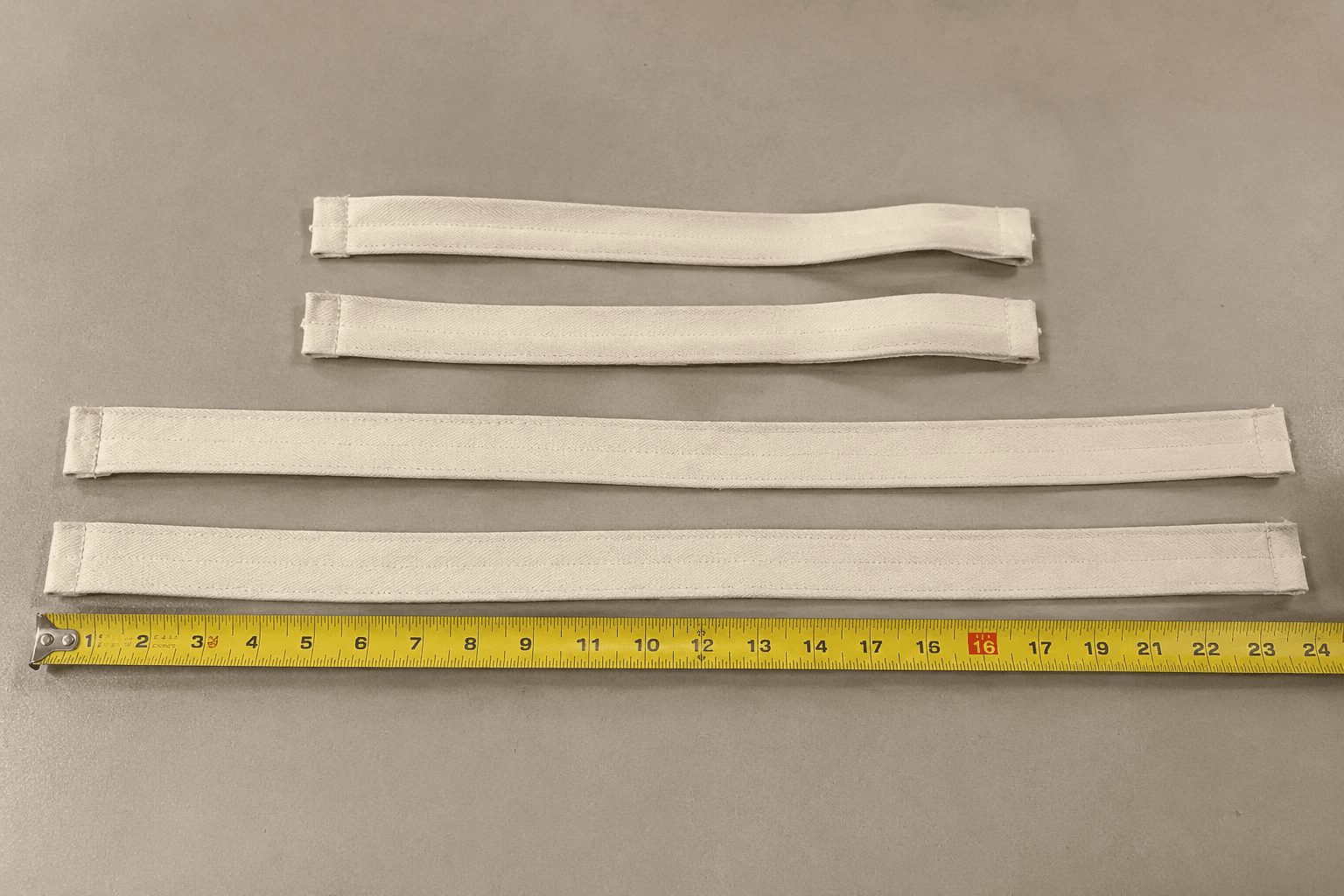
Straps also change the performance of the apron. Self-fabric neck straps look consistent but can become thick and stiff in heavy slub cotton. Cotton webbing, herringbone tape or adjustable cross-back straps may improve comfort and production efficiency. Metal hardware such as grommets, rivets and adjusters should be tested after washing because textured cotton can compress around hardware. If the apron uses antique brass or black oxide hardware, we also check whether color transfer or rust risk appears after wash testing.
- Use bartacks or box stitching at waist ties, neck straps and pocket corners.
- Specify stitch density, commonly 8-10 stitches per inch for medium-weight cotton aprons.
- Review seam bulk before approving heavy self-fabric straps on 300 GSM plus slub cotton.
- Test metal hardware after washing, especially on pigment-dyed or garment-washed aprons.
- Use reinforced pocket construction when the apron is intended for tools, tablets or heavy service use.
Cost, MOQ and lead time for slub cotton apron sourcing
A slub cotton apron is usually more expensive than a standard plain cotton apron, but the increase is not always dramatic. The final price depends on fabric weight, dyeing method, order quantity, pocket complexity, strap type, logo process and packaging. For a basic 240 GSM slub cotton bib apron with one front pocket and simple waist ties, bulk FOB China pricing may be around USD 3.20 to 5.20 per piece at 1000 pieces, depending on fabric availability and workmanship level. A heavier 320 GSM cross-back apron with metal adjusters, reinforced pockets and garment wash may move into the USD 6.50 to 10.50 per piece range.
MOQ is driven mainly by fabric. If the buyer selects available stock slub cotton, an apron factory may accept 300 to 500 pieces per color, although unit cost will be higher and shade continuity is not guaranteed for reorders. For custom dyed slub cotton, practical MOQ is often 800 to 1200 pieces per color for a standard bib apron, assuming fabric consumption of about 0.75 to 1.1 meters per piece. For wider aprons, cross-back styles or large pockets, consumption may increase. When the fabric mill requires 1000 meters per color, the garment MOQ is calculated from actual marker efficiency, not from a fixed sales number.
Lead time should include fabric booking, dyeing, testing, cutting, sewing, washing if needed, inspection and packing. For stock fabric and simple embroidery, sample time may be 5 to 8 days and bulk production 20 to 30 days after approval. For custom dyed slub cotton, allow 10 to 15 days for lab dip and fabric dyeing, then 25 to 35 days for apron production. Garment wash, complex labels or special packaging can add another 5 to 10 days. Before peak seasons such as September to November export windows, fabric mill capacity should be confirmed early.
- Stock slub cotton can support lower MOQ but gives less control over shade and future repeat orders.
- Custom dyed fabric improves brand consistency but usually requires 800-1500 meters per color.
- A simple medium-weight slub apron may cost USD 3.20-5.20 per piece at 1000 pieces FOB China.
- A heavy washed cross-back apron can reach USD 6.50-10.50 per piece depending on hardware and finishing.
- Normal bulk lead time is 25-45 days after approvals, with longer timing for custom fabric and washing.
Quality control standards for a slub cotton apron
Quality control for a slub cotton apron must separate natural texture from true defect. Normal slub variation includes irregular yarn thickness, small nubs, uneven surface shadow and slight texture difference across the fabric. Defects include holes, broken yarn, stains, severe yarn knots, fabric bars, skewing, large color patches, loose bartacks and twisted straps. A practical inspection file should include approved fabric swatch, approved garment sample, measurement tolerance, shade tolerance and photos showing acceptable and unacceptable texture.
For dimensions, aprons are usually inspected with tolerance around plus or minus 1 cm for key measurements such as body width, body length and pocket position, although tighter tolerance may be needed for retail packaged goods. Strap length tolerance can be slightly wider if it does not affect function. After washing, the factory should recheck body length, strap twisting, seam puckering and pocket deformation. Textured fabric can hide minor puckering visually, but it should not cause the apron to look distorted on body.
Testing should match the use case. A cafe uniform apron may need color fastness to washing at grade 3-4 or better, rubbing fastness review for dark colors, seam strength checks and shrinkage testing. A retail apron sold as artisan apron fabric may need better packaging presentation and more controlled visible texture, because the end customer inspects the surface before use. A garden or workshop apron should include pocket load and tie strength checks. The factory should not apply one generic cotton apron QC checklist to all slub programs.
- Approve slub texture using actual fabric and garment samples, not only digital photos.
- Define unacceptable defects such as holes, oil marks, broken yarn, severe weaving bars and large shade patches.
- Check shrinkage after one wash and, for uniform programs, consider three-wash testing before bulk.
- Inspect bartacks, pocket corners and strap attachments as critical points, not minor workmanship items.
- Keep retained samples from each bulk lot to support reorder comparison and claim handling.
When a slub cotton apron is the right sourcing choice
A slub cotton apron is a strong choice when the brand wants visible material character but still needs a practical working garment. It suits hospitality groups that want uniforms to feel warmer than standard black twill, lifestyle retailers that sell aprons as home and studio goods, and product developers building a rustic apron material story around craft, food, gardening or handmade work. It is less suitable for programs demanding perfectly uniform shade, very low promotional pricing or highly formal appearance across thousands of staff.
The safest development route is to begin with the end use, not the fabric name. For a bakery uniform, a 250 GSM reactive-dyed slub twill with reinforced pockets may be more useful than a very coarse 340 GSM nubby cotton that looks good on a hanger but feels heavy during service. For a ceramic studio apron, heavier slub canvas with cross-back straps and large tool pockets may be justified. For retail gifting, handfeel, folded presentation and shade consistency may matter as much as tensile strength.
In bulk sourcing, character must be specified. A buyer should confirm target GSM, composition, weave, color standard, shrinkage, wash method, pocket loading, strap type, logo process, packaging and reorder expectations before approving the purchase order. When those points are clear, textured cotton can deliver the visual difference many apron programs need without giving up the practical durability that commercial users expect.
- Choose slub cotton when the apron needs natural surface character and daily-use strength.
- Avoid very loose textured fabric when the apron will carry heavy tools or face industrial laundering.
- Use medium-weight slub twill for hospitality uniforms that need comfort and reliable washing.
- Use heavier slub canvas or nubby cotton for studio, garden and maker apron ranges.
- Reserve fabric from the first lot if exact reorder continuity is important.