For apron sourcing, fabric weave is not a small technical detail. It affects hand feel, durability, shrinkage control, print method, sewing efficiency, packing volume and final cost per piece. A 240 GSM cotton twill apron, a 10 oz plain canvas apron and a 12 oz duck canvas apron may all look acceptable in a sample room, but they behave very differently after 20 industrial washes or a full day on a barista, chef or workshop staff member.
This twill vs canvas apron guide is written from the factory side for buyers who need to specify fabric clearly before quotation. In China apron production, unclear fabric descriptions such as "heavy cotton" or "durable canvas" often create avoidable sample revisions. The correct specification should include weave, fiber content, weight in GSM or oz, dyeing method, shrinkage target, finish and intended decoration method.
At Linwa Apron Manufacturing in Zhejiang, we usually treat twill, canvas and duck as three different sourcing decisions rather than three interchangeable cotton options. Each weave has a proper place. The best choice depends on end use, target retail position, washing environment, logo application, MOQ and the buyer's acceptable cost range.
- Twill is usually the best choice for uniforms when the buyer needs softer drape, stable sewing and repeat orders in 180-280 GSM cotton or poly-cotton.
- Plain canvas gives a sturdier hand feel for hospitality and retail aprons, commonly in 8-12 oz weights, but it can feel stiff without washing or softening.
- Duck canvas apron fabric is the strongest option for tool aprons, workshops and heavy-duty use, but it raises fabric cost, sewing difficulty and shipping weight.
- GSM and oz must be confirmed with weave because a 280 GSM twill and a 280 GSM canvas do not feel, fold or wash the same way.
- Logo method changes the fabric decision; embroidery, screen print, heat transfer and leather patches each perform differently across twill, canvas and duck.
- Bulk buyers should approve a washed sample before production when shrinkage, colorfastness and long-term hand feel are important.
Twill vs canvas apron: what changes in actual production
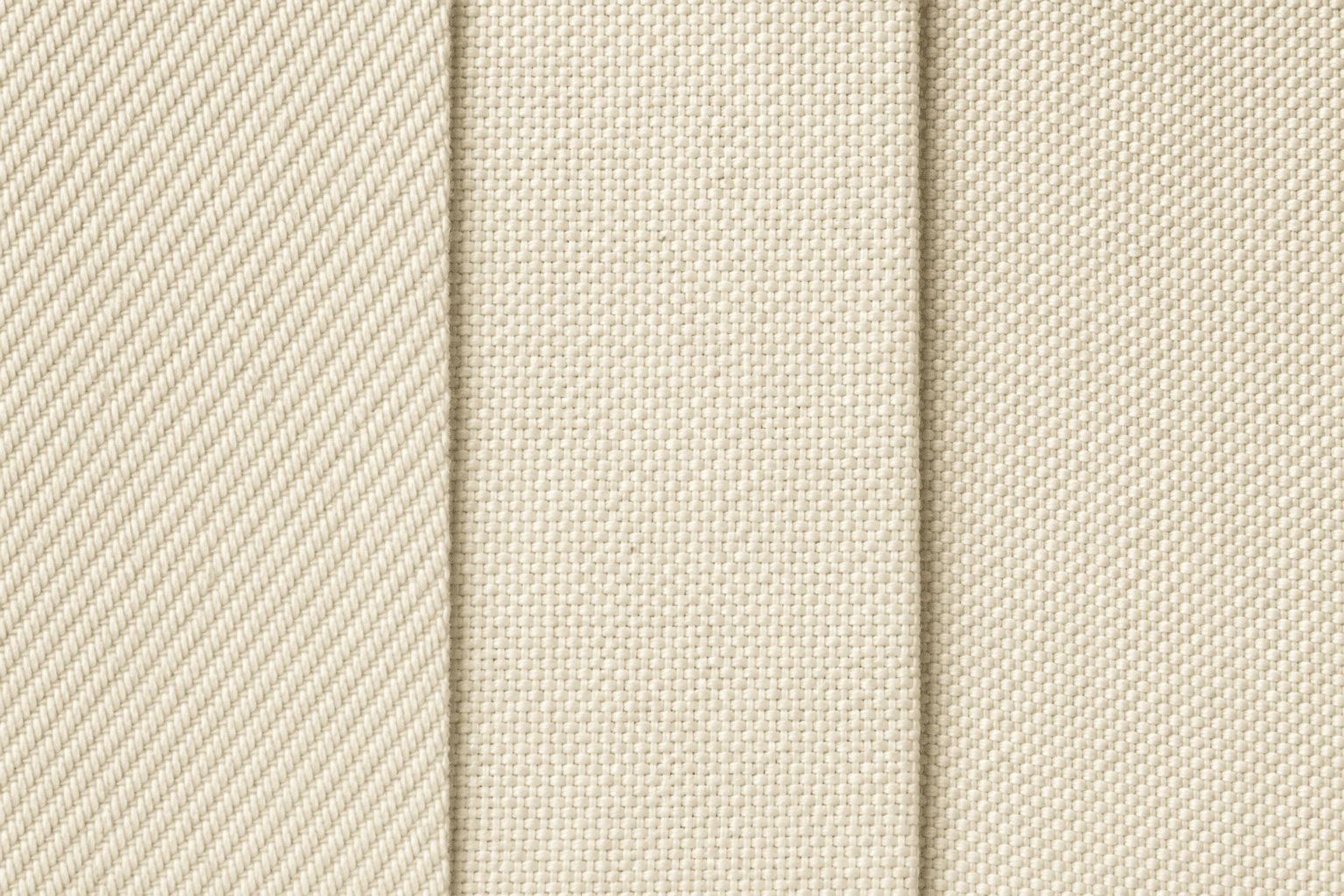
The first difference is yarn interlacing. Twill is woven with a diagonal rib, normally visible as a slanted line on the surface. Canvas is a plain weave, where warp and weft cross one over one in a more grid-like structure. Duck canvas is also a plain weave, but it is tighter, denser and generally heavier than ordinary canvas. In apron sourcing, these structures influence not only appearance but also cutting, stitching, washing and decoration.
A cotton twill apron normally drapes closer to the body. It bends more easily at the waist and chest, which is important for restaurant servers, hotel staff, kitchen teams and retail workers who wear the garment for 6-10 hours per shift. Plain canvas feels more substantial and upright. It communicates durability to the end user, but if the weight is too high, the apron may feel board-like before washing. Duck canvas is more rigid again, especially at 12 oz, 14 oz or above.
From a factory costing view, twill is often more predictable for high-volume uniform programs because cutting waste, sewing speed and defect rate are easier to control. Canvas and duck require more attention to needle size, seam thickness, pocket reinforcement and pressing. For a buyer comparing apron weave types, the correct question is not simply "which is stronger?" but "which weave gives the right balance of durability, comfort, decoration result and landed cost?"
- A 180-220 GSM cotton twill apron is suitable for light food service, promotional use and economy uniform programs.
- A 240-280 GSM cotton twill apron is a common mid-range specification for restaurants, cafes and retail uniforms.
- An 8-10 oz plain canvas apron works well for casual dining, coffee shops and lifestyle retail brands.
- A 12-14 oz duck canvas apron is more suitable for barbers, workshops, tool pockets, grilling and heavy-duty hospitality use.
- A fabric change from twill to duck can increase sewing time by 8-15% depending on pocket design and seam construction.
Cotton twill apron: soft drape, stable sewing and uniform repeatability
A cotton twill apron is usually the safest starting point for a buyer sourcing staff uniforms. The diagonal construction gives better flexibility than plain canvas at the same GSM. It also helps hide minor wrinkles and surface marks, which matters when aprons are washed frequently and packed in stacks. For many restaurant and hotel programs, 240 GSM or 260 GSM cotton twill gives a practical balance between comfort and durability.
Twill also performs well in sewing. Pocket edges, neck straps, waist ties and hems can be folded cleanly without creating excessive bulk. This reduces needle breakage and inconsistent seam appearance in mass production. For a 3,000 pc order with two lower pockets, one chest pocket and adjustable neck hardware, twill normally keeps the production line moving faster than canvas of similar finished weight.
The main limitation is perceived ruggedness. Some buyers want the apron to feel heavy in the hand because they associate weight with quality. A 260 GSM twill may last well in normal hospitality use, but it will not give the same structured feel as a 10 oz canvas. If the buyer's retail positioning depends on a craft, workshop or premium utility image, twill can look too uniform-like unless combined with stronger trims, contrast stitching or a heavier weight.
- Use 180-220 GSM twill for promotional aprons, light kitchen use and budget-sensitive tenders.
- Use 240-280 GSM twill for daily restaurant, hotel, catering and retail staff uniforms.
- Use 300-320 GSM twill only when the buyer accepts a firmer hand feel and slightly higher drying time.
- Specify pre-shrink or controlled shrinkage if the apron will enter commercial laundry.
- For repeat programs, keep the same yarn count, dye lot standard and finishing route instead of approving fabric only by color.
Plain canvas apron: stronger hand feel without going fully heavy-duty
Plain canvas is popular for cafe aprons, bistro aprons, florist aprons and casual workwear-style uniforms because it has a more rugged surface than twill. It holds shape better on the body and gives a clear visual signal of durability. For brands selling aprons as merchandise or lifestyle products, an 8 oz or 10 oz cotton canvas often feels more substantial than a mid-weight twill at a similar material cost range.
However, canvas needs careful weight selection. In China sourcing, canvas may be quoted by GSM or by ounces per square yard. An 8 oz canvas is roughly around 270 GSM, while a 10 oz canvas is around 340 GSM, depending on finishing and moisture content. Buyers should avoid comparing only the number without checking the measurement standard. A supplier quoting 10 oz greige fabric before dyeing and another quoting finished fabric after dyeing may not be giving equivalent weights.
Canvas also changes the decoration result. Screen printing can look strong on canvas because the surface is flatter than twill, but heavy canvas may absorb more ink if not properly prepared. Embroidery is possible, but dense embroidery on stiff canvas can create puckering if backing and thread tension are not adjusted. Heat transfer can work for fashion or promotional orders, but buyers should confirm wash temperature and peel resistance before placing a large PO.
- For cafe and bar aprons, 8 oz canvas is often enough when the design has no heavy tools in the pockets.
- For lifestyle retail aprons, 10 oz canvas gives a stronger hand feel and better shelf impression.
- For long waist ties in canvas, confirm tie width and stitch density because thick narrow ties can feel hard at the knot.
- For dark colors such as black, navy and forest green, request colorfastness to washing and rubbing test data before production.
- For screen print logos, approve both an unwashed and washed print sample if the apron is expected to be laundered often.
Duck canvas apron: when the heavier fabric is justified
A duck canvas apron is not simply a better canvas apron. It is a specific heavier-duty option that should be used when the end use justifies the extra cost and stiffness. Duck is tightly woven, usually with heavier yarns, and is selected for aprons that carry tools, resist abrasion or need a firm workwear appearance. Common programs include barber aprons, grill aprons, maker aprons, denim-style utility aprons and workshop aprons.
For sourcing managers, the trade-off is clear. Duck canvas improves strength, pocket stability and perceived value, but it increases fabric consumption cost, sewing difficulty and freight weight. A 12 oz duck canvas apron with cross-back straps, metal hardware, reinforced pockets and leather patch may cost significantly more than a 260 GSM twill uniform apron. Depending on trim choices and order quantity, the ex-factory difference may be USD 1.20-3.50 per piece or more.
Duck also needs stronger construction planning. Pocket corners should use bartacks or reinforced stitching. Strap attachment points must be tested because the fabric itself may be strong but stress can concentrate at one seam. If the apron has thick multi-layer pockets, the factory may need heavier needles, slower sewing speed and adjusted seam allowance. These details affect production lead time as much as material cost.
- Choose 10 oz duck for a firm but still wearable hospitality apron.
- Choose 12 oz duck for barber, grill, workshop and tool-pocket apron programs.
- Use 14 oz duck only when the buyer accepts a clearly stiff garment and higher shipping weight.
- Add bartacks at pocket openings, strap joins and towel loop points for heavy-duty use.
- Allow 3-7 extra sampling days for complex duck canvas designs with rivets, leather patches or cross-back hardware.
Apron fabric comparison by comfort, washing and shrinkage
Comfort is where many fabric decisions become practical. Staff may accept a heavy apron for a short event or retail photo shoot, but not for daily service in a hot kitchen. Twill generally wins on comfort at 220-280 GSM because it bends easily and feels less restrictive at the waist. Plain canvas can be comfortable after washing, especially at 8 oz, but 10 oz and above may need softening if the buyer wants an easier first wear. Duck canvas is comfortable only when the design supports it: wider straps, balanced weight, correct bib shape and not too many heavy pocket layers.
Shrinkage must be treated as a specification, not an assumption. For cotton twill and canvas, normal garment washing or fabric pre-shrink can reduce final shrinkage, but it adds cost and time. A reasonable target for many cotton apron programs is within 3-5% after washing, although stricter targets may require pre-shrunk fabric or garment wash testing. If the apron is for commercial laundry, buyers should state wash temperature, drying method and expected cycles. A domestic 30 degree C wash is not the same as a 60 degree C industrial process.
Color performance also varies by fabric and finish. Dark twill can show crease fading if washed aggressively, while dark canvas may show more rubbing marks because of its surface texture. Pigment-dyed canvas gives a casual worn appearance but may not be suitable for strict uniform color matching. Reactive-dyed cotton is usually better for consistent uniform orders, though exact performance depends on dye house control and fabric preparation.
- For comfort-first uniforms, specify 240-260 GSM cotton twill or cotton-rich twill.
- For a sturdier retail hand feel, specify 8-10 oz cotton canvas with soft finish or garment wash.
- For industrial-style durability, specify 12 oz duck canvas with reinforced stress points.
- For commercial laundry, request shrinkage and colorfastness tests based on the buyer's real washing conditions.
- For strict color continuity across repeat orders, keep lab dips, bulk fabric cuttings and production records by lot.
Twill vs canvas apron cost, MOQ and lead time in China sourcing
Costing depends on more than fabric price per meter. Fabric width, marker efficiency, pocket layout, strap construction, dyeing MOQ, trim selection and inspection standard all affect the final apron price. As a general factory-side reference, a simple 240 GSM cotton twill bib apron may sit in a lower cost range than an 8 oz canvas apron, while a 12 oz duck canvas apron with metal hardware and reinforced pockets moves into a higher bracket.
For custom apron orders in China, MOQ is often driven by fabric dyeing rather than sewing. Stock black, natural, navy or khaki fabric may allow lower MOQ, sometimes 300-500 pcs per color depending on the design and factory schedule. Custom-dyed cotton fabric may require 800-1,500 pcs per color, and specialty heavy duck may require even more if the mill does not hold greige stock. Buyers who need six colors at 300 pcs each should confirm fabric availability before finalizing a range plan.
Lead time also changes by weave. If stock fabric is available, sampling may take 5-10 days and bulk production may take 25-35 days after approval and deposit. Custom-dyed twill or canvas usually adds 10-18 days for lab dip, dyeing and finishing. Heavy duck canvas with garment wash, leather trims or custom metal hardware can push total lead time to 45-60 days. The safest calendar includes fabric approval, pre-production sample approval, bulk cutting, sewing, finishing, final inspection and export packing.
- A basic stock-color twill apron order may be practical from 300-500 pcs per style.
- A custom-dyed twill or canvas order often needs 800-1,500 pcs per color to meet dyeing MOQ.
- A heavy duck canvas apron with custom trims may need 1,000 pcs or more for stable costing.
- Normal sampling time is 5-10 days for stock fabric and 12-20 days for custom fabric or wash development.
- Bulk lead time is commonly 25-35 days for standard aprons and 45-60 days for complex heavy-duty aprons.
Logo application and trims across apron weave types
Decoration should be confirmed before fabric is locked. A cotton twill apron is usually friendly for embroidery because the fabric is flexible and accepts stitching well when the backing is correct. Fine text can still be difficult, especially under 5 mm letter height, but the general result is clean. Twill is also suitable for woven labels, heat transfer and simple screen print, although the diagonal texture can slightly influence sharp print edges.
Canvas gives a more rugged base for branding. Screen print, leather patch, woven patch and metal rivets all match the visual language of canvas aprons. The buyer should check that the logo size is not fighting the pocket position or bib curve. For example, a 90 mm wide logo on a narrow bib may look cramped after neck strap adjustment. On heavier canvas, embroidery should be tested because dense stitch areas can stiffen the chest panel.
Duck canvas supports premium trims but punishes weak engineering. Rivets, grommets, D-rings, sliders and leather tabs can all work, but they must be selected for washing and end use. If the apron will be machine washed, untreated leather may bleed, harden or deform. If the apron is for food service, buyers should also consider whether removable straps or leather components are acceptable for the cleaning process.
- Use embroidery on twill for hotel, restaurant and uniform programs where a clean corporate logo is required.
- Use screen print on canvas for larger artwork, cafe branding and merchandise-style aprons.
- Use leather or woven patches on duck canvas when the apron is positioned as premium utility workwear.
- Avoid very small embroidered text on heavy canvas unless a stitch sample has been approved.
- Confirm trim washability before using leather, antique brass hardware, coated metal parts or contrast tapes.
How to specify the right weave before quotation
A clear tech pack prevents most twill vs canvas apron misunderstandings. The buyer should specify weave, fiber content, finished weight, color standard, finish, decoration, measurements, tolerance and packing method. If the target is a cotton twill apron, say 100% cotton twill, 260 GSM finished weight, reactive dyed, pre-shrunk, colorfastness grade target and shrinkage target. If the target is canvas, state whether it is plain canvas or duck canvas and whether the weight is in oz before or after finishing.
Physical references are also useful, but they should not replace written specifications. Many buyers send one sample apron and request "same quality". That can work for initial direction, but the factory still needs measurable standards for bulk control. Fabric hand feel, stiffness and washed appearance can vary between mills even at the same GSM. For repeatable sourcing, approve a fabric swatch, a fit sample, a pre-production sample and, for wash-sensitive orders, a washed sample.
The final decision should match the commercial role of the apron. For a chain restaurant rolling out 20,000 pcs across many stores, twill may deliver the best consistency and comfort. For a coffee brand selling aprons at retail, canvas may justify the extra hand feel. For a workshop or barber brand, duck canvas may be the correct choice if the design includes reinforced pockets and durable trims. A good apron fabric comparison is not about selecting the heaviest option; it is about selecting the weave that performs correctly at the target price and use case.
- State fabric as weave plus fiber plus finished weight, such as 100% cotton twill 260 GSM or cotton duck canvas 12 oz.
- Confirm whether weight is measured before dyeing, after finishing or on the finished garment.
- Provide wash conditions if shrinkage, fading or trim durability is important.
- Approve decoration on the actual bulk fabric quality, not on a substitute swatch.
- Keep one sealed pre-production sample for inspection comparison during bulk production.