For bulk apron programs, finishing is not a minor step. The way you handle drying commercial aprons affects shrinkage, seam twist, print cracking, strap distortion, and final carton appearance. A 10 mm change in bib length may sound small on paper, but across a 5,000 pc order it becomes a repeat complaint from distributors and uniform programs.
Most apron failures after wash do not come from the base fabric alone. They come from a mismatch between fabric content, thread construction, wash temperature, apron tumble dry settings, and how the factory handles pressing aprons before packing. A cotton twill apron at 260 GSM behaves very differently from a 65/35 poly-cotton at 240 GSM or a waxed canvas style built for heavy food service. If the buyer does not define the finishing route early, the supplier will usually default to the fastest method, not the safest one.
For sourcing managers and product developers, the right question is not whether an apron can be dried and pressed. It is how many cycles it can survive, what dimensional change is acceptable, and what finishing method keeps the order within spec. The numbers matter: shrinkage target, press temperature, dwell time, MOQ by color, and the lead-time impact of a separate finishing step. A well-run apron program should make those trade-offs explicit before bulk cutting starts.
- Drying method must be tied to fabric content, because 100% cotton, poly-cotton, and coated canvas cannot share the same heat profile.
- Low-to-medium apron tumble dry settings reduce distortion; aggressive heat shortens straps, curls edges, and can make embroidery pucker.
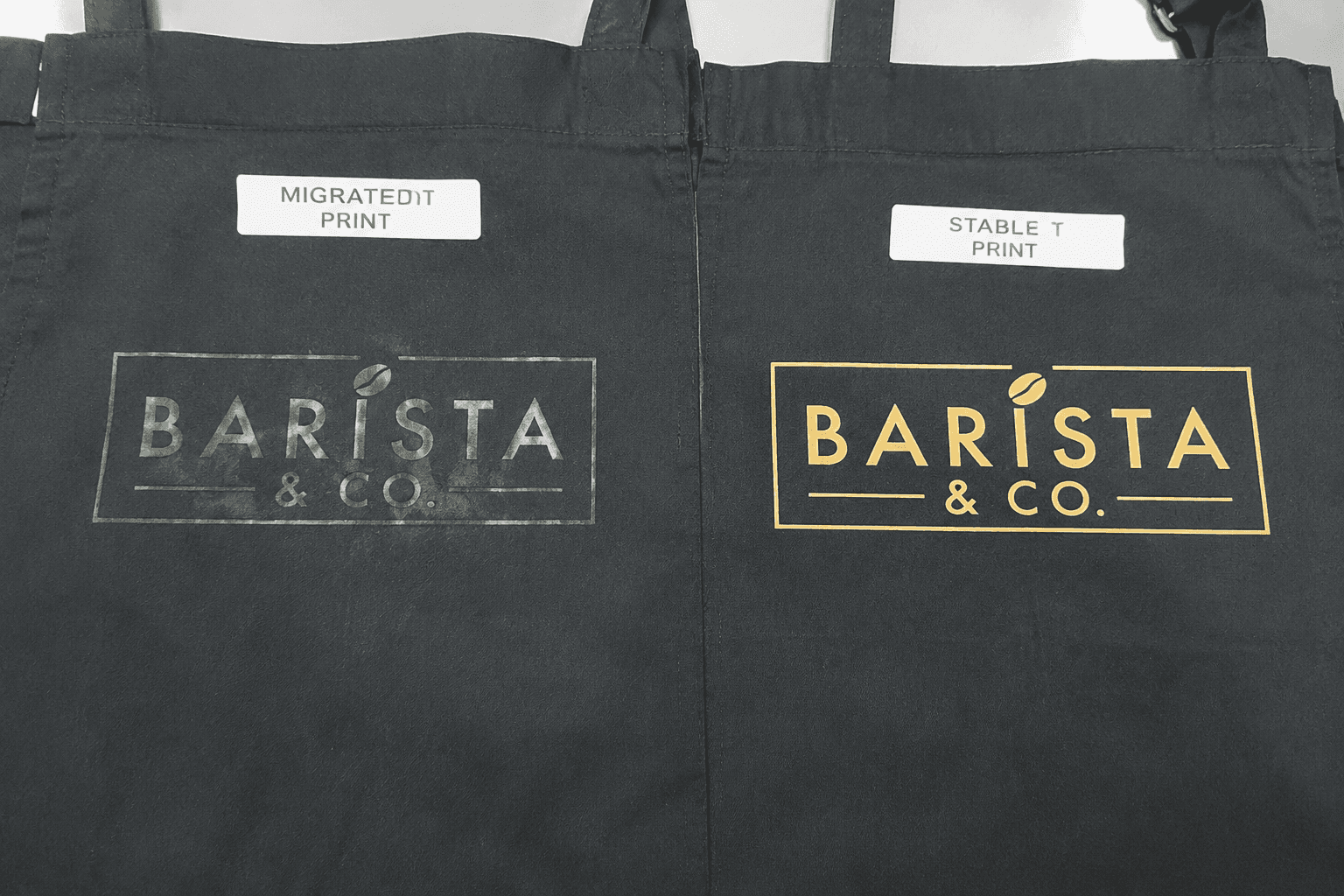
- Pressing aprons should be done from the reverse side when possible, especially for screen print, PU patches, waterproof coatings, and heat-sensitive trims.
- Commercial apron finishing needs a written spec for shrinkage, appearance, and carton packing, not just a simple wash instruction.
- Buyer-supplied care labels should match the real factory process, or the post-sale complaint rate will rise after the first laundry cycle.
- Extra finishing steps add cost and time, but they are cheaper than rework on a 3,000 to 10,000 pc bulk order.
Why drying commercial aprons changes the final product
In apron manufacturing, the finishing step determines whether the garment arrives looking professional or uneven. When drying commercial aprons, the factory is controlling more than moisture removal. It is controlling dimensional stability, surface smoothness, seam recovery, and how the apron hangs on the body after laundering. A good garment can be damaged by a careless finishing line just as easily as a weak one can be improved slightly by careful handling.
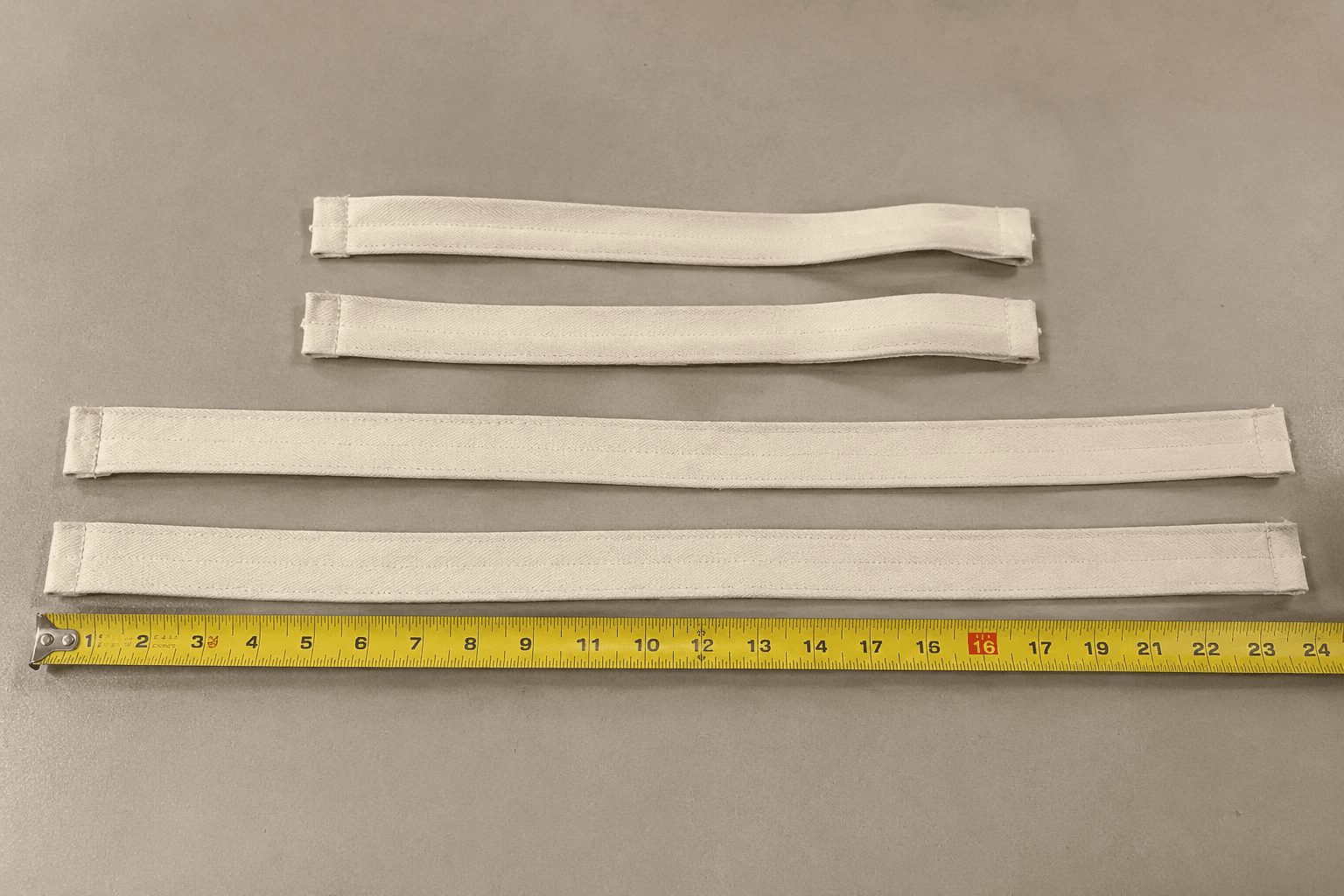
The biggest risk is uncontrolled shrinkage. On a standard 240 GSM cotton twill apron, a single hot cycle can cause 3% to 5% shrinkage if the fabric was not pre-shrunk properly. For a bib apron with a 90 cm body length, that is a loss of 2.7 to 4.5 cm. The issue is not only the measurement. Pockets can sit higher, neck loops can feel tighter, and cross-back straps can shift after packing and resale.
Factories that handle hospitality and retail programs usually separate drying by construction. Lightweight poly-cotton waist aprons may run through a controlled tumble dry at medium heat, while heavy canvas aprons or coated aprons are flat dried or line dried. If a customer wants repeated laundering at commercial laundry temperatures, the sample stage must simulate that route. Otherwise the bulk shipment may pass a basic inspection and still fail after two wash cycles.
- For 100% cotton twill, expect more shrinkage risk and specify pre-shrunk fabric if the order requires repeat wash stability.
- For 65/35 poly-cotton, drying is easier, but excessive heat can still glaze the surface and harden the hand-feel.
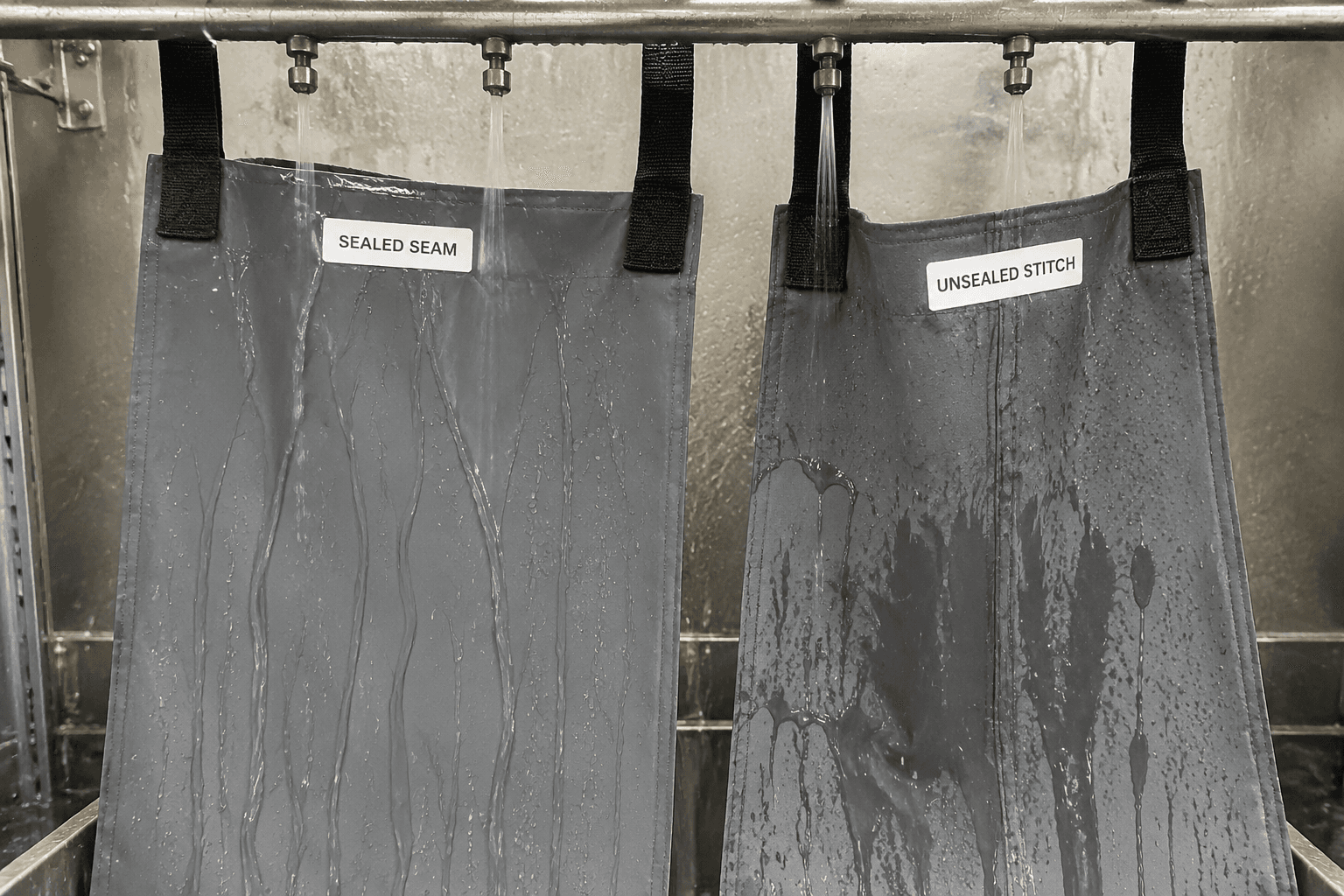
- For waxed, PU-coated, or laminated aprons, avoid standard apron tumble dry and use air drying or low-temperature flat drying.
- For aprons with embroidery, patch logos, or heat-transfer branding, the finishing line must protect the decoration method first.
Drying commercial aprons by fabric type and GSM
The right drying route starts with the material, not the customer segment. A restaurant apron made from 100% cotton at 260 GSM behaves differently from a bar apron in 80/20 canvas at 320 GSM. GSM tells you the approximate mass of the fabric, but the yarn content, weave density, and finishing chemistry determine how the item reacts under heat. Two aprons with the same GSM can still dry and press differently if one uses reactive dyed cotton and the other uses pigment-dyed poly-cotton.
For cotton twill in the 220 to 280 GSM range, the safest approach is a controlled low-to-medium heat cycle, then immediate removal to avoid over-drying at the seams. For poly-cotton in the 180 to 240 GSM range, the dryer can usually run faster, but the factory should still keep the exhaust temperature stable to prevent edge curl and pocket distortion. Heavy canvas above 300 GSM often needs longer dwell time at lower heat; otherwise the outer surface dries before the inner layers, and the garment comes out stiff and uneven.
Special finishes change the equation. Enzyme-washed aprons may look softer but can become more vulnerable to seam stretching if dried aggressively. Water-repellent styles need conservative heat because high temperature can reduce surface performance. Aprons with leather, faux leather, metal rivets, rubber labels, or reflective tape should be tested individually, because each trim has its own heat tolerance. In sourcing terms, the buyer should treat drying as part of the product specification, not as an afterthought.
- 220 to 240 GSM poly-cotton: medium heat is usually acceptable, with a target shrinkage below 3%.
- 240 to 280 GSM cotton twill: low-to-medium heat is safer, with a target shrinkage below 5% unless pre-shrunk fabric is used.
- 300 GSM and above canvas: flat dry or low tumble dry, especially for cross-back aprons with multiple strap layers.
- Coated and laminated aprons: avoid heat if the coating can soften, bloom, or stick to packaging.
Drying aprons in bulk without causing lot variation
Bulk production is where finishing mistakes become expensive. A 300-piece sample batch can look fine even if the process is unstable, because the dryer load is small and the operator is paying close attention. On a 3,000 pc production run, the same setup may create lot-to-lot variation as the machine is loaded differently, the moisture content changes, and operators push for speed. Buyers often see this as a quality issue, but in practice it is usually a process control problem.
A stable finishing line needs consistent load size, fabric grouping, and cooling time. If the factory mixes light waist aprons with heavy bib aprons in the same dryer load, the lighter items can over-dry while the heavier pieces remain damp in the center. That creates a mix of hand-feel and measurement values across the shipment. For custom apron programs, we normally recommend one drying route per style code, not one route for the whole order.
The buyer should ask for a pre-production finishing trial when the order includes multiple fabrics or trims. This is especially important for custom programs above 2,000 pcs or for any order where the selling price depends on repeat wash performance. The trial does not need to be large. Ten to twenty pieces per fabric type is enough to confirm whether the apron tumble dry route is safe, what the shrinkage looks like, and whether the decoration survives.
- Separate light and heavy styles by dryer load so moisture content stays uniform.
- Avoid mixing dark and light colorways if dye transfer or lint pickup is a risk.
- Use the same initial moisture target across the lot so the end result is repeatable.
- Measure at least length, width, and neck/waist strap recovery after the first drying cycle.
Pressing aprons after drying commercial aprons
Pressing aprons is not about making them look flat at any cost. It is about restoring shape without crushing the fabric, damaging the logo, or setting in wrinkles that the buyer will later see on the shelf. The biggest mistake is to treat all aprons like plain cotton shirts. An apron has pockets, straps, bartacks, and often mixed materials, so the press line must move with the construction, not against it.
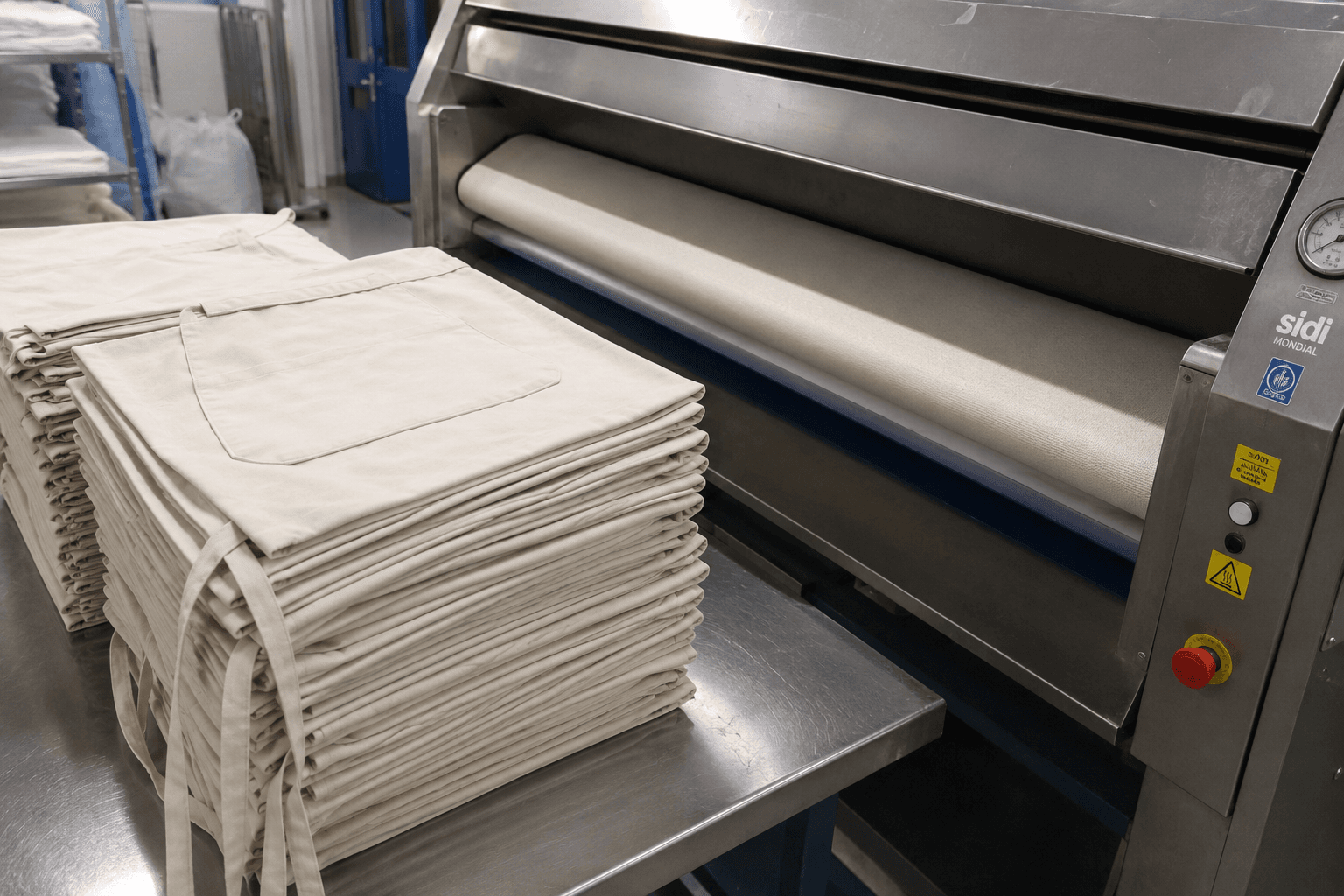
For plain cotton and poly-cotton aprons, medium steam can improve appearance after drying commercial aprons, especially around pocket openings and hem edges. For screen print, the iron should be used on the reverse side or with a press cloth when the ink system is sensitive. Heat-transfer graphics, silicone patches, PU labels, and reflective trims can deform under direct contact, so those areas should be protected with lower temperature and shorter dwell time. In many cases, a light steam finish is enough; a full hard press only makes the apron look artificially stiff.
A good factory will match press settings to the garment construction. As a general industrial range, cotton twill can be pressed hotter than poly-cotton, while coated fabrics should be handled carefully or not pressed at all. The real objective is a clean drape, not a shirt-style crease. If the apron is intended for hospitality, retail demo, or front-of-house use, the buyer should ask for a sample pressed to retail standard and another sample packed unpressed so both visual outcomes can be compared.
- Press from the reverse side for print, embroidery backing, and decorative patches whenever possible.
- Use lower temperature near straps, buckles, and any polyester binding to avoid gloss marks.
- Do not over-press pocket corners, because they can become sharp and distort the apron silhouette.
- For coated aprons, confirm whether the product should be steamed, lightly flattened, or not pressed at all.
Commercial apron finishing: labels, packing, and buyer specs
Commercial apron finishing is the point where garment quality becomes a logistics issue. If the garment is dried and pressed correctly but packed while still warm, residual moisture can create odor, slight wrinkling, or carton condensation during sea freight. If the factory folds too tightly after pressing, the apron may arrive with hard fold lines that the end customer reads as poor quality. The packing standard matters as much as the washing standard.
Sourcing teams should define the end condition in measurable terms. For example: one wash and one low-heat apron tumble dry cycle, shrinkage under 3% for poly-cotton or under 5% for cotton, no visible cracking on the print, no label curl, no buckle deformation, and no hard press line on the front panel. If the apron is going to chain laundries or hotel groups, the spec may need to cover 20 to 50 wash cycles and repeated pressing after each wash. Without this written target, suppliers will interpret finishing in the cheapest possible way.
The commercial impact is real. A factory may quote an apron at $1.80 to $3.20 per pc FOB depending on fabric, stitching, and decoration, but a higher-grade finishing route can add 5 to 15 cents per piece. That is a rational cost if it reduces returns, rework, and dispute claims. In bulk programs, buyers should compare the finishing cost against the expected failure cost, not against the lowest possible sewing quote.
- Specify whether the aprons should be packed warm, cooled, or after 24 hours of rest.
- Confirm folding position so straps and pockets do not create permanent crease marks.
- State whether care labels must match commercial laundry reality or only home-use instructions.
- If cartons are sea-freighted, require dry packing to reduce moisture trapped in folded fabric.
How to write a practical apron drying and pressing spec
A strong spec reduces arguments later. It should tell the factory what fabric is being used, how the garment must be dried, how pressing should be done, and what the acceptance limits are. The best specs are short but measurable. They do not say “dry carefully” or “press nicely.” They say the temperature band, the expected dimensional change, the branding restrictions, and the packaging condition. That makes the order easier to quote and easier to inspect.
For example, a buyer ordering 5,000 custom bib aprons in 65/35 poly-cotton at 220 GSM can specify controlled medium-heat drying, reverse-side pressing for the logo area, shrinkage under 3%, and no visible gloss on black fabric after finishing. A separate 1,000 pc canvas line can use low-heat flat dry, no direct ironing on coated trims, and a relaxed fold to protect the silhouette. The difference between those two specs is small in writing but large in production cost and risk.
When the spec is clear, the factory can quote lead time more accurately. A simple washed-and-bagged apron may take 18 to 25 days after sample approval. If you add controlled drying, extra pressing, and individual folding checks, the same order may need 22 to 32 days. That difference is often acceptable if the brand sells to restaurants, hotels, or retail channels where presentation matters. The key is to understand that commercial apron finishing is a process choice, not just a cosmetic upgrade.
- State the fabric content and GSM in the tech pack.
- Define the wash and dry route, including whether apron tumble dry is allowed.
- Set a shrinkage tolerance and a visual tolerance for wrinkles, gloss, and label deformation.
- List any decoration that must not be ironed directly, such as PU, reflective tape, or heat transfer.