Outdoor event vendor aprons: weather exposure, cash pockets and fast restocking specs
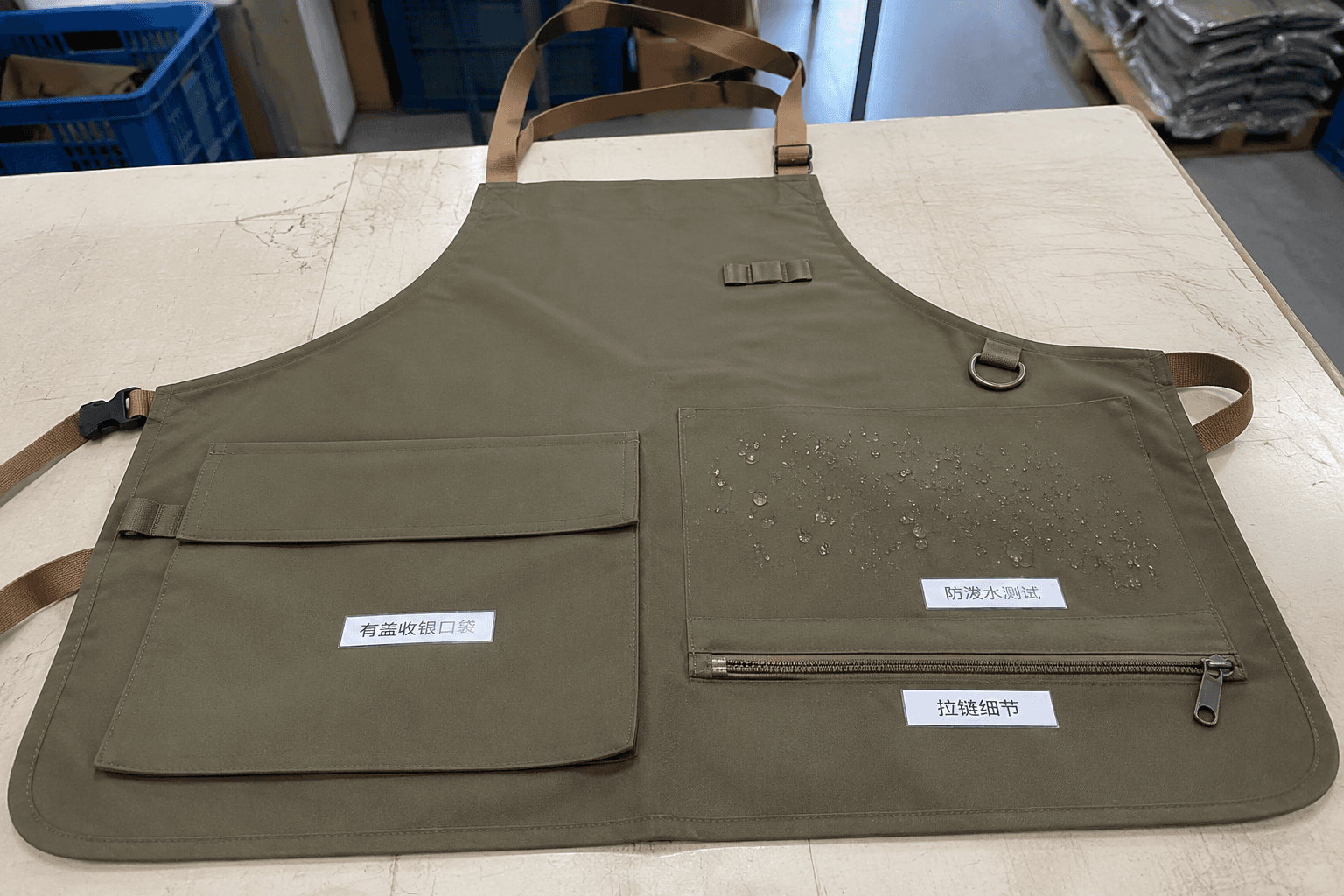
Outdoor vendor aprons need weather resistance, secure cash pockets, and fast replenishment. For B2B buyers, the usable spec usually sits around 220-240 GSM, with 14-16 cm cash-pocket depth, 300-500 pc MOQs, and 15-25 day bulk lead times after approval.
Dental clinic aprons: fluid resistance, white fabric maintenance and professional branding
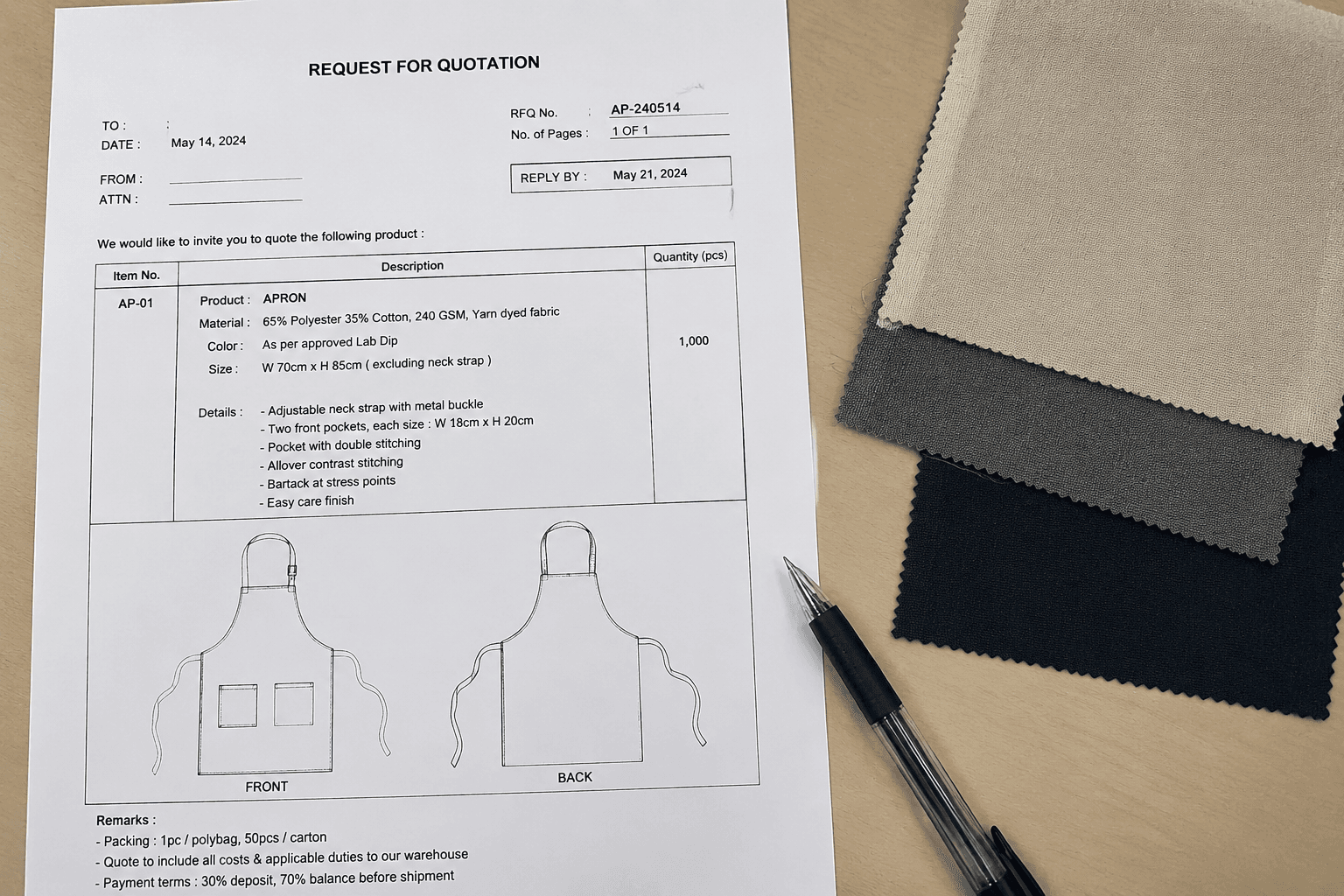
Dental clinic aprons need specified splash resistance, opaque 200-240 GSM white fabric, wash-stable trims and restrained branding so they still look clinical after 30-50 laundry cycles.
School cafeteria aprons: child-safe trims, stain resistance and institutional wash needs
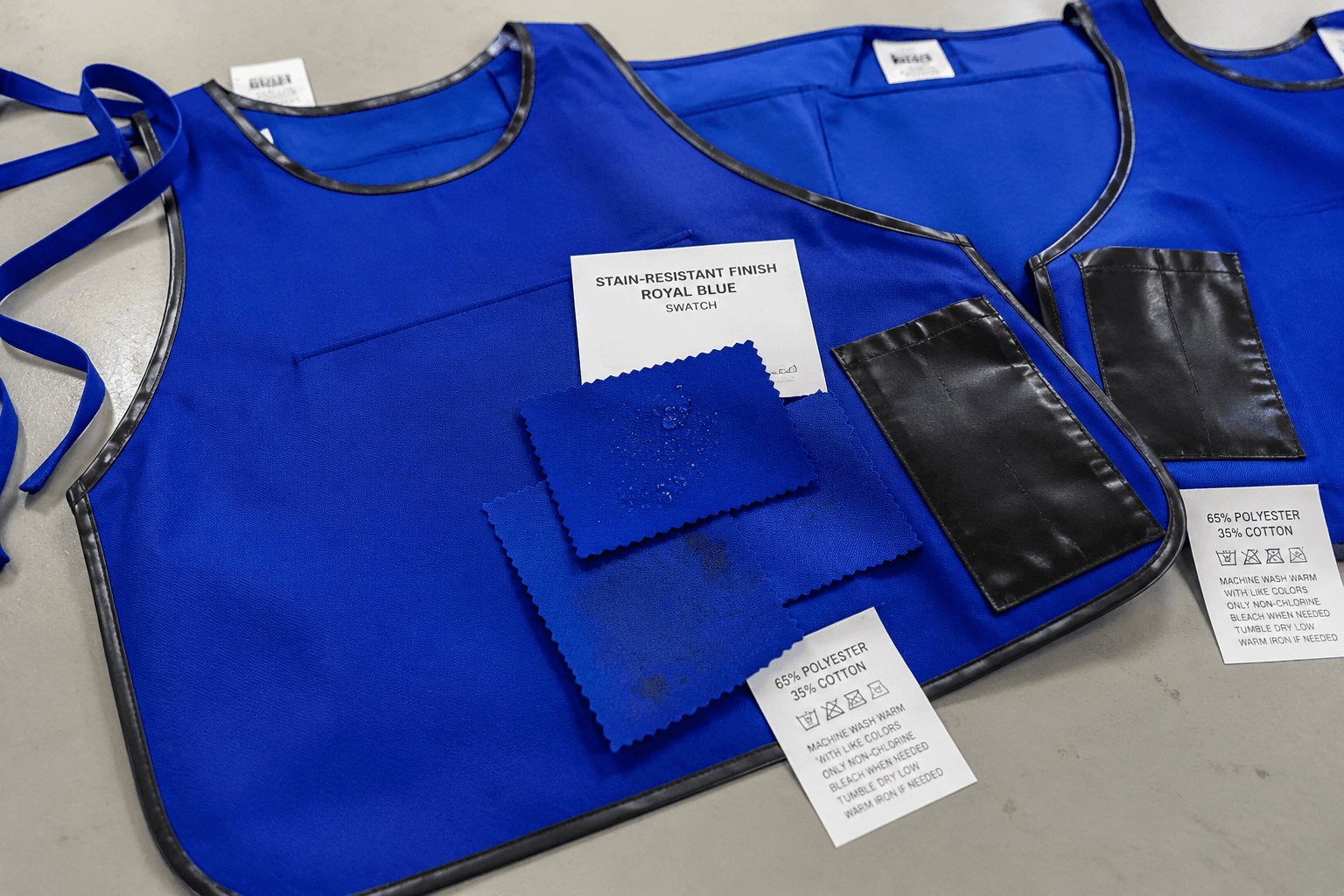
School cafeteria aprons need child-safe trims, stain-release fabric and wash-stable construction for 60-75°C institutional laundering three to five times per week. This guide gives B2B buyers concrete GSM, oz/yd2, MOQ, lead-time, AQL and unit-cost benchmarks for sourcing <em>school cafeteria aprons</em> that hold shape, color and pocket strength through a realistic school-year wash cycle.
Casino and gaming floor aprons: security pockets, dark colors and frequent laundering
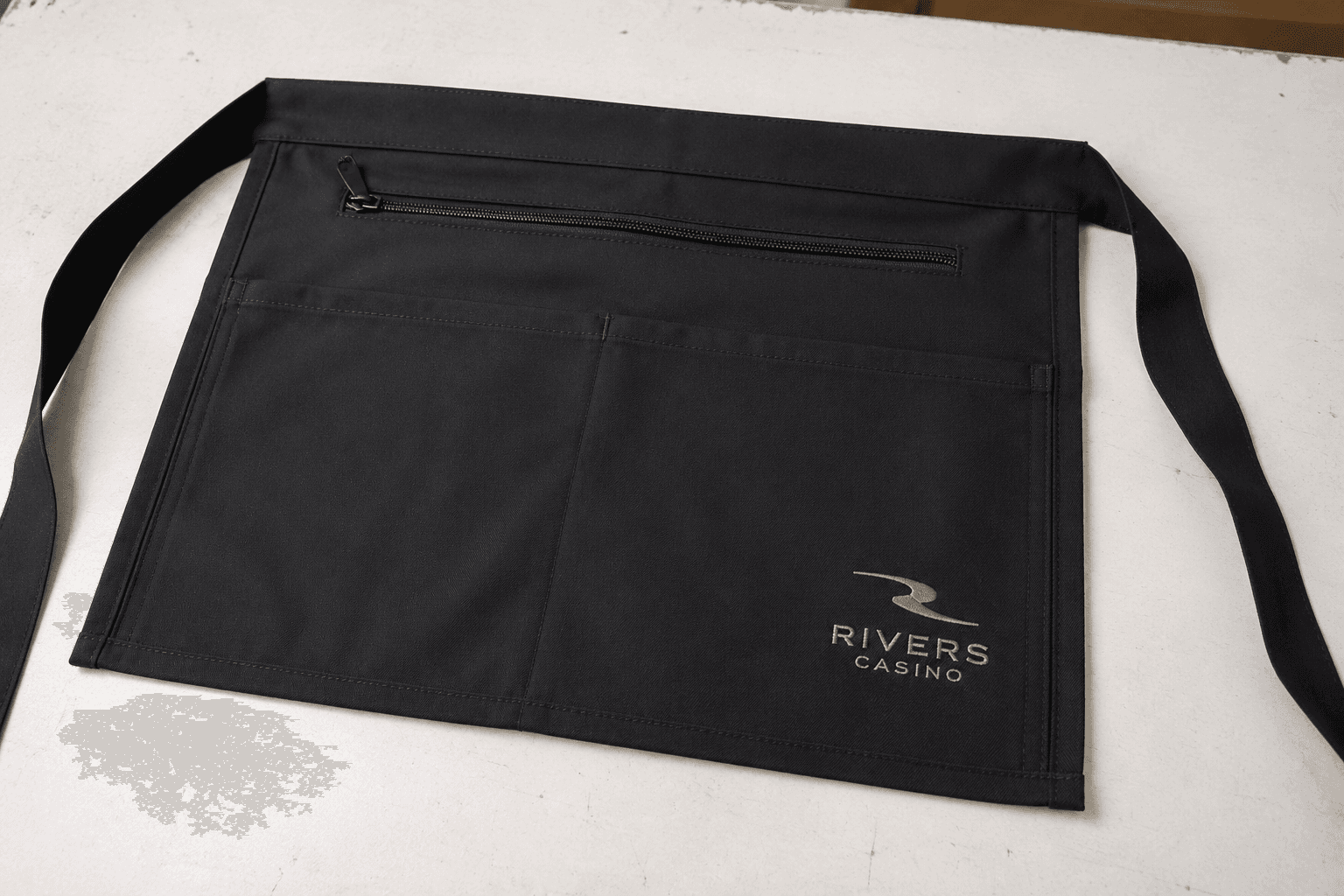
Professional <em>casino aprons</em> need a flat surveillance-friendly profile, controlled pocket capacity, dark shade stability and construction that survives 40-60°C commercial laundering. For B2B buyers, the sourcing decision should be built around 210-230 GSM fabric, 16-18 cm pocket depth, bartacked stress points, 500-3,000 pc MOQ, 25-40 day production lead time, realistic US$3.20-US$8.50/pc pricing and AQL 2.5/4.0 inspection control.
Airport lounge aprons: wrinkle recovery, discreet branding and high-turnover uniform specs
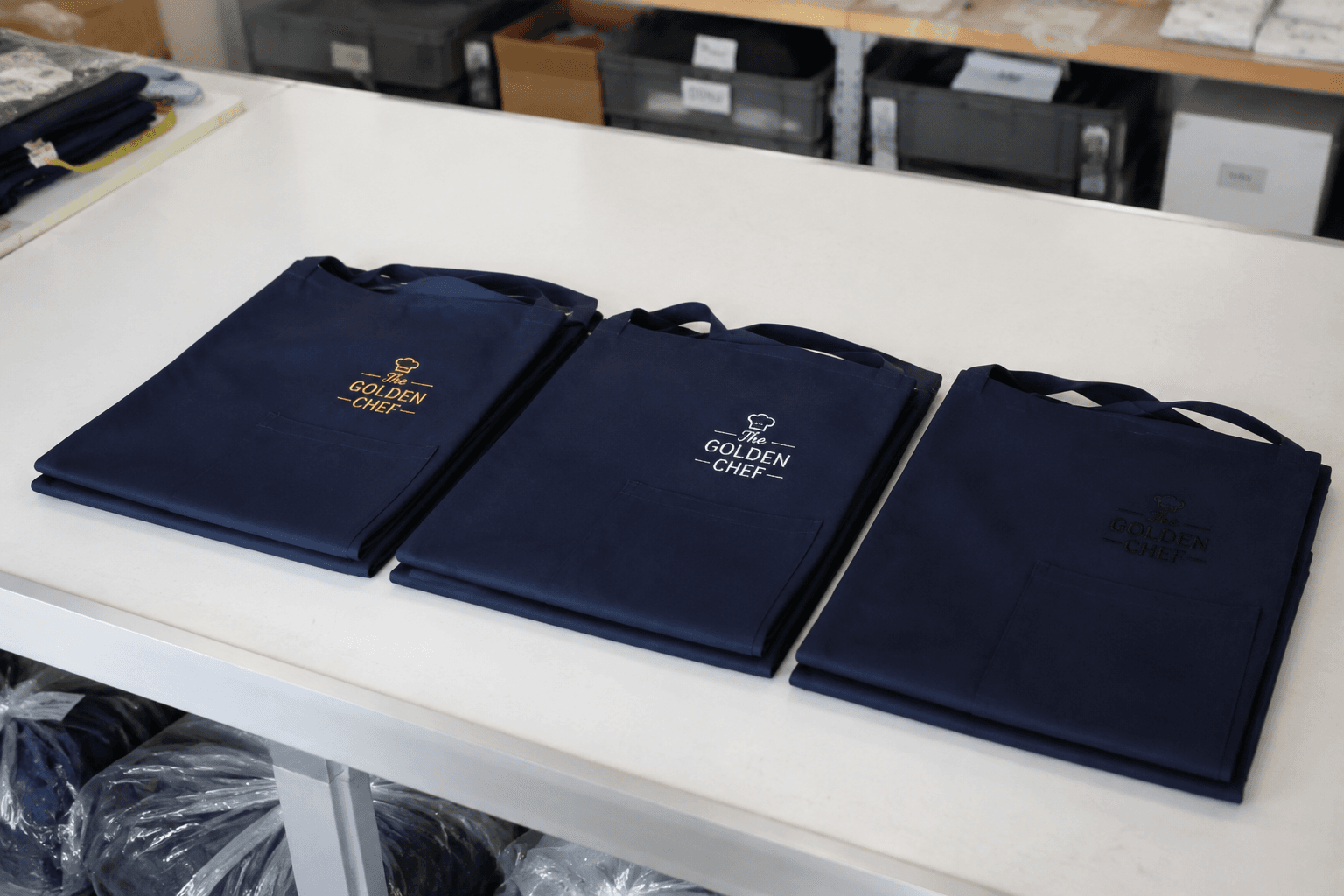
Airport lounge aprons need sourcing controls beyond standard cafe aprons: 200-235 GSM wrinkle-recovery fabrics, matte discreet branding, stable sizing, AQL 2.5/4.0 inspection and replenishment stock planned before launch. This guide gives B2B buyers practical specifications for airport lounge aprons, including fabric blends, MOQ ranges, FOB targets, sample and bulk lead times, QC checks and repeat-order rules for high-turnover lounge uniform programs.
Uniform rental companies and apron sourcing: fabrics and construction that survive pooled laundering
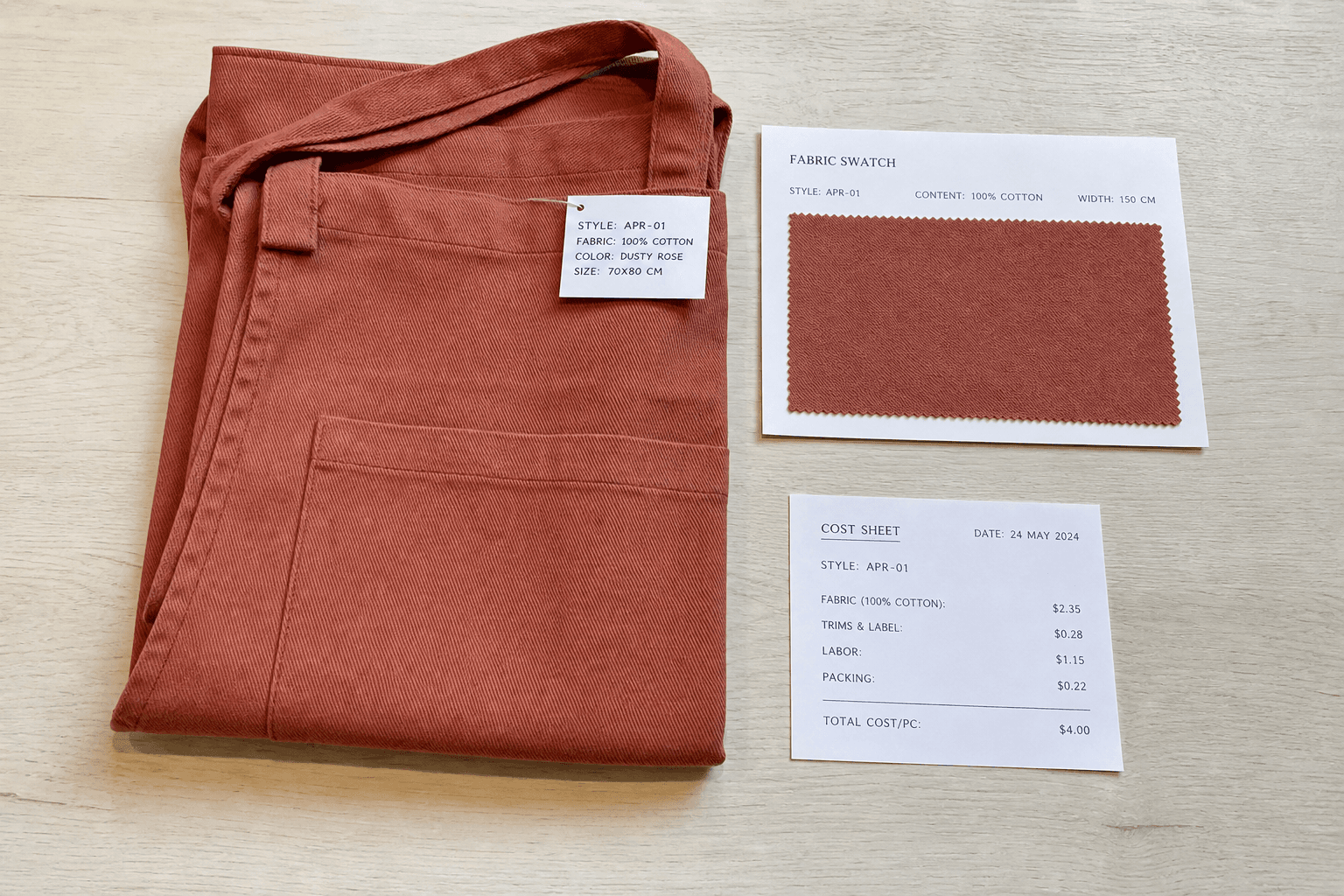
<strong>Uniform rental company aprons</strong> fail in pooled laundering for measurable reasons: fabric below 235 GSM, weak tie insertions, unstable hems, and branding that was never tested under industrial chemistry. For rental buyers, the durable starting spec is usually 235 to 270 GSM woven poly-cotton twill, reinforced stress points, shrinkage controlled within 2% to 3%, and a sourcing plan built around MOQ, AQL, route testing, 25 to 45 day production, and cost per wash cycle rather than opening FOB alone.
Plant shop workshop aprons: soil abrasion, wet pot handling and tool-loop placement
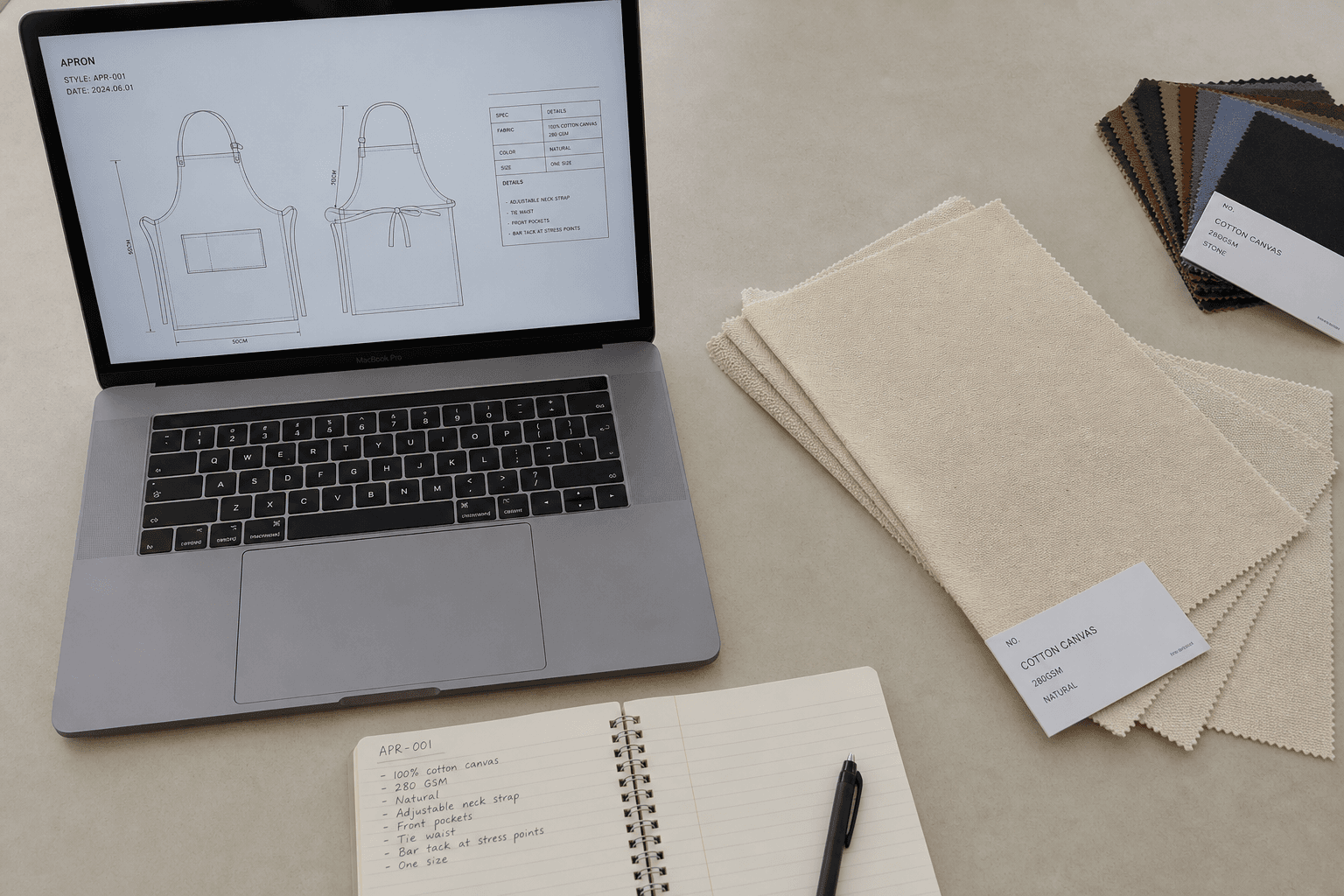
<strong>Plant shop workshop aprons</strong> for commercial garden centers, nursery chains and potting benches need more than a clean retail look. Buyers should spec for <strong>soil abrasion, wet pot contact, loaded pockets and repeated bending</strong> with clear numbers: <strong>245-340 GSM</strong> fabric, pocket depths sized to pruners and phones, dominant-hand tool loops placed <strong>6-10 cm</strong> from the side seam, workable MOQs of <strong>300-1,500 pcs</strong>, full custom lead times of <strong>35-55 days</strong>, FOB ranges from <strong>$3.20 to $8.80 per piece</strong>, and inspection at <strong>AQL 2.5 major / 4.0 minor</strong>.
Mobile dog wash and grooming van aprons: splash coverage, fast drying and storage constraints
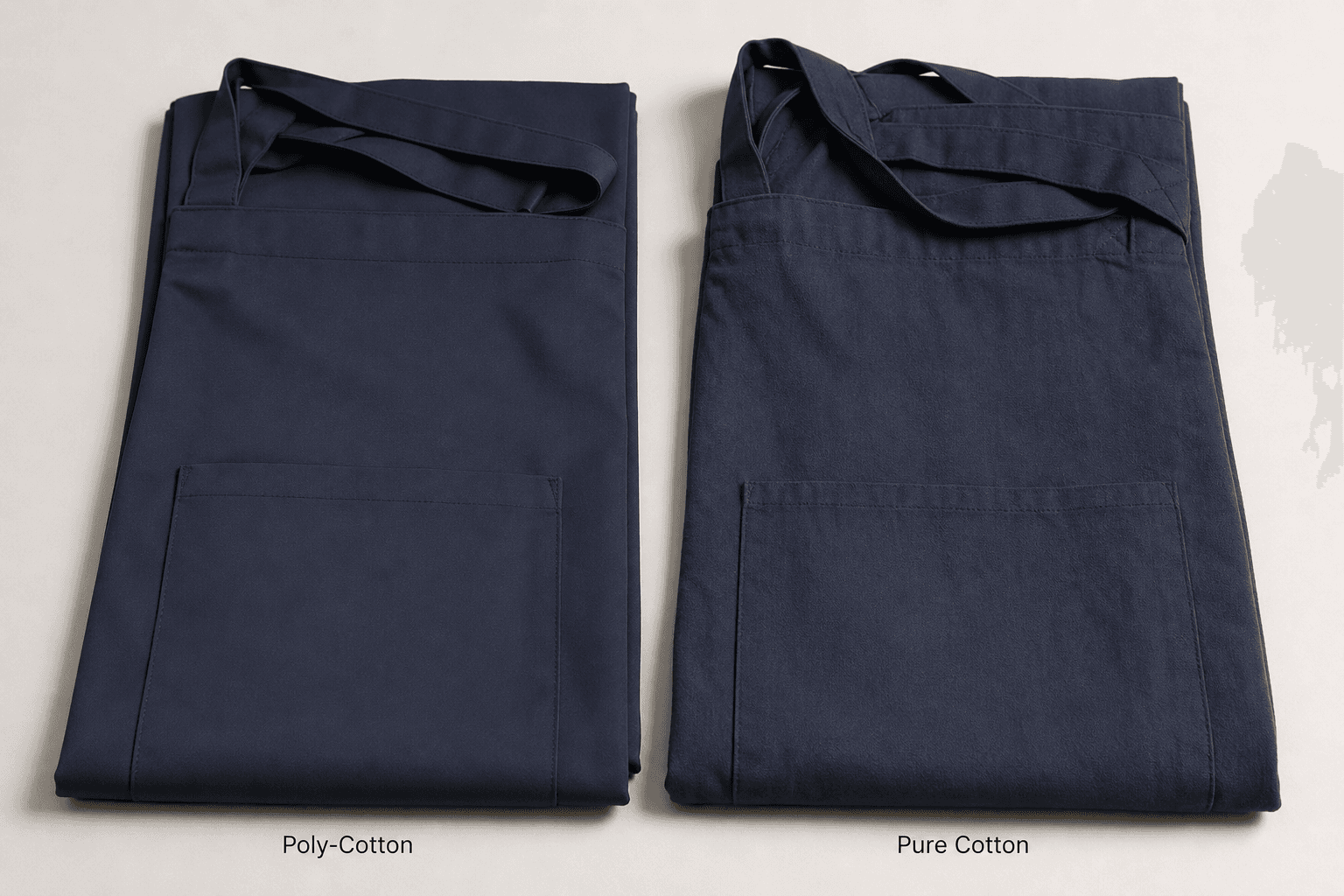
<em>Mobile dog wash aprons</em> for van-based grooming teams need a tighter sourcing spec than salon aprons: 70-75 cm front width, 85-95 cm length, PU-coated 210D-420D polyester at 150-230 GSM, realistic 30-75 minute dry-down between calls, and fold-flat storage that fits crowded vehicle shelving without trapping moisture or loose hair.
Makers market and craft retail aprons: premium handfeel, low-MOQ branding and reorder flexibility
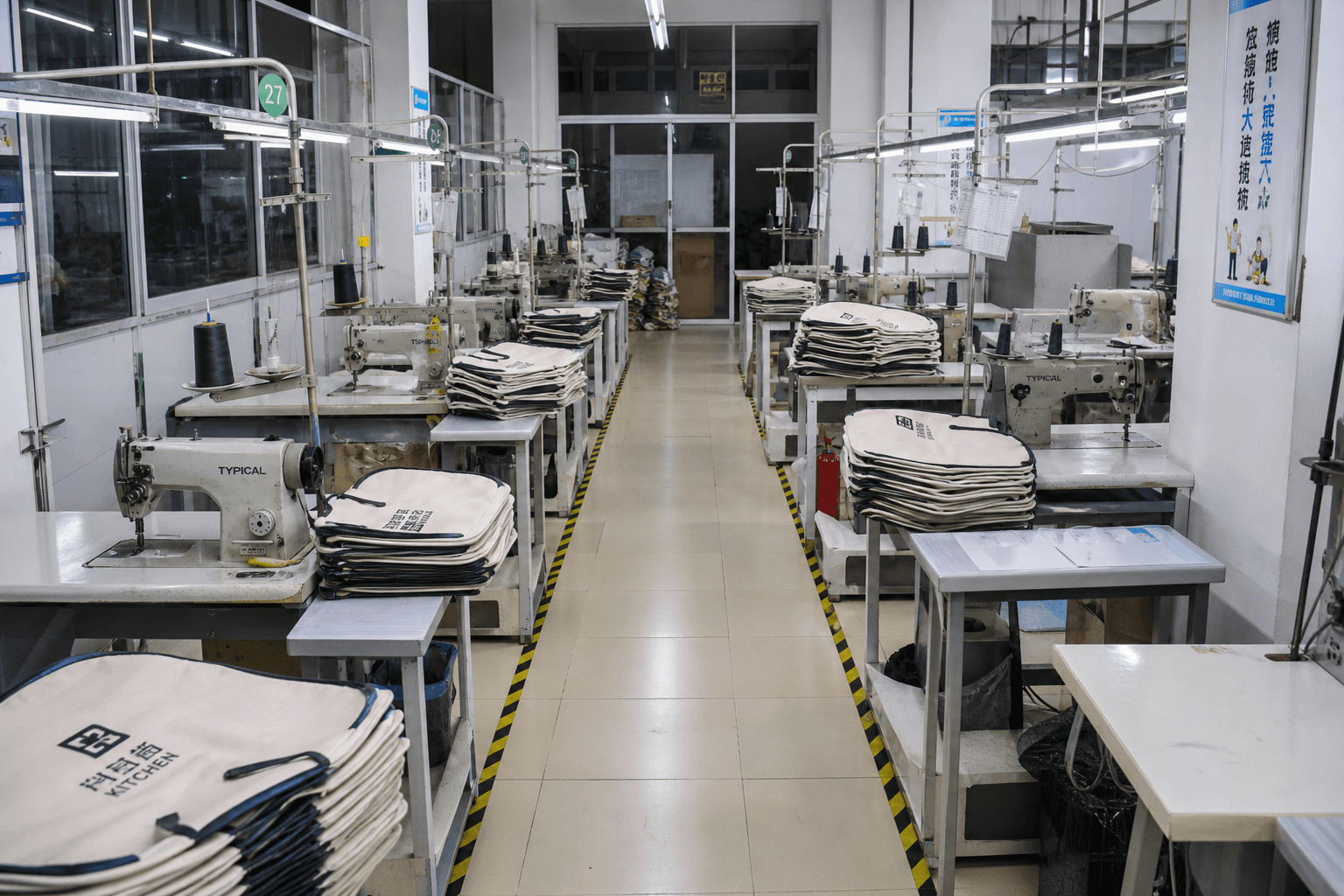
<strong>Craft retail aprons</strong> perform when they feel substantial on first touch, carry branding cleanly at 100 to 300 pieces, and can be reordered without reopening every trim minimum. This guide gives B2B buyers concrete benchmarks for fabric weight, unit cost, MOQ, inspection limits, and production timing so a retail apron line can launch in 35 to 45 days and repeat in 25 to 35 days with fewer sourcing resets.
Jewelry workshop aprons: lint control, small-part pockets and scratch-safe surface choices
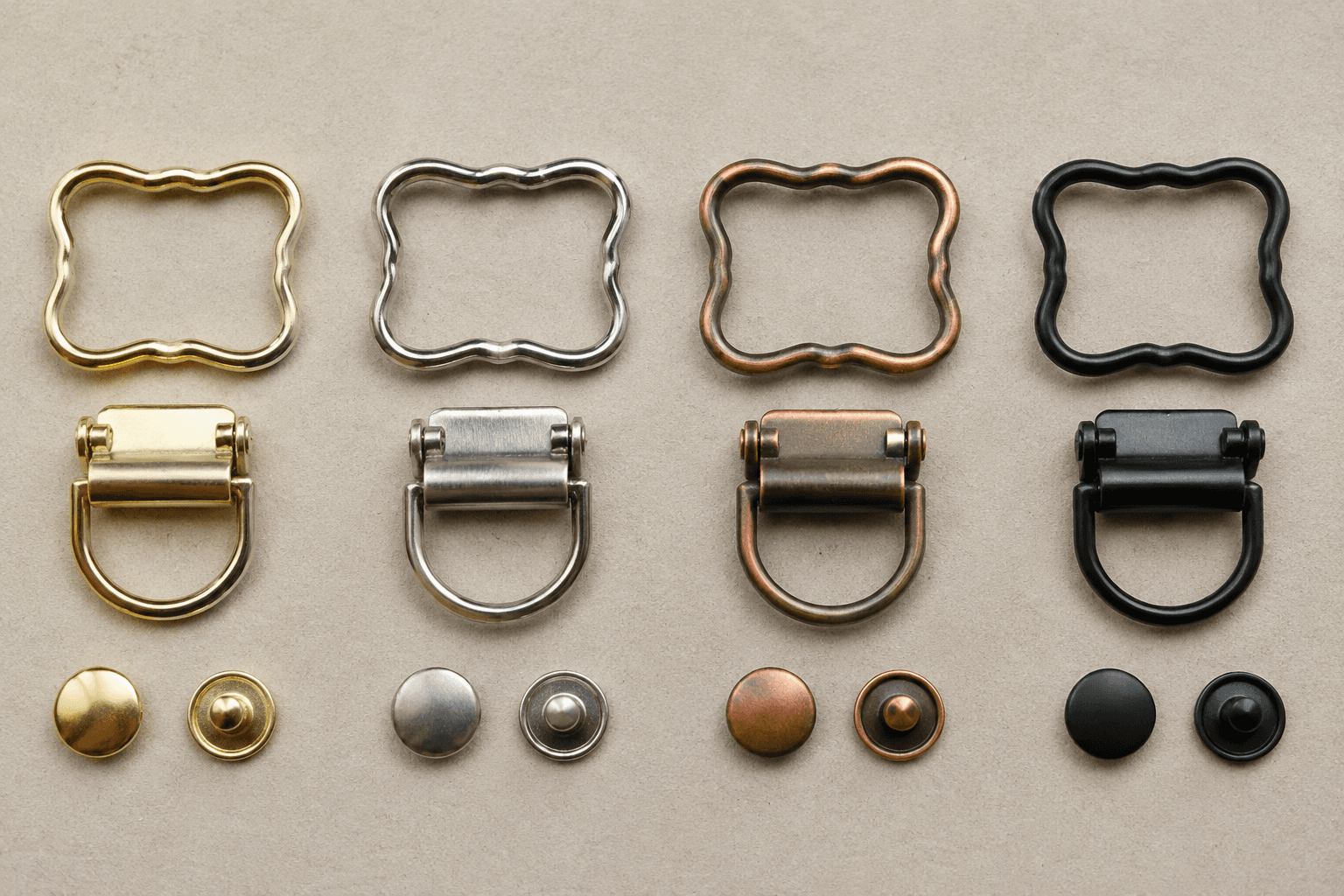
<strong>Jewelry workshop aprons</strong> need tighter specifications than general workwear because lint, exposed hardware and oversized pockets can contaminate polishing work, scratch watch cases or plated parts, and slow seated bench tasks. This guide gives B2B buyers concrete sourcing benchmarks for 210-230 GSM fabrics, scratch-safe trim rules, pocket dimensions, MOQ, ex-works pricing, AQL and lead-time control.
Ice cream shop aprons: dairy splash visibility, cold-room comfort and stain-release priorities
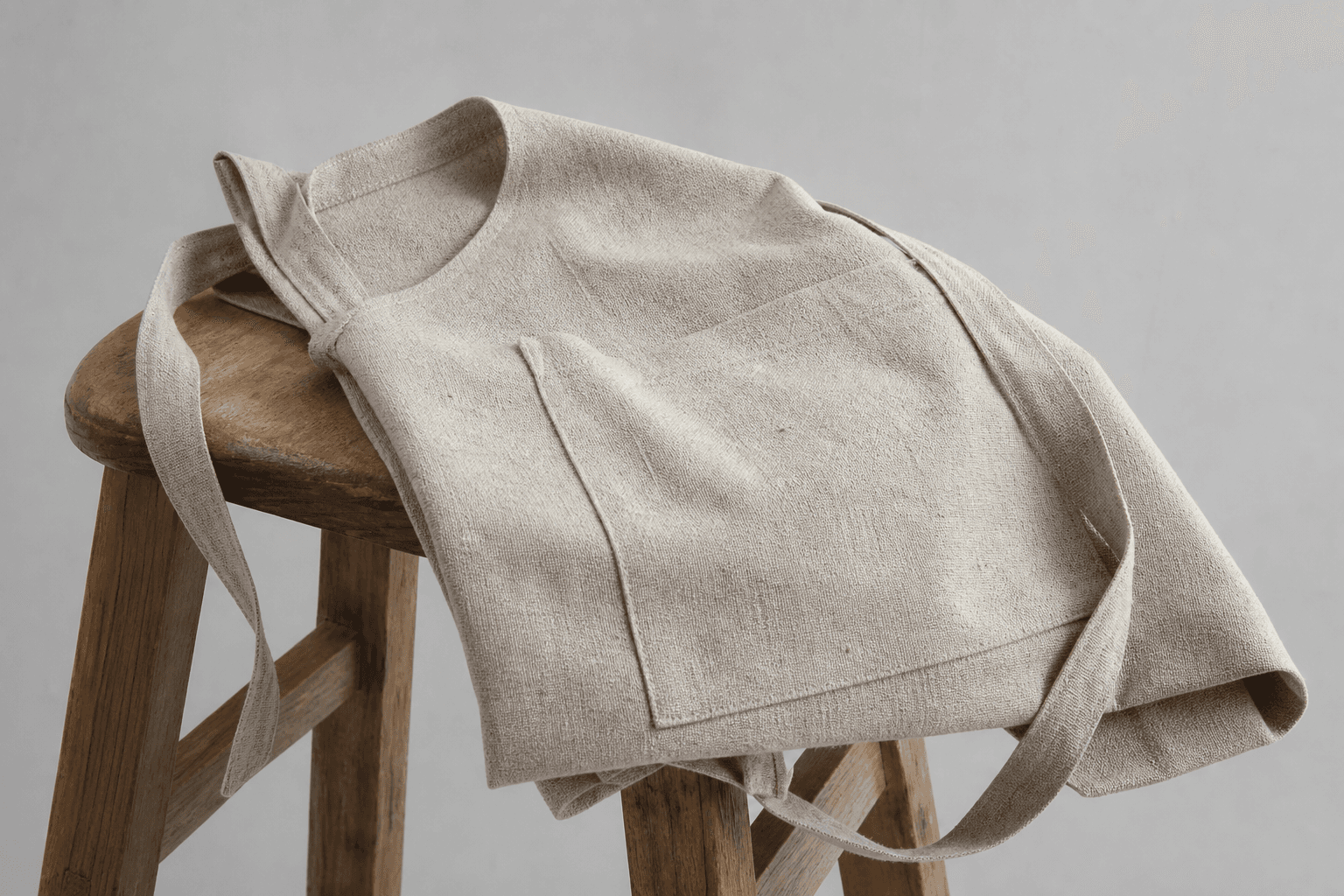
<em>Ice cream shop aprons</em> for chain and multi-store buyers should be specified around visible dairy splash control, comfort during repeated 2-8°C stock-room runs, and reliable stain release after frequent laundering. The most stable OEM brief usually lands at 210-240 GSM compact poly-cotton twill, MOQ 300-500 pcs per color per style, proto samples in 5-7 days, PP samples in 7-14 days, bulk production in 25-40 days, and final inspection at <strong>AQL 2.5</strong>.
Craft aprons for printmaking studios: ink resistance, solvent splash risk and pocket placement for tools
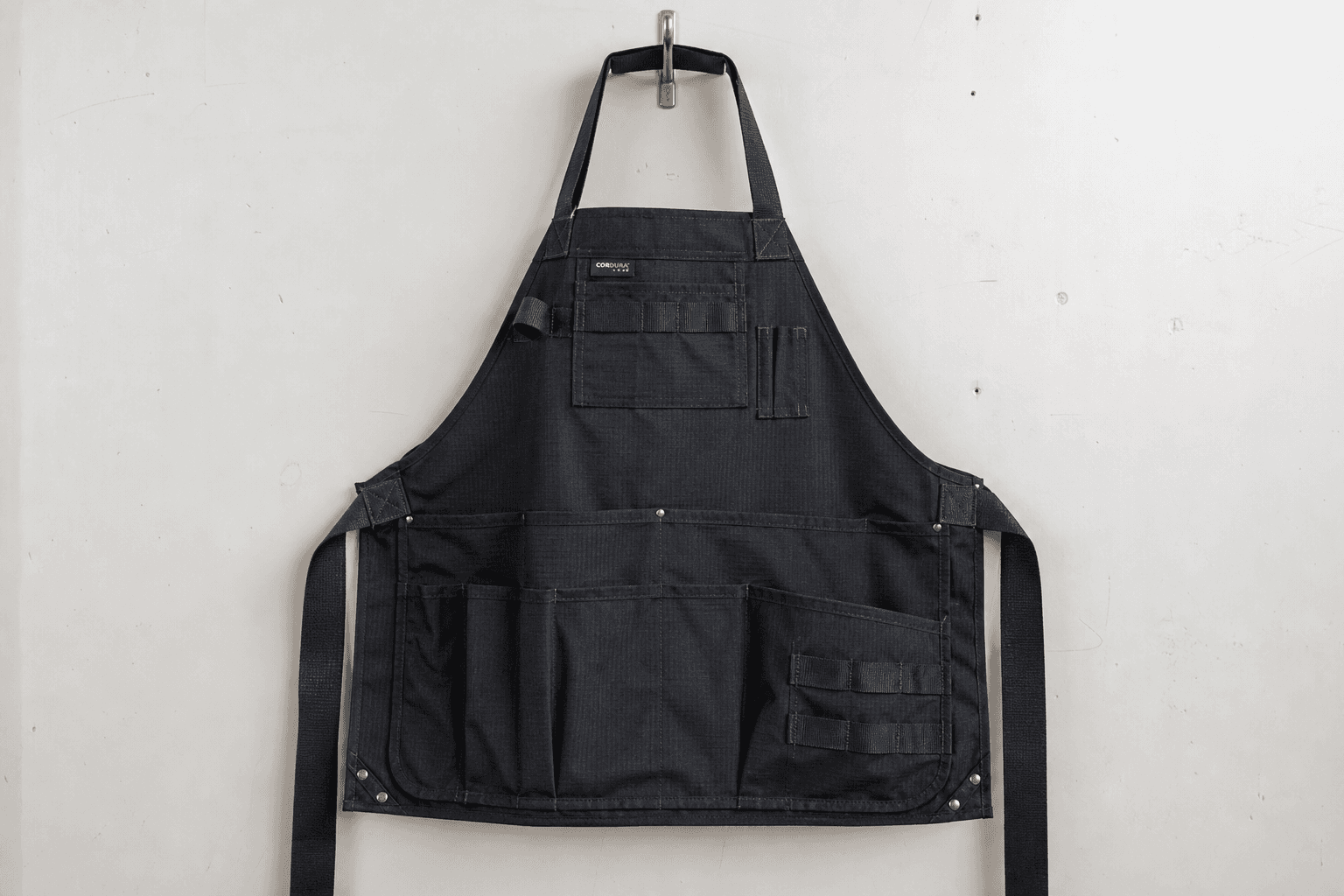
This B2B sourcing guide shows how to buy <em>printmaking studio aprons</em> with the right fabric weight, pocket map, splash-risk language, MOQ, AQL and lead time for schools, shared studios and private-label apron programs.
Bistro and brasserie aprons: midweight fabrics and shorter lengths for fast floor service
<em>Bistro service aprons</em> perform best when buyers specify the build around actual floor-service movement, wash frequency, and replacement targets. For most B2B uniform programs, the strongest repeat order formula is <strong>190-220 GSM</strong> woven fabric, <strong>55-65 cm</strong> finished length, pocket depth of <strong>18-22 cm</strong>, MOQ of <strong>300-800 pcs per color/style</strong>, and bulk lead time of <strong>25-40 days</strong> depending on dyeing, branding, and trim count.

Bakery commissary aprons vs front-of-house bakery aprons: why one spec rarely fits both
<em>Bakery commissary aprons</em> and front-of-house bakery aprons should rarely share one factory spec. Commissary teams usually need 245 to 300 GSM fabric, reinforced seams and ties, darker shades, and reliable performance through 60 to 100 industrial wash cycles. Customer-facing teams usually wear 180 to 230 GSM aprons with cleaner drape, lower neck load, and better logo presentation. For B2B buyers, two role-based apron SKUs under one brand program usually cut claims, improve wearer acceptance, and lower annual replacement cost.
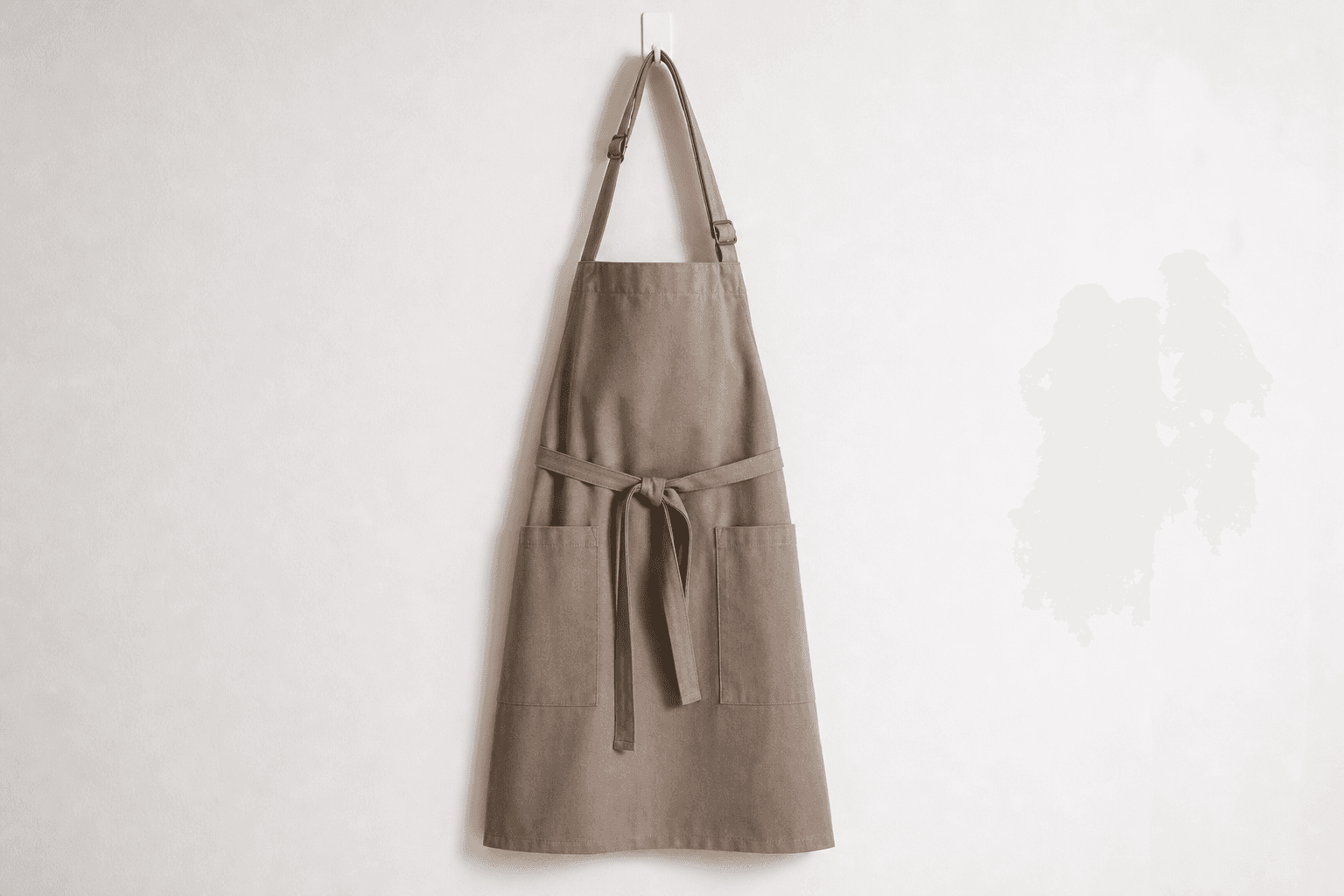
Aprons for tea rooms and patisserie counters: pastel color control, stain exposure and elegant trims
<em>Tea room aprons</em> for patisserie counters need tighter sourcing control than dark hospitality uniforms. Pale shades expose lot variation, stain pickup, trim puckering, and hardware mismatch at customer distance. This guide gives B2B buyers clear benchmarks for fabric GSM, MOQ, FOB cost, lead times, stain-risk zones, and AQL settings so light-color apron programs stay consistent from sampling through repeat orders.

Aprons for tasting rooms and cellar doors: balancing polished appearance with red-wine stain reality
<strong>Tasting room aprons</strong> must read as polished front-of-house uniform pieces from one meter away, resist repeated red-wine splash exposure, and still meet appearance standards after 30 to 50 commercial wash cycles. For B2B buyers, the buying outcome is driven by specific choices: <strong>220 to 250 GSM</strong> fabric weight, blend ratio, dark-shade strategy, pocket layout, trim restraint, <strong>MOQ 300 to 500 pcs</strong>, <strong>$3.20 to $6.20 FOB</strong> target range, <strong>7 to 20 day</strong> sampling, <strong>25 to 55 day</strong> bulk lead time, and inspection at <strong>AQL 2.5 / 4.0</strong> or tighter.
Aprons for olive oil, vinegar and deli counters: splash resistance without heavy waterproof stiffness
<strong>Deli counter aprons</strong> for olive oil, vinegar and prepared-food service need brief splash protection, fast wipe-off and a soft drape staff can wear for 8-10 hours. For most B2B programs, the strongest specification is a 200-230 GSM woven bib apron with a light repellent finish, not a 320-450 GSM waterproof barrier apron that feels stiff, hot and overbuilt at the counter.
Aprons for housekeeping supervisors and inspectors: lighter utility layouts than room attendant styles
<strong>Housekeeping supervisor aprons</strong> should carry a radio, hotel phone, master keys, pens, and inspection notes without the deep cargo pockets and front-heavy swing built for room attendants. This B2B guide gives sourcing benchmarks buyers can actually use: 180 to 240 GSM fabrics, 3 to 5 functional storage points, 40 to 60 commercial wash cycles, AQL 2.5/4.0, MOQ from 300 pieces, sample lead times of 5 to 14 days, bulk production in 25 to 40 days, and realistic FOB targets from about $1.55 to $3.20 per piece.
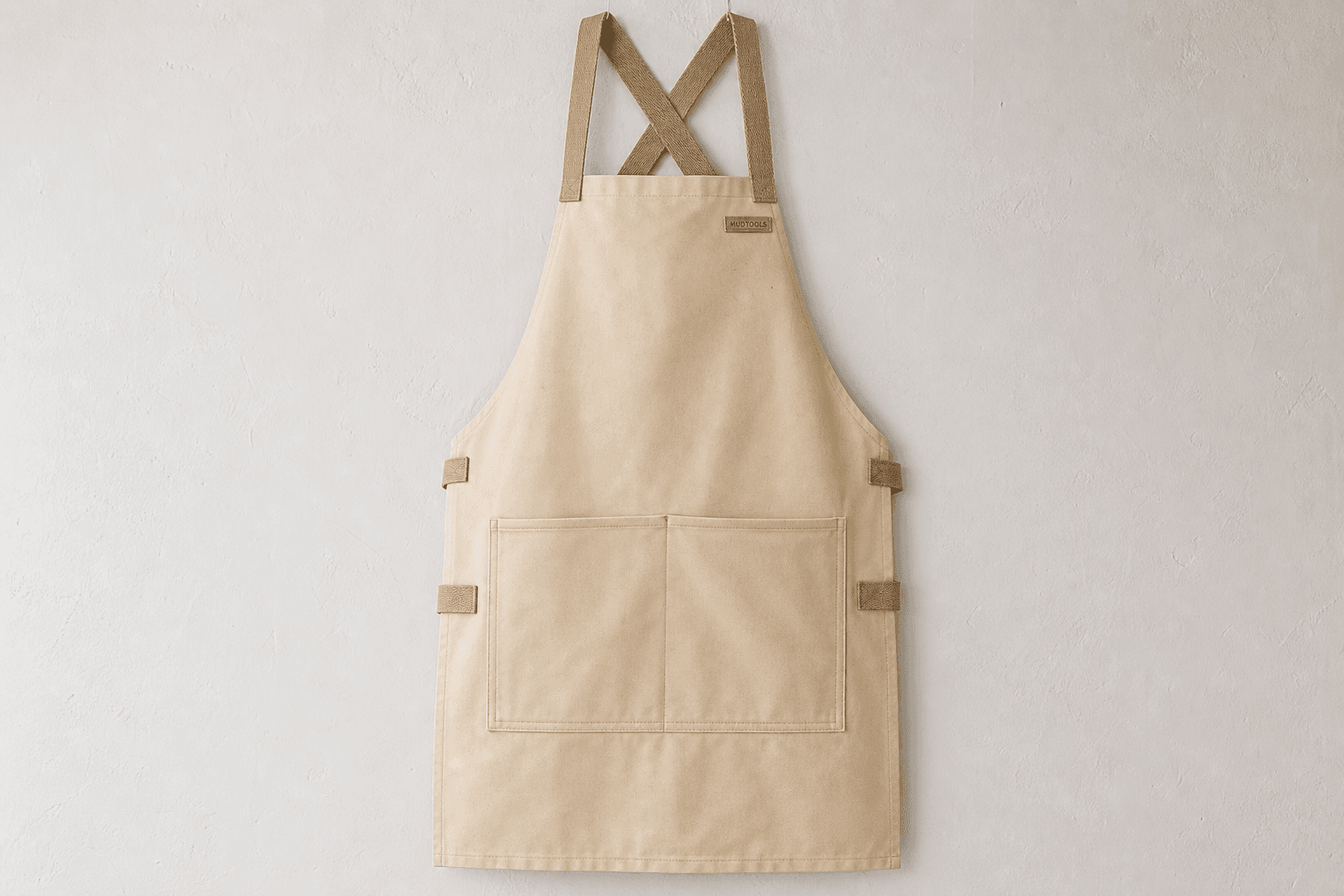
Restaurant franchise aprons: building spec consistency across regions and reorder cycles
<strong>Restaurant franchise aprons</strong> stay consistent when buyers manage them as controlled repeat SKUs instead of one-off uniform purchases. For multi-site restaurant groups, that means locking fabric weight, finished measurements, trim, decoration, wash performance, AQL, MOQ bands, and reorder approvals before bulk production so each replenishment shipment matches the sealed standard sample.
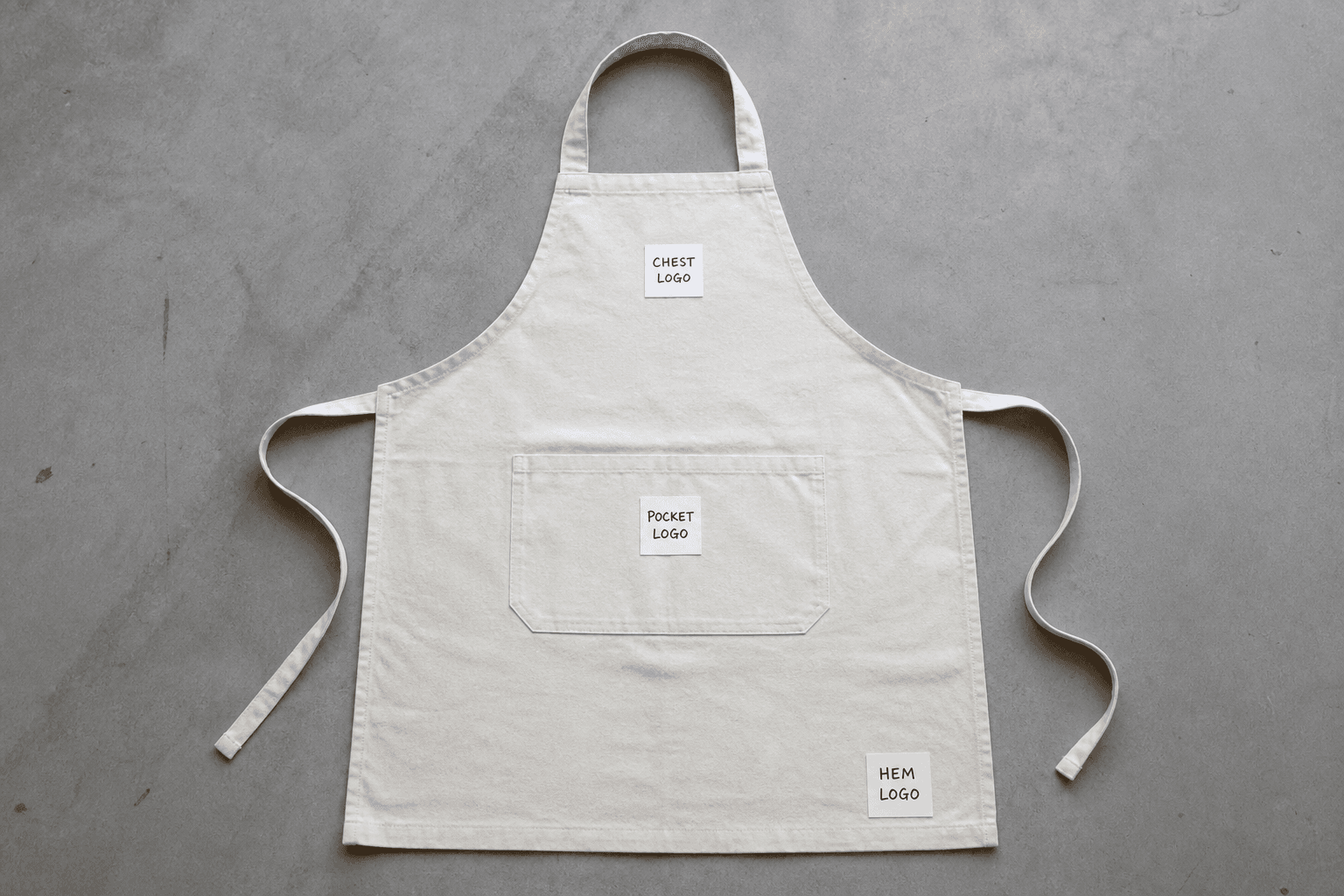
Pet bakery and specialty food shop aprons: lint visibility, pastel branding and wash frequency planning
<em>Pet bakery aprons</em> for specialty food retailers need tighter sourcing controls than standard café uniforms because cream, blush, sage and powder-blue shades show pet hair, crumb dust and pocket-edge greying within a single 8-10 hour shift. The most reliable programs usually specify 200-240 GSM (5.9-7.1 oz) smooth poly-cotton twill, darker high-contact trims, AQL 2.5 final inspection and wash-life planning around 120-180 commercial laundry cycles per year.
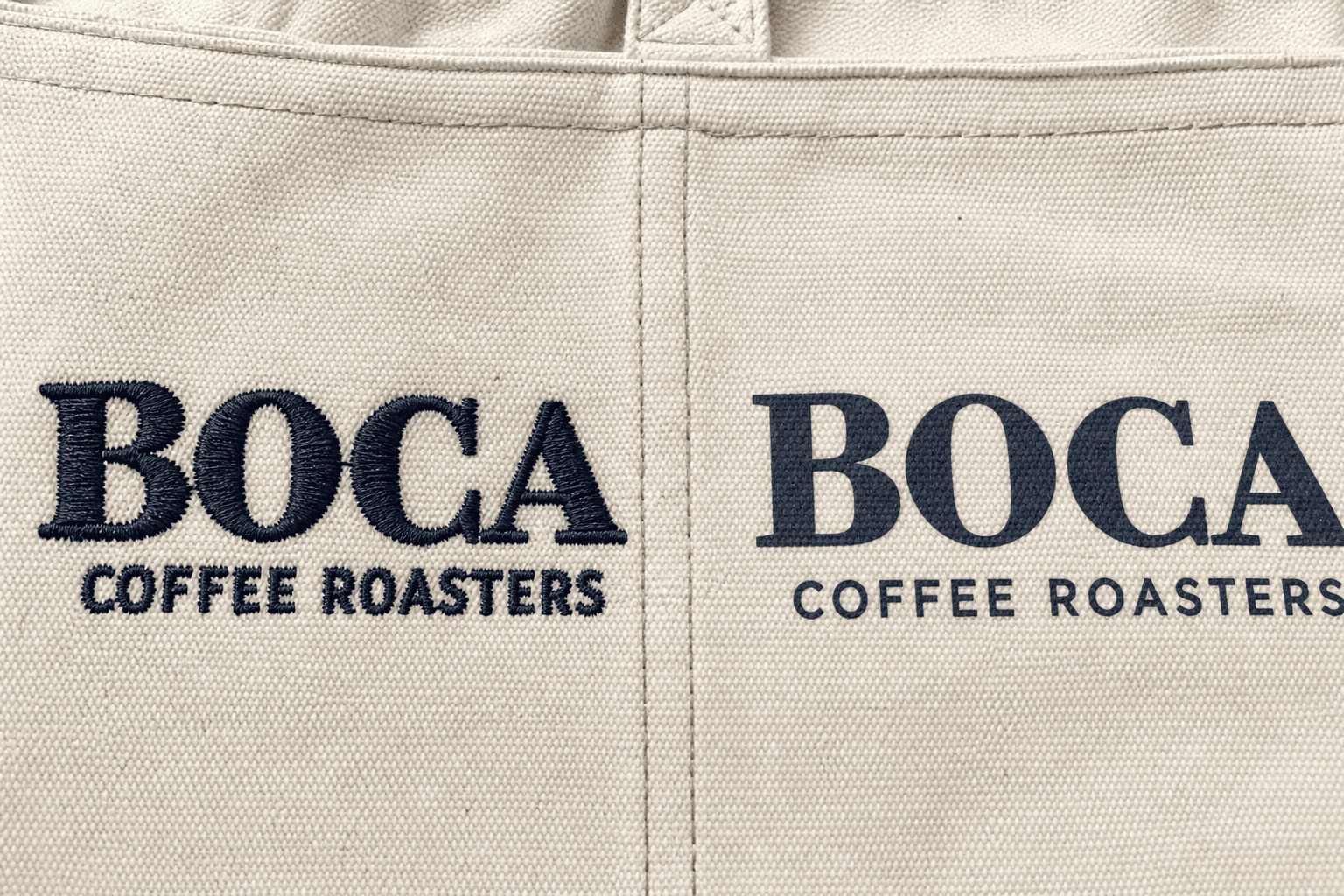
Pastry lab and chocolate kitchen aprons: protecting against cocoa butter, sugar and flour buildup
<em>Pastry lab aprons</em> for chocolate rooms, confectionery lines and bakery prep areas perform best when buyers specify fabric, construction and QC around actual soil loads. For most professional programs, that means 220 to 270 GSM bib aprons in dense 65/35 or 80/20 poly-cotton, controlled pocket layouts, 600 to 1,000 piece color MOQs, 20 to 35 day bulk lead times, and approval standards tied to shrinkage under 3%, seam security, and visible cocoa butter, sugar and flour buildup after repeated washing.
Museum and gallery shop aprons: clean presentation, anti-dust fabrics and quiet hardware
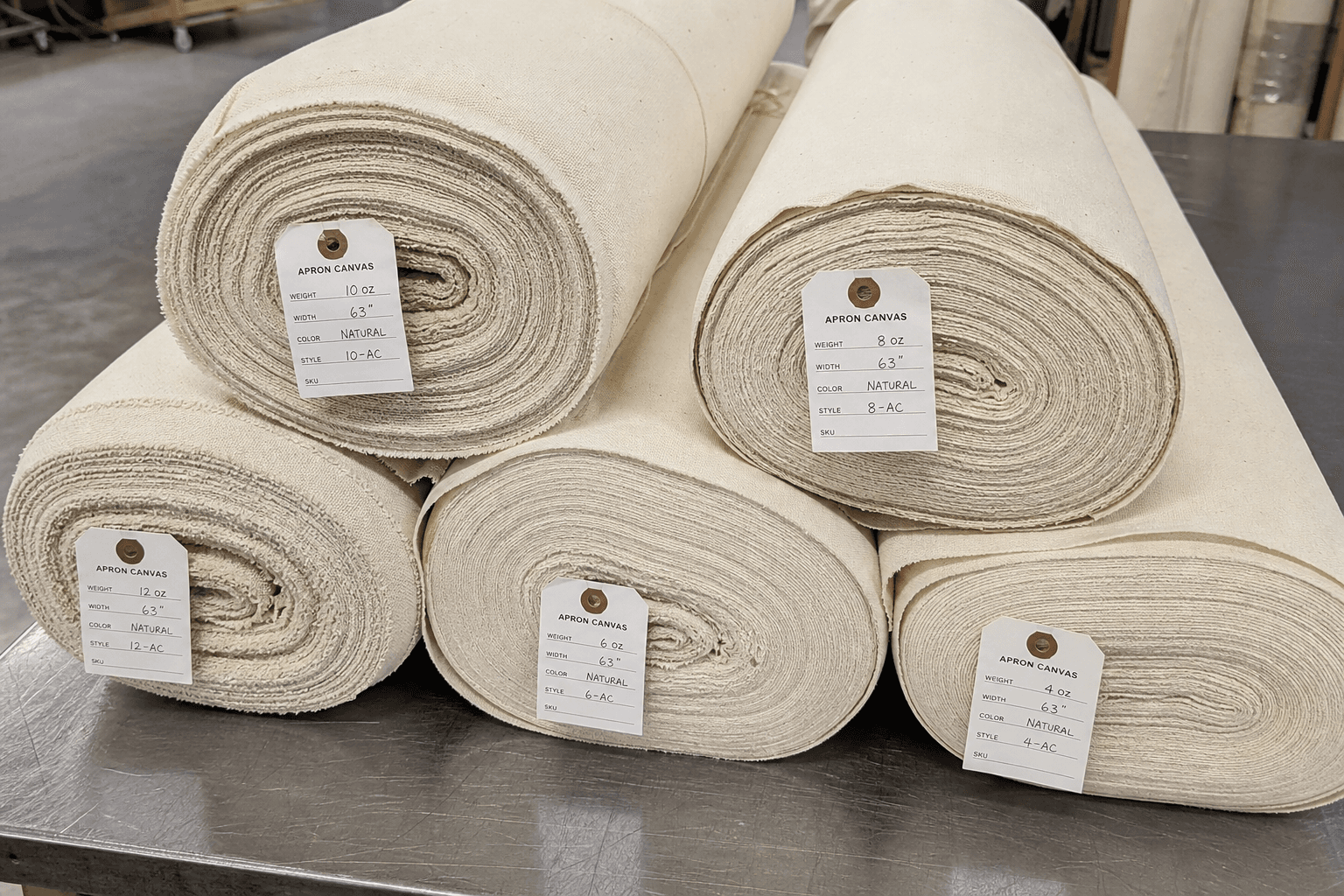
<strong>Museum shop aprons</strong> need a crisp silhouette, low-noise trims, and fabrics that resist lint, paper dust, and shade variation under retail lighting. This guide gives B2B buyers measurable sourcing targets on GSM, oz, pocket dimensions, MOQ, AQL, lead times, and unit pricing for stable OEM apron production.
Hotel housekeeping utility aprons: compartment planning for radios, keys and refill tools
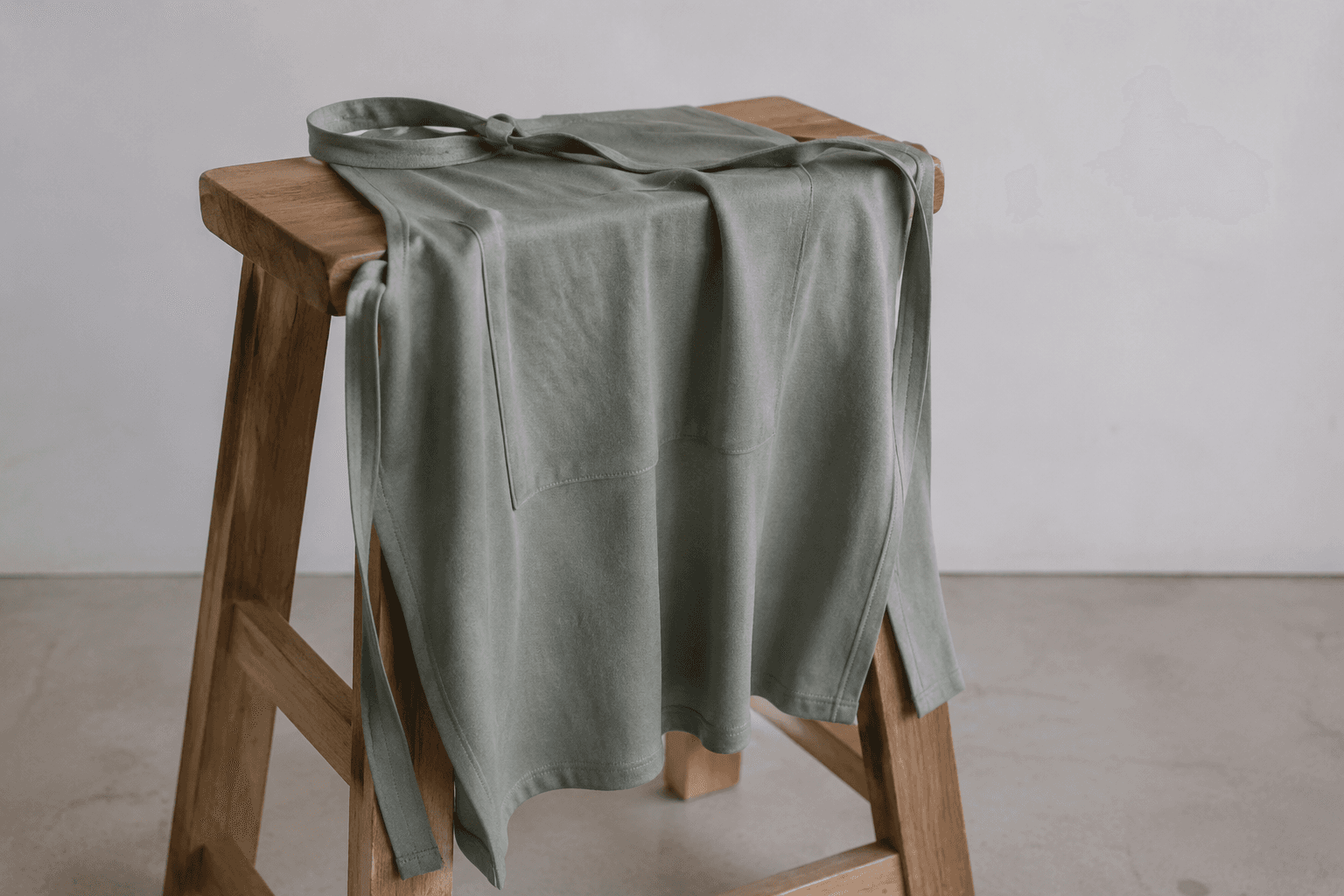
<em>Hotel housekeeping utility aprons</em> perform better when each compartment is built around real shift tools, not generic pocket symmetry. For B2B buyers, that means specifying radio pocket width, key retention method, bottle capacity, fabric weight, bartack points, MOQ, inspection level and lead time before sampling. A measured brief reduces early seam failures, controls replacement cost and keeps attendants faster through 14-18 room shifts.
Garden center cashier aprons: soil-tolerant colors, barcode access and seasonal reorder planning
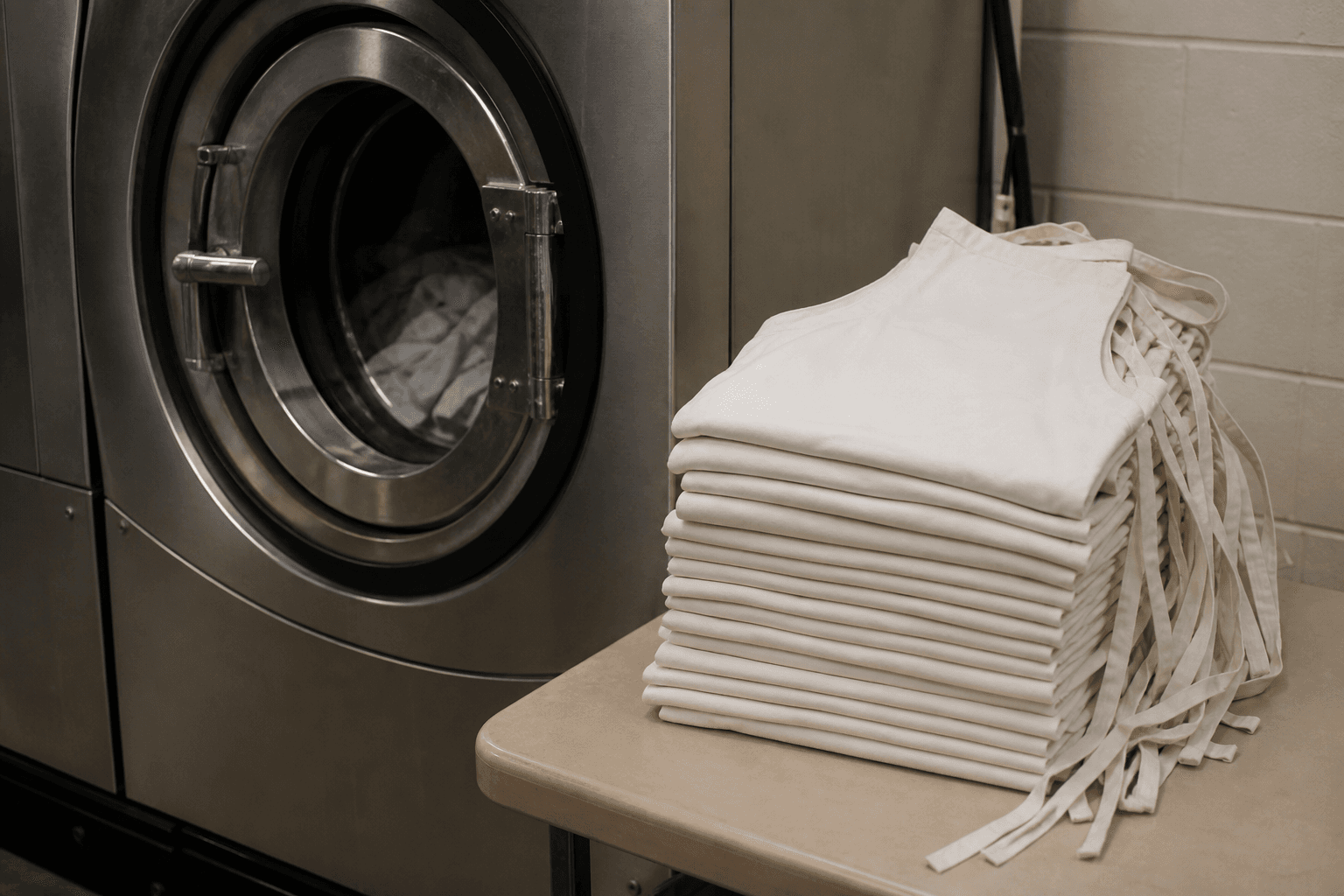
<strong>Garden center cashier aprons</strong> need tighter specifications than standard retail uniforms: <strong>240-300 GSM</strong> fabrics that hide peat dust, pocket layouts built around the actual scanner, and reorder plans that secure sewing capacity <strong>60-90 days</strong> before spring volume spikes. This guide gives B2B buyers concrete sourcing benchmarks for <strong>MOQ, FOB cost, sample timing, AQL checkpoints and repeat-order lead times</strong> so apron programs stay clean-looking, functional and reorderable across peak garden seasons.
Farm-to-table restaurant aprons: balancing rustic texture with commercial wash durability
<em>Farm to table restaurant aprons</em> should deliver a natural, textured look without turning into a short-life uniform problem. For B2B buyers, the dependable spec is usually a 270 to 340 GSM woven bib or waist apron, roughly 8 to 10 oz, built to stay presentable through 50 to 75 commercial wash cycles with defined MOQ, FOB cost, AQL, and replenishment controls.
Craft cocktail bar aprons with towel management: loop placement, absorbency and reset speed
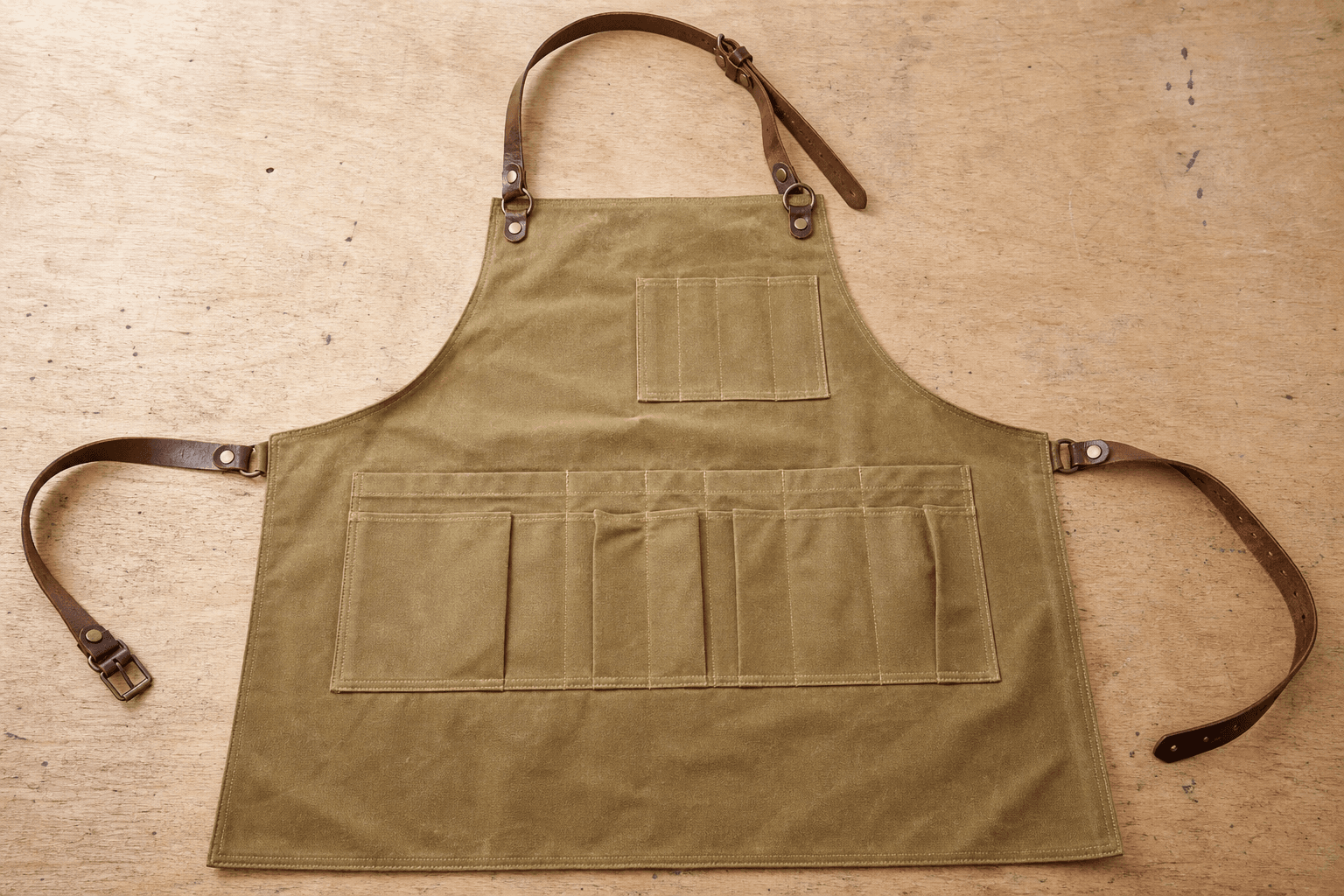
<em>Cocktail bar aprons with towel loop</em> perform well only when loop placement, towel absorbency, apron fabric and rehang speed are specified as one production system. For hotel bars, cocktail chains and premium casual groups, the dependable sourcing range is usually <strong>220 to 320 GSM</strong> apron shell fabric, <strong>380 to 420 GSM</strong> terry towels in <strong>25 x 40 cm</strong> or <strong>30 x 30 cm</strong>, reinforced loops that survive <strong>500 to 1,000</strong> wet rehang cycles, and a bulk timeline protected by locking towel dimensions before PP approval.
Cannabis retail aprons: odor control laundering, secure pockets and compliance-friendly branding
<em>Cannabis retail aprons</em> should be sourced as uniform-grade workwear, not promo merchandise. For dispensary buyers, the strongest OEM brief specifies <strong>240-270 GSM</strong> poly-cotton twill or <strong>8.5-10 oz</strong> cotton canvas, <strong>1 secure pocket plus 2-3 tool compartments</strong>, laundering approval through <strong>20 cycles at 40°C-60°C</strong>, restrained branding, and written China sourcing terms covering <strong>300-800 pcs MOQ, AQL 2.5/4.0, measurement tolerances, FOB pricing from $3.60-$8.40/pc, and 25-40 day bulk lead times</strong>.
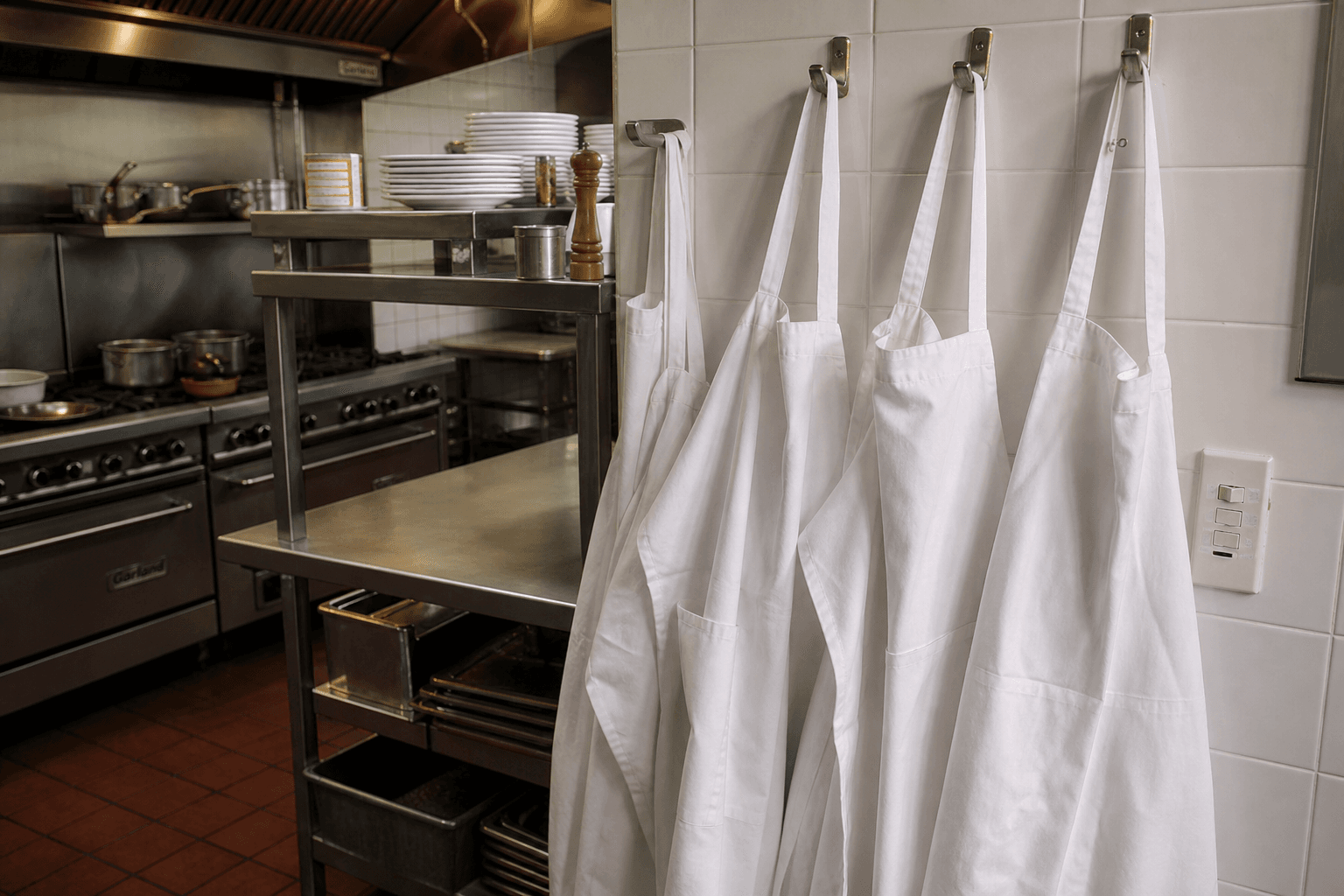
Ultrasonic cleaning chemicals and aprons: choosing fabrics that resist splash and stiffening
A practical sourcing guide to <em>aprons for ultrasonic cleaning work</em>, with specific benchmarks for coated fabrics, flex retention after 10-20 splash-and-dry cycles, seam design, MOQ, ex-factory price bands, AQL, and realistic 7-45 day OEM timelines.
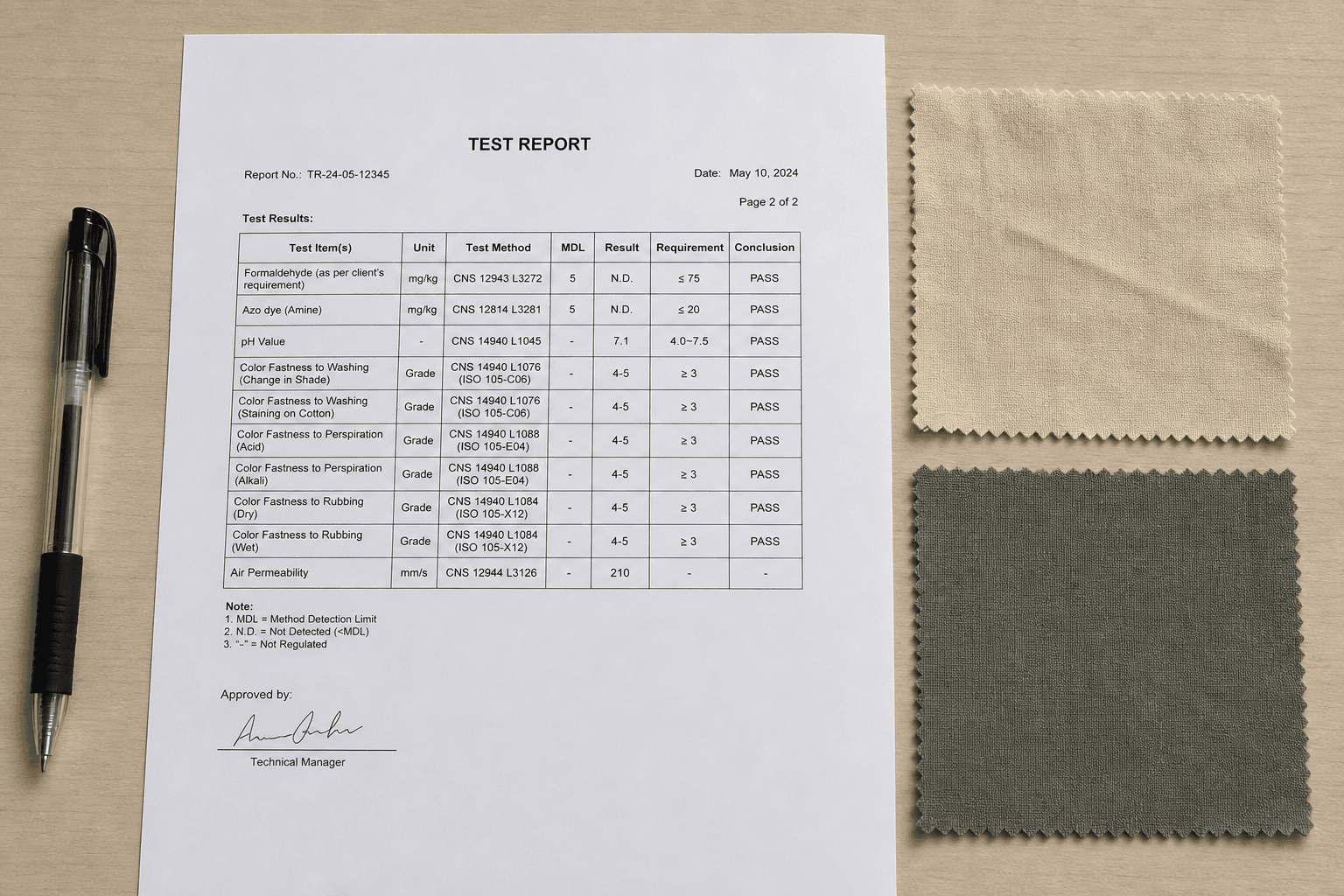
Pet grooming aprons for salons: water resistance, hair control and easy clean-up
A well-specified <strong>pet grooming apron</strong> lowers uniform changes, reduces clipped-hair buildup and shortens between-appointment wipe-down in busy salons. For B2B buyers, the useful spec is concrete: <strong>170 to 210 GSM</strong> coated polyester, a smooth low-lint face, chest-zone splash protection, practical MOQs of <strong>300 to 1,000 pcs</strong>, bulk lead times of <strong>25 to 40 days</strong>, and inspection to <strong>AQL 2.5 major / 4.0 minor</strong>.
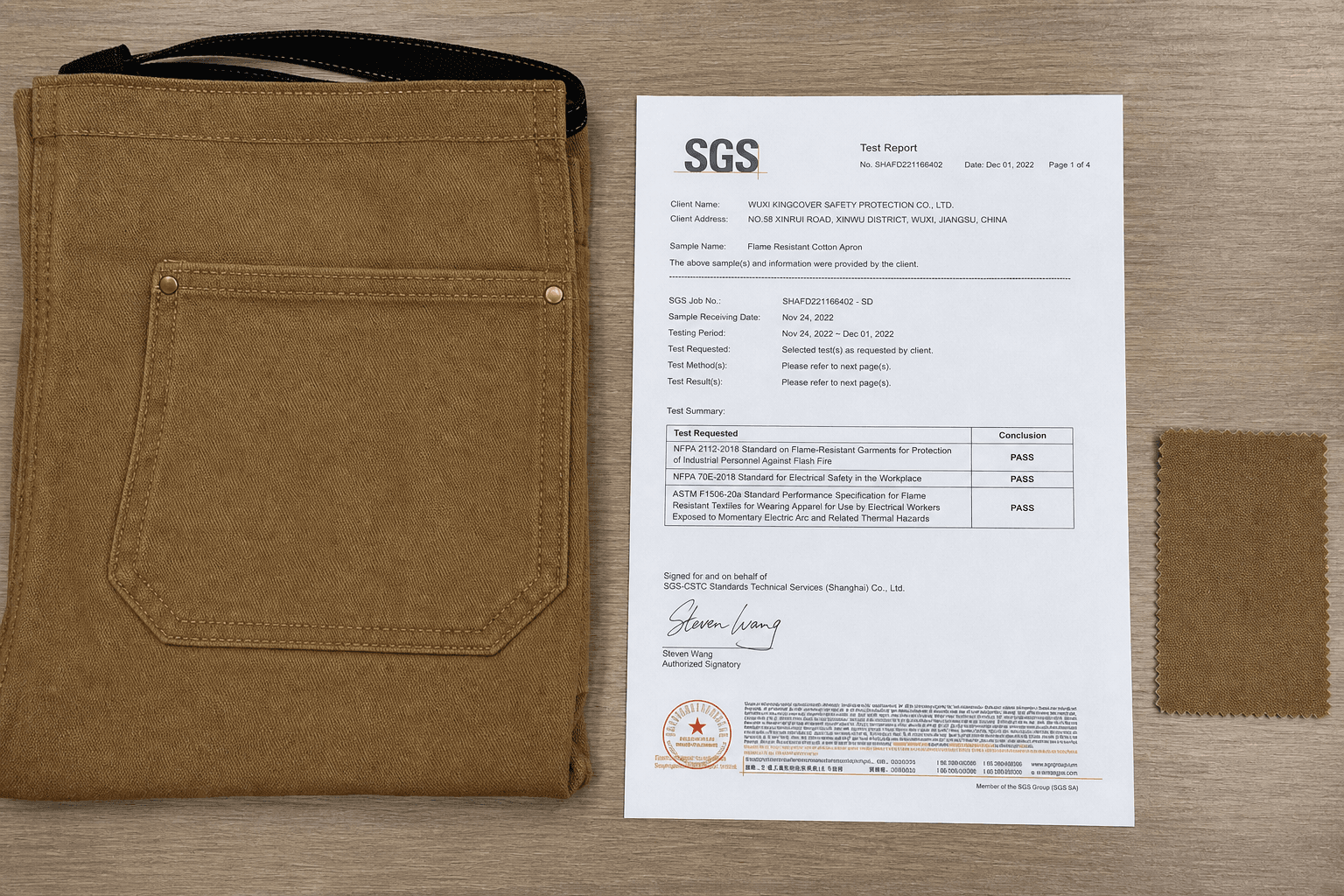
Hydrocarbon, bleach and peroxide exposure: selecting apron materials for cleaning contractors
Selecting the right <strong>cleaning contractor apron material</strong> starts with the chemical actually hitting the apron front: diluted bleach and peroxide usually justify a 190-260 GSM coated construction, while solvent-assisted degreasers often require 280-380 GSM nitrile-coated options. For B2B buyers, that choice changes ex-factory cost from roughly $1.70-$2.20 to $3.90-$5.40 per piece, MOQ from 500 to 1,000 pieces per color, and realistic replacement cycles from about 90 days to 180 days or more.
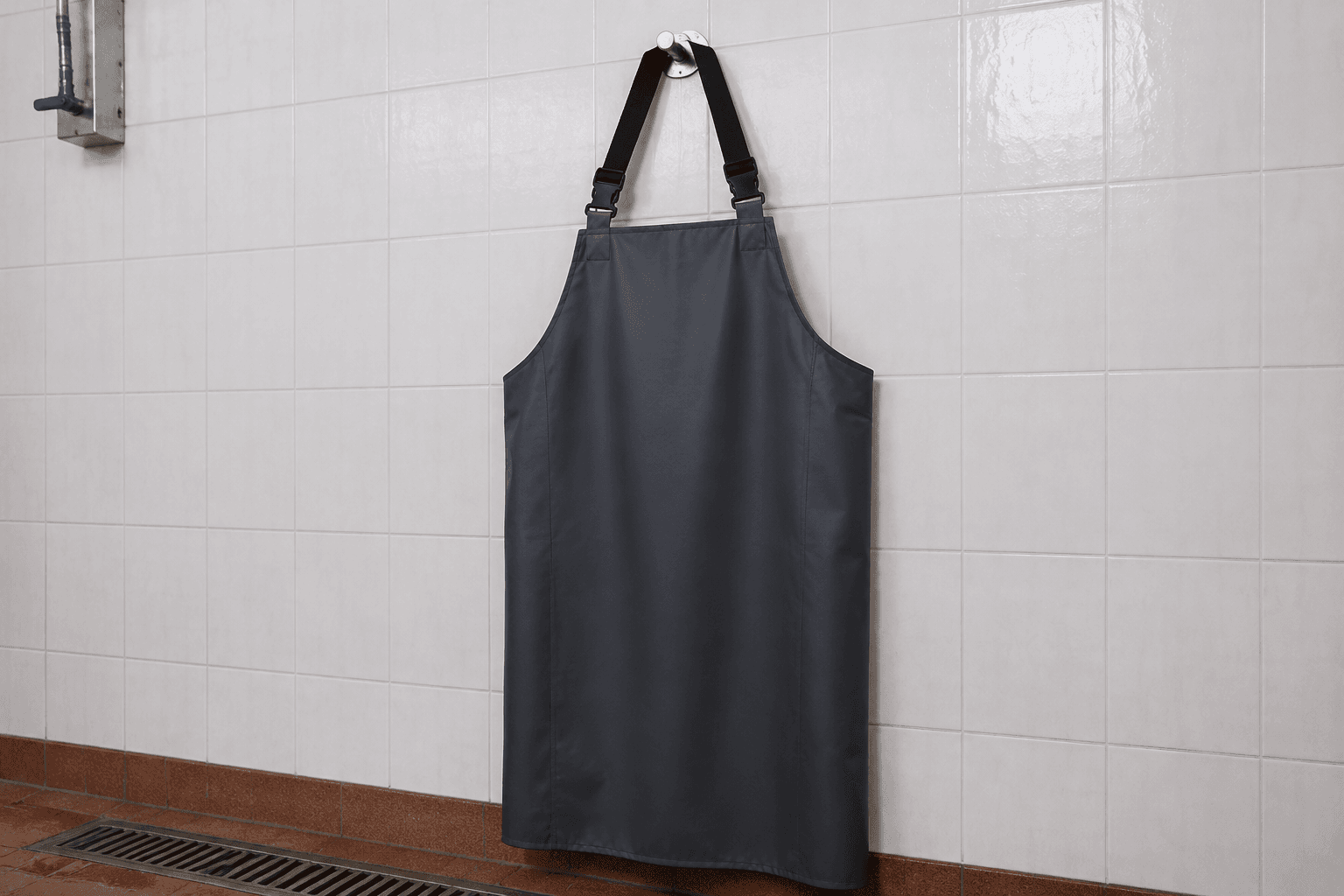
Housekeeping aprons for hotels: soil-release fabrics and industrial laundering
A <strong>hotel housekeeping apron</strong> for commercial use must withstand bathroom chemical splash, cart abrasion, overloaded pockets, and 80 to 120 industrial laundry cycles without exceeding 2% to 3% shrinkage, twisting at ties, or showing heavy stain shadowing. This guide gives hotel buyers concrete OEM benchmarks for fabric blend, GSM, seam construction, wash testing, AQL, MOQ, lead time, and ex-works pricing before bulk approval.
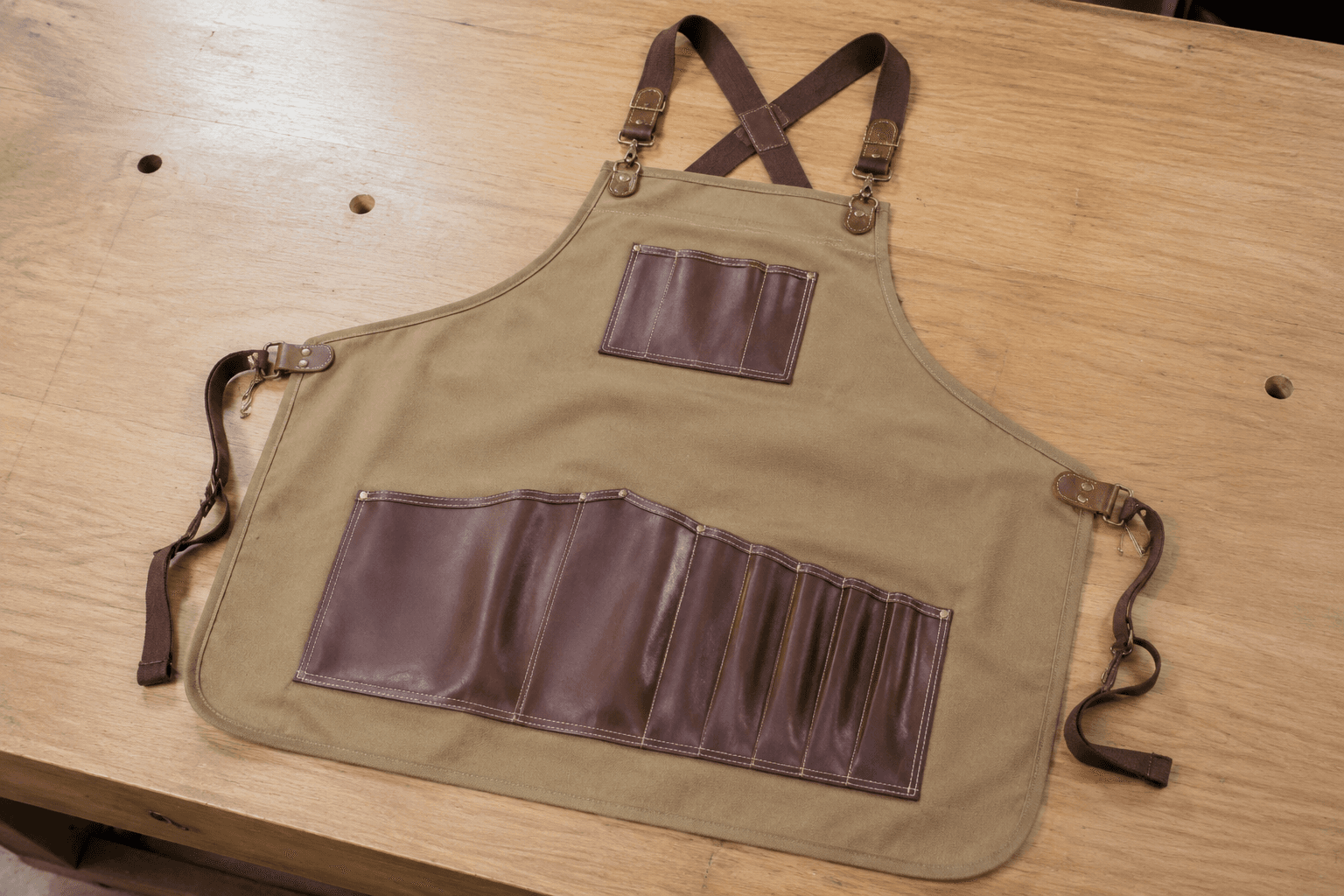
Dishwashing and steward aprons: waterproof construction, hem drainage and replacement-cycle cost
<strong>Dishwashing steward aprons</strong> for commercial kitchens need more than a waterproof face. For B2B buyers, the best programs combine PVC or PU-coated fabric in the 320-450 GSM range, hem drainage that does not trap 150-300 g of water, reinforced strap anchors, and a replacement-cycle target that holds across 90-150 working days in live wet stations.
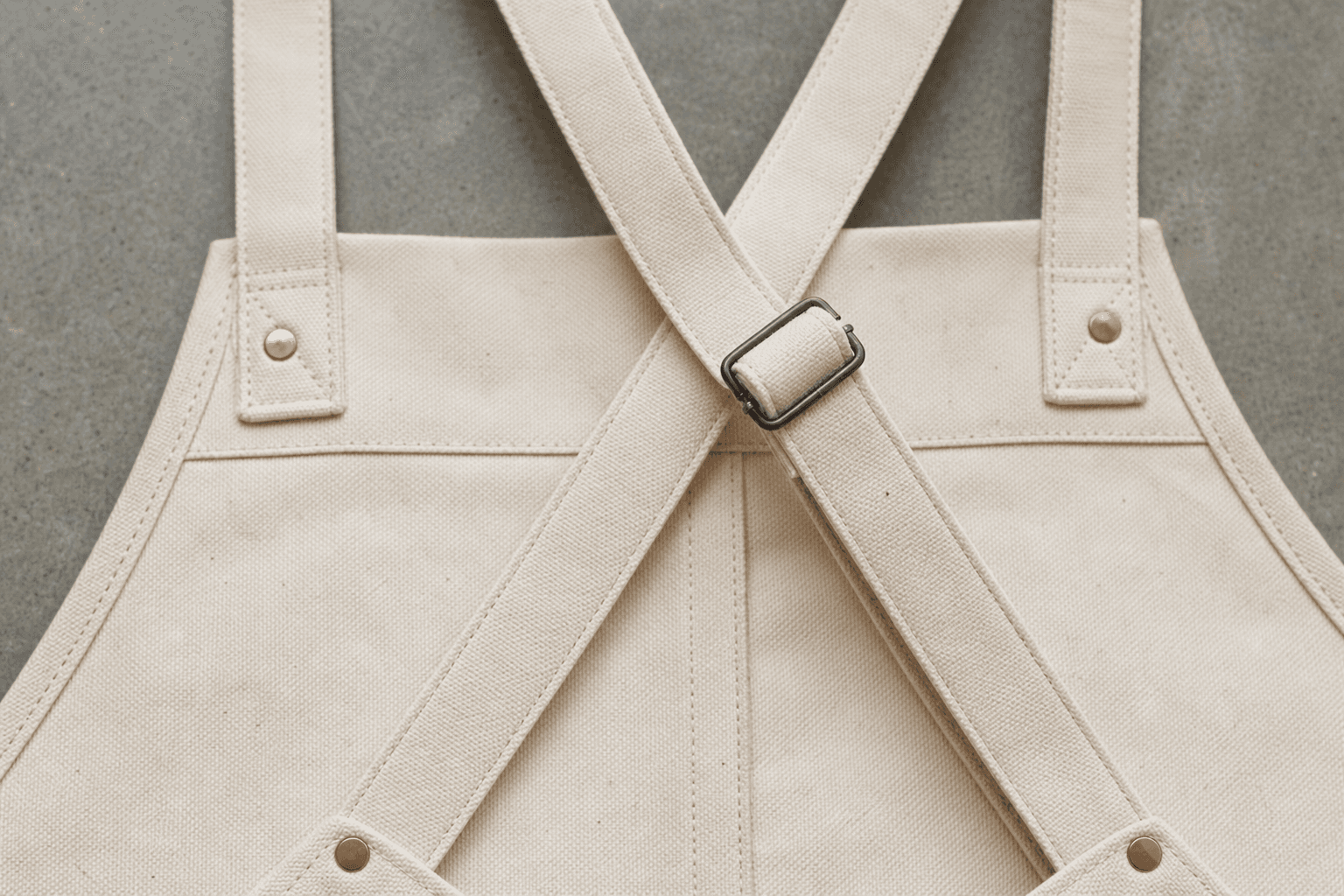
Car detailing aprons: scratch-safe hardware, chemical splash resistance and mobility specs
<strong>Car detailing aprons</strong> for professional shops must protect finished surfaces as carefully as they protect staff. This sourcing guide defines realistic B2B specs for scratch-safe trim, 210 to 240 GSM synthetic shells, short-duration chemical splash resistance, stable pocket loads, AQL inspection, MOQ, lead times, and target FOB pricing before bulk production.
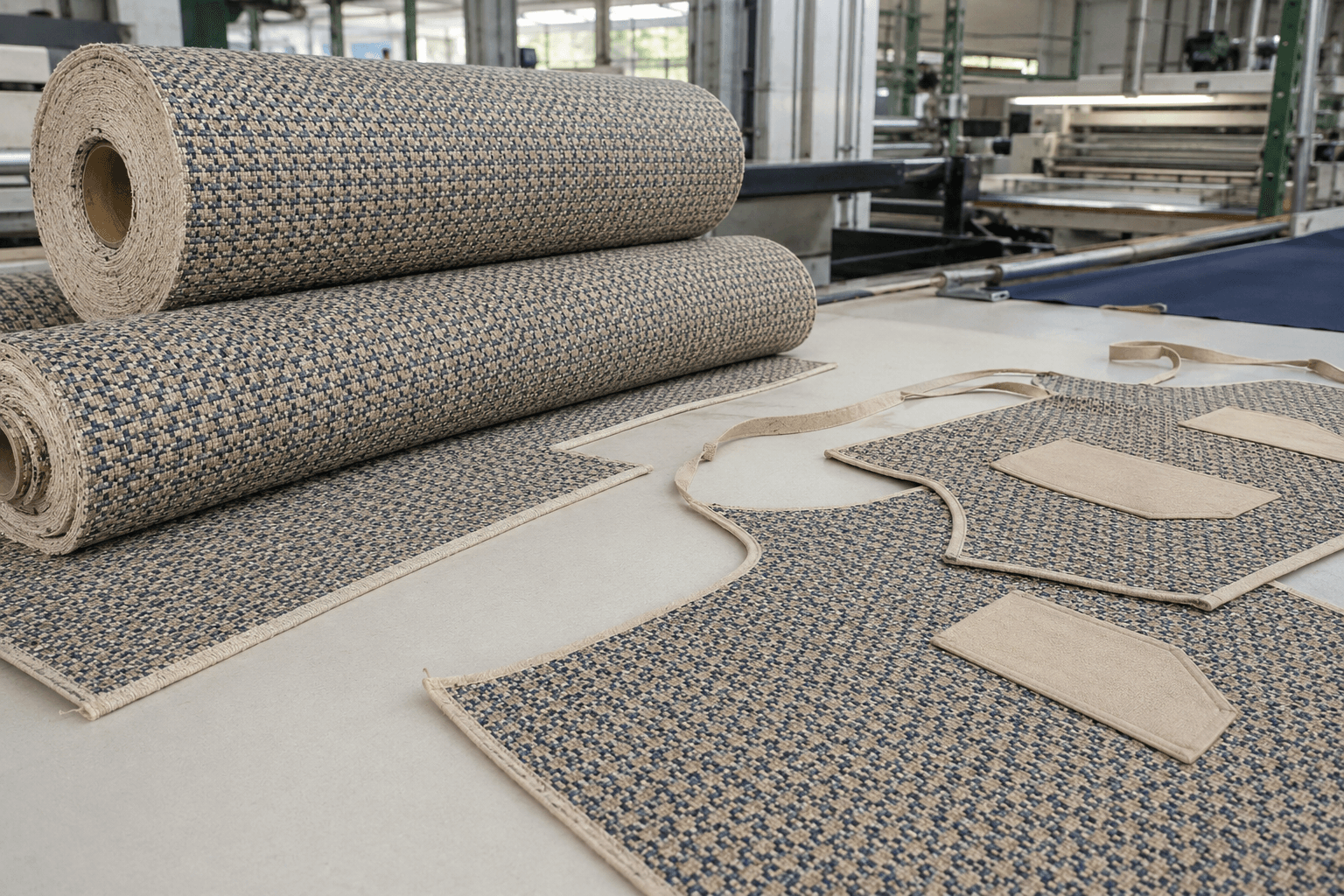
Aprons for open-kitchen fine dining: quiet hardware, elegant drape and premium branding details
A practical guide to <em>fine dining apron sourcing</em> for open-kitchen restaurants, covering fabric drape, low-noise hardware, understated branding, MOQ planning, FOB cost control, AQL inspection and reorder discipline for premium apron programs.
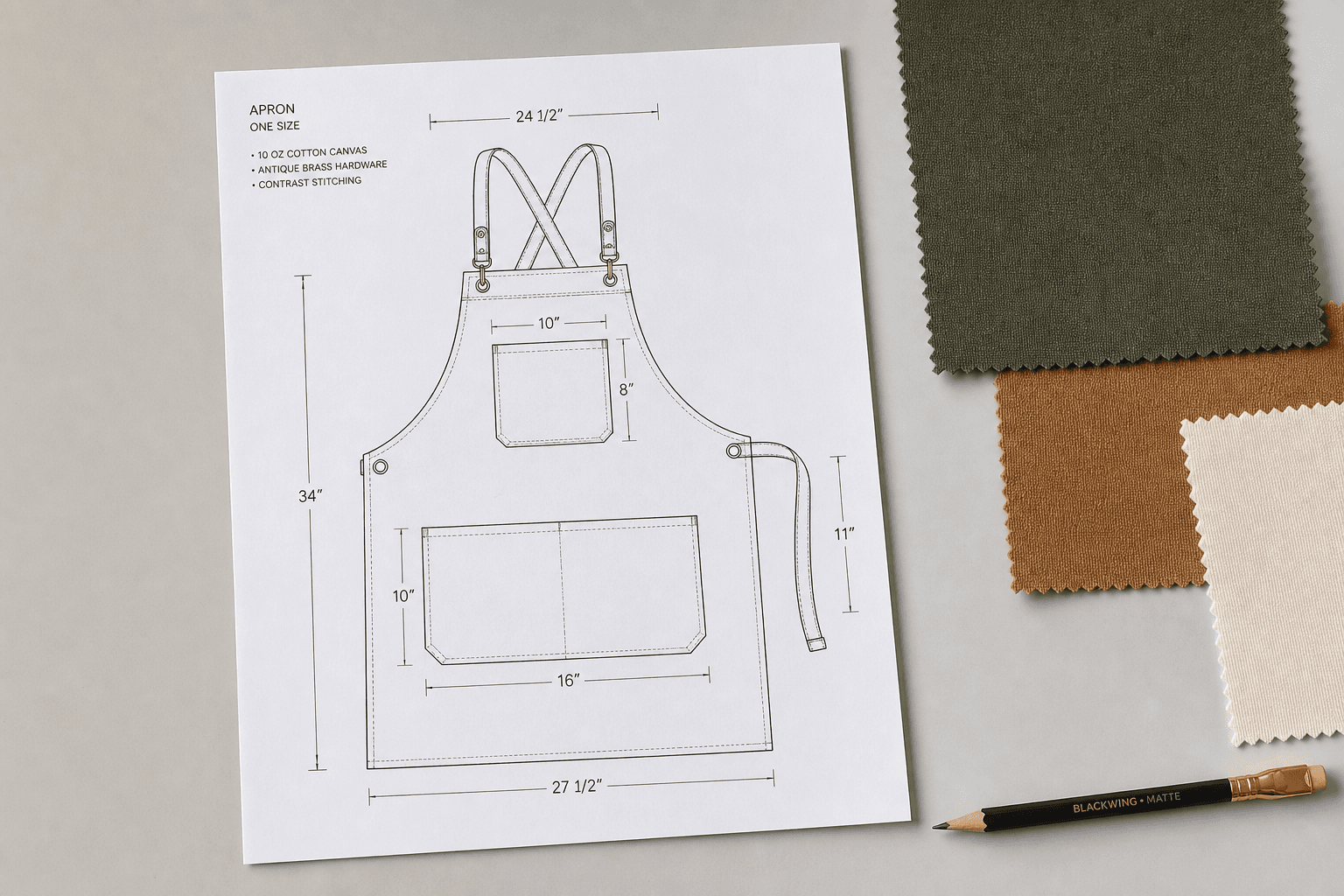
Aprons for mobile bartending teams: foldability, wrinkle recovery and logo visibility in transit
<strong>Mobile bartending aprons</strong> have to survive folding, carton pressure, van loading, and fast venue setup without deep creases or blurred branding. This sourcing guide gives professional B2B buyers concrete OEM benchmarks for GSM, fabric blend, pocket thickness, logo method, carton density, AQL, MOQ, and lead times so bulk apron orders arrive presentation-ready with predictable cost per usable piece.
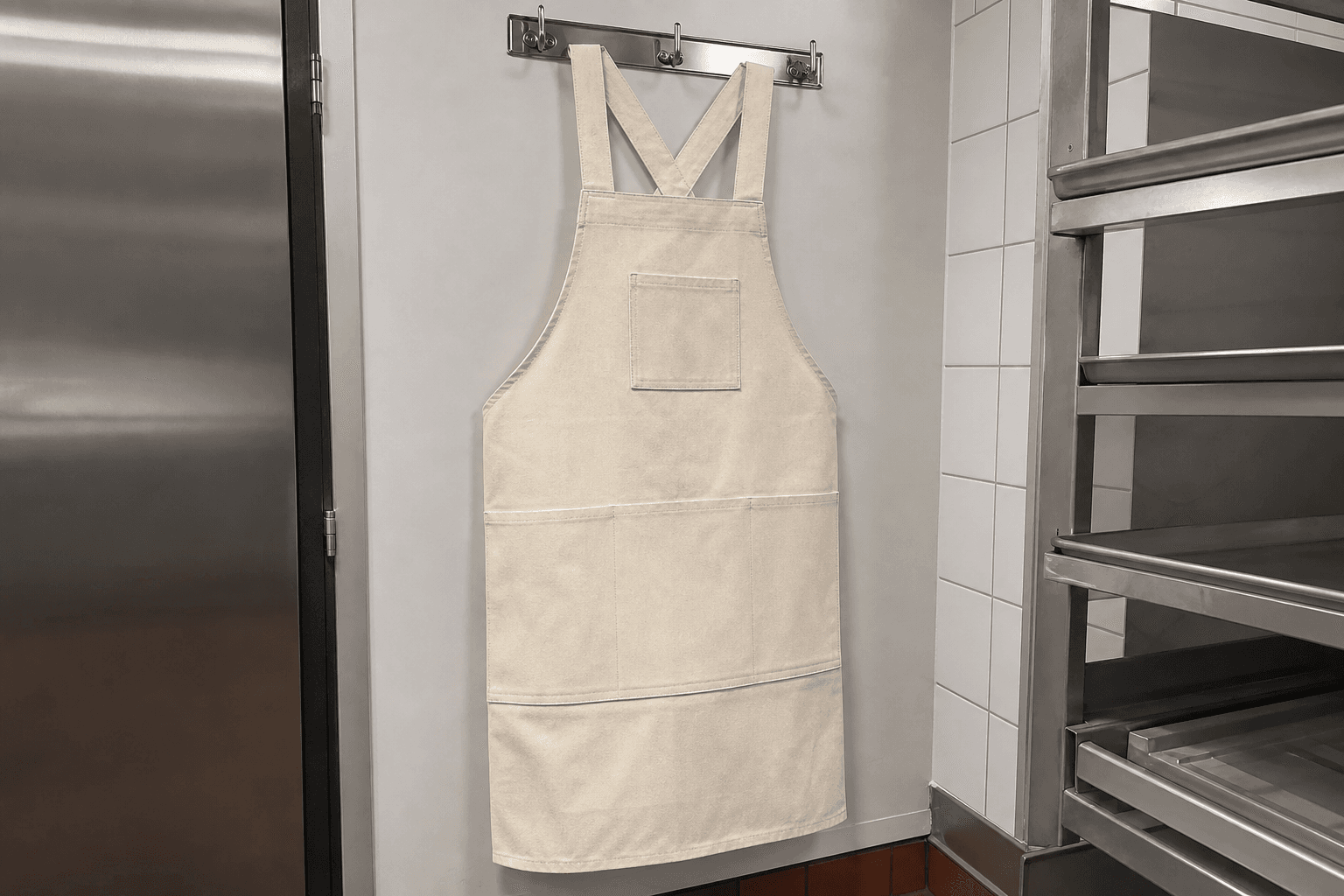
Aprons for dark kitchens and ghost kitchens: stain camouflage, speed laundering and replenishment planning
A practical guide to <strong>dark kitchen apron sourcing</strong> for professional buyers, with working benchmarks for 245-270 GSM twill bib aprons, 50-100 commercial wash targets, $2.10-$4.20 FOB pricing, 500-3,000 pc MOQ bands, AQL 2.5/4.0 inspection and 20-50 day replenishment planning.
Sourcing chef aprons for hotels and restaurant groups
A practical chef apron sourcing guide for hotel groups and restaurant chains comparing fabrics, construction, pricing, compliance, and bulk order controls.
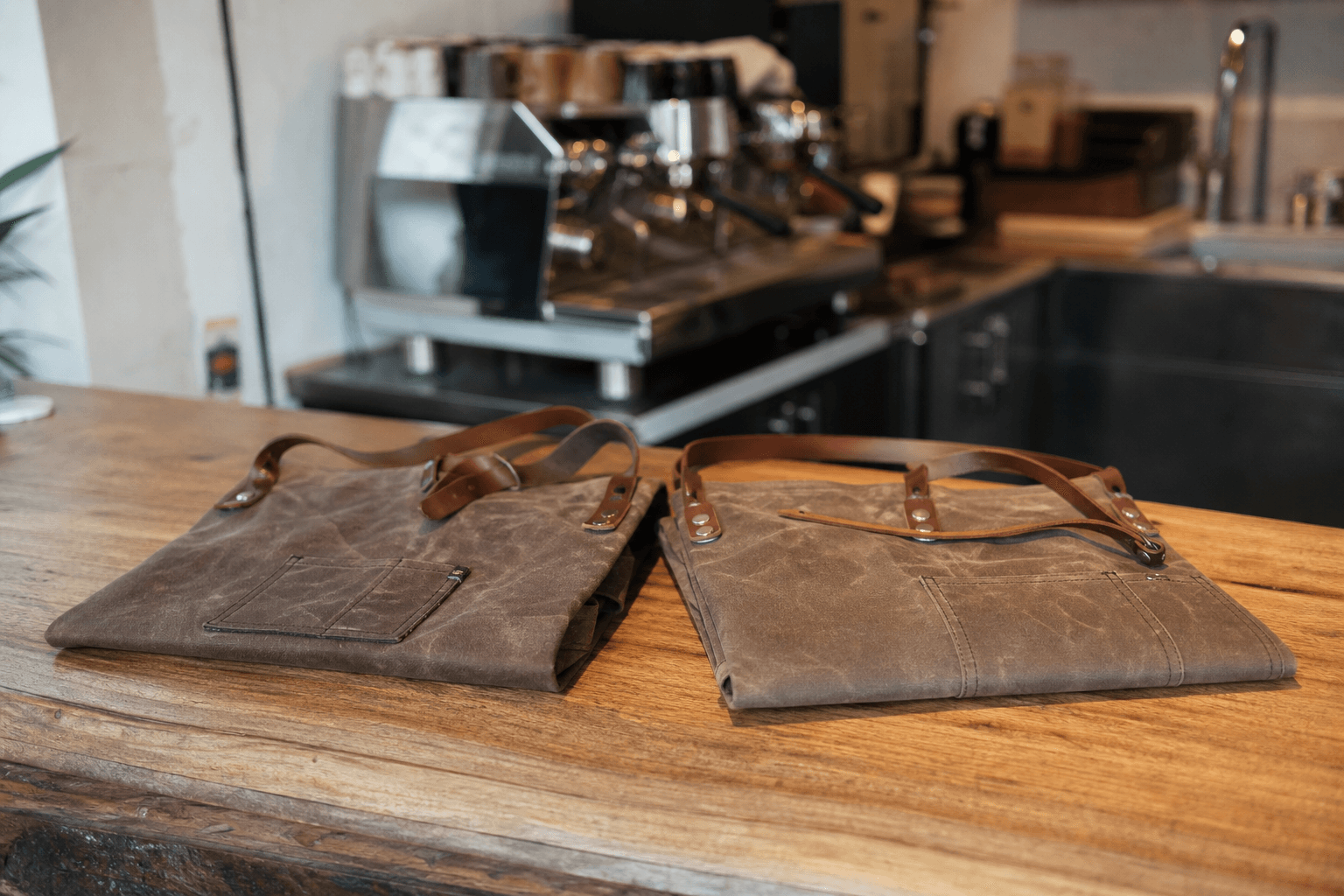
Barista aprons for cafe brands: fabric, fit and durability
A practical sourcing guide to barista apron fabric, fit, reinforcement and bulk-order decisions for cafe brands developing durable custom uniforms.

Workshop aprons for tool and hardware brands
A practical sourcing guide to workshop apron materials, pocket engineering, reinforcement, pricing, MOQ, and production checks for tool and hardware brands.
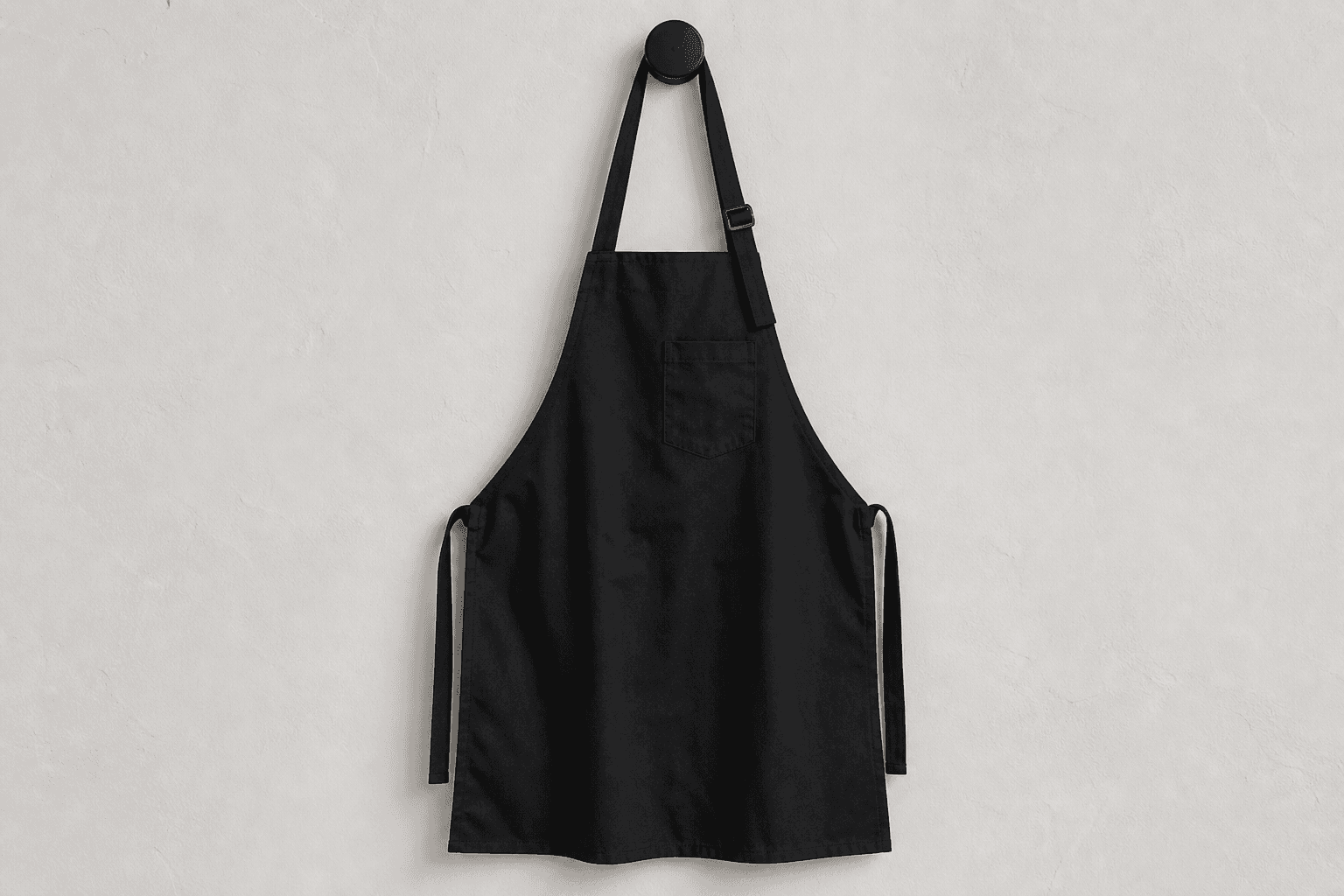
Salon and spa aprons: stain-shedding fabrics and fit
A salon apron must balance stain shedding, bleach tolerance, comfort, and brand presentation across repeated cutting, coloring, washing, and spa service use.
Home kitchen aprons for retail buyers: margin and merchandising
For home kitchen apron retail programs, margin depends on fabric choice, packing method, size grading, and decoration control before the purchase order is placed.
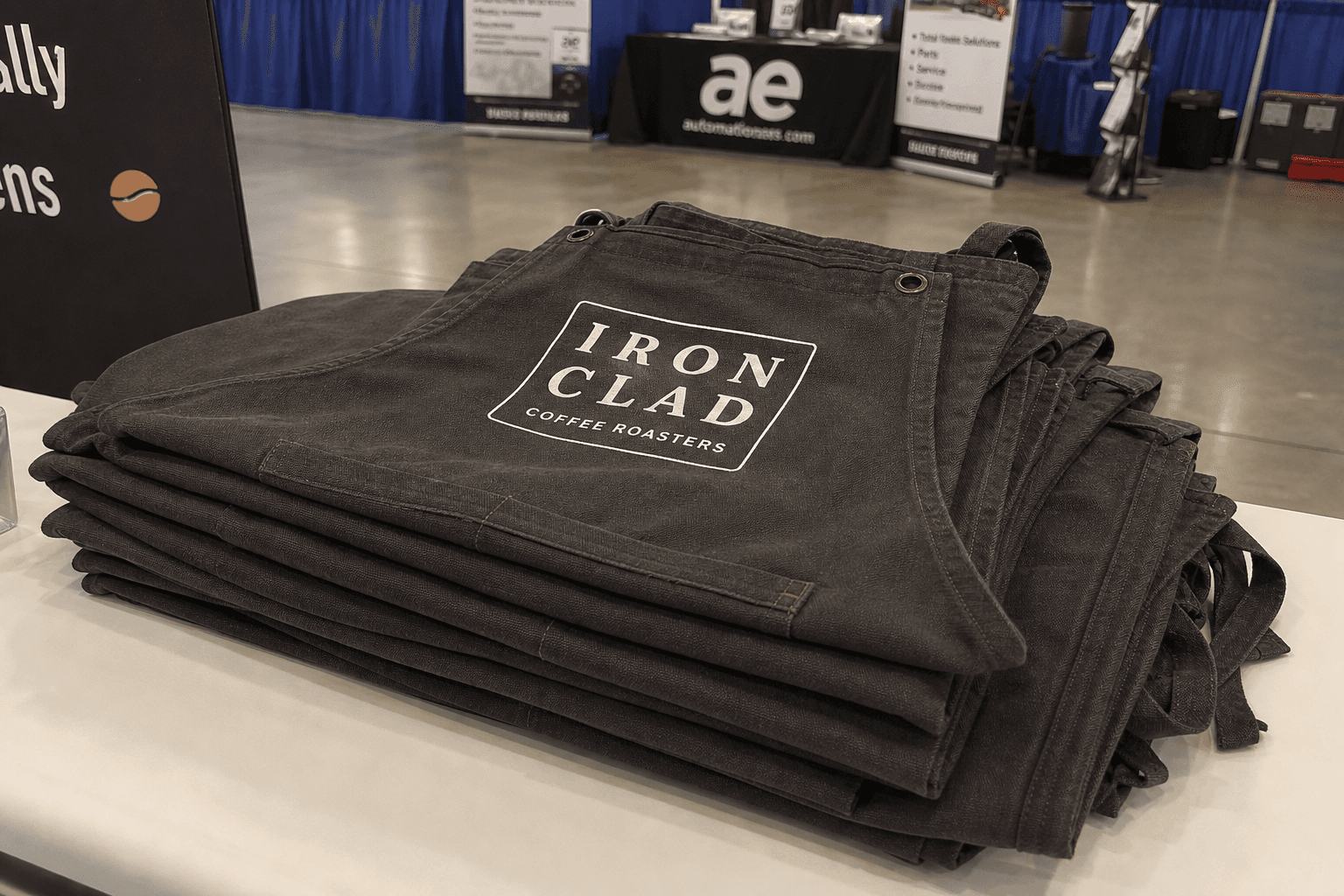
Promotional aprons for events: fast turnaround branding
A promotional apron can be sourced quickly when fabric, logo method, packing and approval steps are fixed early for the event deadline.
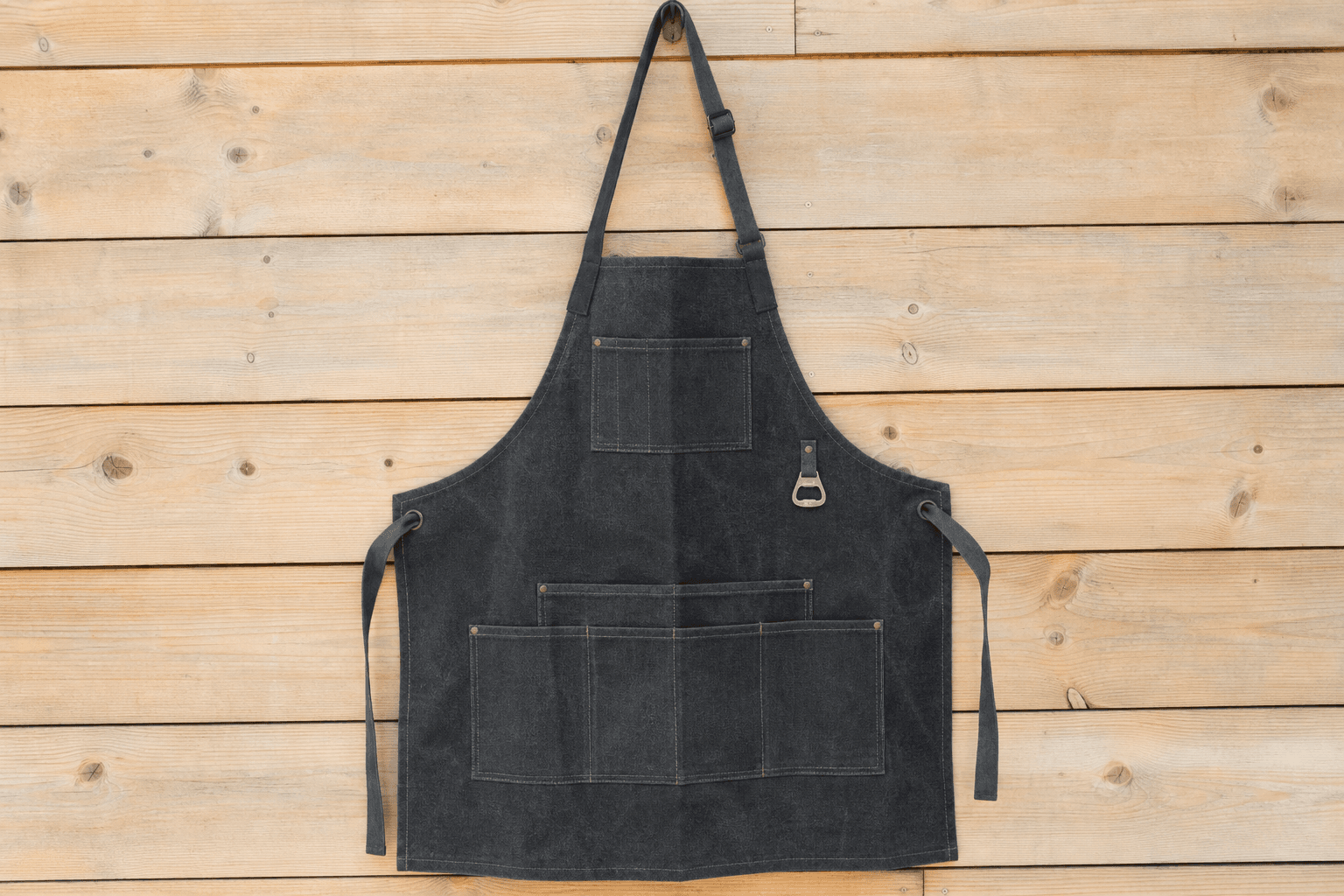
Sourcing BBQ and grilling aprons: heat, heft and pockets
A practical bbq apron sourcing guide covering fabric weight, heat exposure, pocket engineering, trims, MOQ, pricing, and inspection points for bulk custom programs.
Sourcing butcher and meat-processing aprons
A practical sourcing guide for butcher apron specifications, material choices, waterproofing, sizing, compliance, MOQ, costing and production timelines for bulk China orders.
Florist aprons: fabric, pockets and waxed-canvas options
A florist apron needs the right fabric weight, pocket layout and finishing choices to survive wet stems, tools and daily shop washing.
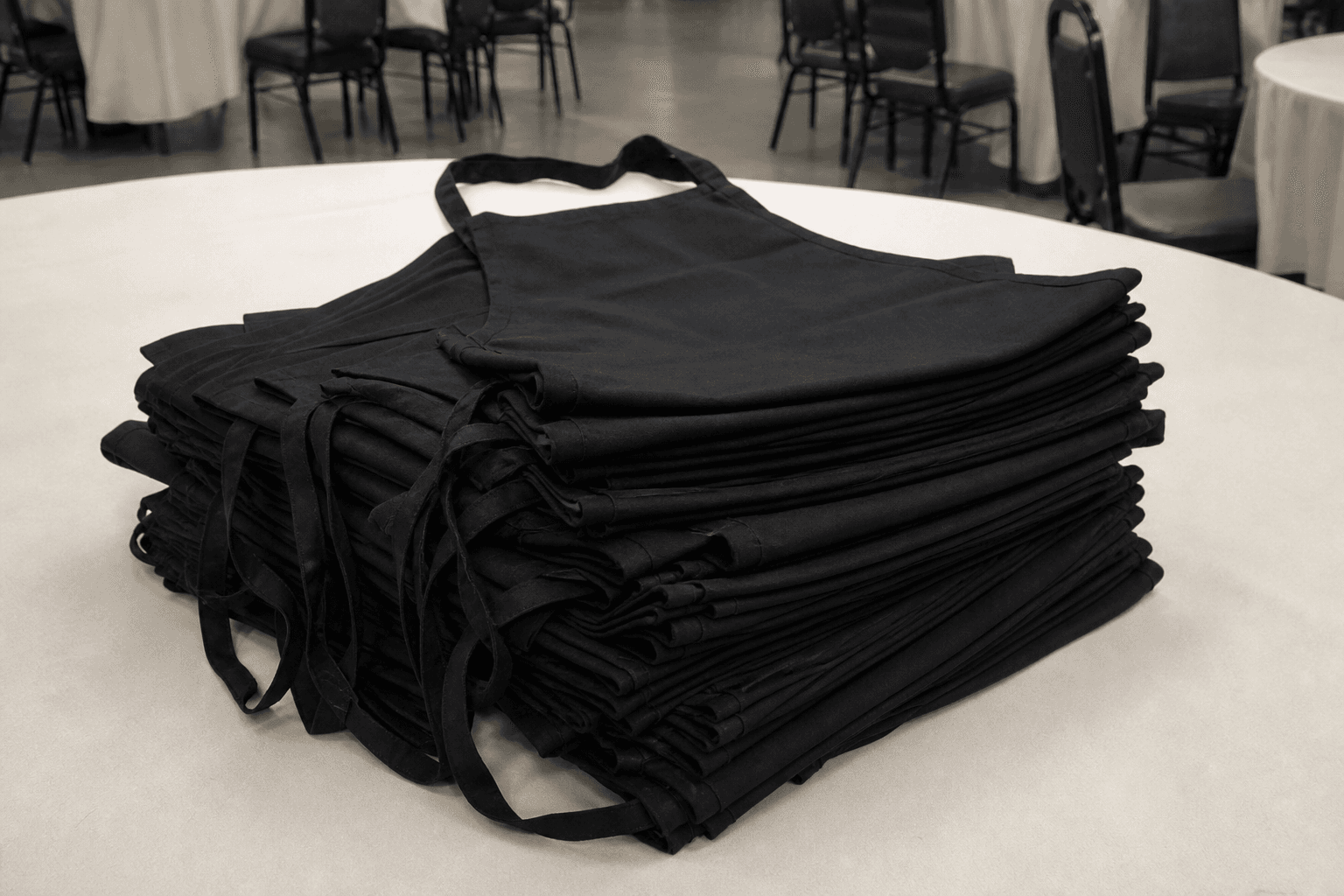
Catering aprons in bulk: durability and fast branding
A catering apron must balance wash durability, fast logo application, and predictable bulk delivery for event, hotel, and foodservice uniform programs.
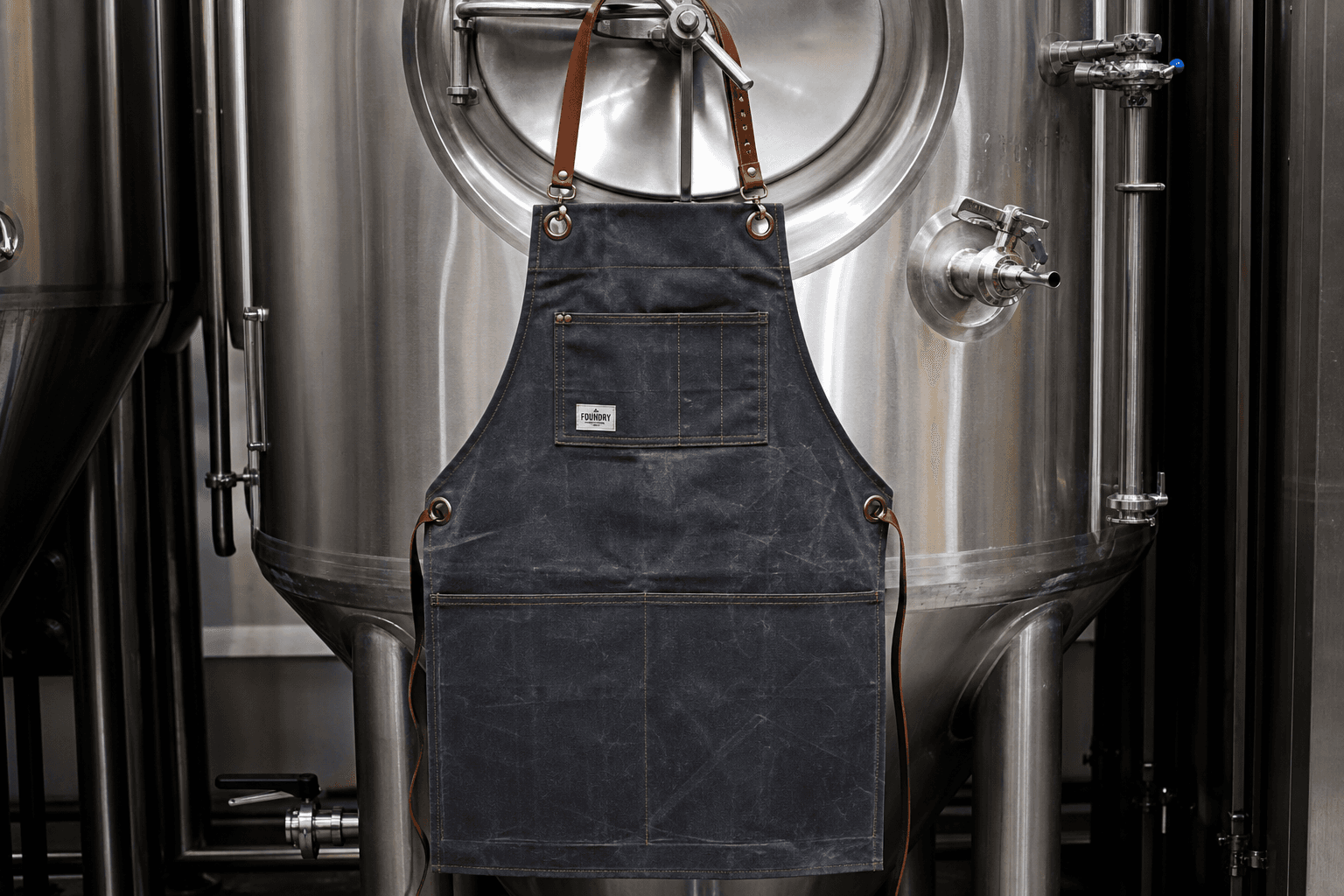
Brewery and distillery aprons: heavy-duty and water-resistant
A brewery apron must balance water resistance, weight, abrasion life, and wash behavior for wet cellar, bar, and distillery production teams.
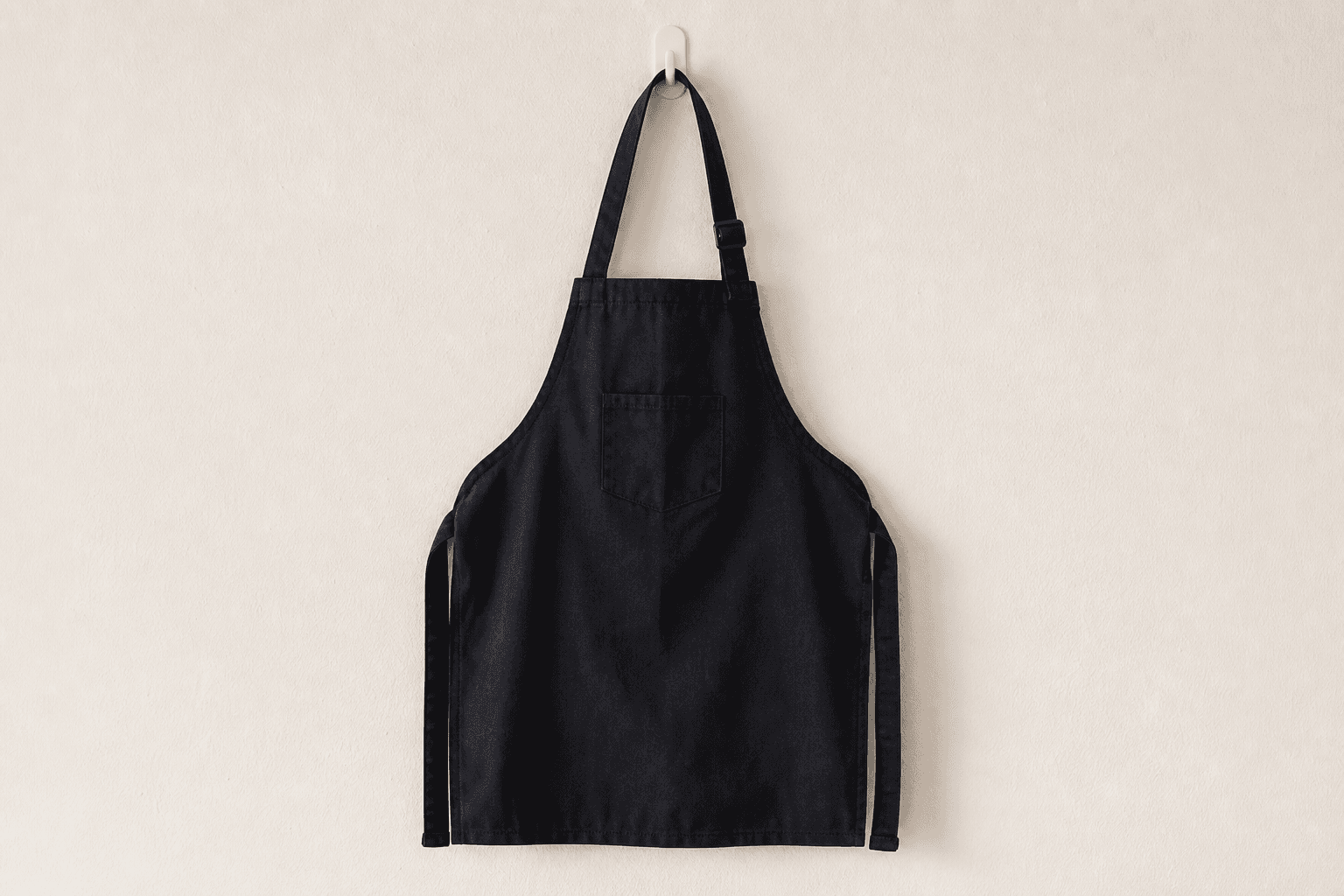
Nail salon and esthetician aprons: stain-shedding and fit
A nail salon apron must shed polish, dust, oils and tint while staying light enough for seated technicians through long service shifts.
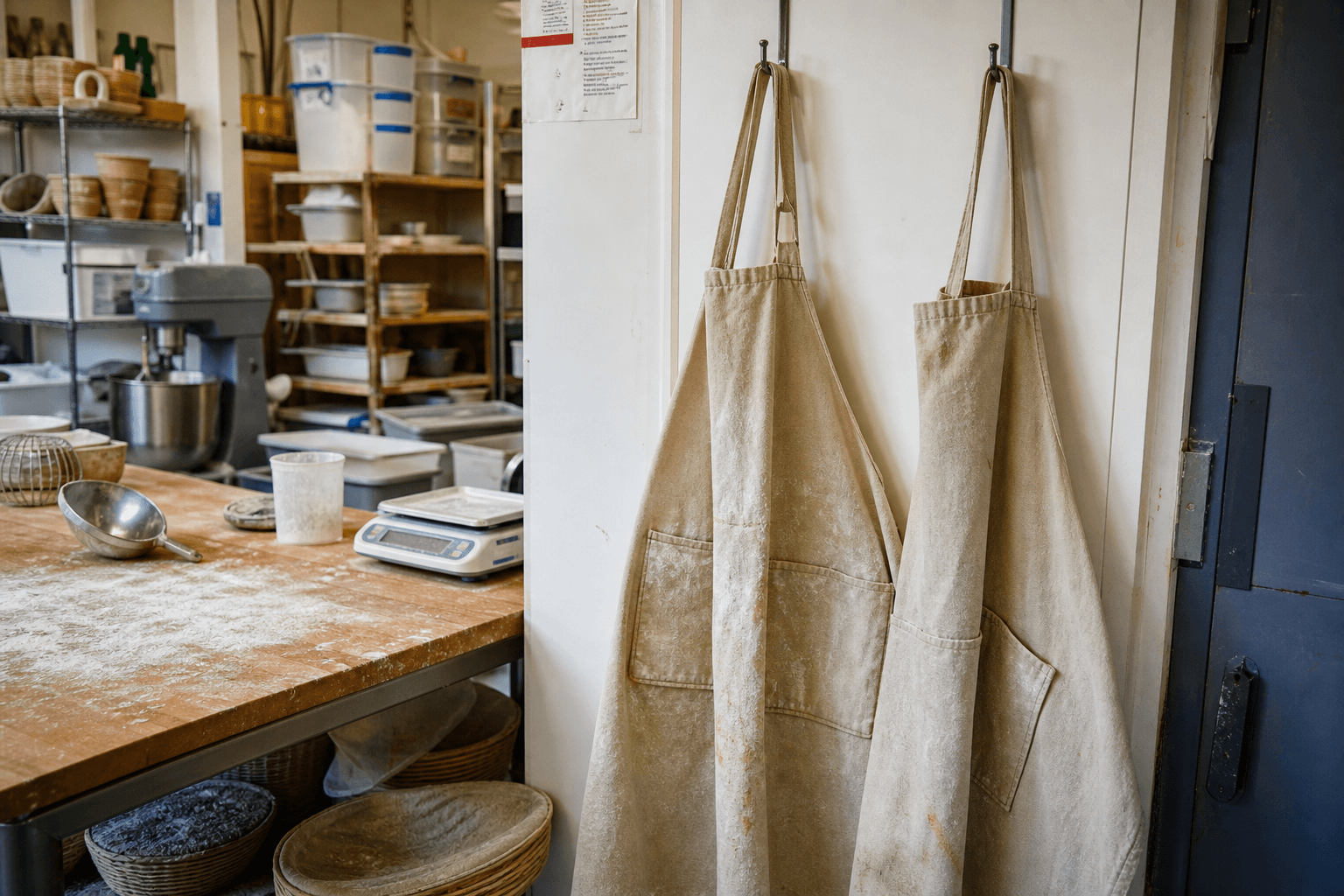
Bakery and pastry aprons: flour-resistant fabrics and fit
A bakery apron needs controlled fabric weight, smooth flour release, and stable fit so teams can work through long mixing, proofing, and finishing shifts.
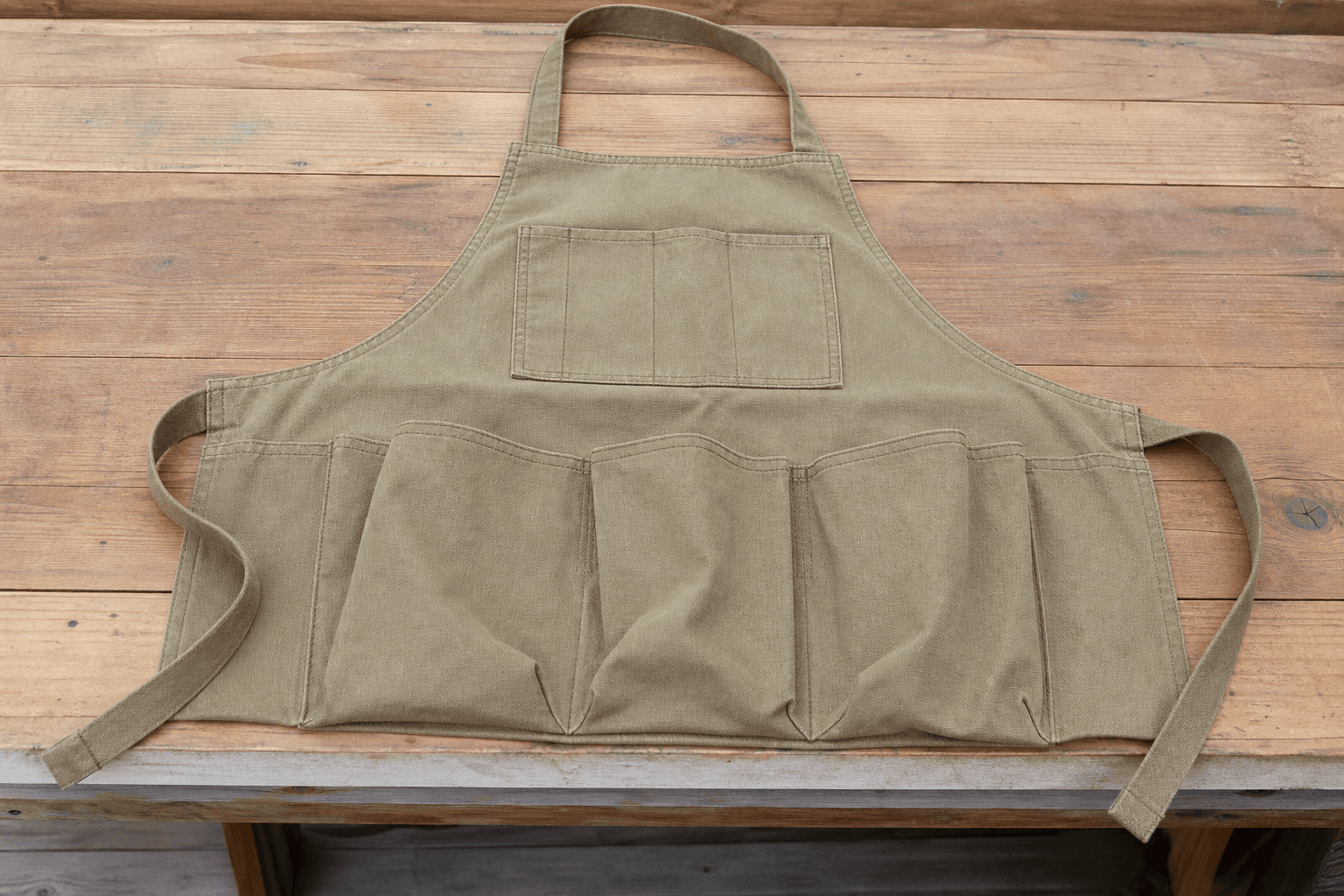
Gardening and nursery aprons: pockets and durable canvas
A practical sourcing guide to the gardening apron, with canvas weights, pocket construction, reinforcement choices, MOQ ranges and production trade-offs for bulk buyers.
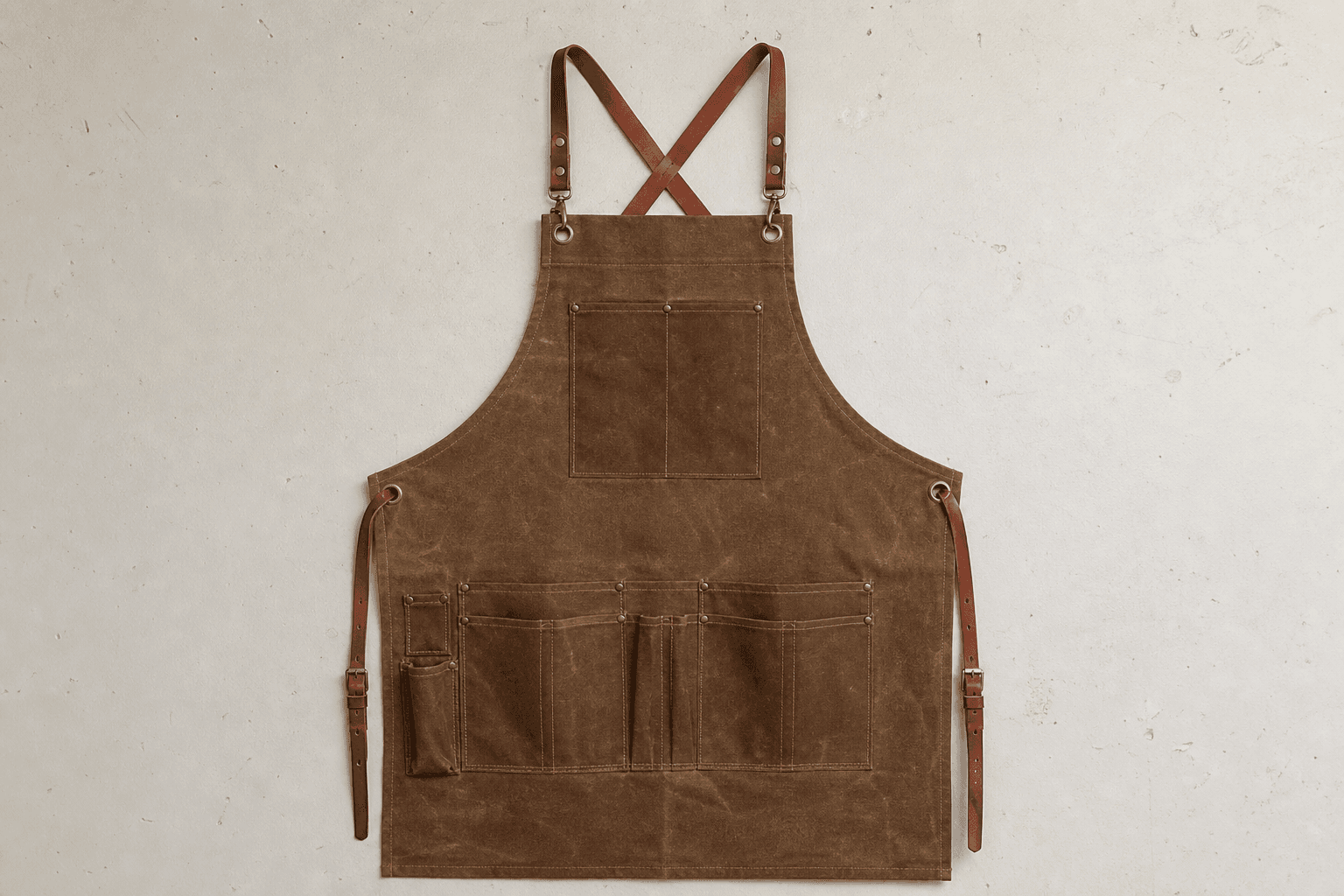
Woodworking aprons: leather, canvas and chip protection
A woodworking apron must balance chip protection, tool load, fabric weight and bulk pricing, especially when sourcing leather, canvas or hybrid shop designs.
Pottery Aprons: Split-Leg, Canvas & Waterproof
Choose a split-leg pottery apron in 320-420 GSM canvas for wheel work; add wax or PU for clay and glaze splash resistance. Compare pockets, straps, MOQ and QC.
Spa and massage therapist aprons: comfort and easy care
A practical sourcing guide to spa apron fabrics, fit, trims, and care standards for bulk wellness uniforms used in treatment rooms and spa reception areas.
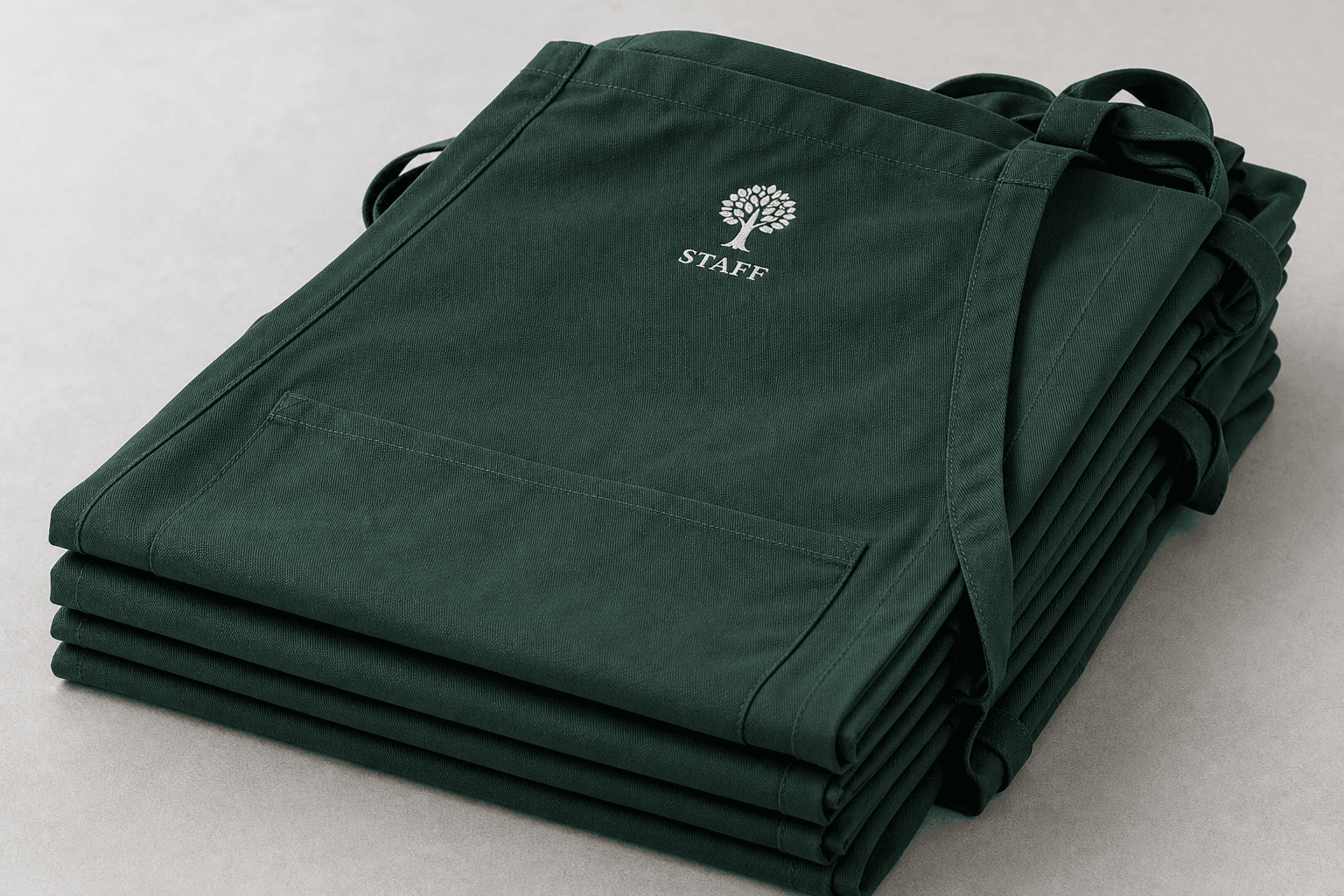
Retail and grocery staff aprons: uniform branding at scale
A retail staff apron program works best when fabric, pocket layout, branding method, and replenishment rules are fixed before bulk uniform production starts.
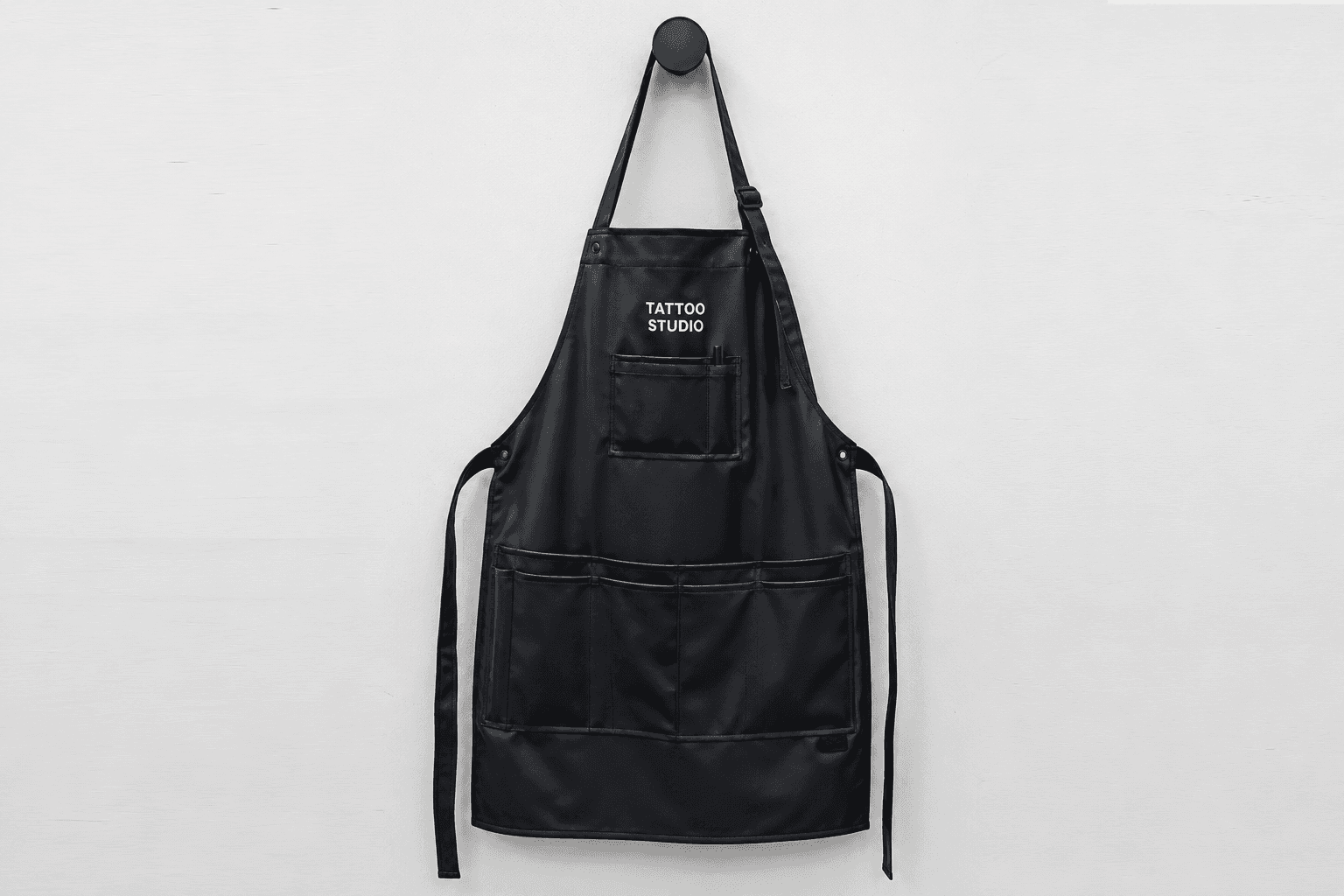
Tattoo studio aprons: wipe-clean fabrics and pocket layouts
A practical sourcing guide to tattoo apron fabrics, wipe-clean finishes, pocket layouts, and bulk production details for studio, guest-artist, and retail programs.
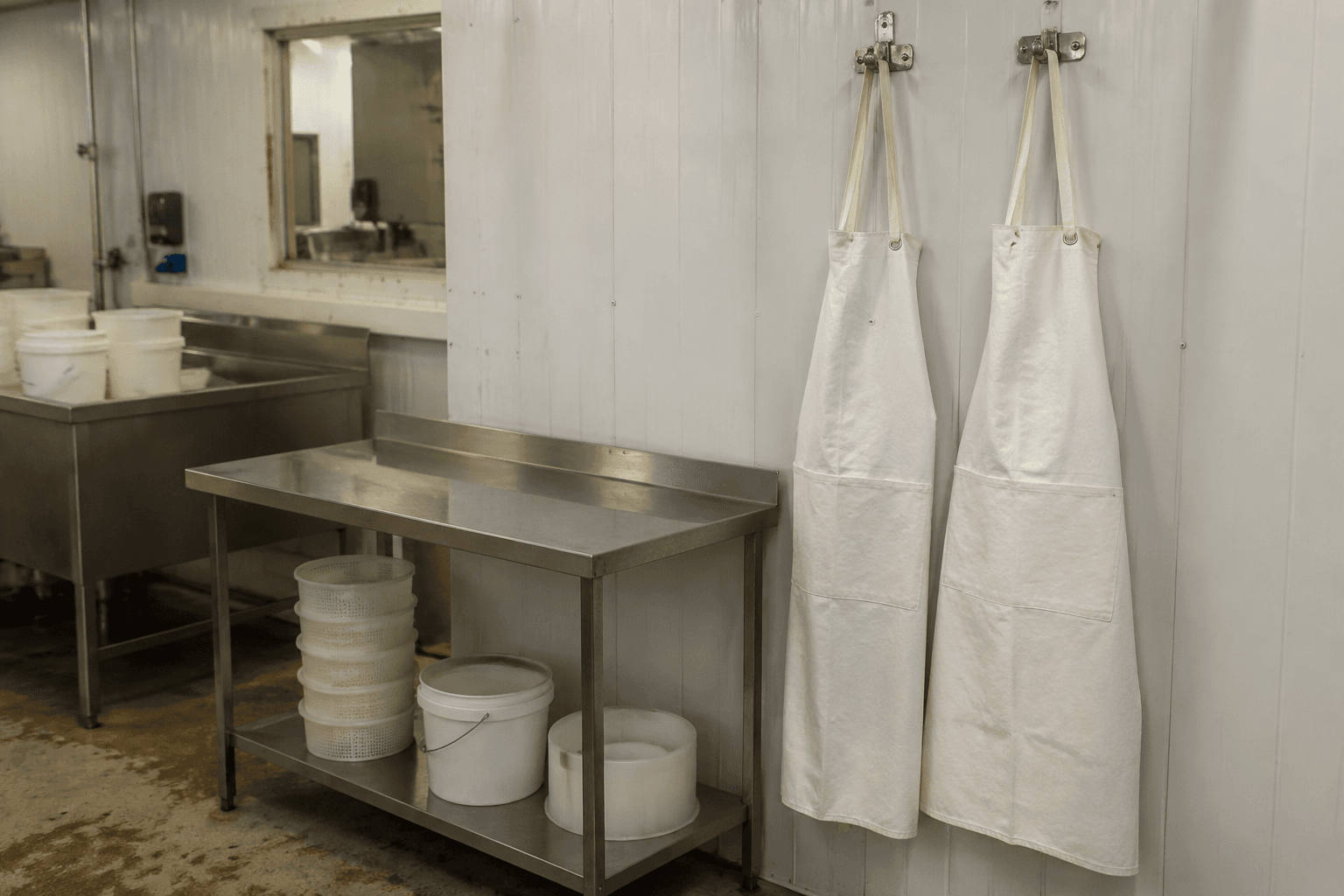
Cheese and creamery aprons: hygiene, heft and easy laundering
A creamery apron needs controlled hygiene, workable heft and laundering performance that fits dairy production, packing and wash-down routines.
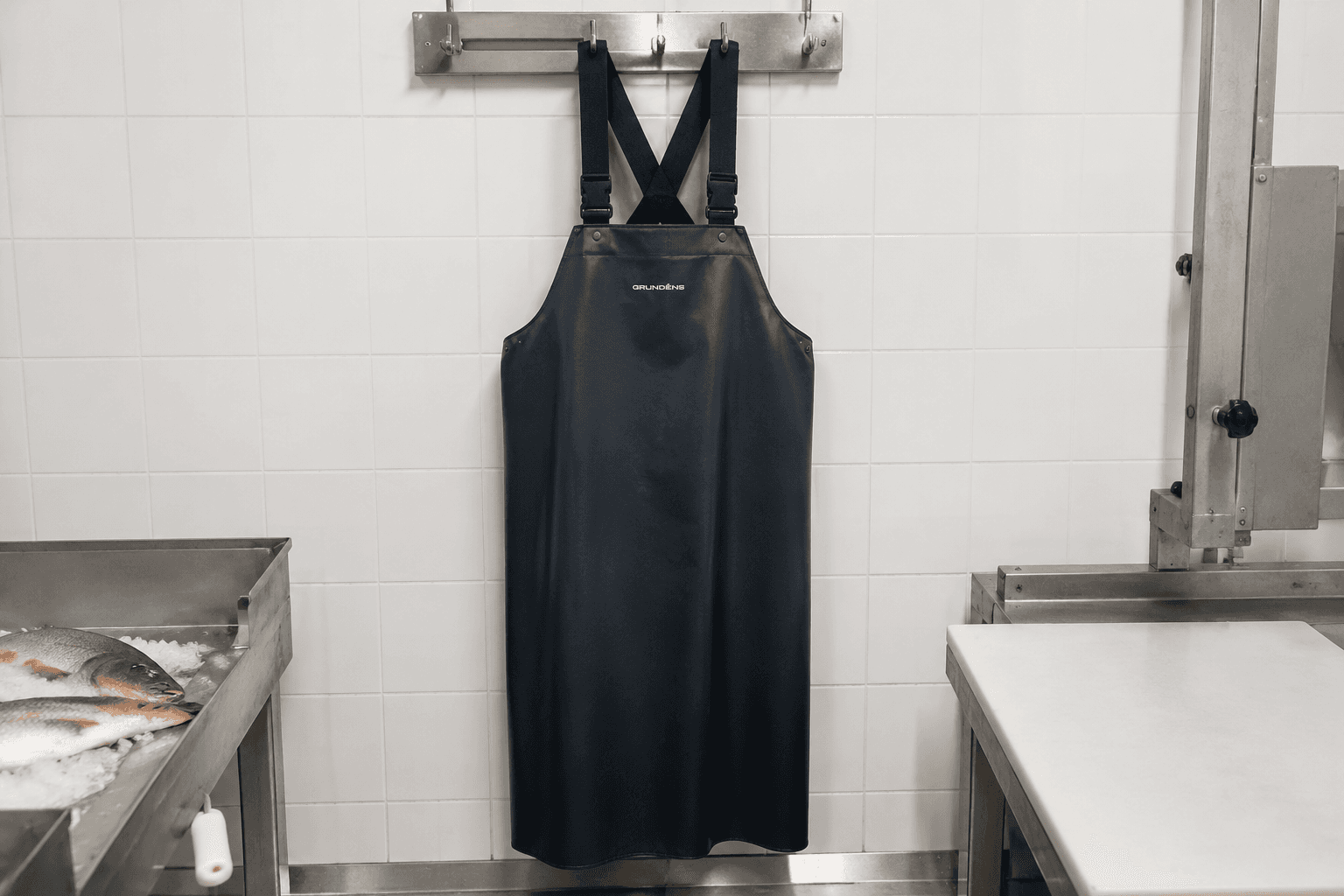
Fishmonger and seafood aprons: water-resistant and odor-managing
A fishmonger apron must block water, blood, slime, and odor without slowing movement. This guide covers the spec choices that matter in bulk sourcing.
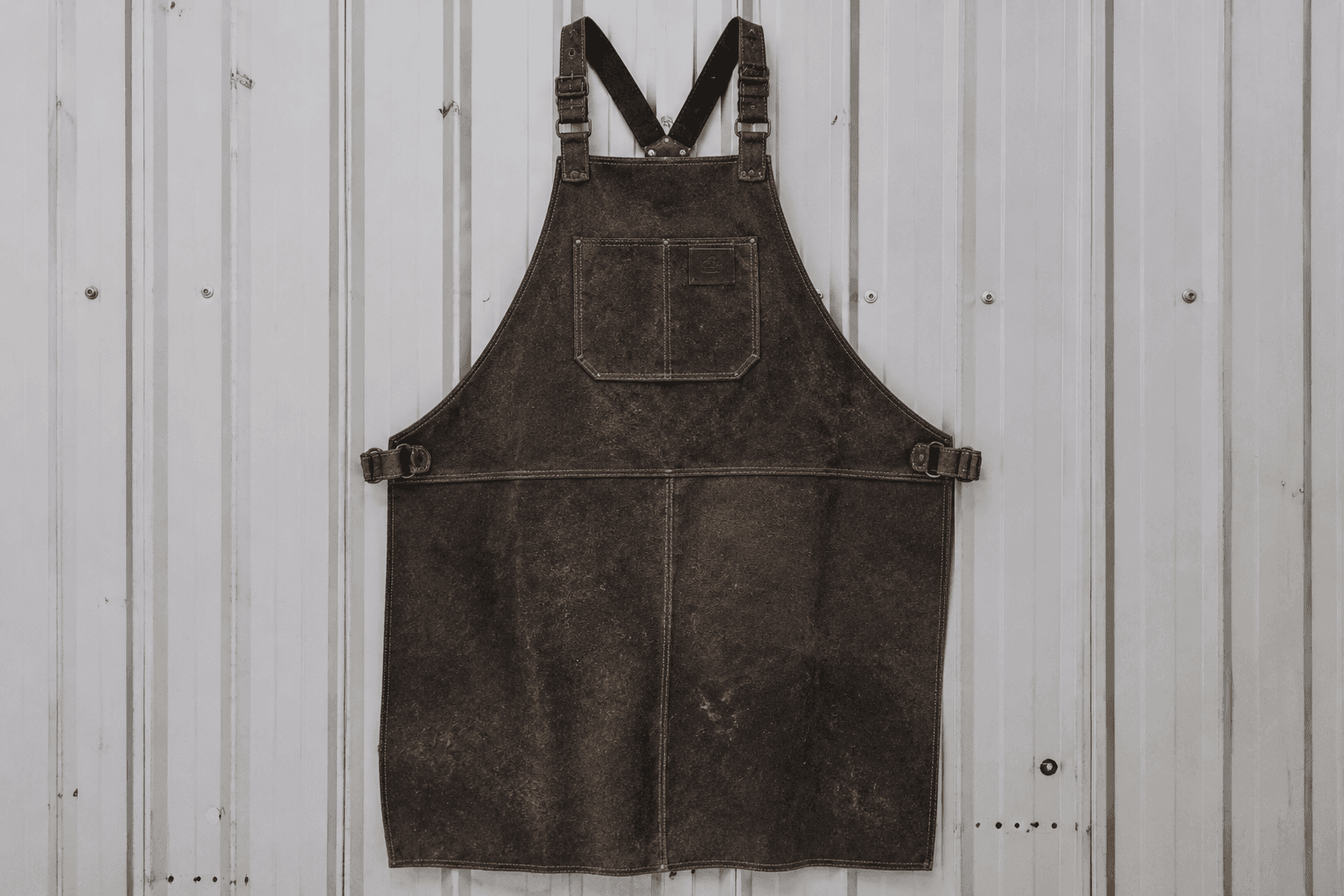
Blacksmith and metalwork aprons: leather, heft and spark resistance
A blacksmith apron must balance leather grade, panel weight, coverage and hardware so it protects against sparks without making bulk production impractical.
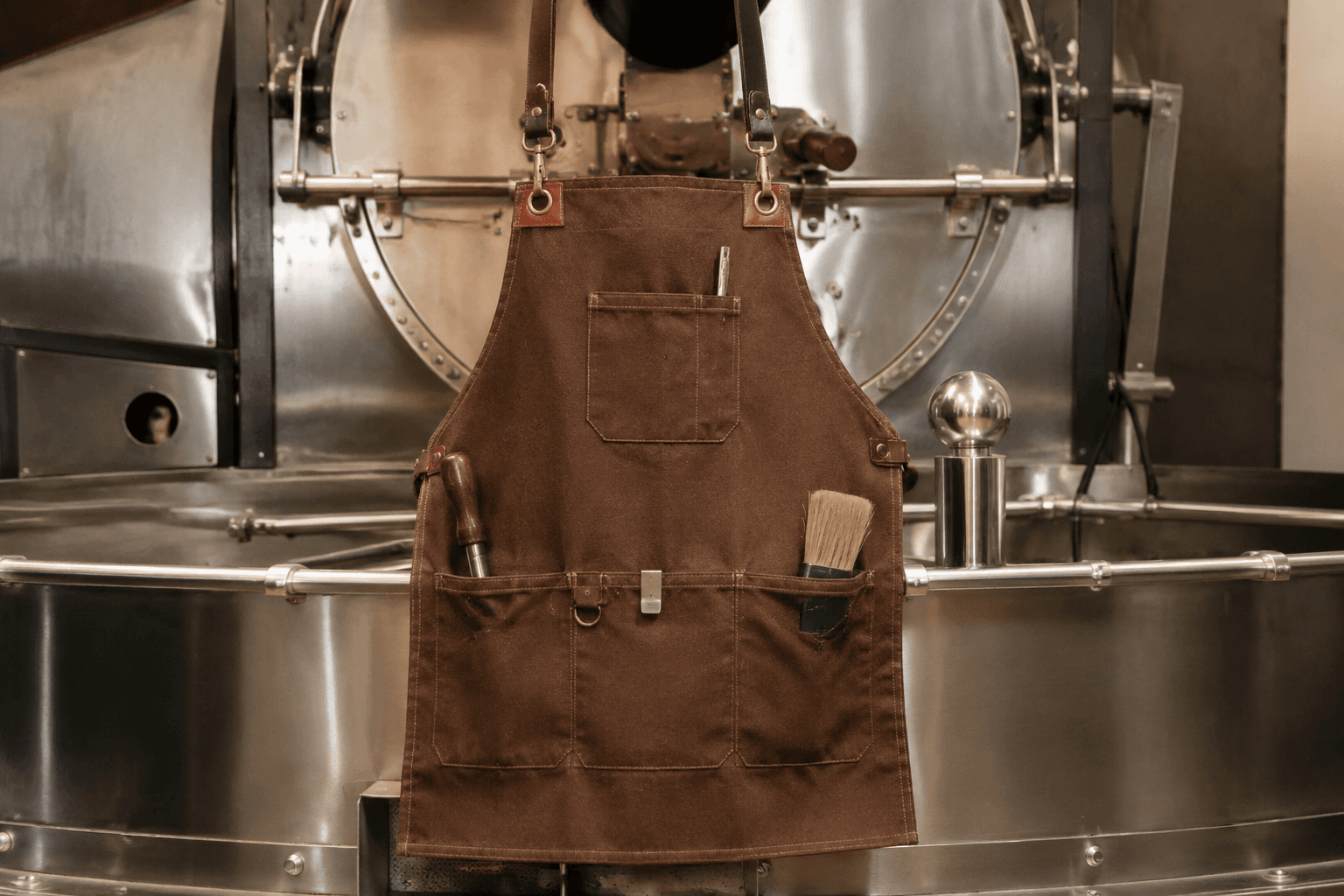
Coffee roastery aprons: heat-tolerant, heavy canvas and pockets
A coffee roastery apron must handle heat, ash, oils, and repeated washing while still fitting a working team. For bulk buyers, fabric weight, pocket layout, and trim choices decide performance and cost.
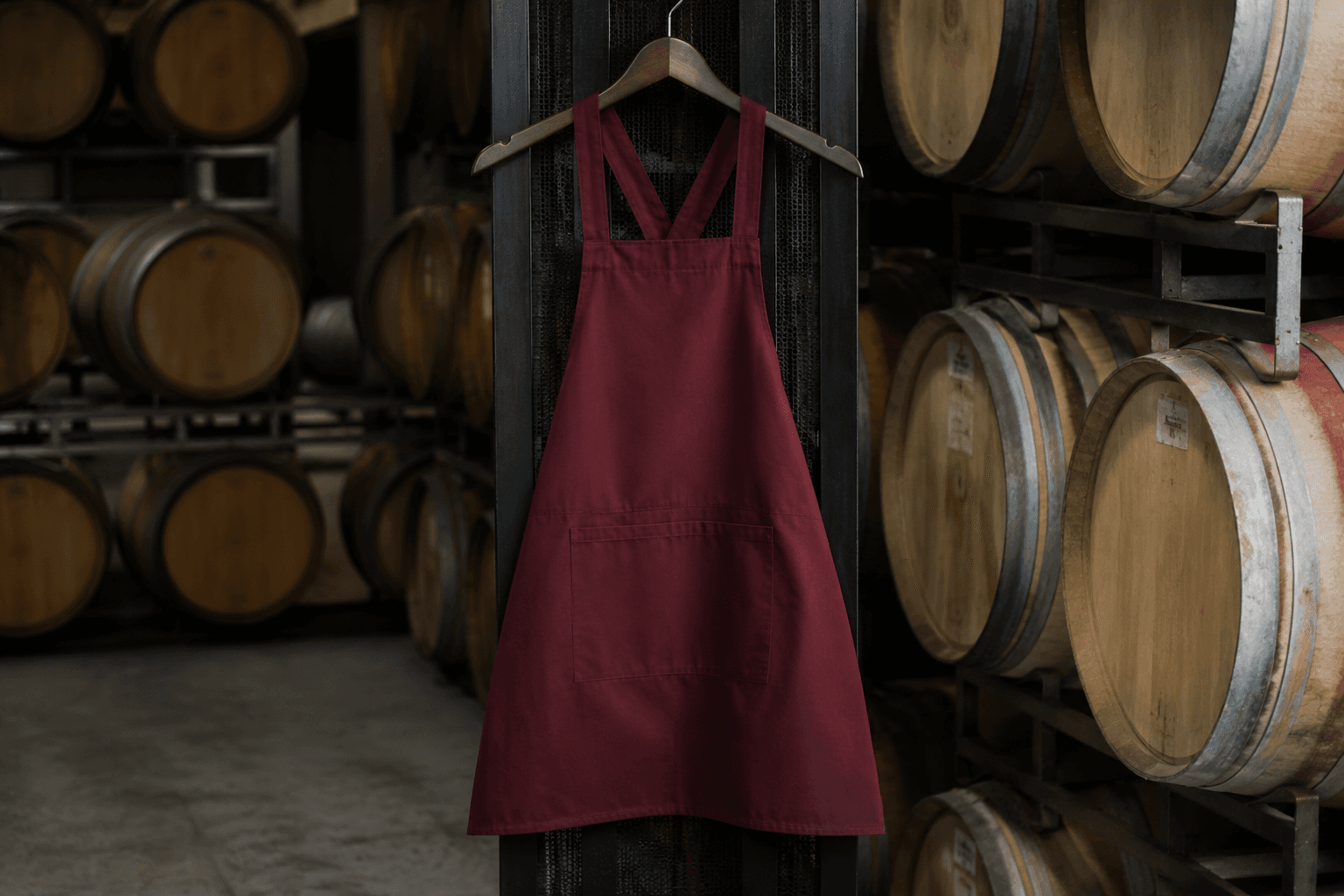
Winery and vineyard aprons: stain-tolerant fabrics and crossback fit
A winery apron must resist grape stains, wash cleanly, and fit over long shifts. The right fabric, pocket layout, and crossback pattern determine whether a winery apron is practical at scale.
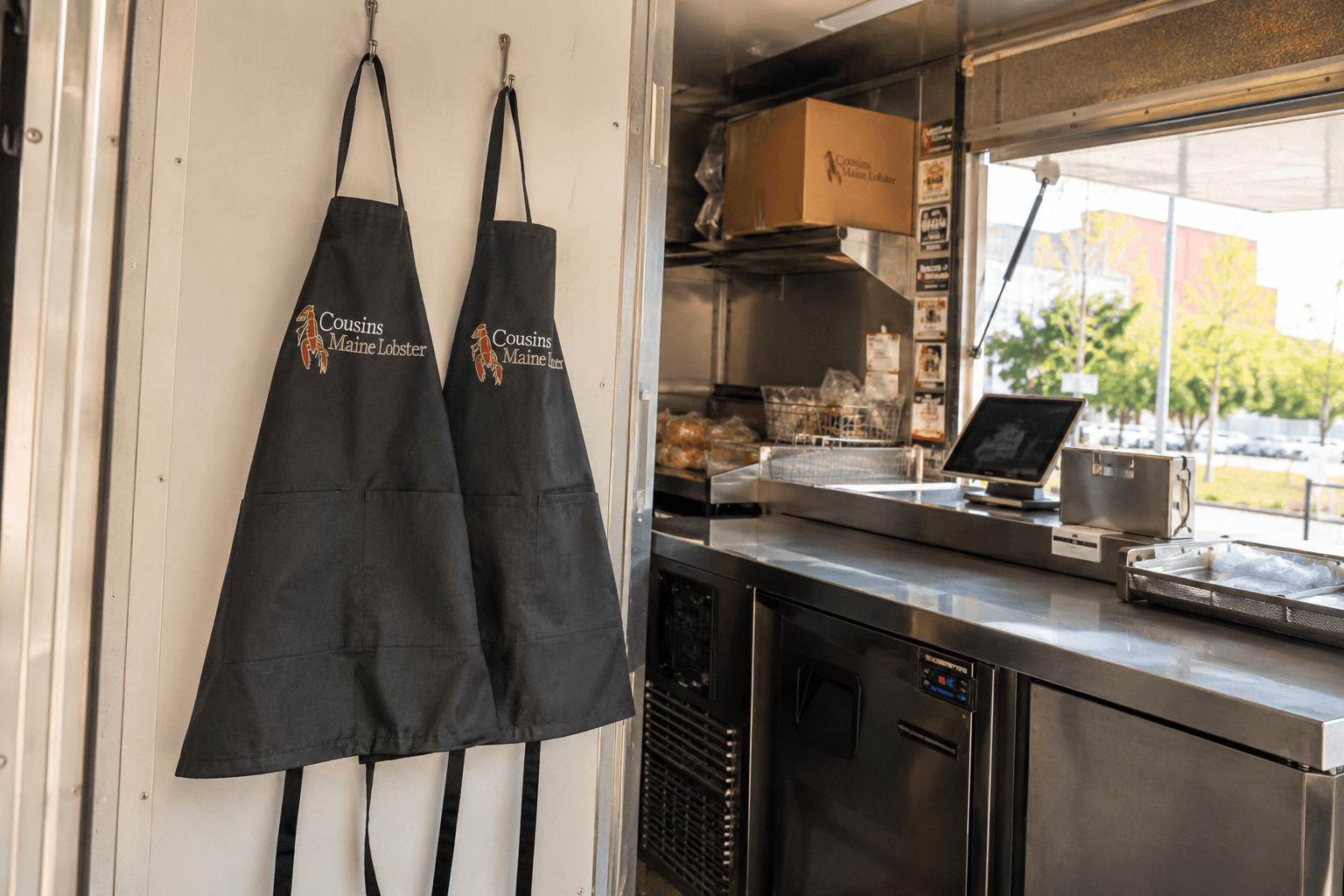
Food truck and street vendor aprons: compact, durable, fast branding
A food truck apron has to move fast, hold up under service wear, and take branding cleanly. The right construction balances compact coverage, wash durability, and realistic bulk pricing.
Leatherworking and cobbler aprons: tool pockets and abrasion resistance
A leatherworking apron must balance abrasion resistance, pocket utility, and bulk-order cost control for workshops, cobblers, and leather craft brands.