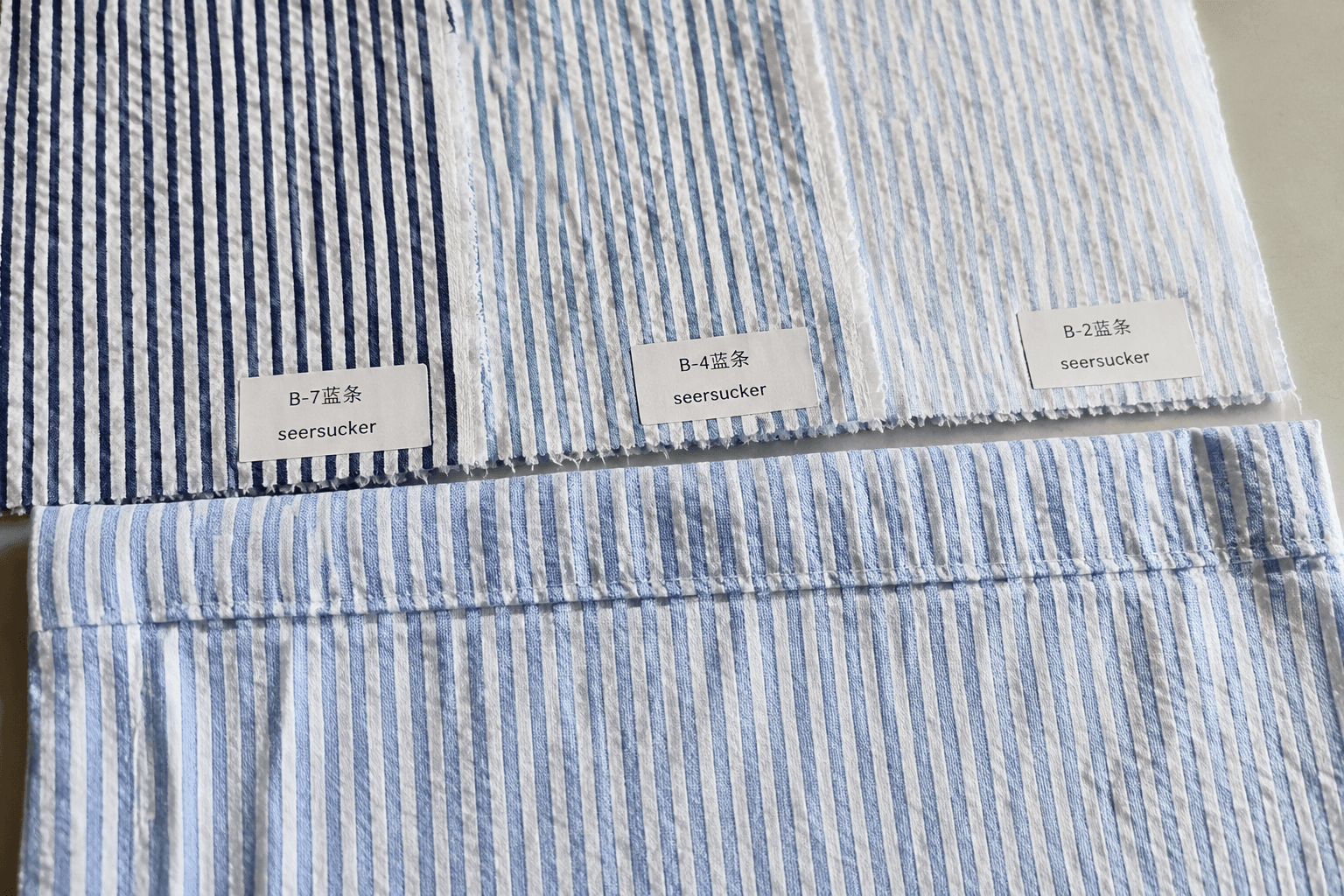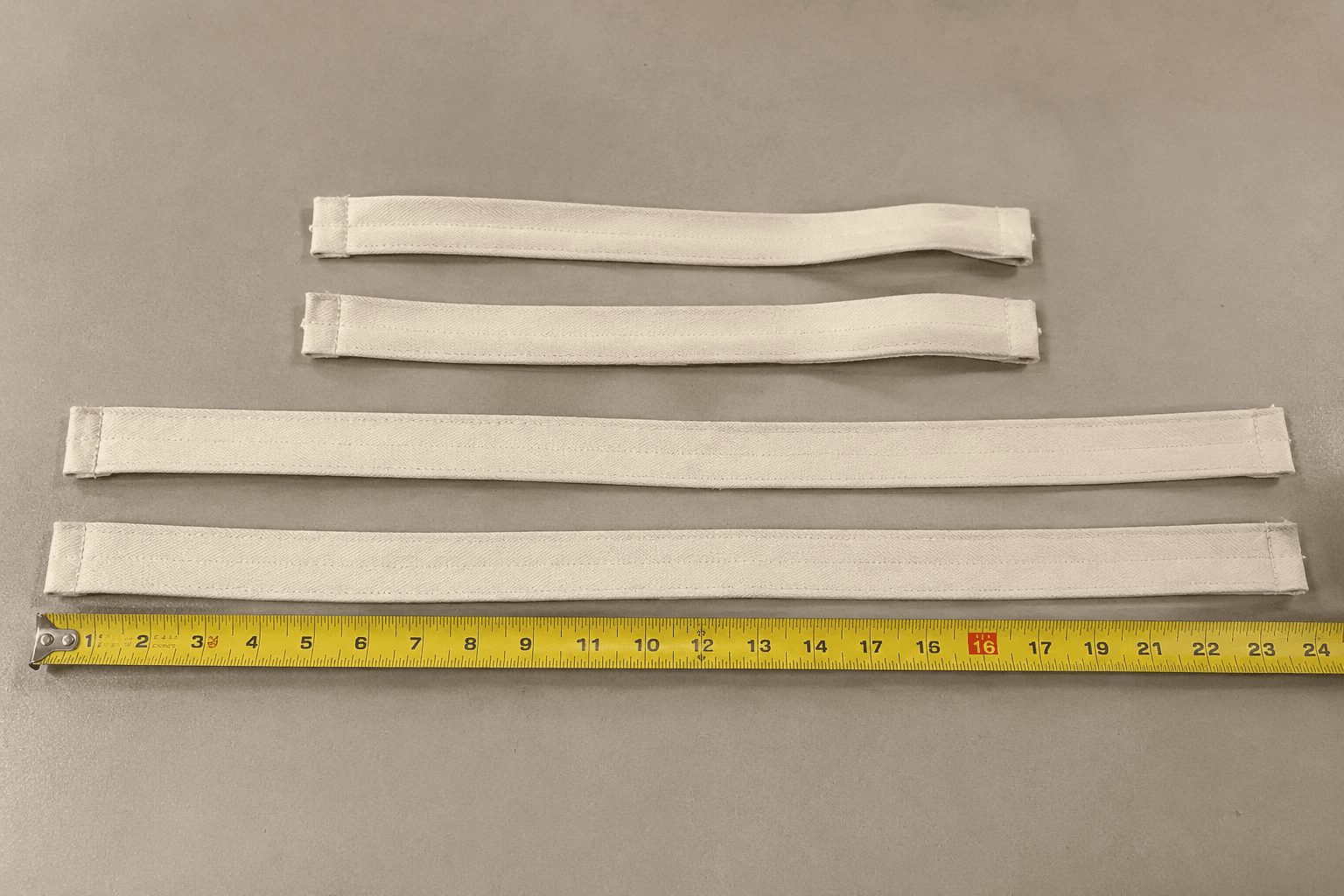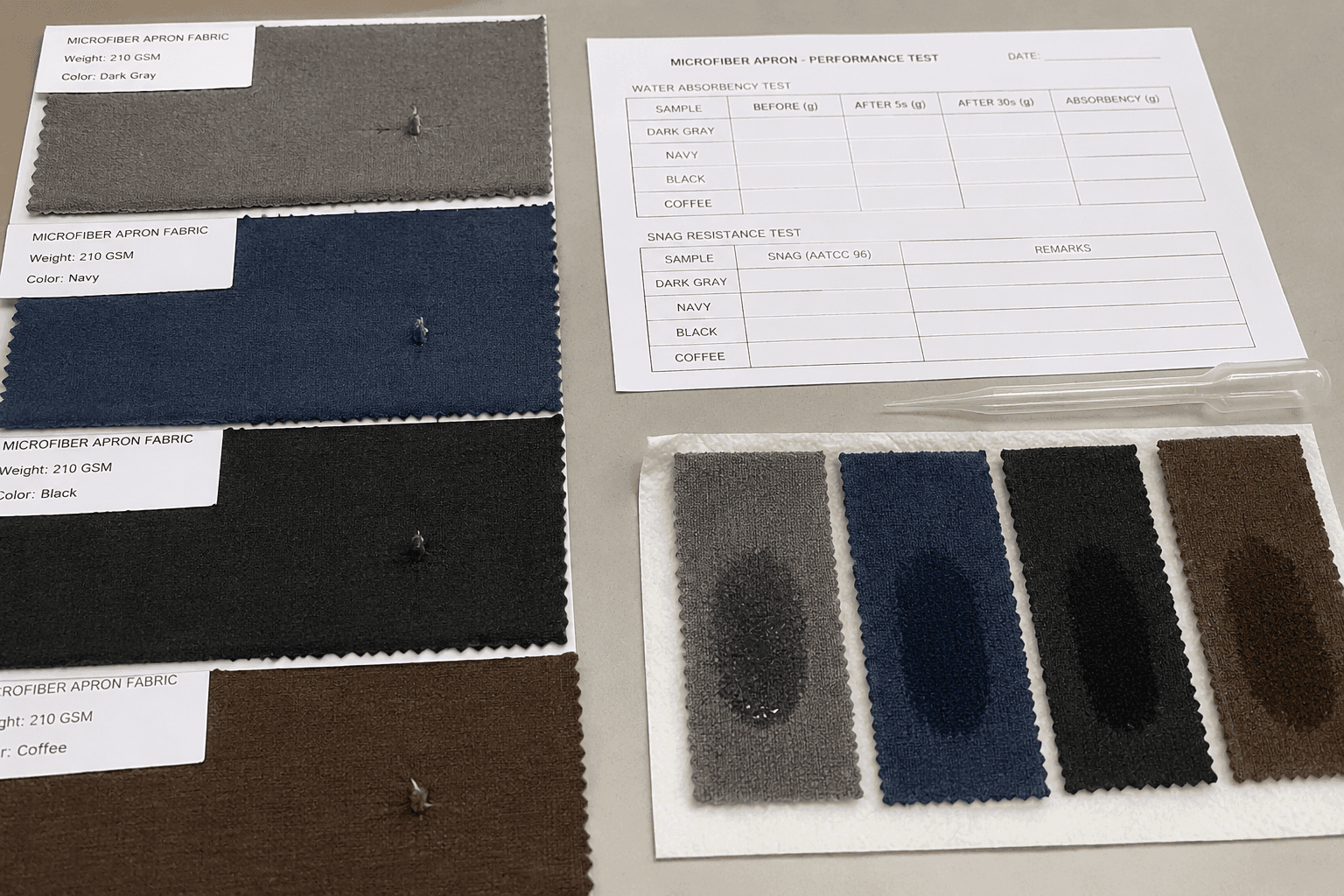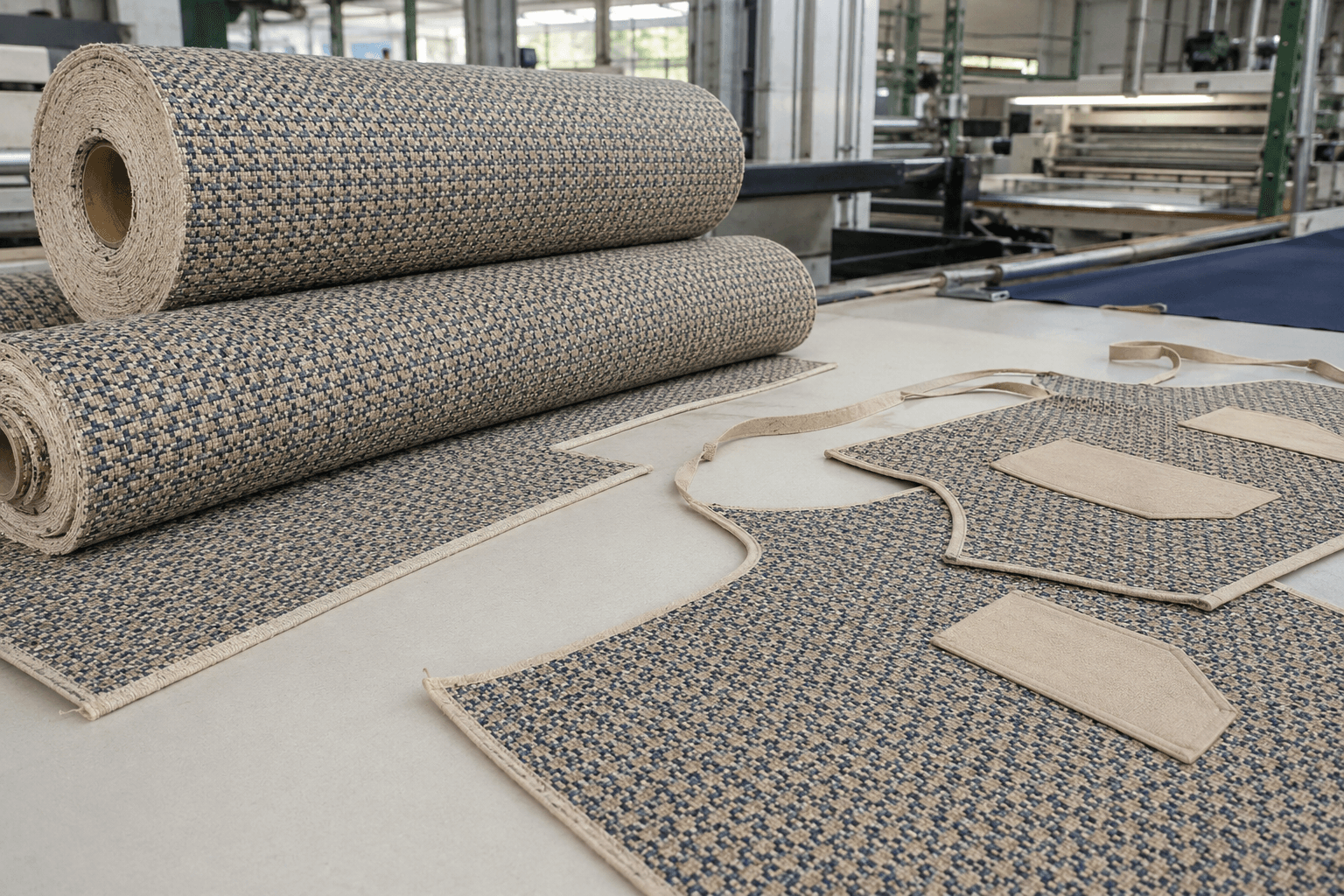
For buyers comparing decoration methods on custom aprons, jacquard apron fabric is usually evaluated too late in the process. Many teams start with print, then discover that the brand wants a more durable look, the artwork needs better texture control, or the apron has to justify a higher retail or hospitality price point. In those cases, the answer is often not a better print method. It is a different fabric construction.
A custom jacquard apron is built by weaving the pattern into the cloth rather than applying ink on top. That changes how the apron looks, how it ages, how it handles wash cycles, and how the minimum order quantity and lead time should be planned. For sourcing managers, the real question is not whether jacquard looks premium. It is whether the pattern complexity, order volume, target cost, and wear conditions make woven apron fabric the better production choice.
From a factory point of view, jacquard is most useful when the design must stay visible after repeated laundering, when the brand wants a woven logo apron with texture instead of surface decoration, or when the apron will sit in a premium uniform, culinary, cafe, or gift channel. It is less suitable when the artwork is highly photographic, the color count is excessive, or the buyer needs the lowest possible unit price at small volume.
- Jacquard apron fabric is the right choice when the brand value depends on woven texture, not printed color density.
- A custom jacquard apron usually costs more upfront in development, but it can reduce long-term appearance failure from cracking, fading, and surface wear.
- Woven apron fabric works best for repeat logos, stripes, borders, and geometric brand patterns, not for fine photographic artwork.
- Most buyers should expect a higher MOQ, a longer approval cycle, and a stricter tolerance on pattern repeat than with screen print.
- The best business case is usually premium hospitality, chefwear, retail gifting, or brand programs where the apron itself is part of the product story.
What jacquard apron fabric actually changes in production
Jacquard is not a finish added after weaving. It is a weave structure controlled by the loom, so the pattern becomes part of the cloth itself. For apron sourcing, that matters because the visual effect is created by yarn placement, not ink coverage. A logo may be formed by satin floats, twill texture, or repeated motifs across the width of the fabric. The result is more dimensional than print and usually more stable under laundering.
In practical factory terms, jacquard apron fabric is selected when the buyer wants a patterned apron textile with depth, better perceived value, and less reliance on color saturation. A dark charcoal apron with a woven herringbone logo band can look more expensive than a flat printed apron even if the fiber content is similar. That is why many hospitality brands use woven decoration for front-of-house uniforms where the apron must support the brand image immediately.
The trade-off is design constraint. The loom works best with repeatable structures, not freeform graphics. If the logo has thin serif detail, gradients, or small text below 3 to 4 mm stroke width, the weave may blur it. Buyers need to think in terms of pattern repeat, yarn count, and contrast, not just art files. For a woven logo apron, the design must be simplified to what the fabric can physically express.
- Typical jacquard apron fabrics are made in cotton, polyester-cotton, or blended yarns, often in the 180 to 320 GSM range for service aprons and 280 to 450 GSM for heavier premium builds.
- Common fabric widths are 150 cm to 180 cm, and the usable pattern repeat should be planned from the start so the apron panel, pocket, and tie layout do not waste fabric.
- For sharp brand definition, contrast comes from yarn color and weave texture more than from surface ink, so buyers should judge lab dips and woven strike-offs rather than only digital proofs.
When a custom jacquard apron beats print
A custom jacquard apron beats print when the buyer values durability, repeat order consistency, and tactile brand presence. Print can deliver strong graphics at lower development cost, but it sits on the surface. After repeated industrial washing, abrasion, or folding, printed areas often show cracking, edge wear, or dulling. Jacquard avoids that failure mode because the design is inside the cloth structure.
This is especially relevant for restaurant groups, hotel shops, bakery chains, and premium promotional programs. If the apron is expected to survive 50 to 100 wash cycles, a woven apron fabric often holds its appearance better than a print-heavy fabric. The visual texture also photographs better in many cases because the weave catches light, which helps the product look more substantial in catalog and retail settings.
From a sourcing viewpoint, the decision should be driven by use case. If the apron is a low-ticket giveaway or a short campaign item, print is usually more economical. If it is a core uniform or retail SKU that must justify a higher margin, jacquard can support that positioning. The buyer is not only paying for decoration. They are paying for the perception that the apron was engineered rather than simply decorated.
- Choose jacquard when the apron must look premium in person, not just in flat product photography.
- Choose jacquard when the logo or pattern needs to survive repeated laundering without surface cracking.
- Choose print when the design requires many colors, gradients, or photographic detail.
- Choose print when the volume is small and the target price is under roughly $3 to $5 per piece FOB, depending on fabric weight and construction.
Design limits for woven logo apron programs
The main design mistake buyers make is treating jacquard like print. A loom is not a printer. Fine lines, tiny type, and highly detailed icons often disappear once translated into woven form. For a woven logo apron, the artwork should be rebuilt as a textile pattern with clear blocks, stable outlines, and enough scale to hold its shape at normal viewing distance. In many cases, a logo that looks clean in a PDF needs to be simplified for the loom by 20% to 40% before it will weave properly.
Color planning also works differently. A jacquard pattern usually relies on limited yarn colors, often two to four for most apron programs. More colors increase yarn handling complexity and may raise the MOQ because the mill must prepare separate warp and weft sequences. If the buyer wants a subtle premium apron material, tonal contrast is often better than high-saturation color mixing. For example, navy-on-indigo or black-on-charcoal can look sharper than a loud multicolor scheme while still staying commercial for hospitality use.
The other issue is pattern repeat and garment placement. Aprons have front panels, neck straps, waist ties, and often pockets. If the jacquard repeat is too large, the logo may fall awkwardly across a pocket edge or not center properly on the chest. We usually advise buyers to lock the apron size first, then build the weave repeat around that measurement. That prevents fabric waste and avoids a mismatched finished look.
- Keep logo strokes bold enough to survive weaving, usually with line weights that are visibly thicker than they would be for embroidery digitizing.
- Plan for 2 to 4 yarn colors in most commercial programs unless the order volume justifies more complex weaving setup.
- Approve a woven strike-off or loom sample before bulk, because a flat artwork file does not predict the final texture accurately.
- Check pocket alignment, apron width, and hem placement against the fabric repeat so the pattern lands consistently across production lots.
Cost, MOQ, and lead time for jacquard apron fabric
Jacquard changes the commercial structure of the order. Compared with plain woven or printed apron programs, the setup cost is higher because the loom program, yarn arrangement, and strike-off development take more time. Buyers should expect sample development to take about 7 to 14 days if the design is straightforward, and longer if the pattern needs multiple corrections. Bulk lead time is commonly 25 to 45 days after approval, depending on fabric complexity, yarn availability, and whether the apron is cut-sewn in the same facility.
MOQ depends on pattern complexity and fabric width. For a standard woven apron fabric with a simple repeat, a practical MOQ may start around 800 to 1,500 pieces per colorway. More complex patterns, heavier fabric, or multiple size variants can push that to 2,000 to 3,000 pieces. If the buyer wants several color combinations, the real minimum is often per color, not per style. That matters in seasonal retail or hospitality rollouts where inventory risk has to be controlled carefully.
On unit cost, jacquard is typically priced above plain-dyed or printed apron fabric because the weaving process is slower and more setup-intensive. In bulk, a simple custom jacquard apron might add roughly $0.40 to $1.50 per piece versus a comparable plain woven base, depending on weight, yarn type, and complexity. For higher-end hospitality construction, the finished apron may land in the $4 to $9 FOB range, while heavier or branded retail units can run higher. Buyers should compare total program cost, not fabric cost alone, because the premium often supports a higher sell-through or a stronger uniform presentation.
- Strike-off approval usually takes 7 to 14 days for a normal design and longer if the loom setup needs rework.
- Bulk production commonly runs 25 to 45 days after sample approval, excluding shipping and customs clearance.
- MOQ is often 800 to 3,000 pcs depending on repeat size, yarn count, and the number of colorways.
- Unit price premium over simpler woven or printed fabrics is often justified when the apron is part of a premium brand channel rather than a commodity uniform line.
Construction choices that affect performance
The best woven apron fabric is not just about pattern. Fiber content, weave density, finishing, and garment construction all affect how the apron feels and performs. Cotton-rich jacquard has a softer hand and better natural look, which is useful for cafes, bakeries, and gift retail. Polyester-cotton jacquard improves wrinkle resistance and drying speed, which is better for busy kitchens and multi-shift operations. Full polyester can provide the easiest care profile, but some buyers find the hand feel less premium unless the weave design is carefully developed.
GSM is one of the most useful specs to compare. For lightweight service aprons, 180 to 220 GSM can keep the apron comfortable and lower shipping weight. For a more substantial premium apron material, 240 to 320 GSM is usually a better balance. Heavy-duty chef aprons or retail-style statement pieces may go to 350 to 450 GSM, but at that point the apron can feel stiff if the weave is too dense. Buyers should test drape, not just weight. A 300 GSM jacquard in the wrong weave can feel less wearable than a 260 GSM fabric with better construction.
Finishing matters as well. Pre-shrinking, enzyme wash, softening, and color fixation all influence the final user experience. Shrinkage should usually be held around 3% to 5% after wash testing, and colorfastness should be checked for both washing and rubbing because apron collars, pockets, and ties receive constant friction. If the apron will be laundered commercially, the supplier should test the fabric and the sewn product separately. Fabric alone passing is not enough.
- Cotton-rich blends suit front-of-house and gift retail programs where hand feel matters most.
- Poly-cotton blends suit multi-shift kitchens where wrinkle recovery and fast drying matter more.
- Higher GSM improves perceived value but can reduce comfort if the weave is too tight or the apron is used in hot environments.
- Pre-shrink and colorfastness testing should be requested as part of the QA package, not assumed from the yarn spec.
How to source patterned apron textile without getting burned
A patterned apron textile program should be managed like a woven mill project, not like a simple cut-and-sew order. The buyer needs clear technical documents: apron size chart, weave artwork, yarn color references, target GSM, wash standard, stitching spec, and packaging method. If any of those are vague, the supplier will make assumptions, and those assumptions often show up as color shifts, misplaced pattern repeats, or fabric hand that does not match the buyer's target market.
The most reliable sourcing process is to start with a lab dip or yarn strike color approval, then a woven strike-off, then a pre-production sample in the actual apron construction. That sequence catches the failures that matter: logo distortion, pocket alignment, tie length, stitch density, and how the pattern behaves when cut into panels. Buyers should also ask whether the mill or factory has the loom capacity to repeat the same pattern in future seasons. A one-off design that cannot be reproduced consistently is risky if the apron is intended as a long-term SKU.
For brand programs, it is also worth checking how the apron will be packed and shipped. Jacquard can crease in transit, and some higher-contrast weaves show fold marks more clearly than flat fabrics. If the product is for retail, polybag insertion, size sticker placement, and carton compression all matter. If the product is for hospitality, bulk packing by size and color may be more efficient. The factory should understand the end channel, because a woven logo apron for a hotel shop should not be packed the same way as a back-of-house uniform order.
- Request technical artwork in vector form with pattern repeat marked clearly, not only a logo image.
- Approve both fabric strike-off and sewn sample before bulk, because cut-and-sew can expose issues that the loom sample does not.
- Ask for wash testing, shrinkage data, and colorfastness results using the same laundering method the end user will follow.
- Confirm re-order consistency if the style will be replenished, because loom setup memory and yarn lots can affect repeat accuracy.