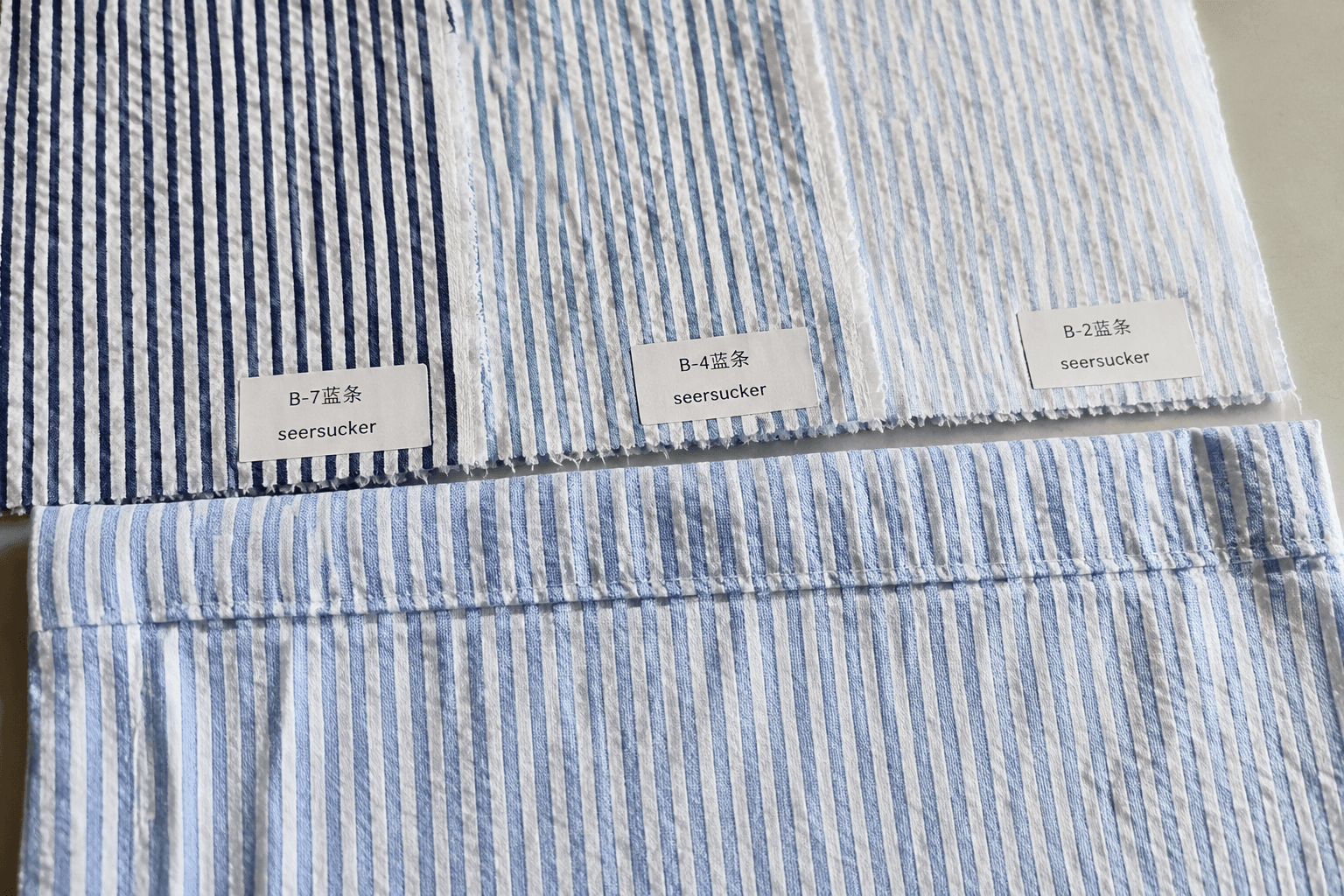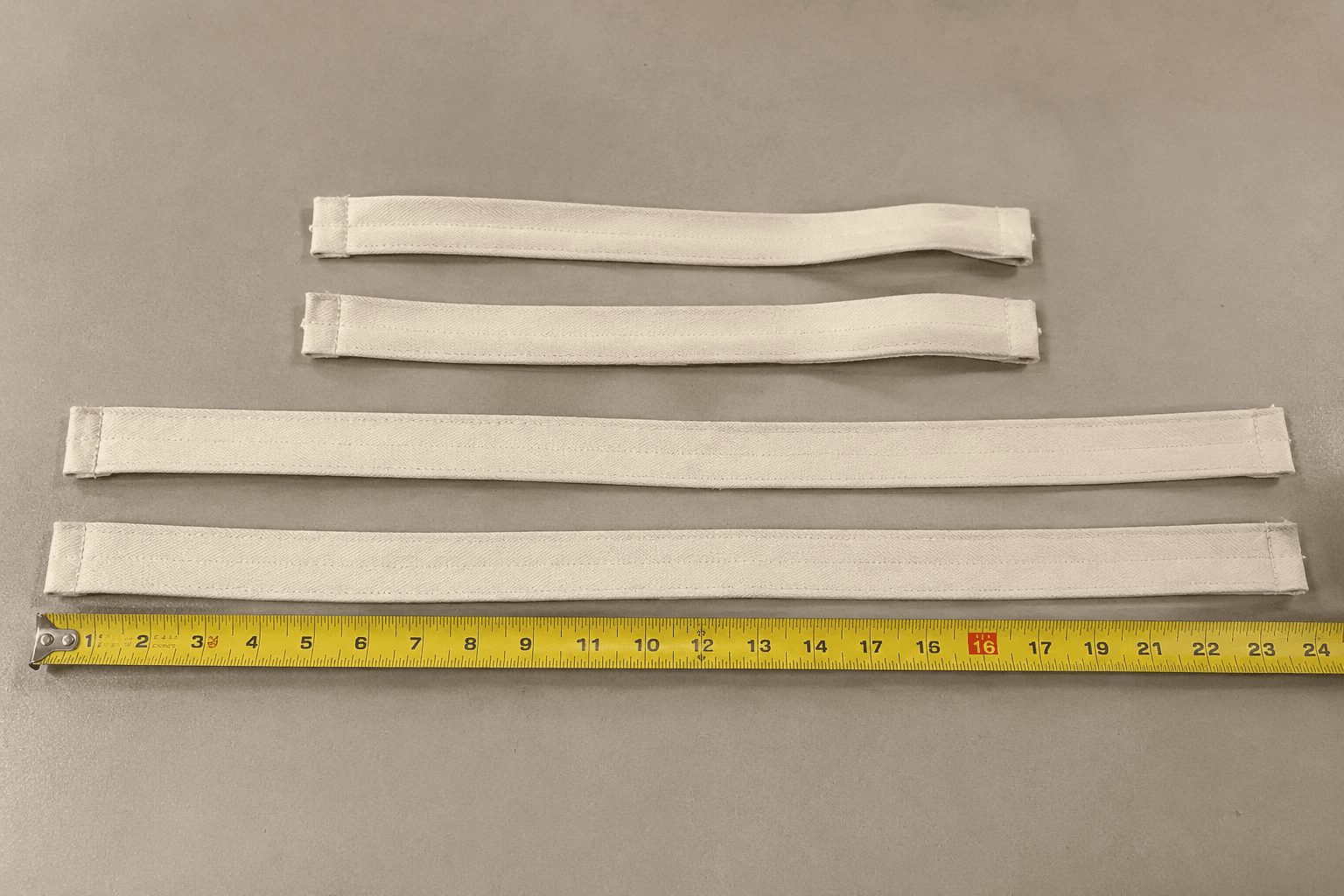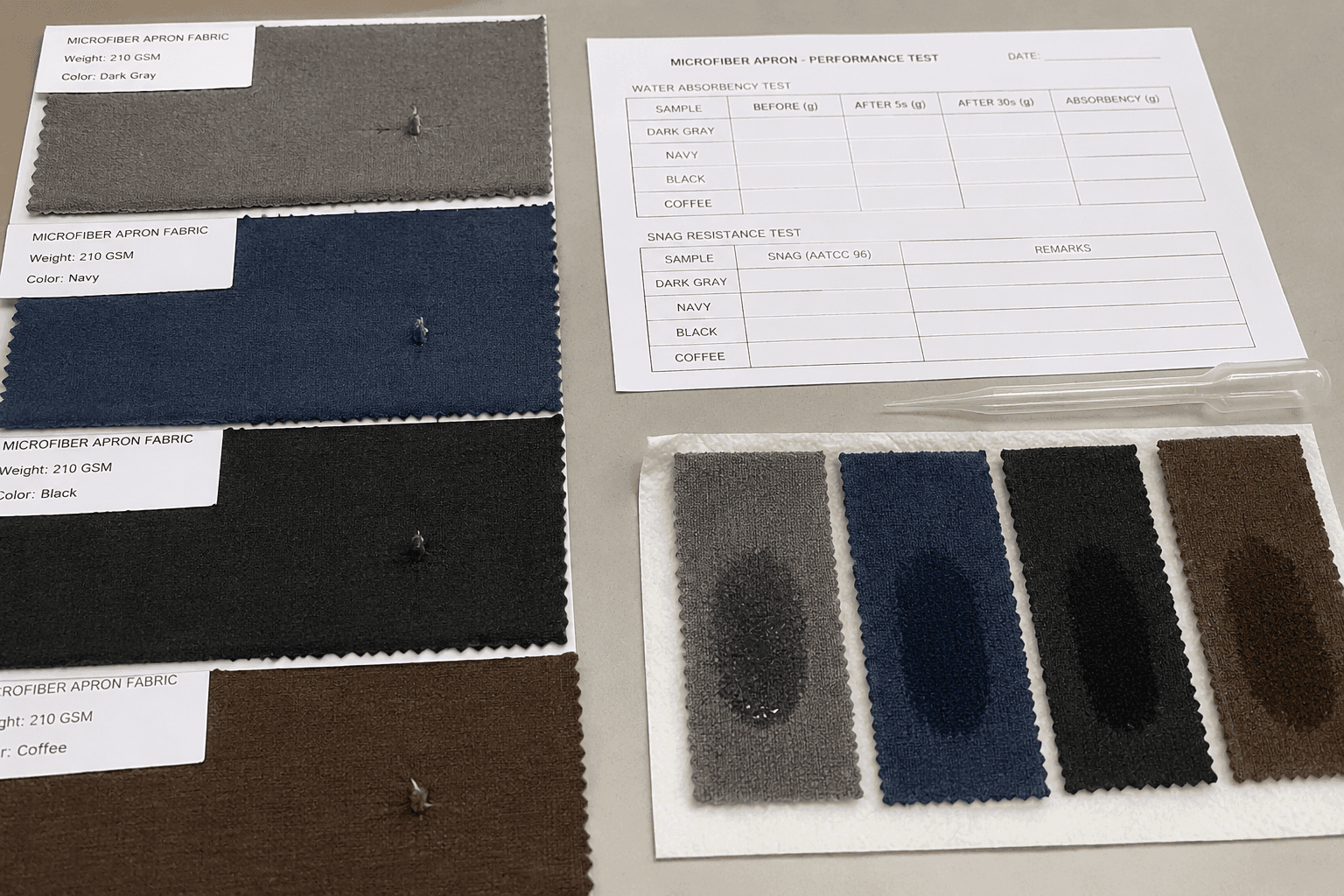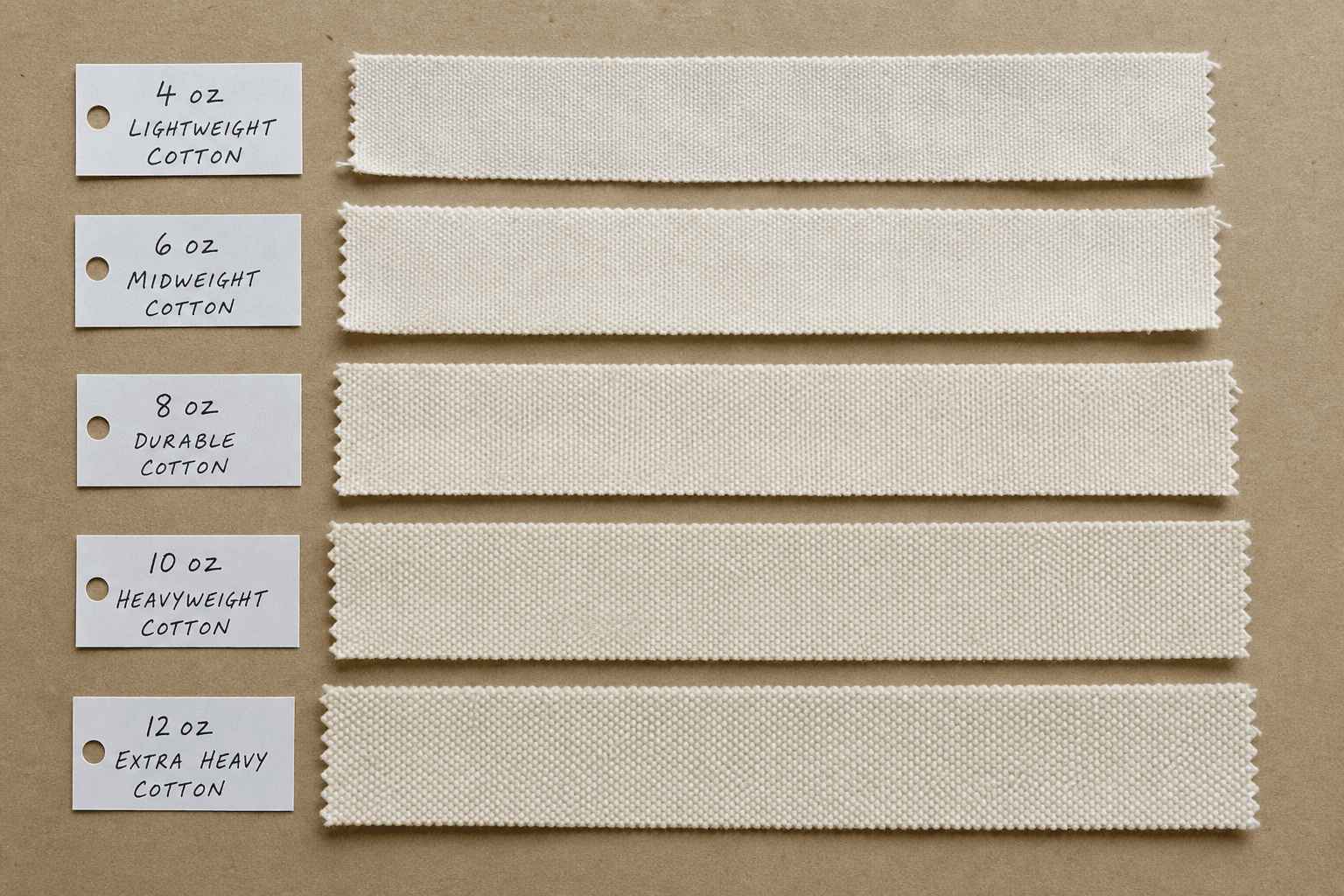
For bulk apron sourcing, fabric weight is one of the first specifications that affects price, durability, hand feel, shipping weight, and production risk. A 190 GSM twill and a 320 GSM canvas may both be called cotton apron fabric, but they behave very differently on the cutting table, during washing, and after 30 shifts in a kitchen.
This apron fabric weight chart is written from a factory sourcing and production viewpoint. It connects GSM, ounce weight, weave, fiber content, and end use, so sourcing managers can brief suppliers with fewer revisions and fewer sample rounds.
The figures below are practical working ranges for custom apron production in China. Actual price and lead time depend on dyeing method, fabric stock status, MOQ, strap construction, pocket count, printing or embroidery, and whether the fabric needs testing such as colorfastness, shrinkage, REACH, or food-service compliance.
- 160-220 GSM is suitable for promotional, light café, and low-cost event aprons where comfort and price matter more than heavy abrasion resistance.
- 230-280 GSM is the common commercial range for restaurant, bakery, barista, and retail staff aprons because it balances durability, washability, and unit cost.
- 300-380 GSM is preferred for premium canvas, workshop, chef, and denim-look aprons that need structure and longer service life.
- Oz weight and GSM are not interchangeable by feel; weave, yarn count, finishing, and fiber blend can make two fabrics with the same GSM perform differently.
- Heavier fabric increases more than fabric cost; it can raise cutting difficulty, needle size, thread choice, carton weight, freight cost, and sewing time.
- A useful apron material chart should specify use case, GSM, composition, weave, shrinkage target, colorfastness level, and expected washing method.
Apron fabric weight chart for common bulk orders
For apron buyers, the most practical way to read fabric weight is by use case, not by number alone. GSM means grams per square meter. Oz in apron sourcing usually means ounces per square yard. A rough conversion is 1 oz/yd² equals 33.9 GSM. In daily factory communication, many buyers ask for an apron oz weight such as 7 oz or 10 oz, while Chinese mills and dyeing houses usually quote in GSM. Both should be included in the tech pack to reduce mistakes.
The chart below gives working ranges used in custom apron development. It is not a substitute for a lab dip, pre-production sample, or shrinkage test, but it is a reliable starting point when comparing quotations from different suppliers. The same apron design in 200 GSM, 260 GSM, and 340 GSM can differ by USD 0.25-1.20 per piece depending on fabric content, order quantity, garment size, and finishing.
For most Linwa apron programs, the fabric weight decision is made before pocket engineering and branding method. This is because the fabric must support the decoration and hardware. A thin 180 GSM fabric can carry screen printing well, but it may not hold heavy rivets cleanly. A 360 GSM canvas can carry rivets and leather patches, but large embroidery may become stiff and slower to sew.
- 140-170 GSM / 4.1-5.0 oz: economy non-heavy-use aprons, event aprons, disposable-style reusable programs, basic polyester-cotton promotional orders.
- 180-220 GSM / 5.3-6.5 oz: light restaurant aprons, café half aprons, school or craft aprons, low to mid-price retail sets.
- 230-280 GSM / 6.8-8.3 oz: mainstream commercial bib aprons, barista aprons, bakery aprons, server aprons, durable uniform programs.
- 290-340 GSM / 8.6-10.0 oz: premium cotton twill, medium canvas, chef aprons, retail cooking aprons, apron programs requiring a structured hand feel.
- 350-420 GSM / 10.3-12.4 oz: heavy canvas, denim aprons, barber aprons, workshop aprons, grill aprons, and product lines with metal hardware.
- 430 GSM and above / 12.7 oz and above: specialist heavy-duty aprons, tool aprons, waxed canvas styles, or niche retail products where weight is part of the selling point.
How GSM and apron oz weight affect cost and production
Fabric normally accounts for 35-60% of the FOB cost of a woven apron, depending on design complexity and branding. A simple 70 x 85 cm bib apron with one pocket uses around 0.55-0.75 meters of fabric at 150 cm width, depending on shrinkage allowance, cutting layout, and strap design. Moving from 220 GSM to 320 GSM may increase fabric consumption cost by roughly 25-45%, even before considering slower sewing and higher freight weight.
Heavier fabric also changes production behavior. Cutting layers must be reduced to maintain accuracy, especially for canvas, denim, and thick twill. Sewing machines may need a larger needle, stronger thread, and adjusted tension. At cross seams, strap attachments, and pocket corners, thickness can reach 4-8 fabric layers. If the design includes reinforced bar tacks, rivets, metal eyelets, or leather patches, the sewing line must be set up for that construction from the first pilot run.
Buyers sometimes request a high GSM because it sounds more premium. That can work for retail aprons, but it is not always suitable for staff uniforms. A 380 GSM full bib apron may look excellent in a showroom but feel hot and tiring during an 8-hour kitchen shift. For hospitality and café programs, 240-280 GSM often gives better repeat purchase satisfaction than a heavier fabric that looks good only in the sample room.
- Unit price impact: each 50 GSM increase in cotton or canvas fabric can add approximately USD 0.10-0.35 per apron on medium-volume orders, depending on fabric market price and garment size.
- MOQ impact: stock colors may start from 300-500 pcs per style, while custom dyed cotton canvas commonly requires 800-1,500 pcs per color.
- Lead time impact: stock fabric programs can ship in 20-30 days after sample approval; custom dyeing usually adds 10-18 days, and special finishing can add another 5-10 days.
- Freight impact: a carton of 300 GSM aprons can be 20-40% heavier than the same design in 200 GSM, which matters for air freight and small mixed shipments.
- QC impact: heavier fabric needs closer checking at seam bulk, skipped stitches, needle marks, pocket alignment, and washing shrinkage.
Apron GSM guide by working environment
A practical apron gsm guide should begin with the wear environment. A front-of-house café apron needs a neat appearance, easy movement, and regular washing performance. A butcher, grill, or workshop apron needs abrasion resistance and stronger reinforcement. A home retail apron needs hand feel, color appeal, packaging presentation, and a fabric weight that feels substantial without being uncomfortable.
For restaurant uniform programs, the safest development range is usually 230-280 GSM in cotton twill, poly-cotton twill, or cotton-rich canvas. This range works for bib aprons, waist aprons, bistro aprons, and cross-back aprons. It can handle embroidery, woven labels, divided pockets, and repeated laundering. It also folds and packs efficiently, which helps keep carton volume under control.
For specialty users, the range moves upward. Barbecue brands, denim lifestyle labels, barber supply companies, and workshop clients often choose 320-420 GSM. In these cases, the buyer is usually accepting a higher FOB price and heavier garment because the end user expects structure. The supplier should still test comfort and shrinkage because a heavy apron that twists after washing will create more complaints than a lighter apron with stable construction.
- Promotional and event use: 140-200 GSM polyester, poly-cotton, or lightweight cotton; typical FOB range USD 1.20-2.40 depending on print and quantity.
- Café and bakery staff: 220-280 GSM twill or canvas; typical FOB range USD 2.60-5.20 with pockets, adjustable neck, and logo decoration.
- Chef and restaurant back-of-house: 240-320 GSM cotton twill, poly-cotton twill, or canvas; stronger seams and dark colors are often preferred.
- Barista, barber, and retail premium: 280-380 GSM canvas, denim, or cotton-linen blend; common features include cross-back straps, rivets, and leather or PU patches.
- Workshop and tool apron: 350-450 GSM canvas, denim, or waxed canvas; stress points should use bar tacks, rivets, or double-layer reinforcement.
- Home kitchen retail set: 180-260 GSM cotton or recycled cotton blend; hand feel, color consistency, and packing quality are usually more important than maximum strength.
Fabric weight by use, weave, and fiber content
Fabric weight by use cannot be separated from weave and fiber. A 250 GSM plain-weave cotton canvas feels different from a 250 GSM cotton twill. Canvas has a firmer, more direct hand and can look more casual or workwear-oriented. Twill drapes better, resists visible creasing better, and is often preferred for uniform aprons. Denim has a specific look, but indigo or sulfur dye can raise colorfastness and crocking concerns if the apron will contact light clothing.
Fiber content changes performance at the same weight. 100% cotton is breathable and accepts pigment dye, reactive dye, enzyme washing, and garment washing well. It may shrink 3-8% if not controlled. Polyester-cotton is more stable, dries faster, and usually costs less, but it can feel less natural and may show shine after repeated ironing. Cotton-linen blends look premium but wrinkle more and often require higher MOQ because mills do not always hold stock. Recycled cotton blends are useful for sustainability programs, but color consistency and tensile strength must be checked carefully.
When a buyer compares an apron material chart from two suppliers, the weight line should not be read alone. Ask for composition, yarn count if available, weave, finishing, shrinkage standard, colorfastness to washing and rubbing, and whether the quoted fabric is greige-dyed, yarn-dyed, garment-dyed, printed, coated, or washed. Two quotes for 280 GSM cotton canvas can be separated by more than USD 0.40 per piece because the fabric quality and finishing route are not the same.
- Cotton twill, 220-300 GSM: balanced drape, good uniform appearance, suitable for embroidery and repeated washing.
- Cotton canvas, 260-380 GSM: firm hand, good structure, suitable for tool pockets, rivets, and premium retail aprons.
- Poly-cotton twill, 180-260 GSM: stable, price-efficient, fast drying, suitable for hospitality chains and high-turnover staff uniforms.
- Denim, 280-420 GSM: strong visual identity, good abrasion resistance, requires attention to crocking, shade variation, and washing behavior.
- Cotton-linen, 180-260 GSM: natural premium texture, better for retail and hospitality front-of-house than heavy industrial use.
- Waxed canvas, 380-520 GSM: water-resistant appearance and strong structure, higher cost, special sewing handling, and usually longer lead time.
Matching fabric weight to branding, pockets, and hardware
Branding method is a major reason to adjust fabric weight. Screen printing works well on 160-300 GSM cotton, poly-cotton, or canvas when the surface is smooth and stable. Heat transfer can work on lighter fabrics, but temperature sensitivity must be tested, especially with polyester blends. Embroidery performs best when the fabric has enough body to hold stitches without puckering; in apron production, 220 GSM and above is usually safer for chest embroidery, while large dense embroidery may need backing or a heavier base.
Pocket structure also influences fabric selection. A flat patch pocket on a 190 GSM apron is simple and cost-efficient. A divided tool pocket on a 360 GSM canvas apron needs more sewing time, stronger needle penetration, and reinforcement at pocket openings. If the apron includes towel loops, pen slots, metal rings, lobster hooks, or leather patches, the base fabric must carry the hardware without tearing or sagging after washing.
For buyers developing a line with multiple price tiers, it is efficient to keep the same pattern but adjust fabric and trim. For example, an entry café apron may use 220 GSM poly-cotton twill with screen print; the mid-tier version may use 260 GSM cotton twill with embroidery; the premium version may use 340 GSM canvas with antique brass eyelets and cross-back straps. This keeps product architecture clear while allowing the factory to manage grading, cutting, and sewing more predictably.
- Screen print: 160-320 GSM is workable; smoother twill or tightly woven canvas gives cleaner edges.
- Embroidery: 220-380 GSM is preferred; dense logos may need backing and a test for puckering after wash.
- Heat transfer: 150-280 GSM is common; test wash durability and heat tolerance on polyester blends.
- Leather or PU patch: 280 GSM and above is safer, especially if stitched through corners.
- Metal eyelets and rivets: 300 GSM and above is preferred, or use local reinforcement on lighter fabrics.
- Large cargo pockets: 300-420 GSM fabric works well, but pocket layers and seam bulk must be checked in sampling.
Apron fabric weight chart for washing, shrinkage, and colorfastness
The apron fabric weight chart should also connect weight to laundering. Commercial aprons are often washed at higher temperature and higher mechanical action than home kitchen aprons. A fabric that passes a simple home wash can still fail in restaurant laundry if shrinkage, seam twisting, or color rubbing is not controlled. For uniform buyers, the fabric test plan should be confirmed before bulk fabric is cut.
For cotton and cotton-rich aprons, a practical shrinkage target is usually within 3% after one standard wash for higher-grade programs, or within 5% for more price-sensitive orders. Garment washing can improve softness and pre-shrink the apron, but it adds cost and time. A garment wash may add USD 0.15-0.45 per piece and 3-7 days, depending on volume and process. Enzyme wash, stone wash, or heavy softening can change shade and measurements, so the approved sample must represent the actual bulk process.
Colorfastness is especially important for black, navy, dark green, wine red, denim blue, and garment-dyed aprons. Dark cotton canvas at 320 GSM may look excellent, but if rubbing fastness is low, it can transfer color onto a white shirt. For commercial aprons, buyers should request colorfastness to washing and rubbing, and for denim or pigment-dyed fabric, both dry and wet crocking results should be reviewed.
- Home kitchen apron: request shrinkage within 5%, colorfastness to washing grade 3-4, and stable print or embroidery after 5 washes.
- Restaurant uniform apron: request shrinkage within 3-5%, colorfastness to washing grade 4, and seam strength suitable for repeated laundering.
- Dark denim apron: request rubbing fastness results before approval, especially for wet rubbing and contact with light garments.
- Garment-washed apron: approve final measurements after wash, not only before wash, because shrinkage and hand feel are part of the process.
- Waxed or coated apron: confirm care label language carefully because machine washing can damage the finish.
How to brief a supplier using an apron material chart
A clear supplier brief should state the expected use first, then the target fabric range. Instead of asking only for "heavy cotton apron," specify "barista bib apron, 260-300 GSM cotton twill or canvas, dark olive, embroidery on chest, divided waist pocket, commercial wash target within 5%." This gives the factory enough information to recommend a fabric that is available, sewable, and aligned with the target price.
For costing, provide apron dimensions, strap type, pocket details, branding method, order quantity by color, packing method, and required test standards. Without this information, suppliers may quote different assumptions and the comparison will be misleading. A 280 GSM apron with self-fabric neck strap, one pocket, and bulk packing is not the same cost as a 280 GSM cross-back apron with metal hardware, reinforced pockets, individual kraft box, and embroidery.
Sampling should confirm both appearance and production risk. For a new fabric, it is normal to make one proto sample, one revised sample, and one pre-production sample using bulk or near-bulk fabric. If custom dyeing is required, the buyer should approve lab dips first. Normal lead time is 5-8 days for a simple sample using stock fabric, 10-15 days for a complex sample, and 18-25 days if custom fabric dyeing or washing is involved before sample approval.
- Use case: café staff, chef uniform, promotional event, retail kitchen, barber, workshop, BBQ, or tool apron.
- Target weight: include both GSM and oz, such as 260 GSM / 7.7 oz, with an acceptable tolerance if possible.
- Fabric details: composition, weave, color, dyeing route, finish, and whether stock fabric is acceptable.
- Construction: apron size, strap style, pocket count, reinforcement, hardware, stitching color, and label placement.
- Branding: screen print, embroidery, woven label, heat transfer, leather patch, or mixed decoration.
- Compliance and QC: shrinkage, colorfastness, needle detection if required, packing, AQL level, and inspection method.
Practical buying recommendations for different price levels
For an entry-level bulk apron program, the most stable route is usually 180-220 GSM poly-cotton or cotton twill in stock colors. MOQ can be as low as 300-500 pcs per color if fabric is available, and FOB prices often sit around USD 1.80-3.20 for simple bib or waist aprons without complex hardware. This range is suitable for promotional distributors, training programs, and short-cycle hospitality orders, but buyers should avoid overloading the design with heavy pockets or metal trims.
For a mid-market hospitality or food-service uniform, 230-280 GSM is normally the best value range. It gives enough strength for daily wear, supports embroidery or screen print, and remains comfortable for long shifts. MOQ is commonly 500-1,000 pcs per color for stock fabric and 800-1,500 pcs for custom dyed fabric. Lead time after pre-production sample approval is usually 25-40 days, depending on season and decoration workload.
For premium retail, denim, barber, BBQ, and workshop aprons, 300-420 GSM is the normal sourcing range. Buyers should budget for higher fabric cost, more careful sewing, heavier cartons, and longer development time. FOB prices can range from USD 6.50 to over USD 15.00 per piece depending on hardware, washing, packaging, and order size. In this segment, the fabric weight is part of the product story, but the final approval should still be based on wash testing, wearer comfort, and seam performance.